Comprehensive Reflections to Aid in Governance
By Sima Guang
Translated By Yiming Yang
Annals of Han Book 21 Scroll 29 (continued)
The 2nd year of Emperor Yuan’s Jianzhao Era (37 B.C. continued)
Sima Guang’s commentary: When the virtue of the ruler is unsound, even if his ministers wish to devote their utmost loyalty, how can they find a way to do so? Observing how Jing Fang sought to awaken Emperor Yuan, one may say his reasoning was clear and his words earnest, yet in the end he could not get through to him. How lamentable!
The Book of Songs says: ‘If one cannot instruct him face to face, then speak to his ear; if one cannot lead him by the hand, then show him by one’s conduct.’ It also says: ‘You instructed him with care, yet he listened without heed.’ These lines describe Emperor Yuan exactly.
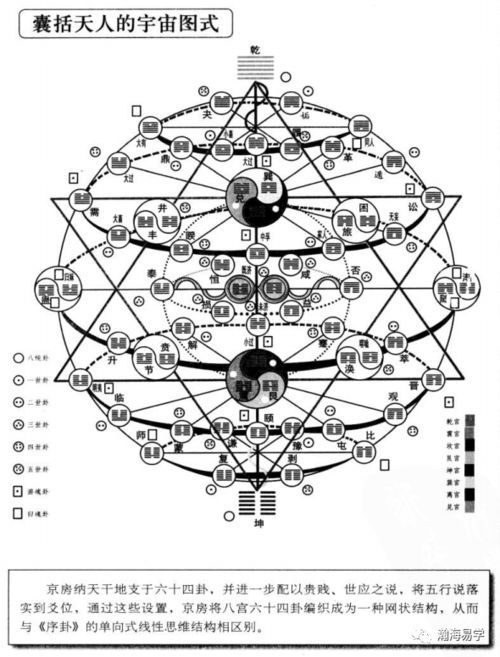
The Emperor then ordered Jing Fang to instruct his disciples in the methods for evaluating officials and their duties, intending to test these principles. Jing Fang recommended that Court Attendants Ren Liang and Yao Ping be appointed provincial inspectors to put the method into practice, and requested permission to remain at court to submit reports, lest obstruction arise.
Shi Xian and Wulu Chongzong, both hostile toward Jing Fang, sought to distance him from the Emperor and proposed instead that he be tested by appointment as a commandery prefect. Accordingly, the Emperor appointed Jing Fang Prefect of Weijun Commandery, instructing him to implement the evaluative methods in governance.
Jing Fang then requested: “At the end of the year, I ask for leave to return by postal relay to report personally to Your Majesty.” The Emperor granted this request.
Jing Fang, however, knew that his frequent remonstrances had incurred the resentment of powerful ministers, and that he was at odds with Shi Xian and others. Fearing that once he left the court he would be obstructed and destroyed before accomplishing his purpose, he submitted a sealed memorial:
“After I depart, I fear that those in power will block my way, and that I shall perish before completing my charge. Therefore, I beg leave to return by post relay at year’s end, as Your Majesty has graciously permitted. On June 20, the obscuring qi of Meng (Hexagram 4) was overtaken by Fu (Hexagram 24), and the sun’s radiance was encroached upon. This signifies that a powerful minister has overshadowed the sovereign light, and that the Sovereign’s mind is clouded. Between June 18 and June 19, there will surely be those who seek to cut off this minister, preventing him from traveling by relay to present reports and manage affairs.”
Before Jing Fang had even departed, the Emperor ordered Wang Feng, Marquis of Yangping, to issue an edict forbidding Jing Fang to return by postal relay. Jing Fang’s apprehension thereby deepened.
In autumn, when Jing Fang reached Xinfeng County, he submitted a sealed memorial from the postal station, saying:
“Earlier, in mid-June, my divination by the Dun hexagram (Hexagram 33) was not yet verified. The text says: ‘When one who has attained the Way departs, surging waters arise as calamity.’ By July, the waters indeed surged forth. My disciple Yao Ping said to me, ‘Jing Fang may be said to have attained the Way, yet cannot be said to believe in the Way. Your predictions of calamity have never failed. Now that the surging waters have appeared, the one who has attained the Way will surely be driven into exile and die—what do you say about that?’
“I replied, ‘His Majesty is supremely benevolent and especially gracious toward me. Even if my words should bring about my death, I will still speak them.’ Yao Ping further said, ‘Jing Fang may be said to be loyal in a small sense, but not yet loyal in the great sense. In Qin, Zhao Gao held power. The first to remonstrate openly against him was Zheng Xian, who was executed, thereby enabling Zhao Gao to seize authority and plunge the Qin into chaos. Zheng Xian in fact hastened that disorder.’
“Now I have been sent out to govern a commandery, vainly hoping to display my ability. I fear that I shall perish before accomplishing anything. I beg Your Majesty not to let me fulfill the omen of the surging waters, nor allow me to become a laughingstock of Yao Ping by meeting the same end as Zheng Xian.”
When Jing Fang reached Shaan County, he again submitted a sealed memorial, saying:
“Previously, I requested that Ren Liang be appointed in order to test the methods of evaluation, while I myself remained at court. Those who opposed me knew that such an arrangement would hinder their designs and prevent them from obstructing my communications with Your Majesty. Thus they said, ‘It is better to test the master than the disciple.’ I was therefore appointed Inspector and required to report on my duties. They then further argued, ‘As an Inspector, he may not be able to control the prefects; it would be better to make him a prefect instead.’ In this way they sought to isolate me.
“Your Majesty did not oppose their words and thus followed their counsel. For this reason, the obscuring influence of the Meng hexagram has lingered, and the sun has appeared without its radiance. As I travel ever farther away, the light of the sun will grow ever more dim. I beg that Your Majesty not make my return difficult, lest you act contrary to Heaven’s intent. Though heretic words may momentarily please the lord, Heaven’s mandate does not waver. Men may be deceived, but Heaven cannot. I earnestly hope that Your Majesty will reflect upon this.”
A month after Jing Fang’s departure, he was ultimately summoned back and imprisoned.
Zhang Bo—maternal uncle of Liu Qin, Prince of Huaiyang—was a deceitful and unscrupulous man who frequently sought gold and wealth from the prince, hoping thereby to secure an entrance into court affairs. Zhang Bo had once studied under Jing Fang and later married his daughter to him. Whenever Jing Fang attended court, he would afterward recount what had been discussed, and Zhang Bo would record these matters in writing. He then had Jing Fang compose memorials on the prince’s behalf, showing these records to the prince as proof of his service and influence.
When Shi Xian learned of this, he accused Jing Fang of conspiring with Zhang Bo, slandering the government, blaming the Emperor, and misleading the feudal princes. Both men were arrested and executed; their bodies were exposed in the marketplace, and their families were banished to the frontier.
The Grand Master of the Censorate, Zheng Hong, because of his friendship with Jing Fang, was demoted and reduced to plebeian status.
 Reflection by Rio Grande
Leave a comment