Tag: chinese-history

  • Comprehensive Reflections to Aid in Governance(Part 237): The Five Marquises

    Comprehensive Reflections to Aid in Governance

    By Sima Guang

    Translated By Yiming Yang  

    Annals of Han Book 22 Scroll 30 (continued)

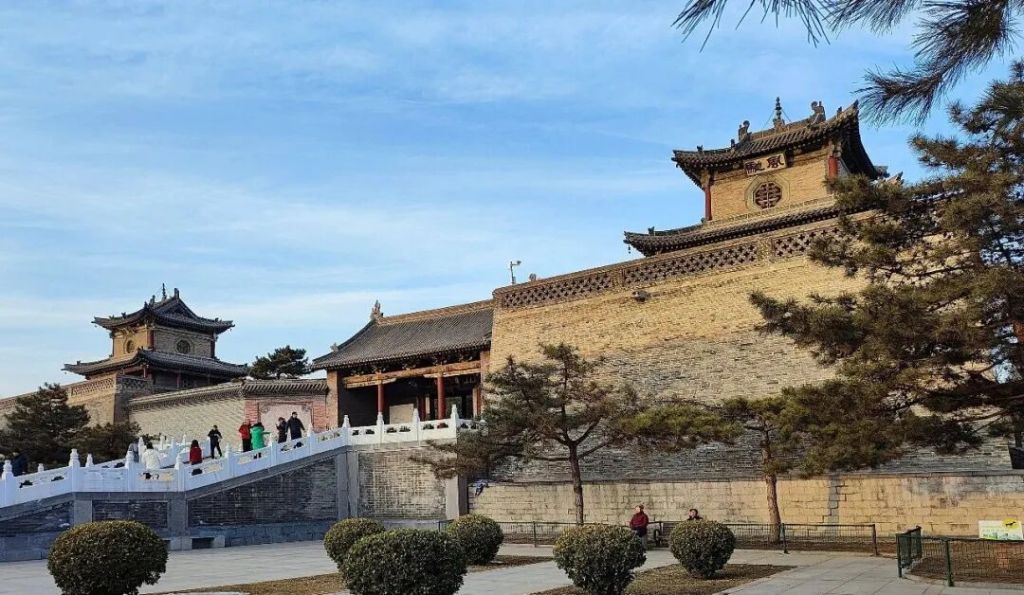
    Chang’an(Xi’an), Jingzhao, Shaanxi Province

    The 2nd year of Emperor Cheng’s Heping Era (27 B.C.)

    In the spring, Xiongnu envoy Yiye Moyan prepared to return home but declared his intention to surrender, saying: “If you do not accept me, I will kill myself. I will never dare to return.” The envoy reported this, and the matter was referred to the ministers for deliberation. 

    Some proposed, “We should follow precedent and accept his surrender.” However, the Grand Master of Merit, Gu Yong, and the Counselor, Du Qin, argued:

    “Since the founding of the Han dynasty, the Xiongnu have repeatedly troubled the frontiers, and thus rewards of gold and titles were offered to those who surrendered. Now the Chanyu has submitted and become a vassal, sending envoys to pay tribute without duplicity. The response of the Han court should therefore differ from past practice. If, while enjoying the sincerity of a tribute mission, we were to shelter a fugitive from the Chanyu’s own envoy, we would be valuing the gain of a single man over the goodwill of an entire nation—harboring a criminal while alienating a lord who admires our virtue.

    “Suppose the newly enthroned Chanyu, uncertain of advantage and disadvantage, has secretly sent Yiye Moyan to feign surrender in order to test our intentions. To accept him would diminish our virtue and discourage future goodwill, causing the Chanyu to distance himself from the Central Realm and to cease friendly relations with our border officials. Alternatively, this may be a scheme to sow discord, using a pretended surrender to create a rift. To accept him would play into their design, allowing them to manipulate events to their advantage. This matter bears upon the security of our frontiers and the movement of our forces and must be weighed with care. It is better not to accept him, thereby demonstrating the integrity of the Han, thwarting deceitful plots, and fostering genuine loyalty. This would be more beneficial.”

    The Emperor accepted their counsel and dispatched General Wang Shun to inquire into Yiye Moyan’s intent. Yiye Moyan replied, “I spoke nonsense because of illness.” He was then sent back. Upon his return, his official rank remained unchanged, but he was not permitted to meet with the Han envoy.

    In April of summer, hailstones as large as cauldrons fell in the principality of Chu.

    The Prince of Shanyang, Liu Kang, was relocated and enfeoffed as Prince of Dingtao.

    In June, the Emperor ennobled his maternal uncles: Wang Tan was made Marquis of Ping’e, Wang Shang Marquis of Chengdu, Wang Li Marquis of Hongyang, Wang Gen Marquis of Quyang, and Wang Fengshi Marquis of Gaoping. All five were enfeoffed on the same day and were therefore collectively known as the “Five Marquises.”

    The Empress Dowager’s mother, Lady Li, remarried and became the wife of Gou Bin of Henei, by whom she had a son named Gou Shen. The Empress Dowager wished to follow the precedent of Tian Fen and have Gou Shen enfeoffed. The Emperor said, “Ennobling the Tian family was improper.” Accordingly, Gou Shen was appointed Privy Counselor and Commandant of Parks and Waterways.

    The Grand Master of the Censorate, Zhang Zhong, submitted a report accusing the Intendant of Jingzhao, Wang Zun, of being violent, arrogant, and disrespectful, which led to Wang Zun’s removal from office. Many officials and commoners expressed regret over this decision. A village educator (Three Elders) of Hu County, Gongsheng Xing, and others submitted a petition in his defense:

    “In Jingzhao, Wang Zun brought order out of chaos, punished the violent, and suppressed evil, achievements rarely matched even by renowned administrators. Aside from his appointment as Intendant, he has received no extraordinary honors. Yet the Grand Master of the Censorate accuses him of ‘disturbing the balance of yin and yang and bringing peril upon the state, of failing to receive and carry out the intent of the imperial edict,’ and brands his conduct with the words of the Book of Documents: ‘With placid words he habitually defies in governing; in semblance he is reverent, yet his ego swells to the sky.’

    “The source of these charges lies with Yang Fu, Deputy Chief Censor, who bears a personal grudge against Wang Zun. Yang Fu has used public office to fabricate accusations, composing documents that exaggerate and falsely malign Wang Zun. We are deeply grieved by this. Wang Zun has maintained personal integrity, upheld public principles, fearlessly criticized ministers and generals, and punished wrongdoing without regard for rank or power. He subdued lawless bandits and relieved the state of its anxieties, earning a reputation for diligence and resolute authority. Truly, he is an official who serves as the strong arm of the state, a minister who leads the vanguard.

    “Now, without just cause, he has fallen into the hands of his enemies, harmed by deceitful slander. His merits are not weighed against his alleged faults, and he is denied the opportunity for a proper defense. He is burdened by biased reports and bears a stigma as grave as that of the mythical villain Gonggong, without recourse to plead his case. Wang Zun was appointed because the capital was in turmoil, bandits ran rampant, and capable leaders were required. He restored order; yet once the bandits were subdued and the powerful criminals punished, he was dismissed as if unworthy. Within three years, the same Wang Zun has been deemed virtuous and then treacherous—how absurd this is!

    “Confucius said, ‘To love someone, you wish him to live; to hate someone, you wish him to die—how confused it is to wish both.’ He also said, ‘To discern slander that seeps in like water—this is wisdom.’ We ask that Your Majesty convene ministers, grand masters, and scholars to examine Wang Zun’s conduct thoroughly. If it is proven that he has disrupted the natural order, he deserves capital punishment. If he has committed treacherous acts under the guise of governance, he merits severe penalty. Should these charges be substantiated, Wang Zun ought to be executed or exiled to a remote frontier, without pardon, and those who recommended him should likewise be punished. If the accusations are false, then the accusers must be punished, to silence slanderous tongues and eradicate deceitful schemes. We implore Your Majesty to distinguish black from white and ensure that justice is done.”

    After this petition was submitted, the Emperor appointed Wang Zun as Inspector of Xuzhou.
  • Comprehensive Reflections to Aid in Governance(Part 236): Infertility Paranoia

    Comprehensive Reflections to Aid in Governance

    By Sima Guang

    Translated By Yiming Yang  

    Annals of Han Book 22 Scroll 30 (continued)

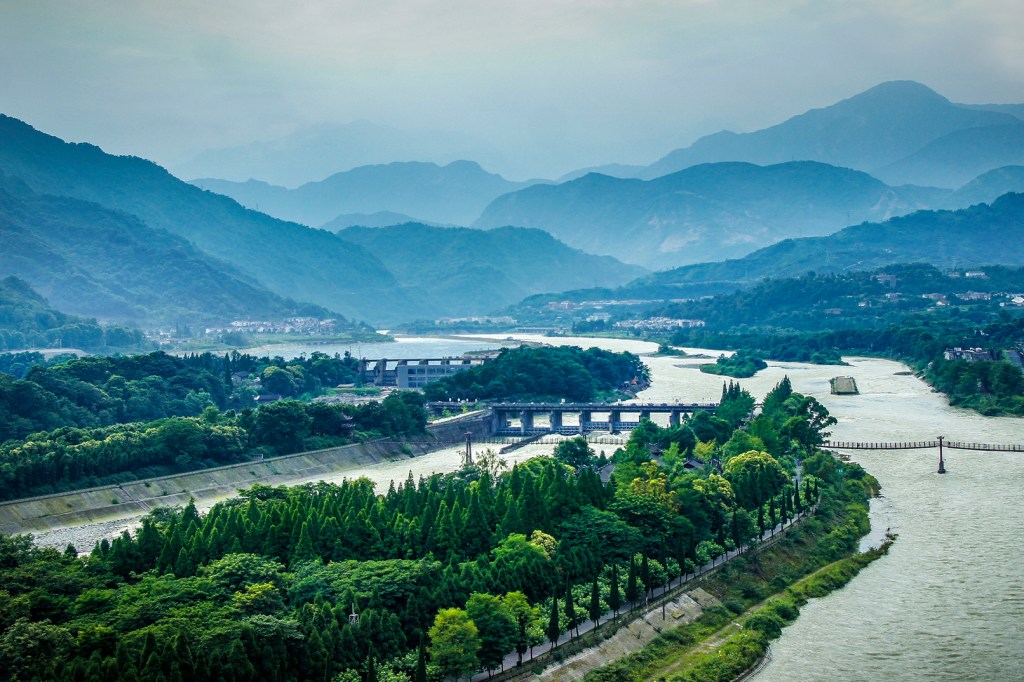
    Dujiangyan, Ancient Hydraulic Engineering Project Still in Use.

    The 1st year of Emperor Cheng’s Heping Era (28 B.C.)

    In the spring, Du Qin recommended Wang Yanshi of Qianwei to Wang Feng, and Wang Yanshi was appointed to oversee the breach of the Yellow River. Wang Feng designated him Special Envoy for the Yellow River embankments. Wang Yanshi employed bamboo crates, each forty feet in length and nine men in circumference, filled them with small stones, and floated them downstream, each crate pressed by two boats. Within thirty-six days, the embankment was completed.

    In March, an edict appointed Wang Yanshi Grand Master of Merit, with emoluments of the two-thousand-picul rank, and bestowed upon him the title of Marquis within the Passes, together with one hundred catties of gold.

    In summer, on April 30, a solar eclipse occurred. An edict was issued calling upon officials and ministers to discuss the court’s faults openly and without restraint, and a general amnesty was proclaimed throughout the realm.

    The Grand Master of Merit, Liu Xiang, responded: “In late April and early May, the month of this eclipse corresponds to that of the eclipse in the time of Emperor Hui, and the day of this eclipse corresponds to that in the time of Emperor Zhao. Neither of those emperors left a son. This portent thus suggests a threat to the dynastic succession.” At the time, Empress Xu monopolized the Emperor’s intimacy, and few in the harem had the opportunity to see him. Both within and beyond the palace, people feared there would be no heir. Accordingly, Du Qin, Gu Yong, and Liu Xiang all raised this concern in their responses.

    The Emperor then reduced expenditures for the Pepper Chamber—the Empress’s residence—and the rear quarters of the harem. Henceforth, outlays for clothing, carriages, and other necessities were to be supplied through the various government offices, and gifts to the Empress’s family and to ministers were to follow the precedents established before the Jingning era (under Emperor Yuan).

    The Empress submitted a memorial in her own defense, saying: “Times and institutions change; different measures may complement one another without departing from the Han system. Minor details cannot always be made to coincide exactly. To compare the period before the Jingning era (under Emperor Yuan) with the period before the Huanglong era (under Emperor Xuan) is unreasonable. My household staff does not understand, and this decree now makes it so that I cannot so much as move my hand freely. If I wish to have a screen made and placed somewhere, they will say, ‘There is no precedent for this,’ and I will be constrained by the decree. This truly cannot be carried out. I beg Your Majesty to reconsider!

    “By precedent, sacrifices using a single head of cattle were offered to grandparents; yet my grandparents—Marquis Dai (Xu Guanghan, whose title was inherited by Xu Jia, her father) and Marquis Jing (Xu Yanshou, Xu Jia’s biological father)—have, by Your Majesty’s exceptional grace, received the honor of grand sacrifices. If we must adhere strictly to precedent, then we should offer only a single head of cattle. I beg Your Majesty to show mercy!

    “Now, as soon as the officials received the decree and read it aloud, they made its meaning plain to me: that these resources are not to be treated as private household property, to be taken at will. This is the beginning of a slippery slope—constraining me in a manner contrary to human nature. I ask Your Majesty to examine this thoroughly!”

    The Emperor replied, citing the statements of Gu Yong and Liu Xiang concerning disasters and portents arising from the harem: “Officials are constrained by the law and should not be overly reproached. In rectifying excess, there is often the risk of overcorrection; this has been so throughout history. The reduction of expenditures and the offering of sacrifices with only a single head of cattle are intended to foster virtue and to win for you, Empress, greater praise and renown. If the root causes of calamity are not removed, disasters will continue, and our ancestors will not receive their proper sacrifices—still less the Marquis Dai. Does not the Classic say, ‘Those who are frugal seldom go astray’? Does the Empress truly wish to pursue a path of extravagance?

    “I could have followed the example of Emperor Wu; had I done so, the palaces of Ganquan and Jianzhang might have been restored. No—Emperor Wen is my model, and the Empress Dowager is the standard for the Empress. If the Empress Dowager, when she was Empress, did not attain such a standard, yet you now enjoy intimacy and favor, do you begrudge surpassing her example? The Empress should diligently cultivate virtue, practice modesty and frugality, and set a pattern for the other consorts, thereby establishing a lasting standard.”

    The Palace Steward, Ping Dang of Pingling, submitted a memorial stating: “The Emperor Emeritus, founding ancestor of the Han dynasty, should not have his mausoleum and temple precincts left in neglect.” The Emperor, who was also concerned about the lack of an heir, accepted this advice. In September of autumn, the mausoleum and temple precincts of the Emperor Emeritus were restored.

    An edict declared: “At present, there are more than a thousand provisions for capital punishment in the penal code, and the laws and decrees are numerous and intricate, amounting to over a hundred thousand words. Special statutes and far-reaching citations increase daily. Even those well versed in the law find them difficult to comprehend; how much more so the common people? This ensnares the innocent and leads to wrongful deaths. Is this not tragic? Discuss the reduction of capital penalties and the simplification of the laws so that they may be clear and easily understood, and submit your proposals.”

    At the time, officials failed to convey and propagate the Emperor’s intent in full, merely quibbling over minor points and listing a few matters to satisfy the edict superficially.

    At the New Year celebration in the first month of spring, the Chanyu of the Xiongnu sent the Right Gaolin King, Yiye Moyan, to present tributes at court.

  • Comprehensive Reflections to Aid in Governance(Part 235): Paying Procrastination Tax

    Comprehensive Reflections to Aid in Governance

    By Sima Guang

    Translated By Yiming Yang  

    Annals of Han Book 22 Scroll 30 (continued)

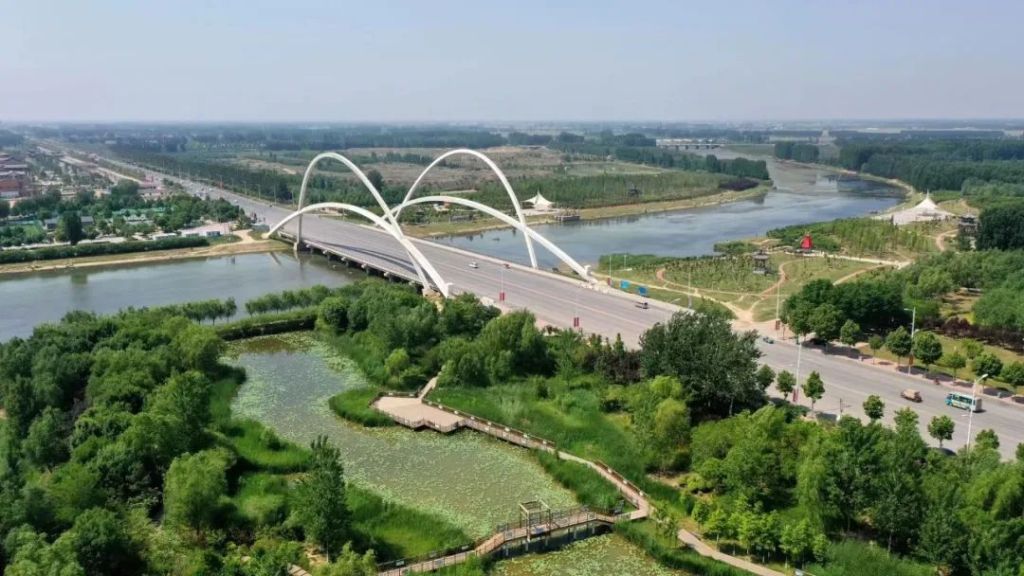
    Jindi Bridge, Puyang, Henan Province

    The 4th year of Emperor Cheng’s Jianshi Era (29 B.C.)

    In April of summer, snow fell.

    In late autumn, peach and plum trees bore fruit.

    Heavy rain fell for more than ten days, causing the Yellow River to breach the Jindi River Embankment in Dongjun Commandery. Earlier, Feng Qun, Commandant of Qinghe, had submitted a report stating: “This commandery lies downstream of the Yellow River, where the soil is light and prone to collapse. The absence of major disasters in recent times has been due to the Tunshi River connecting two streams and diverting the flow. Now that the Tunshi River is blocked, the Lingmingdu Outlet has become even more obstructed, leaving a single channel to bear the force of several rivers. Even if the embankments are raised, this cannot ultimately relieve the pressure. Should rain continue for ten days, an overflow will be inevitable.

    “The former courses of the Nine Rivers are now obliterated and difficult to trace, but the Tunshi River, having only recently been blocked, can easily be dredged. Its position is high, making it suitable for dispersing the water’s force and for constructing a water-control project. Dredging it would enable the Yellow River to discharge floodwaters and serve as a contingency against emergencies. If repairs are not undertaken in advance, a northern breach will damage four or five commanderies, while a southern breach will affect more than ten commanderies. To worry only after disaster strikes will be too late.”

    The matter was referred to the Chancellor and the Grand Master of the Censorate, who recommended dispatching the Erudite Xu Shang to conduct an inspection. Xu Shang proposed: “Given the present lack of funds, dredging may be deferred.”

    Three years later, the Yellow River indeed breached at Guantao and at the Jindi River Embankment in Dongjun Commandery, flooding Yanzhou and Yuzhou and reaching Pingyuan, Qiancheng, and Jinan. In total, four commanderies and thirty-two counties were inundated, submerging more than 150,000 acres of land, with depths reaching thirty feet in some places. Nearly forty thousand official pavilions and private dwellings were destroyed.

    In November of winter, the Emperor severely reprimanded Yin Zhong, Grand Master of the Censorate, for his ineffective and erroneous flood-control measures, accusing him of dereliction of duty. Yin Zhong thereupon committed suicide.

    The Grand Minister of Agriculture, Fei Diao, was dispatched to oversee the distribution of money and grain to the commanderies affected by the Yellow River floods. Two court ushers were sent east of Henan to mobilize five hundred boats, and more than ninety-seven thousand people were relocated to high ground to escape the floodwaters.

    On November 20, Zhang Zhong, the Privy Treasurer, was appointed Grand Master of the Censorate.

    Bandits in the southern mountains, led by Peng Zong and numbering several hundred, were inflicting harm on officials and civilians. The Emperor issued an edict deploying one thousand troops to suppress them, yet after more than a year they could not be captured. Someone advised the Grand General Wang Feng, saying: “When several hundred bandits operate at our very doorstep and cannot be apprehended, it is difficult to display authority to the foreign tribes. Only by selecting an outstanding Intendant of Jingzhao can this be resolved.”

    Wang Feng recommended the former Magistrate of Gaoling, Wang Zun, who was summoned to serve as Grandee of Remonstrance and Commandant of Jingzhao, acting as Intendant of Jingzhao. Within a few months, the bandits were eliminated, and Wang Zun was thereafter formally appointed Intendant of Jingzhao.

    At the beginning of the Emperor’s reign, Chancellor Kuang Heng reported: “Chen Tang, Colonel of Shooting the Sound, while serving as an envoy of the two-thousand-picul rank, conducted himself improperly among the barbarians and stole treasures from Kangju, instructing his subordinates that ‘matters in distant territories are not subject to scrutiny.’ Although this occurred before the amnesty, he should not be allowed to hold office.” In consequence, Chen Tang was dismissed without formal charges. Later, Chen Tang reported that the hostage prince of Kangju was not the king’s son; upon investigation, however, it was found that the hostage was indeed the king’s son. Chen Tang was then imprisoned and faced the death penalty.

    The Grandee of the Palace, Gu Yong, submitted a memorial in Chen Tang’s defense, saying: “I have heard that when Chu had Cheng Dechen (courtesy name Ziyu), Duke Wen of Jin lost sleep over him; when Zhao had Lian Po and Lord Mafu, mighty Qin did not dare to advance through Jingxing Pass; and in more recent times, when the Han had Zhi Du and Wei Shang, the Xiongnu did not dare to move south of the Gobi. From this it may be said that victorious generals are the claws and fangs of the state and ought to be highly prized. A gentleman, upon hearing the drums of war, thinks of the ministers who serve as generals.

    “I have observed that the Marquis within the Passes, Chen Tang, who formerly beheaded Zhizhi, struck fear into all the barbarians and extended the military might of Han to the Western Seas. Since the founding of Han, there has been no such exemplary general who has led expeditions beyond the borders. Now Chen Tang is imprisoned for a minor fault of speech, detained for a long time without resolution, while the judicial officers intend to impose the death penalty.

    “In former times, Bai Qi of Qin conquered Yingdu in the south and buried Zhao Kuo alive in the north, yet was granted death at Duyou for a small fault. The people of Qin pitied him and wept. Today, Chen Tang personally wielded the axe and led troops thousands of miles, achieving merits that should be recorded in  the ancestral temple and reported to Heaven. The armored soldiers admire his righteousness. His error of speech does not constitute a grave offense. The Book of Zhou says, ‘Record a man’s merits and forget his faults; this is fitting for a lord.’ Even dogs and horses that serve men are given honorable burials; how much more should the state’s meritorious officers be so treated?

    “I fear that if Your Majesty disregards the sound of the war drums and does not heed the wisdom of the Book of Zhou, forgetting the principle of rewarding service, treating Chen Tang as an ordinary and undistinguished minister, and follows the judges’ proposal to condemn him, the people will harbor deep resentment, as did the people of Qin. This is not the way to encourage loyal ministers who face death and hardship for the sake of the state.”

    Upon receiving the memorial, the Emperor released Chen Tang from prison, stripped him of his marquisate, and reduced him to the status of a common soldier.

    Around this time, the Protector-General (Viceroy) of the Western Regions, Duan Huizong, was besieged by Wusun forces. A courier brought word and requested that troops be dispatched from the various western kingdoms and from Dunhuang for his relief. Chancellor Wang Shang, Grand General Wang Feng, and the other high ministers deliberated for several days without reaching a decision. Wang Feng then proposed: “Chen Tang is known for his strategic insight and familiarity with foreign affairs. We should consult him.”

    The Emperor summoned Chen Tang to the Xuanshi Hall. Chen Tang, who had suffered frostbite during his campaign against Zhizhi, had arms that could no longer be fully extended. When he entered, an edict exempted him from performing the bow of salutation, and he was shown Duan Huizong’s memorial. Chen Tang replied, “I believe there is no cause for concern.”

    The Emperor asked, “Why do you say so?”

    Chen Tang answered: “In combat, barbarian soldiers are but one-fifth the worth of Han soldiers, for their weapons are blunt and their bows and crossbows ineffective. Even though they have lately acquired some of our techniques, they are still no more than one-third as effective. Moreover, the Art of War says, ‘When the attacking force is twice that of the defender, the two are evenly matched.’ The troops besieging Duan Huizong are insufficient to overcome him; Your Majesty need not be anxious. Furthermore, light troops can march fifty li a day, and heavy troops thirty. If relief forces are summoned from the nomad kingdoms and from Dunhuang, they will require time to arrive and will be better suited for retaliation than for immediate rescue.”

    The Emperor asked, “What, then, should be done? Can the siege be broken, and when?”

    Chen Tang, knowing that the Wusun forces were loosely allied and unable to sustain a prolonged siege, and recalling past instances of short encirclements, replied, “The siege must already have been lifted.” Counting on his fingers, he added, “Within five days we will hear good news.”Four days later, a military report arrived confirming that the siege had indeed been raised. Thereupon, Grand General Wang Feng recommended appointing Chen Tang as Gentleman of the Central Staff, with all major decisions in the Grand General’s office to be entrusted to his discretion.

  • Comprehensive Reflections to Aid in Governance(Part 234): Equal Opportunity in Heir Reproduction

    Comprehensive Reflections to Aid in Governance

    By Sima Guang

    Translated By Yiming Yang  

    Annals of Han Book 22 Scroll 30 (continued)

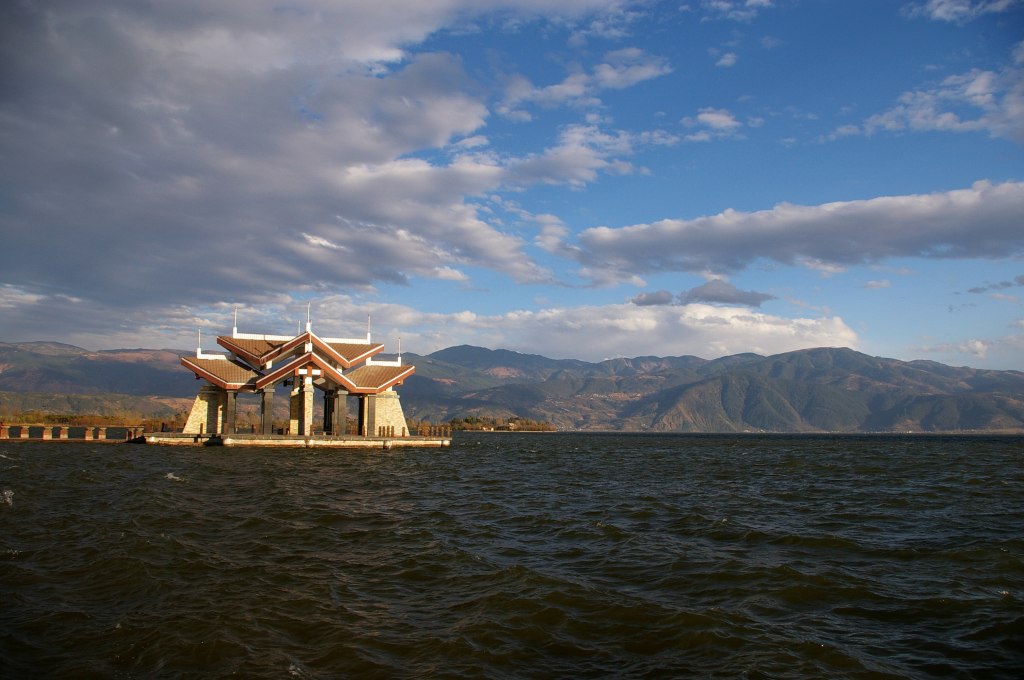
    Qionghai Lake, Xichang(Yuesui), Sichuan Province

    The 3rd year of Emperor Cheng’s Jianshi Era (30 B.C.)

    In March of spring, an amnesty was granted to all those imprisoned throughout the empire.

    In autumn, rain fell continuously in Guanzhong for more than forty days. The inhabitants of the capital grew alarmed and spread rumors that a great flood was imminent. The common people fled in panic, trampling one another; the old and the weak cried out in distress, and great disorder arose in Chang’an. The Emperor personally appeared in the front hall and summoned the ministers to deliberate. The Grand General Wang Feng proposed: “The Empress Dowager, the Emperor, and the palace women should take to boats, and the officials and populace should be instructed to ascend the walls of Chang’an to avoid the flood.”

    The Emperor and the ministers were inclined to accept Wang Feng’s proposal. Only the General of the Left, Wang Shang(Marquis of Lechang), said: “Since antiquity, even in states lacking proper governance, floods have never overrun city walls. Now the realm is at peace, there are no wars, and the people live in harmony. How could there suddenly be a flood overflowing the capital in a single day? This must be a false rumor. It is not appropriate to order the people onto the city walls and thereby further alarm them.”

    The Emperor thereupon suspended the plan. After some time, conditions in Chang’an gradually returned to calm, and upon investigation the report was indeed found to be false. The Emperor praised Wang Shang for his steadfast judgment and frequently commended his counsel, while Wang Feng was deeply ashamed and regretted his hasty words.

    The Emperor wished to entrust state affairs entirely to Wang Feng. In August, he dismissed Xu Jia from his post as General of Chariots and Cavalry and appointed him a Special Marquis, permitting him to attend court deliberations.

    Zhang Tan was dismissed for improprieties in the selection and recommendation of officials. In October of winter, Yin Zhong, Grand Master of Merit, was appointed Grand Master of the Censorate.

    On December 1, a solar eclipse occurred. That night, an earthquake struck within Weiyang Palace. The Emperor issued an edict calling for the recommendation of virtuous, upright, and outspoken men capable of offering uncompromising remonstrance. Du Qin and the Associate Minister of Ceremonies, Gu Yong, responded that excessive indulgence and jealousy within the harem were harmful and could endanger the imperial succession.

    In Yuesui Commandery, a mountain collapsed.

    On December 30, Kuang Heng was accused of having appropriated more than four hundred mu of fief land and of overseeing a steward who embezzled more than ten catties of gold. He was dismissed from office and reduced to the status of a commoner.

    The 4th year of Emperor Cheng’s Jianshi Era (29 B.C.)

    In the spring, on January 26, meteorites fell four times in Bo County and twice in Feilei County.

    The eunuchs of the Palace Secretariat were dismissed, and for the first time five posts were established in the State Secretariat.

    On March 8, Wang Shang, Marquis of Lechang and General of the Left, was appointed Chancellor.

    In summer, the Emperor summoned those who had previously been recommended for their forthright speech to the White Tiger Hall, ordering them to submit written responses to the questions he had posed. At the time, the Emperor had entrusted governance to Wang Feng, and many critics attributed various problems to him. Gu Yong, aware that Wang Feng held real power and secretly seeking to align himself with him, wrote in his essay:

    “At present, the four barbarian tribes are all submissive, having become subjects and dependents. In the north there is no menace from the Xunyu tribes or Modu Chanyu; in the south, none from Zhao Tuo or Lü Jia. The frontiers are at peace, with no alarms of warfare. The major principalities govern only a few commanderies, and their authority is held by Han officials, preventing any independent action—unlike the former situations of the principalities of Wu, Chu, Yan, or Liang. Officials are interlinked, with both close and distant relations working together. Ministers and nobles display the loyalty of Shen Bo, being cautious and respectful, without the conspiracies of Marquis Zhonghe of Mang Tong, Marquis of Anyang Shangguan Jie, or Marquis of Bolu Huo Yu. In these three respects there is no cause for concern. Yet I fear that Your Majesty may overlook what is clear and evident, heed obscure and confused counsel, cast blame upon the innocent, and thereby depart from proper governance. This would result in a grave loss of Heaven’s favor and constitute one of the most serious of errors.”

    “If Your Majesty sincerely examines these humble words, casts aside the tendency to indulge a single favored beauty, eliminates partiality, exercises firm masculine authority, and applies the impartiality of Heaven, then let concubines be chosen from among the people on an equal basis, adding virtuous and suitable women capable of bearing sons, without discrimination on the grounds of appearance, prior marriage, or age. By following this principle, Your Majesty may obtain heirs of humble origin, which would itself be a blessing; once an heir is established, the mother’s low status is of no consequence. Seek out honest and forthright women among female officials and palace attendants, and also broadly among the common people, so as to receive Heaven’s favor, relieve the concerns of the Empress Dowager, and appease the wrath of the Supreme Deity. In this way, the heirs will flourish and calamities will come to an end.”Du Qin expressed similar views in his examination response. The Emperor showed their examination papers to the harem and promoted Gu Yong to Grand Master of Merit.

  • Comprehensive Reflections to Aid in Governance(Part 233): Tame Libido with Rituals

    Comprehensive Reflections to Aid in Governance

    By Sima Guang

    Translated By Yiming Yang  

    Annals of Han Book 22 Scroll 30

    Duration of 10 years

    Bao Si, A Legendary Beauty serving the King You of Zhou.

    The 1st year of Emperor Cheng’s Jianshi Era (32 B.C.)

    In the spring, on January 1, a fire broke out at the temple of the late Emperor’s(Emperor Xuan) father (Liu Jin, also known as the Imperial Grandson Shi).

    Shi Xian was transferred to the post of Grand Coachman of the Changxin Palace, with emoluments equivalent to the two-thousand-picul rank. With this reassignment, Shi Xian lost his protection and authority. Thereupon, the Chancellor and the Grand Master of the Censorate submitted a memorial detailing Shi Xian’s past misconduct. His associates, Lao Liang and Chen Shun, were likewise dismissed from office. Shi Xian, together with his wife and children, was exiled to his native place. Stricken with grief, he refused food and died on the journey.

    All those who had obtained official appointments through their association with Shi Xian were dismissed. The Privy Treasurer, Wulu Chongzong, was demoted to Prefect of Xuantu Commandery, and the Censor-in-chief, Yi Jia, was appointed Commandant of Yanmen.

    The Colonel of the Capital Inspectorate (f.k.a. Colonel of Retainers), Wang Zun of Zhuojun, submitted a proposal for impeachment, stating: “Chancellor Kuang Heng and Grand Master of the Censorate Zhang Tan knew that Shi Xian and others had monopolized power, exercised authority arbitrarily, and inflicted grave harm and suffering throughout the empire. They failed to report these crimes promptly or enforce punishment, but instead flattered and accommodated them, deceiving their superiors and misleading the state, harboring wickedness and sowing disorder, thereby neglecting the duty of high ministers to assist in governance. Such conduct occurred before the amnesty decree and might therefore be pardoned. After the amnesty, however, Kuang Heng and Zhang Tan impeached Shi Xian. Rather than confessing their own disloyalty, they praised the former Emperor for employing subversive individuals, falsely asserting, ‘The officials feared Shi Xian more than the Sovereign,’ thereby belittling the Sovereign and exalting the ministers. This is inappropriate and undermines the dignity of senior ministers.”

    Thereupon, Kuang Heng, ashamed and fearful, removed his cap and offered an apology, submitting the seal and ribbon of his offices as Chancellor and Marquis. The Emperor, having only recently ascended the throne and being unwilling to impose severe punishment on a senior minister, demoted Wang Zun to the post of Magistrate of Gaoling. Many among the subordinate officials, however, supported Wang Zun. Kuang Heng, deeply uneasy and taciturn, repeatedly requested permission to resign whenever floods or droughts occurred. Each time, the Emperor issued edicts to console and reassure him and did not grant his resignation.

    The younger brother of the late Prince of Hejian, Liu Liang, who was serving as Prefect of the Shangjun Armory, was appointed the new Prince of Hejian.

    A comet appeared in the Encampment constellation.

    An amnesty was proclaimed throughout the empire.

    On February 28, the Emperor rewarded his maternal uncles and their dependents. He conferred upon his maternal uncle Wang Chong—previously a Grandee of Merit and a Marquis within the Passes—the title of Marquis of Ancheng. He also granted the titles of Marquis within the Passes to his maternal uncles Wang Tan, Wang Shang, Wang Li, Wang Gen, and Wang Fengshi.

    In April of summer, a yellow haze filled the air in all directions. The Emperor issued an edict broadly consulting the Three Excellencies and the ministers, instructing them to speak without restraint. The Grandee of Remonstrance Yang Xing, the Erudite Si Sheng, and others all stated: “This signifies an excess of Yin overwhelming the Yang “Qi”. According to the covenant of Emperor Gaozu, only those with meritorious service were to be enfeoffed as marquises. Now the brothers of the Empress Dowager have all been made marquises without merit—an unprecedented act for imperial relatives—and thus Heaven has manifested this anomaly.” Accordingly, the Grand General Wang Feng, in fear, submitted a memorial requesting to resign and retire, but the Emperor, by a gracious edict, did not permit it.

    The Censor-in-Chief Xue Xuan of Donghai submitted a memorial, saying: “Your Majesty’s utmost virtue and benevolence are profound, yet baleful influences still persist, and the harmony of Yin and Yang remains disturbed. This is likely due to the severity imposed by many officials. Provincial inspectors often fail to adhere to their proper duties and act according to personal inclination, intruding excessively into the affairs of commanderies and counties, opening the way for private interests, listening to slanderers and flatterers, seeking faults among officials and commoners, and punishing even minor infractions, while demanding obligations beyond their capacity. As a result, commanderies and counties are burdened and, in turn, they oppress the common people. Thus, mutual hospitality among communities is neglected; the nine degrees of kinship forget their bonds; assistance in times of need declines; and the rites of sending off and welcoming are no longer observed. When human relationships are obstructed, the harmony of Yin and Yang is disrupted, and the vital Qi cannot circulate freely. This may indeed be the cause.

    “The Book of Songs says, ‘When the people lose their virtue, they fall into disorder through petty offenses.’ A common saying holds, ‘Harsh governance estranges kinship, and excessive labor diminishes good fortune.’ When provincial inspectors submit their reports, it would be appropriate to instruct them clearly in the essential duties of the imperial court.”

    The Emperor approved and adopted his counsel.

    In August, two moons appeared in succession, visible in the east at dawn.

    In December of winter, construction began on the southern and northern suburban altars of Chang’an. The sacrifices at Ganquan and Fenyin were abolished, along with the extravagant embellishments of the Purple Altar, the choirs of girls and boys, imperial carriages with jingling horse bells, sacrificial crimson horses, dragon-horse statues, and stone altars.

    The 2nd year of Emperor Cheng’s Jianshi Era (31 B.C.)

    In January of spring, the sacrifices at the Five Deities Altar in Yong County and at the Chenbao(a meteorite found in Chencang) Shrine were abolished, all in accordance with the proposals of Kuang Heng. On January 23, the Emperor for the first time performed the suburban sacrifice at the southern suburbs of Chang’an. He granted amnesty to exiles serving sentences in Fengjiao County and to convicts in the capital region whose punishments were lighter than shaving the hair and beard, and he reduced the nationwide tax levy by forty coins per person.

    In the intercalary month, Weicheng City and Yanling Pavilion were designated as the initial burial site for the new Emperor.

    On March 14, the Emperor for the first time offered sacrifices to Earth at the northern suburbs.

    On March 19, he established Lady Xu as Empress. The Empress was the daughter of the General of Chariots and Cavalry, Xu Jia. Emperor Yuan, lamenting that his mother, Empress Gong’ai Xu Pingjun, had held her rank only briefly before falling victim to the injustices of the Huo family, therefore chose Xu Jia’s daughter as consort for his Crown Prince (the future Emperor Cheng).

    When the Emperor was still Crown Prince, he was known for his lust for beauty; after he ascended the throne, the Empress Dowager ordered the selection of daughters from reputable families to fill the harem. Du Qin, Magistrate of the Armory under the Grand General, admonished Grand General Wang Feng, saying:

    “According to the rites of antiquity, the Son of Heaven marries nine women at one time, thereby ensuring the flourishing and continuity of the ancestral line. Though younger women in time lose their youth, they are not replaced, so as to preserve the lord’s longevity and prevent contention. Thus, when the empress and concubines possess virtuous conduct, their descendants will be wise and noble lords; when the system is dignified and orderly, the lord will enjoy a long and prosperous life. If these rites are discarded, the lord may become obsessed with women; once such obsession goes unchecked, his lifespan will not extend to old age. 

    “Men of fifty still retain strong desires, while women of forty have already changed in appearance. To have a man still full of desire served by a woman whose appearance has altered, without the restraint of ritual, cannot quell the dominance of lust and will give rise to aberrant conduct. Aberrant conduct, in turn, causes the rightful Empress to harbor doubts and the concubines to breed rivalry and discord, thereby endangering the position of the legitimate heir. This is why Duke Xian of Jin was deceived by slanders, and Prince Shensheng suffered an unjust death.

    “Now the enlightened Sovereign, though in the prime of life, has as yet no heir. He remains devoted to learning and has not been reproached for indulging among empresses and concubines. General Wang, as you are chaperon in governing the state, it is fitting at the outset of this flourishing era to establish the system of the nine women, carefully selecting from families of upright conduct and righteousness, and seeking those of virtue. There is no need to require beauty, musical skill, or talents for entertainment, so as to set a great and enduring law for all ages. Be ever wary of the allure of beauty, for the poem ‘Xiaobian’ in the Book of Songs offers a chilling warning, recounting how King You of Zhou deposed his queen, took Bao Si as his favorite, and drove away the Crown Prince. I hope the General will always keep this concern in mind.”

    Wang Feng reported this to the Empress Dowager, who replied that there was no such precedent in Han. Wang Feng therefore could not establish the system on his own and simply followed existing practice.

    Wang Feng held Du Qin in great esteem and accordingly placed him on his staff. Matters of state and policy were often discussed with Du Qin, and Wang Feng frequently praised him as a learned man who rectified errors and supplied what was lacking. Many of the sound policies of the time originated with Du Qin.

    The Xiongnu ruler, Chanyu Huhanye, favored two nieces of his Left Yizhizi King, both daughters of his elder brother. The elder niece, Zhuanqu Yanzhi (the Queen), bore him two sons: the elder, Jumoche, and the younger, Nangzhiyasi. The younger niece became the principal consort, the Great Yanzhi, and bore him four sons: the eldest, Diaotaomogao; the second, Jumixu—both older than Jumoche—and the younger sons, Xian and Le, both younger than Nangzhiyasi. In addition, he had more than ten sons by other consorts.

    Zhuanqu Yanzhi was greatly honored, and Jumoche was deeply favored. When Huhanye fell gravely ill and approached death, he wished to establish Jumoche as his successor. Zhuanqu Yanzhi said: “The Xiongnu have been in turmoil for more than ten years, and their survival has hung by a single thread. It was only through the support of the Han that stability was restored. Now peace has endured but a short time, and the people are still recovering from the wounds of war. Jumoche is young, and the people have not yet rallied around him; I fear this may again imperil the state. Since the Great Yanzhi and I are of the same clan and both have sons, it would be better to establish Diaotaomogao.”

    The Great Yanzhi replied: “Although Jumoche is young, the high ministers could jointly manage the affairs of state. To set aside the noble and establish one of lesser rank will surely bring disorder in the future.” In the end, the Chanyu followed Zhuanqu Yanzhi’s counsel and established Diaotaomogao, with the understanding that the throne would later pass to his younger brother.After Huhanye’s death, Diaotaomogao ascended the throne as Fuzhulei Ruodi Chanyu. He appointed Jumixu as Left Tuqi King, Jumoche as Left Luli King, and Nangzhiyasi as Right Tuqi King. Fuzhulei Ruodi Chanyu also took Wang Zhaojun as his consort, and they had two daughters: the elder, Yun, who became Juci (Princess) of Xubu, and the younger, who was married to the Juci(Princess) of Dangyu.

  • Comprehensive Reflections to Aid in Governance(Part 232): Musician Emperor

    Comprehensive Reflections to Aid in Governance

    By Sima Guang

    Translated By Yiming Yang  

    Annals of Han Book 21 Scroll 29 (continued)

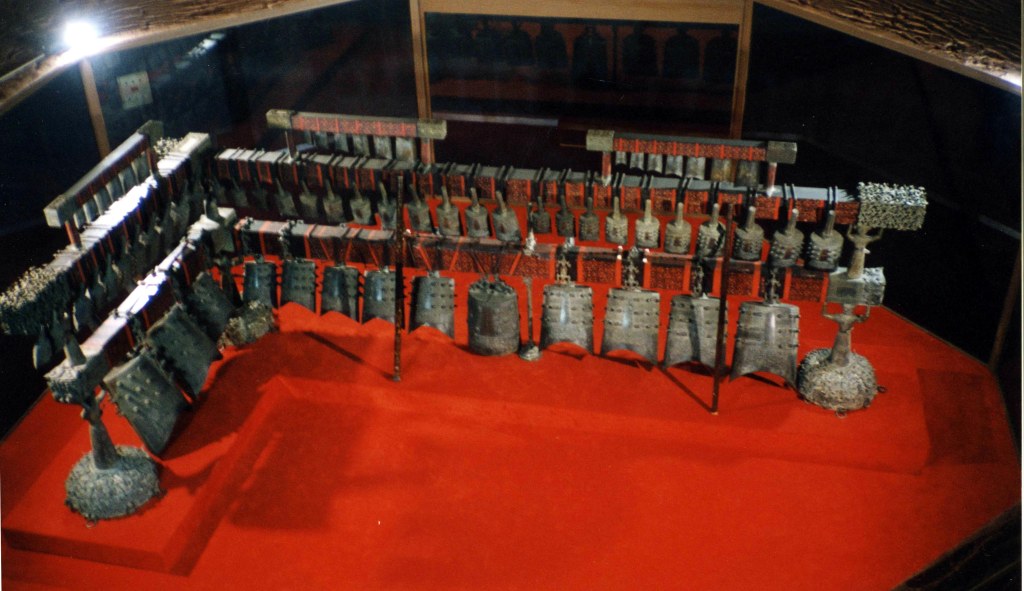
    Bianzhong(Chime Bells), Music Instrument of Zhou, Qin and Han dynasty. Photo by Zzjgbc.

    The 1st year of Emperor Yuan’s Jingning Era (33 B.C. continued)

    At first, the Crown Prince, delighted in the study of the classics, was broad-minded and cautious in conduct. Later, however, he became indulgent in wine, fond of banquets and music, and the Emperor gradually came to regard him as lacking ability. Meanwhile, the Prince of Shanyang, Liu Kang, possessed talent and skill, and his mother, Consort(Zhaoyi) Fu, was deeply favored by the Emperor. For this reason, the Emperor often entertained the thought of establishing the Prince of Shanyang as heir.

    In his later years, the Emperor frequently suffered from illness and no longer personally attended to state affairs. He developed a fondness for music and amusement. At times he placed drums beneath the palace terrace and, standing above, cast bronze pellets downward to strike them, producing rhythmic sounds. None among the palace attendants or those skilled in music could master this technique, yet the Prince of Shanyang alone could do so, and the Emperor repeatedly praised him for it.

    Shi Dan remonstrated, saying, “True talent lies in keen understanding and delight in learning, in reviewing the old to know the new. In this, the Crown Prince is worthy. To judge men by skill in music and drumming is like claiming that musicians such as Chen Hui or Li Wei surpass Kuang Heng and are fit to serve as Chancellor.”

    The Emperor merely smiled.

    When the Emperor fell gravely ill, Consort(Zhaoyi) Fu and the Prince of Shanyang, Liu Kang, frequently attended him at his side, while the Empress and the Crown Prince were seldom granted audience. As the illness deepened, the Emperor grew increasingly uneasy and often questioned his attendants about the precedent of Emperor Jing’s establishing the King of Jiaodong as heir.

    At that time, the Crown Prince’s maternal uncle, Wang Feng, Marquis of Yangping, served as Guard Commandant and Privy Counselor. Together with the Empress and the Crown Prince, they were all alarmed and at a loss.

    Shi Dan, who attended closely upon the Emperor during his illness, seized a moment when the Emperor was resting alone. He entered directly into the chamber, knelt upon the green mat, and with tears streaming down his face, said:

    “The Crown Prince has long been established and has now held his position for more than ten years. His name is known throughout the realm, and the people have already given him their allegiance. I have observed that the Prince of Shanyang is much favored, and now rumors circulate among the people, saying that the heir may be changed. If this were to occur, the ministers would surely rise in fierce opposition, and calamity would follow. I beg to die first, to warn the court and settle the hearts of all!”

    The Emperor, by nature benevolent, was moved by his words and could not restrain his emotion. He sighed deeply and said, “I have long been infirm, and the Crown Prince and the two younger princes are still tender in years—how could I not be troubled? Yet there is no such intention. Moreover, the Empress is cautious, and the late Emperor deeply cherished the Crown Prince. How could I act contrary to his will? From where did the Commandant hear such words?”

    Shi Dan immediately withdrew, knelt again, and said, “This foolish servant has listened to idle rumors and deserves death.”

    The Emperor accepted his words and said, “My illness grows daily worse, and I fear I may not recover. Support the Crown Prince well, and do not act contrary to my will.”

    Shi Dan withdrew in tears. From that time onward, the position of the Crown Prince was firmly secured. Moreover, the General of the Right and Grandee of Merit, Wang Shang, together with the Director of the Palace Secretariat, Shi Xian, also upheld the Crown Prince, and their influence within the court grew ever stronger.

    In the summer, on May 24, Emperor Yuan passed away in Weiyang Palace.

    Ban Biao’s praising commentary: My maternal grandfather and uncles once served in attendance upon Emperor Yuan, and they related to me thus: “Emperor Yuan was multi-talented, well versed in the classics, skilled in the zither and lute, and adept at the flute. He composed melodies and verses, set them to regulated tones, and refined them to the utmost subtlety. From his youth he cherished Confucian learning, and upon ascending the throne he summoned scholars and entrusted them with governance. Thus Gong Yu, Xue Guangde, Wei Xuancheng, and Kuang Heng successively served as chancellors. Yet the Emperor was often absorbed in literary pursuits, soft-hearted and indecisive, whereby the endeavor of Emperor Xuan gradually declined. Nevertheless, he was generous and humble, upheld reverence and frugality, gentle in demeanor and refined in bearing, possessing the elegance and virtue of the ancients.”

    Kuang Heng submitted a memorial, saying:

    “Formerly, because of His Majesty’s illness, the abolished sacrifices were restored; yet blessings did not follow. According to the records, the tombs of Empress Wei Si(Wei Zifu), Crown Prince Li(Liu Ju), and Empress Li(Liu Ju’s Consort) all have surviving descendants and therefore should continue to receive offerings. As for the tombs of Emperor Hui and Emperor Jing, whose close kin have all passed away, they ought to be abolished. Concerning the temples of the Emperor Emeritus(Father of Emperor Gaozu), Emperor Wen, Empress Dowager Xiaozhao(Empress Shangguan), Empress Zhaoling(Mother of Emperor Gaozu), Empress Zhao’ai(Elder Sister of Emperor Gaozu), and Prince Wu’ai(Elder Brother of Emperor Gaozu), it is appropriate that their sacrifices be discontinued and their tombs removed.”

    The proposal was approved.

    On June 22, the Crown Prince ascended the throne and paid homage at the Temple of Emperor Gaozu. He honored the Empress Dowager Wang(Emperor Xuan’s third Empress, Emperor Yuan’s Step Mother) as Grand Empress Dowager and the Empress Wang(Wang Zhengjun) as Empress Dowager. He appointed his maternal uncle, the Privy Counselor, Commandant of the Guards, and Marquis of Yangping, Wang Feng, as Grand Marshal, Grand General, and Recorder of the State Secretariat.

    In autumn, on July 19, Emperor Yuan was buried at the Weiling Mausoleum.

    A general amnesty was proclaimed throughout the realm.

    Chancellor Kuang Heng submitted a memorial, saying: “Your Majesty, possessing utmost filial piety, is deeply mournful and constantly remembers with sorrow, never indulging in leisurely outings or hunting banquets. This genuine devotion to observing rites and honoring ancestors is commendable and should be cherished forever. I humbly hope that even though Your Majesty is naturally virtuous, you will continue to cultivate this holy heart. The Book of Songs states: ‘In loneliness and sorrow is like a lingering disease,’ indicating that King Cheng of Zhou, even after mourning, could not find peace of mind. This dedication is how he carried on the legacy of King Wen and King Wu of Zhou and upheld the foundations of great transformation.”

    “I have also heard from my teachers that ‘the relationship between husband and wife is the beginning of humanity and the source of all blessings. Only when the rites of marriage are correct can things prosper, and Heaven’s mandate be complete.’ Confucius began his discussion of the Book of Songs with ‘Guan Ju,’ as it is the starting point of order and the foundation of royal instruction. Since ancient times, the rise and fall of the three dynasties have all followed this principle. I hope Your Majesty will carefully consider the effects of gains and losses and the rise and fall, to establish a solid foundation by selecting virtuous individuals, avoiding indulgence in sensual pleasures, and maintaining a close relationship with the reverent and keeping a distance from the cunning.”

    “I have heard that the Six Classics were used by the sages to encompass the principles of Heaven and Earth, distinguish between good and evil, clarify the differences between auspicious and inauspicious, and guide people to the proper path without deviating from their natural dispositions. Additionally, the Analects and the Classic of Filial Piety, containing the essential words and actions of the sages, should be thoroughly understood. I have also heard that the sage kings, in their actions and movements, upheld Heaven and served their parents, presided over the court, and showed kindness to their ministers, all with appropriate decorum to exemplify human relations.”

    “They demonstrated reverence and caution as the appearance of serving Heaven; warmth, respect, and humility as the rites of serving their parents; uprightness and strictness as the demeanor of presiding over the court; and benevolence and harmony as the expression of treating subordinates. Every action was governed by proper ritual, thereby shaping righteousness and creating laws to follow. At the beginning of the first month, you visited the sleeping quarters, received court congratulations, and held a banquet to entertain the multitude. The classic says: ‘A gentleman is careful at the beginning.’ I hope Your Majesty will be mindful of the rhythm of movement and stillness, so the officials can look up to Your Majesty’s great virtue and glory, thus establishing a firm foundation. This would be a great fortune for the realm!”

    The Emperor respectfully accepted his advice.

  • Comprehensive Reflections to Aid in Governance(Part 231): Flaw Not Obscure Splendor of Jade

    Comprehensive Reflections to Aid in Governance

    By Sima Guang

    Translated By Yiming Yang  

    Annals of Han Book 21 Scroll 29 (continued)

    Kunlun Mountains

    The 1st year of Emperor Yuan’s Jingning Era (33 B.C. continued)

    Earlier, the Director of the Palace Secretariat, Shi Xian, had once sought to marry his elder sister to Gan Yanshou, but Gan Yanshou declined. When Gan Yanshou later returned after defeating Zhizhi Chanyu, both the Chancellor and the Grand Master of the Censorate disapproved of his conduct in forging the imperial decree and therefore withheld commendation for his achievements.

    Chen Tang was by nature avaricious. The wealth he seized and brought back through the frontier was often obtained unlawfully. The Colonel Inspectorate of the Capital (Colonel of Retainers) sent officials along the route to detain Chen Tang’s officers and soldiers for investigation. Chen Tang submitted a memorial stating:

    “The officers and soldiers under my command together punished Zhizhi Chanyu and were fortunate to capture and destroy him. After traveling thousands of li, we should have been met with envoys to welcome and reward us along the road. Instead, the Colonel Inspectorate of the Capital detains and interrogates us—this is no different from avenging Zhizhi Chanyu!”

    The Emperor immediately ordered the release of the detained officers and soldiers, and commanded the commanderies and counties along the route to supply the army with food and wine.

    After their return, when merits were being discussed, Shi Xian and Kuang Heng said:

    Gan Yanshou and Chen Tang rashly raised troops and acted without authorization. That they were not executed should already be counted as great leniency. If they are further rewarded with ranks and fiefs, then in the future envoys will all strive to act recklessly, provoking troubles with the barbarians and bringing calamity upon the state.”

    The Emperor personally admired the achievements of Gan Yanshou and Chen Tang, yet he also valued the opinions of Kuang Heng and Shi Xian. Thus, he delayed the decision for a long time.

    At this point, the former Minister of the Imperial Clan, Liu Xiang (formerly known as Liu Gengsheng), submitted a memorial:

    Zhizhi Chanyu imprisoned and slew envoys and officials by the hundreds. His crimes were proclaimed throughout the foreign lands, grievously damaging the dignity of the Han, so that all within the court were filled with righteous indignation. Your Majesty resolved to punish him and never for a moment forgot this resolve.

    “The Protector-General of the Western Regions, Gan Yanshou, together with the Lieutenant Colonel Chen Tang, upheld the imperial command and relied upon the awe of divine authority. They united the leaders of the various alien tribes, gathered the forces of the frontier cities, braved death countless times, and advanced deep into distant lands. They penetrated Kangju, captured three fortified cities, seized the enemy’s banners, and beheaded Zhizhi Chanyu. Their standards were unfurled thousands of li away, their might shook the regions west of the Kun Mountains(a.k.a. Kunlun Mountains), the disgrace of Gu Ji’s killing was avenged, and illustrious merit was established. All the foreign tribes trembled in fear and submission.

    Huhanye Chanyu, upon hearing of Zhizhi’s execution, was at once joyful and fearful; he turned toward righteousness, bowed in submission, and came to court, vowing to guard the northern frontier and serve the Han for generations. This achievement ensures peace for ten thousand ages and constitutes a merit unparalleled among ministers.

    “In antiquity, Fang Shu and Yin Jifu assisted King Xuan of Zhou in chastising the Xianyun(an old derogatory epithet for Xiongnu), thereby bringing all the tribes to submission. As the Book of Songs says:

    ‘Mighty and resounding, like thunder and lightning—
    Fang Shu went forth to chastise the Xianyun,
    brought all the southern tribes to submission.’

    “The Book of Changes says: ‘It is a commendable feat, When the head is taken, the rest submit.’ This praises the punishment of the chief offender, by which all the unruly are brought to obedience. Now Gan Yanshou and Chen Tang, by their thunderous strike and awe-inspiring might, achieved what the Book of Changes calls ‘taking the head,’ and what the Book of Songs likens to ‘thunder and lightning’—indeed, their merit surpasses even these examples.

    “When assessing great achievements, minor faults are not recorded; when praising great virtue, small errors are not examined. The Methods of Sima Rangju state: ‘Military rewards must not be delayed beyond one month,’ for merit must be promptly recognized, so that the will to serve is encouraged and achievement made manifest. This is the proper way to employ men of talent.

    “In former times, when Yin Jifu returned from his campaign, the Zhou court bestowed upon him great rewards. The Book of Songs says:

    Jifu returned in joy,
    Laden with abundant blessings;
    From Hao he came back,
    His journey long and arduous.’

    “A journey of a thousand li to Hao was already deemed far; how much more so a march of ten thousand li? Their toil and merit are therefore beyond measure.”

    Gan Yanshou and Chen Tang have not yet received the honors due to their achievements; instead, their great merits have been suppressed, and they have long endured petty accusations from court officials. This neither encourages merit nor inspires those of ambition.

    “In former times, Duke Huan of Qi first rendered great service in upholding the Zhou house, yet later committed the fault of destroying the state of Xiang. Historians nevertheless concealed his faults in order to exalt his merit. Likewise, the Ershi General Li Guangli exhausted fifty thousand troops and squandered immense resources over four years, yet gained only thirty fine horses. Though he slew the King of Dayuan, Wugua, his achievement scarcely compensated for the cost, and his private crimes were many. Nevertheless, Emperor Wu, mindful of the hardship of distant campaigns, overlooked his offenses and rewarded him with marquisates, high offices, and stipends of two thousand picul for more than a hundred men.

    “Now Kangju is stronger than Dayuan, and Zhizhi Chanyu’s renown surpassed that of the King of Dayuan; the crime of murdering envoys is graver still than withholding horses. Yet Gan Yanshou and Chen Tang neither exhausted the people nor drained the treasury, and their achievement exceeds that of the Ershi General a hundredfold.

    “Moreover, Chang Hui pursued and attacked the Wusun following his own initiative, and Zheng Ji received the submission of the Rizhu King without prior imperial command; yet both were granted fiefs and ennobled. Measured by military merit and hardship, Gan Yanshou and Chen Tang surpass Fang Shu and Yin Jifu; weighed by the balance of merit and fault, they exceed Duke Huan of Qi and the Ershi General; compared with more recent achievements, they stand above the Marquis of Anyuan(Zheng Ji) and the Marquis of Changluo(Chang Hui).

    “Yet now their great accomplishments are left unrewarded, while their minor faults are repeatedly magnified—this truly grieves the heart. It is fitting, therefore, to pardon and release them in due time, restore their ranks, set aside their faults, and bestow proper honors, so as to encourage merit and inspire those who serve the state.”

    Thereupon, the Emperor issued an edict granting pardon to Gan Yanshou and Chen Tang, ordering that their offenses not be pursued, and commanded the ministers to deliberate on the bestowal of ranks and titles. The officials argued that the precedent of military merit lay in the capture and execution of Zhizhi Chanyu. Kuang Heng and Shi Xian, however, objected, saying: “Zhizhi was originally a fugitive who had lost his state; he merely usurped the title in a remote land and was not truly a Chanyu.”

    The Emperor cited the precedent of the Marquis of Anyuan, Zheng Ji, who had been enfeoffed with a thousand households; yet Kuang Heng and Shi Xian persisted in their objections.

    In the summer, on April 30, Gan Yanshou was enfeoffed as Marquis of Yicheng, and Chen Tang was granted the title of Marquis within the Passes. Each received a fief of three hundred households, along with a reward of one hundred catties of gold. Gan Yanshou was appointed Colonel of Changshui, and Chen Tang was appointed Colonel of Shooting Sound; both were placed in command of troops.

    Thereafter, Du Qin submitted a memorial again discussing the merits of Feng Fengshi’s earlier campaign against Shache(Yarkant). The Emperor, deeming it an affair of the former reign, did not reopen the matter. Du Qin was the son of the former Grand Master of Censorate, Du Yannian.

    Xun Yue’s Commentary: If Feng Fengshi’s achievements and righteousness were sufficient to warrant enfeoffment, then revisiting and recording his former merits is indeed appropriate. According to the principles of the Spring and Autumn Annals, to censure the Duke of Lu for dismantling the ancestral temple was deemed improper, while to commend him for disbanding the central army was deemed correct—each judgment resting upon what was fitting to the circumstance.

    Matters undertaken without imperial authorization were always treated with caution by the former kings and were permitted only when necessity compelled them. If one acts without authorization in a great affair yet achieves little, punishment is fitting; if one acts without authorization in a lesser matter yet accomplishes great merit, reward is fitting; if merit and fault counterbalance one another, then leaving the matter unresolved is appropriate.

    Thus, judgments should be weighed on the gravity of the matter and rendered as befits its achievement.

  • Comprehensive Reflections to Aid in Governance(Part 230): Appearance of Nepotism

    Comprehensive Reflections to Aid in Governance

    By Sima Guang

    Translated By Yiming Yang  

    Annals of Han Book 21 Scroll 29 (continued)

    Changzhi (Shangdang), the Hometown of Feng clan, Shanxi Province

    The 1st year of Emperor Yuan’s Jingning Era (33 B.C. continued)

    At first, the Left Yizhizi King had proposed the strategy by which Huhanye Chanyu submitted to the Han, thereby bringing peace and stability. Later, however, slander arose against him, alleging that he boasted of his own merit. Huhanye Chanyu therefore grew suspicious and resentful. Fearing execution, the Left Yizhizi King fled to the Han with more than a thousand followers. The Han court granted him the title of Marquis Within the Passes, allotted him a fief of three hundred households, and permitted him to retain the seal and ribbon of a Xiongnu king.

    When Huhanye Chanyu later came to court, he met with the Left Yizhizi King and said, “Your counsel greatly benefited me, bringing peace to the Xiongnu. This merit is yours and cannot be forgotten. I failed to trust you and allowed you to depart without seeking to detain you—this was my fault. I now wish to report this to the Son of Heaven and request your return to the Xiongnu court.”

    The Left Yizhizi King replied, “The Chanyu relied upon Heaven’s mandate in submitting to the Han and thereby attained peace. This was due to the divine favor of the Chanyu and the blessing of the Son of Heaven—how could I claim such merit? Having already surrendered to the Han, to return again to the Xiongnu would be to serve two masters. I wish to serve the Chanyu by remaining as an envoy of the Han, and I dare not obey your command.”

    Though Huhanye Chanyu repeatedly urged him, he could not persuade the Left Yizhizi King to return, and thus departed alone.

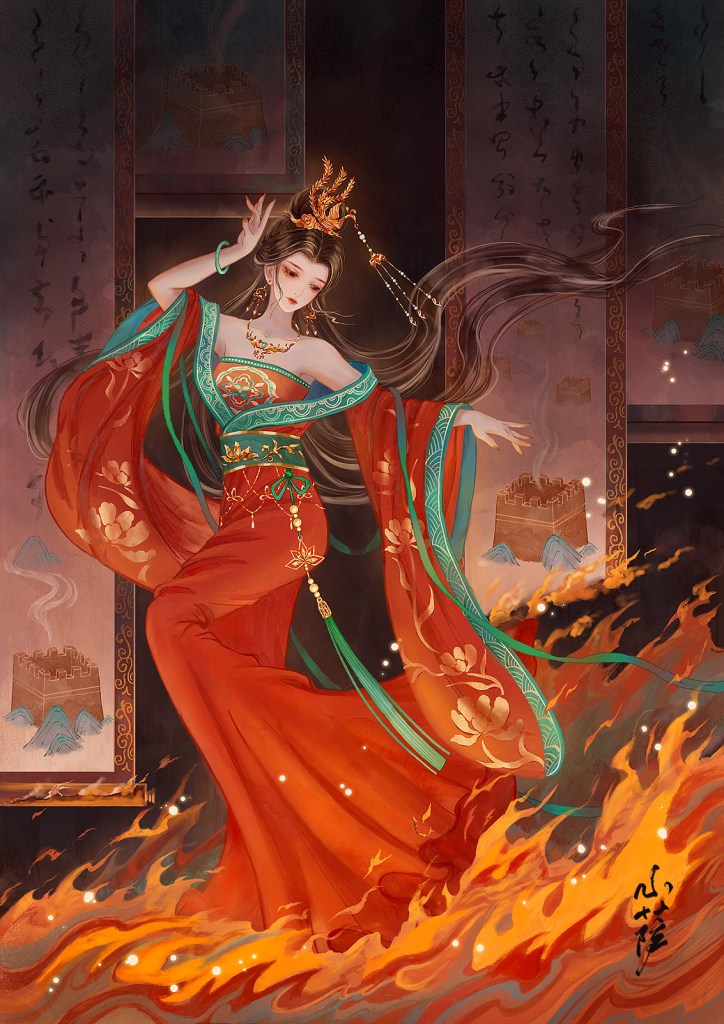
    The Chanyu then conferred upon Wang Zhaojun the title of Ninghu Yanzhi (“Queen of Pacifying the Nomad”), and she bore him a son named Yituzhiyashi, who later became the Right Rizhu King.

    The Crown Prince underwent his capping ceremony.

    In February, the Grand Master of the Censorate, Li Yanshou, passed away.

    Earlier, Shi Xian had observed that Feng Fengshi and his sons were men of reputation and influence, and that Feng Fengshi’s daughter, Feng Yuan—known as Feng Zhaoyi[Lady of Bright Deportment]—served as a favored consort within the inner palace. Desiring to attach himself to their power, Shi Xian recommended Feng Qun, the older brother of Feng Yuan, saying: “The Feng Zhaoyi’s elder brother, Herald Feng, is deferential and punctilious in carrying out commands; he is fit to attend within the inner quarters.”  The Emperor summoned Feng Qun, intending to appoint him as Privy Counselor. Feng Qun, however, seized the occasion to speak openly against Shi Xian’s monopolization of authority. The Emperor was greatly annoyed and dismissed him back to a Palace Gentleman.

    When the office of Grand Master of the Censorate fell vacant, many officials recommended Feng Qun’s elder brother, the Grand Herald Feng Yewang. The Emperor ordered the Minister of State Secretariat to select the most worthy candidate among officials with 2000-picul rank, and Feng Yewang was judged to be best in conduct and ability. The Emperor then consulted Shi Xian, who replied: “Among the Nine Ministers, none surpasses Feng Yewang. Yet because he is the elder brother of Consort(Zhaoyi) Feng, I fear that later generations may say Your Majesty elevated him out of partiality toward your consort.”

    The Emperor agreed, saying, “Well spoken—I had not considered this.” He then told the officials, “If I were to appoint Feng Yewang among the Three Excellencies, future generations would surely say that I favored my consort’s kin, and would cite Feng Yewang as their example.”

    In March, the Emperor issued an edict, saying:

    “Firm and unyielding, steadfast and resolute, indeed without personal desire—such is Feng Yewang, Grand Herald. Clear of mind and skillful in speech, fit to be dispatched to the four quarters—such is Wulu Chongzong, Privy Treasurer. Upright and incorrupt, frugal and disciplined—such is Zhang Tan, Junior Tutor to the Heir Apparent. Let the Junior Tutor be appointed Grand Minister of Justice.”

    The Prefect of Henan, Shao Xinchen of Jiujiang, was appointed Privy Treasurer. Formerly Prefect of Nanyang, and later transferred to Henan, Shao Xinchen consistently ranked first in governance. He treated the people as his own children, delighted in promoting their welfare, personally encouraged agriculture, and opened irrigation channels. The population of his commandery doubled. Officials and commoners alike cherished him and called him “Father Shao.”

    In the same month, the tombs and gardens of Emperor Hui (Liu Ying), Empress Dowager Wen (Empress Dou), and Empress Dowager Xiaozhao (Zhao Jieyu, Consort Gouyi of Emperor Wu) were restored.

  • Comprehensive Reflections to Aid in Governance(Part 229): Ten Reasons for Securing Border

    Comprehensive Reflections to Aid in Governance

    By Sima Guang

    Translated By Yiming Yang  

    Annals of Han Book 21 Scroll 29 (continued)

    Yin Mountains

    The 1st year of Emperor Yuan’s Jingning Era (33 B.C. continued)

    The Chanyu rejoiced greatly and submitted a letter, saying: “I am willing to guard the frontier from Shanggu to Dunhuang and transmit this charge to my descendants without end. I beg that the border defenses and garrisons be withdrawn, so that the people of the Son of Heaven may have rest.”

    The Emperor referred the matter to his ministers for deliberation, and all deemed it advantageous. Only the Court Attendant Hou Ying, well versed in frontier affairs, spoke in opposition.

    The Emperor asked for an explanation. Hou Ying replied:

    “Since the time of the Zhou and Qin, the Xiongnu have been violent and aggressive, constantly raiding the frontiers. Since the rise of the Han, we have suffered especially from their incursions. I have heard that the northern frontier stretches east to Liaodong and west beyond the Yin Mountains, extending for more than a thousand li, rich in grass, forests, and game. In former times, Modu Chanyu used this land as his hunting ground, fashioning bows and arrows there and launching his raids.

    “In the reign of Emperor Wu, when armies were dispatched on campaign, this territory was recovered and the Xiongnu were driven beyond the desert. Fortified barriers were erected, beacon towers and subterranean passes were established, outer walls were constructed, and garrisons were stationed to defend them. Only then did the borderlands attain a measure of peace.

    “North of the desert, the land is flat and barren, with little grass or timber and vast stretches of sand; when the Xiongnu come to raid, they have nowhere to conceal themselves. South of the barriers lie deep mountains and ravines, difficult to traverse. The elders of the frontier say: ‘Since the Xiongnu lost the Yin Mountains, they have never crossed them without weeping.’ If now the garrisons are withdrawn and the defenses abandoned, it would be to hand the eastern and northern tribes a single, immense advantage. This is the first reason it must not be done.

    “Now, under Your Majesty’s virtuous rule, Heaven shelters the Xiongnu, and they enjoy preservation and peace, bowing their heads in submission. Yet the nature of these tribes is such that when pressed they are humble and compliant, but when strong they grow arrogant and rebellious—such is Heaven’s design. Previously, the outer walls were already dismantled and the watchtowers reduced, leaving only what was needed to observe and signal. The ancients, even in times of peace, never forgot the possibility of danger; such defenses must not again be abolished. This is the second reason.”

    “Since antiquity, the Central State has established passes and bridges in order to restrain the feudal lords, thereby cutting off any thought of ambition among the people. The construction of frontier barriers and the stationing of garrisons were not undertaken solely because of the Xiongnu, but also on account of the various dependent states and surrendered peoples who had once belonged to them—lest they recall former ties and flee back. This is the fourth reason.

    “Recently, the Western Qiang have dwelt near the frontier posts and come into contact with the Han populace. Officials and commoners, driven by greed, have encroached upon them, seizing their livestock and taking their wives and children. For this they harbored resentment and rose in rebellion. Now, if the mounted frontier posts are abolished, arrogance and contempt will arise, disputes will multiply—this is the fifth reason.

    “In former times, many soldiers went to war and never returned; their sons and grandsons were left in poverty. If one day they should flee, they would surely seek refuge among their kin among the Xiongnu—this is the sixth reason.

    “Moreover, the bondservants and slaves of the border people live in hardship. Many long to flee, saying, ‘We hear that life among the Xiongnu is easy; only the strict watch and guard restrain us.’ Even now, some slip away beyond the frontier—this is the seventh reason.

    “Furthermore, bandits and violent men, when pressed by the law, often flee northward beyond the borders, beyond our ability to pursue or restrain them—this is the eighth reason.

    “Since the establishment of the frontier defenses, more than a hundred years have passed. Not all were built of rammed earth alone: some relied upon mountain cliffs, stone and timber, river valleys, and water-gates, which were gradually leveled and joined together. Soldiers and laborers toiled to construct and repair them; the hardship and expense accumulated through generations are beyond reckoning. I fear that those who now deliberate have not examined the matter from beginning to end, and wish to abolish at once all corvée service and garrison duties. Yet within ten years—or within a hundred—should circumstances change, and should the barriers collapse and the watch-posts and subterranean passes disappear, new garrisons would again have to be raised and the works rebuilt. The accumulated labor of generations cannot be restored in a single day. This is the ninth reason.

    “If the garrisons are withdrawn and the watch-posts reduced, the Chanyu, relying upon his own frontier defenses, will surely feel deep gratitude toward Han and will make incessant requests. Should we then displease him even slightly, the consequences would be beyond all calculation. To open a breach for the tribes and diminish the strength of the Central State—this is the tenth reason.

    “Withdrawing garrisons is not the long-term strategy by which lasting peace is preserved and the hundred tribes are held in awe.”

    After hearing this, the Emperor issued a decree: “Let there be no further discussion of dismountling the frontier defenses.”

    He then dispatched Xu Jia, General of Chariots and Cavalry, to convey this message to Huhanye Chanyu, saying:

    “The Chanyu has written, requesting that the northern frontier officials and garrisons be withdrawn, pledging that his descendants will guard the border for generations to come. The Chanyu’s admiration for propriety and his concern for the welfare of the people reveal a far-sighted intention, which We greatly commend.

    “The Central Realm, however, maintains barriers and defenses in all four directions—not solely to guard against external threats, but also to restrain disorder within. Clear laws and firm institutions are the means by which order is preserved. We fully understand and appreciate the Chanyu’s intent and harbor no suspicion. Yet, lest the Chanyu be perplexed by the continued maintenance of these defenses, we have therefore dispatched Xu Jia to explain the matter in person.”

    Huhanye Chanyu replied:

    “I did not comprehend this far-reaching design. I am deeply grateful that the Son of Heaven has sent a high minister to instruct me. I receive this with reverence and gratitude.”

  • Comprehensive Reflections to Aid in Governance(Part 228): Wang Zhaojun Marrying to Xiongnu

    Comprehensive Reflections to Aid in Governance

    By Sima Guang

    Translated By Yiming Yang  

    Annals of Han Book 21 Scroll 29 (continued)

    The 4th year of Emperor Yuan’s Jianzhao Era (35 B.C.)

    In  January of spring, the head of Zhizhi Chanyu arrived at the capital. Gan Yanshou and Chen Tang submitted a memorial, saying:

    “We have heard that the great principle under Heaven is unity. In antiquity there were the reigns of Yao of Taotang and Shun of Youyu; in the present age there is the mighty Han. The Xiongnu Chanyu Huhanye has already acknowledged himself a northern vassal, yet Zhizhi Chanyu alone remained defiant and had not yet met due punishment. West of Daxia (Bactria), the peoples believed that the mighty Han could not subdue him.

    Zhizhi Chanyu inflicted cruel suffering upon the people and committed great crimes, all witnessed by Heaven. We, your servants Gan Yanshou and Chen Tang, have led righteous troops to carry out Heaven’s punishment. Relying upon Your Majesty’s divine authority, and aided by the harmonious response of yin and yang, the weather was clear, our armies broke through the enemy lines, defeated the foe, and beheaded Zhizhi Chanyu together with his nobles. His head should be displayed among the residences of the barbarian ambassadors in the capital, so that those throughout the myriad lands may know that whoever offends the mighty Han, no matter how distant, will surely be punished.”

    The Chancellor Kuang Heng and others remonstrated, saying, “Since it is spring, the season for covering bones and burying the dead, it would be fitting not to display the head of Zhizhi Chanyu.”

    The Emperor decreed that it be displayed for ten days and then buried. He further ordered sacrifices to be offered at the suburban altars and proclaimed a general amnesty throughout the empire. The ministers all came forward to offer congratulations, and a banquet was held.

    On June 5, Liu Jing, Prince Ai of Zhongshan, passed away. The Prince was the Emperor’s younger brother and had grown up studying together with the Crown Prince. Upon his death, the Crown Prince went to attend the mourning rites. When the Emperor saw him, he was moved by memories of the Prince of Zhongshan and was overcome with grief. The Crown Prince, however, showed no outward sorrow. The Emperor was greatly angered and exclaimed, “How can one who lacks compassion and benevolence serve the ancestral temples and become a parent to the people?”

    At that time, Shi Dan, Commandant of the Cavalier Escort, was in charge of  protecting the Crown Prince’s household. The Emperor reproached him. Shi Dan removed his cap and apologized, saying, “I indeed saw that Your Majesty mourned deeply for the Prince of Zhongshan, to the point of shedding tears. When the Crown Prince was about to appear, I privately instructed him not to weep, lest he further distress Your Majesty. The fault lies with me alone; I deserve death.” The Emperor found his explanation reasonable and his anger subsided.

    In Lantian, an earthquake caused a mountain to collapse, blocking the Ba River. In Anling, a landslide caused the riverbank to give way, obstructing the Jing River, which then flowed backward.

    The 5th year of Emperor Yuan’s Jianzhao Era (34 B.C.)

    In March of spring, a general amnesty was proclaimed throughout the empire.

    In summer, on June 17, the Emperor restored the Li Garden, the tomb of his great-grandfather(Liu Ju). 

    On June 30, at the close of the moon, a solar eclipse occurred.

    In autumn, on July 28, the Emperor restored the ancestral temples and mausoleums of the Emperor Emeritus(Prince Li, great-grandfather of the Emperor, Liu Ju), as well as the temples of the imperial progenitors, and the tombs of Empress Zhaoling (mother of Emperor Gaozu), Prince Wu’ai (brother of Emperor Gaozu), Empress Zhao’ai (sister of Emperor Gaozu), and Empress Weisi (Wei Zifu). At the time, the Emperor had long been afflicted by illness and believed that the ancestral spirits were displeased. Therefore, he ordered these sites to be fully restored. The ancestral temples in the commanderies and princedoms, however, remained abolished.

    In that year, Liu Kang, Prince Kang of Jiyang, was transferred to become Prince of Shanyang.

    When Huhanye Chanyu of the Xiongnu heard that Zhizhi had been executed, he was both fearful and relieved. He sent a letter expressing his wish to come to court and present himself in the audience.

    The 1st year of Emperor Yuan’s Jingning Era (33 B.C.)

    In January of spring, Huhanye Chanyu of the Xiongnu came to the Han court and requested to enter into a marriage alliance, wishing thereby to strengthen relations. The Emperor bestowed upon him Wang Qiang of the inner palace, whose courtesy name was Zhaojun and who came from a family of upright repute.