Yiming Yang’s Blog

  • Comprehensive Reflections to Aid in Governance(Part 190): Campaign of Five Generals

    Comprehensive Reflections to Aid in Governance

    By Sima Guang

    Translated By Yiming Yang  

    Annals of Han Book 16 Scroll 24 (continued)

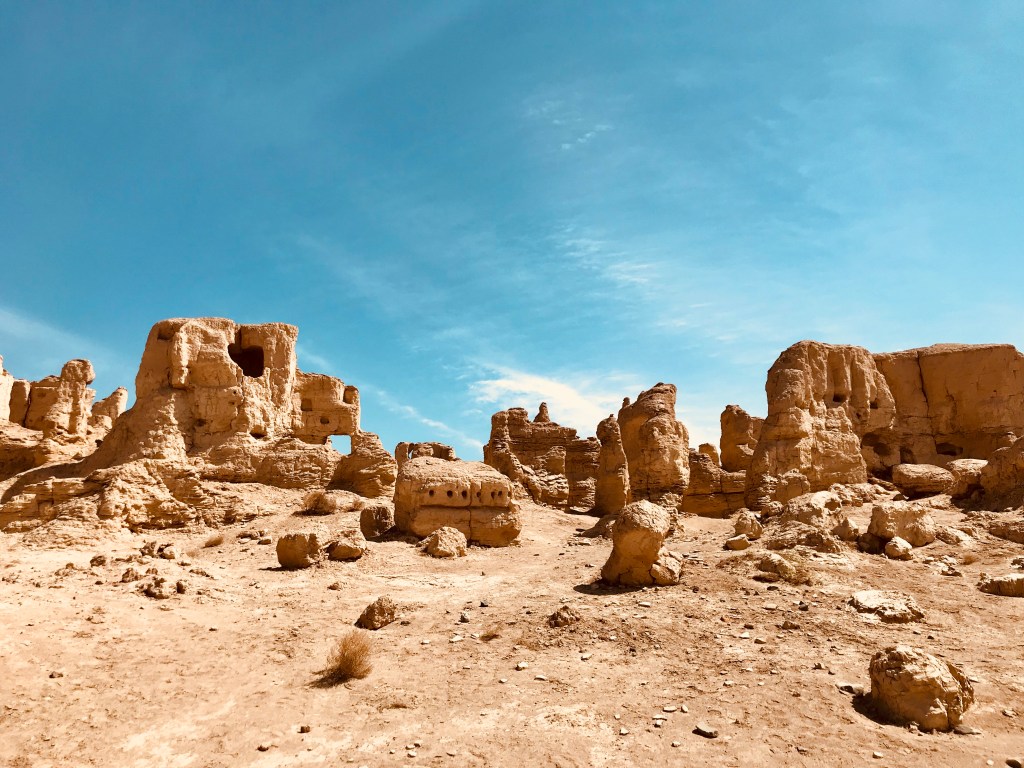
    Qilian Mountain, Gansu Province

    The 3rd year of Emperor Xuan’s Benshi Era (71 B.C. continued)

    On January 18, the five generals set forth from Chang’an. The Xiongnu, hearing that the Han had launched a great expedition, fled with their aged and weak, driving off their herds and retreating afar. Thus the five generals gained but little success.

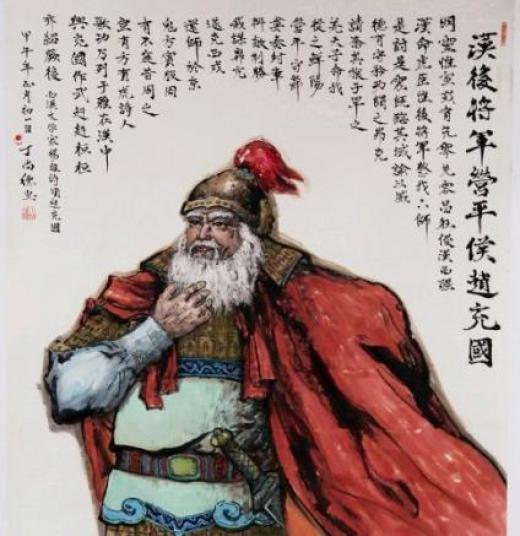
    In May of summer the campaign was concluded. Duliao General Fan Mingyou pressed beyond the frontier for more than twelve hundred li, reaching the Hou River in Puli, where he slew and captured more than seven hundred. General of the Front Han Zeng advanced over twelve hundred li to Wuyun, where he slew and captured more than one hundred. Pulei General Zhao Chongguo marched eighteen hundred li west to Mount Hou, where he slew and captured more than three hundred, among them the Xiongnu envoy, King Puyin. Learning that the foe had already retreated, he returned without attaining the set objective. The Emperor, not censuring their failure, showed lenience and spared them punishment.

    Qilian General Tian Guangming advanced sixteen hundred li to Mount Jizhi, where he slew and captured nineteen. There he encountered Han envoys, among them Ran Hong, returning from the Xiongnu. Ran Hong reported that west of Jizhi Mountain the Xiongnu forces still remained. But Tian Guangming forbade him to announce it, intending to recall the troops. Assistant Censor Gongsun Yishou urged that the host should press forward, yet Tian Guangming would not heed him, and withdrew the army.

    General of Tiger Fang Tian Shun advanced eight hundred li to the Danyuwu River, where he halted. He slew and captured more than nineteen hundred, then turned back.

    The Emperor censured the General of Tiger Fang for failing to meet his objective and for falsifying the number of those slain and captured. Qilian General, though knowing the Xiongnu remained, delayed and dared not advance. Both were impeached, and in shame took their own lives. Gongsun Yishou was promoted to Imperial Censor.

    The Wusun Kunmi, with fifty thousand horses, entered from the west together with Colonel Chang Hui. They came to the court of the Right Kuli King, seizing the Chanyu’s uncles, his sister-in-law, his daughters the princesses, the Liwu King, and his commandants, chiliarchs, and cavalry officers, in all forty thousand. They took more than seven hundred thousand head of horse, cattle, sheep, donkeys, and camels. The Wusun retained the captives for themselves. As the five generals gained no great success, and only Chang Hui accomplished his aim, he was created Marquis of Changluo.

    By reason of the vast flight, the loss of life and livestock, the Xiongnu suffered grievous hurt, and bore enmity toward the Wusun. The Emperor again dispatched Chang Hui with gold and silver to reward the Wusun who had rendered service. Chang Hui thereupon reported that the state of Qiuci had formerly slain Colonel Lai Dan, yet no vengeance had been taken, and urged that swift action be undertaken. The Emperor would not permit it, but Grand General Huo Guang upheld Chang Hui’s counsel.

    Chang Hui, with five hundred men, set forth to Wusun, passing through Qiuci. He levied twenty thousand troops from the nations west of Qiuci, ordered his deputy to raise twenty thousand from the nations east of Qiuci, and gathered seven thousand from Wusun. With these he encompassed Qiuci from three sides. Before battle he sent an envoy, demanding the king who had slain Han envoys. The King of Qiuci pleaded: “In the reign of my predecessor, I was deceived by the noble Guyi. I am innocent.”

    Chang Hui said: “If so, deliver up Guyi, and you shall be spared.” The king seized Guyi and gave him over. Chang Hui struck off his head, and then returned.

    There was a great drought.

    On June 11, Cai Yi, the Chancellor and Marquis of Yangping, died. 

    On June 26, Wei Xian, Treasurer of Changxin Palace, was appointed Chancellor. Wei Xiang, Minister of Agriculture, was made Grand Master of Censorate.

    In winter, the Chanyu of the Xiongnu himself led tens of thousands of horses to strike the Wusun, seizing many of the old and weak. As he prepared to withdraw, a mighty snowstorm fell, the snow more than ten feet deep in a single day. Men and cattle froze in great numbers, and many who sought to return could not.

    The Dingling from the north, the Xianbei Wuhuan from the east, and the Wusun from the west pressed upon the Xiongnu, slaying tens of thousands, and seizing countless horses, cattle, and sheep. Besides those slain, multitudes starved. Of the people, one in three perished; of the herds, one half. The Xiongnu was further weakened, their confederation undone, and they could no longer carry out raids upon the frontier.

    Later the Han sent more than three thousand horsemen in three columns into Xiongnu lands, taking several thousand prisoners. The Xiongnu, being pressed with adversity and powerless to respond, sought peace and reconciliation. The borderland was thereafter more tranquil.

    In this year, Zhao Guanghan, Prefect of Yingchuan, was appointed Intendant of Jingzhao. In Yingchuan it was the custom for great families to form factions. Zhao Guanghan devised a bamboo box with a narrow mouth, so that letters once cast within could not be withdrawn, to receive the complaints of officials and commoners, urging them to denounce one another. Thus enmities multiplied, the factions dissolved, and thieves and bandits could no longer unite in bands. Those of the Xiongnu who surrendered spoke his name; hence he was promoted to Intendant of Jingzhao.

    In office Zhao Guanghan was diligent and vigilant. He yielded merit to his subordinates, treated men with sincerity and fairness, and both officials and people were willing to serve him, even unto risking their lives. He had the gift of discerning the talents of men and employed them to the utmost. If any turned against him, he seized them swiftly, leaving no chance of flight. He examined cases and secured proof without delay, and justice was promptly done. In interrogation he was most skillful, laying bare hidden crimes and tracing to their roots, even the quarrels of kin and neighbors were within his grasp.

    In Chang’an there were youths who gathered in poor quarters to plot robbery. Before their designs were even fully uttered, Zhao Guanghan had them seized and examined, and they confessed their scheme. His uncovering of crime seemed near to the supernatural, as though he possessed insight beyond the common.

    By his governance, Jingzhao’s political atmosphere was enlightened and clean. Officials and people alike praised him; the elders of the city declared that since the founding of the Han, no man had equaled him in governing the Jingzhao.

  • Comprehensive Reflections to Aid in Governance(Part 189): Murder She Committed

    Comprehensive Reflections to Aid in Governance

    By Sima Guang

    Translated By Yiming Yang  

    Annals of Han Book 16 Scroll 24 (continued)

    Fuzi, A Poisonous Plant

    The 3rd year of Emperor Xuan’s Benshi Era (71 B.C.)

    On January 13, Empress Gong’ai Xu died. At that time, Grand Madame Xian, wife of the Grand General Huo Guang, desired to advance her youngest daughter, Huo Chengjun, to higher station, yet saw no means. It happened that Empress Xu, being pregnant, fell ill.

    There was then a woman physician, Chunyu Yan, favored by the Huo household, who had formerly entered the palace to attend Empress Xu. Her husband, Chunyu Shang, was a palace gatekeeper, and he said to her: “You should visit Grand Madame Xian, and in my name request the office of Supervisor of Anchi Pond.”

    Chunyu Yan accordingly went to Grand Madame Xian. Grand Madame Xian seized the occasion, dismissing attendants around her and received her in secret, and called her by her style-name, saying: “Shaofu, if you can do me a service, I shall assuredly requite it. Can you?”

    Chunyu Yan replied: “Whatever my lady commands, I can attempt.”

    Grand Madame Xian said: “The General has always loved our little daughter Chengjun, and longs to raise her station. I entrust this matter to you.”

    Chunyu Yan, startled, asked: “What can I do?”

    Grand Madame Xian said: “Childbirth is ever perilous; one may hardly escape the jaws of death. The Empress is about to give birth—this is the chance to rid ourselves of her with poison. Then Chengjun shall be Empress. If Shaofu can accomplish this, wealth and rank shall be shared with you.”

    Chunyu Yan hesitated, saying: “The medicines for the imperial house are compounded by many hands, and are always tested by others. How can poison be introduced?”

    Grand Madame Xian replied: “I am going to leave that to Shaofu. The General holds sway over the empire; who would dare to speak against him? If we act with care, no mishap will follow. My only fear is that Shaofu may not consent.”

    After a long silence, Chunyu Yan said: “I am willing to exhaust all effort.”

    Chunyu Yan compounded a potion with Fuzi(Carmichael’s monkshood) and other substances, and smuggled it into Changding Palace. After Empress Xu was delivered, Chunyu Yan mingled the poison with a great bolus prepared by the imperial physicians, and gave her to swallow.

    After a short while, Empress Xu said: “My head grows faint. Is there poison in the medicine?” Chunyu Yan answered: “There is none.” Soon the Empress’ distress increased, and she died.

    When Chunyu Yan departed from the palace, she ran into Grand Madame Xian on the way. They exchanged felicitations, though Grand Madame Xian dared not show her gratitude openly.

    Later, memorials were submitted accusing the physicians of mismanaging the care of the Empress. The Emperor commanded that all who had attended her be seized and cast into prison. Grand Madame Xian, struck with fear, hastened to inform Huo Guang, saying: “Since we have trespassed, do not permit the officials to pursue Chunyu Yan too closely!”

    Huo Guang was greatly shaken, and at first thought to deliver up his wife; but he could not bear it, and when he heard of Chunyu Yan’s part, he chose to conceal it.

    Thereafter, when the official report on the death of Empress Xu was submitted, Huo Guang ordered that Chunyu Yan not be investigated. Seizing the moment, Grand Madame Xian pressed Huo Guang to send their daughter into the palace.

  • Comprehensive Reflections to Aid in Governance(Part 188): Studying on Death Row

    Comprehensive Reflections to Aid in Governance

    By Sima Guang

    Translated By Yiming Yang  

    Annals of Han Book 16 Scroll 24 (continued)

    Xiahou Sheng And Huang Ba

    The 2nd year of Emperor Xuan’s Benshi Era (73 B.C. continued)

    In July of autumn, an edict was issued appointing Liu Jian, heir of Prince La of Yan, Liu Dan, as Prince of Guangyang; and Liu Hong, youngest son of the Prince of Guangling, Liu Xu, as Prince of Gaomi.

    Formerly, there had been strife between Shangguan Jie and Huo Guang. When Huo Guang destroyed Shangguan Jie, he then adhered to the statutes of Emperor Wu, applying severe punishments to restrain his subordinates. From this, lesser officials took severity as their model, believing harshness to be the mark of ability.

    But Huang Ba of Huaiyang, then Associate Prefect of Henan, always held leniency as his principle. When the Emperor went among the people, he perceived that the common folk suffered under the harshness of officials. Hearing of Huang Ba’s reputation for fairness and gentleness, he summoned him to serve as a chief judge in the Ministry of Justice. Huang Ba, in judging doubtful cases, was ever equitable, and thus maintained fairness and balance in the court.

    The 2nd year of Emperor Xuan’s Benshi Era (72 B.C.)

    In the spring, the Minister of Agriculture, Tian Yannian, committed suicide after being convicted of crime. When mourning for Emperor Zhao, he had leased carts from the people, but deceitfully inflated the rent, embezzling thirty million cash. An aggrieved party reported him.

    The Grand General Huo Guang summoned him for questioning, wishing to give him latitude. Tian Yannian vehemently denied it, saying: “Such a thing never happened!” Huo Guang replied: “Even if it did not, we must examine it to the end.”

    The Grand Master of Censorate, Tian Guangming, spoke to the Grand Coachman Du Yannian, saying: “According to the justice of the Spring and Autumn Annals, faults may be redeemed by merit. When the Prince of Changyi was deposed, without the resolute courage of Tian Zibin[Tian Yannian’s courtesy name], the great design could not have been accomplished. Now, if he had begged thirty million from the court itself and been granted them, would that not suffice? I would speak thus to the Grand General.”

    Du Yannian relayed this to Huo Guang. Huo Guang said: “It is true. He was a valiant man; at that momentous hour he shook the whole court.” Then he lifted his hand to his breast and said: “The memory still burdens my heart. Convey my apology to the Grand Master Tian, and entreat him to persuade the Minister of Agriculture to go to prison, that he may pass through lawful trial.”

    Tian Guangming delivered this message. Tian Yannian answered: “If the court would show me lenience, I would be grateful. But how can I endure the shame of prison, the laughter of men, and the spittle upon my back?”

    He then shut himself in a chamber of the Ministry of Agriculture, baring his arm, pacing with a blade in hand. After some days, hearing the drumbeat of envoys come to proclaim the edict, he cut his own throat and died.

    In May of summer, an edict was issued, saying: “Emperor Wu, in his filial piety, benevolence, and martial exploits, accomplished abundant virtue. Yet the music of his ancestral temple has not been established, which is a cause of great sorrow. Let the marquises, the ministers of two-thousand-picul rank, and the scholars deliberate upon it.”

    The officials engaged in wide discussion, and all assented to the decree. Only Xiahou Sheng, Privy Treasurer of Changxin Palace, spoke in dissent, saying: “Though Emperor Wu attained merit in pacifying the four barbarians and enlarging the borders, yet countless soldiers perished, and the wealth and strength of the people were drained. His extravagance and excess knew no bounds, and the empire was left in exhaustion. The dead were many, famine and locusts swept for thousands of li, and men even devoured one another. The injuries yet remain unrepaired, and the grace shown to the people was scant. It is not fitting to establish music for his temple.”

    The other officials rose together against him, saying that he opposed the imperial edict. But Xiahou Sheng declared: “An edict must not be obeyed without reflection. It is the duty of a loyal subject to speak plainly and directly, not merely to echo the ruler’s will. What I have said is from my heart. Though it cost me death, I shall not repent.”

    The Chancellor and the Censors accused Xiahou Sheng of opposing the imperial decree, of slandering the late Emperor, and of uttering blasphemy. Huang Ba, Chief-of-Staff to the Chancellor, was charged with shielding Xiahou Sheng and failing to impeach him. Both were cast into prison.

    Thereafter the authorities proposed to elevate the ancestral temple of Emperor Wu, styling it Shizong Temple, and to compose temple music with the “Magnificent Virtues” and the “Five-Colored Dance of the Wenshi Era.” In the provinces and counties that Emperor Wu had once visited, temples were erected in his honor, following the precedents of Emperor Gaozu and Emperor Wen.

    Xiahou Sheng and Huang Ba remained in custody for months. Huang Ba desired to study the Book of Documents under Xiahou Sheng, but Xiahou Sheng rejected, saying: “I am under sentence of death.” Huang Ba quoted Confucius: “If I learn the truth in the morning, I could die content in the evening.” Xiahou Sheng, moved by his earnestness, consented to teach him. Though imprisoned through two winters in succession, they never ceased their study and discourse.

    When the Princess who Liu Xijun had been wed to the Wusun Kunmi Cenzou died, the Han court once more sent Liu Jieyou, granddaughter of the Prince of Chu, Liu Wu, to Wusun, and she became wife to Cenzou. Cenzou had a young son, Nimi, born of his tribal consort. Foreseeing his own death, he entrusted the succession to his uncle’s son Weng’guimi, saying: “When Nimi comes of age, restore the throne to him.”

    When Weng’guimi ascended, he styled himself the Fat King, and again took to wife Princess Liu Jieyou of Chu. She bore him three sons—Yuan’guimi, Wan’nian, and Da’le—and two daughters.

    Under the reign of Emperor Zhao, Princess Liu Jieyou sent a memorial, saying: “The Xiongnu and Jushi have allied to assail Wusun. Only the Son of Heaven could save us.” The Han court gathered horse and soldier, deliberating an expedition against the Xiongnu

    Just then Emperor Zhao had passed away, the new Emperor dispatched the Grandee Chamberlain Chang Hui as envoy to Wusun. Both the Princess and the Great Kunmi sent envoys with letters, saying: “The Xiongnu have mustered hosts once again to attack Wusun, demanding: ‘Deliver to us the Han Princess at once!’ Their purpose is to sever Wusun from the Han. The Great Kunmi is willing to muster fifty thousand picked horsemen and exert full strength against the Xiongnu. Only the Son of Heaven can dispatch troops, to save the Princess and the Kunmi!”

    Formerly the Xiongnu had often harried the Han frontier, and the Han also longed to strike back. In autumn, a great host was levied: the Grand Master of Censorate, Tian Guangming, was made Qilian General, and with forty thousand horse rode forth from Xihe; Fan Mingyou, Duliao General, led thirty thousand from Zhangye; Han Zeng, General of the Van, led thirty thousand from Yunzhong; Zhao Chongguo, Pulei General, led thirty thousand from Jiuquan; and Tian Shun, Prefect of Yunzhong, was appointed General of Tiger Fang, leading thirty thousand from Wuyuan. Their design was to advance beyond the frontier by two thousand li. Chang Hui was made Colonel with the tally, to oversee the Wusun forces and unite them in striking the Xiongnu.

  • Comprehensive Reflections to Aid in Governance(Part 187): Leapfrogging to The Throne

    Comprehensive Reflections to Aid in Governance

    By Sima Guang

    Translated By Yiming Yang  

    Annals of Han Book 16 Scroll 24 (continued)

    Old City of Qi, Zibo(Qiansheng), Shandong Province 

    The 1st year of Emperor Zhao’s Yuanping Era (74 B.C. continued)

    After the deposition of the Prince of Changyi, the choice of successor was debated among the senior ministers, including Huo Guang and Zhang Anshi. As no decision was yet reached, Bing Ji submitted a memorial to Huo Guang, saying:

    “Grand General, you served Emperor Wu, bearing the charge of raising his heir from infancy, entrusted with the care of the entire realm. When Emperor Zhao passed away untimely, leaving no heir, fear and unease spread throughout the empire. On the day of the funeral, for the sake of the great enterprise, a successor was hastily chosen; but perceiving the choice amiss, he was deposed for the greater cause, and all under Heaven assented. At this juncture, the fate of the state, the ancestral temples, and the lives of the people depend upon your judgment.

    “I have listened to the voices of the people and observed the discourse regarding the princes of the imperial clan, yet have heard no worthy name outside the court. Meanwhile, within the harem by posthumous decree, the Imperial Great-Grandson Liu Bingyi has been fostered, reared under the care of the inner palace and his maternal great grandmother. When I once served at the commandery prison, I beheld him as a child. Now he is eighteen or nineteen years of age, well versed in the Confucian classics, of comely talent and serene bearing.

    “I earnestly entreat the General, considering the highest righteousness, to seek the judgment of the tortoise oracle; if it proves auspicious, then let him be appointed attendant to the Empress Dowager and enter the palace, so that all under Heaven may behold him. Then, with the world’s gaze upon him, the final decision may be made, to the blessing of the empire.”

    Du Yannian also discerned the virtue of the Imperial Great-Grandson, and urged Huo Guang and Zhang Anshi to establish him as successor.

    In July of autumn, Huo Guang, seated in the court, convened with the Chancellor Yang Chang and the ministers to deliberate, and together they memorialized, saying: “The Great-Grandson of Emperor Wu, Liu Bingyi, is now eighteen years of age. He has been instructed in the Book of Songs, the Analects, and the Classic of Filial Piety. He himself practices frugality, kindness, and benevolence. He is fit to succeed Emperor Zhao, to continue the sacrifices of the ancestral temples, and to nurture the people. We memorialize this, even at the cost of our lives.”

    The Empress Dowager decreed: “It is permitted.”

    Huo Guang sent the Minister of the Imperial Clan, Liu De, to the residence of the Imperial Great-Grandson at Shangguanli, where he was bathed and robed in imperial garments. The Grand Coachman dispatched a light carriage to escort him to the Ministry of the Imperial Clan.

    On July 25, Liu Bingyi entered Weiyang Palace, audience with the Empress Dowager, and was ennobled as Marquis of Yangwu.

    Afterward the court officials presented the imperial seal and ribbon, and he was formally enthroned as Emperor. He went to offer sacrifice at the Temple of Emperor Gaozu, and honored the Empress Dowager with the title of Grand Empress Dowager.

    The Imperial Censor Yan Yannian accused Huo Guang, submitting a memorandum, saying: “General Huo has deposed and established an emperor of his own will, not in accord with the rites of a loyal minister. This is not fitting.” Though the charge was dismissed, the officials of the court ever after revered and feared Yan Yannian.

    On August 5, Yang Chang, Marquis of Anping, died.

    In September, a general amnesty was proclaimed throughout the empire. 

    On September 5, Cai Yi was appointed Chancellor.

    Earlier, the daughter of Xu Guanghan had been wedded to the Imperial Great-Grandson Liu Bingyi. After one year she bore him a son, Liu Shi. Within a few months thereafter, the Great-Grandson became Emperor, and the house of Xu grew in influence. At that time the General Huo Guang had a young daughter, kin to the Empress Dowager. When the choice of an empress was under discussion, some secretly inclined toward Huo Guang’s daughter, but none dared to speak openly.

    The Emperor thereupon issued a decree, seeking for the old sword he had carried in his obscurity. The wise among the ministers discerned his inkling, and proposed the daughter of Xu Guanghan as the Empress. On November 9, Consort Xu(Jieyu[Lady of Handsome Fairness]) was established as Empress. Later, Huo Guang judged Xu Guanghan, who had been punished by castration, unfit to hold the title of a head of state. After one year, he was enfeoffed as Lord of Changcheng.

    The Grand Empress Dowager returned to dwell in Changle Palace, where guards were stationed for the first time.

    The 1st year of Emperor Xuan’s Benshi Era (73 B.C.)

    In the spring, an imperial decree ordered the ministers to deliberate on the merit of securing the imperial succession and continuing the ancestral sacrifices. The Grand General Huo Guang was augmented with a fief of seventeen thousand households, in addition to his former twenty thousand. The Chariot and Cavalry General, Zhang Anshi, Marquis of Fuping, together with ten others of lesser rank, all received increases of fief. Five men were enfeoffed as marquises, and eight were created Inner Marquises.

    The Grand General Huo Guang prostrated himself, humbly petitioning to return the affairs of state to the Emperor, but the Emperor refused, insisting that he continued his duty. He decreed that all matters must first be presented to Huo Guang for judgment, and only then submitted for imperial sanction.

    From the time of Emperor Zhao, Huo Guang’s son Huo Yu, and his elder brother Huo Qubing’s grandson, Huo Yun, both served as Generals of the Household. Huo Yun’s younger brother, Huo Shan, was Commandant of Chariots and Privy Counselor, commanding troops of the northern and southern tribes. Two sons-in-law of Huo Guang held the posts of Guard Commandants of the Eastern and Western Palaces. His kinsmen by blood and marriage—brothers, sons-in-law, and grandsons—crowded the court, filling the offices of administrators, grandees, commandants, and palace liaisons. Thus they formed a tightly bound faction.

    As the power of Huo Guang grew, especially after the deposition of the Prince of Changyi, his authority became ever more preeminent. In court audiences the Emperor humbled his bearing, withdrew his countenance, and displayed undue deference toward him.

    On April 10, in summer, there was an earthquake.

    In May, phoenixes gathered in Jiaodong and Qiansheng. A general amnesty was proclaimed throughout the empire, and the collection of land taxes and levies was suspended.

    In June, an imperial decree was issued, saying: “The former Crown Prince, who lies at rest in Hu County, has neither been granted a posthumous name nor received annual sacrifice. Let there be discussion on bestowing a posthumous title and establishing an estate for his tomb garden.”

    The officials in charge memorialized, saying: “According to the rites, when one inherits the title of a man, he must be accounted his son; thus the sacrifices to his true parents must cease, in order to honor the ancestral line. Now Your Majesty, as the descendant of Emperor Zhao, inherits the sacrifices of the imperial temple. We propose that the posthumous title of Your Majesty’s  true(biological) father be Prince Dao, and of Your Majesty’s  true(biological) mother be Queen Dao. Further, that the former Crown Prince, Your Majesty’s true grandsire, be posthumously named Crown Prince Li, and his consort, Lady Shi, be styled Madame Li.”

    All these were accordingly reburied with their proper honors.

  • Comprehensive Reflections to Aid in Governance(Part 186): It Takes A Nation to Raise An Imperial Great-Grandson

    Comprehensive Reflections to Aid in Governance

    By Sima Guang

    Translated By Yiming Yang  

    Annals of Han Book 16 Scroll 24 (continued)

    The Kingdom of Lu

    The 1st year of Emperor Zhao’s Yuanping Era (74 B.C. continued)

    Huo Guang, directing that memorials of state be submitted to the Eastern Palace, judged that the Empress Dowager should be instructed in the Confucian classics. He commanded Xiahou Sheng to expound the Book of Documents to her. Xiahou Sheng was then promoted to Privy Treasurer of Changxin Palace, and ennobled as Marquis Within the Passes.

    In former times, Crown Prince Liu Ju, born of Empress Wei, had taken to wife a Lady Shi of the kingdom of Lu, and she bore him a son, Liu Jin, styled the Emperor’s Grandson Shi. The Grandson Shi took to wife a Lady Wang of Zhuo Commandery, and she bore a son Liu Bingyi, who was styled the Imperial Great-Grandson. When the Great-Grandson was but a few months old, he was implicated in the witchcraft affair. The three sons and one daughter of the Crown Prince, with their wives and concubines, all perished in that calamity. Only the Great-Grandson survived, yet he too was cast into the commandery prison.

    At that time, Bing Ji, former Associate Minister of Justice of Lu, was charged by decree to investigate the witchcraft case. Knowing the Crown Prince to be guiltless, he grieved for the unjust suffering of the Imperial Great-Grandson. He chose trustworthy and compassionate women among the inmates—Hu Zu of Weicheng and Guo Zhengqing of Huaiyang—to nourish the child, and placed him in a drier and cleaner cell. Bing Ji himself came every other day to inspect.

    The witchcraft case dragged on unresolved. When Emperor Wu fell ill, he often lodged at the Changyang and Wuzha Palaces. Astrologers declared that an imperial aura arose within the prison at Chang’an. Emperor Wu therefore ordered that all prisoners there be executed, without regard to guilt or crime.

    One night the palace usher Guo Rang came with men to the commandery prison, but Bing Ji refused to open the gates, saying: “Within is the Imperial Great-Grandson. To kill the innocent is unlawful; how much more the close kin of the Emperor!” He barred the gates until dawn. Guo Rang returned and impeached Bing Ji.

    When Emperor Wu awoke and heard, he said: “This is Heaven’s intervention.” He issued a general amnesty, and only those imprisoned in the commandery residence were spared—preserved through the loyal protection of Bing Ji.

    Later, Bing Ji, deeming it unfitting that the Imperial Great-Grandson should remain in prison, instructed the warden Shei Ru to present a letter to the Intendant of Jingzhao. Shei Ru, together with Hu Zu, carried the letter, but the Intendant refused to receive it and sent them back. When the time came for Hu Zu’s release, the Imperial Great-Grandson clung to her with longing. Bing Ji then spent his own wealth to persuade Hu Zu to remain, and with Guo Zhengqing she continued to rear the child. After some months, Hu Zu was permitted to depart.

    Thereafter the county treasurer reported to Bing Ji that no decree authorized provisions for the Imperial Great-Grandson. Bing Ji again drew upon his own purse, each month supplying rice and meat. When the child fell ill, he arranged for wet-nurses without ceasing, and himself oversaw the use of medicines. Many times by such care Bing Ji drew the Imperial Great-Grandson back from the brink of death.

    When Bing Ji learned that Consort Shi, grandmother of the Great-Grandson, had a mother Zhenjun and a brother Shi Gong, he sent the child in a carriage and entrusted him to them. The aged Zhenjun, beholding her sole great grandson, was moved with compassion, and took upon herself the burden of nurture, cherishing him with utmost care.

    Later an imperial decree commanded that the Imperial Great-Grandson be raised within the inner palace, his name entered in the register of the Minister of the Imperial Clan. At that time Zhang He was Director of the Inner Palace. He had once served Crown Prince Liu Ju, and out of remembrance for former grace, pitied the orphaned scion. He tended the Imperial Great-Grandson with devotion, sustaining him and instructing him at his own expense. When the Great-Grandson reached maturity, Zhang He, seeking to strengthen his household bond, proposed to wed his granddaughter to him.

    At that time Emperor Zhao had just come of age. His stature was eight feet two inches. Zhang He’s younger brother, Zhang Anshi, served as General of the Right and assisted in the government. When he heard that Zhang He praised the Imperial Great-Grandson and even thought to marry his granddaughter to him, he grew angry and said: “The Imperial Great-Grandson is but a remnant scion of Crown Prince Liu Ju and Empress Wei. It is fortunate enough that the state sustains him with the livelihood of a commoner. How can you speak of wedding him to our granddaughter?” Zhang He, hearing this, abandoned the plan.

    At that time there was a clerk of the weaving chamber within the harem, eunuch Xu Guanghan. Zhang He gave a banquet and invited him. When the wine was deep, Zhang He said: “The Imperial Great-Grandson is a kin to the Emperor. At the least, he will bear the rank of Marquis Within the Passes. He would be a worthy match for your daughter.” Xu Guanghan agreed. On the morrow, when Xu’s wife heard of it, she was wroth; yet Zhang He pressed the matter, and in the end the marriage was made. Zhang He himself bore the expense of the dowry.

    Thus the Imperial Great-Grandson relied upon the support of Xu Guanghan and his brethren, together with his grandmother’s house, the Shi clan. He received instruction in the Book of Songs from Fu Zhongweng of Donghai. Though he was quick of wit and ardent in study, he also delighted in knight-errant’s hobbies, such as cockfighting and dog-racing. In this he came to know the ways of good and evil among the people, and to discern the success and failure of local administration.

    He roamed often through the counties and commanderies, visiting ancient tombs, and explored widely the Three Metropolitan regions of Jingzhao, Pingyi, and Fufeng. Once he met hardship near Lianshao Salt Lake, and he especially liked the counties of Du and Hu, and would often reside at Xiadu City. When entering court, he lodged in the quarter of Shangguanli outside the capital of Chang’an.

  • Comprehensive Reflections to Aid in Governance(Part 185): Weiyang Palace Putsch

    Comprehensive Reflections to Aid in Governance

    By Sima Guang

    Translated By Yiming Yang  

    Annals of Han Book 16 Scroll 24 (continued)

    Weiyang Palace Imagined

    The 1st year of Emperor Zhao’s Yuanping Era (74 B.C. continued)

    When the Prince of Changyi came to pay homage to the Empress Dowager, and was about to depart in his carriage toward the Wenshi Chamber, eunuchs held each door along the way. As the Prince entered, the doors were shut behind him, and the ministers of Changyi were barred from entry. The Prince asked: “What does this mean?” 

    The Grand General knelt and said: “The Empress Dowager has issued an edict, prohibiting the ministers of Changyi from entering.”

    The Prince said: “Take things calmly and slowly. Why cause alarm and frighten men?”

    Huo Guang thereupon ordered the ministers of Changyi expelled, and placed them outside the Golden Horse Gate. The General of Chariots and Cavalry, Zhang Anshi, led the Feathered Forest Cavalry, seized more than two hundred of the Prince’s minions, and delivered them to the Ministry of Justice for trial.

    Huo Guang commanded the eunuchs who had formerly served Emperor Zhao to guard the Prince, saying: “Be ever watchful! Should he die or take his own life, I would be accused of regicide, and the whole empire would be betrayed.”

    The Prince, still unaware of his deposition, said to those about him: “How could my ministers and attendants be guilty? Why has the Grand General seized them all?”

    Soon the Empress Dowager summoned the Prince of Changyi. When he heard the summons, the Prince was fearful, saying: “What offense have I committed, that I should be summoned?”

    The Empress Dowager, in a pearl vest, sat in a resplendent robe within the command tent. Several hundred attendants bearing arms stood about her, and guards with weapons were arrayed at the gates. The ministers entered the hall in order. The Prince of Changyi was called forward to hear the edict.

    Huo Guang and the ministers submitted a memorial of impeachment, and the Chief of the State Secretariat read it aloud:

    “Chancellor Yang Chang and the ministers, prostrate, dare to address the Empress Dowager: The late Emperor Zhao was cut off in youth, leaving no heir. The Prince of Changyi was summoned to perform the mourning rites, yet he donned mourning garb without true grief. He cast aside the rules of mourning, ate and drank at will, permitted his officers to convey women in covered carriages, and joined them in revelry at their lodgings. On his arrival he was forthwith proclaimed Crown Prince, and still he privately purchased chickens and swine for his meals.

    “He received the Imperial Trust Seal[for military command] and the Personnel Seal before the pall of the late Emperor, yet left them unguarded. He caused more than two hundred attendants and slaves of Changyi to be escorted into the palace, where they engaged in frivolities within the forbidden precincts. He even wrote a letter, saying: The Emperor greets the court attendants. I have ordered Gao Chang, Supervisor of the Changyi Treasury, to grant you a thousand catties of gold and bestow upon you ten wives.

    “Even while the pall of the late Emperor stood in the front hall, he opened the Music Office, called in the performers of Changyi to strike drums, sing songs, blow flutes, and play lewd and vulgar farces. He summoned the ensemble of the Grand Ancestral Temple and the physicians’ musicians to perform. He drove carriages through the Northern Palace and Gui Palace, staging contests of pigs and battles of tigers. He commandeered the Empress Dowager’s miniature carriage, with slave attendants mounted beside him, and rollicked about the courtyard. He committed lewd acts with palace women, even Lady Mong of the late Emperor, and through the Superintendent of the Courtyard issued an edict, saying: Whoever dares to leak this will be cut in twain at the waist!

    The Empress Dowager said: “Wait a moment! As a subject, should one act with such wantonness?” The Prince of Changyi rose from his seat and prostrated himself.

    The Chief of the State Secretariat continued to read:

    “…He took the ribbons of princes, marquises, and officials of two-thousand-picul rank, together with the black and yellow insignia, and bestowed them upon his attendants and pardoned slaves of Changyi. He lavished gold coins, knives, swords, jade ornaments, and woven silks from the Imperial Treasury as rewards for revelry. He held night banquets with his officials and slaves, drowning himself in wine.

    “On a solitary night he feasted in the Wenshi Chamber, receiving his brother-in-law, the Marquis Within the Passes from Changyi, with the highest rites. Before the ancestral sacrifices had been offered, he sent forth a sealed command to dispatch an envoy to sacrifice to the late Prince of Changyi, his father Liu Bo, in the royal garden, and styled himself the ‘Successor Emperor.’

    “In the span of twenty-seven days after receiving the imperial seal, the Prince issued one thousand one hundred and twenty-seven orders to the various offices of government. He has abandoned himself to extravagance and debauchery, cast aside the rites and proprieties of an emperor, and thrown the governance of Han into disorder.

    “Chancellor Yang Chang and the ministers, again and again, offered admonition, yet he never amended his conduct, but daily grew worse. Fearing peril to the state and turmoil within the empire, the ministers consulted the learned, and all were of one accord: The sovereign who succeeded Emperor Zhao has engaged in licentious and lawless conduct, in defiance of filial piety.

    “The Classic of Filial Piety says: Among the five categories of crime, unfilial conduct is the gravest. In the Spring and Autumn Annals, it is recorded: King Xiang of Zhou mistreated his mother, and the heavenly king was driven from the capital to dwell in Zheng. His want of filial piety made him an outcast beneath Heaven.

    “The ancestral temple is greater than the throne. His Majesty has failed to receive Heaven’s mandate, to revere the ancestral temple, and to fulfill the duty of succession. Therefore it is meet and right that he be deposed. We request that a solemn offering of a great victim—ox, sheep, and swine—be made to the ancestral temple.”

    The Empress Dowager decreed: “It is permitted.”

    Huo Guang bade the Prince of Changyi rise and receive the decree. The Prince said: “I have heard it said: Though the Son of Heaven lost his way, if seven ministers remonstrate with him, the empire shall not be lost.

    Huo Guang replied: “The Empress Dowager has decreed your deposition. How can you still call yourself Son of Heaven?”

    He then took the Prince by the hand, untied the ribbon of the imperial seal, and presented the seal to the Empress Dowager. He led the Prince down from the hall, out through the Golden Horse Gate, the ministers following behind.

    Facing west, the Prince knelt and said: “I am foolish and ignorant, unfit to bear the enterprise of Han!” Then he rose, mounted his carriage, and the Grand General escorted him to the residence of Changyi princedom.

    Huo Guang said with gratitude: “Sire by his own conduct has severed the bond with Heaven. I would rather betray Sire than betray the state. May Sire preserve himself; I, a subject, shall no longer attend at your side.” He departed in tears.

    The ministers memorialized, saying: “In antiquity, those deposed and banished were sent afar, severed from affairs of state. We request that Prince Liu He be relocated to Fangling county of Hanzhong Commandery.”

    The Empress Dowager decreed that Prince Liu He be returned to Changyi, granted a fief of two thousand households, and the possessions of his house restored. To the four daughters of the late Prince of Changyi, each was granted a thousand households. The principality itself was abolished, and its lands annexed to Shanyang Commandery.

    In the time of Liu He’s reign in Changyi, the court officials, though seated in office, made no report of his misdeeds. They concealed his faults from the Han court and failed to guide him in the righteous path, whereby the Prince fell into grave transgressions. Thereupon all were implicated, arrested, and more than two hundred were executed. Only the Commandant of the Capital Guard, Wang Ji, and the Chamberlain, Gong Sui, who had steadfastly remonstrated with a loyal heart, were spared from death. Yet they were shaven of hair and sent to labor upon the city walls.

    When Wang Shi, tutor to the Prince of Changyi, was cast into prison and faced death, the interrogator asked him: “Why did you not submit a memorial of admonition to the Prince?”

    Wang Shi replied: “Day and night I recited the three hundred and five poems of the Book of Songs to the Prince. Those chapters that speak of loyal ministers and filial sons, I recited again and again. When the odes told of rulers in peril and princes astray, I never ceased to weep and admonish. With all three hundred and five poems I made my remonstrance. What need did I have for a separate memorial?”

    The interrogator, moved by these words, commuted his sentence and spared him from death.

  • Comprehensive Reflections to Aid in Governance(Part 184): Athena Save The Day

    Comprehensive Reflections to Aid in Governance

    By Sima Guang

    Translated By Yiming Yang  

    Annals of Han Book 16 Scroll 24 (continued)

    Mattei Athena at Louvre Abu Dhabi, the Goddess of Wisdom

    The 1st year of Emperor Zhao’s Yuanping Era (74 B.C. continued)

    The Grand General Huo Guang was troubled in heart and distressed in mind. He sought counsel only from his trusted former colleague, the Minister of Agriculture, Tian Yannian. Tian Yannian said: “General, you are the pillar of the state. If this man proves unfit, why not present the matter to the Empress Dowager, and enthrone one worthy to inherit?”

    Huo Guang asked: “Is there any precedent for such a deed in antiquity?”

    Tian Yannian replied: “Yi Yin served as prime minister in the Yin, deposing Tai Jia for the security of the ancestral temple. Later ages have praised his loyalty. If the General acts thus, you will be the Yi Yin of the Han.”

    Huo Guang thereupon appointed Tian Yannian as Palace Liaison, and in secret conspired with the General of Chariots and Cavalry, Zhang Anshi, to lay their plan.

    While the Prince of Changyi went forth in an outing, the Grandee Chamberlain Xiahou Sheng of Lu stood before the imperial carriage and remonstrated, saying: “The heavens have long been overcast without rain; among the ministers there are conspiracies against the Son of Heaven. Whither does Your Majesty go?”

    The Prince was angered, and charged Xiahou Sheng with words of ill omen, commanding him to be bound and delivered to the authorities.

    The officials reported the matter to Huo Guang, yet Huo Guang did not take up the case. He laid blame upon Zhang Anshi, suspecting that their design had been disclosed.

    But Zhang Anshi had leaked nothing, and summoned Xiahou Sheng to question him. Xiahou Sheng said: “In the Classic of Documents, within the chapter Hongfan[Great Charter], it is written: ‘When the sovereign attains not the utmost virtue, calamities are constant and hidden. At such times there may be subjects who plot against their ruler.’ I dared not speak it outright, and so I said, ‘There are conspiracies among the ministers.’ This was what I meant.”

    Huo Guang and Zhang Anshi were greatly alarmed, and from this time depended more upon scholars versed in the Confucian classics.

    The Privy Counselor, Fu Jia, many times offered remonstrance, yet the Prince of Changyi had him seized and cast into prison.

    After Huo Guang and Zhang Anshi had resolved upon their course, they dispatched Tian Yannian to report to the Chancellor, Yang Chang. Yang Chang was stricken with fear, his countenance ashen, unable to utter a word. Sweat soaked his back, and he could only mumble incoherently. Tian Yannian withdrew to change his garments. The wife of Yang Chang hastened from the eastern chamber and said: “This concerns the fate of the state. Now that the Grand General has taken his stand, and the Nine Ministers have come to inform you, if you respond with hesitation, you shall be the first to suffer execution!”

    When Tian Yannian returned, Yang Chang and his wife spoke in unison, saying: “We await the command of the Grand General.”

    On June 28, Huo Guang assembled the Chancellor, the censors, the generals, the marquises, the officials of two-thousand-picul rank, the grandees, and the scholars in conference at Weiyang Palace. Huo Guang said: “The Prince of Changyi has thrown the realm into disorder and imperils the state. What course should be taken?”

    The assembled ministers were all astonished, their faces drained of color. None dared to speak; they mumbled only confused words. Then Tian Yannian rose, drew his sword, and said: “The late Emperor entrusted to the Grand General an orphaned child, laying upon him the charge of the whole realm, for he alone was deemed capable, by loyalty and wisdom, of preserving the House of Liu. Now this man has plunged the state into chaos, and the empire stands on the brink of ruin.

    “In the Han dynasty, those who upheld the line of sacrifice were often honored with the title ‘Filial,’ that their merits might endure with the ancestral temple. Should the imperial line be severed, even if the Grand General were to die, how could he face the late Emperor beneath the earth? Today’s decision must be swift and resolute. Any who waver or delay—I beg leave to strike them down with my sword!”

    Huo Guang bowed and apologized: “The fault is mine. The Nine Ministers speak rightly. The empire is in turmoil; I alone shall bear the blame.” The assembled officials all knocked their heads and said: “The lives of the people rest in the Grand General. We will follow your command.”

    Then Huo Guang, together with the ministers, entered to see the Empress Dowager and laid forth in detail the reasons why the Prince of Changyi could not be heir to the ancestral temple. The Empress Dowager took her carriage to Chengming Hall in Weiyang Palace, and issued an edict forbidding the ministers of Changyi to pass through any of the inner gates.

  • Comprehensive Reflections to Aid in Governance(Part 183): New Emperor’s Faux Pas

    Comprehensive Reflections to Aid in Governance

    By Sima Guang

    Translated By Yiming Yang  

    Annals of Han Book 16 Scroll 24 (continued)

    Mudcap of Shanyang(Changyi) Prefect

    The 1st year of Emperor Zhao’s Yuanping Era (74 B.C. continued)

    When the imperial edict arrived, it was near midnight, with less than a quarter hour remaining. The Prince of Changyi lit a fire to read it. That day he set forth, and by afternoon reached Dingtao, having covered one hundred and thirty-five li. Many of his attendants’ horses perished from exhaustion on the road.

    The Commandant of the Capital Guard, Wang Ji, submitted a memorial, saying: “I have heard that Emperor Gaozong of Shang, in the time of mourning, spoke no word for three years. Now Sire, summoned in consequence of a funeral, should weep and mourn without ceasing, day and night. It is meet and right to refrain from taking initiatives and making demands.

    “The Grand General’s virtue, embracing benevolence, wisdom, and trustworthiness, is renowned under Heaven. He served Emperor Wu for over twenty years, without once committing a fault. When the late Emperor departed and abandoned his ministers, he entrusted the whole realm and the young orphaned Son of Heaven to the Grand General, who cradled and nurtured the young sovereign, governing with benevolence and wisdom. The empire enjoyed peace, and his conduct was without reproach. Even the Duke of Zhou and Yi Yin could scarcely surpass him.

    “Now, with the Emperor’s passing and no heir, the Grand General, mindful only of honoring the ancestral temple, has raised up Sire with boundless benevolence. I pray that Sire will hold this in reverence, hearken to his counsel in matters of state, and take your place as a dutiful sovereign, sitting southward upon the throne. Keep this ever in your thoughts!”

    Yet the Prince went to Jiyang to seek long-crowing cocks, and bought a cane made of joined bamboo. Passing through Hongnong, he bade his servant Shan, who was big and tall, to conceal young women in a curtained carriage. When he came to Hu county, the envoy from Chang’an arrived with greetings, and discovered the impropriety, censuring the prime minister. An Le, the prime minister, hearing of it, reported to Gong Sui. Gong Sui entered and asked the Prince. The Prince denied, “There is no such a thing.”

    Gong Sui said: “Even if there is nothing grave, why transgress righteousness for the sake of shielding Shan? Let the big servant be summoned, that Sire may be cleared of fault.” Forthwith Shan was seized, and the captain of the guard executed him.

    When the Prince of Changyi arrived at Bashang, the Grand Herald came forth to greet him on the outskirts, and he was transferred to the imperial carriages. The Prince appointed Shou Cheng as his driver, while Chamberlain Gong Sui accompanied him in the carriage.

    As they neared Guangming Gate and the East Capital Gate, Gong Sui said: “According to the rites, when one in mourning beholds the capital, he should begin to weep. This is already the eastern gate of Chang’an.” 

    The Prince replied: “My throat hurts; I cannot cry.”

    When they came to the city gate, Gong Sui spoke again. The Prince said: “City gates and outer gates are all the same.”

    When they approached the east gate of Weiyang Palace, Gong Sui said: “The mourning tent of the Changyi principality lies outside this gate, extending along the northward thoroughfare. Before it there is a road running north and south. When the horses halt a few steps away, Sire must dismount, turn west toward the gate, and bow in mourning until grief is fully expressed.”

    The Prince of Changyi answered: “I understand.” When they arrived, he mourned in accordance with the rites.

    On June 1, the Prince received the imperial seal and ribbon, ascended as Emperor, and honored the Empress as Empress Dowager.

    On June 7, Emperor Zhao was buried at Pingling.

    When the Prince of Changyi had ascended the throne, he gave himself over to extravagance without restraint. Officials from Changyi were summoned to Chang’an, and many were advanced to higher rank. An Le was appointed Guard Commandant of Changle Palace.

    When Gong Sui met An Le, he wept, saying: “Since His Majesty’s enthronement, his arrogance and indulgence daily increase, and he will not heed remonstrance. Though the realm is still in mourning, he feasts and revels each day, drinking and sporting with close attendants. He sets tigers and leopards to combat, summons carriages adorned with nine tiger-skin pendants, and drives them recklessly east and west, all in defiance of propriety.

    “In ancient times, indulgence was tempered by leniency, and ministers could retire in honor. Now there is no way to depart. I have thought to feign madness, but feared being detected, so that death would come and my name be cast into the mire after I am gone. What course may I take? Sir, you once served as his prime minister; you should raise your voice in remonstrance and contend with him in earnest.”

    The Prince of Changyi dreamed that the dung of green flies lay heaped from the western steps to the east, five or six hundred piculs in weight, roofed over with boards and tiles. He inquired of Gong Sui. Gong Sui said: “Does not the Book of Songs declare: The green flies buzz and swarm, settling on the fences. A courteous and brotherly gentleman should not trust slanderous words. Now there are many slanderers upon Your Majesty’s left and right, and the swarm of flies are abominable. It is fitting to advance the sons and grandsons of the late Emperor’s great ministers, bringing them near to serve as trusted aides. If Your Majesty cannot part with the old companions of Changyi, but continues to trust in flattery and slander, then disaster is certain. I entreat Your Majesty to turn misfortune into fortune by driving them all away. I myself am willing to be the first to depart.” The Prince did not listen.The Associate Grand Coachman, Zhang Chang of Hedong, memorialized, saying: “The late Emperor Zhao died young without heir, and the ministers of the realm were in deep concern. When selecting a wise and virtuous successor to inherit the ancestral temple, on the day of the eastward journey, we feared only that your chariot procession moved not fast enough. Now the young Emperor has mounted the throne, and all under Heaven strain eyes and ears, watching for transformation and listening to the winds. Yet the elder ministers of the state are not first employed, while the youths of Changyi are promoted before all. This is a grave error.” The Prince did not heed the advice.

  • Comprehensive Reflections to Aid in Governance(Part 182): Sudden Death of Young Emperor And His Psychotic Successor

    Comprehensive Reflections to Aid in Governance

    By Sima Guang

    Translated By Yiming Yang  

    Annals of Han Book 16 Scroll 24

    Duration of 7 years

    Han Tomb Museum in Linyi(Langya), Shandong Province. Photo by kanegen

    The 1st year of Emperor Zhao’s Yuanping Era (74 B.C.)

    In February of spring, an edict was issued to reduce the child head tax, levied upon those between the ages of seven and fourteen, by three-tenths.

    In summer, on April 17, the Emperor, being twenty one years of age, passed away in the Weiyang Palace, leaving no heir.

    At that time, among the sons of Emperor Wu, only the Prince of Guangling, Liu Xu, remained. The Grand General Huo Guang, together with the court officials, deliberated upon the succession, and all were in agreement to support the Prince of Guangling. Yet the Prince had formerly been disfavored for his wanton conduct, and Emperor Wu had never considered him worthy.

    The Grand General was uneasy in heart. Then a Palace Gentleman memorialized, saying: “When King Tai of Zhou set aside Taibo in favor of King Ji of Zhou, and when King Wen of Zhou advanced King Wu above his elder son Bo Yikao, both decisions were founded upon virtue and capacity. To pass over an elder in favor of a younger may at times be fitting, yet the Prince of Guangling assuredly is unfit to inherit the ancestral temple.”

    These words accorded with Huo Guang’s mind. He presented the memorial to the Chancellor, Yang Chang, and others, and advanced the Palace Gentleman to the Prefect of Jiujiang.

    On the same day, acting under the decree of the Empress Dowager, Huo Guang dispatched the acting Grand Herald, the Privy Treasurer Shi Lecheng, the Imperial Clan Minister Liu De, the Grand Master of Chamberlain Bing Ji, and the General of the Household Lihan, together with others, to receive the Prince of Changyi, Liu He, and escort him to the capital in seven mail carriages. Liu He lodged in the Chang’an official residence of the Principality of Changyi.

    At the same time, Huo Guang advised the Empress Dowager to appoint the General of the Right, Zhang Anshi, as General of Chariots and Cavalry.

    Liu He was the son of Prince Ai of Changyi. In his native land he was famed for extravagance and wantonness. Even during the mourning for Emperor Wu, he indulged in dissipation, and would often ride out hunting without restraint. Once, hunting in Fangyu County, he covered two hundred li in less than half a day.

    The Commandant of the Capital Guard, Wang Ji of Langya, submitted a memorial admonishing him:

    “Sire neglects the pursuit of learning and delights only in pleasure and wandering. He rides in reckless haste, his horse’s bits and reins never held in check. His mouth grows weary from shouting, his hands sore from the bridle, his body exhausted by carriage and chariot. In the mornings he is drenched with mist and dew; by day he is covered with dust. In summer he is scorched by the fierce heat; in winter he is chilled by the bitter winds. Thus his frail and delicate frame is wearied with excessive exertion. Such practice neither preserves life nor advances benevolence and righteousness.

    “Beneath the spacious hall, upon the fine mats, eminent teachers may sit in front, while diligent reciters attend behind. There he may discourse on the eras of Emperor Yao and Shun, and examine the prosperous reigns of Yin and Zhou; there he may study the spirit of humane sages, and practice the art of governing the state. Zealous and intent, he may forget his meals, daily renewing his virtue. How could such delight be found amidst the bustle of streets and markets?

    “When at rest, let him bend and stretch to ease the body; when advancing and retreating, stepping and pacing, let him cultivate proper bearing and strength of limb. By inhaling the new and exhaling the old may he nourish his vitality; by concentrating the mind and gathering skill may he enrich his spirit. Thus shall he preserve life and attain longevity.

    “If Sire would earnestly give heed, then your mind shall cherish the aspirations of Emperor Yao and Shun; your body shall enjoy the long years of Crown Prince Jin and Chisongzi; your illustrious renown, once heard above, shall bring blessings and honors, and the realm shall be at peace.

    “The Emperor, benevolent and sagacious, even now remains ever mindful and admiring, and has not indulged in the pleasures of palace halls, gardens, ponds, or hunting. Sire ought from dawn till dusk to contemplate this, in order to carry forward the Emperor’s intent.

    “Among the feudal lords and kinsmen, none are nearer than Sire. In kinship Sire is as a son; in office Sire is as a minister. One person thus bears the double charge of both duties. Should affection and righteousness fail to be fully displayed, and come to the notice of the Emperor, it will not redound to the blessing of the state.”

    Prince Liu He issued a proclamation, saying: “We, being unable to restrain my misprision, acknowledge the earnestness of the Commandant of the Capital Guard, who often admonishes me for my faults.” He commanded the usher Qianqiu to present Wang Ji with five hundred catties of beef, five piculs of wine, and five bundles of dried meat. Yet thereafter he still abandoned himself to profligacy, without restraint.

    Chamberlain Gong Sui of Shanyang was loyal and sincere, firm and resolute in character. Within the palace he would remonstrate and contend with the Prince; outside the palace he would censure the prime minister and grand tutor, citing principle and weighing consequences, even to the point of shedding tears. He was unyielding, facing the Prince directly and pointing out his faults. The Prince, on hearing him, would cover his ears and flee, saying, “The Chamberlain is truly skilled at shaming men!”

    The Prince was often given to prolonged revels, gaming, and lavish gifts to his attendants and palace officials. Gong Sui came before him, weeping and crawling on his knees; all the attendants and ministers present were moved to tears. The Prince asked, “Why does Chamberlain weep?”

    Gong Sui replied, “I grieve deeply for the peril of the state. I beg a moment’s attention to declare my humble counsel.” The Prince thereupon dismissed his attendants. Gong Sui said, “Does Sire know why the Prince of Jiaoxi was condemned for immorality?”

    The Prince of Changyi said, “I do not know.”

    Gong Sui said, “I have heard that the Prince of Jiaoxi had a sycophant named Hou De. The Prince of Jiaoxi imitated the deeds of the despots Jie of Xia and Zhou of Shang, yet in Hou De’s mouth he was equal to Emperor Yao and Shun. The Prince delighted in Hou De’s words, favored his presence, lived and slept with him, and thus came to ruin. Now Sire is close to a band of petty men, gradually steeped in their corrupt ways. The border between survival and destruction must not be trifled with. It is meet and right so to choose men learned and upright, who follow the Way, to be Sire’s companions. When seated, let them recite the Book of Songs and the Book of Documents; when standing, let them practice ritual and propriety. This will bring benefits.”

    The Prince assented. Gong Sui then selected ten men, led by Zhang An, who were versed in the Classics and possessed a sense of righteousness, to serve the Prince. Yet after a few days the Prince dismissed Zhang An and the rest.

    Once, the Prince beheld a great white dog, whose form from the neck downward resembled that of a man. It wore a crown shaped like a square mountain and bore no tail. The Prince, in wonder, asked Gong Sui concerning it. Gong Sui replied: “This is a heavenly warning. It signifies that those who speak before Sire are dogs with human caps. If they are not kept away, calamity will follow.”

    Later, the Prince heard one exclaim, “Bear!” Looking about, he saw a great bear, yet none of those present beheld it. The Prince asked Gong Sui about this. Gong Sui said: “The bear, a wild beast of the mountains, has entered the palace, yet only Sire can see it. This again is a divine portent, declaring that the palace will soon be desolate, and peril is near at hand.”

    The Prince lamented, gazing upward to Heaven, and said: “Why do these ill omens keep appearing?”

    Gong Sui knocked his head upon the ground and said: “I dare not conceal my loyal heart. I have often spoken of the impending danger, though I know it has displeased Sire. Yet whether the state endures or falls does not rest upon my words. I entreat Sire to reflect deeply. The Book of Songs contains three hundred and five odes, embracing the affairs of men and the Way of kingship. Which conduct of Sire accords with even a single verse therein? As a prince among the lords, Sire acts more soiled than the common people. This is to imperil your life and invite destruction. It is fitting to ponder with utmost seriousness!”

    Later again blood stained the royal seat. The Prince asked Gong Sui about it. Gong Sui wailed and said: “The palace will long stand empty; portents of ill fortune are repeated. This blood signifies hidden and inauspicious omens. One must be prudent, fearful, and examine oneself!”

    Yet despite these warnings, the Prince altered nothing in his behavior.

  • Comprehensive Reflections to Aid in Governance(Part 181): An Assassin Diplomat to Loulan

    Comprehensive Reflections to Aid in Governance

    By Sima Guang

    Translated By Yiming Yang  

    Annals of Han Book 15 Scroll 23 (continued)

    A Park near Loulan Kingdom Ruin Site, Xinjiang

    The 4th year of Emperor Zhao’s Yuanfeng Era (77 B.C.)

    On January 2, the Emperor performed the ceremony of coming of age.

    On February 9, the Marquis of Fumin, Tian Qianqiu, passed away. At this time, the Grand General Huo Guang alone presided over state affairs. Tian Qianqiu, though serving as Chancellor, was ever cautious in self-protection, rarely involving himself in matters of governance.

    In May of summer, fire consumed the main hall of Emperor Wen’s temple. The Emperor and his ministers donned plain attire. The Court Architect, a minister of two-thousand piculs, was ordered to command the soldiers under the Five Colonels(Colonel of garrison cavalry, leaping cavalry, infantry, changshui, archery) of the North Army in its restoration, which was completed within six days. The Minister of Rites and temple officials were indicted for great disrespect and impeached; later, upon a general pardon, the Minister of Ceremonies, Marquis of Liaoyang, Jiang De, was reduced to the rank of commoner.

    In June, a general amnesty was proclaimed across the realm.

    Formerly, the kingdom of Wumi had sent Crown Prince Lai Dan as a hostage to Qiuci(Kucha). When Ershi General returned from the conquest of Da’yuan, he brought Lai Dan back to the capital. Acting upon the earlier proposal of Sang Hongyang, Huo Guang appointed Lai Dan as Colonel, commanding the military colonies at Luntai.

    Guyi, a noble of Qiuci, said to his king: “Lai Dan was once our subject. Now he bears the seal and ribbon of the Han, tilling the soil at our borders. This will surely bring harm in the long run.” The king then put Lai Dan to death, and memorialized the Han court in apology.

    When the King of Loulan died, the Xiongnu, having first received the news, sent back their hostage prince Angui and set him up as king. The Han dispatched envoys, commanding the new king to present himself at court; but he refused. Loulan lay at the eastern extremity of the Western Regions, near the Han, close by Bailongdui(a Yardang), barren of water and grass. The king was charged with guiding envoys, supplying transport, fetching water and carrying provisions, and escorting those on mission. Yet the burdens laid upon them by greedy officials and rapacious soldiers brought resentment and dread of punishment; their service to the Han became a vexation.

    Thereafter Loulan once more turned to the Xiongnu, plotting treachery, even waylaying and slaying Han envoys. Then Angui’s younger brother, Wei Tuqi, fled to the Han and disclosed their inner dissensions. The Supervisor of the Swift-Horse Stable, Fu Jiezi of Beidi, was sent as envoy to Dayuan, with orders to hold Loulan and Qiuci to account.

    Fu Jiezi, reaching Loulan and Qiuci(Kucha), rebuked their kings. They confessed fault and expressed regret. Returning from Dayuan, Fu Jiezi came again to Qiuci, where he encountered Xiongnu envoys returning from Wusun. Fu Jiezi led his retinue in assault and executed them. Upon his return he reported the deed, and an imperial decree appointed him Gentleman of the Household and promoted him to Supervisor of the Pingle Palace.

    Fu Jiezi said to the Grand General Huo Guang: “Loulan and Qiuci have time and again defied the court, yet no punishment has fallen upon them, and thus there is no awe. When I passed through Qiuci, I saw its king unguarded. I am willing to slay him, that the might of Han may be made manifest to the nations.”

    The Grand General replied: “Qiuci lies far away. Try Loulan first.” Thereupon he gave permission.

    Fu Jiezi, with his men, bore gold and coins, proclaiming that they carried gifts for the outer states. When they came to Loulan, the king refused to grant an audience. Fu Jiezi feigned departure toward the western frontier, and said to the interpreter: “The envoy of the Han bears gold and brocade to reward the kingdoms afar. If the king will not come forth, we shall pass onward to the western lands.” Then he displayed the gold and coin before him. The interpreter reported it, and the king, greedy for Han treasure, came forth to meet the envoy.

    Fu Jiezi and the Loulan king sat in feast, displaying riches before him. When the drinking grew deep and both were drunk, Fu Jiezi said: “The Son of Heaven has a secret charge for Your Grace.” The king rose and followed him into the tent. Two strong men, lurking behind, thrust their blades into his chest, and King Angui fell dead where he stood.

    The consort and attendants scattered in terror. Fu Jiezi proclaimed: “The king has offended the Han. By command of the Son of Heaven I have executed him. Now we shall set up his brother Wei Tuqi, who is in the court of Han. The armies of the Han draw near—resist not, lest your state be destroyed!”

    He then cut off the King Angui’s head, bore it swiftly to court, and suspended it beneath the northern gate of Weiyang Palace.

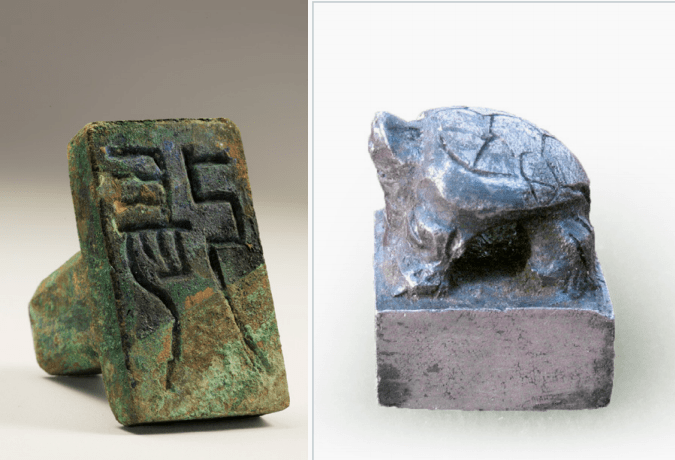
    The court then set up Wei Tuqi as king, changed the name of Loulan to Shanshan, and engraved seals for his investiture. The Emperor bestowed upon him a palace lady as queen, and supplied him with chariots, cavalry, and stores. The Chancellor Wang Xin led a hundred officials to escort him to the western gate of Chang’an, offering felicitations and sending him forth.

    The king himself petitioned the Emperor, saying: “Long have I dwelt within the Han. Now I return alone and feeble. The sons of the former king may seek my life. In our land is the town of Yixun, rich in fields. I beg that the Han dispatch a general to dwell there, till the soil, and let me lean upon their power.”

    The court then sent a Marshal with forty men to Yixun, to farm and safeguard the new king.

    In the autumn, on July 23, the Emperor ennobled Fan Mingyou as Marquis of Pingling, and Fu Jiezi as Marquis of Yiyang.

    Sima Guang’s commentary: In dealing with the tribes, when they rebel, punish them; when they submit, leave them be. Now the king of Loulanhad already confessed guilt and yielded; yet he was slain, leaving no path for future conciliation. If his crimes were to be punished, then it should have been done openly, with troops deployed and the penalty made plain. But to send an envoy with gold to lure him, and then to kill a king—how shall the nations henceforth trust our envoys? Moreover, to wield the vast strength of the Hanto plot against the barbarians is disgrace indeed. Some may praise Fu Jiezi for a wondrous feat, but such praise is over the top!

    The 5th year of Emperor Zhao’s Yuanfeng Era (76 B.C.)

    In summer, there was a great drought.

    In autumn, the commandery of Xiangjun was abolished; its lands were divided between Yulin and Zangke.

    In November of winter, thunder was heard.

    On December 6, Marquis Jing of Yichun, Wang Xin, passed away.

    The 6th year of Emperor Zhao’s Yuanfeng Era (75 B.C.)

    In January of spring, conscripts from the commanderies and principalities were levied to build fortifications in Liaodong and Xuantu.

    In summer, a general amnesty was proclaimed throughout the realm.

    The Wuhuan once more encroached upon the borders, whereupon the General of the Northern Expedition, Fan Mingyou, was dispatched to repel them.

    In winter, on November 27, Yang Chang was appointed Chancellor, and Cai Yi of Henei, the Privy Treasurer, was appointed Grand Master of Censorate.