Comprehensive Reflections to Aid in Governance
By Sima Guang
Translated By Yiming Yang
Annals of Han Book 18 Scroll 26 (continued)
The 1st year of Emperor Xuan’s Shen’jue Era (61 B.C. continued)
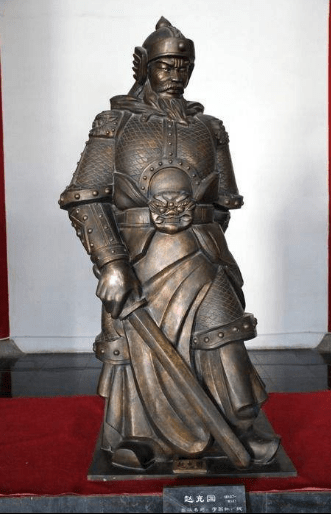
Zhao Chongguo then memorialized to the Emperor concerning the establishment of farming settlements:
“The officers, soldiers, horses, and cattle under my command, together with the grain and fodder they consume, cannot be sustained for long. Labor weighs upon them without cease, and I fear unforeseen calamities may arise, bringing concern to the enlightened Sovereign. This matter is not merely one of battlefield triumphs. Moreover, the Qiang are easily subdued by stratagem, yet difficult to break by force. Therefore, in my humble judgment, it is unwise to continue engaging them in open combat.
“From Linqiang eastward to Gaomen lie more than two thousand acres of cultivable land, including abandoned Qiang farms and public fields which the people have not yet reclaimed. Many relay stations in this region stand in ruin. My vanguard has already entered the mountains, cutting more than sixty thousand trees and piling them along the riverside for use. I propose to withdraw the cavalry and retain only twelve thousand eight hundred and one infantry, stationing them at key passes to ease transport, restore the relay stations, dredge canals and ditches, and build seventy bridges from Huangxia westward, such that we may reach the vicinity of Xianshui River.
“When agricultural work is established, each soldier may be allotted twenty mu[Chinese acre] to cultivate. By April, when grasses rise, one thousand cavalry from the county and one thousand nomad horsemen of the vassal tribes may graze there, serving as mobile support for Jincheng Commandery—greatly reducing expenses and storing up resources. The grain requisitioned by the Ministry of Agriculture is sufficient to supply ten thousand men for one year. I submit a full register of requested lands and materials for Your Majesty’s review.”
The Emperor replied: “Even if the general’s plan is carried out, when will the enemy be destroyed? When will the conflict truly end? Judge its feasibility carefully and report again.”
Zhao Chongguo submitted another report: “I have heard that the essence of imperial warfare lies in gaining victory by No-Lose battle—that strategy ranks foremost, and combat is but its servant. ‘To win a hundred battles is not the height of excellence; to stand unassailable while striking at the enemy’s weakness’—that is true mastery(of Sun Tze). Although the customs of the barbarians differ from those of the civilized realm, yet their nature is the same: they seek benefit and shun harm, love their kin, and fear death.
“Now the enemy has lost fertile pasture and good fields. In flight they suffer hardship, driven far from their homes, their clans broken, discord growing among them. If we withdraw the troops and station them in settled fields, follow the rhythm of the seasons, use the advantages of terrain, and wait for the moment when the enemy grows weak, then though the time of their submission cannot be fixed precisely, we may expect victory within a matter of months.
“The Qiang are already crumbling: more than ten thousand seven hundred have surrendered, and over seventy groups have been released after accepting our goodwill and laying down hostility. They are the key by which the Qiang confederation may be dissolved.”
“I hereby present twelve advantages in refraining from expedition and remaining to cultivate the fields:
“First, maintaining nine battalions of infantry and ten thousand officers and soldiers in garrison ensures readiness for war, while the cultivation of fields supplies grain—thus both strength and benevolence are displayed.
“Second, obstructing and containing the Qiang, preventing their return to fertile pasture, impoverishes their power and hastens their dissolution.
“Third, the local residents may farm without interference, and agriculture will not be disrupted.
“Fourth, the monthly rations required for cavalry and horses could sustain infantry for a year through field production; withdrawing the cavalry preserves vast expense.
“Fifth, in the spring we may marshal the army and transport grain from rivers and canals to Linqiang County, displaying military resolve and leaving future generations the resource for combat.
“Sixth, we may use idle time to shape the timber already felled, repair the ruined courier stations, and strengthen the defenses of Jincheng.
“Seventh, to strike the enemy now would invite uncertain peril; but if we hold firm, exploiting their weakness, and drive them into barren lands to suffer frost, mist, pestilence, and hunger, victory will be assured.
“Eighth, we avoid the dangers of precipitous ground, extended pursuit, and needless loss of life.
“Ninth, we preserve our strength within, avoid exposing weakness without, giving the enemy no vulnerabilities to exploit.
“Tenth, we prevent disorder from spreading to south of Yellow River and forestall unforeseen upheaval.
“Eleventh, by constructing bridges and defenses in the ravines and extending our reach to the Xianshui River, we take command of the Western Regions; the army may advance thousands of li as easily as one rolls over upon a pillow.
“Twelfth, with great savings in expenditure, and without burdening the people with corvée or tax, rebellious thoughts will be kept far away.
“These twelve advantages lie in remaining to cultivate; the twelve losses lie in dispatching the troops. Only the decree by your enlightened may make the right choice.”
In response, the Emperor asked: “When you say victory may be expected within months—do you mean this winter? If so, in which month precisely? Have you not considered that when the enemy hears our army has been withdrawn, they may gather their strong men, plunder the fields, and strike at the garrisons along the roads, bringing yet further harm to the people? By what means do you plan to prevent this? Reassess the situation and report again, General.”
Zhao Chongguo replied: “I have heard that war rests upon strategy; therefore he who plans more possibilities prevails over he who plans fewer. The former elite troops of the Xianling Qiang now number only seven or eight thousand, scattered, starving, and fleeing across distant lands, desertion growing by the day. In my humble view, their collapse may come in days or months, or may be delayed until early spring—thus I said victory could be expected ‘within months.’
“I observe that from Dunhuang in the north to Liaodong in the east stretches more than fifteen thousand li, with several thousand troops stationed guarding the frontier; yet the enemy’s attacks have caused no great harm. Though the cavalry has been withdrawn, seeing ten thousand disciplined soldiers cultivating in the fields, the nomad wretch’s horses will be scrawny and emasculated from now until the end of March, they will neither dare to abandon wives and children to attach themselves to other tribes, nor dare to carry their families homeward. This is my humble estimation—that the enemy will disperse without battle.
“To be sure, sporadic raids and killings of civilians cannot be wholly prevented. Yet I have heard that one must not shed blood unless victory is assured; nor deploy large armies where the target is not essential to take. If troops are dispatched, even if unable to destroy Xianling at once, they may suppress petty raids—thus deployment has some justification. But at present we cannot eliminate even these small raids; to abandon a certain path to victory in pursuit of a precarious gain will yield no true benefit—only exhaustion within and loss of prestige without—and will not display superiority over the barbarians.
“Furthermore, once a great army is raised, it cannot be kept in the field without limit; eventually it must return, while Huangzhong cannot be left undefended. The levying of men and corvée would begin anew—this, I consider unwise. I reflect inwardly: I could have obeyed the edict, ventured beyond the borders, driven the army across distant ground, consumed the empire’s elite troops, scattered armor and arms across the fields—and even if no accomplishment was achieved, I might have evaded blame and appeared faultless after the fact. Yet this is not loyalty to one’s sovereign—it is an injury to the enlightened ruler and the state!”
Each time Zhao Chongguo submitted a memorial, it was circulated among the court for discussion. At first, only three in ten officials agreed with his proposals; later five in ten; and finally eight in ten. When asked why they had revised their earlier stance, they bowed and admitted their misjudgment. The Chancellor, Wei Xiang, said: “I know little of military affairs. Yet General of the Rear’s plans have ever proved reliable. I trust his calculations will succeed.” With this endorsement, the Emperor approved Zhao Chongguo’s strategy.
At the same time, he also adopted the proposals of General of Smashing Qiang Xin Wuxian and General of Strong-Bow Xu Yanshou, who urged immediate engagement. Both generals were ordered—along with General of the Household, Zhao Ang—to advance and attack with their respective forces. The forces of the General of Strong-Bow secured the surrender of more than four thousand men; the troops of the General of Smashing Qiang took two thousand heads; and the forces of General Zhao Ang killed and accepted the surrender of more than two thousand. Meanwhile, Zhao Chongguo’s army received the surrender of more than five thousand. The Emperor then ordered the cessation of hostilities, leaving Zhao Chongguo alone to continue his system of military cultivation.
The Minister of Agriculture, Zhu Yi, died. The Emperor, acknowledging his loyal service, lamented his passing and bestowed one hundred catties of gold upon his son for funeral rites.
In that same year, the former General and Marquis of Long’e, Han Zeng, was appointed Grand Marshal and General of Chariots and Cavalry. The Dingling tribe raided the Xiongnu for three consecutive years, killing and capturing several thousand. The Xiongnu sent more than ten thousand cavalry to repel them, but failed to prevail.
 Reflection by Rio Grande
Leave a comment