Tag: Qiang

  • Comprehensive Reflections to Aid in Governance(Part 206): Hindsight Is 20/20

    Comprehensive Reflections to Aid in Governance

    By Sima Guang

    Translated By Yiming Yang  

    Annals of Han Book 18 Scroll 26 (continued)
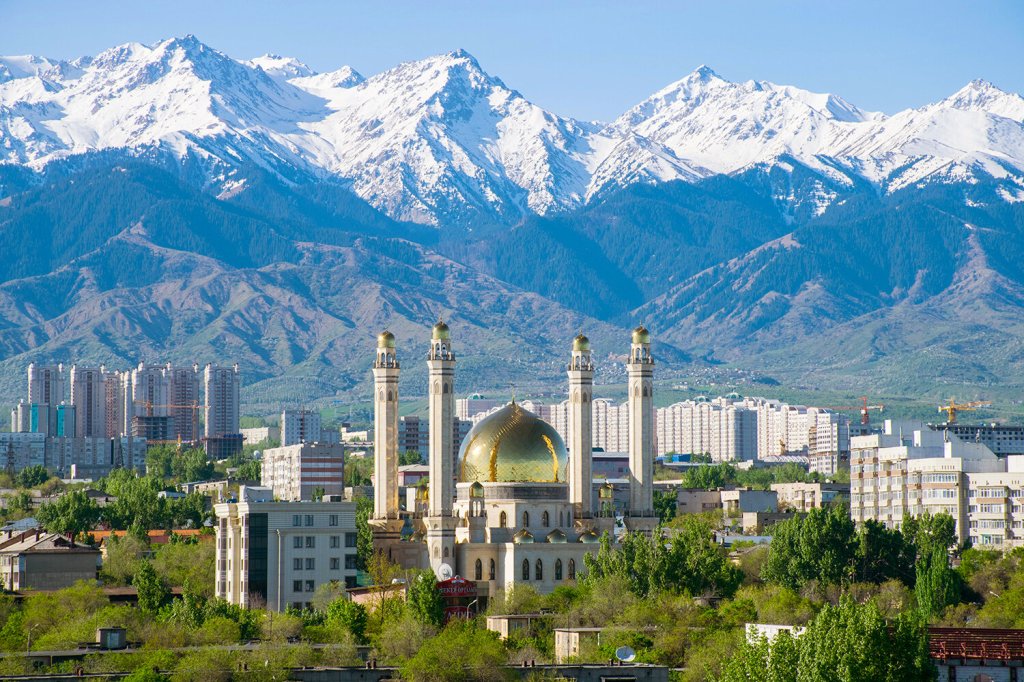
    Almaty, Kazakhstan(Wusun)

    The 2nd year of Emperor Xuan’s Shen’jue Era (60 B.C.)

    In February of spring, phoenixes alighted and sweet dew descended upon the capital. The Emperor proclaimed a general amnesty across the realm.

    In May of summer, Zhao Chongguo memorialized: “At the outset, the Qiang possessed fifty thousand troops. In total, seven thousand six hundred heads have been taken; thirty-one thousand two hundred have surrendered; five to six thousand drowned in the Yellow River and the Huangshui River or died of hunger. According to careful reckoning, those who escaped with the chieftains Jian Gong and Huang Di number no more than four thousand. Chieftain Miwang who has submitted to us is confident that they may deal with them in due time. I request that the stationed troops be withdrawn.”

    The memorial was approved. Zhao Chongguo then disbanded his forces and returned to Chang’an.

    Zhao Chongguo’s close friend, Haoxing Ci, upon meeting him, offered counsel, saying: “Many credit the success against the Qiang and the capture of prisoners to the assaults of the Generals of Strong-Bows and Smashing Qiang. Yet those of insight believe the enemy, though weakened, would have surrendered in any case even without further battle. In your upcoming meeting with the Emperor, General Zhao should attribute the victory to the two who led the attacks, saying their achievement far exceeds your modest claim. You would not have lost anything by saying that.”

    Zhao Chongguo replied: “I am old, and rank has already been granted me in full measure. How could I deceive the enlightened lord by diminishing myself with fraud? Matters of war and state must be weighed with utmost care. As an aged servant, I must speak truthfully of the gains and losses of these military actions, even at the cost of my life. If I do not speak now, who will dare to do so after I am gone?”

    He then submitted his strategy to the Emperor. The Emperor approved, dismissed General of Smashing Qiang, Xin Wuxian, restored him to his former post as Prefect of Jiuquan, and reinstated Zhao Chongguo as General of the Rear.

    In autumn, the Qiang leaders Ruoling, Liliu, Zuzhong, and Erku killed the former chiefs of the Xianling—Youfei and Yang Yu. Qiang chieftains such as Dize, Yangdiao, Lianger, and Miwang made more than four thousand followers of Jian Gong and Huang Di surrender. The Emperor appointed Ruoling and his younger brother Dize as tribal kings; the remaining chiefs were each ennobled as marquises or lords. A new vassal state under Jincheng Commandery was established to receive and settle the surrendered Qiang.

    An edict was issued for the recommendation of a capable Colonel to serve as Protector of the Qiang. At that time Zhao Chongguo was ill, and the Four Offices—the Chancellery, Censorate, General of Chariots and Cavalry, and General of the Van—nominated Xin Wuxian’s younger brother, Xin Tang. Zhao Chongguo rose from his sickbed and memorialized urgently, saying:

    “Xin Tang is a drunkard and unfit to command the tribes. His elder brother, Xin Linzhong, is the more capable leader.”

    Although Xin Tang had already received the seal of office, a new edict was issued replacing him with Xin Linzhong. Later, when Xin Linzhong fell ill and retired from his post, the Five Offices nominated Xin Tang a second time.

    As Zhao Chongguo had forewarned, Xin Tang indulged habitually in drink among the Qiang, who soon rose again in rebellion. Xin Wuxian harbored deep resentment toward Zhao Chongguo, and submitted a memorial accusing Zhao Chongguo’s son, General of the Household Zhao Ang, of leaking confidential matters of state. Zhao Ang was imprisoned, and later took his own life.

    The Inspector Colonel of the Capital Metropolitan, Gai Kuanrao of Weijun, was lenient in manner, upright in conduct, and generous in disposition. He often spoke and acted contrary to the Emperor’s inclinations. At that time, the Emperor emphasized strict application of law, granting great authority to the Palace Secretariat, dominated by eunuchs. Gai Kuanrao submitted a memorial saying:

    “Now the sacred Way has declined, Confucian doctrine is neglected, and the survivors of castration (i.e. eunuchs) stand as though equal to Duke of Zhou and Duke of Shao. Statutes are treated as though they were the Book of Odes and the Book of Documents.”

    He also quoted from the Book of Changes, stating: “The Five Emperors ruled the realm as public domain, while the Three Kings governed it as private estate. A private estate passes to descendants; public office is entrusted to the worthy.”

    Upon reading the memorial, the Emperor deemed his words slanderous and forwarded it to the ministers of two-thousand-picul rank for prosecution. The Bearer of the Mace (Chief of Capital Security) accused Gai Kuanrao of urging the Emperor to abdicate to him—an act of great treason.

    The Grandee of Remonstration, Zheng Chang, sympathized with Gai Kuanrao’s loyalty and concern for the state, lamenting that his earnest counsel had been vilified by bureaucrats and misconstrued. He submitted a memorial defending him:

    “It is said that mountains breed fierce beasts because their brambles go unchecked; likewise, a nation holds loyal ministers only when traitors and sycophants do not thrive. Inspector Colonel Gai Kuanrao seeks neither ease of life nor the comfort of fine meals. When appointed, he bears the weight of the realm; when dismissed, he defends righteousness even at the risk of death. He has no powerful kin like Uncle Xu Guanghan or Shi Gao to rely on, nor patrons such as Jin Midi or Zhang Anshi to shelter him. His charge is to supervise government; he walks the straight path—thus he offends many and pleases few. He dared to speak of state affairs, and for this he faces charges of treason and a sentence of death. I am fortunate to follow the steps of worthy officials, and my duty requires speaking in remonstrance. I dare not be silent.”

    But the Emperor did not heed his words. In September, Gai Kuanrao was dismissed, imprisoned, and at last drew his sword beneath the northern gate of Weiyang Palace, ending his own life. All who witnessed it were moved to sorrow.

    The Xiongnu Chanyu, Xulüquanqu, led more than one hundred thousand cavalry to hunt near the frontier, intending thereafter to invade and raid the border regions. Before he reached his objective, however, his subordinate Tichuqutang defected to the Han and reported the situation. The court enfeoffed Tichuqutang as Marquis of Luxilulu for military advisory, and dispatched General Zhao Chongguo with over forty thousand horsemen to garrison along the border of the nine commanderies in preparation for Xiongnu incursion. After about a month, the Chanyu suffered a severe hemorrhage and dared not advance; he therefore withdrew. Soon after, he sent envoys—Tiwangdulihuci and others—to the Han to seek peace, but no reply was delivered before Chanyu’s death.

    When Xulüquanqu first ascended the throne, he had alienated his queen, Zhuanqu Yanzhi. Zhuanqu Yanzhi engaged in secret relations with the Right Tuqi King Tuqitang. When Tuqitang prepared to attend an assembly at Longcheng, Zhuanqu Yanzhi discouraged him, warning that Xulüquanqu Chanyu was gravely ill and urging him not to travel far. Within days the Chanyu died. Seizing the moment, the powerful noble Haosu King Xing’wei’yang sent envoys to summon the princes, but before they arrived Zhuanqu Yanzhi and her brother—the Left Grand Juqu (general) Dulongqi—conspired to enthrone the Right Tuqi King as the next Chanyu, known as Woyanqudi. Woyanqudi Chanyu was the great-great-grandson of Wuwei Chanyu.

    Woyanqudi was harsh and violent. Upon taking power, he executed Xing’wei’yang and others, elevated Dulongqi to high office, dismissed all the sons and relatives of Xulüquanqu, and replaced them with his own kin.

    Xulüquanqu’s son, Jihoushan, unable to succeed to the chanyu-ship, fled to his father-in-law Wuchanmu. Wuchanmu had governed a small state between Kangju and Wusun, long harried by attacks. He led several thousand of his people to surrender to the Xiongnu. Hulugu Chanyu had previously given Wuchanmu in marriage to the elder sister of his nephew King Rizhu, and entrusted him with command of his followers, assigning him to rule the Western Division.

    The King Rizhu, Xianxianchan, was the son of the Left Tuqi King and originally destined to inherit the chanyu-ship. Yet he yielded it to Hulugu Chanyu, who promised to return the throne to him in time. Many among the people therefore believed Xianxianchan ought to be Chanyu instead. However, he bore deep resentment toward Woyanqudi, and thus led his followers in an attempt to defect to the Han. He sent envoys to Quli and secretly communicated with the Cavalry Commandant Zheng Ji.

    Zheng Ji summoned fifty thousand allied troops from the tribes of Quli and Qiuci (Kucha) to receive King Rizhu, along with twelve thousand of his followers and twelve minor princes. They followed Zheng Ji to the great bend of the Yellow River, where several defectors were apprehended and executed by Zheng Ji. Thereafter they advanced to the capital. The Han court enfeoffed Xianxianchan as Marquis of Gui’de.

    Having subdued Jushi and secured the surrender of the King Rizhu, Zheng Ji exercised authority throughout the Western Regions. He thereafter maintained the security of the routes northwest of Jushi and was appointed Viceroy Protector-General. Thus, the office of Viceroy originated with Zheng Ji. He was ennobled as Marquis of An’yuan. Establishing his headquarters in the central Western Regions, he stationed himself at the city of Wulei, more than 2,700 li beyond Yangguan. With the Xiongnu greatly weakened and no longer daring to contend for the Western Regions, the former office of Commandant of Servants was abolished. The Viceroy thereafter supervised the affairs of the thirty six states—such as Wusun and Kangju—reporting disturbances and pacifying them. Matters that could not be settled peacefully were suppressed by force. Thus the authority of the Han extended firmly into the Western Regions.

    Woyanqudi Chanyu appointed his cousin Boxutang as the new King Rizhu.

    The King of Wusun, Kunmi Wong Guimi, submitted a memorial through the Marquis of Changluo, Chang Hui, stating: “I wish to appoint Yuan Guimi, my grandson of Han descent, as my heir. I further request a new marriage alliance with a Han princess, to strengthen kinship and sever all ties with the Xiongnu.”

    The Emperor referred the matter to the court for deliberation. The Grand Herald Xiao Wangzhi opposed it, saying: “Wusun lies far on the frontier, its situation unstable. Such a request should not be granted.”

    However, the Emperor, acknowledging Wusun’s recent merits and its break from Xiongnu allegiance, approved the proposal. The younger sister of the Queen of Wusun, Liu Jieyou—whose name was Liu Xiangfu—was selected as princess. She was prepared with lavish gifts and escorted by Chang Hui to Dunhuang. Before they crossed the frontier, news arrived of Kunmi Wong Guimi’s death. The nobles of Wusun, acting collectively and according to a prior agreement, installed Cenqu’s son Nimi as Kunmi, styling him the Mad King.”

    Chang Hui then submitted a new memorial requesting that the young princess remain in Dunhuang. He hurried ahead to Wusun, rebuked the nobles for failing to enthrone Yuan Guimi, and declared he would return the princess to the Han. The matter was once again brought to the court for deliberation. Xiao Wangzhi opposed granting Chang Hui’s request, “Wusun is duplicitous and difficult to rely upon. Now that we return the princess simply because Yuan Guimi was not made as Chanyu, we have not betrayed the Wusun—indeed, it benefits the Han. Should the princess be wed, future corvée and burdens would only grow.”

    The Emperor agreed, and ordered the young princess to be returned.
  • Comprehensive Reflections to Aid in Governance(Part 205): Victory by No-Lose Battle

    Comprehensive Reflections to Aid in Governance

    By Sima Guang

    Translated By Yiming Yang  

    Annals of Han Book 18 Scroll 26 (continued)

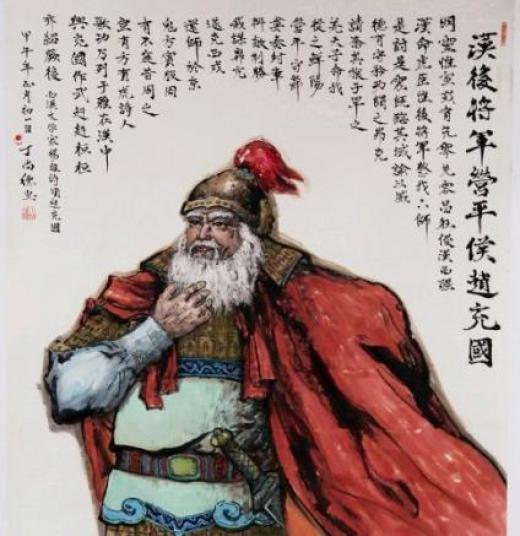
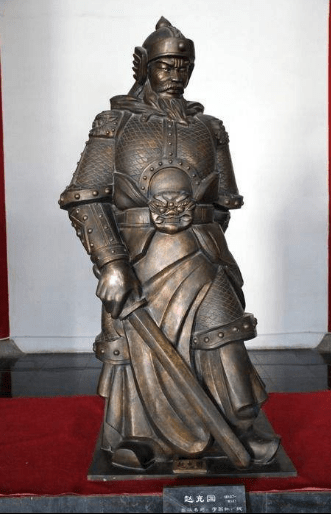
    General Zhao Chongguo

    The 1st year of Emperor Xuan’s Shen’jue Era (61 B.C. continued)

    Zhao Chongguo then memorialized to the Emperor concerning the establishment of farming settlements:

    “The officers, soldiers, horses, and cattle under my command, together with the grain and fodder they consume, cannot be sustained for long. Labor weighs upon them without cease, and I fear unforeseen calamities may arise, bringing concern to the enlightened Sovereign. This matter is not merely one of battlefield triumphs. Moreover, the Qiang are easily subdued by stratagem, yet difficult to break by force. Therefore, in my humble judgment, it is unwise to continue engaging them in open combat.

    “From Linqiang eastward to Gaomen lie more than two thousand acres of cultivable land, including abandoned Qiang farms and public fields which the people have not yet reclaimed. Many relay stations in this region stand in ruin. My vanguard has already entered the mountains, cutting more than sixty thousand trees and piling them along the riverside for use. I propose to withdraw the cavalry and retain only twelve thousand eight hundred and one infantry, stationing them at key passes to ease transport, restore the relay stations, dredge canals and ditches, and build seventy bridges from Huangxia westward, such that we may reach the vicinity of Xianshui River.

    “When agricultural work is established, each soldier may be allotted twenty mu[Chinese acre] to cultivate. By April, when grasses rise, one thousand cavalry from the county and one thousand nomad horsemen of the vassal tribes may graze there, serving as mobile support for Jincheng Commandery—greatly reducing expenses and storing up resources. The grain requisitioned by the Ministry of Agriculture is sufficient to supply ten thousand men for one year. I submit a full register of requested lands and materials for Your Majesty’s review.”

    The Emperor replied: “Even if the general’s plan is carried out, when will the enemy be destroyed? When will the conflict truly end? Judge its feasibility carefully and report again.”

    Zhao Chongguo submitted another report: “I have heard that the essence of imperial warfare lies in gaining victory by No-Lose battle—that strategy ranks foremost, and combat is but its servant. ‘To win a hundred battles is not the height of excellence; to stand unassailable while striking at the enemy’s weakness’—that is true mastery(of Sun Tze). Although the customs of the barbarians differ from those of the civilized realm, yet their nature is the same: they seek benefit and shun harm, love their kin, and fear death.

    “Now the enemy has lost fertile pasture and good fields. In flight they suffer hardship, driven far from their homes, their clans broken, discord growing among them. If we withdraw the troops and station them in settled fields, follow the rhythm of the seasons, use the advantages of terrain, and wait for the moment when the enemy grows weak, then though the time of their submission cannot be fixed precisely, we may expect victory within a matter of months.

    “The Qiang are already crumbling: more than ten thousand seven hundred have surrendered, and over seventy groups have been released after accepting our goodwill and laying down hostility. They are the key by which the Qiang confederation may be dissolved.”

    “I hereby present twelve advantages in refraining from expedition and remaining to cultivate the fields:

    “First, maintaining nine battalions of infantry and ten thousand officers and soldiers in garrison ensures readiness for war, while the cultivation of fields supplies grain—thus both strength and benevolence are displayed.

    “Second, obstructing and containing the Qiang, preventing their return to fertile pasture, impoverishes their power and hastens their dissolution.

    “Third, the local residents may farm without interference, and agriculture will not be disrupted.

    “Fourth, the monthly rations required for cavalry and horses could sustain infantry for a year through field production; withdrawing the cavalry preserves vast expense.

    “Fifth, in the spring we may marshal the army and transport grain from rivers and canals to Linqiang County, displaying military resolve and leaving future generations the resource for combat.

    “Sixth, we may use idle time to shape the timber already felled, repair the ruined courier stations, and strengthen the defenses of Jincheng.

    “Seventh, to strike the enemy now would invite uncertain peril; but if we hold firm, exploiting their weakness, and drive them into barren lands to suffer frost, mist, pestilence, and hunger, victory will be assured.

    “Eighth, we avoid the dangers of precipitous ground, extended pursuit, and needless loss of life.

    “Ninth, we preserve our strength within, avoid exposing weakness without, giving the enemy no vulnerabilities to exploit.

    “Tenth, we prevent disorder from spreading to south of Yellow River and forestall unforeseen upheaval.

    “Eleventh, by constructing bridges and defenses in the ravines and extending our reach to the Xianshui River, we take command of the Western Regions; the army may advance thousands of li as easily as one rolls over upon a pillow.

    “Twelfth, with great savings in expenditure, and without burdening the people with corvée or tax, rebellious thoughts will be kept far away.

    “These twelve advantages lie in remaining to cultivate; the twelve losses lie in dispatching the troops. Only the decree by your enlightened may make the right choice.”

    In response, the Emperor asked: “When you say victory may be expected within months—do you mean this winter? If so, in which month precisely? Have you not considered that when the enemy hears our army has been withdrawn, they may gather their strong men, plunder the fields, and strike at the garrisons along the roads, bringing yet further harm to the people? By what means do you plan to prevent this? Reassess the situation and report again, General.”

    Zhao Chongguo replied: “I have heard that war rests upon strategy; therefore he who plans more possibilities prevails over he who plans fewer. The former elite troops of the Xianling Qiang now number only seven or eight thousand, scattered, starving, and fleeing across distant lands, desertion growing by the day. In my humble view, their collapse may come in days or months, or may be delayed until early spring—thus I said victory could be expected ‘within months.’

    “I observe that from Dunhuang in the north to Liaodong in the east stretches more than fifteen thousand li, with several thousand troops stationed guarding the frontier; yet the enemy’s attacks have caused no great harm. Though the cavalry has been withdrawn, seeing ten thousand disciplined soldiers cultivating in the fields, the nomad wretch’s horses will be scrawny and emasculated from now until the end of March, they will neither dare to abandon wives and children to attach themselves to other tribes, nor dare to carry their families homeward. This is my humble estimation—that the enemy will disperse without battle.

    “To be sure, sporadic raids and killings of civilians cannot be wholly prevented. Yet I have heard that one must not shed blood unless victory is assured; nor deploy large armies where the target is not essential to take. If troops are dispatched, even if unable to destroy Xianling at once, they may suppress petty raids—thus deployment has some justification. But at present we cannot eliminate even these small raids; to abandon a certain path to victory in pursuit of a precarious gain will yield no true benefit—only exhaustion within and loss of prestige without—and will not display superiority over the barbarians.

    “Furthermore, once a great army is raised, it cannot be kept in the field without limit; eventually it must return, while Huangzhong cannot be left undefended. The levying of men and corvée would begin anew—this, I consider unwise. I reflect inwardly: I could have obeyed the edict, ventured beyond the borders, driven the army across distant ground, consumed the empire’s elite troops, scattered armor and arms across the fields—and even if no accomplishment was achieved, I might have evaded blame and appeared faultless after the fact. Yet this is not loyalty to one’s sovereign—it is an injury to the enlightened ruler and the state!”

    Each time Zhao Chongguo submitted a memorial, it was circulated among the court for discussion. At first, only three in ten officials agreed with his proposals; later five in ten; and finally eight in ten. When asked why they had revised their earlier stance, they bowed and admitted their misjudgment. The Chancellor, Wei Xiang, said: “I know little of military affairs. Yet General of the Rear’s plans have ever proved reliable. I trust his calculations will succeed.” With this endorsement, the Emperor approved Zhao Chongguo’s strategy.

    At the same time, he also adopted the proposals of General of Smashing Qiang Xin Wuxian and General of Strong-Bow Xu Yanshou, who urged immediate engagement. Both generals were ordered—along with General of the Household, Zhao Ang—to advance and attack with their respective forces. The forces of the General of Strong-Bow secured the surrender of more than four thousand men; the troops of the General of Smashing Qiang took two thousand heads; and the forces of General Zhao Ang killed and accepted the surrender of more than two thousand. Meanwhile, Zhao Chongguo’s army received the surrender of more than five thousand. The Emperor then ordered the cessation of hostilities, leaving Zhao Chongguo alone to continue his system of military cultivation.

    The Minister of Agriculture, Zhu Yi, died. The Emperor, acknowledging his loyal service, lamented his passing and bestowed one hundred catties of gold upon his son for funeral rites.

    In that same year, the former General and Marquis of Long’e, Han Zeng, was appointed Grand Marshal and General of Chariots and Cavalry. The Dingling tribe raided the Xiongnu for three consecutive years, killing and capturing several thousand. The Xiongnu sent more than ten thousand cavalry to repel them, but failed to prevail.

  • Comprehensive Reflections to Aid in Governance(Part 204): A Miscalculation of Split Hair May Cause A Divergence of Thousand Mile

    Comprehensive Reflections to Aid in Governance

    By Sima Guang

    Translated By Yiming Yang  

    Annals of Han Book 18 Scroll 26 (continued)

    Yellow River Source–The Habitat of Qiang People

    The 1st year of Emperor Xuan’s Shen’jue Era (61 B.C. continued)

    When the Emperor received Zhao Chongguo’s memorial, he ordered it circulated among his advisers. The courtiers unanimously objected:

    “The Xianling are powerful—they have reckoned on aids from the Han and Jian tribes. If we do not first subdue the Han and Jian tribes, we cannot strike at the Xianling tribe.”

    The Emperor then appointed the Privy Counselor Xu Yanshou as General of Strong Crossbows, and made Xin Wuxian, Prefect of Jiuquan, General of Smashing Qiang, issuing edicts commending Xin Wuxian‘s strategy.

    In a letter of rebuke to Zhao Chongguo, the Emperor decreed:

    “Transportation is unsettled, and the people are burdened. The general commands more than ten thousand men. If we do not seize the autumn waters and grass while they are plentiful, once winter arrives the enemy will have stored fodder, hidden in the mountains, and fortified themselves; while our soldiers will suffer cold, their hands and feet cracked with frost—what benefit lies in delay? General Zhao considers not the expenditure of the Central Realm, seeking to win by prolonging the campaign—which general wouldn’t be glad if it worked out? Now it is commanded that General Xin Wuxian and others lead their forces to attack the Han Qiang in July. General Zhao must join them in advancing without hesitation.”

    Zhao Chongguo submitted a memorial, stating:

    “Your Majesty previously bestowed a gracious decree, instructing that an envoy be sent to the Han tribe, intending to deploy great forces to display imperial strength yet spare the Han Qiang, allowing them to give up their rebellious thoughts. Therefore I dispatched Diaoku, a prominent leader of the Jian tribe, to deliver the imperial command to Han and Jian Qiang. All followers of the Han tribe are now aware of this clear decree. Presently, the Xianling Qiang, led by Yang Yu, block the mountains and forests, awaiting the chance to strike. The Han tribe has committed no offense, yet we now abandon the Xianling and strike at the Han tribe—leting the guilty alone, punishing the innocent, and harming two tribes in order to restrain one that causes trouble. This is not what Your Majesty originally intended.

    “I have heard it said in the art of war: ‘If strength is insufficient for attack, then there is surplus for defense.’ And also: ‘The skilled general achieves victory by seizing initiative, not by reacting to the enemy.’ Now the Han Qiang might desire to raid Dunhuang and Jiuquan. We should keep our troops and horses well-ordered, drill our soldiers, and await their approach. Sitting firm until the enemy arrives, then striking with ease to wear them down—this is the way to victory. I fear that the troops in these two commanderies are few and cannot hold the defense, yet we intend to send them out to attack, abandoning the strategy of maneuvering the enemy and instead submitting to be maneuvered by the enemy. In my humble judgment, this is unwise.

    “The Xianling tribe have long harbored intent to betray us, thus they reconciled with the Han and Jian Qiang and settled their grievances. Yet they cannot help but fear that the Han and Jian Qiang may turn against them when the great Han army arrives. Therefore, I believe they will rush to aid the Han and Jian Qiang to secure the alliance. If we strike the Han and Jian Qiang first, Xianling will surely reinforce them. Their horses are fat, their provisions ample—I fear that our assault will do them no harm, but instead give Xianling the chance to lend favor to the Han and Jian Qiang, cementing their unity. Once united, they will field more than twenty thousand elite warriors, pressing upon the smaller tribes; those who cling to them will not easily break away. Thus their power will grow, and it will cost us tenfold effort to break them later. Our borders may suffer for decades, not merely two or three years.

    “In my view, if we first eliminate Xianling, then the Han and Jian Qiang will be subdued without further campaign. If we destroy Xianling first and the Han and Jian Qiang still refuse to submit, striking them in January of the coming year will be timely and advantageous. Advancing now will bring no benefit.”

    On June 28, Zhao Chongguo’s memorial reached the throne. On July 5, in autumn, an imperial edict was issued adopting his proposal.

    Zhao Chongguo then marched his forces to the Xianling encampment. The enemy had been stationed there for a long time and had grown lax in discipline. When they saw the great Han army approaching, they abandoned their heavy carts and attempted to flee across the Huang River. The pass was narrow and difficult. Zhao Chongguo advanced deliberately, pressing them forward. 

    Some officers urged him, “Pursue them swiftly while profit is within reach.” 

    But Zhao Chongguo said, “These are desperate men—they cannot be driven. If we delay, they will flee of their own accord; if we press too hard, they will turn back and fight like cornered beasts.” 

    The commanders all agreed, “Well spoken.” 

    In their panic, hundreds of the enemy drowned in the river. More than five hundred were slain or surrendered. Over one hundred thousand head of horses, cattle, and sheep, and more than four thousand carts were seized.

    When the army arrived in the territory of the Han tribe, Zhao Chongguo ordered that no villages be burned, nor fields grazed. Hearing this, the Qiang of the Han tribe rejoiced, “The Great Han truly has no intent to attack us!” Their chieftain, Miwang, sent word expressing a wish to return to his former lands.

    Zhao Chongguo reported this to the throne, but received no reply. Soon after, Miwang himself came to surrender. Zhao Chongguo treated him with food and wine, then sent him back to persuade his tribe. The Protector-General and his subordinates objected, saying, “This man is a rebel—how can he be released without authorization?”

    Zhao Chongguo responded, “You merely wish to resolve matters for your own convenience, without regard for what best serves the state!” Before he finished speaking, an imperial edict arrived, pardoning Miwang. In the end, the Han tribe yielded without resistance.

    The Emperor then ordered General of Smashing Qiang, Xin Wuxian, and General of Strong Crossbows, Xu Yanshou, to return to their garrisons and join Zhao Chongguo in advancing against the Xianling in December. By then more than ten thousand Qiang had already surrendered, and Zhao Chongguo judged the enemy to be near collapse. He wished to withdraw the cavalry and establish agricultural militias to await their defeat. Before he could submit this memorial, however, an imperial command arrived ordering him to advance at once.

    Zhao Chongguo’s son, the General of the Household Zhao Ang, grew anxious and sent a staff officer to advise him, saying:

    “If the matter is such that our generals may perish and our army be routed—endangering the state itself—then it is right for the General to remain firm and hold to his position. But what profit is there in disputing over benefit and harm? If, in an instant, your words run contrary to the Emperor’s will, he may send a messenger in silk(an imperial censor) to question you—then how will the General preserve yourself, let alone the realm?”

    Zhao Chongguo replied:

    “That was a disloyal thing to say! If my counsel had not been ignored, how would the Qiang have come to this? Earlier, when someone was to be sent to pacify them, I recommended Xin Wuxian; but the Chancellor and the Imperial Censor proposed Yiqu Anguo instead, which led to disaster in Qiang territory. When grain in Jincheng and Huangzhong cost eight coins per bushel, I advised the Associate Minister of Agriculture, Geng Shouchang: ‘If we purchase three million bushels, the Qiang will not dare move.’ Associate Minister Geng asked to purchase only one million; in the end we acquired but four hundred thousand. During Yiqu Anguo’s second campaign, half was squandered. These two failures emboldened the Qiang to rebel. A miscalculation the width of a hair becomes a divergence of a thousand li.

    “Now the army has tarried too long, and the border tribes begin to stir. Even if wise men should arise, they may not be able to amend the consequences. Should we fear only the Qiang? I stand firm to the last moment of my life, a loyal minister serving a sagacious lord.”

  • Comprehensive Reflections to Aid in Governance(Part 203): Old Horse Knows The Way

    Comprehensive Reflections to Aid in Governance

    By Sima Guang

    Translated By Yiming Yang  

    Annals of Han Book 18 Scroll 26 (continued)

    General Zhao Chongguo

    The 1st year of Emperor Xuan’s Shen’jue Era (61 B.C. continued)

    The Grandee of Merit, Yiqu Anguo, advanced into Qiangzhong. More than thirty influential Xianling leaders were summoned, and those deemed especially cunning and treacherous were executed. Troops were then released to strike the Xianling tribes, taking over a thousand heads. As a result, the surrendered Qiang and those who had submitted to the Han—such as the Qiang Marquis of Guiyi, Yang Yu—grew resentful and distrustful. They began raiding small settlements, rebelling against the frontier, assaulting towns and cities, and killing local officials. Yiqu Anguo, serving as Cavalry Commandant with three thousand horsemen under his command, was ordered to guard against the Qiang. But upon reaching Gaomen, he fell into an ambush, losing many chariots and weapons. He withdrew to Lingju county and reported the matter to the court.

    At that time, Zhao Chongguo was over seventy years of age. Believing him perhaps too old, the Emperor sent Bing Ji to inquire whom he thought capable of leading the army. Zhao Chongguo replied, “There is no one more seasoned for this task than this old officer.”

    The Emperor summoned him and asked, “General, how do you judge the Qiang barbarians? How many troops are required?”

    Zhao Chongguo responded, “To hear a hundred second-hand tales is not equal to seeing once with your own eyes. It is difficult to grasp the situation from afar. I request permission to hurry to Jincheng and devise the strategy in person. The Qiang and Rong, and the lesser tribes among them, are rebellious and shifting—surely near collapse. I ask Your Majesty to entrust this old servant and harbor no doubt.”

    The Emperor laughed, saying, “So be it.” He then mobilized a great army to advance on Jincheng commandery.

    In April of summer, Zhao Chongguo was appointed to command the campaign against the Western Qiang.

    In June, a comet appeared in the eastern sky.

    When Zhao Chongguo reached Jincheng, he planned to cross the Yellow River only after ten thousand cavalry had assembled. However, fearing interception by the enemy, he dispatched three detachments bearing torches to cross first under cover of night, ordering them to establish fortifications immediately upon landing. By dawn the crossing was complete, and several dozen to a few hundred enemy horsemen appeared, circling around the army.

    Zhao Chongguo said, “Our men and horses are weary from the journey—we must not pursue lightly. These riders are elite, and difficult to command against. Moreover, this is likely a stratagem to lure us into battle. Our purpose is to crush the enemy; trifling victories are not worth the risk.” He then forbade his troops to give chase.

    He sent equestrian scouts ahead toward Siwang Gulch. When they reported no enemy presence, he led the army through the gulch by night and proceeded to Mount Luodu. Summoning his lieutenants, Zhao Chongguo said, “I am certain the Qiang cannot inflict real harm. Had they stationed even a few thousand to guard Siwang Gulch and bar our passage, how could we have come through so easily?”

    Zhao Chongguo regularly sent scouts far ahead to reconnoiter, prepared for battle even while marching, and fortified his camps whenever he halted. He was cautious in all things, valued the lives of his soldiers, and calculated before committing to combat. From Mount Luodu he advanced westward to the headquarters of the Western Commandant, where he held feasts daily for his troops, whose morale surged and who all longed for action. Though the enemy repeatedly provoked him, Zhao Chongguo remained resolute and would not engage.

    After several prisoners were captured alive, they confessed that the Qiang chieftains chastised one another, saying: “I told you we should not rebel! Now the Emperor has sent General Zhao—eighty or ninety years of age, yet unmatched in the art of war. Even if we wished to fight to the death, would we even have the chance?”

    Earlier, the chieftain of the Han and Jian tribes, Midanger, had sent his younger brother Diaoku to report to the Commandant that the Xianling tribe were preparing to rebel. Several days later, they indeed rose in revolt. Since many of Diaoku’s kinsmen were aligned with the Xianling, the Commandant held him as a hostage. Zhao Chongguo, judging him blameless, released him and sent him back with a message for the Xianling chieftains, declaring: “The imperial army punishes only the guilty, sparing the innocent. The Emperor proclaims to all Qiang people: whoever captures lawbreakers shall be rewarded in proportion to the gravity of their captives’ crimes, with gold bestowed accordingly, and the wives, children, and property of the captured awarded as well.” Zhao Chongguo’s design was to employ imperial authority to win over the Han and Jian tribes and those among the raiders who might submit, thereby unsettling the enemy’s plans, exploiting their fatigue, and then striking once their strength faltered.

    At this time the Emperor had already dispatched sixty thousand troops from the inner commanderies to strengthen the border garrisons. The Prefect of Jiuquan, Xin Wuxian, submitted a memorial stating:

    “The commandery garrisons all sit defensively in the southern mountains, leaving the northern frontier exposed—this cannot sustain. If we wait until autumn or winter to advance, such a plan suits only when the enemy is far away. Now they raid us day and night, and the land is bitterly cold. Han horses cannot endure the winter. It would be better to provision our troops in early July with thirty days’ supplies, divide them into two columns, and attack from Zhangye and Jiuquan, converging upon Han and Jian tribes along the Xianshui River. Even if we cannot exterminate them entirely, we may seize their livestock, take their wives and children, and then withdraw. In winter we may strike again, and when the main force advances thereafter, the enemy will surely be thrown into turmoil.”

    The Emperor forwarded Xin Wuxian’s letter to Zhao Chongguo for feedback. Zhao Chongguo replied:

    “Each horse can carry no more than thirty days of grain—two and a half bushels of rice or eight bushels of wheat—besides clothing and arms. Pursuit would be difficult. The enemy will doubtlessly rely on shifting maneuvers, withdrawing gradually, following water and pasture, scattering into mountains and forests. If we chase deeply, they will seize the heights and sever our supply lines, placing us in extreme peril. We would become a joke to the barbarians, and the humiliation would not be washed away for a thousand years. As for Xin Wuxian’s proposal that we seize their livestock and capture their wives and children, this is more hope than strategy, not something that can be relied upon. The Xianling tribe rose first in rebellion, and the other tribes only followed them in raiding and kidnapping. Therefore, this old officer proposes that we acknowledge the excesses committed by the Han and Jian tribes, conceal their offenses, and refrain from exposing them. We should first suppress the Xianling to inspire fear, after which they will seek to correct themselves. Then we may pardon their crimes, appoint capable officials familiar with their customs, and gently guide them toward reconciliation. This is the only plan that protects the whole army and truly secures the frontier.”

  • Comprehensive Reflections to Aid in Governance(Part 201): Qiang–People Identified with Sheep

    Comprehensive Reflections to Aid in Governance

    By Sima Guang

    Translated By Yiming Yang  

    Annals of Han Book 17 Scroll 25 (continued)

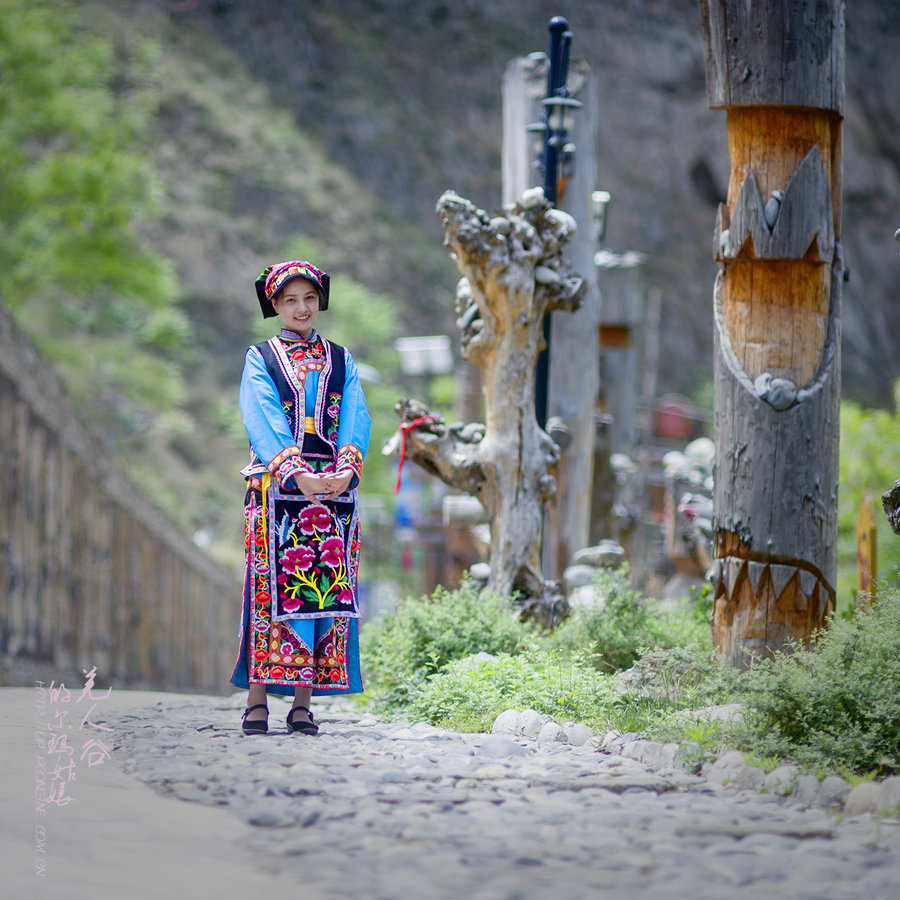
    Modern Qiang Ethnic Group

    The 4th year of Emperor Xuan’s Yuan’kang Era (62 B.C.)

    In January of spring, a decree was issued: “Those aged eighty and above, unless guilty of false accusation or causing bodily harm to others, shall not be subject to punishment.”

    The former Intendant of Right Fufeng, Yin Wenggui, died leaving no wealth behind. In August of autumn, a decree stated: “Yin Wenggui was honest and upright, governing the people with fairness. It is granted that his son shall receive one hundred catties of gold to conduct sacrifice.”

    The Emperor ordered officials to search for the descendants of meritorious followers of Emperor Gaozu whose peerages had lapsed. They found one hundred thirty-six individuals, including Zhou Guanghan, Gongcheng(a title) of Huaili. All were granted twenty catties of gold and exemption from taxation and corvée for their households, with instructions to continue their ancestral sacrifices without interruption for generations.

    On August 11, the Marquis of Fuping, Zhang Anshi, passed away.

    Earlier, when Wei Xian, Marquis Jie of Fuyang, died, his eldest son, Wei Hong, had been imprisoned for a crime. The family altered Wei Xian’s will and falsely named his next son in line, Wei Xuancheng, Commandant of Dahe Commandery, as his heir. Wei Xuancheng, fully aware of his father’s true intentions, feigned madness—lying in his own filth(excretion), laughing and babbling incoherently, behaving confused and deranged. After the funeral, when he was summoned to inherit the title, he pretended to be too insane to answer. The Grand Herald submitted a report, and the Chancellor together with the Imperial Censor conducted an investigation.

    The assigned investigator, the Chancellor’s staff wrote to Wei Xuancheng, saying: “In ancient times, when one declined and yielded a position, one composed a written statement expressing dignified intent, thereby leaving honor to future generations. But you have disfigured yourself and brought shame upon your name by pretending to be mad and witless, hiding your brilliance and sharing none of it with others. It is lamentable that you seek reputation through petty tricks! I am but a simple man, serving in the Chancellor’s office through my meager abilities. I wish only that you hear a little of public opinion; otherwise, you may damage your lofty standing, while I become a petty man for informing against you.”

    Wei Xuancheng’s friend, the Palace Gentleman Zhang, also submitted a memorial, stating: “The sage kings esteemed conciliation and humility in governance. It is fitting to treat Wei Xuancheng with care, and not to force his compliance, so that he may find peace and safety within the simplicity of his home.”

    However, the Chancellor and the Imperial Censor determined that Wei Xuancheng was not truly sick and indicted him. An imperial decree forbade punishment, and he was summoned and granted the title. Reluctantly, Wei Xuancheng accepted it. The Emperor praised his humility and appointed him Prefect of Henan.

    When the king of Jushi, Wugui, fled to the Wusun, the Wusun detained him. The Han court dispatched envoys to demand his release, and the Wusun sent Wugui to the imperial court.

    Emperor Wu had established four commanderies west of the Yellow River, cutting off communication between the Qiang and the Xiongnu and driving out various Qiang tribes, forbidding them to settle in the region of Huangshui River basin. After the Emperor’s accession, the Grandee of Merit, Yiqu Anguo, was sent to deal with the Qiang tribes. The Xianling tribal leaders said, “We wish to cross the northern part of the Huangshui River and occupy the land where people do not farm, but only raise livestock.” Yiqu Anguo acquiesced and reported this. Later, General Zhao Chongguo accused Yiqu Anguo of exceeding his authority and did not perform his duty. Other Qiang tribes, inspired by this earlier statement, crossed the Huangshui River, and the local jurisdictions were unable to restrain them.

    The Xianling and other Qiang tribes reconciled with one another, exchanged hostages, and swore oaths of alliance and enmity. When the Emperor learned of this, he asked Zhao Chongguo for his assessment. Zhao Chongguo replied: “The reason the Qiang are difficult to control is that each tribe has its own leader. They constantly quarrel among themselves and lack unity. Some thirty years ago, when the Western Qiang rebelled, they likewise reconciled with the tribes among them and resisted the Han for five or six years before being subdued. The Xiongnu have long sought to entice the Qiang, wishing to strike Zhangye and Jiuquan and settle the Qiang there. Recently the Xiongnu have been stirring up trouble in the west. I suspect they may have already sent envoys to form alliances with the Qiang. I fear that this unrest will not end here; they may ally with still other tribes. We must prepare before the danger arrives.”

    A month later, the Qiang leader Lang He sent envoys to the Xiongnu requesting troops, intending to attack Shanshan and Dunhuang to sever the Han route. Zhao Chongguo said: “Lang He alone does not have the power to devise this plan. It is likely that Xiongnu envoys have already reached out to the Qiang. The Xianling, Han(Qiang), and Jian(Qiang) tribes have reconciled, and when autumn comes and the horses are fat, the rebellion will surely break out. We must send envoys to patrol the border and make advance preparations, instructing the Qiang tribes not to reconcile, so that their plot may be exposed.” Thus, the Chancellor’s Office and the Censorate again proposed sending Yiqu Anguo to inspect the various Qiang tribes and distinguish between the loyal and disloyal.

    At that time, there had been several years of abundant harvests, and grain cost five coins per picul.