Comprehensive Reflections to Aid in Governance
By Sima Guang
Translated By Yiming Yang
Annals of Han Book 19 Scroll 27 (continued)
The 3rd year of Emperor Xuan’s Ganlu Era (51 B.C.)
In January of spring, the Emperor traveled to Ganquan and conducted a suburban sacrifice at the Taizhi altar.
The Xiongnu Chanyu Huhanye came to the court, offering tribute and referring to himself as a vassal but not by name. He was bestowed with a diadem, robes, a golden seal with a red ribbon, a jade decorated sword and a decorated cutlass, a bow with four arrows, ten ceremonial halberds, a seated carriage, a saddle and bridle set, fifteen horses, twenty cattie of gold, two hundred thousand coins, seventy-seven sets of apparels, eight thousand bolts of brocade and silk, and six thousand cattie of cotton.
After the ceremony, an envoy was sent to guide the Chanyu to stay at Changping for the night. The Emperor, having traveled from Ganquan, stayed at the Piyang Palace. From the Changping slope, the Emperor ordered that the Chanyu should not bow, and his attendants and all the ministers were allowed to observe, along with several tens of thousands of tribal chieftains, kings, and marquises from various distant lands, who all line the road, welcoming the Emperor below the Wei Bridge. As the Emperor ascended the Wei Bridge, all proclaimed “Long live the Lord.” The Chanyu took residence in Chang’an.
A banquet was held at the Jianzhang Palace to honor and bestow gifts upon the Chanyu, displaying rare treasures.
In February, Chanyu was sent back to his country. He requested to “remain south of the desert near the Guanglu Pass; I would seek refuge in the Han’s the city of surrender in case of emergency.” The Han court dispatched the Guard Commandant of Changle Palace, Marquis of Gaochang, Dong Zhong, and Commandant of Chariots and Cavalry, Han Chang, leading 16,000 cavalrymen, and mobilized thousands of soldiers and horses from the border commanderies to escort the Chanyu out of the Jilu Pass in Shuofang Commandery. An edict ordered Dong Zhong and others to stay and protect the Chanyu, assisting in suppressing disobedience, and to transport grain forward and back, totaling 34,000 bushels, to provide for their sustenance.
Previously, all the countries from Wusun to Anxi, neighbors of the Xiongnu, feared them and slighted the Han. After the Chanyu Huhanye paid homage to the Han, they all revered the Han.
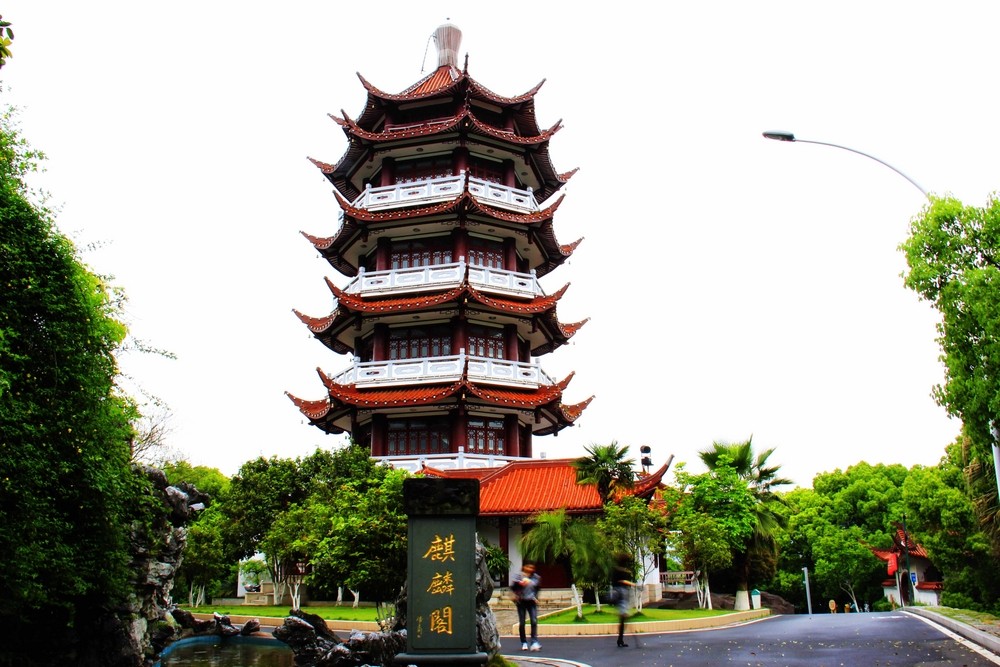
To honor the compliance of the nomad tribes in the west and north and to recognize the outstanding ministers, portraits of these individuals were made and displayed in the Qilin Pavilion. Their likenesses were depicted, and their official titles and names were inscribed. Only Huo Guang was not named directly; he was referred to as “Grand Marshal, Grand General, Marquis of Bolu, surname Huo.” Next came Zhang Anshi, Han Zeng, Zhao Chongguo, Wei Xiang, Bing Ji, Du Yannian, Liu De, Liangqiu He, Xiao Wangzhi, and Su Wu. In total, eleven men renowned in their time were honored for their merits and achievements, thus they were showcased and celebrated, their contributions to the renaissance of the Han Dynasty were lauded, in the same sentence as ministers of Zhou like Fang Shu, Shao Hu, and Zhong Shanfu.
Phoenix birds landed in Xincai County.
On March 22, Marquis An of Jiancheng Huang Ba passed away. On May 12, Yu Dingguo became the Chancellor and was granted the title Marquis of Xiping. Grand Coachman Chen Wannian of Peijun became the Grand Master of Censorate.
The Emperor issued an edict for the scholars to discuss similarities and differences of their exposition of Five Classics. Xiao Wangzhi and others reviewed and presented their debates, and the Emperor personally presided over the judging. Thus, scholar Liangqiu He‘s annotation of the Book of Change was established as the standard, in addition, Xiahou Sheng(Xiahou Senior) and Xiahou Jian(Xiahou Junior)’s annotation of the Book of Document and Guliang Chi‘s Spring and Autumn Annals were selected. They were appointed as Erudites.
The Great Kunmi of Wusun, Yuanguimi, and Chimi(Liu Jieyou’s son) both fell ill and died. The princess Liu Jieyou (their mother) wrote to the Emperor, saying: “I am old and homesick, and I wish to return my bones to be buried in the land of Han!” The Emperor sympathized and arranged for her return. In winter, she arrived at the capital and was treated according to the protocol accorded a princess. She passed away two years later.
Yuanguimi‘s son, Xingmi, succeeded as the Great Kunmi, but he was weak. Madam Feng wrote to the Emperor: “I wish to go to Wusun as envoy to support and stabilize Xingmi.” The Emperor approved her mission. Protector-General Han Xuan suggested that the high officials of Wusun, Grand Minister and Grand Inspector, be awarded gold seals and purple ribbons to honor and assist the Great Kunmi. The Han court agreed. Later, Duan Huizong succeeded as Protector-General and comforted and settled the defectors, stabilizing the situation. Xingmi died, and his son Cilimi succeeded him.
The favorite consort(Liangdi) of the Crown Prince, Lady Sima, fell ill and was near death. She said to the Crown Prince, “My death is not due to natural causes; it is caused by the curses and sorcery of the other consorts and attendants.” The Crown Prince believed her. Upon her death, he was overwhelmed with grief and anger, fell ill, and was deeply sad.
The Emperor then ordered the Empress to select a maid from the inner palace to entertain and serve the Crown Prince. They found Wang Zhengjun from Yuancheng and sent her to the Crown Prince’s palace. Wang Zhengjun was the granddaughter of Wang He, a former Embroidered-silk-gowned censor. She was presented at the Bing Chamber. She gained the Crown Prince’s favor and became pregnant. That year, she gave birth to Emperor Cheng in the Jia Chamber of the Painted Hall, becoming the first Imperial Grandson of the Emperor. The Emperor cherished him, naming him Liu Ao and giving him the courtesy name Dasun[The Grandson], always keeping him close by.
 Reflection by Rio Grande
Leave a comment