Comprehensive Reflections to Aid in Governance
By Sima Guang
Translated By Yiming Yang
Annals of Han Book 16 Scroll 24 (continued)
The 2nd year of Emperor Xuan’s Di’jie Era (68 B.C.)
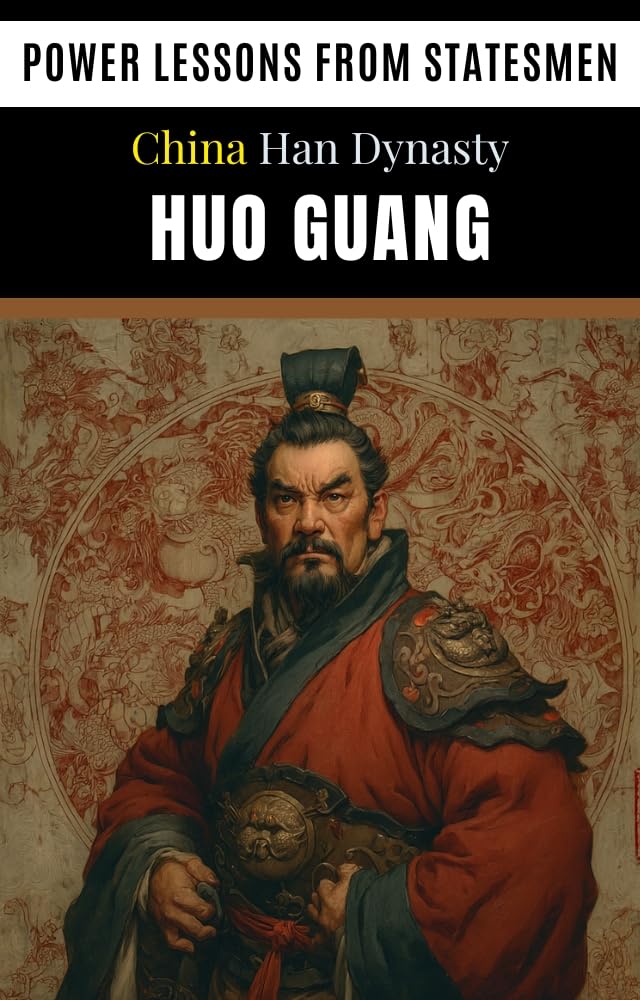
In the spring, Huo Guang fell gravely ill. The Emperor went in person to visit him, wept at his side, and inquired after his health status. Huo Guang memorialized his gratitude, requesting that three thousand households be divided from his fief and given to his grandnephew Huo Shan, Commandant of Chariots, so that Huo Shan might continue the sacrifices of his deceased elder brother Huo Qubing. On that same day, Huo Guang’s son, Huo Yu, was appointed General of the Right.
On March 8, Huo Guang died. The Emperor and the Empress Dowager themselves attended his funeral. A minister of two-thousand-picul rank was appointed to oversee the construction of his tomb, which was made in the manner of the imperial household, with a hearse and sepulcher of full honor. He was posthumously styled Marquis of Xuancheng. Troops of the Three-He commanderies—Henan, Henei, and Hedong—were sent to open the ground, inter his coffin, and raise his mound. Three hundred households were settled in his tomb-park, with officers appointed to tend and sacrifice. An edict decreed that his descendants should preserve their rank and fiefs for generations, exempt from levy and corvée.
The Grand Master of Censorate, Wei Xiang, submitted a sealed memorial, saying: “The state has newly lost its Grand General. It is fitting to exalt and advance meritorious ministers, that no high office remain vacant, and that the frontier states may be reassured, so as to prevent contention for power. It is proper that the General of Chariots and Cavalry, Zhang Anshi, be appointed Grand General, and relieved of his post as Chamberlain. His son, Zhang Yanshou, may then assume the office of Chamberlain.”
The Emperor inclined to this counsel. On April 17, Zhang Anshi was made Grand Marshal and General of Chariots and Cavalry, also the Recorder of the State Secretariat.
That year phoenixes gathered in Lu, and a multitude of birds followed. A general amnesty was proclaimed throughout the realm.
To honor and reward the virtue of the late Grand General, the Emperor enfeoffed Huo Shan, grandson of Huo Qubing, as Marquis of Leping, and made him Director of the State Secretariat and Commandant of Chariots.
Wei Xiang, the Grand Master of Censorate, submitted a sealed memorial through Lord of Changcheng, Xu Guanghan, saying:
“The Spring and Autumn Annals reproach the ministers of the realm: in Song the royal kindred held sway for three generations, and in Lu the Jisun usurped power; both brought peril to their states. Since the Houyuan reign of Emperor Wu, the system of rewards has slipped from the court’s control, and the governance of the realm has lain in the hands of mighty ministers. Now Huo Guang is dead, but his son again holds the post of General of the Right, and his brother’s grandson controls the central command. Brothers, brothers-in-law, and kinsmen fill the armies with power. Grand Madame Xian and all her daughters enter the Changxin Palace by day and by night, ordering its gates to be opened at will, indulging in luxury and extravagance. If their power is not diminished, if their influence is not checked, hidden plots may arise, and the foundation of the state will not be secure. It is fitting to pare down their strength, to prevent calamity in time, and to safeguard the heritage of the meritorious.”
By custom, all petitions required two copies, one marked “duplicate,” first read in the State Secretariat, and if containing disfavor, withheld. Wei Xiang proposed, through Xu Guanghan, that he be allowed to present his memorial without the duplicate, so that it could not be obstructed. The Emperor approved, appointed Wei Xiang additionally as Palace Liaison, and accepted all his counsel.
The Emperor himself, having been raised among the people, well understood their hardships. After the death of Huo Guang he took direct charge of the government, scrutinizing affairs with diligence, and holding hearings every five days. From the Chancellor to the lowest officials, all submitted reports and were examined for their merit. The achievements of the Privy Counselors and Secretariat officers were richly rewarded, extending even to their descendants, and this became a precedent faithfully observed. Thus the administration was orderly, the protocols complete, and from top to bottom harmony prevailed, with no trace of neglect.
When appointing provincial inspectors, commandery prefects, and princely ministers, the Emperor himself inquired into their worth, observed their talents, and later judged their deeds to test their words. If speech and action did not accord, their hearts were revealed. He often said: “The people’s peace in their fields, and the lessening of their sighs and sorrows, come from upright governance. Of those who share with Us this charge, none are weightier than the ministers of two-thousand-picul rank.”
He deemed the commandery prefect the root of order, and held that frequent removals disturbed the people. When the people knew their governors were settled long-term, and could not be deceived, they willingly followed the laws and teachings.
Thus, when inspectors of the provinces showed skill in rule, the Emperor by edict praised and encouraged them, increased their stipends, bestowed gold, and raised their rank to that of Inner Marquis. When offices stood vacant, he appointed men from those recommended.
Therefore, in the time of Han, virtuous officials flourished, and this age was acclaimed as a time of renaissance.
Upon the death of the Xiongnu Chanyu Huyandi, his younger brother, the Left Tuqi King, ascended the throne, taking the title Xulüquanqu Chanyu. He raised the daughter of the Right Grand General to be Grand Yanzhi, and deposed the former favorite, Zhuànqú Yanzhi. The Left Grand Zuqu, her father, nursed resentment.
At this time the Han, deeming the Xiongnu no longer a threat, withdrew garrisons from the frontier towns to give rest to the people. The Chanyu rejoiced, and with his nobles resolved to seek peace and marriage with the Han. But the Left Grand Zuqu opposed it, saying: “Formerly, when Han envoys came, they brought soldiers with them. If we now imitate the Han, we too should first dispatch troops.” He then proposed to go forth with the Huluzi King, each leading ten thousand horses, to hunt along the southern border, and when they joined, to cross into Han soil together.
Before they reached their march, three riders defected to the Han and disclosed the plan. The Emperor forthwith mobilized the border cavalry, sending the Military Supervisor under the Grand General Zhizhong, with four other commanders, to lead five thousand cavalry in three divisions, patrolling several hundred li beyond the passes. Each captured scores of men before returning. The Xiongnu, alarmed at the loss of their three riders, dared not advance and withdrew.
That year the Xiongnu suffered famine. Of men and herds, six or seven in ten perished. They set two hosts, each of ten thousand horses, to guard against Han incursion. In autumn, led by their chiefs, thousands of the Xiru tribesmen, who had once submitted to the Xiongnu, were driven south with their flocks. They fought the Xiongnu at Otuo, and were bloodily repulsed. At length they broke through, descended south, and surrendered to the Han.
 Reflection by Rio Grande
Leave a comment