Comprehensive Reflections to Aid in Governance
By Sima Guang
Translated By Yiming Yang
Annals of Han Book 14 Scroll 22 (continued)
The 2nd year of Emperor Wu’s Zhenghe Era (91 B.C. continued)
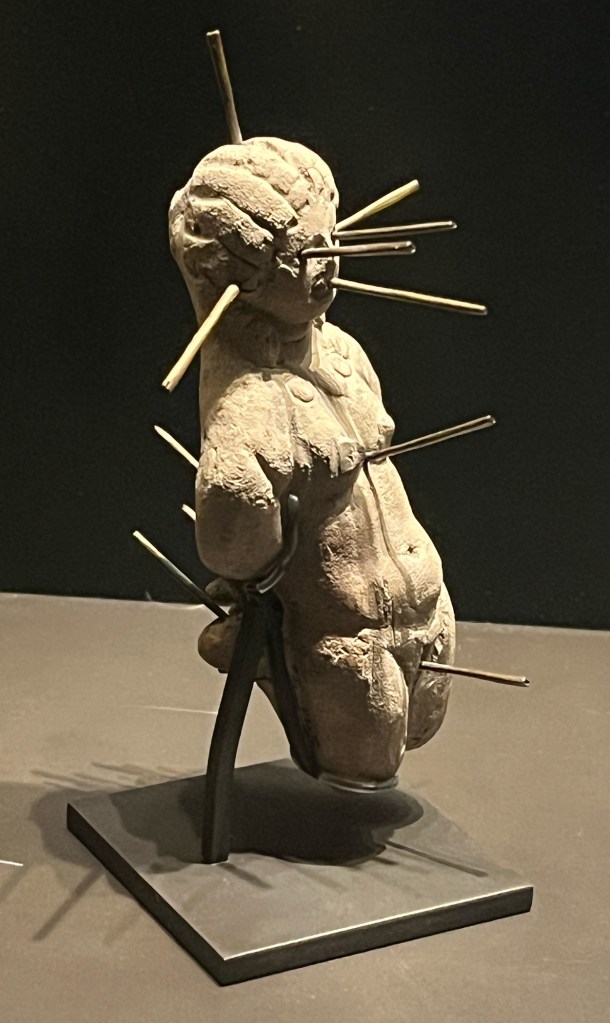
The Emperor, in his fury, ordered the execution of several hundred concubines and high-ranking officials, suspecting their involvement in voodoo and dark arts. Troubled by suspicion, the Emperor once napped by day and dreamt of thousands of wooden figurines wielding sticks, poised to strike him. Startled awake, he was overcome with profound unease, suffering from severe and recurrent bouts of forgetfulness.
Jiang Chong, perceiving himself at odds with the Crown Prince and the Wei clan, feared that upon the Emperor’s passing he would be slain by the Crown Prince. Exploiting the Emperor’s advanced age and malaise, Jiang Chong fabricated a suspicion that the Emperor’s ailments stemmed from Gu poisoning. The Emperor appointed Jiang Chong as his representative to oversee all matters pertaining to witchcraft.
Jiang Chong summoned nomad shamans and witches to dig the ground in search of buried effigies. Those accused of witchcraft, of conducting nocturnal rituals, or of mediumship were apprehended. Jiang Chong himself buried wooden figurines and marked the spots with animal blood; witches claiming to detect spirits would then unearth these figurines. Suspects were seized and subjected to rigorous interrogation and torture. Heated iron pincers were applied to burn the accused, forcing confessions through excruciating torment.
False accusations of witchcraft spread rapidly, with officials hastily branding the accused as monsters. This frenzy led to the deaths of tens of thousands across the capital–the Three Metropolitan Commanderies, and throughout provinces and commanderies.
At this time, the Emperor, advanced in age, grew ever more suspicious, believing Gu poison and spells encircled him from all sides. Whether guilty or innocent, none dared plead their case. Jiang Chong, aware of the Emperor’s troubled mind, enlisted the nomad warlock Tan He, who proclaimed, “Gu air lingers within the palace; unless it is eradicated, the Emperor shall never recover.” Acting upon this, Jiang Chong was granted authority to enter the palace, search the administration hall, dismantle the imperial throne, and excavate the grounds for signs of Gu poison. He was assisted by the Marquis of Andao, Han Yue; censor Zhang Gan; and Yellow Gate eunuch Su Wen.
Jiang Chong first targeted concubines unnoticed by the Emperor, then proceeded to the residences of the Empress and Crown Prince, excavating so extensively that the beds of both found no place in sleeping chambers.
Jiang Chong declared, “Within the Crown Prince’s residence are numerous wooden figurines and written scrolls containing immoral contents; these must be reported.”
Fearful, the Crown Prince sought counsel from his Junior Tutor Shi De. Fearing that both he and his pupil might be condemned, Shi De said to the Crown Prince, “The former Chancellor and his son, along with two princesses and the Wei Kang family, have been punished for this matter. Now, with warlocks and envoys digging up the grounds in search of evidence—whether planted or genuine—there appears to be a cause. We cannot clear ourselves by ordinary means. It would be better to forge a decree, apprehend Jiang Chong and his cohorts, and thoroughly investigate their deceit.”
“Moreover,” Shi De continued, “the Emperor lies ill at Ganquan. The Empress and palace attendants have not seen His Majesty upon their visits, raising doubts as to whether the Emperor yet lives. With traitors at large, does the Crown Prince not recall the fate of Prince Fusu of Qin?”
The Crown Prince replied, “As a son, how can I arbitrarily execute men? Better to return and plead for mercy, hoping to escape without blame.”
As the Crown Prince prepared to depart for Ganquan, Jiang Chong pressed him urgently. Uncertain what to do, the Crown Prince resolved to follow Shi De’s counsel.
In the autumn, on July 7, the Crown Prince dispatched his retainer, who, posing as an envoy from the Emperor, proceeded to arrest Jiang Chong and his associates. The Marquis of Andao, Han Yue, suspecting the envoy’s designs, refused to comply and was slain by the retainer.
The Crown Prince personally oversaw the execution of Jiang Chong, pronouncing a swear: “Barbarian of Zhao! Was sowing discord between the King of Zhao, his father, and son not enough for you? Now you dare to foment turmoil within my own household!”
Furthermore, the Crown Prince consigned the warlock Tan He to flames in Shanglin Park.
He sent his retainer Wuzu, bearing a tally, to infiltrate the Changqiu Gate of the Weiyang Palace under cover of night. Through the lead attendant Yihua, he informed the Empress of the unfolding events. Utilizing chariots from the imperial stables, he transported archers, released weapons from the armory, and mobilized guards from Changle Palace, the Empress’s residence.
Chaos engulfed Chang’an, with rumors rife that the Crown Prince had risen in rebellion. Su Wen fled, escaping to Ganquan Palace, where he reported that the Crown Prince was out of control. The Emperor remarked, “The Crown Prince must be fearful and resentful of Jiang Chong and the others; this is the cause of these disturbances.”
The Emperor then dispatched messengers to summon the Crown Prince. Yet these envoys, fearful to approach, returned of their own accord, reporting, “The Crown Prince’s rebellion has already begun. He sought to kill us, and we fled for our lives.”
Enraged by this news, the Emperor’s fury deepened. Upon hearing of the unrest, Chancellor Liu Quli fled, abandoning his seal and ribbons, and commanded his chief-of-staff to hasten to the Emperor by express mail carriage to report the matter.
The Emperor inquired, “What is the Chancellor doing?”
The chief-of-staff replied, “The Chancellor has kept it a secret and dared not mobilize the troops.”
Furious, the Emperor exclaimed, “In such turmoil, what meaning lies in keeping secret? The Chancellor lacks the character of the Duke of Zhou; did not the Duke of Zhou slay Uncle Xian of Guan and Uncle Du of Cai?”
Thereupon, the Emperor issued a decree to the Chancellor: “Whoever captures or slays the rebels shall be rewarded or punished accordingly. Employ ox carts to barricade the streets; avoid close combat and thus minimize the soldiers’ casualties. Secure the city gates tightly; Don’t let the rebels escape!”
 Reflection by Rio Grande
Leave a comment