Comprehensive Reflections to Aid in Governance
By Sima Guang
Translated By Yiming Yang
Annals of Han Book 11 Scroll 19 (continued)
The 3rd year of Emperor Wu’s Yuanshou Era (120 B.C.)
In the spring, a comet appeared in the eastern sky.
In May, during the summer, a general amnesty was proclaimed throughout the empire.
During the rebellion of the Prince of Huainan, the Prince of Jiaodong, Liu Ji, had heard rumors of the matter and, sensing danger, secretly made preparations for defense. When government officials investigated the Huainan case, some testimonies implicated Prince Liu Ji. His mother, Madame Wang, the younger sister of the Empress Dowager, had a close relationship with the Emperor. Distressed by the circumstances, Liu Ji fell ill and passed away, daring not to leave a will regarding his heir.
When the Emperor heard of his death, he was moved with compassion and appointed Liu Ji’s eldest son, Liu Xian, as the new Prince of Jiaodong. In addition, the Emperor enfeoffed Liu Ji’s younger son, Liu Qing, as the Prince of Liu’an, granting him the land that had once belonged to the Prince of Hengshan.
In the autumn, the Xiongnu invaded the regions of Youbeiping and Dingxiang, each with several tens of thousands of cavalry. They killed and plundered over a thousand people.
A severe flood struck the region east of Mount Xiao, causing widespread famine and scarcity among the populace. In response, the Emperor dispatched envoys to empty the granaries of various counties and commanderies, providing relief to the impoverished. However, the supplies were insufficient. The wealthy, officials, and notable individuals were encouraged to lend aid to the poor, with their names recorded on an honor roll to be presented to the court. Yet, even this was not enough to alleviate the suffering. As a result, over seven hundred thousand destitute individuals were relocated west of the passes and southward to regions around Shuofang and the Xinqinzhong area. These people were entirely dependent on the government for their clothing and sustenance, receiving assistance for several years. Officials were appointed to oversee their welfare, and their carriages moved along the road in a continuous procession. The expenses incurred in this relief effort amounted to billions, a sum beyond calculation.
After Han acquired the territory of the Hunye King, incursions by the nomadic tribes into the Longxi, Beidi, and Shangjun Commanderies significantly decreased. In response, an edict was issued to reduce the garrison troops in these three commanderies by half, thereby alleviating the burden of conscription across the empire.
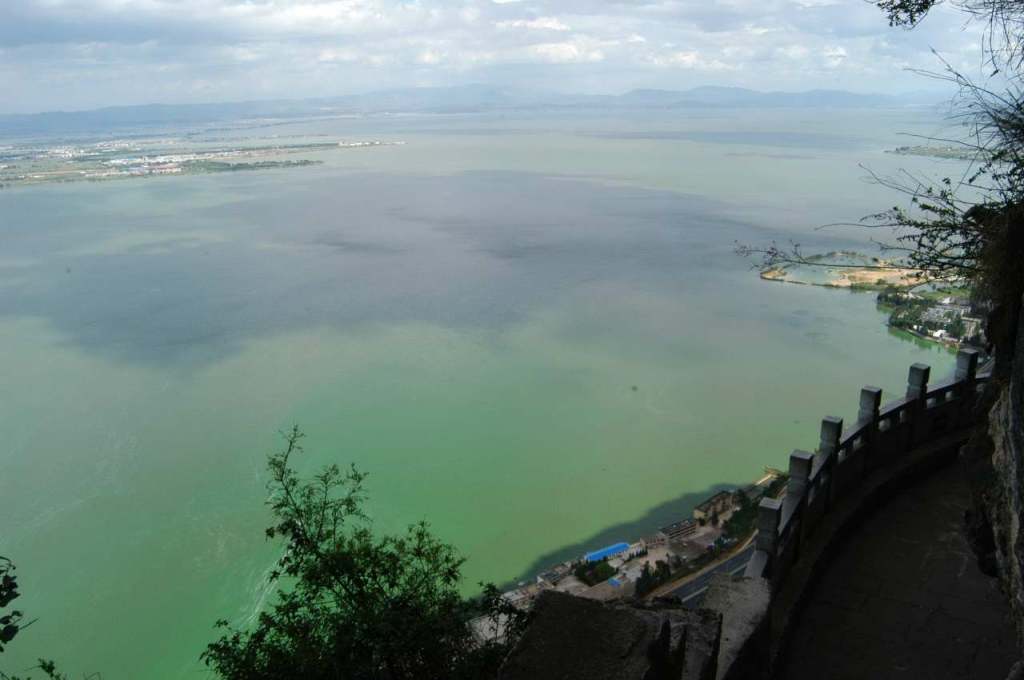
The Emperor then set his sights on pacifying Kunming. As Kunming was home to Dian Lake, which spanned approximately three hundred square lis(one li is half a kilometer), the Emperor ordered the construction of Kunming Pond to serve as a site for naval warfare exercises.
During this time, the laws grew more stringent, leading to the dismissal or banishment of many officials. Military drafts became more frequent, and commoners often managed to buy their way out of service by purchasing the rank of Fifth Grandee, which led to a shortage of conscripts. Those exempted from service through the chiliarch or Fifth Grandee ranks were summoned to serve as low-ranking officials. Those unwilling to accept these positions were required to donate horses. Officials who manipulated the laws were sentenced to penal labor at the Royal Shanglin Park, where they were tasked with reclaiming wasteland and digging the Kunming Pond.
A wonder horse was obtained from the depths of the Wowa pond, an oasis in the far Northwest. The Emperor, having recently established a music bureau, commissioned Sima Xiangru and others to compose poetry and lyrical compositions to celebrate the horse. Li Yannian, an eunuch, was appointed as Commandant of Harmony, wearing the seal of 2000-picul ranking. The poems were crafted to harmonize with the eight musical tones and often contained language drawn from the “Erya” (a classical Chinese dictionary). Scholars, familiar only with one branch of Confucius classics, found the language in these compositions incomprehensible and had to gather experts in Five Classics and study them together to decipher their meaning.
When the wonder horse was obtained, it was incorporated into a song. Ji An, observing this, remarked, “Whenever a king creates music, it should honor the ancestors above and educate the people below. Your Majesty has obtained a horse, and now you’re turning poems into songs. But will the ancestor kings and the common people understand the meaning of these songs?” The Emperor, though silent, was clearly annoyed by the remark.
The Emperor constantly sought scholars and officials, seemingly never satisfied with their numbers. Yet, his nature was stern and severe. Even those courtiers who had once been trusted and favored, if they committed minor offenses or engaged in trivial deceit, were swiftly punished or executed without leniency.
Ji An, ever the voice of caution, remonstrated, saying, “Your Majesty, you exhaustively seek out talents, yet before they can be fully utilized, you have them executed. By indiscriminately punishing those with limited capabilities, I fear the pool of talented individuals throughout the realm will dwindle. Who then, will assist Your Majesty in governing?”
Ji An spoke with indignation, but the Emperor smiled and explained, “Why worry about a scarcity of talent? It’s merely a matter of not being able to recognize them. If one could, would there be a lack of capable individuals? Talent is like a tool; if one possesses it but refuses to make the most of it, it is as good as not having it. If they are not put to death, what other way would you have me deal with them?”
Ji An responded, “Although I cannot convince Your Majesty with my words, I still believe this approach is inappropriate. I hope Your Majesty will consider this matter carefully and rectify it moving forward. Do not dismiss my reasoning simply because I am a foolish man.”
The Emperor turned to the courtiers and, with a wry smile, said, “If Ji An claimed to be sycophantic, that would have not been the case. He claims he is a foolish man, and that is certainly true!”
The 4th year of Emperor Wu’s Yuanshou Era (119 B.C.)
In the winter, officials reported, “Local officials have overly expansive expenditures, while wealthy merchants and great traders engage in metal smelting and salt boiling, accumulating fortunes amounting to tens of thousands of gold, yet they do not assist in the urgent needs of the state. We request that a currency reform to mint new coins, to meet the demands of the treasury, and that actions be taken to suppress the extravagance and those who exploit the system for personal gain.”
At this time, within the Imperial Park, there were white deer, and the Privy Treasury possessed a surplus of silver and tin. With these resources, they created leather currency from the hides of the white deer, each piece measuring a square foot, with edges embroidered in colorful patterns. These leather notes were valued at 400,000 copper coins. Princes, dukes, and other relatives of the imperial family were required to present jade discs on top of the leather notes as part of court tributes and ceremonial offerings.
Additionally, three types of silver coins were minted: the largest, circular in shape, bore a dragon design and was valued at 3,000 copper coins; the next size, square, featured a horse design and was valued at 500 copper coins; and the smallest, oval-shaped, bore a turtle design and was valued at 300 copper coins. The government ordered the county treasuries to withdraw half-tael coins and replace them with three-zhu (1/24 tael) coins. Counterfeiting any of these metal coins was punishable by death. Yet, despite the severity of the penalty, countless cases of both officials and commoners engaging in the counterfeiting of silver coins were reported.
To manage these economic reforms, Dongguo Xianyang and Kong Jin were appointed as treasurers in the Ministry of Agriculture (Revenue), overseeing salt and iron affairs. Sang Hongyang rose to prominence for his adeptness in accounting. Dongguo Xianyang was a major salt-boiling operator in Qi, while Kong Jin managed large-scale smelting operations in Nanyang. Both scaled their production, generating profits worth thousands of catties of gold. Sang Hongyang, the son of a merchant from Luoyang, exhibited remarkable mental arithmetic skills from a young age, and began serving as an attendant at the age of thirteen. The trio’s influence on economic affairs was paramount, and they meticulously analyzed financial matters, down to the smallest figures.
An edict was issued forbidding the populace from privately forging iron tools or boiling salt, under penalty of fettering the left big toe and confiscating their tools. Furthermore, ministers demanded that all merchants and craftsmen declare their assets. One thousand coins were counted as one min (also known as Guan, or one string of coins equaling one tael of silver), and a tax of 120 coins was imposed on every 2,000 min in possession. Any individual owning a carriage or boat longer than five zhang (approximately 15 meters) was also subject to this levy. Failure to declare assets resulted in a year of military service on the borders and the forfeiture of the undeclared coins. Those who brought to light on undeclared assets received half of the seized coins. This policy was primarily proposed by Zhang Tang, the Grand Master of the Censorate.
Zhang Tang presented memorials to the court daily, discussing national expenditures to the point of exhausting the Emperor; at times, the Emperor would forget to eat. The Chancellor, Li Cai, occupied his position but refrained from engaging in governance, leaving Zhang Tang to make all decisions regarding national matters. The populace, feeling unrest and discontent, largely blamed Zhang Tang for their hardships.
Bu Shi of Henan repeatedly offered to donate his wealth to the county authorities to support the border defenses. The Emperor, curious about Bu Shi’s motivation, sent an envoy to inquire.
The envoy asked, “Do you wish to become an official?”
Bu Shi replied, “I am a humble farmer and shepherd. I am not accustomed to serving in official positions, nor do I desire such a role.”
The envoy then asked, “Is there any injustice or grievance in your family that you wish to report?”
Bu Shi responded, “I have no disputes with anyone. I assist those in need among my fellow townspeople and educate those who lack virtue. The people in my village all live in harmony with me. Why would I feel wronged by anyone? I have nothing to report.”
The envoy, intrigued, asked, “If that is the case, what do you wish for?”
Bu Shi answered, “If the Emperor is punishing the Xiongnu, I believe that wise men should sacrifice themselves at the borders, and the wealthy should contribute their resources. This way, the Xiongnu can be annihilated.”
Impressed by his words, the Emperor appreciated Bu Shi’s character and wished to set him as an example for the people. Consequently, Bu Shi was summoned and appointed as a Gentleman of the Household, bestowed with the title of Left Chief Councilor (ranked 10 out of 20 orders of merit), granted ten hectares of land, and a public announcement was made to demonstrate the Emperor’s recognition. Shortly after, Bu Shi was further promoted to the Grand Tutor of the principality of Qi.
In the spring, a meteor was seen in the northeast. During the summer, a long comet appeared in the northwest.
 Reflection by Rio Grande
Leave a comment