Comprehensive Reflections to Aid in Governance
By Sima Guang
Translated By Yiming Yang
Annals of Han Book 5 Scroll 13 (continued)
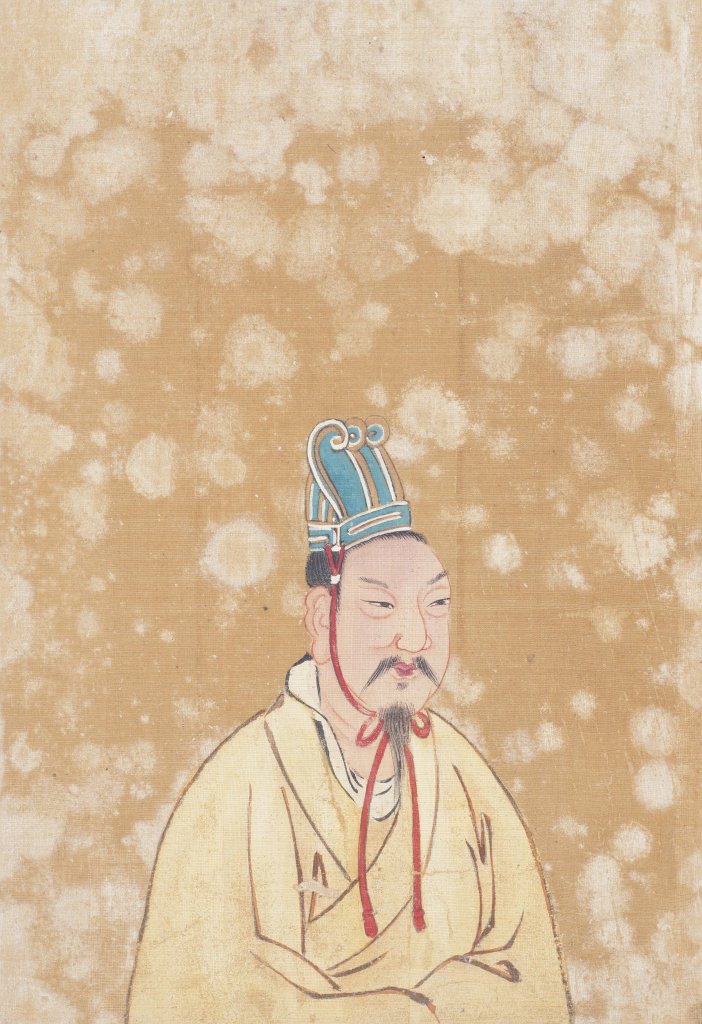
The 8th year of the Empress Gao(180 B.C. continued)
While in Xingyang, Guan Ying heard that Wei Bo had persuaded the Prince of Qi to raise troops. He summoned Wei Bo and questioned him. Wei Bo responded, “When a house is on fire, the family doesn’t have time to ask the host for permission before putting it out.” After speaking, he stepped back, his legs trembling with fear, and could say nothing more. General Guan Ying laughed and said, “People say Wei Bo is brave, but he’s just an overrated man who can’t accomplish anything!” He then dismissed Wei Bo. Guan Ying‘s troops also withdrew and returned from Xingyang.
Ban Gu’s praising commentary: During the reign of Emperor Wen, the world condemned Li Ji as a traitor. A traitor is someone who prioritizes personal gain over loyalty and righteousness. However, if Li Ji had only been coerced because his father, a meritorious official, was held hostage, even if he had betrayed his friend Lü Lu to safeguard the state, his loyalty to the emperor and his affection for his father should be acceptable.
A group of high ranking ministers conspired in secret, saying, “Emperor Shao and the Princes of Liang, Huaiyang, and Hengshan are not truly Emperor Hui’s sons. Empress Lü falsely claimed they were his sons, killed their mothers, and raised them in the imperial harem as princes to strengthen the Lü clan. Now that the entire Lü clan has been eliminated, if those established as the emperor’s sons grow older and come to power, we have no chance of survival. It is better to choose the most capable among the princes as the new emperor.” Someone suggested, “The Prince of Qi, Emperor Gaozu’s grandson, could be chosen.” The ministers responded, “The Lü clan brought chaos through the maternal family’s dominance, almost destroying the ancestral temple. If we establish the Prince of Qi, whose uncle, Si Jun, is as aggressive and greedy as a tiger, we might end up serving another Lü clan. The Prince of Dai is Emperor Gaozu’s oldest son, and he is kind, tolerant, and respectful. Moreover, his mother’s family, the Bo clan, is honest and virtuous. Choosing the eldest is the most customary option. Besides, he is renowned for his kindness and filial piety throughout the empire!” They then secretly sent someone to summon the Prince of Dai.
The Prince of Dai asked his advisors, including the lord of chamberlain, Zhang Wu, for their opinions. They said, “The ministers of the Han dynasty were originally high-ranking generals under Emperor Gaozu, experienced in warfare and skilled in strategy and deception. Their ambitions extend beyond their current positions. They acted cautiously out of fear of Emperor Gaozu and Empress Lü, but now they may be using the pretext of welcoming the Prince to pursue their own selfish goals. We advise your majesty to feign illness and refrain from going, so that we may observe how the situation unfolds.”
However, Commander of the capital garrison, Song Chang, spoke up, “The opinions of the courtiers are all wrong. When the Qin dynasty fell, the feudal lords and nobles rose up, each thinking they could claim the throne, with tens of thousands vying for it. Yet, in the end, it was the Liu family who ascended, leaving the rest of the world to drop out of the contention — this was the first reason. When Emperor Gaozu enfeoffed his sons and relatives, they served as checks on each other like interlocking teeth — this was the foundation of an unshakable empire. The entire world submitted to his strength — this was the second reason. When the Han dynasty was established, the harsh policies of Qin were abolished, the laws were simplified, and benevolence and kindness were extended to the people, leaving everyone feeling secure and averse to change — this was the third reason. Even though Empress Lü exercised strict control and appointed her family members as Princes, she could not prevent the Grand Commandant from inciting the Northern Army to support the Liu family and rebel against the Lü clan, leading to their downfall. This was a sign from heaven, not the result of human effort. Now, even if the ministers attempt to create upheaval, the people will not follow them, would their factions remain united? Inside the palace, there are relatives of Marquis of Zhuxu and Marquis of Dongmou, and outside, there is fear of the external power of principalities of Wu, Chu, Huaiyang, Langya, Qi, and Dai. Among Emperor Gaozu’s sons, only the Prince of Huainan and Your Majesty remain. Your Majesty is also the eldest, and your wisdom, benevolence, and filial piety are renowned throughout the world. Therefore, the ministers genuinely wish to support Your Majesty and welcome your ascension to the throne, in accordance with the people’s will. Your Majesty should not doubt their motives.”
The Prince of Dai reported this to his mother, Empress Dowager Bo, but remained uncertain. He consulted a divination, which revealed the hexagram “Big Horizontal.” The interpretation was: “Big Horizontal represents a heavenly Prince, like the brilliance of dawn in summer.” The Prince of Dai asked, “But I am already a Prince. What other Prince is there?” The diviner replied, “The heavenly Prince is none other than the son of Heaven.”
Following this, the Prince of Dai sent Empress Dowager’s younger brother, Bo Zhao, to meet with the Marquis of Jiang, who explained their plan to enthrone him. Bo Zhao returned with a positive response, and the Prince of Dai smiled and said to Song Chang, “It turns out you were right.”
The Prince of Dai, accompanied by Song Chang, rode with six others, including Zhang Wu, on a government post vehicle to Chang’an. They rested at Gaoling, and Song Chang was sent ahead to observe the situation in Chang’an. When Song Chang arrived at Wei Bridge[a bridge over Wei River], he was greeted by everyone, from the Chancellor down. Song Chang returned to report his findings. The Prince of Dai then rode to Wei Bridge, where the courtiers bowed and pledged allegiance to him. The King of Dai dismounted from his carriage and returned the salutes.
The Grand Commandant then requested an audience. Song Chang replied, “Whatever you have to say publicly, say it publicly; whatever you have to say privately, the Prince has no private affairs.” The Grand Commandant knelt and presented the imperial seal and insignia of office. The Prince of Dai thanked him and said, “Let’s discuss it further at the Dai state residence.”
On the leap month of September 29, the Prince of Dai arrived in Chang’an and stayed at the Dai state residence. The courtiers followed him to the residence. Chancellor Chen Ping and others bowed twice and said, “Prince Liu Hong and other young men are not the true sons of Emperor Hui and are therefore not suitable to succeed Emperor Hui and serve in the ancestral temple. As the eldest son of Emperor Gaozu, you should succeed him. We implore you to ascend the imperial throne.”
The Prince of Dai declined three times when asked to take the throne facing west, and twice when asked to face south. Eventually, he ascended the throne as emperor. The courtiers then followed the proper protocol and saluted him.
The Marquis of Dongmou, Liu Xingju, said, “I had no merit in the execution of the Lü clan. I request to clean up the royal palace.” He entered the palace with Grand Coachman, the Duke of Teng, Xiahou Ying, the Marquis of Ruyin. They told the Emperor Shao, Liu Hong, “You are not a descendant of the Liu clan and should not be on the throne!” Liu Xingju then commanded the guards to put down their weapons and leave. Although some guards initially refused, Director of Internuncio, Zhang Shi, was sent to persuade them, and they eventually complied. The Duke of Teng then had the Emperor Shao carried out in an imperial carriage. Liu Hong asked, “Where are you taking me?” The Duke of Teng replied, “Outside the palace,” and took him to the privy chamber.
The next day, they escorted the Prince of Dai in the imperial carriage to the palace and reported, “The palace is secure.” That evening, the Prince of Dai entered Weiyang Palace. At the Duan gate, ten guards armed with halberds asked, “Who goes there? What brings you here while the emperor is inside?” The Prince of Dai ordered the Grand Commandant to speak to them, and the guards put down their weapons, allowing him to enter.
That night, the Prince of Dai appointed Song Chang as Guard General, responsible for maintaining order among the northern and southern armies, and Zhang Wu as the lord of chamberlain. Judicial officials then executed the Prince of Liang, the Prince of Huaiyang, the Prince of Hengshan, and the Emperor Shao at their residences. Emperor Wen returned to the front hall and issued a decree granting amnesty to the entire empire.
 Reflection by Rio Grande
Leave a comment