Confucius Temple in Linyi(Donghai), Shandong Province
The 4th year of Emperor Xuan’s Shenjue Era (58 B.C.)
In February of spring, phoenixes and sweet dew descended upon the capital; in celebration of these auspicious omens, the Emperor proclaimed a general amnesty throughout the empire.
Huang Ba, Prefect of Yingchuan, had governed for eight years, during which time his administration brought remarkable improvement. Throughout the realm, phoenixes and other auspicious birds appeared frequently in the commanderies and counties; Yingchuan was especially blessed with these manifestations.
In April of summer, an edict declared:
“Prefect Huang Ba of Yingchuan has diligently carried out imperial commands, and the people have been transformed by his virtue. Filial sons, loyal brothers, virtuous wives, and obedient grandchildren have greatly increased. Farmers yield their fields to one another; no one takes lost property along the roads. Widows and orphans are cared for; the poor receive support. For eight years there have been no death-row criminals nor vicious offenders confined. He is hereby appointed Marquis Within the Passes, granted one hundred cattie of gold, and awarded a stipend of two thousand piculs of grain.”
Village educators (Three-Elders), those known for filial piety, fraternal devotion, and righteous conduct, as well as exemplary farmers, were likewise granted ranks and silk. Several months later, Huang Ba was elevated to Grand Tutor to the Crown Prince.
In May, Xiongnu Chanyu sent his younger brother, Huliuruo King Shengzhi, to pay tribute to the Han court.
In October of winter, eleven phoenixes appeared at the imperial mausoleum at Duling.
The Prefect of Henan, Yan Yannian of Donghai, governed with extreme severity and caprice. Heinous criminals fated for death were sometimes released without cause, while petty offenders were sometimes executed senselessly. None could discern his intentions; the people trembled in fear, not daring to transgress. In winter, when prisoners from subordinate counties were brought for sentencing, blood was said to run for several miles. The people of Henan called him the “Butcher Chief.”
Yan Yannian had long despised Huang Ba. When the two served as prefects of neighboring commanderies, Huang Ba received honors far surpassing him, leaving Yan Yannian jealous and uneasy. During a locust infestation, his Associate Yi went out to combat the plague. Upon returning, he spoke to Yan Yannian, who remarked coldly, “Are these locusts a feast for the phoenix birds?” Yi, aged and timid, feared being harmed.
Yi and Yan Yannian had both served in the Chancellor’s office, and Yan Yannian had once treated him generously with lavish gifts. But Yi’s fear deepened. Casting a divination, he received an omen of death, which left him in despair. He went to Chang’an and submitted a memorial listing ten crimes committed by Yan Yannian. After delivering it, he swallowed poison, killing himself to show he did not speak falsely.
The case was investigated by the Associate Imperial Censor, who found evidence of grievances, slander, and political impropriety in Yan Yannian’s words and conduct. In November, Yan Yannian was convicted of malfeasance and sacrilege, and executed in the marketplace.
Earlier, Yan Yannian’s mother had traveled from Donghai hoping to spend the New Year’s Day with him and worship their ancestors. Arriving in Luoyang, she witnessed prisoners being executed and was horrified. She refused to enter the commandery guest house, staying instead at a travelers’ lodge. Yan Yannian came to greet her, but she shut the door, refusing to see him. Hat in hand, he bowed repeatedly to the ground outside her door.
After a long while, his mother admitted him and sternly rebuked: “You are blessed to serve as the prefect over a thousand-li domain, yet I hear of no acts of benevolence or moral instruction that bring peace to the people. Instead, you rely on punishments, constantly taking lives to assert authority. Is this the conduct of a parent of the people?”
Yan Yannian confessed his wrongdoing and repeatedly prostrated himself in apology. He escorted his mother to the prefect residence. After the New Year’s Day, she told him: “Heaven’s Way is clear and impartial; one must not kill recklessly. Never did I imagine that in my old age I would witness my own grown son face punishment and death! I return east now, to watch over the family graves and await the arrival of your body.”
She departed and told her other sons and relatives what had transpired. A little more than a year later, Yan Yannian indeed met his downfall, and throughout Donghai all praised the mother’s prescience.
The Xiongnu Chanyu Woyanqudi was violent and fond of war, stirring widespread resentment throughout the nation. The Crown Prince and the Left Tuqi King frequently defamed the nobles of the Eastern Division, deepening their anger. When the Wuhuan attacked Guxi King on the Xiongnu eastern frontier and captured many people, the Chanyu flew into a rage. Fearing for his life, Guxi King allied with Wuchanmu and the nobles of the Eastern Division to enthrone Jihoushan as Huhanye Chanyu. They mobilized forty to fifty thousand troops from the Eastern Division and marched west to attack Woyanqudi, advancing to the region north of the Guqieshui River. Before battle was joined, the forces of Woyanqudi collapsed and fled.
Woyanqudi sent a message to his brother, the Right Tuqi King, saying: “The Xiongnu are united against me. Will you send troops to aid me?”
The Right Tuqi King replied: “You have no regard for your kin, murdering brothers and nobles. Meet your fate yourself—do not come to pollute me!”
In fury and despair, Woyanqudi Chanyu took his own life.
The Left Grand Juqu, Dulongqi, fled to the Right Tuqi King, and their followers all surrendered to Huhanye Chanyu. Huhanye returned to the central court and, after several months, disbanded the troops, sending them back to their original territories. He then summoned his brother Hutu’wusi, who had been living among the common people, and appointed him Left Guli King. At the same time, he dispatched agents to sow dissension among the nobles under the Right Tuqi King, attempting to incite them to kill him.
That winter, however, Dulongqi and the Right Tuqi King jointly established Rizhu King Boxutang as Tuqi Chanyu, and mobilized tens of thousands of troops to strike eastward against Huhanye Chanyu. Huhanye’s forces were defeated and scattered. Tuqi Chanyu returned to the central court and appointed his eldest son Dutu’wuxi as the Left Guli King and his younger son Gumou’loutou as the Right Guli King, establishing both in the Xiongnu’s court.
The 2nd year of Emperor Xuan’s Shen’jue Era (60 B.C.)
In February of spring, phoenixes alighted and sweet dew descended upon the capital. The Emperor proclaimed a general amnesty across the realm.
In May of summer, Zhao Chongguo memorialized: “At the outset, the Qiang possessed fifty thousand troops. In total, seven thousand six hundred heads have been taken; thirty-one thousand two hundred have surrendered; five to six thousand drowned in the Yellow River and the Huangshui River or died of hunger. According to careful reckoning, those who escaped with the chieftains Jian Gong and Huang Di number no more than four thousand. Chieftain Miwang who has submitted to us is confident that they may deal with them in due time. I request that the stationed troops be withdrawn.”
The memorial was approved. Zhao Chongguo then disbanded his forces and returned to Chang’an.
Zhao Chongguo’s close friend, Haoxing Ci, upon meeting him, offered counsel, saying: “Many credit the success against the Qiang and the capture of prisoners to the assaults of the Generals of Strong-Bows and Smashing Qiang. Yet those of insight believe the enemy, though weakened, would have surrendered in any case even without further battle. In your upcoming meeting with the Emperor, General Zhao should attribute the victory to the two who led the attacks, saying their achievement far exceeds your modest claim. You would not have lost anything by saying that.”
Zhao Chongguo replied: “I am old, and rank has already been granted me in full measure. How could I deceive the enlightened lord by diminishing myself with fraud? Matters of war and state must be weighed with utmost care. As an aged servant, I must speak truthfully of the gains and losses of these military actions, even at the cost of my life. If I do not speak now, who will dare to do so after I am gone?”
He then submitted his strategy to the Emperor. The Emperor approved, dismissed General of Smashing Qiang, Xin Wuxian, restored him to his former post as Prefect of Jiuquan, and reinstated Zhao Chongguo as General of the Rear.
In autumn, the Qiang leaders Ruoling, Liliu, Zuzhong, and Erku killed the former chiefs of the Xianling—Youfei and Yang Yu. Qiang chieftains such as Dize, Yangdiao, Lianger, and Miwang made more than four thousand followers of Jian Gong and Huang Di surrender. The Emperor appointed Ruoling and his younger brother Dize as tribal kings; the remaining chiefs were each ennobled as marquises or lords. A new vassal state under Jincheng Commandery was established to receive and settle the surrendered Qiang.
An edict was issued for the recommendation of a capable Colonel to serve as Protector of the Qiang. At that time Zhao Chongguo was ill, and the Four Offices—the Chancellery, Censorate, General of Chariots and Cavalry, and General of the Van—nominated Xin Wuxian’s younger brother, Xin Tang. Zhao Chongguo rose from his sickbed and memorialized urgently, saying:
“Xin Tang is a drunkard and unfit to command the tribes. His elder brother, Xin Linzhong, is the more capable leader.”
Although Xin Tang had already received the seal of office, a new edict was issued replacing him with Xin Linzhong. Later, when Xin Linzhong fell ill and retired from his post, the Five Offices nominated Xin Tang a second time.
As Zhao Chongguo had forewarned, Xin Tang indulged habitually in drink among the Qiang, who soon rose again in rebellion. Xin Wuxian harbored deep resentment toward Zhao Chongguo, and submitted a memorial accusing Zhao Chongguo’s son, General of the Household Zhao Ang, of leaking confidential matters of state. Zhao Ang was imprisoned, and later took his own life.
The Inspector Colonel of the Capital Metropolitan, Gai Kuanrao of Weijun, was lenient in manner, upright in conduct, and generous in disposition. He often spoke and acted contrary to the Emperor’s inclinations. At that time, the Emperor emphasized strict application of law, granting great authority to the Palace Secretariat, dominated by eunuchs. Gai Kuanrao submitted a memorial saying:
“Now the sacred Way has declined, Confucian doctrine is neglected, and the survivors of castration (i.e. eunuchs) stand as though equal to Duke of Zhou and Duke of Shao. Statutes are treated as though they were the Book of Odes and the Book of Documents.”
He also quoted from the Book of Changes, stating: “The Five Emperors ruled the realm as public domain, while the Three Kings governed it as private estate. A private estate passes to descendants; public office is entrusted to the worthy.”
Upon reading the memorial, the Emperor deemed his words slanderous and forwarded it to the ministers of two-thousand-picul rank for prosecution. The Bearer of the Mace (Chief of Capital Security) accused Gai Kuanrao of urging the Emperor to abdicate to him—an act of great treason.
The Grandee of Remonstration, Zheng Chang, sympathized with Gai Kuanrao’s loyalty and concern for the state, lamenting that his earnest counsel had been vilified by bureaucrats and misconstrued. He submitted a memorial defending him:
“It is said that mountains breed fierce beasts because their brambles go unchecked; likewise, a nation holds loyal ministers only when traitors and sycophants do not thrive. Inspector Colonel Gai Kuanrao seeks neither ease of life nor the comfort of fine meals. When appointed, he bears the weight of the realm; when dismissed, he defends righteousness even at the risk of death. He has no powerful kin like Uncle Xu Guanghan or Shi Gao to rely on, nor patrons such as Jin Midi or Zhang Anshi to shelter him. His charge is to supervise government; he walks the straight path—thus he offends many and pleases few. He dared to speak of state affairs, and for this he faces charges of treason and a sentence of death. I am fortunate to follow the steps of worthy officials, and my duty requires speaking in remonstrance. I dare not be silent.”
But the Emperor did not heed his words. In September, Gai Kuanrao was dismissed, imprisoned, and at last drew his sword beneath the northern gate of Weiyang Palace, ending his own life. All who witnessed it were moved to sorrow.
The Xiongnu Chanyu, Xulüquanqu, led more than one hundred thousand cavalry to hunt near the frontier, intending thereafter to invade and raid the border regions. Before he reached his objective, however, his subordinate Tichuqutang defected to the Han and reported the situation. The court enfeoffed Tichuqutang as Marquis of Luxilulu for military advisory, and dispatched General Zhao Chongguo with over forty thousand horsemen to garrison along the border of the nine commanderies in preparation for Xiongnu incursion. After about a month, the Chanyu suffered a severe hemorrhage and dared not advance; he therefore withdrew. Soon after, he sent envoys—Tiwangdulihuci and others—to the Han to seek peace, but no reply was delivered before Chanyu’s death.
When Xulüquanqu first ascended the throne, he had alienated his queen, Zhuanqu Yanzhi. Zhuanqu Yanzhi engaged in secret relations with the Right Tuqi King Tuqitang. When Tuqitang prepared to attend an assembly at Longcheng, Zhuanqu Yanzhi discouraged him, warning that Xulüquanqu Chanyu was gravely ill and urging him not to travel far. Within days the Chanyu died. Seizing the moment, the powerful noble Haosu King Xing’wei’yang sent envoys to summon the princes, but before they arrived Zhuanqu Yanzhi and her brother—the Left Grand Juqu (general) Dulongqi—conspired to enthrone the Right Tuqi King as the next Chanyu, known as Woyanqudi. Woyanqudi Chanyu was the great-great-grandson of Wuwei Chanyu.
Woyanqudi was harsh and violent. Upon taking power, he executed Xing’wei’yang and others, elevated Dulongqi to high office, dismissed all the sons and relatives of Xulüquanqu, and replaced them with his own kin.
Xulüquanqu’s son, Jihoushan, unable to succeed to the chanyu-ship, fled to his father-in-law Wuchanmu. Wuchanmu had governed a small state between Kangju and Wusun, long harried by attacks. He led several thousand of his people to surrender to the Xiongnu. Hulugu Chanyu had previously given Wuchanmu in marriage to the elder sister of his nephew King Rizhu, and entrusted him with command of his followers, assigning him to rule the Western Division.
The King Rizhu, Xianxianchan, was the son of the Left Tuqi King and originally destined to inherit the chanyu-ship. Yet he yielded it to Hulugu Chanyu, who promised to return the throne to him in time. Many among the people therefore believed Xianxianchan ought to be Chanyu instead. However, he bore deep resentment toward Woyanqudi, and thus led his followers in an attempt to defect to the Han. He sent envoys to Quli and secretly communicated with the Cavalry Commandant Zheng Ji.
Zheng Ji summoned fifty thousand allied troops from the tribes of Quli and Qiuci (Kucha) to receive King Rizhu, along with twelve thousand of his followers and twelve minor princes. They followed Zheng Ji to the great bend of the Yellow River, where several defectors were apprehended and executed by Zheng Ji. Thereafter they advanced to the capital. The Han court enfeoffed Xianxianchan as Marquis of Gui’de.
Having subdued Jushi and secured the surrender of the King Rizhu, Zheng Ji exercised authority throughout the Western Regions. He thereafter maintained the security of the routes northwest of Jushi and was appointed Viceroy Protector-General. Thus, the office of Viceroy originated with Zheng Ji. He was ennobled as Marquis of An’yuan. Establishing his headquarters in the central Western Regions, he stationed himself at the city of Wulei, more than 2,700 li beyond Yangguan. With the Xiongnu greatly weakened and no longer daring to contend for the Western Regions, the former office of Commandant of Servants was abolished. The Viceroy thereafter supervised the affairs of the thirty six states—such as Wusun and Kangju—reporting disturbances and pacifying them. Matters that could not be settled peacefully were suppressed by force. Thus the authority of the Han extended firmly into the Western Regions.
Woyanqudi Chanyu appointed his cousin Boxutang as the new King Rizhu.
The King of Wusun, Kunmi Wong Guimi, submitted a memorial through the Marquis of Changluo, Chang Hui, stating: “I wish to appoint Yuan Guimi, my grandson of Han descent, as my heir. I further request a new marriage alliance with a Han princess, to strengthen kinship and sever all ties with the Xiongnu.”
The Emperor referred the matter to the court for deliberation. The Grand Herald Xiao Wangzhi opposed it, saying: “Wusun lies far on the frontier, its situation unstable. Such a request should not be granted.”
However, the Emperor, acknowledging Wusun’s recent merits and its break from Xiongnu allegiance, approved the proposal. The younger sister of the Queen of Wusun, Liu Jieyou—whose name was Liu Xiangfu—was selected as princess. She was prepared with lavish gifts and escorted by Chang Hui to Dunhuang. Before they crossed the frontier, news arrived of Kunmi Wong Guimi’s death. The nobles of Wusun, acting collectively and according to a prior agreement, installed Cenqu’s son Nimi as Kunmi, styling him the “Mad King.”
Chang Hui then submitted a new memorial requesting that the young princess remain in Dunhuang. He hurried ahead to Wusun, rebuked the nobles for failing to enthrone Yuan Guimi, and declared he would return the princess to the Han. The matter was once again brought to the court for deliberation. Xiao Wangzhi opposed granting Chang Hui’s request, “Wusun is duplicitous and difficult to rely upon. Now that we return the princess simply because Yuan Guimi was not made as Chanyu, we have not betrayed the Wusun—indeed, it benefits the Han. Should the princess be wed, future corvée and burdens would only grow.”
The Emperor agreed, and ordered the young princess to be returned.
Jiaohe Ruin, the Capital of Jushi, Turpan, Xinjiang. Photo by Hiroooooo
The 3rd year of Emperor Xuan’s Di’jie Era (67 B.C. continued)
During the reign of Emperor Wu, conscription was onerous, and the people were burdened with toil and impoverishment. The destitute, driven by hardship, often transgressed the law, and corruption spread throughout the realm. To restore order, Zhang Tang, Zhao Yu, and others were appointed to establish stringent laws and ordinances. They enacted measures that imposed heavy penalties upon those who concealed offenses, and laws that held the superiors accountable, while implicating all their subordinates. They rewarded those who applied excessive severity or lodged wrongful accusations, while punishing those who showed leniency or doubt toward the accused.
As cunning and deceit grew among the people, prohibitions multiplied in response; thus, the legal codes became ever more intricate. The system of justice turned oppressive, with countless documents and statutes filling the archives—so voluminous that no one could read them all. The application of law came to differ by region, and similar crimes were judged with dissimilar sentences. Corrupt officials exploited the confusion, bending laws to serve their own ends. Those who sought mercy were compelled to bribe, that lighter statutes might be invoked; those falsely accused were condemned to death. The cries of injustice resounded throughout the empire, and resentment filled the hearts of the people.
A staff officer of the Justice Ministry, Lu Wenshu of Julu, presented a memorial:
“I have heard that in the state of Qi, the calamities caused by Prince Wuzhi were turned into prosperity by Duke Huan; and in the state of Jin, the disorders brought about by Concubine Li were transformed into hegemony by Duke Wen. In more recent times, the Prince of Zhao, Liu Ruyi, perished untimely, and the Lü clan rose in rebellion; yet from that turmoil emerged Emperor Wen, venerated as Emperor Taizong. Thus it may be seen that chaos and misfortune often precede the rise of a sagacious ruler. When a new age succeeds one of disorder, there must arise extraordinary virtue to distinguish the present from the past, thereby manifesting Heaven’s Mandate. Formerly, when Emperor Zhao died without an heir, and the Prince of Changyi sank into debauchery, it was indeed Heaven’s will, opening the way for the most enlightened to ascend the throne.
“I have heard that the Spring and Autumn Annals place great weight upon the rectification of succession and the unity of the realm. At the beginning of a reign, utmost caution must be observed to establish orthodoxy. Your Majesty, upon ascending to the throne, has aligned with the rightful order. It is now fitting to correct the faults of former times, to affirm the transmission of the Mandate, to cleanse the laws of their excesses, to relieve the people of their grievances, and to respond to the will of Heaven.
“It is recorded that the Qin dynasty had ten wrongdoings, one of which still remains: the officers of the penal law. The handling of judicial affairs is the lifeblood of the empire. The dead cannot be restored to life, and the mutilated cannot be made whole again. The Book of Documents says, ‘Better to spare the guilty than to slay the innocent.’ Yet the law officials of today are contrary to this: they pursue harshness to gain merit, regarding cruelty as justice. Those who punish with severity win praise, while those who judge with equity fall into peril. Thus the magistrates of law desire the death of the accused, not from hatred, but to secure their own safety. Hence blood flows in the markets, and the condemned stand side by side; the yearly toll of executions numbers in the tens of thousands. This rips the heart out of the humane and the wise, and delays the coming of great peace—this is the root of the disorder.
“Human nature is such that in comfort one cherishes life, and in agony one seeks death. Under the lash and the torture, what confession cannot be extracted? Prisoners, unable to endure the pain, take hints from their interrogators; and the officials, eager to conclude the case, guide them toward the desired confession. Fearing later reversal, they forge and embellish evidence to make it irrefutable. Even if a fair judge like Gao Yao were to review it, he would have deemed that a thousand deaths could not atone for such crimes. Why so? Because the records, filled with forced confessions and falsified testimony, stand before him as proof. Thus has it been said: ‘Draw a circle upon the ground as a prison, and none dare step within; carve wood into a prosecutor, and all fear to behold him.’ These are laments for the cruelty of officials and the cries of victims who perish unjustly. Only Your Majesty, by reforming the laws and tempering punishments, can restore harmony to the people and bring forth the tranquil winds of Great Peace throughout the realm.”
The Emperor approved his words.
In December, an imperial edict was issued, declaring:
“In recent times, the officials of justice have grown adept at twisting the law, and the use of fabricated charges has become ever more severe. This is the fault of My governance. False judgments have led to wrongful convictions, the innocent have suffered punishment, and fathers and sons have been left in grief and despair. We are deeply pained by this! Now, We appoint staff of the Justice Ministry to help resolve doubtful cases of the commanderies. Their authority is limited, their emoluments modest. Furthermore, an Appeal Panel shall be established within the Ministry of Justice, with a stipend of six hundred piculs, composed of four members. Their duty shall be to ensure impartiality and uphold My intent toward fairness.”
From that time forth, whenever the autumn reviews of appeals were held, the Emperor would frequently reside in the Hall of Proclamation, abstaining from food, deliberating upon the cases himself. Thus the judgments of criminal matters grew increasingly equitable, and justice was more faithfully rendered throughout the realm.
Zheng Chang, the Prefect of Zhuojun Commandery, submitted a memorial, stating: “Under the current enlightened Sovereign, even without establishing the Appeal Panel, the legal system will naturally rectify itself. However, for the sake of future generations, it is advisable to revise and simplify laws and regulations. Once the laws are clearly defined, the foolish common people will know what to avoid, and corrupt officials will have no room for manipulation. Failing to correct the fundamental issues while setting up appeal panels is tantamount to address the trees while losing sight of the forest. Once a new ruler enthroned leading to decline and negligence in governance, it would allow the appeal panels rooms to manipulate the laws and become a source of disorder again.”
During the reign of Emperor Zhao, the Xiongnu sent four thousand cavalry to hunt near the kingdom of Jushi. When the Five Generals of Han mounted their campaign against the Xiongnu, the Xiongnu horsemen who were hunting there fled in terror. Thereafter, Jushi restored its communication with the Han. The Xiongnu, enraged, summoned the Jushi crown prince, Junsu, intending to hold him as a hostage. But Junsu, being grandson of the king of Yanqi and unwilling to become a captive of the Xiongnu, fled to Yanqi. The king of Jushi then appointed his younger son, Wugui, as crown prince. When Wugui succeeded to the throne, he forged marriage ties with the Xiongnu and caused them to block the passage between Wusun and the Han.
In that same year, vice minister Zheng Ji of Kuaiji, together with Colonel Sima Xi, led pardoned convicts to establish military farms in the Quli kingdom. They amassed grain, raised an army of more than ten thousand from various tribes, and, together with the recruited peasants, attacked Jushi and defeated it. The king of Jushi sued for surrender. The Xiongnu, angered, sent troops to strike Jushi. Zheng Ji and Sima Xi advanced northward to confront them, and the Xiongnu dared not proceed. Leaving one captain and twenty soldiers to guard the king, Zheng Ji returned to Quli. The Jushi king, fearing that the Xiongnu might return and kill him, fled on horseback to Wusun. Zheng Ji then received the king’s wife and children and escorted them to Chang’an.
The Xiongnu appointed Dou Mo, the king’s younger brother, as the new king of Jushi, moved the remaining people eastward, and forbade them from dwelling in their former lands. Zheng Ji then sent three hundred officers and soldiers to settle in the reclaimed Jushi territory.
Since his accession, the Emperor had dispatched envoys repeatedly to search for his maternal kin. For a long time none of those found proved to be the true relatives. In this year, however, the Emperor at last discovered his maternal grandmother, Lady Wang, and her sons, Wang Wugu and Wang Wu. He bestowed upon Wang Wugu and Wang Wu the rank of Inner Marquis. Within a few months, generous rewards and gifts were lavished upon them, amounting to a vast sum.
The 2nd year of Emperor Xuan’s Benshi Era (73 B.C. continued)
In July of autumn, an edict was issued appointing Liu Jian, heir of Prince La of Yan, Liu Dan, as Prince of Guangyang; and Liu Hong, youngest son of the Prince of Guangling, Liu Xu, as Prince of Gaomi.
Formerly, there had been strife between Shangguan Jie and Huo Guang. When Huo Guang destroyed Shangguan Jie, he then adhered to the statutes of Emperor Wu, applying severe punishments to restrain his subordinates. From this, lesser officials took severity as their model, believing harshness to be the mark of ability.
But Huang Ba of Huaiyang, then Associate Prefect of Henan, always held leniency as his principle. When the Emperor went among the people, he perceived that the common folk suffered under the harshness of officials. Hearing of Huang Ba’s reputation for fairness and gentleness, he summoned him to serve as a chief judge in the Ministry of Justice. Huang Ba, in judging doubtful cases, was ever equitable, and thus maintained fairness and balance in the court.
The 2nd year of Emperor Xuan’s Benshi Era (72 B.C.)
In the spring, the Minister of Agriculture, Tian Yannian, committed suicide after being convicted of crime. When mourning for Emperor Zhao, he had leased carts from the people, but deceitfully inflated the rent, embezzling thirty million cash. An aggrieved party reported him.
The Grand General Huo Guang summoned him for questioning, wishing to give him latitude. Tian Yannian vehemently denied it, saying: “Such a thing never happened!” Huo Guang replied: “Even if it did not, we must examine it to the end.”
The Grand Master of Censorate, Tian Guangming, spoke to the Grand Coachman Du Yannian, saying: “According to the justice of the Spring and Autumn Annals, faults may be redeemed by merit. When the Prince of Changyi was deposed, without the resolute courage of Tian Zibin[Tian Yannian’s courtesy name], the great design could not have been accomplished. Now, if he had begged thirty million from the court itself and been granted them, would that not suffice? I would speak thus to the Grand General.”
Du Yannian relayed this to Huo Guang. Huo Guang said: “It is true. He was a valiant man; at that momentous hour he shook the whole court.” Then he lifted his hand to his breast and said: “The memory still burdens my heart. Convey my apology to the Grand Master Tian, and entreat him to persuade the Minister of Agriculture to go to prison, that he may pass through lawful trial.”
Tian Guangming delivered this message. Tian Yannian answered: “If the court would show me lenience, I would be grateful. But how can I endure the shame of prison, the laughter of men, and the spittle upon my back?”
He then shut himself in a chamber of the Ministry of Agriculture, baring his arm, pacing with a blade in hand. After some days, hearing the drumbeat of envoys come to proclaim the edict, he cut his own throat and died.
In May of summer, an edict was issued, saying: “Emperor Wu, in his filial piety, benevolence, and martial exploits, accomplished abundant virtue. Yet the music of his ancestral temple has not been established, which is a cause of great sorrow. Let the marquises, the ministers of two-thousand-picul rank, and the scholars deliberate upon it.”
The officials engaged in wide discussion, and all assented to the decree. Only Xiahou Sheng, Privy Treasurer of Changxin Palace, spoke in dissent, saying: “Though Emperor Wu attained merit in pacifying the four barbarians and enlarging the borders, yet countless soldiers perished, and the wealth and strength of the people were drained. His extravagance and excess knew no bounds, and the empire was left in exhaustion. The dead were many, famine and locusts swept for thousands of li, and men even devoured one another. The injuries yet remain unrepaired, and the grace shown to the people was scant. It is not fitting to establish music for his temple.”
The other officials rose together against him, saying that he opposed the imperial edict. But Xiahou Sheng declared: “An edict must not be obeyed without reflection. It is the duty of a loyal subject to speak plainly and directly, not merely to echo the ruler’s will. What I have said is from my heart. Though it cost me death, I shall not repent.”
The Chancellor and the Censors accused Xiahou Sheng of opposing the imperial decree, of slandering the late Emperor, and of uttering blasphemy. Huang Ba, Chief-of-Staff to the Chancellor, was charged with shielding Xiahou Sheng and failing to impeach him. Both were cast into prison.
Thereafter the authorities proposed to elevate the ancestral temple of Emperor Wu, styling it Shizong Temple, and to compose temple music with the “Magnificent Virtues” and the “Five-Colored Dance of the Wenshi Era.” In the provinces and counties that Emperor Wu had once visited, temples were erected in his honor, following the precedents of Emperor Gaozu and Emperor Wen.
Xiahou Sheng and Huang Ba remained in custody for months. Huang Ba desired to study the Book of Documents under Xiahou Sheng, but Xiahou Sheng rejected, saying: “I am under sentence of death.” Huang Ba quoted Confucius: “If I learn the truth in the morning, I could die content in the evening.” Xiahou Sheng, moved by his earnestness, consented to teach him. Though imprisoned through two winters in succession, they never ceased their study and discourse.
When the Princess who Liu Xijun had been wed to the Wusun Kunmi Cenzou died, the Han court once more sent Liu Jieyou, granddaughter of the Prince of Chu, Liu Wu, to Wusun, and she became wife to Cenzou. Cenzou had a young son, Nimi, born of his tribal consort. Foreseeing his own death, he entrusted the succession to his uncle’s son Weng’guimi, saying: “When Nimi comes of age, restore the throne to him.”
When Weng’guimi ascended, he styled himself the Fat King, and again took to wife Princess Liu Jieyou of Chu. She bore him three sons—Yuan’guimi, Wan’nian, and Da’le—and two daughters.
Under the reign of Emperor Zhao, Princess Liu Jieyou sent a memorial, saying: “The Xiongnu and Jushi have allied to assail Wusun. Only the Son of Heaven could save us.” The Han court gathered horse and soldier, deliberating an expedition against the Xiongnu.
Just then Emperor Zhao had passed away, the new Emperor dispatched the Grandee Chamberlain Chang Hui as envoy to Wusun. Both the Princess and the Great Kunmi sent envoys with letters, saying: “The Xiongnu have mustered hosts once again to attack Wusun, demanding: ‘Deliver to us the Han Princess at once!’ Their purpose is to sever Wusun from the Han. The Great Kunmi is willing to muster fifty thousand picked horsemen and exert full strength against the Xiongnu. Only the Son of Heaven can dispatch troops, to save the Princess and the Kunmi!”
Formerly the Xiongnu had often harried the Han frontier, and the Han also longed to strike back. In autumn, a great host was levied: the Grand Master of Censorate, Tian Guangming, was made Qilian General, and with forty thousand horse rode forth from Xihe; Fan Mingyou, Duliao General, led thirty thousand from Zhangye; Han Zeng, General of the Van, led thirty thousand from Yunzhong; Zhao Chongguo, Pulei General, led thirty thousand from Jiuquan; and Tian Shun, Prefect of Yunzhong, was appointed General of Tiger Fang, leading thirty thousand from Wuyuan. Their design was to advance beyond the frontier by two thousand li. Chang Hui was made Colonel with the tally, to oversee the Wusun forces and unite them in striking the Xiongnu.
The 4th year of Emperor Zhao’s Yuanfeng Era (77 B.C.)
On January 2, the Emperor performed the ceremony of coming of age.
On February 9, the Marquis of Fumin, Tian Qianqiu, passed away. At this time, the Grand General Huo Guang alone presided over state affairs. Tian Qianqiu, though serving as Chancellor, was ever cautious in self-protection, rarely involving himself in matters of governance.
In May of summer, fire consumed the main hall of Emperor Wen’s temple. The Emperor and his ministers donned plain attire. The Court Architect, a minister of two-thousand piculs, was ordered to command the soldiers under the Five Colonels(Colonel of garrison cavalry, leaping cavalry, infantry, changshui, archery) of the North Army in its restoration, which was completed within six days. The Minister of Rites and temple officials were indicted for great disrespect and impeached; later, upon a general pardon, the Minister of Ceremonies, Marquis of Liaoyang, Jiang De, was reduced to the rank of commoner.
In June, a general amnesty was proclaimed across the realm.
Formerly, the kingdom of Wumi had sent Crown Prince Lai Dan as a hostage to Qiuci(Kucha). When Ershi General returned from the conquest of Da’yuan, he brought Lai Dan back to the capital. Acting upon the earlier proposal of Sang Hongyang, Huo Guang appointed Lai Dan as Colonel, commanding the military colonies at Luntai.
Guyi, a noble of Qiuci, said to his king: “Lai Dan was once our subject. Now he bears the seal and ribbon of the Han, tilling the soil at our borders. This will surely bring harm in the long run.” The king then put Lai Dan to death, and memorialized the Han court in apology.
When the King of Loulan died, the Xiongnu, having first received the news, sent back their hostage prince Angui and set him up as king. The Han dispatched envoys, commanding the new king to present himself at court; but he refused. Loulan lay at the eastern extremity of the Western Regions, near the Han, close by Bailongdui(a Yardang), barren of water and grass. The king was charged with guiding envoys, supplying transport, fetching water and carrying provisions, and escorting those on mission. Yet the burdens laid upon them by greedy officials and rapacious soldiers brought resentment and dread of punishment; their service to the Han became a vexation.
Thereafter Loulan once more turned to the Xiongnu, plotting treachery, even waylaying and slaying Han envoys. Then Angui’s younger brother, Wei Tuqi, fled to the Han and disclosed their inner dissensions. The Supervisor of the Swift-Horse Stable, Fu Jiezi of Beidi, was sent as envoy to Dayuan, with orders to hold Loulan and Qiuci to account.
Fu Jiezi, reaching Loulan and Qiuci(Kucha), rebuked their kings. They confessed fault and expressed regret. Returning from Dayuan, Fu Jiezi came again to Qiuci, where he encountered Xiongnu envoys returning from Wusun. Fu Jiezi led his retinue in assault and executed them. Upon his return he reported the deed, and an imperial decree appointed him Gentleman of the Household and promoted him to Supervisor of the Pingle Palace.
Fu Jiezi said to the Grand General Huo Guang: “Loulan and Qiuci have time and again defied the court, yet no punishment has fallen upon them, and thus there is no awe. When I passed through Qiuci, I saw its king unguarded. I am willing to slay him, that the might of Han may be made manifest to the nations.”
The Grand General replied: “Qiuci lies far away. Try Loulan first.” Thereupon he gave permission.
Fu Jiezi, with his men, bore gold and coins, proclaiming that they carried gifts for the outer states. When they came to Loulan, the king refused to grant an audience. Fu Jiezi feigned departure toward the western frontier, and said to the interpreter: “The envoy of the Han bears gold and brocade to reward the kingdoms afar. If the king will not come forth, we shall pass onward to the western lands.” Then he displayed the gold and coin before him. The interpreter reported it, and the king, greedy for Han treasure, came forth to meet the envoy.
Fu Jiezi and the Loulan king sat in feast, displaying riches before him. When the drinking grew deep and both were drunk, Fu Jiezi said: “The Son of Heaven has a secret charge for Your Grace.” The king rose and followed him into the tent. Two strong men, lurking behind, thrust their blades into his chest, and King Angui fell dead where he stood.
The consort and attendants scattered in terror. Fu Jiezi proclaimed: “The king has offended the Han. By command of the Son of Heaven I have executed him. Now we shall set up his brother Wei Tuqi, who is in the court of Han. The armies of the Han draw near—resist not, lest your state be destroyed!”
He then cut off the King Angui’s head, bore it swiftly to court, and suspended it beneath the northern gate of Weiyang Palace.
The court then set up Wei Tuqi as king, changed the name of Loulan to Shanshan, and engraved seals for his investiture. The Emperor bestowed upon him a palace lady as queen, and supplied him with chariots, cavalry, and stores. The Chancellor Wang Xin led a hundred officials to escort him to the western gate of Chang’an, offering felicitations and sending him forth.
The king himself petitioned the Emperor, saying: “Long have I dwelt within the Han. Now I return alone and feeble. The sons of the former king may seek my life. In our land is the town of Yixun, rich in fields. I beg that the Han dispatch a general to dwell there, till the soil, and let me lean upon their power.”
The court then sent a Marshal with forty men to Yixun, to farm and safeguard the new king.
In the autumn, on July 23, the Emperor ennobled Fan Mingyou as Marquis of Pingling, and Fu Jiezi as Marquis of Yiyang.
Sima Guang’s commentary: In dealing with the tribes, when they rebel, punish them; when they submit, leave them be. Now the king of Loulanhad already confessed guilt and yielded; yet he was slain, leaving no path for future conciliation. If his crimes were to be punished, then it should have been done openly, with troops deployed and the penalty made plain. But to send an envoy with gold to lure him, and then to kill a king—how shall the nations henceforth trust our envoys? Moreover, to wield the vast strength of the Hanto plot against the barbarians is disgrace indeed. Some may praise Fu Jiezi for a wondrous feat, but such praise is over the top!
The 5th year of Emperor Zhao’s Yuanfeng Era (76 B.C.)
In summer, there was a great drought.
In autumn, the commandery of Xiangjun was abolished; its lands were divided between Yulin and Zangke.
In November of winter, thunder was heard.
On December 6, Marquis Jing of Yichun, Wang Xin, passed away.
The 6th year of Emperor Zhao’s Yuanfeng Era (75 B.C.)
In January of spring, conscripts from the commanderies and principalities were levied to build fortifications in Liaodong and Xuantu.
In summer, a general amnesty was proclaimed throughout the realm.
The Wuhuan once more encroached upon the borders, whereupon the General of the Northern Expedition, Fan Mingyou, was dispatched to repel them.
In winter, on November 27, Yang Chang was appointed Chancellor, and Cai Yi of Henei, the Privy Treasurer, was appointed Grand Master of Censorate.
The 1st year of Emperor Zhao’s Yuanfeng Era (80 B.C. continued)
On September 2, Wang Xin of Fufeng was appointed Grand Master of Censorate.
In October of winter, Du Yannian was enfeoffed as Marquis of Jianping, and Yan Cang was made Marquis of Yicheng. Ren Gong, formerly a liaison in the Chancellery, who had seized Shangguan Jie, was ennobled as Marquis of Yiyang. Wang Shanshou, junior staff of the Chancellery, who enticed Shangguan An into the Chancellery and arrested him, was granted the title of Marquis of Shangli.
Long after, Literati Wei Xiang of Jiyin, in reply to the Emperor’s inquiry, said: “Of late, when the Prince of Yan committed injustice, Han Yi, though bound by close ties, dared to remonstrate sternly, and was slain by the Prince. Han Yi, though not kin to the Prince as Bi Gan was to King Zhou of Shang, followed Bi Gan’s principles. It is fitting that his son be rewarded, to proclaim to the world the righteousness of a loyal minister.” Accordingly, Han Yi’s son, Han Yanshou, was promoted to Grand Master of Remonstration.
The Grand General, Huo Guang, perceiving that the court lacked seasoned officials, appointed the Chamberlain Zhang Anshi—who had long been forthright and had served as Chief of the State Secretariat since the reign of the late Emperor—as General of the Right, concurrently holding his post as Chamberlain, to serve as his second in command. Zhang Anshi was the son of the former Minister of Justice, Zhang Tang. Huo Guang also esteemed the loyalty and integrity of Du Yannian, promoting him in succession to Grand Coachman, Right Office Administrator, and Palace Liaison.
Huo Guang upheld strict enforcement of laws and punishments, while Du Yannian oft aided in tempering them. When officials or commoners submitted petitions for reform, the court charged Du Yannian to review them and present them again for the Emperor’s decision. Those who passed vetting and were recommended for office, were appointed as county magistrates, or employed in the Chancellery or the Censorate. Their conduct was examined yearly, and if found wanting and punishment-warranted, they were disposed accordingly.
That same year, the Xiongnu dispatched twenty thousand cavalry in four columns from the Left and Right Divisions, breaking across the frontier to plunder. Han troops pursued them, beheading many, seizing nine thousand prisoners, and capturing their leader, the Outuo King. The Han suffered no loss. The Xiongnu, fearful that the Outuo King was now in the Han’s hands, and dreading confrontation, withdrew northwest, not daring to advance southward to seek water and pasture. The Han court then recruited settlers to cultivate and guard the land of Outuo.
The 2nd year of Emperor Zhao’s Yuanfeng Era (79 B.C.)
In April of summer, the Emperor moved from Jianzhang Palace to Weiyang Palace.
In June, a general amnesty was proclaimed throughout the realm.
That year, the Xiongnu again sent nine thousand riders to garrison near the City of Defectors, preparing against the Han’s attack. They built a northern bridge over the Yuwu River, to secure their retreat. They desired marriage alliance and peace, yet feared the Han’s refusal, and so dared not first make the request. Instead, their chieftains often hinted of it to the Han envoys. Meanwhile, their raids and thefts diminished, and they received the Han emissaries with increasing courtesy, thereby seeking gradually to achieve reconciliation. The Han, in turn, strove to win their allegiance.
The 3rd year of Emperor Zhao’s Yuanfeng Era (78 B.C.)
In January of spring, on Mount Tai a great stone arose of itself and stood upright. In the Shanglin Park, a willow tree long dead and withered revived and came back to life. Insects fed on its leaves, forming characters that read: “Gongsun Bingyi shall be enthroned.”
Sceptre Custodian Sui Hong of Lu memorialized, saying: “The stone that stands of itself, the withered willow revived—these portents signify that from among the common people one shall soon become Emperor. The tree that revives to life may be the restoration of the Gongsun clan, once cut off. The House of Han, inheriting the mandate from Emperor Yao, is destined now for transfer of reign. It should seek out the virtuous to receive the throne, abdicate willingly, and retain a fief of a hundred li, thus according with Heaven’s will.” For spreading blasphemy to mislead the people, Sui Hong was executed.
At that time, the Xiongnu Chanyu dispatched the Liwu King to reconnoiter the frontier, reporting that the garrisons of Jiuquan and Zhangye were weakened. He urged an expedition to probe their defenses, hoping to recover those lands. The plan was revealed by surrendered Xiongnu, and the Emperor ordered the border commanderies to maintain strict vigilance. Soon after, the Right Tuqi King and the Liwu King led four thousand riders in three columns, raiding Ri’le, Wulan, and Panhe. The Prefect of Zhangye and the Commandant of the colony mustered their troops and engaged them, winning a great victory; only a few hundred escaped.
The Yiqu chieftain, a vassal king, shot and killed the Liwu King with a bow. In reward, he received two hundred catties of gold, two hundred horses, and was ennobled with the title of Liwu King by the Han. From that time forth, the Xiongnu dared not again intrude into Zhangye.
During the turmoil of the Prince of Yan and the Princess Royal Gai’s rebellions, Sang Qian, son of Sang Hongyang, fled into exile and sought refuge with Houshi Wu, once a subordinate of his father. Later, Sang Qian was seized and put to death. When a general amnesty was proclaimed, Houshi Wu came forth of his own accord and was cast into prison. The Minister of Justice, Wang Ping, and the Privy Treasurer, Xu Ren, were charged with handling the cases of those implicated in the rebellion. They submitted: “Sang Qian, though son of a traitor, fled in fear; Houshi Wu sheltered him, not as an accomplice in treason but as one guilty by association. Both should be pardoned.”
Later, the Censorate re-examined the evidence, stating: “Sang Qian, though learned in the Confucian Classics, knew of his father’s conspiracy yet offered no opposition. His guilt is as that of the rebels themselves. Houshi Wu, a minor official of three hundred-picul rank, willingly harbored Sang Qian, unlike commoners who merely hid the implicated. Thus, he cannot be pardoned.” The case was reopened, and charges were pressed against Wang Ping and Xu Ren for showing leniency toward rebels.
Xu Ren, being son-in-law to the Chancellor, Tian Qianqiu, feared that the Grand General Huo Guang would not hear his defense. Tian Qianqiu therefore summoned officials of 2000-picul rank together with scholars to assemble at the palace gate, and deliberate on the case of Houshi Wu. Those present, discerning the intent of Huo Guang, all deemed Houshi Wu guilty. On the morrow, Tian Qianqiu presented their judgment to the Emperor.
The Grand General Huo Guang accused the Chancellor Tian Qianqiu of unilaterally summoning officials and scholars, thereby creating divisions within and without, stirring opposition and spreading rumor. He ordered that Wang Ping and Xu Ren be cast into prison, and the people feared the Chancellor himself might be implicated.
The Grand Coachman, Du Yannian, memorialized the Grand General: “When officials shelter criminals, the statutes already provide for due punishment. Now, to add the charge of Houshi Wu’s impropriety may be overly severe. Moreover, the Chancellor, long known for holding nothing firmly, has been accustomed to speak fair words to his subordinates, in keeping with his nature. That he summoned the 2000-picul officials was improper, yet it accords with his old habit. The Chancellor has long served the late Emperor; there is no grave cause for dismissal, nor should he be cast aside save for open and manifested crimes.
“Of late, the people speak much of harsh judgments and trumped-up charges. Now the Chancellor has spoken in matters of law. If in consequence he should be implicated, it will not accord with public sentiment. There may be unrest among the people, and rumors will spread. I, Du Yannian, humbly believe this will harm the Grand General’s good name.”
The Grand General, deeming the Ministers of Justice and the Privy Treasurer guilty of trifling with the law, sent them to prison.
In April of summer, Xu Ren took his own life. Wang Ping and Jia Shenghu, Prefect of East Pingyi, were executed by waist-chopping. The Chancellor, Tian Qianqiu, was not implicated, and continued thereafter to serve alongside Huo Guang. Du Yannian’s counsel, favoring moderation and concord in the court, helped bring resolution in similar cases.
In winter, the Wuhuan of Liaodong rebelled. In former days, when Modu Chanyu destroyed the Donghu, their remnants scattered, settling about Mount Wuhuan and Mount Xianbei, and from these arose two eponym tribes, long subject to the Xiongnu. Later, Emperor Wu, in his eastern expedition against the Xiongnu, subdued them, and relocated the Wuhuan to Shanggu, Yuyang, Youbeiping, and the outer marches of Liaodong, to watch the Xiongnu on behalf of the Han. A Colonel of Protecting the Wuhuan was set over them, charged to guide and restrain them, and to forbid dealings with the Xiongnu. With the passing of years, the Wuhuan waxed strong and rose in rebellion.
At that time, over three thousand Xiongnu cavalry entered Wuyuan, slaying and plundering thousands. Soon thereafter, tens of thousands of their riders ranged south along the frontier, hunting, assaulting the outer posts, and seizing officers and commoners. Yet the watchtowers of the Han stood alert, and the Xiongnu, gaining little by such raids, seldom forced the defenses. From surrendered Xiongnu it was learned that the Wuhuan had earlier despoiled the tomb of a former Chanyu, which roused the wrath of the Xiongnu, and now they were dispatching twenty thousand cavalry to smite the Wuhuan.
The Grand General Huo Guang sought to dispatch troops to intercept and strike. He asked counsel of the Army Protector Commandant, Zhao Chongguo. Zhao Chongguo said: “The Wuhuan have oft violated the passes; now that the Xiongnu assail them, it is as though they act for the Han. Moreover, the Xiongnu seldom raid of late, and the northern frontier enjoys peace. If the barbarians fight among themselves and we send troops to intervene, stirring disorder and kindling strife, it is not a prudent course.”
Huo Guang then consulted the General of Household, Fan Mingyou, who judged it feasible to advance. Fan Mingyou was accordingly appointed General of Crossing Liao and led twenty thousand cavalry to Liaodong. When the Xiongnu heard of the Han army’s arrival, they withdrew.
At first, Huo Guang had warned Fan Mingyou not to let the mobilization be wasted, and if he could not overtake the Xiongnu, to strike the Wuhuan instead. The Wuhuan, having just been harried by the Xiongnu, were weakened. Fan Mingyou attacked them, slew over six thousand, and took the heads of three kings. Thereafter, the Xiongnu, in fear of the Han, dared not again make incursions.
The Ruins of the Xiongnu’s Court Longcheng(Dragon City), Mongolia
The 1st year of Emperor Zhao’s Shiyuan Era (86 B.C.)
In summer, the tribes of twenty-four towns in Yizhou rose in rebellion, numbering more than thirty thousand. The Commandant of Waterways, Lü Bihu, summoned officials and civilians, and drew forth the troops of Qianwei and Shu commanderies to strike them. The rebels were routed, and a great victory was won.
In July of autumn, a general amnesty was proclaimed throughout the realm.
Heavy rains endured until October, the waters surged and swept away the bridge upon the Wei River.
When Emperor Wu first passed away, the new Emperor issued an edict of mourning to all the feudal lords. The Prince of Yan, Liu Dan, on receiving it, declined to wear mourning garb, saying, “The seal-envelope is smaller than before; surely some irregularity has arisen at the capital.” He dispatched his trusted men Shouxi Chang, Sun Zongzhi, Wang Ru, and others to Chang’an, outwardly to inquire into ritual observances, but in truth to spy upon court affairs.
The Son of Heaven, by decree, sent gracious words and bestowed gifts upon Liu Dan: three hundred thousand coins, with an increase of thirteen thousand households in his fief. Yet Liu Dan waxed wroth, saying, “It is I who should be enthroned as Emperor, not be given trifles.”
He conspired with his kin, the Prince of Zhongshan, Liu Chang, and Liu Ze, grandson of the Prince of Qi. Together they forged false decrees, alleging the late Emperor Wu having granted them governance and personnel of principalities, urging them to strengthen their armaments and make preparations beyond the ordinary.
The Gentleman of the Household, Cheng Zhen, admonished Liu Dan, saying, “Your Highness, why idly contend for what is yours by right? You must rise and seize it. When Your Highness raises the standard, even the women of the realm will rally to your cause.”
Thus Liu Dan entered into a secret covenant with Liu Ze, and together they composed a false proclamation to be spread abroad, declaring, “The young sovereign is no true son of Emperor Wu, but one foisted upon the throne by ministers. Let the whole realm rise together and strike him down!” Thereupon emissaries were dispatched to the provinces, sowing sedition among the people.
Liu Ze plotted to raise troops and march upon Linzi, intending to slay the Inspector of Qingzhou, Juan Buyi. Liu Dan gathered disloyal men from the provinces, amassed copper and iron to forge armor, conducted wapenshaws of his horsemen, chariots and infantry officers, and held great hunts to drill his soldiers, awaiting the appointed day.
The Palace Gentleman Han Yi and others often remonstrated with him, but Liu Dan grew wrathful, and slew fifteen men, Han Yi among them.
At that time, the Marquis of Ping, Liu Cheng, discerned Liu Ze’s treachery and secretly informed Juan Buyi. In August, Juan Buyi seized Liu Ze and his accomplices, and reported the matter to the throne.
The Son of Heaven dispatched the Associate Grand Herald to investigate, and summoned the Prince of Yan. By edict it was declared: “The Prince of Yan, being of close kin, shall be spared punishment.” Liu Ze and his followers were executed. Juan Buyi was promoted to Intendant of the Jingzhao(the Capital).
Juan Buyi, as Intendant of the Jingzhao, was held in reverence by both officials and the people. Whenever he went forth to circuit the counties or to review the prisons, his mother would inquire of him, saying, “Have you redressed any wrongs? How many have been acquitted?”
Whenever Juan Buyi overturned false judgments, his mother rejoiced greatly, her countenance more radiant than at other times. But if no injustices were set right, she grew wrathful and refused food. Thus Juan Buyi, in office, was stern yet not harsh, severe yet not cruel, ever weighing fairness in his judgments.
On September 2, Marquis Jing of Du, Jīn Mìdī, passed away. Earlier, when Emperor Wu lay ill, a testamentary decree had ordered that Jīn Mìdī be enfeoffed as Marquis of Du, Shangguan Jie as Marquis of Anyang, and Huo Guang as Marquis of Bolu, in recognition of their merits in subduing rebels such as Ma Heluo. Yet Jīn Mìdī, considering the tender age of the new Emperor, declined the title; Huo Guang and the others likewise did not dare to accept.
When Jīn Mìdī was stricken with grave illness, Huo Guang memorialized that he should be ennobled. As Jīn Mìdī lay upon his bed, the seal and ribbon were brought to him; he received them, but died that very day.
His two sons, Jin Shang and Jin Jian, both served as attendants to the new Emperor, being of near equal age. They slept and ate together. Jin Shang was appointed Commandant of the Imperial Chariot, and Jin Jian Commandant of the Imperial Cavalry.
After Jin Shang inherited his father’s marquisate, he bore two ribbons. The Emperor said to General Huo Guang, “The two brothers of the Jīn clan—should both of them wear two ribbons?”
Huo Guang replied, “Jin Shang inherited his father’s marquisate, thus he wears one ribbon more.”
The Emperor smiled, saying, “But is not the granting of titles a matter between you and me, General?”
Huo Guang answered, “It was the decree of the late Emperor, that titles be bestowed according to merit.” Thus the matter was put to rest.
In the intercalary month of October, the former Minister of Justice, Wang Ping, and others were dispatched, bearing the imperial sceptre, to make circuits through the provinces, to seek out men of virtue, to hear the grievances of the people, and to rectify cases of injustice and incompetence.
That winter was unseasonably warm, and no ice was formed.
The 2nd year of Emperor Zhao’s Shiyuan Era (85 B.C.)
In January of spring, General Huo Guang was enfeoffed as Marquis of Bolu, and General Shangguan Jie as Marquis of Anyang.
There were those who admonished Huo Guang, saying: “General, have you not observed the fate of the partisans of the Lü clan? Though they held the offices of Yi Yin and the Duke of Zhou, they grasped the reins of state alone, monopolized power, slighted the imperial clan, and shared not their duties with others. Thus the trust of the realm was lost, and ruin swiftly came upon them.
“Now you stand in a position of utmost weight, while the Emperor grows toward maturity. It is meet and right that you draw in the scions of the imperial house, confer with ministers, and reverse the ways of the Lü faction, so that calamity may be averted.”
Huo Guang assented to this counsel. He therefore summoned worthy men of the imperial clan, and appointed Liu Piqiang, grandson of Prince Yuan of Chu(Liu Jiao), and Liu Changle, of the imperial lineage, as Grand Master of Chamberlain. Liu Piqiang was further made Commandant of the Changle Palace Guard.
In March, envoys were dispatched to extend loans and relief to the poor who lacked seed grain and sustenance.
In August of autumn, an edict was issued, declaring: “In previous couple of years, calamities have been many. This year, the mulberry and wheat production suffers greatly. Let the loans and relief granted for seed and food not be repaid, and let the people be exempt from this year’s land tax.”
In earlier times, Emperor Wu had pursued the Xiongnu without respite for more than twenty years, whereby the Xiongnu suffered grievous losses in horses, livestock, and populace. The foaling of horses and calving of cattle declined sharply, and the Xiongnu were sorely troubled by the failing of their herds. Ever did they yearn for peace, yet no settlement was achieved.
The Chanyu Hulugu had a younger half-brother of the same father, who served as Left Grand Commandant, a man of talent and greatly esteemed among the people. But Hulugu’s mother, Zhuanqu Yanzhi, feared her son would be set aside and the younger brother chosen as heir. She therefore caused him to be secretly slain.
An elder brother of the Left Grand Commandant, born of the same mother, nourished hatred in his heart and refused to attend the Chanyu’s court.
In that year, the Chanyu fell gravely ill and neared death. He spoke to the nobles, saying: “My sons are yet young and cannot rule the state. I would appoint my brother, the Right Guli King, to succeed me as Chanyu.”
When the Chanyu died, Wei Lü and others conspired with Zhuanqu Yanzhi to conceal the news. They forged a decree in the Chanyu’s name, and set up her son, the Left Guli King, as the new Chanyu, taking the title Huyandi.
The Left Tuqi King and the Right Guli King bore anger and resentment. With their followers, they resolved to march south and surrender to the Han. Fearing they could not accomplish this alone, they compelled King Lutu to defect with them to the Western Wusun.
King Lutu revealed their plot to the Chanyu. The Chanyu sent envoys to question them, but the Left Guli King refused obedience, and in turn accused King Lutu of treason. The people bewailed the injustice.
Thereafter, the two princes departed, each establishing his own dwelling, and no longer appeared at the Chanyu’s court–Longcheng, where deities were worshiped. From this time, the power of the Xiongnu waned.
The 4th year of Emperor Wu’s Yuanshou Era (119 B.C. continued)
The Emperor discussed with his generals, “The Marquis of Xi, Zhao Xin, often plans on behalf of the Xiongnu. He believes that the Han forces cannot cross the desert quickly and will less likely linger. Now, with the massive mobilization of soldiers, we are sure to get what we desire.” Therefore provisions for 100,000 grain-fed horses were prepared. The Grand General, Wei Qing, and the General of Agile Cavalry, Huo Qubing, each led 50,000 cavalry. Additionally they had 40,000 extra horses for private provisioning. Also, hundreds of thousands of infantry and supply porters followed behind the cavalry, and the daring and skilled warriors were all under the command of the General of Agile Cavalry Huo Qubing.
The General of Agile Cavalry planned to cross the border from Dingxiang to face the Xiongnu Chanyu. Captured prisoners informed that the Chanyu had moved east. Subsequently, the General of Agile Cavalry was ordered to exit passes in Dai Commandery, while the Grand General Wei Qing went out of Dingxiang. Chamberlain, Li Guang, repeatedly requested to join the expedition. The Emperor initially refused due to his age, but eventually allowed him to be General of the Front. The Grand Coachman, Gongsun He, was appointed as the General of the Left, the Commandant of Title Ranking, Zhao Yi’ji, as the General of the Right, and Marquis Pingyang, Cao Rang, as the General of the Rear, all under the command of the Grand General. Zhao Xin, said to the Chanyu on strategy, “Once the Han forces have crossed the desert and exhausted their men and horses, the Xiongnu can easily take them prisoners.” Therefore, he sent his supply train far north and positioned elite troops to wait for the Han forces to the north of the desert.
The Grand General Wei Qing, having advanced beyond the borders, captured a prisoner who knew the whereabouts of the Chanyu. Taking his elite troops, he went forth, while instructing the General of the Front Li Guang to rendezvous with the forces of the General of the Right Zhao Yi’ji and proceed through the eastern route. The eastern path was circuitous, distant and lacked sufficient water and grass. Li Guang pleaded, “I am supposed to be the General of the Front and the vanguard, yet now the Grand General commands me to take the eastern path. I’ve fought the Xiongnu since adolescence, and now that I have the chance to confront the Chanyu, I wish to be in the front, to face the Chanyu first and duel with him.”
The Grand General, aware of the private warning from the Emperor, “Li Guang is old and unlucky. It’s better not to let him confront the Chanyu because I am afraid that he might not accomplish what we want, the capture of Chanyu.” Additionally, the Grand General wished to send Gongsun Ao, recently demoted from his marquis status, to confront the Chanyu to earn merit credit, hence the transfer of the General of the Front Li Guang to the east. Li Guang, upon learning this, staunchly appealed to the Grand General. The Grand General stuck to his decision, Li Guang, without formal farewell, rose and departed, filled with deep resentment.
The Grand General marched beyond the borders for over a thousand li, and crossing the Gobi desert, he saw the Chanyu’s forces arrayed and waiting. Thus, the Grand General ordered heavy chariots to encircle and create a camp, and then unleashed five thousand cavalry to confront the Xiongnu. The Xiongnu, in turn, released about ten thousand cavalry. As they were about to engage near sunset, a fierce wind stirred up sand and pebbles, obstructing visibility between the two armies. Taking advantage of this, the Han forces extended their left and right wings to encircle the Chanyu in a pincer maneuver.
Assessing that the Han forces were numerous and the soldiers and horses were still robust, the Chanyu reckoned that he couldn’t contend with the Han forces in battle. Consequently, the Chanyu, riding on a team of six swift mules, accompanied by a few hundred sturdy riders, broke through the Han encirclement and fled swiftly to the northwest. It was already dusk, and both the Han and Xiongnu forces suffered about equal amounts of casualties and engaged in heavy fighting. A Xiongnu captive caught by the left wing Colonel confessed that the Chanyu had taken cover of the darkness and departed earlier. The Han troops, dispatching light cavalry, pursued the Chanyu through the night. The army of the Grand General followed behind. The Xiongnu forces were in disarray and dispersed. By dawn, having traveled over two hundred li, they failed to capture the Chanyu. Nevertheless, they seized and beheaded nine thousand enemy soldiers and reached the Tianyan Mountains and the City garrisoned by Zhao Xin, where they found the Xiongnu‘s stocked grain and replenished supplies for the Han army. They stayed for a day, burned the remaining grain in the city, and then returned.
The General of the Front Li Guang, along with the General of the Right Zhao Yi’ji, lost their way due to a lack of local guide, which led to their arrival late for the battle against the Chanyu, missing the rendezvous with Grand General. As the Grand General returned and passed by the southern desert, he encountered the two generals. The Grand General instructed his chief of staff to question Li Guang and Zhao Yi’ji regarding their lost way, summoning Li Guang to the headquarter to file a report.
Li Guang said, “The ranking colonels and captains are not at fault; it was my own mistake in losing the way. I will present myself to the headquarters before the higher authorities to account for my actions.”
Li Guang then spoke to his subordinates, saying, “I have engaged in more than seventy battles with the Xiongnu, large and small, since I was sixteen. Today, I was fortunate to follow the Grand General to face the Chanyu’s forces. The Grand General transferred my command to the east route, and I lost my way. Isn’t this the will of heaven? Anyway, I am over sixty years old and do not want to face the scrutiny of bureaucratic officials anymore!” He then drew his sword and took his own life.
Li Guang was known for his honesty and integrity; he would share rewards and gifts received with his subordinates and shared meals and drinks with his soldiers. He held the position of 2000 picul salary for over forty years, yet his family had no surplus wealth. He had long and strong arms like a gorilla and was skilled in archery; whenever he drew his bow, he wouldn’t shoot if he was not sure to hit the target. In places where there was a shortage of water, Li Guang refrained from drinking until all his soldiers had drunk enough. Similarly, when food was scarce, he abstained from eating until all his soldiers had been fed. His soldiers cherished and respected him for these reasons. Upon his death, the entire army sobbed in mourning.
When news of his death reached the common people, regardless of whether they knew him personally or not, tears were shed by the old and young alike. However, the General of the Right, Zhao Yi’ji, being held accountable by the authorities, faced death but was pardoned and relegated to a commoner.
After the Chanyu’s escape, his troops frequently scattered and followed him, causing disorder whenever they encountered the Han forces. For a long time, the Chanyu didn’t reunite with the majority of his forces. The Right Luli King assumed the Chanyu was dead and proclaimed himself as the new Chanyu. However, after around ten days, the real Chanyu emerged to regain his followers, causing the Right Luli King to abandon his claim to the Chanyu’s title.
The General of the Agile Cavalry, with an equal number of cavalry and heavy chariots, had equivalent military strength to the Grand General’s forces but lacked subordinate generals. Li Gan [a son of Li Guang] and others were appointed as senior colonels, acting as his lieutenants. They traveled over two thousand li, crossing the Dai and Youbeiping, traversing the great Gobi desert, and directly confronted the east division of Xiongnu’s troops. They captured three junior kings including the Prince of Tuntou, the king of Han, and eighty-three military and civil officers, including generals, ministers, chiefs and commandants. They ascended Khentii Mountains (Langjuxu Mountain) to worship the heavens, offered sacrifices at Guyan Mountain to the earth, and reached Lake Baikal (Hanhai). They captured 74443 prisoners.
The Emperor increased the fiefdom of the General of the Agile Cavalry by 5,800 households. He also granted titles to four individuals, including the Youbeiping Prefect Lu Bode, and augmented the households of two marquises, including Marquis of Congbiao, Zhao Puonu, and appointed Senior Colonel Li Gan, as the Marquis within Passes with a fief. Many military officers and soldiers received official positions, rewards, and honors. However, the Grand General did not receive an increase in his fiefdom, and none of his military officers or soldiers were granted noble titles.
When the two armies departed beyond the border passes, the tally of official and privately-owned horses amounted to a total of 140,000 horses. However, upon their return within the borders, the number of horses did not exceed 30,000.
The 1st year of Emperor Wu’s Yuan’shuo Era (128 B.C. continued)
Zhufu Yan, Yan An of Linzi, and Xu Le of Wuzhong each submitted memorials to the court.
In his early years, Zhufu Yan journeyed through the principalities of Qi, Yan, and Zhao, seeking patronage, yet was met with disdain by the local scholars and found no means of livelihood. Thus he traveled west to the capital and presented a memorial at the palace gates. The memorial set forth nine proposals; of these, eight were later enacted as law. The remaining point, concerning the campaign against the Xiongnu, read as follows:
“TheMethods of the Sima(Rangju) states: ‘A state obsessed with warfare, however vast, shall surely perish; a realm at peace, if unmindful of arms, shall fall into peril.’ Fervor stands in opposition to virtue; war is a weapon of destruction; contention is not essential to good governance. Those who pursue nothing but military triumph and are consumed by warfare shall, in the end, rue their endeavors.
“In the past, the First Emperor of Qin annexed the feudal states and strove endlessly for military conquest. He intended to attack the Xiongnu. Yet Li Si remonstrated with him, saying: ‘This must not be done. The Xiongnu possess no settled cities, no granaries or storehouses. They dwell in constant movement, like migratory birds. To conquer them is no easy task. Should Your Majesty send troops deep into their territory, the supply lines will break. If the soldiers carry their provisions, the weight of the rations will far exceed the gains of the expedition. Their land is of little use to us; their people cannot be governed. To defeat them would necessitate their extermination—this is not the way of a ruler who acts as the parent of his people. The campaign will impoverish the Central States and bring satisfaction only to the Xiongnu. This is no strategy for the long term.’
“The First Emperor heeded him not, but instead dispatched Meng Tian with a great army against the Xiongnu. The borders were extended by over a thousand li, and the Yellow River was set as the frontier. Yet the new territory was mired in swamps and salt marshes, unfit for the cultivation of the Five Grains. Troops were garrisoned north of the Yellow River for over a decade, exposed to the elements and suffering grievous losses. They could not press further, not for want of men or arms, but because the terrain was ill-suited to their aims. The empire was compelled to transport grain from the eastern coasts of Langya and the heartlands near Bohai Sea. One picul of grain came at the cost of thirty zhong [480 bushel]. Men toiled in the fields without rest, yet it did not suffice to feed the army. Women spun thread without ceasing, yet could not meet the demand for tents. The campaign beggared the realm. The old, the widowed, the orphaned, the frail—all were left to fend for themselves. The roads lay strewn with corpses. It was then that rebellion swept across the land, and the Qin fell.”
“When Emperor Gaozu of Han rose and unified the realm, he too sought to expand the frontiers. Learning that the Xiongnu had gathered beyond Dai Valley, he resolved to strike them. The Imperial Censor Cheng Jin submitted counsel: ‘This must not be done. The Xiongnu are like wild beasts—when they gather, they disperse again. To contend with them is like grasping at shadows. Your Majesty, though you possess great virtue, would be ill-served by confronting them in open war. I beg you to reconsider.’
“But Emperor Gaozu did not accept the remonstrance, and marched north to Dai Valley, where he was eventually besieged at Pingcheng. He repented too late. Thereafter, Liu Jing was dispatched to make peace with the Xiongnu, and only then was tranquility restored to the realm.
“The Xiongnu are not a people to be subdued in one generation. Their customs, rooted in pillage and foray, are innate and enduring. From the time of Yu the Great through dynasties of Xia, Shang, and Zhou, none have ever taxed them or ruled over them. We have regarded them as beasts, not subjects. If now, Your Majesty does not follow the example of the sages of antiquity, but instead repeats the missteps of the recent past, I fear this will be the root of great sorrow for the people.”
Yan An submitted a memorandum, stating:
“Today, the people of the realm revel in extravagance. They vie to outdo one another in adorning carriages and steeds, in donning furs and silks, in the construction of opulent mansions. They attune the five musical tones to perfect harmony, blend the five colors to dazzle the eye, and obsess over the five flavors laid upon their tables. Such displays are now held as the ideal throughout the land. When the people behold what is beautiful, they aspire to it; thus, without intent, the state instructs the people in excess.
“But unchecked luxury is unsustainable. When people abandon their roots in pursuit of the superficial, their foundations are lost. The fleeting adornments of wealth corrupt the heart. Thus, those clad in official robes resort to fraud without shame, and those who bear arms speak proudly of killing, that they might plunder the property of others. The realm grows envious of wrongdoers who escape justice; and so, lawbreakers multiply.
“I humbly propose the establishment of a systematic order to restrain such tendencies—to prevent indulgence, to temper the ostentatious swaggers by the wealthy, to bring repose to the people’s minds. When the heart is at peace, theft and robbery decline, punishment diminishes, harmony prevails, and all things flourish.
“In former times, the First Emperor of Qin harbored vast ambitions. Wishing to awe distant lands, he dispatched Meng Tian north to contend with the Xiongnu, and sent Commandant Tu Sui to lead the navy ships to strike the Yue through the waterway. Thus Qin found itself imperiled on two fronts—north by the Xiongnu, south by the Yue. The armies were stationed in barren lands, compelled to advance without hope of retreat. For more than ten years, men were conscripted without rest, and women were driven to labor in transport, enduring boundless hardship. The roads were lined with the bodies of the hanged; corpses littered every path. Upon the death of the First Emperor, rebellion swept the empire, and the Qin perished—brought low by its own excess of militarism.
“The Zhou House fell for its weakness; the Qin, for its excess of force. Both succumbed to the same ailment: the failure to adapt.
“Now, as we pursue the Western Barbarians, lure Yelang to show fealty, subdue the Qiang and Bo tribes, press into Yemaek, raise colonial cities, and march deep into the Xiongnu and torch its capital, there are those who celebrate such exploits. Yet these are not the strategies of enduring rule, but rather the ambitions of those who serve within the court.”
Xu Le submitted a memorandum, stating:
“Your servant has heard it said: the peril of a state lies not in the collapse of its roof, but in the crumbling of its foundations. This principle has held true from ancient times to the present day.
“What is meant by the crumbling of foundations? Consider the fall of the Qin. Chen Sheng, though neither a lord commanding ten thousand chariots, nor master of a fief, held no noble title, bore no illustrious lineage. He was not famed like Confucius, Zengzi, or Mozi, nor wealthy like Mr. Taozhu[Fan Li] and Yi Dun. Yet, from lowly station, he rose—gathering the impoverished, giving voice to their anguish, and winning the hearts of the people. How did this happen? It was because the plight of the people went unheard by the rulers, the grievances of the lowly went unseen, and the decay of morals went uncorrected. These three ills became Chen Sheng’s strength and Qin’s undoing. Thus it is said: the peril of a nation lies in the collapse of its foundations.
“And what is meant by the disintegration of the roof? This refers to the insurrection of the principalities of Wu, Chu, Qi, and Zhao. The seven princes rose in concerted rebellion, each a sovereign in his own right, commanding ten thousand chariots and myriad troops, possessing fortified cities, ample wealth, and strong soldiers. Yet none could advance westward; all were crushed in the heartland. Why? Not because their power was less than Chen Sheng’s, nor their military forces were weaker. Rather, the virtue of the reigning emperor had not yet decayed, and the common people remained accustomed to the order he preserved. Thus the monarchs found no support among the people. This is what is called the disintegration of the roof. Therefore, it is said: the peril of a nation lies not in disintegration.
“These two cases mark the distinction between safety and peril. It is the duty of the enlightened ruler to grasp their essence with clarity and foresight.
“Now, in recent years, the eastern provinces have suffered poor harvests. The people struggle under growing hardship. Add to this the strain of border campaigns, and by all signs and measures, their burdens grow ever heavier. Where hardship accumulates, unrest follows. Where unrest festers, the foundations begin to crack. This, too, is a sign of the foundation collapsing.
“Therefore, a wise sovereign must perceive the hidden stirrings of change before they become manifest, discern the fragile threshold between order and disorder, and rectify the upper echelons of governance so as to avert the faintest sign of foundational crumbling.”
Upon reading their memorials, the Emperor summoned the three men to court. He sighed deeply and said, “Where have you been until now? It is a sorrow that we have not met earlier.” He thereupon appointed them as Gentlemen-in-waiting.
Of the three, Zhufu Yan soon gained great favor. Within a single year, he was promoted four times and rose to become Grandee of the Palace. Bold in speech and sharp in counsel, he struck fear into the hearts of other ministers. Many, seeking to shield themselves from his censure, sent him bribes worth thousands in gold.
When someone accused him of audacity and overreach, Zhufu Yan replied, “If I cannot feast on delicacies served from five tripod cauldrons in the rites of state, then I would rather be boiled alive in those same five cauldrons!”
The 2nd year of Emperor Wu’s Yuan’shuo Era (127 B.C.)
In the winter season, the Emperor conferred upon the Prince of Huainan a cane and a tea table, and granted him exemption from court attendance.
“In high antiquity, the feudal lords governed domains no greater than one hundred li in breadth, their power restrained, their authority easily checked. Now, the princes command multiple cities across distances spanning thousands of li. When treated with leniency, they grow haughty and indulgent, giving rise to disorder. Yet when swift and severe action is taken, they may form an alliance in rebellion, threatening the capital itself.
“To reduce their strength by law invites peril, as was the case with Chao Cuo, who met his end through such means. At present, many of the lords have a dozen sons or more. Yet only the heir-apparent(the eldest legitimate son) receives the fief, while the rest—though of the same blood—are left without land or title. Thus, filial affection and fraternal harmony do not extend far and apparent.
“I respectfully request that Your Majesty allow the feudal lords to bestow favor around and assign land to their other legatees, granting them titles and territories. This will bring great joy to each individual as they satisfy their desires. By spreading the grace and dividing the land justly, the central authority will be strengthened without taking away from the monarchs, the principalities will be gradually weakened without the appearance of diminution.”
The Emperor approved this counsel.
In January of spring, an edict(Spread of Grace) was proclaimed: “Those among the princes who wish to bestow lands upon their non-heir sons shall submit petitions for imperial review. We shall personally confer their titles and determine their ranks.”
Henceforth began the division of fiefs within the vassal domains, and the younger sons received marquisates by inheritance.
The Xiongnu invaded Shanggu and Yuyang, killing and capturing more than one thousand officials and commoners. In response, the Sovereign dispatched Generals Wei Qing and Li Xi, who set out from Yunzhong westward to Longxi, and thereupon launched an assault against the Xiongnu chieftains, the King of Loufan and the King of Baiyang, south of the Yellow River. They captured several thousand Xiongnu people, seized over a million head of cattle and sheep, and, driving away the Kings of Loufan and Baiyang, occupied the lands south of the Yellow River.
For this, the Emperor conferred upon Wei Qing the title of Marquis of Changping. His subordinates, Colonels Su Jian and Zhang Cigong, also rendered distinguished service. Su Jian was ennobled as Marquis of Pingling, and Zhang Cigong as Marquis of Antou.
Zhufu Yan memorialized the Emperor: “The land south of the Yellow River is fertile and well shielded by the river’s natural barrier. If cities are built there to repel the Xiongnu, and the transport of provisions is maintained steadily within, the Middle Kingdom will expand, and the strongholds of the Xiongnu shall be annihilated.”
When deliberated upon in court, most officials opposed the measure. Yet the Emperor ultimately accepted Zhufu Yan’s proposal and established Shuofang Commandery. Su Jian was ordered to lead over one hundred thousand men to construct the city of Shuofang, repairing and expanding the old fortifications built by Meng Tian in the Qin era, and reinforcing them along the Yellow River.
The undertaking strained the realm’s resources. The people to the east of the Xiao Mountains bore the brunt of the burden, and the labor and transport depleted the granaries. The expenses ran into tens and hundreds of millions, draining the imperial treasury. Moreover, the distant and exposed Zaoyang County in Shanggu, protruding into the wilderness like a pan-handle, was relinquished and left to the Xiongnu.
On March 30, there was an eclipse.
In the summer, the court relocated one hundred thousand settlers to Shuofang.
Zhufu Yan again offered counsel: “Now that the mausoleum of Maoling has been established, let the influential households, as well as the unruly and the defiant from all regions, be relocated there. In this way, the capital will be fortified in strength, while disruptive elements are removed without the shedding of blood.”
The Emperor approved. Those tycoons whose net worth surpassed three million coins from various commanderies and principalities were thereafter resettled in Maoling.
The 2nd year of Emperor Wu’s Yuan’guang Era (133 B.C.)
In October of winter, the Emperor traveled to Yong county and offered sacrifices at the Altars for Five Deities.
An occultist known as Li Shaojun was granted an audience with the Emperor, for being able to reverse aging by worshiping the kitchen god. The Emperor highly respected him. Li Shaojun, formerly an attendant of the Marquis of Shenze, Zhao Xiu, concealed his age and upbringing. He traveled widely among the feudal lords without revealing any information about his life, He seemed to have no spouse and child. He was known for his ability to influence material goods, longevity, and claimed to possess knowledge of beings who won’t die. People donated food and money to him, so he had a surplus of wealth. People believed him even more when they witnessed that he didn’t engage in regular occupations yet lived in abundance. They vied to serve him and provided him with offerings, including money, clothing, and food.
Li Shaojun was good at making surprising predictions that later were proved to be true. Once, Li Shaojun joined a gathering with Marquis Wu’an(Tian Fen) for a drink. Being present at the gathering, there was an old man who was more than ninety years old. Li Shaojun spoke about a place where he used to go hunting with the old man’s grandfather. To everyone’s astonishment, the elderly man recognized that place, having accompanied his grandfather there during his childhood.
Li Shaojun told the Emperor: “When one makes offerings to the kitchen deity, it attracts spiritual beings. By connecting with these spiritual beings, one can transform cinnabar into gold, extend his life, and even encounter the Immortals of Penglai. If one meets these Immortals and performs the Feng-Shan ceremony[worship of Heaven and Earth at Mount Tai], one will attain immortality. This is what happened to the Yellow Emperor.”
“Once, I traveled to the sea and encountered Anqi Sheng, an Immortal. He shared jujubes with me, each as big as a melon. Anqi Sheng is a being of great enlightenment, capable of traveling through the realm of Penglai. When one is in harmony with him, one can see him. When one is not, he remains hidden.”
As a result, the Emperor began to personally perform sacrifices to the kitchen god, and he sent occultists to search the sea for islands like Penglai and demigods like Anqi Sheng. They also embarked on efforts to transmute cinnabar sand into gold. After some time, Li Shaojun became seriously ill and passed away. The Emperor believed that he had undergone a transformation and not actually died. However, many occultists(necromancers and alchemists, etc.) along the coasts of Yan and Qi came to the Emperor and talked about gods and spirits.
Miu Ji of Bo raised awareness about the offering to Taiyi(North Star). He said, “The most revered heavenly deity is Taiyi, and Taiyi is assisted by the Five Deities.” Following this, the Emperor established the altar to Taiyi at the southeast outskirts of Chang’an.
Nie Yi, a wealthy man from Ma’yi County of Yanmen Commandery, suggested a plan, through the Grand Herald Wang Hui, to lure the Xiongnu through the strategy of feigned friendship and then launch a surprise attack. The Emperor consulted with his ministers, and Wang Hui said, “I’ve heard that the state of Dai, when it was a sovereign state, had a formidable enemy in the north, and yet maintained vigilance against internal warfare of the middle kingdoms. At that time, their elderly and the young were still well taken care of, trees were planted at the right time, and the granaries were always full. This made the Xiongnu hesitant to invade. Now, Your Majesty’s power unifies the entire nation. However, the incessant Xiongnu incursions are because they no longer fear us. I believe that we should launch an attack.”
Han Anguo disagreed, stating, “I’ve heard that Emperor Gaozu once was besieged in Pingcheng and ran out of food for seven days. After lifting the siege, he showed no sign of hatred and revenge. A wise ruler measures the entire world, not harboring personal resentment that harms the interests of the people. That’s why he sent Liu Jing to negotiate peace with the marriage agreement, and to this day, we’ve enjoyed five generations of benefits. I believe that we shouldn’t attack.”
Wang Hui argued, “That’s not the case. Emperor Gaozu, wearing armor and wielding sharp weapons, had gone through wars for decades. He didn’t seek vengeance for the grudge at Pingcheng not because he didn’t have the strength, But he aimed at calming the hearts of the people and giving people a respite from incessant wars. Nowadays, frequent border alarms, injured soldiers, and the sight of hearses come one after another. A benevolent person should be sad about this. That’s why I say we should attack.”
Han Anguo said, “I disagree. I’ve heard that in military affairs, you should keep our forces with satiety versus an enemy who is hungry, to maintain order versus an enemy who is in chaos, and to keep our forces well rested versus an enemy who is exhausted. By keeping our forces well-provisioned and disciplined, we can conquer enemy armies, destroy their countries, and capture their cities. This is the way of warfare advocated by wise leaders. Currently, the plan to swiftly deploy is unwise, and the depth of our invasion is difficult to execute. Rushing in a long column would lead to side ambushes, while marching in parallel would lead to less reinforcement. Moving too fast leads to supply shortage. Procrastinating leads to missed opportunities. In less than a thousand miles, we would run out of food. The horses and men would be starved, and the ancient law says, ‘Sending troops far away, and you let them be captured.’ That’s why I say we shouldn’t attack.”
Wang Hui countered, “That’s not the case. When I suggest attacking, it doesn’t mean an all-out invasion. We will go along with the greed of the Chanyu and lure him to our borders. Then, we’ll select elite cavalry and strong warriors to lay in ambush. We’ll examine the difficult terrains and use them as strategic positions for attacking the enemy. We’ll have our forces established and stationed to encircle him. Once ready, we’ll block him from the left, the right, the front, and the back. We can capture the Chanyu, and a complete victory is inevitable.”
In June of summer, The Emperor appointed Han Anguo, the Grand Master of Censerate, as the General Guards the Army, Commandant of the Court Guard–Li Guang, as the General of Agile Cavalry, the Grand Coachman, Gongsun He, as the General of Light Chariots, the Grand Usher Wang Hui as the General of Stationed Troops, and Grandee of Palace Li Xi as the General of Infantry. These generals were tasked with leading over 300,000 cavalry, chariots and infantry to hide in the valley near Ma’yi, preparing to ambush the Xiongnu. They secretly made a plan to launch an attack as soon as the Xiongnu entered Ma’yi.
They also sent Nie Yi as a double agent to the Xiongnu, promising to deliver the surrender of Ma’yi and the capture of its officials. Nie Yi executed criminals and placed their heads under the walls of Ma’yi. Nie Yi sent a message to the Xiongnu emissary: “The officials of Ma’yi were dead. Come soon!” Xiongnu Chanyu led his forces and crossed the border into the Wuzhou Pass. However, as they advanced, they encountered empty pastures without anyone herding livestock. They continued to advance and reached a garrison where they captured a staff of Commandant of Yanmen. The captive told the Chanyu where the Han forces were positioned as they were about to execute him.
Surprised by this revelation, Xiongnu Chanyu exclaimed, “I had my suspicions!” and decided to retreat. He considered the capture of the Han staff officer as divine revelation, and named him “the king of heaven”.
News of the Xiongnu‘s retreat reached the Han forces, who stopped their pursuit. Wang Hui led a separate unit to attack the Xiongnu‘s baggage train but also retreated when they heard that the chieftain had returned and its force was strong.
The Emperor was furious with Wang Hui. Wang Hui argued: “Initially, the plan was to lure the Xiongnu into Ma’yi and engage them in a battle. Simultaneously, I was to attack their supply train, hoping to gain an advantage. However, when the Xiongnu chieftain did not arrive and instead retreated, my 30,000 soldiers were no-match to Chanyu’s large forces and an attack would add insult to injury. I decided to return to Ma’yi and face beheading. At least I preserved the lives of 30,000 soldiers for Your Majesty.” Nevertheless, Wang Hui‘s case was brought before the Minister of Justice. The Justice Minister ruled that Wang Hui wavered and missed the opportunity, and sentenced him to death.
Wang Hui bribed the Chancellor Tian Fen with a thousand caddies of gold. Tian Fen didn’t dare to speak to The Emperor directly. Instead, he shared his opinion with the Empress Dowager, his elder sister. The Empress Dowager, in turn, informed the Emperor of Tian Fen‘s concerns: “Wang Hui was the proponent of the battle of Ma’yi. If we kill Wang Hui for failure to capture Chanyu, we are doing the bidding of the Xiongnu.”
The Emperor responded: “Wang Hui had been the one who initiated the campaign, and his actions had led to the mobilization of a large army. Even though their main objective was not achieved, Wang Hui‘s attack on the Xiongnu‘s baggage train would have helped to soothe the discontent among the soldiers and the gentry. Without punishing Wang Hui, I would not be able to appease the rest of the empire.” Wang Hui heard the verdict and committed suicide.
Thereafter, the Xiongnu broke off the marriage alliance, assailed the frontier passes, and made frequent incursions into the Han territory, their raids beyond number. Yet they remained covetous of the border markets, delighting in trade and craving the Han goods. The Han people, too, kept the markets open, thereby meeting their needs.
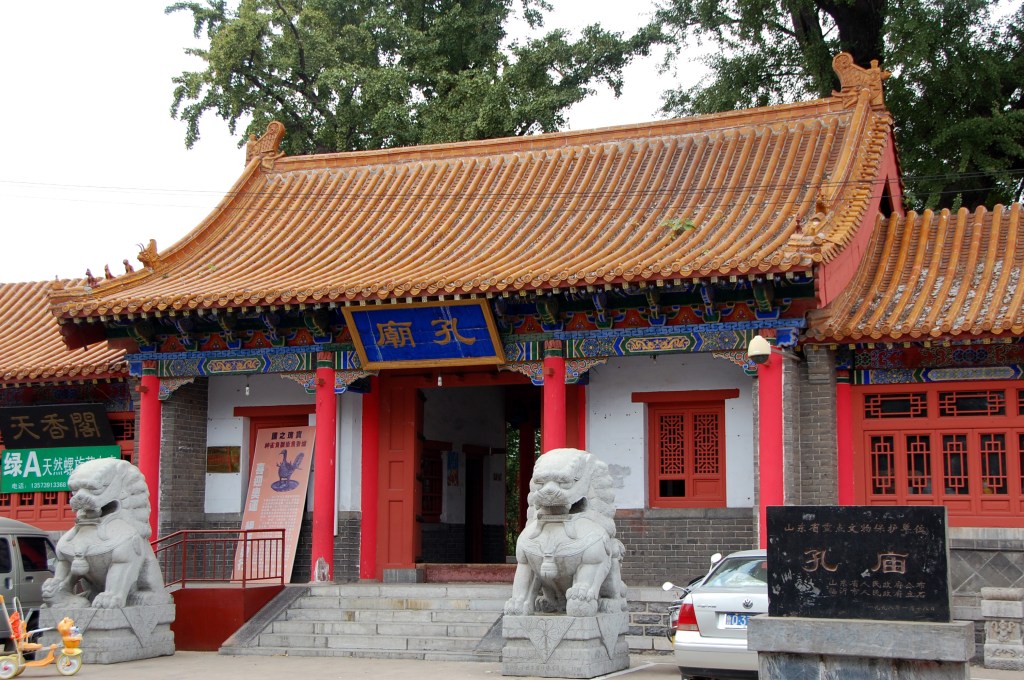

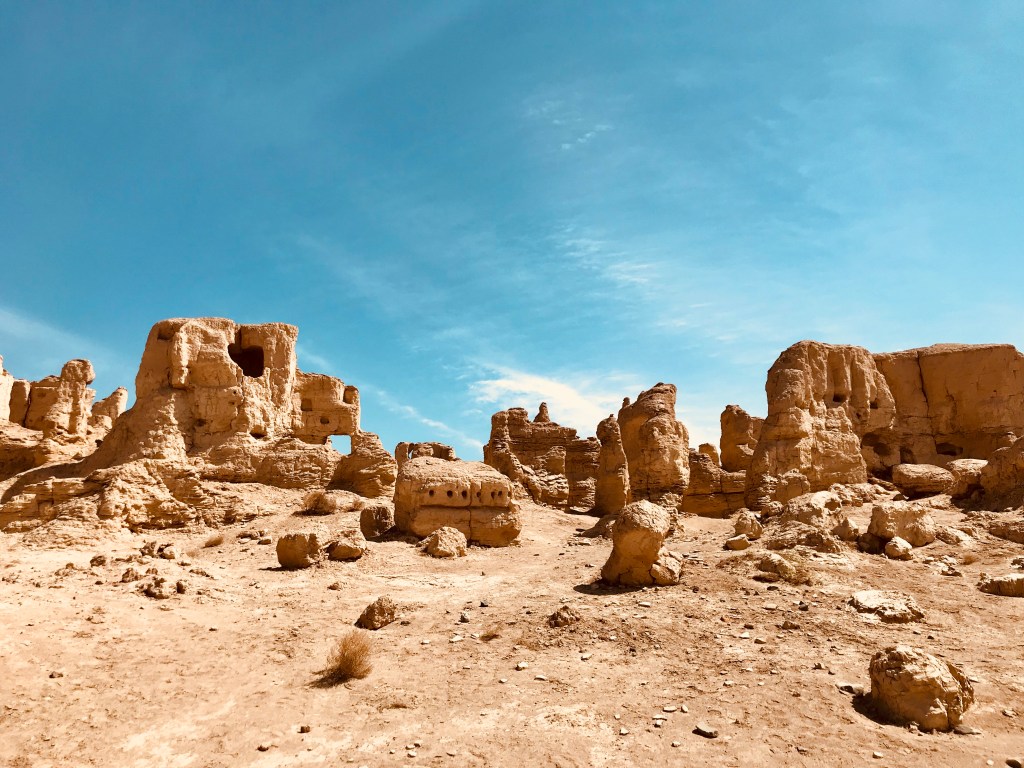
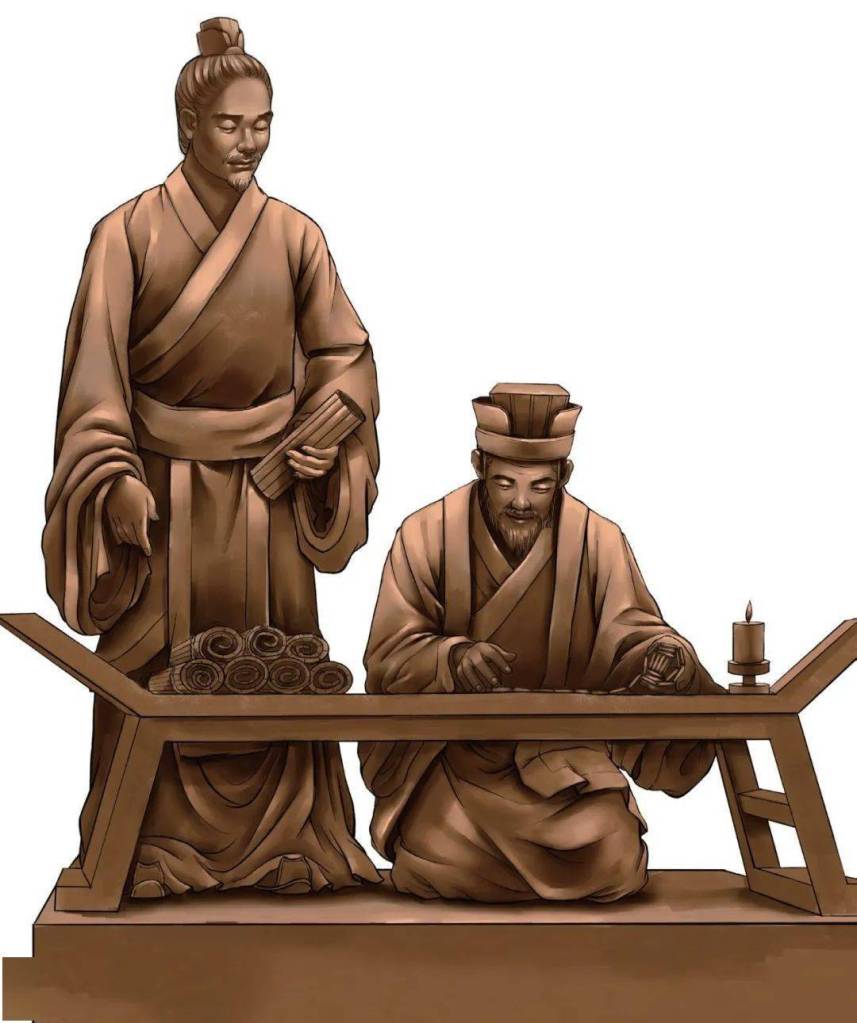




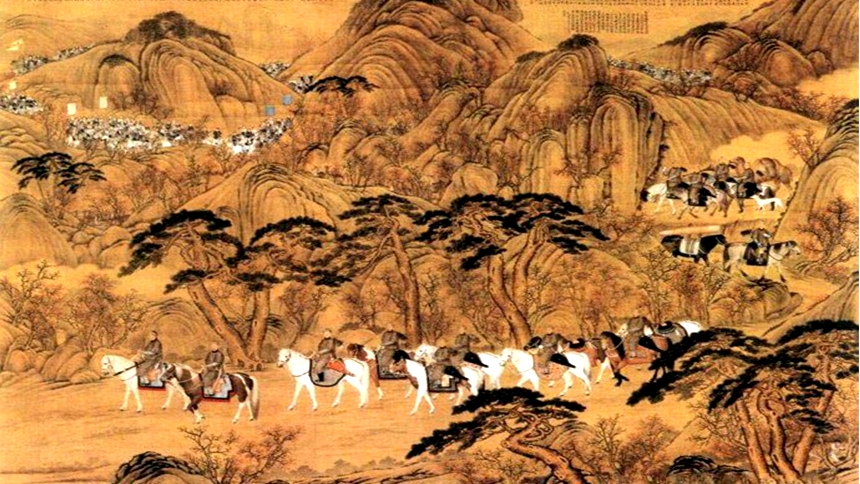
 Reflection by Rio Grande