Tag: chinese-history

  • Comprehensive Reflections to Aid in Governance(Part 133): Dual Selection And State Ideology

    Comprehensive Reflections to Aid in Governance

    By Sima Guang

    Translated By Yiming Yang  

    Annals of Han Book 9 Scroll 17

    Duration of 7 years

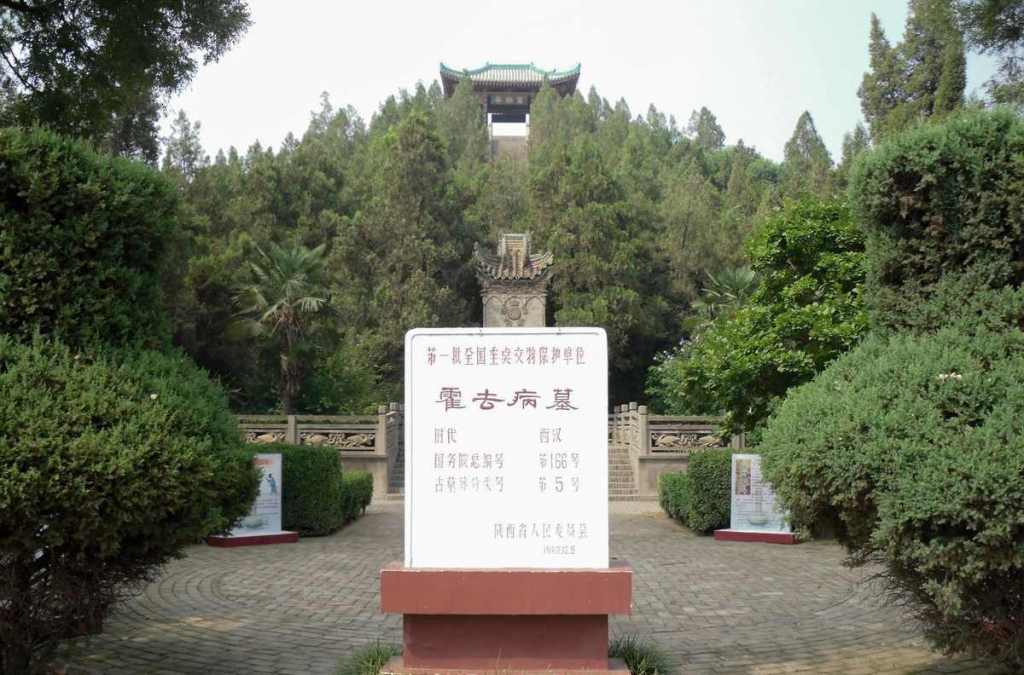
    Dong Zhongshu, National Palace Museum

    The 1st year of the Emperor Wu’s Jianyuan Era (140 B.C.)

    In October of Winter, an edict was issued to select virtuous and upright individuals who fearlessly offered candid and sincere remonstrations. The Emperor personally engaged them in discussions, inquiring about the principles of governance throughout history and the present. More than a hundred individuals responded.

    Dong Zhongshu of Guangchuan was one of those answered the call, who wrote:

    “The Way (Dao) refers to the path that leads to effective governance. Benevolence, righteousness, propriety, and music are all essential components of this path. Therefore, even after a wise ruler has passed away, their descendants can maintain long-lasting peace and stability for hundreds of years. This is achieved through the influence of rituals, music, and moral education. Among rulers, no one doesn’t desire to maintain security and stability, yet numerous states stumble to ruin each day. This is because they fail to appoint the right individuals and adhere to the proper Way (Dao).

    “The decline of the Zhou dynasty’s government during the times of King You and King Li of Zhou was not due to expiry of the Way, but rather because those rulers did not follow the correct path. It wasn’t until King Xuan of Zhou‘s reign that the legacy of the virtuous earlier kings was appreciated, old practices were revitalized and current deficiency were remedied, and the accomplishments of Kings Wen and King Wu of Zhou were illuminated. Through diligent efforts and constant pursuit of virtuous deeds, the Way of Zhou was rekindled, indicating the unwavering commitment to practicing goodness day and night.

    “Confucius said, ‘It’s men that can promote the Way. Not the Way that promotes men.’ Therefore, the rise and fall of order and chaos depend on one’s own actions. If not by divine intervention, the ruler won’t lose its mandate. Only the misguided actions one takes result in the loss of control. Those who rule must rectify their hearts to rectify the court, rectify the court to rectify the officials, rectify the officials to rectify the people, and rectify the people to rectify the four corners of the realm. When the four corners are in harmony, none will dare to deviate from rectitude, and there will be no room for sinister forces to disrupt. This balance between Yin and Yang will bring harmony to the seasons, and the winds and rains will come in their proper time. All living beings will thrive in unison, and the blessings of life will flourish. Everything auspicious will come to fruition, and the path of benevolent rule will reach its fulfillment.

    “Confucius said, ‘When the phoenix does not come, and the Yellow River does not yield a map carried by a dragon horse; I am finished.’ He lamented his inability to bring about these auspicious signs despite his aspirations, given his lowly status. Now, Your Majesty is honored as the Son of Heaven, possessing the wealth of the Four Seas. You occupy the position to bring about such auguries, with the power and wherewithal to make it happen. Your character is noble, your benevolence is profound, you are bright and good-hearted, and you care for the people and respect for scholars. You can be called a wise ruler. However, why haven’t the signs of beauty and blessings from heaven and earth manifested? It is because education and moral cultivation have not been established, and hence the people have not been on the right Way.

    “The behavior of the people follows profit like water flowing downwards. Without the dams of education and levies of moral cultivation, it cannot be guided. The ancient kings understood this well. Therefore, they faced south and governed the world, all prioritizing education and moral cultivation. They established grand academies to educate the nation and set up local schools to refine their communities. They gradually nurtured the people’s benevolence, fostered harmony among them, and regulated their conduct through rituals. As a result, their punishments were light, and transgressions were rare because education and moral cultivation prevailed, and customs were refined.

    “In times of turmoil, the wise rulers eradicated the remnants of chaos, restored education and moral cultivation, and elevated it to a higher level. Once education was established and customs were formed, the succeeding generations followed, and this virtuous cycle could last for five to six hundred years before decline sets in. Qin extinguished the path of the ancient sages, governing with expedience, and its regime lasted for only fourteen years before collapsing. Its lingering negative influence remains to this day.  The prevalent customs are shallow and immoral, people are obstinate and vehemently resist education, leading to a decadent state where governance is beyond repair.

    “Allow me to use an analogy, if a musical instrument is out of tune, sometimes the strings must be replaced before it can be played. Similarly, if governance is not effective, changes must be made before it can be managed effectively. Since the Han Dynasty came to power, the desire to govern well has persisted, yet good governance remains elusive. This is due to the failure to implement necessary reforms when changes are necessary.

    “I’ve heard that the governance of a virtuous ruler encompasses nurturing education in the youth and developing capability on the job in adulthood. They grant titles and rewards to cultivate their virtues and impose punishments to deter their vices. This way, the people become familiar with propriety and righteousness and refrain from offending their superiors.

    King Wu of Zhou undertook great endeavors to pacify turmoil and the Duke of Zhou established rituals and music to garnish the governance. As a result, during the heights of King Cheng of Zhou and King Kang of Zhou, the state prisons remained empty for over forty years. This demonstrates the gradual influence of education and the propagation of benevolence and righteousness. It’s not merely superficial cosmetics.

    “However, during the Qin Dynasty, it was different. They followed the harsh laws of Shen Buhai and Shang Yang, endorsed the philosophy of Han Fei, despised the ways of previous emperors, and allowed wolf-like avarice and cruelty to become the norm. They prosecuted people based on their reputation rather than considering their deeds. Those striving for good were not necessarily spared of mistakes, and those bent for evil were not necessarily punished. This led to officials disguising their true intentions, outwardly respecting the emperor while harboring hidden agendas. Deception and shamelessness became common, leading to numerous criminal prosecutions and death sentences all over the place, but treacherous behavior persisted due to the deterioration of traditions and morality.

    “Now that Your Majesty possesses the entire realm, and all submit to your rule, if the benefits are not felt by the common people, it seems that Your Majesty has yet to pay enough attention to this aspect. As the book of Zengzi(Master Zeng) said, ‘Respecting what one has learned leads to wisdom and clarity; acting upon what one knows brings greatness and radiance. Wisdom and greatness do not lie in anything else, but in the intention and effort one applies.’  I implore Your Majesty to take what you’ve heard and sincerely implement it within the court and practise it in your actions. Then, how different would you be from the Three Sage Kings(Yu the Great, King Tang of Shang, King Wen and King Wu of Zhou)?

    “Indeed, if one does not cultivate scholars but seeks out the talented, it’s like desiring jewelry without cutting and polishing gems. The grandest form of nurturing scholars is none other than establishing a Grand Academy. The Grand Academy is the key to nurturing talents, the foundation of education and cultivation. Nowadays when soliciting the worthy from a commandery or a principality, the fact that no one meets the standard signifies that the Way of sage kings has often been fading into extinction.

    “I implore Your Majesty to establish a Grand Academy, appoint distinguished teachers, and nurture scholars from all corners of the realm. Through rigorous assessments, then talents can be fully utilized and demonstrated. This would be a means to identify and recruit the outstanding and the capable. Today’s commandery prefect and county magistrates are leaders and teachers of the people. They carry out your instructions and propagate the principles of education and cultivation. If these leaders are not virtuous, then the noble virtues won’t be spread, and your benevolence and favor won’t be extended.

    “At present, some officials have failed in teaching and instruction to the lower strata, and they may not even follow the laws and policies from above. They oppress the commoners, engage in corrupt practices with tricksters to make personal gain, and the poor, helpless, and mistreated suffer grievously due to officials’ neglect of duty. This situation doesn’t align with Your Majesty’s intentions. Hence, imbalances in Yin and Yang occur, disturbances in the natural order are abundant, the want and wellbeing of the multitude is not being taken care of. All of these stem from the unqualified local officials to understand their responsibilities, which has led to this sad state of affairs.

    “Many high-ranking officials are often chosen from the sons and relatives of officials holding high positions like court guards, palace gentlemen and provincial officials whose stipends are above 2000 picul of grain.  Those officers in charge of selection are swayed by the candidates’ wealth rather than their qualifications. 

    “In ancient times, ‘merit’ was defined by the ability to perform one’s official duties effectively, not by the duration of their service. Individuals with limited abilities would remain in his low positions, whereas a talent could become capable assistants of the court even with limited time on the job. Therefore, all the officials worked hard to strive for accomplishments. However, today’s situation is different. Officials stay over time to acquire seniority, accumulate years of service to get promotion. Consequently, ethical standards are eroded, and individuals of varying competence are thrust into a pool of appointees, it is difficult to test the genuine qualifications, distinguishing the worthy from the worthless.

    “I humbly suggest that the various marquesses, commandery prefects, and officials of 2000 picul salary each select two talented individuals from among their subjects every year to serve as palace attendants. This practice will allow the court to observe the abilities of these individuals and reward those sponsors who contribute excellent candidates, while those who recommend the unworthy may be punished.

    “By implementing such a system, all officials of high ranking will be motivated to seek out and promote talented individuals, ensuring that the best and brightest of the realm are appointed to government positions. If we can identify and employ talented individuals from across the nation, our empire will thrive, and we can aspire to achieve the glory of the Three Sovereigns (the legendary emperors of the ancient), reaching the fame of Emperor Yao and Shun (two virtuous ancient emperors). We should not promote individuals based solely on the time occupying a position but genuinely evaluate their competence. By assessing their abilities, measuring their qualifications, and considering their virtues, the career paths would differ for the upright and the tarnished, differentiating the worthy from the unbecoming.

    “I have heard that many small actions accumulate into something great, and that from the obscure, greatness can emerge. Therefore, wise individuals always strive to transition from obscurity to prominence, from the insignificant to the noteworthy. This is why Emperor Yao emerged from among the many feudal lords, and Emperor Shun rose from the depths of the mountains. Their greatness did not happen overnight; rather, it was achieved gradually.

    “Words spoken cannot be silenced, and actions taken cannot be concealed. The words and deeds of a leader are of utmost importance and have the power to move heaven and earth. Therefore, by performing well in small tasks, the great cause can be achieved, and by being meticulous about the subtle details, one can become distinguished.  Accumulating goodness within oneself is like the growth of body length, where increments are made daily without others noticing. Conversely, accumulating evil within oneself is like the gradual consumption of oil by fire, which may not be visible at first but leads to extinction. This is why the names of Emperor Yao and Shun are commemorated with awe, while Xia Jie and King Zhou of Shang are causes for remorse and trepidation.

    “The practice which brings joy without causing disorder, and repeats the good deed without negligence, is known as the Way. The Way endures for all generations, while its loss results in decadence. The Way of the ancient sage-kings had invariably been carried out erroneously and required rectification. Therefore, in governance, there might be shortcomings that needed correction to restore the Way. The Way of the Three Sage-Kings had different foundations, not opposing each other but rather in need of rectifying excesses and bolstering weaknesses in the face of changing circumstances.

    “Confucius, therefore, said, ‘Those who govern well by doing less, is it not Emperor Shun?’ Emperor Shun, for instance, merely changed the calendar and adjusted clothing colors to align with the mandate of Heaven. As for the rest, he adhered faithfully to the Way of Emperor Yao. Why should there be further changes? Thus, the term “changing institutions” for a king signifies adaptation, not altering the fundamental Way. Xia dynasty esteemed loyalty, Yin(Shang) dynasty valued respect, and Zhou dynasty revered rituals. These are the new emphases to address what needs correction.

    “Confucius said, ‘The Yin(Shang) took over the rites of Xia; with discernment, their modifications may be traced. The Zhou inherited the rites of Yin(Shang); with discernment, their refinements may be traced. As for those who came after Zhou, their course may be known even after a hundred generations.’ Thus is revealed: the practices of all the kings are rooted in the three dynasties—Xia, Yin(Shang), and Zhou.

    Xia inherited from Yu(Emperor Yao), and though the records speak not of its alterations and embellishments, its Way was one and the same. The great origin of the Way lies in Heaven. Since Heaven is unchanging, the Way is likewise immutable. Therefore, when Yu (the Great) succeeded Shun, and Shun succeeded Yao, these three sages handed down the mandate, preserving a single and constant Way.

    “This was governance without error, and so Confucius spoke not of reforms or innovations. Hence it may be seen: in times of good governance, successors hold fast to the Way; in times of misrule, they must depart from it and alter their course.

    “Now, after the great chaos, it would be appropriate for the Han dynasty to slightly diminish Zhou‘s emphasis on rites and highlight Xia‘s loyalty. The world of ancient times is the same as the present world; it’s all one world. By using the ancient as a reference for the present, how could there be such a vast difference? Is there something missing from the ways of the ancients, or is there something contrary to the principles of heaven?

    “Indeed, there are things that heaven has allotted for us: for those who have horns, it takes away their hooves; for those who have wings, it doubles their feet. This means that what is given in abundance cannot be used for trivial things. Similarly, in ancient times, those who received high positions and salary would no longer earn their living by labor, nor did they partake in superficial trades. This aligns with the heavenly principle that those who receive great blessings should not seek smaller gains.

    “Those who have already received great blessings, yet continue to pursue petty gain—neither Heaven nor man can satisfy their greed. This is the root of the people’s resentment. They bask in imperial favor, hold lofty office, their households secure, their stipends generous. Yet with wealth and power in hand, they descend to compete with the common folk for profit. Who among the people could contend with them? Thus the people are driven from poverty into destitution. When the rich grow extravagant, the poor fall into ruin. When the multitude despair and see no path to livelihood, how can crimes not arise?

    “Hence punishments multiply, yet wickedness is not curbed.

    “Those who serve near the Son of Heaven are the example for the realm. The near observe their conduct, the far emulate their customs. How can they dwell in noble stations and act like commoners? To chase wealth with fear of want is the way of the vulgar; to strive for virtue with fear of failing the people is the heart of the Grandee. As the Book of Changes says: “He who carries a baggage yet rides in a carriage—this draws forth the bandit.” To ride in a carriage is the rank of the noble; to carry a baggage is the toil of the lowly. The meaning is plain: to dwell in a noble post and act as a commoner invites calamity.

    “He who holds high office must uphold dignity, cleave to the rites, and abstain from petty trades. There was no better way than what the Prime Minister of Lu, Gongyi Xiu did, who forbade his kin to weave or till for profit because they lived on state salary.

    “The Spring and Autumn Annals speak of a Great Principle, enduring as Heaven and Earth, constant from antiquity to the present. But now, a hundred schools contend, myriad teachings diverge, their interpretations scattered. The Great Principle is lost; laws shift with time; the people are confused and know not what to follow.

    “In my humble judgment, teachings not rooted in the Six Classics or the methods of the Sage should be proscribed. Let them not multiply and endure alongside the orthodox Way. Then may heterodoxy wither, and true learning stand alone. Only thus can the laws be clarified, and the people come to know the path they must walk.”

    The Emperor appreciated the wise counsel of Dong Zhongshu and appointed him as the Prime Minister of the Jiangdu Principality. 

  • Comprehensive Reflections to Aid in Governance(Part 132): Underworld Rebellion

    Comprehensive Reflections to Aid in Governance

    By Sima Guang

    Translated By Yiming Yang 

    Annals of Han Book 8 Scroll 16 (continued)

    Underworld in Greece Myth

    The 1st year of Emperor Jing’s Later Era (143 B.C.)

    In January of spring, an edict was issued, stating: “Legal cases are matters of utmost gravity. The intelligence of the people differs, and the ranks of officials vary. In cases of uncertainty, judicial officers should be consulted. Should they be unable to resolve the matter, it shall be referred to the Minister of Justice. If an investigation results in a wrongful verdict, it may be rectified thereafter. Officials who submit doubtful cases for review shall not be punished. Thus, those entrusted with legal affairs shall be guided by the principle of leniency.”

    In March, a general amnesty was proclaimed throughout the realm.

    In summer, a grand feast was held for five days. The people were permitted to drink wine, and the prohibition on alcohol, imposed in previous years, was lifted.

    On May 9, an earthquake occurred. The region of Shangyong suffered tremors for twenty-two days, damaging the city walls.

    In the autumn, on July 29, a solar eclipse took place.

    On July 30, Chancellor Liu She was dismissed from office.

    On September 22, the Grand Master of the Censorate, Wei Wan, was appointed Chancellor. The Commandant of the Guard, Zhi Buyi of Nanyang, was appointed Grand Master of the Censorate.

    In his youth, Zhi Buyi served as a cadet. Once, a fellow cadet of the same dormitory, needing money to return home, secretly took the gold of another. When the loss was discovered, suspicion fell upon Zhi Buyi. Without protest, he assumed responsibility and repaid the sum in full. Thereafter, the true offender, remorseful, returned the stolen gold. The owner, moved by shame, deeply regretted his accusation. By this act of virtue, Zhi Buyi‘s reputation for integrity spread, and in time, he rose through the ranks to become a Grandee of the Palace.

    Later, rumors arose concerning Zhi Buyi’s conduct, alleging illicit relations with his sister-in-law. Upon hearing this, Zhi Buyi replied only, “I have no brother,” and made no further effort to defend himself.

    The Emperor dwelt within the inner palace and summoned Zhou Yafu to dine together. A large piece of ham was placed before Zhou Yafu, unsliced, and no chopsticks were provided. Displeased, Zhou Yafu glanced at the attendant and requested chopsticks. The Emperor, observing him, laughed and said, “Is this not sufficient for you?” Zhou Yafu removed his cap, and offered his apology. The Emperor bade him “get up”, and Zhou Yafu departed in a trot. As he watched him leave, the Emperor remarked, “He is grumpy and unfit to serve a young lord.”

    Not long thereafter, Zhou Yafu’s son purchased five hundred suits of armor and shields from the imperial armory for funeral purposes. He employed laborers but failed to pay them properly. The laborers reported the matter, implicating Zhou Yafu’s son, and linking the affair to Zhou Yafu himself.

    When the report reached the court, the Emperor referred the case to the judicial officers. Zhou Yafu was detained and pressed for an explanation, but he remained silent. In anger, the Emperor declared, “I will not deal with him!” and ordered Zhou Yafu to be handed over to the Minister of Justice.

    The Minister of Justice questioned him, saying, “Marquis, why do you plot rebellion?” 

    Zhou Yafu rebutted, “The goods I purchased were for burial rites; how does that amount to rebellion?” 

    The Minister retorted, “Even if you rebel not above the earth, you may rebel beneath it!” The interrogation grew ever harsher.

    Upon his arrest, Zhou Yafu sought to take his own life, but his wife restrained him. Unable to die by his own hand at home, he appeared before the Minister of Justice and abstained from food for five days, until he vomited blood and died.

    In that same year, Liu Bushi, Prince Ai of Jiyin, passed away.

    The 2nd year of Emperor Jing’s Late Era (142 B.C.)

    In January of spring, there were three earthquakes in a single day.

    In March, the Xiongnu invaded Yanmen Commandery. The Commandant Feng Jing engaged them in battle and perished. Cavalry, chariots, and militia were dispatched to garrison Yanmen.

    Also in spring, owing to crop failure, the court forbade the feeding of grain to horses within the interior commanderies, and confiscated those horses that consumed grain.

    In April of summer, an edict was proclaimed: “Elaborate carvings and ornate engravings hinder agriculture; intricate silks and fine embroidery impair the labors of women. When agriculture is harmed, famine ensues; when women’s work declines, cold and want follow. Few can escape both hunger and frost. We ourselves till the fields and later attend to the silkworms, in order to supply offerings to the ancestral temples and garments for ceremonial use, setting an example for all under Heaven. We refuse excessive tributes, reduce taxes and corvée labor, and desire that the people devote themselves to farming and sericulture, storing abundance to guard against disaster. Let the strong not oppress the weak, nor the rich exploit the poor. Let the aged live out their days in peace, and orphans grow to their full years. Should a single year’s harvest fail, the people will suffer hunger. Where then would the blame reside?

    “At that time, swindlers deceived their way into officialdom, demanding bribes for goods, preying upon the people and plundering the common folks. Magistrates, who should uphold the law, colluded with thieves and burglars, stealing from the state—an outrage beyond measure. Therefore, We command all officials of two-thousand-picul rank to perform their duties with diligence. Those who neglect their office or engage in unlawful acts shall be reported by the Chancellor and punished accordingly. Let this decree be proclaimed throughout the realm, that all may know Our will.”

    In May, an edict was issued lowering the threshold for purchasing office from one hundred thousand to forty thousand coins.

    In autumn, a great drought befell the land.

    The 3rd year of Emperor Jing’s Late Era (141 B.C.)

    In October of winter, both the sun and the moon were eclipsed, and their light appeared red for five days.

    On the last day of December, thunder was heard; the sun shone purple; and the five planets moved in retrograde, lingering within the Supreme Palace Enclosure. The moon traversed the center of the Supreme Palace Enclosure.

    In January of spring, an edict was issued: “Agriculture is the foundation of the world. Gold, pearls, and jade cannot be eaten in times of hunger, nor can they provide warmth against the cold. Though they serve as mediums of exchange, people know not when to seek them and when to abstain. In years of poor harvests, it is perhaps because too many engage in secondary pursuits, and too few till the fields. Therefore, provincial and commandery authorities are commanded to promote agriculture and sericulture, and to plant trees to secure food and clothing. Officials who employ men to gather gold, pearls, and jade shall be treated as thieves; their earnings deemed criminal spoils, and punishment assigned accordingly. Those of two-thousand-picul rank who condone such actions shall be charged as accomplices.”

    On January 17 of spring, the coming-of-age ceremony for the Crown Prince was held.

    On January 27, the Emperor passed away in the Weiyang Palace. The Crown Prince ascended the throne at the age of sixteen. The Empress Dowager was honored as Grand Empress Dowager, and the Empress was established as Empress Dowager.

    On February 6, Emperor Jing was buried at Yangling.

    In the third month, Tian Fen, younger half-brother of the Empress Dowager, was enfeoffed as Marquis of Wu’an; and Tian Sheng was enfeoffed as Marquis of Zhouyang.

    Ban Gu’s Praising Commentary:

    Confucius once said, “The people now, are the same people who were the wise governance of the Three Dynasties—Xia, Shang, and Zhou—was replied upon.” Indeed! In the later ages of Zhou and the times of Qin, the teachings of civilization gradually waned; even with severe punishments, corruption and crimes grew rampant. When the Han dynasty arose, it swept away the complexities and excesses, granting the people breathing space. By the time of Emperor Wen, frugality was further exalted as a governing principle. Emperor Jing inherited and continued this path. Over the course of fifty to sixty years, customs shifted and morals improved, nurturing a populace inclined toward virtue and uprightness. When speaking of effective governance, one may mention King Cheng and King Kang of the Zhou dynasty, in the same breath as Emperor Wen and Emperor Jing of the Han dynasty—what a grace!

    At the founding of the Han, the realm inherited the faults of Qin: the burdens of conscription and taxation weighed heavily, and the coffers were empty. The Emperor himself could not afford a chariot drawn by four color-matched horses, and high ministers and generals traveled in carts pulled by oxen. Among the common people, there was no accumulated wealth. After the empire was stabilized, Emperor Gaozu issued decrees restraining merchants—prohibiting them from wearing silks or riding in carriages. Taxes were increased to check their influence. In the reigns of Emperor Hui and Empress Dowager , though the empire was newly settled and laws against merchants were somewhat relaxed, yet the descendants of street vendors remained barred from attaining office. Officials’ stipends and governmental expenses were meticulously weighed against the people’s tax burdens. The revenues from mountains, rivers, gardens, ponds, and marketplaces within feudal lands were accounted separately: from the Emperor down to the feudal lords, each maintained his own private treasury, apart from the state’s funds. The amount of grain transported from east of Mount Xiao to the capital annually totaled but a few hundred thousand piculs.

    Under Emperors Wen and Emperor Jing, a policy of simplicity and frugal economy nourished the land. For seventy years the realm enjoyed tranquility, disturbed only by rare calamities of nature. The people had abundant food and clothing; granaries and storehouses overflowed; the treasuries at all levels of government accumulated surpluses. The coinage amassed within the imperial vaults rotted their own binding strings, and could no longer be tallied. The grain reserves in Tai’cang storehouses were so abundant they spilled into the open, rotting in the elements, unfit for use. Horses thronged the city streets and lanes; herds crowded the open fields. Riders of mares were even scorned at feasts. Gatekeepers dined daily on meat and fine grains; officials held stable posts, raising sons to adulthood during their tenure—some even adopting their official titles as surnames. Thus did the people cultivate a spirit of self-respect, propriety, and a sense of shame that deterred wrongdoing.

    During this era, wealth increased and governance grew lenient. The people lived in contentment, and resources were plentiful. Yet in such times of prosperity, arrogance festered: the strong began to oppress the weak, forcibly annexing their neighbors’ lands. Clans of influence and privilege dominated the countryside. Princes of the blood and high officials alike vied in extravagance; their mansions, carriages, and garments exceeded imperial standards without restraint. Yet such flourishing could not last. Henceforth, Emperor Wu, indulging in magnificence at home and warfare abroad, drained the treasury and fatigued the people—ushering in a period of decline and exhaustion.

  • Comprehensive Reflections to Aid in Governance(Part 131): Eccentric General Li Guang

    Comprehensive Reflections to Aid in Governance

    By Sima Guang

    Translated By Yiming Yang 

    Annals of Han Book 8 Scroll 16 (continued)

    General Li Guang

    The 3rd year of Emperor Jing’s Middle Era (147 B.C.)

    In November of winter, the office of Grand Master of the Censorate in all principalities was abolished.

    In April  of summer, an earthquake occurred.

    Drought prevailed, and a prohibition was issued against the brewing and drinking of alcohol.

    On March 8, Liu Cheng was enfeoffed as Prince of Qinghe.

    In September of autumn, locusts swarmed.

    A comet was observed in the northwest.

    On September 30, there was a solar eclipse.

    When the Emperor deposed Crown Prince Li (Liu Rong). Chancellor Zhou Yafu protested earnestly but could not prevail; thereafter, the Emperor became estranged from Zhou Yafu.

    Meanwhile, Prince Xiao of Liang often spoke ill of the Marquis of Tiao, in front of Empress Dowager Dou.

    Empress Dowager Dou said, “The Empress’s brother, Wang Xin, is worthy of being made a marquis.”  The Emperor declined, “In the time of the late Emperor, neither the Marquis of Nanpi, Dou Pengzu (the Empress Dowager’s nephew), nor the Marquis of Zhangwu, Dou Guangguo (the Empress Dowager’s younger brother), were granted marquisates. Only after my accession were these titles conferred. As for Wang Xin, he has yet to be ennobled (for lack of merit).”

    Empress Dowager Dou replied, “Fortunes rise and fall with the times. In my lifetime, my elder brother Dou Zhangjun was not granted a marquisate, and only after his death was his son Dou Pengzu ennobled. To this day, I deeply regret it. I beg Your Majesty to bestow a marquisate upon Wang Xin without delay.”

    The Emperor said, “Let me first consult with the Chancellor.”

    The Emperor then discussed the matter with Zhou Yafu. Zhou Yafu said, “Emperor Gaozu swore an oath: ‘Only those bearing the Liu surname shall be made princes, and only those with meritorious service shall be made marquises.’ Now, although Wang Xin is the Empress’s brother, he has no achievements. If he is granted a marquisate, it would violate the ancestral pact.”

    The Emperor fell silent and pursued the matter no further.

    Later, when six Xiongnu leaders, including King Xu Lu, surrendered, the Emperor wished to grant them marquises to encourage further defections. Zhou Yafu objected, “If they betray their sovereigns and Your Majesty rewards them with marquisates, how can Your Majesty demand loyalty from your own ministers?”

    The Emperor said, “I cannot follow the Chancellor’s advice.”  Thus, he granted marquisates to Xu Lu and the others.

    In September, Zhou Yafu cited illness and resigned from his post. The Grand Master of the Censorate, the Marquis of Tao, Liu She, was appointed Chancellor in his stead.

    The 4th year of Emperor Jing’s Middle Era (146 B.C.)

    In the summer, there was a locust infestation.

    In the winter, on October 26, there was a solar eclipse.

    The 5th year of Emperor Jing’s Middle Era (145 B.C.)

    In the summer, Prince Liu Shun was appointed as the Prince of Changshan.

    On June 29, a general amnesty was declared throughout the realm.

    There were extensive floods.

    In the autumn, on August 22, a fire broke out at the eastern gate of the Weiyang Palace.

    In November, a decree was issued: “For difficult cases where doubts persist in people’s hearts even though the legal procedures have been meticulously followed and led to the death penalty, such cases should be re-examined immediately and properly decided.”

    There was an earthquake.

    The 6th year of Emperor Jing’s Middle Era (144 B.C.)

    In October of winter, the Prince of Liang came to the capital to pay respects. He submitted a memorial expressing a desire to stay, but the Emperor did not grant permission. After returning to his princedom, the Prince seemed to be in a mood of despondent.

    In December, the names of multifarious officials and ministers, such as the Minister of Justice or Chief Architect, were changed.

    In the spring, on February 1, the Emperor conducted a tour to Yong and held the Sacrificial Rite at the temple of Five Color Emperors.

    In March there was rain and snow.

    In April of summer, Prince Xiao of Liang, Liu Wu, passed away. Empress Dowager Dou, upon hearing the news, was filled with grief and sorrow, refusing to eat. She lamented, “The Emperor has indeed killed my son!” The Emperor was deeply saddened and didn’t know what to do. He consulted with his elder sister, the Royal Princess(Princess Guantao) and decided to divide the principality of Liang into five separate princedoms. He then established five sons of Liu Wu as kings: Liu Mai as the Prince of Liang, Liu Ming as the Prince of Jichuan, Liu Pengli as the Prince of Jidong, Liu Ding as the Prince of Shanyang, and Liu Bushi as the Prince of Jiyin. Additionally, each of Prince Xiao of Liang‘s five daughters was granted a fiefdom.

    When this plan was presented to the Empress Dowager, she found solace in it and her mood improved. She resumed one meal a day. Before the Prince Xiao of Liang‘s death, his wealth had been immense, calculated to be billions of coins. After his death, there were still over four hundred thousand catties of pure gold left in his treasury, not to mention various other valuables.

    As the Emperor had already reduced the severity of the corporal punishment in the law books, it was observed that the number of caning deaths did not decline as expected. Therefore, he further reduced the number of strokes from three hundred to two hundred for certain offenses, and from two hundred to one hundred for others. Additionally, the law established specifications for the use of a proper instrument for caning: a cane that was five feet long, with a one-inch thick base made of bamboo, and a thin tip measuring half an inch, ensuring that the nodes were flattened. The strokes were applied to the buttocks, instead of the back.  The striker must be the same person to complete one punishment. This revision aimed to ensure that the person being punished survives. 

    However, while the caning penalty had been mitigated, the severity of the death penalty remained, leading to a situation where the penalties for minor offenses were lenient compared to serious crimes. This discrepancy in the severity of punishments made it easier for the people to commit lesser offenses without significant fear of consequences.

    In the month of June, the Xiongnu invaded the region near Yanmen Pass and reached Wuquan. They entered the Shangjun Commandery and seized horses from the imperial pastures. In the ensuing conflict, two thousand officials and soldiers lost their lives. 

    Li Guang from Longxi, was then the Prefect of Shangjun Commandery. On one occasion, he ventured out with a hundred cavalry and unexpectedly encountered several thousand Xiongnu horsemen. Witnessing Li Guang’s retinue, they perceived them as bait, causing an alarm that led them up a hill and organized a formation.

    Li Guang‘s hundred riders were filled with fear, eager to flee. Li Guang said to them, “We are several dozen li away from the main army. If we flee with just a hundred riders like this, the Xiongnu will chase us and shoot us down in no time. But if we stay and present ourselves as bait, they will hesitate to attack us, thinking we are part of a larger force.” He instructed his riders, “Forward!” 

    When they were about two li away from the Xiongnu formation, he halted and commanded, “Dismount and loosen your saddle girths!” 

    The riders were concerned, “The enemy is numerous and so close. What if they attack us?” 

    Li Guang responded, “The Xiongnu are thinking that we are fleeing. Now, by dismounting and loosening our saddle girths, we show that we’re not retreating, thus strengthening their suspicions that we are luring them.”

    As a result, the Xiongnu cavalry refrained from attacking. There was a commander among them riding a white horse, guarding his troops. Li Guang mounted his horse, rode with about ten riders, shot and killed the commander on the white horse, and then returned to his own troops. Once among his troops, Li Guang ordered them to dismount and loosen their saddle girths, instructing them to lie down beside their horses. As nightfall approached, the Xiongnu soldiers grew increasingly suspicious. Around midnight, they speculated that the Han forces had an ambush nearby, planning to attack at night. Thus, the Xiongnu retreated with their troops.

    At dawn, Li Guang returned to his main army.

    In the autumn, on July 29, there was a solar eclipse.

    After the death of Zhi Du, many members of the imperial family in and around Chang’an began to commit various crimes without restraint. As a response to this situation, the Emperor summoned Ning Cheng, who was serving as the Commandant of Jibei, to become the new Commandant of the Capital. Ning Cheng‘s methods of governance resembled those of Zhi Du, but his honesty and incorruption was not as pronounced. Nonetheless, both the imperial family members and influential figures were apprehensive and cautious.The Prince Gong of Chengyang, Liu Xi, passed away.

  • Comprehensive Reflections to Aid in Governance(Part 130): Can’t Handle The Truth

    Comprehensive Reflections to Aid in Governance

    By Sima Guang

    Translated By Yiming Yang 

    Annals of Han Book 8 Scroll 16 (continued)

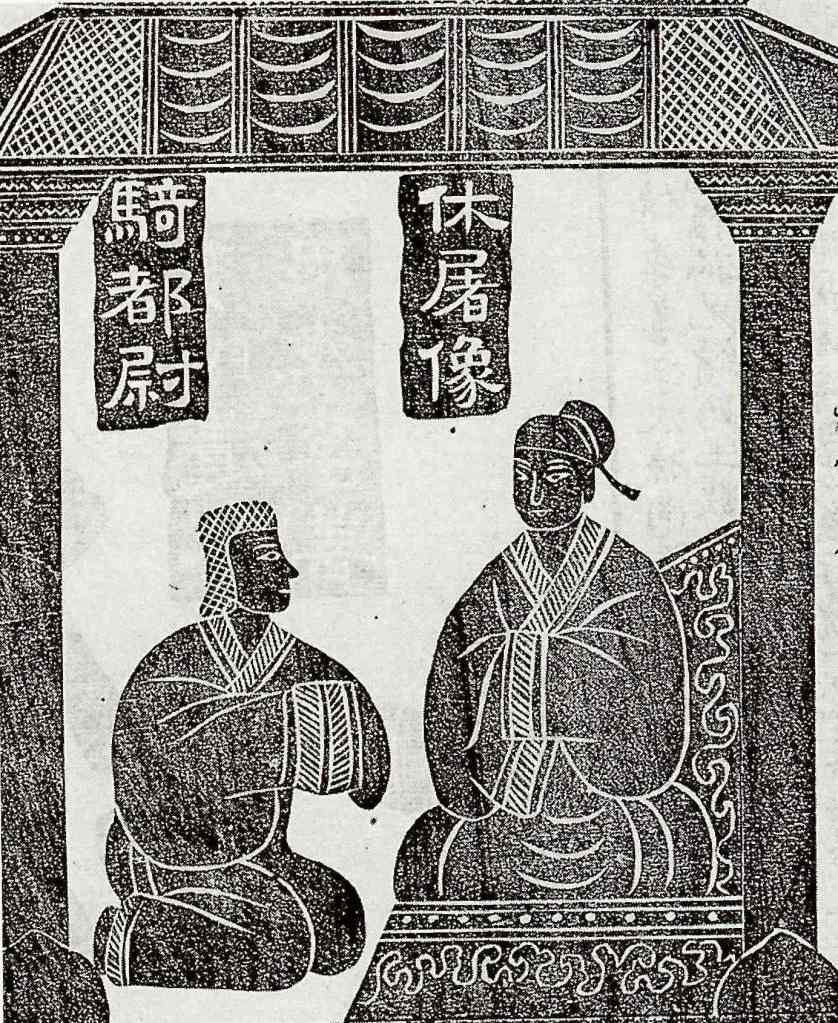
    An ancient portrait of Yuan Ang

    The 2nd year of Emperor Jing’s Middle Era (148 B.C.)

    In February of spring, the Xiongnu made incursions into the Princedom of Yan.

    In March, Liu Rong, the Prince of Linjiang, was accused of encroaching upon the sacred wall of the ancestral temple of Emperor Wen, to augment the grounds of his palace. Summoned to the office of the Commandant of the Capital for inquiry, he sought a knife and brush wherewith to compose a letter of repentance to the Son of Heaven. Yet Zhi Du forbade his attendants to furnish such materials. Then the Marquis of Weiqi, Dou Ying, in secret had writing tools to be delivered unto him. When Liu Rong had completed his letter, he took his own life. Empress Dowager Dou, learning of these events, was sorely angered, and thereafter seized upon another incident as a pretext to have Zhi Du executed.

    In April of summer, a comet was seen in the northwestern heavens.

    The Emperor established his son Liu Yue as Prince of Guangchuan and Liu Ji as Prince of Jiaodong.

    On the last day of September in autumn, there was an eclipse of the Sun.

    Because of his close kinship to the throne and his distinguished service in suppressing rebellion, Prince Xiao of Liang(Liu Wu)was granted the rare honor of bearing the imperial banners and flags. He rode forth, attended by a thousand carriages and ten thousand mounted horsemen; whenever he left or entered his residence, the road was cleared of all common traffic — a privilege reserved for the Son of Heaven himself.

    The Prince of Liang placed his trust in Yang Sheng and Gongsun Gui, raising the latter to the post of Commandant of the Capital.

    Yang Sheng and Gongsun Gui, both men of cunning and intrigue, conspired to have the Prince of Liang contend for imperial succession. When Crown Prince Liu Rong was deposed, the Empress Dowager Dou entertained the thought of establishing Prince Liu Wu as heir. At a banquet, she lifted her cup and said to the Emperor, “Let the Prince of Liang sit beside you upon the imperial carriage.” The Emperor, kneeling and straightening his body, replied, “Yes.”

    Afterward, the Emperor consulted his senior ministers. Yuan Ang stepped forward and remonstrated: “Your Majesty must not permit it. In ancient times, Duke Xuan of Song set aside his rightful heir and elevated a younger brother; thereafter, the state was plunged into chaos for five generations. To sacrifice the great order for the sake of present ease is to betray the teachings of the sages. Therefore, the principle recorded in the Spring and Autumn Annals must be upheld without faltering.”

    Thus the Empress Dowager’s scheme was laid to rest.

    Later, the Prince of Liang sent memorials repeatedly, requesting the construction of a royal causeway from the capital of Liang to Chang’le Palace, so that he might proceed without hindrance to pay homage to the Empress Dowager. Yet Yuan Ang and others stood firm against it, and his petitions were refused.

    The Prince of Liang bore resentment against Yuan Ang and other advisers for their remonstrances. In secret, he conspired with Yang Sheng and Gongsun Gui, instructing assassins to put Yuan Ang and more than ten advisers to death. After carrying out the deed, the assassins fled and were not apprehended.

    The Emperor, growing suspicious of the Prince of Liang, ordered a thorough investigation. Tracing the matter, it was found that the assassins had come forth from the Prince’s household. Thereupon, the Emperor commanded the arrest of Gongsun Gui and Yang Sheng, and dispatched Tian Shu and Lü Jizhu to Liang to pursue the case. Gongsun Gui and Yang Sheng fled into the Prince’s inner palace and hid themselves therein.

    The court sent more than ten urgent envoys to Liang, repeatedly commanding the ministers and high officials with salaries of 2000-piculs to apprehend the fugitives. Yet the ministers of Liang, including Xuanqiu Bao, the Prime Minister, and Han Anguo, the Minister of the Interior, conducted an exhaustive search of the princedom for more than a month, but found no trace of them.

    When Han Anguo learned that Gongsun Gui and Yang Sheng were hiding within the Prince’s inner palace, he approached the Prince of Liang in tears and said, “When the lord’s name is defiled, the minister must die. That Your Highness is beset by disorder that stems from the want of loyal subjects. Now that Gongsun Gui and Yang Sheng cannot be apprehended, I beg leave to resign and request death.”

    The Prince of Liang replied, “Why must it come to this?”

    Han Anguo, weeping bitterly, said, “I ask Your Highness: your bond with the Emperor—how does it compare to that with the Prince of Linjiang?”

    The Prince of Liang answered, “It is not as close.”

    Han Anguo said, “The Prince of Linjiang, being the direct heir to the throne, for a slight transgression, was deposed and sent to Linjiang, and thereafter took his own life in the Chief Commandant’s office over the matter of the palace construction. Why was this so? Because in governing a realm, private sentiment must not overtake public duty. Now, among the princes, Your Highness alone has heeded the deceitful counsel of wicked men, violated the imperial commands, and unsettled the order of the realm. Thanks to the Empress Dowager’s favor, His Majesty yet withholds judgment. The Empress Dowager weeps day and night, praying Your Highness might reform. Yet you still do not awaken to the peril. Should the Empress Dowager’s carriage hasten her passing, upon whom then shall Your Highness rely?”

    Before Han Anguo had finished speaking, the Prince was already in tears. He bowed and said, “I shall now address the matter of Gongsun Gui and Yang Sheng.”

    Thus the Prince of Liang ordered Gongsun Gui and Yang Sheng to take their own lives and surrender their bodies.

    Nevertheless, from this time onward, the Emperor had ill feelings toward the Prince of Liang.

    The Prince of Liang, fearful of calamity, dispatched Zou Yang to Chang’an to confer with Wang Xin, brother of the Empress. Zou Yang said, “Your Lordship’s younger sister enjoys the utmost favor of the Emperor; none within the inner palace may compare. Yet Your Lordship’s own conduct often strays from what is right. Should the court press its inquiry into Yuan Ang’s affair and the Prince of Liang be punished, the Empress Dowager would be left without an outlet for her grief and rage. Her resentment would then fall upon the honored ministers. I fear for Your Lordship’s welfare.”

    Wang Xin asked, “What course should I take?”

    Zou Yang replied, “If Your Lordship would speak persuasively before the Emperor and bring a halt to the investigation into the Prince of Liang, you would thereby deepen the Empress Dowager’s gratitude to the very marrow of her bones. With the Empress Dowager’s favor and your sister’s influence in the inner and outer palaces, your position would be secured like an iron rampart. In ancient times, although Xiang plotted daily against his brother Shun, yet when Shun ascended the throne, he still ennobled Xiang and granted him Youbi as his fief. Between virtuous siblings, there are no hidden grudges or enduring resentments; only profound affection and loyalty. Thus has Emperor Shun been venerated through the ages. If Your Lordship employs this reasoning, it may move the Emperor and spare the Prince of Liang.”

    Wang Xin replied, “I accept your counsel.”

    Seizing his opportunity, Wang Xin spoke accordingly to the Emperor. The Emperor’s wrath thereafter gradually abated.

    At that time, the Empress Dowager was consumed with sorrow over the case of the Prince of Liang. She refused food and wept without ceasing, day and night. The Emperor, likewise troubled, could find no peace.

    Soon thereafter, Tian Shu and his company, having concluded their investigation, returned. Upon reaching the Bachang stables, they burned all the testimonial documents concerning the case of the Prince of Liang and presented themselves before the Emperor empty-handed.

    The Emperor asked, “Have you obtained evidence against the Prince of Liang?”

    Tian Shu replied, “We have found evidence warranting death.”

    “Where is the evidence?”

    “May Your Majesty refrain from seeking it.”

    The Emperor demanded the reason. Tian Shu said, “If the Prince of Liang is not executed, then the laws of Han are rendered void. If he is executed, yet the Empress Dowager, stricken by grief, loses her rest and appetite, the sorrow will weigh upon Your Majesty alone.”

    The Emperor, hearing this, was greatly relieved and favored Tian Shu’s counsel.

    He then ordered Tian Shu and his companions to go before the Empress Dowager and say, “The Prince of Liang was unaware of these matters. The plot was devised by the treacherous ministers Yang Sheng and Gongsun Gui, who have already been put to death.”

    When the Empress Dowager heard this, she rose, partook of a meal, and her spirit was at last calmed.

    Taking advantage of the moment, the Prince of Liang submitted a memorial requesting an audience. Upon reaching the border, his minister Mao Lan counseled him to travel in secrecy, riding in a cloth-covered carriage with only two attendants. Thus concealed, he hid within the garden of the Royal Princess(Princess Guantao).

    Meanwhile, the Han court had already dispatched envoys to greet him at the border pass. Yet the Prince had entered the pass ahead of them, while his carriages and mounted guards remained outside, unaware of his whereabouts.

    The Empress Dowager, hearing of this, wept bitterly, saying, “The Emperor has indeed slain my son!” The Emperor grew anxious and fearful.

    Soon thereafter, the Prince of Liang appeared at the palace gate, humble and subdued, offering his apology by prostrating himself beneath the guillotine. The Empress Dowager and the Emperor, moved to tears, received him and reconciled, restoring the former affection between them. All of the Prince’s attendants were then permitted to enter the pass.

    However, though outwardly reconciled, the Emperor henceforth grew distant from the Prince of Liang and would no longer share a carriage with him. The Emperor favored Tian Shu and promoted him to be Prime Minister of Lu.

  • Comprehensive Reflections to Aid in Governance(Part 129): Give Her Enough Rope

    Comprehensive Reflections to Aid in Governance

    By Sima Guang

    Translated By Yiming Yang 

    Annals of Han Book 8 Scroll 16 (continued)

    Jimo(Qingdao) in 1898, the seat of Jiaodong, Shandong Province, Photo by Duesentrieb

    The 3rd year of the Emperor Jing’s Early Era (154 B.C. continued)

    Wei Wan, the Grand Tutor to the Prince of Hejian, achieved great success in his military campaign against Wu and Chu and was promoted to the position of Commandant of the Capital Guard. While serving as a General of the Household, Wei Wan was known for his diligence, integrity, and loyalty to Emperor Wen. On one occasion, when Crown Prince (i.e. Emperor Jing) invited Emperor Wen’s attendants to a drinking gathering, Wei Wan declined, claiming illness, and did not attend.

    As Emperor Wen approached the end of his life, he confided in his successor that Wei Wan was a venerable and virtuous elder who should be treated with respect. This special regard from Emperor Wen led Emperor Jing to hold Wei Wan in high esteem as well, granting him considerable favor and trust.

    In the summer, on June 25, an imperial edict was issued pardoning all officials and commoners who had been deceived or falsely implicated in the rebellion led by the Prince of Wu and others, including those who had evaded military service.

    The Emperor intended to establish Liu De—the son of Marquis Ai of Wu, Liu Guang, and younger brother of the Prince of Wu—as the successor to the throne of Wu; and Liu Li, son of Prince Yuan of Chu, as the successor to the throne of Chu. However, Empress Dowager Dou opposed the continuation of the Wu lineage. She argued that Prince Liu Pi of Wu, being of advanced age, should have served as a model of mercy and loyalty, yet instead led a rebellion that brought turmoil to the realm. She insisted that the throne of Wu should not be restored. She did, however, consent to the appointment of Liu Li as the new Prince of Chu.

    That same day, Prince Liu Yu of Huaiyang was enfeoffed as the Prince of Lu; Prince Liu Fei of Runan was enfeoffed as the Prince of Jiangdu, ruling the former territory of Wu. Liu Li, previously Minister of the Imperial Clan, was promoted to Prince of Chu. Prince Liu Duan was elevated to Prince of Jiaoxi, and Prince Liu Sheng was appointed as Prince of Zhongshan.

    The 4th year of the Emperor Jing’s Early Era (153 B.C.)

    In the spring, the checkpoints at the mountain passes were reinstated, and permits were once again required for passage.

    On April 23 of the summer, the Emperor designated his son Liu Rong as Crown Prince and his son Liu Che as Prince of Jiaodong.

    In June, a general amnesty was proclaimed throughout the realm.

    In July, during the autumn season, Prince Liu E of Linjiang passed away.

    In the winter, on October 25, a solar eclipse occurred.

    When the seven principalities of Wu and Chu rose in rebellion, an envoy from Wu arrived at the Principality of Huainan. The Prince of Huainan intended to dispatch troops in support of Wu. His prime minister said, “If Your Highness is resolved to aid Wu, I am willing to lead the army.” The Prince agreed and entrusted him with command. However, once the prime minister assumed control of the troops, he fortified the city and defied the Prince’s intentions, instead aligning himself with the Han Dynasty. In response, the court dispatched the Marquis of Qucheng to lead reinforcements to Huainan, and the principality was thereby secured during the upheaval.

    When envoys from Wu reached the Principality of Lujiang, the Prince(Liu Ci) did not respond favorably and instead initiated diplomatic exchanges with the Kingdom of Yue. When the envoys arrived at the Principality of Hengshan, the Prince of Hengshan, Liu Bo held his ground resolutely and refused to waver. After the defeat of Wu and Chu, the Prince of Hengshan visited the Han court. The Emperor, moved by his loyalty and endurance, praised him, saying, “The southern regions are damp and low-lying.” The Prince was relocated to Jibei, where the climate was more favorable.

    The Prince of Lujiang (Liu Ci), owing to his proximity to the Yue kingdom, had frequently dispatched envoys for diplomatic exchanges. He was subsequently transferred to become the Prince of Hengshan, located north of the Yangtze River.

    The 5th year of the Emperor Jing’s Early Era (152 B.C.)

    In January of the spring, construction began in Yangling town for a mausoleum.

    During the summer, the Emperor issued a call for citizens to relocate to Yangling, offering a reward of two hundred thousand coins as an incentive.

    The Emperor also arranged for a princess to be married to Xiongnu Chanyu.

    Prince Liu Pengzu of Guangchuan was relocated and enfeoffed as the Prince of Zhao.

    In the winter, Prince Liu Bo of Jibei, posthumously titled Prince Zhen, passed away.

    The 6th year of the Emperor Jing’s Early Era (151 B.C.)

    When the Emperor was still Crown Prince, Empress Dowager Bo arranged for a girl of the Bo family to become his wife. After his accession to the throne, she was made Empress, but soon fell out of favor. In September of autumn, Empress Bo was deposed.

    Prince Wen of Chu, Liu Li, passed away.

    Zang Tu, the former King of Yan, had a granddaughter named Zang Er. She first married Wang Zhong of Huai’li, with whom she had a son, Wang Xin, and two daughters. After Wang Zhong’s death, Zang Er remarried into the Tian family of Changling and gave birth to two sons, Tian Fen and Tian Sheng.

    During the reign of Emperor Wen, Zang Er’s eldest daughter, Wang Zhi, married Jin Wangsun, and they had a daughter named Jin Su. Zang Er once performed a divination, which revealed that both her daughters were destined for nobility. Acting on this prophecy, she took Wang Zhi back from the Jin household and forced her to divorce. Jin Wangsun, angered, refused to release her, but Zang Er persisted and eventually placed both her daughters into the palace of the Crown Prince (later Emperor Jing).

    Wang Zhi later gave birth to a son, Liu Che. While he was still in the womb, his mother, Madame Wang Zhi, dreamed that the Sun entered her bosom.

    Upon Emperor Jing‘s accession to the throne, his eldest son, Liu Rong, was made Crown Prince. His mother, Consort Li, hailed from the state of Qi. Princess Guantao, Liu Piao, the elder sister of Emperor Jing, wished to marry her daughter to Crown Prince Liu Rong. However, Consort Li angrily refused, as she was mad at the Princess, who often introduced beautiful women from the palace to the Emperor.

    The Princess Guantao then turned her attention to Madame Wang’s son, Liu Che, proposing that her daughter marry him instead. Madame Wang readily agreed. From that point on, the Princess Guantao frequently spoke ill of Consort Li and extolled the virtues and appearance of Liu Che. The Emperor, too, began to favor Liu Che and recalled the auspicious dream omen Madame Wang once had. Still, no final decision had been made.

    Aware that the Emperor disliked Consort Li, Madame Wang secretly urged the Grand Usher to recommend Consort Li’s elevation to Empress. Enraged, the Emperor rebuked the attempt, saying, “Do you presume to have a say in such matters?” He then ordered the Grand Usher to be executed.

    The 7th year of the Emperor Jing’s Early Era (150 B.C.)

    In the winter, on December 19, Crown Prince Liu Rong was deposed and demoted to Prince of Linjiang. His tutor, Dou Ying, strongly objected to the decision but failed to overturn it. In protest, he feigned illness and submitted his resignation. Consort Li, filled with resentment and sorrow, passed away.

    On January 30, a solar eclipse occurred.

    In February, Chancellor Tao Qing was dismissed. On February 16, Grand Commandant Zhou Yafu was appointed as the new Chancellor, and the position of Grand Commandant was subsequently abolished.

    In the summer, on April 17, Madame Wang was formally established as Empress.

    On April 29, Liu Che, Prince of Jiaodong, was designated as Crown Prince.

    In that year, Liu She, the Grand Coachman, was appointed Grand Master of the Censorate, and Zhi Du, the Prefect of Jinan(Principality downgraded to Commandery), was appointed Commandant of the Capital.

    Zhi Du served as a General of the Household and was known for offering frank advice. On one occasion, while accompanying the Emperor to the Shanglin Park, Consort Jia went to the restroom, and a wild boar suddenly entered after her. The Emperor looked to Zhi Du for action, but Zhi Du did not move. When the Emperor made to fetch a weapon himself to rescue the consort, Zhi Du knelt and said, “Losing a consort is insignificant; there will always be another. Does the empire lack ladies like Consort Jia? Even if Your Majesty wishes to act humbly, how can you risk the ancestral temples and the Empress Dowager for her sake?” At this, the Emperor abandoned the attempt, and the wild boar eventually left on its own.

    When the Empress Dowager heard of the incident, she rewarded Zhi Du with a hundred catties of gold, and from that point, his influence steadily increased.

    Zhi Du was renowned for his bravery, integrity, and uncompromising character. He never accepted private letters or gifts and refused audiences without just cause. After becoming Commandant of the Capital, he enforced the law strictly, without regard for rank or privilege. Marquises and imperial relatives, when encountering him, would avert their eye contact and give him a nickname “Gray Hawk”.

    The 1st year of Emperor Jing’s Middle Era (149 B.C.)

    In summer, on April 23, a general amnesty was declared throughout the realm.

    There was an earthquake. In Yuandu of Hengshan principality, there was a hailstorm, with hailstones as large as one foot and eight inches.

  • Comprehensive Reflections to Aid in Governance(Part 128): Facing The Music

    Comprehensive Reflections to Aid in Governance

    By Sima Guang

    Translated By Yiming Yang 

    Annals of Han Book 8 Scroll 16 (continued)

    The Buildings on Top of The Mount Tai. Photo by xiquinhosilva.

    The 3rd year of the Emperor Jing’s Early Era (154 B.C. continued)

    During the siege of Linzi by the three princes—of Jiaoxi, Jiaodong, and Zichuan—the Prince of Qi sent his official, Grandee of the Household Lu, to report to the Emperor. The Emperor instructed Lu to return and tell the Prince of Qi to hold his ground, as “Han‘s army has already defeated Wu and Chu.”

    Grandee of the Household Lu returned, but by then, the three princes had surrounded Linzi with multiple layers of troops, preventing him from entering the city. The generals of the three princedoms struck a deal with him: “If you declare that ‘Han has already been defeated, and Qi must surrender at once—otherwise, the city will be slaughtered,’ we will allow you to return.”

    Grandee of the Household Lu agreed and approached the city. Upon seeing the Prince of Qi from afar, he shouted instead, “Han has mobilized an army of one million! Grand Commandant Zhou Yafu has crushed the forces of Wu and Chu, and reinforcements are on their way to rescue Qi. Hold your ground—do not surrender!”

    Enraged by his deception, the generals of the three principalities executed Grandee of the Household Lu.

    Earlier the siege of Linzi was intense, prompting the Prince of Qi to secretly negotiate with the three rebellious princes. However, the alliance had not yet been finalized. When Grandee of the Household Lu returned from Han, the ministers of Qi urged the Prince not to surrender.

    Meanwhile, Han generals Luan Bu and the Marquis of Pingyang Cao Xiang (a descendant of Cao Shen) arrived in Qi and defeated the troops of the three princedoms. After lifting the siege, they discovered Qi’s earlier negotiation with the three princes and prepared to attack Qi. Fearing the consequences, the Prince of Qi committed suicide by taking poison.

    Following the defeat of Wu and Chu, the Princes of Jiaoxi, Jiaodong, and Zichuan each led their armies back to their respective principalities. The Prince of Jiaoxi, in an act of repentance, walked barefoot, sat on straw mats, and drank only water, praying for mercy to the Empress Dowager. 

    His crown prince, Liu De, urged him, “Han‘s army has retreated. I believe the war is over, and they are now vulnerable to a surprise attack. Let me gather our remaining forces and strike them. If we fail, it is not too late to flee to the sea.”

    But the Prince replied, “My troops are already demoralized. They can no longer be deployed.”

    The Han general Han Tuidang, also known as Marquis of Gonggao, sent a letter to the Prince of Jiaoxi:

    “By imperial decree, I am tasked with punishing the unjust. Those who surrender will be pardoned and have their previous status restored, but those who resist will be annihilated. My prince, the choice is yours.”

    The Prince of Jiaoxi bared his back and walked to the Han camp, kowtowing before Han Tuidang.

    “I, Liu Ang, have failed in upholding the law, bringing fear and distress upon my people. Now, I have troubled the general with this arduous journey to my impoverished principality. For my heinous crime, I dare to request the harshest punishment—to be cut into pieces.”

    Marquis of Gonggao arrived at the meeting with his golden commander’s drum and asked:

    “Your Grace went to great effort to mobilize your princedom. May I hear the exact wording of your mobilization order?”

    The Prince kowtowed again, walked forward on his knees, and replied:

    “Recently, Chao Cuo wielded great power in the imperial court, altering the laws established by the esteemed Emperor Gaozu and encroaching upon the territories of various monarchs. I, Liu Ang, along with the other princes, believed this to be unjust and feared it would bring turmoil to the empire. Thus, the seven princedoms raised their armies to eliminate Chao Cuo.

    “Now that we have learned of Chao Cuo’s execution, we have chosen to disband our forces and return home.”

    Marquis of Gonggao rebuked him:

    “If you truly believed Chao Cuo was in the wrong, why did you not report it to the Emperor? Instead, you took it upon yourself to raise troops and attack loyal principalities—without the Emperor’s decree or the Tiger Tally. Given this, it is clear that your intentions extended beyond merely executing Chao Cuo.”

    He then presented the Emperor’s edict and read it aloud, then said to the Prince of Jiaoxi, “You must find your own way out.”

    The Prince admitted his guilt, “Death is too easy for the likes of Liu Ang.”

    With that, he took his own life. His mother, the Empress Dowager, and his son, Crown Prince Liu De of Jiaoxi, also perished. The princes of Jiaodong, Zichuan, and Jinan were executed.

    Meanwhile, when Han General Li Ji attacked Zhao, the Prince of Zhao withdrew his forces and fortified the city of Handan. Li Ji laid siege for seven months but failed to breach the defenses. Upon hearing of the defeats suffered by Wu and Chu, the Xiongnu abandoned their plans to invade Han territory.

    General Luan Bu, fresh from his victory over Qi, returned and ordered the flooding of Zhao’s city walls, causing them to collapse. As the city fell, the Prince of Zhao, Liu Sui, took his own life.

    The Emperor commended the Prince of Qi for remaining loyal despite the pressure exerted by the rebels. Although he had been coerced into the conspiracy, the Emperor judged that he had not committed a crime. He summoned Liu Shou, the Crown Prince of Qi, and appointed him as the new Prince of Qi, known as the Prince Yi of Qi.

    The Prince of Jibei, despairing of his situation, also wished to take his own life in hopes of sparing his wife and children. But a man from Qi named Gongsun Jue offered him counsel: “Allow me to approach the Prince of Liang and convey your plight to the Emperor. If he refuses, it will not be too late for you to end your life.”

    Gongsun Jue then met with the Prince of Liang and said, “The territory of Jibei is bordered by the powerful principality of Qi to the east, and is influenced by the kingdoms of Wu and Yue to the south, and Yan and Zhao to the north. It is a fragmented and vulnerable state, lacking both the strength to defend itself and the power to resist invasion. It possesses neither supernatural omens nor magical means for protection. Even if the Prince of Jibei appeared to align with Prince Wu, it was not his true intention.

    “If the Prince of Jibei had refused to cooperate with Prince Wu and remained steadfast, the Wu forces would likely have bypassed Qi, conquered Jibei first, and then forged alliances with Yan and Zhao to unify the region. That would have led to a consolidation of the eastern states, free of internal strife.

    “When Prince Wu was rallying the forces of various monarchs and pushing ill-prepared troops westward in haste to confront the Emperor, Jibei alone held fast to its principles and refused to yield. As a result, the Wu army advanced cautiously and without reinforcement, eventually collapsing without support. Jibei’s contribution should not be excluded as one of the factors.

    “For a state as limited in resources as Jibei to aspire to stand alongside greater powers is like a frail lamb trying to hold its ground against ferocious tigers and wolves. To maintain its position with such determination is truly admirable. Yet, despite doing what was right, they incurred the Emperor’s suspicion. Now they stoop in fear, unsure where to place their hands and feet, regretting their earlier restraint. This is not beneficial to the realm. I fear that other dutiful vassals may now harbor doubts and unease.

    “In my humble opinion, only you, Prince, have the ability to cross mountains and traverse vast distances to reach the heart of the capital and present your righteous counsel. You alone have safeguarded your domain and become a symbol of peace and well-being for the people. Your virtue runs deep in your bones, and your benevolence knows no bounds. I earnestly hope Your Highness will consider my words with care and deliberation.”

    The Prince of Liang was pleased with Gongsun Jue’s counsel and sent a courier to deliver the message to Han court. As a result, the Prince of Jibei was spared indictment and was later relocated and enfeoffed in Zichuan.

  • Comprehensive Reflections to Aid in Governance(Part 127): Deflecting The Heavy Strike

    Comprehensive Reflections to Aid in Governance

    By Sima Guang

    Translated By Yiming Yang 

    Annals of Han Book 8 Scroll 16 (continued)

    The Rebellion of Seven Principalities

    The 3rd year of the Emperor Jing’s Early Era (154 B.C. continued)

    The Grand Commandant, Zhou Yafu, addressed the Emperor: “The Chu soldiers are agile, fierce and difficult to confront head-on. I propose abandoning the defense of Liang and instead cutting off the enemy’s supply routes—only then can we gain the upper hand of the situation.” The Emperor approved his strategy. Zhou Yafu, riding in a six-horse carriage, led his troops to assemble at Xingyang.

    Upon reaching Bashang, a commoner named Zhao She stopped his carriage and offered counsel: “The Prince of Wu, known for his wealth, has long gathered loyal and brave soldiers. It is highly likely he has set ambushes along the narrow passages of Mount Xiao and Lake Mianchi. Military strategy values the element of surprise—why not take an alternative route? Travel through Lantian, exit via Wu Pass, and reach Luoyang. The detour will cost only an extra day or two, but you will arrive directly at the armory and sound the war drums. When the other princes hear of it, they will think you have descended from Heaven.”

    Zhou Yafu followed this idea and reached Luoyang. Pleased, he remarked: “The seven princedoms have rebelled, yet I have traveled this far by fast carriage and arrived safely. Now that I am stationed in Xingyang, there is no cause for concern east of here.” He ordered a search of the area between Mount Xiao and Lake Mianchi, where the Prince of Wu’s hidden troops were indeed discovered. He then appointed Zhao She as Protector of Army.

    Zhou Yafu withdrew his forces northeast toward Changyi. Meanwhile, Prince of Wu’s troops continued their siege of Liang, and the Prince of Liang repeatedly sent messengers pleading for reinforcements. Zhou Yafu, however, refused to dispatch aid. The Prince of Liang then appealed directly to the Emperor, who commanded Zhou Yafu to relieve the urgency of Liang. Yet Zhou Yafu defied the imperial order, choosing instead to remain fortified and avoid direct confrontation. He dispatched the Marquis of Gonggao, Han Tuidang, along with a light cavalry unit to the Huai-Si River crossing, severing the retreat routes and supply lines of Wu and Chu.

    The Prince of Liang appointed Grandee of the Palace Han Anguo and Zhang Yu, the younger brother of Prime Minister of Chu, Zhang Shang, as commanders of the army. Zhang Yu was fierce in combat, while Han Anguo was cautious and held his position. Together, they inflicted significant damage on the forces of Wu.

    The troops of Wu attempted to retreat westward, but the Prince of Liang’s strong defenses blocked their path. Turning instead toward Marquis of Tiao’s camp, they prepared for battle. However, Zhou Yafu steadfastly maintained his defensive position and refused to engage. The forces of Wu, facing severe food shortages, repeatedly issued challenges, but Zhou Yafu remained inside the camp.

    One night, a riot broke out inside Marquis of Tiao’s camp—soldiers, confused and agitated, began fighting among themselves, and the chaos spread dangerously close to Zhou Yafu’s tent. Yet he remained resolute, refusing to rise. Soon, order was restored.

    As desperation grew, the forces of Wu appeared to concentrate on the southeast, while Zhou Yafu repositioned his troops to the northwest. Later, Wu’s elite soldiers attempted a breakthrough in the northwest but were blocked and forced to withdraw.

    Many soldiers of Wu and Chu perished from starvation or deserted due to the lack of provisions. Unable to sustain their campaign, the rebel forces ultimately withdrew.

    In February, General Zhou Yafu led his elite troops in pursuit, delivering a decisive defeat to the retreating enemy. Prince of Wu, Liu Pi, abandoned his army and fled under the cover of night with only a few thousand warriors. Prince of Chu, Liú Wù, seeing no escape, took his own life.

    When the Prince of Wu launched his campaign, he appointed his minister, Tian Lubo, as Grand General. Tian Lubo proposed a plan: “If we concentrate our forces and march westward, we will have no alternative routes to take, making success difficult. I suggest leading fifty thousand troops along the Yangtze and Huai rivers to seize Huainan and Changsha, then enter Wu Pass to join the main army. This unexpected maneuver would catch the enemy off guard.”

    However, the Crown Prince of Wu, Liu Ju, dissuaded him: “Since we march under the banner of insurrection, entrusting another with command poses a grave risk—what if they turn against Sire? Moreover, dividing our forces invites danger, yielding only disadvantages and harm.” The Prince of Wu heeded his warning and rejected Tian Lubo’s plan.

    Earlier, a young officer, General Huan, had advised the Prince: “Wu’s strength lies in its infantry, which excels in rough terrain, while Han relies on cavalry and chariots, which dominate open ground. I propose that instead of besieging cities, we advance swiftly, seizing Luoyang’s weapon warehouses and the grain stores at Ao’cang. With mountains and rivers as natural defenses, we can rally other monarchs. Even without entering Hangu Pass, we will secure control of the realm. But if Sire moves too slowly, preoccupied with capturing cities, once Han’s cavalry and chariots thrust into the outskirts of Liang and Chu—then we will face disaster.”

    The Prince of Wu consulted his veteran generals, but they dismissed Huan’s strategy: “He is young—suited for charging into battle, not for devising grand strategy.” Thus, the Prince did not adopt his plan.

    When the Prince of Wu assumed sole command of the military, just before crossing the Huai River, he appointed all his retainers and attendants as generals, colonels, sentinels, and majors—except for Zhou Qiu. A native of Xiapi, Zhou Qiu had once been a fugitive in Wu, known for his addiction to alcohol and reckless behavior. The Prince distrusted him and assigned him no responsibilities.

    Feeling slighted, Zhou Qiu sought an audience with the Prince and said, “I am aware of my shortcomings, yet I have been given no opportunity to prove myself. I do not dare ask for a position, but if Sire grants me a tally, I swear to repay it with results.” The Prince agreed and handed him a tally.

    That night, Zhou Qiu hastened back to Xia’pi. By then, news of Wu’s rebellion had already reached the city, and the local authorities were on high alert. Upon arrival, he lodged at an inn and summoned the Prefect of Xia’pi under false pretenses. Once the prefect entered his room, Zhou Qiu’s attendants executed him on fabricated charges.

    Afterward, he gathered influential local leaders, many of whom were acquaintances of his brother, and declared, “Wu has risen in rebellion, and its forces will arrive before midday. If we surrender now, our families will be spared, and those who prove their worth will be rewarded with noble titles.” The words quickly spread, and by morning, the entire city of Xia’pi had surrendered.

    In a single night, Zhou Qiu raised an army of thirty thousand men. Reporting his success to the Prince of Wu, he advanced north, capturing city after city. By the time he reached Yangcheng, his forces had swelled to over a hundred thousand. He defeated the army of the commandant of the capital, securing control of the Yangcheng principality.

    However, upon learning that the Prince of Wu had suffered defeat and fled, Zhou Qiu realized he could not secure victory alone. He resolved to lead his troops back to Xia’pi, but before he could reach the city, he developed a festering sore on his back and died.

    There was a solar eclipse on February 30.

    After the Prince of Wu abandoned his army and fled, his troops scattered, gradually surrendering to the Grand Commandant, the Marquis of Tiao, and the forces of Liang. The Prince of Wu crossed the Huai River, fled to Dantu, and sought refuge in the Kingdom of Dongyue, where he managed to rally a few thousand remaining soldiers.

    Han court sent envoys to offer lavish rewards to Dongyue, which then deceived the Prince of Wu into emerging to greet the troops. As he stepped forward, they struck him down with a halberd and presented his severed head to Han as proof of his death. Meanwhile, the Crown Prince of Wu, Liu Ju, fled to the Kingdom of Minyue.

    Within three months, both the Prince of Wu and the Prince of Chu were defeated. Only then did the generals recognize the wisdom of the Grand Commandant’s strategy. However, this incident deepened the rift between the Prince of Liang and the Grand Commandant, Zhou Yafu.

  • Comprehensive Reflections to Aid in Governance(Part 126): Sacrificing Chao Cuo

    Comprehensive Reflections to Aid in Governance

    By Sima Guang

    Translated By Yiming Yang 

    Annals of Han Book 8 Scroll 16 (continued)

    The Sacrificial Lamb, Josefa de Ayala (Portuguese, ca. 1630-1684) 

    The 3rd year of the Emperor Jing’s Early Era (154 B.C. continued)

    During a discussion on military strategies to suppress the rebellion, Chao Cuo suggested that the Emperor personally lead the troops while he remained behind to guard the capital. He also proposed ceding certain territories, such as Xu and Tong County, which the Prince of Wu had not yet taken control of.

    Chao Cuo and Yuan Ang, the Prime Minister of Wu, had a contentious relationship. Whenever one entered a room, the other would avoid it, and they never engaged in discussion together.

    Later, after Chao Cuo became Grand Master of Censorate, he used his position to investigate Yuan Ang for allegedly accepting gifts from the Prince of Wu. Yuan Ang was found guilty, but the Emperor granted him a pardon, reducing his status to that of a commoner.

    When Wu and Chu rebelled, Chao Cuo said to his subordinates, the Chief Censor and Chief Clerk, “Yuan Ang has taken large sums from the Prince of Wu and has been concealing their intent to rebel. He insisted the Prince of Wu would not rise in revolt. Now that the rebellion is a reality, I intend to charge him. You must investigate his schemes.”

    The Chief Censor and Chief Clerk disagreed, “Had the rebellion not yet begun, charging him might have prevented it. But with the army already marching west, what purpose would an investigation serve? Moreover, Yuan Ang is unlikely to have been involved in any conspiracy.”

    Chao Cuo hesitated and did not make a decision.

    Someone informed Yuan Ang of the accusation, and he grew fearful. That night, he secretly met with Dou Ying, claiming to reveal the true reasons behind the Prince of Wu‘s rebellion. Expressing his willingness to cooperate, he even offered to present the information to the Emperor in person. Dou Ying conveyed Yuan Ang‘s message, and the Emperor summoned him to court.

    At the time of the meeting, the Emperor was discussing military food supplies with Chao Cuo. He then turned to Yuan Ang and asked for his opinion on the rebellion of the Princedoms of Wu and Chu. Yuan Ang reassured him, saying there was no cause for concern, as the Prince of Wu’s actions were not significant enough to pose a real threat.

    The Emperor disagreed. “The Prince of Wu has been minting coins from the mountains and boiling seawater for salt, striving to attract talented and influential individuals. He waited until his hair turned gray to rebel. How can you say they lack the ability to carry out their plans?”

    Yuan Ang replied, “While it is true that the Prince of Wu profits from copper and salt, he cannot possibly attract truly influential and talented people. Even if he has gathered a few, those with real ability would have advised him to do the right thing and not rebel. What he has drawn to his side are merely desperados, outlaws, and counterfeiters—men capable only of causing chaos through insurrection.”

    Chao Cuo praised Yuan Ang’s argument. When the Emperor asked for a solution, Yuan Ang suggested discussing the matter privately. The Emperor dismissed the others, leaving only himself and Chao Cuo in the room. Yuan Ang then declared that the discussion was not meant to be heard by a subject—only the Sovereign. At this, Chao Cuo was dismissed. Indignant, he trotted into the east chamber.

    Yuan Ang said, “The Princes of Wu and Chu have exchanged letters, declaring that the descendants of the Emperor Gaozu were granted their respective territories. However, due to the actions of the treacherous minister Chao Cuo, who has seized and annexed the lands of the principalities, they have risen in rebellion. They seek to unite in the west to eliminate Chao Cuo and restore their original domains. The best course of action is to behead Chao Cuo, issue a pardon to the Princes of Wu and Chu, and return their lands. This way, the assailants can be disbanded without bloodshed.”

    The Emperor remained silent for a long while before saying, “What else can we do if not this? I do not wish to harm the entire realm for the sake of cherishing one man.”

    Yuan Ang assured him, “That is my only foolish solution. Please give it careful thought.”

    The Emperor then appointed Yuan Ang as Minister of Ceremony and instructed him to prepare in secret for his mission to the Prince of Wu.

    A dozen days later, the Emperor ordered three officials—Chancellor Tao Qing, Commandant of the Capital Guard Jia, and Justice Minister Zhang Ou—to draft a memorial accusing Chao Cuo of plotting against the state:

    Chao Cuo‘s actions flagrantly violate the trust and virtue of the ruler. He seeks to alienate officials and the common people and even intends to grant cities and territories to the Princedom of Wu, showing no loyalty as a subject. His behavior constitutes an act of treason and lawlessness. Therefore, Chao Cuo should be executed, and his parents, wife, children, and all his relatives, regardless of age, should also be put to death.”

    The Emperor approved their proposal.

    Having no inkling of the imminent trouble, Chao Cuo was summoned by the Commandant of the Capital Guard under the pretense of meeting the Emperor. His carriage halted at the Eastern Market, where he was beheaded in his formal court attire.

    Afterward, the Emperor sent Yuan Ang as an envoy to the Prince of Wu, seeking reconciliation and peace. He was accompanied by the Marquis of De, Liu Tong, a nephew of the Prince of Wu and the Minister of the Imperial Clan.

    Meanwhile, Deng Gong, Supervisor of the Internuncios, was appointed as Colonel. He submitted a memorial on military matters and was summoned for an audience with the Emperor.

    The Emperor asked, “Have you come from the front? Now that Chao Cuo is dead, have the Princes of Wu and Chu withdrawn their forces?”

    Deng Gong replied, “The Prince of Wu has harbored rebellious intentions for decades. Punishing Chao Cuo and protesting the reduction of territories were merely pretexts—his true motives were never about Chao Cuo. Moreover, I fear this incident will make people across the empire hesitant to speak their minds.”

    The Emperor asked, “Why do you think so?”

    Deng Gong explained, “Chao Cuo saw the growing strength of the princes as a threat and sought to weaken them while consolidating the central authority—an effort that would have benefited generations to come. But just as his policies were beginning to take effect, he was met with ultimate punishment. This delivers a chilling message to loyal officials within the court while simultaneously appeasing the grievances of the princes. Your Majesty, if I may be so bold, this was a mistake.”

    The Emperor sighed deeply and said, “You speak the truth. I, too, hate to have done that.”

    Yuan Ang and Liu Tong arrived in the Princedom of Wu, but by then, the forces of Wu and Chu had already begun their assault on the defensive walls of the Principality of Liang. As Minister of the Imperial Clan, Liu Tong had personal connections in Wu and was granted entry to state his purpose. He requested that the Prince of Wu accept the imperial decree and bow in submission to the Emperor.

    Upon hearing of Yuan Ang’s arrival, the Prince of Wu, knowing he had come to dissuade him, merely smiled and said, “I have already become the Emperor of the East—why should I bow to another?” He refused to meet Yuan Ang and instead confined him within the military camp, intending to coerce him into joining the rebellion. Yuan Ang, however, remained steadfast. Placed under strict surveillance and facing imminent danger, he seized an opportunity to escape and returned to report the situation to the Emperor.

  • Comprehensive Reflections to Aid in Governance(Part 125): Revolt of Seven Principalities

    Comprehensive Reflections to Aid in Governance

    By Sima Guang

    Translated By Yiming Yang 

    Annals of Han Book 8 Scroll 16 (continued)

    Suzhou (Wu County), Jiangsu Province. Photo by EditQ

    Revolt of Seven Principalities

    As court officials discussed the plan to further reduce the territory of the Prince of Wu, the prince, fearing that the reductions would continue indefinitely, decided to initiate a rebellion. Seeing no suitable contenders among the vassal kings, he heard the bravery and military prowess of the Prince of Jiaoxi, Liu Ang, who was both feared and respected by the other princes. Thus, he sent Grandee of the Palace, Ying Gao, to persuade the Prince of Jiaoxi to join his cause.

    Ying Gao said to Prince Liu Ang, “At present, our sovereign employs wicked ministers, listens to slanderous villains, encroaches upon the princes, and imposes increasingly severe punishments, which worsen day by day. There is a saying, ‘licking the chaff leads to eating the rice kernel.’ Both the Prince of Wu and Your Grace are renowned among the princes, and now we are being closely scrutinized without any peace of mind. The Prince of Wu has suffered from internal ailments for over twenty years, preventing him from attending court audiences. He constantly worries about being suspected, with no way to clear his name. He hunched his back and crossed his feet, fearing he would never be left in peace.

    “I have heard that Your Grace was implicated in the sale of noble titles. In such cases, territorial reduction is a severe punishment, and it should not have gone this far. I fear it will not end with just the loss of territory.”

    Prince Liu Ang replied, “Indeed. What do you suggest?”

    Ying Gao continued, “The Prince of Wu shares the same concerns as Your Grace. He seeks to act at the right time, sacrificing himself to eliminate the troubles in the realm. Is this your intention as well?”

    Startled and astonished, Prince Liu Ang responded, “How could I dare to do such a thing? Even if the Sovereign presses me hard, death is certainly an option. How dare I not serve him?”

    Ying Gao said, “Chao Cuo, the Grand Master of the Censorate, has deceived and misled the Emperor, trampling on the princes. The courtiers harbor grievances against him, and the princes are all contemplating rebellion. This has escalated into a deep human conflict. When comets appear and locusts swarm, it is a rare, once-in-a-lifetime opportunity. Sorrow and hardship are what sages use to initiate change. The Prince of Wu plans to eliminate Chao Cuo internally, and externally, he will follow behind your royal carriage, sweeping across the realm. Wherever Your Grace goes, all will surrender, and whomever you point to will submit. No one will dare resist.

    “If Your Grace, thank goodness, gives your commitment, the Prince of Wu will join forces with the Prince of Chu to control Hangu Pass, guard the granaries of Xingyang and Ao’cang, resist the Han army, and establish camps, awaiting your arrival. If we are fortunate to have Your Grace lead the way, then the entire realm can be united, with two sovereigns (Prince of Wu and Prince of Jiaoxi) dividing the country. Is this not feasible?”

    Prince Liu Ang replied, “Well said!”

    After returning, Ying Gao reported to the Prince of Wu, who, still feeling uncertain whether the plan would succeed, personally went as an envoy to the Princedom of Jiaoxi to negotiate. Some ministers in Jiaoxi, aware of the Prince of Wu‘s intentions, cautioned the Prince of Jiaoxi, “The combined territories of the princes are not enough to challenge the House of Han, amounting to less than twenty percent of the entire country. Starting a rebellion to add to the Empress Dowager’s worries is an unwise strategy. We are currently under the rule of one emperor, and serving him is already difficult. Even if the plan succeeds, it will lead to conflict between two sovereigns, creating further troubles.”

    Despite their warnings, the Prince ignored the advice and proceeded to send messengers to form alliances with the princes of Qi, Zichuan, Jiaodong, and Jinan, all of whom agreed to the proposal.

    Earlier, Prince Yuan of Chu had a great interest in books and studied the Book of Songs together with Mr. Shen, Mr. Mu, and Mr. Bai from Lu, under the guidance of Professor Fuqiu Bo. When Prince Yuan ascended the throne, he appointed the three of them as Grandee of the Palace. 

    Mr. Mu, known for his abstinence from alcohol, was always served a non-alcoholic beverage at Prince Yuan’s feasts. However, when Prince Yuan’s son, Prince Yi (Liu Yingke), and grandson, Prince Liú Wù, came to the throne, they continued this practice at first but gradually forgot to prepare Mr. Mu’s non-alcohol beverage. Feeling neglected, Mr. Mu decided to retire, saying, “I can leave now. If they forget the special beverage, it shows the prince’s indifference. If I remain, the people of Chu will watch me wear shackles in the marketplace.” He then feigned illness and took leave.

    Mr. Shen and Mr. Bai tried to persuade him, “Do you not remember the virtues of the previous princes? Does a small neglect warrant such extreme actions?” Mr. Mu replied, “The Book of Changes says, ‘Knowing the harbinger of things is divine. The harbingers are portent of fortune and calamity. A noble person acts upon recognizing them, without waiting for the unexpected to strike.’ The previous princes respected us because they valued the Way. By neglecting it now, they have forgotten the Way. How can I remain with those who lost the Way? This is not about a minor slight!” And so, he bid farewell and left, leaving only Mr. Shen and Mr. Bai behind.

    As Prince of Chu, Liú Wù gradually became more debauched and tyrannical. The Grand Preceptor Wei Meng composed poems to admonish him, but the prince paid no heed. Wei Meng eventually left and took residence in Zou

    Liú Wù, after committing crimes and having his territory reduced as punishment, conspired with the Prince of Wu. Mr. Shen and Mr. Bai tried to dissuade him, but Liú Wù treated them as criminals, dressing them in coarse clothing and forcing them to grind grain in the market. The Marquis of Xiu, Liu Fu, Liú Wù‘s uncle, sent someone to remonstrate with the prince. Liú Wù responded, “If Uncle is not with me, I will rise and seize him first!” Fearing for his safety, the Marquis of Xiu fled to the capital with his mother, the Grand Madame.

    When the decree reducing the territories of the Kuaiji and Yuzhang commanderies reached the Princedem of Wu, the Prince of Wu immediately raised an army and executed Han officials with 2,000-picul salary and below. 

    Similarly, the princes of Jiaoxi, Jiaodong, Zichuan, Jinan, Chu, and Zhao also rebelled against the Han. The Prime Minister of Chu, Zhang Shang, and the Grand Preceptor Zhao Yiwu remonstrated with Prince Liú Wù, but he killed them. The Prime Minister of Zhao, Jiande, and the Interior Minister Wang Han remonstrated with the Prince of Zhao, Liu Sui, who burned them to death.

    The Prince of Qi, regretting his decision, reneged on the agreement and fortified his city to resist the advance of the Prince of Wu and the Prince of Chu. The city wall of the Prince of Jibei was damaged and still under construction, and his Minister of Household held him hostage, preventing the prince from sending troops. The Princes of Jiaoxi and Jiaodong at the head of the troops, along with the Princes of Zichuan and Jinan, led an attack on the princedom of Qi, besieging Linzi

    Meanwhile, the Prince of Zhao mobilized his troops to guard his western border, intending to wait for the advance of the Prince of Wu and the Prince of Chu. He also sent envoys to the Xiongnu in the north to form an alliance.

    The Prince of Wu, mobilizing all his soldiers, issued a decree within his principality: “At the age of sixty-two, I will personally lead the army, and my fourteen-year-old son will fight alongside the soldiers. All those as old as I and as young as my son shall be conscripted.” The total number of soldiers amounted to over two hundred thousand. The Prince of Wu also sent envoys to the kingdoms of Min and Dongyue, who likewise raised troops to join the rebels.

    The Prince of Wu raised his army in Guangling, crossed the Huai River to join forces with the Chu army, and sent manifestos to the other principalities, accusing Chao Cuo of various crimes and calling for a joint campaign to eliminate him. The troops of Wu and Chu launched a coordinated attack on the principality of Liang, broke through its defenses at Jibi, and killed tens of thousands. Their advance continued with great momentum. The Prince of Liang dispatched a general to counter them, but he was defeated, and his soldiers fled. The Prince of Liang then fortified himself in Suiyang.

    Before Emperor Wen‘s death, he had warned his crown prince, “In times of urgency or crisis, Zhou Yafu is truly the one to lead the army.” When news of the revolt of the Seven Princedoms reached the Emperor, he appointed Zhou Yafu, the Commandant of the Capital Guard, as the Grand Commandant and ordered him to lead thirty-six generals to attack the princedoms of Wu and Chu. He sent the Marquis of Quzhou, Li Ji, to attack the principality of Zhao, and General Luan Bu to rescue the principality of Qi. The Emperor also summoned Dou Ying, appointing him as Grand Marshal and to station troops in Xingyang to oversee the Han armies marching towards Qi and Zhao.

    When Chao Cuo amended thirty laws, discontent clamors arose among the princes. His father, upon hearing of it, traveled from Yingchuan to speak to him. “When the Emperor first ascended the throne, you involved yourself in politics and took actions that encroached upon the princes. Your policies have sown discord among the royal families, and public opinion is filled with resentment against you. Why have you done this?”

    Chao Cuo replied, “Without these measures, the Emperor would not command respect, and the ancestral temples would not be secure.”

    His father said, “While the Liu clan may be safer, the Chao clan is now in peril. I will go far away from you.”

    He then drank poison and died, saying, “I cannot bear to witness the calamity that will befall us.”

    About ten days later, the Seven Principalities, including Wu and Chu, rebelled under the pretext of eliminating Chao Cuo.

  • Comprehensive Reflections to Aid in Governance(Part 124): Disgruntled Princes

    Comprehensive Reflections to Aid in Governance

    By Sima Guang

    Translated By Yiming Yang 

    Annals of Han Book 8 Scroll 16

    Duration of 14 years

    Liu Pi, the Prince of Wu

    The 3rd year of the Emperor Jing’s Early Era (154 B.C.)

    In October of winter, the Prince of Liang (Liu Wu) came to the imperial court to pay his respects. At that time, the Emperor had not yet designated a crown prince. During a banquet with the Prince of Liang, the Emperor casually remarked, “May the house of Han be passed on to you when I am no longer in this world.” The Prince of Liang humbly declined and expressed his gratitude, but inwardly, he was pleased by the Emperor’s words, even though he knew the Emperor was not entirely serious. The Empress Dowager shared this sentiment.

    However, the majordomo Dou Ying, brought a cup of wine to the Emperor and said, “The empire belongs to the founding Emperor Gaozu, and it is tradition for the father to pass the throne to his eldest son. This is the covenant of the Han house. How could Your Majesty consider passing the throne to the Prince of Liang?” The Empress Dowager harbored resentment toward Dou Ying for this remark. Eventually, Dou Ying retired from his position, citing illness, and the Empress Dowager revoked his palace entry permit, barring him from attending court audiences.

    As a result of these events, the Prince of Liang became even more presumptuous and proud.

    In spring, on January 22, a general amnesty was issued.

    A comet appeared in the western sky.

    The Eastern Palace in Luoyang suffered a disastrous fire.

    During the reign of Emperor Wen, the Crown Prince of Wu (Liu Xian) was granted an audience and had the opportunity to drink and play games with the Imperial Crown Prince (i.e. Emperor Jing). However, during the game, the Crown Prince of Wu behaved disrespectfully, engaging in disputes. The Imperial Crown Prince killed the Crown Prince of Wu in a fit of rage by striking him with the game board. The prince’s body was sent back to Wu princedom for burial. Upon receiving the news, the Prince of Wu (Liu Pi), aggrieved, “Since we are of the same royal lineage, if he died in Chang’an, he should be buried in Chang’an. Why was his body sent back here for burial?” The body was then returned to Chang’an for burial.

    Following these events, the Prince of Wu began to neglect his vassal duties and feigned illness, refusing to attend court audiences. Capital officials, suspecting that his discontent stemmed from the loss of his son, detained and interrogated Wu’s envoys. Fearing the consequences, the Prince of Wu began to contemplate rebellion.

    Later, when the Prince of Wu sent an envoy to request an autumn audience, Emperor Wen inquired about the situation. The envoy explained, “The prince is not truly ill. It is because several of Han‘s officials detained our diplomats, and the Prince of Wu feared the consequences, so he feigned illness. There is a saying, ‘It is inauspicious to observe fish clearly in a deep pond,’ meaning one should be given the chance to forsake past mistakes and start anew.” Upon hearing this, Emperor Wen pardoned the envoys and allowed them to return. Additionally, the Prince of Wu was sent gifts, including a tea table and a cane in recognition of his old age, and was granted an exception from attending court audiences.

    With the lifting of the investigation into the Prince of Wu, the conspiracies gradually subsided. In the principality of Wu, due to abundant copper and salt resources, the common people were exempted from taxes. Surplus goods were sold at fair prices, and the government covered travel expenses for soldiers. Talented individuals were rewarded, and gifts were distributed to neighborhoods during holidays. When officials from other princedoms or commanderies attempted to arrest fugitives, the local authorities barred them from doing so. This special status continued for over forty years.

    Chao Cuo repeatedly submitted memorials to the emperor, pointing out the faults of the Prince of Wu and recommending a reduction of his power and status. However, Emperor Wen, being lenient and reluctant to punish, took no action. As a result, the Prince of Wu grew increasingly reckless.

    When the Emperor ascended the throne, Chao Cuo advised him, “In the early days of Emperor Gaozu‘s reign, when the empire was first established, his brothers were young, and his sons were weak. He granted large fiefs to those of the same surname. The Prince of Qi received over seventy cities, the Prince of Chu over forty cities, and the Prince of Wu over fifty cities. Even illegitimate offspring were given land, dividing the empire in half. Now, the Prince of Wu, who once had a mishap with his crown prince, feigns illness and refuses to attend court audiences. According to ancient laws, he should be punished by death. Emperor Wen, out of mercy, only gave him gifts of a tea table and a cane, showing him great kindness in the hope he would reform. Instead, he has become even more insolent and lawless. He has begun minting coins by mining copper mountains and producing salt from seawater, luring the people into rebellious activities. If we reduce his territory, he will rebel; if we don’t, he will still rebel. Reducing it will bring rebellion sooner with minor consequences. Not reducing it will delay the rebellion, but the consequences will be severe.”

    The Emperor ordered the court officials, marquises, and members of the imperial family to discuss the matter, and none dared to object. Only Dou Ying disputed Chao Cuo‘s proposal, leading to a rift between them.

    Later, when the Prince of Chu, Liú Wù, came to court, Chao Cuo seized the opportunity to accuse him, “Last year, Prince Liú Wù acted improperly during Empress Dowager Bo’s funeral. He engaged in illicit affairs within the mourning halls and harbored disloyal intentions. I request that he be executed.” The emperor issued a pardon but reduced the Chu principality by removing Donghai Commandery from its jurisdiction. 

    In the previous year, when the Prince of Zhao(Liu Sui) committed a crime, Changshan Commandery was similarly removed from his custody. Likewise, the Prince of Jiaoxi, Liu Ang, was implicated in a scandal involving the sale of noble titles, and six of his counties were confiscated.