Comprehensive Reflections to Aid in Governance
By Sima Guang
Translated By Yiming Yang
Annals of Qin Book 3 Scroll 8 (continued)
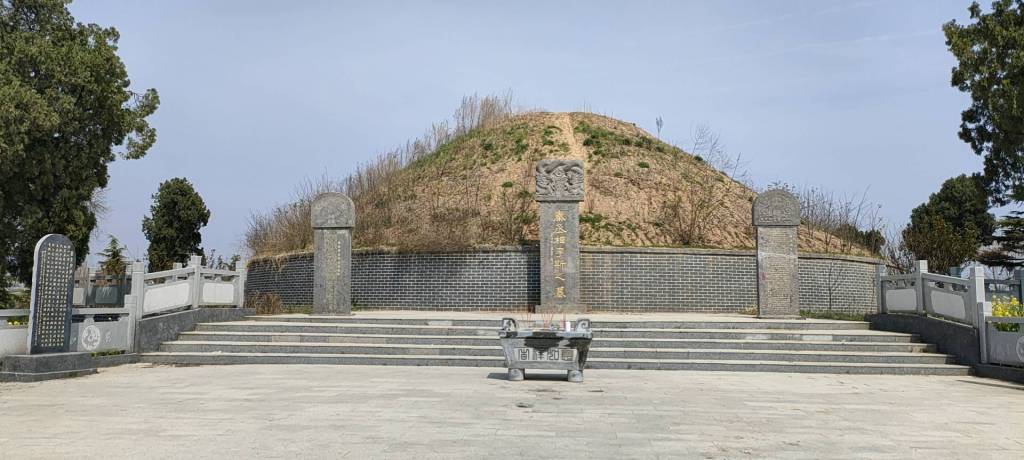
Zhang Liang advised Xiang Liang, “Now that you have installed the King of Chu, Lord Hengyang—whose name is Cheng—was the most capable among the princes of the Kingdom of Han. You should install him as the King of Han to strengthen our ranks.” Following this suggestion, Xiang Liang sent Zhang Liang to find Han Cheng and installed him as the King of Han. He appointed Zhang Liang as the defense minister. Zhang Liang, along with the new King of Han, led a force of around a thousand soldiers to reclaim territories of the former Kingdom of Han to the west. They managed to capture a few cities, but these were soon retaken by the Qin army. Zhang Liang and his king then resorted to guerrilla warfare tactics in the Yingchuan Commandery.
General Zhang Han of Qin had crushed Chen Sheng’s regime and led his army to attack the King of Wei in Linji county. The King of Wei sent Zhou Fu as his envoy to seek aid from the kingdoms of Qi and Chu. The King of Qi, Tian Dan, and General Xiang Ta of Chu led their troops with Zhou Fu to assist the Kingdom of Wei. Zhang Han launched a surprise night attack, keeping his soldiers silent by ordering them to hold sticks in their mouths. The Qin army defeated the joint forces of Qi and Chu in Linji county. The King of Qi and Zhou Fu were killed in the battle. The King of Wei, Wei Jiu, attempted to placate Zhang Han by surrendering on behalf of his people. After the settlement was signed, the King of Wei committed suicide by self-immolation. His brother, Wei Bao, escaped to the Kingdom of Chu. King Huai II of Chu assigned several thousand soldiers to Wei Bao and ordered him to retake the lost territory of Wei.
Tian Rong, a younger brother of Tian Dan, gathered the remaining troops of Tian Dan and fled eastward to the city of Dong’e. General Zhang Han relentlessly pursued them and laid siege to Dong’e. When the people of Qi learned that their king had died, they installed Tian Jia, a younger brother of the late King of Qi, Tian Jian4, as their new king. Tian Jiao became the prime minister, and his younger brother, Tian Jian1, was made commander-in-chief. They formed a new government to defend against the aggression of other kingdoms.
In July, there was non-stop rainfall. Lord Wuxin led a campaign to seize Kangfu county. Upon hearing of Tian Rong‘s crisis, he shifted his attack to Zhang Han at Dong’e county and overran the Qin troops. General Zhang Han retreated westward, while Tian Rong and his forces moved back eastward to the Kingdom of Qi. Lord Wuxin pursued the Qin army to the north and ordered Xiang Yu and the Duke of Pei to capture Chengyang county. They breached the city and slaughtered its inhabitants. The army of Chu then moved east of the city of Puyang, where they engaged Zhang Han’s troops in another battle and secured another victory. Zhang Han received reinforcements from the Kingdom of Qin and strengthened the defense of Puyang by surrounding the city with water drawn from a nearby river. The Duke of Pei and Xiang Yu withdrew their forces and attacked the town of Dingtao.
In August, Tian Rong’s troops attacked the King of Qi, Tian Jia, who fled to the Kingdom of Chu. The Prime Minister of Qi, Tian Jiao, escaped to the Kingdom of Zhao. Commander Tian Jian, who had led an army to aid the Kingdom of Zhao, dared not return upon hearing the news. Tian Rong installed Tian Shi, the son of Tian Dan, as the King of Qi and assumed the position of prime minister himself. Tian Heng took command of the military. Together, they laid claim to the Kingdom of Qi. Meanwhile, Zhang Han‘s forces became emboldened. Xiang Liang sent several envoys to the Kingdoms of Qi and Zhao, pleading with them to join forces to counter Zhang Han‘s offensive. Tian Rong’s response was: “The Kingdom of Chu should kill Tian Jia. The Kingdom of Zhao must kill Tian Jue and Tian Jian. We will join forces with you once you have done that.” The Kingdoms of Chu and Zhao did not comply. Offended, Tian Rong refused to send his troops.
Zhao Gao, the Grand Chamberlain of Qin, had free rein over the court of Qin, relying on the trust of the Second Emperor, whose favorite eunuch he was. He murdered many people out of personal spite and feared that court officials might report him. He spoke to the Emperor, saying: “The Son of Heaven is far above everyone else if all his subjects can only hear from him but cannot see him face to face. Your Majesty is still young and may not yet be skilled in all matters. The flaws in your judgment on punishments and rewards will be fully exposed to court officials if Your Majesty attends court regularly. This is not a way to demonstrate your divine wisdom to the world. It would be better for Your Majesty to stay in the seraglio and allow me and other attendants who are well-versed in the laws to handle daily governance. Your Majesty would only need to address escalated issues. Thus, the officials would not dare to bring difficult problems before you, and the people of the world would praise Your Majesty as a saint.”
The Second Emperor approved Zhao Gao’s advice. He stopped attending court to face the officials and spent his days idling in the inner court. Zhao Gao and the eunuchs served as intermediaries between the Emperor and the court, with Zhao Gao making all the decisions on governance.
Zhao Gao learned that Chancellor Li Si wanted to speak out, so he visited Li Si and said, “The bandits outside the Hangu Pass are becoming uncontrollable, yet the Emperor demands more corvée labor to build the E’fang Palace and collects rare breeds of dogs and horses that are useless. I would like to raise objections, but I am just a lowly servant. These matters are for lords and marquis like you to discuss. Why don’t you offer your advice?” Li Si replied, “That is indeed my duty. The Emperor avoids court and won’t come to hear matters of state these days. The advice I want to give cannot be conveyed indirectly. I need to meet with the Emperor, but he has no time for me.” Zhao Gao promised, “If you truly wish to speak to the Emperor, I will arrange for you to see him when he has time.”
Zhao Gao would then summon Li Si when the Second Emperor had just indulged in female companionship, saying, “Please come in; the Emperor has time to meet.” Chancellor Li Si would request an audience, interrupting the Emperor’s leisure. This happened three times, and the Emperor became enraged: “The Chancellor never comes when I am free, but always seeks to discuss state affairs as soon as I relax and enjoy myself! Does the Chancellor think I am too young? Does he want to discipline me?” Zhao Gao seized the opportunity and said, “The Chancellor played a major role in the Shaqiu scheme. Now that Your Majesty has become Emperor, he remains in his position and might want to divide the land and declare himself king. I would not speak of this if Your Majesty did not ask. The Chancellor’s eldest son, Li You, is the governor of Sanchuan Commandery. The bandits from Chu, like Chen Sheng, hail from counties near the Chancellor’s hometown. When they wreaked havoc in Chu and passed by Sanchuan, the governor did not attack them. I have heard that the governor exchanged letters with the bandits. I have not investigated this fully, so I did not report it to Your Majesty. As you know, the Chancellor wields great power outside the court.”
The Second Emperor believed Zhao Gao. He wanted to prosecute the Chancellor but was concerned about the lack of evidence. He sent investigators to look into the alleged communications between the governor of Sanchuan and the bandits.
Li Si sensed a plot against him and wrote to the Emperor to denounce Zhao Gao: “Zhao Gao arrogates to himself the power to mete out benefits and punishments, behaving as if he were no different from Your Majesty. When Tian Heng was the prime minister under Duke Jian of Qi, he expropriated the grace and authority of his lord. He forged alliances with the officers and gained popularity among the common people. Eventually, he murdered Duke Jian and usurped the Kingdom of Qi. This is a well-known historical fact. Zhao Gao‘s devious motives, treacherous activities, and personal wealth rival Tian Heng‘s influence over the Kingdom of Qi. He is even more aggressive and greedy. Now, his standing is second only to Your Majesty, yet his avarice knows no bounds. He will strip you of your prestige and supremacy. His ambition is to be like Han Qi, the last prime minister of King Han An. If Your Majesty does not take proactive measures, I fear he will overthrow you.”
The Second Emperor rebuked Li Si, saying, “What are you talking about? Zhao Gao is just an old eunuch. He does not indulge himself in times of peace, nor does he waver in times of peril. His exemplary conduct and charity have earned him his position. He has risen through his loyalty and holds his office through his truthfulness. We greatly value him, and yet you accuse him. Why? Moreover, whom would I rely on if I didn’t trust Mr. Zhao? Mr. Zhao is a scrupulous and capable person. He understands the common people and makes We feel good. You should not slander him.”
The Second Emperor liked Zhao Gao personally and trusted him. Fearing that Li Si might try to kill Zhao Gao, he informed Zhao Gao of Li Si’s memorandum. Zhao Gao countered, “I am the only one the Chancellor is worried about. If he manages to get rid of me, he will do what Tian Heng did to your Majesty.”
More “bandits” emerged everywhere, prompting more soldiers to be drafted within the Hangu Pass and sent eastward incessantly to quash them. Vice Chancellor Feng Quji, Chancellor Li Si, and General Feng Jie went to speak to the Emperor, saying, “There are many brigands rising to the east of Hangu Pass. The army of Qin has struck these brigands and killed many, but their spread has not been contained. These brigands are numerous because the people’s lives have been made miserable by the heavy burdens of garrison duties, transportation of goods, logistical services for war, and excessive taxation. We plead for a temporary halt to the construction of the E’fang Palace and a reduction in garrison duties and logistical costs.”
The Second Emperor was outraged and responded, “The majesty of being the lord of the empire is to do whatever he pleases. The lord promulgates laws, and the subjects dare not infringe upon them, ensuring the world is under his complete control. Lords in the legendary Yu dynasty and the Xia dynasty, exalted as the sons of heaven, had to lead poor and arduous lives to set examples for the people. Then what is the purpose of laws? My father, the late Emperor, began as the lord of a single state and unified the realm. He brought peace to the empire and kept the barbarians at bay. Building palaces was to relish his joy and let you witness his series of achievements. During my reign over the last two years, so many bandits have emerged from the woods. You have failed to suppress their lawlessness, yet you dare to propose suspending the project of the late Emperor. First, you are not honoring the late Emperor’s wishes; second, you are not serving me loyally. Why are you still holding your posts?”
The Second Emperor ordered the three ministers to be put on trial for various charges. Feng Quji and Feng Jie committed suicide, but Li Si reported to prison. The Second Emperor appointed Zhao Gao as the judge, charging Li Si and his son Li You with seditious acts. The entire Li Si clan and their attendants were arrested. Zhao Gao had Li Si whipped thousands of strokes. Unable to withstand the pain, Li Si confessed to the false charges of sedition.
Li Si chose to live because he believed in his power of persuasion, his past accomplishments, and his innocence regarding the charge of sedition. He hoped to defend himself in writing, believing that the Second Emperor might come to his senses and pardon him. From his jail cell, he wrote to the Emperor:
“I have been the Chancellor and governed the people of Qin for more than thirty years. In the earlier years, the territory of the Kingdom of Qin was narrow, only about a thousand li across, with armed forces of merely a few hundred thousand soldiers. I made an all-out effort to recruit strategists in secret and financed them with gold and treasures to lobby other monarchs. I also covertly trained armored warriors and educated them in ethics and religion. I selected these elite fighters to be officers and awarded those who provided extraordinary service. Eventually, we terrorized the Kingdom of Han, weakened the Kingdom of Wei, conquered the Kingdoms of Yan and Zhao, and dismantled the Kingdoms of Qi and Chu. Finally, we annexed the six kingdoms and captured their kings. I enthroned the King of Qin as the Son of Heaven.”
“I demonstrated the strength of the Qin Empire by driving out the nomadic tribes like the Hu and the He in the north and subduing the hundreds of tribes in the land of Yue in the south. I established the institutions of the Qin Empire by unifying the writing, measuring, and weighing systems and promulgating them throughout the world. These are my crimes, and I should have died long ago! Thanks to Your Majesty’s wishing me to serve with all my ability, I have managed to last until this day. I hope Your Majesty will look into my case!”
The letter was submitted. However, Zhao Gao instructed the jail warden to suppress it, saying, “A criminal does not get to write to the authorities!”
Zhao Gao instructed his minions to interrogate Li Si in turns, pretending to be inspectors, court heralds, and palace attendants. At first, Li Si rescinded his guilty plea, but he was beaten more severely. After several rounds of interrogation and torture, Li Si gave up on retracting his confession. Later, when the Second Emperor sent his personal inquirer to see him, Li Si, unable to distinguish between them and Zhao Gao’s men, stuck to his false statements. The inquirer reported back to the Emperor, who was gleeful: “I would have been betrayed by the Chancellor were it not for Mr. Zhao!”
By the time the investigator sent by the Second Emperor reached the Commandery of Sanchuan, Li Si‘s eldest son, Li You, who was the governor, had already been killed by soldiers of Chu. The investigator returned to the capital just as the Chancellor was charged with crimes. Although the investigator submitted his findings, Zhao Gao relayed the opposite to the Second Emperor. The verdict against Li Si included the five cruel punishments, culminating in being chopped in half in Xianyang’s public market.
Li Si was taken out of prison, shackled alongside his second son. He spoke to his son: “I wish I could go with you and our yellow dog to hunt rabbits outside the East Gate of Shangcai, as we did in the past. Couldn’t we do it?” Father and son faced each other and wailed. The three clans of Li Si—his father’s, mother’s, and wife’s—were all exterminated. The Second Emperor then appointed Zhao Gao as the Chancellor. Zhao Gao monopolized all decision-making, whether crucial or trivial.
 Reflection by Rio Grande
Leave a comment