Comprehensive Reflections to Aid in Governance
By Sima Guang
Translated By Yiming Yang
Annals of Zhou Book 5 Scroll 5 (continued)
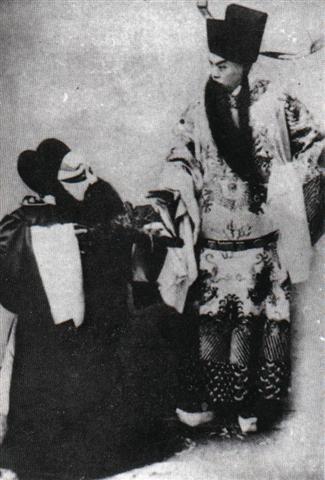
The 46th year of King Nan(269 B.C.)
General Hu Yang of Qin launched a raid on the city of Yuyu in the kingdom of Zhao but was unsuccessful in capturing it.
The 47th year of King Nan(268 B.C.)
Upon the counsel of Fan Ju, the King of Qin directed a prominent official, Wan, to spearhead another campaign against the kingdom of Wei. Subsequently, they successfully seized control of Huai county.
The 48th year of King Nan(267 B.C.)
The crown prince of Qin died in the kingdom of Wei while fulfilling his role as a hostage.
The 49th year of King Nan(266 B.C.)
In the summer, the kingdom of Qin successfully annexed the regions of Xingqiu and Huai from the kingdom of Wei. During this period, Fan Ju earned greater trust from the king and gradually assumed control over the state affairs of Qin. Exploiting the opportunity to sow discord in the king’s mind, Fan Ju remarked, “When I resided east of Xiao Mountains, my awareness did not extend to the king of Qi; my focus was solely on Lord Mengchang. Similarly, my knowledge of the king of Qin was limited, as I recognized only the queen dowager, Marquis Rang, Lord Gaoling, Lord Huayang, and Lord Jingyang within the kingdom of Qin. A true king is one who independently governs a state, weighing the welfare and harm befalling his subjects, and determining their life or death. However, the queen dowager now acts without discretion, Marquis Rang conducts visits to other kingdoms without official reports, while Lord Huayang and Lord Jingyang act unrestrained. Lord Gaoling freely enters the court without approval. With these four types of nobility in power, no state can escape peril. Marquis Rang sends envoys to other states, wielding the authority of a king, signing treaties with fellow lords, and distributing rewards across the world. No one dares to resist his aggressive pursuits, and the spoils of victory enrich Marquis Rang‘s fiefdom, while the losses burden the state, spreading grievances among the people.”
“I have heard the saying, ‘A tree with too much fruit must be pruned. A tree with too much pruning will harm its core.’ A kingdom is precarious when a minister’s hometown surpasses its capital in size or when a minister is more revered than the king. Nao Chi, in charge of the kingdom of Qi, shot the king on his thigh, removed the king’s hamstring, and hung him in a temple, causing his death overnight. Similarly, Li Tuo, overseeing the kingdom of Zhao, detained the Father Lord in the palace of Shaqiu, leading to his starvation after a hundred days of confinement. In my assessment, the four nobilities today fall into the same category as Nao Chi and Li Tuo. Throughout history, the downfall of three dynasties resulted from lords delegating governance to ministers and indulging in excesses such as drinking and gaming. Jealous ministers manipulated the people, isolating the lord to promote their own interests rather than the lord’s. When the lord remained oblivious, the state eventually crumbled. Presently, officials in the kingdom of Qin, from town mayors to senior ministers and all assistants to the king, are appointed by Marquis Rang. Observing your Majesty’s isolation in the court, I fear that Your Majesty’s descendants may not inherit the kingdom of Qin when your Majesty passes away.” Agreeing with Fan Ju, the king of Qin deposed the queen dowager and ousted Marquise Rang, Lord Gaoling, Lord Huayang, and Lord Jingyang. He appointed Fan Ju as the prime minister of Qin and bestowed upon him the title of Marquis Ying.
The king of Wei dispatched Xu Jia as an envoy to the kingdom of Qin. Marquis Ying, dressed in humble attire, personally visited Xu Jia. Surprised by Fan Ju‘s appearance, Xu Jia exclaimed using his courtesy name, “How have you been, Fan Shu?” He warmly invited Fan Ju to join him at the table, offering food and drink. As a gesture of hospitality, Xu Jia presented Fan Ju with a thick silken gown. Later, when Fan Ju drove the carriage of Xu Jia to the prime minister’s residence, Fan Ju went in first, stating, “I will notify the prime minister of your arrival.” However, after a prolonged wait, Xu Jia inquired with the doorman, who informed him that there was no one named Fan Ju, and that their prime minister was Mr. Zhang. Realizing he had been deceived, Xu Jia humbly kneel-walked into Marquis Ying‘s mansion, seeking forgiveness.
Seated in the hall, Fan Ju reproached Xu Jia for his betrayal. He remarked, “Were it not for your compassion towards your old friend and the gift of the silk robe, you might not have escaped with your life.” Fan Ju then organized a grand banquet, inviting envoys from other kingdoms. Xu Jia was relegated to the lower end of the dining hall, where chopped hays and beans were placed in front of him, and he was compelled to eat from the trough without utensils, akin to a horse. Fan Ju directed Xu Jia to convey a stern message to the King of Wei: “Bring the severed head of Wei Qi to me, or we will demolish your capital, Daliang.” Xu Jia hastily returned to Wei and recounted the events to Wei Qi, who sought refuge in the kingdom of Qi, taking shelter in Lord Pingyuan’s house.
Meanwhile, in the kingdom of Zhao, King Hui’wen passed away, and his son Dan ascended to the throne as King Xiao’cheng of Zhao. The new king appointed Lord Pingyuan as his prime minister.
 Reflection by Rio Grande
Leave a comment