Tag: Zhu Bo

  • Comprehensive Reflections to Aid in Governance(Part 261): An Occultist’s Apocrypha

    Comprehensive Reflections to Aid in Governance(Part 261): An Occultist’s Apocrypha

    Comprehensive Reflections to Aid in Governance

    By Sima Guang

    Translated By Yiming Yang  

    Annals of Han Book 26 Scroll 34 (continued)
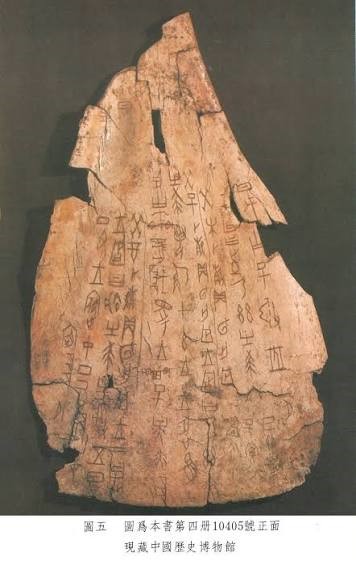
    Oracle Bone Script Used for Divination

    The 2nd year of Emperor Ai’s Jianping Era (5 B.C. continued)

    During the reign of Emperor Cheng, a man from Qi named Gan Zhongke fabricated two texts, the Calendar of the Heavenly Offices and the Scripture of Great Peace, in twelve volumes. He claimed that the Han dynasty was approaching the great end of Heaven and Earth and should therefore receive a new mandate from Heaven. He transmitted these doctrines to Xia Heliang of Bohai and others. Liu Xiang, Colonel of the Central Garrison, reported that Gan Zhongke was feigning powers derived from ghosts and spirits in order to deceive the Emperor and delude the people. Gan Zhongke was imprisoned and confessed, but he died of illness before his sentence could be carried out. Xia Heliang and others nevertheless continued to spread his teachings in secret.

    After the Emperor ascended the throne, Xie Guang, Inspector Colonel of the Capital region, and Li Xun, Commander of the Cavalry, introduced Xia Heliang and others, all of whom were then serving on temporary assignment as Yellow Gate attendants. They were frequently summoned to present their arguments, declaring:

    “The House of Han had already declined in mid-course and ought to have received a new mandate. Emperor Cheng did not respond to Heaven’s command; therefore his line was cut off. Now the Emperor has long been ill, and prodigies and anomalies have repeatedly appeared. This is the means by which Heaven reproaches and warns mankind. It is fitting that the court swiftly change the era name and alter the imperial appellation; only then may the Emperor’s years be prolonged, imperial sons be born, and the omens of disaster cease. If that which has been obtained through the mandate is not put into practice, then there will be no calamity or misfortune that does not occur. A great flood will arise, and a disaster of fire will also come, sweeping the people away.”

    The Emperor, having long been ill and hoping to derive some benefit from these measures, ultimately accepted the proposals of Xia Heliang and the others. He issued an edict granting a general amnesty throughout the realm, renamed the second year of the Jianping era as the first year of the Taichu era, and assumed the title “Divinely Blessed, Peaceful Emperor Liu.” The length of the day was set at 120 units on the water clock, an increase of twenty over the previous 100 units.

    In July of autumn, the area of Yongling Pavilion on the northwestern plain of Weicheng was designated as the preliminary site of the Emperor’s mausoleum. No people from the commanderies or principalities were required to relocate there.

    A little more than a month after the Emperor changed his title, his illness remained unabated. Xia Heliang and the others again sought to alter state affairs arbitrarily, but the senior ministers strongly opposed them and argued that such measures should not be permitted. Xia Heliang and his group then submitted a memorial stating: “The high ministers are ignorant of the heavenly mandate. The Chancellor and the Grand Master of the Censorate should be dismissed, and Xie Guang and Li Xun should be appointed to assist in governance.”

    The Emperor, seeing that their prophecies were baseless and had not been fulfilled, issued an edict in August, stating: “The attendant candidates Xia Heliang and others proposed changing the era name and the imperial title, as well as increasing the unit of time measurement, in order to secure the enduring stability of the state. I trusted their doctrine without sufficient scrutiny and mistakenly listened to their words, hoping thereby to bring blessings to the people, yet no auspicious signs came to pass. To err and not correct it—this is truly a mistake. The edict of June 10, with the exception of the amnesty, is to be entirely revoked. Xia Heliang and the others, who have departed from the right way and misled the people, are to have their treacherous conduct thoroughly investigated.”

    As a result, all of them were imprisoned and executed. Xie Guang and Li Xun had their death sentences commuted by one degree and were exiled to Dunhuang Commandery.

    Because of his lingering illness, the Emperor restored all the temples to the gods that had been established by previous generations, more than seven hundred in number, and in a single year thirty-seven thousand sacrifices were offered.

    Empress Dowager Fu continued to harbor resentment toward Fu Xi. She instructed Fu Yan, the Marquis of Kongxiang, to hint to Chancellor Zhu Bo that he should submit a memorial seeking Fu Xi’s removal from his marquisate. Zhu Bo discussed the matter with Zhao Xuan, Grand Master of the Censorate. Zhao Xuan remarked, “The Emperor has already made his decision; would it not be improper to raise the matter again?”

    Zhu Bo replied, “I have already given my word to the Marquis of Kongxiang. Even an ordinary man may compel another to risk his life through a pledge; how much more so the supreme ruler, the Empress Dowager? I have no choice but either to do it or to die.” Zhao Xuan thereupon agreed.

    Zhu Bo was reluctant to single out Fu Xi alone in his memorial. He recalled that He Wu, the former Grand Excellency of Works and Marquis of Sixiang, had likewise been dismissed for a similar offense and sent back to his fief. Accordingly, Zhu Bo submitted a memorial stating: “Fu Xi and He Wu, while in office, were of no benefit to the government. Although they have already been dismissed, it is inappropriate for them to retain their marquisates. I request that both be stripped of their titles and reduced to commoner status.”

    The Emperor, knowing that Empress Dowager Fu had long borne a grudge against Fu Xi, suspected that Zhu Bo and Zhao Xuan were acting under her orders. He summoned Zhao Xuan to the Office of the State Secretariat for questioning, and Zhao Xuan confessed. An imperial edict was then issued: “Let Peng Xuan, General of the Left, together with the officials of the central court, investigate this matter.”

    Peng Xuan and the others reported: “Zhu Bo, Zhao Xuan, and Fu Yan acted unrighteously and with disrespect. We request that they be summoned to the imperial prison and handed over to the Minister of Justice.”

    The Emperor reduced Zhao Xuan’s death sentence by three degrees and confiscated one-fourth of Fu Yan’s fief. He also dispatched a special envoy to summon Chancellor Zhu Bo to the Minister of Justice. Zhu Bo committed suicide, and his marquisate was abolished.

    In September, Ping Dang, the Grand Chamberlain, was appointed Grand Master of the Censorate. In winter, on October 1, he was promoted to Chancellor. Because this appointment fell outside the customary season for the enfeoffment of marquises, he was instead granted the title of Marquis Within the Pass. Wang Jia of Pingling, Intendant of Jingzhao, was appointed the new Grand Master of the Censorate.

    The Emperor wished to place members of the Ding and Fu clans in key positions. In this same year, Peng Xuan of Huaiyang, General of the Left, was dismissed and sent home with the title of Marquis Within the Pass. In his place, Ding Wang, the Grand Chamberlain, was appointed General of the Left.

    Beiyuanzhi, chieftain of the Wusun, invaded and plundered the western borderlands of the Xiongnu. The Chanyu dispatched troops to attack him, killing several hundred people, capturing more than a thousand, and driving off cattle and other livestock. Fearing further retaliation, Beiyuanzhi sent his son Qulu to the Xiongnu as a hostage. The Chanyu accepted him and reported the matter to the Han court. The Emperor then sent an envoy to reprimand the Chanyu and demanded the return of Beiyuanzhi’s son. The Chanyu obeyed the order and sent him back.

  • Comprehensive Reflections to Aid in Governance(Part 260): Four Is A Crowd

    Comprehensive Reflections to Aid in Governance

    By Sima Guang

    Translated By Yiming Yang  

    Annals of Han Book 26 Scroll 34

    Duration of 3 years

    Drum Demon

    The 2nd year of Emperor Ai’s Jianping Era (5 B.C.)

    In January of spring, a comet appeared near the Cowherd star (Altair).

    The Ding and Fu clans were growing increasingly imperious and extravagant, and all resented Fu Xi’s frugality and humility. In addition, Empress Dowager Fu wished to seek a more exalted title so as to place herself on the same level as Emperor Cheng’s Grand Empress Dowager(Wang Zhengjun). Fu Xi, together with Kong Guang and Shi Dan, all maintained that this was unacceptable. The Emperor greatly valued the opinions of his officials, yet he was also under internal pressure from Empress Dowager Fu, and so he remained indecisive on the matter for more than a year. Empress Dowager Fu became extremely angry, and the Emperor, having no other choice, first removed Shi Dan in order to give Fu Xi a warning. Fu Xi, however, ultimately did not heed it. Zhu Bo and Fu Yan, the Marquis of Kongxiang, formed an alliance and conspired to press for the exalted title. They met frequently with the Emperor in his leisure hours and submitted sealed memorials criticizing Fu Xi and Kong Guang. On February 20, the Emperor decided to dismiss Fu Xi from court and send him home with only his marquisate.

    Since the abolition of the office of Grand Master of the Censorate, many had argued that the system had departed from ancient practice. In the Han dynasty, from the imperial title down to the assistant managers, nearly everything differed from antiquity, and only the Three Excellencies now had been altered, leaving their duties unclear and of no benefit to governance. Zhu Bo therefore proposed: “According to the old system, officials with salaries of two thousand piculs who had received the highest evaluations were selected from among the commanderies and principalities, and the best among them was appointed Grand Master of the Censorate. A capable Grand Master of the Censorate was then promoted to Chancellor. Thus the order of rank was established so as to honor the Emperor’s virtue and emphasize the importance of state affairs. Now, however, the Chancellor is appointed directly from among ministers of two thousand piculs, without first passing through the office of Grand Master of the Censorate. As a result, the authority of these offices has been diminished and no longer reflects the importance of affairs of state. I humbly suggest that the office of Grand Excellency of Works be abolished, that the office of Grand Master of the Censorate be restored, and that the old system be followed. I am willing to devote my utmost efforts as Grand Master of the Censorate, and thereby set an example for the other ministers.” 

    The Emperor agreed.

    In the summer, on April 2, Zhu Bo was appointed Grand Master of the Censorate, having been demoted from Chancellor. In addition, Ding Ming, the elder brother of Queen Dowager Ding and Marquis of Yang’an, was appointed Grand Marshal and General of the Guards, with an office and official staff assigned to him; thus the office of Grand Marshal was reinstated according to the old system.

    Empress Dowager Fu also issued decrees of her own to the Chancellor and the Grand Master of the Censorate, declaring: “Fu Xi, Marquis of Gaowu, has been disloyal to the Emperor. He colluded with the former Grand Excellency of Works, Shi Dan, disobeyed orders, and harmed the imperial clan. He must not be permitted to attend court, but should be banished to his march.”

    During the reign of the late Emperor, Chancellor Kong Guang had disputed the succession of the King of Dingtao, the present Emperor, and in doing so had deeply offended Empress Dowager Fu. Consequently, once the Fu family came to power, they joined with Zhu Bo in discrediting and slandering Kong Guang. On April 19, Kong Guang was reduced to commoner status.

    Grand Master of the Censorate Zhu Bo was promoted to Chancellor and granted the title of Marquis of Yangxiang, while Zhao Xuan, the Privy Treasurer, was appointed Grand Master of the Censorate. When the certificate of appointment was issued and they ascended to the imperial hall to receive it, there arose a loud sound like that of a bell, heard by all the palace attendants. The Emperor inquired about it from Yang Xiong of Shu Commandery and Li Xun, both Yellow Gate Gentlemen-in-Attendance.

    Li Xun replied: “This is what the Grand Laws chapter of the Book of Documents calls a drum demon. According to the text, when an unwise ruler is confused by the multitude, and admits into court men who possess reputation without substance, then there will be sound without form, and its source will be unknown. The book says, ‘If it occurs in the middle of the year, the month, and the day, it should implicate the prime ministers.’ Now it is April, and the strange phenomenon occurred around noon, which indicates the middle. The prime ministers refer to the executive ministers. It would therefore be appropriate to remove the Chancellor and the Grand Master of the Censorate in response to this sign from Heaven. Yet even if they are not removed, should they fail to retire within a year, misfortune will befall them of itself.”

    Yang Xiong also chimed in: “The drum demon signifies a failure to heed counsel. Zhu Bo is obstinate and crafty, which suggests that he is suited to be a general rather than Chancellor; otherwise, if Heaven is angered, there may be sudden and severe calamities.”

    The Emperor did not heed them.

    As Zhu Bo was now Chancellor, the Emperor adopted his advice and issued an edict: “The title Emperor Gong of Dingtao shall no longer be used. The Empress Dowager Gong shall be honored as Grand Empress Dowager, and her residence shall be called Yongxin Palace. The Queen Dowager Gong(Consort Ding) shall be honored as Empress Dowager, and her residence shall be called Zhong’an Palace. A tomb shall be established in the capital for Emperor Gong, in accordance with the precedent set for Emperor Xuan’s father, Emperor Dao.”

    Thus, each of the four empress dowagers came to have her own Privy Treasury and Imperial Stables, each headed by a minister with a salary of two thousand piculs. Empress Dowager Fu, now honored as the Grand Empress Dowager, became especially imperious. When speaking with the Grand Empress Dowager Wang, she even referred to her as the “old woman.”

    At that time, the Ding and Fu clans rose rapidly in influence within the span of only a few years, and many high ministers and marquises emerged from their ranks. However, the Emperor did not grant them power on the same scale that the Wang family had enjoyed during the reign of Emperor Cheng.

    Chancellor Zhu Bo and Grand Master of the Censorate Zhao Xuan submitted a memorial stating: “Dong Hong, the former Marquis of Gaochang, was the first to propose changing the honorific titles of the Emperor’s parents. Yet he was accused by Shi Dan, the Marquis Within the Pass, and was reduced to commoner status. At that time, the realm was in mourning and authority had been entrusted to Shi Dan. Failing to understand the significance of these honorific titles, Shi Dan made groundless objections and demeaned them, thereby injuring filial piety, which is a grave act of disloyalty. Your Majesty, in your benevolence and wisdom, should make these honorific titles manifest. Dong Hong ought to be restored as Marquis of Gaochang in recognition of his loyalty and filial piety. As for Shi Dan, who has shown himself rebellious and violent, although he has been pardoned, he should not be permitted to retain any title or fief. We request that he be reduced to commoner status.” The request was approved.

    They further proposed: “Wang Mang, Marquis of Xindu, formerly held the office of Grand General. He did not uphold the significance of these honorific titles, but instead belittled them, thereby injuring filial piety, and should be severely punished. Although he has received a pardon, he should not be allowed to retain any title or land. We request that he be reduced to commoner status.”

    The Emperor said, “Since Wang Mang is connected to the Grand Empress Dowager, do not reduce him to commoner status; instead, send him back to his march.” The same treatment was extended to Wang Ren, Marquis of Ping’e, who had sheltered the relatives of Zhaoyi(Consort) Zhao; all were sent back to their fiefs.

    People throughout the realm felt that the Wang family had been mistreated and sympathized with them. The Grand Master of Remonstration Yang Xuan submitted a sealed memorial, saying: “Emperor Cheng gave profound thought to the importance of the ancestral temple and praised Your Majesty’s supreme virtue as the continuation of Heaven’s mandate. His sacred intentions were deep, and his grace was boundless. It is well known that the late Emperor intended for Your Majesty to succeed him and serve in the Eastern Palace. The Grand Empress Dowager, now seventy years of age, mourns constantly and has ordered her relatives to avoid contention with the Ding and Fu families, so that even people along the roads weep for her. How could this not cause Your Majesty to reflect deeply? At this moment, when Your Majesty stands aloft and gazes far off toward the Yanling Mauselum, does Your Majesty not feel humbled before Emperor Cheng?” 

    The Emperor was deeply moved by his words and restored the title of Marquis of Chengdu to Wang Yi, the second son of Wang Shang.

    Zhu Bo also submitted a memorial: “According to Han precedent, the provincial inspectors held low salary ranks yet received substantial rewards, and thus achievements were encouraged and promotion advanced. Previously, however, the office of inspector was abolished and replaced by that of governor, which carried a full salary rank of two thousand piculs and stood just below the Nine Ministers. Whenever vacancies arose among the Nine Ministers, governors with the highest merit ratings were appointed to fill them. Those of middling ability merely guarded their positions. I fear that, as a result, the function of supervision has been weakened and deceitful practices are no longer restrained. I request that the office of provincial governor be abolished and that the office of inspector be restored.” The Emperor agreed.

    On June 5, Empress Dowager Ding passed away. An edict was issued ordering her burial in the garden of Emperor Gong of Dingtao. Fifty thousand men were conscripted from the nearby commanderies of Chenliu and Jiyin to excavate the grave and complete the reburial.