Tag: Zhou Yafu

  • Comprehensive Reflections to Aid in Governance(Part 132): Underworld Rebellion

    Comprehensive Reflections to Aid in Governance

    By Sima Guang

    Translated By Yiming Yang 

    Annals of Han Book 8 Scroll 16 (continued)

    Underworld in Greece Myth

    The 1st year of Emperor Jing’s Later Era (143 B.C.)

    In January of spring, an edict was issued, stating: “Legal cases are matters of utmost gravity. The intelligence of the people differs, and the ranks of officials vary. In cases of uncertainty, judicial officers should be consulted. Should they be unable to resolve the matter, it shall be referred to the Minister of Justice. If an investigation results in a wrongful verdict, it may be rectified thereafter. Officials who submit doubtful cases for review shall not be punished. Thus, those entrusted with legal affairs shall be guided by the principle of leniency.”

    In March, a general amnesty was proclaimed throughout the realm.

    In summer, a grand feast was held for five days. The people were permitted to drink wine, and the prohibition on alcohol, imposed in previous years, was lifted.

    On May 9, an earthquake occurred. The region of Shangyong suffered tremors for twenty-two days, damaging the city walls.

    In the autumn, on July 29, a solar eclipse took place.

    On July 30, Chancellor Liu She was dismissed from office.

    On September 22, the Grand Master of the Censorate, Wei Wan, was appointed Chancellor. The Commandant of the Guard, Zhi Buyi of Nanyang, was appointed Grand Master of the Censorate.

    In his youth, Zhi Buyi served as a cadet. Once, a fellow cadet of the same dormitory, needing money to return home, secretly took the gold of another. When the loss was discovered, suspicion fell upon Zhi Buyi. Without protest, he assumed responsibility and repaid the sum in full. Thereafter, the true offender, remorseful, returned the stolen gold. The owner, moved by shame, deeply regretted his accusation. By this act of virtue, Zhi Buyi‘s reputation for integrity spread, and in time, he rose through the ranks to become a Grandee of the Palace.

    Later, rumors arose concerning Zhi Buyi’s conduct, alleging illicit relations with his sister-in-law. Upon hearing this, Zhi Buyi replied only, “I have no brother,” and made no further effort to defend himself.

    The Emperor dwelt within the inner palace and summoned Zhou Yafu to dine together. A large piece of ham was placed before Zhou Yafu, unsliced, and no chopsticks were provided. Displeased, Zhou Yafu glanced at the attendant and requested chopsticks. The Emperor, observing him, laughed and said, “Is this not sufficient for you?” Zhou Yafu removed his cap, and offered his apology. The Emperor bade him “get up”, and Zhou Yafu departed in a trot. As he watched him leave, the Emperor remarked, “He is grumpy and unfit to serve a young lord.”

    Not long thereafter, Zhou Yafu’s son purchased five hundred suits of armor and shields from the imperial armory for funeral purposes. He employed laborers but failed to pay them properly. The laborers reported the matter, implicating Zhou Yafu’s son, and linking the affair to Zhou Yafu himself.

    When the report reached the court, the Emperor referred the case to the judicial officers. Zhou Yafu was detained and pressed for an explanation, but he remained silent. In anger, the Emperor declared, “I will not deal with him!” and ordered Zhou Yafu to be handed over to the Minister of Justice.

    The Minister of Justice questioned him, saying, “Marquis, why do you plot rebellion?” 

    Zhou Yafu rebutted, “The goods I purchased were for burial rites; how does that amount to rebellion?” 

    The Minister retorted, “Even if you rebel not above the earth, you may rebel beneath it!” The interrogation grew ever harsher.

    Upon his arrest, Zhou Yafu sought to take his own life, but his wife restrained him. Unable to die by his own hand at home, he appeared before the Minister of Justice and abstained from food for five days, until he vomited blood and died.

    In that same year, Liu Bushi, Prince Ai of Jiyin, passed away.

    The 2nd year of Emperor Jing’s Late Era (142 B.C.)

    In January of spring, there were three earthquakes in a single day.

    In March, the Xiongnu invaded Yanmen Commandery. The Commandant Feng Jing engaged them in battle and perished. Cavalry, chariots, and militia were dispatched to garrison Yanmen.

    Also in spring, owing to crop failure, the court forbade the feeding of grain to horses within the interior commanderies, and confiscated those horses that consumed grain.

    In April of summer, an edict was proclaimed: “Elaborate carvings and ornate engravings hinder agriculture; intricate silks and fine embroidery impair the labors of women. When agriculture is harmed, famine ensues; when women’s work declines, cold and want follow. Few can escape both hunger and frost. We ourselves till the fields and later attend to the silkworms, in order to supply offerings to the ancestral temples and garments for ceremonial use, setting an example for all under Heaven. We refuse excessive tributes, reduce taxes and corvée labor, and desire that the people devote themselves to farming and sericulture, storing abundance to guard against disaster. Let the strong not oppress the weak, nor the rich exploit the poor. Let the aged live out their days in peace, and orphans grow to their full years. Should a single year’s harvest fail, the people will suffer hunger. Where then would the blame reside?

    “At that time, swindlers deceived their way into officialdom, demanding bribes for goods, preying upon the people and plundering the common folks. Magistrates, who should uphold the law, colluded with thieves and burglars, stealing from the state—an outrage beyond measure. Therefore, We command all officials of two-thousand-picul rank to perform their duties with diligence. Those who neglect their office or engage in unlawful acts shall be reported by the Chancellor and punished accordingly. Let this decree be proclaimed throughout the realm, that all may know Our will.”

    In May, an edict was issued lowering the threshold for purchasing office from one hundred thousand to forty thousand coins.

    In autumn, a great drought befell the land.

    The 3rd year of Emperor Jing’s Late Era (141 B.C.)

    In October of winter, both the sun and the moon were eclipsed, and their light appeared red for five days.

    On the last day of December, thunder was heard; the sun shone purple; and the five planets moved in retrograde, lingering within the Supreme Palace Enclosure. The moon traversed the center of the Supreme Palace Enclosure.

    In January of spring, an edict was issued: “Agriculture is the foundation of the world. Gold, pearls, and jade cannot be eaten in times of hunger, nor can they provide warmth against the cold. Though they serve as mediums of exchange, people know not when to seek them and when to abstain. In years of poor harvests, it is perhaps because too many engage in secondary pursuits, and too few till the fields. Therefore, provincial and commandery authorities are commanded to promote agriculture and sericulture, and to plant trees to secure food and clothing. Officials who employ men to gather gold, pearls, and jade shall be treated as thieves; their earnings deemed criminal spoils, and punishment assigned accordingly. Those of two-thousand-picul rank who condone such actions shall be charged as accomplices.”

    On January 17 of spring, the coming-of-age ceremony for the Crown Prince was held.

    On January 27, the Emperor passed away in the Weiyang Palace. The Crown Prince ascended the throne at the age of sixteen. The Empress Dowager was honored as Grand Empress Dowager, and the Empress was established as Empress Dowager.

    On February 6, Emperor Jing was buried at Yangling.

    In the third month, Tian Fen, younger half-brother of the Empress Dowager, was enfeoffed as Marquis of Wu’an; and Tian Sheng was enfeoffed as Marquis of Zhouyang.

    Ban Gu’s Praising Commentary:

    Confucius once said, “The people now, are the same people who were the wise governance of the Three Dynasties—Xia, Shang, and Zhou—was replied upon.” Indeed! In the later ages of Zhou and the times of Qin, the teachings of civilization gradually waned; even with severe punishments, corruption and crimes grew rampant. When the Han dynasty arose, it swept away the complexities and excesses, granting the people breathing space. By the time of Emperor Wen, frugality was further exalted as a governing principle. Emperor Jing inherited and continued this path. Over the course of fifty to sixty years, customs shifted and morals improved, nurturing a populace inclined toward virtue and uprightness. When speaking of effective governance, one may mention King Cheng and King Kang of the Zhou dynasty, in the same breath as Emperor Wen and Emperor Jing of the Han dynasty—what a grace!

    At the founding of the Han, the realm inherited the faults of Qin: the burdens of conscription and taxation weighed heavily, and the coffers were empty. The Emperor himself could not afford a chariot drawn by four color-matched horses, and high ministers and generals traveled in carts pulled by oxen. Among the common people, there was no accumulated wealth. After the empire was stabilized, Emperor Gaozu issued decrees restraining merchants—prohibiting them from wearing silks or riding in carriages. Taxes were increased to check their influence. In the reigns of Emperor Hui and Empress Dowager , though the empire was newly settled and laws against merchants were somewhat relaxed, yet the descendants of street vendors remained barred from attaining office. Officials’ stipends and governmental expenses were meticulously weighed against the people’s tax burdens. The revenues from mountains, rivers, gardens, ponds, and marketplaces within feudal lands were accounted separately: from the Emperor down to the feudal lords, each maintained his own private treasury, apart from the state’s funds. The amount of grain transported from east of Mount Xiao to the capital annually totaled but a few hundred thousand piculs.

    Under Emperors Wen and Emperor Jing, a policy of simplicity and frugal economy nourished the land. For seventy years the realm enjoyed tranquility, disturbed only by rare calamities of nature. The people had abundant food and clothing; granaries and storehouses overflowed; the treasuries at all levels of government accumulated surpluses. The coinage amassed within the imperial vaults rotted their own binding strings, and could no longer be tallied. The grain reserves in Tai’cang storehouses were so abundant they spilled into the open, rotting in the elements, unfit for use. Horses thronged the city streets and lanes; herds crowded the open fields. Riders of mares were even scorned at feasts. Gatekeepers dined daily on meat and fine grains; officials held stable posts, raising sons to adulthood during their tenure—some even adopting their official titles as surnames. Thus did the people cultivate a spirit of self-respect, propriety, and a sense of shame that deterred wrongdoing.

    During this era, wealth increased and governance grew lenient. The people lived in contentment, and resources were plentiful. Yet in such times of prosperity, arrogance festered: the strong began to oppress the weak, forcibly annexing their neighbors’ lands. Clans of influence and privilege dominated the countryside. Princes of the blood and high officials alike vied in extravagance; their mansions, carriages, and garments exceeded imperial standards without restraint. Yet such flourishing could not last. Henceforth, Emperor Wu, indulging in magnificence at home and warfare abroad, drained the treasury and fatigued the people—ushering in a period of decline and exhaustion.

  • Comprehensive Reflections to Aid in Governance(Part 127): Deflecting The Heavy Strike

    Comprehensive Reflections to Aid in Governance

    By Sima Guang

    Translated By Yiming Yang 

    Annals of Han Book 8 Scroll 16 (continued)

    The Rebellion of Seven Principalities

    The 3rd year of the Emperor Jing’s Early Era (154 B.C. continued)

    The Grand Commandant, Zhou Yafu, addressed the Emperor: “The Chu soldiers are agile, fierce and difficult to confront head-on. I propose abandoning the defense of Liang and instead cutting off the enemy’s supply routes—only then can we gain the upper hand of the situation.” The Emperor approved his strategy. Zhou Yafu, riding in a six-horse carriage, led his troops to assemble at Xingyang.

    Upon reaching Bashang, a commoner named Zhao She stopped his carriage and offered counsel: “The Prince of Wu, known for his wealth, has long gathered loyal and brave soldiers. It is highly likely he has set ambushes along the narrow passages of Mount Xiao and Lake Mianchi. Military strategy values the element of surprise—why not take an alternative route? Travel through Lantian, exit via Wu Pass, and reach Luoyang. The detour will cost only an extra day or two, but you will arrive directly at the armory and sound the war drums. When the other princes hear of it, they will think you have descended from Heaven.”

    Zhou Yafu followed this idea and reached Luoyang. Pleased, he remarked: “The seven princedoms have rebelled, yet I have traveled this far by fast carriage and arrived safely. Now that I am stationed in Xingyang, there is no cause for concern east of here.” He ordered a search of the area between Mount Xiao and Lake Mianchi, where the Prince of Wu’s hidden troops were indeed discovered. He then appointed Zhao She as Protector of Army.

    Zhou Yafu withdrew his forces northeast toward Changyi. Meanwhile, Prince of Wu’s troops continued their siege of Liang, and the Prince of Liang repeatedly sent messengers pleading for reinforcements. Zhou Yafu, however, refused to dispatch aid. The Prince of Liang then appealed directly to the Emperor, who commanded Zhou Yafu to relieve the urgency of Liang. Yet Zhou Yafu defied the imperial order, choosing instead to remain fortified and avoid direct confrontation. He dispatched the Marquis of Gonggao, Han Tuidang, along with a light cavalry unit to the Huai-Si River crossing, severing the retreat routes and supply lines of Wu and Chu.

    The Prince of Liang appointed Grandee of the Palace Han Anguo and Zhang Yu, the younger brother of Prime Minister of Chu, Zhang Shang, as commanders of the army. Zhang Yu was fierce in combat, while Han Anguo was cautious and held his position. Together, they inflicted significant damage on the forces of Wu.

    The troops of Wu attempted to retreat westward, but the Prince of Liang’s strong defenses blocked their path. Turning instead toward Marquis of Tiao’s camp, they prepared for battle. However, Zhou Yafu steadfastly maintained his defensive position and refused to engage. The forces of Wu, facing severe food shortages, repeatedly issued challenges, but Zhou Yafu remained inside the camp.

    One night, a riot broke out inside Marquis of Tiao’s camp—soldiers, confused and agitated, began fighting among themselves, and the chaos spread dangerously close to Zhou Yafu’s tent. Yet he remained resolute, refusing to rise. Soon, order was restored.

    As desperation grew, the forces of Wu appeared to concentrate on the southeast, while Zhou Yafu repositioned his troops to the northwest. Later, Wu’s elite soldiers attempted a breakthrough in the northwest but were blocked and forced to withdraw.

    Many soldiers of Wu and Chu perished from starvation or deserted due to the lack of provisions. Unable to sustain their campaign, the rebel forces ultimately withdrew.

    In February, General Zhou Yafu led his elite troops in pursuit, delivering a decisive defeat to the retreating enemy. Prince of Wu, Liu Pi, abandoned his army and fled under the cover of night with only a few thousand warriors. Prince of Chu, Liú Wù, seeing no escape, took his own life.

    When the Prince of Wu launched his campaign, he appointed his minister, Tian Lubo, as Grand General. Tian Lubo proposed a plan: “If we concentrate our forces and march westward, we will have no alternative routes to take, making success difficult. I suggest leading fifty thousand troops along the Yangtze and Huai rivers to seize Huainan and Changsha, then enter Wu Pass to join the main army. This unexpected maneuver would catch the enemy off guard.”

    However, the Crown Prince of Wu, Liu Ju, dissuaded him: “Since we march under the banner of insurrection, entrusting another with command poses a grave risk—what if they turn against Sire? Moreover, dividing our forces invites danger, yielding only disadvantages and harm.” The Prince of Wu heeded his warning and rejected Tian Lubo’s plan.

    Earlier, a young officer, General Huan, had advised the Prince: “Wu’s strength lies in its infantry, which excels in rough terrain, while Han relies on cavalry and chariots, which dominate open ground. I propose that instead of besieging cities, we advance swiftly, seizing Luoyang’s weapon warehouses and the grain stores at Ao’cang. With mountains and rivers as natural defenses, we can rally other monarchs. Even without entering Hangu Pass, we will secure control of the realm. But if Sire moves too slowly, preoccupied with capturing cities, once Han’s cavalry and chariots thrust into the outskirts of Liang and Chu—then we will face disaster.”

    The Prince of Wu consulted his veteran generals, but they dismissed Huan’s strategy: “He is young—suited for charging into battle, not for devising grand strategy.” Thus, the Prince did not adopt his plan.

    When the Prince of Wu assumed sole command of the military, just before crossing the Huai River, he appointed all his retainers and attendants as generals, colonels, sentinels, and majors—except for Zhou Qiu. A native of Xiapi, Zhou Qiu had once been a fugitive in Wu, known for his addiction to alcohol and reckless behavior. The Prince distrusted him and assigned him no responsibilities.

    Feeling slighted, Zhou Qiu sought an audience with the Prince and said, “I am aware of my shortcomings, yet I have been given no opportunity to prove myself. I do not dare ask for a position, but if Sire grants me a tally, I swear to repay it with results.” The Prince agreed and handed him a tally.

    That night, Zhou Qiu hastened back to Xia’pi. By then, news of Wu’s rebellion had already reached the city, and the local authorities were on high alert. Upon arrival, he lodged at an inn and summoned the Prefect of Xia’pi under false pretenses. Once the prefect entered his room, Zhou Qiu’s attendants executed him on fabricated charges.

    Afterward, he gathered influential local leaders, many of whom were acquaintances of his brother, and declared, “Wu has risen in rebellion, and its forces will arrive before midday. If we surrender now, our families will be spared, and those who prove their worth will be rewarded with noble titles.” The words quickly spread, and by morning, the entire city of Xia’pi had surrendered.

    In a single night, Zhou Qiu raised an army of thirty thousand men. Reporting his success to the Prince of Wu, he advanced north, capturing city after city. By the time he reached Yangcheng, his forces had swelled to over a hundred thousand. He defeated the army of the commandant of the capital, securing control of the Yangcheng principality.

    However, upon learning that the Prince of Wu had suffered defeat and fled, Zhou Qiu realized he could not secure victory alone. He resolved to lead his troops back to Xia’pi, but before he could reach the city, he developed a festering sore on his back and died.

    There was a solar eclipse on February 30.

    After the Prince of Wu abandoned his army and fled, his troops scattered, gradually surrendering to the Grand Commandant, the Marquis of Tiao, and the forces of Liang. The Prince of Wu crossed the Huai River, fled to Dantu, and sought refuge in the Kingdom of Dongyue, where he managed to rally a few thousand remaining soldiers.

    Han court sent envoys to offer lavish rewards to Dongyue, which then deceived the Prince of Wu into emerging to greet the troops. As he stepped forward, they struck him down with a halberd and presented his severed head to Han as proof of his death. Meanwhile, the Crown Prince of Wu, Liu Ju, fled to the Kingdom of Minyue.

    Within three months, both the Prince of Wu and the Prince of Chu were defeated. Only then did the generals recognize the wisdom of the Grand Commandant’s strategy. However, this incident deepened the rift between the Prince of Liang and the Grand Commandant, Zhou Yafu.

  • Comprehensive Reflections to Aid in Governance(Part 122): General Zhou Yafu

    Comprehensive Reflections to Aid in Governance

    By Sima Guang

    Translated By Yiming Yang  

    Annals of Han Book 7 Scroll 15 (continued)

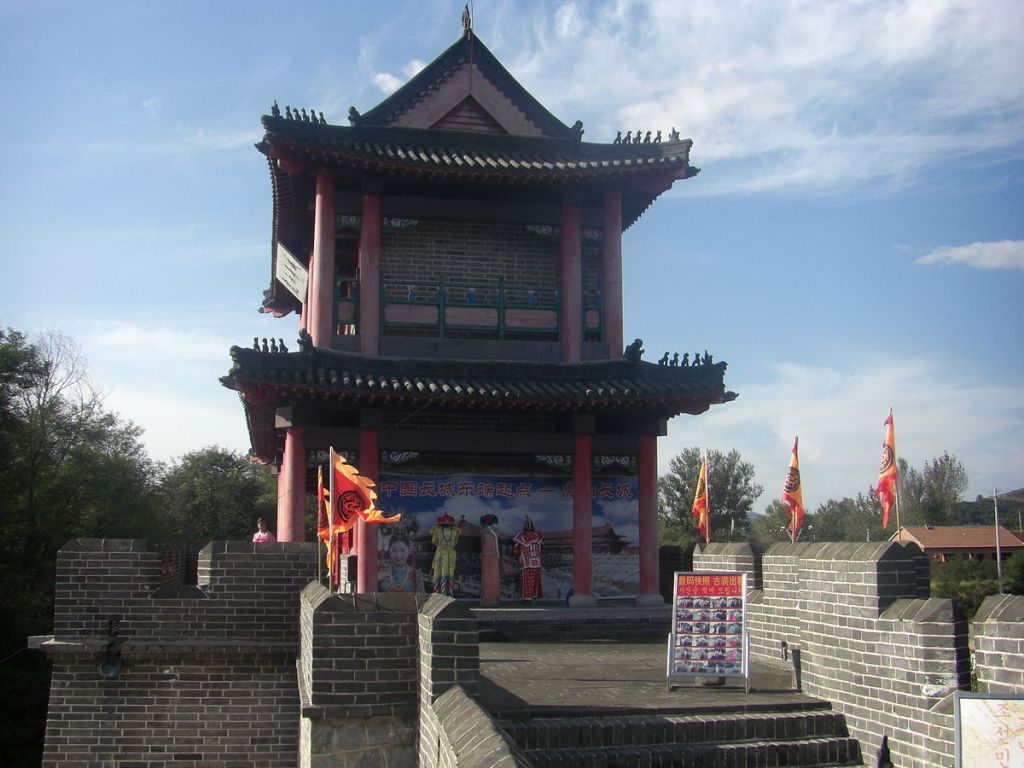
    The Great Wall in Dandong, Liaoning Province (Liaodong)

    The 2nd year of the Emperor Wen’s Later Era (162 B.C.)

    In the summer, the Emperor embarked on a journey to visit the Yuyang Palace in Yong County.

    In June, Prince Xiao of Dai, Liu Can, passed away.

    For several consecutive years, the Xiongnu had raided the border regions, causing extensive casualties and the plundering of both people and livestock. The most severely affected areas were Yunzhong and Liaodong, with over ten thousand people in each commandery. Troubled by this, the Emperor sent envoys with a letter to the Xiongnu. In response, the Chanyu (leader of the Xiongnu) dispatched a chieftain as an emissary to express gratitude. The court then renewed the peace treaty and marriage alliance with the Xiongnu.

    On July 1, Chancellor Zhang Cang resigned from his position. The Emperor, considering Dou Guangguo, the Empress’ younger brother, to be capable and virtuous, wished to appoint him as the new Chancellor. However, he hesitated, concerned that such a move might be seen as favoritism towards his own family, potentially stirring discontent among the people.

    The Emperor could not find any other suitable candidates among the remaining ministers who had served during the reign of Emperor Gaozu.

    The Grand Master of the Censorate, Shentu Jia of the principality of Liang, had previously served under Emperor Gaozu as a strong-bow archer, capable of drawing a stiff bow with his feet. He had been granted the title of Marquis within Passes. On August 4, Shentu Jia was appointed Chancellor and received the title of Marquis of Gu’an. He was known for his integrity and uprightness, refusing to accept private audiences at his residence.

    At that time, the Grandee of the Palace, Deng Tong, was held in great favor by the Emperor and was rewarded with lavish gifts and grants, amassing immense wealth. The Emperor often held banquets at Deng Tong‘s home, showing him exceptional favor.

    Once, when Shentu Jia entered the court, Deng Tong peremptorily took a position close to the Emperor, displaying disrespectful behavior. After Shentu Jia presented his report, he remarked, “Your Majesty favors your darling associates, generously bringing them wealth and prestige as you please. But when it comes to court decorum, it must be observed with the utmost solemnity.” 

    The Emperor replied, “You need not speak further; this is my personal matter.”

    After the court session, Shentu Jia, now in his office, sent an urgent message summoning Deng Tong. When Deng Tong did not appear, Shentu Jia ordered his execution. Fearing for his life, Deng Tong rushed to the Emperor and explained the situation. The Emperor responded, “Go to him first; I will send for you shortly.” 

    Deng Tong went to the Chancellor’s office, barefoot and uncapped, bowing deeply to plead for mercy to the Chancellor. Shentu Jia, however, remained seated, showing no courtesy, and sternly reprimanded him: “This court is that of Emperor Gaozu. You, a lowly official, behaved playfully and flippantly on the palace platform. By the rules, you should be executed! Officials, carry out the sentence!”

    Deng Tong kowtowed incessantly, with blood dripping from his head, but Shentu Jia did not relent. Thinking that the Chancellor had given Deng Tong a hard time, the Emperor sent an envoy bearing the imperial insignia to summon Deng Tong and apologize to the Chancellor, “He is my playful servant. Please let him off.” 

    When Deng Tong returned, he wept and said to the Emperor, “The Chancellor almost had me killed!”

    The 3rd year of the Emperor Wen’s Later Era (161 B.C.)

    In February of that spring, the Emperor embarked on a journey to visit Dai Commandery.

    This year, Xiongnu Laoshang Chanyu passed away, and his son Junchen succeeded him as the new Chanyu.

    The 4th year of the Emperor Wen’s Later Era (160 B.C.)

    On April 30, there was a solar eclipse.

    In May, there was a general amnesty declared throughout the entire empire.

    The Emperor embarked on a journey to visit Yong County.

    The 5th year of the Emperor Wen’s Later Era (159 B.C.)

    In January of spring, the Emperor embarked on a journey to visit Longxi.

    In March, he traveled to Yong County.

    In July of autumn, the Emperor journeyed to Dai.

    The 6th year of the Emperor Wen’s Later Era (158 B.C.)

    In winter, 30,000 Xiongnu cavalry entered Shanggu County, and another 30,000 entered Yunzhong. They caused widespread killings and looting, with beacon fire signals reaching Ganquan County and Chang’an. The court appointed the Grandee of the Palace, Ling Mian, as General of Chariots and Cavalry, stationing him in Feihu Pass. Su Yi, the former Prime Minister of Chu, was appointed general at Gou’zhu Pass. General Zhang Wu was stationed in Beidi, while Zhou Yafu, Prefect of Henei, was appointed general at Xiliu. Liu Li, the Minister of the Imperial Clan, was stationed as general at Bashang, and Xu Li, the Marquis of Zhuzi, as general at Jimen—all in preparation against the Xiongnu threat.

    The Emperor personally visited and encouraged the troops, starting from Bashang and moving to Jimen and other military camps. He rode directly into the camps, accompanied by the general and his officers on horseback. However, upon reaching the Xiliu camp, the soldiers and officers were fully armed with sharp weapons and loaded crossbows, refusing to allow the Emperor entry. The lead of the Emperor’s cavalcade announced, “The Emperor is arriving!” but the camp gate officer replied, “The general’s orders state that no one is allowed to gallop through the military camp.”

    When the Emperor arrived, he still couldn’t enter. He then sent an envoy with the imperial insignia and a decree to the generals, stating, “I wish to enter the camp and personally show my appreciation to the troops.” Zhou Yafu transmitted the order to “open the camp gate.” The soldiers guarding the gate told the Chariots and Cavalry attendants, “The general has decreed that no galloping is allowed within the camp.” Thus, the Emperor proceeded slowly, holding the reins himself.

    Upon arriving at the camp, General Zhou Yafu greeted him with his weapon in hand and saluted, saying, “Armored warriors do not bow. I request to greet you with military courtesy.” The Emperor, showing respect, solemnly placed his hands on the rail of the carriage and observed the military formation before expressing his gratitude to General Zhou: “The Emperor respectfully greets the General.” After leaving the camp, the court officials were amazed.

    The Emperor remarked, “This is a real general indeed! The behavior of the generals at Bashang and Jimen was like child’s play. They are vulnerable to surprise attacks and capture. But Zhou Yafu is truly invincible!” The Emperor praised him constantly.

    After a month, both the Han forces and the Xiongnu withdrew from the border, and peace was restored. Zhou Yafu was then appointed Commandant of the capital guard.

    In April of summer, a severe drought and locust infestation struck. An order was issued for the principalities to suspend their tributary offerings. Restrictions on exploiting mountains and marshes were relaxed to allow more hunting and fishing, and expenses for imperial clothing and transportation were reduced. The number of government officials and attendants was also decreased. Granaries were opened to provide relief to the people, and citizens were permitted to sell or buy ranks and titles.