Tag: Zhang Qian

  • Comprehensive Reflections to Aid in Governance(Part 160): Fear Factor

    Comprehensive Reflections to Aid in Governance

    By Sima Guang

    Translated By Yiming Yang  

    Annals of Han Book 12 Scroll 20 (continued)
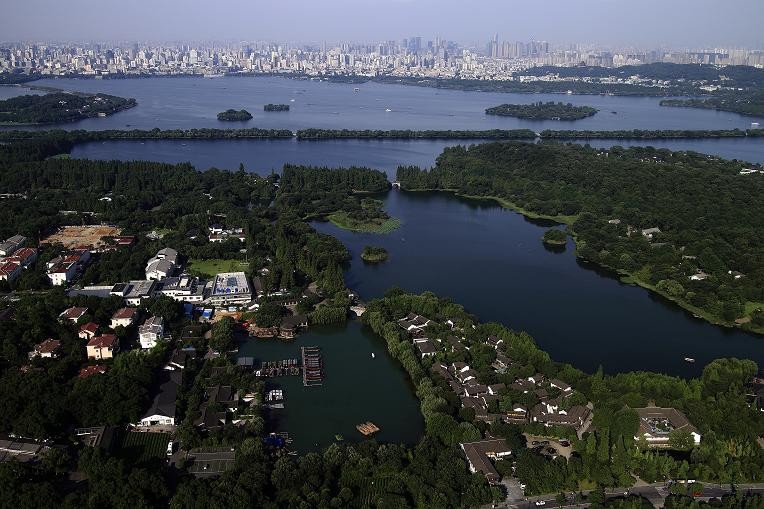
    Wulin (Hangzhou), Zhejiang Province

    The 6th year of Emperor Wu’s Yuanding Era (111 B.C. continued)

    In commemorating the victory in Nanyue, sacrifices were offered to Taiyi (the Polaris) and Mother Earth, marking the first use of music and dance for the occasion.

    The Marquis of Chiyi, Yi, mobilized the southern troops with the intention of attacking Nanyue. However, the Lord of Julan, fearing the long journey of the troops and the potential capture of the elderly and weak by neighboring tribes’ attacks, revolted with his followers. They killed the envoy along with the Prefect of Qianwei. In response, the Han court deployed the Eight Colonels Army, composed of convicts from the Ba and Shu commanderies, to attack Nanyue, sending General of the Household Guo Chang and Wei Guang to suppress the rebellion. They executed the Lord of Julan, the Lord of Qiongdu, and the Marquis of Zuodu, pacifying the southern ethnic groups and establishing Zangke Commandery.

    Initially allied with Nanyue, the Lord of Yelang saw Nanyue‘s downfall and decided to submit to the Han court. The Emperor recognized him as the King of Yelang. The Nanmeng tribes, feeling apprehensive, invited officials from the Han government and eventually established Qiongdu as the Yuesui Commandery, Zuodu as the Shenli Commandery, Nanmeng as the Wenshan Commandery, and the Baima tribe in the west of Guanghan as the Wudu Commandery.

    Earlier, the King of Dongyue (Dong’ou, Minyue), Zou Yushan, petitioned the Emperor, requesting to lead eight thousand soldiers to join Louchuan General‘s expedition against Lü Jia. The troops reached Jieyang, but adverse sea winds hindered their progress, forcing them to halt. Taking advantage of this delay, they secretly aligned with Nanyue. However, when Han forces defeated Nanyue at Panyu, they did not arrive to participate.

    Louchuan General Yang Pu requested permission to lead an army to attack Dongyue. However, due to the fatigue of the troops, the Emperor declined and ordered the generals to station their forces in Yuzhang and Meiling to await further orders. Upon hearing of Louchuan General‘s request to execute him, Zou Yushan rebelled, mobilizing his troops against the Han forces and holding strategic roads. General Zou Li, who was granted the title General of Annexing Han, and others led the troops. They entered the regions of Baisha, Wulin(Hangzhou), and Meiling, killing three Han Colonels.

    During this time, Han court envoys, Agriculture Minister Zhang Cheng and the former Marquis of Shancheng, Liu Chi, were stationed there but dared not engage the enemy, opting instead to retreat to safer places. Both were executed for their cowardice.

    The Emperor, intending to send Yang Pu out again due to his previous efforts, wrote a letter of reproach, stating: “Your merit lies only in breaking Shimen and Xunxia. You did not slay generals or seize banners on the battlefield. How can you be so conceited? You captured Panyu, treating surrendering individuals as prisoners and digging up the dead as trophies; that was one misconduct. You allowed Zhao Jiande and Lü Jia to win support from Dongyue; that was the second misconduct. Soldiers were exposed year after year, yet you, the general, did not remember their hard work. You requested to inspect the coast, returning home in government vehicles, wearing gold and silver seals, and three ribbons, boasting to your hometown folks—that was the third misconduct. Missing the deadline of return and blaming bad roads as an excuse—that was the fourth misconduct. We inquired about the price of knives in Shu, and you pretended to not know, deceiving me with false information; that was the fifth mistake.”

    “When receiving orders, you did not come to Lanchi Palace, and you even remained silent the next day. Suppose your subordinate officers were asked and stayed silent, or were instructed but did not comply; what punishment would they face? With such a mindset, can you be trusted between the rivers and seas? Now that Dongyue has deeply entered our territory, can you lead your troops to redeem your misconduct?”

    Frightened and filled with remorse, Yang Pu replied, “I am willing to die to atone for my mistakes!”

    The Emperor dispatched Henghai General Han Yue to Gouzhang to set sail from the east; Louchuan General Yang Pu departed from Wulin(Hangzhou), and the Commandant of Capital, Wang Wenshu, came out from Meiling. Meanwhile, the leaders from the south, Gechuan General Yi and Xialai General Jia, led troops from Ruoxie and Baisha to confront Dongyue.

    The Marquis of Bowang, Zhang Qian, had been granted honor and prestige for facilitating communication with the Western Regions. His subordinates vied to petition the Emperor regarding the peculiarities, advantages, and dangers of foreign countries, requesting to be dispatched as emissaries. The Emperor, aware of the distant and unenjoyable nature of these regions, listened to their requests, issued the necessary credentials, and allowed them to recruit from officials and civilians without questioning their origins. He sent them adequately prepared to broaden the horizons of the West.

    However, upon their return, some of these envoys engaged in embezzlement of currency, goods, and behaviors contrary to the Emperor’s will. The Emperor, aware of these practices, sternly punished them, using severe penalties to incite redemption. Yet, they continued to request further missions, creating a cycle of persistent disregard for the law. These officials and soldiers persisted in exaggerating accounts of foreign countries; those with grandiose tales were rewarded with credentials, while those with smaller accounts were relegated to subordinate positions. Thus, individuals with no verifiable accounts zealously sought to emulate them. The envoys dispatched were often individuals of modest means, seeking to exploit their position by illicitly embezzling gifts for foreign authorities, intending to sell them for personal gain.

    As a result, the people in foreign regions grew weary of Han envoys. They noticed the frivolous and overblown tales of the Han diplomats, considering the Han forces too distant to reach them. They restricted their food supplies to torment the Han envoys. This deprivation, along with accumulated grievances, led to attacks on the Han envoys by the foreign countries.

    Especially in regions like Loulan and Jushi, small states located along the main route, attacks against Han diplomats like Wang Hui were severe. Additionally, the Xiongnu launched surprise attacks against them. The envoys claimed that the Western Regions were littered with cities and were vulnerable to attack.

    The Emperor dispatched Fuju General, Gongsun He, with fifteen thousand cavalry, covering a distance of over two thousand li from Jiuyuan, reaching the Fuju well, and then returning. Xionghe General Zhao Ponu led over ten thousand cavalry for several thousand li, reaching the Xionghe River and then returning. Their purpose was to repel and expel the Xiongnu, preventing them from intercepting Han envoys, yet not a single Xiongnu was encountered. Following this, the commanderies of Wuwei and Jiuquan were divided to establish Zhangye and Dunhuang commanderies, with people relocated to populate these areas.

    In this year, the Prime Minister of Qi, Bu Shi, was promoted to Grand Master of Censorate. After assuming his position, Bu Shi reported grievances: “It is inconvenient to let the magistrates monopolize the commerce of salt and iron tools in various commanderies and regions. They produce poor-quality items at excessively high prices. They force the people to buy these goods, causing distress. Moreover, there are high shipping costs due to exorbitant ship taxes and a scarcity of merchants.” This displeased the Emperor and contributed to his growing dissatisfaction with Bu Shi.

    Sima Xiangru fell gravely ill and wrote before his passing a testament praising the Emperor’s achievements and virtues, citing omens and urging the Emperor to bestow offerings at Mount Tai. Impressed by his words and coincidentally finding a treasure cauldron, the Emperor consulted court officials and scholars to discuss the Feng-Shan ceremonies. However, as the Feng-Shan rituals were rarely performed and their procedures were not widely known, various occultists claimed, “Feng-Shan signifies immortality. Before the Yellow Emperor‘s era, these ceremonies attracted unusual phenomena and supernatural occurrences, and spoke to the gods. Even the First Emperor of Qin failed to perform it properly. If Your Majesty insists, start slowly. If there is no adverse weather, you may proceed with the ritual.”

    The Emperor ordered scholars to compile texts from the “Book of Documents,” “Rites of Zhou,” and “Regulations of the Kings” to draft the procedures for the Feng-Shan ceremony. However, after several years, the rituals remained incomplete. Seeking advice, the Emperor consulted the Left Interior Minister Ni Kuan, who opined, “Offering sacrifice at Mount Tai for Heaven and offering sacrifice at Mount Liangfu for Earth are auspicious ceremonies that exalt the surname of one’s ancestors and seek auspicious signs from heaven—this is the grand ceremony of emperors. However, the essence of such offerings is not clearly expounded in the classics. The completion of the Feng-Shan ceremony should follow the will of the sage ruler and should be directed by them. This matter cannot be adequately resolved by ministers. Your Majesty has been contemplating a grand event but has allowed this issue to linger for several years, causing everyone to strive without success. Only the Son of Heaven, by establishing a harmonious center and encompassing all aspects, can harmonize the sounds of metal and resonate with the jade to align with celestial blessings, laying the foundation for ten thousand generations.”

    The Emperor personally devised the rituals, incorporating elements of Confucian learning into the proceedings. When presenting the Feng-Shan ceremonial vessels specially made to the gathered scholars, some criticized them as “not in accordance with ancient practices.” Subsequently, all the scholars were dismissed from service.  The Emperor followed the ancient customs, uplifted the troops’ morale and rewarded the soldiers with wine and dining before the Feng-Shan ceremony was conducted.

  • Comprehensive Reflections to Aid in Governance(Part 157): Thirty-six Nations along The Silk Road

    Comprehensive Reflections to Aid in Governance

    By Sima Guang

    Translated By Yiming Yang  

    Annals of Han Book 12 Scroll 20 (continued)

    Nations in the West Frontier, c. 100 BCE

    The 2nd year of Emperor Wu’s Yuan’ding Era (115 B.C. continued)

    After the surrender of the Hunye King to the Han Dynasty, the Han forces pursued and expelled the Xiongnu beyond the Gobi Desert. The territory east of the Salt Marsh was cleared of Xiongnu presence, and the route to the Western Regions became accessible.

    At this juncture, Zhang Qian proposed a plan: “The Wusun King, or Kunmo(Khan), was originally a vassal of the Xiongnu. Later, as his military strength grew, he refused to pay homage to the Xiongnu and, when attacked, was able to repel them. Now, with the Chanyu weakened by the Han, the former territory of Hunye King lies vacant. The barbarians are attached to their ancestral lands but are drawn by the wealth of the Han. If we offer generous bribes to the Wusun at this opportune moment and persuade them to move eastward, occupy the former territory of Hunye King, and form a fraternal alliance with the Han, the situation will be advantageous. If they answer the Han‘s call, it will be like severing the right arm of the Xiongnu. Once allied with the Wusun, the neighboring states in the Western Regions, such as Daxia(Bactria), can be brought under our influence and become our external subjects.”

    The Emperor approved this proposal, appointing Zhang Qian as a General of the Household with three hundred men, each with two horses, and tens of thousands of cattle and sheep. He was supplied with substantial amounts of gold, coins, and silk, accompanied by numerous assistant ambassadors bearing royal insignia, and sent as a representative to neighboring kingdoms along the way.

    Upon Zhang Qian‘s arrival at Wusun, the Kunmo(Khan), Wusun King, received him with insolence. Zhang Qian conveyed the message from the Emperor: “If the Wusun people relocate eastward to their former territory, the Han will send a princess to be your wife, establish a fraternal bond, and together resist the Xiongnu. The Xiongnu will no longer pose a threat.”

    The Wusun, distant from the Han and unaware of its greatness, had long been subservient to the Xiongnu. Furthermore, they lived in close proximity to the Xiongnu, and their ministers, fearful of the Xiongnu, were reluctant to make any move. Despite Zhang Qian‘s prolonged stay, he was unable to make inroads with them.

    Therefore, he dispatched his assistant envoys to neighboring kingdoms such as Dayuan(Ferghana), Kangju(Sogdia), Greater Yuezhi(Sakas), Daxia(Bactria), Anxi(Parthian), Shendu(India), Khotan, and others. The Wusun provided interpreters and guides to accompany Zhang Qian on his return journey, sending dozens of people and several dozen horses as a token of gratitude, as well as to gather information about the Han‘s strength and resources.

    In that year, upon Zhang Qian‘s return, he was appointed as the Grand Usher. Over the following years, assistant ambassadors sent by Zhang Qian to communicate with the states of Daxia and others gradually returned, some accompanied by diplomats from those kingdoms. Thus, communication between the Western Regions and the Han began to open up.

    The Western Regions consist of a total of thirty-six nations, divided by great mountains running from north to south, with a river flowing through the center. The region spans over six thousand li from east to west and more than a thousand li from north to south. To the east, it connects to Han territory via Yumen Pass and Yangguan Pass, and to the west, it is bordered by the Onion Range (Pamir Mountains). The river in this region, the Tarim River, originates from two sources: one from the Onion Range and the other from the Southern Mountains(Kunlun Mountains) of Khotan. The two sources merge and flow eastward into the Salt Marsh (Lop Nur), located about three hundred li from Yumen Pass and Yangguan Pass.

    From Yumen Pass and Yangguan Pass, there are two routes in the Western Regions. The first follows the north side of the Southern Mountains near Shanshan(f.k.a. Loulan), running west along the river to Shache (Yarkant), forming the southern route. Beyond the southern route, it crosses the Onion Range (Pamir Mountains), leading to the Greater Yuezhi and Anxi. The second route originates from the royal court of the Front Cheshi (Jushi) King, proceeding north along the Northern Mountains (Tianshan Mountains) and the river (Tarim River) to Shule, constituting the northern route. Beyond the northern route, it crosses the Onion Range, leading to Dayuan, Kangju, and Yancai (Sogdiana).

    All these regions were under the control of the Xiongnu. The Xiongnu Rizhu King of the Western Regions established a Commandant of Minions who oversaw the Western Regions. They resided in Yanqi (Karasahr), Weixu, and Yuli (Lop Nur county), levying taxes from the various kingdoms and gaining wealth from this area.

    As the Wusun King declined to return east, the Han established Jiuquan Commandery in the former territory of the Hunye King, gradually relocating people to settle there. Later, they also established Wuwei Commandery to sever communication routes between the Xiongnu and the Qiang tribes.

    The Emperor acquired a blood-sweat horse (Akhal-Teke) from the Dayuan kingdom, which he greatly adored and named “Heavenly Horse.” Envoys were sent along various routes to acquire more horses of the same breed. When these envoys were dispatched to foreign countries, their entourages were large, often numbering several hundred or more people. At that time, people carried grand gifts in the style of Marquis Bowang (Zhang Qian), displaying magnanimity and respect. However, over time, these practices became more routine, and as a result, both the envoy’s entourage and the amount of gifts dwindled.

    The Han regularly dispatched multiple envoys annually, with over ten missions in some years and five or six in others. Distant missions took about eight or nine years to complete, while those to nearer regions took several years to return.

    The 3rd year of Emperor Wu’s Yuan’ding Era (114 B.C.)

    In winter, the Hangu Pass was relocated from Hongnong to Xin’an.

    In the spring, on January 27, a fire broke out in the Yangling Garden (the Mausoleum of Emperor Jing).

    In April, during the summer, there was rain and hail. More than ten commanderies and regions to the east of Hangu Pass suffered from famine, causing people to resort to cannibalism.

    Prince Xian of Changshan, Liu Shun, passed away. His son, Liu Bo, succeeded him. Liu Bo was accused of neglecting Prince Xian during his illness and showing disrespect during the mourning period, which led to his demotion to Fangling. A month later, the Emperor bestowed the title of Prince of Zhen’ding upon Liu Ping, another son of Prince Xian, and made Changshan into a commandery. As a result, all Five Sacred Mountains came under the Emperor’s direct administration.

    Liu Yi, the Prince of Dai, was relocated and made the Prince of Qinghe.

    During this year, Xiongnu Chanyu Yizhixie passed away, and his son, Wuwei Chanyu, succeeded him.

  • Comprehensive Reflections to Aid in Governance(Part 150): Out to The Unknown

    Comprehensive Reflections to Aid in Governance

    By Sima Guang

    Translated By Yiming Yang  

    Annals of Han Book 11 Scroll 19 (continued)

    A Goddess stone figure, Bronze Age Bactria (Daxia), photo by Jumbokedama

    The 1st year of Emperor Wu’s Yuan’shou Era (122 B.C. continued)

    In April of summer, a general amnesty was declared throughout the realm.

    On April 9, the imperial son, Liu Ju, was declared Crown Prince at the tender age of seven.

    On May 30, a solar eclipse occurred.

    In that same period, a large group of ten thousand Xiongnu entered Shanggu and slaughtered several hundred Han people.

    Earlier, Zhang Qian had returned from his western expedition to Yuezhi and presented a detailed report to the Emperor, recounting the customs and cultures of various polities in the western territories. He stated:

    Dayuan lies directly to the west of the Han, approximately ten thousand li away. The people of Dayuan live in settled communities and engage in agriculture. They breed a brand of horses known as the Ferghana horse, whose sweat is red, and they are highly prized. Their cities and houses resemble those of the Middle Kingdom.

    “To their northeast lies the Wusun, and to the east are the Kingdom of Khotan. West of Khotan, all rivers flow westward into the Western Sea, while to the east, the rivers flow toward a salt marsh. This salt marsh runs underground, and to the south lies the source of the Yellow River, approximately five thousand li from Chang’an.

    “East of the salt marsh lies the western boundary of the Xiongnu, extending to the Great Wall at Longxi. To the south, they border the Qiang, who have cut off the road from Han to the west.

    “The Wusun, Kangju, Yancai (Alans), and the Greater Yuezhi are nomadic peoples who move with their herds and have customs similar to those of the Xiongnu. Daxia lies southwest of Dayuan and shares many similar customs. During my time in Daxia, I saw bamboo canes from Qiong and cloth from Shu. Upon inquiry, the people of Daxia told me, ‘Our merchants travel to Shendu (India) to trade with them.’

    Shendu (India) lies several thousand li southeast of Daxia, and its customs resemble those of Daxia. In my estimation, Daxia is twelve thousand li from the Han, located to the southwest. Now, Shendu (India) lies several thousand li southeast of Daxia and possesses goods from Shu. Therefore, its distance from Shu cannot be too great. Should we send emissaries to Daxia, traveling through Qiang territories would be dangerous, as the Qiang people despise outsiders. Going northward would bring us into the hands of the Xiongnu. The safest and shortest route is through Shu, which is free from raiders.”

    Upon learning of the existence of Dayuan, Daxia, Anxi (the Parthian Empire), and other such powerful and prosperous kingdoms, the Emperor recognized their abundance of exotic goods, their settled communities, and their shared commercial activities with the Middle Kingdom. He observed their military weakness and noted their apparent inclination to value the wealth and goods of the Han. To the north of these territories lay Daxia, Kangju, and similar regions known for their military strength, presenting a potential opportunity for suzerainty through gifts and offerings.

    The Emperor firmly believed that it would expand the empire’s territory by thousands of li if these territories were brought under righteous allegiance, rather than military conquest. It would allow distant peoples to trade and pay homage, utilizing interpreters who spoke nine different languages. This would also introduce diverse cultures and spread the prestige and virtue of the Han Empire throughout the four seas. The Emperor approved of Zhang Qian’s report and ordered that he send emissaries to explore routes via Shu and Qianwei. Envoys, including Wang Ranyu and others, were dispatched in four directions: through Mang tribe, Ran tribe, and Xiyu tribe, and through Qiong tribe and Bo tribe, with each team traveling one to two thousand li towards Shendu.

    To the north, the envoys were blocked at Jiandi and Zuodu, while to the south they were halted at Yuexi and Kunming. In the region around Kunming, there were no recognized rulers and the area was rife with banditry, with frequent attacks on Han envoys, making communication impossible.

    Despite these challenges, Han’s efforts to reach Shendu (India) eventually led to communication with the Dian kingdom. The King of Dian, whose name was Dangqiang, asked the Han envoys, “Who is greater, Han or us?” Similarly, the Marquis of Yelang posed the same question. With no established communication channels between these territories and the Han Empire, each considered itself a sovereign state and was unaware of the vastness of the Han Empire. When the envoys returned and highly praised the magnificence of the Dian kingdom, suggesting it should be ruled as a vassal state, the Emperor renewed his attention to the southwestern uncivilized regions.

    The 2nd year of Emperor Wu’s Yuanshou Era (121 B.C.)

    In October of the winter, the Emperor made a pilgrimage to Yong and performed ceremonies at the Five Altars.

    On March 3, the Marquis of Pingjin, Gongsun Hong, passed away. On March 22, Li Cai, the Marquis of Le’an and the Grand Master of Censorate, was appointed as the Chancellor, and Zhang Tang, the Minister of Justice, was appointed as Grand Master of Censorate.

    Huò Qùbīng was appointed as the General of Agile Cavalry and led ten thousand cavalry troops from Longxi to attack the Xiongnu. He traversed through five kingdoms, engaging in battles for six days and covering over a thousand li across the Yanzhi Mountains. They killed the King of Shelan, beheaded the King of Luhou, captured the son of King Hunye along with the Prime Minister and Commandant, and seized over 8,900 enemy soldiers. They also obtained the golden statue that the King of Xiutu dedicated for sacrificial rituals. The Emperor decreed to increase Huo Qùbīng‘s land holdings by two thousand households.

    During the summer, Huo Qubing, along with the Marquis of Heqi, Gongsun Ao, led tens of thousands of riders separately into Beidi along different routes. The Commandant of Capital Guard Zhang Qian and the Chamberlain Li Guang also traveled towards Youbeiping on separate paths. Li Guang led four thousand riders in advance for several hundred li, while Zhang Qian followed behind with ten thousand riders.

    The Xiongnu’s Left Tuqi King besieged Li Guang with forty thousand riders, causing fear among Li Guang‘s troops. Li Guang sent his son Li Gan alone with several dozen riders to penetrate the enemy’s ranks, riding through their formation and returning to report to his father, saying, “The enemy is easily dealt with!” This reassured the soldiers. Li Guang then formed his troops into a circular formation, facing outwards. The enemy attacked fiercely, and arrows fell like raindrops. More than half of the Han soldiers were killed, and the Han‘s arrows were nearly exhausted.

    Li Guang ordered his soldiers to hold arrows without shooting while he personally used a large yellow bow to shoot at the enemy’s subordinate generals, killing several of their leaders, which deterred the Xiongnu further. As the day drew to a close, the soldiers were frightened, losing their countenance, but Li Guang remained composed and continued to rally his troops, earning the respect of all within the army. The next day, they fought again with even greater force, resulting in casualties exceeding half of the troops, but killed many more enemies. At this time, the Marquis of Bowang, Zhang Qian‘s army also arrived, causing the Xiongnu to retreat. The Han troops were too tired to pursue and returned.

    According to Han’s military law, the Marquis of Bowang, Zhang Qian was late and deserving of execution, but he was allowed to redeem himself as a commoner. Although Li Guang demonstrated significant military achievements, he received no reward because of substantial loss of troops. 

    Huo Qubing, the General of Agile Cavalry, ventured more than two thousand li deep into enemy territory, but he and the Marquis of Heqi, Gongsun Ao, missed communication with each other. Huo Qubing ventured beyond Juyan Lake, passing through the Lesser Yuezhi, and arrived at the Qilian Mountains, where he captured Shanhuan and Qiutu, two Xiongnu kings, along with the Prime Minister, Commandant, and their 2500 followers. They beheaded thirty-two thousand enemy soldiers and captured more than seventy lesser chieftains. 

    The Emperor further increased Huo Qubing‘s land holdings by five thousand households. Additionally, his lieutenants who performed meritorious deeds were rewarded: the Falcon Striker Marshal Zhao Ponu was appointed as an Marquis of Congpiao, Colonel Gao Bushi became Marquis of Yiguan, and Colonel Pu Duo was titled as the Marquis of Huiqu. Marquis of Heqi, Gongsun Ao, was found guilty of dereliction of duty for not meeting Huo Qubing at rendezvous and was sentenced to death, later redeeming himself as a commoner.

    At that time, all the commanders of various camps had soldiers, horses, and weapons which were inferior compared to the General of Agile Cavalry. The General of Agile Cavalry always selected his troops meticulously, yet dared to venture deep into the enemy lines, often taking the lead with valiant cavalry ahead of the larger army. This forerunner force was also blessed with good fortune and was never in a desperate situation. Meanwhile, the other camp commanders often remained stagnant and were not equally matched. Consequently, the General of Agile Cavalry gained increasing favor and affection by the Sovereign, approaching the status of the Grand General Wei Qing.

    The Xiongnu invaded Dai and Yanmen, killing and plundering several hundred people.

  • Comprehensive Reflections to Aid in Governance(Part 146): Early Journey to The West

    Comprehensive Reflections to Aid in Governance

    By Sima Guang

    Translated By Yiming Yang  

    Annals of Han Book 10 Scroll 18 (continued)

    Yuezhi Prince, Khalchayan

    The 2nd year of Emperor Wu’s Yuan’shuo Era (127 B.C. continued)

    The Prince of Yan, Liu Dingguo, violated the rites by engaging in illicit relations with the consort of his father, King Kang, and further transgressed the bonds of kinship by forcibly taking his brother’s wife as his concubine. He slew the Magistrate of Feiru County, a man named Yingren. Thereupon, Yingren’s brothers submitted a memorial, exposing the prince’s crimes. Zhufu Yan also took part in presenting the truth before the court.

    The court officials petitioned for the execution of Prince Liu Dingguo, and the Emperor gave his assent. Liu Dingguo thereupon took his own life. His princedom was abolished.

    Prince Li of Qi, Liu Cichang, committed incest with his elder sister, Princess Ji(her mother’s maiden name). Zhufu Yan sought to wed his daughter to Liu Cichang, but the Queen Dowager of Qi, mother of the prince, opposed the match. Thereafter, Zhufu Yan addressed the Emperor, saying, “The city of Linzi, capital of Qi, encompasses one hundred thousand households, and its market revenues exceed a thousand catties of gold. It is a land of wealth and population, exceeding even the capital of Chang’an in splendor. Only Your Majesty’s nearest kin and most favored sons ought to govern such a place. Now, the bond between Qi and the Throne grows faint, and moreover, I have heard of the Prince’s incestuous conduct with his sister. I entreat Your Majesty to rectify this impropriety.”

    The Emperor then appointed Zhufu Yan as the Prime Minister of Qi, commanding him to investigate and set affairs in order. Upon arriving in Qi, Zhufu Yan swiftly interrogated the prince’s consorts and palace attendants. Their confessions implicated Prince Liu Cichang. The prince, in fear, drank poison and died.

    In former days, Zhufu Yan had traveled throughout the principalities of Qi, Yan, and Zhao. When later elevated to high office, he successively dismantled the principalities of Yan and Qi. Alarmed, the Prince of Zhao, Liu Pengzu, memorialized the Throne, accusing Zhufu Yan of accepting bribes of gold from feudal lords in exchange for bestowing marquisates upon their sons.

    When the Emperor received word of the suicide of the Prince of Qi, he flew into a rage. He suspected that Zhufu Yan had coerced the prince into taking his own life, and thus had him arrested. Zhufu Yan admitted to accepting gold but denied that he had compelled the prince to die.

    Though the Emperor was reluctant to order his execution, Gongsun Hong remonstrated, saying, “Now that the Prince of Qi has perished and left no heir, his princedom shall be abolished and absorbed as a commandery under direct rule. Zhufu Yan stands at the root of these upheavals. If Your Majesty does not punish him, resentment will spread across the realm.”

    Thus, Zhufu Yan and his entire clan were executed.

    At that time, the Grand Master of the Censorate, Zhang Ou, was dismissed. The Emperor appointed Kong Zang, Marquis of Liao, to the post. Kong Zang declined, saying, “My family has, for generations, devoted itself to the pursuit of scholarship. I humbly request to be appointed Minister of Ceremonies, so that I may continue the scholarly path alongside my cousin Kong Anguo, who now serves as Palace Attendant. In this way, the teachings of the ancients may be preserved for posterity.”

    The Emperor granted his request, appointing him Minister of Ceremonies, and bestowed upon him honors and stipends equal to those of the Three Excellencies.

    The 3rd year of Emperor Wu’s Yuan’shuo Era (126 B.C.)

    In winter, the Chanyu of the Xiongnu, Junchen, passed away. His younger brother, the Left Luli King Yizhixie, declared himself Chanyu and led troops to attack the Crown Prince Yudan, defeating him. Yudan fled south and surrendered to the Han court.

    Gongsun Hong was appointed Grand Master of the Censorate. At that time, the Emperor was planning to extend the realm into the southwestern frontiers, establishing Canghai Commandery in the east and constructing Shuofang Commandery in the north. Gongsun Hong repeatedly memorialized the throne, urging that the Middle Kingdom’s resources not be exhausted on far-flung and unprofitable ventures, and petitioned to abandon the plan. The Emperor sent Zhu Maichen and others to present ten arguments in favor of the Shuofang expansion. Gongsun Hong did not contest their points but replied: “I am a coarse and ignorant man from east of the Xiao Mountains, unfamiliar with such intricate calculations. However, I respectfully propose that the southwestern expansion and the Canghai Commandery be abandoned, so that efforts may focus on the construction of Shuofang.” The Emperor accepted his counsel.

    In January of spring, the establishment of Canghai Commandery was canceled.

    Gongsun Hong led a life of frugality, dressing in coarse garments and partaking of simple meals with only a single dish of meat. Ji An denounced him, “Gongsun Hong is one of the Three Excellencies and receives a high salary, yet he lives as a pauper—surely a performance to court praise.”

    The Emperor, upon inquiry, summoned Gongsun Hong, who replied, “It is as Ji An says. Among the Nine Ministers, there is none more familiar with me than Ji An. Today, he has exposed my pretense. For a high official to feign the life of a commoner is deceitful, a ploy to pursue reputation. Without Ji An’s loyalty and honesty, Your Majesty would not have known this.” The Emperor was moved by his frankness and held him in greater esteem.

    In March, a general amnesty was declared across the realm.

    On April 7, Crown Prince Yudan of the Xiongnu was granted the title of Marquis of She’an. He died within the same year.

    Previously, Xiongnu defectors recounted: “The Yuezhi people once dwelled between Dunhuang and the Qilian Mountains. They were strong, but were crushed by Modu Chanyu. Later, Laoshang Chanyu slew their king and fashioned his skull into a drinking cup. The Yuezhi survivors fled far to the west, harboring hatred yet lacking power to retaliate.”

    The Emperor desired to open relations with the Yuezhi and sought envoys. Attendant Cadet Zhang Qian of Hanzhong volunteered. Departing from Longxi, he entered the heart of Xiongnu lands but was captured and detained for over a decade. Eventually escaping, he reached Dayuan. The people of Dayuan, eager to trade with Han, received him with favor and provided guides and interpreters to accompany him to Kangju. From there, Zhang Qian arrived at Greater Yuezhi. A new king had just been enthroned, and their conquest of Daxia was complete. The land was rich and secure, and the people were content. They harbored no will to avenge the Xiongnu.

    Zhang Qian remained for over a year and did not make inroads with the King of Yuezhi, then resolved to return. Passing through the southern ranges and the land of the Qiang, he was again seized by the Xiongnu and imprisoned for another year. During a time of disorder caused by the power wrangling between Chanyu Yizhixie and Crown Prince Yudan, Zhang Qian escaped with a nomad slave named Tangyi Ganfu(a.k.a. Tangyi Fu). He had departed with over a hundred men; after thirteen years, only he and Tangyi Ganfu returned.

    The Emperor appointed Zhang Qian as Grandee of the Palace and Tangyi Ganfu as Ambassador-at-large.

    In summer, tens of thousands of Xiongnu horsemen raided the northern frontier, killing the Prefect of Dai, Gong, and capturing over a thousand people.

    On June 2, the Empress Dowager(Wang) passed away.

    In autumn, the government relinquished control of most southwestern territories, retaining only two counties—Nanyi and Yelang—and one commandant. Qianwei Commandery gradually consolidated its own defenses. The court shifted its focus to fortifying Shuofang.

    The Xiongnu again raided Yanmen, killing and capturing over a thousand.

    In the same year, Zhang Tang, Grandee of the Palace, was promoted to Minister of Justice. He was a cunning man, skilled in manipulation. Observing the Emperor’s enthusiasm for the classics, he feigned devotion to Confucianism and associated with Dong Zhongshu and Gongsun Hong.

    Zhang Tang appointed Ni Kuan of Qiansheng as transcriber to present legal cases, deciding difficult cases following ancient statutes and classic doctrines. Zhang Tang interpreted the law in accordance with the Emperor’s wishes: assigning harsh judges to cases where punishment was desired, and lenient ones where mercy was intended. Thus he won imperial favor.

    Zhang Tang, while rigid, vindictive, and sometimes biased in legal affairs, showed extraordinary attention to his former acquaintances’ descendants and paid visits to high officials in all seasons rain or shine. Though strict to a fault, his public image remained favorable.

    Ji An frequently criticized Zhang Tang, saying, “As one of the Nine Ministers, you fail to honor the virtues of past rulers, nor do you suppress the wickedness of men. You should bring peace to the state and lighten the prisons, yet you distort the statutes of Emperor Gaozu. These actions shall leave you with no descendants.”

    In debate, Ji An upheld principles but could not prevail against Zhang Tang’s legalist hair-splitting. Frustrated, he exclaimed, “It is said that clerks should not be made ministers—and now I understand why! If one governs as Zhang Tang does, men will stand one-legged and cast sidelong glances, and the world will be gripped by fear!”

    The 4th year of Emperor Wu’s Yuan’shuo Era (125 B.C.)

    During winter, the Emperor made a trip to Ganquan Palace.

    In summer, the Xiongnu invaded three commanderies: Dai, Dingxiang, and Shangjun, each with thirty thousand cavalry. They killed and captured several thousand people.