Tag: Yuan Ang

  • Comprehensive Reflections to Aid in Governance(Part 113): Comparing Huns with Han

    Comprehensive Reflections to Aid in Governance

    By Sima Guang

    Translated By Yiming Yang  

    Annals of Han Book 6 Scroll 14 (continued)
    Noin-Ula Carpet Depicting Yuezhi People

    The 6th year of the Emperor Wen’s Early Era (174 B.C.)

    In October of winter, peaches and plums blossomed out of season. 

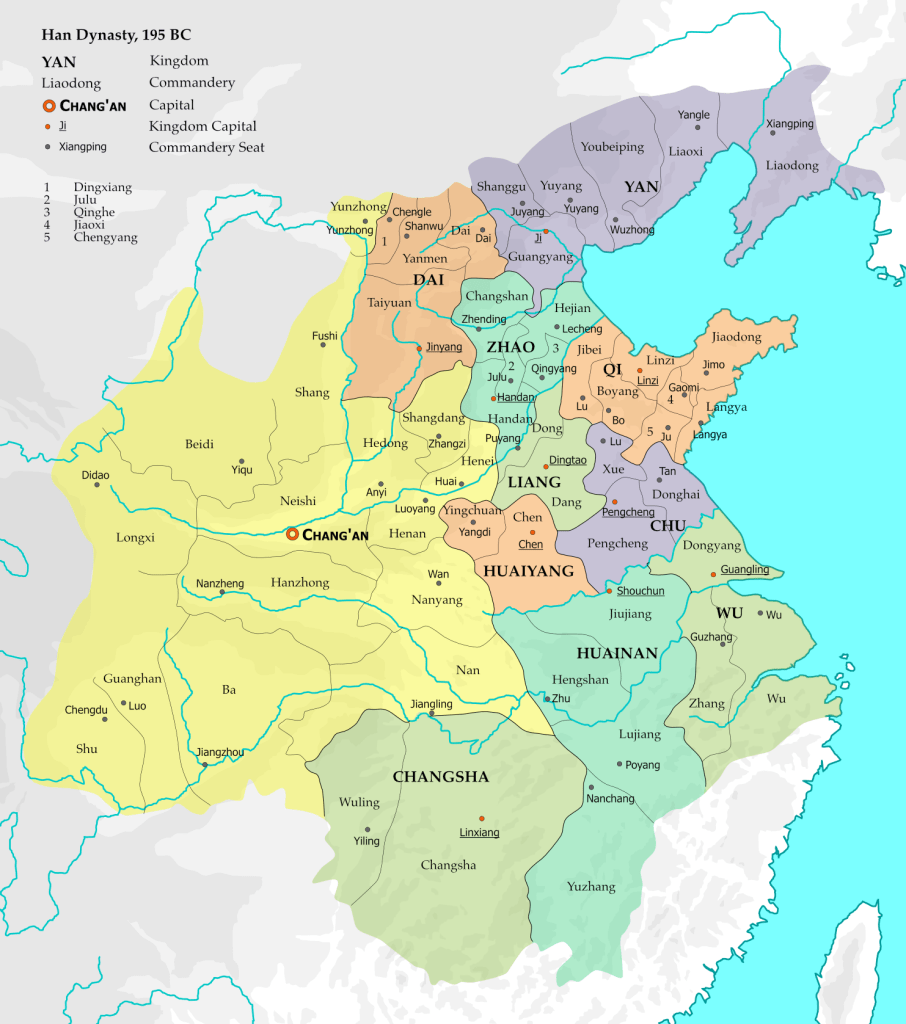
    Prince Li of Huainan, Liu Chang, enacted his own laws and expelled officials appointed by the Han court. He sought to appoint his own prime minister and officials of ministerial rank (i.e., 2000 picul officials), and the Emperor acquiesced to his request. Prince Li also arbitrarily executed innocent people and conferred noble titles on undeserving individuals, elevating some to the rank of Marquess within the Pass. He repeatedly sent disrespectful letters to the Emperor, who was reluctant to admonish him directly. Instead, the Emperor ordered Bo Zhao to write a letter of admonition, citing the punishments of Guan Shu Xian (Uncle Guan) and Cai Shu Du (Uncle Cai) from the Zhou dynasty, as well as the banishment of Prince Qing of Dai (Liu Zhong) and Prince of Jibei (Liu Xingju) to serve as a warning.

    The Prince of Huainan was not pleased with the letter. He conspired with 70 individuals, including Grandee Dan, officer Kai Zhang, and Chai Qi, who was the son of Chai Wu, the Marquis of Jipu, to lead an uprising of 40 chariots at Gukou County. They also sought assistance from the Minyue and Xiongnu states. However, the plot was discovered, and they were arrested. The Emperor summoned the Prince of Huainan to Chang’an, where Chancellor Zhang Cang and Grand Hareld Feng Jing, acting as Grand Master of the Censorate, along with the Minister of imperial Clan and the Minister of Justice, submitted a joint memorial: “Liu Chang should be executed in the public market for his crimes.” The imperial edict commuted the Prince of Huainan‘s death sentence to banishment at Qiong Post Station in Yandao County, Shu Commandery, and stripped him of his title. All those who conspired with him were executed. The Prince of Huainan was transported in prison vehicles, carried in stages by each county along the postal route to Qiong.

    Yuan Ang remonstrated, “Your Majesty has always indulged the Prince of Huainan and has not appointed strict teachers and advisors for him, which has led to this situation. The Prince of Huainan is strong-willed and fragile by nature, and now he is being brutally crushed. I fear he may die from illness on the road to exile, and Your Majesty will be accused of fratricide. What do we do then?” 

    The Emperor replied, “I just wanted to give him a hard time.  I will call him back now.”

    The Prince of Huainan, livid, died from a hunger strike. When the cart reached Yong County, the officers opened the sealed cart and found his corpse. News eventually reached the Emperor in Chang’an. Filled with grief, the Emperor regretted not heeding Yuan Ang‘s advice and sought counsel on how to atone for his mistake. Yuan Ang suggested that the only way to appease the people was to execute the Chancellor and the Grand Master of the Censorate to show remorse. Instead, the Emperor ordered the Chancellor and the Grand Master of the Censorate to investigate the local officials and publicly execute those who had failed to provide food and attendants for the Prince of Huainan. He also ordered the Prince’s burial in Yong with a tomb styled and scaled like that of a marquess, guarded by thirty households.

    Modu Chanyu of the Xiongnu(Huns) sent a letter to the Han, stating: “Earlier, the Emperor mentioned a marriage proposal and sent a letter expressing his intentions, which fostered friendship between our nations. However, Han officials have been harassing the Right Tuqi King. Without my permission, he listened to the advice of the Marquis of Houyilu, Nanzhi, and others, and confronted the Han officials. This violated the treaty between our nations and disrupted our bond of brotherhood. As a result, the Right Tuqi King was punished and sent west to seek out and attack the Yuezhi. Thanks to heaven’s favor, our soldiers were strong and our horses swift, and the Yuezhi were utterly defeated, with all either killed or surrendered. This brought stability to the northern frontier and solidified our rule over 26 neighboring kingdoms, including Loulan, Wusun, and Hujie. The various tribes with their bows and arrows have become one family. I request that we lay down our weapons, rest our soldiers, care for our horses, forget past grievances, and resume the old treaty to ensure peace for the border people. If Your Majesty prefers that our people stay away from the borders, I will issue a decree to my officials and people to remain at a greater distance.”

    The Emperor replied in a letter, saying: “The Chanyu’s desire to forget past grievances and resume the old treaty pleases me greatly. This reflects the wisdom of the ancient sage kings. The Han and Xiongnu made a treaty to be brothers, which is why the Han has treated the Chanyu with such generosity. Those who violate the treaty and disrupt our brotherhood are often found among the Xiongnu. However, the matter of the Right Tuqi King occurred before the amnesty, so I ask the Chanyu not to punish him too severely. If the Chanyu clearly communicates these intentions to your officials and ensures that they do not break the treaty, the Han will likewise honor the treaty and the goodwill expressed in the Chanyu’s letter.”

    Some time later, Modu Chanyu died and was succeeded by his son, Jiyu, who took the title of Laoshang Chanyu. Upon Laoshang Chanyu’s ascension, the Emperor once again sent a princess from the imperial clan to be his consort. An eunuch named Zhonghang Yue from Yan was sent to accompany the princess as her tutor. Zhonghang Yue was reluctant to go, but the Han government forced him. He remarked, “If it must be me, I will cause trouble for the Han!” Upon his arrival, Zhonghang Yue surrendered to the Chanyu, who treated him with great favor and affection.

    In the past, the Xiongnu were fond of Han’s silk and food. Zhonghang Yue warned, “Though the Xiongnu are numerous, they cannot compare to even a commandery of the Han. However, their strength lies in their distinct clothing and food, making them independent from Han. If the Chanyu adopts Han’s goods and customs, the Xiongnu will be under Han‘s control once they receive no more than ten or twenty percent of Han’s exports.” 

    When Zhonghang Yue obtained Han silk, he rode through thorns and grass, deliberately tearing his clothes to show that they were inferior to Xiongnu woolen cloaks and furs. When he received Han food, he rejected it, claiming it was less tasty and convenient than Xiongnu dairy products. He also taught the Chanyu’s attendants to keep records of their people and livestock. The letters and seals exchanged with the Han were enlarged to signify superiority. The letters were written in a haughty tone, referring to the Chanyu as “the great Xiongnu Chanyu, born of Heaven and Earth, and appointed by the Sun and Moon.”

    When Han envoys criticized the Xiongnu for lacking propriety and righteousness in their customs, Zhonghang Yue always countered by saying, “The Xiongnu have simple rules that are easy to follow. The relationship between their rulers and subjects is straightforward and enduring. Their statecraft functions as one cohesive body. Therefore, although the Xiongnu may at times be chaotic, they always establish a ruler from within the tribe. 

    “Now, while the Middle Kingdom claims to uphold propriety and righteousness, as family relations grow distant, people kill and steal from one another, and even the ruling clan is changed. Propriety or not, they all belong to the same kind of people. Alas! Those who live in earthen houses should not babble so much, or padding themselves on the back.

    “As for the goods that Han delivers to the Xiongnu—silk, cloth, rice, and wheat—let them be of good quality and appear pleasing. What more is there to say? If the goods are sufficient and of good quality, then all is well. But if the goods are lacking and of poor quality, then let them wait until autumn harvest, for our riders to sweep in and tramp on their crops.”
  • Comprehensive Reflections to Aid in Governance(Part 110): Speak Your Mind

    Comprehensive Reflections to Aid in Governance

    By Sima Guang

    Translated By Yiming Yang  

    Annals of Han Book 5 Scroll 13 (continued)

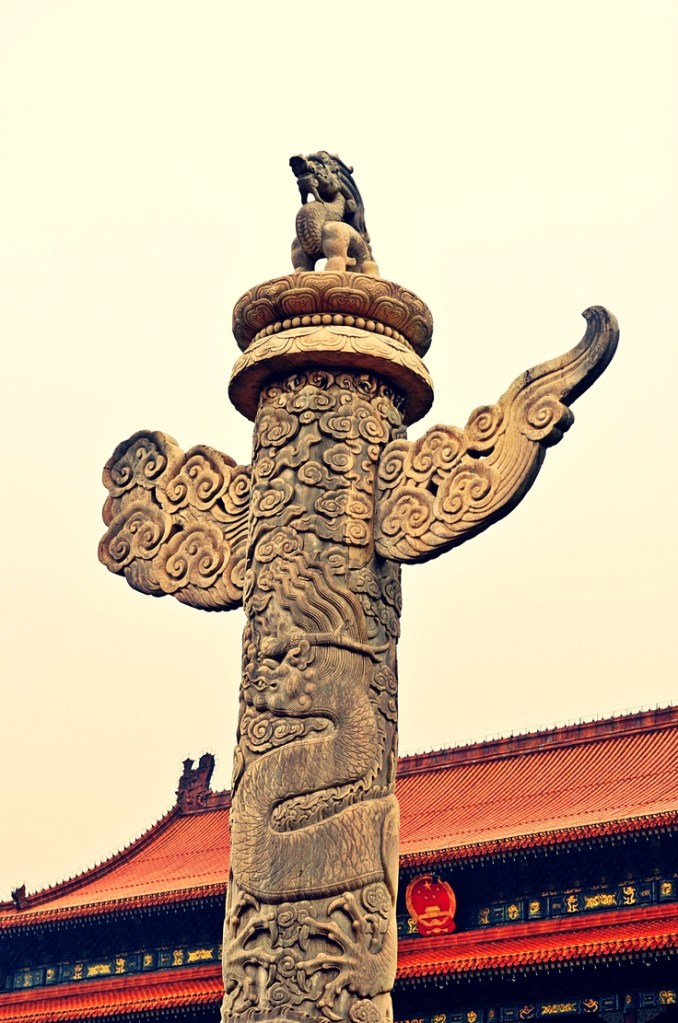
    Huabiao, originated from the “Slander Post” for airing grievances, degenerated into a décor.

    The 2nd year of the Emperor Wen’s Early Era(178 B.C.)

    In October, during the winter, Chen Ping, the Marquis of Quni, passed away.

    An edict was issued: “All marquises and lords must return to their fiefdoms. Those appointed as court officials or requested to remain in the capital by decree may send their crown prince to fief in their place.”

    On November 2, Zhou Bo was reinstated as Chancellor.

    On November 30, the last day of the month, there was a solar eclipse.

    The Emperor issued an edict: “All ministers should reflect on my mistakes and shortcomings, and inform me of anything We have failed to perceive. They should also recommend virtuous, upright, and candid individuals capable of offering forthright advice to correct my deficiencies.” The emperor further instructed officials to diligently fulfill their duties and reduce unnecessary taxes to benefit the people. The position of General of the Guards was abolished, and his troops disbanded. The Grand Coachman was ordered to maintain only enough horses for the court, with the surplus directed to replenish the postal service throughout the country.

    Jia Shan, an adjutant of the Marquis of Yingyin (Guan Ying), wrote to the Emperor on governing a state during turbulent times:

    “Your Majesty, I have heard that thunder strikes and destroys everything it hits, and that ten thousand pounds of force can crush and annihilate anything. The might of a ruler far surpasses thunder, and the force of a ruler is far greater than ten thousand pounds. Yet, even when a ruler opens a path for criticism, accepts it with a kind face, adopts ideas, and promotes the adviser, the bravest men may still be fearful and unable to express themselves fully. What would happen if a ruler indulges in his desires and acts violently, hating anyone who points out his mistakes? If Your Majesty uses your might to intimidate and your authority to oppress, then even those as wise as Emperor Yao and Shun, or as mighty as the warrior Meng Ben, would still be crushed and destroyed. In such a case, the ruler would never hear of his mistakes, and the country would be in peril.

    “In ancient times, the Zhou dynasty supported 1,800 states and served 1,800 lords with the people of the Nine Provinces. The lords had excess wealth, the people had extra leisure, and they sang praises of their rulers. The First Emperor of Qin, however, ruled alone over the people of 1,800 states. Despite the people’s exhausting labor and the surrender of all their wealth, his demands were never met. The entire empire could not satisfy a single ruler’s appetite for hunting. Although the First Emperor of Qin thought highly of his achievements and believed his descendants would prosper for generations, just months after his death, the entire country rose up against him, and his ancestral temple was destroyed.

    Why was the First Emperor of Qin unaware that he was doomed to fall? Because no one dared to tell him the truth. And why did nobody dare to tell him? It was because he had lost the values of respecting the elderly, had dismissed the support of loyal officials, and killed those who dared to remonstrate with him. As a result, officials survived by flattery and sycophancy, praising his virtue above that of Emperor Yao and Shun, and declaring his achievements greater than those of King Tang of Shang and King Wu of Zhou. Yet the country was already collapsing, and nobody dared to tell him the truth.

    “Your Majesty has called upon virtuous and upright people from across the country, and the people are overjoyed, saying, “The way of Emperor Yao and Shun will be revived, and the achievements of the Three Sovereigns will be realized.” All the talented individuals in the world are eager to contribute their best efforts to assist in Your Majesty’s benevolent rule. Now, the virtuous and upright are gathered at court, and the wise have been chosen as your attendants and officials, often accompanying you on hunting, riding, and shooting excursions several times a day. I fear this may distract the courtiers and prevent the officials from attending to their duties.

    “When Your Majesty ascended to the throne, you personally encouraged the entire country, practiced self-discipline, and showed great magnanimity toward the people, restraining extravagance, showing affection, lightening sentences for the convicted, and exonerating the innocent. The people were pleased and happy. I have heard that officials in the provinces east of Xiao Mountain publicized your edict, and even the elderly, weak, and sick traveled there, leaning on their staff, just to hear it, hoping to live a little longer to witness the realization of virtuous governance.

    “Now, with achievements on the verge of being realized, your reputation shining, and people everywhere following your virtuous example, I am deeply concerned that talented officials and virtuous people are spending their days hunting and shooting with Your Majesty, chasing hares and foxes while neglecting the great cause and abandoning the people’s hopes. This deeply troubles me.

    “In ancient times, great officials were not permitted to partake in entertainments and outings; they were urged to focus on their duties and maintain high standards of conduct. As a result, all officials upheld their personal integrity and fulfilled their responsibilities with utmost dedication to serve the great cause of the country. It is unfortunate that nowadays, though officials may cultivate their moral character at home, they undermine it in the emperor’s court. I feel sorry for them.

    “Your Majesty can enjoy leisure and outings with your attendants, while discussing state affairs with ministers and upright individuals in the court. In this way, you will not lose the pleasure of repose, you will uphold proper etiquette in court, and your discussions of state matters will be guided by sound reasoning. This issue is of utmost importance.”

    The Emperor praised and accepted the criticism.

    During each court appearance, officials and attendants would submit memorandums, and the emperor never failed to dismount his carriage to accept their proposals. If the suggestions were unusable, he would set them aside; if they were useful, he would adopt them, always appreciating their candor regardless of the proposal being used.

    Once, the Emperor wanted to ride his carriage down a steep slope in Baling. General of the Household Yuan Ang, riding beside him, held the reins of his horse-drawn carriage. The Emperor asked Yuan Ang if he was afraid, to which Yuan Ang replied, “I have heard that ‘the son of the super-rich does not sit under the eaves of a hall [in case of a falling tile].’ A wise ruler should not take risks or rely on luck. If Your Majesty rushes down this steep slope at breakneck speed, there is a risk of the horses panicking and an accident occurring. As the emperor, you must not be careless and disregard the importance of the ancestral temple and the empress dowager.” The Emperor then stopped.

    Madame Shen was a favorite concubine of the emperor and often sat at the same table as the empress in the imperial harem. Once, when the Emperor’s entourage visited the offices of court attendants, Yuan Ang, the General of the Household, moved Madame Shen’s seat away from the Emperor. Madame Shen became angry and refused to take the seat, and the Emperor, also offended, withdrew to the inner chambers.

    Yuan Ang then stepped forward and said, “I have heard that when there is distinction between superiors and subordinates, there will be harmony between them. Now that Your Majesty has already established the empress, Madame Shen is merely a concubine. How can a concubine sit at the same table as the empress? Your Majesty’s favor towards her is actually harming her. Have you not heard the story of ‘the human pig’?” Upon hearing this, the Emperor was pleased. He summoned Madame Shen and gave her a talk. In gratitude, Madame Shen gifted Yuan Ang fifty caddies of gold.

    Jia Yi advised the Emperor:

    “The Book of Guanzi says: ‘When the granaries are full, the people understand etiquette and rules. When they have sufficient food and clothing, they know the difference between honor and shame.’ Throughout history, it has never been heard that a population lacking basic necessities could be governed effectively. As the ancients said: ‘If one man does not farm, some will face hunger; if one woman does not weave, some will suffer from cold.’ Resources are produced at their own rate, and misuse or wasteful spending will inevitably exhaust them and render them unsustainable.”

    “The ancients governed the world with utmost care and meticulousness, and thus accumulated sufficient reserves to rely upon. Nowadays, many abandon the fundamentals and rush toward the superficial(meaning nonproducers), causing great harm to the world. The corrupt customs of extravagance and licentiousness grow day by day, becoming the greatest scourge of the world! While the chase for profit and luxury spreads widely, no one makes efforts to stop it. The country’s welfare is on the verge of collapse, and no one can revive it. There are few who produce, yet many who consume—how can the wealth of the world not be depleted?

    “For almost forty years since the Han dynasty was established, the accumulation of both public and private wealth has been a cause for lamentation. When the rain fails to fall in due season, the people become anxious, like wary wolves. When there is a poor harvest, the rich submit their surplus to advance their rank, while the poor are forced to sell their ranks or children. I am sure Your Majesty is aware of this. How can a ruler remain unmoved when the country is in crisis?

    “Famine and abundance in the world are natural phenomena ordained by heaven, and even great rulers like Yu the Great and King Tang of Shang had to contend with them. If, unfortunately, a drought affects an area of two or three thousand miles, where will the country turn to provide disaster aid? If a sudden crisis on the border requires the mobilization of millions of soldiers, where will the country find them? When both natural disasters and warfare occur simultaneously, the entire world suffers. The strong and courageous gather to pillage, while the weak, old, and frail are left behind, forced to gnaw on their children’s bones. When political chaos arises, those from afar will take advantage of the situation and contend for power. If we only react when crises occur, will it not be too late?

    “Accumulating wealth and resources is the key to the prosperity and survival of the country. If there is an abundance of grain and wealth, what cannot be achieved? Whether in attack or defense, victory will be assured. With such reserves, the enemy can be pacified, and people from afar will come to pay tribute. Who will not answer the call when such a reserve is at hand?

    “Now, if the people are to return to agriculture, it should be based on their individual abilities. If everyone in the world uses their strengths to sustain themselves, those seeking profits and wandering from place to place will be compelled to till the fields. As a result, there will be a sufficient accumulation of wealth, and people will be content with their lives. This will bring prosperity to the country and peace to the world. I fear this has not yet been accomplished, and thus I am deeply concerned for Your Majesty’s reign.”

    Upon hearing Jia Yi’s words, in the spring, on January 15, the emperor issued a decree to perform a plowing ceremony. He personally led the people in plowing the fields, setting an example for the entire nation to follow.

    In March, officials requested that imperial princes be appointed as kings of various vassal states. The emperor issued a decree first appointing Liu Biqiang, the young son of Prince You of Zhao, as the Prince of Hejian. Liu Zhang, Marquis of Zhuxu, was then appointed as the Prince of Chengyang, and Liu Xingju, Marquis of Dongmou, as the Prince of Jibei. After these appointments, the emperor appointed his own sons: Liu Wu as the Prince of Dai, Liu Shen as the Prince of Taiyuan, and Liu Yi as the Prince of Liang.

    In May, an edict was issued stating, “In ancient times, when governing the world, there were banners to promote good deeds and wooden posts for publishing grievances, which encouraged good governance and allowed officials to voice their criticisms. Today, there are laws punishing slander and fallacy, making officials afraid to speak their minds, thus preventing the emperor from hearing about his mistakes. How can we attract virtuous and talented people from distant places? Therefore, we will abolish these laws!”

    In September, the Emperor issued another decree: “Agriculture is the foundation of the country, and the people rely on it for their livelihood. However, some neglect this foundation and pursue trivial matters, leading to poor harvests and hardships in people’s lives. I am concerned about this situation, so I will personally lead the officials in farming to encourage them. Additionally, I will exempt half of this year’s land tax for the entire country.”

    Prince Jing of Yan, Liu Ze, passed away.