Tag: Yang Pu

  • Comprehensive Reflections to Aid in Governance(Part 163): Campaign in Korea Peninsular

    Comprehensive Reflections to Aid in Governance

    By Sima Guang

    Translated By Yiming Yang  

    Annals of Han Book 13 Scroll 21 (continued)

    Peishui River(Taetong River) through Pyongyang, DPRK

    The 3rd year of Emperor Wu’s Yuanfeng Era (108 B.C.)

    In December of winter, there was thunder, accompanied by rain and hailstones as large as horse heads.

    The Emperor dispatched General Zhao Ponu to attack the Kingdom of Jushi. Zhao Ponu, leading a force of more than seven hundred light cavalry, arrived first, captured the King of Loulan, and then defeated the forces of Jushi. He used this military victory to exert pressure on the kingdoms of Wusun and Dayuan.

    In the spring, on January 27, Zhao Ponu was appointed as the Marquis of Zhuoye. Wang Hui was granted the title of Marquis Hao for his assistance to Zhao Ponu in attacking Loulan. Thus, the fortifications of barriers were extended from Jiuquan to Yumen.

    Sports and entertainment, such as Jiaodi (wrestling/acrobatic contests) and Yulong Manyan (magical animal figure performances), began to gain popularity.

    The Han troops entered the territory of Gojoseon, and the King of Gojoseon, Ugeo, dispatched forces to resist them at the strategic passes. Louchuan General led a contingent of seven thousand soldiers from Qi and arrived at Wangxian (Pyongyang) first. Ugeo, stationed within the city, observed that the Louchuan General’s army was small in number, and thus immediately sallied forth to attack. The army of Louchuan General was defeated and scattered, fleeing into the mountains for over ten days before they managed to regroup.

    Xun Zhi, General of the Left, attacked the Gojoseon forces to the west of the Peishui River (Taedong River), but was unable to break their defense. Seeing no favorable outcome from both generals’ action, the Emperor sent Wei Shan, with military authority, to negotiate with Ugeo. Upon meeting the envoy, Ugeo bowed in apology and expressed his desire to surrender, and his fear that the two generals might deceive and kill him. Upon seeing the imperial scepter of authority in the hands of the envoy, Ugeo again requested to surrender.

    Ugeo sent his Crown Prince to express gratitude and atonement, presenting five thousand horses and supplying provisions for the army. With a force of over ten thousand people, armed and prepared to cross the Peishui River, the Gojoseon forces were poised for action. However, both the envoy Wei Shan and General of the Left suspected a potential betrayal and advised the Gojoseon Prince to not carry weapons, as they had already surrendered. The Gojoseon Crown Prince, doubting the intentions of Wei Shan and General of the Left, feared treachery and, thus, refrained from crossing the Peishui River, choosing instead to return.

    When Wei Shan reported back to the Emperor, the Emperor executed him.

    The General of the Left defeated the Gojoseon forces stationed at the upper Peishui River and subsequently approached the Wangxian’s outskirts, laying siege from the northwest, while Louchuan General positioned his forces to the city’s south. Ugeo resolutely defended the city, which remained under siege for several months without falling. The soldiers led by the General of the Left, hailing from Yan and Dai, were mostly fierce and valiant, whereas those under Louchuan General, drawn from Qi, had previously faced defeat, hardship, and humiliation, which instilled fear and shame within them. As a result, they adopted a more conciliatory stance while besieging Ugeo.

    The General of the Left, Xu Zhi, launched relentless assaults. Secretly, Gojoseon’s ministers sent emissaries to negotiate a surrender with Louchuan General, but their decisions remained uncertain. The General of the Left repeatedly scheduled meetings with Louchuan General Yang Pu in battle plans, yet the latter was inclined to accept the Gojoseon surrender agreement in the making, which was stalled by ongoing negotiations. The General of the Left also sought to secure the surrender of Gojoseon, but the Gojoseon ministers, preferring the pact with Louchuan General, refused to yield, remaining aligned with him in their hearts. Thus, the two generals could not coordinate their actions.

    The General of the Left suspected that Louchuan General, who had previously committed military blunders, had now fostered a covert alliance with Gojoseon, which continued to resist surrender. Fearing a potential conspiracy, he refrained from acting rashly.

    The Emperor, observing the prolonged siege of Gojoseon capital with no resolution due to the differing strategies of the two generals, sent the Prefect of Ji’nan, Gongsun Sui, to rectify the situation, granting him authority to take decisive action. Upon Gongsun Sui’s arrival, the General of the Left pointed the finger, “The reason for the extended siege of Gojoseon is the failure of Louchuan General to meet as scheduled.” 

    Xun Zhi conveyed his long-standing suspicion of Yang Pu, “If this opportunity is not seized, it may lead to significant harm.” Gongsun Sui concurred, and thus, exercising his authority, summoned Louchuan General to discuss strategies in the camp of the General of the Left. He then ordered the forces of the General of the Left to detain Louchuan General and placed Yang Pu’s army under Xun Zhi’s command. This action was reported to the Emperor, who, in response, executed Gongsun Sui.

    The General of the Left swiftly launched an assault on Gojoseon after merging the two armies. The Gojoseon ministers—No In, Han Eum, Sam of Nigye, and General Wang Gyeop—conspired, contemplating surrender, as they had initially intended to yield to Louchuan General Yang Pu. Now that Louchuan General was in custody and only the General of the Left commanded the forces, they feared they could not win the battle. However, King Ugeo refused to surrender.

    Han Eum, Wang Gyeop, and No In defected to the Han, though No In perished along the way. Later, Sam of Nigye sent someone to assassinate King Ugeo of Gojoseon and then surrendered himself. However, as the city remained unconquered, Ugeo’s chief minister, Seong Gi, rebelled once again and attacked the Han officials. In response, the General of the Left dispatched Ugeo‘s son, Wi Jang, and No In‘s son, No Choe, to persuade the people. Seong Gi was assassinated, leading to the pacification of Gojoseon and the establishment of the four commanderies: Lelang, Lintun, Xuantu, and Zhenfan. Sam was granted the title Marquis of Huaqing, Han Eum the Marquis of Qiuju, Wang Gyeop the Marquis of Pingzhou, Wi Jang the Marquis of Ji, and No Choe, in recognition of his father’s death, was made the Marquis of Nieyang.

    Upon the General of the Left‘s return, due to disputes over achievements and jealousy among his peers, he was sentenced to death. Louchuan General was also found guilty for advancing without waiting for the General of the Left, resulting in numerous losses. Although he was supposed to be executed, Louchuan General was instead fined and demoted to the status of a commoner.

    Ban Gu‘s commentary: Xuantu and Lelang were originally territories granted to Jizi(Gija) as a fief. In ancient times, Jizi resided in Gojoseon and taught its people about propriety and righteousness. He instructed them in farming, sericulture, and weaving, establishing eight prohibitions: in cases of murder, the offender was required to compensate with their life; for injuries, compensation was made in grain; those guilty of theft became slaves in the offender’s household—men as servants, women as maids. Redemption was possible with a payment of 500,000 coins, but even if freed, society still shunned them, and marriages were not arranged for such individuals with criminal records. Consequently, theft was nonexistent among the people; their homes had no locks for doors and windows, and women were chaste and faithful, avoiding promiscuity. They held food in containers made of bamboo or wood in the countryside and in vessels, cups, and dishes in the cities, imitating what the officials did. When the government initially appointed officials from Liaodong, they noticed the absence of locks on houses. Traders who arrived at night became thieves, and gradually, the culture degenerated. The violations of prohibitions increased, and the prohibition articles grew to more than sixty items. It is admirable how the influence of benevolence and virtue transformed them! However, the nature of the Eastern aboriginals was gentle and docile, unlike the other three frontiers. Thus, Confucius lamented the failure of his teachings and even prepared rafts to sail across the sea, wishing to dwell among the nine aboriginal tribes—there was a reason for it!

    In July of autumn, the Prince of Jiaoxi, Liu Duan, passed away.

    The Di tribes of Wudu rebelled and were subsequently relocated, their groups divided and resettled in Jiuquan.
  • Comprehensive Reflections to Aid in Governance(Part 160): Fear Factor

    Comprehensive Reflections to Aid in Governance

    By Sima Guang

    Translated By Yiming Yang  

    Annals of Han Book 12 Scroll 20 (continued)

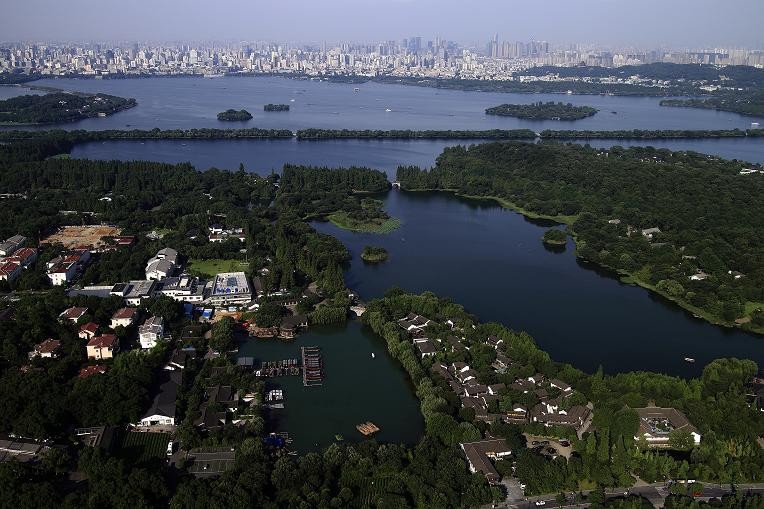
    Wulin (Hangzhou), Zhejiang Province

    The 6th year of Emperor Wu’s Yuanding Era (111 B.C. continued)

    In commemorating the victory in Nanyue, sacrifices were offered to Taiyi (the Polaris) and Mother Earth, marking the first use of music and dance for the occasion.

    The Marquis of Chiyi, Yi, mobilized the southern troops with the intention of attacking Nanyue. However, the Lord of Julan, fearing the long journey of the troops and the potential capture of the elderly and weak by neighboring tribes’ attacks, revolted with his followers. They killed the envoy along with the Prefect of Qianwei. In response, the Han court deployed the Eight Colonels Army, composed of convicts from the Ba and Shu commanderies, to attack Nanyue, sending General of the Household Guo Chang and Wei Guang to suppress the rebellion. They executed the Lord of Julan, the Lord of Qiongdu, and the Marquis of Zuodu, pacifying the southern ethnic groups and establishing Zangke Commandery.

    Initially allied with Nanyue, the Lord of Yelang saw Nanyue‘s downfall and decided to submit to the Han court. The Emperor recognized him as the King of Yelang. The Nanmeng tribes, feeling apprehensive, invited officials from the Han government and eventually established Qiongdu as the Yuesui Commandery, Zuodu as the Shenli Commandery, Nanmeng as the Wenshan Commandery, and the Baima tribe in the west of Guanghan as the Wudu Commandery.

    Earlier, the King of Dongyue (Dong’ou, Minyue), Zou Yushan, petitioned the Emperor, requesting to lead eight thousand soldiers to join Louchuan General‘s expedition against Lü Jia. The troops reached Jieyang, but adverse sea winds hindered their progress, forcing them to halt. Taking advantage of this delay, they secretly aligned with Nanyue. However, when Han forces defeated Nanyue at Panyu, they did not arrive to participate.

    Louchuan General Yang Pu requested permission to lead an army to attack Dongyue. However, due to the fatigue of the troops, the Emperor declined and ordered the generals to station their forces in Yuzhang and Meiling to await further orders. Upon hearing of Louchuan General‘s request to execute him, Zou Yushan rebelled, mobilizing his troops against the Han forces and holding strategic roads. General Zou Li, who was granted the title General of Annexing Han, and others led the troops. They entered the regions of Baisha, Wulin(Hangzhou), and Meiling, killing three Han Colonels.

    During this time, Han court envoys, Agriculture Minister Zhang Cheng and the former Marquis of Shancheng, Liu Chi, were stationed there but dared not engage the enemy, opting instead to retreat to safer places. Both were executed for their cowardice.

    The Emperor, intending to send Yang Pu out again due to his previous efforts, wrote a letter of reproach, stating: “Your merit lies only in breaking Shimen and Xunxia. You did not slay generals or seize banners on the battlefield. How can you be so conceited? You captured Panyu, treating surrendering individuals as prisoners and digging up the dead as trophies; that was one misconduct. You allowed Zhao Jiande and Lü Jia to win support from Dongyue; that was the second misconduct. Soldiers were exposed year after year, yet you, the general, did not remember their hard work. You requested to inspect the coast, returning home in government vehicles, wearing gold and silver seals, and three ribbons, boasting to your hometown folks—that was the third misconduct. Missing the deadline of return and blaming bad roads as an excuse—that was the fourth misconduct. We inquired about the price of knives in Shu, and you pretended to not know, deceiving me with false information; that was the fifth mistake.”

    “When receiving orders, you did not come to Lanchi Palace, and you even remained silent the next day. Suppose your subordinate officers were asked and stayed silent, or were instructed but did not comply; what punishment would they face? With such a mindset, can you be trusted between the rivers and seas? Now that Dongyue has deeply entered our territory, can you lead your troops to redeem your misconduct?”

    Frightened and filled with remorse, Yang Pu replied, “I am willing to die to atone for my mistakes!”

    The Emperor dispatched Henghai General Han Yue to Gouzhang to set sail from the east; Louchuan General Yang Pu departed from Wulin(Hangzhou), and the Commandant of Capital, Wang Wenshu, came out from Meiling. Meanwhile, the leaders from the south, Gechuan General Yi and Xialai General Jia, led troops from Ruoxie and Baisha to confront Dongyue.

    The Marquis of Bowang, Zhang Qian, had been granted honor and prestige for facilitating communication with the Western Regions. His subordinates vied to petition the Emperor regarding the peculiarities, advantages, and dangers of foreign countries, requesting to be dispatched as emissaries. The Emperor, aware of the distant and unenjoyable nature of these regions, listened to their requests, issued the necessary credentials, and allowed them to recruit from officials and civilians without questioning their origins. He sent them adequately prepared to broaden the horizons of the West.

    However, upon their return, some of these envoys engaged in embezzlement of currency, goods, and behaviors contrary to the Emperor’s will. The Emperor, aware of these practices, sternly punished them, using severe penalties to incite redemption. Yet, they continued to request further missions, creating a cycle of persistent disregard for the law. These officials and soldiers persisted in exaggerating accounts of foreign countries; those with grandiose tales were rewarded with credentials, while those with smaller accounts were relegated to subordinate positions. Thus, individuals with no verifiable accounts zealously sought to emulate them. The envoys dispatched were often individuals of modest means, seeking to exploit their position by illicitly embezzling gifts for foreign authorities, intending to sell them for personal gain.

    As a result, the people in foreign regions grew weary of Han envoys. They noticed the frivolous and overblown tales of the Han diplomats, considering the Han forces too distant to reach them. They restricted their food supplies to torment the Han envoys. This deprivation, along with accumulated grievances, led to attacks on the Han envoys by the foreign countries.

    Especially in regions like Loulan and Jushi, small states located along the main route, attacks against Han diplomats like Wang Hui were severe. Additionally, the Xiongnu launched surprise attacks against them. The envoys claimed that the Western Regions were littered with cities and were vulnerable to attack.

    The Emperor dispatched Fuju General, Gongsun He, with fifteen thousand cavalry, covering a distance of over two thousand li from Jiuyuan, reaching the Fuju well, and then returning. Xionghe General Zhao Ponu led over ten thousand cavalry for several thousand li, reaching the Xionghe River and then returning. Their purpose was to repel and expel the Xiongnu, preventing them from intercepting Han envoys, yet not a single Xiongnu was encountered. Following this, the commanderies of Wuwei and Jiuquan were divided to establish Zhangye and Dunhuang commanderies, with people relocated to populate these areas.

    In this year, the Prime Minister of Qi, Bu Shi, was promoted to Grand Master of Censorate. After assuming his position, Bu Shi reported grievances: “It is inconvenient to let the magistrates monopolize the commerce of salt and iron tools in various commanderies and regions. They produce poor-quality items at excessively high prices. They force the people to buy these goods, causing distress. Moreover, there are high shipping costs due to exorbitant ship taxes and a scarcity of merchants.” This displeased the Emperor and contributed to his growing dissatisfaction with Bu Shi.

    Sima Xiangru fell gravely ill and wrote before his passing a testament praising the Emperor’s achievements and virtues, citing omens and urging the Emperor to bestow offerings at Mount Tai. Impressed by his words and coincidentally finding a treasure cauldron, the Emperor consulted court officials and scholars to discuss the Feng-Shan ceremonies. However, as the Feng-Shan rituals were rarely performed and their procedures were not widely known, various occultists claimed, “Feng-Shan signifies immortality. Before the Yellow Emperor‘s era, these ceremonies attracted unusual phenomena and supernatural occurrences, and spoke to the gods. Even the First Emperor of Qin failed to perform it properly. If Your Majesty insists, start slowly. If there is no adverse weather, you may proceed with the ritual.”

    The Emperor ordered scholars to compile texts from the “Book of Documents,” “Rites of Zhou,” and “Regulations of the Kings” to draft the procedures for the Feng-Shan ceremony. However, after several years, the rituals remained incomplete. Seeking advice, the Emperor consulted the Left Interior Minister Ni Kuan, who opined, “Offering sacrifice at Mount Tai for Heaven and offering sacrifice at Mount Liangfu for Earth are auspicious ceremonies that exalt the surname of one’s ancestors and seek auspicious signs from heaven—this is the grand ceremony of emperors. However, the essence of such offerings is not clearly expounded in the classics. The completion of the Feng-Shan ceremony should follow the will of the sage ruler and should be directed by them. This matter cannot be adequately resolved by ministers. Your Majesty has been contemplating a grand event but has allowed this issue to linger for several years, causing everyone to strive without success. Only the Son of Heaven, by establishing a harmonious center and encompassing all aspects, can harmonize the sounds of metal and resonate with the jade to align with celestial blessings, laying the foundation for ten thousand generations.”

    The Emperor personally devised the rituals, incorporating elements of Confucian learning into the proceedings. When presenting the Feng-Shan ceremonial vessels specially made to the gathered scholars, some criticized them as “not in accordance with ancient practices.” Subsequently, all the scholars were dismissed from service.  The Emperor followed the ancient customs, uplifted the troops’ morale and rewarded the soldiers with wine and dining before the Feng-Shan ceremony was conducted.

  • Comprehensive Reflections to Aid in Governance(Part 159): The Battle of Panyu

    Comprehensive Reflections to Aid in Governance

    By Sima Guang

    Translated By Yiming Yang  

    Annals of Han Book 12 Scroll 20 (continued)

    Guangzhou(Panyu) in 1880

    The 5th year of Emperor Wu’s Yuan’ding Era (112 B.C. continued)

    The King of Nanyue and the Queen Dowager Jiu instructed the preparation of their traveling gear, heavily adorned with gifts for their visit to the Han court. Their Prime Minister, Lü Jia, was of advanced age, having served three kings. Seventy of his family members held official positions in the administration, with their sons married to the king’s daughters and vice versa, creating strong connections within the royal family. They also had a marriage alliance with King Qin of Cangwu. Lü Jia earned great respect in Nanyue, even surpassing that of the king. Lü Jia had repeatedly advised and admonished the king through written petitions against the king’s submission memorandum to the Emperor, but the king refused to heed his counsel. Harboring dissenting views, Lü Jia often feigned illness to avoid meeting Han envoys. The envoys from the Han noticed Lü Jia’s evasiveness, but their influence was not sufficient to dislodge him.

    Both the King and the Queen Dowager Jiu feared that Lü Jia and others might take the initiative and overthrow them. They intended to leverage the Han envoys and plotted to eliminate Lü Jia and his faction. Thus, they hosted a banquet for the envoys, with all the prominent officials in attendance. Lü Jia‘s younger brother was a military commander, and his soldiers were stationed outside the palace. During the banquet, the Queen Dowager reprimanded Lü Jia, “It would benefit the kingdom greatly if we became a vassal state of the Han. Why isn’t the Prime Minister more cooperative?” This attempt to evoke the envoys failed, as they looked at each other and hesitated to take action against Lü Jia.

    Sensing the adverse atmosphere, Lü Jia immediately left the banquet. The Queen Dowager Jiu, furious, intended to strike Lü Jia with a spear, but the King restrained her. Lü Jia then left, guarded his brother’s troops, feigned illness, and refused to meet the King and the envoys. Secretly, he conspired with the other officials to incite rebellion. Lü Jia understood that the King had no intention of executing him, so he refrained from making any moves for several months.

    The Emperor heard that Lü Jia did not heed commands, and that the King and Queen Dowager Jiu were vulnerable and unable to control the situation, while the envoys were timid and indecisive. The Emperor also believed that the King and Queen Dowager Jiu had already allied with the Han, and that only Lü Jia was causing trouble, which did not warrant raising an army to subdue. Thus, he intended to dispatch Zhuang Shen with a two-thousand-man entourage. However, Zhuang Shen declined, “A few individuals are enough for diplomacy, but two thousand men could accomplish nothing for warfare.” As his refusal was firm, the Emperor dismissed him.

    A warrior from Jia County, the former Prime Minister of Jibei, Han Qianqiu, stepped forward and exclaimed, “For a small state like Nanyue, with the King and Queen Dowager in favor of the Han, only Lü Jia is causing harm. I wish to gather three hundred brave warriors and will definitely behead Lü Jia and report back.” Therefore, the Emperor sent Han Qianqiu along with the Queen Dowager’s brother, Jiu Le, leading two thousand soldiers into Nanyue.

    Subsequently, Lü Jia and his faction revolted, issuing orders within the kingdom and spreading accusations against the King, Queen Dowager Jiu, and the Han envoys: “The King is young, and the Empress Dowager, a woman of the Han descent, became entangled with the emissaries, seeking to submit to the Middle Kingdom. She insisted on becoming part of the Han and presented the precious heirlooms of the former kings to curry favor with the Emperor. She wishes to take many in her company and, upon reaching Chang’an, sell them into slavery. In her pursuit of immediate gains, she failed to consider the long-term stability of the Zhao family or the future of our kingdom.”

    Lü Jia and his brother then attacked and killed the King, Queen Dowager Jiu, and the Han envoys. They sent messengers to inform King Qin of Cangwu and the neighboring commanderies and counties under Nanyue‘s control, establishing King Ming (Zhao Yingqi)’s eldest son with his Nanyue wife, the Marquis of Shuyang Zhao Jiande, as the new King. Meanwhile, Han Qianqiu’s forces invaded and took over several smaller towns.

    Later, Nanyue opened direct supply routes for provisions to Han Qianqiu’s troops, then ambushed his forces within forty miles of Panyu, annihilating them. They put a sealed letter containing the Han envoy’s seal on the border, apologizing with false excuses, and deployed troops to guard strategic locations.

    On March 4, upon hearing about the rebellion in Nanyue, the Emperor remarked, “Even though Han Qianqiu accomplished nothing, he led the forefront of the army in valor. We hereby bestow the title of Marquis of Cheng’an upon his son, Han Yannian. Jiu Le’s sister, Queen Dowager of Nanyue, first expressed her allegiance to the Han. We confer the title of Marquis of Longkang upon Jiu Le’s son, Jiu Guangde.”

    In April of summer, a general amnesty was proclaimed throughout the realm.

    On April 30, there was a solar eclipse.

    During the autumn, Fubo(riding waves) General, Lu Bode, was dispatched to venture out from Guiyang, descending the Kuangshui River. Louchuan (multi-deck ship) General, Yang Pu, set forth from Yuzhang, sailing down the Zhenshui River. Marquis of Guiyi, Yan of Nanyue, was appointed as Gechuan (Dagger-Axe Ship) General, departing from Lingling and descending along the Li River. Jia of Nanyue was appointed as the Xialai General, descending on Cangwu. They all led convicted criminals, with a total of one hundred thousand naval forces south of the Yangtze and Huai Rivers.

    The Marquis of Chiyi, Yi of Nanyue, led other convicts from Ba and Shu, mobilizing troops from Yelang, and descending along the Zangke River, converging on Panyu. Yan, Jia, and Yi were all former Nanyue officers who had surrendered to the Han.

    Prime Minister of Qi, Bu Shi, submitted a memorial requesting permission to lead his son and those skilled in naval warfare from Qi to fight and die in Nanyue. The Emperor issued an edict praising Bu Shi, granting him the title of Inner Marquis, sixty catties of gold, and ten acres of land, and made this known throughout the empire. However, no one responded to the call. At that time, there were numerous Marquises, yet none sought to join the military expedition against Nanyue.

    In September, while offering sacrifices to the ancestral temples with food and gold donation, the Marquises were commanded to donate gold as contribution for the ritual libations. The Privy Treasurer inspected the gold, and any found to be lightweight or of impurity were deemed disrespectful, leading to the dismissal of one hundred and six princes and marquises from their titles. On September 6, Chancellor Zhao Zhou, accused of “providing cover for impure gold contributions by the Marquises,” was arrested, imprisoned, and subsequently committed suicide.

    Later, on September 21, Shi Qing was appointed as Chancellor and ennobled as the Marquis of Muqiu. At that time, the state faced various issues. Figures like Sang Hongyang focused on increasing revenue, while officials like Wang Wenshu enforced laws to the fullest extent. Ni Kuan and others advocated for literary studies, and they were all members of the Nine Ministers, playing prominent roles in the government. However, decisions were solely made by each minister without consulting the Chancellor. Chancellor Shi Qing was known for his honest, lenient, and prudent approach to governance.

    General of Five Boons, Luan Da, prepared himself and ventured eastward into the sea to seek out his supposed mentor. Eventually, he grew hesitant to proceed further into the sea and instead headed to the Taishan Shrine. Officials sent to verify his claims found no evidence supporting his assertions of meeting his mentor. General of Five Boons falsely claimed to have encountered his mentor, and as his wizardry was largely unfulfilled, he was found guilty of deceit and executed by waist chopping. Similarly, the Marquis of Lecheng, Ding Yi, who had recommended him, was also executed in public.

    In the western Qiang territory, a rebellion involving a force of one hundred thousand people broke out. They established communication with the Xiongnu and attacked the An’gu county, besieging Fuhan county. The Xiongnu invaded Wuyuan, killing its Prefect.

    The 6th year of Emperor Wu’s Yuanding Era (111 B.C.)

    In the winter, an army of one hundred thousand soldiers was dispatched, led by Generals Li Xi and Chamberlain Xu Ziwei, to campaign against the Western Qiang, and the regional rebellion was pacified.

    Louchuan General, Yang Pu, entered the territory of Nanyue, initially capturing Xunxia and breaking through the Shimen, thereby blunting the force of the Nanyue army. He awaited the arrival of Fubo General Lu Bode, with several tens of thousands of soldiers. Louchuan General took the lead, and together they reached Panyu. The King of Nanyue, Zhao Jiande, and his Prime Minister Lü Jia were fortified within the city. Louchuan General positioned himself in the southeast, while Fubo General held the northwest. As night fell, Louchuan General attacked and defeated the Nanyue forces, setting fire to the city. Fubo General set up camp and sent messengers to persuade surrender, offering seals and ribbons as tokens of assurance. He also ordered others to encourage defection.

    Louchuan General aggressively attacked and set fire to the enemy’s positions, pushing Nanyue‘s forces towards Fubo General’s camp. At dawn, the entire city surrendered. Zhao Jiande and Lü Jia had fled to the sea the night before, but Fubo General dispatched troops to pursue them.  Colonel Marshall Su Hong captured Zhao Jiande, while Gentleman of Household, Du Ji of Nanyue, captured Lü Jia. The forces under Gechuan General Yan and Xialai General Jia, along with the Yelang soldiers dispatched by the Marquis of Chiyi, Yi, had not yet arrived, but Nanyue was already subdued.

    The conquered territory was then divided into nine commanderies: Nanhai, Cangwu, Yulin, Hepu, Jiaozhi, Jiuzhen, Rinan, Zhuya, and Dan’er. Upon the return of the troops, the Emperor granted more fief to the Fubo General. Louchuan General was ennobled as the Marquis of Jiangliang, Su Hong as the Marquis of Haichang, Du Ji as the Marquis of Lincai, and four individuals, including the surrendered Nanyue King Qin of Cangwu, Zhao Guang, were also ennobled as marquises.

    Gongsun Qing reported sighting footprints of an immortal being on the walls of the city of Goushi in southern Henan, claiming to have seen the tracks of gods. In the spring, the Emperor personally visited the city of Goushi to examine these traces and asked Gongsun Qing, “Are you imitating General Wencheng and the General of Five Boons?”

    Gongsun Qing replied, “The existence of immortal beings does not rely on the search of the ruler; rather, it is the ruler who seeks them. If the path to gods is not broad, then the spirits do not come. Speaking of spiritual matters may seem ridiculous or bizarre, but by persisting for years and months, it may eventually be achieved.”

    The Emperor believed him. In various commanderies and regions, roads were cleared, palaces and scenic spots were renovated, and temples and sacred sites were prepared in anticipation of the gods’ visit.