Tag: Xiao Wangzhi

  • Comprehensive Reflections to Aid in Governance(Part 198): Asking for Forgiveness Rather Than Permission

    Comprehensive Reflections to Aid in Governance

    By Sima Guang

    Translated By Yiming Yang  

    Annals of Han Book 17 Scroll 25 (continued)

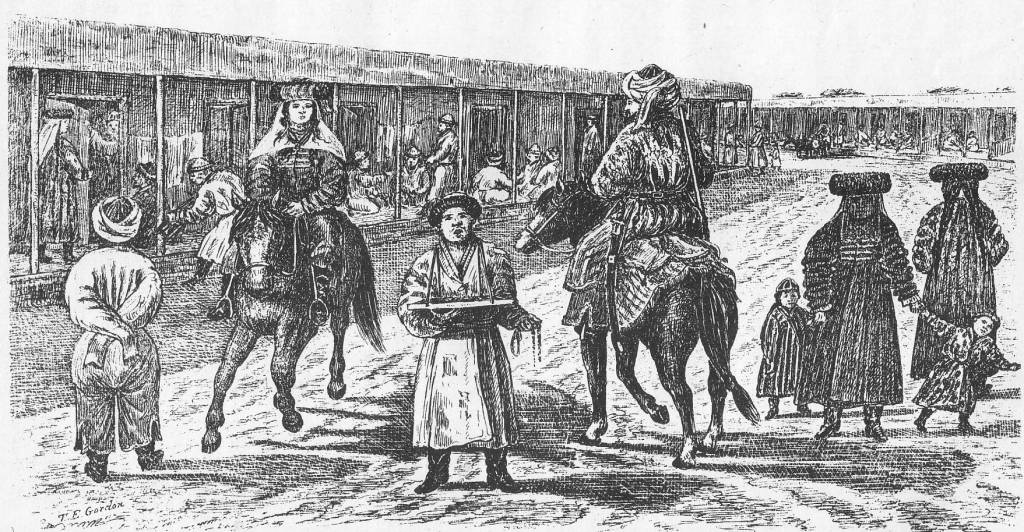
    Shache(Yarkand) in 1870, Xinjiang

    The 1st year of Emperor Xuan’s Yuan’kang Era (65 B.C. continued)

    In that year, the Privy Treasurer, Song Chou, was demoted to Grand Tutor of the Prince of Sishui Liu Zong, for having once remarked: “When the phoenixes arrived at Pengcheng and had not yet reached the capital, the auspice lacked its full majesty; it might have been more fitting had they alighted upon the imperial precincts.”

    The Emperor appointed erudites and court remonstrators, who had been familiar with the administration of state affairs, to serve as prefects of commanderies and prime ministers of principalities. Xiao Wangzhi was made Prefect of Pingyuan. He submitted a memorial:

    “Your Majesty’s compassion for the people is admirable. Yet if erudites and remonstrators are sent forth to replace established officials, fearing only that Your benevolence might not reach afar, deeper concerns may be neglected. Should differing voices from remonstrators no longer be heard in court, errors may pass unnoticed, and matters of immediate urgency may overshadow the foundations of government.”

    The Emperor summoned Xiao Wangzhi and appointed him as the Privy Treasurer.

    The Prefect of Donghai, Yin Wenggui of Hedong, having excelled in his governance, was promoted to Intendant of Fufeng. Yin Wenggui was renowned for a penetrating insight into the virtues and faults of both officials and commoners under his jurisdiction. He recorded in detail the circumstances of each county and personally conducted oversight. When the magistrates handled the cases too harshly or swiftly, he made them slow down and be more lenient; If the magistrates got sloppy slightly, he reviewed their cases with careful diligence. Arrests were carried out during the autumn and winter assessments or when he visited the counties, ensuring that the accused would not linger long in confinement; those seized served as warnings to the rest. Thus officials and commoners alike held him in reverence and fear, and each strove to amend himself.

    As Prefect of Fufeng, he selected incorruptible and capable subordinates, treated them with respect regardless of his personal preference, yet dealt strictly with those who betrayed his trust. Though his merits were eminent, he remained modest and without pride, and his name became highly esteemed in the court.

    At first, Wannian, younger son of the Princess of Wusun Liu Jieyou, was cherished by the King of Shache. When the King of Shache died without an heir and Wannian was then residing at the Han court, the people of Shache, seeking alliance with Han and favor from Wusun, petitioned that Wannian be established as their king under Han authority. The court agreed and dispatched Xi Chongguo as envoy to escort Wannian back to Shache. Yet when Wannian ascended the throne, he proved cruel and harsh, and the people bitterly resented him.

    The Emperor ordered his ministers to recommend envoys to the Western Regions. The General of Van Han Zeng recommended Feng Fengshi of Shangdang to serve as Captain of the Guard, bearing the imperial scepter and escorting the tribute envoys of Dayuan and other polities to Yixun City. Meanwhile, Hutu Zheng, younger brother of the former King of Shache, conspired with neighboring states to assassinate King Wannian and the Han envoy Xi Chongguo, and then declared himself king. At the same time, the Xiongnu attacked Jushi City, but failed to take it and withdrew. The new king of Shache then sent envoys falsely reporting that the northern states had submitted to the Xiongnu and began raiding the southern route, forming a coalition against Han and cutting off communications west of Shanshan.

    At this time, the Protector-General of the Western Regions, Zheng Ji, and Colonel Sima Xi maintained military farms among the northern states. Feng Fengshi and his lieutenant Yan Chang argued that if they did not act quickly, Shache would grow powerful and threaten the entire Western Regions. Therefore, they issued an order in the Emperor’s name to the kings of the western states, mobilizing 15,000 troops from the northern and southern routes to attack Shache, and they captured its capital. The king committed suicide, and his head was sent to Chang’an. Another younger brother was appointed king in his stead. Peace having returned among the western states, Feng Fengshi disbanded the army and reported the victory to the court. The Emperor summoned Han Zeng and said: Let congratulations be extended to General Han; you have chosen a worthy man.

    Feng Fengshi then journeyed farther west to Dayuan. When the people of Dayuan heard that he had slain the King of Shache, they received him with honor surpassing that shown to previous envoys, and presented him with a famed steed called the Dragon Horse. The Emperor was greatly delighted and considered granting Feng Fengshi a noble title. The Chancellor and the generals all agreed, but the Privy Treasurer Xiao Wangzhi remonstrated: “Feng Fengshi, though an envoy, acted on his own authority and forged an imperial command to mobilize troops. Though he achieved merit, such conduct must not be made precedent. If he is ennobled, future envoys will seek fame by raising arms, provoking distant tribes and inviting calamities upon the realm. Feng Fengshi should not be granted a noble.”

    The Emperor approved Xiao Wangzhi’s counsel and instead appointed Feng Fengshi Grand Master of Merit.

    The 2nd year of Emperor Xuan’s Yuan’kang Era (64 B.C.)

    In January of spring, a general amnesty was proclaimed throughout the realm.

    The Emperor intended to establish an Empress. At that time, the mothers of Princess Guantao, Hua Jieyu[Lady of Handsome Fairness], mother of Prince Xian of Huaiyang, Zhang Jieyu, mother of Prince Xiao of Chu, and Wei Jieyu were all in favor. The Emperor at first wished to install Zhang Jieyu as Empress. Yet wavering for long and taking lessons from the treasonous plot of Huo Chengjun against the Crown Prince, the Emperor resolved instead to choose a palace woman who had no children of her own and was prudent and discreet.

    Accordingly, on February 26, Wang Jieyu[Lady of Handsome Fairness Wang] of Changling was established as Empress, and was commanded to rear the Crown Prince. Her father, Wang Fengguang, was ennobled as Marquis of Qiongcheng. The Empress was not beloved and seldom received imperial audiences.

    In May, an edict was issued:

    “The handling of legal cases concerns the lives of the people. If the living bear no resentment and the dead no grievance, then the officials may be deemed worthy. Yet it is not so today. Some officials manipulate the laws with cunning, twisting statutes to obscure their meaning, and justice fails to be impartial. Their written reports do not accord with the facts, and even We cannot discern the truth. How, then, can the people place their trust in their superiors? Let all officials of two-thousand-picul rank examine their subordinates and dismiss such men.

    “Some officials impose excessive labor, embellish relay hostels, entertain travelers extravagantly, exceeding the law in pursuit of name and reputation. This is like treading thin ice beneath the burning sun—perilous indeed! Now an epidemic spreads widely, and We grieve for the suffering of the people. Wherever calamity has struck most severely, taxation for this year shall be remitted.”

    Another edict declared:

    “The ancient emperors chose personal names seldom encountered, so that prohibition of their use caused no hardship. Therefore, my personal name shall be altered to be Liu Xun, so that it may be easily avoided.”

  • Comprehensive Reflections to Aid in Governance(Part 193): Dislodging Spider Web by The Gang of Huo

    Comprehensive Reflections to Aid in Governance

    By Sima Guang

    Translated By Yiming Yang  

    Annals of Han Book 17 Scroll 25

    Duration of 6 years

    The Hometown of Xiao Wangzhi and Shu Guang, Lanling, Shandong Province

    The 3rd year of Emperor Xuan’s Di’jie Era (67 B.C.)

    In March of spring, an imperial edict was proclaimed, stating: “If merit be left unrewarded and faults unpunished, even the virtue of Emperors Yao and Shun could not transform the people. Now, the Prime Minister of Jiaodong, Wang Cheng, has diligently fulfilled his duties; the refugees under his administration have surpassed eighty thousand households, and his achievements are manifest. Let Wang Cheng be enfeoffed as Marquis Within the Passes, with the emolument of a two-thousand-picul official.” Before the decree could be carried out, Wang Cheng fell ill and died.

    Thereafter, another edict commanded the Chancellor and the Imperial Censor to investigate the affairs of the commanderies and provinces through the Chiefs of Staff and Associates of the Prefects who reported their records to the capital, in order to examine their execution of laws and decrees. Some officials memorialized, saying: “The late Prime Minister of Jiaodong, Wang Cheng, exaggerated his achievements to obtain undue reward. From this precedent, many inferior officials now seek hollow fame and empty titles.”

    In summer, on April 22, the Emperor installed his son Liu Shi as Crown Prince. He appointed Bing Ji as Grand Tutor and the Grandee of the Palace, Shu Guang, as Junior Tutor. The Emperor further enfeoffed Xu Guanghan, the maternal grandfather of the Crown Prince, as Marquis of Ping’en, and Huo Yun, General of the Household and grand-nephew of Huo Guang, as Marquis of Guanyang.

    When Grand Madame Huo Xian, the widow of Huo Guang, heard that the Crown Prince had been established, she was seized with rage and distress. She refused food, spat blood, and cried aloud: “This child is but of common birth! How can he be made Crown Prince? Should the Empress later bear a son, he would be but a prince beneath him!” Again she urged the Empress to poison the Crown Prince. The Empress often summoned the Crown Prince to dine, but the Nanny and Wet Nurse, by custom, always tasted the food beforehand, so the Empress’s scheme could not be carried out.

    On May 25, the Chancellor, Wei Xian, citing age and illness, requested leave from his duties. He was granted one hundred catties of gold and a four-horse carriage of honor, and retired to his residence. This was the first instance of a Chancellor’s retirement being formally approved.

    On June 7, Wei Xiang was appointed Chancellor. On June 16, Bing Ji was made Grand Master of the Censorate; Shu Guang was appointed Grand Tutor to the Crown Prince, and his nephew, Shu Shou, was made Junior Tutor.

    The Crown Prince’s grandfather, Xu Guanghan, Marquis of Ping’en, memorialized, requesting that his younger brother, Xu Shun, be assigned to oversee and protect the household of the young Crown Prince. When the Emperor consulted Shu Guang on this matter, Shu Guang replied: “The Crown Prince, being heir to the state, should be surrounded by worthy teachers and companions chosen from among the able men of the realm. It is not fitting to grant undue favor solely to the Xu clan, though Uncle Xu is his grandfather. Moreover, the Crown Prince already has his Grand Tutors and Junior Tutors duly appointed, and all attendants are in place. To add Xu Shun now as guardian of his household would appear superficial and unseemly, and would not elevate the Crown Prince’s virtue in the eyes of the people.”

    The Emperor commended Shu Guang’s counsel and reported it to Wei Xiang. Wei Xiang, moved by his discernment, removed his cap in respect, saying, “Shu Guang’s foresight surpasses us all.” Thus Shu Guang’s reputation for integrity and wisdom grew ever more illustrious.

    In the capital, there was heavy rain and hail. The Associate Grand Usher, Xiao Wangzhi of Donghai, submitted a memorial declaring that the concentration of power among a few great families had brought forth these calamities. The Emperor, having long heard of Xiao Wangzhi’s integrity and discernment, appointed him Imperial Usher. At that time, the Emperor earnestly sought out men of talent; many among the people presented memorials offering counsel and proposals. The Emperor ordered that such petitions be referred to Xiao Wangzhi for deliberation. Those whose proposals were substantial were recommended to serve under the Chancellor or in the Censorate; those of lesser merit were assigned magistracies with the rank of two-thousand-picul officials. They were tested in office and assessed after one year; those who proved unfit were dismissed. All matters proposed by Xiao Wangzhi received imperial approval.

    In October of winter, an imperial edict was issued, declaring: “On September 19, the ground was shaken by an earthquake, which greatly alarmed Us. We now seek those who can admonish Us for Our faults, and those who are virtuous and upright, that they may speak freely and correct Our deficiencies. Let there be no concealment before the authorities. Since Our virtue is wanting and cannot extend afar, the borders remain unsettled with troops. Now We command that the General of Chariots and Cavalry and the General of the Right withdraw their stationed forces, to lighten the people’s burdens; for prolonged deployments exhaust the realm and hinder its pacification.”

    Another edict proclaimed: “The fish ponds and aviaries that We have not visited shall be opened to the people, that the poor may share in their use. The palaces and mansions within the commanderies and provinces shall not be repaired or rebuilt. Those who have returned from exile or displacement shall be granted public lands and seed for planting, and shall be exempted from taxes and corvée.”

    The family of Huo Guang grew ever more extravagant and unrestrained. The Grand Madame Xian, enlarged their mansions with ornate halls and towers, and fashioned carriages and palanquins adorned with painted designs, embroidered silks, and gilded ornaments. Their wheels were cushioned with braided leather and cotton; attendants in garments of variegated silk drew her carriages when she took her leisure within the residence. Huo Xian engaged in illicit relations with her slave overseer, Feng Zidu. Likewise, Huo Yu and Huo Shan rebuilt and adorned their estates, holding horse races and diversions at the Pingle Resort.

    When summoned to court audience, Huo Yun often feigned illness, yet privately went abroad accompanied by many retainers. He hunted in the Huangshan Park, sending servants to stand in his stead at court; none dared to censure him. Huo Xian and her daughters passed in and out of the Changxin Palace at all hours, heedless of restraint or decorum. Their conduct exceeded the bounds of propriety.

    The Emperor, who had once dwelt among the common people, perceived the long-entrenched hubris and unchecked influence of the Huo clan, and discerned that disorder was festering within. When he took personal charge of state affairs, the Grand Master of the Censorate, Wei Xiang, often conferred with him on matters of government. Huo Xian said to Huo Yu, Huo Yun, and Huo Shan: “You neglect the charge left by the Grand General. Now, the Grand Master of the Censorate serves as the Emperor’s close adviser within the palace. Should he speak ill of you, what means do you have to save yourselves?”

    Soon thereafter, the retainers of the two households quarreled over precedence on the road. A slave of the Huo family sought to break down the gate of the Grand Master’s mansion. A Censor came forth and prostrated himself in apology, whereupon the slave withdrew. When word reached the Huo household, Huo Xian and her kin grew fearful, sensing that calamity was near.

    During the tenure of Wei Xiang as Chancellor, he often conferred with the Emperor in private. The Marquis of Ping’en, Xu Guanghan, and the Privy Counselor, Jin Anshang, freely entered and withdrew from the inner court. Huo Shan held authority over the State Secretariat. The Emperor decreed that officials and commoners alike might submit sealed memorials directly to the throne, without passing through the Secretariat; and that ministers might be received in a private audience apart from its supervision. This deeply displeased the Huo clan.

    The Emperor, having heard reports that the Huo family had poisoned Empress Xu but lacking conclusive proof, began to take precautionary measures. He appointed Fan Mingyou, Marquis of Pingling and son-in-law of Huo Guang—then serving as General of the Northern Garrisons and Commandant of the Weiyang Palace Guards—as Chamberlain. He dispatched Ren Sheng, husband of Huo Guang’s second daughter and formerly General of the Household and Supervisor of the Feather-Forest Guard, to serve as Prefect of Anding. After several months, Zhang Shuo, husband of Huo Guang’s elder sister and Grandee of Merit with duties as palace liaison, was sent to govern Shu Commandery. Wang Han, General of the Household and grandson-in-law of Huo Guang, was appointed Prefect of Wuwei. Later, Deng Guanghan, Commandant of the Changle Palace Guard and husband of Huo Guang’s eldest daughter, was transferred to serve as Privy Treasurer.

    On August 14, Zhang Anshi was made Guard General, with command over the palace guards, the city gates, and the Northern Army. Huo Yu was appointed Grand Marshal, yet he wore only a small cap and bore neither seal nor ribbon of office. The Emperor dissolved the military units formerly under his control, though Huo Yu still retained the nominal title once held by Huo Guang. Fan Mingyou, the Duliao General, was stripped of his seals and tallies, left only with his duties as Chamberlain. Zhao Ping, Commandant of the Cavalry, Cavalier Attendant, and Grandee of Merit, also son-in-law to Huo Guang, was likewise deprived of his seal and ribbon as Commandant of the Cavalry.

    All commanders of the imperial guards stationed about for eastern(residence of the Crown Prince) and western(residence of the Emperor) palaces—those of the frontier units drawn from the Nomad, the Yue tribes and the Feather-Forest guards—were replaced by men of the Xu and Shi clans, whom the Emperor trusted as his own kin and allies.