Tag: Wang Ji

  • Comprehensive Reflections to Aid in Governance(Part 185): Weiyang Palace Putsch

    Comprehensive Reflections to Aid in Governance

    By Sima Guang

    Translated By Yiming Yang  

    Annals of Han Book 16 Scroll 24 (continued)
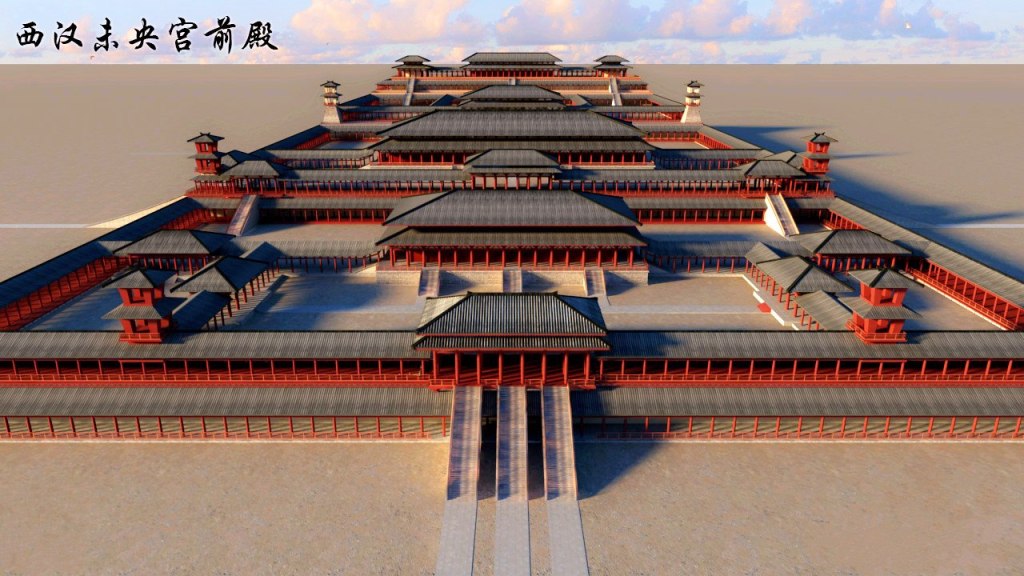
    Weiyang Palace Imagined

    The 1st year of Emperor Zhao’s Yuanping Era (74 B.C. continued)

    When the Prince of Changyi came to pay homage to the Empress Dowager, and was about to depart in his carriage toward the Wenshi Chamber, eunuchs held each door along the way. As the Prince entered, the doors were shut behind him, and the ministers of Changyi were barred from entry. The Prince asked: “What does this mean?” 

    The Grand General knelt and said: “The Empress Dowager has issued an edict, prohibiting the ministers of Changyi from entering.”

    The Prince said: “Take things calmly and slowly. Why cause alarm and frighten men?”

    Huo Guang thereupon ordered the ministers of Changyi expelled, and placed them outside the Golden Horse Gate. The General of Chariots and Cavalry, Zhang Anshi, led the Feathered Forest Cavalry, seized more than two hundred of the Prince’s minions, and delivered them to the Ministry of Justice for trial.

    Huo Guang commanded the eunuchs who had formerly served Emperor Zhao to guard the Prince, saying: “Be ever watchful! Should he die or take his own life, I would be accused of regicide, and the whole empire would be betrayed.”

    The Prince, still unaware of his deposition, said to those about him: “How could my ministers and attendants be guilty? Why has the Grand General seized them all?”

    Soon the Empress Dowager summoned the Prince of Changyi. When he heard the summons, the Prince was fearful, saying: “What offense have I committed, that I should be summoned?”

    The Empress Dowager, in a pearl vest, sat in a resplendent robe within the command tent. Several hundred attendants bearing arms stood about her, and guards with weapons were arrayed at the gates. The ministers entered the hall in order. The Prince of Changyi was called forward to hear the edict.

    Huo Guang and the ministers submitted a memorial of impeachment, and the Chief of the State Secretariat read it aloud:

    “Chancellor Yang Chang and the ministers, prostrate, dare to address the Empress Dowager: The late Emperor Zhao was cut off in youth, leaving no heir. The Prince of Changyi was summoned to perform the mourning rites, yet he donned mourning garb without true grief. He cast aside the rules of mourning, ate and drank at will, permitted his officers to convey women in covered carriages, and joined them in revelry at their lodgings. On his arrival he was forthwith proclaimed Crown Prince, and still he privately purchased chickens and swine for his meals.

    “He received the Imperial Trust Seal[for military command] and the Personnel Seal before the pall of the late Emperor, yet left them unguarded. He caused more than two hundred attendants and slaves of Changyi to be escorted into the palace, where they engaged in frivolities within the forbidden precincts. He even wrote a letter, saying: The Emperor greets the court attendants. I have ordered Gao Chang, Supervisor of the Changyi Treasury, to grant you a thousand catties of gold and bestow upon you ten wives.

    “Even while the pall of the late Emperor stood in the front hall, he opened the Music Office, called in the performers of Changyi to strike drums, sing songs, blow flutes, and play lewd and vulgar farces. He summoned the ensemble of the Grand Ancestral Temple and the physicians’ musicians to perform. He drove carriages through the Northern Palace and Gui Palace, staging contests of pigs and battles of tigers. He commandeered the Empress Dowager’s miniature carriage, with slave attendants mounted beside him, and rollicked about the courtyard. He committed lewd acts with palace women, even Lady Mong of the late Emperor, and through the Superintendent of the Courtyard issued an edict, saying: Whoever dares to leak this will be cut in twain at the waist!

    The Empress Dowager said: “Wait a moment! As a subject, should one act with such wantonness?” The Prince of Changyi rose from his seat and prostrated himself.

    The Chief of the State Secretariat continued to read:

    “…He took the ribbons of princes, marquises, and officials of two-thousand-picul rank, together with the black and yellow insignia, and bestowed them upon his attendants and pardoned slaves of Changyi. He lavished gold coins, knives, swords, jade ornaments, and woven silks from the Imperial Treasury as rewards for revelry. He held night banquets with his officials and slaves, drowning himself in wine.

    “On a solitary night he feasted in the Wenshi Chamber, receiving his brother-in-law, the Marquis Within the Passes from Changyi, with the highest rites. Before the ancestral sacrifices had been offered, he sent forth a sealed command to dispatch an envoy to sacrifice to the late Prince of Changyi, his father Liu Bo, in the royal garden, and styled himself the ‘Successor Emperor.’

    “In the span of twenty-seven days after receiving the imperial seal, the Prince issued one thousand one hundred and twenty-seven orders to the various offices of government. He has abandoned himself to extravagance and debauchery, cast aside the rites and proprieties of an emperor, and thrown the governance of Han into disorder.

    “Chancellor Yang Chang and the ministers, again and again, offered admonition, yet he never amended his conduct, but daily grew worse. Fearing peril to the state and turmoil within the empire, the ministers consulted the learned, and all were of one accord: The sovereign who succeeded Emperor Zhao has engaged in licentious and lawless conduct, in defiance of filial piety.

    “The Classic of Filial Piety says: Among the five categories of crime, unfilial conduct is the gravest. In the Spring and Autumn Annals, it is recorded: King Xiang of Zhou mistreated his mother, and the heavenly king was driven from the capital to dwell in Zheng. His want of filial piety made him an outcast beneath Heaven.

    “The ancestral temple is greater than the throne. His Majesty has failed to receive Heaven’s mandate, to revere the ancestral temple, and to fulfill the duty of succession. Therefore it is meet and right that he be deposed. We request that a solemn offering of a great victim—ox, sheep, and swine—be made to the ancestral temple.”

    The Empress Dowager decreed: “It is permitted.”

    Huo Guang bade the Prince of Changyi rise and receive the decree. The Prince said: “I have heard it said: Though the Son of Heaven lost his way, if seven ministers remonstrate with him, the empire shall not be lost.

    Huo Guang replied: “The Empress Dowager has decreed your deposition. How can you still call yourself Son of Heaven?”

    He then took the Prince by the hand, untied the ribbon of the imperial seal, and presented the seal to the Empress Dowager. He led the Prince down from the hall, out through the Golden Horse Gate, the ministers following behind.

    Facing west, the Prince knelt and said: “I am foolish and ignorant, unfit to bear the enterprise of Han!” Then he rose, mounted his carriage, and the Grand General escorted him to the residence of Changyi princedom.

    Huo Guang said with gratitude: “Sire by his own conduct has severed the bond with Heaven. I would rather betray Sire than betray the state. May Sire preserve himself; I, a subject, shall no longer attend at your side.” He departed in tears.

    The ministers memorialized, saying: “In antiquity, those deposed and banished were sent afar, severed from affairs of state. We request that Prince Liu He be relocated to Fangling county of Hanzhong Commandery.”

    The Empress Dowager decreed that Prince Liu He be returned to Changyi, granted a fief of two thousand households, and the possessions of his house restored. To the four daughters of the late Prince of Changyi, each was granted a thousand households. The principality itself was abolished, and its lands annexed to Shanyang Commandery.

    In the time of Liu He’s reign in Changyi, the court officials, though seated in office, made no report of his misdeeds. They concealed his faults from the Han court and failed to guide him in the righteous path, whereby the Prince fell into grave transgressions. Thereupon all were implicated, arrested, and more than two hundred were executed. Only the Commandant of the Capital Guard, Wang Ji, and the Chamberlain, Gong Sui, who had steadfastly remonstrated with a loyal heart, were spared from death. Yet they were shaven of hair and sent to labor upon the city walls.

    When Wang Shi, tutor to the Prince of Changyi, was cast into prison and faced death, the interrogator asked him: “Why did you not submit a memorial of admonition to the Prince?”

    Wang Shi replied: “Day and night I recited the three hundred and five poems of the Book of Songs to the Prince. Those chapters that speak of loyal ministers and filial sons, I recited again and again. When the odes told of rulers in peril and princes astray, I never ceased to weep and admonish. With all three hundred and five poems I made my remonstrance. What need did I have for a separate memorial?”

    The interrogator, moved by these words, commuted his sentence and spared him from death.
  • Comprehensive Reflections to Aid in Governance(Part 182): Sudden Death of Young Emperor And His Psychotic Successor

    Comprehensive Reflections to Aid in Governance

    By Sima Guang

    Translated By Yiming Yang  

    Annals of Han Book 16 Scroll 24

    Duration of 7 years

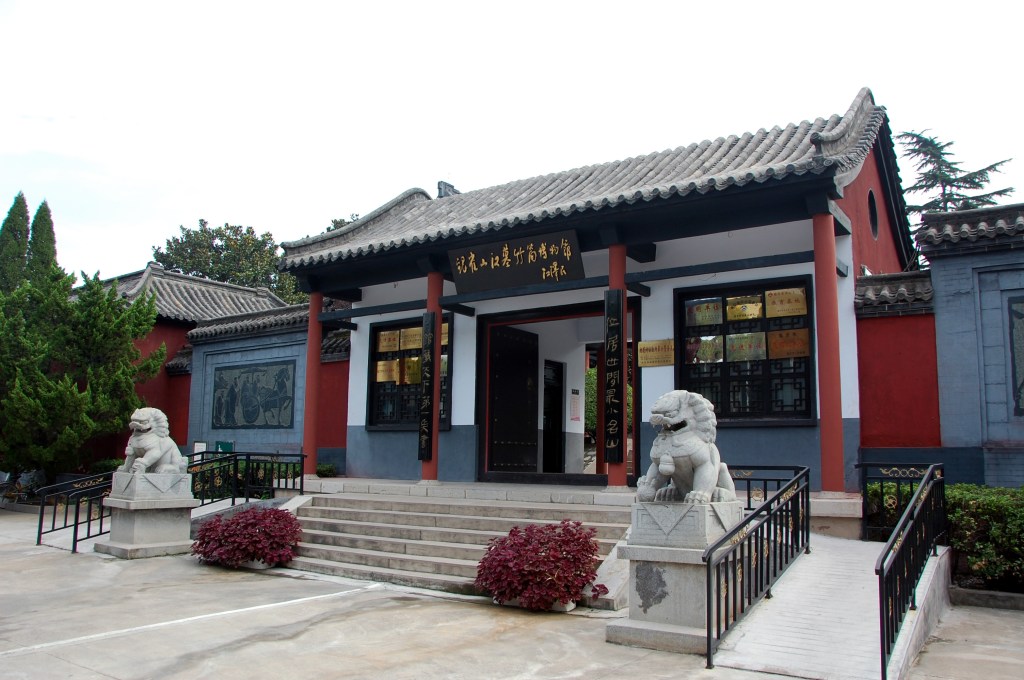
    Han Tomb Museum in Linyi(Langya), Shandong Province. Photo by kanegen

    The 1st year of Emperor Zhao’s Yuanping Era (74 B.C.)

    In February of spring, an edict was issued to reduce the child head tax, levied upon those between the ages of seven and fourteen, by three-tenths.

    In summer, on April 17, the Emperor, being twenty one years of age, passed away in the Weiyang Palace, leaving no heir.

    At that time, among the sons of Emperor Wu, only the Prince of Guangling, Liu Xu, remained. The Grand General Huo Guang, together with the court officials, deliberated upon the succession, and all were in agreement to support the Prince of Guangling. Yet the Prince had formerly been disfavored for his wanton conduct, and Emperor Wu had never considered him worthy.

    The Grand General was uneasy in heart. Then a Palace Gentleman memorialized, saying: “When King Tai of Zhou set aside Taibo in favor of King Ji of Zhou, and when King Wen of Zhou advanced King Wu above his elder son Bo Yikao, both decisions were founded upon virtue and capacity. To pass over an elder in favor of a younger may at times be fitting, yet the Prince of Guangling assuredly is unfit to inherit the ancestral temple.”

    These words accorded with Huo Guang’s mind. He presented the memorial to the Chancellor, Yang Chang, and others, and advanced the Palace Gentleman to the Prefect of Jiujiang.

    On the same day, acting under the decree of the Empress Dowager, Huo Guang dispatched the acting Grand Herald, the Privy Treasurer Shi Lecheng, the Imperial Clan Minister Liu De, the Grand Master of Chamberlain Bing Ji, and the General of the Household Lihan, together with others, to receive the Prince of Changyi, Liu He, and escort him to the capital in seven mail carriages. Liu He lodged in the Chang’an official residence of the Principality of Changyi.

    At the same time, Huo Guang advised the Empress Dowager to appoint the General of the Right, Zhang Anshi, as General of Chariots and Cavalry.

    Liu He was the son of Prince Ai of Changyi. In his native land he was famed for extravagance and wantonness. Even during the mourning for Emperor Wu, he indulged in dissipation, and would often ride out hunting without restraint. Once, hunting in Fangyu County, he covered two hundred li in less than half a day.

    The Commandant of the Capital Guard, Wang Ji of Langya, submitted a memorial admonishing him:

    “Sire neglects the pursuit of learning and delights only in pleasure and wandering. He rides in reckless haste, his horse’s bits and reins never held in check. His mouth grows weary from shouting, his hands sore from the bridle, his body exhausted by carriage and chariot. In the mornings he is drenched with mist and dew; by day he is covered with dust. In summer he is scorched by the fierce heat; in winter he is chilled by the bitter winds. Thus his frail and delicate frame is wearied with excessive exertion. Such practice neither preserves life nor advances benevolence and righteousness.

    “Beneath the spacious hall, upon the fine mats, eminent teachers may sit in front, while diligent reciters attend behind. There he may discourse on the eras of Emperor Yao and Shun, and examine the prosperous reigns of Yin and Zhou; there he may study the spirit of humane sages, and practice the art of governing the state. Zealous and intent, he may forget his meals, daily renewing his virtue. How could such delight be found amidst the bustle of streets and markets?

    “When at rest, let him bend and stretch to ease the body; when advancing and retreating, stepping and pacing, let him cultivate proper bearing and strength of limb. By inhaling the new and exhaling the old may he nourish his vitality; by concentrating the mind and gathering skill may he enrich his spirit. Thus shall he preserve life and attain longevity.

    “If Sire would earnestly give heed, then your mind shall cherish the aspirations of Emperor Yao and Shun; your body shall enjoy the long years of Crown Prince Jin and Chisongzi; your illustrious renown, once heard above, shall bring blessings and honors, and the realm shall be at peace.

    “The Emperor, benevolent and sagacious, even now remains ever mindful and admiring, and has not indulged in the pleasures of palace halls, gardens, ponds, or hunting. Sire ought from dawn till dusk to contemplate this, in order to carry forward the Emperor’s intent.

    “Among the feudal lords and kinsmen, none are nearer than Sire. In kinship Sire is as a son; in office Sire is as a minister. One person thus bears the double charge of both duties. Should affection and righteousness fail to be fully displayed, and come to the notice of the Emperor, it will not redound to the blessing of the state.”

    Prince Liu He issued a proclamation, saying: “We, being unable to restrain my misprision, acknowledge the earnestness of the Commandant of the Capital Guard, who often admonishes me for my faults.” He commanded the usher Qianqiu to present Wang Ji with five hundred catties of beef, five piculs of wine, and five bundles of dried meat. Yet thereafter he still abandoned himself to profligacy, without restraint.

    Chamberlain Gong Sui of Shanyang was loyal and sincere, firm and resolute in character. Within the palace he would remonstrate and contend with the Prince; outside the palace he would censure the prime minister and grand tutor, citing principle and weighing consequences, even to the point of shedding tears. He was unyielding, facing the Prince directly and pointing out his faults. The Prince, on hearing him, would cover his ears and flee, saying, “The Chamberlain is truly skilled at shaming men!”

    The Prince was often given to prolonged revels, gaming, and lavish gifts to his attendants and palace officials. Gong Sui came before him, weeping and crawling on his knees; all the attendants and ministers present were moved to tears. The Prince asked, “Why does Chamberlain weep?”

    Gong Sui replied, “I grieve deeply for the peril of the state. I beg a moment’s attention to declare my humble counsel.” The Prince thereupon dismissed his attendants. Gong Sui said, “Does Sire know why the Prince of Jiaoxi was condemned for immorality?”

    The Prince of Changyi said, “I do not know.”

    Gong Sui said, “I have heard that the Prince of Jiaoxi had a sycophant named Hou De. The Prince of Jiaoxi imitated the deeds of the despots Jie of Xia and Zhou of Shang, yet in Hou De’s mouth he was equal to Emperor Yao and Shun. The Prince delighted in Hou De’s words, favored his presence, lived and slept with him, and thus came to ruin. Now Sire is close to a band of petty men, gradually steeped in their corrupt ways. The border between survival and destruction must not be trifled with. It is meet and right so to choose men learned and upright, who follow the Way, to be Sire’s companions. When seated, let them recite the Book of Songs and the Book of Documents; when standing, let them practice ritual and propriety. This will bring benefits.”

    The Prince assented. Gong Sui then selected ten men, led by Zhang An, who were versed in the Classics and possessed a sense of righteousness, to serve the Prince. Yet after a few days the Prince dismissed Zhang An and the rest.

    Once, the Prince beheld a great white dog, whose form from the neck downward resembled that of a man. It wore a crown shaped like a square mountain and bore no tail. The Prince, in wonder, asked Gong Sui concerning it. Gong Sui replied: “This is a heavenly warning. It signifies that those who speak before Sire are dogs with human caps. If they are not kept away, calamity will follow.”

    Later, the Prince heard one exclaim, “Bear!” Looking about, he saw a great bear, yet none of those present beheld it. The Prince asked Gong Sui about this. Gong Sui said: “The bear, a wild beast of the mountains, has entered the palace, yet only Sire can see it. This again is a divine portent, declaring that the palace will soon be desolate, and peril is near at hand.”

    The Prince lamented, gazing upward to Heaven, and said: “Why do these ill omens keep appearing?”

    Gong Sui knocked his head upon the ground and said: “I dare not conceal my loyal heart. I have often spoken of the impending danger, though I know it has displeased Sire. Yet whether the state endures or falls does not rest upon my words. I entreat Sire to reflect deeply. The Book of Songs contains three hundred and five odes, embracing the affairs of men and the Way of kingship. Which conduct of Sire accords with even a single verse therein? As a prince among the lords, Sire acts more soiled than the common people. This is to imperil your life and invite destruction. It is fitting to ponder with utmost seriousness!”

    Later again blood stained the royal seat. The Prince asked Gong Sui about it. Gong Sui wailed and said: “The palace will long stand empty; portents of ill fortune are repeated. This blood signifies hidden and inauspicious omens. One must be prudent, fearful, and examine oneself!”

    Yet despite these warnings, the Prince altered nothing in his behavior.