Tag: translations

  • Comprehensive Reflections to Aid in Governance(Part 115): Throw Not Stones in A Glass House

    Comprehensive Reflections to Aid in Governance

    By Sima Guang

    Translated By Yiming Yang  

    Annals of Han Book 6 Scroll 14 (continued)

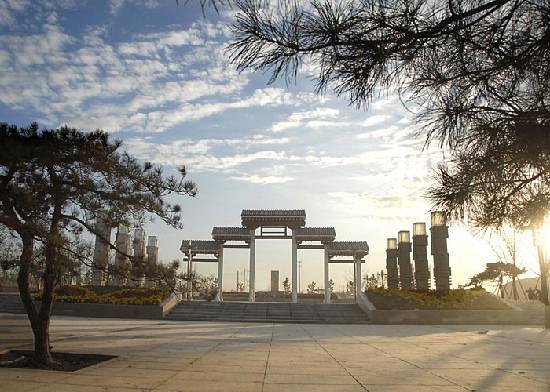
    Fu, A Bronze Sacrificial Vessel, photographed by Peng Yanan

    The 6th year of the Emperor Wen’s Early Era (174 B.C. continued)

    Jia Yi’s memorial continued:

    “The ruler is like a hall, his officials like the steps leading up to it, and the people like the ground below. If the steps are nine levels high and far from the ground, then the hall is elevated. If the steps are level with the ground, then the hall is low. Thus, in ancient times, wise kings created a hierarchical system, with chancellors, ministers, officers, and scholars within the court, and noble ranks—duke, marquis, earl, viscount, and baron—outside the court. Among the plebeians were officers and local bureaucrats, as well as common people. This system was carefully structured, with the Son of Heaven at its apex, ensuring that his position was beyond coveting.”

    “The proverb says, ‘Beware of the vessel when pelting a rat.’ This is an apt analogy. When the rat is near a vessel, one hesitates to strike it, fearing damage to the vessel. How much more should this apply to a noble minister near their ruler? By observing proper etiquette and ethical conduct, a ruler can discipline ministers without degrading their dignity. Thus, there have been cases where a minister was allowed to commit suicide rather than suffer brutality. Punishments such as branding the face or cutting off the nose do not apply to grandees because of their proximity to the ruler. According to etiquette, a subordinate must not check the age of an emperor’s horse by examining its teeth, and there is punishment for kicking the fodder of imperial carriage horses to prevent ministers from showing disrespect towards the ruler. Today, even the nobility—kings, marquesses, and the Three Excellencies—are treated with respect by the Son of Heaven, just as ancient emperors referred to their elders as ‘uncles.’

    “And yet, if we implement laws such as branding, cutting off the nose, shaving hair, amputation, flogging, or beheading in the market, is this not like a hall without a staircase? Are those who suffer such humiliation too close to the Sovereign? Without due respect, will ministers wielding significant power and holding important positions be reduced to criminals and slaves with no sense of shame? That the Second Emperor of Qin was slew in Wangyi Palace, punished to the full extent of the law, was another example of pelting rats without protecting the vessel.

    “I have heard the saying, ‘Even if shoes are new, they are not used as pillows; even if a hat is worn out, it is not to be placed underfoot.’ Once a person has held a position of honor and favor, the Son of Heaven’s demeanor and etiquette towards them change, and the officials and people have once bowed in reverence and fear. Now, if there is a transgression, it is within the emperor’s prerogative to decree their removal, dismissal, or even grant them death or complete destruction. However, to bind and shackle them, subject them to lowly officials, hand them over to constables, and let them be insulted and flogged by subordinate officials of the constabulary, is hardly a way to make the common people witness justice.

    “If those of lowly status become accustomed to seeing their superiors treated so harshly, they may believe they can subject them to the same treatment if a grandee makes a mistake and loses their status. This is not how we cultivate a culture of revering the revered and respecting the respected. In ancient times, high officials who lacked integrity were removed from office, but were not accused of corruption directly; instead, it was said, ‘The Fu and Gui(sacrificial vessels) are not rightly laid out.’ Those who engaged in lewd and immoral behavior, trespassing the boundaries between men and women, were not directly labeled adulterers; rather, its euphemism, ‘The curtains are not properly arranged.’ Those who were lazy and incompetent were not called disqualified; instead, it was termed as, ‘The subordinate is not up to his duty.’ Thus, for high-ranking officials, their faults were recognized, but they were not publicly denounced. They were given the leeway to conceal their misconduct.

    “Even in cases of severe punishment, when it entered the realm of severe condemnation, upon hearing the judgment, the condemned wore a white hat with long tassels, knelt before a basin of water with a sword ready for self-mutilation, requested an audience, and confessed their wrongdoing. They were not physically bound or dragged away. For those who committed lesser offenses, upon hearing the orders, they slit their throats; they were not forced to stretch their necks. For those who committed grave offenses, upon hearing the orders, they faced north, bow twice, knelt, and took their own lives; they were not dragged by their hair and decapitated. The Sovereign conveyed to them: ‘You know you did something wrong, yet I still treat you with respect.’ When a ruler treats his subjects with respect, the courtiers maintain their self-esteem; when he demonstrates integrity and a sense of shame, individuals uphold dignity in their actions. When a ruler establishes integrity, propriety, and righteousness in his treatment of subordinates, and the subordinates do not respond with appropriate conduct, they are no longer considered human.

    “Therefore, when civilization is established and customs are set, all who serve as subjects should prioritize propriety over personal gain, uphold principles, and adhere to righteousness. In doing so, they can be entrusted with the power of governance and the responsibility of protecting a young and vulnerable ruler before he comes of age. This is the result of strict integrity, observance of shame, and the practice of courtesy and righteousness. What could a ruler lose by doing so? When such practices could have been implemented but instead the wrong method of treating ministers was prolonged, it becomes a matter worthy of long sighs.”

    At this time, the Marquis of Jiang was imprisoned but eventually released without charge. Jia Yi used this opportunity to criticize the emperor. After the emperor took Jia Yi’s words to heart and treated his ministers with dignity, his officials, when found guilty of an offense, chose to commit suicide rather than take punishment.

    The 7th year of the Emperor Wen’s Early Era (173 B.C.)

    In October, during the winter, an edict was issued prohibiting the mothers of marquesses, the consorts of marquesses, and the sons of kings and officials with an emolument of over 2,000 piculs of grain from conducting unauthorized arrests and searches.

    In April, during the summer, a general amnesty was declared throughout the country.

    On June 2, a fire broke out on the trellis outside the east gate of Weiyang Palace.

    The people sang a song about the Prince of Huainan that went: “With a foot of cloth, it can still be sewn; with a peck of grain, it can still be pounded. But two brothers cannot live together in harmony!” When the emperor heard this, he was troubled by it.

    The 8th year of the Emperor Wen’s Early Era (172 B.C.)

    In the summer, the Emperor granted marquisates to the sons of the late Prince of Huainan, Liu An and three others. Knowing the emperor intended to restore the former prince’s line, Jia Yi submitted a memorial urging him to reconsider. Jia Yi wrote: 

    “The late Prince of Huainan(Liu Chang) was infamous for his rebellion and wickedness; his crimes are known to all. Although Your Majesty pardoned and banished him, he died of illness, and the world considers his death fitting. Now, by honoring the son of a criminal, you risk tarnishing your reputation. How could this young man forget his father’s fate? The Duke of Bai, Sheng, who sought to avenge his father, succeeded because his father’s killers were his grandfather and uncle. Although the Duke of Bai rebelled, he never sought to usurp the country’s rightful ruler. His rebellion was a rash act of anger, an attempt to thrust a sharp dagger into the chests of his enemies, and perished together with them.

    “Though the state of Huainan is small, its former leader, Qing Bu, was able to raise an army and revolt. The Han dynasty endures only by good fortune. Allowing someone to avenge their enemy could endanger the state’s resources and stability, which is unwise. Personal grudges are a source of danger for the state. Therefore, it is inadvisable to grant power or accumulate wealth for such individuals. If this situation is not exactly the same as that of Wu Zixu or the Duke of Bai, who sought revenge in the large capital city, then it is more like the suspicion that there may arise another Zhuan Zhu or Jing Ke (assassins) from within the ranks. Rewarding him with power and wealth is no different from arming bandits or giving wings to tigers. This will inevitably lead to future trouble. I beg Your Majesty to think carefully before making this decision!”

    However, the emperor did not heed Jia Yi’s advice.

    A long comet appeared in the east.

    The 9th year of the Emperor Wen’s Early Era (171 B.C.)

    In the spring, there was a severe drought.

    The 10th year of the Emperor Wen’s Early Era (170 B.C.)

    In winter, the Emperor traveled to Ganquan Palace. 

    General Bo Zhao killed a court envoy. The Emperor could not bear to impose punishment on his maternal uncle, so he ordered the court officials to drink with him, hoping that Bo Zhao would repent and take responsibility for his actions. However, Bo Zhao refused. The Emperor then sent court officials to express their condolences to Bo Zhao‘s family, which forced Bo Zhao, feeling ashamed and remorseful, to commit suicide.

    Sima Guang’s commentary: Li Deyu believed the Emperor Wen‘s decision to execute Bo Zhao was just but not compassionate. When Duke Kang of Qin bid farewell to Duke Wen of Jin, he said it felt as if his mother were still alive. The Emperor’s mother was still alive, and Bo Zhao was her only younger brother. Executing Bo Zhao would hurt his mother’s feelings. In my humble opinion, the law is the common recourse of the world; only those who enforce it equally for the high and low can prevent violations. Though Bo Zhao was known for his virtues, the Emperor Wen did not appoint a teacher of virtue to guide him but instead appointed him as a military commander. This led to his snobbery and emboldened him to kill an imperial envoy. If the emperor had pardoned him, how would this be any different from the reigns of Emperor Cheng and Emperor Ai?

    Emperor Wen of Wei once praised Emperor Wen of Han but criticized him for not addressing Bo Zhao’s actions earlier, stating, ‘The family of the emperor’s mother should be treated with kindness for their benefaction in nurturing the ruler, but not be given power to meddle state affairs. Once they have violated the law, they have to face the consequences.’ His criticism implied that Emperor Wen of Han did not restrain Bo Zhao earlier. This remark was right on target. If the emperor wished to comfort his mother, he should have acted prudently from the beginning.

  • Comprehensive Reflections to Aid in Governance(Part 82): The Defection of Ying Bu

    Comprehensive Reflections to Aid in Governance

    By Sima Guang

    Translated By Yiming Yang

    Annals of Han Book 2 Scroll 10 (continued)

    A Pagoda in Jiu Jiang, Jiangxi Province, photograph by Ding Ding

    The 3rd year of the Emperor Gaozu (204 B.C. continued)

    There was a solar eclipse on October 30, and the sky went dark during the day.

    Another solar eclipse occurred on November 29.

    Sui He, the envoy of the King of Han, arrived in Jiujiang. For three days, the head chef of the king of Jiujiang hosted him, but he had not secured an audience with the king. Sui He approached the head chef and said, “The king does not want to see me, mainly because Chu is strong, and Han is weak. That’s exactly why I’m here. If you let me meet the king, he will be interested in what I have to say. If he dislikes my words, he can behead me and my company of twenty in public to demonstrate his loyalty to Chu and his defiance of Han.”

    The head chef relayed this to the king, who agreed to meet Sui He. In the audience, Sui He addressed King Ying Bu: “The King of Han sent me to deliver a letter to your majesty. I wonder why your majesty is so close to Chu.”

    The King of Jiujiang replied, “I face north as a subject of the King of Chu.”

    Sui He questioned him, “King Xiang Yu and your majesty are both kings. You chose to be his subject because Chu is strong, and you felt secure with Xiang Yu as your suzerain. During the raid on Qi, Xiang Yu carried planks on his back to set an example for his soldiers. Your majesty should have led all the forces of Jiujiang as the vanguard of the raid. Yet, you only sent 4,000 men. Is that how you show loyalty? When Han invaded Pengcheng and Xiang Yu was in Qi, unable to return, your majesty should have led your troops across the Huai River to fight Han under the city of Pengcheng. But instead, with more than 10,000 soldiers, not one crossed the Huai River. You stood by and waited to see who would prevail. Is that how you seek protection? You claim to be a subject of Chu, but in reality, you are safeguarding your own interests. I don’t think this is a wise strategy.”

    “Your majesty has not turned against Chu because Han appeared weak. The military might of Chu may be superior, but Xiang Yu has an immoral reputation, having broken alliances and murdered the honorary emperor. The King of Han, on the other hand, has the support of allies and has held his ground in Chenggao and Xingyang. Han’s food supplies flow down from Shu and Hanzhong. Han has dug deep trenches, built bulwarks, and fortified every strategic pass and stronghold. Chu’s army has penetrated 800 to 900 li into enemy territory, with the weak and old forced to transport food from a thousand li away. If Han defends its fortresses and avoids direct battles, Chu will be trapped, unable to advance or retreat safely. That is why Chu is not invincible. Even if Chu wins a battle, all the other kingdoms will fear for their safety and come to Han‘s aid. By being the strongest, Chu has become the antagonist of all the other forces in the realm. In truth, Chu is in a worse position than Han. This should be obvious.”

    “It confounds me that your majesty has allied with a kingdom on the verge of peril instead of siding with Han, which has everything in its favor. I am not suggesting that Jiujiang’s troops alone overthrow Chu. I am proposing a rebellion against Chu. Xiang Yu will be forced to stay instead of moving west. Han will be poised to overtake Chu if Xiang Yu is bogged down by several months. By that time, I will accompany your majesty, with only my sword, to the kingdom of Han. The King of Han will divide the land of Chu and grant it to your majesty as a fief. Needless to say, Jiujiang will remain yours.”

    The King of Jiujiang replied, “I will follow your order.” He secretly agreed to ally with Han and break with Chu, though he dared not disclose it publicly.

    An envoy from the kingdom of Chu was also staying at a travel inn in Jiujiang. He requested an emergency meeting with Ying Bu, demanding that the king send troops to assist King Xiang Yu. Sui He entered their meeting, sat in a more prominent position than the Chu envoy, and declared, “The King of Jiujiang has already allied with the kingdom of Han. How can Chu demand troops from Jiujiang?”

    Ying Bu was dumbfounded, while the Chu envoy stood up and left the room. Sui He then advised Ying Bu, “What’s done is done. We should eliminate the envoy and prevent him from returning to Chu. We must join Han as soon as possible.”

    Ying Bu agreed, saying, “I will follow your advice, Mr. Ambassador!” He ordered the execution of the Chu envoy and mobilized his troops to attack King Xiang Yu.

    In response, Chu sent General Xiang Sheng and General Long Ju to attack Jiujiang. After several months of fighting, General Long Ju defeated Jiujiang‘s forces. Fearing that Chu‘s troops would catch up and kill him, Ying Bu considered fleeing to Han but hesitated. He ultimately decided to take Sui He with him along back roads to reach Han.

    In December, Ying Bu arrived at Xingyang. The King of Han, in bed and washing his feet, summoned Ying Bu for an audience. Ying Bu, feeling outraged and humiliated by the king’s casual treatment, briefly contemplated suicide and regretted coming to Han. However, when he returned to his guesthouse, he was astounded by the lavish accommodations, with food service and attendants provided at the same standard as those of the King of Han. Overwhelmed with joy, he sent messengers back to Jiujiang to escort his family.

    By that time, however, King Xiang Yu had already sent Xiang Bo to take over Jiujiang’s troops and executed Ying Bu’s wives and children. Ying Bu‘s assistants gathered his remaining friends, ministers, and officers—about a few thousand people in total—and returned to Han. The King of Han reinforced Ying Bu‘s forces with additional soldiers and assigned him to help defend the city of Chenggao.

  • Comprehensive Reflections to Aid in Governance(Part 80): Know Thine Enemy

    Comprehensive Reflections to Aid in Governance

    By Sima Guang

    Translated By Yiming Yang

    Annals of Han Book 1 Scroll 9 (continued)

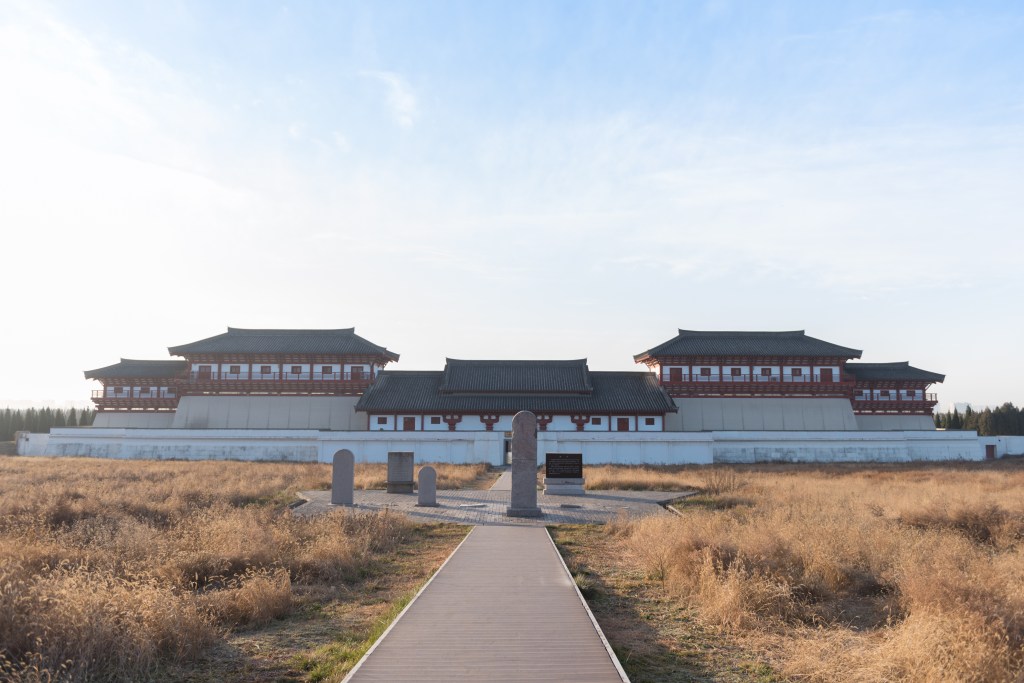
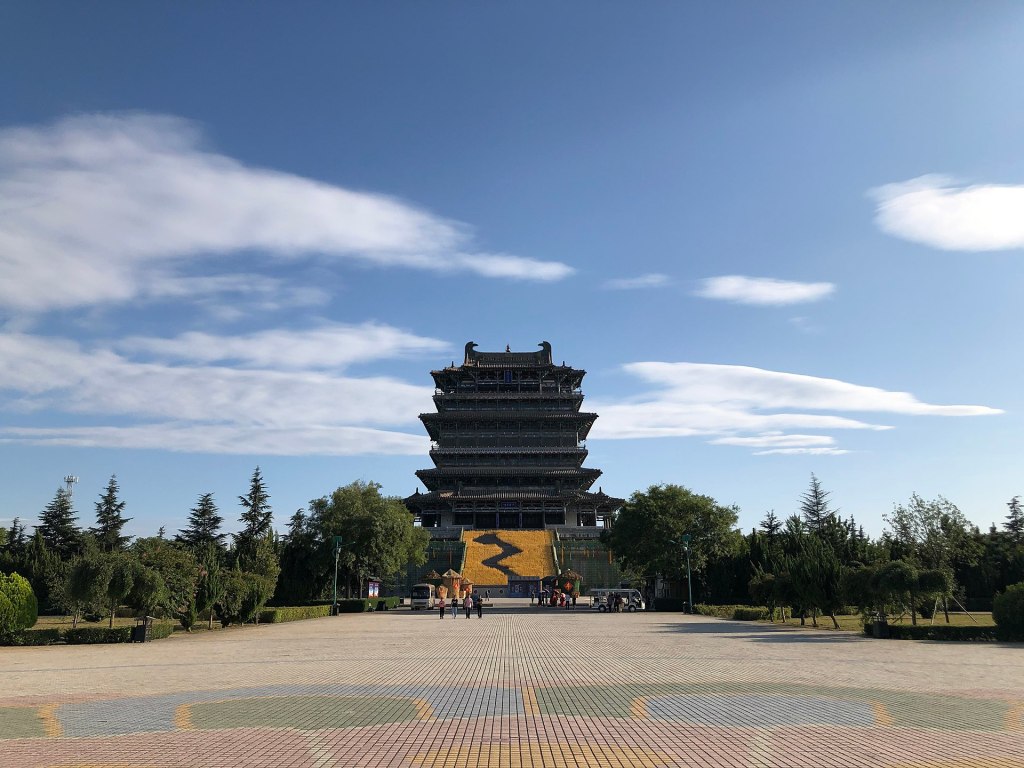
    Guanque Tower, Linjin, Shanxi Province

    The 2nd year of Emperor Gaozu(205 B.C. continued)

    The King of Han returned to his capital, Yueyang, in June. On June 6, he designated his son, Liu Ying, as the Crown Prince and declared an amnesty for all criminals in the kingdom.

    The Han army besieged and flooded the city of Feiqiu, leading to its surrender. General Zhang Han, seeing no escape, committed suicide. The Kingdom of Yong, which came under the control of the Han, was divided into three commanderies: Zhongdi, Beidi and Longxi.

    During this time, a severe famine struck the Guanzhong region, causing the price of a bushel of rice to soar to ten thousand money units (about half a kilogram of gold). In desperation, some people resorted to cannibalism. The Han government encouraged the starving population to relocate to the more fertile regions of Shu and Hanzhong commandery.

    When the Qin Empire fell, the wealthy hoarded gold and jade. However, Mr. Ren from Xuanqu focused on stockpiling grain in his family cellars. As the Chu and Han armies engaged in prolonged warfare near Xingyang, preventing farmers from tending their fields, the value of food soared. The wealthy soon traded their gold and jade to Mr. Ren in exchange for grain, leading his family to amass substantial wealth that sustained them for generations.

    In August, the King of Han traveled to Xingyang. He assigned Xiao He to remain in Guanzhong to oversee the care of the Crown Prince, granting him full authority over legislation, the construction of altars for ancestral worship, royal palaces, and the administration of counties and towns. Xiao He was empowered to make decisions promptly without the need to consult the King, with the understanding that these decisions would be ratified upon the King’s return. Xiao He also created a comprehensive registry of all households in the Guanzhong region, and he efficiently managed the transport of food supplies and conscripts to the army, ensuring that the forces never faced shortages.

    The King of Han sent Li Yiji to persuade Wei Bao, the King of Wei, to return to Xingyang. However, Wei Bao refused, saying, “The King of Han is rude and abusive. He treats his allies and ministers as if they were slaves. I cannot bear to face him again!”

    In response, the King of Han appointed Han Xin as Vice Chancellor, with Guan Ying and Cao Shen as his lieutenants, and tasked them with leading the campaign against the Kingdom of Wei. The King of Han then inquired of Li Yiji, “Who is the commander-in-chief of Wei?” Li Yiji replied, “Bo Zhi.” The King of Han dismissed this with disdain, saying, “Bo Zhi is just a child, still wet behind the ears! How could he stand up to Han Xin?”

    He continued his inquiry, asking, “Who is their cavalry commander?” Li Yiji answered, “It is Feng Jing.” The King of Han remarked, “He is the son of Feng Wuze, a general of Qin. He is capable, but he will not be able to defeat Guan Ying.” Then he asked, “Who is their infantry commander?” Li Yiji responded, “It is Xiang Tuo.” The King of Han relaxed, saying, “He is no match for Cao Shen. I have no worries.”

    Han Xin also questioned Li Yiji, asking, “Is the commander-in-chief of Wei not Zhou Shu?” Li Yiji assured him, “No, it is Bo Zhi.” With that reassurance, Han Xin felt relieved and commented, “He is just a juvenile.” Confident in their advantage, Han Xin initiated the campaign against the Kingdom of Wei.

    The King of Wei, Wei Bao, positioned his forces at Puban to defend against the Han army stationed at Lijin Pass. Han Xin executed a tactical ruse by deploying decoy troops and displaying numerous boats at Linjin Pass, creating the illusion of a large-scale crossing of the Yellow River. Meanwhile, he secretly sent another force across the river at Xiayang county using pontoons constructed from tree logs and ceramic urns. This surprise attack force swiftly advanced on Anyi County.

    Caught off guard, Wei Bao quickly led his troops to confront Han Xin‘s forces but was defeated. In September, Han Xin captured King Wei Bao, who was then taken to Xingyang. With the fall of Wei Bao, the entire territory of the former Kingdom of Wei came under the control of the King of Han. The conquered region was reorganized into three commanderies: Hedong, Shangdang, and Taiyuan.

    When the Han army suffered a major defeat to the west of Pengcheng, Chen Yu discovered that Zhang Er was still alive. Upon this realization, he immediately turned against the King of Han. After successfully taking control of the Kingdom of Wei, Han Xin proposed leading a force of thirty thousand elite troops to launch a campaign against the northern Kingdoms of Yan and Zhao, as well as the eastern Kingdom of Qi. He also aimed to cut off the supply lines of the Chu forces from the south. The King of Han approved Han Xin‘s strategic plan and assigned Zhang Er to assist him on the mission.

    Han Xin‘s army advanced eastward before turning north to attack the Kingdoms of Zhao and Dai. During the leap month of September, Han Xin decisively defeated the army of Dai and captured Xia Yue, the Prime Minister of Dai, in the town of Yuyu. Following these rapid victories over Wei and Dai, the King of Han ordered Han Xin‘s elite troops to return to Xingyang to reinforce defenses against the advancing forces of Chu.

  • Comprehensive Reflections to Aid in Governance(Part 79): Passing the Helm

    Comprehensive Reflections to Aid in Governance

    By Sima Guang

    Translated By Yiming Yang

    Annals of Han Book 1 Scroll 9 (continued)

    Xingyang Pass, Xingyang, Henan Province

    The 2nd year of Emperor Gaozu(205 B.C. continued)

    Tian Heng launched an attack on Tian Jia, the King of Qi appointed by Xiang Yu, forcing Tian Jia to flee to the Kingdom of Chu, where he was eventually killed. Tian Heng then unified the three regions that made up the Kingdom of Qi, bringing them all under his rule.

    The King of Han consulted with his ministers, saying, “I want to step down from leading the campaign to conquer the lands east of Hangu Pass. I wish to pass on the leadership to a few capable leaders and let them conquer on their own. To whom should I hand over this responsibility?” Zhang Liang recommended the candidates: “The King of Jiujiang, Ying Bu, is an outstanding general of Chu, but he does not see eye to eye with Xiang Yu. General Peng Yue, in collaboration with the Kingdom of Qi, is reclaiming the land of Liang (Wei). These two can immediately share the burden. Among the generals under your command, only Han Xin has the ability to take on this significant task and operate independently. If Your Majesty truly wants to step down, passing the leadership to these three generals will lead to the defeat of the Kingdom of Chu.”

    Earlier, King Xiang Yu had requested troops from the Kingdom of Jiujiang for his attack on the Kingdom of Qi, The King of Jiujiang, Ying Bu, took a leave of absence and sent only one of his generals with a few thousand troops. Later, when the King of Han broke into Pengcheng, Ying Bu claimed to be ill again and did not assist in defending the Kingdom of Chu. King Xiang Yu was displeased with Ying Bu‘s actions, sending numerous messengers to reprimand him and summon him to his headquarters. Ying Bu, growing even more fearful, did not dare to comply.

    At the time, King Xiang Yu‘s primary concerns were the Kingdoms of Qi and Zhao in the north and the Kingdom of Han in the west. Despite his frustration with Ying Bu, Xiang Yu valued Ying Bu‘s military prowess and knew that the King of Jiujiang was his only ally in the region, so he refrained from attacking Ying Bu’s camp.

    Meanwhile, the King of Han moved his headquarters from Xiayi county to Dang county and then to Yu county. Frustrated with his situation, he vented to his advisors, saying, “I cannot discuss the important matters of this country with men like you!” Sui He, one of his internuncios, stepped forward and asked, “I don’t understand what Your Majesty means.” The King of Han sighed and said, “Who can be my envoy to Jiujiang to persuade Ying Bu to break faith with Xiang Yu? If Ying Bu could lead his troops to support us and hold Xiang Yu in check for just a few months, I would have a hundred percent chance of winning the country!” Sui He volunteered, saying, “I would like to be the envoy.” The King of Han then sent Sui He as his representative to Jiujiang with a retinue of twenty people.

    The King of Han reached the city of Xingyang in May, where several scattered and defeated troops regrouped. Xiao He also provided drafted soldiers from Guanzhong, including those who were previously unregistered because they were deemed too old or too young, all converging in Xingyang. This bolstered the strength of the Han army and greatly improved its morale.

    The Chu army, having routed the Han forces in Pengcheng, pursued the fleeing Han soldiers northward all the way to Xingyang, riding the momentum of their victory. They engaged the Han army in several skirmishes in Jing County and Suo town, south of Xingyang. As more Chu cavalry joined the battle, the King of Han sought to appoint a cavalry commander from among his forces. His advisors recommended the former cavalrymen of the Qin army, Li Bi and Luo Jia, both from nearby Zhongquan County.

    However, when the King of Han announced their selection, Li Bi and Luo Jia declined, saying, “We might not have the full trust of the Han soldiers because we were once subjects of Qin. We would prefer to support a leader who is both close to Your Majesty and a skilled horseman.” In response, the King of Han appointed Guan Ying as the cavalry commander, with Li Bi and Luo Jia as the Colonel of the left and right wings.

    This newly appointed cavalry force, led by Guan Ying, engaged the Chu horsemen and won a decisive battle to the east of Xingyang. After this victory, the Chu army never advanced west of Xingyang again. The King of Han then set up camp in Xingyang and constructed an express highway from Xingyang to the crossing of the Yellow River, enabling the rapid delivery of grain from his warehouses in Ao’cang.

    Zhou Bo and Guan Ying approached the King of Han, expressing their concerns: “Although Chen Ping is a very handsome fellow, his character is questionable. We’ve heard that he had an affair with his sister-in-law when he was still at home. He worked for the Kingdom of Wei and did not do well there. He then went to the Kingdom of Chu and failed to succeed there as well. Now, he has come to serve the Kingdom of Han. Your Majesty holds him in high regard and has appointed him as the supervisor of the army officers. We’ve heard that he has accepted bribes in gold, giving good positions to those who offered him more gold and bad positions to those who offered less. Chen Ping seems to be an opportunist and a corrupt official. Your Majesty must look into this!”

    The King of Han became suspicious of Chen Ping and summoned Wei Wuzhi, who had recommended Chen Ping, to reproach him. Wei Wuzhi defended himself, saying, “What I spoke of was Chen Ping‘s ability, not his character. Suppose we have a person with an impeccable character like Weisheng or Xiaoji (ancient people known for honesty and filial piety), but who has no influence on winning or losing the war—why would Your Majesty employ such a person? Now, the Kingdoms of Chu and Han are in fierce contention. When I recommended Chen Ping, I did so based on his intelligence and clever ideas that could help the Kingdom of Han. His personal affairs with sister-in-law or accusations of accepting bribes do not disqualify him.”

    The King of Han then called in Chen Ping and berated him: “You didn’t achieve success in the Kingdom of Wei, then you left the Kingdom of Chu, and now you are here with me. Does a loyal person change his allegiances so easily?”

    Chen Ping replied, “I served the King of Wei, but he wouldn’t listen to my advice, so I left. When I worked for King Xiang Yu, he did not trust anyone whose surname was not Xiang or who wasn’t related to him by marriage. Even if he had talented individuals under his command, he wouldn’t make full use of them. I came to work for Your Majesty because I heard that you make the most use of talented people. I came with nothing and accepted donations because I had no resources. I hope Your Majesty will adopt my proposals if they are useful. If not, the money I accepted is all here, and I beg you to take it back and let me leave empty-handed.”

    The King of Han apologized to Chen Ping, rewarded him with more gifts, and promoted him to the Central Commandant of army supervision, responsible for overseeing all the generals. This promotion silenced the complaints among the generals.

    The King of Wei, Wei Bao, took a leave of absence to visit his mother, who was supposedly ill. Upon crossing the Yellow River, he blocked the crossing and switched his allegiance to the Kingdom of Chu.

  • Comprehensive Reflections to Aid in Governance(Part 77): Chen Ping, A Handsome Careerist

    Comprehensive Reflections to Aid in Governance

    By Sima Guang

    Translated By Yiming Yang

    Annals of Han Book 1 Scroll 9 (continued)

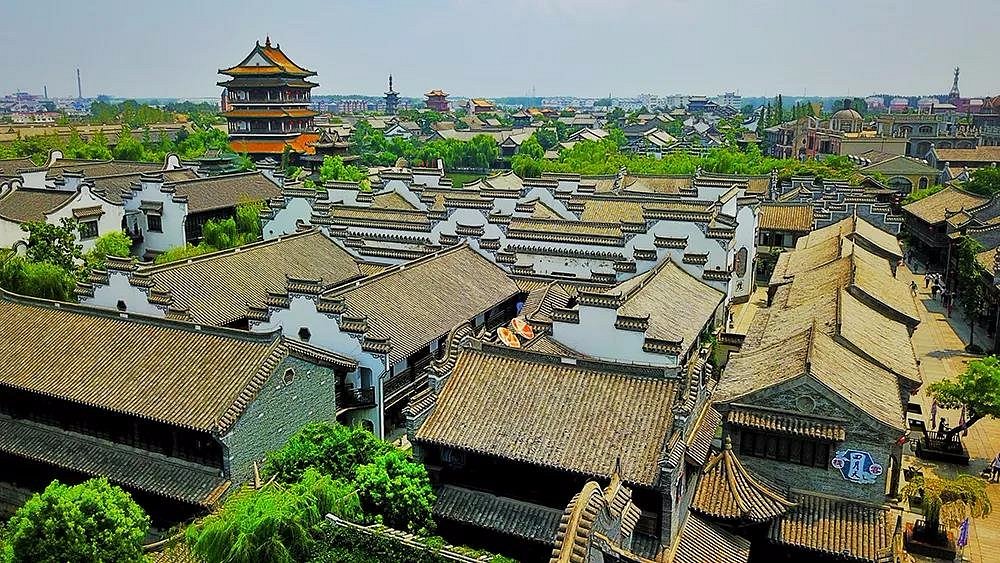
    Chen Ping’s hometown, Yuanyang(Yangwu) County

    The 2nd year of Emperor Gaozu(205 B.C.)

    In October of that winter, King Xiang Yu issued a secret order to the King of Jiujiang, the King of Hengshan, and the King of Linjiang to attack the Honorary Emperor. They murdered the emperor and disposed of his body in the river.

    Chen Yu drafted a force from his three-county fiefdom and joined a surprise attack on the Kingdom of Changshan alongside the troops from the Kingdom of Qi. The King of Changshan, Zhang Er, failed to defend his kingdom and fled westward to the army of Han, where he sought refuge with the King of Han in Feiqiu County. The King of Han received him with high regard. Chen Yu welcomed back the former King Zhao Xie from the Kingdom of Dai and reinstated him as the King of Zhao. In gratitude, the King of Zhao granted Chen Yu the title of King of Dai. However, Chen Yu did not go to his kingdom; instead, he remained in the capital to assist the new King of Zhao in establishing a new government. He sent Xia Yue to the Kingdom of Dai as the prime minister.

    Zhang Liang escaped from the Kingdom of Hán and returned by taking an alternate route. The King of Han awarded him the title of Marquis Chengxin. Zhang Liang was in poor health and had never commanded an armed force on his own. He often served as a strategist, remaining at the King of Han‘s side.

    The King of Han went to Shan County to console the people outside the Kingdom of Qin. The King of Henan, Shen Yang, submitted to the King of Han, and the Kingdom of Han established the administration of Henan Commandery.

    The King of Han appointed Xin, the grandson of King Xiang of Hán, as the chief commander of the armed forces of Hán. He ordered Xin’s troops to recapture the territory of the former Kingdom of Hán. Xin led a blitzkrieg on Yangcheng County, compelling Zheng Chang, the King of Hán appointed by Xiang Yu, to surrender. The King of Han then granted Xin the title of King of Hán. Xin continued to command the armed forces of Hán, staying by the side of the King of Han most of the time.

    The King of Han moved the capital to Yueyang City. 

    Several generals of the Kingdom of Han conquered the Longxi Commandery.

    In January of that spring, King Xiang Yu and his army advanced north, arriving at Chengyang Commandery. The King of Qi, Tian Rong, led his troops into a decisive battle there but was defeated. Tian Rong fled to Pingyuan County, where he was killed by the local people. King Xiang Yu then reinstalled Tian Jia as the King of Qi.

    King Xiang Yu’s troops continued north to Beihai Commandery, pillaging cities, burning castles, and destroying residential houses along the way. They buried Tian Rong’s surrendered soldiers alive and took the elderly, the young, and women as prisoners, enslaving them. The devastation they left in their wake forced the people of Qi to unite and rise in revolt.

    A general of Han conquered the town of Beidi and captured Zhang Ping, the younger brother of the King of Yong, Zhang Han.

    In March, the King of Han crossed the Yellow River at Linjin Pass. The King of West Wei, Wei Bao, surrendered and placed his troops under the King of Han’s command. The Han army then sacked the Kingdom of Henei and captured the King of Yin, Sima Ang, establishing an administration in the Henei Commandery.

    A man from Yangwu county named Chen Ping came from a poor family but had a passion for reading. He was once in charge of distributing sacrificial meat among his community after the ceremonies of progenitor worship. Chen Ping sliced and divided the meat so evenly that he received praise from the community. The locals said, “We are fortunate to have this young man in charge of the meat sharing.” Chen Ping sighed and replied, “Ah! If only you could make me responsible for the whole country; public affairs would be as well taken care of as this meat!”

    When the allies rebelled against the rule of Qin, Chen Ping worked for the King of Wei, Wei Jiu, as the minister of transportation. He proposed some ideas to Wei Jiu, but they were not adopted. Disheartened, he left Wei Jiu when a scandal was spread about him. He later joined Xiang Yu and was given a position as a staff officer. When the King of Yin, Sima Ang, rebelled against Xiang Yu, Chen Ping was sent to suppress the mutiny, successfully forcing Sima Ang to back down. On his triumphant return, he was promoted to chief commandant and awarded 480 ounces of gold.

    Shortly afterward, the King of Han took over the Kingdom of Yin, and Sima Ang surrendered. Furious, Xiang Yu considered punishing the officers who had previously suppressed Sima Ang’s mutiny. Fearing for his safety, Chen Ping returned the gold and the seal of the chief commandant to Xiang Yu, changed his clothes, and fled via alternate routes, taking only a sword with him. He crossed the Yellow River and joined the forces of Han in Xiuwu county. With the help of his friend Wei Wuzhi, Chen Ping secured an appointment with the King of Han.

    The King of Han summoned Chen Ping and dined with him. As the King was about to send Chen Ping to rest in the guest house, Chen Ping insisted, “I have come with a mission. What I need to discuss cannot wait another day.” The King of Han, delighted by their conversation, asked Chen Ping, “What rank did you hold in the Kingdom of Chu?” Chen Ping replied, “I was a chief commandant.” The King of Han immediately reinstated him as chief commandant, appointed him to his entourage, and made him the supervisor of army officers.

    These rapid promotions caused an uproar among the Han generals. They complained, “Can you believe it? The King accepts a defector from Chu, puts him in his entourage, and even makes him to be a supervisor to oversee veterans like us!” Despite the complaints, the King of Han, aware of the discontent, only trusted Chen Ping more.

  • Comprehensive Reflections to Aid in Governance(Part 61): The Spark That Ignited A Conflagration

    Comprehensive Reflections to Aid in Governance

    By Sima Guang

    Translated By Yiming Yang

    Annals of Qin Book 2 Scroll 7 (continued)

    Chen Sheng and Wu Guang Uprising

    The 1st year of the Second Emperor(209 B.C.)

    On October 10, during the winter, a national amnesty was declared. 

    In the spring, the Second Emperor embarked on a journey to the eastern provinces, accompanied by Chancellor Li Si. They traveled eastward to Mount Jieshi on the coast and southward to the commandery Kuaiji before returning. The Second Emperor inscribed his name on all the monuments previously erected by the First Emperor, adding the names of his entourage alongside. These inscriptions reiterated the achievements and virtues of the late emperor.

    Around April, nearing summer, the Second Emperor returned to Xianyang. He said to Zhao Gao, “The time of a person in this world passes as swiftly as driving a six-horse chariot over a crack in the road. Now that I am the lord of the empire, I should indulge my senses with as much pleasure as possible and fill my heart with as much joy as I desire. Can I live this way until my time is up?” Zhao Gao replied, “That is exactly what a wise lord would do, but a foolish one would not. However, we are not there yet. Let me advise Your Majesty: The princes and ministers are suspicious of what happened at Shaqiu. These princes are your elder brothers, and these ministers were appointed by the late emperor. Your Majesty has just ascended to the throne, and these princes and ministers, harboring doubts and fears, may incite rebellion. I fear for my life every day. How can Your Majesty enjoy yourself under these circumstances?”

    The Second Emperor asked, “What should we do?” Zhao Gao responded, “Your Majesty must strengthen the law and intensify punishments. Encourage criminals to inform on others, and eliminate all royalties and ministers by guilt of association. Then, elevate the oppressed, enrich the poor, and promote the low-born to high positions. Replace the ministers from the late emperor’s reign with people who are close to and trusted by Your Majesty. These new appointees will be grateful to Your Majesty. By purging the discontented and conspirators, leaving only your loyal supporters, Your Majesty will finally enjoy peaceful nights and as much pleasure as you wish. This is the best advice I can offer.” The Second Emperor agreed to the plan. He made criminal laws more draconian and cruel. Once an official or royal was accused of an offense, he immediately handed them over to Zhao Gao for interrogation and prosecution. Twelve princes were executed in Xianyang, and ten princesses were quartered in Du County. Their properties were confiscated, and countless others implicated by them were arrested.

    Prince Jiang Lü and his two brothers, born of the same mother, were confined in the inner palace. They were the latest to be accused. A messenger from the Second Emperor informed Jiang Lü, “Your conduct toward the emperor was improper for a subject. This crime is punishable by death. Justice will be served by law officers.” Jiang Lü responded, “I have never violated court protocol, never misbehaved during ceremonies, and never been disrespectful when speaking to the Emperor. What inappropriate behavior have I committed? I wish to know my crime before I die!” The messenger replied, “The sentencing is beyond my authority. I am merely delivering the verdict.” Prince Jiang Lü cried out “Heaven” three times and wailed, “I am innocent!” His brothers wept with him before they took their own lives with their swords. The entire royal family was horrified. 

    Prince Gao, another half-brother of the Second Emperor, considered fleeing but feared that his kin would suffer. He wrote to the Second Emperor, saying, “When the late Emperor was alive, I was granted fine food every time I attended court; I was provided with chariots whenever I needed to travel. His Majesty gifted me robes made for the emperor and horses from the royal stables. I should have accompanied His Majesty, but I did not. I am unfilial as his son and disloyal as his servant. A person lacking both filial piety and loyalty has no place in this world. I wish to die and be buried at the foot of Lishan Mausoleum. I beg Your Majesty to grant me this mercy!” The Second Emperor read the letter with delight and showed it to Zhao Gao, saying, “He is truly desperate, isn’t he?” Zhao Gao replied, “Subjects won’t contemplate rebellion when they are preoccupied with how to die.” The Second Emperor approved the request and granted burial money of one hundred thousand coins.

    The Second Emperor resumed the construction of the E’fang Palace. Fifty thousand gladiators were conscripted to Xianyang to form the royal guard, where they were trained in archery. The court raised a large number of dogs, horses, birds, and other wild animals. Fearing a shortage of fodder, the Second Emperor ordered all commanderies and counties to supply soybeans, grains, straw, and hay. Those transporting fodder to Xianyang had to provide their own food. Grain produced within a three-hundred-mile radius of Xianyang was prohibited for private consumption, and must proffer the grain to the court.

    In July of that autumn, Chen Sheng from Yangcheng county and Wu Guang from Yangxia county led an insurgency in Qi County. They had been drafted in the fourth round to secure the border near Yuyang commandery, along with nine hundred other conscripts stranded in a village called Daze[Big Marsh]. Chen Sheng and Wu Guang, both team leaders, found themselves delayed due to heavy rain, which caused road closures and made them miss the rendezvous. According to the law, this delinquency was punishable by beheading. Recognizing the people’s grievances and resentment, Chen Sheng and Wu Guang killed their commanders. They then addressed their comrades: “We’re doomed to be beheaded for being late. Even if pardoned, life on the frontier is so harsh that six or seven out of ten of us would surely die. A man doesn’t want to die; if he must die, he would rather die making a name for himself. Do the kings and nobles truly have blue blood in their veins?” Inspired, everyone followed their lead.

    They built an altar and made pledges in the name of Prince Fusu and General Xiang Yan, claiming to restore the fallen kingdoms and calling their state Great Chu. Chen Sheng declared himself general, and Wu Guang became his lieutenant. They took control of Daze Village, then raided Qi County, overcoming the resistance there. They sent Ge Ying, a man from the town Fuli, to lead troops to the east of Qi County, where they attacked and conquered Zhi county, Cuo county, Ku county, Zhe county, and Qiao county. By the time they approached Chen county, their forces had grown to six or seven hundred chariots, more than a thousand cavalry, and tens of thousands of foot soldiers. With the county chief and sheriff absent, only the administrator was left to defend the gate rampart. The defenders could not hold off the attackers and were killed. Chen Sheng then occupied Chen county.

  • Comprehensive Reflections to Aid in Governance(Part 53): Migrant Worker Li Si

    Comprehensive Reflections to Aid in Governance

    By Sima Guang

    Translated By Yiming Yang

    Annals of Qin Book 1 Scroll 6 (continued)

    An inscription by Li Si

    The 10th year of the First Emperor(237 B.C.)

    In October, during the winter, Marquis Wenxin was dismissed from his position as Chancellor and left for his fief town. 

    The imperial clans and court officials proposed: “All the foreigners from other kingdoms who came to our state for employment are agents lobbying or spying for their lords. Please deport all of them from our country.” The king promulgated a decree for a broad search and deportation of all foreigners. An official named Li Si, hailed from the kingdom of Chu, was on the list to be deported. On his way out, he submitted a plea to the king:

    “When Duke Mu of Qin sought talents, he acquired You Yu from Tribe Rong in the west. From the east, he recruited Baili Xi from Wan, a city in the kingdom of Chu. He welcomed Jian Shu from the state of Song and invited Pi Bao and Gongsun Zhi from the kingdom of Jin. These talents enabled the kingdom of Qin to annex around twenty states and dominate the western frontier. Duke Xiao of Qin adopted the laws proposed by Shang Yang, causing other monarchs to bow down to the kingdom of Qin. King Hui of Qin utilized the strategy of Zhang Yi to dismantle the vertical alliance of six kingdoms, making them concede to Qin. King Zhaoxiang of Qin strengthened the power of the Royal Court and weakened private enterprises. These achievements were made possible with the help of these four foreigners. From this perspective, what harm has been done by these guest workers?”

    “Beautiful women, music, pearls, and jade that are not produced in the kingdom of Qin, did not prevent them being collected and enjoyed by Your Majesty. Guest workers are treated differently. People are deported simply because they are foreigners, regardless of their qualifications and character. This policy prioritizes the appeal of beauty, music, pearls, and jade over men. I have learned that Mount Tai becomes great because it does not reject any soil; the Yellow River and oceans become deep because they do not reject any trickle. A lord demonstrates his kindness by not rejecting ordinary people. That is why the three Sovereigns and five Emperors in history were unmatched. Now, Your Majesty abandons immigrants to enemy kingdoms and repels guest workers to other monarchs. This amounts to providing supply for invaders and gifting grain to burglars.”

    The king called Li Si back, reinstated him as a top official, and rescinded the deportation decree. Li Si had already traveled to the town of Liyi and returned to the capital. Eventually, the king adopted Li Si’s proposal. He sent orators carrying gold and jade to lobby other monarchs. Those nobles who accepted the bribes were bought off, and those elites who declined the bribes were assassinated. Sowing discord among the lords and their ministers, followed by armed invasions led by generals with excellent records, led the king of Qin to unify the country within a few years.

    The 11th year of the First Emperor(236 B.C.)

    The army of Zhao attacked the kingdom of Yan and captured the cities of Li and Yangcheng. Before the war concluded, the army of Qin, led by generals Wang Jian, Huan Yi, and Yang Duanhe, raided the kingdom of Zhao. They attacked the city of Ye and seized nine towns. Specifically, Wang Jian captured the cities of Yuyu and Liaoyang, while Huan Yi took the cities of Ye and Anyang.

    King Daoxiang of Zhao died, and his son Zhao Qian succeeded him as King Youmiu of Zhao. His mother, a prostitute, had bewitched King Daoxiang of Zhao, leading him to install Zhao Qian as the crown prince, replacing his eldest son Zhao Jia. Prince Zhao Qian had a poor reputation for his misconduct in the kingdom.

    Marquis Wenxin had been in his fiefdom for about a year. Envoys and admirers from other monarchs tripped over each other on visiting him, all inviting him to their states. The king of Qin feared potential unrest and wrote a letter to Marquis Wenxin: “What achievements did you accomplish for the kingdom of Qin to justify a fief of one hundred thousand households and being the lord of Henan city? What lineage do you have to the court to deserve the appellation of The Uncle? Take your family to Shu!”

    Marquis Wenxin realized his fate was doomed and was terrified of his impending execution.

    The 12th year of the First Emperor(235 B.C.)

    Marquis Wenxin committed suicide by drinking a toxic potion, and his family buried him quietly. His minions who had participated in the funeral were driven into exile. The king declared, “From now on, the possessions of ministers who commit indecency, such as Lao Ai and Lü Buwei, will be confiscated. This sets the precedent.”

    Yang Xiong commented in his book “Exemplary Figures”:  Someone asked, ‘Was Lü Buwei wise, as he traded people like merchandise?’ The answer was, ‘Who said Lü Buwei was a wise man? He traded his family’s life for a fiefdom. A burglar like Lü Buwei is merely a master gopher. I have seen a gopher get away with a hundred kilograms of grain, but I have never seen a gopher steal a city like Luoyang.’

    There was no rainfall from June to August in the kingdom of Qin

    The king of Qin mobilized the armed forces from four commanderies to aid the kingdom of Wei in a raid against Chu.

  • Comprehensive Reflections to Aid in Governance(Part 48): Don’t Kick A Man When He is Down

    Comprehensive Reflections to Aid in Governance

    By Sima Guang

    Translated By Yiming Yang

    Annals of Qin Book 1 Scroll 6 (continued)

    Xianyang, Shaanxi Province

    The 53rd year of King Zhaoxiang(254 B.C.)

    General Jiu of Qin attacked the Kingdom of Wei and captured the city of Wucheng. 

    The King of Han then made a pilgrimage to the Kingdom of Qin. The entire Kingdom of Wei came under the influence of Qin, following its orders.

    The 54th year of King Zhaoxiang(253 B.C.)

    The King of Qin traveled to the town of Yong, on the outskirts of Xianyang, to perform a rite of heaven worship. 

    The Kingdom of Chu relocated its capital to the city of Juyang.

    The 55th year of King Zhaoxiang(252 B.C.)

    Lord Huai of Wey made a pilgrimage to the Kingdom of Wei. He was imprisoned and killed by the Wei people, who then installed his younger brother, Lord Yuan, as his successor. Lord Yuan is the son-in-law of the King of Wei.

    The 56th year of King Zhaoxiang(251 B.C.)

    In late September, during the autumn, King Zhaoxiang of Qin passed away. His son Zhu ascended to the throne as King Xiaowen of Qin. He posthumously honored his late mother, Bazi Tang, with the title of Queen Dowager Tang. King Xiaowen designated Prince Zichu as the crown prince and brought his wife and son from the Kingdom of Zhao to Qin. The King of Han paid tribute to the late king, wearing a full mourning dress.

    The King of Yan, Xi, sent his prime minister, Li Fu, to the Kingdom of Zhao to form an alliance. Li Fu contributed five hundred catties of gold to the King of Yan and spent the entire day drinking with him. Upon returning home, Li Fu advised the King of Yan: “The adults of Zhao were all killed in the Battle of Changping. Their orphans are still too young. Now is a good time to attack.” The King of Yan then summoned Lord Changguo, Yue Jian, for advice. Yue Jian responded, “Zhao is a kingdom surrounded on four sides by adversaries and survives. Their people are accustomed to and skilled in warfare. We should not attack them.” The King asked, “What if we send in troops five times their number?” Yue Jian’s answer remained, “No.” The King was irked, but his subordinates all agreed to the attack. Consequently, he mobilized two thousand chariots. Li Fu led the attack on the city of Hao, while Qing Qin attacked the city of Dai.

    Jiang Qu, an official of Yan, spoke against the war: “We made an alliance with them; we paid five hundred catties of gold to drink with their king; our envoy reported on them, and now we will attack them. I do not feel promising about this and am afraid it won’t be successful.” The King of Yan refused to listen and led the second group of troops behind the first group. Jiang Qu held the king’s ribbon and would not let go. The king kicked him off, but Jiang Qu cried out, “I am not doing this for myself. I am doing it for the king.” The troops of Yan went to Songzi county, were counterattacked by an army led by General Lian Po. Li Fu was defeated at the city of Hao, while Qing Qin was defeated by an army led by Yue Sheng at the city of Dai. The troops of Yan were chased five hundred miles northward, and the capital of Yan was besieged by the army of Zhao. The Kingdom of Yan sued for peace, with Zhao demanding, “You must have Jiang Qu come to talk about peace.” The King of Yan appointed Jiang Qu as prime minister and sent him to negotiate the peace treaty. Subsequently, the troops of Zhao withdrew.

    Lord Pingyuan of Zhao died this year.

    The 1st year of King Xiaowen(250 B.C.) 

    In the winter of October, King Xiaowen was installed, but he died after only three days on the throne. His son Zichu succeeded him as King Zhuangxiang of Qin. He bestowed the title of Queen Dowager Huayang upon Madame Huayang and Queen Dowager Xia upon his birth mother, Lady Xia.

    A general from Yan conquered the city of Liaocheng from the Kingdom of Qi. Someone bad-mouthed him before the King of Yan, making the general fear returning home, forcing him to defend the city instead. Tian Dan led troops of Qi to lay siege to Liaocheng, but after more than a year, the city had not fallen. Lu Zhonglian wrote a letter, attached it to an arrow, and shot it over to the general. In the letter, he outlined the pros and cons: “From your point of view, you can either return to Yan or surrender to Qi. Now, you are defending a besieged city with increasing Qi forces and no aid from Yan. What will you do?”

    The general read the letter and sobbed for three days, unable to decide. Returning to Yan meant facing discord, while surrendering to Qi meant risking abuse for having killed many prisoners of war. He finally lamented, “I would rather slash my throat myself than be slashed by others!” He committed suicide, and Liaocheng descended into chaos. Tian Dan broke in and took the city. Upon his return to Qi, he credited Lu Zhonglian for the victory. The King of Qi wished to award Lu Zhonglian a knighthood, but Lu Zhonglian fled to the sea, saying, “I would rather live lowly and poorly yet freely, ignoring secular affairs, than live rich and famous but succumb to others.”

    King Anxi of Wei sought a recommendation for a noble person from Zishun. Zishun replied, “There is no such person. If you consider the next best, it would be Lu Zhonglian.” The king said, “Lu Zhonglian seems make-believe, not natural to me.” Zishun responded, “All men make-believe to do good. If he continues to do good, then he becomes a nobleman. When good deeds become habitual, then they are natural.”

    The 1st year of King Zhuangxiang(249 B.C.)

    Lv Buwei became the Chancellor of Qin

    The Lord of East Zhou conspired with other monarchs to plot attacks on the Kingdom of Qin. The King of Qin ordered the Chancellor to lead a campaign to annex the state. The Lord of East Zhou was forced to settle in the village of Yangrenju. The rituals of praying for the progenitors of the Zhou dynasty were discontinued thereafter. By the time the Zhou dynasty ended, it still had seven cities: Henan, Luoyang, Gucheng, Pingyin, Yanshi, Gong, and Goushi.

    The King of Qin awarded one hundred thousand families in the cities of Henan and Luoyang to Chancellor Lv Buwei as a fief and granted him the title Marquis Wenxin

    General Meng Ao of Qin raided the Kingdom of Han, capturing the cities of Chenggao and Xingyang. He established the prefecture of Sanchuan (Three Rivers) to govern these two cities. 

    The Kingdom of Chu annexed the state of Lu and relocated Duke Qing of Lu to the town of Bian, where he became a domestic helper.

  • Comprehensive Reflections to Aid in Governance(Part 43): Self-Recommending Mao Sui

    Comprehensive Reflections to Aid in Governance

    By Sima Guang

    Translated By Yiming Yang

    Annals of Zhou Book 5 Scroll 5 (continued)

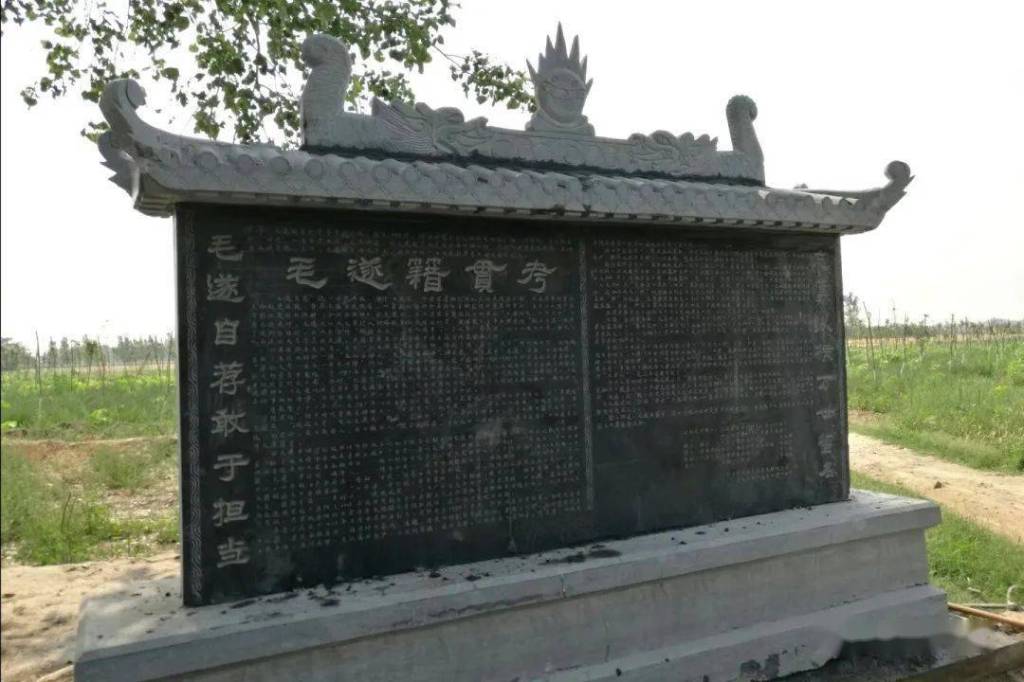
    Mao Sui’s Hometown

    The 57th year of King Nan(258 B.C.)

    In January, Wang Ling initiated an assault on Handan, the capital of the Zhao kingdom. However, his efforts were met with resistance, leading to setbacks. Responding to the situation, the King of Qin dispatched additional troops to reinforce Wang Ling’s campaign. Despite this reinforcement, Wang Ling suffered the loss of an additional five regiments of soldiers.

    Meanwhile, Lord Wu’an recovered from his illness, becoming a pivotal figure in the unfolding events. As the situation escalated, the King of Qin contemplated replacing Wang Ling with Lord Wu’an. However, Lord Wu’an, displaying strategic foresight and declined, “The fortress of Handan presents a formidable challenge to breach. Imminent reinforcements from neighboring kingdoms poised to aid Zhao further compound our difficulties. Lingering animosities towards Qin among these kingdoms exacerbate the situation, fueled by the bitter memories of past conflicts, notably the Battle of Changping, where despite our victory, we suffered significant casualties, halving our army’s strength. Consequently, our nation finds itself depleted of both manpower and resources. Attempting to traverse treacherous terrains and river crossings to lay siege to Zhao‘s capital would likely result in our forces being sandwiched between Zhao‘s defenders within and the combined might of other kingdoms attacking from without.”

    Recognizing the gravity of Lord Wuan‘s counsel, the King of Qin sought to persuade him through Marquis Ying. However, Lord Wu’an remained steadfast, citing his ongoing illness as an evasion to military engagement. Ultimately, the King of Qin appointed Wang He to assume command, relieving Wang Ling of his duties.

    Upon receiving the king of Zhao‘s directive to seek military aid from the kingdom of Chu, Lord Ping’yuan began assembling a retinue for the journey. After gathering his followers, he meticulously selected twenty attendants renowned for their prowess in both scholarly and martial pursuits. Among them, nineteen were chosen, leaving one vacancy yet to be filled.

    At this juncture, a man named Mao Sui stepped forward, recommending himself for the remaining spot. However, Lord Ping’yuan, unimpressed, rebuffed him,”Those who stand out in society are akin to an awl in a bag—The tip would show in the bottom inevitably. Professor Mao, despite being a member of my dining circle for three years, has failed to garner any praise or recognition from those around me. Your talents have not been acknowledged simply because you lack them, Professor Mao. I’m afraid you don’t possess the requisite qualities for this task. Therefore, you will remain behind.” In response, Mao Sui countered, “I am requesting to be dropped into the bag today. If I had been included earlier, I would have already made my mark, let alone just showing a tip.” Lord Ping’yuan, acknowledging Mao Sui‘s persistence and perhaps intrigued by his confidence, approved his request to join as the twentieth attendant. Meanwhile, the other nineteen attendants exchanged glances and shared a laugh at Mao Sui‘s audacity.

    Lord Ping’yuan engaged in lengthy negotiations with the king of Chu regarding the merits and drawbacks of forming a vertical alliance. Despite their efforts, a consensus proved elusive, with discussions stretching from sunrise until noon. Sensing impatience, Mao Sui,  laid his hand on his sword and walked up the stairs, interjected by approaching Lord Ping’yuan and remarking, “The advantages and disadvantages of a vertical alliance can be summed up in two sentences. Why did our talks take so long?”

    Enraged by this interruption, the king of Chu lashed out at Mao Sui, “Why don’t you leave this place! I am addressing your lord. What business do you have here?”

    Mao Sui held his sword and countered, “Your Majesty directs his ire at me due to the kingdom of Chu‘s populous nature. However, within a mere ten steps, Your Majesty cannot rely solely on numerical advantage. Your life hangs in the balance, held by my hand. Moreover, with my lord present, why address me in such a manner? I draw inspiration from historical examples: Shang Tang ascended from a mere seventy-mile base to become a global ruler, and King Wen of Zhou brought all lords under his sway with a mere hundred-mile domain. Did they achieve such feats solely through sheer force? No, they prevailed by seizing advantageous positions and fostering unwavering loyalty among their followers.”

    “The kingdom of Chu, boasting a vast territory spanning five thousand miles and an army numbering a million strong, stands as a formidable hegemon. No other kingdom can rival its might. Bai Qi, merely a lackey, led troops in a campaign against Chu, committing egregious acts such as seizing Yan and Ying, burning Yiling.  He vandalized your ancestral shrines and dishonored your progenitors in the third battle. These despicable acts echo through generations, casting shame even upon the people of Zhao. Yet, Your Majesty appears unfazed by these atrocities.  The vertical alliance serves not the interests of Zhao but those of Chu. Why then, direct your anger towards me in the presence of my lord?”

    The king of Chu, taken aback by Mao Sui‘s assertiveness, swiftly agreed, declaring, “Yes! Yes! My country will join the alliance just as the Professor suggested.” Mao Sui, seeking confirmation, inquired once more, receiving a resolute “Affirmative” from the king of Chu. With the decision made, Mao Sui directed the attendants of the king of Chu to fetch chicken, dog, and horse blood.

    Presenting a copper plate filled with animal blood, Mao Sui knelt before the king of Chu, proposing a blood oath to solidify the alliance. The king of Chu, as the primary participant, would swear first, followed by Lord Ping’yuan and then Mao Sui himself. With the ritual completed, the alliance was formally established.

    Mao Sui then gestured for the nineteen attendants of Lord Ping‘yuan to swear their allegiance using the same blood,”You all will swear the oath using this blood down there. You are nothing but useless free-riders, relying on others to accomplish tasks.”  With the pact secured, Lord Ping’yuan departed for the kingdom of Zhao, reflecting on his newfound respect for intellectuals, “Zhao Sheng will never judge an intellectual again in this world.” and elevating Mao Sui to a position of high regard.

    In support of the alliance, the king of Chu dispatched troops under the command of Lord Chun’shen to aid Zhao, while the king of Wei contributed a hundred thousand soldiers led by Jin Bi.

    The king of Qin dispatched a diplomat with a threatening message to the king of Wei: “I am poised to dismantle the kingdom of Zhao within days. Those who attempt to aid Zhao will face our wrath once Zhao falls.” Fearing Qin‘s might, the king of Wei instructed General Jin Bi to halt the advance and fortify positions near the city of Ye. Despite claiming to support Zhao, Wei’s actions suggested a pragmatic hedging of bets.

    Simultaneously, the king of Wei covertly dispatched General Xinyuan Yan to Handan, aiming to persuade the king of Zhao to crown the king of Qin as emperor, facilitated by Lord Ping’yuan. In return, Wei hoped for Qin‘s withdrawal from their territory.

    During this time, Lu Zhonglian, a scholar from Qi, encountered Xinyuan Yan in Handan. Expressing his vehement opposition,”The kingdom of Qin is a realm where principles and ethics are forsaken, and soldiers vie to amass the highest tally of severed heads as their ultimate accolade. If the king of Qin were to ascend to the imperial throne, I would sooner cast myself into the eastern ocean than submit as a subject. For people of Liang witnessing the grim repercussions of Qin‘s imperial reign, I would suggest the unthinkable: to have the king of Qin cook the king of Liang into a stew.”

    Xinyuan Yan, deeply offended, exclaimed, “How could you suggest such a gruesome act as having the king of Qin cook the king of Liang into stews?”

    Undeterred, Lu Zhonglian pressed on, saying, “Of course! Allow me to explain.”Lu Zhonglian elaborated on his analogy, recounting a historical tale, “Marquis Gui, Marquis E, and King Wen of Zhou served under King Zhou of the Shang dynasty. Marquis Gui, seeking favor, offered his beautiful daughter to King Zhou. However, displeased with her appearance, King Zhou callously had Marquis Gui cooked into stews. Marquis E attempted to reason with King Zhou through debate, but in response, King Zhou had Marquis E turned into jerky. Upon hearing of these atrocities, King Wen of Zhou lamented the cruelty. King Zhou, angered by King Wen’s disapproval, imprisoned him in a warehouse in Youli, intending to starve him to death.”

    “Now, consider this: Qin stands as a formidable nation, boasting ten thousand chariots. Yet, so does Liang. With both realms wielding equal military might and claiming kingship, why does Liang entertain the idea of elevating Qin‘s king to emperor, especially after Qin‘s recent victory? By doing so, aren’t you essentially putting yourselves at risk of being treated as mere commodities – perhaps even as ingredients for a gruesome meal? Imagine if the king of Qin boldly proclaims himself emperor. He would wield unparalleled power, dictating orders to the entire world. He would meddle in the affairs of his vassals, promoting those he favors and demoting those he despises. He would force his daughters and concubines into marriages solely for political gain, extending his influence over Liang‘s court. How could the king of Liang hope to maintain peace under such tyranny? And how could General Xinyuan retain his position as the king’s favorite?”

    Xinyuan Yan stood up and bowed repeatedly to Lu Zhonglian, expressing his newfound respect: “Now I recognize Professor to be a world-class scholar! Let me return, and I promise never to advocate for making the king of Qin emperor again!”

  • Comprehensive Reflections to Aid in Governance(Part 18): Lord Mengchang

    Comprehensive Reflections to Aid in Governance

    By Sima Guang

    Translated By Yiming Yang

    Annals of Zhou Book 2 Scroll 2 (continued)

    Lord Mengchang

    The 39th year of King Xian (330 B.C.)

    The Kingdom of Qin launched an offensive against the Kingdom of Wei, resulting in a siege of the cities of Jiao and Quwo. In response, the Kingdom of Wei surrendered the city of Shaoliang and other territories located on the west bank of the Yellow River to the Kingdom of Qin.

    The 40th year of King Xian (329 B.C.)

    The troops of Qin launched an invasion of the Kingdom of Wei, successfully crossing the Yellow River and capturing the cities of Fenyin and Pishi. They also managed to sack the city of Jiao during their campaign.

    King Wei of Chu passed away, and he was succeeded by his son, who took the throne as King Huai of Chu.

    Meanwhile, in the state of Song, Duke Ticheng’s brother, named Song Yan, orchestrated a surprise attack on Duke Ticheng. Fearing for his safety, Ticheng fled to the state of Qi. Following this, Song Yan declared himself the lord of Song, taking control of the state.

    The 41st year of King Xian (328 B.C.)

    Prince Hua and Zhang Yi of Qin conducted another siege, this time targeting the city of Puyang in the state of Wei. They successfully captured the city during the campaign. However, Zhang Yi, recognizing the importance of diplomacy, persuaded the King of Qin to return Puyang to Wei. In addition to this, he sent Prince Yao to Wei as a hostage to strengthen relations.

    Subsequently, Zhang Yi employed his diplomatic skills to lobby the King of Wei. He emphasized that Qin had treated Wei generously and that Wei should reciprocate in kind. As a result, the state of Wei gifted fifteen counties in the Shangjun area to Qin as a token of their gratitude. This diplomatic success led to Zhang Yi‘s promotion to the prime minister of Qin.

    The 42nd year of King Xian (327 B.C.)

    The ancient tribal state of Yiqu, a historical rival of the Kingdom of Qin, was incorporated into Qin as a county. The lord of Yiqu now became a subordinate under the rule of the King of Qin.

    Additionally, the Kingdom of Qin returned the cities of Jiao and Quwo to the Kingdom of Wei as part of a restitution agreement.

    The 43rd year of King Xian (326 B.C.)

    Following the death of Marquis Su, his son, Zhao Yong, ascended to the throne as King Wuling of Zhao. During his reign, he implemented several important reforms. He established the position of three state professors known for their extensive knowledge. Additionally, he appointed three prosecutors each to the left and right justice departments. King Wuling also paid a visit to a respected advisor of his predecessors, Feiyi, and increased his emolument as a sign of recognition and respect. 

    The 44th year of King Xian (325 B.C.)

    In the summer season, the ruler of Qin proclaimed himself as a king for the first time, signifying a shift in the state’s status.

    During this time, Marquis Ping of Wey passed away, and his son Sijun succeeded him as the new ruler. An interesting incident occurred involving a convict from the state of Wey who had managed to escape to the neighboring state of Wei. In Wei, this convict used his skills to cure an illness afflicting the Queen Dowager. Learning of this, Sijun, the ruler of Wey, decided to bring the convict back to his state and was willing to pay a hefty sum of fifty ounces of gold for his return.

    However, the envoys sent to negotiate the convict’s return failed in their mission on five separate occasions. Undeterred, Sijun made a bold decision. He offered the city of Zuoshi in exchange for the release of the convict. His advisors were initially opposed to this, questioning the wisdom of trading a city for a single convict.

    Sijun, however, remained resolute in his decision. He said: “You don’t understand. There are no small matters in governance; even the slightest disturbance can lead to chaos. If we don’t uphold the law and ensure that crimes are punished, having ten cities like Zuoshi won’t benefit our state. However, if we maintain the rule of law and hold wrongdoers accountable, the loss of ten cities is insignificant in comparison”

    Word of this exchange reached the King of Wei, who commented on the situation: “It does not bode well in opposition to another rule’s will.” He ordered that the convict be put in a prison carriage and returned to Sijun’s state without requesting any compensation, respecting the principles of justice and governance.

    The 45th year of King Xian (324 B.C.)

    Zhang Yi, leading the Qin troops, conducted a successful raid on the Kingdom of Wei, capturing a place called Shan.

    Meanwhile, Su Qin became involved in an affair with the dowager of Duke Wen of Yan. When her son, King Yi of Yan, discovered this, Su Qin was filled with terror. To remedy the situation, he proposed to King Yi of Yan that his presence in Yan did not garner more respect for the kingdom and that other states might admire Yan more if he were to go to the Kingdom of Qi and lead from there. King Yi of Yan agreed to this plan. Su Qin then pretended to have a falling-out with Yan and fled to the Kingdom of Qi. King Xuan of Qi appointed him as his visiting adviser. In this role, Su Qin encouraged the King of Qi to build grand halls, arenas, extensive gardens, and hunting grounds, intentionally worsening the finances of the Kingdom of Qi to benefit their rival, the Kingdom of Yan.

    The 46th year of King Xian (323 B.C.)

    In a meeting at the city of Niesang, the Prime Minister of Qin, Zhang Yi, convened with the Prime Ministers from the Kingdoms of Qi and Chu.

    Interestingly, during this time, the lords of the states Han and Yan both proclaimed themselves as kings. However, King Wuling of Zhao chose not to do so, stating that he saw no reason to claim a title without the substance to support it. He ordered his people to continue addressing him as Lord.

    The 47th year of King Xian (322 B.C.)

    After the meeting at Niesang, Zhang Yi was removed from his position as the Prime Minister of Qin. He then assumed the role of Prime Minister in the Kingdom of Wei. In this position, Zhang Yi aimed to set an example of submission to the Kingdom of Qin for other states. However, the King of Wei was reluctant to comply with this plan.

    In response, the King of Qin ordered an invasion of the Kingdom of Wei and successfully captured the cities of Quwo and Pingzhou. To reward Zhang Yi for his efforts, the King of Qin secretly provided him with additional compensation.

    The 48th year of King Xian (321 B.C.)

    Lord Jingguo considered building walls and fortresses around his fief city of Xue. However, one of his guest advisers offered a different perspective: “Have you heard about the giant fish in the ocean, my lord? The fish is so large that neither nets nor hooks could do anything to it. However, it becomes the victim of bugs as soon as it leaves the water. Now the Kingdom of Qi is the water to you, my lord. As long as you are in charge of Qi, why bother to secure the city of Xue? Conversely, could you count on the city of Xue even if you build the walls sky-high, if you lost the power over the kingdom of Qi?” Lord Jingguo heeded this advice and gave up the idea.

    Lord Jingguo has more than forty sons.  One of them, Tian Wen, despite his humble birth from a lowly concubine, possessed charisma and shrewdness. He advised his father, Lord Jingguo, to invest generously in hiring scholars and experts as counselors. Tian Wen himself played the role of a gracious host, wining and dining these guests extravagantly. As a result, all the counselors couldn’t help but praise Tian Wen‘s charm in front of Lord Jingguo and recommended him as the successor.

    When Lord Jingguo passed away, Tian Wen ascended to the position of Duke of Xue, known as Lord Mengchang. Lord Mengchang actively sought out talent from various states, regardless of their backgrounds as exiles, convicts, or outcasts. He provided them with not only employment but also generous compensation, lodging, and support for their families. His food court often hosted thousands of guests, each one of them thought Lord Mengchang treated him specially. He was widely regarded as a benevolent and exceptional ruler, earning fame across the kingdoms.

    Sima Guang’s comments: A ruler employs savants in order to serve his people.  As the Book of Yi says: ”A saint nurtures the talented, for the benefit of all people.” The moral character of a learned man moral has the power to shape social norms; the capabilities of a learned man’s abilities and skills can improve the functioning of an administration; the wisdom of a learned man enables them to identify flaws and anticipate future challenges; the integrity of a learned man upholds humanity and righteousness.  On a large scale, a learned man benefits the whole world; On a small scale, a learned man benefits a state or a community.  Rulers, recognizing the value of such individuals, reward them with wealth and titles as a way of nurturing them to benefit the broader population. This approach to staffing is considered wise and effective.

    On the other hand, Lord Mengchang put persons on his payroll, regardless if the person is wise or foolish, an angel or a criminal.  That’s abusing the Kingdom’s resources to fund his cronies.  They spread fake accolades of Lord Mengchang, cheating the King above them and corrupting the common people below them.  That’s a treacherous act and it is despicable, like the saying in the book Shu:”Accepting the deserters and renegades makes human sewage.”

    Lord Mengchang was sent to the state of Chu for a diplomatic mission, and the King of Chu gifted him an exquisite bed decorated with ivory carvings. He asked his attendant, Dengtu Zhi to oversee the shipment.  Dengtu Zhi did not want to take this chore.  He spoke to a disciple of Lord Mengchang, whose name is Gongsun Xu: ”The ivory bed is such a treasure worthy of thousands ounces of gold.  I could not, even if I sell my whole family, to compensate for a tiny bit of damage.  If you can talk me out of this assignment, I have a precious sword passed down from my ancestors that I’m willing to offer in return.”  Gongsun Xu promised him and went to see Lord Mengchang: ”The reason that all these small states want to appoint you as their prime minister is because you can uplift the poor, revive the fallen, and continue the lineage. They all appreciate your righteousness and admire your incorruptible integrity. But now, upon arriving in Chu, if you were to accept this ivory bed, how can you face the states that have not yet had the opportunity to host you?”  Lord Mengchang agreed.  He politely declined the gift from Chu.  As Gongsun Xu walked out and before he exited the middle court,  Lord Mengchang called him back: ”I saw you hopping out with joy, why were you so excited?”  Gongsun Xu confessed about the sword.  Lord Mengchang then posted an announcement at the city gate, which read: ”Any one who can improve Tian Wen’s reputation and correct Tian Wen’s mistakes, even if you take someone’s bribe for doing it, is urged to come forward with constructive criticism!”

    Sima Guang’s comments: It can be said that Lord Mengchang was receptive to counselings.  As long as the advice is good, even coming from ulterior motives, can still be taken, let alone the advice that is offered with selfless honesty.  The book of Shi has a poem: ”Pick collard greens, pick turnip greens; don’t care about the lower stems.” Lord Mengchang possessed the spirit of this.King Xuanhui of Han set out to appoint both Gongzhong and Gongshu to be in charge of the state affairs.  He consulted with his advisor Mu Liu.  Mu Liu was against the idea: ”Don’t do that.  Jin was characterized by the use of the Six Ministers leading to the division into three states. In the case of Qi‘s Duke Jian, he relied on Master Chen Cheng and Kan Zhi, which ultimately led to his assassination. In Wei, they relied on Xi Shou and Zhang Yi, and the lands west of the Yellow River were lost. Now, if you, my lord, rely on two prime ministers, the one with greater power will form factions internally, while the other with less power will seek external influence. Among your ministers, some will build internal factions to influence you, while others will seek external alliances to gain territory. In either case, our state is in danger.”ll form factions internally, while the other with less power will seek external influence. Among your ministers, some will build internal factions to influence you, while others will seek external alliances to gain territory. In either case, our state is in danger.”