Tag: Sang Hongyang

  • Comprehensive Reflections to Aid in Governance(Part 179): Teenager Emperor Not to Be Fooled

    Comprehensive Reflections to Aid in Governance

    By Sima Guang

    Translated By Yiming Yang  

    Annals of Han Book 15 Scroll 23 (continued)

    A Idol of Huo Guang in City God Temple of Shanghai

    The 1st year of Emperor Zhao’s Yuanfeng Era (80 B.C.)

    In spring, the Di tribe of Wudu commandery rebelled. The Bearer of the Mace, Mashi Jian, the Marquis of Longluo, Han Zeng, and the Grand Herald, Tian Guangming, were dispatched, leading convicts drawn from the prisons of the three metropolitan districts and the Ministry of Ceremonies, to suppress the revolt. All who took part in the campaign were exempted from their punishments.

    In June of summer, a general amnesty was proclaimed throughout the realm.

    In autumn, on July 6, there was a total eclipse of the sun. In August, the reign era was changed.

    After Shangguan Jie and his son rose to high station, they sought to requite the Princess Royal(Gai). They endeavored to obtain for her lover, Ding Wairen, the title of marquis, but Huo Guang refused. They then sought to make him Grandee of the Chamberlain, so that he might be summoned to court, but this also was denied. Thereupon the Princess Royal(Gai) bore deep resentment against Huo Guang; and Shangguan Jie and Shangguan An, ashamed of their failure to advance Ding Wairen, shared in her displeasure.

    Moreover, the father-in-law of Shangguan Jie favored a man named Chongguo, Supervisor of Imperial Medicine. Chongguo trespassed into the bedchamber of the inner court, was cast into prison, his death impending as winter drew near. To redeem him, the Princess Royal(Gai) was compelled to offer twenty horses; only then was his sentence reduced. From this, Shangguan Jie and Shangguan An came to resent Huo Guang deeply, yet they strove to ingratiate themselves with the Princess Royal(Gai).

    Since the reign of the late Emperor, Shangguan Jie had served among the Nine Ministers, ranking above Huo Guang. Later, both father and son were made generals, and the Empress was daughter to Shangguan An, while Huo Guang was her maternal grandfather. In time, Huo Guang gradually assumed control of court affairs, and thus the Shangguan clan contended with him for power.

    Prince of Yan, Liu Dan, elder brother of the Emperor, harbored resentment for not being permitted to ascend the throne, and nursed his grievances for long. The Grand Master of Censorate, Sang Hongyang, had instituted the monopolies on liquor, salt, and iron, priding himself on replenishing the treasury. Yet he grew discontent with Huo Guang for failing to secure offices for his sons. Thus, the Princess Royal(Gai), Shangguan Jie, Shangguan An, Sang Hongyang, and Liu Dan came together in conspiracy.

    Prince Liu Dan sent more than ten envoys, among them Sun Zongzhi, bearing gold, treasure, and steeds in abundance, to bribe the Princess Royal(Gai), Shangguan Jie, Sang Hongyang, and others. Shangguan Jie and his faction further contrived to draft a memorial in Liu Dan’s name, falsely declaring: “Huo Guang has gone beyond the capital to review the Capital Guard and the Feathered Forest troops. His attendants clear the way as though for the Emperor himself, and the Director of the Imperial Kitchen makes advance preparations for his feasts.”

    The memorial also alleged: “Su Wu was detained by the Xiongnu for twenty years without yielding, yet upon return was made mere Minister of Foreign Affairs. Yang Chang, chief-of-staff to the Grand General, though without merit, was appointed Commandant of the Grain Foraging.  Furthermore, Huo Guang underhandedly called up colonels to strengthen the office of Grand General. Huo Guang hoards power and lives in indulgence, raising suspicion of imminent peril. I, Liu Dan, am willing to return the seal of my princedom, join the Imperial Guard, and expose traitors and their plots.”

    When Huo Guang was absent on leave, Shangguan Jie sought to act from within by presenting the memorial, expecting Sang Hongyang and others to join in demanding Huo Guang’s removal. Yet when the memorial was laid before the throne, the Emperor took no action.

    On the morrow, when Huo Guang heard of it, he halted at the War Planning Chamber and dared not enter the main hall. The Emperor asked, “Where is the Grand General?” 

    General of the Left, Shangguan Jie, replied: “He has been accused by Prince Liu Dan, and therefore dares not enter.”

    An edict summoned the Grand General. Huo Guang entered, his cap doffed, and bowed low in apology. The Emperor said: “General, put on your cap! I know the accusations in this memorial are false. You are not guilty.”

    Huo Guang asked: “How does Your Majesty know this?” 

    The Emperor said: “Your inspection of the Guard Officers at Guangming Pavillion was recent, and the order to call up colonels was issued within ten days. How could Prince Liu Dan, a thousand miles away, know of it? Moreover, had you plotted wrongdoing, there would have been no need to summon colonels.”

    At that time, the Emperor was only fourteen years of age, and the ministers of the State Secretariat and the courtiers alike were astonished. The messenger who had submitted the memorial vanished timely, and a great search was made for him. Shangguan Jie and his faction, stricken with fear, pleaded with the Emperor, saying: “This matter is not worth pursuing.” The Emperor gave no ear.

    Thereafter, those who conspired with Shangguan Jie sought again to slander Huo Guang, but the Emperor grew angry and rebuked them, saying: “The Grand General is a loyal minister, appointed by the late Emperor to aid me. Whoever defames him shall be punished!”

    From that time forth, Shangguan Jie and the rest dared not again speak ill of Huo Guang.

    Li Deyu’s commentary: The virtue of a sovereign lies foremost in sagacity. With sagacity, falsehood is made plain, and a hundred evils cannot be concealed. Emperor Zhao of Han was such a person. King Cheng of Zhou should be ashamed; even Emperor Gaozu, Emperor Wen, and Emperor Jing of Han cannot compare.

    King Cheng, upon hearing slanders from Uncle Guan and Uncle Cai, drove the Duke of Zhou to a reluctant eastward campaign. Emperor Gaozu, upon learning that Chen Ping had forsaken Wei and turned from Chu, nearly cast aside his loyal minister. Emperor Wen, misled by rumor that Ji Bu was drunken and unfit for office, dismissed him back to his home; suspecting Jia Yi of holding too much power and sowing disorder, he kept distance from him as well. Emperor Jing, trusting the scheme that the execution of Chao Cuo would quell revolt, put to death one of the Three Excellencies.

    Thus it is said: “Where there is first suspicion in the heart, thereafter comes the talk of slander.” If Emperor Zhao were aided by Yi Yinand Lü Shang, then King Chengand King Kangof Zhouwould not have been his equals.

    Shangguan Jie and his faction plotted with the Princess Royal(Gai) to host a banquet, inviting Huo Guang and laying an ambush to slay him. Thereafter they would depose the Emperor and raise the Prince of Yan, Liu Dan, to the throne. Liu Dan sent secret letters by the postal service, promising to enfeoff Shangguan Jie as king, and forged alliances with many powerful men of the commanderies and principalities.

    When Liu Dan consulted his Prime Minister, Ping, the latter said: “When Your Grace once conspired with Liu Ze, the plot was exposed. Liu Ze boasted of his talents and was reckless. Now I hear that the General of the Left is rash and indiscreet, and the General of Chariots and Cavalry is young and arrogant. I fear that, as with Liu Ze, the affair will not succeed; and if it should succeed, they may turn against Your Grace.”

    Liu Dan answered: “Of late a man came forth, claiming to be the former Crown Prince. The people of Chang’an were thrown into tumult, and the uproar could scarcely be quelled. The Grand General, fearful, dispatched troops in precaution. I am the late Emperor’s eldest son, and all the people know me. Why then should there be fear of betrayal?”

    Later he told his ministers: “The Princess Royal says that the great obstacle lies only with the Grand General and with the General of the Right, Wang Mang. Now the General of the Right is dead, and the Chancellor is ill—fortune is with us, and success is nearly certain. Soon all shall be proven.” He ordered his ministers to pack their goods and prepare for departure.

    Shangguan An further conspired to ensnare the Prince of Yan, put him to death, and then depose the Emperor, setting Shangguan Jie upon the throne. Some asked, “What shall be done with the Empress?”

    Shangguan An replied: “When a hound startles a moose, should one trouble himself over a hare? Moreover, the Empress serves for honor and station; once imperial favor shifts, it would be unattainable for her to survive even if she wanted to be a maid. This is an opportunity rare in a hundred generations!”

    At that time, the father of an attendant to the Princess Royal, Yan Cang, was serving as a tax collector. Learning of the plot, he disclosed it to the Minister of Agriculture, Yang Chang. Yang Chang, ever cautious and fearful of entanglement, dared not speak openly. Feigning illness, he took a sick leave and informed the Grand Master of Remonstration, Du Yannian, who thereupon reported it to the throne.

    In September, an edict commanded the Chancellor to lead the officials of two-thousand-picul rank and above to seize Sun Zongzhi, Shangguan Jie, Shangguan An, Sang Hongyang, Ding Wairen, and others, together with their clans, and all were executed. The Princess Royal Gai took her own life.

    When the Prince of Yan, Liu Dan, heard this, he summoned his Prime Minister, Ping, and said: “The plot has failed. Shall we now rise in revolt?” Ping replied: “The General of the Left is already dead, and the affair is known to all. It cannot be done.”

    The prince, in distress, held a farewell feast with his ministers and consorts. At that time, an edict was issued censuring Liu Dan. Liu Dan then took the ribbon of his princely seal and hanged himself; more than twenty, including his queen and favored consort, followed him in death.The Emperor extended clemency, pardoning Liu Dan’s son, Liu Jian, stripping him of titles to commoner rank. Liu Dan was granted the posthumous title “Prince La.” The Empress, being young, uninvolved in the plot, and also granddaughter of Huo Guang, was spared deposition.


  • Comprehensive Reflections to Aid in Governance(Part 175): The Rest of The Restless

    Comprehensive Reflections to Aid in Governance

    By Sima Guang

    Translated By Yiming Yang  

    Annals of Han Book 15 Scroll 22 (continued)

    A Statue of Emperor Wu of Han

    The 1st year of Emperor Wu’s Houyuan Era (88 B.C.)

    In January of spring, the Emperor traveled to Ganquan Palace, offered the suburban sacrifice at the Taiyi Temple, and proceeded to Anding.

    Prince Ai of Changyi, Liu Bo, died.

    In February, a general amnesty was proclaimed throughout the realm.

    In June of summer, Shangqiu Cheng, accused of cursing and casting spells against the Emperor, took his own life.

    The Deputy Privy Counselor, Ma Heluo, maintained close ties with Jiang Chong. When the Crown Prince rose in arms, Ma Heluo’s younger brother, Ma Tong, was enfeoffed as Marquis of Chonghe for his valor in battle. Thereafter, when the Emperor destroyed the family and faction of Jiang Chong, Ma Heluo and his brothers, fearing retribution, plotted rebellion. The Privy Counselor and Commandant of Escorting Cavalry, Jin Midi, perceiving their strange demeanor, grew suspicious. He kept watch over them, following their movements closely. Ma Heluo, wary of Jin Midi’s vigilance, delayed acting.

    When the Emperor was residing at Linguang Palace, Jin Midi feigned slight illness and rested in a small hut. That night, Ma Heluo, together with his brothers Ma Tong and Ma Ancheng, forged an imperial order, sneaked forth under cover of darkness, slew a court envoy, and raised troops in mutiny. By dawn, before the Emperor had risen, Ma Heluo had entered the palace precincts.

    Jin Midi, indisposed in the privy, felt a sudden foreboding. He hastened to the Emperor’s bedchamber and seated himself at the door. Ma Heluo came forth from the eastern wing with a dagger hidden in his sleeve; on seeing Jin Midi, his countenance changed. Seeking to enter the Emperor’s chamber, he stumbled against a treasured zither and fell. Jin Midi seized him, crying out, “Ma Heluo has rebelled!”

    The Emperor, startled, rose swiftly. The guards rushed forward with weapons drawn, but the Emperor, fearing Jin Midi might be harmed, commanded them to stay in their hands. Jin Midi subdued and bound Ma Heluo. Upon thorough investigation, all who had joined the plot confessed and were executed.

    In July of autumn, there was an earthquake.

    The Prince of Yan, Liu Dan, deeming himself the rightful heir, petitioned to enter the imperial guard. The Emperor, angered, executed his envoy at the northern gate. Moreover, for harboring fugitives, he confiscated from Liu Dan three counties—Liangxiang, Anci, and Wen’an. From this, the Emperor came to hold Liu Dan in deep aversion. Liu Dan was eloquent, keen-witted, and learned; his brother, the King of Guangling, Liu Xu, was strong and valorous. Yet both were unrestrained in conduct, committing many offenses, and thus the Emperor regarded neither as fit to succeed him.

    At this time, the son of Madame Gouyi, Liu Fuling, was seven years of age, sturdy in form and quick in understanding. The Emperor loved and favored him greatly and desired to set him as heir, but because of his tender years and his mother’s youth, he delayed the matter. Seeking worthy ministers to aid him, he looked among his courtiers and found the Commandant of Chariots and Grandee of the Chamberlain, Huo Guang, to be loyal, benevolent, and steadfast in managing great matters. Therefore, he ordered the Yellow Gate Attendants to paint the scene of the Duke of Zhou piggybacking King Cheng of Zhou, and bestowed this painting upon Huo Guang.

    A few days thereafter, the Emperor, without cause, reproached Madame Gouyi. She removed her hairpins and bowed her head to the ground. The Emperor said, “Take her away and send her to the court prison!” As she turned to look back and plead, the Emperor added, “Hasten! You shall not live!” In the end, she was put to death.

    Later, when the Emperor was in seclusion, he asked those around him, “What do the people say beyond the palace?” They replied, “The people say, ‘If you intend to enthrone her son, why put his mother to death?’”

    The Emperor said, “This is not something that the simpletons like you guys could comprehend. In the history of the realm, disorder often springs from a child-sovereign with a strong mother. A woman in high station, living free of restraint and alone in her chambers, will give herself to excess, and none will check her. Have you not heard of Empress Lü? Therefore, We have to remove her first.”

    The 2nd year of Emperor Wu’s Houyuan Era (87 B.C.)

    In January of spring, the Emperor held court with the vassal kings at Ganquan Palace. In February, he went on a royal procession to the Wuzuo Palace in Zhouzhi.

    The Emperor became gravely ill. Huo Guang, in grief and tears, asked, “If the unthinkable should occur, who should be established?” The Emperor said, “Have you not understood the meaning of the painting I bestowed upon you? Establish the younger son, and you shall act as the Duke of Zhou.” Huo Guang, with modesty, declined, saying he was not as fit for the role as Jin Midi.

    Jin Midi, in turn, said, “I am but a foreigner, less suited than Huo Guang; moreover, such a choice would cause the Xiongnu to hold Han in contempt.”

    On February 12, an edict was issued making Liu Fuling the Crown Prince, at the age of eight.

    On February 13, Huo Guang was appointed Grand Marshal and Grand General; Jin Midi, General of Chariots and Cavalry; Shangguan Jie, General of the Left—each charged, by posthumous decree, to assist the young ruler. Sang Hongyang, Commandant of Granary Collection, was made Grand Master of the Censorate. All received their commissions kneeling by the Emperor’s bed.

    Huo Guang had served within the palace for over twenty years. When the Emperor went abroad, he attended the chariot; when the Emperor ascended, he stood at his side. Meticulous and prudent, he was never in error. His manner was composed, calm, and thorough. Whether entering, leaving, or passing through the palace gates, his steps were measured and even; the palace attendants and servants, watching in secret, could find no deviation in his bearing or gait.

    Jin Midi had been by the Emperor’s side for decades, ever reverent, never meeting the Emperor’s gaze. When granted with palace women, he refused; when the Emperor urged him to take his daughter into the inner palace, he declined. His wariness and restraint in such matters amazed the Emperor.

    Jin Midi’s eldest son was a playboy of the Emperor and much beloved. As he grew older, he became unruly, engaging in wanton conduct with the palace maids. Jin Midi, seeing his son’s lewd behavior, abhorred it and slew him. When the Emperor heard, he was wroth. Jin Midi prostrated himself and explained the cause; the Emperor was deeply grieved and wept, and thereafter esteemed Jin Midi all the more.

    Shangguan Jie first gained favor for his strength and bodily vigor, serving as Superintendent of the Imperial Stables at Weiyang Palace. Once, when the Emperor had been ill and then recovered, he saw that the horses were emaciated, and in anger said, “Do you think I no longer see the horses?” He sought to punish the officer in charge.

    Shangguan Jie bowed low and said, “I have heard that when Your Majesty’s health is unsound, my days and nights are filled with anxiety; surely my mind has not been fixed on the horses.” Before he had finished, tears streamed down his face. The Emperor, taking this for sincere devotion, drew him nearer, making him a Privy Counselor and gradually advancing him to Grand Coachman.

    These three—Huo Guang, Jin Midi, and Shangguan Jie—were ever trusted and cherished by the Emperor, and thus were entrusted with the care of the realm after his passing.

    On February 14, the Emperor passed away at Wuzuo Palace, and was laid in state before the hall of Weiyang Palace, awaiting the funeral procession.

    The Emperor was intelligent and decisive, skilled in the selection of men, and upheld justice without compromise. Princess Longlü, daughter of Emperor Jing, had a son, Lord Zhaoping, who married the Emperor’s daughter, Princess Yi’an. When Princess Longlü fell gravely ill, she offered a thousand catties of gold and ten million coins as a preemptive ransom for Lord Zhaoping, should he commit any future offense; the Emperor accepted it.

    After the Princess’s death, Lord Zhaoping became wanton and lawless. Once, while drunk, he slew his nurse, and was imprisoned. The Minister of Justice appealed on his behalf, and many in the court said, “He has already been redeemed, and Your Majesty consented.”

    The Emperor said, “My younger sister, in her later years, had but this one son, and entrusted him to me.” He wept long, lamenting, and said, “The laws and statutes were set by the former Emperor. To use my sister’s case to break the laws of the former Emperor—how could I face the ancestral temple? I would also betray the trust of the people.”

    He approved the death sentence, yet could not restrain his grief, and all around him were sorrowful. Only the gate usher, Dongfang Shuo, offered congratulations, saying, “I have heard that in the rule of the virtuous sovereign, reward is given without regard to friendship, and punishment without regard to kinship. As the Book of Documents says, ‘Without bias or partisanship, the kingly way is broad and vast.’ These two principles were most prized by the Five Emperors and the Three Sage Kings. Now that Your Majesty has put them into practice, it is great good fortune for the world. I, Dongfang Shuo, dare offer this cup in congratulation, at the risk of my life, and humbly wish Your Majesty eternal years.”

    At first the Emperor was angered with Dongfang Shuo, but later admired him, and appointed him as a Palace Attendant.

    Ban Gu’s Appraisal:
    The Han inherited the flaws of its predecessors, yet Emperor Gaozu, the Founder, quelled disorder and restored peace. Emperors Wen and Jing devoted themselves to the nourishment of the people, though in the study of ancient rites and learning there still remained deficiencies.

    At the outset of his reign, Emperor Wu decisively set aside the hundred schools, compiled the Six Classics, and promulgated them throughout the realm. He selected men of talent and employed them, established the Imperial Academy, perfected the sacrificial rites, corrected the calendar, set in order the chronology, harmonized the musical tones, composed poems and music, revived the Feng Shan sacrifices, worshipped many deities, and honored the descendants of the Zhou. His edicts were brilliant in diction and elegant in form. Those who came after were able to emulate his illustrious achievements and carry forward the legacy of the Three Dynasties(Xia, Shang, Zhou).

    If, with his great talent and far-seeing vision, he had continued the frugality and humility of Emperors Wen and Jing, thereby bringing benefit to the people, he would have been counted among the loftiest sovereigns praised in the Book of Songs and the Book of Documents.

    Sima Guang’s Commentary:
    Emperor Wu gave rein to extravagance, imposed severe punishments and heavy taxes, squandered within the palace, and waged wars upon the surrounding tribes. He trusted in strange portents, was swayed by occultists, and undertook excessive journeys, exhausting the people, so that they grew weary and banditry arose. In these respects, his conduct differed little from that of the First Emperor of Qin.

    Yet, while Qin fell through such ways, Han endured. This was because Emperor Wu could honor the practices of the former kings, understood how to govern and preserve the state, accepted loyal and candid remonstrance, abhorred deceit, tirelessly sought out the worthy, was scrupulous in the dispensation of rewards and punishments, corrected his faults in later years, and entrusted the regency to capable ministers. Thus he committed the similar errors but escaped the perils that brought ruin to Qin.

    On February 15, the Crown Prince ascended the throne. The Emperor’s elder sister, the Princess of E’yi, dwelt with him in the palace, while Huo Guang, Jin Midi, and Shangguan Jie jointly oversaw the affairs of the imperial secretariat. Huo Guang assisted the young ruler, and all edicts and policies issued from his hand. The people of the realm all longed to behold his demeanor and bearing.

    Once, an odd occurrence took place within the palace. One night, the court was thrown into alarm, and Huo Guang summoned the Keeper of the Imperial Seal, seeking to take the seal. The keeper refused to yield it; when Huo Guang sought to seize it by force, he drew his sword, saying, “You may take my head, but not the seal!” Huo Guang greatly esteemed his loyalty, and on the morrow an edict was issued raising the keeper’s rank by two levels. The people respected Huo Guang all the more.

    On March 22, Emperor Wu was buried in the Maoling Mausoleum.

    In June of summer, a general amnesty was proclaimed throughout the empire.

    In July of autumn, a comet appeared in the eastern sky.

    The Prince of Jibei, Liu Kuan, under investigation for incest, took his own life.

    In the winter, the Xiongnu raided Shuofang, killing and plundering officials and commoners. Troops were dispatched to garrison Xihe, and the General of the Left, Shangguan Jie, was sent to guard the northern frontier.

  • Comprehensive Reflections to Aid in Governance(Part 174): Repentance of Luntai

    Comprehensive Reflections to Aid in Governance

    By Sima Guang

    Translated By Yiming Yang  

    Annals of Han Book 14 Scroll 22 (continued)

    Bayanbulak grassland where Luntai county locates. Photo by Srr

    The 4th year of Emperor Wu’s Zhenghe Era (89 B.C.)

    In January of spring, the Emperor journeyed to Donglai and came to the sea, intending to cross the waters in search of the sacred mountains. Though his ministers remonstrated, he would not heed them. Then a great and obscure tempest arose, the sea surging in violent billows. He remained there more than ten days, yet could not embark upon the imperial naval vessel, and so returned.

    On February 2, in Yong County, there were three sounds like thunder on a clear day, and two stones fell from the sky, black as soot.

    In March, the Emperor personally ploughed the fields at Juding. On his return, he went to Mount Tai to perform the rites of sacrifice to Heaven.

    On March 26, he made ancestral offerings in the Bright Hall. On March 29, he sacrificed to the Earth at Mount Shi’lü, and addressed his ministers, saying, “Since We ascended the throne, my extravagance has brought distress upon the realm; these things cannot be undone. Henceforth, We shall cease all actions that harm the people or waste the resources of the state.”

    Tian Qianqiu said, “Among the many who traffic in occult arts and claim to be immortals, none have shown real merit. I propose they be all dismissed and expelled.”

    The Emperor replied, “The Grand Herald speaks truly.” Thereupon, all occultists and seekers of immortality were dismissed and expelled.

    From that time forth, the Emperor would oft lament to his ministers, saying, “I was foolish and gullible, deceived by the occultists. How could there be immortals in the world? All is falsehood. Only with moderation in food and medicine may illness be avoided.”

    In June of summer, he returned and visited Ganquan Palace.

    On June 25, the Grand Herald Tian Qianqiu was appointed Chancellor and ennobled as Marquis of Fumin[enrich people]. Tian Qianqiu possessed neither outstanding talent nor extraordinary merit; yet by a single remonstrance he awakened the Emperor’s mind, and within a few months was elevated to Chancellor and enfeoffed—a thing without precedent in history. Nevertheless, he was known for integrity, benevolence, and discernment, and was more effective than many of his predecessors.

    Earlier, the Commandant of Granary Collection, Sang Hongyang, together with the Chancellor and the Grand Master of the Censorate, had submitted a proposal, saying: “East of the Luntai(a.k.a. Bugur county) region there are more than five thousand acres of land fit for irrigation. We may send farming soldiers to settle there, appoint three Colonels to oversee them, and increase the cultivation of the five grains. Scouts from Zhangye and Jiuquan may serve as cavalry Marshals. Let us recruit the strong and willing to colonize and till the land, little by little establishing watchtowers and joining them into a continuous line, thereby securing the western marches, extending aid to the Wusun, and strengthening our might in the Western Regions.”

    The Emperor issued an edict of deep regret, saying, “Formerly, the officials proposed increasing the tax by thirty coins in order to strengthen the borders, which brought great hardship upon the aged, the weak, and the orphaned. Now there is a proposal to send farming soldiers to Luntai. Luntai lies more than a thousand li west of Jushi. When the Marquis of Kailing, Cheng Mian, attacked Jushi, though victorious and having slain their king, yet because of the remoteness and the scarcity of provisions, several thousand soldiers perished on the road. How then can We think of extending our reach yet farther west?

    “In the past, there came a letter from the military scout Hong, reporting that the Xiongnu have bound the fore and hind legs of their horses, placed them beneath the city walls, and run about saying, ‘Men of Qin, here are the horses you desire!’ This report deceived us. Furthermore, as the Han envoy was delayed in returning, I dispatched Ershi General, thinking thereby to lend weight to the envoy’s authority.

    “In antiquity, when ministers and nobles deliberated, they would also consult the yarrow stalks and tortoise shell; if the signs were unfavorable, they would not proceed. In this matter of the ‘bound horses,’ the memorial was circulated and examined by the Chancellor, the Imperial Censors, the two-thousand-picul ministers, the palace grandees, palace attendants, court scholars, and even the commandants of the commanderies and principalities; all declared, ‘For the enemy to bind their own horses is most inauspicious.’ Some said, ‘They seek to puff themselves up and provoke us, as men lacking horses boast of having many.’

    “The public diviners—astrologers, augurs, geomancers, and interpreters of the tortoise shell and yarrow stalks—together proclaimed it auspicious, saying, ‘The Xiongnu will surely be defeated; such a chance may never return.’ Moreover, it was foretold that a northern campaign would surely prevail at Mount Fu. The divinations pronounced Ershi General the most fortunate among the generals. Thus I myself dispatched Ershi General toward Mount Fu, with strict orders not to advance deeply.

    “Now it is clear that all our plans, all our divinations, and all our omens were specious!”

    “The Xiongnu scouts taken captive by the Marquis of Chonghe, Ma Tong, said, ‘The horses bound by the Xiongnu were cursed and buried, to hinder our military ventures.’ The Xiongnu often boast, ‘The Han is strong, yet cannot endure hunger and thirst; releasing one wolf will scatter a thousand sheep.’ When Ershi General failed in his mission, the soldiers died or were taken, and the army was dispersed—this grief has pierced my heart!

    “Now there is yet another proposal to cultivate the distant lands near Luntai, building outposts and digging tunnels. Such acts would bring turmoil and hardship to the people, which I cannot bear. Moreover, the Grand Herald and others have suggested recruiting prisoners to serve as escorts for the Xiongnu envoys, granting them marquisates as reward for assassinating the Chanyu, to avenge past wrongs. This is contrary to the way of the Five Hegemons.

    “Also, when the Xiongnu seize Han deserters, they always examine and search their bodies; how could such an assassination be accomplished? At present, our foremost task is to ban harsh and cruel measures, cease excessive levies, devote ourselves to agriculture, breed horses, and strengthen military preparedness. Let the regional governors, when they come to court with the statisticians, each present plans for the breeding of horses.”

    Thus the Emperor ceased to permit military campaigns, and ennobled Tian Qianqiu as Marquis of Fumin[enrich people], to signify his intent to grant rest and foster the welfare of the people, seeking to enrich and nourish them. He further appointed Zhao Guo as Commandant of the granary collection. Zhao Guo was adept in the practice of crop rotation, and the implements he devised for ploughing and cultivation were of notable ingenuity. He taught the people methods whereby little labor yielded abundant harvests, and all profited thereby.

    Sima Guang commentary: From ancient times to the present, there have ever been men of talent and virtue. Emperor Wu of Han inclined toward feats against the border tribes; the brave and fierce, who reckoned not their lives, thronged the court, enlarging the realm and fulfilling all his desires. Later, when the policy shifted to pacifying the people and exalting agriculture, there were men like Zhao Guo who taught farming to the people, bringing them benefit. The differing inclinations of one ruler drew to him men of differing kinds. If Emperor Wu had indeed embraced the virtues of the Three Sovereigns and Five Emperors, and advanced the governance of the Shang and Zhou, would there not have been ministers to match those of the Three Dynasties?

    In the autumn, on August 30, there was an eclipse of the sun.

    The Han defector to the Xiongnu, Wei Lü, envied the favor shown to Ershi General. Seizing upon the illness of the Chanyu’s mother, Yanzhi, he instructed the shamans of the Xiongnu to declare falsely, “The late Chanyu was wroth, saying, ‘We Xiongnu, before taking the field, have ever vowed to capture Ershi General and offer him in sacrifice to our deity. Why has this not been fulfilled?’” Thereupon they seized Ershi General

    Ershi General cursed them, “My death will surely bring ruin upon the Xiongnu!” Thereafter they slaughtered him as a sacrificial victim.

  • Comprehensive Reflections to Aid in Governance(Part 156): Taste of His Own Medicine

    Comprehensive Reflections to Aid in Governance

    By Sima Guang

    Translated By Yiming Yang  

    Annals of Han Book 12 Scroll 20 (continued)

    A Stele Marked Zhang Tang’s Tomb, inside Northwest University of Political Science and Law

    The 1st year of Emperor Wu’s Yuan’ding Era (116 B.C.)

    In September of autumn, a general amnesty was declared across the nation.

    The Prince of Jidong, Liu Pengli, was haughty and unruly. One evening, he, along with several dozen of his slaves and runaway youths, engaged in robbing and killing people, plundering others belongings for sport. More than a hundred murders were uncovered. As a result, Liu Pengli was deposed from his position and exiled to Shangyong.

    The 2nd year of Emperor Wu’s Yuan’ding Era (115 B.C.)

    In November of the winter, Zhang Tang committed suicide after being found guilty of crimes.

    A rift had developed between the Director of the Censorate, Li Wen, and Zhang Tang. Zhang Tang’s favored official, Lu Yeju, secretly urged someone to report to the Emperor, accusing Li Wen of misconduct. The case was assigned to Zhang Tang, who sentenced Li Wen to death. Zhang Tang was fully aware that the accusation had been instigated by Lu Yeju. When the Emperor asked, “Where did this accusation originate?” Zhang Tang feigned surprise and replied, “This is likely the result of grievances from those who were wronged by Li Wen in the past.”

    Lu Yeju fell ill, and Zhang Tang personally massaged his feet. The Prince of Zhao, Liu Pengzu, who harbored a grudge against Zhang Tang, wrote to the Emperor, saying, “Zhang Tang, a minister, is seen massaging a lowly official’s feet, raising suspicions of a major conspiracy.” The case was referred to the Minister of Justice.

    When Lu Yeju died from illness, his brother was implicated and placed in a detention center. Zhang Tang visited the detention center to investigate other prisoners. Upon seeing Lu Yeju’s brother, he put up a front of ignorance in an attempt to exonerate him later, pretending not to remember him. Lu Yeju’s brother, unaware of Zhang Tang‘s intentions, took offense and lodged a complaint, accusing Zhang Tang of conspiring with Lu Yeju to frame Li Wen.

    The case was passed to Jian Xuan, as there had been a previous feud between Zhang Tang and Jian Xuan. Upon discovering this new information, the entire affair was thoroughly investigated, though it had not yet been finalized or reported to the Emperor.

    At the same time, a burglary of buried treasure in Emperor Wen’s Mausoleum was uncovered. Chancellor Zhuang Qingzhai, along with Zhang Tang, in accord to offer apologies to the Emperor and took full responsibility. However, when they met with the Emperor, Zhang Tang did not offer his apology. The Emperor ordered an investigation of the Chancellor by the Censorate. Zhang Tang aimed to implicate the Chancellor, intending to accuse him of “conniving” in the robbery. The Chancellor was deeply troubled by this.

    The Chief of Staff in the Chancellor’s office—Zhu Maichen, Wang Chao, and Bian Tong—were all former ministers of 2,000-picul rank, higher than Zhang Tang’s rank earlier in his career. Frequently acting as Chancellor and knowing that the three Chief of Staffs were held in high esteem, Zhang Tang sought to humble and insult them, treating them as mere staff. The three Chief-of-Staffs, harboring deep resentment, wished for his downfall. They conspired with the Chancellor to have officials arrest businessmen like Tian Xin, accusing him of having been tipped off by Zhang Tang about new policies before they were presented to the Emperor. Tian Xin had become wealthy by hoarding goods and selling them at inflated prices, sharing his profits with Zhang Tang. The accusation spread quickly.

    The Emperor asked Zhang Tang, “Whenever I take action, these businessmen seem to know beforehand and profit from it. It appears someone is informing them of my plans.” Zhang Tang did not confess, playing dumb again, “Indeed, it seems there is someone.” Jian Xuan also reported on Lu Yeju’s case. The Emperor, sensing Zhang Tang‘s deceit and manipulation, ordered Zhao Yu to sharply rebuke Zhang Tang. In response, Zhang Tang wrote a letter of apology, claiming, “The three Chief-of-Staffs are the ones who have plotted against me.” Subsequently, he took his own life.

    After Zhang Tang‘s death, his estate amounted to no more than five hundred gold coins. His younger brothers and nephews wished to give him an elaborate burial, but Zhang Tang‘s mother said, “Zhang Tang was a minister of the Emperor, yet he died amid vile rumors. Why should we give him an extravagant burial?” 

    She had his body transported on an ox-cart without a coffin. When the Emperor heard of this, he ordered a full investigation and the execution of the three Chief-of-Staffs. On December 25, Chancellor Zhuang Qingzhai was imprisoned and, like Zhang Tang, committed suicide.

    In the spring, the construction of the Bailiang Terrace began. A Dew-Collecting Plate made of bronze stood twenty zhang (60 meters) tall, with a circumference so large that it required seven grown men to embrace it. At the top of the plate was a statue of an immortal, holding out palms to collect dew. It was believed that drinking the dew droplets mixed with jade powder would grant longevity. From this day onward, the construction of palaces and edifices flourished.

    In February, Zhao Zhou, the Grand Tutor of the Crown Prince, was appointed as Chancellor.

    On March 10th, Shi Qing, the Grand Tutor of the Crown Prince, was appointed as the Grand Master of the Censorate.

    There was heavy rain and snow.

    In the summer, severe flooding occurred, causing the deaths of thousands due to starvation east of the Hangu Pass.

    During this year, Kong Jin was appointed as the Minister of Agriculture, while Sang Hongyang became the Assistant Minister of Agriculture. They gradually established transportation offices in the commanderies and principalities to facilitate the exchange and distribution of commodities.

    The value of silver decreased, causing the people to cease valuing and using it, leading to its eventual discontinuation as currency. Since then the minting of coins in the principalities and commanderies was completely prohibited. Only the three offices(bronze casting, copper analysis, technique) in Shanglin Park under the office of the Water Conservancy Commandant were allowed to mint coins, and no other coins, aside from those issued by the Three Offices, were permitted to circulate. Consequently, private coin production by the people dwindled significantly, as the cost outweighed the benefits. Only skilled craftsmen and major counterfeiters continued to engage in clandestine coin minting.

  • Comprehensive Reflections to Aid in Governance(Part 152): Monopolizing Salt And Iron Production

    Comprehensive Reflections to Aid in Governance

    By Sima Guang

    Translated By Yiming Yang  

    Annals of Han Book 11 Scroll 19 (continued)

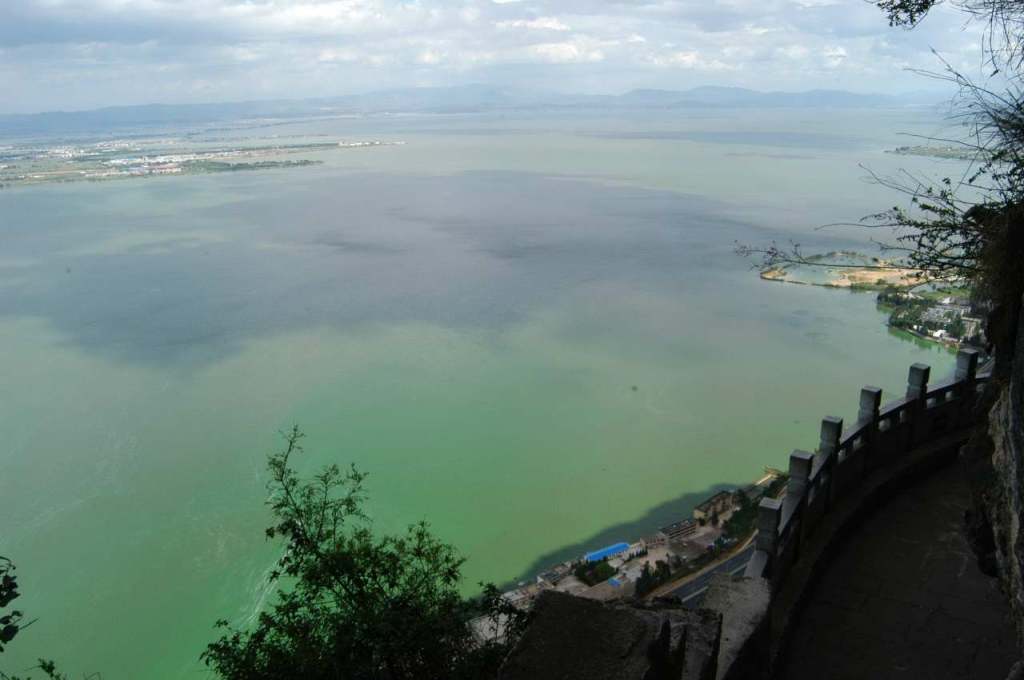
    Dian Lake, Kunming, Yun’nan Province. Photo by Emitchan

    The 3rd year of Emperor Wu’s Yuanshou Era (120 B.C.)

    In the spring, a comet appeared in the eastern sky.

    In May, during the summer, a general amnesty was proclaimed throughout the empire.

    During the rebellion of the Prince of Huainan, the Prince of Jiaodong, Liu Ji, had heard rumors of the matter and, sensing danger, secretly made preparations for defense. When government officials investigated the Huainan case, some testimonies implicated Prince Liu Ji. His mother, Madame Wang, the younger sister of the Empress Dowager, had a close relationship with the Emperor. Distressed by the circumstances, Liu Ji fell ill and passed away, daring not to leave a will regarding his heir.

    When the Emperor heard of his death, he was moved with compassion and appointed Liu Ji’s eldest son, Liu Xian, as the new Prince of Jiaodong. In addition, the Emperor enfeoffed Liu Ji’s younger son, Liu Qing, as the Prince of Liu’an, granting him the land that had once belonged to the Prince of Hengshan.

    In the autumn, the Xiongnu invaded the regions of Youbeiping and Dingxiang, each with several tens of thousands of cavalry. They killed and plundered over a thousand people.

    A severe flood struck the region east of Mount Xiao, causing widespread famine and scarcity among the populace. In response, the Emperor dispatched envoys to empty the granaries of various counties and commanderies, providing relief to the impoverished. However, the supplies were insufficient. The wealthy, officials, and notable individuals were encouraged to lend aid to the poor, with their names recorded on an honor roll to be presented to the court. Yet, even this was not enough to alleviate the suffering. As a result, over seven hundred thousand destitute individuals were relocated west of the passes and southward to regions around Shuofang and the Xinqinzhong area. These people were entirely dependent on the government for their clothing and sustenance, receiving assistance for several years. Officials were appointed to oversee their welfare, and their carriages moved along the road in a continuous procession. The expenses incurred in this relief effort amounted to billions, a sum beyond calculation.

    After Han acquired the territory of the Hunye King, incursions by the nomadic tribes into the Longxi, Beidi, and Shangjun Commanderies significantly decreased. In response, an edict was issued to reduce the garrison troops in these three commanderies by half, thereby alleviating the burden of conscription across the empire.

    The Emperor then set his sights on pacifying Kunming. As Kunming was home to Dian Lake, which spanned approximately three hundred square lis(one li is half a kilometer), the Emperor ordered the construction of Kunming Pond to serve as a site for naval warfare exercises. 

    During this time, the laws grew more stringent, leading to the dismissal or banishment of many officials. Military drafts became more frequent, and commoners often managed to buy their way out of service by purchasing the rank of Fifth Grandee, which led to a shortage of conscripts. Those exempted from service through the chiliarch or Fifth Grandee ranks were summoned to serve as low-ranking officials. Those unwilling to accept these positions were required to donate horses. Officials who manipulated the laws were sentenced to penal labor at the Royal Shanglin Park, where they were tasked with reclaiming wasteland and digging the Kunming Pond.

    A wonder horse was obtained from the depths of the Wowa pond, an oasis in the far Northwest. The Emperor, having recently established a music bureau, commissioned Sima Xiangru and others to compose poetry and lyrical compositions to celebrate the horse. Li Yannian, an eunuch, was appointed as Commandant of Harmony, wearing the seal of 2000-picul ranking. The poems were crafted to harmonize with the eight musical tones and often contained language drawn from the “Erya” (a classical Chinese dictionary). Scholars, familiar only with one branch of Confucius classics, found the language in these compositions incomprehensible and had to gather experts in Five Classics and study them together to decipher their meaning.

    When the wonder horse was obtained, it was incorporated into a song. Ji An, observing this, remarked, “Whenever a king creates music, it should honor the ancestors above and educate the people below. Your Majesty has obtained a horse, and now you’re turning poems into songs. But will the ancestor kings and the common people understand the meaning of these songs?” The Emperor, though silent, was clearly annoyed by the remark.

    The Emperor constantly sought scholars and officials, seemingly never satisfied with their numbers. Yet, his nature was stern and severe. Even those courtiers who had once been trusted and favored, if they committed minor offenses or engaged in trivial deceit, were swiftly punished or executed without leniency.

    Ji An, ever the voice of caution, remonstrated, saying, “Your Majesty, you exhaustively seek out talents, yet before they can be fully utilized, you have them executed. By indiscriminately punishing those with limited capabilities, I fear the pool of talented individuals throughout the realm will dwindle. Who then, will assist Your Majesty in governing?”

    Ji An spoke with indignation, but the Emperor smiled and explained, “Why worry about a scarcity of talent? It’s merely a matter of not being able to recognize them. If one could, would there be a lack of capable individuals? Talent is like a tool; if one possesses it but refuses to make the most of it, it is as good as not having it. If they are not put to death, what other way would you have me deal with them?”

    Ji An responded, “Although I cannot convince Your Majesty with my words, I still believe this approach is inappropriate. I hope Your Majesty will consider this matter carefully and rectify it moving forward. Do not dismiss my reasoning simply because I am a foolish man.”

    The Emperor turned to the courtiers and, with a wry smile, said, “If Ji An claimed to be sycophantic, that would have not been the case. He claims he is a foolish man, and that is certainly true!”

    The 4th year of Emperor Wu’s Yuanshou Era (119 B.C.)

    In the winter, officials reported, “Local officials have overly expansive expenditures, while wealthy merchants and great traders engage in metal smelting and salt boiling, accumulating fortunes amounting to tens of thousands of gold, yet they do not assist in the urgent needs of the state. We request that a currency reform to mint new coins, to meet the demands of the treasury, and that actions be taken to suppress the extravagance and those who exploit the system for personal gain.”

    At this time, within the Imperial Park, there were white deer, and the Privy Treasury possessed a surplus of silver and tin. With these resources, they created leather currency from the hides of the white deer, each piece measuring a square foot, with edges embroidered in colorful patterns. These leather notes were valued at 400,000 copper coins. Princes, dukes, and other relatives of the imperial family were required to present jade discs on top of the leather notes as part of court tributes and ceremonial offerings.

    Additionally, three types of silver coins were minted: the largest, circular in shape, bore a dragon design and was valued at 3,000 copper coins; the next size, square, featured a horse design and was valued at 500 copper coins; and the smallest, oval-shaped, bore a turtle design and was valued at 300 copper coins. The government ordered the county treasuries to withdraw half-tael coins and replace them with three-zhu (1/24 tael) coins. Counterfeiting any of these metal coins was punishable by death. Yet, despite the severity of the penalty, countless cases of both officials and commoners engaging in the counterfeiting of silver coins were reported.

    To manage these economic reforms, Dongguo Xianyang and Kong Jin were appointed as treasurers in the Ministry of Agriculture (Revenue), overseeing salt and iron affairs. Sang Hongyang rose to prominence for his adeptness in accounting. Dongguo Xianyang was a major salt-boiling operator in Qi, while Kong Jin managed large-scale smelting operations in Nanyang. Both scaled their production, generating profits worth thousands of catties of gold. Sang Hongyang, the son of a merchant from Luoyang, exhibited remarkable mental arithmetic skills from a young age, and began serving as an attendant at the age of thirteen. The trio’s influence on economic affairs was paramount, and they meticulously analyzed financial matters, down to the smallest figures.

    An edict was issued forbidding the populace from privately forging iron tools or boiling salt, under penalty of fettering the left big toe and confiscating their tools. Furthermore, ministers demanded that all merchants and craftsmen declare their assets. One thousand coins were counted as one min (also known as Guan, or one string of coins equaling one tael of silver), and a tax of 120 coins was imposed on every 2,000 min in possession. Any individual owning a carriage or boat longer than five zhang (approximately 15 meters) was also subject to this levy. Failure to declare assets resulted in a year of military service on the borders and the forfeiture of the undeclared coins. Those who brought to light on undeclared assets received half of the seized coins. This policy was primarily proposed by Zhang Tang, the Grand Master of the Censorate.

    Zhang Tang presented memorials to the court daily, discussing national expenditures to the point of exhausting the Emperor; at times, the Emperor would forget to eat. The Chancellor, Li Cai, occupied his position but refrained from engaging in governance, leaving Zhang Tang to make all decisions regarding national matters. The populace, feeling unrest and discontent, largely blamed Zhang Tang for their hardships.

    Bu Shi of Henan repeatedly offered to donate his wealth to the county authorities to support the border defenses. The Emperor, curious about Bu Shi’s motivation, sent an envoy to inquire.

    The envoy asked, “Do you wish to become an official?”

    Bu Shi replied, “I am a humble farmer and shepherd. I am not accustomed to serving in official positions, nor do I desire such a role.”

    The envoy then asked, “Is there any injustice or grievance in your family that you wish to report?”

    Bu Shi responded, “I have no disputes with anyone. I assist those in need among my fellow townspeople and educate those who lack virtue. The people in my village all live in harmony with me. Why would I feel wronged by anyone? I have nothing to report.”

    The envoy, intrigued, asked, “If that is the case, what do you wish for?”

    Bu Shi answered, “If the Emperor is punishing the Xiongnu, I believe that wise men should sacrifice themselves at the borders, and the wealthy should contribute their resources. This way, the Xiongnu can be annihilated.”

    Impressed by his words, the Emperor appreciated Bu Shi’s character and wished to set him as an example for the people. Consequently, Bu Shi was summoned and appointed as a Gentleman of the Household, bestowed with the title of Left Chief Councilor (ranked 10 out of 20 orders of merit), granted ten hectares of land, and a public announcement was made to demonstrate the Emperor’s recognition. Shortly after, Bu Shi was further promoted to the Grand Tutor of the principality of Qi.

    In the spring, a meteor was seen in the northeast. During the summer, a long comet appeared in the northwest.