Tag: Ni Kuan

  • Comprehensive Reflections to Aid in Governance(Part 165): A War over Horses?

    Comprehensive Reflections to Aid in Governance

    By Sima Guang

    Translated By Yiming Yang  

    Annals of Han Book 13 Scroll 21 (continued)

    A Majestic Akhal-Teke Stallion, the breed fought over by the Han and Dayuan, photo by Artur Baboev

    The 1st year of Emperor Wu’s Taichu Era (104 B.C.)

    In October of winter, the Emperor journeyed to Mount Tai. On the 1st of November, during the morning of the winter solstice, the Emperor performed the worship of the Supreme Deity at the Temple of Heaven. The Emperor then proceeded to the eastern shores of the Gulf of Bohai, consulting occultists and those who had traveled overseas. However, no supernatural signs were found. Despite this, further attempts were made in the hope of encountering such signs.

    On November 22, a fire broke out at the Bo’liang Terrace.

    On December 1, the Emperor personally conducted the ritual of offering sacrifices to the Earth at Mount Gaoli, overlooking the Bohai Sea, with the intent of seeking divine signs related to Mount Penglai, hoping for extraordinary revelations.

    In the spring, upon his return, and in light of the fire at Bo’liang Terrace, the Emperor held court with the feudal lords and received statistical reports at Ganquan Palace. The residences of the feudal lords were constructed at Ganquan.

    A man named Yongzhi from Yue remarked, “In our Yue customs, when a fire disaster occurs and buildings are reconstructed, they must be grander to overcome the adversity.” 

    Heeding this counsel, the Emperor ordered the construction of the Jianzhang Palace, which was said to have a thousand doors and ten thousand windows. To the east stood the Fengque Tower, rising more than twenty zhang (about 10 ft per zhang) in height; to the west lay the Tangzhong Park, covering several dozen li and housing tiger enclosures. To the north, there was a vast pool, within which a terrace gradually ascended to over twenty zhang, named the Taiye Pool. Inside the pool were replicas of Mount Penglai, Mount Fangzhang, Mount Yingzhou, and Mount Huliang, resembling divine mountains, islands and creatures of the sea, such as turtles and fish. To the south were the Jade Hall, Bimen (a jade wall), and statues of ostriches from Tiaozhi (Syria), among other grand structures. The Shenming Terrace and Jinggan Tower were also erected, each standing fifty zhang tall, interconnected by promenades for royal carriages.

    The Grandee of the Palace, Gongsun Qing, Hu Sui, and the Grand Astronomer, Sima Qian, expressed concerns that the calendar and chronology were in disarray and suggested the rectification of the lunar calendar. In response, the Emperor issued a decree, summoning Ni Kuan and scholars, including Erudite Ci, to deliberate. They collectively proposed the adoption of the Xia calendar, in place of the Qin calendar (Zhuxu Calendar), where the new year began in October.

    In May of the summer, a decree was issued for Gongsun Qing, Hu Sui, Sima Qian, and others to create the Taichu calendar of the Han. It fixed the beginning of the year to January, honored yellow color, and designated the number five as the radix. The calendar also formalized government official title names, coordinated musical scales, and standardized rituals for ancestral temples, all codified with the intent to be chartered for future generations.

    Meanwhile, the Xiongnu Er Chanyu, inclined towards violence, caused unrest among his people. Additionally, there were natural disasters that led to the widespread death of animals. The Grand Commandant of the Left (Xiongnu) sent a message to the Han, expressing their desire to kill the Chanyu and surrender to the Han. However, because the Han were far away, they expressed their intent to rebel once Han forces arrived to offer assistance. In response, the Emperor dispatched Yinyu[a place in Xiongnu] General Gongsun Ao to construct a city named “Defector Home” outside the border, to serve as a place for receiving defectors.

    In August of autumn, the Emperor embarked on a tour to visit Anding.

    The Han envoys who entered the Western Regions reported, “Dayuan possesses excellent horses in the city of Ershi[Osh, now in Kyrgyzstan]. However, they refuse to show these horses to the Han ambassadors.” In response, the Emperor sent officers, including Strongman Che Ling, bearing a thousand gold coins and a golden horse statue as an entreaty.

    The King of Dayuan, in consultation with his advisors, remarked, “The Han is distant from us, and there are frequent setbacks in the Salt Marshes. To the north, we face attacks from barbarians, and to the south, there is a scarcity of water and grass. Furthermore, the land is barren, lacking in food, and when Han envoys, sometimes numbering in the hundreds, arrive, they often starve, with more than half perishing. How, then, can they mobilize a large army? What threat can they pose to us? The horses in Ershi are precious to Dayuan.” As a result, they refused to grant Che Ling’s request.

    The Han diplomat, Che Ling, enraged and swearing in foul language, smashed the golden horse statue and departed. This act of disrespect angered the nobles of Dayuan, who proclaimed, “The Han envoys have insulted us!” They saw the Han envoys fleeing and ordered their eastern border, the King of Yucheng, to intercept and attack them, killing the envoys and seizing their possessions.

    This greatly enraged the Emperor. Yao Dinghan, who had previously been to Dayuan, remarked, “Dayuan‘s military is weak. With only about three thousand Han troops armed with strong crossbows, they can be completely subdued.” In the past, the Emperor had dispatched the Marquis of Zhuoye Zhao Ponu with seven hundred riders, and they captured the King of Loulan. Therefore, the Emperor trusted Yao Dinghan’s assessment. Additionally, desiring to honor his favored concubine, Madame Li, he appointed her older brother, Li Guangli, as Ershi General, commanding six thousand riders from principalities and tens of thousands of delinquent youths from commanderies and principalities to attack Dayuan. His task was to capture the excellent horses in Ershi(Osh) city, thus he was given the title of Ershi General. Zhao Shicheng was appointed as the military judge, and former Marquis of Hao, Wang Hui, was appointed as the guide leading the troops. Li Duo was made the colonel to oversee military affairs.

    Sima Guang’s commentary: Emperor Wu sought to ennoble the family member of his favored concubine, Madame Li, and dispatched her brother, Li Guangli, to lead troops against Dayuan. His intent seemed to be that ennoblement should be earned through military merit, not by preferential treatment. This was in keeping with the covenant established by Emperor Gaozu. Military campaigns are of great importance, as they are directly tied to the safety of the nation and the lives of its people. If leadership is assigned recklessly, based on superficial accomplishments to gain personal favor, it would be better to forgo the covenant and ennoble someone without merit. Thus, while Emperor Wu was skilled in handling rebellious kingdoms, he faltered in selecting the right leader. If he is praised for upholding the covenant of the former Emperor, I would say such praise is unmerited.

    Commandant of the Capital Guard, Wang Wenshu was found guilty of treasonous activities and was sentenced to be exterminated. He chose to take his own life. At the same time, his two brothers, along with their wives’ families, were implicated in various crimes and were also exterminated. Chamberlain Xu Ziwei, remarked, “How tragic! In ancient times, there was the punishment of exterminating three clans, yet Wang Wenshu‘s crimes have led to the extermination of five clans at the same time!”

    There was a massive locust infestation in the eastern part of the empire, and the locusts flew as far west as Dunhuang.

    The 2nd year of Emperor Wu’s Taichu Era (103 B.C.)

    In January of spring, the Marquis Tian of Muqiu, Shi Qing, passed away.

    In the intercalary month, Gongsun He, the Grand Coachman, was appointed as the Chancellor and bestowed the title Marquis of Geyi. During this period, the court was filled with numerous issues, and there was strict scrutiny over ministers. The Chancellors succeeded Gongsun Hong were held accountable and died consecutively because of the accusation. Although Shi Qing, the deceased, managed to conclude his service with caution, he was frequently reprimanded. When Gongsun He was nominated as the Chancellor, he declined to accept the seal and ribbon of the office, kneeling with tears and refusing to rise. The Emperor stood up and left the court, Gongsun He, feeling compelled, accepted the appointment, saying, “I am a dead man!” when he left the court.

    In March, the Emperor traveled to Hedong to pay a sacrifice to Mother Earth.

    During May of summer, there was a census conducted to register the horses owned by officials and plebeians to replenish the cavalry’s horses.

    In autumn, there was a locust infestation.

    As the Ershi General Li Guangli moved westward, passing through the Salt Marshes, the small kingdoms along the way refused to provide provisions, defending their cities. Despite attempts to besiege them, they couldn’t be conquered. Some surrendering cities replenished food supply, but those that resisted were abandoned after several days’ siege. By the time they reached Yucheng, the troops numbered no more than several thousand, all exhausted and hungry. The attack on Yucheng ended in a major defeat, causing heavy casualties among the troops. Ershi General, along with Li Duo, Zhao Shicheng, and others, discussed, “If we couldn’t capture Yucheng, how could we take their capital?” They then retreated. 

    Upon reaching Dunhuang, the troop numbers had dwindled to just around a tenth of the initial force. They sent a message pleading, “The road was long, and there was a great shortage of food. Moreover, the soldiers were more concerned about hunger than about fighting. The troops were few in number, insufficient to capture Dayuan. We request that the campaign be temporarily halted, additional forces be raised, and then we continue the march.”

    When the Emperor heard this, he was greatly angered and sent an envoy to block Yumen Pass with an order, “Any troops attempting to enter the Yumen Pass are to be immediately executed!” Fearing the Emperor’s wrath, Ershi General chose to remain stationed at Dunhuang.

    The Emperor, still worrying about the long distance between the City of Defector Home from the Xiongnu, dispatched Junji General Zhao Ponu, commanding over 20,000 cavalry, to travel more than 2,000 li northwest from Shuofang with the aim to reach the Junji Mountains and return. When the Marquis of Zhuoye, Zhao Ponu, arrived at the appointed time, the Left Grand Commandant of Xiongnu intended to collaborate with the Han but his intent was uncovered. The Chanyu executed him, deployed the Left Wing troops, and attacked the Marquis of Zhuoye. As the Marquis of Zhuoye led a counter-offensive, capturing several thousand POWs, he was en route back and was around 400 li away from the City of Defector Home when an enemy force of 80,000 Xiongnu cavalry besieged them.

    The Marquis of Zhuoye ventured out at night to seek water and was captured by the Xiongnu while trying to escape. Seizing the opportunity, Xiongnu launched a sudden assault on his troops. Dreading the consequences of the loss of their commander, the officers in the army feared execution upon return, and with no one to encourage fighting back, the army surrendered to the Xiongnu.

    The Chanyu was greatly pleased with this victory and then sent a special force to attack the City of Defector Home. However, they couldn’t conquer the cities, so they pillaged the borderlands before departing.

    In December of the winter, Ni Kuan, Grand Master of Censorate, passed away.

  • Comprehensive Reflections to Aid in Governance(Part 161): Killing The Goose Laying Golden Eggs

    Comprehensive Reflections to Aid in Governance

    By Sima Guang

    Translated By Yiming Yang  

    Annals of Han Book 12 Scroll 20 (continued)

    Penglai Island, Painting by Yuan Jiang(1671-1746)

    The 1st year of Emperor Wu’s Yuanfeng Era (110 B.C.)

    In October of winter, an imperial decree was issued: “The offenses of Nanyue and Dongyue are punished; the harmony among the Western Barbarians and Northern Tribes remains incomplete. We, personally, will undertake a border inspection, wielding the military authority, appointing twelve generals, and leading the troops in person.”

    The Emperor began his journey, traversing from Yunyang county, through Shangjun, Xihe, and Wuyuan, venturing beyond the Great Wall, ascending the Chanyu Terrace in the north, and arriving at Shuofang by the Northern Yellow River. He mustered an army of 180,000 cavalry, with banners and flags stretching over a thousand li, to display his martial prowess and instill awe in the Xiongnu.

    He dispatched an emissary, Guo Ji, to notify the Chanyu: “The king of Nanyue has been captured near the northern borders of the Han. If the Chanyu desires battle, the Emperor will personally await him at the borders. However, if unwilling, submit and pay homage to the Han. Why flee so far to the bitter and barren land to the north without water or grass? Don’t do it!”

    Upon hearing this, the Chanyu flew into a rage, executing those who introduced the envoy but detaining Guo Ji and relocating him to the area of North Sea(Lake Baikal). However, the Xiongnu remained intimidated and dared not venture out.

    The Emperor then returned, paying homage at the tomb of the Yellow Emperor at Qiaoshan, releasing the troops in Xuru(an unknown place). 

    Perplexed, the Emperor asked, “I heard that the Yellow Emperor was immortal, why then is there a tomb?” 

    Gongsun Qing responded, “The Yellow Emperor ascended to heaven as an immortal. His courtiers venerated his memory and buried his ceremonial attire.” 

    The Emperor sighed and remarked, “When I ascend to heaven, will my courtiers also bury my ceremonial attire at the east tomb(a.k.a. Maoling)?” He then returned to Ganquan Palace, offering sacrifice at the Temple of Taiyi.

    The Emperor, displeased with Bu Shi‘s lack of proficiency in literature, demoted him to the position of the Grand Tutor of the Crown Prince, replacing him with Ni Kuan as the Grand Master of Censorate.

    The Han forces penetrated the territory of Dongyue. Dongyue had already raised an army to guard the region’s strongholds, assigning the General of Xunbei (attacking the north) to defend Wulin(Hangzhou). A soldier of Louchuan General, Yuan Zhonggu of Qiantang, beheaded the General of Xunbei. The former Marquis of Yueyan, Wu Yang, led seven hundred troops from his town to a mutiny against the Dongyue army at Hanyang. The Marquis of Jiancheng, Ao, along with King of Yao, Zou Jugu, both from Yue, killed Zou Yushan, thereafter Zou Yushan‘s troops surrendered. The Emperor ennobled Yuan Zhonggu as the Marquis of Yu’er, Wu Yang as the Marquis of Maoshi, Zou Jugu as the Marquis of Dongcheng, and Ao as the Marquis of Kailing.

    Furthermore, the Emperor ennobled Henghai General Han Yue as the Marquis of Andao, Henghai Colonel Liu Fu as the Marquis of Liaoying, and the surrendered general of Dongyue, Duojun, as the Marquis of Wuxi. Considering the treacherous topology of the Min (Fujian) region and its repeated rebellions, which would continue to cause troubles for future generations,  the Emperor decreed to all the generals that Minyue People be relocated to the area between the Yangtze River and the Huai River, thereby vacating the land.

    In January of spring, the Emperor embarked on a journey to visit Goushi, where he performed rituals and offerings at the Grand Temple of Central Mountain, Mount Taishi. His entourage at the foot of the mountain heard three times what seemed like the chant of “Long live!” A decree was issued to the ceremonial officials to expand the Grand Temple‘s rituals and offerings. Cutting trees and grass around the mountain was prohibited, and a fiefdom of three hundred households at the foot of the mountain was established to fund its maintenance.

    Continuing his eastern excursion, the Emperor paid homage to and offered sacrifices to the Eight gods at sea. Numerous individuals from the state of Qi submitted memorials about miracles and supernatural phenomena, numbering in the tens of thousands. The Emperor dispatched more boats and tasked thousands of people, who claimed to have witnessed magical mountains in the sea (perhaps a mirage), with seeking the legendary divine beings of Mount Penglai.

    Gongsun Qing was authorized to lead this expedition and scout for notable mountains, holding the imperial insignia. Upon reaching Donglai, he reported sighting a colossal figure, several zhang in height, but upon approach, it vanished, leaving enormous impressions on the ground resembling animal footprints. Some courtiers also reported seeing an elderly man walking a dog, saying, “I wish to see the Giant Grandpa (Son of Heaven),” and then disappearing suddenly. Upon hearing these reports of significant traces, the Emperor grew suspicious. By the time the ministers mentioned the elderly man, the Emperor, considering these to be divine beings, decided to stay and explore the sea further. He dispatched chariots and emissaries, numbering in the thousands, to seek these divine beings.

    In April of the summer, the Emperor proceeded to Fenggao and performed the rites to the Earth Goddess at Mount Liangfu (Shan). On April 19, the Emperor ordered the Confucian scholars among his attendants, wearing leather caps and tying writing tablets around their waists with ribbons, to conduct the ritual of shooting a bull and offering sacrifice to the Heaven God on the eastern side of Mount Tai (Feng), following the same ceremony used for sacrifices to Taiyi. An altar, twelve feet in width and nine feet in height, was erected, with a jade inscription buried underneath, containing secret writing. Upon completing the ritual, the Emperor alone, accompanied by the palace attendants and the Colonel of Charioteers, Huo Zihou (the son of Huo Qubing), ascended Mount Tai and saluted the Heavenly God again. This ritual was also kept secret. The next day, they descended via the North trail.

    On April 20, the Emperor performed the sacrificial rites at the northeastern side of Mount Suran below Mount Tai, following the same ritual used in the ceremony to worship the Earth Goddess. The Emperor personally paid respects, wearing yellow attire and kowtowing to the deity, accompanied by music. Grass mats made from three-edge reed in the Yangtze River and Huai River regions were laid beneath the offerings. Five-colored soils were used to build the altar. There were illuminations at night and white clouds emerging from the altar during the day. After the Emperor returned from the sacrificial ritual at Fenggao, he sat in the Bright Hall, where the ministers took their turns to offer longevity felicitations and praise his accomplishments.

    The imperial decree stated: “We, with my humble and short stature, have assumed the supreme authority. With great caution, we acknowledge our virtues as inadequate and our understanding of rites and music lacking. Therefore, we pray before the eight divine spirits, encountering the blessings of heaven and earth, perceiving clear signs, faintly as though there were some audible presence, trembling in the face of strange occurrences. We desired to stop but dared not, and thus ascended Mount Tai, reaching Mount Liangfu. Only then did we ascend Mount Suran, reflecting on the rejuvenation of the state, ushering in a fresh beginning, and fostering harmonious life with the scholars and ministers. Thus, the tenth month marks the first year of the Yuanfeng era.”

    “Along our tour route—Bo, Fenggao, Sheqiu, Licheng, Liangfu—the land taxes, rents, and arrears of the people have all been waived for this year without imposing any calculations. Raise one rank for the people of the entire nation.”

    The Emperor further stipulated that there would be a tour and ritual for the Heaven God at Mount Tai every five years. The feudal lords were instructed to build their residences at the foot of Mount Tai.

    Having ascended Mount Tai without any wind or rain, the occultists suggested the possibility of reaching Mount Penglai and encountering gods. The Emperor eagerly wished to sail east to search for Mount Penglai, despite the counsel of his courtiers, who were unable to dissuade him.

    Dongfang Shuo said, “Those who attain immortality do so naturally; there’s no need for impatient pursuit. If they possess  Tao(the Way), there is no worry about not encountering them; if they lack Tao(the Way), even reaching Penglai and seeing the gods would be of no avail. I implore Your Majesty to return to the palace and wait in tranquility; the immortals will come of their own accord.”

    The Emperor relented. However, during this time, Huo Zihou, the Colonel of Charioteers, fell gravely ill and passed away within a day. Huo Zihou was the son of Huo Qubing, and the Emperor deeply mourned his loss. The plans to sail across the sea were abandoned, and the Emperor traveled north to Mount Jieshi, then toured the western Liaoxi commandery and the northern border, reaching Jiuyuan. It was not until May that he arrived at Ganquan, having traveled a total of eighteen thousand li during this tour.

    Sang Hongyang had been appointed as Commandant of Grain Procurement and later as Agriculture Minister in charge of grain reserves, overseeing agriculture and managing the salt and iron monopolies across the empire. Sang Hongyang devised a system of price control, instructing distant regions to levy taxes based on the goods they traded, similar to those exchanged by merchants at different times. He established a fair price officer in the capital, who was responsible for the distribution of commodities from across the empire. Local officials in charge of agricultural affairs gathered goods from all over the country, selling them at higher prices when demand was high and buying them at lower prices when demand was low. This aimed to prevent wealthy merchants from making excessive profits and to stabilize the prices of commodities.

    During the Emperor’s tours of the counties and districts, he distributed rewards totaling over a hundred thousand bolts of silk and vast sums of money and gold, all provided from the treasury of the Minister of Agriculture. Additionally, Sang Hongyang proposed allowing officials to donate grain in exchange for filling vacancies or promotion, and to enable criminals to buy their way out of punishment. The grain transported from the provinces to the east of Xiao Mountain increased by six million picul annually, filling the granaries at Taicang and Ganquan. Surplus grain at the borders and various commodities were evenly distributed. There was a surplus of five million bolts of silk, yet the people did not face increased taxation, and the empire prospered.

    As a result of his achievements, Sang Hongyang was awarded the title of Left Privy Chancellor and two hundred catties of gold.

    At that time, there was a minor drought, and the Emperor ordered officials to pray for rain. Bu Shi said, “Local officials should focus on collecting taxes and duties, but now Sang Hongyang has instructed them to engage in market transactions and seek profits. When Sang Hongyang is boiled to death, then will heaven send rain.”

    In autumn, a comet was seen near the constellation Eastern Well, and about ten days later, another comet appeared near the constellation Three Stars. The astrologer Wang Shuo observed, “The observers only saw Saturn emerging, resembling a melon, and then it disappeared in an hour or so.” Officials all proclaimed, “Your Majesty’s conducting the Han ancestral rites has brought out the star of virtue.”

    Prince Hui of Qi, Liu Hong, passed away without leaving an heir, leading to the dissolution of the principality of Qi.

  • Comprehensive Reflections to Aid in Governance(Part 160): Fear Factor

    Comprehensive Reflections to Aid in Governance

    By Sima Guang

    Translated By Yiming Yang  

    Annals of Han Book 12 Scroll 20 (continued)

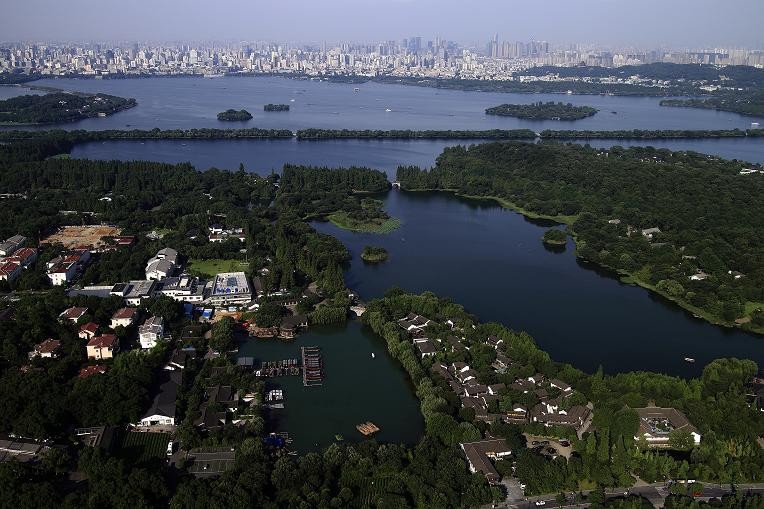
    Wulin (Hangzhou), Zhejiang Province

    The 6th year of Emperor Wu’s Yuanding Era (111 B.C. continued)

    In commemorating the victory in Nanyue, sacrifices were offered to Taiyi (the Polaris) and Mother Earth, marking the first use of music and dance for the occasion.

    The Marquis of Chiyi, Yi, mobilized the southern troops with the intention of attacking Nanyue. However, the Lord of Julan, fearing the long journey of the troops and the potential capture of the elderly and weak by neighboring tribes’ attacks, revolted with his followers. They killed the envoy along with the Prefect of Qianwei. In response, the Han court deployed the Eight Colonels Army, composed of convicts from the Ba and Shu commanderies, to attack Nanyue, sending General of the Household Guo Chang and Wei Guang to suppress the rebellion. They executed the Lord of Julan, the Lord of Qiongdu, and the Marquis of Zuodu, pacifying the southern ethnic groups and establishing Zangke Commandery.

    Initially allied with Nanyue, the Lord of Yelang saw Nanyue‘s downfall and decided to submit to the Han court. The Emperor recognized him as the King of Yelang. The Nanmeng tribes, feeling apprehensive, invited officials from the Han government and eventually established Qiongdu as the Yuesui Commandery, Zuodu as the Shenli Commandery, Nanmeng as the Wenshan Commandery, and the Baima tribe in the west of Guanghan as the Wudu Commandery.

    Earlier, the King of Dongyue (Dong’ou, Minyue), Zou Yushan, petitioned the Emperor, requesting to lead eight thousand soldiers to join Louchuan General‘s expedition against Lü Jia. The troops reached Jieyang, but adverse sea winds hindered their progress, forcing them to halt. Taking advantage of this delay, they secretly aligned with Nanyue. However, when Han forces defeated Nanyue at Panyu, they did not arrive to participate.

    Louchuan General Yang Pu requested permission to lead an army to attack Dongyue. However, due to the fatigue of the troops, the Emperor declined and ordered the generals to station their forces in Yuzhang and Meiling to await further orders. Upon hearing of Louchuan General‘s request to execute him, Zou Yushan rebelled, mobilizing his troops against the Han forces and holding strategic roads. General Zou Li, who was granted the title General of Annexing Han, and others led the troops. They entered the regions of Baisha, Wulin(Hangzhou), and Meiling, killing three Han Colonels.

    During this time, Han court envoys, Agriculture Minister Zhang Cheng and the former Marquis of Shancheng, Liu Chi, were stationed there but dared not engage the enemy, opting instead to retreat to safer places. Both were executed for their cowardice.

    The Emperor, intending to send Yang Pu out again due to his previous efforts, wrote a letter of reproach, stating: “Your merit lies only in breaking Shimen and Xunxia. You did not slay generals or seize banners on the battlefield. How can you be so conceited? You captured Panyu, treating surrendering individuals as prisoners and digging up the dead as trophies; that was one misconduct. You allowed Zhao Jiande and Lü Jia to win support from Dongyue; that was the second misconduct. Soldiers were exposed year after year, yet you, the general, did not remember their hard work. You requested to inspect the coast, returning home in government vehicles, wearing gold and silver seals, and three ribbons, boasting to your hometown folks—that was the third misconduct. Missing the deadline of return and blaming bad roads as an excuse—that was the fourth misconduct. We inquired about the price of knives in Shu, and you pretended to not know, deceiving me with false information; that was the fifth mistake.”

    “When receiving orders, you did not come to Lanchi Palace, and you even remained silent the next day. Suppose your subordinate officers were asked and stayed silent, or were instructed but did not comply; what punishment would they face? With such a mindset, can you be trusted between the rivers and seas? Now that Dongyue has deeply entered our territory, can you lead your troops to redeem your misconduct?”

    Frightened and filled with remorse, Yang Pu replied, “I am willing to die to atone for my mistakes!”

    The Emperor dispatched Henghai General Han Yue to Gouzhang to set sail from the east; Louchuan General Yang Pu departed from Wulin(Hangzhou), and the Commandant of Capital, Wang Wenshu, came out from Meiling. Meanwhile, the leaders from the south, Gechuan General Yi and Xialai General Jia, led troops from Ruoxie and Baisha to confront Dongyue.

    The Marquis of Bowang, Zhang Qian, had been granted honor and prestige for facilitating communication with the Western Regions. His subordinates vied to petition the Emperor regarding the peculiarities, advantages, and dangers of foreign countries, requesting to be dispatched as emissaries. The Emperor, aware of the distant and unenjoyable nature of these regions, listened to their requests, issued the necessary credentials, and allowed them to recruit from officials and civilians without questioning their origins. He sent them adequately prepared to broaden the horizons of the West.

    However, upon their return, some of these envoys engaged in embezzlement of currency, goods, and behaviors contrary to the Emperor’s will. The Emperor, aware of these practices, sternly punished them, using severe penalties to incite redemption. Yet, they continued to request further missions, creating a cycle of persistent disregard for the law. These officials and soldiers persisted in exaggerating accounts of foreign countries; those with grandiose tales were rewarded with credentials, while those with smaller accounts were relegated to subordinate positions. Thus, individuals with no verifiable accounts zealously sought to emulate them. The envoys dispatched were often individuals of modest means, seeking to exploit their position by illicitly embezzling gifts for foreign authorities, intending to sell them for personal gain.

    As a result, the people in foreign regions grew weary of Han envoys. They noticed the frivolous and overblown tales of the Han diplomats, considering the Han forces too distant to reach them. They restricted their food supplies to torment the Han envoys. This deprivation, along with accumulated grievances, led to attacks on the Han envoys by the foreign countries.

    Especially in regions like Loulan and Jushi, small states located along the main route, attacks against Han diplomats like Wang Hui were severe. Additionally, the Xiongnu launched surprise attacks against them. The envoys claimed that the Western Regions were littered with cities and were vulnerable to attack.

    The Emperor dispatched Fuju General, Gongsun He, with fifteen thousand cavalry, covering a distance of over two thousand li from Jiuyuan, reaching the Fuju well, and then returning. Xionghe General Zhao Ponu led over ten thousand cavalry for several thousand li, reaching the Xionghe River and then returning. Their purpose was to repel and expel the Xiongnu, preventing them from intercepting Han envoys, yet not a single Xiongnu was encountered. Following this, the commanderies of Wuwei and Jiuquan were divided to establish Zhangye and Dunhuang commanderies, with people relocated to populate these areas.

    In this year, the Prime Minister of Qi, Bu Shi, was promoted to Grand Master of Censorate. After assuming his position, Bu Shi reported grievances: “It is inconvenient to let the magistrates monopolize the commerce of salt and iron tools in various commanderies and regions. They produce poor-quality items at excessively high prices. They force the people to buy these goods, causing distress. Moreover, there are high shipping costs due to exorbitant ship taxes and a scarcity of merchants.” This displeased the Emperor and contributed to his growing dissatisfaction with Bu Shi.

    Sima Xiangru fell gravely ill and wrote before his passing a testament praising the Emperor’s achievements and virtues, citing omens and urging the Emperor to bestow offerings at Mount Tai. Impressed by his words and coincidentally finding a treasure cauldron, the Emperor consulted court officials and scholars to discuss the Feng-Shan ceremonies. However, as the Feng-Shan rituals were rarely performed and their procedures were not widely known, various occultists claimed, “Feng-Shan signifies immortality. Before the Yellow Emperor‘s era, these ceremonies attracted unusual phenomena and supernatural occurrences, and spoke to the gods. Even the First Emperor of Qin failed to perform it properly. If Your Majesty insists, start slowly. If there is no adverse weather, you may proceed with the ritual.”

    The Emperor ordered scholars to compile texts from the “Book of Documents,” “Rites of Zhou,” and “Regulations of the Kings” to draft the procedures for the Feng-Shan ceremony. However, after several years, the rituals remained incomplete. Seeking advice, the Emperor consulted the Left Interior Minister Ni Kuan, who opined, “Offering sacrifice at Mount Tai for Heaven and offering sacrifice at Mount Liangfu for Earth are auspicious ceremonies that exalt the surname of one’s ancestors and seek auspicious signs from heaven—this is the grand ceremony of emperors. However, the essence of such offerings is not clearly expounded in the classics. The completion of the Feng-Shan ceremony should follow the will of the sage ruler and should be directed by them. This matter cannot be adequately resolved by ministers. Your Majesty has been contemplating a grand event but has allowed this issue to linger for several years, causing everyone to strive without success. Only the Son of Heaven, by establishing a harmonious center and encompassing all aspects, can harmonize the sounds of metal and resonate with the jade to align with celestial blessings, laying the foundation for ten thousand generations.”

    The Emperor personally devised the rituals, incorporating elements of Confucian learning into the proceedings. When presenting the Feng-Shan ceremonial vessels specially made to the gathered scholars, some criticized them as “not in accordance with ancient practices.” Subsequently, all the scholars were dismissed from service.  The Emperor followed the ancient customs, uplifted the troops’ morale and rewarded the soldiers with wine and dining before the Feng-Shan ceremony was conducted.

  • Comprehensive Reflections to Aid in Governance(Part 158): Occult, Cauldron And Dangerous Liaison

    Comprehensive Reflections to Aid in Governance

    By Sima Guang

    Translated By Yiming Yang  

    Annals of Han Book 12 Scroll 20 (continued)

    Yellow Emperor Mausoleum, Yan’an, Shaanxi Province, photo by Sunatnight

    The 4th year of Emperor Wu’s Yuan’ding Era (113 B.C.)

    In October of winter, the Emperor conducted a tour to Yong, performing sacrifices at the Five Deity Altars. A decree stated: “Currently, We personally attend the altars to worship the Heavenly God, yet the Earth has no shrine; this renders the ritual incomplete. Let the relevant officials consider and make arrangements.” A shrine for the Earth was established at a circular mound in the midst of a marsh. The Emperor then traveled from Xiayang to the east, visited Fenyin.

    At this time, the Emperor commenced touring commanderies and principalities. The Prefect of Hedong, unprepared for the Emperor’s arrival, could not provide for the Emperor’s cavalcade, took his own life. 

    On November 8, a shrine dedicated to Mother Earth was erected atop a man-made hill (shui) in Fenyin. The Emperor personally offered his respects, following the rites observed for the Heavenly God. After completing the ceremony, he traveled to Xingyang before returning to Luoyang. Additionally, Princess Ji Jia, a descendant of the Zhou dynasty, was granted the title of Lady Zinan of Zhou.

    In February of spring, Prince Jing of Zhongshan, Liu Sheng, passed away.

    The Marquis of Lecheng, Ding Yi, recommended the occultist Luan Da, who claimed to have studied under the same tutor as General Wencheng (Shaowong). The Emperor, still regretful over executing General Wencheng, was pleased to discover Luan Da. Luan Da had previously served Prince Kang of Jiaodong, and was tall and handsome, renowned for his eloquence and strategic acumen. Speaking boldly, he expressed his beliefs without hesitation.

    Luan Da said, “I often travel across the seas and encounter immortals such as Anqi Sheng and Xianmen Gao, who regard me as a lowly man and question my credibility. They see Prince Kang merely as a regional lord, unworthy of receiving the elixir’s prescription. My mentors say, ‘Gold can be created, the Yellow River can be dammed, the elixir of life can be obtained, and immortals can be summoned.’ But I fear emulating General Wencheng. If the same fate that befell General Wencheng happens to me, all occultists will cover their mouths and dare not speak of their arts!”

    The Emperor replied, “General Wencheng died from eating horse liver. If you can truly perfect your craft, why should I be stingy?”

    Luan Da said, “My mentor does not seek others; rather, others seek him. If Your Majesty truly desires his presence, honor his messenger, treat him as kin, and show hospitality. Only then can he convey your wish to the divine beings.”

    Thus, the Emperor tested a minor magic by Luan Da, called the Chess Piece Fight: Xiangqi(Chinese chess) pieces on a chess board clashed by themselves. At that time, the Emperor was anxious about the Yellow River flooding and issues related to gold smelting and alchemy. Consequently, he appointed Luan Da as the General of Five Boons, also bestowing titles such as General of Heavenly Practitioners, General of Earth Practitioners, and General of Great Communicator.

    In April of the summer, Luan Da was made the Marquis of Letong and granted a fief of 2,000 households, a mansion, 1,000 servants, unused imperial carriages and horses, drapery, and vessels to decorate his residence. Additionally, he married Royal Princess Wei (the eldest sister of Crown Prince Wei), received 100,000 catties of gold, and the Emperor personally visited his residence, sending messengers to ensure his needs were met. From the Grand Princess Dou (Liu Piao, also known as Princess Guantao) down to generals and ministers, all held banquets and offered gifts at his home.

    The Emperor even had a jade seal engraved with the title “General of the Heavenly Way” and sent messengers dressed in feathered attire, standing atop cogon grass. Luan Da, too, dressed in feathers, stood on the same grass, receiving the seal to demonstrate his equal status with the Emperor. Within several months, Luan Da was seen wearing six seals (five of generals and one of the marquis), and his prestige shook the entire realm. Henceforth, throughout the regions of Yan and Qi by the sea, everyone wrung their wrists in excitement and spoke of occult arts and the ability to summon immortals.

    In June, a shaman named Jin from Fenyin discovered a large cauldron in the graveyard near the newly built shrine for Mother Earth. The Prefect of Hedong reported this to the Emperor. The Emperor sent investigators to inquire about it. The shaman Jin proved the cauldron’s authenticity, dispelling any doubts. As a result, it was ceremonially offered and brought to Ganquan Palace. The Emperor paraded it in a procession and presented it at ancestral temples and to the Highest Deity. It was then stored in the Ganquan Palace, and all court officials offered congratulations and extended their wishes for the Emperor’s longevity.

    In the autumn, the son of Prince Xian of Changshan, Liu Shang, was established as the Prince of Sishui.

    When the Marquis of Tiao, Zhou Yafu, held the position of Chancellor, Zhao Yu served as the Chief Staff of the Chancellor. He was known for his honesty and fairness. However, Zhou Yafu did not promote Zhao Yu, stating, “Although I know Zhao Yu bears no ill will, his rigid enforcement of the law makes it unsuitable for him to hold higher office.” Later, when Zhao Yu became the Privy Treasurer, his governance was austere compared to the other nine ministers. As he grew older, the style of the other ministers became more draconian, but Zhao Yu’s reputation shifted to one of leniency and fairness.

    Yin Qi, known for his notorious audacity in executing and cutting down large figures, was appointed Commandant of the Capital Guards. However, during his tenure, both officials and common people suffered greatly, and he eventually left the service. In that year, Yin Qi was found guilty of incompetence. Subsequently, Wang Wenshu was reinstated as the Commandant of the Capital Guards, while Zhao Yu was appointed as the Minister of Justice. Four years later, due to his old age, Zhao Yu was demoted to the position of the Prime Minister of Yan.

    During that time, governance was characterized by harshness and severity, yet the Left Interior Minister, Ni Kuan, stood out. He promoted agriculture, advocated for leniency in punishments, resolved legal disputes, and prioritized winning the people’s hearts. He selected kind and honest individuals, empathized with the people’s plight, and was not concerned with personal reputation. Consequently, both officials and the people greatly trusted and loved him.

    In terms of tax collection, he was flexible, often adjusting the tax rates, and sometimes even lending to or deferring payments from people. This resulted in a significant portion of taxes remaining unpaid. Later, when there was a call for military mobilization, the Left Interior Minister faced dismissal for failing to collect overdue taxes. Knowing that Ni Kuan might be deposed, the people feared losing such a good magistrate and hastened to pay their dues. Wealthy households delivered grain with cattle carts, while poorer ones contributed goods with shoulder poles—an unceasing flow of payments to the treasury. As a result, the tax amount even exceeded expectations. The Emperor was increasingly impressed by Ni Kuan.

    In the beginning, King Wen of Nanyue (Zhao Hu) sent his son, Zhao Yingqi, to serve the imperial court as a guard. During his stay in Chang’an, he married a lady from the Jiu clan of Handan, and they had a son named Zhao Xing. When King Wen of Nanyue passed away, Zhao Yingqi ascended the throne and secretly retained the imperial seal of the former Emperor Wu of Nanyue (Zhao Tuo). He then submitted a petition, requesting that the lady from the Jiu clan be established as the queen and that Zhao Xing be named his heir. The Han court repeatedly sent envoys urging Zhao Yingqi to come to the court.

    However, Zhao Yingqi was known for his arbitrary killings and reckless behavior. Fearing the appearance before the imperial court and the need to adhere to the Han laws like other feudal lords, he feigned illness to avoid attending. After Zhao Yingqi‘s death, he was posthumously honored as the King Ming of Nanyue. Zhao Xing succeeded him, and Zhao Xing’s mother became the Queen Dowager of Nanyue.

    Before becoming Zhao Yingqi‘s consort, the Queen Dowager Jiu had a romantic relationship with a man named Anguo Shaoji from Baling. In that year, the Emperor dispatched Anguo Shaoji to persuade the Nanyue king and the Queen Dowager to come to the court and be treated like other feudal lords. Lobbyists, including Grand Master of Remonstration Zhong Jun and other advisers, were tasked with presenting their arguments, while warriors like Wei Chen were sent as emergency support. The Commandant of Guard, Lu Bode, stationed troops at Guiyang to await the envoy.

    As the King of Nanyue was young and the Queen Dowager was from the Middle Kingdom, Anguo Shaoji rekindled their previous affair during his visit. Many people in the kingdom became aware of their liaison, leading to a lack of support for the Queen Dowager. Fearing potential unrest and wanting to rely on the Han authority, she often advised the king and his officials to seek vassalage to the Han. Subsequently, she sent a letter to the Han court through the envoy, requesting to be treated like other feudal lords, to visit the court once every three years, and to have the border defense removed.

    The Emperor granted her request, bestowing a silver seal upon her Prime Minister Lü Jia, as well as seals for the Interior Minister, Commandant of the Capital, and Grand Tutor, granting her autonomy to appoint other officials. The laws of the Han, banishing punishments such as branding and facial mutilation, were adopted, aligning her with the other feudal lords. The envoys remained there to assist in managing state affairs.

    The Emperor proceeded to Yong County and prepared to hold worship ceremonies. Someone suggested, “The Five Deities (the Highest Deities of the Five Regions) were assistants to Taiyi (the god of Polaris). It is fitting to establish a Taiyi Altar and conduct a solemn sacrifice.” The Emperor hesitated, uncertain of the decision.

    Gongsun Qing from Qi said, “This year, we obtained the Treasure Cauldron. On the morning of November 1, it aligns with the time of the winter solstice. This mirrors the experience of the Yellow Emperor.” Gongsun Qing presented bamboo slips stating, “The Yellow Emperor obtained the Treasure Cauldron on the morning of the winter solstice, November 1. After living a total of 380 years, the Yellow Emperor ascended to heaven as an immortal.” This information was then presented to the Emperor by a favored attendant.

    The Emperor was greatly pleased and summoned Gongsun Qing to inquire further.

    Gongsun Qing explained, “This Script (i.e., the bamboo slips he has) was passed down by Sage Mr. Shen. Mr. Shen said, ‘When the Han Dynasty reaches its prime, it will resemble the era of the Yellow Emperor. The saintly figure of Han will be a grandson or great-grandson of Emperor Gaozu. The emergence of the Treasure Cauldron is linked to divine signs. The Yellow Emperor received myriad spirits in the bright court, which was Ganquan Palace. The Yellow Emperor smelted copper from Mount Shou and cast the cauldron beneath Jing Mountain. Once the cauldron was completed, a dragon dropped its beard from the sky to welcome the Yellow Emperor. He rode the dragon’s beard to heaven with more than seventy ministers and consorts.’”

    Upon hearing this, the Emperor exclaimed, “Alas! If only I could truly be like the Yellow Emperor! I would regard leaving my wife and children as casually as removing my slippers!” He appointed Gongsun Qing as a gentleman of the household and sent him to Mount Taishi in the east to await the emergence of the gods.

    The 5th year of Emperor Wu’s Yuan’ding Era (112 B.C.)

    In October of winter, the Emperor went to Yong County for the sacrifice ceremony of the Five Deities. He then crossed Long Mountain, ascending westward towards Kongtong Mountain. The prefect of Longxi, unprepared for the sudden influx of visitors, found that the Emperor’s attendants did not have enough to eat. In a state of distress, the prefect committed suicide.

    The Emperor traveled north, passing through the Xiao Pass, leading tens of thousands of riders to hunt in the Xinqinzhong region, inspecting the border troops, and then returning. In Xinqinzhong, there were stretches of a thousand miles without safety pavilions(posts). Consequently, the officials from the Prefect of Beidi downwards were executed.

    The Emperor then arrived at Ganquan Palace, where he erected the Taiyi Altar, equipping it with sacrificial vessels similar to those at one of the deity altars in Yong County, but with additional offerings. Surrounding the Taiyi Altar were altars for the Five Deities, offering sacrifice to the groups of attendant deities and the Northern Dipper. On November 1, the day of the Winter Solstice at dawn, the Emperor began to make suburban sacrifices at the Taiyi Altar, saluting the Sun facing east in the morning and bowing to the Moon facing southwest in the evening. During the sacrifice, fires were arranged all over the altar, with cooking vessels placed nearby.

    Officials reported, “There is light above the altar,” and also mentioned, “During the day, yellow smoke rises to the sky.” The Grand Astronomer Sima Tan and the rites officer, Kuan Shu, and others requested that the Emperor should perform suburban sacrifices every three years. The proposal was granted.