Tag: Liu Ju

  • Comprehensive Reflections to Aid in Governance(Part 177): Ghost of Crown Prince Wei

    Comprehensive Reflections to Aid in Governance

    By Sima Guang

    Translated By Yiming Yang  

    Annals of Han Book 15 Scroll 23 (continued)

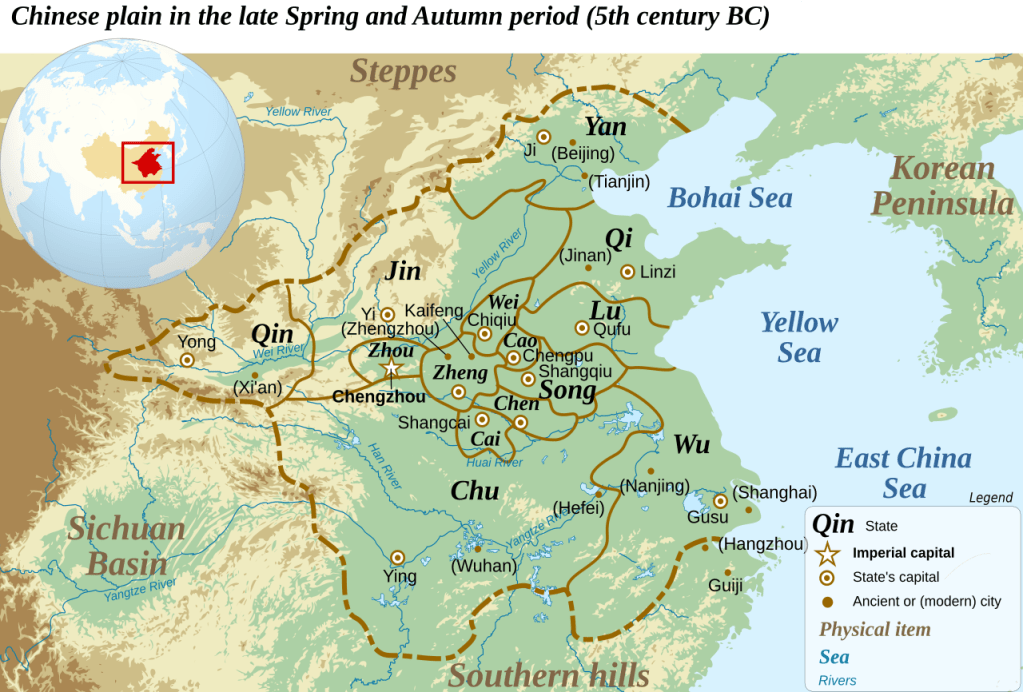
    Duchy of Wei(Wey) in the late Spring and Autumn period

    The 3rd year of Emperor Zhao’s Shiyuan Era (84 B.C.)

    In February of spring, a meteor was seen in the northwest.

    In winter, On November 1, the sun was eclipsed.

    Huo Guang and Shangguan Jie were bound in close friendship. When Huo Guang took leave of affairs, Shangguan Jie would assume his duties. Huo Guang’s daughter was wed to Shangguan Jie’s son, Shangguan An. To them was born a daughter, then five years of age. Shangguan Jie desired that the girl be brought into the palace through Huo Guang’s influence; but Huo Guang deemed her too young and refused.

    Princess Royal Gai had illicit relations with Ding Wairen of He’jian, a retainer of her son. Shangguan An was Ding Wairen’s friend, and spoke to him, “My daughter’s beauty is without peer. If, by the Princess Royal Gai’s connection, she may be admitted to the harem, and in time become Empress, then my father and I shall hold great strength in court. As for you—by the custom of the Han, princesses are wed to marquises; why then should you doubt that you will not be made a marquis?”

    Ding Wairen was pleased, and conveyed these words to the Princess Royal Gai. The Princess Royal Gai consented, and ordered that Shangguan An’s daughter enter the palace as a consort. Shangguan An was thereupon appointed Commandant of Cavalry.

    The 4th year of Emperor Zhao’s Shiyuan Era (83 B.C.)

    On March 25 of spring, Empress Shangguan was established, and a general amnesty was proclaimed throughout the realm.

    In the southwest, the tribes of Gu Zeng and Ye Yu rose again in rebellion. The Commandant of Water Conservancy, Lü Bihu, was ordered to lead the troops of Yizhou against them. But Lü Bihu, being fearful, did not advance. The barbarians slew the Governor of Yizhou, and, pressing their advantage, fought with Lü Bihu. More than four thousand soldiers were slain or drowned. In winter, the Grand Herald, Tian Guangming, was sent to subdue them.

    That year, the Minister of Justice, Li Zhong, was convicted of sanctioning criminals on death roll, sentenced to death, and his corpse cast into the marketplace.

    In the same year, Shangguan An was made General of Chariots and Cavalry.

    The 5th year of Emperor Zhao’s Shiyuan Era (82 B.C.)

    In January of spring, the Emperor’s maternal grandfather, Zhao Fu, was posthumously honored with the title Marquis of Shuncheng. The Marquis of Shuncheng had a sister, Zhao Junxu, who was enriched with a grant of two million coins, slaves, and a residence. Each of her brothers, according to their closeness to the throne, was rewarded with gifts, but none of them were employed in government or awarded titles.

    At that time, a man driving a cart drawn by a yellow calf arrived at the northern gate, claiming to be the Crown Prince Wei, Liu Ju. The matter was reported by the Office of Public Transportation. An edict was issued, commanding the Three Excellencies, ministers, generals, and officials of two-thousand-picul rank to investigate and ascertain the truth. Tens of thousands of people gathered in Chang’an to witness the event, and the General of the Right mobilized troops to guard against disturbances. The Chancellor, the Censors, and the officials of two-thousand-picul rank all assembled, yet none dared to speak.

    Later, the Intendant of Jingzhao, Juan Buyi, arrived and ordered his subordinates to arrest the man. Some advised waiting until the truth could be verified, but Juan Buyi declared: “Why hesitate over the so-called Crown Prince Wei? In the past, Kuai Kui, Duke Zhuang of Wey, defied orders and fled, yet he was rejected by his son Kuai Zhe, Duke Chu of Wey, as recorded approvingly in the Spring and Autumn Annals. The Crown Prince Wei committed offenses against the late Emperor. Even if he had not yet met his end, to come forth now of his own accord still marks him as a criminal!”

    The man was seized and thrown into the imperial prison. The Emperor and the Grand General Huo Guang commended Juan Buyi, saying: “Officials and ministers should be men proficient in the Classics and upright in righteousness.”

    Thus Juan Buyi rose to fame in the court, and even those in positions of power regarded themselves as his inferiors. The Minister of Justice investigated the matter and discovered that the man was in fact a swindler named Cheng Fangsui from Xiayang, who had been practicing divination by casting lots in Hu County. A former attendant of the Crown Prince had once consulted Cheng Fangsui and remarked, “Your appearance bears a striking resemblance to the Crown Prince Wei.” Cheng Fangsui seized upon this comment, hoping thereby to gain wealth and rank. Found guilty of deception, he was sentenced to be waist-chopped.

    In the sixth month of summer, Shangguan An was ennobled as Marquis of Sang’le. Arrogant and self-indulgent, Shangguan An was often the recipient of lavish gifts within the palace. In the company of guests, he would boast of his intimacy with the Emperor, declaring: “I drank merrily with my son-in-law! When I see the clothes he wears, I feel compelled to return home and burn all my own garments.” When his son fell ill and died, he looked upward and cursed Heaven. His conduct was obstinate and recalcitrant.

    The commanderies of Dan’er (Hainan Island) and Zhenfan (in Korea) were abolished.

    In autumn, the Grand Herald Tian Guangming and the Judge General Wang Ping led an attack against rebels in Yizhou, beheading and capturing more than thirty thousand of the indigenous people and seizing over fifty thousand head of livestock.

    Grandee of Remonstration Du Yannian, seeing the extravagance and frequent military expeditions after the reign of Emperor Wu, repeatedly counseled the Grand General Huo Guang, saying: “The harvests have been poor for consecutive years, and the displaced people have not yet fully returned to their homes. It would be wise to emulate the governance of Emperor Wen—practicing frugality, leniency, and harmony; attuning to the will of Heaven, bringing joy to the people, and in time the seasons will improve.” Huo Guang accepted his advice. Du Yannian was the son of the former Grand Master of Censorate, Du Zhou.

  • Comprehensive Reflections to Aid in Governance(Part 173): Nation Exhausted

    Comprehensive Reflections to Aid in Governance

    By Sima Guang

    Translated By Yiming Yang  

    Annals of Han Book 14 Scroll 22 (continued)

    Khangai(Douxian) Mountains at Tsetserleg, Mongolia, Photo by Imartin6

    The 3rd year of Emperor Wu’s Zhenghe Era (90 B.C.)

    In January of spring, the Emperor journeyed to Yong, visiting Anding and Beidi.

    The Xiongnu raided Wuyuan and Jiuquan, slaying two Commandants. In March, Li Guangli marched from Wuyuan with seventy thousand soldiers; Shangqiu Cheng led twenty thousand troops from Xihé; and Ma Tong commanded forty thousand cavalry from Jiuquan—together advancing against the Xiongnu.

    In May of summer, a general amnesty was proclaimed throughout the empire.

    The Xiongnu Chanyu, learning that the Han host advanced in full force, removed all stores and provisions northward to the banks of the Zhiju River. The Left Tuqi King led his people across the Yuwu River, traveling six to seven hundred li, and encamped by Mount Douxian(Khangai). The Chanyu himself led picked troops across the Guqie River. When Shangqiu Cheng’s army arrived, they followed Xiongnu‘s trail, but found nothing and withdrew.

    The Xiongnu sent a general together with Li Ling, leading more than thirty thousand cavalry, to pursue the Han forces. They fought for nine days, reaching the Punu River, but suffered defeat and withdrew.

    Ma Tong’s army reached the Tianshan Mountains. The Xiongnu dispatched their chief general, Yanqu, with over twenty thousand cavalry to intercept them; seeing the strength of the Han forces, they turned back. Ma Tong returned without gain or loss.

    At this time, the court feared that the forces of the Jushi Kingdom might impede Ma Tong’s army. The Emperor sent the Marquis of Kailing, Cheng Mian, to command troops from six states—Loulan, Weili, Weixu, and others—encircling Jushi, seizing its king and people, and then returning.

    The army of Ershi General crossed the frontier. The Xiongnu sent the Right Grand Commandant and Wei Lü with five thousand cavalry to attack the Han forces at the gorge of Mount Fuyanggou. The Han army defeated them, driving them north in pursuit to the city of Madame Fan. The Xiongnu fled in disorder, none daring to stand before the Han troops.

    When Ershi General set forth, Chancellor Liu Quli prayed to the Road God, held a banquet in his honor, and escorted him to Wei Bridge. Li Guangli said, “I hope the Marquis will soon petition for the Prince of Changyi to be named Crown Prince. Should he ascend the throne, what else would the Marquis then have to worry about?”

    Liu Quli agreed. The Prince of Changyi was nephew to Ershi General and son of Madame Li; the daughter of Ershi General was married to the son of Liu Quli. Thus they shared the intent of raising the Prince of Changyi to the throne.

    But the Chief Usher of the Inner Court, Guo Rang, reported, “The Chancellor’s wife has cast spells upon the Emperor; the Chancellor and Ershi General have offered sacrifices in prayer, plotting to enthrone the Prince of Changyi.” Upon investigation, their crime was judged to be high treason and sacrilege.

    In June, an edict commanded that Liu Quli be paraded in a slaughter cart, then waist-chopped in the Eastern Market. The heads of his wife and children were displayed upon Huayang Street. The wife and children of Ershi General were also cast into prison.

    Hearing of this, Ershi General grew apprehensive and afraid. His staff officer, Hu Yafu—a convict who had joined the army to escape punishment—urged him, saying, “Your wife and family are under interrogation. Should you return and matters go ill, imprisonment will be your fate. Might you yet find your chance north of the Zhiju River?”

    Ershi General’s mind became unsettled. Still hoping to gain merit and seek pardon, he led his forces onward until they reached the Zhiju River. Finding the enemy withdrawn, he sent twenty thousand cavalry, under the Protector of the Army, across the river. They encountered twenty thousand Xiongnu horsemen under the Left Tuqi King and the Left Grand General, and fought a battle that lasted the whole day. The Han forces slew the Left Grand General and inflicted heavy losses.

    The Chief of Staff and the Commandant of Juesui, Marquis Huiqu, Lei Dian, conspired against Li Guangli, saying, “Ershi General harbors treacherous designs, seeking private gain at the cost of the host; we fear certain ruin.” They plotted to seize him. On hearing this, Ershi General executed his Chief of Staff, then led his troops back toward Mount Yanran.

    The Chanyu, knowing the Han forces to be weary, led fifty thousand cavalry to cut off Ershi General. A great battle was fought, with severe losses on both sides. That night, the Xiongnu dug trenches several feet deep before the Han’s front lines, then attacked from the rear, throwing them into confusion. Ershi General surrendered.

    The Chanyu, knowing him to be a foremost general of Han, gave him his daughter in marriage, raising him above Wei Lü. Thereafter, the Emperor exterminated Li Guangli’s entire clan.

    In autumn, a plague of locusts occurred.

    In September, Gongsun Yong, former Magistrate of Chengfu County, conspired with his client Hu Qian and others to rebel. Hu Qian, feigning to be Grandee of the Chamberlain, claimed to be on imperial orders to apprehend thieves and bandits. Tian Guangming, Prefect of Huaiyang, learned of this and sent troops to seize and execute Hu Qian. Gongsun Yong reached Yu County clad in embroidered robes and riding in a carriage drawn by four great horses; the Sheriff of Yu County, Wei Buhai, put him to death. Wei Buhai and three others were enfeoffed as marquises for their merit.

    Reports spread of witchcraft and Gu poison among both officials and commoners, but upon investigation most were found baseless. The Emperor came to understand that the Crown Prince had been driven by menace and bore no treasonous intent.

    At this time, Tian Qianqiu, a guard at the Shrine of Emperor Gaozu, submitted an urgent memorial pleading justice for the Crown Prince, saying: “If a son takes his father’s soldiers without approval, he should be whipped; but if the Emperor’s son mistakenly kills a man, is it a crime? I dreamed of an old man with white hair instructing me to lay this matter before Your Majesty.”

    The Emperor was deeply moved, summoned Tian Qianqiu, and said, “In the affairs between father and son, few dare to speak; you alone have declared what was unfitting. The spirits of the Temple of Emperor Gaozu sent you to instruct me. Henceforth you shall aid me.” He at once appointed Tian Qianqiu Grand Herald.

    The clan of Jiang Chong was exterminated; Su Wen was burned alive upon the Heng Bridge. The official who had brandished arms against the Crown Prince at Quanjiuli had first been promoted to Prefect of Beidi, but later he and his clan were put to death.

    The Emperor, moved by compassion for the Crown Prince’s innocence, built the Palace of Missing Son, and in Hu County raised the Terrace of Longing for the Return. Throughout the realm, all who heard of this mourned deeply.

  • Comprehensive Reflections to Aid in Governance(Part 172): Crown Prince on The Run

    Comprehensive Reflections to Aid in Governance

    By Sima Guang

    Translated By Yiming Yang  

    Annals of Han Book 14 Scroll 22 (continued)

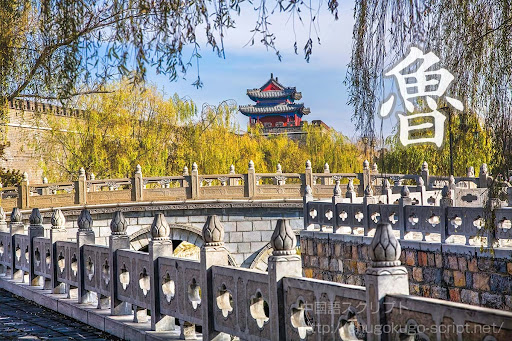
    Lingbao(Hu County), Henan Province

    The 2nd year of Emperor Wu’s Zhenghe Era (91 B.C. continued)

    The Crown Prince issued a proclamation to the officials, saying, “The Emperor lies ill and in distress at Ganquan Palace. I suspect treacherous ministers are plotting a riot.”

    Meanwhile, the Emperor departed Ganquan Palace and proceeded to the Jianzhang Palace west of the city. He summoned troops from the nearby counties of the Three Metropolitan Districts, ordering that all officials of rank two-thousand-picul and below be placed under the command of the Chancellor.

    The Crown Prince dispatched envoys bearing forged decrees, proclaiming amnesty to the prisoners in the central prison of Chang’an, and appointing Junior Tutor Shi De, together with his client Zhang Guang, to lead troops. He further sent a convict of Chang’an, Ruhou, bearing his royal scepter, to muster Changshui tribe cavalry battalions stationed at Xuanqu Palace, and bring them to Chang’an.

    Palace Gentleman Ma Tong, sent by the Emperor to Chang’an, seized Ruhou. He addressed the nomad cavalrymen, saying, “This order is false; you must not obey it!” Thereupon he executed Ruhou, and led the cavalry into Chang’an. In addition, ship rowers were mustered and placed under the command of the Grand Herald, Shangqiu Cheng.

    The sceptres of Han were all of red hue, yet as the Crown Prince also bore a red sceptre, yellow ribbons were bound upon it for distinction.

    The Crown Prince halted his chariot before the North Gate of the Northern Army Camp, summoning Ren An, Guardian of the Northern Army, and handed him the tally, commanding him to deploy the troops. Ren An received the tally yet remained within, refusing to open the gate. The Crown Prince then withdrew with his forces, compelling tens of thousands from the four boroughs of Chang’an to follow.

    Reaching the western gate of Changle Palace, they encountered the Chancellor’s host. The two sides fought for five days, with corpses strewn in heaps and blood flowing into the gutters. Rumors spread among the populace that the Crown Prince had rebelled; the people ceased to support him, while the Chancellor’s numbers swelled.

    On the seventeenth day of the seventh month, the Crown Prince’s army was routed, and he fled south toward the Fu’ang Gate. Tian Ren, Judicial Assistant of the Chancellor, was then closing the gate. Considering the Crown Prince the Emperor’s son, he refrained from rash action and let him pass. The Chancellor sought to execute Tian Ren, but the Grand Master of the Censorate, Bao Shengzhi, said to him, “Tian Ren, a judicial officer of rank two-thousand-picul, ought to be judged with imperial sanction. How can you execute him at will?” The Chancellor thereupon spared Tian Ren.

    When the Emperor heard of this, he was enraged and questioned the Grand Master of the Censorate, saying, “The Judicial Administrator let the rebel escape. By law, the Chancellor should have executed him. Why did you intercede?” Bao Shengzhi, fearing retribution, took his own life.

    Decrees were issued to the Minister of the Imperial Clan, Liu Chang, and the Bearer of the Mace, Liu Gan, commanding them to take from the Empress the Imperial Seals and Insignia. The Empress, Wei Zifu, thereupon took her own life.

    The Emperor held that Ren An, being a seasoned minister, had witnessed the rebellion yet hesitated to act, choosing instead to side with the victor, thus harboring a divided allegiance. Accordingly, Ren An and Tian Ren were both sentenced to death by waist chop.

    The Emperor rewarded Ma Tong, who had seized Ruhou; Jing Jian, a man of Chang’an, who had accompanied Ma Tong and captured Shi De; and Shangqiu Cheng, who, after fierce combat, took Zhang Guang alive. Ma Tong was enfeoffed as Marquis of Chonghe, Jing Jian as Marquis of De, and Shangqiu Cheng as Marquis of Du.

    All of the Crown Prince’s close retainers and those who frequented the palace gates were put to death. Those who had joined the Crown Prince’s rebellion were exterminated together with their clans. Those coerced or compelled to follow the Crown Prince were judged guilty under the law and banished to Dunhuang Commandery. As the Crown Prince was beyond the walls, troops were stationed at the several gates of Chang’an for the first time.

    The Emperor was greatly enraged, and the court was in fear, none knowing what to do. Linghu Mao, Three-Elder of Huguan, submitted a memorial:

    “It is said that a father is as Heaven, a mother as Earth, and the children as the myriad beings. When Heaven is tranquil and Earth is at peace, the myriad beings flourish. When the father is kind and the mother loving, the children are filial.

    “Now, the Crown Prince, as the appointed heir of Han, bears the charge of a thousand generations, inheriting the solemn charge of the ancestors. In kinship, he is the Emperor’s own son. Jiang Chong, a base man of the alleys, was raised and employed by Your Majesty, entrusted with the highest authority to press and constrain the Crown Prince. Having received the supreme command, he assailed and cornered the Crown Prince, using craft and falsehood, joining with charlatans and deviants to frame him. Thus father and son were sundered, unable to meet. Advancing, the Crown Prince could not see the Emperor; retreating, he was hemmed in by traitorous ministers, left alone in injustice with no place to appeal. Unable to bear his wrath and grief, he rose and slew those who had wronged him. Fearing punishment, he sought to flee. His taking of his father’s troops was solely to preserve himself from mortal peril; I dare assert there was no rebellious intent in his heart.

    “As the Book of Songs says: ‘The buzzing flies circle, alighting on the hedge. The noble man, mild and gentle, believes not in slander. Slander unbridled brings disorder to the four quarters.’ In the past, Jiang Chong slandered and slew the Crown Prince of Zhao; this is known throughout the realm. Now Your Majesty, without due reflection, has dealt harshly with the Crown Prince, arousing his great anger, raising a vast host to pursue him, with the Three Excellencies leading the van. The wise dare not speak, and the eloquent dare not present their case; my heart is grieved beyond measure.

    “I beg Your Majesty to calm your wrath and find repose. Restore your affection for the Crown Prince; let him not wander in peril for long. I am deeply troubled, and thus I lay forth these words, offering my life with utmost sincerity, awaiting at Jianzhang Palace to receive punishment.”

    The memorial was received by the Emperor, stirring in him a sense of awakening, yet he did not at once grant a clear pardon.

    The Crown Prince fled eastward to Hu County, hiding in a neighborhood called Quan’jiu’li. The householder was poor and daily sold shoes to provide for the Crown Prince. The Crown Prince had an acquaintance in Hu County who was wealthy, and sent to summon him for aid; this revealed his whereabouts.

    On August 8, the local officials surrounded and seized the Crown Prince’s hideout. Knowing there was no escape, the Crown Prince entered a room, shut the door, and hanged himself. A foot soldier, Zhang Fuchang of Shanyang, broke the door open with his foot, and an assistant to the Magistrate of Xin’an, Li Shou, rushed in, holding up the Crown Prince and loosening the cord. The householder fought the intruders with desperate valor and was slain, and both the Crown Prince’s sons were also killed.

    The Emperor, grieving for the Crown Prince, ennobled Li Shou as Marquis of Yu, and Zhang Fuchang as Marquis of Ti.

    Earlier the Emperor had established Bowang[Broad View] Park for the Crown Prince, so that he might entertain his retainers and follow his inclinations. Many among his clients were not Confucians, and they instilled in him heterodox ideas.

    Sima Guang’s commentary: In antiquity, enlightened kings reared their crown princes by selecting men of uprightness and virtue to serve as teachers, guardians, and companions, so that they were together day and night, and all around them were men of propriety and decorum. Yet even so, there were still those who indulged in wantonness and deviancy, bringing upon themselves calamity and ruin. Now the Crown Prince was permitted to associate freely with clients and indulge his own desires—uprightness is hard to befriend, but flattery easily takes root. This is the way of human nature, and it likely brought about the Crown Prince’s unhappy ending.

    On August 20, there was an earthquake.

    In September, Shangqiu Cheng was appointed Grand Master of the Censorate. Liu Yan, younger son of Prince Jingsu of Zhao(Liu Pengzu), was made Prince of Pinggan.

    The Xiongnu raided Shanggu and Wuyuan, slaying and plundering officials and commoners alike.

  • Comprehensive Reflections to Aid in Governance(Part 171): Bloody Witch Hunt

    Comprehensive Reflections to Aid in Governance

    By Sima Guang

    Translated By Yiming Yang  

    Annals of Han Book 14 Scroll 22 (continued)

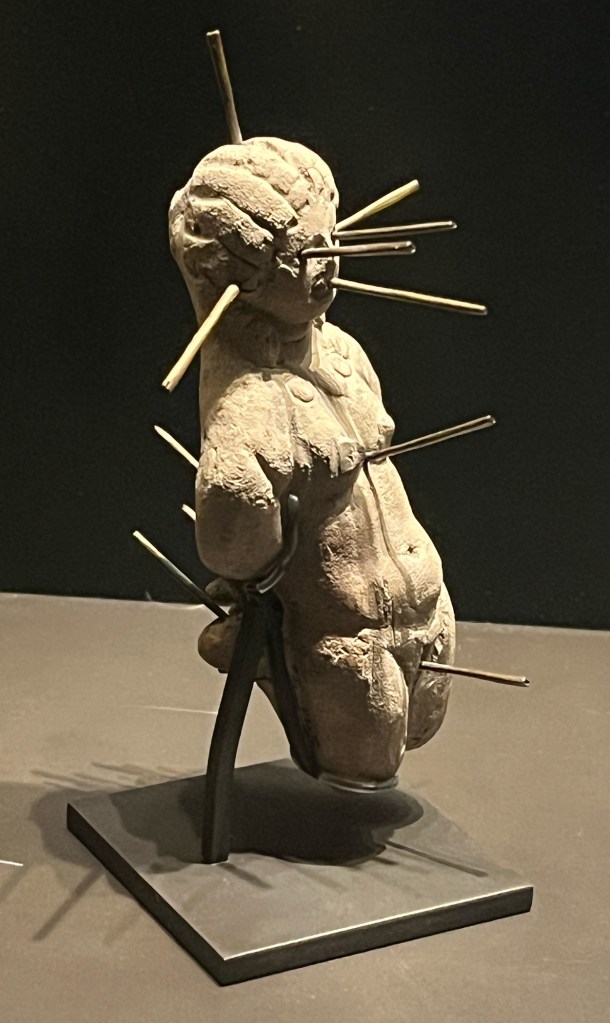
    A Cursed Figurine displayed in Louvre.

    The 2nd year of Emperor Wu’s Zhenghe Era (91 B.C. continued)

    The Emperor, in his fury, ordered the execution of several hundred concubines and high-ranking officials, suspecting their involvement in voodoo and dark arts. Troubled by suspicion, the Emperor once napped by day and dreamt of thousands of wooden figurines wielding sticks, poised to strike him. Startled awake, he was overcome with profound unease, suffering from severe and recurrent bouts of forgetfulness.

    Jiang Chong, perceiving himself at odds with the Crown Prince and the Wei clan, feared that upon the Emperor’s passing he would be slain by the Crown Prince. Exploiting the Emperor’s advanced age and malaise, Jiang Chong fabricated a suspicion that the Emperor’s ailments stemmed from Gu poisoning. The Emperor appointed Jiang Chong as his representative to oversee all matters pertaining to witchcraft.

    Jiang Chong summoned nomad shamans and witches to dig the ground in search of buried effigies. Those accused of witchcraft, of conducting nocturnal rituals, or of mediumship were apprehended. Jiang Chong himself buried wooden figurines and marked the spots with animal blood; witches claiming to detect spirits would then unearth these figurines. Suspects were seized and subjected to rigorous interrogation and torture. Heated iron pincers were applied to burn the accused, forcing confessions through excruciating torment.

    False accusations of witchcraft spread rapidly, with officials hastily branding the accused as monsters. This frenzy led to the deaths of tens of thousands across the capital–the Three Metropolitan Commanderies, and throughout provinces and commanderies.

    At this time, the Emperor, advanced in age, grew ever more suspicious, believing Gu poison and spells encircled him from all sides. Whether guilty or innocent, none dared plead their case. Jiang Chong, aware of the Emperor’s troubled mind, enlisted the nomad warlock Tan He, who proclaimed, “Gu air lingers within the palace; unless it is eradicated, the Emperor shall never recover.” Acting upon this, Jiang Chong was granted authority to enter the palace, search the administration hall, dismantle the imperial throne, and excavate the grounds for signs of Gu poison. He was assisted by the Marquis of Andao, Han Yue; censor Zhang Gan; and Yellow Gate eunuch Su Wen.

    Jiang Chong first targeted concubines unnoticed by the Emperor, then proceeded to the residences of the Empress and Crown Prince, excavating so extensively that the beds of both found no place in sleeping chambers.

    Jiang Chong declared, “Within the Crown Prince’s residence are numerous wooden figurines and written scrolls containing immoral contents; these must be reported.”

    Fearful, the Crown Prince sought counsel from his Junior Tutor Shi De. Fearing that both he and his pupil might be condemned, Shi De said to the Crown Prince, “The former Chancellor and his son, along with two princesses and the Wei Kang family, have been punished for this matter. Now, with warlocks and envoys digging up the grounds in search of evidence—whether planted or genuine—there appears to be a cause. We cannot clear ourselves by ordinary means. It would be better to forge a decree, apprehend Jiang Chong and his cohorts, and thoroughly investigate their deceit.”

    “Moreover,” Shi De continued, “the Emperor lies ill at Ganquan. The Empress and palace attendants have not seen His Majesty upon their visits, raising doubts as to whether the Emperor yet lives. With traitors at large, does the Crown Prince not recall the fate of Prince Fusu of Qin?”

    The Crown Prince replied, “As a son, how can I arbitrarily execute men? Better to return and plead for mercy, hoping to escape without blame.”

    As the Crown Prince prepared to depart for Ganquan, Jiang Chong pressed him urgently. Uncertain what to do, the Crown Prince resolved to follow Shi De’s counsel.

    In the autumn, on July 7, the Crown Prince dispatched his retainer, who, posing as an envoy from the Emperor, proceeded to arrest Jiang Chong and his associates. The Marquis of Andao, Han Yue, suspecting the envoy’s designs, refused to comply and was slain by the retainer.

    The Crown Prince personally oversaw the execution of Jiang Chong, pronouncing a swear: “Barbarian of Zhao! Was sowing discord between the King of Zhao, his father, and son not enough for you? Now you dare to foment turmoil within my own household!”

    Furthermore, the Crown Prince consigned the warlock Tan He to flames in Shanglin Park.

    He sent his retainer Wuzu, bearing a tally, to infiltrate the Changqiu Gate of the Weiyang Palace under cover of night. Through the lead attendant Yihua, he informed the Empress of the unfolding events. Utilizing chariots from the imperial stables, he transported archers, released weapons from the armory, and mobilized guards from Changle Palace, the Empress’s residence.

    Chaos engulfed Chang’an, with rumors rife that the Crown Prince had risen in rebellion. Su Wen fled, escaping to Ganquan Palace, where he reported that the Crown Prince was out of control. The Emperor remarked, “The Crown Prince must be fearful and resentful of Jiang Chong and the others; this is the cause of these disturbances.”

    The Emperor then dispatched messengers to summon the Crown Prince. Yet these envoys, fearful to approach, returned of their own accord, reporting, “The Crown Prince’s rebellion has already begun. He sought to kill us, and we fled for our lives.”

    Enraged by this news, the Emperor’s fury deepened. Upon hearing of the unrest, Chancellor Liu Quli fled, abandoning his seal and ribbons, and commanded his chief-of-staff to hasten to the Emperor by express mail carriage to report the matter.

    The Emperor inquired, “What is the Chancellor doing?”

    The chief-of-staff replied, “The Chancellor has kept it a secret and dared not mobilize the troops.”

    Furious, the Emperor exclaimed, “In such turmoil, what meaning lies in keeping secret? The Chancellor lacks the character of the Duke of Zhou; did not the Duke of Zhou slay Uncle Xian of Guan and Uncle Du of Cai?”

    Thereupon, the Emperor issued a decree to the Chancellor: “Whoever captures or slays the rebels shall be rewarded or punished accordingly. Employ ox carts to barricade the streets; avoid close combat and thus minimize the soldiers’ casualties. Secure the city gates tightly; Don’t let the rebels escape!”