Tag: Liu An

  • Comprehensive Reflections to Aid in Governance(Part 149): Botched Mutiny of A Nerdy Prince

    Comprehensive Reflections to Aid in Governance

    By Sima Guang

    Translated By Yiming Yang  

    Annals of Han Book 11 Scroll 19 (continued)
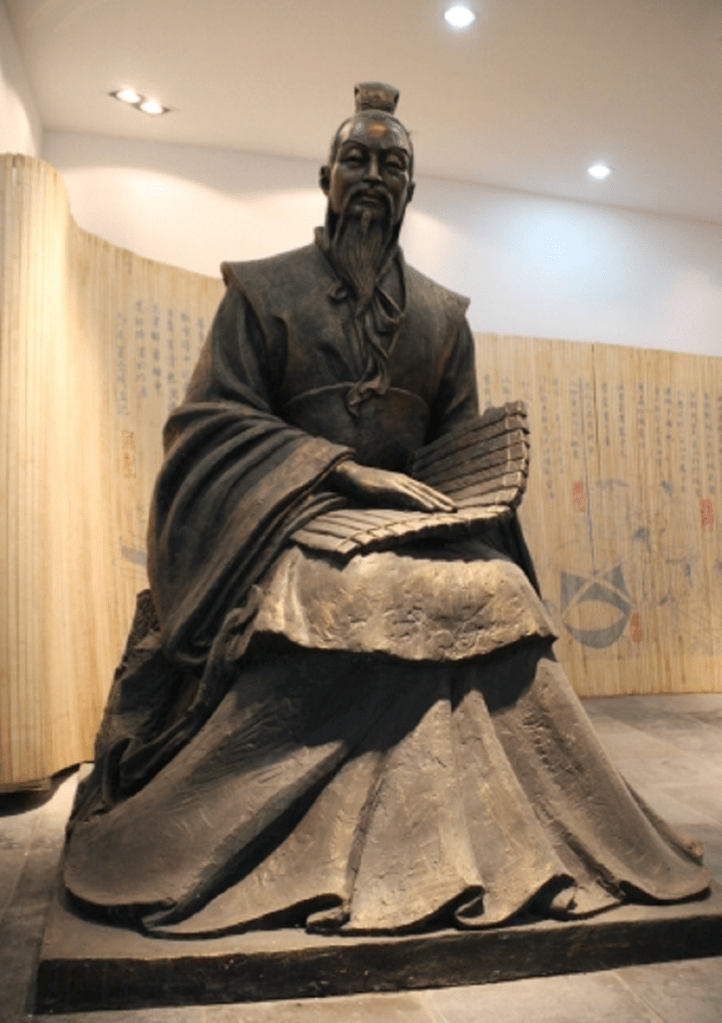
    Liu An, the Prince of Huainan

    The 1st year of Emperor Wu’s Yuan’shou Era (122 B.C.)

    In the winter of October, the Emperor journeyed to Yong to perform sacrifices at the Five Altars in honor of the Five-Deities. During the ceremony, a mythical creature with a single horn and five hooves was captured. The rite officials, in their memorial, declared, “In response to your Majesty’s solemn ceremony, Heaven has bestowed a unicorn, likely the legendary Qilin.” The unicorn was offered in sacrifice at the Five Altars, and an ox was added to the roast fire at each altar.

    After some time, the officials further expounded on the omen, interpreting the event as a celestial sign of unique importance. They declared, “This rare occurrence—capturing a mythical beast with a single horn—reveals that Heaven wishes for the reign to be designated with auspicious titles, rather than mere numerical sequences. The first era of your reign shall be named ‘Jian’ [Establishment], the second ‘Guang’ [Light], following the appearance of the comet. As for the current era, it shall be named ‘Shou’ [Hunting], due to the appearance of the unicorn during the ceremonial rites.”

    The Prince of Jibei, discerning in these signs that the Emperor was poised to undertake the Feng-Shan ceremony, proposed placing Mount Tai and its surrounding regions directly under the control of the Han Household. The Emperor accepted this proposal and compensated the Prince with lands from other counties.

    Prince of Huainan, Liu An, and his retainers, including Zuo Wu, plotted day and night, deliberating over rebellion. They studied maps and devised strategies for troop movements, planning their routes for the march. Meanwhile, various envoys arrived from Chang’an, bearing conflicting reports. Some brought false tidings, saying, “The Emperor has no male heir; the Han court is in turmoil.” Upon hearing this, Prince Liu An was momentarily overjoyed. However, other envoys contradicted this, stating, “The Han court is well-governed, and the Emperor has a male heir.” Enraged, the prince dismissed these claims as lies.

    In his anger, the Prince summoned the Gentleman of the Household, Wu Bei, to discuss the matter of rebellion. Wu Bei, ever cautious, spoke, “How could Your Majesty speak words that would bring ruin to the state? I foresee a dark future: thorns within the palace and morning dew soaking our clothes.” The prince, infuriated by this warning, casted Wu Bei‘s parents into prison.

    After three months, the Prince summoned Wu Bei once more. Wu Bei, in his counsel, said, “In the past, the House of Qin ruled with ruthless cruelty and excess, leading six or seven out of ten households to desire rebellion. Amidst this turmoil, Emperor Gaozu rose to power, becoming Emperor. He was known as one who exploited the weaknesses of the Qin, seizing the opportunity brought by their downfall. Now, Your Majesty, having witnessed how easily Emperor Gaozu acquired the world, Have you not considered the recent history of the Principalities of Wu and Chu?

    “The Prince of Wu governed four commanderies, with a wealthy state and a large population. He planned meticulously, yet failed. He raised troops to march westward, but was defeated at the principality of Liang. Forced to flee eastward, he perished, and his ancestral sacrifices ceased. Why? Because he defied the natural order, failing to understand the proper timing.

    “At present, Your Majesty’s army, though mighty, is but even a tenth of the power of the Principalities of Wu and Chu. The world is at peace now, thousands of times more so than in the days of the Wu and Chu Uprisings. Your Majesty, if ignoring my counsel, will forsake a monarch ruling thousands of chariots and face the decree of self-destruction, dying before all the courtiers in the Eastern Palace.”

    The prince, upon hearing these words, rose and left, weeping.

    The Prince had an Ishmael son named Liu Buhai, the eldest of his progeny, yet he was not favored by the Prince. Neither the Queen nor the Crown Prince of Huainan regarded him as a son or a brother. Liu Buhai, in turn, had a son named Liu Jian, a youth of remarkable talent and vigor. Liu Jian, however, harbored a deep resentment toward the Crown Prince of Huainan(Liu Qian) and secretly accused him of conspiring to assassinate Duan Hong, the Han envoy and Commandant of the Capital Guard. The Emperor, upon learning of this,  handed down this case to the Justice Minister for investigation.

    The Prince, troubled by the affair, sought a resolution. Once again, he turned to Wu Bei, asking, “Do you think it was wise for the Prince of Wu to raise troops against the Han Empire, or not?”

    Wu Bei replied, “No, it was not wise. I have heard that the Prince of Wu deeply regrets his actions. I hope, Your Majesty, do not repeat the same mistake, and regret as the Prince of Wu did.”

    The Prince said, “What did the Prince of Wu truly understand of rebellion? There were usually more than forty Han officers passing through Chenggao each day. Now, I have sealed off Chenggao, secured the strategic confluence of the Three Rivers—Yi River, Luo River, and Yellow River—and rallied the forces east of Mount Xiao. By such actions, Zuo Wu, Zhao Xian, and Zhu Jiaoru are confident the plan has nearly a ninety percent chance of success. Yet, you alone foresee misfortune and no happy ending. Why? Do we truly have no chance, as you claim?”

    Wu Bei countered, “If there is no other way, I offer a foolish plan. At present, the feudal lords harbor no rebellious intentions, and the common people bear no grievances. We can forge a petition, purportedly from the Chancellor and the Grand Master of the Censorate, calling for the relocation of influential and wealthy individuals from various commanderies to Shuofang. This would also involve increasing the recruitment of soldiers and setting an urgent assembly deadline. Furthermore, we could fabricate sentences to arrest the crown princes of the principalities and favored courtiers of the feudal lords. This would stir resentment among the people and instill fear among the monarchs. Then, we could send skilled lobbyists to persuade them. Perhaps, on a lucky day, we might achieve a ten percent success rate.”

    The Prince said, “This plan is feasible. However, I do not believe we would need to resort to such extremes.”

    Thus, the Prince crafted an imperial seal and seals for the Chancellor, Grand Master of the Censorate, generals, military officers, officials holding 2,000-picul rank, as well as seals for the nearby prefects and commandants. He also forged the insignia and scepters of the Han envoy. His intention was to falsely implicate someone and send them running westward to seek refuge under the Grand General Wei Qing. On a chosen day, troops would be mobilized, and the Grand General would be assassinated.

    Additionally, he remarked, “Among the prominent ministers of the Han court, only Ji An values straightforward admonitions, upholds integrity, and is difficult to deceive with falsehoods. Others, such as Chancellor Gongsun Hong and the rest, are easily swayed, like drapes being removed or leaves shaken off trees.”

    The Prince, desiring to deploy the local troops, feared that the Prime Minister and the officials appointed by the court, those with 2,000-picul rank, might not comply. Therefore, he conspired with Wu Bei to first assassinate the Prime Minister and the officials appointed by the court. He also devised a plan to have someone dressed as a police officer, carrying a feather message, arrive from the east and shout, “The troops of Nanyue have entered the borders!” This would serve as a pretext for the deployment of troops.

    The Minister of Justice in the Han Court was ordered to arrest the Prince of Huainan. Upon hearing of this decree, the Prince conspired with the Crown Prince(Liu Qian), summoning his Prime Minister and the officials of 2,000-picul rank with the intent to murder them and initiate a rebellion. When the Prime Minister arrived, the Minister of Interior and the Commandant of the Guard of the principality failed to appear. Realizing that the death of the Prime Minister alone would bring him no gain, the Prince dismissed him, remaining hesitant and indecisive. The Crown Prince, in despair, chose to take his own life by slitting his throat, but was unsuccessful.

    Wu Bei, moved by conscience, voluntarily approached the authorities and revealed the details of the Prince’s conspiracy. The authorities swiftly apprehended the Crown Prince and the Queen of Huainan, surrounded the royal palace, and identified all those within the principality implicated in the rebellion. Evidence of the mutiny was presented to the Emperor. The Emperor ordered the prosecution of the Prince’s retainers, while commanding the Minister of the Imperial Clan to oversee the investigation with the Emperor’s personal insignia. Before the Minister could reach the Prince, the latter took his life by slitting his throat. The Queen of Huainan, Tu, and the Crown Prince, Liu Qian, were executed, and all involved in the conspiracy met with punishment.

    The Emperor, having acknowledged Wu Bei’s eloquence and his prior praise of the virtues of the Han, was initially inclined to spare him. Yet the Minister of Justice, Zhang Tang, asserted, “Wu Bei was the first to plot rebellion for the Prince; such a crime cannot be pardoned.” As a result, Wu Bei was executed.

    Zhuang Zhu, the Attendant-in-Waiting, maintained a close relationship with the Prince of Huainan, engaging in private discussions and receiving generous gifts from him. The Emperor, hoping to pardon his guilt and spare him from execution, was opposed by Zhang Tang, who remarked, “Zhuang Zhu, as an intimate attendant, moves freely in and out of the imperial gates. If he deals privately with feudal lords, pardoning him would set a dangerous precedent.” Ultimately, Zhuang Zhu was executed publicly in the market.

    Meanwhile, Prince of Hengshan, Liu Ci, submitted a memorial requesting the removal of the Crown Prince of Hengshan, Liu Shuang, and the appointment of his younger brother, Liu Xiao, as the new Crown Prince. In response, Liu Shuang dispatched his confidant, Bai Ying, to Chang’an, accusing Liu Xiao of secretly constructing chariots, forging arrowheads, and engaging in illicit relationships with his father’s concubines. In the course of capturing conspirators linked to the Prince of Huainan, officials discovered Chen Xi hiding in Liu Xiao’s residence. Liu Xiao, upon hearing of the law granting immunity to those who confess first, readily confessed his involvement with the conspirators Mei He and Chen Xi. The authorities called for the arrest of Prince Hengshan, but the prince chose to end his own life.

    The Queen of Hengshan, Xu Lai, the Crown Prince Liu Shuang, and Liu Xiao were all executed in the public market, alongside all those involved in the conspiracy.

    The fall of the Princes of Huainan and Hengshan brought ruin to many, implicating numerous marquises, officials with 2,000-picul rank, and other influential figures. In total, the upheaval led to the loss of tens of thousands of lives.
  • Comprehensive Reflections to Aid in Governance(Part 148): A Rising Star

    Comprehensive Reflections to Aid in Governance

    By Sima Guang

    Translated By Yiming Yang  

    Annals of Han Book 11 Scroll 19 (continued)

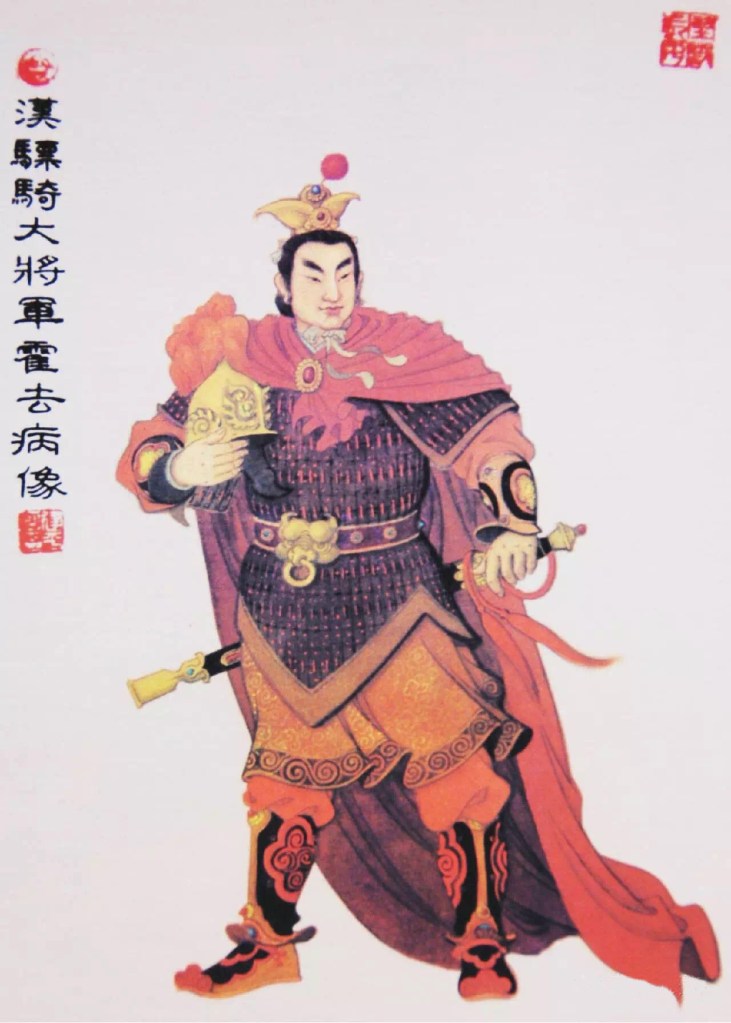
    Portrait of General Huo Qubing

    The 5th year of Emperor Wu’s Yuan’shuo Era (124 B.C. continued)

    In the summer month of June, an edict was issued, declaring, “It is known that guiding the people through rituals and nurturing them with music are essential. Yet now, with rituals in decline and music absent, We are deeply concerned. Let the officials responsible for rituals promote the study and revive the rites, thereby leading the entire nation!”

    In response, Chancellor Gongsun Hong and others suggested, “We request the establishment of fifty students for the Erudite, exempting them from public taxes and duties, to be assessed for their abilities and appointed to positions such as Attendant-in-waiting, Literary, and Office Clerks. Those who display exceptional talent will be honored and recommended for higher positions. Conversely, those who show no dedication to learning and possess lesser abilities shall be dismissed. Furthermore, officials who are proficient in at least one of the Five Confucian Classics shall be selected as candidates for roles with a salary of 2,000 picul.”

    The Emperor gave his approval. From that time forth, more scholars appeared among the ministers, grandees, gentry, and local officials.

    In autumn, ten thousand riders from the Xiongnu invaded the territory of Dai, killing Commandant Zhu Ying and capturing over a thousand people.

    The Prince of Huainan, Liu An, was greatly fond of reading and literature. He took pleasure in gaining fame and attracted thousands of guests and scholars versed in various teachings. Among his courtiers and guests were many frivolous individuals from the Yangtze and Huai River basins, who bore longstanding resentment towards the Prince Li of Huainan, Liu Chang, due to his banishment to Qiong and eventual death. These men often brought up the matter to provoke Liu An.

    In the sixth year of the Emperor Wen‘s Early Era, a comet appeared. Some lobbied the Prince of Huainan, saying, “In the time when the Prince of Wu(Liu Pi) raised his army, a comet appeared, stretching several feet, and it led to bloodshed across a thousand miles. Now, with a comet filling the entire sky, it may signal a large-scale uprising of armies across the realm.” The prince believed these words to be true and thus increased preparations for siege weapons, while also amassing gold and wealth.

    Guard Lei Bei, in an accident during fencing practice, had wounded the Crown Prince of Huainan, Liu Qian. An edict was issued proclaiming that anyone willing to join the campaign against the Xiongnu should report to Chang’an. Lei Bei expressed his eagerness to fight against the Xiongnu. However, the Crown Prince Liu Qian disparaged Lei Bei in front of Liu An. The Prince of Huainan scolded and dismissed him to set an example for others.

    In the same year, Lei Bei fled to Chang’an and submitted a petition to clear his name. The matter was sent to the magistrate for investigation, and Lei Bei’s complaint was linked to the Prince of Huainan. The court officials requested the arrest and trial of the Prince of Huainan. The Crown Prince of Huainan then devised a plan to dress someone as a palace guard, who would hold a halberd by the prince’s side. If any envoy from the Han was found to be suspicious, the guard would kill the person, triggering a rebellion. The Emperor dispatched the Capital Guard commandant Duan Hong to interrogate the prince. However, upon observing Duan Hong‘s composed demeanor, the prince refrained from carrying out the plan.

    The court officials reported, “Liu An, who obstructed a warrior willing to fight the Xiongnu, defied the clear decree and must be punished by execution.” A decree was issued, stripping him of two counties. Deeply ashamed, Prince Huainan lamented, “Even when I act with benevolence and righteousness, I am met with territorial losses.” Out of this shame and humiliation, his plot to rebel grew more intense.

    Liu An‘s relationship with the Prince of Hengshan, Liu Ci, had long been strained and grew more distant with time. When the Prince of Hengshan heard of a potential rebellion by Liu An, he feared being annexed by his brother and began preparing countermeasures by gathering retainers and weapons for rebellion. He believed that if the Prince of Huainan were to conquer the west, he would raise an army to seize control of the Yangtze River and Huai River basins.

    The Queen of the Princedom of Hengshan, Xu Lai, accused the heir-apparent of Prince Hengshan, Liu Shuang of wrongdoing, hoping to depose him and install his younger brother, Prince Liu Xiao, in his place. The Prince of Hengshan detained his heir Liu Shuang and bestowed the royal seal upon Prince Liu Xiao, commanding him to gather retainers. When these retainers arrived, they, from illusive signs, understood the rebellious intentions of both the Princes of Huainan and Hengshan, and clandestinely aided and abetted them day and night.

    The Prince of Hengshan then instructed Mei He and Chen Xi of Jiangdu, retainers of Liu Xiao, to manufacture chariots, forge arrows, and carve imperial seals and insignias for generals and military officers. In the autumn, when the Prince of Hengshan was due to attend court, he planned to pass through Huainan. At this moment, the two brothers, reconciled as siblings, resolved their previous differences and agreed to unite in their rebellion.

    Upon their reconciliation, Prince Liu Ci sent a letter pleading illness, thereby securing exemption from the Emperor’s summons and avoiding his visit to the capital.

    The 6th year of Emperor Wu’s Yuan’shuo Era (123 B.C.)

    In February of spring, the Grand General Wei Qing set forth from Dingxiang to confront the Xiongnu. The Emperor appointed Gongsun Ao, the Marquis Heqi, as General of the Center; Grand Coachman Gongsun He as General of the Left; Zhao Xin, the Marquis Xi, as General of the Front; Capital Guard Commander Su Jian as General of the Right; Chamberlain Li Guang as General of the Rear; and Li Zu, the Left Interior Minister, as the Mighty Crossbow General, all under the command of the Grand General. They returned after slaying several thousand enemies, resting their soldiers and horses in Dingxiang, Yunzhong, and Yanmen.

    A general amnesty was proclaimed throughout the empire.

    In April of summer, Wei Qing once more led the six generals from Dingxiang to engage the Xiongnu, resulting in the slaying and capturing of more than ten thousand enemies. The General of the Right, Su Jian, and the General of the Front, Zhao Xin, leading over three thousand cavalry, encountered the Chanyu’s forces alone. After battling for more than a day, the Han forces were nearly exhausted. Zhao Xin, once a minor king among the Nomad tribes who had surrendered to the Han and been granted the title of Marquis Xi, was lured by the Xiongnu after being defeated. He led the remaining eight hundred riders to defect to the Xiongnu. Su Jian, having lost his entire army, managed to escape and returned to the Grand General’s camp.

    Gentleman Consultant Zhou Ba proposed, “Since the Grand General has assumed command, no general has been executed. Now that Su Jian has abandoned his army, he must be executed to uphold the authority of the Grand General.”

    The military judge Hong and Chief of Staff An countered, “Not so. According to the ‘Art of War,’ even the toughest small forces may fall before much larger ones. Su Jian faced tens of thousands of enemies with only a few thousand troops, fought fiercely for over a day, exhausted his soldiers, yet did not entertain thoughts of defection and willingly returned. Executing him would suggest that failure is intolerable in all circumstances, which is inappropriate.”

    The Grand General responded, “I, Wei Qing, am fortunate enough to have the Emperor’s trust and command a great army. I am not concerned with lacking authority. Zhou Ba advises me to behead a general to assert my power; however, this does not suit my station as a subject of the court. Even if I have the authority to execute a general, with all the favor and privilege I possess, I cannot unilaterally pass judgment without first reporting to the Emperor. I will send Su Jian to the imperial court, and the Emperor shall determine his fate. This demonstrates that as a servant, I do not dare wield arbitrary power. Is this not the proper course?”

    The military officers all agreed, saying, “Well said!” They then imprisoned Su Jian and sent him to the Emperor for trial.

    An official in Pingyang County, named Huo Zhongru, served in the household of the Marquis of Pingyang[the husband of Princess Pingyang]. He had an affair with Wei Qing’s elder sister, Wei Shao’er, a maid, resulting in the birth of Huo Qubing. At the age of eighteen, Huo Qubing became an attendant to the Emperor. He excelled in horse riding and archery. He accompanied the Grand General twice in wars against the Xiongnu, serving as Colonel of Piaoyao [Soaring Hawk]. Displaying immense bravery, he led 800 light cavalry troops, charging ahead of the main army, capturing or killing numerous enemies, far surpassing expectations.

    The Emperor issued a decree, saying: “Colonel Piaoyao Huo Qubing has slain over 2,000 enemy soldiers, captured the prime minister and chieftains of the Xiongnu, beheaded the Chanyu’s Grand Uncle, Chan, Marquis of Jiruo, and seized Chanyu’s uncle, Luobi. His feats surpass all others in the army. He shall be honored as Marquis of Guanjun [Champion]. The Prefect of Shanggu, Hao Xian, has followed the Grand General in four campaigns against the Xiongnu, capturing and beheading over 2,000 enemies. For his contributions, Hao Xian shall be bestowed with the title of Marquis Zhongli.”

    That year, due to the loss of two generals, the defection of Marquis Xi, and lesser military accomplishments, the Grand General was not granted an increase in noble rank but was instead given a thousand gold coins. General of the Right, Su Jian, upon his return, was not executed but was demoted to commoner status and redeemed by paying a fine.

    At that time, the Chanyu, having Marquis Xi, Zhao Xin, surrendered, promoted him to Under King, second only to the Chanyu. He married his sister to Zhao Xin and plotted against the Han. Zhao Xin counseled the Chanyu to move further north to a distant location, making it appear as though the Xiongnu were withdrawing, intending to lure and exhaust the Han forces for a future attack at a remote location, far from the border. The Chanyu followed Zhao Xin‘s plan.

    During those years, the Han Household annually dispatched over a million soldiers to fight against the nomadic tribes. The soldiers who captured or killed enemies were rewarded with more than two hundred thousand catties of gold, yet over a hundred thousand Han soldiers and horses perished. The expenses for the military campaigns and supplies drained the treasury, resulting in insufficient provisions for the soldiers.

    In June, a decree was issued allowing civilians to purchase noble titles and amnesty for past crimes by paying a fine. A system of rewarding military achievements was also established, called “Military Merit Lordship,” with seventeen ranks and over three hundred thousand gold coins allocated. Those who purchased these titles and attained the rank of “chiliarch” were granted priority for official appointments. The system of governance became muddled and riddled with various loopholes, leading to a decline in administrative efficacy.

  • Comprehensive Reflections to Aid in Governance(Part 137): The Hazard of Campaigns against Yue

    Comprehensive Reflections to Aid in Governance

    By Sima Guang

    Translated By Yiming Yang  

    Annals of Han Book 9 Scroll 17 (continued)

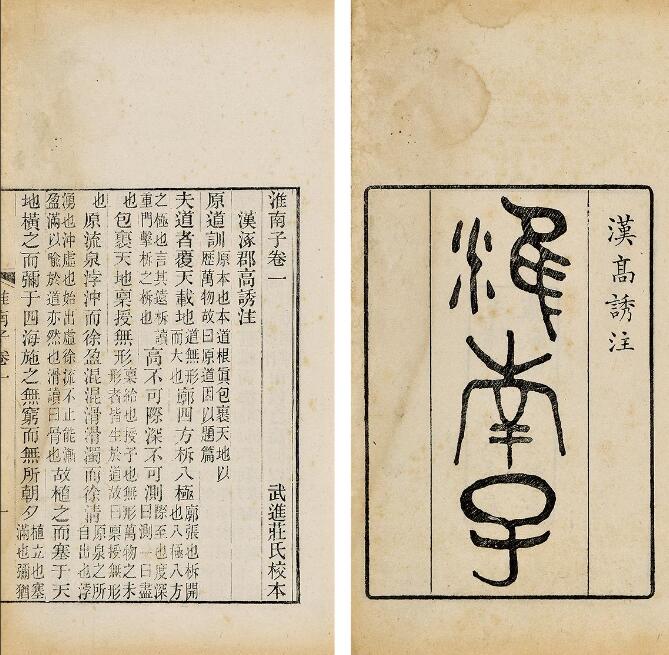
    The Prince of Huainan, Liu An’s Book, Huainanzi

    The 6th year of the Emperor Wu’s Jianyuan Era (135 B.C.)

    On February 3 of the spring, a fire occurred at the Shrine of Emperor Gaozu in Liáodōng commandery, causing damage.

    On April 21 of the summer, a fire broke out at the side house in Emperor Gaozu’s tomb. As a result, the Emperor wore plain mourning clothes for five days.

    On May 26, the Grand Empress Dowager Dou passed away.

    On June 3, the Chancellor Xu Chang was dismissed from office. Marquis Wu’an, Tian Fen, was appointed as Chancellor.

    Tian Fen was spendthrift and self-indulgent. He built vast mansions that outclassed any other residence; his manors were the most fecund. The carriages bearing tribute from the counties and commanderies crowded before his gates. He accepted bribes from across the realm, and his household overflowed with treasures, concubines, hounds, steeds, and musicians, the luxuries beyond reckoning. When presenting memorials to the Emperor, he would discourse from morning till night, and all he spoke was approved. Those whom he recommended swiftly rose to ranks as high as two-thousand-piculs, and his influence came to surpass that of the throne.

    The Emperor once complained to him, “All the ministers have been appointed by you; I had wished to make some appointments myself.” When Tian Fen petitioned for land from the imperial armory to expand his mansion, the Emperor grew angry, saying, “Why don’t you take the entire armory for yourself?” After this, Tian Fen restrained his conduct somewhat.

    In August of autumn, a comet appeared in the east, its tail stretching across the sky.

    In this same year, the King of Minyue, Zou Ying, raised an army and attacked the borderlands of Nanyue. The King of Nanyue, mindful of his allegiance to the Emperor, dared not raise troops without imperial authorization and dispatched an envoy to submit a memorial reporting the matter.

    The Emperor, moved by his loyalty, resolved to act. He ordered the Grand Herald, Wang Hui, to set forth from Yuzhang Commandery, and the Minister of Agriculture, Han Anguo, to march from Kuaiji Commandery, each commanding forces to chastise Minyue.

    At this time, the Prince of Huainan, Liu An, memorialized to remonstrate:

    “Your Majesty, who reigns over all under Heaven, has extended benevolence and nurtured virtue. Within the seas, all is at peace, and the people live in harmony. Throughout your reign, there has been no turmoil or disorder. Now I hear that officials propose to raise an army to chastise Minyue, and I, your humble subject, am compelled to offer my counsel.

    Yuè is an outer land, inhabited by those who cut their hair and tattoo their bodies. They do not submit to the codes and customs of the Middle Kingdom. Since the days of the Three Dynasties, the Nomads and Yuè have never willingly adopted our calendar and rites. It was not that the Three Dynasties lacked strength to subdue them, but rather that these peoples dwell in inhospitable places and pursue ways intractable to governance.

    “Since the founding of Han, seventy-two years have passed. Though conflicts among the Yuè have been numerous, the Son of Heaven has never campaigned personally against them. Their lands lack walled cities and ordered towns; they live in valleys and among bamboo groves, skilled in river warfare and adept at boat-fighting. Their terrain is dense with forests and cut by treacherous waters; to one ignorant of the land, one hundred soldiers from the Middle Kingdom would scarcely match one of theirs. Those who seize their territory cannot establish counties and commanderies; those who attack cannot gain swift victories. The strategic passes and rivers, though appearing close on a map, span hundreds and thousands of miles in truth. Many routes are unrecorded and unknown. Though the path seems near, it is exceedingly difficult.

    “Now, by the blessings of the ancestral temples, all under Heaven enjoys peace. Men grow old and grey without knowing warfare; fathers, sons, and wives live in security. This is due to Your Majesty’s virtue. Yuè is named a vassal only in empty words. They offer no tribute, no sacrifices; they do not provide soldiers for the army. Their internal strife is constant. If Your Majesty now dispatches forces to intervene in their squabbles, it would exhaust the wealth of the Middle Kingdom for the sake of barbarians.

    “Moreover, the Yuè are rash and fickle, ignorant of propriety, prone to breaking faith. If whenever they disobey, we raise armies to punish them, then campaigns will be endless, and the soldiers of the empire will know no rest.”

    “Of late, the realm has suffered successive years of poor harvests and famine. People have sold their titles and married away their sons into in-law’s households merely to sustain themselves. Only through Your Majesty’s benevolence and relief efforts so that the ditches and valleys have not been filled with corpses. Yet it has been four years of failed crops, and now a fifth year with the scourge of locusts. The people’s vitality has not yet recovered.

    “Now to raise an army to march thousands of miles, to bear clothing and provisions over rugged terrain, to carry litters over mountains and drag boats across rivers, traversing countless valleys choked with dense forests and bamboo, would impose untold hardship. Soldiers would journey across hundreds and thousands of li, striking against rocks in the water, threading through woods rife with venomous serpents and fierce beasts. In the sweltering summer, fevers, dysenteries, and pestilences will inevitably follow. Even before encountering the enemy, deaths and injuries will be many.

    “In former days, when the King of Nanhai(Zhi) rebelled, Your Majesty’s subject, my late father, dispatched the general Jian Ji to lead an expedition. Though some among the Nanhai forces defected and surrendered, and were thereafter resettled in the upstream of Ganshui River, the Han forces withdrew without deep incursion, yet later, rebellion revived. That summer happened to be very hot and rainy, and many of our naval troops, confined aboard ship for months, succumbed to waterborne diseases before they ever faced battle. Without fighting, more than half perished. The old mourned, orphans wailed, households were broken, estates left desolate. Families had to journey a thousand li to collect the bones of their dead, wrapping them for burial and bringing them home. Their grief and lamentations have endured for years without ceasing. Even now, elders recall those sorrows.

    “All this befell us though our forces had not yet entered enemy lands.

    “Your Majesty’s virtue matches Heaven and Earth, your light shines like the Sun and Moon, your benevolence extends to the grass and trees, and you are grieved when even a single soul endures hunger or cold or is cut short before their appointed years. Yet now, with no hounds barking at the borders, no clamor of arms within the seas, Your Majesty would send tens of thousands to perish in the wilderness, to stain the mountains and rivers with blood, to expose their corpses to sun and carrion birds. Border towns will bolt their gates at dusk and hesitate to open them at dawn, and the people at sunrise will not know what disaster may befall them at sunset.

    “I, your humble servant, bow low and beg that Your Majesty weigh this matter again.”

    “Those unacquainted with the terrain of the southern reaches often assume that the Yuè tribes are numerous, their armies formidable, and thus a threat to our border cities. Yet in the days when Huáinán remained whole, before it was partitioned into three polities, I was acquainted with many who held office near the frontier. From them I learned that the land there differs markedly from that of the Middle Kingdom. Lofty mountains mark the bounds, where human footprints are scarce and the passage of chariots is hindered—thus do Heaven and Earth place a barrier between the inner realm and the outer wilds.

    “When the Yuè tribes venture northward into the Middle Kingdom, they must first descend to the basin of the Lǐng River. There, mountain torrents surge through precipitous gorges, strewn with tumbling rocks that may shatter vessels. Provisions cannot be conveyed downstream in large boats; the route is treacherous and impassable for loaded craft.

    “Should the Minyue harbor designs of mischief, they must first cultivate fields and amass grain at Yúgan County. Only then may they approach the border, fell timber, and fashion boats. Yet the defenses of the frontier cities are ever watchful. When the Minyue cross the boundary and commence logging, our garrisons promptly seize them and set fire to their storehouses. However many their number, what force can they muster against fortified cities?

    “Moreover, the Yuè people are of lean frame and want capable commanders. They possess neither cavalry nor chariot legions, and they are unskilled in the arts of crossbow and siege. Though invulnerable to conquest owing to the defenses of their rugged terrain, they themselves are ill-suited for campaigns in the Middle Kingdom, whose climate and customs lie beyond their ken.

    “It is said that the Yuè commanded several hundred thousand armed men. Yet to subdue them, an invading host must outnumber them fivefold, and this reckoning omits those tasked with bearing provisions. The southern climes are sultry and damp. With the approach of summer, the heat intensifies, pestilence thrives, and fevers spread unchecked. Exposure to the marshes, to serpents and noxious vapors, afflicts the troops. Long before engaging the enemy, sickness fell them; oft one in ten, or even one in five, perish before a battle is fought. Even were the whole of Yuè to be taken, with its lands and its people, it would not suffice to balance the loss in men.

    “It is said that after the King of Yuè was slain by his own brother, a man named Jia, the traitor was swiftly put to death, and the Yuè tribes have since lacked a sovereign. If Your Majesty desires to receive them into the fold, you may summon them to the Middle Kingdom, appoint worthy ministers to oversee their affairs, extend to them the warmth of virtue, and bestow upon them generous rewards. In so doing, they shall surely bring their elders and their young to submit themselves beneath your benevolent governance.

    “If they cannot be employed directly, it would be fitting to establish a surviving scion of their royal line as a lord, thereby preserving the name of their fallen state. Grant him a title, endow him with lands, and keep him as the guardian of the Yuè people. In return, they will of their own accord offer hostages to the court, and for generations will render tribute and pay their dues. With but a seal of a square inch and a silken ribbon twelve feet long, Your Majesty shall rule the distant regions without the march of armies or the clash of arms; and your virtue shall resound beyond the borders of civilization.

    “But should arms be raised and troops dispatched into their territory, alarm will spread like wildfire. The Yuè tribes will believe the generals mean to exterminate them, and they will flee into the forests and mountains, evading capture. When the army withdraws, they will reassemble and return. Should we garrison troops and maintain a permanent force in their land, over the years our strength will dwindle, our grain stores will be depleted, and the people shall suffer under the weight of war. Disorder will take root, and lawless bands shall rise.

    “It is said that in the time of the Qin, Commandant Túsuī led troops against the Yuè, while Supervisor Lu oversaw the digging of a canal to open a passage. The Yuè fled into remote mountain fastnesses where the army could not follow. Qin forces remained encamped for many months, the soldiers grew weary and dispirited. When the Yuè launched their counterattack, the Qin army was crushed, and reinforcements had to be summoned. This, coupled with unrest within the realm, gave rise to great panic and caused a tide of refugees. In the east of Mount Xiāo, uprisings began to stir. Such are the perils of war—it brings calamity in all directions. I fear that if we proceed down this path, disorder will be sown, wickedness awakened, and great trouble will follow.

    “I have heard that the Son of Heaven embarks on conquests, but not wars—that is, his virtue is such that none dare oppose him. Yet if, in this endeavor, a single man—be he porter or cart-driver—fails to return in safety, even should the head of the Yuè King be taken, I would feel profound shame on behalf of the Han.

    “Your Majesty’s dominion extends to the Four Seas; all living things fall under your protection. Your kindness and generosity shall become the enduring blessing of the people and the legacy of future generations. The peace and security of the realm are as weighty as Mount Tài, bound fast by cords drawn from all directions. What worth is there in the land of the barbarians, that it should merit the sweat and blood of Han soldiers?

    “As it is written in the Book of Songs: ‘The king is majestic and radiant; afar, the people come to him.’ Thus is the power of benevolent rule—that even those in distant lands offer themselves in submission. In my humble judgment, to send a hundred thousand troops under generals and officers is to do the work of a mere envoy.”