Tag: Li Guangli

  • Comprehensive Reflections to Aid in Governance(Part 174): Repentance of Luntai

    Comprehensive Reflections to Aid in Governance

    By Sima Guang

    Translated By Yiming Yang  

    Annals of Han Book 14 Scroll 22 (continued)

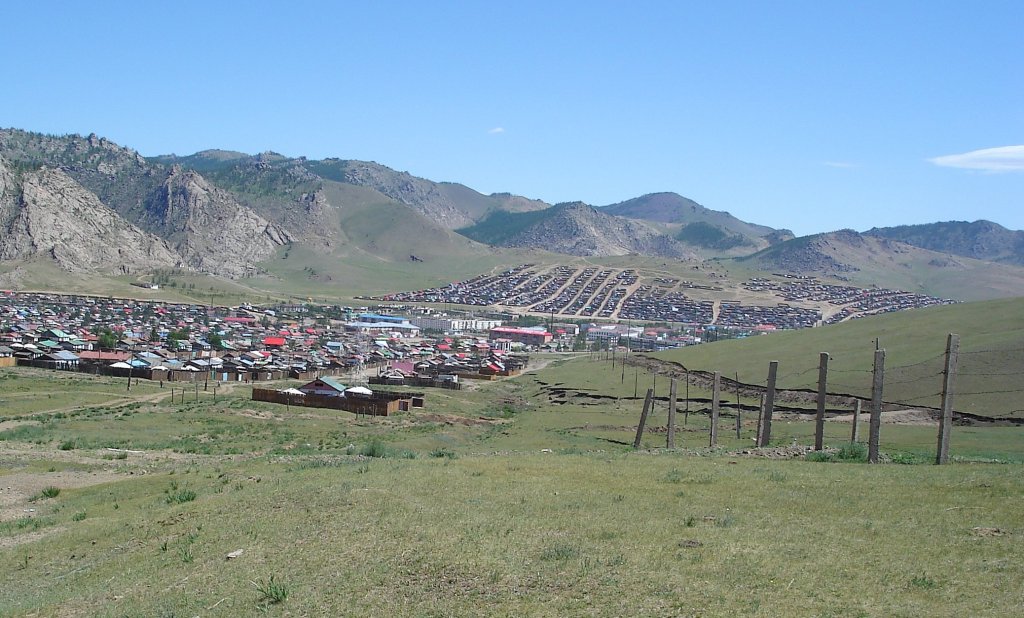
    Bayanbulak grassland where Luntai county locates. Photo by Srr

    The 4th year of Emperor Wu’s Zhenghe Era (89 B.C.)

    In January of spring, the Emperor journeyed to Donglai and came to the sea, intending to cross the waters in search of the sacred mountains. Though his ministers remonstrated, he would not heed them. Then a great and obscure tempest arose, the sea surging in violent billows. He remained there more than ten days, yet could not embark upon the imperial naval vessel, and so returned.

    On February 2, in Yong County, there were three sounds like thunder on a clear day, and two stones fell from the sky, black as soot.

    In March, the Emperor personally ploughed the fields at Juding. On his return, he went to Mount Tai to perform the rites of sacrifice to Heaven.

    On March 26, he made ancestral offerings in the Bright Hall. On March 29, he sacrificed to the Earth at Mount Shi’lü, and addressed his ministers, saying, “Since We ascended the throne, my extravagance has brought distress upon the realm; these things cannot be undone. Henceforth, We shall cease all actions that harm the people or waste the resources of the state.”

    Tian Qianqiu said, “Among the many who traffic in occult arts and claim to be immortals, none have shown real merit. I propose they be all dismissed and expelled.”

    The Emperor replied, “The Grand Herald speaks truly.” Thereupon, all occultists and seekers of immortality were dismissed and expelled.

    From that time forth, the Emperor would oft lament to his ministers, saying, “I was foolish and gullible, deceived by the occultists. How could there be immortals in the world? All is falsehood. Only with moderation in food and medicine may illness be avoided.”

    In June of summer, he returned and visited Ganquan Palace.

    On June 25, the Grand Herald Tian Qianqiu was appointed Chancellor and ennobled as Marquis of Fumin[enrich people]. Tian Qianqiu possessed neither outstanding talent nor extraordinary merit; yet by a single remonstrance he awakened the Emperor’s mind, and within a few months was elevated to Chancellor and enfeoffed—a thing without precedent in history. Nevertheless, he was known for integrity, benevolence, and discernment, and was more effective than many of his predecessors.

    Earlier, the Commandant of Granary Collection, Sang Hongyang, together with the Chancellor and the Grand Master of the Censorate, had submitted a proposal, saying: “East of the Luntai(a.k.a. Bugur county) region there are more than five thousand acres of land fit for irrigation. We may send farming soldiers to settle there, appoint three Colonels to oversee them, and increase the cultivation of the five grains. Scouts from Zhangye and Jiuquan may serve as cavalry Marshals. Let us recruit the strong and willing to colonize and till the land, little by little establishing watchtowers and joining them into a continuous line, thereby securing the western marches, extending aid to the Wusun, and strengthening our might in the Western Regions.”

    The Emperor issued an edict of deep regret, saying, “Formerly, the officials proposed increasing the tax by thirty coins in order to strengthen the borders, which brought great hardship upon the aged, the weak, and the orphaned. Now there is a proposal to send farming soldiers to Luntai. Luntai lies more than a thousand li west of Jushi. When the Marquis of Kailing, Cheng Mian, attacked Jushi, though victorious and having slain their king, yet because of the remoteness and the scarcity of provisions, several thousand soldiers perished on the road. How then can We think of extending our reach yet farther west?

    “In the past, there came a letter from the military scout Hong, reporting that the Xiongnu have bound the fore and hind legs of their horses, placed them beneath the city walls, and run about saying, ‘Men of Qin, here are the horses you desire!’ This report deceived us. Furthermore, as the Han envoy was delayed in returning, I dispatched Ershi General, thinking thereby to lend weight to the envoy’s authority.

    “In antiquity, when ministers and nobles deliberated, they would also consult the yarrow stalks and tortoise shell; if the signs were unfavorable, they would not proceed. In this matter of the ‘bound horses,’ the memorial was circulated and examined by the Chancellor, the Imperial Censors, the two-thousand-picul ministers, the palace grandees, palace attendants, court scholars, and even the commandants of the commanderies and principalities; all declared, ‘For the enemy to bind their own horses is most inauspicious.’ Some said, ‘They seek to puff themselves up and provoke us, as men lacking horses boast of having many.’

    “The public diviners—astrologers, augurs, geomancers, and interpreters of the tortoise shell and yarrow stalks—together proclaimed it auspicious, saying, ‘The Xiongnu will surely be defeated; such a chance may never return.’ Moreover, it was foretold that a northern campaign would surely prevail at Mount Fu. The divinations pronounced Ershi General the most fortunate among the generals. Thus I myself dispatched Ershi General toward Mount Fu, with strict orders not to advance deeply.

    “Now it is clear that all our plans, all our divinations, and all our omens were specious!”

    “The Xiongnu scouts taken captive by the Marquis of Chonghe, Ma Tong, said, ‘The horses bound by the Xiongnu were cursed and buried, to hinder our military ventures.’ The Xiongnu often boast, ‘The Han is strong, yet cannot endure hunger and thirst; releasing one wolf will scatter a thousand sheep.’ When Ershi General failed in his mission, the soldiers died or were taken, and the army was dispersed—this grief has pierced my heart!

    “Now there is yet another proposal to cultivate the distant lands near Luntai, building outposts and digging tunnels. Such acts would bring turmoil and hardship to the people, which I cannot bear. Moreover, the Grand Herald and others have suggested recruiting prisoners to serve as escorts for the Xiongnu envoys, granting them marquisates as reward for assassinating the Chanyu, to avenge past wrongs. This is contrary to the way of the Five Hegemons.

    “Also, when the Xiongnu seize Han deserters, they always examine and search their bodies; how could such an assassination be accomplished? At present, our foremost task is to ban harsh and cruel measures, cease excessive levies, devote ourselves to agriculture, breed horses, and strengthen military preparedness. Let the regional governors, when they come to court with the statisticians, each present plans for the breeding of horses.”

    Thus the Emperor ceased to permit military campaigns, and ennobled Tian Qianqiu as Marquis of Fumin[enrich people], to signify his intent to grant rest and foster the welfare of the people, seeking to enrich and nourish them. He further appointed Zhao Guo as Commandant of the granary collection. Zhao Guo was adept in the practice of crop rotation, and the implements he devised for ploughing and cultivation were of notable ingenuity. He taught the people methods whereby little labor yielded abundant harvests, and all profited thereby.

    Sima Guang commentary: From ancient times to the present, there have ever been men of talent and virtue. Emperor Wu of Han inclined toward feats against the border tribes; the brave and fierce, who reckoned not their lives, thronged the court, enlarging the realm and fulfilling all his desires. Later, when the policy shifted to pacifying the people and exalting agriculture, there were men like Zhao Guo who taught farming to the people, bringing them benefit. The differing inclinations of one ruler drew to him men of differing kinds. If Emperor Wu had indeed embraced the virtues of the Three Sovereigns and Five Emperors, and advanced the governance of the Shang and Zhou, would there not have been ministers to match those of the Three Dynasties?

    In the autumn, on August 30, there was an eclipse of the sun.

    The Han defector to the Xiongnu, Wei Lü, envied the favor shown to Ershi General. Seizing upon the illness of the Chanyu’s mother, Yanzhi, he instructed the shamans of the Xiongnu to declare falsely, “The late Chanyu was wroth, saying, ‘We Xiongnu, before taking the field, have ever vowed to capture Ershi General and offer him in sacrifice to our deity. Why has this not been fulfilled?’” Thereupon they seized Ershi General

    Ershi General cursed them, “My death will surely bring ruin upon the Xiongnu!” Thereafter they slaughtered him as a sacrificial victim.
  • Comprehensive Reflections to Aid in Governance(Part 173): Nation Exhausted

    Comprehensive Reflections to Aid in Governance

    By Sima Guang

    Translated By Yiming Yang  

    Annals of Han Book 14 Scroll 22 (continued)

    Khangai(Douxian) Mountains at Tsetserleg, Mongolia, Photo by Imartin6

    The 3rd year of Emperor Wu’s Zhenghe Era (90 B.C.)

    In January of spring, the Emperor journeyed to Yong, visiting Anding and Beidi.

    The Xiongnu raided Wuyuan and Jiuquan, slaying two Commandants. In March, Li Guangli marched from Wuyuan with seventy thousand soldiers; Shangqiu Cheng led twenty thousand troops from Xihé; and Ma Tong commanded forty thousand cavalry from Jiuquan—together advancing against the Xiongnu.

    In May of summer, a general amnesty was proclaimed throughout the empire.

    The Xiongnu Chanyu, learning that the Han host advanced in full force, removed all stores and provisions northward to the banks of the Zhiju River. The Left Tuqi King led his people across the Yuwu River, traveling six to seven hundred li, and encamped by Mount Douxian(Khangai). The Chanyu himself led picked troops across the Guqie River. When Shangqiu Cheng’s army arrived, they followed Xiongnu‘s trail, but found nothing and withdrew.

    The Xiongnu sent a general together with Li Ling, leading more than thirty thousand cavalry, to pursue the Han forces. They fought for nine days, reaching the Punu River, but suffered defeat and withdrew.

    Ma Tong’s army reached the Tianshan Mountains. The Xiongnu dispatched their chief general, Yanqu, with over twenty thousand cavalry to intercept them; seeing the strength of the Han forces, they turned back. Ma Tong returned without gain or loss.

    At this time, the court feared that the forces of the Jushi Kingdom might impede Ma Tong’s army. The Emperor sent the Marquis of Kailing, Cheng Mian, to command troops from six states—Loulan, Weili, Weixu, and others—encircling Jushi, seizing its king and people, and then returning.

    The army of Ershi General crossed the frontier. The Xiongnu sent the Right Grand Commandant and Wei Lü with five thousand cavalry to attack the Han forces at the gorge of Mount Fuyanggou. The Han army defeated them, driving them north in pursuit to the city of Madame Fan. The Xiongnu fled in disorder, none daring to stand before the Han troops.

    When Ershi General set forth, Chancellor Liu Quli prayed to the Road God, held a banquet in his honor, and escorted him to Wei Bridge. Li Guangli said, “I hope the Marquis will soon petition for the Prince of Changyi to be named Crown Prince. Should he ascend the throne, what else would the Marquis then have to worry about?”

    Liu Quli agreed. The Prince of Changyi was nephew to Ershi General and son of Madame Li; the daughter of Ershi General was married to the son of Liu Quli. Thus they shared the intent of raising the Prince of Changyi to the throne.

    But the Chief Usher of the Inner Court, Guo Rang, reported, “The Chancellor’s wife has cast spells upon the Emperor; the Chancellor and Ershi General have offered sacrifices in prayer, plotting to enthrone the Prince of Changyi.” Upon investigation, their crime was judged to be high treason and sacrilege.

    In June, an edict commanded that Liu Quli be paraded in a slaughter cart, then waist-chopped in the Eastern Market. The heads of his wife and children were displayed upon Huayang Street. The wife and children of Ershi General were also cast into prison.

    Hearing of this, Ershi General grew apprehensive and afraid. His staff officer, Hu Yafu—a convict who had joined the army to escape punishment—urged him, saying, “Your wife and family are under interrogation. Should you return and matters go ill, imprisonment will be your fate. Might you yet find your chance north of the Zhiju River?”

    Ershi General’s mind became unsettled. Still hoping to gain merit and seek pardon, he led his forces onward until they reached the Zhiju River. Finding the enemy withdrawn, he sent twenty thousand cavalry, under the Protector of the Army, across the river. They encountered twenty thousand Xiongnu horsemen under the Left Tuqi King and the Left Grand General, and fought a battle that lasted the whole day. The Han forces slew the Left Grand General and inflicted heavy losses.

    The Chief of Staff and the Commandant of Juesui, Marquis Huiqu, Lei Dian, conspired against Li Guangli, saying, “Ershi General harbors treacherous designs, seeking private gain at the cost of the host; we fear certain ruin.” They plotted to seize him. On hearing this, Ershi General executed his Chief of Staff, then led his troops back toward Mount Yanran.

    The Chanyu, knowing the Han forces to be weary, led fifty thousand cavalry to cut off Ershi General. A great battle was fought, with severe losses on both sides. That night, the Xiongnu dug trenches several feet deep before the Han’s front lines, then attacked from the rear, throwing them into confusion. Ershi General surrendered.

    The Chanyu, knowing him to be a foremost general of Han, gave him his daughter in marriage, raising him above Wei Lü. Thereafter, the Emperor exterminated Li Guangli’s entire clan.

    In autumn, a plague of locusts occurred.

    In September, Gongsun Yong, former Magistrate of Chengfu County, conspired with his client Hu Qian and others to rebel. Hu Qian, feigning to be Grandee of the Chamberlain, claimed to be on imperial orders to apprehend thieves and bandits. Tian Guangming, Prefect of Huaiyang, learned of this and sent troops to seize and execute Hu Qian. Gongsun Yong reached Yu County clad in embroidered robes and riding in a carriage drawn by four great horses; the Sheriff of Yu County, Wei Buhai, put him to death. Wei Buhai and three others were enfeoffed as marquises for their merit.

    Reports spread of witchcraft and Gu poison among both officials and commoners, but upon investigation most were found baseless. The Emperor came to understand that the Crown Prince had been driven by menace and bore no treasonous intent.

    At this time, Tian Qianqiu, a guard at the Shrine of Emperor Gaozu, submitted an urgent memorial pleading justice for the Crown Prince, saying: “If a son takes his father’s soldiers without approval, he should be whipped; but if the Emperor’s son mistakenly kills a man, is it a crime? I dreamed of an old man with white hair instructing me to lay this matter before Your Majesty.”

    The Emperor was deeply moved, summoned Tian Qianqiu, and said, “In the affairs between father and son, few dare to speak; you alone have declared what was unfitting. The spirits of the Temple of Emperor Gaozu sent you to instruct me. Henceforth you shall aid me.” He at once appointed Tian Qianqiu Grand Herald.

    The clan of Jiang Chong was exterminated; Su Wen was burned alive upon the Heng Bridge. The official who had brandished arms against the Crown Prince at Quanjiuli had first been promoted to Prefect of Beidi, but later he and his clan were put to death.

    The Emperor, moved by compassion for the Crown Prince’s innocence, built the Palace of Missing Son, and in Hu County raised the Terrace of Longing for the Return. Throughout the realm, all who heard of this mourned deeply.

  • Comprehensive Reflections to Aid in Governance(Part 166): The Buckling of Dayuan(Ferghana)

    Comprehensive Reflections to Aid in Governance

    By Sima Guang

    Translated By Yiming Yang  

    Annals of Han Book 13 Scroll 21 (continued)

    Osh(Ershi), Kyrgyzstan, Photo by A.Savin

    The 3rd year of Emperor Wu’s Taichu Era (102 B.C.)

    In January of spring, the Prefect of Jiaodong, Yan’guang, was appointed as the Grand Master of Censorate.

    The Emperor went on an eastern tour by the sea but found no signs of immortals or deities. He ordered the officials to conduct rituals at Mount Tai. During April of summer, upon returning, the Emperor carried out ceremonies at Mount Tai and presented sacrificial offerings at Mount Shi’lǘ[drelling of immortals].

    Xiongnu Er Chanyu passed away, leaving a young son behind.  The Xiongnu then enthroned his paternal uncle, the Right Tuqi King, Goulihu, as the new Chanyu.

    The Emperor dispatched Chamberlain, Xu Ziwei, to venture out from Wuyuan Pass several hundred li, extending even further to over a thousand li, to build forts, barriers, and pavilions. This extension covered the northwest area to Luxu. He stationed the General of Guerrilla Warfare, Han Yue, and the Marquis of Changping, Wei Kang, nearby. Additionally, the Crossbow Commander, Lu Bode, was tasked with constructing facilities near the Juyan Lake.

    In autumn, the Xiongnu conducted a major incursion into Dingxiang and Yunzhong, resulting in the killing and abduction of several thousand people. They defeated several officials of the 2000-picul rank and departed, damaging the forts, pavilions, and barriers constructed by Xu Ziwei. Moreover, the Right Tuqi King raided Jiuquan and Zhangye, taking away several thousand individuals. The military Supervisor Ren Wen came to intervene, the Xiongnu lost what they gained and then withdrew.

    In this year, the Marquis of Suiyang, Zhang Chang, was found guilty of negligence in performing sacrificial rites as the Grand Minister of Ceremonies, leading to the abolition of his title and fiefdom.

    Emperor Gaozu ennobled 143 meritorious individuals as marquis in the aftermath of a great turmoil.  At the time numerous people fled from major cities and renowned metropolises, resulting in a population count reduced to twenty or thirty percent of what was before the war. The largest marquisate(march) had no more than ten thousand households, while the smallest had five to six hundred households. The Emperor Gaozu made an oath: “Even if the Yellow River became a girdle, and Mount Tai reduced to a cairn, this polity will perpetuate and extend to the descendants.” The pledge was recorded as a cinnabar-inked letter and was sworn by a sacrifice of a white horse.

    During the era of Empress Gao(Empress Lü) , the ranking of marquis titles was clearly documented, and the documents were kept in the ancestral temples, with backup copies stored in the government offices. 

    By the time of Emperor Wen and Emperor Jing, four or five generations later, the refugees had returned, and the population had increased, leading to major marquisate households amounting to three to four hundred thousand households. Small territories had doubled in size, accumulating wealth and prosperity. However, the descendants became presumptuous and extravagant, frequently disregarding laws and regulations, leading to their downfall and annulment of their enfeoffment.  Only four marquis titles among the original merit-based ennoblements remained.  Yet the laws were more meticulously enforced.  

    After the defeat of the Han forces in the incident with the Marquis of Zhuoye, ministers wished to withdraw their troops from Dayuan and focus entirely on combating the Xiongnu. The Emperor thought he had already sent an army to attack Dayuan, and if Dayuan, a small state, could not be defeated, then the more powerful polities such as Daxia would gradually diminish Han‘s prestige. Moreover, if the excellent horses of Dayuan were not brought to the Han, and the Wusun and Luntai tribes would have grown increasingly hostile to the Han envoys, the diplomats of the Han would become a subject of ridicule for foreign nations. The Emperor punished the officials, including Deng Guang and others, who raised concerns about the impracticality of launching a campaign against Dayuan.

    The Emperor granted amnesty to prisoners, conscripted delinquent youths and border riders, and within a year, around sixty thousand individuals were mustered to march from Dunhuang. There were extra private servants or porters who had gone with the army. Additionally, there were a hundred thousand heads of cattle, thirty thousand horses, and ten thousand donkeys and camels. A substantial supply of provisions, arms, and crossbows was prepared. The instability was evident throughout the empire, with over fifty colonels mobilized to attack Dayuan.

    The city of Dayuan had no wells within its walls, drawing water from outside streams. To take advantage of this, the Han sent engineers to redirect these external water sources, intending to use the waterway as conduit to dig underneath the city wall. Furthermore, there were an additional one hundred eighty thousand troops stationed at Jiuquan and Zhangye in the north, establishing garrisons in Juyan and Xiutu to protect Jiuquan. The Han government also conscripted seven different categories of individuals: criminals, fugitives, matrilocal son-in-laws, merchants, former merchants, and individuals with parents or grandparents who had been merchants. These men were all compelled to serve in the army. They provided supplies for the Ershi General’s troops, transporting goods and forming long lines of carts. Two men skilled in horse-riding were appointed as Horse Training Colonel and Horse Driving Colonel, tasked with selecting and training the best horses after the Dayuan campaign.

    Then Ershi General’s troops resumed their march, and as it was formidable, every small kingdom it reached welcomed it and provided provisions for the soldiers. When they arrived at Luntai, the city refused to surrender. After a few days of siege, it was captured and sacked. Continuing westward, they reached Dayuan‘s city with a force of thirty thousand soldiers. The forces of Dayuan met the Han troops in battle, but the Han forces routed them, causing the Dayuan troops to retreat into their city for protection.

    Ershi General planned to attack the city of Yucheng, but as he was concerned that delaying the march would allow Dayuan to devise more deceptive tactics. Therefore, they first arrived at Dayuan, diverted its water source, causing the city to be in a dire situation. They then besieged the city and attacked it for over forty days. Within Dayuan, the nobles deliberated: “King Mauakes hoarded the excellent horses secretly and killed the Han emissaries. Now, if we kill our king and present his head, the Han troops might retreat. If they don’t, we’ll fight valiantly and die—there’s still time for that.” The nobles unanimously agreed on this plan and killed their king Mauakes. The outer walls were breached, and a noble general of Dayuan Jianmi was captured.

    Filled with terror, the remaining people of Dayuan retreated inside the city, holding the head of their former king Mauakes. They sent envoys to Ershi General, negotiating: “If the Han forces refrain from attacking us, we will give you all the excellent horses and provide food for your soldiers. If you refuse, we’ll slaughter all the great horses, and when Kangju reinforcements arrive, we’ll fight the Han forces together. Which option will you choose?” 

    At that moment, the Kangju scouts observed that the Han forces were still numerous and did not dare to advance. Ershi General learned that the people inside Dayuan had the Han captives taught them how to dig wells, and still possessed a significant amount of food. Assessing the situation, he concluded, “We came to punish the criminal Mauakes, now Mauakes’ head has already been in our hands.  If we do not grant their request, they will steadfastly defend their city. The Kangju waited for the Han troops to be fatigued, then helping Dayuan, will certainly beat the Han army.” Therefore, Ershi General approved the request of Dayuan.  

    Dayuan released its horses, allowing the Han forces to select the ones they liked, and provided ample food for them. The Han troops took several dozen of the best horses and more than three thousand mares and stallions. Ershi General appointed a local man named Mocai, who was known to have been friendly to the Han previously, as the new ruler of Dayuan, made a peace agreement, and then withdrew his troops.

    At first, Ershi General set out from Dunhuang heading west, dividing into several units taking both the northern and southern routes. Colonel Wang Shen’sheng led a group of over a thousand soldiers, separately arriving at Yucheng. However, the King of Yucheng attacked and annihilated Wang Shen’sheng’s forces, causing a few individuals to escape and flee to Ershi General’s camp.

    Upon hearing this, Ershi General ordered the Commandant of Grain Supply, Shangguan Jie, to attack Yucheng. The King of Yucheng fled and sought refuge in Kangju. Shangguan Jie pursued and reached Kangju. Upon learning that the Han had already defeated Dayuan, Kangju released the King of Yucheng to Shangguan Jie. Shangguan Jie ordered four of his riders to bind and deliver the king to Ershi General. A knight from Shanggui named Zhao Di feared the King of Yucheng might escape, drew his sword, and struck, beheading the king of Yucheng, then catched up with the main troops of Ershi General.

    The 4th year of Emperor Wu’s Taichu Era (101 B.C.)

    In spring, Ershi General arrived at the capital. As he passed through smaller kingdoms and tribes, upon hearing about the destruction of Dayuan, they sent their children to offer tribute and see the Emperor, some even stayed as hostages. When the army returned, they brought back more than a thousand horses. Although the army did not lack food and casualties in battles were not excessive, the generals and officials were greedy, showing no regard for the soldiers, taking advantage and abusing them. Due to these incidents resulting in deaths, many fell victim. 

    The Emperor thought leading a campaign of thousands of miles was a great achievement, he did not investigate these wrongdoings. Instead, he issued a decree to confer Li Guangli as the Marquis of Haixi, Zhao Di as the Marquis of Xinshi, promoting Shangguan Jie to the position of Privy Treasurer, three military officers were promoted to among Nine Ministers. Additionally, there were more than a hundred officers who were promoted to ministers of feudal lords, prefects of commanderies, and high officials with 2000-picul rank. More than one thousand officers were promoted to mid-level officials of over a thousand picul of grain. Those who volunteered to join the expedition had been rewarded exceeding their expectation;  those convicts were forced to join as a punishment for their misconduct, all their previous sentencing were dismissed, and the soldiers were given a reward equivalent of forty thousand coins each.

    The Xiongnu heard of Ershi General‘s expedition against Dayuan and intended to intercept it. However, seeing the strength of Ershi General‘s forces, they did not dare to confront them directly. Instead, they dispatched riders to intercept the Han envoys passing through Loulan, aiming to cut off communication. At that time, Military Judge Ren Wen, leading the troops stationed at the Yumen Pass, captured some living captives and reported the situation. The Emperor decreed that Ren Wen led his troops to capture the King of Loulan and brought him to the court for questioning. 

    The King of Loulan responded, saying, “Being a small state amidst larger ones, without dual allegiance, there is no way to ensure our safety. I am willing to relocate my kingdom to live within the territories of the Han.” The Emperor accepted his argument, allowed him to return to his country, and also asked him to observe the Xiongnu. From then on, the Xiongnu were not very trusting or friendly toward Loulan.

    After the fall of Dayuan, the Western Regions were filled with fear, and the status of Han envoys entering the Western Regions elevated. Consequently, from Dunhuang westward to the Salt Marsh, numerous stations were set up, and there were several hundred soldiers stationed in places like Luntai and Quli. Officials and Colonels were appointed to oversee and protect these regions, providing assistance to diplomats.

    A year or so later, influential figures from Dayuan accused Mocai of being excessively subservient to Han and resulting in harm to their country, slaughter to their people. They conspired to kill Mocai and established the younger brother of King Mauakes, Chanfeng, as the King of Dayuan. They also sent Mauakes‘ son to serve in attendance at the Han court. The Han government used gifts and bribes to pacify and maintain stability in the region. Chanfeng made an agreement with the Han to annually offer two heavenly horses as tribute.

    In autumn, the Mingguang Palace was constructed.

    During winter, the Emperor undertook a tour to Huizhong.

    The Chanyu of Xiongnu, Xulihu, passed away. Xiongnu then appointed his younger brother, Left Grand Commandant Qiedihou, as the new Chanyu. The Emperor desired to take advantage of the momentum from the campaign against Dayuan to further pressurize the Xiongnu. Therefore, he issued a decree stating, “The Emperor Gaozu passed down the thorny grief of the Pingcheng; then during the reign of Empress Dowager Gao(Express Lü), the Chanyu wrote the blasphemous letter, cutting off communication. As in the past when Duke Xiang of Qi avenged a nine-generation vendetta, the Spring and Autumn Annals thought his act was righteous.” 

    The newly installed Chanyu, fearing an attack from the Han, declared, “How could I as a son-in-law dare to compare to the Han Emperor? The Han Emperor is my father-in-law’s lineage.” He sent back the Han envoys who had been detained yet not submitted to Xiongnu, such as Lu Chongguo, and also sent diplomats to the Han court with gifts.

  • Comprehensive Reflections to Aid in Governance(Part 165): A War over Horses?

    Comprehensive Reflections to Aid in Governance

    By Sima Guang

    Translated By Yiming Yang  

    Annals of Han Book 13 Scroll 21 (continued)

    A Majestic Akhal-Teke Stallion, the breed fought over by the Han and Dayuan, photo by Artur Baboev

    The 1st year of Emperor Wu’s Taichu Era (104 B.C.)

    In October of winter, the Emperor journeyed to Mount Tai. On the 1st of November, during the morning of the winter solstice, the Emperor performed the worship of the Supreme Deity at the Temple of Heaven. The Emperor then proceeded to the eastern shores of the Gulf of Bohai, consulting occultists and those who had traveled overseas. However, no supernatural signs were found. Despite this, further attempts were made in the hope of encountering such signs.

    On November 22, a fire broke out at the Bo’liang Terrace.

    On December 1, the Emperor personally conducted the ritual of offering sacrifices to the Earth at Mount Gaoli, overlooking the Bohai Sea, with the intent of seeking divine signs related to Mount Penglai, hoping for extraordinary revelations.

    In the spring, upon his return, and in light of the fire at Bo’liang Terrace, the Emperor held court with the feudal lords and received statistical reports at Ganquan Palace. The residences of the feudal lords were constructed at Ganquan.

    A man named Yongzhi from Yue remarked, “In our Yue customs, when a fire disaster occurs and buildings are reconstructed, they must be grander to overcome the adversity.” 

    Heeding this counsel, the Emperor ordered the construction of the Jianzhang Palace, which was said to have a thousand doors and ten thousand windows. To the east stood the Fengque Tower, rising more than twenty zhang (about 10 ft per zhang) in height; to the west lay the Tangzhong Park, covering several dozen li and housing tiger enclosures. To the north, there was a vast pool, within which a terrace gradually ascended to over twenty zhang, named the Taiye Pool. Inside the pool were replicas of Mount Penglai, Mount Fangzhang, Mount Yingzhou, and Mount Huliang, resembling divine mountains, islands and creatures of the sea, such as turtles and fish. To the south were the Jade Hall, Bimen (a jade wall), and statues of ostriches from Tiaozhi (Syria), among other grand structures. The Shenming Terrace and Jinggan Tower were also erected, each standing fifty zhang tall, interconnected by promenades for royal carriages.

    The Grandee of the Palace, Gongsun Qing, Hu Sui, and the Grand Astronomer, Sima Qian, expressed concerns that the calendar and chronology were in disarray and suggested the rectification of the lunar calendar. In response, the Emperor issued a decree, summoning Ni Kuan and scholars, including Erudite Ci, to deliberate. They collectively proposed the adoption of the Xia calendar, in place of the Qin calendar (Zhuxu Calendar), where the new year began in October.

    In May of the summer, a decree was issued for Gongsun Qing, Hu Sui, Sima Qian, and others to create the Taichu calendar of the Han. It fixed the beginning of the year to January, honored yellow color, and designated the number five as the radix. The calendar also formalized government official title names, coordinated musical scales, and standardized rituals for ancestral temples, all codified with the intent to be chartered for future generations.

    Meanwhile, the Xiongnu Er Chanyu, inclined towards violence, caused unrest among his people. Additionally, there were natural disasters that led to the widespread death of animals. The Grand Commandant of the Left (Xiongnu) sent a message to the Han, expressing their desire to kill the Chanyu and surrender to the Han. However, because the Han were far away, they expressed their intent to rebel once Han forces arrived to offer assistance. In response, the Emperor dispatched Yinyu[a place in Xiongnu] General Gongsun Ao to construct a city named “Defector Home” outside the border, to serve as a place for receiving defectors.

    In August of autumn, the Emperor embarked on a tour to visit Anding.

    The Han envoys who entered the Western Regions reported, “Dayuan possesses excellent horses in the city of Ershi[Osh, now in Kyrgyzstan]. However, they refuse to show these horses to the Han ambassadors.” In response, the Emperor sent officers, including Strongman Che Ling, bearing a thousand gold coins and a golden horse statue as an entreaty.

    The King of Dayuan, in consultation with his advisors, remarked, “The Han is distant from us, and there are frequent setbacks in the Salt Marshes. To the north, we face attacks from barbarians, and to the south, there is a scarcity of water and grass. Furthermore, the land is barren, lacking in food, and when Han envoys, sometimes numbering in the hundreds, arrive, they often starve, with more than half perishing. How, then, can they mobilize a large army? What threat can they pose to us? The horses in Ershi are precious to Dayuan.” As a result, they refused to grant Che Ling’s request.

    The Han diplomat, Che Ling, enraged and swearing in foul language, smashed the golden horse statue and departed. This act of disrespect angered the nobles of Dayuan, who proclaimed, “The Han envoys have insulted us!” They saw the Han envoys fleeing and ordered their eastern border, the King of Yucheng, to intercept and attack them, killing the envoys and seizing their possessions.

    This greatly enraged the Emperor. Yao Dinghan, who had previously been to Dayuan, remarked, “Dayuan‘s military is weak. With only about three thousand Han troops armed with strong crossbows, they can be completely subdued.” In the past, the Emperor had dispatched the Marquis of Zhuoye Zhao Ponu with seven hundred riders, and they captured the King of Loulan. Therefore, the Emperor trusted Yao Dinghan’s assessment. Additionally, desiring to honor his favored concubine, Madame Li, he appointed her older brother, Li Guangli, as Ershi General, commanding six thousand riders from principalities and tens of thousands of delinquent youths from commanderies and principalities to attack Dayuan. His task was to capture the excellent horses in Ershi(Osh) city, thus he was given the title of Ershi General. Zhao Shicheng was appointed as the military judge, and former Marquis of Hao, Wang Hui, was appointed as the guide leading the troops. Li Duo was made the colonel to oversee military affairs.

    Sima Guang’s commentary: Emperor Wu sought to ennoble the family member of his favored concubine, Madame Li, and dispatched her brother, Li Guangli, to lead troops against Dayuan. His intent seemed to be that ennoblement should be earned through military merit, not by preferential treatment. This was in keeping with the covenant established by Emperor Gaozu. Military campaigns are of great importance, as they are directly tied to the safety of the nation and the lives of its people. If leadership is assigned recklessly, based on superficial accomplishments to gain personal favor, it would be better to forgo the covenant and ennoble someone without merit. Thus, while Emperor Wu was skilled in handling rebellious kingdoms, he faltered in selecting the right leader. If he is praised for upholding the covenant of the former Emperor, I would say such praise is unmerited.

    Commandant of the Capital Guard, Wang Wenshu was found guilty of treasonous activities and was sentenced to be exterminated. He chose to take his own life. At the same time, his two brothers, along with their wives’ families, were implicated in various crimes and were also exterminated. Chamberlain Xu Ziwei, remarked, “How tragic! In ancient times, there was the punishment of exterminating three clans, yet Wang Wenshu‘s crimes have led to the extermination of five clans at the same time!”

    There was a massive locust infestation in the eastern part of the empire, and the locusts flew as far west as Dunhuang.

    The 2nd year of Emperor Wu’s Taichu Era (103 B.C.)

    In January of spring, the Marquis Tian of Muqiu, Shi Qing, passed away.

    In the intercalary month, Gongsun He, the Grand Coachman, was appointed as the Chancellor and bestowed the title Marquis of Geyi. During this period, the court was filled with numerous issues, and there was strict scrutiny over ministers. The Chancellors succeeded Gongsun Hong were held accountable and died consecutively because of the accusation. Although Shi Qing, the deceased, managed to conclude his service with caution, he was frequently reprimanded. When Gongsun He was nominated as the Chancellor, he declined to accept the seal and ribbon of the office, kneeling with tears and refusing to rise. The Emperor stood up and left the court, Gongsun He, feeling compelled, accepted the appointment, saying, “I am a dead man!” when he left the court.

    In March, the Emperor traveled to Hedong to pay a sacrifice to Mother Earth.

    During May of summer, there was a census conducted to register the horses owned by officials and plebeians to replenish the cavalry’s horses.

    In autumn, there was a locust infestation.

    As the Ershi General Li Guangli moved westward, passing through the Salt Marshes, the small kingdoms along the way refused to provide provisions, defending their cities. Despite attempts to besiege them, they couldn’t be conquered. Some surrendering cities replenished food supply, but those that resisted were abandoned after several days’ siege. By the time they reached Yucheng, the troops numbered no more than several thousand, all exhausted and hungry. The attack on Yucheng ended in a major defeat, causing heavy casualties among the troops. Ershi General, along with Li Duo, Zhao Shicheng, and others, discussed, “If we couldn’t capture Yucheng, how could we take their capital?” They then retreated. 

    Upon reaching Dunhuang, the troop numbers had dwindled to just around a tenth of the initial force. They sent a message pleading, “The road was long, and there was a great shortage of food. Moreover, the soldiers were more concerned about hunger than about fighting. The troops were few in number, insufficient to capture Dayuan. We request that the campaign be temporarily halted, additional forces be raised, and then we continue the march.”

    When the Emperor heard this, he was greatly angered and sent an envoy to block Yumen Pass with an order, “Any troops attempting to enter the Yumen Pass are to be immediately executed!” Fearing the Emperor’s wrath, Ershi General chose to remain stationed at Dunhuang.

    The Emperor, still worrying about the long distance between the City of Defector Home from the Xiongnu, dispatched Junji General Zhao Ponu, commanding over 20,000 cavalry, to travel more than 2,000 li northwest from Shuofang with the aim to reach the Junji Mountains and return. When the Marquis of Zhuoye, Zhao Ponu, arrived at the appointed time, the Left Grand Commandant of Xiongnu intended to collaborate with the Han but his intent was uncovered. The Chanyu executed him, deployed the Left Wing troops, and attacked the Marquis of Zhuoye. As the Marquis of Zhuoye led a counter-offensive, capturing several thousand POWs, he was en route back and was around 400 li away from the City of Defector Home when an enemy force of 80,000 Xiongnu cavalry besieged them.

    The Marquis of Zhuoye ventured out at night to seek water and was captured by the Xiongnu while trying to escape. Seizing the opportunity, Xiongnu launched a sudden assault on his troops. Dreading the consequences of the loss of their commander, the officers in the army feared execution upon return, and with no one to encourage fighting back, the army surrendered to the Xiongnu.

    The Chanyu was greatly pleased with this victory and then sent a special force to attack the City of Defector Home. However, they couldn’t conquer the cities, so they pillaged the borderlands before departing.

    In December of the winter, Ni Kuan, Grand Master of Censorate, passed away.