Comprehensive Reflections to Aid in Governance
By Sima Guang
Translated By Yiming Yang
Annals of Qin Book 2 Scroll 7
Duration of 19 years
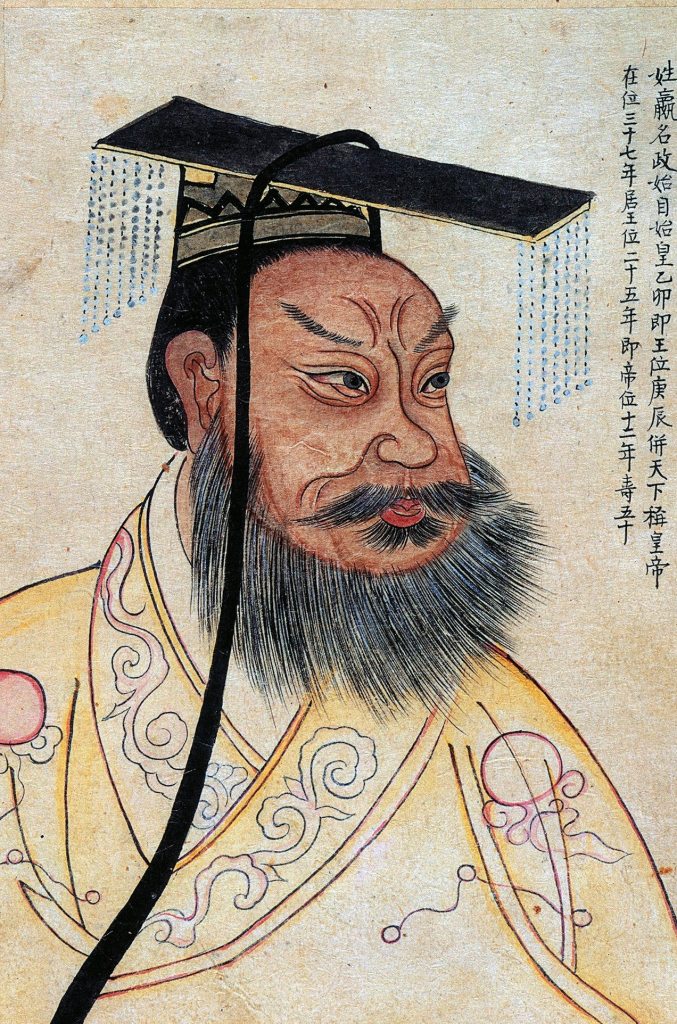
The 20th year of the First Emperor(227 B.C.)
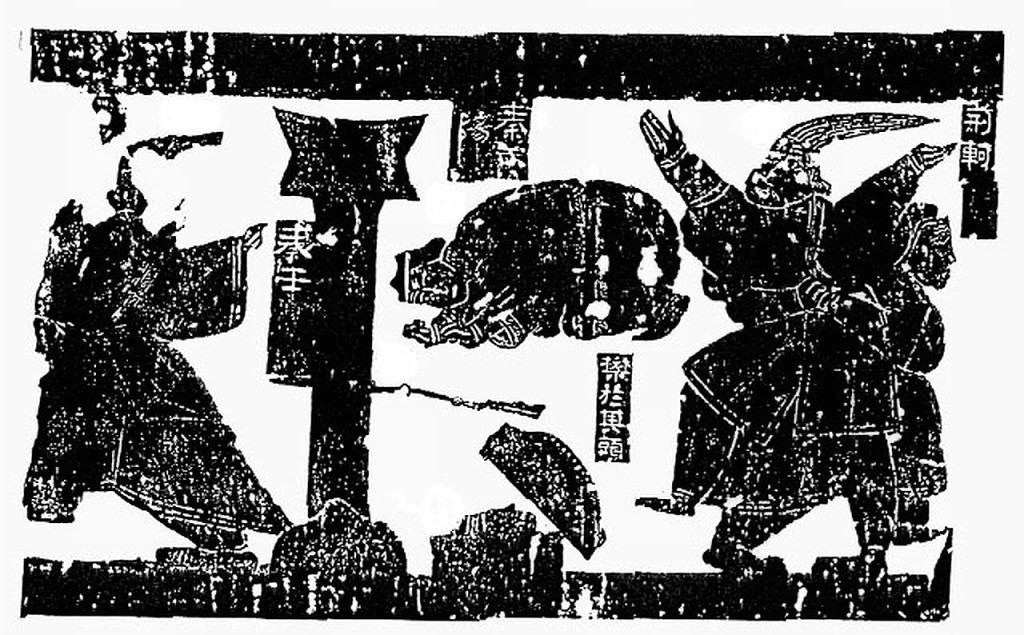
Jing Ke arrived at the city of Xianyang. Through a favorite attendant of the king named Meng Jia, he delivered a humble plea to see the king. The king was pleased and arranged a formal reception with all the ministers attending. Dressed in a formal gown, the king granted an audience to Jing Ke. Jing Ke unfurled the map for the king, and as it uncoiled to the end, the hidden dagger appeared. Jing Ke grabbed the king’s sleeves and thrust the dagger toward him. The king jumped away and tore off his sleeves. Jing Ke chased the king around the pillars in the palace. The attendants and ministers were jolted by the surprise attack and stunned into a panic.
According to the law of Qin, no one except the king could approach the court with any weapon, so the attendants could only join the struggle with their bare hands. They reminded the king, “Move the sword to your back!” The king shifted the sword to his back, drew out the long blade, and hacked at Jing Ke, chopping off his left leg with a swing. Jing Ke, now incapacitated, threw the dagger at the king but only hit a bronze pillar. Realizing his failure, Jing Ke shouted, “I failed because I wanted to capture you alive! I wanted you to pledge to give back the land. I wanted to return the favor to the crown prince of Yan!” Jing Ke was then mutilated to death.
The king of Qin, furious, mobilized more troops to augment Wang Jian’s forces in the land of Zhao. Wang Jian trounced the troops of Yan and Dai in a battle west of the Yishui River.
The 21st year of the First Emperor(226 B.C.)
In October of that winter, General Wang Jian broke into the city of Ji. The king of Yan and the crown prince led their elite forces eastward, fleeing to protect their territory in Liaodong. General Li Xin of Qin led his troops in hot pursuit. The king of Dai, Zhao Jia wrote a letter to the king of Yan, urging him to submit the head of the crown prince to the king of Qin. At that time, the crown prince was hiding by the Yanshui River. The king of Yan sent an envoy to behead the crown prince and prepared to deliver the head to the king of Qin. However, the king of Qin sent more troops to pursue the king of Yan.
General Wang Ben invaded the kingdom of Chu and captured more than ten cities. The king of Qin asked General Li Xin, “I want to seize the kingdom of Chu. How many soldiers do you think would be enough?” Li Xin replied, “Not more than two hundred thousand soldiers.” The king then posed the same question to General Wang Jian, who responded, “No less than six hundred thousand soldiers.” The king chuckled and said, “General Wang has become old. He is now so timid!” Despite Wang Jian‘s advice, the king ordered General Li Xin and Meng Wu to lead two hundred thousand troops in a campaign against the kingdom of Chu. General Wang Jian then returned to his home in Pinyang on sick leave.
The 22nd year of the First Emperor(225 B.C.)
General Wang Ben raided the kingdom of Wei, directing water from the Bian River into canals to flood Wei‘s capital, Daliang. In March, during the spring, the walls of Daliang collapsed. The king of Wei, Wei Jia, capitulated, was killed, and the kingdom of Wei came to an end.
The king of Qin sent an envoy to speak to Lord Anling: “We want to exchange the state of Anling for five hundred miles of land in another area.” Lord Anling replied, “Your Majesty blesses me with grace, offering a larger piece of land in exchange for a smaller one. I feel so lucky. Even though it is a good deal, I would like to hold onto the land bestowed upon me by the late king of Wei. I would like to retain it for the rest of my life and dare not trade.” The king of Qin considered it a righteous plea and approved it.
General Li Xin attacked Pingyu county while General Meng Wu raided Qin county. They both trounced the army of Chu. Li Xin then moved on to attack Yanying and barged into it. His troops then advanced westward and united with Meng Wu‘s forces at Chengfu county. The army of Chu tailed Li Xin’s troops for three days and three nights without respite. At last, they thrashed Li Xin and his cohorts, overran two barracks, and killed seven army commandants of Qin. Li Xin scurried back home.
The king of Qin was enraged by the defeat. He personally drove to the village Pinyang to visit Wang Jian and apologized face-to-face: “We did not take your advice, and as a result, Li Xin humiliated the army of Qin. Even though you are sick, are you going to turn your back on me?” Wang Jian still declined the appointment, citing poor health. The king of Qin insisted, “That is enough, don’t say that anymore.” Wang Jian countered, “If you must insist, Your Majesty, I cannot do it without six hundred thousand troops.” The king approved: “I’ll listen to you this time.”
Thus, General Wang Jian led a campaign against the kingdom of Chu with six hundred thousand soldiers. The king of Qin saw his troops off at a place named Bashang. Wang Jian pleaded for a lot of beautiful houses and good land. The king said, “General, you can surely go with peace of mind. Don’t worry about being poor anymore.” Wang Jian explained, “I have been your general and have won some battles. I would not become a nobleman in the end. I want some land and houses to pass down to my posterity while I am still in favor with Your Majesty.” The king laughed heartily.
Wang Jian sent five more envoys back to the king to petition for good land after he went through the Wu Pass. Someone commented, “Don’t you think your solicitations are a little over the top?” Wang Jian replied, “No. The king is brutal and trusts nobody. Now he has put the armed forces of the entire kingdom under my command. If I don’t ask for properties for my descendants to pursue personal interest, it would make the king suspicious of me.”
The 23rd year of the First Emperor(224 B.C.)
Wang Jian went around the south of Chen county and reached the county of Pingyu. Learning that General Wang Jian came with strengthened forces, the whole kingdom of Chu mobilized to defend their homeland. Wang Jian ordered his troops to stay within their garrisons and forbade direct combat. Many times the soldiers of Chu came to challenge Wang Jian’s troops, but the soldiers of Qin would not engage. Wang Jian required his soldiers to rest and bathe daily, providing them with good food. He talked to them and had meals with them.
After a long while, Wang Jian asked his officers, “What games are the soldiers playing?” The answer was, “They are throwing rocks and practicing long jumps.” Wang Jian said, “Now they are ready to fight.” The troops of Chu, unable to engage the troops of Qin, moved eastward. Wang Jian led his troops to go after them. He sent his commandos to attack the army of Chu and won a decisive battle. Then Wang Jian pursued the fleeing army of Chu to the south of Qi county and killed the commander of Chu, General Xiang Yan. The army of Chu collapsed. Wang Jian took the momentum, chased the troops of Chu out, and then stabilized the towns and cities on his path.
The 24th year of the First Emperor(223 B.C.)
General Wang Jian and Meng Wu captured the king of Chu, Fuchu. They established the Commandery of Chu in the former kingdom’s land.
 Reflection by Rio Grande