Tag: Jin Midi

  • Comprehensive Reflections to Aid in Governance(Part 176): Contenders to The Throne

    Comprehensive Reflections to Aid in Governance

    By Sima Guang

    Translated By Yiming Yang  

    Annals of Han Book 15 Scroll 23

    Duration of 12 years

    The Ruins of the Xiongnu’s Court Longcheng(Dragon City), Mongolia

    The 1st year of Emperor Zhao’s Shiyuan Era (86 B.C.)

    In summer, the tribes of twenty-four towns in Yizhou rose in rebellion, numbering more than thirty thousand. The Commandant of Waterways, Lü Bihu, summoned officials and civilians, and drew forth the troops of Qianwei and Shu commanderies to strike them. The rebels were routed, and a great victory was won.

    In July of autumn, a general amnesty was proclaimed throughout the realm.

    Heavy rains endured until October, the waters surged and swept away the bridge upon the Wei River.

    When Emperor Wu first passed away, the new Emperor issued an edict of mourning to all the feudal lords. The Prince of Yan, Liu Dan, on receiving it, declined to wear mourning garb, saying, “The seal-envelope is smaller than before; surely some irregularity has arisen at the capital.” He dispatched his trusted men Shouxi Chang, Sun Zongzhi, Wang Ru, and others to Chang’an, outwardly to inquire into ritual observances, but in truth to spy upon court affairs.

    The Son of Heaven, by decree, sent gracious words and bestowed gifts upon Liu Dan: three hundred thousand coins, with an increase of thirteen thousand households in his fief. Yet Liu Dan waxed wroth, saying, “It is I who should be enthroned as Emperor, not be given trifles.”

    He conspired with his kin, the Prince of Zhongshan, Liu Chang, and Liu Ze, grandson of the Prince of Qi. Together they forged false decrees, alleging the late Emperor Wu having granted them governance and personnel of principalities, urging them to strengthen their armaments and make preparations beyond the ordinary.

    The Gentleman of the Household, Cheng Zhen, admonished Liu Dan, saying, “Your Highness, why idly contend for what is yours by right? You must rise and seize it. When Your Highness raises the standard, even the women of the realm will rally to your cause.”

    Thus Liu Dan entered into a secret covenant with Liu Ze, and together they composed a false proclamation to be spread abroad, declaring, “The young sovereign is no true son of Emperor Wu, but one foisted upon the throne by ministers. Let the whole realm rise together and strike him down!” Thereupon emissaries were dispatched to the provinces, sowing sedition among the people.

    Liu Ze plotted to raise troops and march upon Linzi, intending to slay the Inspector of Qingzhou, Juan Buyi. Liu Dan gathered disloyal men from the provinces, amassed copper and iron to forge armor, conducted wapenshaws of his horsemen, chariots and infantry officers, and held great hunts to drill his soldiers, awaiting the appointed day.

    The Palace Gentleman Han Yi and others often remonstrated with him, but Liu Dan grew wrathful, and slew fifteen men, Han Yi among them.

    At that time, the Marquis of Ping, Liu Cheng, discerned Liu Ze’s treachery and secretly informed Juan Buyi. In August, Juan Buyi seized Liu Ze and his accomplices, and reported the matter to the throne.

    The Son of Heaven dispatched the Associate Grand Herald to investigate, and summoned the Prince of Yan. By edict it was declared: “The Prince of Yan, being of close kin, shall be spared punishment.” Liu Ze and his followers were executed. Juan Buyi was promoted to Intendant of the Jingzhao(the Capital).

    Juan Buyi, as Intendant of the Jingzhao, was held in reverence by both officials and the people. Whenever he went forth to circuit the counties or to review the prisons, his mother would inquire of him, saying, “Have you redressed any wrongs? How many have been acquitted?”

    Whenever Juan Buyi overturned false judgments, his mother rejoiced greatly, her countenance more radiant than at other times. But if no injustices were set right, she grew wrathful and refused food. Thus Juan Buyi, in office, was stern yet not harsh, severe yet not cruel, ever weighing fairness in his judgments.

    On September 2, Marquis Jing of Du, Jīn Mìdī, passed away. Earlier, when Emperor Wu lay ill, a testamentary decree had ordered that Jīn Mìdī be enfeoffed as Marquis of Du, Shangguan Jie as Marquis of Anyang, and Huo Guang as Marquis of Bolu, in recognition of their merits in subduing rebels such as Ma Heluo. Yet Jīn Mìdī, considering the tender age of the new Emperor, declined the title; Huo Guang and the others likewise did not dare to accept.

    When Jīn Mìdī was stricken with grave illness, Huo Guang memorialized that he should be ennobled. As Jīn Mìdī lay upon his bed, the seal and ribbon were brought to him; he received them, but died that very day.

    His two sons, Jin Shang and Jin Jian, both served as attendants to the new Emperor, being of near equal age.  They slept and ate together. Jin Shang was appointed Commandant of the Imperial Chariot, and Jin Jian Commandant of the Imperial Cavalry.

    After Jin Shang inherited his father’s marquisate, he bore two ribbons. The Emperor said to General Huo Guang, “The two brothers of the Jīn clan—should both of them wear two ribbons?”

    Huo Guang replied, “Jin Shang inherited his father’s marquisate, thus he wears one ribbon more.”

    The Emperor smiled, saying, “But is not the granting of titles a matter between you and me, General?”

    Huo Guang answered, “It was the decree of the late Emperor, that titles be bestowed according to merit.” Thus the matter was put to rest.

    In the intercalary month of October, the former Minister of Justice, Wang Ping, and others were dispatched, bearing the imperial sceptre, to make circuits through the provinces, to seek out men of virtue, to hear the grievances of the people, and to rectify cases of injustice and incompetence.

    That winter was unseasonably warm, and no ice was formed.

    The 2nd year of Emperor Zhao’s Shiyuan Era (85 B.C.)

    In January of spring, General Huo Guang was enfeoffed as Marquis of Bolu, and General Shangguan Jie as Marquis of Anyang.

    There were those who admonished Huo Guang, saying: “General, have you not observed the fate of the partisans of the clan? Though they held the offices of Yi Yin and the Duke of Zhou, they grasped the reins of state alone, monopolized power, slighted the imperial clan, and shared not their duties with others. Thus the trust of the realm was lost, and ruin swiftly came upon them.

    “Now you stand in a position of utmost weight, while the Emperor grows toward maturity. It is meet and right that you draw in the scions of the imperial house, confer with ministers, and reverse the ways of the faction, so that calamity may be averted.”

    Huo Guang assented to this counsel. He therefore summoned worthy men of the imperial clan, and appointed Liu Piqiang, grandson of Prince Yuan of Chu(Liu Jiao), and Liu Changle, of the imperial lineage, as Grand Master of Chamberlain. Liu Piqiang was further made Commandant of the Changle Palace Guard.

    In March, envoys were dispatched to extend loans and relief to the poor who lacked seed grain and sustenance.

    In August of autumn, an edict was issued, declaring: “In previous couple of years, calamities have been many. This year, the mulberry and wheat production suffers greatly. Let the loans and relief granted for seed and food not be repaid, and let the people be exempt from this year’s land tax.”

    In earlier times, Emperor Wu had pursued the Xiongnu without respite for more than twenty years, whereby the Xiongnu suffered grievous losses in horses, livestock, and populace. The foaling of horses and calving of cattle declined sharply, and the Xiongnu were sorely troubled by the failing of their herds. Ever did they yearn for peace, yet no settlement was achieved.

    The Chanyu Hulugu had a younger half-brother of the same father, who served as Left Grand Commandant, a man of talent and greatly esteemed among the people. But Hulugu’s mother, Zhuanqu Yanzhi, feared her son would be set aside and the younger brother chosen as heir. She therefore caused him to be secretly slain.

    An elder brother of the Left Grand Commandant, born of the same mother, nourished hatred in his heart and refused to attend the Chanyu’s court.

    In that year, the Chanyu fell gravely ill and neared death. He spoke to the nobles, saying: “My sons are yet young and cannot rule the state. I would appoint my brother, the Right Guli King, to succeed me as Chanyu.”

    When the Chanyu died, Wei Lü and others conspired with Zhuanqu Yanzhi to conceal the news. They forged a decree in the Chanyu’s name, and set up her son, the Left Guli King, as the new Chanyu, taking the title Huyandi.

    The Left Tuqi King and the Right Guli King bore anger and resentment. With their followers, they resolved to march south and surrender to the Han. Fearing they could not accomplish this alone, they compelled King Lutu to defect with them to the Western Wusun.

    King Lutu revealed their plot to the Chanyu. The Chanyu sent envoys to question them, but the Left Guli King refused obedience, and in turn accused King Lutu of treason. The people bewailed the injustice.

    Thereafter, the two princes departed, each establishing his own dwelling, and no longer appeared at the Chanyu’s court–Longcheng, where deities were worshiped. From this time, the power of the Xiongnu waned.

  • Comprehensive Reflections to Aid in Governance(Part 175): The Rest of The Restless

    Comprehensive Reflections to Aid in Governance

    By Sima Guang

    Translated By Yiming Yang  

    Annals of Han Book 15 Scroll 22 (continued)

    A Statue of Emperor Wu of Han

    The 1st year of Emperor Wu’s Houyuan Era (88 B.C.)

    In January of spring, the Emperor traveled to Ganquan Palace, offered the suburban sacrifice at the Taiyi Temple, and proceeded to Anding.

    Prince Ai of Changyi, Liu Bo, died.

    In February, a general amnesty was proclaimed throughout the realm.

    In June of summer, Shangqiu Cheng, accused of cursing and casting spells against the Emperor, took his own life.

    The Deputy Privy Counselor, Ma Heluo, maintained close ties with Jiang Chong. When the Crown Prince rose in arms, Ma Heluo’s younger brother, Ma Tong, was enfeoffed as Marquis of Chonghe for his valor in battle. Thereafter, when the Emperor destroyed the family and faction of Jiang Chong, Ma Heluo and his brothers, fearing retribution, plotted rebellion. The Privy Counselor and Commandant of Escorting Cavalry, Jin Midi, perceiving their strange demeanor, grew suspicious. He kept watch over them, following their movements closely. Ma Heluo, wary of Jin Midi’s vigilance, delayed acting.

    When the Emperor was residing at Linguang Palace, Jin Midi feigned slight illness and rested in a small hut. That night, Ma Heluo, together with his brothers Ma Tong and Ma Ancheng, forged an imperial order, sneaked forth under cover of darkness, slew a court envoy, and raised troops in mutiny. By dawn, before the Emperor had risen, Ma Heluo had entered the palace precincts.

    Jin Midi, indisposed in the privy, felt a sudden foreboding. He hastened to the Emperor’s bedchamber and seated himself at the door. Ma Heluo came forth from the eastern wing with a dagger hidden in his sleeve; on seeing Jin Midi, his countenance changed. Seeking to enter the Emperor’s chamber, he stumbled against a treasured zither and fell. Jin Midi seized him, crying out, “Ma Heluo has rebelled!”

    The Emperor, startled, rose swiftly. The guards rushed forward with weapons drawn, but the Emperor, fearing Jin Midi might be harmed, commanded them to stay in their hands. Jin Midi subdued and bound Ma Heluo. Upon thorough investigation, all who had joined the plot confessed and were executed.

    In July of autumn, there was an earthquake.

    The Prince of Yan, Liu Dan, deeming himself the rightful heir, petitioned to enter the imperial guard. The Emperor, angered, executed his envoy at the northern gate. Moreover, for harboring fugitives, he confiscated from Liu Dan three counties—Liangxiang, Anci, and Wen’an. From this, the Emperor came to hold Liu Dan in deep aversion. Liu Dan was eloquent, keen-witted, and learned; his brother, the King of Guangling, Liu Xu, was strong and valorous. Yet both were unrestrained in conduct, committing many offenses, and thus the Emperor regarded neither as fit to succeed him.

    At this time, the son of Madame Gouyi, Liu Fuling, was seven years of age, sturdy in form and quick in understanding. The Emperor loved and favored him greatly and desired to set him as heir, but because of his tender years and his mother’s youth, he delayed the matter. Seeking worthy ministers to aid him, he looked among his courtiers and found the Commandant of Chariots and Grandee of the Chamberlain, Huo Guang, to be loyal, benevolent, and steadfast in managing great matters. Therefore, he ordered the Yellow Gate Attendants to paint the scene of the Duke of Zhou piggybacking King Cheng of Zhou, and bestowed this painting upon Huo Guang.

    A few days thereafter, the Emperor, without cause, reproached Madame Gouyi. She removed her hairpins and bowed her head to the ground. The Emperor said, “Take her away and send her to the court prison!” As she turned to look back and plead, the Emperor added, “Hasten! You shall not live!” In the end, she was put to death.

    Later, when the Emperor was in seclusion, he asked those around him, “What do the people say beyond the palace?” They replied, “The people say, ‘If you intend to enthrone her son, why put his mother to death?’”

    The Emperor said, “This is not something that the simpletons like you guys could comprehend. In the history of the realm, disorder often springs from a child-sovereign with a strong mother. A woman in high station, living free of restraint and alone in her chambers, will give herself to excess, and none will check her. Have you not heard of Empress Lü? Therefore, We have to remove her first.”

    The 2nd year of Emperor Wu’s Houyuan Era (87 B.C.)

    In January of spring, the Emperor held court with the vassal kings at Ganquan Palace. In February, he went on a royal procession to the Wuzuo Palace in Zhouzhi.

    The Emperor became gravely ill. Huo Guang, in grief and tears, asked, “If the unthinkable should occur, who should be established?” The Emperor said, “Have you not understood the meaning of the painting I bestowed upon you? Establish the younger son, and you shall act as the Duke of Zhou.” Huo Guang, with modesty, declined, saying he was not as fit for the role as Jin Midi.

    Jin Midi, in turn, said, “I am but a foreigner, less suited than Huo Guang; moreover, such a choice would cause the Xiongnu to hold Han in contempt.”

    On February 12, an edict was issued making Liu Fuling the Crown Prince, at the age of eight.

    On February 13, Huo Guang was appointed Grand Marshal and Grand General; Jin Midi, General of Chariots and Cavalry; Shangguan Jie, General of the Left—each charged, by posthumous decree, to assist the young ruler. Sang Hongyang, Commandant of Granary Collection, was made Grand Master of the Censorate. All received their commissions kneeling by the Emperor’s bed.

    Huo Guang had served within the palace for over twenty years. When the Emperor went abroad, he attended the chariot; when the Emperor ascended, he stood at his side. Meticulous and prudent, he was never in error. His manner was composed, calm, and thorough. Whether entering, leaving, or passing through the palace gates, his steps were measured and even; the palace attendants and servants, watching in secret, could find no deviation in his bearing or gait.

    Jin Midi had been by the Emperor’s side for decades, ever reverent, never meeting the Emperor’s gaze. When granted with palace women, he refused; when the Emperor urged him to take his daughter into the inner palace, he declined. His wariness and restraint in such matters amazed the Emperor.

    Jin Midi’s eldest son was a playboy of the Emperor and much beloved. As he grew older, he became unruly, engaging in wanton conduct with the palace maids. Jin Midi, seeing his son’s lewd behavior, abhorred it and slew him. When the Emperor heard, he was wroth. Jin Midi prostrated himself and explained the cause; the Emperor was deeply grieved and wept, and thereafter esteemed Jin Midi all the more.

    Shangguan Jie first gained favor for his strength and bodily vigor, serving as Superintendent of the Imperial Stables at Weiyang Palace. Once, when the Emperor had been ill and then recovered, he saw that the horses were emaciated, and in anger said, “Do you think I no longer see the horses?” He sought to punish the officer in charge.

    Shangguan Jie bowed low and said, “I have heard that when Your Majesty’s health is unsound, my days and nights are filled with anxiety; surely my mind has not been fixed on the horses.” Before he had finished, tears streamed down his face. The Emperor, taking this for sincere devotion, drew him nearer, making him a Privy Counselor and gradually advancing him to Grand Coachman.

    These three—Huo Guang, Jin Midi, and Shangguan Jie—were ever trusted and cherished by the Emperor, and thus were entrusted with the care of the realm after his passing.

    On February 14, the Emperor passed away at Wuzuo Palace, and was laid in state before the hall of Weiyang Palace, awaiting the funeral procession.

    The Emperor was intelligent and decisive, skilled in the selection of men, and upheld justice without compromise. Princess Longlü, daughter of Emperor Jing, had a son, Lord Zhaoping, who married the Emperor’s daughter, Princess Yi’an. When Princess Longlü fell gravely ill, she offered a thousand catties of gold and ten million coins as a preemptive ransom for Lord Zhaoping, should he commit any future offense; the Emperor accepted it.

    After the Princess’s death, Lord Zhaoping became wanton and lawless. Once, while drunk, he slew his nurse, and was imprisoned. The Minister of Justice appealed on his behalf, and many in the court said, “He has already been redeemed, and Your Majesty consented.”

    The Emperor said, “My younger sister, in her later years, had but this one son, and entrusted him to me.” He wept long, lamenting, and said, “The laws and statutes were set by the former Emperor. To use my sister’s case to break the laws of the former Emperor—how could I face the ancestral temple? I would also betray the trust of the people.”

    He approved the death sentence, yet could not restrain his grief, and all around him were sorrowful. Only the gate usher, Dongfang Shuo, offered congratulations, saying, “I have heard that in the rule of the virtuous sovereign, reward is given without regard to friendship, and punishment without regard to kinship. As the Book of Documents says, ‘Without bias or partisanship, the kingly way is broad and vast.’ These two principles were most prized by the Five Emperors and the Three Sage Kings. Now that Your Majesty has put them into practice, it is great good fortune for the world. I, Dongfang Shuo, dare offer this cup in congratulation, at the risk of my life, and humbly wish Your Majesty eternal years.”

    At first the Emperor was angered with Dongfang Shuo, but later admired him, and appointed him as a Palace Attendant.

    Ban Gu’s Appraisal:
    The Han inherited the flaws of its predecessors, yet Emperor Gaozu, the Founder, quelled disorder and restored peace. Emperors Wen and Jing devoted themselves to the nourishment of the people, though in the study of ancient rites and learning there still remained deficiencies.

    At the outset of his reign, Emperor Wu decisively set aside the hundred schools, compiled the Six Classics, and promulgated them throughout the realm. He selected men of talent and employed them, established the Imperial Academy, perfected the sacrificial rites, corrected the calendar, set in order the chronology, harmonized the musical tones, composed poems and music, revived the Feng Shan sacrifices, worshipped many deities, and honored the descendants of the Zhou. His edicts were brilliant in diction and elegant in form. Those who came after were able to emulate his illustrious achievements and carry forward the legacy of the Three Dynasties(Xia, Shang, Zhou).

    If, with his great talent and far-seeing vision, he had continued the frugality and humility of Emperors Wen and Jing, thereby bringing benefit to the people, he would have been counted among the loftiest sovereigns praised in the Book of Songs and the Book of Documents.

    Sima Guang’s Commentary:
    Emperor Wu gave rein to extravagance, imposed severe punishments and heavy taxes, squandered within the palace, and waged wars upon the surrounding tribes. He trusted in strange portents, was swayed by occultists, and undertook excessive journeys, exhausting the people, so that they grew weary and banditry arose. In these respects, his conduct differed little from that of the First Emperor of Qin.

    Yet, while Qin fell through such ways, Han endured. This was because Emperor Wu could honor the practices of the former kings, understood how to govern and preserve the state, accepted loyal and candid remonstrance, abhorred deceit, tirelessly sought out the worthy, was scrupulous in the dispensation of rewards and punishments, corrected his faults in later years, and entrusted the regency to capable ministers. Thus he committed the similar errors but escaped the perils that brought ruin to Qin.

    On February 15, the Crown Prince ascended the throne. The Emperor’s elder sister, the Princess of E’yi, dwelt with him in the palace, while Huo Guang, Jin Midi, and Shangguan Jie jointly oversaw the affairs of the imperial secretariat. Huo Guang assisted the young ruler, and all edicts and policies issued from his hand. The people of the realm all longed to behold his demeanor and bearing.

    Once, an odd occurrence took place within the palace. One night, the court was thrown into alarm, and Huo Guang summoned the Keeper of the Imperial Seal, seeking to take the seal. The keeper refused to yield it; when Huo Guang sought to seize it by force, he drew his sword, saying, “You may take my head, but not the seal!” Huo Guang greatly esteemed his loyalty, and on the morrow an edict was issued raising the keeper’s rank by two levels. The people respected Huo Guang all the more.

    On March 22, Emperor Wu was buried in the Maoling Mausoleum.

    In June of summer, a general amnesty was proclaimed throughout the empire.

    In July of autumn, a comet appeared in the eastern sky.

    The Prince of Jibei, Liu Kuan, under investigation for incest, took his own life.

    In the winter, the Xiongnu raided Shuofang, killing and plundering officials and commoners. Troops were dispatched to garrison Xihe, and the General of the Left, Shangguan Jie, was sent to guard the northern frontier.

  • Comprehensive Reflections to Aid in Governance(Part 151): Dimitri, from Prince, to Slave and Fidus Achates

    Comprehensive Reflections to Aid in Governance

    By Sima Guang

    Translated By Yiming Yang  

    Annals of Han Book 11 Scroll 19 (continued)

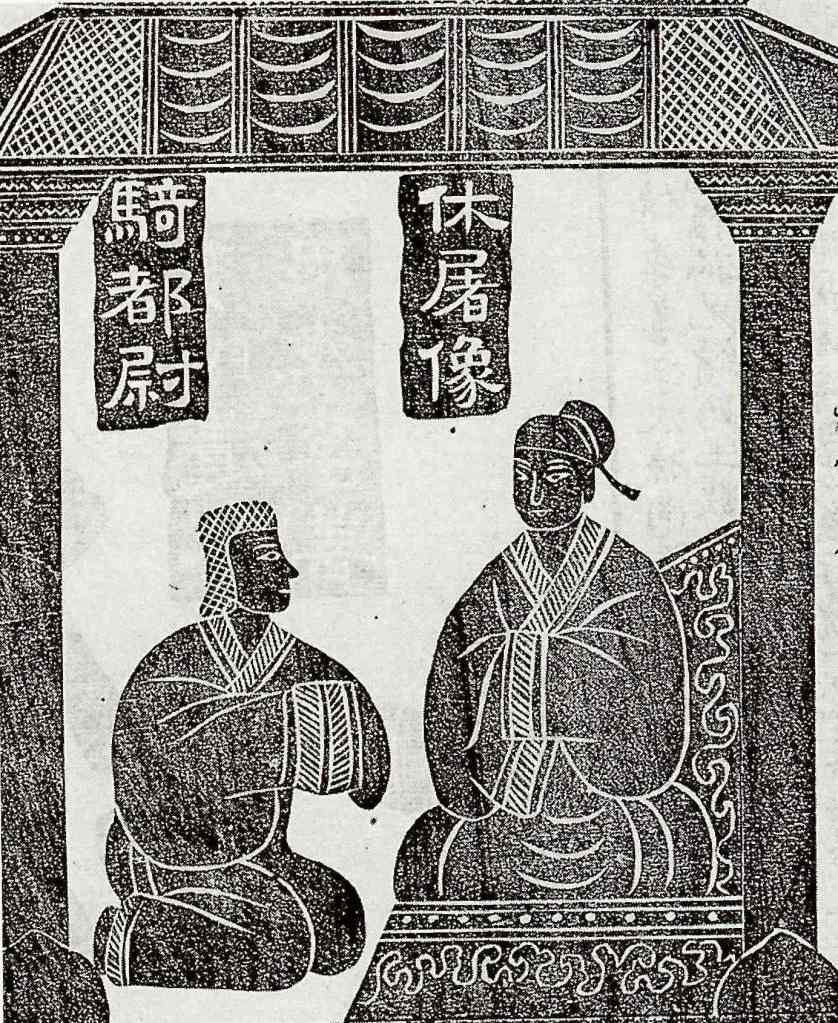
    Jin Midi and the golden status of King of Xiutu

    The 2nd year of Emperor Wu’s Yuan’shou Era (121 B.C. continued)

    The Prince of Jiangdu, Liu Jian, engaged in numerous heinous acts, including an affair with Consort Nao, the favored concubine of his father, Prince Yi, and an incestuous relationship with his younger sister, Liu Zhengchen. On one occasion, during a tremendous storm, Liu Jian went boating on Leibei Lake. He ordered two attendants to board a small boat despite the perilous conditions. The boat capsized, and the attendants struggled helplessly in the water, unable to save themselves. Liu Jian, standing by, laughed heartily and ordered no rescue, leading to their tragic deaths. He indulged in lewd and cruel activities, wantonly taking the lives of thirty-five innocent people.

    Realizing the extent of his crimes and fearing retribution, Liu Jian conspired with his consort, Cheng Guang, to invoke witchcraft. They employed a maid from Yue to pray for divine intervention, cursing the Emperor. Furthermore, upon hearing of the plots in Huainan and Hengshan, Liu Jian began manufacturing weapons and forging the imperial seal in preparation for rebellion. When these treasonous acts were discovered, the authorities demanded his arrest and execution. In the face of inevitable punishment, Liu Jian chose to take his own life, while Cheng Guang and the others involved were executed publicly. The principality of Jiangdu was thus brought to ruin.

    In the same year, Prince Kang of Jiaodong, Liu Ji, passed away.

    In the autumn, the Hunye King of the Xiongnu surrendered. At that time, the Chanyu, enraged, sought to exact vengeance upon the Hunye King and the Xiutu King in the western regions, whose forces had suffered great losses at the hands of the Han—tens of thousands slain or taken captive. The Chanyu, in his fury, intended to summon and execute these two kings. Fearing for their lives, the Hunye King and the Xiutu King secretly conspired to surrender to the Han. They first sent envoys to the border, where they were intercepted by Han forces, who relayed their intentions to the Emperor.

    At this time, the Grand Usher, Li Xi, was constructing a fortress along the Yellow River. He intercepted the Hunye King’s messengers and swiftly reported the matter to the Emperor. Suspecting that this surrender might be a ruse to launch a surprise attack, the Emperor commanded the General of Agile Cavalry, Huo Qubing, to lead his troops and meet with the Hunye King’s emissaries. The Xiutu King, regretting his decision to surrender, was killed by the Hunye King, who then assumed control over his followers.

    When General Huo Qubing crossed the Yellow River, he encountered the Hunye King’s forces. Some of the Hunye King’s subordinate commanders, seeing the Han army, hesitated to surrender and attempted to flee. Without delay, Huo Qubing struck swiftly, capturing and executing eight thousand of those who sought to escape. The Hunye King was then placed in a government carriage and sent alone to the Emperor, while the rest of the surrendered forces were escorted across the Yellow River.

    More than forty thousand surrendered, though their numbers were exaggerated to a hundred thousand. Upon reaching Chang’an, the Emperor rewarded the surrendering forces with numerous grants, enfeoffing the Hunye King with ten thousand households and bestowing upon him the title of Marquis of Luoyin. Four of his subordinate kings, including Hudu Ni, were likewise ennobled as marquises. In addition, the General of Agile Cavalry, Huo Qubing, was granted an increase of 1,700 households in his fief.

    When the Hunye King surrendered, the Han court summoned twenty thousand carriages to welcome them. However, the county officials lacked the necessary funds and were forced to borrow horses from the people. Some citizens, unwilling to part with their horses, hid them, and there were not enough horses to meet the demand. The Emperor, enraged, ordered the execution of the magistrate of Chang’an. But the Right Interior Minister, Ji An, interjected, saying, “The magistrate of Chang’an is innocent. If anyone is to be punished, let it be me. Only then will the people be willing to bring forth their horses. Moreover, the Xiongnu have abandoned their ruler and come to surrender to Han. We should gradually assimilate these migrants, county by county. How could we cause turmoil throughout the country, exhausting the resources of the Middle Kingdom to serve these outsiders and barbarians?” The Emperor fell silent.

    When the Hunye King and his followers arrived, more than five hundred merchants and traders were sentenced to death for violating the laws prohibiting trade with foreigners. Ji An requested an audience at the Gaomen Hall of Weiyang Palace and spoke: “The Xiongnu have invaded our borders, shattered our marriage alliances, and caused countless casualties when the Middle Kingdom mobilized troops to suppress them. The expenses for this campaign have been enormous. I, foolishly, suggest that Your Majesty consider taking the surrendered Xiongnu people and distributing them as slaves and servants to the families of those who died serving in the army. The spoils of war could be distributed among the people as compensation for their losses, alleviating their suffering. But now, even though tens of thousands of the Hunye have surrendered, the treasury is drained to reward them, and good citizens are levied to serve the foreigners. This is akin to pampering spoiled children. How could the common folk in Chang’an, who buy and sell, understand that the bureaucratic officials have interpreted their actions as smuggling wealth and goods across the borders and punished them for it? Your Majesty, if you cannot gain benefits from the Xiongnu to compensate the nation and, instead, wrongfully execute more than five hundred innocent people, you are protecting the leaves but damaging the branches. I humbly advise against it.”

    The Emperor, displeased, remained quiet and then remarked, “I have not heard Ji An speak for some time, and now he speaks foolishly once again.”

    In a short time, the surrendered Xiongnu were relocated and distributed across the borders of five commanderies(Longxi, Beidi, Shangjun, Shuofang, Yunzhong). These commanderies, originally situated outside the old passes but within the territory of Henan, were transformed into five satellite states, each adhering to their former customs. In the region west of Jincheng and beyond, extending from the Hexi Corridor and southern mountains to the Salt Marsh(Lop Nur), there were no Xiongnu to be found. Occasionally, there were rare visits from Xiongnu scouts, but these visits were infrequent.

    The son of the Xiutu King, Midi(sinicized form of Dimitri), along with his mother, Yanzhi (Madame/Queen), and his younger brother, Lun(sinicized form of Leo), entered imperial service. They were assigned to care for the imperial horses under the supervision of the Privy Treasurer. One day, during the Emperor’s leisure activities, when he was inspecting the horses, he was surrounded by his harem. Midi, along with several dozen others, led the horses past the hall, and while every servant man stole glances at the beauties, Midi alone dared not look. Midi, standing eight (Chinese)feet and two (Chinese)inches tall, had a stern countenance, and the horses he led were exceptionally healthy and well-groomed. The Emperor, intrigued by this, inquired about Midi‘s background. Midi spoke honestly, and the Emperor, amazed by his appearance and character, immediately ordered a bath for him, along with proper attire. He was appointed as the horse stable supervisor, later promoted to an attendant-in-waiting, then to the Commandant of Cavalry, and finally elevated to the rank of Grandee of the Chamberlain.

    As Midi grew closer to the Emperor, he made no mistakes in his service. The Emperor trusted him deeply and showered him with rewards, giving him gifts worth thousands of gold. Midi would drive for the Emperor when he went out and closely attend to him when indoors. Many among the nobility secretly complained, “Your Majesty has unwittingly elevated this boy from the barbarians and now treasures him as one of your own.” Yet, when the Emperor heard these murmurs, his esteem for Midi only grew. Because the Xiutu King had made a golden statue as an offering to the heavenly lord, the Emperor bestowed upon Midi the surname Jin, meaning “gold.”