Comprehensive Reflections to Aid in Governance
By Sima Guang
Translated By Yiming Yang
Annals of Han Book 14 Scroll 22 (continued)
The 3rd year of Emperor Wu’s Zhenghe Era (90 B.C.)
In January of spring, the Emperor journeyed to Yong, visiting Anding and Beidi.
The Xiongnu raided Wuyuan and Jiuquan, slaying two Commandants. In March, Li Guangli marched from Wuyuan with seventy thousand soldiers; Shangqiu Cheng led twenty thousand troops from Xihé; and Ma Tong commanded forty thousand cavalry from Jiuquan—together advancing against the Xiongnu.
In May of summer, a general amnesty was proclaimed throughout the empire.
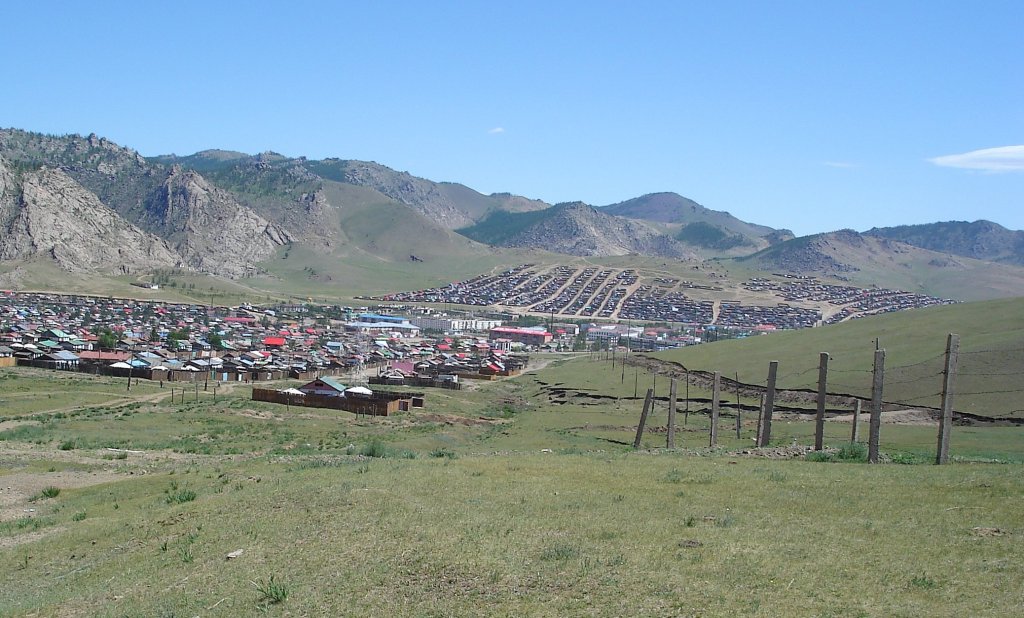
The Xiongnu Chanyu, learning that the Han host advanced in full force, removed all stores and provisions northward to the banks of the Zhiju River. The Left Tuqi King led his people across the Yuwu River, traveling six to seven hundred li, and encamped by Mount Douxian(Khangai). The Chanyu himself led picked troops across the Guqie River. When Shangqiu Cheng’s army arrived, they followed Xiongnu‘s trail, but found nothing and withdrew.
The Xiongnu sent a general together with Li Ling, leading more than thirty thousand cavalry, to pursue the Han forces. They fought for nine days, reaching the Punu River, but suffered defeat and withdrew.
Ma Tong’s army reached the Tianshan Mountains. The Xiongnu dispatched their chief general, Yanqu, with over twenty thousand cavalry to intercept them; seeing the strength of the Han forces, they turned back. Ma Tong returned without gain or loss.
At this time, the court feared that the forces of the Jushi Kingdom might impede Ma Tong’s army. The Emperor sent the Marquis of Kailing, Cheng Mian, to command troops from six states—Loulan, Weili, Weixu, and others—encircling Jushi, seizing its king and people, and then returning.
The army of Ershi General crossed the frontier. The Xiongnu sent the Right Grand Commandant and Wei Lü with five thousand cavalry to attack the Han forces at the gorge of Mount Fuyanggou. The Han army defeated them, driving them north in pursuit to the city of Madame Fan. The Xiongnu fled in disorder, none daring to stand before the Han troops.
When Ershi General set forth, Chancellor Liu Quli prayed to the Road God, held a banquet in his honor, and escorted him to Wei Bridge. Li Guangli said, “I hope the Marquis will soon petition for the Prince of Changyi to be named Crown Prince. Should he ascend the throne, what else would the Marquis then have to worry about?”
Liu Quli agreed. The Prince of Changyi was nephew to Ershi General and son of Madame Li; the daughter of Ershi General was married to the son of Liu Quli. Thus they shared the intent of raising the Prince of Changyi to the throne.
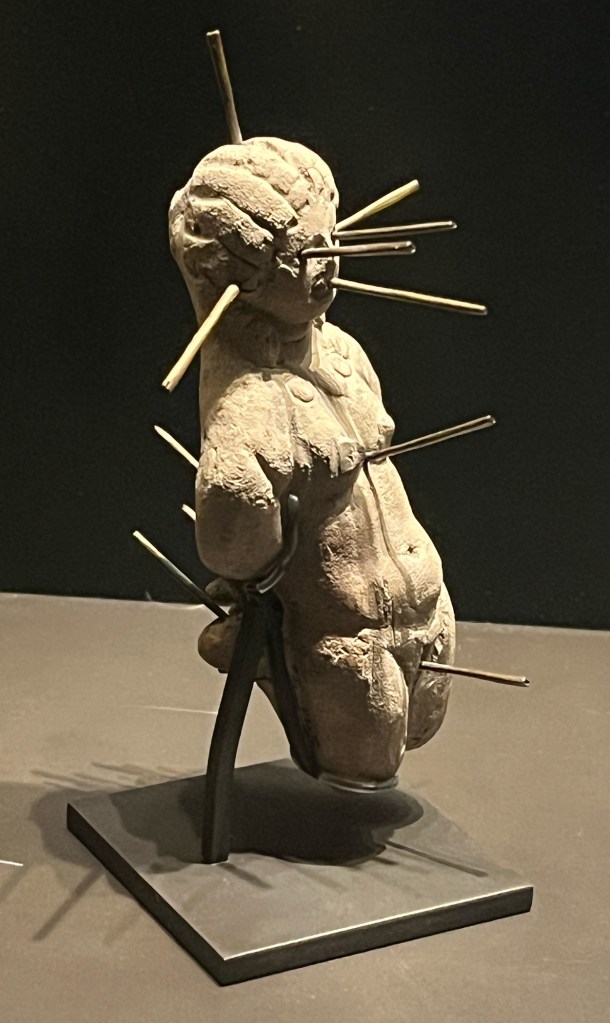
But the Chief Usher of the Inner Court, Guo Rang, reported, “The Chancellor’s wife has cast spells upon the Emperor; the Chancellor and Ershi General have offered sacrifices in prayer, plotting to enthrone the Prince of Changyi.” Upon investigation, their crime was judged to be high treason and sacrilege.
In June, an edict commanded that Liu Quli be paraded in a slaughter cart, then waist-chopped in the Eastern Market. The heads of his wife and children were displayed upon Huayang Street. The wife and children of Ershi General were also cast into prison.
Hearing of this, Ershi General grew apprehensive and afraid. His staff officer, Hu Yafu—a convict who had joined the army to escape punishment—urged him, saying, “Your wife and family are under interrogation. Should you return and matters go ill, imprisonment will be your fate. Might you yet find your chance north of the Zhiju River?”
Ershi General’s mind became unsettled. Still hoping to gain merit and seek pardon, he led his forces onward until they reached the Zhiju River. Finding the enemy withdrawn, he sent twenty thousand cavalry, under the Protector of the Army, across the river. They encountered twenty thousand Xiongnu horsemen under the Left Tuqi King and the Left Grand General, and fought a battle that lasted the whole day. The Han forces slew the Left Grand General and inflicted heavy losses.
The Chief of Staff and the Commandant of Juesui, Marquis Huiqu, Lei Dian, conspired against Li Guangli, saying, “Ershi General harbors treacherous designs, seeking private gain at the cost of the host; we fear certain ruin.” They plotted to seize him. On hearing this, Ershi General executed his Chief of Staff, then led his troops back toward Mount Yanran.
The Chanyu, knowing the Han forces to be weary, led fifty thousand cavalry to cut off Ershi General. A great battle was fought, with severe losses on both sides. That night, the Xiongnu dug trenches several feet deep before the Han’s front lines, then attacked from the rear, throwing them into confusion. Ershi General surrendered.
The Chanyu, knowing him to be a foremost general of Han, gave him his daughter in marriage, raising him above Wei Lü. Thereafter, the Emperor exterminated Li Guangli’s entire clan.
In autumn, a plague of locusts occurred.
In September, Gongsun Yong, former Magistrate of Chengfu County, conspired with his client Hu Qian and others to rebel. Hu Qian, feigning to be Grandee of the Chamberlain, claimed to be on imperial orders to apprehend thieves and bandits. Tian Guangming, Prefect of Huaiyang, learned of this and sent troops to seize and execute Hu Qian. Gongsun Yong reached Yu County clad in embroidered robes and riding in a carriage drawn by four great horses; the Sheriff of Yu County, Wei Buhai, put him to death. Wei Buhai and three others were enfeoffed as marquises for their merit.
Reports spread of witchcraft and Gu poison among both officials and commoners, but upon investigation most were found baseless. The Emperor came to understand that the Crown Prince had been driven by menace and bore no treasonous intent.
At this time, Tian Qianqiu, a guard at the Shrine of Emperor Gaozu, submitted an urgent memorial pleading justice for the Crown Prince, saying: “If a son takes his father’s soldiers without approval, he should be whipped; but if the Emperor’s son mistakenly kills a man, is it a crime? I dreamed of an old man with white hair instructing me to lay this matter before Your Majesty.”
The Emperor was deeply moved, summoned Tian Qianqiu, and said, “In the affairs between father and son, few dare to speak; you alone have declared what was unfitting. The spirits of the Temple of Emperor Gaozu sent you to instruct me. Henceforth you shall aid me.” He at once appointed Tian Qianqiu Grand Herald.
The clan of Jiang Chong was exterminated; Su Wen was burned alive upon the Heng Bridge. The official who had brandished arms against the Crown Prince at Quanjiuli had first been promoted to Prefect of Beidi, but later he and his clan were put to death.
The Emperor, moved by compassion for the Crown Prince’s innocence, built the Palace of Missing Son, and in Hu County raised the Terrace of Longing for the Return. Throughout the realm, all who heard of this mourned deeply.


 Reflection by Rio Grande