Tag: Ji An

  • Comprehensive Reflections to Aid in Governance(Part 155): Silent Badmouthing

    Comprehensive Reflections to Aid in Governance

    By Sima Guang

    Translated By Yiming Yang  

    Annals of Han Book 12 Scroll 20

    Duration of 9 years
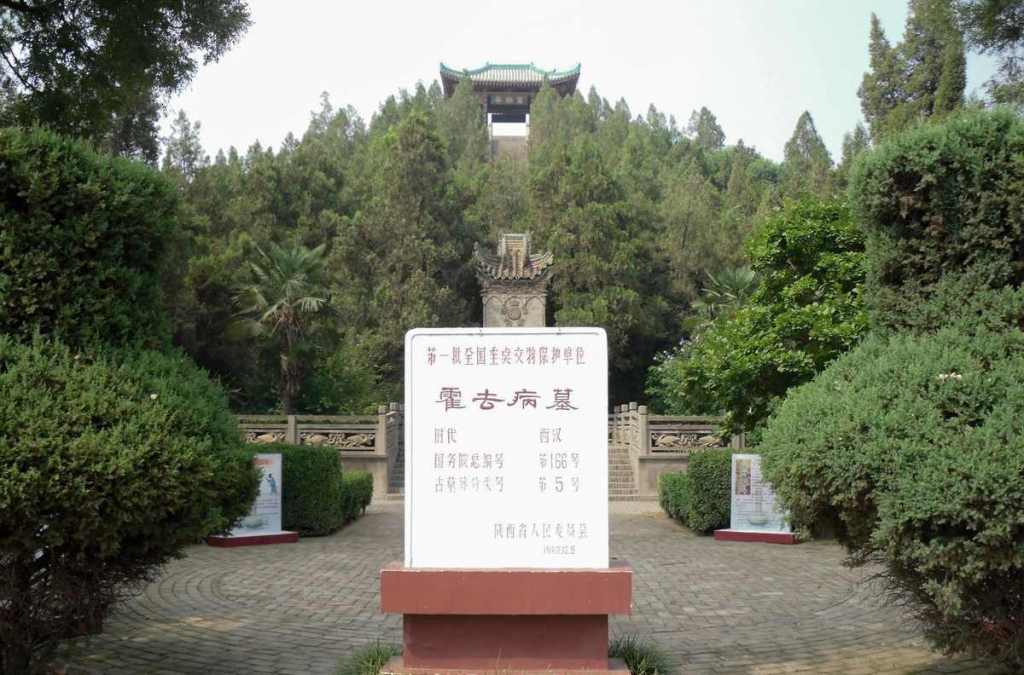
    Huo Qubing’s Tomb, Xi’an, Shaanxi Province

    The 5th year of Emperor Wu’s Yuanshou Era (118 B.C.)

    On March 11 of spring, Chancellor Li Cai was accused of appropriating empty land from Emperor Jing‘s Garden for the burial of his family. He was subsequently put on trial and, unable to endure the shame, committed suicide.

    The three-zhu coins were discontinued, and five-zhu coins were minted in their place. This change led to a rise in counterfeiting, especially in the Chu region.

    The Emperor appointed Ji An as the new Prefect of Huaiyang, located on the outskirts of the Chu region. Despite Ji An‘s humble refusal to accept the seal of authority, the decree was repeatedly insisted upon until Ji An reluctantly acquiesced. With tears in his eyes, Ji An spoke to the Emperor: “I have always thought of myself as being cast aside in ditches and valleys, never expecting to be employed by Your Majesty again. I often suffer from ailments, like dogs and horses, that rendered me incapable of handling the duties of a commandery. I am only fit to serve as a Palace Attendant, assisting in the rectification of mistakes and oversights within the imperial court.”

    The Emperor responded, “Do you disdain the position of Prefect of Huaiyang? I will call you back soon enough, but the officials and people of Huaiyang are not in their rightful places. I rely solely on your renown and stature. You will surely manage it, even from your bed.”

    After Ji An bid farewell and departed, he encountered Li Xi, the Grand Usher, and said, “By being exiled and accepting the commandery post, I have lost the opportunity to engage in state affairs with the court. The Grand Master of the Censorate, Zhang Tang, is shrewd enough to counter objections, deceptive enough to conceal faults, and skilled in the art of flattery and rhetoric. However, he refuses to speak truthfully for the good of the world, instead catering solely to the Emperor’s desires. If the Emperor dislikes something, Zhang Tang disparages it; if the Emperor likes something, Zhang Tang praises it. He eagerly engages in petty matters, using convoluted arguments to sway the Emperor’s thoughts, and employs corrupt officials to strengthen his own authority. You, being one of the Nine Ministers with access to the Emperor, must speak out early; otherwise, you will fall with him and be destroyed.”

    Li Xi, fearing Zhang Tang, dared not oppose him. Later, when Zhang Tang was prosecuted, the Emperor accused Li Xi of complicity.

    Ji An was assigned to govern Huaiyang with the salary of a minister of a feudal lord (2000 picul), where he remained for ten years until his death.

    An edict was issued to relocate corrupt officials and lawbreakers to the border regions.

    In the summer, On April 2, the Grand Tutor to the Crown Prince, Marquis Wuqiang, Zhuang Qingzhai, was appointed as Chancellor.

    The Emperor fell gravely ill at Dinghu Palace. Despite the efforts of sorcerers and physicians, there was no improvement. Youshui Fagen mentioned a shaman in Shangjun Commandery who could communicate with spirits and cure illnesses. The Emperor summoned the shaman and allowed him to preside over sacrifices at Ganquan Palace.

    As the illness worsened, an emissary was sent to consult the demigod(i.e. the shaman) for advice. The demigod responded, “The Emperor’s illness is not a cause for concern; it will soon subside. You should come to meet me at Ganquan despite how you feel.” Soon after, the Emperor’s condition improved, and he visited Ganquan Palace, recovering quickly.

    Once the illness had fully subsided, a banquet was arranged at the Shou Hall, where the demigod resided. Though the demigod could not be directly seen, his words were heard by others and sounded human. He appeared and then disappeared, accompanied by a solemn wind, and resided within curtained chambers. His words, which the Emperor received, were recorded as “The Plan.” While his advice contained nothing extraordinary and was rooted in common knowledge, the Emperor took great pleasure in it. The details were kept secret, and no one outside the palace knew of them.

    While traveling to Ganquan Palace, the Emperor passed through the Right Interior Minister’s jurisdiction and discovered many paths were neglected and poorly maintained. Enraged, the Emperor exclaimed, “Does Yi Zong think I would never use this road again?” He bit his own lip in anger.

    The 6th year of Emperor Wu’s Yuanshou Era (117 B.C.)

    In October of winter, it rained, though there was no ice.

    The previous year, the Emperor issued the min coinage edict, urging people to declare their assets and donate in the manner of Bu Shi. However, the people refused to contribute their wealth to support the county officials. As a result, Yang Ke dispatched agents to report on those who hid their assets and violated the min coinage laws. Yi Zong, seeing the agents’ actions as disruptive to the people’s lives, arrested them. The Emperor considered this an act of defying imperial orders and interfering with law enforcement, leading to Yi Zong‘s public execution.

    Chamberlain Li Gan, harboring resentment for the death of his father, Li Guang, at the hands of the Grand General Wei Qing, attacked and wounded Wei Qing. The General concealed the incident. Shortly thereafter, Li Gan accompanied the Emperor to Yong and arrived at the hunting grounds of Ganquan Palace. There, General of the Agile Cavalry, Huo Qubing, shot and killed Li Gan. At that time, Huo Qubing enjoyed great favor and held a high rank, so the Emperor covered up the killing, claiming that Li Gan was killed by a rampaging deer.

    On April 28 of the summer, in a ceremony at the Grand temple, Prince Liu Hong was named the Prince of Qi, Liu Dan as the Prince of Yan, and Liu Xu as the Prince of Guangling. This marked the precedence of the initial enunciation of the prince titles by imperial written certificates.

    Since the minting of silver and five-zhu coins, tens of thousands of officials and civilians who were caught counterfeiting coins had been executed. The number of undetected cases was countless, and practically throughout the entire country, there was no one who had not been somehow involved in the casting of metal coins. The offenders were numerous, and the officials could not execute them all.

    In June, an edict was issued to send six erudites, including Chu Da and Xu Yan, to thoroughly investigate the states and commanderies. They were tasked with identifying those engaged in illegal annexation of private properties or farm land, as well as officials, governors, and others guilty of crimes.

    In September of the autumn, the Marquis of Guanjun [Champion] and Marquis of Jinghuan, Huo Qubing, passed away. The Emperor mourned his death deeply and had a tomb constructed in his honor, shaped like Qilian Mountain.

    Huo Qubing’s father, Huo Zhongru, had completed his government service and returned home. There, he married and had a son named Huo Guang. As Huo Qubing grew older, he learned that Huo Zhongru was his father. While serving as the General of Agile Cavalry and battling against the Xiongnu, he passed through Hedong. He sent officials to invite Huo Zhongru to meet him and bought land, houses, slaves, and maidservants before departing. Upon his return, Huo Qubing brought Huo Guang with him to Chang’an, appointing him as an attendant-gentleman. Huo Guang was gradually promoted to the rank of Colonel of Royal Carriages and Grandee of Chamberlain.

    During this year, the Minister of Agriculture, Yan Yi, was executed.

    Yan Yi was renowned for his integrity and gradually rose to the position of one of the Nine Ministers. When the Emperor inquired about the creation of the white deerskin coins with Zhang Tang, Yan Yi expressed his opinion, saying, “Now, when princes and marquises offer tribute in the form of black jade discs, worth only a few thousand, the jade discs are wrapped in deerskins valued at hundreds of thousands. That is like putting the cart before the horse.” The Emperor was displeased with this response.

    Later, Zhang Tang had a personal conflict with Yan Yi. When someone accused Yan Yi of another offense, the Emperor ordered Zhang Tang to decide on his punishment. On one occasion, Yan Yi‘s retainer remarked that an edict had certain improprieties, and Yan Yi responded with a slight movement of his lips, without speaking a word. Zhang Tang reported this, “Yan Yi, one of the Nine Ministers, noticed an inappropriate decree but failed to speak out about it, instead silently expressing his negative view. He is to be sentenced to death.” This incident established a criminal precedent in the law regarding “silent badmouthing” (Silence Disaccord), leading three excellencies and ministers to flatter and seek favor by speaking in a subservient manner.
  • Comprehensive Reflections to Aid in Governance(Part 152): Monopolizing Salt And Iron Production

    Comprehensive Reflections to Aid in Governance

    By Sima Guang

    Translated By Yiming Yang  

    Annals of Han Book 11 Scroll 19 (continued)

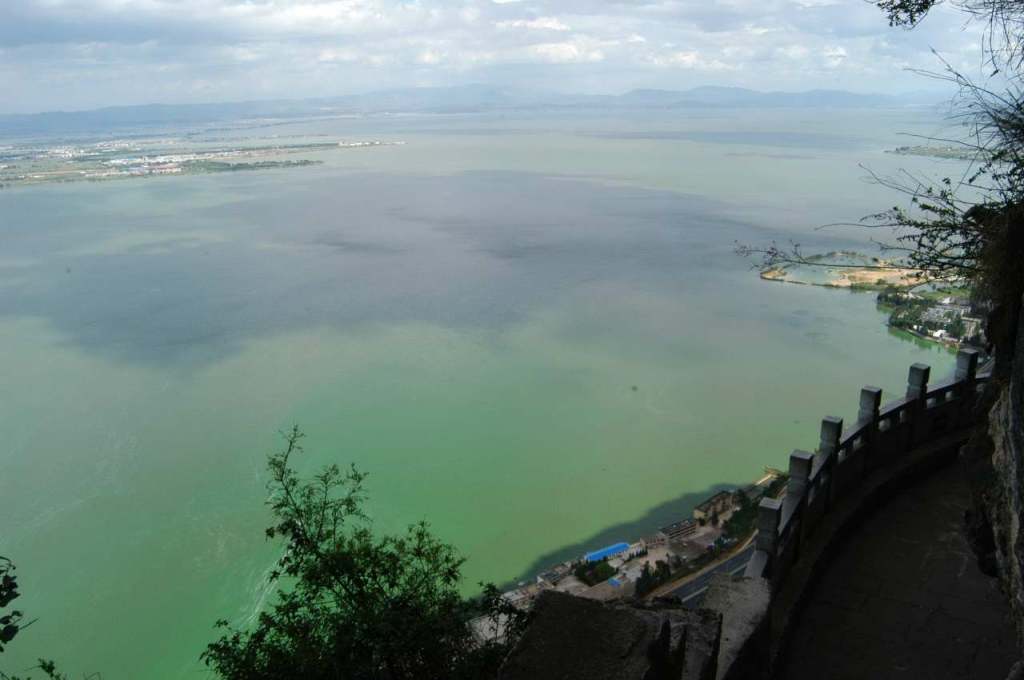
    Dian Lake, Kunming, Yun’nan Province. Photo by Emitchan

    The 3rd year of Emperor Wu’s Yuanshou Era (120 B.C.)

    In the spring, a comet appeared in the eastern sky.

    In May, during the summer, a general amnesty was proclaimed throughout the empire.

    During the rebellion of the Prince of Huainan, the Prince of Jiaodong, Liu Ji, had heard rumors of the matter and, sensing danger, secretly made preparations for defense. When government officials investigated the Huainan case, some testimonies implicated Prince Liu Ji. His mother, Madame Wang, the younger sister of the Empress Dowager, had a close relationship with the Emperor. Distressed by the circumstances, Liu Ji fell ill and passed away, daring not to leave a will regarding his heir.

    When the Emperor heard of his death, he was moved with compassion and appointed Liu Ji’s eldest son, Liu Xian, as the new Prince of Jiaodong. In addition, the Emperor enfeoffed Liu Ji’s younger son, Liu Qing, as the Prince of Liu’an, granting him the land that had once belonged to the Prince of Hengshan.

    In the autumn, the Xiongnu invaded the regions of Youbeiping and Dingxiang, each with several tens of thousands of cavalry. They killed and plundered over a thousand people.

    A severe flood struck the region east of Mount Xiao, causing widespread famine and scarcity among the populace. In response, the Emperor dispatched envoys to empty the granaries of various counties and commanderies, providing relief to the impoverished. However, the supplies were insufficient. The wealthy, officials, and notable individuals were encouraged to lend aid to the poor, with their names recorded on an honor roll to be presented to the court. Yet, even this was not enough to alleviate the suffering. As a result, over seven hundred thousand destitute individuals were relocated west of the passes and southward to regions around Shuofang and the Xinqinzhong area. These people were entirely dependent on the government for their clothing and sustenance, receiving assistance for several years. Officials were appointed to oversee their welfare, and their carriages moved along the road in a continuous procession. The expenses incurred in this relief effort amounted to billions, a sum beyond calculation.

    After Han acquired the territory of the Hunye King, incursions by the nomadic tribes into the Longxi, Beidi, and Shangjun Commanderies significantly decreased. In response, an edict was issued to reduce the garrison troops in these three commanderies by half, thereby alleviating the burden of conscription across the empire.

    The Emperor then set his sights on pacifying Kunming. As Kunming was home to Dian Lake, which spanned approximately three hundred square lis(one li is half a kilometer), the Emperor ordered the construction of Kunming Pond to serve as a site for naval warfare exercises. 

    During this time, the laws grew more stringent, leading to the dismissal or banishment of many officials. Military drafts became more frequent, and commoners often managed to buy their way out of service by purchasing the rank of Fifth Grandee, which led to a shortage of conscripts. Those exempted from service through the chiliarch or Fifth Grandee ranks were summoned to serve as low-ranking officials. Those unwilling to accept these positions were required to donate horses. Officials who manipulated the laws were sentenced to penal labor at the Royal Shanglin Park, where they were tasked with reclaiming wasteland and digging the Kunming Pond.

    A wonder horse was obtained from the depths of the Wowa pond, an oasis in the far Northwest. The Emperor, having recently established a music bureau, commissioned Sima Xiangru and others to compose poetry and lyrical compositions to celebrate the horse. Li Yannian, an eunuch, was appointed as Commandant of Harmony, wearing the seal of 2000-picul ranking. The poems were crafted to harmonize with the eight musical tones and often contained language drawn from the “Erya” (a classical Chinese dictionary). Scholars, familiar only with one branch of Confucius classics, found the language in these compositions incomprehensible and had to gather experts in Five Classics and study them together to decipher their meaning.

    When the wonder horse was obtained, it was incorporated into a song. Ji An, observing this, remarked, “Whenever a king creates music, it should honor the ancestors above and educate the people below. Your Majesty has obtained a horse, and now you’re turning poems into songs. But will the ancestor kings and the common people understand the meaning of these songs?” The Emperor, though silent, was clearly annoyed by the remark.

    The Emperor constantly sought scholars and officials, seemingly never satisfied with their numbers. Yet, his nature was stern and severe. Even those courtiers who had once been trusted and favored, if they committed minor offenses or engaged in trivial deceit, were swiftly punished or executed without leniency.

    Ji An, ever the voice of caution, remonstrated, saying, “Your Majesty, you exhaustively seek out talents, yet before they can be fully utilized, you have them executed. By indiscriminately punishing those with limited capabilities, I fear the pool of talented individuals throughout the realm will dwindle. Who then, will assist Your Majesty in governing?”

    Ji An spoke with indignation, but the Emperor smiled and explained, “Why worry about a scarcity of talent? It’s merely a matter of not being able to recognize them. If one could, would there be a lack of capable individuals? Talent is like a tool; if one possesses it but refuses to make the most of it, it is as good as not having it. If they are not put to death, what other way would you have me deal with them?”

    Ji An responded, “Although I cannot convince Your Majesty with my words, I still believe this approach is inappropriate. I hope Your Majesty will consider this matter carefully and rectify it moving forward. Do not dismiss my reasoning simply because I am a foolish man.”

    The Emperor turned to the courtiers and, with a wry smile, said, “If Ji An claimed to be sycophantic, that would have not been the case. He claims he is a foolish man, and that is certainly true!”

    The 4th year of Emperor Wu’s Yuanshou Era (119 B.C.)

    In the winter, officials reported, “Local officials have overly expansive expenditures, while wealthy merchants and great traders engage in metal smelting and salt boiling, accumulating fortunes amounting to tens of thousands of gold, yet they do not assist in the urgent needs of the state. We request that a currency reform to mint new coins, to meet the demands of the treasury, and that actions be taken to suppress the extravagance and those who exploit the system for personal gain.”

    At this time, within the Imperial Park, there were white deer, and the Privy Treasury possessed a surplus of silver and tin. With these resources, they created leather currency from the hides of the white deer, each piece measuring a square foot, with edges embroidered in colorful patterns. These leather notes were valued at 400,000 copper coins. Princes, dukes, and other relatives of the imperial family were required to present jade discs on top of the leather notes as part of court tributes and ceremonial offerings.

    Additionally, three types of silver coins were minted: the largest, circular in shape, bore a dragon design and was valued at 3,000 copper coins; the next size, square, featured a horse design and was valued at 500 copper coins; and the smallest, oval-shaped, bore a turtle design and was valued at 300 copper coins. The government ordered the county treasuries to withdraw half-tael coins and replace them with three-zhu (1/24 tael) coins. Counterfeiting any of these metal coins was punishable by death. Yet, despite the severity of the penalty, countless cases of both officials and commoners engaging in the counterfeiting of silver coins were reported.

    To manage these economic reforms, Dongguo Xianyang and Kong Jin were appointed as treasurers in the Ministry of Agriculture (Revenue), overseeing salt and iron affairs. Sang Hongyang rose to prominence for his adeptness in accounting. Dongguo Xianyang was a major salt-boiling operator in Qi, while Kong Jin managed large-scale smelting operations in Nanyang. Both scaled their production, generating profits worth thousands of catties of gold. Sang Hongyang, the son of a merchant from Luoyang, exhibited remarkable mental arithmetic skills from a young age, and began serving as an attendant at the age of thirteen. The trio’s influence on economic affairs was paramount, and they meticulously analyzed financial matters, down to the smallest figures.

    An edict was issued forbidding the populace from privately forging iron tools or boiling salt, under penalty of fettering the left big toe and confiscating their tools. Furthermore, ministers demanded that all merchants and craftsmen declare their assets. One thousand coins were counted as one min (also known as Guan, or one string of coins equaling one tael of silver), and a tax of 120 coins was imposed on every 2,000 min in possession. Any individual owning a carriage or boat longer than five zhang (approximately 15 meters) was also subject to this levy. Failure to declare assets resulted in a year of military service on the borders and the forfeiture of the undeclared coins. Those who brought to light on undeclared assets received half of the seized coins. This policy was primarily proposed by Zhang Tang, the Grand Master of the Censorate.

    Zhang Tang presented memorials to the court daily, discussing national expenditures to the point of exhausting the Emperor; at times, the Emperor would forget to eat. The Chancellor, Li Cai, occupied his position but refrained from engaging in governance, leaving Zhang Tang to make all decisions regarding national matters. The populace, feeling unrest and discontent, largely blamed Zhang Tang for their hardships.

    Bu Shi of Henan repeatedly offered to donate his wealth to the county authorities to support the border defenses. The Emperor, curious about Bu Shi’s motivation, sent an envoy to inquire.

    The envoy asked, “Do you wish to become an official?”

    Bu Shi replied, “I am a humble farmer and shepherd. I am not accustomed to serving in official positions, nor do I desire such a role.”

    The envoy then asked, “Is there any injustice or grievance in your family that you wish to report?”

    Bu Shi responded, “I have no disputes with anyone. I assist those in need among my fellow townspeople and educate those who lack virtue. The people in my village all live in harmony with me. Why would I feel wronged by anyone? I have nothing to report.”

    The envoy, intrigued, asked, “If that is the case, what do you wish for?”

    Bu Shi answered, “If the Emperor is punishing the Xiongnu, I believe that wise men should sacrifice themselves at the borders, and the wealthy should contribute their resources. This way, the Xiongnu can be annihilated.”

    Impressed by his words, the Emperor appreciated Bu Shi’s character and wished to set him as an example for the people. Consequently, Bu Shi was summoned and appointed as a Gentleman of the Household, bestowed with the title of Left Chief Councilor (ranked 10 out of 20 orders of merit), granted ten hectares of land, and a public announcement was made to demonstrate the Emperor’s recognition. Shortly after, Bu Shi was further promoted to the Grand Tutor of the principality of Qi.

    In the spring, a meteor was seen in the northeast. During the summer, a long comet appeared in the northwest.

  • Comprehensive Reflections to Aid in Governance(Part 151): Dimitri, from Prince, to Slave and Fidus Achates

    Comprehensive Reflections to Aid in Governance

    By Sima Guang

    Translated By Yiming Yang  

    Annals of Han Book 11 Scroll 19 (continued)

    Jin Midi and the golden status of King of Xiutu

    The 2nd year of Emperor Wu’s Yuan’shou Era (121 B.C. continued)

    The Prince of Jiangdu, Liu Jian, engaged in numerous heinous acts, including an affair with Consort Nao, the favored concubine of his father, Prince Yi, and an incestuous relationship with his younger sister, Liu Zhengchen. On one occasion, during a tremendous storm, Liu Jian went boating on Leibei Lake. He ordered two attendants to board a small boat despite the perilous conditions. The boat capsized, and the attendants struggled helplessly in the water, unable to save themselves. Liu Jian, standing by, laughed heartily and ordered no rescue, leading to their tragic deaths. He indulged in lewd and cruel activities, wantonly taking the lives of thirty-five innocent people.

    Realizing the extent of his crimes and fearing retribution, Liu Jian conspired with his consort, Cheng Guang, to invoke witchcraft. They employed a maid from Yue to pray for divine intervention, cursing the Emperor. Furthermore, upon hearing of the plots in Huainan and Hengshan, Liu Jian began manufacturing weapons and forging the imperial seal in preparation for rebellion. When these treasonous acts were discovered, the authorities demanded his arrest and execution. In the face of inevitable punishment, Liu Jian chose to take his own life, while Cheng Guang and the others involved were executed publicly. The principality of Jiangdu was thus brought to ruin.

    In the same year, Prince Kang of Jiaodong, Liu Ji, passed away.

    In the autumn, the Hunye King of the Xiongnu surrendered. At that time, the Chanyu, enraged, sought to exact vengeance upon the Hunye King and the Xiutu King in the western regions, whose forces had suffered great losses at the hands of the Han—tens of thousands slain or taken captive. The Chanyu, in his fury, intended to summon and execute these two kings. Fearing for their lives, the Hunye King and the Xiutu King secretly conspired to surrender to the Han. They first sent envoys to the border, where they were intercepted by Han forces, who relayed their intentions to the Emperor.

    At this time, the Grand Usher, Li Xi, was constructing a fortress along the Yellow River. He intercepted the Hunye King’s messengers and swiftly reported the matter to the Emperor. Suspecting that this surrender might be a ruse to launch a surprise attack, the Emperor commanded the General of Agile Cavalry, Huo Qubing, to lead his troops and meet with the Hunye King’s emissaries. The Xiutu King, regretting his decision to surrender, was killed by the Hunye King, who then assumed control over his followers.

    When General Huo Qubing crossed the Yellow River, he encountered the Hunye King’s forces. Some of the Hunye King’s subordinate commanders, seeing the Han army, hesitated to surrender and attempted to flee. Without delay, Huo Qubing struck swiftly, capturing and executing eight thousand of those who sought to escape. The Hunye King was then placed in a government carriage and sent alone to the Emperor, while the rest of the surrendered forces were escorted across the Yellow River.

    More than forty thousand surrendered, though their numbers were exaggerated to a hundred thousand. Upon reaching Chang’an, the Emperor rewarded the surrendering forces with numerous grants, enfeoffing the Hunye King with ten thousand households and bestowing upon him the title of Marquis of Luoyin. Four of his subordinate kings, including Hudu Ni, were likewise ennobled as marquises. In addition, the General of Agile Cavalry, Huo Qubing, was granted an increase of 1,700 households in his fief.

    When the Hunye King surrendered, the Han court summoned twenty thousand carriages to welcome them. However, the county officials lacked the necessary funds and were forced to borrow horses from the people. Some citizens, unwilling to part with their horses, hid them, and there were not enough horses to meet the demand. The Emperor, enraged, ordered the execution of the magistrate of Chang’an. But the Right Interior Minister, Ji An, interjected, saying, “The magistrate of Chang’an is innocent. If anyone is to be punished, let it be me. Only then will the people be willing to bring forth their horses. Moreover, the Xiongnu have abandoned their ruler and come to surrender to Han. We should gradually assimilate these migrants, county by county. How could we cause turmoil throughout the country, exhausting the resources of the Middle Kingdom to serve these outsiders and barbarians?” The Emperor fell silent.

    When the Hunye King and his followers arrived, more than five hundred merchants and traders were sentenced to death for violating the laws prohibiting trade with foreigners. Ji An requested an audience at the Gaomen Hall of Weiyang Palace and spoke: “The Xiongnu have invaded our borders, shattered our marriage alliances, and caused countless casualties when the Middle Kingdom mobilized troops to suppress them. The expenses for this campaign have been enormous. I, foolishly, suggest that Your Majesty consider taking the surrendered Xiongnu people and distributing them as slaves and servants to the families of those who died serving in the army. The spoils of war could be distributed among the people as compensation for their losses, alleviating their suffering. But now, even though tens of thousands of the Hunye have surrendered, the treasury is drained to reward them, and good citizens are levied to serve the foreigners. This is akin to pampering spoiled children. How could the common folk in Chang’an, who buy and sell, understand that the bureaucratic officials have interpreted their actions as smuggling wealth and goods across the borders and punished them for it? Your Majesty, if you cannot gain benefits from the Xiongnu to compensate the nation and, instead, wrongfully execute more than five hundred innocent people, you are protecting the leaves but damaging the branches. I humbly advise against it.”

    The Emperor, displeased, remained quiet and then remarked, “I have not heard Ji An speak for some time, and now he speaks foolishly once again.”

    In a short time, the surrendered Xiongnu were relocated and distributed across the borders of five commanderies(Longxi, Beidi, Shangjun, Shuofang, Yunzhong). These commanderies, originally situated outside the old passes but within the territory of Henan, were transformed into five satellite states, each adhering to their former customs. In the region west of Jincheng and beyond, extending from the Hexi Corridor and southern mountains to the Salt Marsh(Lop Nur), there were no Xiongnu to be found. Occasionally, there were rare visits from Xiongnu scouts, but these visits were infrequent.

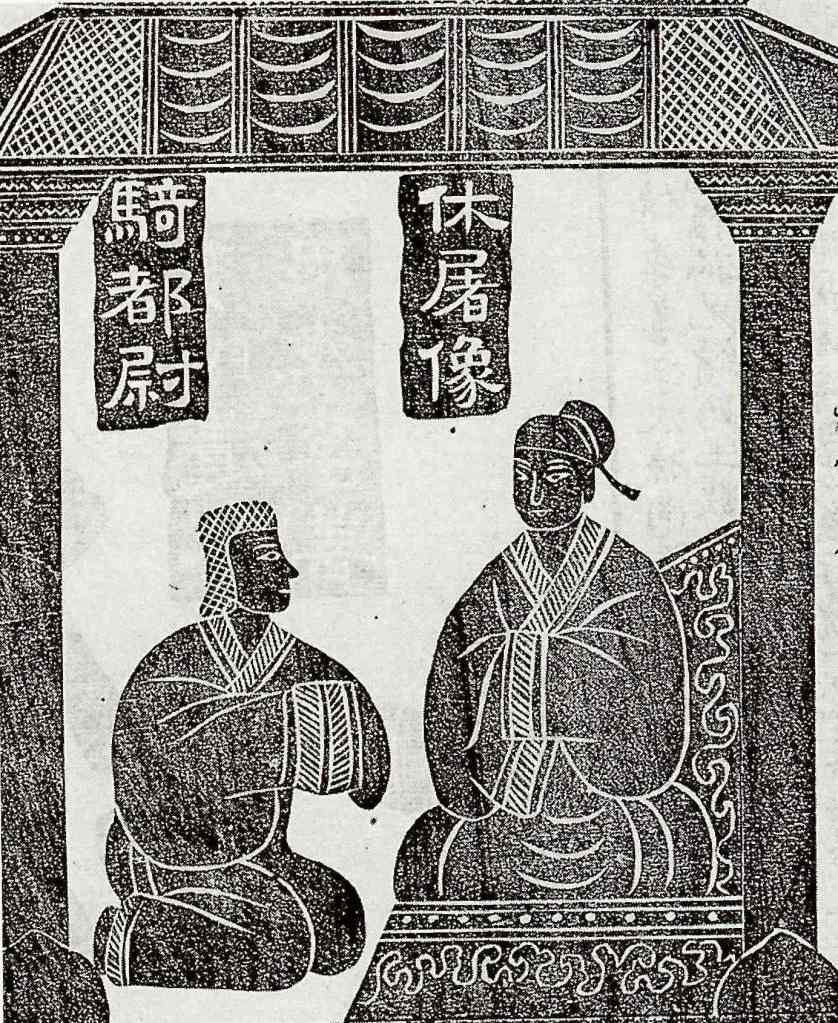
    The son of the Xiutu King, Midi(sinicized form of Dimitri), along with his mother, Yanzhi (Madame/Queen), and his younger brother, Lun(sinicized form of Leo), entered imperial service. They were assigned to care for the imperial horses under the supervision of the Privy Treasurer. One day, during the Emperor’s leisure activities, when he was inspecting the horses, he was surrounded by his harem. Midi, along with several dozen others, led the horses past the hall, and while every servant man stole glances at the beauties, Midi alone dared not look. Midi, standing eight (Chinese)feet and two (Chinese)inches tall, had a stern countenance, and the horses he led were exceptionally healthy and well-groomed. The Emperor, intrigued by this, inquired about Midi‘s background. Midi spoke honestly, and the Emperor, amazed by his appearance and character, immediately ordered a bath for him, along with proper attire. He was appointed as the horse stable supervisor, later promoted to an attendant-in-waiting, then to the Commandant of Cavalry, and finally elevated to the rank of Grandee of the Chamberlain.

    As Midi grew closer to the Emperor, he made no mistakes in his service. The Emperor trusted him deeply and showered him with rewards, giving him gifts worth thousands of gold. Midi would drive for the Emperor when he went out and closely attend to him when indoors. Many among the nobility secretly complained, “Your Majesty has unwittingly elevated this boy from the barbarians and now treasures him as one of your own.” Yet, when the Emperor heard these murmurs, his esteem for Midi only grew. Because the Xiutu King had made a golden statue as an offering to the heavenly lord, the Emperor bestowed upon Midi the surname Jin, meaning “gold.”

  • Comprehensive Reflections to Aid in Governance(Part 147): The Right To Bear Arms

    Comprehensive Reflections to Aid in Governance

    By Sima Guang

    Translated By Yiming Yang  

    Annals of Han Book 11 Scroll 19

    Duration of 6 years

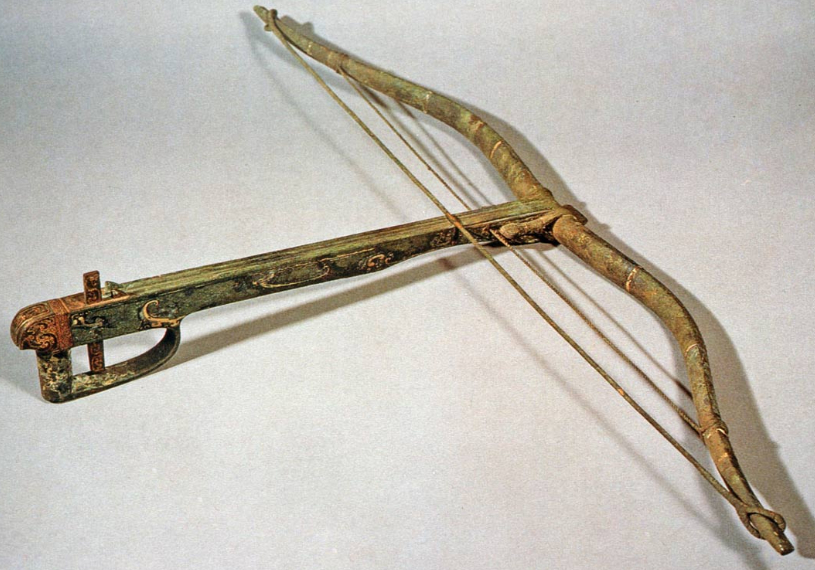
    A Crossbow, Terra Cotta Warrior Museum

    The 5th year of Emperor Wu’s Yuan’shuo Era (124 B.C.)

    In winter, on November 5, Xue Ze was relieved of his office. In his place, Gongsun Hong was appointed Chancellor and ennobled as the Marquis of Pingjin. From that time forth, the custom of conferring noble titles upon those who held the chancellorship began with Gongsun Hong.

    The Son of Heaven set his heart upon vast enterprises and the glory of national achievement. Gongsun Hong, opening the Eastern Gate of the Chancellor’s Office, summoned worthies and men of counsel, discoursing with them on state affairs. Whenever he entered court to present matters for deliberation, he would bring up proposals aimed at the benefit of the realm. The Emperor, esteeming his words, would summon scholars of the court to contend in debate with him.

    On one occasion, Gongsun Hong memorialized, saying: “Let it be forbidden for the people to bear bows and crossbows. For the sake of public safety, such arms must be restrained. Ten brigands with crossbows may cause a hundred officials to shrink in fear and not step forward.”

    The Emperor commanded the court to deliberate upon this proposal.

    Thereupon Yuqiu Shouwang, an Attendant-in-waiting, stepped forth and replied: “I have heard that the Five Arms—spear, halberd, bow, sword, and dagger-axe—were not devised to bring harm, but to subdue evil and restrain violence. In the time of Qin, when the empire was first united, weapons were cast into molten cauldrons and swords were blunted. Thereafter, the people fought each other with hoes, riding crops, and clubs. Crimes multiplied, banditry spread, and rebellion ensued. In the end, the state fell to ruin.

    “Thus, the sage kings of old taught the people by virtue and governed by rites, knowing that prohibitions alone could not suffice. The Book of Rites records: ‘When a male child is born, raise the mulberry-wood bow, and shoot arrows of reed to Heaven, to Earth, and to the four directions’—signifying that the man is destined to serve in arms throughout his life. The Grand Archery Rite, practiced from the Son of Heaven to the commoner, has been a ceremony passed down since the Three Dynasties.

    “I have heard of kings instructing the people through archery rites, but never of those who banned bows and arrows. What is forbidden is intended to prevent theft and assault; yet though death is decreed as punishment, still such crimes do not cease. This shows that even the severest law does not check the greatest of transgressions. If evil men conceal arms in secret while honest men are stripped of means to defend themselves, the law serves not justice but misfortune. I humbly submit: this measure is ill-advised.”

    This memorial was entered into the official record and submitted for imperial consideration. The Sovereign summoned Gongsun Hong and inquired of him regarding the matter, but Gongsun Hong could offer no rebuttal.

    Gongsun Hong was by nature suspicious and inwardly vindictive. All who had once opposed him, whether near or distant, though they might appear on cordial terms, would in time meet with his concealed vengeance.

    Dong Zhongshu, a man of upright character and moral resolve, regarded Gongsun Hong as sycophantic and insincere. Gongsun Hong, harboring envy, bore ill will toward him. The Prince of Jiaoxi, Liu Duan, indulged in lawlessness and brought about many deaths, including the demise of several officials of the 2,000-picul rank. Gongsun Hong, seeking to distance Dong Zhongshu from the Emperor, recommended him to serve as prime minister of the Principality of Jiaoxi. Yet Dong Zhongshu, pleading illness, did not assume the post.

    Ji An, who often voiced criticisms of Confucian doctrine, had long held differences with Gongsun Hong. Desiring to entrap him, Gongsun Hong seized upon an opportunity to destroy him. He memorialized the Emperor, saying: “The jurisdiction of the Right Interior Minister(intendant of Right Fufeng) is replete with nobles and high ministers. It is a post fraught with difficulty, and only one of great stature may govern it. I propose the transfer of Ji An to serve as Right Interior Minister.” The Emperor approved this request.

    In January of spring, a great drought afflicted the land.

    At that time, the Right Tuqi King of the Xiongnu made repeated incursions into Shuofang Commandery, harassing the border regions. The Sovereign dispatched the General of Chariots and Cavalry, Wei Qing, with thirty thousand cavalrymen departing from Gaoque Pass. Su Jian, Commandant of the Palace Guard, was appointed as Guerrilla General; Li Zu, the Left Interior Minister, was made Strong Crossbow General; Gongsun He, Grand Coachman, was named Cavalry General; and Li Cai, Prime Minister of Dai, was appointed Light Chariot General. All were placed under the overall command of Wei Qing. They departed from Shuofang to strike the enemy.

    In addition, the Grand Usher Li Xi and the Marquis of Antou, Zhang Cigong, were each appointed as generals and marched from Youbeiping. Altogether, the expeditionary force exceeded one hundred thousand men, advancing in concert against the Xiongnu.

    The Right Tuqi King, believing the Han troops too distant to pose a threat, indulged in wine and became inebriated. But Wei Qing led his men swiftly by night, advancing six to seven hundred li without pause, and fell upon the Right Tuqi King’s encampment. Caught unawares, the Right Tuqi King was seized with panic. In the dead of night, he broke through the encirclement and fled northward with but a few hundred elite riders.

    The Han forces captured more than ten subordinate kings under the Right Tuqi King, and seized over fifteen thousand men and women. Livestock taken numbered in the hundreds of thousands. With their objectives achieved, the army withdrew in good order and returned in triumph.

    When the army reached the border pass, the Son of Heaven dispatched an envoy bearing the seal of the Grand General, and in the field conferred upon Wei Qing the title of Grand General. All other generals were henceforth subordinated to his command.

    In April of summer, Wei Qing was further rewarded with an increase of fief comprising 8,700 households. His three sons—Wei Kang, Wei Buyi, and Wei Deng—though yet in infancy, were each ennobled as marquises.

    Wei Qing respectfully declined, memorializing thus: “By the grace of Heaven and the favor of Your Majesty, I have received fortune beyond measure. The great victory of the army was due to the valor and exertions of all the colonels and officers. The generous increase of my fief, and the enfeoffment of my sons with marquisates, though they are yet swaddled in cloth, is not the example I had hoped to set for those soldiers who risked their lives in the field.”

    The Emperor replied, “I have not forgotten the meritorious deeds of all the colonels.”

    Thereafter, the Emperor granted titles and honors to the various officers of distinction:
    Gongsun Ao, Colonel of Army Protectors, was made Marquis of Heqi;
    Han Yue, Commandant, was made Marquis of Long’e;
    Gongsun He, Commandant, was made Marquis of Nanjiao;
    Li Cha, Commandant, was made Marquis of Le’an;
    Li Shuo, Colonel, was made Marquis of Shezhi;
    Zhao Buyu, Colonel, was made Marquis of Suicheng;
    Gongsun Rongnu, Colonel, was made Marquis of Congping.

    In addition, Li Zu, Li Xi, and Colonel Dou Ruyi were each granted the title of Marquis Within the Passes.

    At this time, Wei Qing stood in highest favor among all court officials and ministers; none within the realm equaled his prestige. From the Three Excellencies down through the Nine Ministers, all bore themselves with deference before him. Only Ji An alone treated Wei Qing as an equal, neither yielding nor posturing.

    Some among the court cautioned Ji An, saying, “Now that the Son of Heaven commands all officials to bow before the Grand General, and the Grand General’s rank is exalted beyond compare, how can you refrain from bowing?”

    Ji An replied, “When the Grand General salutes his peer, does his status thereby lessen?”

    When these words reached the ears of the Grand General, he held Ji An in even greater esteem. Thereafter, Wei Qing often consulted Ji An concerning affairs of state and matters of court, treating him with a respect greater than he accorded others.Though Wei Qing’s position was lofty, when he came into an audience, the Emperor would recline upon his couch and receive him with ease. When Chancellor Gongsun Hong was summoned for informal audiences, the Son of Heaven at times dispensed with donning his imperial crown. Yet on one occasion, when Ji An came to request an audience, the Emperor, seated in the armory tent without his crown, glimpsed Ji An’s approach, and at once withdrew to the rear tent. He dispatched an attendant to grant Ji An’s petition in full, without requiring his presence. Thus was the reverence accorded to Ji An.

  • Comprehensive Reflections to Aid in Governance(Part 146): Early Journey to The West

    Comprehensive Reflections to Aid in Governance

    By Sima Guang

    Translated By Yiming Yang  

    Annals of Han Book 10 Scroll 18 (continued)

    Yuezhi Prince, Khalchayan

    The 2nd year of Emperor Wu’s Yuan’shuo Era (127 B.C. continued)

    The Prince of Yan, Liu Dingguo, violated the rites by engaging in illicit relations with the consort of his father, King Kang, and further transgressed the bonds of kinship by forcibly taking his brother’s wife as his concubine. He slew the Magistrate of Feiru County, a man named Yingren. Thereupon, Yingren’s brothers submitted a memorial, exposing the prince’s crimes. Zhufu Yan also took part in presenting the truth before the court.

    The court officials petitioned for the execution of Prince Liu Dingguo, and the Emperor gave his assent. Liu Dingguo thereupon took his own life. His princedom was abolished.

    Prince Li of Qi, Liu Cichang, committed incest with his elder sister, Princess Ji(her mother’s maiden name). Zhufu Yan sought to wed his daughter to Liu Cichang, but the Queen Dowager of Qi, mother of the prince, opposed the match. Thereafter, Zhufu Yan addressed the Emperor, saying, “The city of Linzi, capital of Qi, encompasses one hundred thousand households, and its market revenues exceed a thousand catties of gold. It is a land of wealth and population, exceeding even the capital of Chang’an in splendor. Only Your Majesty’s nearest kin and most favored sons ought to govern such a place. Now, the bond between Qi and the Throne grows faint, and moreover, I have heard of the Prince’s incestuous conduct with his sister. I entreat Your Majesty to rectify this impropriety.”

    The Emperor then appointed Zhufu Yan as the Prime Minister of Qi, commanding him to investigate and set affairs in order. Upon arriving in Qi, Zhufu Yan swiftly interrogated the prince’s consorts and palace attendants. Their confessions implicated Prince Liu Cichang. The prince, in fear, drank poison and died.

    In former days, Zhufu Yan had traveled throughout the principalities of Qi, Yan, and Zhao. When later elevated to high office, he successively dismantled the principalities of Yan and Qi. Alarmed, the Prince of Zhao, Liu Pengzu, memorialized the Throne, accusing Zhufu Yan of accepting bribes of gold from feudal lords in exchange for bestowing marquisates upon their sons.

    When the Emperor received word of the suicide of the Prince of Qi, he flew into a rage. He suspected that Zhufu Yan had coerced the prince into taking his own life, and thus had him arrested. Zhufu Yan admitted to accepting gold but denied that he had compelled the prince to die.

    Though the Emperor was reluctant to order his execution, Gongsun Hong remonstrated, saying, “Now that the Prince of Qi has perished and left no heir, his princedom shall be abolished and absorbed as a commandery under direct rule. Zhufu Yan stands at the root of these upheavals. If Your Majesty does not punish him, resentment will spread across the realm.”

    Thus, Zhufu Yan and his entire clan were executed.

    At that time, the Grand Master of the Censorate, Zhang Ou, was dismissed. The Emperor appointed Kong Zang, Marquis of Liao, to the post. Kong Zang declined, saying, “My family has, for generations, devoted itself to the pursuit of scholarship. I humbly request to be appointed Minister of Ceremonies, so that I may continue the scholarly path alongside my cousin Kong Anguo, who now serves as Palace Attendant. In this way, the teachings of the ancients may be preserved for posterity.”

    The Emperor granted his request, appointing him Minister of Ceremonies, and bestowed upon him honors and stipends equal to those of the Three Excellencies.

    The 3rd year of Emperor Wu’s Yuan’shuo Era (126 B.C.)

    In winter, the Chanyu of the Xiongnu, Junchen, passed away. His younger brother, the Left Luli King Yizhixie, declared himself Chanyu and led troops to attack the Crown Prince Yudan, defeating him. Yudan fled south and surrendered to the Han court.

    Gongsun Hong was appointed Grand Master of the Censorate. At that time, the Emperor was planning to extend the realm into the southwestern frontiers, establishing Canghai Commandery in the east and constructing Shuofang Commandery in the north. Gongsun Hong repeatedly memorialized the throne, urging that the Middle Kingdom’s resources not be exhausted on far-flung and unprofitable ventures, and petitioned to abandon the plan. The Emperor sent Zhu Maichen and others to present ten arguments in favor of the Shuofang expansion. Gongsun Hong did not contest their points but replied: “I am a coarse and ignorant man from east of the Xiao Mountains, unfamiliar with such intricate calculations. However, I respectfully propose that the southwestern expansion and the Canghai Commandery be abandoned, so that efforts may focus on the construction of Shuofang.” The Emperor accepted his counsel.

    In January of spring, the establishment of Canghai Commandery was canceled.

    Gongsun Hong led a life of frugality, dressing in coarse garments and partaking of simple meals with only a single dish of meat. Ji An denounced him, “Gongsun Hong is one of the Three Excellencies and receives a high salary, yet he lives as a pauper—surely a performance to court praise.”

    The Emperor, upon inquiry, summoned Gongsun Hong, who replied, “It is as Ji An says. Among the Nine Ministers, there is none more familiar with me than Ji An. Today, he has exposed my pretense. For a high official to feign the life of a commoner is deceitful, a ploy to pursue reputation. Without Ji An’s loyalty and honesty, Your Majesty would not have known this.” The Emperor was moved by his frankness and held him in greater esteem.

    In March, a general amnesty was declared across the realm.

    On April 7, Crown Prince Yudan of the Xiongnu was granted the title of Marquis of She’an. He died within the same year.

    Previously, Xiongnu defectors recounted: “The Yuezhi people once dwelled between Dunhuang and the Qilian Mountains. They were strong, but were crushed by Modu Chanyu. Later, Laoshang Chanyu slew their king and fashioned his skull into a drinking cup. The Yuezhi survivors fled far to the west, harboring hatred yet lacking power to retaliate.”

    The Emperor desired to open relations with the Yuezhi and sought envoys. Attendant Cadet Zhang Qian of Hanzhong volunteered. Departing from Longxi, he entered the heart of Xiongnu lands but was captured and detained for over a decade. Eventually escaping, he reached Dayuan. The people of Dayuan, eager to trade with Han, received him with favor and provided guides and interpreters to accompany him to Kangju. From there, Zhang Qian arrived at Greater Yuezhi. A new king had just been enthroned, and their conquest of Daxia was complete. The land was rich and secure, and the people were content. They harbored no will to avenge the Xiongnu.

    Zhang Qian remained for over a year and did not make inroads with the King of Yuezhi, then resolved to return. Passing through the southern ranges and the land of the Qiang, he was again seized by the Xiongnu and imprisoned for another year. During a time of disorder caused by the power wrangling between Chanyu Yizhixie and Crown Prince Yudan, Zhang Qian escaped with a nomad slave named Tangyi Ganfu(a.k.a. Tangyi Fu). He had departed with over a hundred men; after thirteen years, only he and Tangyi Ganfu returned.

    The Emperor appointed Zhang Qian as Grandee of the Palace and Tangyi Ganfu as Ambassador-at-large.

    In summer, tens of thousands of Xiongnu horsemen raided the northern frontier, killing the Prefect of Dai, Gong, and capturing over a thousand people.

    On June 2, the Empress Dowager(Wang) passed away.

    In autumn, the government relinquished control of most southwestern territories, retaining only two counties—Nanyi and Yelang—and one commandant. Qianwei Commandery gradually consolidated its own defenses. The court shifted its focus to fortifying Shuofang.

    The Xiongnu again raided Yanmen, killing and capturing over a thousand.

    In the same year, Zhang Tang, Grandee of the Palace, was promoted to Minister of Justice. He was a cunning man, skilled in manipulation. Observing the Emperor’s enthusiasm for the classics, he feigned devotion to Confucianism and associated with Dong Zhongshu and Gongsun Hong.

    Zhang Tang appointed Ni Kuan of Qiansheng as transcriber to present legal cases, deciding difficult cases following ancient statutes and classic doctrines. Zhang Tang interpreted the law in accordance with the Emperor’s wishes: assigning harsh judges to cases where punishment was desired, and lenient ones where mercy was intended. Thus he won imperial favor.

    Zhang Tang, while rigid, vindictive, and sometimes biased in legal affairs, showed extraordinary attention to his former acquaintances’ descendants and paid visits to high officials in all seasons rain or shine. Though strict to a fault, his public image remained favorable.

    Ji An frequently criticized Zhang Tang, saying, “As one of the Nine Ministers, you fail to honor the virtues of past rulers, nor do you suppress the wickedness of men. You should bring peace to the state and lighten the prisons, yet you distort the statutes of Emperor Gaozu. These actions shall leave you with no descendants.”

    In debate, Ji An upheld principles but could not prevail against Zhang Tang’s legalist hair-splitting. Frustrated, he exclaimed, “It is said that clerks should not be made ministers—and now I understand why! If one governs as Zhang Tang does, men will stand one-legged and cast sidelong glances, and the world will be gripped by fear!”

    The 4th year of Emperor Wu’s Yuan’shuo Era (125 B.C.)

    During winter, the Emperor made a trip to Ganquan Palace.

    In summer, the Xiongnu invaded three commanderies: Dai, Dingxiang, and Shangjun, each with thirty thousand cavalry. They killed and captured several thousand people.

  • Comprehensive Reflections to Aid in Governance(Part 142): A Mind Reader

    Comprehensive Reflections to Aid in Governance

    By Sima Guang

    Translated By Yiming Yang  

    Annals of Han Book 10 Scroll 18 (continued)

    Zibo, f.k.a. Zichuan the hometown of Gongsun Hong, Shandong Province

    The 5th year of Emperor Wu’s Yuan’guang Era (130 B.C.)

    The Emperor appointed Zhang Tang as Grand Palace Grandee. Together with Zhao Yu, he codified statutes and ordinances, multiplying their intricacies. They enforced strict observance of official duties, and promulgated the Law of Misprision, whereby subjects were urged to denounce one another and overseers were bound to scrutinize their subordinates. From that time forth, the rule of law grew ever more exacting.

    In August, rice borers afflicted the fields.

    In that same year, persons among the officials and common folk who possessed knowledge of current statecraft or were versed in the teachings of the ancient sages were summoned to the capital. They were grouped according to their native counties, provisioned food along the way, while traveling with the provincial officers who reported statistics to the court.

    Gongsun Hong of Zichuan, in his memorial submitted during the official selection examination, wrote:

    “I have heard that in high antiquity, under the reigns of Emperor Yao and Shun, rank and reward were not esteemed, yet the people urged one another toward virtue. Punishments were not severe, yet transgressions were few. This was because the sovereigns were upright, and their virtue inspired trust among the people. But in the decline of later ages, high honors failed to encourage good conduct, and harsh laws could not restrain evil. This was because the ruler lacked righteousness, and the people no longer believed in him. Therefore, one cannot govern by rewards and punishments alone; the essential matter is that the people place their trust in the state.

    “The government, then, must employ the worthy in their proper stations, entrusting them with the management of affairs. Idle discourse must be silenced, lest it hinder execution. Superfluous production must be curtailed, that taxation may be eased. The people must not be robbed of their time or labor, that they may enrich themselves through their own efforts. Those of virtue must be raised up; the unworthy must be cast down, that authority may be honored. Those of merit must be rewarded; the idle and ineffectual dismissed, that rank may be justly ordered. If punishments fit the crime, corruption will cease; if rewards accord with service, ministers will be diligent. These eight measures form the foundation of good government.

    “The people are the root. When occupied with their tasks, they do not contend; when given proper guidance, they do not harbor resentment; when treated with ritual and propriety, they do not rebel; when cherished by their superiors, they respond with loyalty. These are the urgent concerns of statecraft. Rites and righteousness are the bonds that hold the people. When reward and punishment accord with these, the laws would not be transgressed.

    “I have also heard it said: ‘Like nature attracts; harmonious tones respond in kind.’ Thus, when the ruler above cultivates harmony and virtue, the people below dwell in concord. When the heart is harmonized, the vital energies are balanced; when the energies are balanced, the body is sound; when the body is sound, the voice is in tune; and when the voice is in tune, Heaven and Earth respond in accord. When yin and yang are in harmony, the winds and rains arrive in season, sweet dew descends, the five grains flourish, the six livestock prosper, fields yield in abundance, auspicious plants appear, the mountains remain verdant, and the marshes do not dry—such is the ultimate fruit of harmony.”

    At that time, more than a hundred men presented themselves for examination. The Minister of Ceremonies ranked Gongsun Hong’s memorial among the lower entries. Yet the Emperor, discerning its worth, raised it above all others, appointed Gongsun Hong as Erudite, and ordered him to await summons at the Golden Horse Gate.

    There was another man, Yuan Gu of Qi, over ninety years of age, who was likewise summoned to the capital as one of the Worthies. Renowned for his virtue and learning, he was held in esteem by many. Gongsun Hong regarded him only with a sidelong glance. Yuan Gu reproached him, saying, “Master Gongsun, one must speak the truth in accordance with the Confucian Way. To please the current populace is to stray from righteousness.”

    Many among the Confucians harbored resentment toward Yuan Gu and maligned him in secret. Thereafter, he withdrew from service, citing the infirmities of old age.

    In those years, the imperial court sought to open the mountain roads leading to the four commanderies of the southwest—Guanghan, Qianwei, Ba, and Shu. Provisions for the laborers were borne over thousands of li. For several years, the roads remained impassable; soldiers perished in great numbers from hunger, pestilence, and the miasmic climate. Moreover, the tribes of the southwestern barbarians rose in frequent rebellion, consuming the empire’s wealth with no gain in territory nor submission.

    The Emperor was disquieted and dispatched Gongsun Hong to investigate the matter. Upon his return, Gongsun Hong memorialized the court, reporting the misery of the southern marches and declaring that the tribes were of no benefit to the state. But the Emperor set aside his counsel and did not act upon it.

    In court deliberations, Gongsun Hong was ever measured in speech, laying forth the essential facts and leaving judgment to the Emperor. He refrained from contentious disputation and did not press his views. This comportment pleased the Emperor, who deemed him prudent in conduct, skilled in argument, well-versed in law and governance, and adept in citing the Classics of the Sage. Rejoicing in his comportment, the Emperor within the year appointed him Left Interior Minister.

    At court, Gongsun Hong never openly opposed the Emperor. He and Ji An often requested private audiences. Ji An would raise the matter, and Gongsun Hong would follow with further remarks. The Emperor found Gongsun Hong’s manner agreeable, often adopted his counsel, and favored him ever more. On several occasions, though he had earlier expressed a contrary view in council, Gongsun Hong would later amend his position to accord with the Emperor’s will.

    During one such session, Ji An rebuked Gongsun Hong before the assembled ministers, saying, “Men of Qi are known for their cunning ways. In our early consultations, you agreed with my proposal. Now, before His Majesty, you reverse your stands entirely. You are evasive and untrustworthy!”

    The Emperor turned to Gongsun Hong for a reply. Gongsun Hong bowed and said, “Those who know me well regard me as honest and loyal. Those who do not may hold doubts.” The Emperor accepted his words in good faith. Though there were those at court who spoke ill of him, the Emperor’s trust in Gongsun Hong only deepened.

  • Comprehensive Reflections to Aid in Governance(Part 138): Ji An, Mr. Insensitive

    Comprehensive Reflections to Aid in Governance

    By Sima Guang

    Translated By Yiming Yang  

    Annals of Han Book 9 Scroll 17 (continued)

    Minyue(Fujian Province), Nanyue(Guangdong, China; Vietnam)

    The 6th year of the Emperor Wu’s Jianyuan Era (135 B.C. continued)

    At that time, the Han forces had already set forth on their southern campaign, though they had yet to cross the mountain passes. The King of Minyue, Zōu Yīng, mustered his troops to resist. But his younger brother, Zōu Yǔshān, secretly plotted with his kinsmen and ministers: “The king raised arms against Nanyue without first petitioning the Son of Heaven; for this offense the Han army now comes to chastise us. Their forces are vast and mighty. Should we by chance repel them, they will only return in greater numbers, and our state shall be utterly destroyed. Now, if we slay the king to placate the Han emperor, and he accepts our submission, the army may withdraw and our state be preserved. But if he refuses, then we shall fight to the last. And if defeat befalls us, we shall flee across the seas.”

    All present assented to this counsel. Thereupon, they took up a short spear and slew the king. They then dispatched an envoy bearing his severed head to the Grand Herald, Wáng Huī.

    When Grand Herald Wáng Huī received the severed head of the King of Minyue, he said, “Our expedition was undertaken to punish the king. Now that his head has been delivered, our purpose is fulfilled without bloodshed—this is the most fortunate outcome.” Thereupon, Wáng Huī notified the forces under the Minister of Agriculture, Hán Ānguó, and dispatched an envoy to the capital, bearing the head of Zōu Yīng to report to the Son of Heaven.

    The Emperor issued a decree recalling both generals and their armies, saying, “The principal offender, Zōu Yīng, is no more. Of his kin, only the Lord Yáo, Zōu Chóu, grandson of King Wǔzhū, took no part in the conspiracy.” He then dispatched a General of the Household as his envoy to appoint Zōu Chóu as King Yáo, thus continuing the ancestral rites of Minyue.

    Meanwhile, Zōu Yǔshān, having slain Zōu Yīng, seized command of Minyue and won the support of the people. He proclaimed himself King of Minyue. The Emperor judged it unnecessary to mount another campaign, and declared: “Though Zōu Yǔshān conspired with Zōu Yīng in rebellion, he later slew the traitor and thereby spared the army from battle.” In recognition, the Emperor enfeoffed Zōu Yǔshān as King of East Yuè, allowing him to reign alongside Zōu Chóu, King Yáo of Minyue.

    The Son of Heaven dispatched Zhuāng Zhū to convey his will to the King of Nanyue, Zhào Hu. The king received the envoy with deference, prostrating himself and declaring, “The Emperor has raised troops to chastise Minyue; I shall devote my life to repay this favor and virtue!” He thereupon sent his crown prince to serve in the palace guard and said to Zhuāng Zhū, “Our state has only just emerged from the turmoil of invasion. The envoy is prepared, and Zhào Hu makes daily preparations to journey north to pay homage at court.”

    Zhuāng Zhū took his leave. On his return, he passed through Huáinán, whereupon the Emperor again dispatched him to present the circumstances of the Minyue campaign to the Prince of Huáinán, Liú Ān, and to commend his earlier counsel. Liú Ān respectfully received the imperial message, giving thanks and confessing that his advice had been inferior to the Emperor’s judgment.

    After Zhuāng Zhū departed from Nanyue, the ministers of the southern court said to their king, “The Han raised arms to punish Zōu Yīng, and the reverberations have reached even our borders. Formerly, the late king often said, ‘When serving the Son of Heaven, it is sufficient to maintain proper rites and decorum.’ More than this is unwise. Be not beguiled by the pleasing words of envoys—for if you go to court, you may never return, and our state could be lost.”

    Thereafter, King Zhào Hu claimed illness and never proceeded to an audience with the Emperor.

    That same year, Hán Ānguó was appointed Grand Master of the Censorate.

    Ji An of Pǔyáng, formerly Commandant of Dōnghǎi Commandery, was appointed as Commandant for the management of the nobility registers. In his early service, Ji An held the post of internuncio. Known for his stern disposition and uncompromising conduct, he was feared by his peers.

    When strife erupted among the Eastern Yuè tribes, the Emperor dispatched Ji An to investigate. Yet Ji An returned from Commandery without reaching his destination, saying, “The internecine conflict of the Yuè reflects their native customs. It is unworthy of tainting the Emperor’s authority.”

    Later, a great fire broke out in Hénán, destroying over a thousand dwellings. The Emperor again sent Ji An to inquire into the matter. Upon his return, he reported, “It was but an ordinary fire, spreading from a single household to several others—not cause for alarm. However, while passing through Hénán, I observed tens of thousands afflicted by flood and drought. In desperation, some parents had turned to cannibalism. I therefore took it upon myself to open the state granaries and distribute grain to relieve their suffering. I now return the authority to Your Majesty and stand ready to receive punishment for acting in your stead.”

    The Emperor commended Ji An’s compassion and absolved him of any fault.

    During his administration in Dōnghǎi commandery, Ji An governed with restraint and simplicity, favoring the Taoism of non-intervention over rigid legalism. He appointed worthy subordinates, entrusted them with full responsibilities, and did not burden the administration with trifling matters, attending only to what was essential.

    However, Ji An was blunt in speech and lacking in courtesy, intolerant of others’ failings and often causing embarrassment in public discourse. When the Emperor once summoned scholars and men of talent to court, he expressed a desire to initiate new policies, saying, “I wish to do such and such.” Ji An replied, “Your Majesty conceals ambition beneath a guise of benevolence and virtue. Why don’t you really learn to govern like the ancient sages Yáo and Shùn?”

    At this, the Emperor fell silent and departed the court in anger, leaving ministers and courtiers in dread.

    Later, the Emperor spoke with his attendants, saying, “Ji An is obstinate beyond reason and wholly lacking in tact!”

    When some courtiers rebuked Ji An for his words, he replied, “The Emperor appoints ministers to serve as remonstrators. If they merely flatter his desires, how will the realm be justly ruled? I hold this office not to preserve myself, but to uphold righteousness. If I remain silent out of fear, would that not dishonor the court?”

    Ji An, long afflicted by illness, had taken extended leave from office, exceeding three months. The Emperor, mindful of his service, repeatedly prolonged his furlough, yet Ji An’s condition showed no improvement. In the end, as his final illness took hold, Zhuāng Zhù requested leave on Ji An’s behalf.

    The Emperor inquired, “What manner of man is Ji An of Pǔyáng?”

    Zhuāng Zhù replied, “When in office, Ji An does not exceed his station with ostentation. But if entrusted with the guardianship of a young sovereign, or withholding a besieged city, he will neither be swayed by enticement nor retreat at dismissal. In such matters, not even gallants like Mèng Bēn or Xià Yu could overcome him.”

    The Emperor sighed and said, “Indeed, the ancients had loyal ministers, and Ji An approaches their measure.”

    At that time, the Xiōngnú came forth with a request for peace through heqin—marriage alliance. The Emperor, weighing the matter, summoned counsels. The Grand Herald Wáng Huī, hailed from Yān, versed in frontier affairs, opposed the proposal, “In past times, the Han court entered into marriage pacts with the Xiōngnú, yet not long after, they betrayed the covenant and resumed their raids. Their pledges are hollow; it is better to gird our defenses and prepare for war.”

    On the other hand, Hán Ānguó urged acceptance of the proposal: “The Xiōngnú are a nomadic people, fleet as birds in migration, and long unbound by any sovereign’s yoke. Should we send troops across a thousand li in contest for gain, the cost in men and horses would be ruinous. In such terrain, the Xiōngnú possess mastery. This is a perilous road. It is better to pacify them by alliance and avoid entanglement in a distant war.”

    The court was divided in counsel, yet a majority inclined toward Han Ānguó’s view. Thus, the Son of Heaven consented to the treaty and accepted the peace by marriage.

    The 1st year of the Emperor Wu’s Yuan’guang Era (134 B.C.)

    In November of winter, an edict was proclaimed, directing each commandery and principality to put forth one candidate as exemplar of Filial Piety and Incorruptibility, in accordance with the counsel of Dong Zhongshu.

    Li Guang, Commandant of the Court Guard, was appointed General of Agile Cavalry and posted to Yunzhong. Cheng Bushi, Commandant of the Capital Guard, was made General of Chariots and Cavalry and dispatched to Yanmen. In June, both were relieved of command.

    Li Guang and Cheng Bushi had gained renown during their tenures as prefects of border commanderies. Li Guang commanded his troops without rigid formation. The army encamped where water and pasture were abundant. Each man was left to attend to his own needs. No sentries patrolled the perimeter by night, and official registers were kept in simple form. Yet scouts were dispatched without fail, and the camp was never taken by surprise.

    Cheng Bushi, by contrast, upheld the formalities of military order. His troops drilled by formation; records were kept with precision. Camps were set with strict guard, and sentinels made their rounds through the night. Officers and soldiers were meticulously documented; the army seldom knew rest. Yet his ranks, too, were never assailed.

    Cheng Bushi remarked, “Li Guang’s troops are light and unencumbered. The Xiongnu dare to trespass but find no means to strike. His soldiers rejoice in their freedom and are ready to die for him. My army is bound by order and appears burdened, yet the Xiongnu do not dare test us.”

    Indeed, the Xiongnu feared Li Guang’s unorthodox methods. Yet the soldiers of Cheng Bushi were less enthusiastic in their service.

    Sima Guang’s Commentary: The Book of Changes states: “The army must go forth under strict discipline; without it, there is no auspicious outcome.” This teaches that the management of multitudes without observance of disciplines leads inevitably to disorder.

    Li Guang’s manner of command—permitting each man to act at his own discretion—may have suited a man of singular talent. Yet such a method cannot be set forth as a general model. Why so? Because it is rare to find one of equal caliber to succeed him, and still rarer to find many generals alike in virtue and capability.

    The disposition of the common man is to pursue ease and disregard hidden danger. Freed from the rigor of Cheng Bushi’s governance, they would readily take joy in Li Guang’s leniency. But such liberty also breeds resentment and disobedience. When indulgence reigns, disorder follows. Thus, the peril of a lax and simple system lies not only in the diminished vigilance of Li Guang’s troops, but also in deeper unrest.

    It is said: “Military affairs require strictness to the end.” Those who take command must be resolute and unwavering. To emulate Cheng Bushi may yield no immediate glory, yet it is less prone to ruin. To adopt the ways of Li Guang may seem effective, but more often ends in misfortune.

    In April of summer, a general amnesty was proclaimed across the empire.

    In May, an imperial edict ordered the commanderies and principalities to recommend men of worth and erudition. These the Son of Heaven would examine in person.

    On July 29 in autumn, there was a solar eclipse.