Tag: Huang Ba

  • Comprehensive Reflections to Aid in Governance(Part 200): What Said to Emperor Stays with the Emperor

    Comprehensive Reflections to Aid in Governance

    By Sima Guang

    Translated By Yiming Yang  

    Annals of Han Book 17 Scroll 25 (continued)
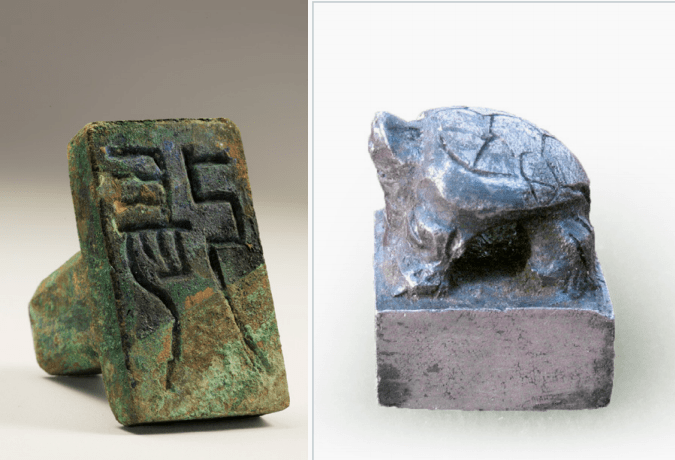
    The Seals excavated from Zhang Anshi’s Tomb

    The 3rd year of Emperor Xuan’s Yuan’kang Era (63 B.C.)

    In March of spring, a decree was issued conferring the title of Marquis of Haihun upon the former Prince of Changyi, Liu He.

    On March 2, another decree was proclaimed:

    “In my humble beginnings, the Grand Minister of Justice Bing Ji; the Generals of the Household Shi Zeng and Shi Xuan; the Guard Commandant of Changle Palace, Xu Shun; and the Privy Counselor and Grand Master of the Chamberlain, Xu Yanshou, all rendered significant assistance to us. In particular, the former Director of the Women’s Quarter, Zhang He, instructed us in literature and the Confucian classics. His exceptional kindness and merit are the most distinguished. As the Book of Songs says: ‘No benevolence should go unrewarded.’ Therefore, Zhang Pengzu, the adopted son of Zhang He and a General of the Household, shall be granted the title of Marquis of Yangdu. Zhang He shall be posthumously honored as Marquis Ai of Yangdu. Bing Ji shall be made Marquis of Boyang, Shi Zeng Marquis of Jiangling, Shi Xuan Marquis of Pingtai, Xu Shun Marquis of Bowang, and Xu Yanshou Marquis of Lecheng.”

    Zhang He had a grandson, Zhang Ba, seven years of age, who was appointed Cavalry Gentleman and General of the Household, bearing the title of Marquis of the Interior. Former acquaintances, down to the women housed in the commandery traveler lodges who had once nursed the Emperor, were all rewarded with offices, land, property, and wealth proportionate to the extent of their beneficence.

    As Bing Ji was about to receive his marquisate, he fell ill. The Emperor, fearing he might not recover, intended to send an envoy to confer the title in person so that the seal could be bestowed while Bing Ji was still alive. Xiahou Sheng, Grand Tutor to the Crown Prince, said, “He will not die. It is said that those with hidden merit will enjoy blessings that extend even to their descendants. Now, Bing Ji has not yet been repaid for his service, and though his illness is grave, it is not one that leads to death.” Later, Bing Ji’s health indeed improved.

    Zhang Anshi felt that the enfeoffment of both his father and himself as marquises was excessive, so he declined the stipend. A decree was then issued to reserve the emolument for the Zhang family in an unnamed account within the Ministry of Finance, and the sum eventually reached one million coins. Zhang Anshi was cautious and meticulous. Whenever major political decisions were settled, he would feign illness and withdraw early. When he later heard of the promulgation of an imperial decree, he acted as though he had never been informed and sent his subordinates to inquire at the Chancellor’s office. None of the senior ministers at court knew that he had conferred with the Emperor on these matters.

    On one occasion, a man he had recommended came to express gratitude, but Zhang Anshi was displeased, saying, “Should the advancement of worthy men warrant personal thanks?” He thereafter severed all contact with him. There was once a young officer of exceptional merit who had not been properly recognized. The officer asked Zhang Anshi to intercede, but Zhang Anshi replied, “Your merit is great, and the enlightened ruler is already aware of it. As a subject, how can you speak of your own achievements?” He firmly refused to make any recommendation. Later, the officer was indeed promoted.

    Still uneasy about the marquisates bestowed upon himself and his son, Zhang Anshi sought an appointment outside the capital for his son Zhang Yanshou. The Emperor appointed Zhang Yanshou as Prefect of Beidi. After a year, mindful of Zhang Anshi’s advanced age, the Emperor summoned Zhang Yanshou back to serve as Grand Coachman and Manager of the Left Office.

    In the summer, on April 14, the Emperor appointed his son, Liu Qin, as Prince of Huaiyang. The Crown Prince, Liu Shi, twelve years of age, had already studied the Analects of Confucius and the Classic of Filial Piety. The Grand Tutor, Shu Guang, advised the Junior Tutor, Shu Shou: “I have heard that ‘those who know contentment will not be humiliated; those who know when to stop will not be imperiled.’ Now that we have attained the rank of Two Thousand Piculs, with established fame and position, if we do not retire now, we may come to regret it later.” That very day, both father and son feigned illness and submitted petitions for retirement. The Emperor granted their requests and awarded each twenty catties of gold. The Crown Prince additionally presented them with fifty catties of gold.

    Former officials and acquaintances arranged a farewell ceremony outside the Eastern Gate, with hundreds of carriages joining the procession. Passersby along the road exclaimed, “Truly, two worthy grandees!” Some were moved to tears.

    Shu Guang and Shu Shou returned to their hometowns and instructed their families to sell the gold bestowed upon them, using the proceeds to prepare a feast for relatives, longtime friends, and guests. Some advised Shu Guang to use the gold to establish property for his descendants, but Shu Guang replied: “Am I so old and forgetful that I fail to think of my descendants? I already have ancestral fields and houses. Let my descendants work diligently in them, sufficient to clothe and feed themselves as ordinary people. Adding more would only spoil them. Wealth in the hands of the virtuous weakens their aspirations; in the hands of the foolish, it multiplies their faults. Moreover, the wealthy are resented by the masses. Since I have no means to educate my descendants well, I do not wish to increment their faults or invite resentment. This gold was bestowed by the enlightened ruler to support these elderly officials. Thus I rejoice in sharing this gift with my kin and fellow villagers, to enjoy the remainder of my years in contentment. Is this not fitting?” His relatives were delighted and deeply moved.

    Huang Ba, Prefect of Yingchuan, instructed relay lodges, postal stations and local offices to raise chickens and pigs to support widows, widowers, the poor, and the destitute. Thereafter, he drafted rules and regulations, appointed elders, teachers, leaders, and supervisors, and organized them to disseminate these ideas among the populace. He encouraged people to guard against evil impulses, cultivate their fields, practice thrift, increase their wealth, plant trees, and raise livestock, while eliminating unnecessary expenses on frivolous indulgences. Though his administrative measures seemed trivial and petty at first glance, Huang Ba was resolute and capable in enforcing them.

    When speaking with officials or commoners, he questioned them closely, following their accounts in detail and probing for any hidden matters to use as reference. Admiring his keen intelligence and understanding, neither officials nor people knew whence his analytical ability came; they all called him divine and dared not deceive him in the slightest. Lawbreakers fled to neighboring counties, and bandits and thieves diminished day by day. Huang Ba prioritized education and moral guidance over punishment, striving for lasting stability and the wellbeing of both officials and the people.

    The Associate Magistrate of Xu County had become deaf from old age, and the Investigator sought to dismiss him. Huang Ba said, “Master Xu is an upright official. Though elderly, he can still rise and greet people properly. What harm is there in impaired hearing? Assist him well, and do not disappoint the hopes placed in the virtuous.”

    When asked for his reasoning, Huang Ba replied: “Frequent changes of officials incur expenses for bidding farewell to the old and welcoming the new, and unscrupulous officials exploit such transitions to embezzle funds and property, causing great losses to both government and people. Replacement officials are not necessarily better than their predecessors; they may even be worse, thereby aggravating disorder. In governing, one need only remove those who are greedy and extreme.”

    With a broad mind and clear judgment, Huang Ba won the hearts of officials and commoners alike, and the population increased year by year. His administration was regarded as the best in the realm, and he was appointed Intendant of Jingzhao. After some time, he was implicated in a crime and demoted. A subsequent decree restored him to his former post as Prefect of Yingchuan, with a stipend of eight hundred piculs of grain.

  • Comprehensive Reflections to Aid in Governance(Part 191): After A Large Earthquake

    Comprehensive Reflections to Aid in Governance

    By Sima Guang

    Translated By Yiming Yang  

    Annals of Han Book 16 Scroll 24 (continued)

    Anqiu, Shandong Province

    The 4th year of Emperor Xuan’s Benshi Era (70 B.C.)

    In March of spring, Huo Chengjun, daughter of Huo Guang, was established as Empress. A general amnesty was proclaimed throughout the empire.

    The former Empress Xu had lived humbly and with frugality; but when Empress Huo was elevated, the splendor of her carriages and entourages, and the rewards lavished upon officials, rose into the tens of millions. Thus the restraint of the former Empress was cast aside.

    In summer, on April 29, an earthquake shook forty-nine commanderies at once. Hills and mountains collapsed, city walls fell, buildings were destroyed, and more than six thousand perished. The ancestral temples in Beihai and Langya were also ruined. The Emperor issued an edict to the Chancellor, the Censors, the Marquises, and the ministers of two-thousand-picul rank, commanding them to confer with scholars versed in the classics, to examine the signs and omens, and to speak without concealment. He further ordered the intendants of the Three Metropolis regions, together with the Ministry of Rites and the internal commanderies, each to recommend one man of virtue and uprightness.

    A general amnesty was again proclaimed. The Emperor, in mourning for the loss of life by the earthquake, refrained from appearing in the main hall for five days. Xiahou Sheng and Huang Ba were released from prison: Xiahou Sheng was appointed Grandee of Remonstrance and Palace Liaison, while Huang Ba was made Inspector of Yangzhou.

    Xiahou Sheng was by nature simple and upright. His manner was plain and without ornament. At times he erred in speech, addressing the Emperor as “you” rather than “Your Majesty,” or calling ministers by their style-names in the Emperor’s presence. Yet the Emperor took no offense, and placed trust in him.

    Once, after discoursing with the Emperor, Xiahou Sheng repeated their words to others. The Emperor rebuked him. Xiahou Sheng replied calmly: “What Your Majesty has spoken is right; I merely magnified it. The teachings of Emperor Yao were spread through the realm, and are recited to this day. I thought it proper to transmit your words, and therefore I did so.” The Emperor, perceiving his sincerity, accepted it.

    In weighty councils, the Emperor trusted Xiahou Sheng for his plain dealing, saying: “Master Xiahou speaks truth. Let none withhold because of past faults.”

    Afterward he served as Treasurer of Changxin Palace, and then as Grand Tutor to the Crown Prince. At ninety years he died. The Empress Dowager bestowed two million cash for his funeral, and mourned in white for five days, as for a great teacher. Among the Confucian scholars he was held in the highest esteem, and they gloried in his renown.

    In May, phoenixes gathered in Anqiu and Chunyu of Beihai.

    The Prince of Guangchuan, Liu Qu, slew more than ten of his tutors, consorts, and attendants. Some he drowned with molten lead and tin poured into their mouths; others he dismembered, poisoned, and boiled, that none might survive. For this he was deposed and removed to Shangyong, where he took his own life.

    The 1st year of Emperor Xuan’s Di’jie Era (69 B.C.)

    In January of spring, a comet appeared in the west sky.

    The Prince of Chu, Liu Yanshou, suspected that the Prince of Guangling, Liu Xu, son of Emperor Wu, might ascend the throne should the order of succession be broken. Desiring to secure himself, he arranged for Zhao Heqi, brother of his mother-in-law, to take a daughter of Prince of Guangling in marriage. Liu Yanshou then bade Zhao Heqi to carry a letter to the Prince of Guangling, warning him to keep his eyes and ears keen, and not allow others to seize the throne. Zhao Heqi’s father, Zhao Changnian, reported this. When the matter was investigated, Zhao Heqi confessed. In November of winter, Liu Yanshou killed himself. The Prince of Guangling Liu Xu was not implicated.

    On December 30, there was a solar eclipse.

    That year Yu Dingguo was made Minister of Justice. Yu Dingguo was skilled in deciding difficult cases, impartial in judgment, and compassionate toward widows and orphans. In doubtful charges he reduced punishments, and always examined matters with care. The court praised him, saying: “When Zhang Shizhi was Minister of Justice, there were no unjust judgments in the empire. Now Yu Dingguo holds that office, and the people know themselves not to be wronged.”

  • Comprehensive Reflections to Aid in Governance(Part 188): Studying on Death Row

    Comprehensive Reflections to Aid in Governance

    By Sima Guang

    Translated By Yiming Yang  

    Annals of Han Book 16 Scroll 24 (continued)

    Xiahou Sheng And Huang Ba

    The 2nd year of Emperor Xuan’s Benshi Era (73 B.C. continued)

    In July of autumn, an edict was issued appointing Liu Jian, heir of Prince La of Yan, Liu Dan, as Prince of Guangyang; and Liu Hong, youngest son of the Prince of Guangling, Liu Xu, as Prince of Gaomi.

    Formerly, there had been strife between Shangguan Jie and Huo Guang. When Huo Guang destroyed Shangguan Jie, he then adhered to the statutes of Emperor Wu, applying severe punishments to restrain his subordinates. From this, lesser officials took severity as their model, believing harshness to be the mark of ability.

    But Huang Ba of Huaiyang, then Associate Prefect of Henan, always held leniency as his principle. When the Emperor went among the people, he perceived that the common folk suffered under the harshness of officials. Hearing of Huang Ba’s reputation for fairness and gentleness, he summoned him to serve as a chief judge in the Ministry of Justice. Huang Ba, in judging doubtful cases, was ever equitable, and thus maintained fairness and balance in the court.

    The 2nd year of Emperor Xuan’s Benshi Era (72 B.C.)

    In the spring, the Minister of Agriculture, Tian Yannian, committed suicide after being convicted of crime. When mourning for Emperor Zhao, he had leased carts from the people, but deceitfully inflated the rent, embezzling thirty million cash. An aggrieved party reported him.

    The Grand General Huo Guang summoned him for questioning, wishing to give him latitude. Tian Yannian vehemently denied it, saying: “Such a thing never happened!” Huo Guang replied: “Even if it did not, we must examine it to the end.”

    The Grand Master of Censorate, Tian Guangming, spoke to the Grand Coachman Du Yannian, saying: “According to the justice of the Spring and Autumn Annals, faults may be redeemed by merit. When the Prince of Changyi was deposed, without the resolute courage of Tian Zibin[Tian Yannian’s courtesy name], the great design could not have been accomplished. Now, if he had begged thirty million from the court itself and been granted them, would that not suffice? I would speak thus to the Grand General.”

    Du Yannian relayed this to Huo Guang. Huo Guang said: “It is true. He was a valiant man; at that momentous hour he shook the whole court.” Then he lifted his hand to his breast and said: “The memory still burdens my heart. Convey my apology to the Grand Master Tian, and entreat him to persuade the Minister of Agriculture to go to prison, that he may pass through lawful trial.”

    Tian Guangming delivered this message. Tian Yannian answered: “If the court would show me lenience, I would be grateful. But how can I endure the shame of prison, the laughter of men, and the spittle upon my back?”

    He then shut himself in a chamber of the Ministry of Agriculture, baring his arm, pacing with a blade in hand. After some days, hearing the drumbeat of envoys come to proclaim the edict, he cut his own throat and died.

    In May of summer, an edict was issued, saying: “Emperor Wu, in his filial piety, benevolence, and martial exploits, accomplished abundant virtue. Yet the music of his ancestral temple has not been established, which is a cause of great sorrow. Let the marquises, the ministers of two-thousand-picul rank, and the scholars deliberate upon it.”

    The officials engaged in wide discussion, and all assented to the decree. Only Xiahou Sheng, Privy Treasurer of Changxin Palace, spoke in dissent, saying: “Though Emperor Wu attained merit in pacifying the four barbarians and enlarging the borders, yet countless soldiers perished, and the wealth and strength of the people were drained. His extravagance and excess knew no bounds, and the empire was left in exhaustion. The dead were many, famine and locusts swept for thousands of li, and men even devoured one another. The injuries yet remain unrepaired, and the grace shown to the people was scant. It is not fitting to establish music for his temple.”

    The other officials rose together against him, saying that he opposed the imperial edict. But Xiahou Sheng declared: “An edict must not be obeyed without reflection. It is the duty of a loyal subject to speak plainly and directly, not merely to echo the ruler’s will. What I have said is from my heart. Though it cost me death, I shall not repent.”

    The Chancellor and the Censors accused Xiahou Sheng of opposing the imperial decree, of slandering the late Emperor, and of uttering blasphemy. Huang Ba, Chief-of-Staff to the Chancellor, was charged with shielding Xiahou Sheng and failing to impeach him. Both were cast into prison.

    Thereafter the authorities proposed to elevate the ancestral temple of Emperor Wu, styling it Shizong Temple, and to compose temple music with the “Magnificent Virtues” and the “Five-Colored Dance of the Wenshi Era.” In the provinces and counties that Emperor Wu had once visited, temples were erected in his honor, following the precedents of Emperor Gaozu and Emperor Wen.

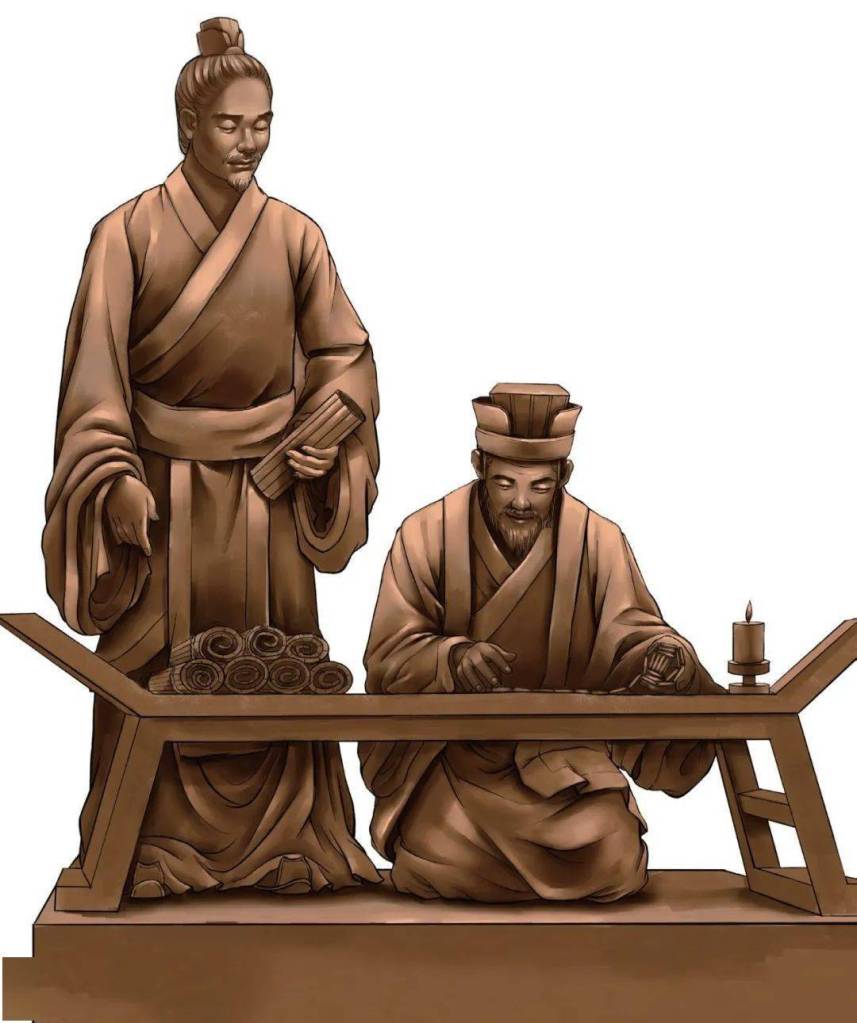
    Xiahou Sheng and Huang Ba remained in custody for months. Huang Ba desired to study the Book of Documents under Xiahou Sheng, but Xiahou Sheng rejected, saying: “I am under sentence of death.” Huang Ba quoted Confucius: “If I learn the truth in the morning, I could die content in the evening.” Xiahou Sheng, moved by his earnestness, consented to teach him. Though imprisoned through two winters in succession, they never ceased their study and discourse.

    When the Princess who Liu Xijun had been wed to the Wusun Kunmi Cenzou died, the Han court once more sent Liu Jieyou, granddaughter of the Prince of Chu, Liu Wu, to Wusun, and she became wife to Cenzou. Cenzou had a young son, Nimi, born of his tribal consort. Foreseeing his own death, he entrusted the succession to his uncle’s son Weng’guimi, saying: “When Nimi comes of age, restore the throne to him.”

    When Weng’guimi ascended, he styled himself the Fat King, and again took to wife Princess Liu Jieyou of Chu. She bore him three sons—Yuan’guimi, Wan’nian, and Da’le—and two daughters.

    Under the reign of Emperor Zhao, Princess Liu Jieyou sent a memorial, saying: “The Xiongnu and Jushi have allied to assail Wusun. Only the Son of Heaven could save us.” The Han court gathered horse and soldier, deliberating an expedition against the Xiongnu

    Just then Emperor Zhao had passed away, the new Emperor dispatched the Grandee Chamberlain Chang Hui as envoy to Wusun. Both the Princess and the Great Kunmi sent envoys with letters, saying: “The Xiongnu have mustered hosts once again to attack Wusun, demanding: ‘Deliver to us the Han Princess at once!’ Their purpose is to sever Wusun from the Han. The Great Kunmi is willing to muster fifty thousand picked horsemen and exert full strength against the Xiongnu. Only the Son of Heaven can dispatch troops, to save the Princess and the Kunmi!”

    Formerly the Xiongnu had often harried the Han frontier, and the Han also longed to strike back. In autumn, a great host was levied: the Grand Master of Censorate, Tian Guangming, was made Qilian General, and with forty thousand horse rode forth from Xihe; Fan Mingyou, Duliao General, led thirty thousand from Zhangye; Han Zeng, General of the Van, led thirty thousand from Yunzhong; Zhao Chongguo, Pulei General, led thirty thousand from Jiuquan; and Tian Shun, Prefect of Yunzhong, was appointed General of Tiger Fang, leading thirty thousand from Wuyuan. Their design was to advance beyond the frontier by two thousand li. Chang Hui was made Colonel with the tally, to oversee the Wusun forces and unite them in striking the Xiongnu.