Tag: history

  • Comprehensive Reflections to Aid in Governance(Part 33): The Over-Achievers

    Comprehensive Reflections to Aid in Governance

    By Sima Guang

    Translated By Yiming Yang

    Annals of Zhou Book 4 Scroll 4 (continued)

    Linzi, the capital of Qi

    The 36th year of King Nan(279 B.C.) (continued)

    The King of Zhao conferred the town of Guanjin upon Yue Yi, expressing veneration and affection for him. This move, however, raised alarms in the kingdoms of Yan and Qi. King Hui of Yan promptly dispatched an envoy to Zhao to reprimand Yue Yi: “General Yue, by embracing misguided opinions and harboring doubts about us, you abandoned the kingdom of Yan and sought refuge in Zhao. While this may benefit you personally, how do you reciprocate the grace my father bestowed upon you for recognizing your talent?”

    In response, Yue Yi composed a letter to the king, drawing a parallel with the historical account of Wu Zixu, a general in the kingdom of Wu. Wu Zixu, having advised King He Lv to engage in a distant battle at the city of Ying, was disregarded by He Lv‘s son, Fu Chai, who went so far as to dispose of Wu Zixu’s body in a river. Fu Chai, doubting Wu Zixu‘s strategic counsel, expressed no remorse upon sinking his body. Wu Zixu, unable to foresee the contrasting character of the two Wu kings, retained his indignation even in death.

    Yue Yi emphasized his commitment: “My primary objective was to accentuate the accomplishments of the late king while deliberately abstaining from claiming any credit for myself. My greatest apprehension was the prospect of being entangled in a smear campaign and facing prosecution that could tarnish the reputation of the deceased king. Confronted with an unspecified indictment, my conscience vehemently opposed exploiting the favor extended by the kingdom of Zhao to the detriment of the kingdom of Yan.”

    “I was mindful of the historical wisdom that distinguished individuals, particularly those of ancient times, refrained from denigrating each other, even in the event of severed friendships. Additionally, a devoted subject refrained from exculpating himself when forced into exile from his homeland.  I may lack intelligence, but I have been a student of gentlemen. I implore Your Majesty to observe my conduct.”

    Upon reading the letter, the King of Yan bestowed upon Yue Yi‘s son, Yue Jian, the title of Lord of Changguo. This gesture marked the restoration of Yue Yi’s relationship with the kingdom of Yan, allowing him to travel between the two kingdoms. Eventually, Yue Yi passed away in the kingdom of Zhao, posthumously honored with the title of Lord of Wangzhu.

    Tian Dan, the prime minister of the Kingdom of Qi, once encountered an old man suffering from hypothermia near the Zi River. The elderly man, unable to move after crossing the river, caught Tian Dan’s attention. Without hesitation, Tian Dan removed his fur coat and draped it over the shivering man. Witnessing this act of kindness, King Xiang of Qi became deeply perturbed, suspecting ulterior motives.

    He vented his agitation, exclaiming, “Tian Dan bestows favors; is he harboring ambitions to seize the kingdom? I fear that if I don’t address this now, he may attempt such a coup later.” After these words, he took a moment to survey his surroundings and noticed no one in close proximity. His gaze then fell upon a pearl jewel craftsman situated beneath a rock. Acting on impulse, he summoned the craftsman and inquired, “Did you overhear my remarks?” The craftsman affirmed, “Indeed, I did.” Curious, the king pressed, “What are your thoughts on the matter?”

    The perl craftsman replied: “It would be more advantageous, Your Grace, to redirect these concerns into a display of your own benevolence. Praise Tian Dan by acknowledging his compassionate actions, stating, ‘We was troubled by the plight of people facing starvation, and Tian Dan graciously opened his home, providing sustenance. We was concerned about an elderly man succumbing to the cold, Tian Dan selflessly removed his fur coat and draped it over him. We worried about the hardships faced by the people, Tian Dan demonstrated genuine empathy. Tian Dan really understands We.’”

    Embracing this advice, King Xiang agreed and rewarded Tian Dan with cattle and wine. Later, the pearl craftsman returned with further advice, recommending that the king publicly acknowledge Tian Dan‘s philanthropy during a court assembly. Additionally, he proposed issuing an executive order to identify individuals lacking food and clothing, promptly providing them with grains. The king, receptive to this counsel, implemented the suggestions.

    As word spread, the people learned of Tian Dan‘s benevolent acts through discussions among officials and intellectuals. The consensus emerged that Tian Dan‘s love for the people was a manifestation of his adherence to the teachings of the king.

    Tian Dan recommended Diao Bo to the king of Qi. However, nine courtiers conspired against Lord Anping, advising the king in a rotating fashion. Their collective suggestion was to express gratitude and goodwill to the kingdom of Chu since their recovery and subsequent peace was aided by Chu‘s general and ten thousand soldiers. The king sought a suitable ambassador, and they unanimously endorsed Diao Bo. Diao Bo embarked on a mission to Chu, where he was graciously received by the king, sharing drinks during an audience. Several months passed without Diao Bo‘s return.

    The nine courtiers seized the opportunity to influence the king, asserting that Diao Bo, a mere courier, received extravagant hospitality from a powerful kingdom due to Lord Anping‘s influence. They implied that Lord Anping‘s status rivaled the king’s, creating confusion between ruler and subject. Moreover, they criticized Lord Anping‘s internal governance of benevolence, accusing him of fostering alliances with northern barbarians, attracting talents from around the world, and harboring limitless ambitions. They urged the king to investigate these matters.

    The following day, the king issued a command: “Fetch Prime Minister Dan!” Unadorned, barefoot, and bare-backed, Tian Dan entered, acknowledging his alleged crimes. After five days of reflection, the king declared Tian Dan innocent, acknowledging no wrongdoing. He instructed Tian Dan to show the appropriate respect as a subject, while reaffirming the king’s duty to treat him as such.

    Diao Bo returned from the kingdom of Chu, and the king of Qi hosted a lavish feast in his honor. As the king became increasingly intoxicated, he suddenly exclaimed, “Summon Prime Minister Dan!” Diao Bo promptly stood up, left the table, and knelt before the king. He inquired, “Is Your Majesty comparable to esteemed figures like King Wen of Zhou?”

    The king admitted, “I am not as accomplished.” Diao Bo pressed on, “Indeed, I knew Your Majesty might not be. How about someone of lower standing, like Duke Huan of Qi?” Reluctantly, the king confessed, “I am not as accomplished.” Diao Bo concurred, “I knew Your Majesty was not. However, King Wen of Zhou addressed Lv Shang as ‘Honorable Father’ when appointing him as prime minister, and Duke Huan of Qi referred to Guan Zhong as ‘Great Uncle.’ Today, with Lord Anping‘s support, Your Majesty addresses him simply as ‘Dan.’ Such language is detrimental to our kingdom.”

    Diao Bo then recounted the achievement of Tian Dan: “Throughout the entirety of the universe’s existence and human history, none have achieved as much as Lord Anping in his ministerial role. When the previous king’s realms were under threat, and the people of Yan launched an attack, Your Majesty, unable to defend, sought refuge in the mountains near Chengyang. In these dire circumstances, Lord Anping led a meager force of seven thousand beleaguered soldiers to defend the small city of Jimo, encompassing three miles of inner city and five miles of outer city.”

    “Lord Anping‘s strategic brilliance reversed the tides of battle, resulting in the capture of Yan’s general and a remarkable comeback that reclaimed thousands of miles of the Land of Qi. During this critical juncture, Lord Anping possessed the opportunity to ascend as king, bypassing the exiled king in Chengyang, with none capable of opposing him. However, Lord Anping, guided by moral principles, rejected the notion of self-anointment.”

    “Demonstrating not only military prowess but also compassion, Lord Anping constructed plank roads and wooden houses connecting Chengyang and ensured the safe return of the king and queen to their people. Presently, with the kingdom in a state of tranquility and order, Your Majesty’s summoning of Lord Anping with a simple ‘Dan’ is deemed infantile behavior.” Diao Bo implores the king to rectify the situation by eliminating the nine conspirators and extending a genuine apology to Lord Anping, emphasizing that failure to do so jeopardizes the stability of the kingdom.The king, swayed by Diao Bo‘s counsel, executed the nine courtiers and exiled their families. Additionally, he granted Lord Anping further fiefs, comprising ten thousand households in the town of Ye.

  • Comprehensive Reflections to Aid in Governance(Part 29): Yue Yi Assuming Command

    Comprehensive Reflections to Aid in Governance

    By Sima Guang

    Translated By Yiming Yang

    Annals of Zhou Book 4 Scroll 4 (continued)

    General Yue Yi

    The 30th year of King Nan(285 B.C.)

    During this period, the King of Qin had a conference with the King of Chu in the city of Wan. Similarly, he met the King of Zhao in the city of Zhongyang.

    General Meng Wu of Qin launched a raid on Qi and successfully conquered nine cities.

    King Min of Qi, after annexing the kingdom of Song, grew arrogant. His troops launched invasions into the southern kingdom of Chu and the three kingdoms that had originated from the state of Jin: Han, Wei, and Zhao. His ambition was to absorb the two states where the Zhou dynasty’s court resided and proclaim himself as the emperor. Criticism of these wars led to the death of Hu Xuan in the city of Tanqu. Additionally, Chen Ju was killed in the city of Donglu following a debate with the king.

    During this time, King Zhao of Yan made constant efforts to address the grievances of his people, leading to prosperity and abundance within his kingdom. With the intention to invade Qi, he devised plans alongside his prime minister, Yue Yi.

    Yue Yi expressed caution, stating, “The kingdom of Qi, though a remnant of a hegemon, still possesses vast territory and a large population. It’s not an adversary we should face alone. It would be wiser to seek an alliance with Zhao and perhaps even with Chu and Wei if Your Majesty truly desires to invade Qi.”

    Responding to Yue Yi‘s counsel, the King of Yan dispatched him as an envoy to Zhao and sent other emissaries to engage Chu and Wei. Additionally, he persuaded Zhao to entice Qin with incentives related to the raid on Qi.

    All the kings harbored resentment toward the arrogance displayed by the King of Qi. They were keen to join forces with Yan in an alliance aimed at attacking Qi.

    The 31st year of King Nan(284 B.C.)

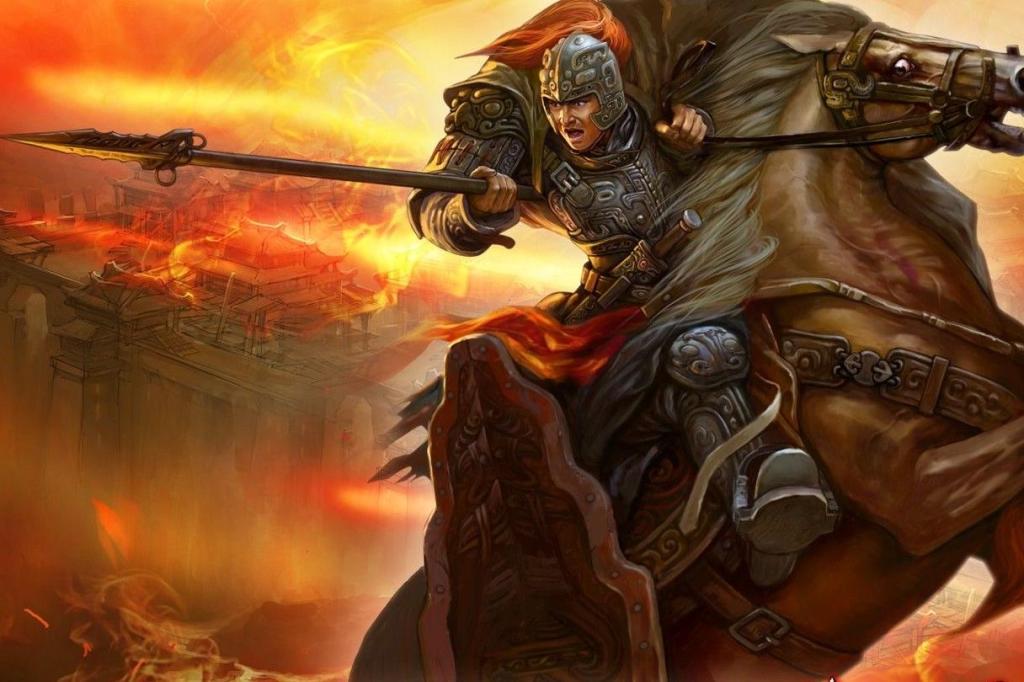
    The King of Yan issued a march order, appointing Yue Yi as the general and commander-in-chief. Si Li, the defense minister, led troops from Qin, along with forces from the kingdoms of Han, Wei, and Zhao, all merging with Yan’s army. The King of Zhao conferred the seal of the prime minister upon Yue Yi. Commanding the combined forces of Qin, Wei, Han, and Zhao, Yue Yi launched a campaign against the kingdom of Qi. In response, King Min of Qi mobilized his entire kingdom for defense. A fierce battle erupted west of the Ji River, resulting in the defeat of Qi‘s troops.

    Yue Yi then directed the troops from Qin and Han to return to their respective kingdoms. He redirected Wei‘s forces to invade the territory once belonging to the kingdom of Song and ordered Zhao‘s troops to take control of the Hejian area. Simultaneously, he led Yan‘s troops in pursuit of Qi‘s army deep into the north of the kingdom. 

    Adviser Ju Xin cautioned Yue Yi: “The Kingdom of Qi stands as a formidable state, while the Kingdom of Yan is comparatively smaller. Our victory over their army stemmed from the assistance of other kingdoms. It’s now opportune to bolster our own position by annexing their border cities, fostering enduring advantages. Your current strategy of bypassing unconquered cities under the guise of pursuing the enemy’s retreat won’t damage Qi and could not significantly benefit Yan. Instead, it perpetuates animosity between our peoples, a strategy that will likely lead to regret in the future.”

    Yue Yi disagreed: “The King of Qi may boast about his military accomplishments and talents, but his strategic acumen falls short. He has expelled individuals of integrity and capability while placing trust in those who flatter him and unjustly tarnish others’ reputations. His policies exhibit brutality and cruelty, leading to widespread discontent among his people. With Qi‘s armed forces now in disarray, seizing this opportunity to pursue him is imperative. The populace of Qi will likely revolt against him, making it easier for us to conquer the kingdom once internal unrest erupts. We must capitalize on this moment, as it will become considerably more challenging if he later regrets his past actions, reforms his behavior, and begins addressing his subordinates’ needs and the grievances of his people.”

    Ignoring the adviser’s counsel, Yue Yi pressed forward into Qi‘s territory. As anticipated, internal rebellion erupted in Qi, causing King Min to flee his kingdom. Capitalizing on the chaos, Yue Yi’s troops entered Linzi, Qi‘s capital, seizing the treasury and religious artifacts, transporting the spoils back to Yan. The King of Yan personally visited the frontline troops at the Ji River, generously rewarding all generals and soldiers. He bestowed upon Yue Yi the title of Lord Changguo and tasked him with staying in Qi to conquer the remaining cities yet to surrender. 

    The King of Qi sought refuge in the state of Wey, a smaller principality, after his exile. The Lord of Wey generously offered shelter in his palace, treating the King of Qi as his suzerain and covering all expenses. However, the King of Qi maintained his haughty demeanor, causing unrest among the people of Wey, who eventually drove him out. He sought refuge in other principalities like Zou and Lu, but his overbearing attitude resulted in these states rejecting him. Ultimately, he found refuge in a small state called Ju.

    The Kingdom of Chu intervened, sending General Nao Chi with Chu‘s troops to assist the King of Qi. As a result, Nao Chi was appointed the prime minister of the Kingdom of Qi. However, Nao Chi‘s intentions were to divide Qi‘s territory between the Kingdom of Yan and himself. He arrested the King of Qi and accused him of heinous acts, questioning him about various ominous incidents: “Were you aware of the blood rain that stained people’s clothes across a stretch of several hundred miles between Qicheng and Bochang?” The King of Qi admitted he knew. Nao Chi pressed further: “Did you know about the water spring burst and mudslide between Ying and Bo?” Again, the King of Qi acknowledged his knowledge. Nao Chi continued: “Were you aware of the cries at the gate, with no visible individuals upon opening the doors, yet the cries were audible?” Once more, the King of Qi affirmed his knowledge.

    Nao Chi condemned him: “The blood rain was a warning from heaven; the water spring burst and mudslide were warnings from the earth; the cries at the gate were warnings from the people. When heaven, earth, and people all cautioned you, and yet you did not heed these warnings, how could you escape death?” Consequently, Nao Chi had the King of Qi executed at a location called Guli.

    Xun Kuang made this comment: The position of a head of state is the most advantageous in the world. It brings great comfort, glory, and a sense of virtue and beauty when entrusted to a moral individual. Conversely, it poses a grave menace and a severe ordeal, something an ordinary person might prefer to avoid. In extreme cases, as seen with King Min of Qi and Duke Xian of Song, individuals in such positions couldn’t even be ordinary when they desired to be.

    Therefore, a head of state attains supremacy by governing with morals, dominates others through the establishment of trust, and faces peril if relying on political chicanery.

    A leader who governs a state with propriety and righteousness is impervious to harm. A virtuous gentleman adheres to ethical principles and refrains from committing unjust acts or harming the innocent, even if it means gaining the entire world. This unwavering commitment to principles solidifies the state’s foundation, making it as robust as rocks. Those who collaborate with such a leader are righteous individuals, the laws they promulgate are just, and the goals they pursue are righteous.

    This alignment of principles earns the leader the respect of their subordinates, and the support is built on a solid foundation. With firm support, the government achieves stability. When governments are stable, peace prevails in the world. As the saying goes, “Use the government to promote righteousness, and everyone will understand it in one day.” Historical figures like King Tang of Shang and King Wu of Zhou exemplified this approach. Hence, I assert that governing with morals elevates a leader to the status of a supreme king.

    Even if the moral standards haven’t reached the highest level and righteousness isn’t universally embraced, it’s crucial that most people comprehend fundamental principles. Establishing a criminal justice system, a reward system, and clear rules regarding permissible and impermissible actions is essential. Administrators should have a clear understanding of their responsibilities according to the king’s directives. Transparency is key when implementing policies, acknowledging both their successes and failures.

    Moreover, honoring pacts and alliances, regardless of the immediate advantages or disadvantages, contributes to building a solid fortress of a state protected by strong armed forces. Such a principled state would instill fear in enemy states and garner trust from allies. Even if located in a remote and destitute area, a state adhering to clear principles would not be taken lightly by the world. The examples of the five hegemons during the Spring-Autumn period illustrate this point. Hence, I assert that whoever gains trust will ultimately dominate.

    When a state neglects the promotion of righteousness and honesty, the government is prone to pursuing short-term interests and fleeting fame. Internally, the state may audaciously seek small profits by deceiving its own people, while externally, it may pursue significant gains by betraying its allies. Such a state fails to utilize its internal resources effectively while harboring an unwarranted desire for what others possess. In turn, the underlings and common people would resort to deception against their supervisors.

    This deceit permeates all levels of society, with the upper classes exploiting the lower classes and vice versa, leading to societal disintegration. Such a state becomes vulnerable, taken lightly by its enemies and viewed with suspicion by its allies. Political chicanery becomes rampant, causing the foundation of the state to crumble and ultimately leading to its demise. Examples such as King Min of Qi and Lord Mengchang illustrated the consequences of such governance.

    King Min of Qi sought to strengthen the kingdom not through the promotion of righteousness and propriety, improvement of internal administration, or the pursuit of a unified external environment. Instead, he engaged in endless frictions and wars. Indeed, the kingdom of Qi once held considerable strength. It demonstrated its prowess by defeating the kingdom of Chu to the south, overpowering the kingdom of Qin to the west, defeating the kingdom of Yan to the north, and conquering the kingdom of Song in the middle. However, this strength proved hollow, and the kingdom fell as soon as the kingdoms of Yan and Zhao initiated attacks. His downfall stands as a humiliating admonition for posterity, emphasizing the consequences of relying on political chicanery rather than righteousness and propriety.

    The three keys—Morality, Honesty, and Chicanery—are crucial elements that wise leaders must carefully choose, and virtuous statesmen must comprehend. Those who make wise choices aligned with morality and honesty are destined to prevail, while those who make poor choices, leaning towards chicanery, are likely to be overpowered. 

    Yue Yi discovered a highly respected scholar named Wang Zhu in the town of Zhouyi. He took the drastic step of ordering his troops to encircle the town within a thirty-mile radius, prohibiting anyone from entering. Intent on recruiting Wang Zhu, Yue Yi instructed his assistants to invite the scholar to join his administration. However, Wang Zhu firmly declined the invitation.

    In response, an officer from Yan resorted to threats, warning Wang Zhu, “If you don’t come with me, I will massacre the whole town of Zhouyi!” Undeterred, Wang Zhu replied with conviction, “A loyal subject won’t work for two lords. A faithful woman won’t sleep with two husbands. I retired to this farm because the king of Qi won’t listen to my advice. I cannot live on as my country is ruined and my lord died. Now, if you want to take me by force, I would rather die than live unethically.” With resolve, he wrapped his neck with tree branches and proceeded to strangle himself to death through a series of jumps.

    The army of Yan achieved significant success by penetrating deep into the kingdom of Qi, leading to the retreat of defenders from all the cities. Yue Yi, the leader of the Yan forces, took a strategic approach by resting and disciplining his troops, explicitly forbidding pillage and seizure of properties. He demonstrated a magnanimous gesture by bringing out hermits and dissidents of Qi, granting them respect and eminence. In addition, Yue Yi implemented reforms to benefit the people of Qi, including reducing taxation, abolishing draconian laws, and reinstating policies from before the reign of King Min of Qi. These measures contributed to the happiness of the people.

    Yue Yi organized his armies to occupy the vast kingdom strategically. His left wing crossed the Jiao river, moving to areas of East Jiao and Donglai. The front army marched to the sea along the east of Tai Mountains, successfully conquering the city of Langya. Simultaneously, the right wing marched along the Yellow River and Ji River, quartering at the cities of E and Zhen in coordination with the army of Wei. The rear army occupied the city of Qiancheng near the north sea. The central command was headquartered at the city of Linzi, the capital of Qi.

    Yue Yi paid homage to Duke Huan of Qi and his famous prime minister Guan Zhong in a worship ceremony held in the suburb of Linzi. Additionally, he undertook initiatives to enhance the local infrastructure, renovating the scholar’s house entrance and embellishing the tomb of Wang Zhu. Recognizing the loyalty of the people of Qi, Yue Yi awarded fiefs in Yan to about twenty individuals and granted titles from Yan to more than a hundred residents of Qi. In total, Yue Yi conquered over seventy cities of Qi, establishing them as the prefectures and counties of Yan.The kings of Qin, Wei, and Han convened for a meeting at the capital city of Zhou.
  • Comprehensive Reflections to Aid in Governance(Part 28): The Collapse of Kingdom Song

    Comprehensive Reflections to Aid in Governance

    By Sima Guang

    Translated By Yiming Yang

    Annals of Zhou Book 4 Scroll 4 (continued)

    Bai Qi, Lord Wu’an

    The 21st year of King Nan(294 B.C.)

    The army of Qin defeated the army of Wei in the city of Xie.

    The 22nd year of King Nan(293 B.C.)

    Gongsun Xi of Han, alongside forces from Wei, launched an assault on the kingdom of Qin. Marquis Rang (also known as Wei Ran) advocated for Bai Qi, holding the title of Zuogeng, to the King of Qin, favoring him over the current military leader, Xiang Shou. Bai Qi took command of the Qin army and decisively defeated the combined forces of Wei and Han at Yique, resulting in the beheading of two hundred and forty thousand enemy soldiers. Furthermore, Bai Qi‘s troops captured Gongsun Xi, the opposing general, and secured control of five cities. As a result of his remarkable achievements, the King of Qin appointed Bai Qi as the Defense Minister of Qin.

    Subsequently, the King of Qin penned a missive to the King of Chu, asserting, “The kingdom of Chu has betrayed Qin, prompting Qin to lead a coalition of kingdoms in an incursion against Chu. I advise Your Majesty to uplift your soldiers and prepare them for a forthcoming battle.” Faced with this formidable declaration, the King of Chu was apprehensive. Consequently, he proposed a renewed alliance with Qin through a matrimonial bond once again.

    The 23rd year of King Nan(292 B.C.)

    Upon the arrival of his new wife from the kingdom of Qin, King Xiang of Chu extended a warm welcome.

    Sima Guang’s comments: Qin exhibits immoral behavior! They have not only murdered the former king but also bullied his son. As for Chu‘s King, he shows weakness. Enduring the assassination of his father and subsequently marrying the murderer. Oh! If only the King of Chu understood proper governance and was aided by competent ministers, even when facing the mighty Qin, how could he have been subjugated in such a manner! Xun Quang’s words resonate deeply: ‘With proper governance, even a small state covering a hundred miles can assert its independence. With misguided governance, even a vast territory like Chu, spanning six thousand miles, would fall victim to its enemies.

    Wei Ran relinquished his position as the prime minister because of poor health. His deputy, Zhu Shou, succeeded him as the new prime minister of Qin.

    The 24th year of King Nan(291 B.C.)

    Qin launched an invasion into Han territory and successfully captured the city of Wan.

    The kingdom of Qin relieved Zhu Shou of his position and reinstated Wei Ran as the prime minister. Additionally, Wei Ran was granted the fief towns of Xiang and Tao, thereby earning the title of Marquis Rang. Furthermore, Qin bestowed the town of Wan as a fief to Prince Shi and the town of Deng to Prince Kui.

    The 25th year of King Nan(290 B.C.)

    The kingdom of Wei ceded four hundred miles of territory east of the Yellow River to Qin, while Han similarly relinquished two hundred miles of land encompassing Wusui.

    Mang Mou of Wei was widely esteemed for his skill in deceit and strategic cunning.

    The 26th year of King Nan(289 B.C.)

    Bai Qi, the Grand Marshal, and Sima Cuo, the Vice Prime Minister of Qin, spearheaded a military campaign against the kingdom of Wei, advancing as far as Zhi Pass. Throughout their expedition, they successfully captured a total of sixty-one towns, large and small, in the region.

    The 27th year of King Nan(288 B.C.)

    In the winter month of October, the King of Qin declared himself the West Emperor and extended the title of East Emperor to the King of Qi through his envoy, Wei Ran. This gesture aimed to foster amicable relations, contingent upon Qi‘s commitment to jointly attack the kingdom of Zhao. Seeking counsel, the King of Qi consulted Su Dai, recently returned from Yan, about Qin‘s proposal. Su Dai opined, “Your Grace, I suggest accepting the offer quietly without announcing it to the world. If the world accepts Qin‘s declaration, you can follow suit later. Conversely, if the world reacts unfavorably to Qin‘s claim, your decision not to declare will earn widespread approval—a valuable political asset. Regarding military action against Zhao or the kingdom of Song, where do we gain more advantages? I propose relinquishing the emperor’s claim, earning global approval, and directing military efforts against the immoral kingdom of Song. A victory against Song would profoundly impact Chu, Zhao, Liang, and Wey. We maintain a superficial deference to Qin while uniting the world against them. This strategy embodies the notion that humility garners greater respect.” The King of Qi endorsed Su Dai’s strategy. He assumed the emperor’s title for a mere two days before reverting to his former title as king.

    In December, Lv Li, an official from Qi, journeyed to Qin. Promptly following, the King of Qin also renounced his emperorship, returning to his previous status as king.

    Amidst these diplomatic maneuvers, the kingdom of Qin launched an invasion into Zhao, successfully capturing the town of Duyang.

    The 28th year of King Nan(287 B.C.)

    The kingdom of Qin conducted raids into Wei and Zhao territories, resulting in the seizure of the cities of Xinyuan and Quyang.

    The 29th year of King Nan(286 B.C.)

    Sima Cuo, a prominent official of Qin, spearheaded a military campaign targeting the prefecture of Henei in Wei territory. In response to Qin‘s campaign, Wei conceded the town of Anyi in pursuit of peace. Qin relocated all the town’s inhabitants to Qin‘s territory and subsequently returned the land to Wei.

    Additionally, the army of Qin achieved victory by defeating the Han troops stationed at the town of Xiashan.

    In the kingdom of Song, a hawk was discovered to have hatched in a sparrow’s nest nestled in a corner of the castle. The official soothsayer proclaimed it an auspicious sign, interpreting that from the small emerges the great, predicting that the King of Song would become the world’s hegemon. Delighted by this prophecy, King Kang of Song enthusiastically mobilized his armed forces, initiating the annexation of the state of Teng and launching raids on a smaller state named Xue. His military engagements yielded victories: defeating the kingdom of Qi in the east, claiming five cities; subduing the kingdom of Chu in the south, annexing territories spanning three hundred miles; and overcoming the army of the kingdom of Wei in the west. Song declared both Qi and Wei as public enemies, further boosting the king’s confidence in his pursuit of hegemony.

    Emboldened by these military triumphs, King Kang began extravagant displays of power, shooting at the sky and flagellating the ground. He aggressively defied tradition by desecrating the idols of land and grain gods, burning altars to showcase military might to the divine realm. Engaging in excessive revelry, he spent nights in endless drinking bouts within his chamber, prompting attendants to cheer “Viva!” His exuberance spilled beyond the palace walls, with attendants outside echoing the chant, soon echoed by the people throughout the kingdom. This orchestrated fervor reached such a level that dissent was unthinkable.Disdain for King Kang’s actions grew among neighboring kingdoms, labeling him “JieSong” in reference to the despotic ruler Jie of the Xia dynasty. Consequently, when King Min of Qi sent troops to invade the kingdom of Song, its people fled, leaving the ramparts undefended. King Kang sought refuge in Wei but eventually met his demise in a place known as Wen.

  • Comprehensive Reflections to Aid in Governance(Part 25): The Visiting King Detained

    Comprehensive Reflections to Aid in Governance

    By Sima Guang

    Translated By Yiming Yang

    Annals of Zhou Book 3 Scroll 3 (continued)

    The Relics of Wu Pass

    The 16th year of King Nan (299 B.C.)

    King Wuling of Zhao held a significant ceremony, gathering all in the east court on the day of Wu-Shen in May according to the Lunar calendar. During this event, he announced his intention to pass on the title of King to his young son, Zhao He. Following this declaration, the new king visited the kingdom temple to offer prayers to the ancestors. Subsequently, he held court appearances, granting an audience to all the officials.

    Fei Yi was appointed as the prime minister and also became the tutor of the newly anointed king. King Wuling adopted the title of “The Father Lord” and aimed to instill governance in his son, Zhao He. King Wuling adopted a different appearance, donning Nomadic clothing, and led his aides in expanding territories from the Nomads in the Northwest.

    In a bold move, King Wuling planned to assail the capital of Qin, Xianyang, by advancing through areas like Yuzhong and Jiuyuan. To carry out reconnaissance and gather intelligence, he disguised himself as an ambassador from Zhao to Qin. Traveling to Xianyang, he interacted with the King of Qin, observing the geography of Qin and studying its ruler along the way.

    However, the King of Qin, suspicious of the ambassador’s imposing appearance and demeanor that didn’t align with that of a typical envoy, sent guards to pursue him. By the time they investigated further, King Wuling, the “Father Lord,” had already cleared all the passes of Qin. Upon realizing the true identity of the visitor, the people of Qin were left astonished by the audacity and cunning of King Wuling.

    The Kings of Qi and Wei held a meeting within the kingdom of Han.

    In another event, the army of Qin carried out a raid on the kingdom of Chu, capturing eight cities. Following this incursion, the King of Qin sent a letter to the King of Chu, expressing his grievances: “You and I pledged brotherhood during our meeting at Huangji. When your Crown Prince visited as part of our pact, our joy knew no bounds. However, my profound anger arose when your Crown Prince murdered one of my key ministers and fled the scene. This incident led to my decision to deploy troops to invade your borderlands.”

    “I have heard of your desire for peace, seeking to achieve it by sending your Crown Prince to the kingdom of Qi. Given our shared border and our families’ marital ties, it’s essential for the harmony between our kingdoms. Disharmony between Qin and Chu may disrupt peace among other neighboring kingdoms.”

    “I wish to meet you in person at the Wu Pass. At this meeting, I propose we amend our former pact, aiming to leave as allies once again. This is my sincere desire.”

    Receiving this letter, King Huai of Chu felt uncertain. He feared potential deception if he attended the meeting, yet he was also concerned about further enraging the King of Qin if he declined. His minister, Zhao Sui, advised against attending, suggesting instead to mobilize Chu‘s troops and fortify their borders. Zhao Sui warned that Qin posed a significant threat, likening them to predators aiming to dominate all kingdoms, asserting that trusting Qin was unwise.

    However, King Huai‘s son, Zi Lan, urged his father to attend the meeting. Ultimately, despite his hesitations, King Huai of Chu decided to go ahead with the meeting proposed by the King of Qin.

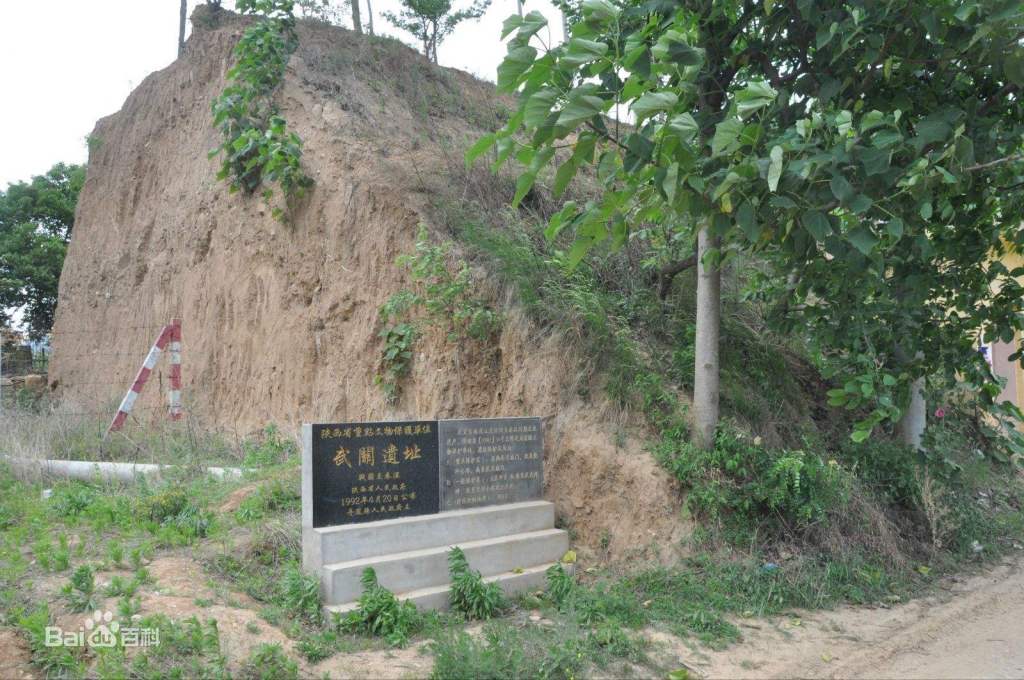
    The King of Qin orchestrated a deceptive scheme: one of his generals was disguised as the king, and Qin troops lay in ambush within the city of Wuguan. Upon the King of Chu‘s entry, the gates of the pass were swiftly closed, and he was captured. Subsequently, he was taken westward to the capital city of Xianyang.

    At the palace of Zhangtai, the King of Qin granted an audience to the King of Chu, yet with the formalities reserved for a foreign vassal. During this meeting, the King of Qin demanded the territories of Wu and Qianzhong as conditions for a treaty. However, the King of Chu insisted that the alliance treaty be signed before any territorial negotiations, while the King of Qin demanded the surrender of the lands first.

    In response to the demands, the King of Chu was incensed, feeling deceived and coerced into relinquishing land. This led him to refuse any further negotiations. Consequently, the King of Qin detained the King of Chu.

    The officials of Chu convened in an emergency meeting, grappling with the gravity of their situation: “Our king is detained in the kingdom of Qin, and they demand land in exchange for his release. Simultaneously, our Crown Prince remains a hostage in the kingdom of Qi. If Qin and Qi are collaborating against us, the kingdom of Chu will be left without a leader.”

    Amidst this crisis, there was a proposal to elevate a prince residing in the capital city of Ying as the new king. However, Zhao Sui opposed this suggestion, citing that appointing a new prince without the consent of the detained king would be inappropriate.

    To mitigate the situation, Zhao Sui took action. He dispatched an envoy to Qi, urging the King of Qi to facilitate the return of the crown prince home. This request was made under the false pretext that the King of Chu had passed away.

    King Min of Qi convened all his ministers to strategize and address the predicament at hand. During the discussions, a proposal surfaced suggesting that they should retain the crown prince of Chu and demand the northern lands beyond the Huai River from Chu in exchange for his release.

    However, the Prime Minister of Qi objected to this proposal, emphasizing that such an action would be unethical. He argued that if Chu installed a new prince in the capital city of Ying, holding the deposed crown prince hostage would not advance their interest, but diminish their honor among other kingdoms.

    The proponent of the initial idea countered this stance, proposing an alternate strategy: if a prince in the capital of Ying were installed as the new king, they could negotiate with him. The bargaining chip would involve a demand for the southeast part of the state in exchange for the crown prince’s life (thus elimination of the throne contender). Failing to meet this demand would result in the installation of the crown prince by force, with the backing of the consensus from the three-kingdom alliance.

    Ultimately, King Min of Qi sided with his prime minister’s ethical standpoint. As a result, the crown prince was released. Subsequently, the crown prince returned to the kingdom of Chu and was duly installed as the new king.

    The King of Qin recognized the exceptional capabilities of Lord Mengchang as a skilled statesman. Impressed by his talents, the King extended an invitation for Lord Mengchang to visit Qin. To ensure the agreement’s security, the King offered Lord Jingyang as a guarantee to the kingdom of Qi in exchange for Lord Mengchang‘s arrival.Responding to the invitation, Lord Mengchang journeyed to the kingdom of Qin and was subsequently appointed as the prime minister, entrusted with key responsibilities in the governance of Qin.

  • Comprehensive Reflections to Aid in Governance(Part 24): Mother of A Kingdom

    Comprehensive Reflections to Aid in Governance

    By Sima Guang

    Translated By Yiming Yang

    Annals of Zhou Book 3 Scroll 3 (continued)

    Queen Xuan

    The 9th year of King Nan (306 B.C.)

    King Zhao of Qin dispatched Xiang Shou to pacify the uprising in the city of Yiyang. Simultaneously, he tasked Chuli Zi and Gan Mao with a mission to conduct a raid on the kingdom of Wei(Liang). Amidst these events, Gao Mao petitioned the King of Qin to return the city of Wusui to the kingdom of Han. Despite objections from Xiang Shou and Gongsun Shi, their dissent held little sway. They harbored resentment towards Gan Mao and openly criticized him. Gan Mao, overburdened by fear, fled from the battlefield during the conflict in the Wei kingdom’s city of Puban. This prompted Chuli Zi to initiate negotiations for a ceasefire with the Kingdom of Wei, leading to the withdrawal of Qin‘s troops. Subsequently, Gan Mao sought refuge in the kingdom of Qi.

    The King of Zhao ventured into the territory of the state of Zhongshan, advancing as far as Ningxia. His forces invaded the western lands inhabited by nomads, penetrating as westward as Yuzhong. A nomadic tribe known as Linhu displayed submission by offering horses to the King of Zhao. Subsequently, the King returned to his homeland and dispatched envoys to various kingdoms, seeking support for his actions against both the state of Zhongshan and the nomadic tribes. Lou Huan was sent to the Kingdom of Qin, Qiu Ye to the Kingdom of Han, Wang Ben to the Kingdom of Chu, Fu Ding to the Kingdom of Wei, and Zhao Jue to the Kingdom of Qi. Additionally, he appointed Zhao Gu, the prime minister of the Dai, to oversee the acquired territory from the nomads, initiating the recruitment of local inhabitants into the army.

    The King of Chu forged a vertical alliance with the kingdoms of Qi and Han.

    The 10th year of King Nan (305 B.C.)

    A comet appeared in the sky.

    Meanwhile, the King of Zhao persisted in his campaign against the state of Zhongshan, successfully conquering the towns of Danqiu, Shuangyang, and Hongzhisai, and subsequently capturing the towns of Hao, Shiyi, Fenglong, and Donghuan. Pressured by these conquests, the state of Zhongshan relented, ceding an additional four towns in exchange for peace.

    Queen Dowager Xuan of Qin possessed half-siblings from both her mother’s and father’s sides. Wei Ran, from her mother’s lineage and the Marquis Rang, stood out among them. On her father’s side, her half-siblings included Mi Rong, the Lord of Huayang.  She is the mother of the king’s two half-brothers, the Lord of Gaoling and the Lord of Jingyang. Wei Ran held significant prominence among these relatives. He had served as a high-ranking official during the reigns of King Hui and King Wu of Qin.

    Upon King Wu’s demise, a struggle for succession ensued among his brothers. In this power struggle, Wei Ran wielded influence by facilitating the ascension of King Zhao to the throne. With King Zhao’s inauguration, Wei Ran was elevated to the position of general overseeing the armed forces that guarded the capital city, Xianyang.

    During this time, Prince Zhuang, holding a significant position as a high ranking officer, conspired with other princes and their ministers, resulting in a riot. Wei Ran, acting decisively, ordered the execution of those involved in the conspiracy. This plot also entangled Queen Huiwen, leading to her tragic demise. Queen Daowu faced exile to the kingdom of Wei. Any of King Zhao’s other brothers who didn’t maintain amicable relations with the king met a similar fate, losing their lives.

    As King Zhao was still young, his mother, Queen Dowager Xuan, assumed control. She entrusted Wei Ran with substantial power, effectively granting him complete authority. Their dominance and influence within the kingdom of Qin became a source of fear among the populace.

    The 11th year of King Nan (304 B.C.)

    The Kings of Qin and Chu convened for a conference in the city of Huangji, solidifying a coalition between their kingdoms. The city of Shangyong, previously captured by the kingdom of Qin, was returned to the kingdom of Chu.

    The 12th year of King Nan (303 B.C.)

    A comet appeared in the sky.

    In a series of military campaigns, the kingdom of Qin seized control of several cities: Puban, Jinyang, and Fengling from the kingdom of Wei, and the town of Wusui from the kingdom of Han.

    The kingdoms of Qi, Han, and Wei united their forces to launch an attack on the kingdom of Chu. This action was prompted by the King of Chu‘s breach of the vertical alliance, as he allied himself with the kingdom of Qin. In a bid for protection, the King of Chu sent his crown prince Heng as a hostage to the kingdom of Qin, seeking refuge under the protection of the King of Qin.

    To aid the King of Chu, an official (Keqing) from Qin named Tong led troops to assist Chu.  Facing the combined forces of Qin and Chu, the three allied kingdoms eventually withdrew their forces.

    Meanwhile, Duke Ping of Lu passed away. His son Gu succeeded him, assuming the title of Duke Min of Lu.

    The 13th year of King Nan (302 B.C.)

    The King of Qin, the King of Wei, along with Crown Prince Ying of Han, convened at the city of Linjin for a meeting. Subsequent to the meeting, the Crown Prince of Han journeyed to the Qin capital before returning home. Additionally, the kingdom of Qin relinquished control of the captured city of Puban, returning it to the kingdom of Wei.

    However, tensions escalated when Crown Prince Heng of Chu engaged in a conflict with a Qin magistrate due to personal reasons, resulting in the magistrate’s death at the hands of Prince Heng. Fearing repercussions, Prince Heng fled from the kingdom of Qin and returned to his homeland in Chu.

    The 14th year of King Nan (301 B.C.)

    A total solar eclipse occurred.

    The kingdom of Qin initiated an invasion of the city of Rang in Han. Concurrently, Ning Yun from the state of Shu rebelled against Qin‘s rule. In response, Sima Cuo, a Qin official, took charge of troops to suppress the rebellion in Shu.

    Meanwhile, Qin‘s Shuzhang(an official) Huan, assembled armies from the kingdoms of Han, Wei, and Qi to launch an attack on the kingdom of Chu. Their combined forces clashed with Chu‘s troops at the city of Zhongqiu, where they managed to defeat Chu‘s army and kill General Tang Mei. Subsequently, they successfully conquered the city of Zhongqiu.

    The King of Zhao spearheaded a campaign against the state of Zhongshan. During this conflict, the Lord of Zhongshan fled and sought refuge in the kingdom of Qi.

    King Xuan of Qi passed away. Following his death, his son Di ascended to the throne and was installed as King Min of Qi.

    The 15th year of King Nan (300 B.C.)

    Lord Jingyang of Qin was sent to the kingdom of Qi as a hostage, solidifying their alliance.

    Meanwhile, Lord Huayang of Qin spearheaded a campaign against the kingdom of Chu. In a decisive victory, his troops crushed the Chu army, resulting in the beheading of thirty thousand soldiers. General Jingque, a prominent figure in the Chu army, was among those killed. Faced with this defeat, the King of Chu, filled with apprehension, sought to secure peace by sending his crown prince as a hostage to the kingdom of Qi.

    Chu Liji, the prime minister of Qin, passed away. In his place, Lou Huan, originally from the kingdom of Zhao, was appointed as the new prime minister. In the kingdom of Zhao, King Wuling held great affection for his young son, Zhao He, and aimed to groom him as the potential successor to the throne, preparing him for future kingship.

  • Comprehensive Reflections to Aid in Governance(Part 23): Changing Dress Code

    Comprehensive Reflections to Aid in Governance

    By Sima Guang

    Translated By Yiming Yang

    Annals of Zhou Book 3 Scroll 3 (continued)

    King Wuling of Zhao

    The 6th year of King Nan (309 B.C.)

    The kingdom of Qin established the position of prime minister. Chuli Ji became the first prime minister of Qin.

    The 7th year of King Nan (308 B.C.)

    The Kingdoms of Qin and Wei convened for a significant meeting in the city of Ying. 

    The King of Qin tasked Gan Mao with coordinating a joint campaign alongside the Kingdom of Wei (Liang) against the Kingdom of Han. To assist Gan Mao, the king appointed Xiang Shou, who accompanied the troops. However, upon reaching the Kingdom of Wei (Liang), Gan Mao decided to send Xiang Shou back to Qin.

    Upon his return, Xiang Shou conveyed to the King of Qin his observations, stating, “The Kingdom of Wei followed our lead, yet I wish, Your Grace, that we hadn’t been called upon to attack the Kingdom of Han.” Responding to this, the King of Qin personally met with Gao Mao in the town of Xirang, seeking clarification regarding Gan Mao‘s change of plan.

    Gan Mao provided an explanation: “Yiyang is no small county; in fact, it’s a substantial prefecture. Today, Your Grace undertook an arduous journey, passing through multiple barriers and traveling thousands of miles to conquer it—a remarkably challenging feat. This situation brings to mind an incident from the past in the Kingdom of Lu, where a man sharing the name of Zeng Sen, a disciple of Confucius, committed a crime. When people informed Zeng Sen‘s mother, who was engrossed in weaving on her loom, about her son’s alleged misdeed, she continued weaving as if unperturbed. However, as the same story was repeated by more than three individuals, Zeng Sen‘s mother abruptly ceased her weaving, swiftly vaulted over a wall, and fled.”. He likened his own situation to this anecdote, expressing his concern about being distrusted, saying, “I don’t possess the esteemed reputation of Zeng Sen. Your Grace’s trust in me falls short of the confidence Zeng Sen‘s mother had in her son. The number of people suspicious of me exceeds three. I fear that, eventually, Your Grace might lose trust in me, just as Zeng Sen‘s mother eventually abandoned her loom.”

    Expressing his apprehension further, Gan Mao continued: “In another instance, Marquis Wen of Wei commanded Yue Yang to lead a prolonged three-year campaign against the state of Zhongshan. Upon Yue Yang‘s triumphant return, Marquis Wen displayed a chest brimming with letters containing defamatory content about Yue Yang. Yue Yang repeatedly expressed gratitude to Marquis Wen, attributing the success not to personal achievements but to the power of the trust that Marquis Wen had on him.”

    “Presently distanced from the capital, I am susceptible to slander by individuals like Chuli Zi and Gongsun Shi, who might speak ill of me, because of my ties to the kingdom of Han. If Your Grace were to heed their words, it would amount to betrayal against the King of Wei, and I would be hated by Gongsun She of Han for such aggression.”

    In response, the King of Qin assured Gan Mao, “I won’t heed their words; I promise.” The two solidified their agreement at Xirang. As the fall approached, Gao Mao and Chang Feng took charge of besieging Yiyang as per the agreement reached during their meeting.

    The 8th year of King Nan (307 B.C.)

    Gan Mao‘s attempts to capture the city of Yiyang persisted for a prolonged period of five months without success. During this time, Chuli Zi and Gongsun Shi approached the King of Qin, advocating for an end to the ongoing conflict. Responding to their plea, the King of Qin summoned Gan Mao and contemplated withdrawing the troops.

    Gan Mao queried, “Does the Xirang pact still hold?” Acknowledging this, the King of Qin affirmed, “Yes, it remains valid.” Contrary to the initial consideration of withdrawal, the King of Qin instead dispatched additional troops to reinforce Gan Mao‘s campaign.

    Ultimately, after persistent efforts, the city of Yiyang succumbed, leading to the execution of sixty thousand soldiers from Han. Subsequently, Gongzhong She of Han traveled to the Kingdom of Qin, beseeching forgiveness and pleading for peace.

    King Wu of Qin had a strong affinity for weight-lifting as a sport. He surrounded himself with individuals of immense strength, such as Ren Bi, Wu Huo, and Meng Yue, who held prominent positions within the court. In August, the King engaged in a weight-lifting competition with Meng Yue, focusing on lifting large tripod-cauldrons. Tragically, the strain led to the bursting of his blood vessels, resulting in his untimely demise.

    Following this incident, the entire family of Meng Yue faced severe repercussions, receiving a death sentence. As King Wu had no direct heir, his brother from another mother, named Ji, previously held as a political hostage in the kingdom of Yan, was brought back by the people of Qin and installed as the new king. He assumed the title of King Zhaoxiang. Notably, the mother of King Zhaoxiang, Mi Bazi, hailed from the kingdom of Chu and later became recognized as Empress Xuan.

    King Wuling of Zhao embarked on a military expedition into the northern state of Zhongshan. Their journey took them past Fangzi and reached Dai, traversing northward through the vast desert and then heading westward to the Yellow River. Upon ascending a hill named Huanghua, King Wuling discussed with his prime minister, Fei Yi, the notion of altering the people’s attire to resemble that of nomads, alongside teaching them horsemanship and archery.

    King Wuling expressed his conviction to Fei Yi, stating, “Though fools may mock me, the wise shall understand. Even if the world ridicules me, I aim to acquire the nomadic lands and the state of Zhongshan.” Consequently, he initiated a mandate requiring people to adopt nomadic attire—donning short tops, trousers, and boots. However, this change was met with resistance from the people of Zhao, who didn’t favor the new clothing style.

    Meanwhile, his uncle, Prince Cheng, cited illness as an excuse to avoid attending court sessions. Concerned about the potential repercussions and public perception, King Wuling dispatched a representative to implore Prince Cheng to comply with the clothing reform: “A family obeys its patriarch; A kingdom obeys its king. Now I ordered a change in the way of dressing, and my uncle would not do it. I am afraid that the rest of the world would suspect that I meant it. We must abide by the vital interests of the people to govern a state, and we must abide by the principle that orders are implemented to run an administration. The benefit of an act must be explained to the common people first. The enforcement of executive orders must be started with the royals first. That’s why I expect my uncle to do the right thing and help dressing reform succeed.” Prince Cheng, while bowing repeatedly, expressed reservations: “I learned that central kingdoms are the place where saints and scholars educate people, where propriety and music cultivate people’s behaviors, where others come from afar to appreciate, where foreigners and barbarians should imitate and learn. Now, Your Grace abandons this culture and imitates the dressing habits of remote areas, changing our traditional way of clothing against the will of our people. I really wish Your Grace would take the time to think it through.”

    Subsequently, King Wuling personally visited Prince Cheng, emphasizing the strategic necessity: “My kingdom has neighboring territories: the kingdoms of Qi and Zhongshan to the east, the kingdom of Yan and Donghu tribe to the north, and the kingdoms of Qin, Han, and Loufan tribe to the west. If we fail to assemble a strong cavalry, how will we defend our borders? Earlier, the state of Zhongshan, relying on the robust army of Qi, invaded our land, causing distress to our people. They diverted water from the river to flood the city of Hao. If not for divine intervention, the city of Hao would have fallen to the invaders. Our previous king faced humiliation due to this invasion. That’s why I initiated this change in dressing and promoted horse-riding and archery—to resolve the defense challenges on all our borders and seek retribution for Zhongshan‘s aggression. Uncle, clinging to the ancient customs of central kingdoms, discrediting the dressing reform, and disregarding the humiliation by Zhongshan, are not in line with my intentions.” Eventually, Prince Cheng acquiesced and adorned himself in nomadic attire when attending court the following day.Convinced of the importance of this reform, King Wuling officially mandated the adoption of the nomadic dressing style and encouraged the populace to engage in horse-riding, archery, and related practices for the defense and advancement of the kingdom.

  • Comprehensive Reflections to Aid in Governance(Part 22): Zhang Yi and the Horizontal Alliance

    Comprehensive Reflections to Aid in Governance

    By Sima Guang

    Translated By Yiming Yang

    Annals of Zhou Book 3 Scroll 3 (continued)

    Zhang Yi

    The 4th year of King Nan (311 B.C.)

    The prime minister of Shu murdered the Marquis of Shu.

    King Hui of Qin dispatched a messenger to the kingdom of Chu, proposing to exchange the land outside Pass Wu for the Qianzhong region of Chu. However, the King of Chu dismissed this offer, countering with a proposition to exchange the Qianzhong land for Zhang Yi. Surprisingly, Zhang Yi expressed his desire to go to Chu upon hearing this. The King of Qin was perplexed, questioning Zhang Yi’s willingness to face the potential threat of revenge from Chu.

    Zhang Yi replied: “The Kingdom of Qin is much stronger than Chu. As long as Your Majesty is here, the people of Chu dare not take my life. On the other hand, a toady of King of Chu, whose name is Jin Shang, is a good friend of mine. Jin Shang serves the King of Chu’s favorite concubine Zheng Xiu well. Zheng Xiu has the king’s ears.” He willingly went to Chu as part of the exchange.

    However, upon arrival, King Chu imprisoned Zhang Yi with the intent to execute him. Jin Shang intervened, persuading Zheng Xiu to consider the repercussions of Zhang Yi‘s death: “The king of Qin likes Zhang Yi so much that he would bail him out with six counties of Shangyong and beautiful ladies. Our king values land and respects anything from Qin. The ladies from Qin would get favors and stature from our king, and you will be distanced.” 

    Moved by this reasoning and concerned for her own safety, Zheng Xiu implored King Chu to spare Zhang Yi‘s life: “As a minister, Zhang Yi serves his own lord. The king of Qin would be offended if you killed Zhang Yi. Please allow me and my baby to move south of Yangtze River, escaping from being harmed by the people of Qin.” Eventually, King of Chu relented, granting Zhang Yi clemency and presenting him with lavish gifts.

    Zhang Yi lobbied the King of Chu, saying, “Forging a vertical alliance is akin to herding sheep to confront tigers—a foolish endeavor. If Your Majesty does not wish to be subservient to the Kingdom of Qin, Qin might coerce Han and Wei into attacking Chu, rendering the kingdom vulnerable. Currently, Qin holds dominion over the states of Ba and Shu. They are amassing ships and provisions, poised to travel five hundred miles per day down the Min River. In merely ten days, they can reach Pass Han. if Pass Han is under siege, all the cities to the east of it will require defense. Territories like Qiangzhong and Wujun will slip from Your Majesty’s control. When Qin‘s armored forces come out from Pass Wu, Chu‘s northern territories will be severed. Within three months of Qin‘s invasion, Chu will fall. The support from other kingdoms, which Chu depends on, is half a year away. Relying on aid from weaker states in the face of a potent threat from Qin is a grave concern. If Your Majesty permits, I will negotiate with Qin. I will endeavor to establish brotherhood between Qin and Chu, fostering enduring peace between our realms.” The King of Chu was reluctant to relinquish Qiangzhong and did not intend to include it in the trade for Zhang Yi, so he ultimately agreed to allow Zhang Yi to go.

    Zhang Yi proceeded to the Kingdom of Han and presented his case to the King of Han: “The terrain of Han consists mostly of mountains and is not conducive to agriculture. Grain production is confined to soybeans and wheat, barely sufficient for a two-year food supply. The army comprises less than two hundred thousand soldiers, whereas Qin‘s armored forces number over a million. Warriors from east of Xiao Mountains don armor and helmets, while Qin‘s soldiers enter battle unarmored and topless, wielding severed heads in one hand and live captives in the other. Engaging in conflict with warriors like Meng Ben and Wu Huo while our state is weak is akin to placing an immense weight of thirty thousand pounds upon bird eggs—no survival is possible. Should Your Majesty resist Qin‘s authority, Qin‘s forces will march down, lay siege to Yiyang, and capture Chenggao. Your kingdom will be split in two, losing control over Hongtai palaces and Sanglin gardens. It would be in Your Majesty’s best interest to submit to Qin, diverting from disaster by attacking Chu instead, thus pacifying the King of Qin. There is no more suitable strategy than this.” The King of Han consented to Zhang Yi’s proposal.

    Zhang Yi relayed his mission’s outcome to the King of Qin. In appreciation, the King rewarded Zhang Yi with fiefs encompassing six towns and conferred upon him the esteemed title of Lord Wuxin. Subsequently, the King dispatched Zhang Yi to persuade the King of Qi.

    He began, “Those advocating for the vertical alliance have likely portrayed the Kingdom of Qi as shielded by the three kingdoms derived from the Kingdom of Jin. They’ve highlighted Qi‘s vast territory and population, and the superior fighting prowess of Qi‘s soldiers, creating an illusion that even a hundred kingdoms like Qin could not harm Qi. It’s a narrative designed to appeal to Your Majesty’s indulgence without verifying the facts. Presently, the Kingdoms of Qin and Chu have formed fraternal bonds through marriage. The Kingdom of Han offered Yichuan, Liang (Wei) followed with Hewai, and the King of Zhao conceded Hejian to appease Qin. Should Your Majesty refuse Qin‘s terms, Qin could compel Han and Liang (Wei) to raid the south of Qi. Qin might also command Zhao‘s army to cross the Qing River toward Pass Bo. Consequently, Linzi and Jimo would cease to be under Your Majesty’s control. If the Kingdom is attacked, Your Majesty will lose the chance to negotiate terms with Qin.” The King of Qi accepted Zhang Yi‘s counsel and conceded to Qin‘s demands.

    Zhang Yi proceeded west to lobby the King of Zhao: “Your Majesty, you’ve led the world in resisting Qin. For fifteen years, the army of Qin hasn’t crossed Pass Hangu. Your military might has been undeniable, creating an atmosphere of terror among my townsmen. We’ve repaired armor, stocked food, and lived cautiously, fearing Your Majesty’s scrutiny. Thanks to your influence, we’ve claimed the state of Ba and Shu, annexed Hanzhong, besieged two cities of Zhou, and occupied Pier Baima. Despite being distant, the people of Qin have long been aggrieved. Today, a feeble Qin army has reached Mianchi. They aim to cross the Yellow River and Zhang River, seize Fanwu, and face your forces at Handan. Let us engage in battle in the year of Jiazi, reminiscent of the fall of King Zhou of Yin (Shang). My king sent me to notify Your Majesty and the people. Presently, Qin and Chu are brethren states, Han and Liang (Wei) claim vassalage to Qin, and Qi has donated its salt-producing fishing ground. These events are akin to severing the right arm of Zhao. Fighting without your right arm, losing your allies, and facing isolation, how can safety be ensured? There are three Qin armies advancing: one to seize Wudao, requesting the troops of Qi crossing Qing river and stationing to the east of Handan; another at Chenggao pushing the troops of Han and Liang(Wei) forces coming to the south bank of Yellow River, and a third at Mianchi, uniting troops from four kingdoms against Zhao. If Zhao falls, its lands will be divided among the four kingdoms. In Your Majesty’s best interest, visit the King of Qin and make a commitment to his face that the kingdoms of Zhao and Qin are brother states forever..” The King of Zhao accepted Zhang Yi‘s counsel.

    Zhang Yi proceeded north to the kingdom of Yan, urging the King: “The King of Zhao has offered Hejian to please the King of Qin. If Your Majesty doesn’t yield to Qin, Qin‘s armies will advance to Yunzhong and Jiuyuan, compelling Zhao to attack Yan. Yishui and Changcheng will fall out of Your Majesty’s control. Currently, Qi and Zhao are akin to Qin‘s counties and prefectures, averse to initiating attacks. By paying tribute to the King of Qin, Your Majesty will save Yan from future harassment by Qi and Zhao.” In response, the King of Yan ceded five cities near Mount Changshan to Qin to secure a peace treaty.Zhang Yi returned to the kingdom of Qin to report the formation of a “horizontal” alliance. However, before reaching the capital of Xianyang, King Hui of Qin passed away. His son, King Wu of Qin, ascended to the throne. King Wu harbored disfavor toward Zhang Yi, stemming from their previous tensions when he was the crown prince. After his coronation, several of his advisors began speaking unfavorably about Zhang Yi. This negative talk spread to the lords of other kingdoms, who sensed the growing discord between Zhang Yi and the new King of Qin. As a result, they started abandoning the horizontal alliance and returned to the vertical alliance.occupying Qianzhong. In response, the kingdom of Chu ceded the land to the north of the Han River and the Shangyong region.

    The 5th year of King Nan (310 B.C.)

    Zhang Yi appealed to King Wu of Qin: ‘For Your Majesty’s benefit, let us sow discord in the east, enabling Your Majesty to expand your territory. I’ve heard that the King of Qi holds animosity towards me. Wherever I am present, the kingdom of Qi tends to provoke conflicts. I humbly request Your Majesty’s permission to travel to the kingdom of Liang. This action will likely provoke Qi into engaging in war with Liang. When these two kingdoms are embroiled in conflict, their forces will be occupied. This presents an opportunity for Your Majesty to launch an assault on the kingdom of Han. Our forces could infiltrate Sanchuan, seize the King of Zhou, and acquire the map and records of the Zhou dynasty. This could pave the way to becoming the paramount ruler.’ King Wu of Qin granted his approval to Zhang Yi’s strategy.

    In fact, as foreseen by Zhang Yi when he journeyed to the kingdom of Liang, the King of Qi engaged in war with the kingdom of Liang (Wei). This action caused great concern for the King of Liang. Zhang Yi reassured him, saying, ‘Do not fret, Your Majesty. Allow me to arrange for the Qi troops to return home.’ Subsequently, Zhang Yi dispatched his attendant to the kingdom of Chu. This attendant accompanied the Chu ambassador to the court of Qi. The ambassador addressed the King of Qi, stating, ‘Your Majesty has elevated Zhang Yi’s status in the eyes of the King of Qin, greatly benefiting him!’ Perplexed, the King of Qi queried, ‘What have I done?’ The ambassador elaborated, ‘Zhang Yi left Qin as part of a plot involving collusion with the King of Qin. The scheme aimed to incite conflict between Qi and Liang, thereby creating an opportunity for Qin to seize Sanchuan from Han. Your Majesty indeed attacked Liang as anticipated, weakening Qi internally and threatening its friendly ties externally. This has further instilled trust in Zhang Yi from the King of Qin.’ In response, the King of Qi withdrew his troops from Liang. Subsequently, Zhang Yi served as the prime minister of Liang (Wei) for a year and passed away in the summer.

    Zhang Yi and Su Qin were masters in the art of political lobbying, employing their skills to form horizontal and vertical alliances among the kingdoms. Over time, they ascended to prominent positions and amassed significant wealth. Their success spurred numerous intellectuals worldwide to emulate their tactics. Notable among them was Gongsun Yan from the kingdom of Wei (Liang), renowned as Xishou for his exceptional lobbying abilities. Alongside him were others such as Su Dai, Su Li, Zhou Zui, Lou Huan, and many other associates dispersed across various kingdoms. Their competitive prowess in debating and manipulation was noteworthy, and their accomplishments are too numerous to detail here. Among them, Zhang Yi, Su Qin, and Gongsun Yan stood out as the foremost masters in their craft.

    In the Book of Mencius, a statement is made regarding Zhang Yi and Gongsun Yan: ‘Are they truly great men? When they are angered, all the lords tremble. It is only when they finally rest that the world dares to turn off the light.’ However, Mencius disagreed with this assessment: ‘How can they be considered great men? A true gentleman holds steadfast to righteous positions and follows the right path in the world. He guides people to embrace the correct path when his ideas are accepted, and he pursues his own course when his ideas are not favored. He remains uncorrupted by wealth and fame, unmoved by poverty and obscurity, and unswayed by power and intimidation. That, to me, is the mark of a great man!

    In Yang Xiong‘s book, “Fayan” (Exemplary Figures), there’s an exchange recorded: “Someone inquired: ‘Is it true that Zhang Yi and Su Qin, who learned from Master Gui Gu and employed the skill of lobbying to create horizontal or vertical alliances, maintained peace in the world for about a dozen years?’ The response was: ‘They are deceitful individuals, and a sage despises them.’ Another query was raised: ‘If one were to read Confucius‘ book and emulate the actions of Zhang Yi and Su Qin, what would you say to that?’ The reply was: ‘That’s akin to a bird, having acquired a hawk’s feather, attempting to sing like a phoenix.’ Inquired further: ‘Wasn’t what Zigong, a student of Confucius, did similar to this?’ The answer came: ‘Zigong felt ashamed when unable to resolve conflict. Zhang Yi and Su Qin felt ashamed when their initial lobbying attempts didn’t bring them wealth.’ Someone remarked: ‘Zhang Yi and Su Qin were undoubtedly talented; others couldn’t follow their path, could they?’ The response was: ‘Ancient Emperor Shun dismissed his ministers for their dishonesty. Did he consider if they were talented? They indeed had talent, but not the kind of talent we seek.’”

    The King of Qin dispatched Gan Mao to the state of Shu, where he executed the prime minister Chen Zhuang for assassinating the Marquis of Shu.

    A meeting between the Kings of Qin and Wei took place in the city of Linjin.

    King Wuling of Zhao wedded Wu Guang’s daughter, Meng Yao, who became his favored consort and bore him a son named He. Subsequently, she ascended to become Queen Hui. 

  • Comprehensive Reflections to Aid in Governance(Part 21): Starting with Guo Wei

    Comprehensive Reflections to Aid in Governance

    By Sima Guang

    Translated By Yiming Yang

    Annals of Zhou Book 3 Scroll 3 (continued)

    Guo Wei

    The 2nd year of King Nan (313 B.C.)

    A distinguished general of Qin, named Ji, spearheaded a military campaign against the kingdom of Zhao. He successfully seized the city of Lin and captured General Zhuang Bao, the defender of the city.

    The king of Qin contemplated an invasion of the kingdom of Qi. However, he hesitated due to concerns about the close familial connections between the kingdoms of Qi and Chu. To address this issue, he dispatched Zhang Yi to persuade the King of Chu. Zhang Yi approached the king with a proposal: “Your Majesty, if you are willing to follow my advice, by closing off borders and severing the alliance with Qi, I will offer the vast territory of Shangyu, stretching six hundred miles wide, and propose a Qin princess to become a concubine to Your Majesty. Through these arrangements, Qin and Chu can fortify their bond through intermarriage and become allied states in the future.” The King of Chu found this proposition agreeable and accepted it.

    Chu‘s court advisors and officials extended their congratulations to the King of Chu for gaining six hundred miles of land, yet Chen Zhen remained the sole figure in a state of mourning. Enraged, the King demanded an explanation, questioning why there was mourning when he had acquired significant territory without mobilizing troops. Chen Zhen responded, expressing a more nuanced perspective.

    “Your Majesty, it’s not as straightforward as it seems. Shangyu does not rightfully belong to us, and in my view, Qin and Qi are moving towards reconciliation. With Qin valuing its relationship with Chu through Qi, severing ties with Qi has isolated us. Qin, being ambitious for more land, is unlikely to cede six hundred miles to us. Zhang Yi will likely renege on his promises upon returning to Qin. By cutting ties with Qi to the North, we are inviting trouble from Qin in the west. Soon, both kingdoms’ armies may reach our doorstep. It might be wise to maintain a clandestine relationship with Qi while publicly ending it. We have an agent following Zhang Yi. There’s still time to sever ties with Qi once Zhang Yi delivers the promised six hundred miles.”

    The King of Chu then responded, “Please refrain from speaking further, Mr. Chen. Watch as I expand our territory.” He rewarded Zhang Yi by appointing him as the Prime Minister and offering him substantial rewards. Subsequently, the King sealed the pass to the Kingdom of Qi and officially severed relations with them. He also dispatched a general to accompany Zhang Yi back to the Kingdom of Qin.

    Zhang Yi feigned injury by falling off his chariot and remained absent from court for three months. The King of Chu grew suspicious, wondering, “Does Zhang Yi believe I haven’t completely severed ties with Qi?” To test this, he sent a gladiator named Song Yi, who traveled through the state of Song and approached the Kingdom of Qi. Song Yi obtained a passport from the state of Song and managed to secure an audience with the King of Qi. In front of the King, Song Yi launched insults and curses, enraging the King of Qi, who, in response, humbled himself to placate the Kingdom of Qin. As a result, the Kingdom of Qin and Qi reconciled.

    Afterward, Zhang Yi returned to court and encountered Chu‘s ambassador, taunting him, “Why haven’t you received your land yet? It’s just a vast stretch of six miles from here to there!” The ambassador felt humiliated and reported this to the King of Chu, who became infuriated and prepared to attack the Kingdom of Qin. Chen Zhen, however, offered an alternative suggestion, “May I share a few words? It would be wiser to offer a renowned city to bribe the Kingdom of Qin rather than attacking them. We could then unite with Qin to attack the Kingdom of Qi. The land we lost to Qin could be compensated for from Qi. By severing ties with Qi and accusing Qin of deceit, we’ve driven Qin and Qi into an alliance, attracting troops from all over the world to attack us. Our kingdom will suffer severe damage.”

    Despite Chen Zhen‘s counsel, the King of Chu rejected this advice and appointed Qu Gai to lead an expedition against the Kingdom of Qin, while the Kingdom of Qin was led by General Wei Zhang in the counteroffensive.

    The 3rd year of King Nan (312 B.C.)

    The armies of Qin and Chu clashed in Danyang. Chu‘s forces suffered a devastating defeat, resulting in the loss of eighty thousand heavily armored soldiers. Among those captured were Qu Gai, along with seventy other marquesses and royalties. Additionally, Hanzhong, a Chu prefect, was taken by the kingdom of Qin. In response, the King of Chu mobilized another army to counter-attack Qin but faced yet another resounding defeat.

    Taking advantage of Chu‘s vulnerable position, the kingdoms of Han and Wei dispatched their troops southward to raid Chu‘s territory. Their forces advanced toward the city of Deng. Faced with these challenges, the kingdom of Chu withdrew its troops and eventually reached a cessation of hostilities, ceding two additional cities as indemnity to Qin in the process.

    The people of Yan crowned Prince Ping as King Zhao of Yan amidst the kingdom’s shattered state. King Zhao sympathized with the populace, mourning the families’ losses, sharing their weal and woe, and generously incentivizing talented individuals to aid in governing the state. King Zhao of Yan confided in Guo Wei that the kingdom of Yan was taken advantage of by the kingdom of Qi amidst internal turmoil, leaving Yan in a vulnerable and weakened state. He acknowledged this weakness, preventing the kingdom from seeking immediate revenge for past humiliations. Despite this, King Zhao expressed a strong desire to recruit intellectuals who could assist in governing the kingdom. His ultimate goal was to restore honor to the kingdom and seek redress for the previous king’s dishonor. He specifically requested Guo Wei to identify and recruit suitable candidates for this purpose.

    Guo Wei responded with a story: “There was a lord who intended to buy an endurance stallion from Juan for a thousand ounces of gold. However, when the stallion died, the lord paid five hundred ounces for its skeleton. The lord was furious, but the buyer explained that he was willing to buy even dead horses, implying the availability of live stallions in the future. If your grace really wants to seek talents, please start with Guo Wei. Much greater talents would arrive from afar, undeterred by the distance.”

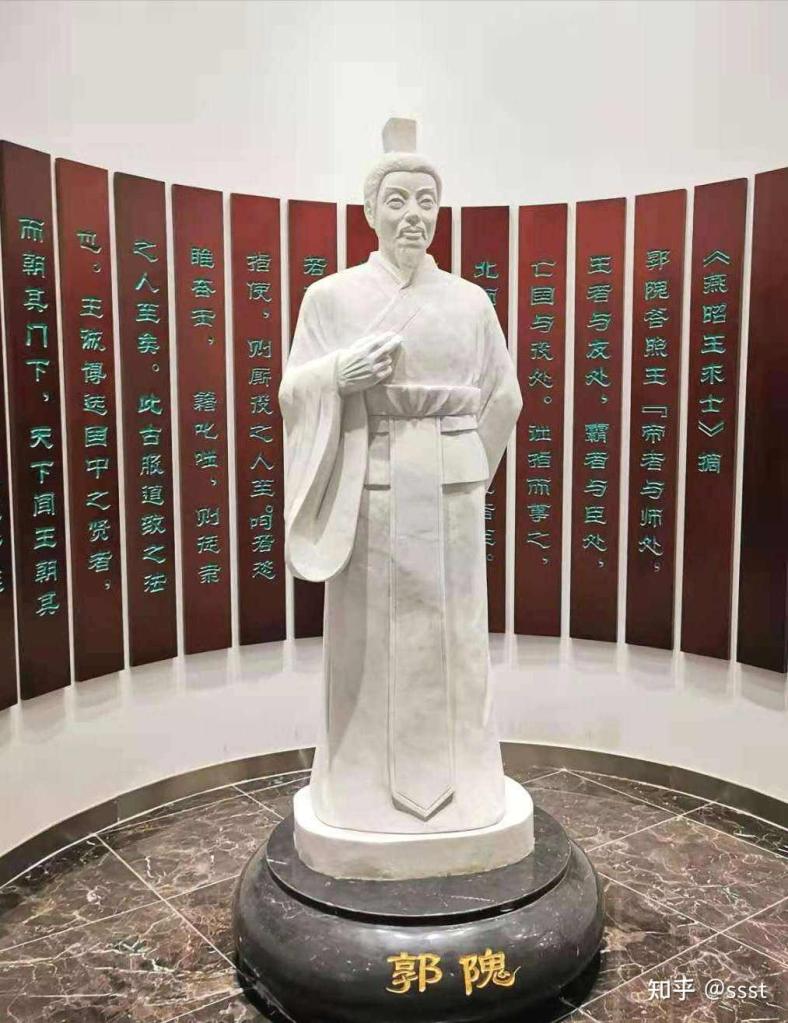
    Impressed, King Zhao promptly erected a palace for Guo Wei and appointed him as the king’s professor. Word of Guo Wei‘s recruitment spread, attracting intellectuals to Yan. Notably, Yue Yi came from Wei, and Ju Xin arrived from Zhao. The King of Zhao honored Yue Yi with the second-highest nobility rank and entrusted him with the state affairs.In Han, King Xuan Hui passed away, succeeded by his son Cang, who ascended as King Xiang of Han.

  • Comprehensive Reflections to Aid in Governance(Part 20): Mencius’ Advice

    Comprehensive Reflections to Aid in Governance

    By Sima Guang

    Translated By Yiming Yang

    Annals of Zhou Book 3 Scroll 3 (continued)

    Mencius

    The 6th year of King Shenjing (315 B.C.)

    King Shenjing of Zhou passed away, and his son Ji Yan ascended to the throne, becoming King Nan of Zhou.

    The 1st year of King Nan (314 B.C.)

    The Qin forces launched another invasion on the Yiqu, reclaiming twenty-five cities that had gained some autonomy in recent years.

    In response to Qin‘s control, the people of the Kingdom of Wei, which had submitted to Qin, rebelled. This prompted Qin‘s military to attack Wei, resulting in the occupation of Quwo. The inhabitants of Quwo were displaced and fled to Wei.

    Furthermore, the Qin army secured a victory against the Kingdom of Han at Anmen. As part of a peace treaty, the crown prince of Han was sent to the Kingdom of Qin as a hostage.

    The Kingdom of Yan descended into chaos three years after Zizhi had taken the throne. General Shibei and Crown Prince Ping conspired to overthrow Zizhi‘s rule. Hearing about these developments, the King of Qi sent a message to Crown Prince Ping of Yan, offering to support him, saying: “I have heard that Your Grace intends to rectify the hierarchy of lords and their subjects, and establish clear rules for the hereditary transmission of titles from fathers to sons. I humbly offer my small state to support your efforts.”

    Encouraged by the King of Qi, Crown Prince Ping joined forces with Shibei and other supporters to try and overthrow Zizhi. However, their coup attempt failed, and Shibei, instead of supporting the crown prince, turned against him. The internal turmoil in Yan went on for several months, leading to the death of tens of thousands of people. The people of Yan were left in a state of horror and distress.

    In response to this chaos, the King of Qi ordered his general, Zhang Zi, to lead troops from five cities to invade the Kingdom of Yan. With the support of the northern citizens of Qi, they advanced on Yan. Remarkably, the Yan soldiers did not resist the invaders; they didn’t even close the gates of their cities. The Qi troops captured Zizhi, and he was dismembered and minced. Kuai, the former King of Yan, was also killed in the process. This marked a violent end to the leadership of Zizhi and the turmoil within Yan.

    The King of Qi discussed the recent victory with Mencius, saying, “I received conflicting advice regarding the annexation of the Kingdom of Yan. One perspective was against it, while another was in favor. We witnessed a kingdom with ten thousand chariots swiftly conquer another of equal strength in just fifty days. Such an extraordinary feat could not have been accomplished by military might alone. I fear that if we refrain from taking action, Heaven might punish us. What are your thoughts on annexing the Kingdom of Yan?”

    Mencius responded, “If the people of Yan support this endeavor, it provides a sufficient reason to proceed with the annexation. Historical precedents exist, as seen in the case of King Wu of Zhou. However, if the people of Yan oppose it, then it becomes a compelling reason not to annex the kingdom, as demonstrated by King Wen of Zhou. When a kingdom with ten thousand chariots overruns another of equal strength and the people of Yan, in a desperate attempt to flee from dire circumstances, come out to welcome the Qi troops with baskets of food and kettles of drink, it is clear that their intentions are to escape impending disaster. If we subject the people of Yan to even more intense fire or flooding, they will have no choice but to flee in the opposite direction.”

    Other states were contemplating coming to the aid of the Kingdom of Yan. The King of Qi sought Mencius‘ counsel, saying, “Other lords are conspiring attacks against me. How should I handle them?” Mencius implored him, “I’ve heard of kings who ruled territories as small as seventy miles, such as Tang of the Shang dynasty, without fearing other states. In the Book of Shu, it is recorded, ‘When our king returns, we will recover.’ Now, the Kingdom of Yan has mistreated its people. They believed that Qi‘s troops came to rescue them from the fire and flood. Hence, they welcomed the Qi army with food baskets and wine kettles. But if you kill their fathers and brothers, hurt their children, demolish their temples, and plunder their treasures, how can you do this to them? Other states are indeed concerned about a powerful Kingdom of Qi. Now, your kingdom has doubled in size and treats the people with cruelty. This may incite other states to rise against you. I urge you, Your Grace, to order your troops to return the elderly and young to their homes and cease pillaging. Collaborate with the people of Yan to establish a new king, then withdraw from the kingdom. It’s not too late to prevent attacks from other states.” Regrettably, the King of Qi did not heed his advice.

    Later on, the people of Yan revolted against the Qi government. The King of Qi expressed his regret, saying, “I deeply regret not heeding Mencius‘s advice.” His assistant, Chen Gu, consoled him, saying, “Your Grace, please don’t dwell on this.” Chen Gu then approached Mencius and asked, “Who is Duke of Zhou?” Mencius replied, “He is an ancient saint.” Chen Gu continued, “The Duke of Zhou appointed Guan Shu as the supervisor of the Shang dynasty. Guan Shu incited a rebellion against Shang. Did the Duke of Zhou know that Guan Shu was planning to rebel?” Mencius responded, “No, he did not know.” Chen Gu remarked, “So even a saint can make a mistake, right?” Mencius countered, “The Duke of Zhou is Guan Shu’s younger brother, and he treated his elder brother as such. His mistake is understandable. Moreover, in ancient times, a true gentleman corrected his mistakes, unlike contemporary so-called gentlemen who get away with their mistakes! The mistakes of gentlemen in ancient times were like eclipses of the sun and moon—visible to all. People held them in even higher regard once those eclipses had passed. In contrast, today’s so-called gentlemen not only tolerate their mistakes but also seek excuses for them!”

    King Xuan of Qi died this year, and his son Di succeeded him as King Min of Qi.

  • Comprehensive Reflections to Aid in Governance(Part 18): Lord Mengchang

    Comprehensive Reflections to Aid in Governance

    By Sima Guang

    Translated By Yiming Yang

    Annals of Zhou Book 2 Scroll 2 (continued)

    Lord Mengchang

    The 39th year of King Xian (330 B.C.)

    The Kingdom of Qin launched an offensive against the Kingdom of Wei, resulting in a siege of the cities of Jiao and Quwo. In response, the Kingdom of Wei surrendered the city of Shaoliang and other territories located on the west bank of the Yellow River to the Kingdom of Qin.

    The 40th year of King Xian (329 B.C.)

    The troops of Qin launched an invasion of the Kingdom of Wei, successfully crossing the Yellow River and capturing the cities of Fenyin and Pishi. They also managed to sack the city of Jiao during their campaign.

    King Wei of Chu passed away, and he was succeeded by his son, who took the throne as King Huai of Chu.

    Meanwhile, in the state of Song, Duke Ticheng’s brother, named Song Yan, orchestrated a surprise attack on Duke Ticheng. Fearing for his safety, Ticheng fled to the state of Qi. Following this, Song Yan declared himself the lord of Song, taking control of the state.

    The 41st year of King Xian (328 B.C.)

    Prince Hua and Zhang Yi of Qin conducted another siege, this time targeting the city of Puyang in the state of Wei. They successfully captured the city during the campaign. However, Zhang Yi, recognizing the importance of diplomacy, persuaded the King of Qin to return Puyang to Wei. In addition to this, he sent Prince Yao to Wei as a hostage to strengthen relations.

    Subsequently, Zhang Yi employed his diplomatic skills to lobby the King of Wei. He emphasized that Qin had treated Wei generously and that Wei should reciprocate in kind. As a result, the state of Wei gifted fifteen counties in the Shangjun area to Qin as a token of their gratitude. This diplomatic success led to Zhang Yi‘s promotion to the prime minister of Qin.

    The 42nd year of King Xian (327 B.C.)

    The ancient tribal state of Yiqu, a historical rival of the Kingdom of Qin, was incorporated into Qin as a county. The lord of Yiqu now became a subordinate under the rule of the King of Qin.

    Additionally, the Kingdom of Qin returned the cities of Jiao and Quwo to the Kingdom of Wei as part of a restitution agreement.

    The 43rd year of King Xian (326 B.C.)

    Following the death of Marquis Su, his son, Zhao Yong, ascended to the throne as King Wuling of Zhao. During his reign, he implemented several important reforms. He established the position of three state professors known for their extensive knowledge. Additionally, he appointed three prosecutors each to the left and right justice departments. King Wuling also paid a visit to a respected advisor of his predecessors, Feiyi, and increased his emolument as a sign of recognition and respect. 

    The 44th year of King Xian (325 B.C.)

    In the summer season, the ruler of Qin proclaimed himself as a king for the first time, signifying a shift in the state’s status.

    During this time, Marquis Ping of Wey passed away, and his son Sijun succeeded him as the new ruler. An interesting incident occurred involving a convict from the state of Wey who had managed to escape to the neighboring state of Wei. In Wei, this convict used his skills to cure an illness afflicting the Queen Dowager. Learning of this, Sijun, the ruler of Wey, decided to bring the convict back to his state and was willing to pay a hefty sum of fifty ounces of gold for his return.

    However, the envoys sent to negotiate the convict’s return failed in their mission on five separate occasions. Undeterred, Sijun made a bold decision. He offered the city of Zuoshi in exchange for the release of the convict. His advisors were initially opposed to this, questioning the wisdom of trading a city for a single convict.

    Sijun, however, remained resolute in his decision. He said: “You don’t understand. There are no small matters in governance; even the slightest disturbance can lead to chaos. If we don’t uphold the law and ensure that crimes are punished, having ten cities like Zuoshi won’t benefit our state. However, if we maintain the rule of law and hold wrongdoers accountable, the loss of ten cities is insignificant in comparison”

    Word of this exchange reached the King of Wei, who commented on the situation: “It does not bode well in opposition to another rule’s will.” He ordered that the convict be put in a prison carriage and returned to Sijun’s state without requesting any compensation, respecting the principles of justice and governance.

    The 45th year of King Xian (324 B.C.)

    Zhang Yi, leading the Qin troops, conducted a successful raid on the Kingdom of Wei, capturing a place called Shan.

    Meanwhile, Su Qin became involved in an affair with the dowager of Duke Wen of Yan. When her son, King Yi of Yan, discovered this, Su Qin was filled with terror. To remedy the situation, he proposed to King Yi of Yan that his presence in Yan did not garner more respect for the kingdom and that other states might admire Yan more if he were to go to the Kingdom of Qi and lead from there. King Yi of Yan agreed to this plan. Su Qin then pretended to have a falling-out with Yan and fled to the Kingdom of Qi. King Xuan of Qi appointed him as his visiting adviser. In this role, Su Qin encouraged the King of Qi to build grand halls, arenas, extensive gardens, and hunting grounds, intentionally worsening the finances of the Kingdom of Qi to benefit their rival, the Kingdom of Yan.

    The 46th year of King Xian (323 B.C.)

    In a meeting at the city of Niesang, the Prime Minister of Qin, Zhang Yi, convened with the Prime Ministers from the Kingdoms of Qi and Chu.

    Interestingly, during this time, the lords of the states Han and Yan both proclaimed themselves as kings. However, King Wuling of Zhao chose not to do so, stating that he saw no reason to claim a title without the substance to support it. He ordered his people to continue addressing him as Lord.

    The 47th year of King Xian (322 B.C.)

    After the meeting at Niesang, Zhang Yi was removed from his position as the Prime Minister of Qin. He then assumed the role of Prime Minister in the Kingdom of Wei. In this position, Zhang Yi aimed to set an example of submission to the Kingdom of Qin for other states. However, the King of Wei was reluctant to comply with this plan.

    In response, the King of Qin ordered an invasion of the Kingdom of Wei and successfully captured the cities of Quwo and Pingzhou. To reward Zhang Yi for his efforts, the King of Qin secretly provided him with additional compensation.

    The 48th year of King Xian (321 B.C.)

    Lord Jingguo considered building walls and fortresses around his fief city of Xue. However, one of his guest advisers offered a different perspective: “Have you heard about the giant fish in the ocean, my lord? The fish is so large that neither nets nor hooks could do anything to it. However, it becomes the victim of bugs as soon as it leaves the water. Now the Kingdom of Qi is the water to you, my lord. As long as you are in charge of Qi, why bother to secure the city of Xue? Conversely, could you count on the city of Xue even if you build the walls sky-high, if you lost the power over the kingdom of Qi?” Lord Jingguo heeded this advice and gave up the idea.

    Lord Jingguo has more than forty sons.  One of them, Tian Wen, despite his humble birth from a lowly concubine, possessed charisma and shrewdness. He advised his father, Lord Jingguo, to invest generously in hiring scholars and experts as counselors. Tian Wen himself played the role of a gracious host, wining and dining these guests extravagantly. As a result, all the counselors couldn’t help but praise Tian Wen‘s charm in front of Lord Jingguo and recommended him as the successor.

    When Lord Jingguo passed away, Tian Wen ascended to the position of Duke of Xue, known as Lord Mengchang. Lord Mengchang actively sought out talent from various states, regardless of their backgrounds as exiles, convicts, or outcasts. He provided them with not only employment but also generous compensation, lodging, and support for their families. His food court often hosted thousands of guests, each one of them thought Lord Mengchang treated him specially. He was widely regarded as a benevolent and exceptional ruler, earning fame across the kingdoms.

    Sima Guang’s comments: A ruler employs savants in order to serve his people.  As the Book of Yi says: ”A saint nurtures the talented, for the benefit of all people.” The moral character of a learned man moral has the power to shape social norms; the capabilities of a learned man’s abilities and skills can improve the functioning of an administration; the wisdom of a learned man enables them to identify flaws and anticipate future challenges; the integrity of a learned man upholds humanity and righteousness.  On a large scale, a learned man benefits the whole world; On a small scale, a learned man benefits a state or a community.  Rulers, recognizing the value of such individuals, reward them with wealth and titles as a way of nurturing them to benefit the broader population. This approach to staffing is considered wise and effective.

    On the other hand, Lord Mengchang put persons on his payroll, regardless if the person is wise or foolish, an angel or a criminal.  That’s abusing the Kingdom’s resources to fund his cronies.  They spread fake accolades of Lord Mengchang, cheating the King above them and corrupting the common people below them.  That’s a treacherous act and it is despicable, like the saying in the book Shu:”Accepting the deserters and renegades makes human sewage.”

    Lord Mengchang was sent to the state of Chu for a diplomatic mission, and the King of Chu gifted him an exquisite bed decorated with ivory carvings. He asked his attendant, Dengtu Zhi to oversee the shipment.  Dengtu Zhi did not want to take this chore.  He spoke to a disciple of Lord Mengchang, whose name is Gongsun Xu: ”The ivory bed is such a treasure worthy of thousands ounces of gold.  I could not, even if I sell my whole family, to compensate for a tiny bit of damage.  If you can talk me out of this assignment, I have a precious sword passed down from my ancestors that I’m willing to offer in return.”  Gongsun Xu promised him and went to see Lord Mengchang: ”The reason that all these small states want to appoint you as their prime minister is because you can uplift the poor, revive the fallen, and continue the lineage. They all appreciate your righteousness and admire your incorruptible integrity. But now, upon arriving in Chu, if you were to accept this ivory bed, how can you face the states that have not yet had the opportunity to host you?”  Lord Mengchang agreed.  He politely declined the gift from Chu.  As Gongsun Xu walked out and before he exited the middle court,  Lord Mengchang called him back: ”I saw you hopping out with joy, why were you so excited?”  Gongsun Xu confessed about the sword.  Lord Mengchang then posted an announcement at the city gate, which read: ”Any one who can improve Tian Wen’s reputation and correct Tian Wen’s mistakes, even if you take someone’s bribe for doing it, is urged to come forward with constructive criticism!”

    Sima Guang’s comments: It can be said that Lord Mengchang was receptive to counselings.  As long as the advice is good, even coming from ulterior motives, can still be taken, let alone the advice that is offered with selfless honesty.  The book of Shi has a poem: ”Pick collard greens, pick turnip greens; don’t care about the lower stems.” Lord Mengchang possessed the spirit of this.King Xuanhui of Han set out to appoint both Gongzhong and Gongshu to be in charge of the state affairs.  He consulted with his advisor Mu Liu.  Mu Liu was against the idea: ”Don’t do that.  Jin was characterized by the use of the Six Ministers leading to the division into three states. In the case of Qi‘s Duke Jian, he relied on Master Chen Cheng and Kan Zhi, which ultimately led to his assassination. In Wei, they relied on Xi Shou and Zhang Yi, and the lands west of the Yellow River were lost. Now, if you, my lord, rely on two prime ministers, the one with greater power will form factions internally, while the other with less power will seek external influence. Among your ministers, some will build internal factions to influence you, while others will seek external alliances to gain territory. In either case, our state is in danger.”ll form factions internally, while the other with less power will seek external influence. Among your ministers, some will build internal factions to influence you, while others will seek external alliances to gain territory. In either case, our state is in danger.”