Tag: history

  • Comprehensive Reflections to Aid in Governance(Part 87): Why Not A Real King?

    Comprehensive Reflections to Aid in Governance

    By Sima Guang

    Translated By Yiming Yang

    Annals of Han Book 2 Scroll 10 (continued)

    Wei River, Shandong Province, Photograph by Ngguls

    The 4th year of the Emperor Gaozu(203 B.C. continued)

    Han Xin had already taken control of the capital of Qi and was pursuing the King of Qi to the east. In response, Xiang Yu sent his general, Long Ju, with an army reportedly two hundred thousand strong, to aid the King of Qi. They joined forces in Gaomi County.

    An advisor approached Long Ju, cautioning him: “The Han soldiers have come a long way and are riding the wave of victory. It would be unwise to confront them head-on. The Qi and Chu soldiers are fighting on their homeland, and they are more likely to falter and flee. It would be better to hold them back from behind defensive walls. Then, we can ask the King of Qi to send his trusted envoys to rally the cities of Qi that have fallen to the Kingdom of Han. Once these cities learn that the King of Qi is still alive and that Chu is coming to help, they will revolt against Han. The Han army is far from home, without local support, and once the people rise up against them, they will have no food supply. They will be forced to surrender without a fight.”

    Long Ju, however, dismissed this advice: “I’ve known Han Xin for a long time. He’s weak. He couldn’t even make a living on his own and had to rely on an old laundry woman for food. He was publicly humiliated, crawling between a man’s legs, showing no courage beyond a common person. Don’t worry about him. What glory would there be for me in saving the Kingdom of Qi if we win without fighting? If I defeat them on the battlefield, I might be rewarded with half the Kingdom of Qi.”

    In November, the combined forces of Qi and Chu pressed against the Wei River, while the Han army held the opposite side. Han Xin ordered his soldiers to prepare ten thousand sandbags and secretly dammed the river upstream during the night. The next morning, they crossed the riverbed and attacked Long Ju‘s troops. Feigning a collapse, Han Xin‘s forces retreated. As expected, Long Ju, excited, exclaimed, “I knew Han Xin was a coward!” and led his troops in pursuit.

    At this moment, Han Xin signaled his soldiers to break the dam upstream. A flash flood swept down as half of Long Ju‘s army was still crossing the river. Han Xin‘s troops launched a powerful attack on the portion of Long Ju‘s forces left on the west bank, killing Long Ju. The soldiers stranded on the east bank collapsed after losing their commander, and the King of Qi, Tian Guang, fled.

    Han Xin pursued Tian Guang northward to Chengyang and captured him. Meanwhile, General Guan Ying of Han tracked down Tian Guang‘s minister of charge d’affaires, and imprisoned him before advancing to occupy Boyang. When Tian Heng, hearing that the King of Qi was captured, declared himself king and launched a counterattack against General Guan Ying, his forces were defeated in Ying city. Tian Heng fled to the kingdom of Wei and placed himself under General Peng Yue‘s command.

    General Guan Ying then moved on to defeat Tian Xi, a Qi general, at Qiansheng, while General Cao Shen attacked and killed another Qi general, Tian Ji, at Jiaodong. With these victories, the entire territory of Qi came under Han control.

    In recognition of his services, the King of Han appointed Zhang Er as the King of Zhao.

    The King of Han fully recovered from his wound and re-entered the Hangu Pass. He arrived at Yueyang, where he publicly displayed the decapitated head of Sima Xin, the King of Sai. After staying in Yueyang for four days, he returned to his army headquarters in Guangwu.

    Around this time, Han Xin sent a messenger with a letter to the King of Han, stating: “The kingdom of Qi is a dishonest and unstable regime. It shares a border with the kingdom of Chu to the south. I request to be appointed as the Deputy King of Qi to govern it.” Upon reading the letter, the King of Han flew into a rage and began swearing: “I am trapped in this quagmire, pleading for you to rescue us day and night, and now you want to crown yourself king?”

    Zhang Liang and Chen Ping discreetly kicked the King’s feet and whispered to him: “The Kingdom of Han is in a precarious position. We are not in a position to refuse Han Xin’s request. It would be wiser to grant him the title. If you treat him well, he will defend his territory. Otherwise, he might revolt.” The King of Han, realizing his outburst was unwise, tempered his response, though he continued ranting: “A big man conquers a kingdom to become a real king—what is this nonsense about being a deputy king?”

    In February of the following spring, the King of Han sent Zhang Liang to meet Han Xin, carrying the seal of the King of Qi, officially granting him the title. Han Xin was then called to mobilize his troops to attack the army of Chu.

    King Xiang Yu, alarmed by the death of Long Ju, sent a man from Xuyi, Wu She, to persuade Han Xin to turn against the King of Han. Wu She approached Han Xin with a message: “The Qin Empire made life miserable for everyone, which is why we united to overthrow it. Now that Qin is gone, we should divide the land according to our contributions and claim our rightful titles as kings, allowing the soldiers to rest. But the King of Han continues his eastern campaign, seizing land from others. He has already taken control of the Three Kingdoms of Qin, and yet, he emerged from the Hangu Pass and rallied other states to attack Chu. His ambition will not stop until he devours the entire country. This is how greedy he is—he cannot be trusted.”

    “Several times his life was in King Xiang Yu‘s hands, and each time, Xiang Yu spared him. Yet, as soon as he escaped, he broke his word and attacked King Xiang Yu. This shows how devious he is. You think your alliance with the King of Han is strong, and you fight for him with all your might, but in the end, your honor will be his prisoner. The only reason you enjoy your current freedom is because King Xiang Yu still stands. Your honor holds the balance between these two kings. If your honor turns right and side with Han, the King of Han will win. If your honor turns left and side with Xiang Yu, he will win. But if Xiang Yu is defeated, you will be the next to fall. You had a prior relationship with Xiang Yu. Why not make peace with him and turn your back on the King of Han? The three of you could divide the land and rule as kings. If you miss this chance and follow the King of Han into battle against Xiang Yu, is that what a wise man does?”

    Han Xin listened to Wu She and responded apologetically: “I once served King Xiang Yu. The highest position I held was captain of his personal guard, and at best, I was a mere sentinel. No one listened to me, and none of my strategies were adopted. That’s why I left Chu and joined Han. The King of Han appointed me Grand Marshal and gave me command over tens of thousands of soldiers. He took off his own clothes to clothe me and shared his food with me. He listened to my plans and approved them. That is how I have achieved what I have today. It would be a disgrace to betray someone who has treated me so well. My loyalty will not waver until my death. Please convey my apologies to King Xiang Yu!”

    Wu She departed disheartened. 

  • Comprehensive Reflections to Aid in Governance(Part 86): Save Me A Cup of Soup?

    Comprehensive Reflections to Aid in Governance

    By Sima Guang

    Translated By Yiming Yang

    Annals of Han Book 2 Scroll 10 (continued)

    The Great Gulch in Guangwu Town, Xingyang, Henan Province

    The 4th year of the Emperor Gaozu(203 B.C.)

    In October, during the winter, Han Xin caught the Qi army off guard at Lixia, overrunning them and advancing toward Linzi, the capital of Qi. The King of Qi, believing he had been deceived by Li Yiji, had him boiled to death. The king fled eastward to Gaomi county with his troops and sent an envoy to the kingdom of Chu to request aid. His prime minister, Tian Heng, escaped to Boyang county, while his minister of charge d’affaires, Tian Guang, fled to Chengyang. Tian Ji, his general, took his troops to Jiaodong, where they set up camp.

    Meanwhile, Grand Marshal of the Chu army, Cao Jiu, was stationed at Chenggao to defend the city. Despite repeated challenges from Han soldiers, he remained within the citadel. However, after several days of relentless taunting, which escalated to personal insults, Cao Jiu, enraged, led his troops across the Si River. Seizing the moment, the Han army attacked as the Chu forces were crossing, crushing them. The Han troops confiscated the treasures and provisions of the Chu army. Cao Jiu and his lieutenant, Sima Xin, committed suicide by slitting their throats on the bank of the Si River. The King of Han then led his army across the Yellow River, retook Chenggao, and encamped at Guangwu town, taking possession of grain stored at Ao’cang.

    Xiang Yu conquered dozens of cities in the kingdom of Wei but turned back upon hearing that Chenggao had fallen. The Han army had encircled General Zhongli Mo of Chu east of Xingyang, but upon learning of Xiang Yu‘s approach, they retreated to their bastions. Xiang Yu then encamped his forces near Guangwu. For several months, the armies of Chu and Han were deadlocked, until the Chu army began to face food shortages. Concerned about the stalemate, Xiang Yu devised a plan: he set up a high chopping block and placed the father of the King of Han upon it. He then sent a message to the King of Han, saying, “If you do not surrender soon, I will boil your father.”

    The King of Han, however, remained unfazed. He replied, “When we pledged allegiance to King Huai II of Chu, we swore brotherhood. My father is your father as well. If you truly wish to boil your own father, would you please save me a cup of the soup?” Xiang Yu, outraged by this response, prepared to kill the elder. However, Xiang Bo intervened, saying, “You never know what the future holds. Those who seek to rule the world do not concern themselves with family ties. Killing his father will bring no advantage, only more trouble for us.” Xiang Yu, persuaded by this reasoning, relented.

    King Xiang Yu sent a message to the King of Han, saying: “The chaos in this country has raged for several years, and it is because of you and me. Let us settle this once and for all in a duel, to end the suffering of the people and their children.” The King of Han laughed and declined, replying, “I would rather duel with wits than with force.”

    In response, Xiang Yu ordered his gladiators to challenge the Han soldiers. On three occasions, a master archer from the Loufan tribe shot down the challengers. Enraged, Xiang Yu donned his armor, took up his halberd, and personally stepped forward to challenge the Han troops. The master archer prepared to shoot at Xiang Yu, but as Xiang Yu glared at him and let out a thunderous roar, the archer became so terrified that he couldn’t hold his bow steady or meet Xiang Yu‘s gaze. He fled back into the camp and did not emerge again.

    When the King of Han asked who the challenger had been, he was told, “It was King Xiang Yu.” The King of Han was taken aback.

    King Xiang Yu requested a face-to-face meeting with the King of Han. They met at Guangwu, separated by a gorge, where Xiang Yu again challenged the King of Han to a duel. The King of Han denounced him, saying:

    Xiang Yu, you broke the pact and made me the King of Shu and Hanzhong instead—this is your first crime. You forged an edict from King Huai II of Chu and killed Generalissimo Song Yi—your second crime. After rescuing the kingdom of Zhao, you failed to report back to the Honorary Emperor and instead took control of allied troops and seized the Hangu Pass—your third crime. You burned the palaces of Qin and desecrated the tomb of the First Emperor. You looted Qin‘s treasures for your own gain—your fourth crime. You killed the surrendered King of Qin, Ziying—your fifth crime. You deceived and buried 200,000 sons of Qin alive at Xin’an —your sixth crime. You made kings out of your generals, enfeoffed them in rich lands and displaced their former lords to poor regions—your seventh crime. You drove the Honorary Emperor from Pengcheng and made it your capital. You annexed lands from the King of Hann and merged the former kingdoms of Wei and Chu into your own—your eighth crime. You sent assassins to kill the Honorary Emperor south of the Yangtze—your ninth crime. You have ruled unjustly, broken your pledge to the emperor, and the nation can no longer endure your wickedness—your tenth crime. I lead allied forces to rid the country of the last remnants of bandits and bring justice. We are driving convicts and criminals to fight against you—why should I duel with you?”

    Infuriated, Xiang Yu shot the King of Han with a crossbow. The arrow struck the King’s chest, but he doubled over and grabbed his foot, exclaiming, “That bastard shot my toe!” The King of Han then took to his bed to recover from the wound.

    Zhang Liang insisted that the King of Han rise and inspect the troops, arguing that he needed to reassure his soldiers of his leadership and maintain morale to prevent the Chu army from taking advantage. The King of Han complied, but in doing so aggravated his injury. He quickly returned to Chenggao to recover.

  • Comprehensive Reflections to Aid in Governance(Part 85): Reincarnation

    Comprehensive Reflections to Aid in Governance

    By Sima Guang

    Translated By Yiming Yang

    Annals of Han Book 2 Scroll 10 (continued)

    A Grainery in Ao’cang, Henan Province

    The 3rd year of the Emperor Gaozu (204 B.C. continued)

    The King of Han managed to sneak out through the Yu Gate of Chenggao with only Duke of Teng(Xiahou Ying) on a wagon. They headed north and crossed the Yellow River, eventually staying at an inn in a town called Small Xiuwu. In the early morning, they infiltrated the Zhao army’s camp, posing as Han envoys. Zhang Er and Han Xin were still asleep when the King of Han entered their sleeping quarters and seized their commander seals and tallies. He then used the tallies to summon all the officers for a meeting and announced a reorganization of command.

    When Zhang Er and Han Xin woke up, they were stunned to hear of the King of Han’s presence. The King of Han took command of the army from them, sending Zhang Er to travel throughout Zhao to strengthen its defenses. He promoted Han Xin to Chancellor of Zhao and tasked him with leading a campaign against the Kingdom of Qi, using the forces Zhang Er had left behind. Before long, the other Han generals who had fled Chenggao reunited with the King of Han. Meanwhile, the Chu army captured Chenggao and advanced further west, but the King of Han dispatched troops to hold Gong County and halt their progress.

    In July, during the autumn, a meteor was sighted near Uranus. 

    The King of Linjiang, Gong Ao, passed away, and his son Gong Wei succeeded him.

    The King of Han, now in control of the troops previously commanded by Han Xin, regained his confidence and morale. He led his forces to the bank of the Yellow River, setting up camp at the town of Small Xiuwu with plans to move south and engage the Chu army. However, Zheng Zhong, one of his advisers, advised him to focus on building fortifications and digging trenches rather than engaging in direct combat. The King of Han followed this counsel. He ordered Generals Liu Jia and Lu Wan to lead twenty thousand soldiers and several hundred cavalry across the Yellow River at Baima crossing. They entered Chu territory to support General Peng Yue in burning the Chu army’s grain storage and disrupting Xiang Yu‘s supply lines. When the Chu forces retaliated, Liu Jia held firm behind the defensive walls, refusing to engage in open battle. He coordinated with General Peng Yue’s forces, ensuring mutual protection.

    General Peng Yue continued his campaign, conquering more of the Kingdom of Wei, capturing seventeen cities, including Suiyang and Waihuang. In September, Xiang Yu instructed his Grand Marshal, Cao Jiu, saying: “Defend the city of Chenggao carefully. Be cautious, and do not engage in battle with the King of Han if he challenges you. Preventing them from advancing further east will be sufficient. I will resolve the issues in the Kingdom of Wei and return in fifteen days.” Xiang Yu then led his troops eastward, recapturing the cities of Chenliu, Waihuang, and Suiyang.

    The King of Han was considering abandoning the territory east of Chenggao and focusing on defending against Chu’s aggression along the line between Gong County and Luoyang. Li Yiji, however, offered him a different perspective: “I’ve heard it said, ‘He who knows the mandate of Heaven will be enthroned as a king.’ For a king, the people are his Heaven. For the people, food is their Heaven. Ao’cang is the nation’s hub for food transportation, and I have learned that a large stockpile of grain remains stored underground there. After the Chu army seized Xingyang, they did not guard Ao’cang steadfastly, moving east and leaving only a small detachment to defend Chenggao. This presents a golden opportunity for the Kingdom of Han. I believe it would be a grave mistake to hold back and rob ourselves of the chance to exploit Chu‘s error.”

    “Currently, two dominant forces cannot coexist. The ongoing seesaw conflict between Chu and Han has left the country in turmoil. Farmers have abandoned their fields, and women have stopped working their looms. I urge Your Majesty to move swiftly to retake Xingyang. By doing so, we can access the grain stores in Ao’cang, secure the strategic pass at Chenggao, control the roads through Taihang mountains, hold up Feihu Pass and defend Baima crossing. If we demonstrate that we have secured a stronger position, the people will know whom to side with.”

    The King of Han took Li Yiji‘s advice and began planning actions to reclaim Ao’cang.

    Li Yiji also advised the King of Han: “The Kingdoms of Yan and Zhao have been settled, but the Kingdom of Qi remains unresolved. The Tian clan is powerful, backed by the ocean and Mount Tai, with the Yellow River and Ji River as natural barriers. They neighbor Chu to the south and are unreliable. Conquering Qi would take months, even with tens of thousands of troops. I volunteer to deliver Your Majesty’s edict to the King of Qi and persuade him to become your vassal in the east.”

    The King of Han approved the plan and sent Li Yiji as an ambassador to Qi. When Li Yiji met with the King of Qi, he asked, “Do you know who will take over the country?” The King of Qi responded, “I don’t know. Who will it be?” Li Yiji answered, “The Kingdom of Han.”

    The King of Qi asked, “Why do you say that, Professor?” 

    Li Yiji explained: “The King of Han was the first to enter Xianyang. Xiang Yu broke his agreement, making him only the King of Hanzhong. Xiang Yu then drove the Honorary Emperor into exile and later killed him. Upon hearing this, the King of Han rallied his troops from Shu and Hanzhong, conquered the Three Kingdoms of Qin, and came out of the Hangu Pass to look into what happened to Honorary Emperor. He called on all forces in the country to take action, reinstated the descendants of former monarchs, rewarded generals who surrendered by making them marquises, and distributed land to those who helped his cause. He shared the benefits widely, attracting the best and brightest from across the country to his side.”

    “In contrast, Xiang Yu has earned a bad reputation for breaching agreements and murdering the Honorary Emperor. He keeps no record of those who have achieved great feats for him, shows no forgiveness to those who have erred, offers no rewards to those who have won battles for him, and grants no fiefdoms to those who have conquered cities for him. No significant promotions come to those outside the Xiang family. Talented individuals across the country resent him, refuse to work for him, and are abandoning him in droves. Just from these facts, we can infer that the country will belong to the King of Han.”

    “The King of Han mobilized the commanderies of Shu and Hanzhong and launched a campaign to retake the Three Kingdoms of Qin. He crossed the Yellow River from the west and conquered the Kingdom of Wei in the north. He passed through Jingjing Pass and killed Lord Cheng’an. These victories are surely blessed by Heaven, as they are beyond human effort alone. Now, he possesses the grain of Ao’cang, controls the strategic pass at Chenggao, guards Baima Crossing, holds the roads along the slopes of Taihang Mountains and seizes Feihu Pass.”

    “The last kingdom to join his campaign will be the first to fall. Your Majesty must submit to the King of Han quickly if the Kingdom of Qi is to survive. Otherwise, your kingdom is in grave danger as we speak.”

    The King of Qi, aware that Han Xin was advancing eastward to invade his kingdom, ordered Generals Hua Wushang and Tian Jie to lead a large force to Lixia county to counter Han Xin’s advance. However, after taking Li Yiji‘s lobbying to heart, he sent an envoy to the King of Han, seeking a truce. He ordered the troops at Lixia to stand down and began spending his days wining and dining with Li Yiji.

    Meanwhile, Han Xin led his army eastward, halting just before crossing the Pingyuan Crossing. Upon hearing that Li Yiji had successfully persuaded the King of Qi to submit to the authority of the King of Han, Han Xin was about to call off the campaign. However, a contrarian, Kuai Che intervened, arguing, “General Han’s raid on the Kingdom of Qi was authorized by an edict from the King of Han. Even though the King of Han sent an ambassador to Qi, has he issued a new edict to stop your campaign? Why are you hesitating? Li Yiji is merely a scholar. With his words, he convinced seventy or so cities in Qi to yield to the Kingdom of Han, just by leaning on a wagon rail and speaking with his four-inch tongue. Your honor commands tens of thousands of soldiers. You conquered fifty cities in Zhao after more than a year of hard fighting. You’ve served as grand marshal for several years—would it be acceptable if your merits paled in comparison to those of a petty Confucianist?”

    Convinced by Kuai Che’s reasoning, Han Xin resumed the campaign and crossed the Yellow River.

  • Comprehensive Reflections to Aid in Governance(Part 84): War of Disinformation

    Comprehensive Reflections to Aid in Governance

    By Sima Guang

    Translated By Yiming Yang

    Annals of Han Book 2 Scroll 10

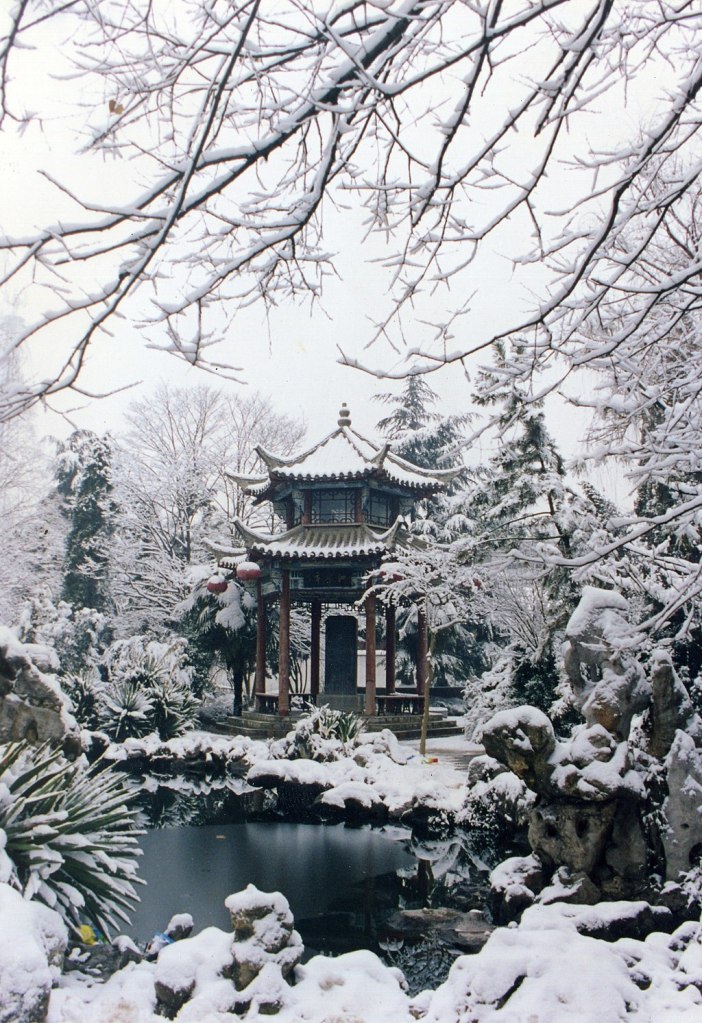
    Sishui Pavilion, Xuzhou(Pengcheng), Jiang Su Province. Photo by Hu Chuansong

    The 3rd year of the Emperor Gaozu (204 B.C. continued)

    The King of Han asked Chen Ping, “The country is in turmoil—when will this chaos end?” Chen Ping replied, “There are only a few of Xiang Yu’s subordinates who speak their minds, such as Uncle Fan Zeng, Zhongli Mo, Long Ju, and Zhou Yin. If Your Majesty spends tens of thousands of kilograms of gold to sow discord between Xiang Yu and his lieutenants, he will lose trust in them. Xiang Yu is naturally distrustful and easily swayed by disinformation. He will likely kill his closest aides due to internal strife, and then the kingdom of Chu will fall when Han’s forces strike.” The King of Han liked the idea: “A good plan!” He gave Chen Ping twenty thousand kilograms of gold with no string attached.

    Chen Ping used the gold to bribe and spread disinformation among the officers of Chu. He circulated rumors, saying, “Generals like Zhongli Mo have achieved great feats for Xiang Yu, yet they have not been rewarded with fiefs or the title of kings. They are conspiring with Han to destroy the Xiang family and divide the land.” When Xiang Yu heard the murmurs, he stopped trusting Zhongli Mo and the other generals.

    In April of that summer, King Xiang Yu encircled the King of Han at Xingyang. The King of Han, panicked, pleaded for a truce, offering to take only the land west of Xingyang. Fan Zeng urged Xiang Yu to seize the city without delay. Meanwhile, the King of Han, wary of Fan Zeng‘s influence, devised a plan with Chen Ping. When Chu’s envoy arrived for negotiations, Chen Ping arranged an elaborate banquet, serving beef, mutton, and pork together—a sign of utmost respect. Upon meeting the envoy, Chen Ping feigned surprise: “I thought you were Uncle Fan’s envoy, but you’re actually sent by King Xiang Yu, aren’t you?” He then had the extravagant meal removed, replacing it with lower-quality food.

    When the envoy reported back, Xiang Yu began to mistrust Fan Zeng. Despite Fan Zeng’s repeated urges to take Xingyang immediately, Xiang Yu ignored him. Sensing the king’s suspicion, Fan Zeng, furious, said, “The fate of the country has been decided. Your Majesty can handle it alone. Please let me retire.” On his journey home, an abscess on his back burst, and he died of infection before reaching Pengcheng.

    In May, General Ji Xin approached the King of Han and said, “The situation is urgent. I beg your permission to pose as Your Majesty so that you can escape the city in disguise.” Chen Ping then sent two thousand women out of the east gate under cover of night. The Chu army attacked them from all sides. Ji Xin, seated in the King of Han’s wagon with a yellow silk canopy and a yak tail banner on the left, drove out of the gate, announcing, “The city has run out of food. The King of Han surrenders to Chu.” The Chu soldiers cheered and rushed to the east gate to witness the event.

    Meanwhile, the real King of Han, accompanied by a small cavalry force, broke out of the west gate, leaving Zhou Ke, Wei Bao, and Cong Gong to defend Xingyang. When Xiang Yu captured Ji Xin, he asked, “Where is the King of Han?” Ji Xin replied, “He has already escaped.” Xiang Yu then immolated Ji Xin.

    Afterward, Zhou Ke and Cong Gong conferred, saying, “Wei Bao, the former king of West Wei, has betrayed us before. It will be difficult to defend the city with him around.” They proceeded to kill Wei Bao.

    The King of Han retreated from Xingyang and moved into Chenggao before entering the Hangu Pass. He reorganized his scattered troops, intending to fight back to the east. One of his advisers, Yuan Sheng, advised against this: “The Han and Chu armies have been locked in a stalemate at Xingyang for years, and the Han forces have often been at a disadvantage. I suggest Your Majesty heads south through Wu Pass. Xiang Yu will likely move south to counter you, but you should hold the fortifications there without engaging in battle. This will give the war-torn regions of Xingyang and Chenggao time to recover, and Han Xin will have time to secure the territory he gained from the Kingdom of Zhao north of the Yellow River. We can then coordinate with the Kingdoms of Yan and Qi. Once the Chu army is forced to defend multiple fronts, their forces will be stretched thin, and the Han army—rested and ready—will defeat them in the next battle.”

    The King of Han accepted Yuan Sheng’s strategy. He led his troops out of Wu Pass and stationed them in the counties of Yuan and She, where he and Ying Bu recruited additional soldiers. When Xiang Yu learned that the King of Han was in Yuan County, he led his army south as predicted. The King of Han, however, held his position in the citadel, refusing to engage Xiang Yu in battle.

    When the King of Han fled west from Pengcheng, General Peng Yue lost control of the cities he had conquered. He repositioned his forces north of the Yellow River and waged guerrilla warfare, disrupting the Chu army’s supply lines. In May, Peng Yue crossed the Sui River and engaged the Chu forces, led by Generals Xiang Sheng and Xue Gong, at the city of Xiapi. Peng Yue defeated the Chu army, killing General Xue Gong. In response, Xiang Yu moved east to confront Peng Yue, leaving his general Zhong Gong to defend Chenggao. Seizing the opportunity, the King of Han led his forces north, defeated Zhong Gong, and broke into the city, eventually camping his troops at Chenggao.

    In June, Xiang Yu drove out Peng Yue and turned back westward to break into the city of Xingyang after learning that the King of Han had returned to Chenggao. He captured Zhou Ke and offered him a position: “You will be a top general and awarded a fief with thirty thousand households if you serve me.” Zhou Ke retorted, “You will be captured soon if you don’t surrender to the Kingdom of Han now. You are no match for the King of Han!” Enraged, Xiang Yu had Zhou Ke boiled to death. He also killed Cong Gong and imprisoned Xin, the King of Hán. He then laid siege to Chenggao.

  • Comprehensive Reflections to Aid in Governance(Part 83): No Preordained Strategy

    Comprehensive Reflections to Aid in Governance

    By Sima Guang

    Translated By Yiming Yang

    Annals of Han Book 2 Scroll 10 (continued)

    Mount Hua, Photograph by Ondřej Žváček

    The 3rd year of the Emperor Gaozu (204 B.C. continued)

    The army of Chu clashed with the army of Han along the expressway, which Han had built as a vital supply route. Han’s army soon faced a food shortage. The King of Han consulted with Li Yiji on how to turn the tide against Chu. Li Yiji proposed, “When King Tang of Shang crusaded against King Jie of Xia, he granted a fief to Jie’s descendants in Qi. When King Wu of Zhou crusaded against King Zhou of Shang, he granted a fief to Zhou’s descendants in Song. The Qin Empire was immoral, annexing monarchs and erasing their temples and shrines, leaving their lineages without legacy. If your majesty reinstates the descendants of the six monarchs, their ministers and people will be so grateful that they will heed your righteous call, willing to serve you. By occupying the moral high ground, your majesty can face south as the overlord of the country. Even the king of Chu will submit and pay homage to you.”

    The King of Han was thrilled. “What a great idea! Go inscribe the seals immediately and carry them with you when you visit the monarchs.”

    Before Li Yiji embarked on his diplomatic mission, Zhang Liang came back to see the king from a trip. The king, eating his meal, called out, “Come here, Zifang(Zhang Liang’s courtesy name)! One of my advisors has proposed a brilliant way to turn the tide against Chu.” The king repeated Li Yiji‘s suggestion and asked, “What do you think?”

    Zhang Liang replied, “Who gave Your Majesty this idea? If you follow through with it, your campaign will be ruined.”

    The King of Han was startled. “Why do you say that?”

    Zhang Liang continued, “Let me borrow your chopsticks to illustrate my point. When King Tang of Shang and King Wu of Zhou granted fiefs to the descendants of Jie of Xia and Zhou of Shang, they had absolute control over their enemies’ fate. Do you have such control over Xiang Yu? That’s the first reason not to do this.

    “When King Wu of Zhou entered Shang’s capital, he decorated the portal of Shang Rong’s household , freed Ji Zi from prison, and embellished Bi Gan’s tomb. Could Your Majesty do that today? That’s the second reason not to do it.

    “King Wu distributed grain stored at Juqiao and the wealth hoarded at Deer Terrace to aid the poor. Can your majesty do the same? That’s the third reason not to do it.

    “After conquering Shang, King Wu converted chariots into luxurious wagons and proclaimed an end to war. Could Your Majesty do that today? That’s the fourth reason not to do it.

    “King Wu let his army’s horses graze in the pastures on the sunny side of Mount Hua, signaling he had no further ambitions. Can Your Majesty do the same? That’s the fifth reason not to do it.

    “He also let cattle graze under peach trees to indicate an end to the transport of war provisions. Could Your Majesty do that today? That’s the sixth reason not to do it.

    “All the followers who have marched across the country with Your Majesty, leaving behind their homes and families, are hoping for a piece of land. If Your Majesty reinstates the six monarchs, they would return home. Who would then follow you to conquer the realm? That’s the seventh reason not to do it.

    “Finally, while Chu is the strongest currently, the six monarchs would likely side with Chu. Who would listen to Your Majesty then? That’s the eighth reason not to adopt this plan. If you follow your advisor’s idea, your ambitions will be derailed.”

    The King of Han, shocked, stopped eating, spat out his food, and cursed, “That damned scholar almost wrecked my cause!” He immediately ordered the seals to be destroyed.

    Xun Yue’s commentary: The art of winning in decision-making has three key factors. The first is macroscopic strategy. The second is microscopic tactics. The third is human psychology. Strategy involves evaluating overall gains and losses. Tactics refer to seizing or relinquishing opportunities specific to a situation and time. The psychological factor is about willingness and persistence. When results differ in similar situations under the same principle, it is because these three factors render differently.

    Zhang Er and Chen Yu lobbied Chen Sheng to reinstate the six monarchs to increase the number of followers, and Li Yiji similarly lobbied the King of Han. The idea was the same, but the motivations were different. When Chen Sheng started his uprising, the entire country wanted the downfall of the Qin Empire. However, during the struggle between the kingdoms of Chu and Han, the larger picture was unclear, and not everyone wanted to overthrow Xiang Yu. In Chen Sheng’s case, restoring the six monarchs would gain him more allies and create more enemies for Qin. Since Chen Sheng hadn’t conquered the whole country yet, he was essentially offering something he didn’t own. This was giving out virtual benefits to secure real advantages. In the King of Han’s case, reinstating the six monarchs would mean weakening himself and aiding his enemy. He would gain a meaningless title and face real troubles ahead. Though the issue was the same, the strategic factor was different.

    Song Yi employed a waiting strategy during the war between the kingdoms of Qin and Zhao when he came to Zhao’s aid. This is reminiscent of Bian Zhuang’s tiger-hunting story, where he waited for two tigers to fight each other and then easily killed the wounded survivor. In the early Warring States period, neighboring states frequently fought, and the waiting strategy worked in non-critical situations. There were many warring states with long histories, and the survival of a state was not determined by a single war. The objective of war tactics wasn’t to deliver a fatal blow but to gain incremental advantages. The winner advanced, while the loser retreated to regroup. A third party could observe the shifting situation and seize opportunities when an enemy became vulnerable. The circumstances allowed this approach.

    However, the kingdoms of Chu and Zhao were trying to overthrow the Qin Empire, a much more powerful adversary. The survival of their states hung in the balance, shifting with every decision. Victory would mean a great triumph, while defeat would lead to disaster. Though the tactic of waiting was the same, the context and stakes were different.

    In the battle during the campaign against the kingdom of Zhao, Han Xin’s army fought with their backs to the Zhi River, yet Zhao’s forces failed to defeat them. In contrast, during the Pengcheng debacle, the King of Han led his army near the Sui River, where his soldiers were driven into the river, and Chu won a decisive victory. What was the difference? The army of Zhao ventured out of their kingdom to engage Han Xin’s forces. They advanced when successful and retreated home if they faced setbacks. Concerned about their families, they were not mentally prepared to die on the battlefield. On the other hand, Han Xin’s troops were stranded against the river, with no escape. They had no choice but to fight for their lives, and that’s why they won.

    The King of Han had ventured deep into enemy territory. He wined and dined his officers, and his soldiers enjoyed themselves, losing their fighting spirit. Meanwhile, the once-proud army of Chu, having lost their capital, was filled with indignation. They were determined to turn things around and save their state, ready to fight to the death. This resolve led to the king of Han’s crushing defeat. Han Xin had selected elite troops to defend his formation, while Zhao’s forces, filled with thoughts of home, launched their offensive. Xiang Yu deployed his best soldiers to attack, while the King of Han responded with soldiers who had grown complacent and indulgent. Though the battlefields were similar, the psychological factor was different.

    That’s why I say: Strategy should not be predetermined; tactics should not be rigid. The key to decision-making is to seize opportunities as they arise and adapt tactics to respond to unforeseen events.

  • Comprehensive Reflections to Aid in Governance(Part 82): The Defection of Ying Bu

    Comprehensive Reflections to Aid in Governance

    By Sima Guang

    Translated By Yiming Yang

    Annals of Han Book 2 Scroll 10 (continued)

    A Pagoda in Jiu Jiang, Jiangxi Province, photograph by Ding Ding

    The 3rd year of the Emperor Gaozu (204 B.C. continued)

    There was a solar eclipse on October 30, and the sky went dark during the day.

    Another solar eclipse occurred on November 29.

    Sui He, the envoy of the King of Han, arrived in Jiujiang. For three days, the head chef of the king of Jiujiang hosted him, but he had not secured an audience with the king. Sui He approached the head chef and said, “The king does not want to see me, mainly because Chu is strong, and Han is weak. That’s exactly why I’m here. If you let me meet the king, he will be interested in what I have to say. If he dislikes my words, he can behead me and my company of twenty in public to demonstrate his loyalty to Chu and his defiance of Han.”

    The head chef relayed this to the king, who agreed to meet Sui He. In the audience, Sui He addressed King Ying Bu: “The King of Han sent me to deliver a letter to your majesty. I wonder why your majesty is so close to Chu.”

    The King of Jiujiang replied, “I face north as a subject of the King of Chu.”

    Sui He questioned him, “King Xiang Yu and your majesty are both kings. You chose to be his subject because Chu is strong, and you felt secure with Xiang Yu as your suzerain. During the raid on Qi, Xiang Yu carried planks on his back to set an example for his soldiers. Your majesty should have led all the forces of Jiujiang as the vanguard of the raid. Yet, you only sent 4,000 men. Is that how you show loyalty? When Han invaded Pengcheng and Xiang Yu was in Qi, unable to return, your majesty should have led your troops across the Huai River to fight Han under the city of Pengcheng. But instead, with more than 10,000 soldiers, not one crossed the Huai River. You stood by and waited to see who would prevail. Is that how you seek protection? You claim to be a subject of Chu, but in reality, you are safeguarding your own interests. I don’t think this is a wise strategy.”

    “Your majesty has not turned against Chu because Han appeared weak. The military might of Chu may be superior, but Xiang Yu has an immoral reputation, having broken alliances and murdered the honorary emperor. The King of Han, on the other hand, has the support of allies and has held his ground in Chenggao and Xingyang. Han’s food supplies flow down from Shu and Hanzhong. Han has dug deep trenches, built bulwarks, and fortified every strategic pass and stronghold. Chu’s army has penetrated 800 to 900 li into enemy territory, with the weak and old forced to transport food from a thousand li away. If Han defends its fortresses and avoids direct battles, Chu will be trapped, unable to advance or retreat safely. That is why Chu is not invincible. Even if Chu wins a battle, all the other kingdoms will fear for their safety and come to Han‘s aid. By being the strongest, Chu has become the antagonist of all the other forces in the realm. In truth, Chu is in a worse position than Han. This should be obvious.”

    “It confounds me that your majesty has allied with a kingdom on the verge of peril instead of siding with Han, which has everything in its favor. I am not suggesting that Jiujiang’s troops alone overthrow Chu. I am proposing a rebellion against Chu. Xiang Yu will be forced to stay instead of moving west. Han will be poised to overtake Chu if Xiang Yu is bogged down by several months. By that time, I will accompany your majesty, with only my sword, to the kingdom of Han. The King of Han will divide the land of Chu and grant it to your majesty as a fief. Needless to say, Jiujiang will remain yours.”

    The King of Jiujiang replied, “I will follow your order.” He secretly agreed to ally with Han and break with Chu, though he dared not disclose it publicly.

    An envoy from the kingdom of Chu was also staying at a travel inn in Jiujiang. He requested an emergency meeting with Ying Bu, demanding that the king send troops to assist King Xiang Yu. Sui He entered their meeting, sat in a more prominent position than the Chu envoy, and declared, “The King of Jiujiang has already allied with the kingdom of Han. How can Chu demand troops from Jiujiang?”

    Ying Bu was dumbfounded, while the Chu envoy stood up and left the room. Sui He then advised Ying Bu, “What’s done is done. We should eliminate the envoy and prevent him from returning to Chu. We must join Han as soon as possible.”

    Ying Bu agreed, saying, “I will follow your advice, Mr. Ambassador!” He ordered the execution of the Chu envoy and mobilized his troops to attack King Xiang Yu.

    In response, Chu sent General Xiang Sheng and General Long Ju to attack Jiujiang. After several months of fighting, General Long Ju defeated Jiujiang‘s forces. Fearing that Chu‘s troops would catch up and kill him, Ying Bu considered fleeing to Han but hesitated. He ultimately decided to take Sui He with him along back roads to reach Han.

    In December, Ying Bu arrived at Xingyang. The King of Han, in bed and washing his feet, summoned Ying Bu for an audience. Ying Bu, feeling outraged and humiliated by the king’s casual treatment, briefly contemplated suicide and regretted coming to Han. However, when he returned to his guesthouse, he was astounded by the lavish accommodations, with food service and attendants provided at the same standard as those of the King of Han. Overwhelmed with joy, he sent messengers back to Jiujiang to escort his family.

    By that time, however, King Xiang Yu had already sent Xiang Bo to take over Jiujiang’s troops and executed Ying Bu’s wives and children. Ying Bu‘s assistants gathered his remaining friends, ministers, and officers—about a few thousand people in total—and returned to Han. The King of Han reinforced Ying Bu‘s forces with additional soldiers and assigned him to help defend the city of Chenggao.

  • Comprehensive Reflections to Aid in Governance(Part 80): Know Thine Enemy

    Comprehensive Reflections to Aid in Governance

    By Sima Guang

    Translated By Yiming Yang

    Annals of Han Book 1 Scroll 9 (continued)

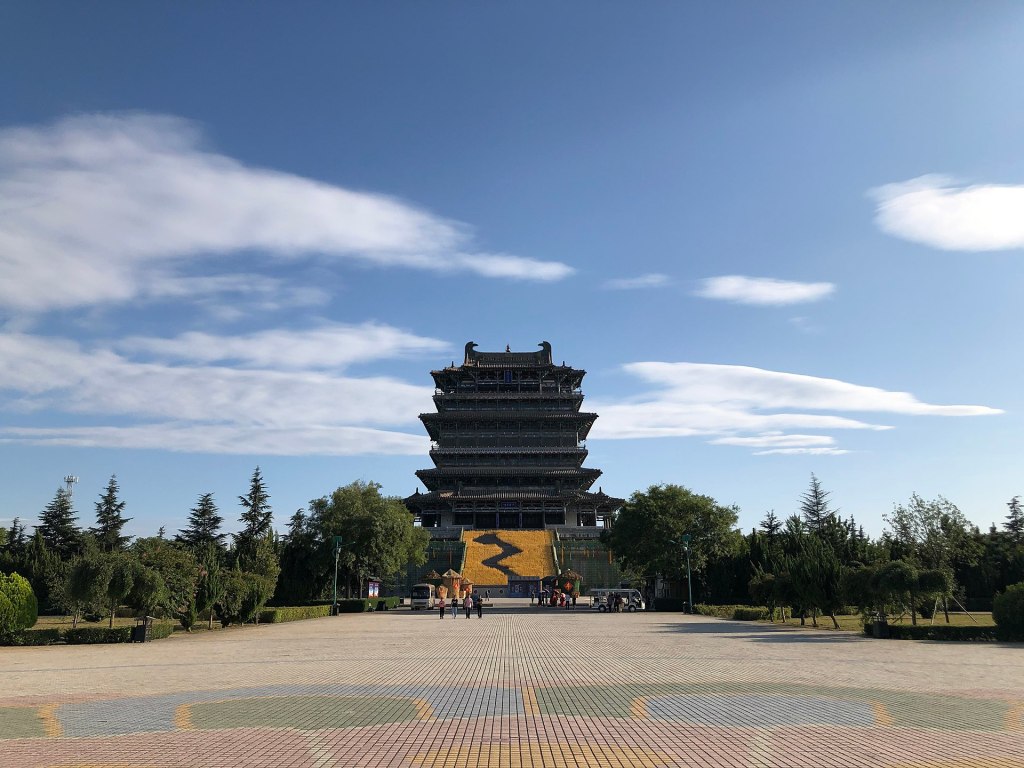
    Guanque Tower, Linjin, Shanxi Province

    The 2nd year of Emperor Gaozu(205 B.C. continued)

    The King of Han returned to his capital, Yueyang, in June. On June 6, he designated his son, Liu Ying, as the Crown Prince and declared an amnesty for all criminals in the kingdom.

    The Han army besieged and flooded the city of Feiqiu, leading to its surrender. General Zhang Han, seeing no escape, committed suicide. The Kingdom of Yong, which came under the control of the Han, was divided into three commanderies: Zhongdi, Beidi and Longxi.

    During this time, a severe famine struck the Guanzhong region, causing the price of a bushel of rice to soar to ten thousand money units (about half a kilogram of gold). In desperation, some people resorted to cannibalism. The Han government encouraged the starving population to relocate to the more fertile regions of Shu and Hanzhong commandery.

    When the Qin Empire fell, the wealthy hoarded gold and jade. However, Mr. Ren from Xuanqu focused on stockpiling grain in his family cellars. As the Chu and Han armies engaged in prolonged warfare near Xingyang, preventing farmers from tending their fields, the value of food soared. The wealthy soon traded their gold and jade to Mr. Ren in exchange for grain, leading his family to amass substantial wealth that sustained them for generations.

    In August, the King of Han traveled to Xingyang. He assigned Xiao He to remain in Guanzhong to oversee the care of the Crown Prince, granting him full authority over legislation, the construction of altars for ancestral worship, royal palaces, and the administration of counties and towns. Xiao He was empowered to make decisions promptly without the need to consult the King, with the understanding that these decisions would be ratified upon the King’s return. Xiao He also created a comprehensive registry of all households in the Guanzhong region, and he efficiently managed the transport of food supplies and conscripts to the army, ensuring that the forces never faced shortages.

    The King of Han sent Li Yiji to persuade Wei Bao, the King of Wei, to return to Xingyang. However, Wei Bao refused, saying, “The King of Han is rude and abusive. He treats his allies and ministers as if they were slaves. I cannot bear to face him again!”

    In response, the King of Han appointed Han Xin as Vice Chancellor, with Guan Ying and Cao Shen as his lieutenants, and tasked them with leading the campaign against the Kingdom of Wei. The King of Han then inquired of Li Yiji, “Who is the commander-in-chief of Wei?” Li Yiji replied, “Bo Zhi.” The King of Han dismissed this with disdain, saying, “Bo Zhi is just a child, still wet behind the ears! How could he stand up to Han Xin?”

    He continued his inquiry, asking, “Who is their cavalry commander?” Li Yiji answered, “It is Feng Jing.” The King of Han remarked, “He is the son of Feng Wuze, a general of Qin. He is capable, but he will not be able to defeat Guan Ying.” Then he asked, “Who is their infantry commander?” Li Yiji responded, “It is Xiang Tuo.” The King of Han relaxed, saying, “He is no match for Cao Shen. I have no worries.”

    Han Xin also questioned Li Yiji, asking, “Is the commander-in-chief of Wei not Zhou Shu?” Li Yiji assured him, “No, it is Bo Zhi.” With that reassurance, Han Xin felt relieved and commented, “He is just a juvenile.” Confident in their advantage, Han Xin initiated the campaign against the Kingdom of Wei.

    The King of Wei, Wei Bao, positioned his forces at Puban to defend against the Han army stationed at Lijin Pass. Han Xin executed a tactical ruse by deploying decoy troops and displaying numerous boats at Linjin Pass, creating the illusion of a large-scale crossing of the Yellow River. Meanwhile, he secretly sent another force across the river at Xiayang county using pontoons constructed from tree logs and ceramic urns. This surprise attack force swiftly advanced on Anyi County.

    Caught off guard, Wei Bao quickly led his troops to confront Han Xin‘s forces but was defeated. In September, Han Xin captured King Wei Bao, who was then taken to Xingyang. With the fall of Wei Bao, the entire territory of the former Kingdom of Wei came under the control of the King of Han. The conquered region was reorganized into three commanderies: Hedong, Shangdang, and Taiyuan.

    When the Han army suffered a major defeat to the west of Pengcheng, Chen Yu discovered that Zhang Er was still alive. Upon this realization, he immediately turned against the King of Han. After successfully taking control of the Kingdom of Wei, Han Xin proposed leading a force of thirty thousand elite troops to launch a campaign against the northern Kingdoms of Yan and Zhao, as well as the eastern Kingdom of Qi. He also aimed to cut off the supply lines of the Chu forces from the south. The King of Han approved Han Xin‘s strategic plan and assigned Zhang Er to assist him on the mission.

    Han Xin‘s army advanced eastward before turning north to attack the Kingdoms of Zhao and Dai. During the leap month of September, Han Xin decisively defeated the army of Dai and captured Xia Yue, the Prime Minister of Dai, in the town of Yuyu. Following these rapid victories over Wei and Dai, the King of Han ordered Han Xin‘s elite troops to return to Xingyang to reinforce defenses against the advancing forces of Chu.

  • Comprehensive Reflections to Aid in Governance(Part 79): Passing the Helm

    Comprehensive Reflections to Aid in Governance

    By Sima Guang

    Translated By Yiming Yang

    Annals of Han Book 1 Scroll 9 (continued)

    Xingyang Pass, Xingyang, Henan Province

    The 2nd year of Emperor Gaozu(205 B.C. continued)

    Tian Heng launched an attack on Tian Jia, the King of Qi appointed by Xiang Yu, forcing Tian Jia to flee to the Kingdom of Chu, where he was eventually killed. Tian Heng then unified the three regions that made up the Kingdom of Qi, bringing them all under his rule.

    The King of Han consulted with his ministers, saying, “I want to step down from leading the campaign to conquer the lands east of Hangu Pass. I wish to pass on the leadership to a few capable leaders and let them conquer on their own. To whom should I hand over this responsibility?” Zhang Liang recommended the candidates: “The King of Jiujiang, Ying Bu, is an outstanding general of Chu, but he does not see eye to eye with Xiang Yu. General Peng Yue, in collaboration with the Kingdom of Qi, is reclaiming the land of Liang (Wei). These two can immediately share the burden. Among the generals under your command, only Han Xin has the ability to take on this significant task and operate independently. If Your Majesty truly wants to step down, passing the leadership to these three generals will lead to the defeat of the Kingdom of Chu.”

    Earlier, King Xiang Yu had requested troops from the Kingdom of Jiujiang for his attack on the Kingdom of Qi, The King of Jiujiang, Ying Bu, took a leave of absence and sent only one of his generals with a few thousand troops. Later, when the King of Han broke into Pengcheng, Ying Bu claimed to be ill again and did not assist in defending the Kingdom of Chu. King Xiang Yu was displeased with Ying Bu‘s actions, sending numerous messengers to reprimand him and summon him to his headquarters. Ying Bu, growing even more fearful, did not dare to comply.

    At the time, King Xiang Yu‘s primary concerns were the Kingdoms of Qi and Zhao in the north and the Kingdom of Han in the west. Despite his frustration with Ying Bu, Xiang Yu valued Ying Bu‘s military prowess and knew that the King of Jiujiang was his only ally in the region, so he refrained from attacking Ying Bu’s camp.

    Meanwhile, the King of Han moved his headquarters from Xiayi county to Dang county and then to Yu county. Frustrated with his situation, he vented to his advisors, saying, “I cannot discuss the important matters of this country with men like you!” Sui He, one of his internuncios, stepped forward and asked, “I don’t understand what Your Majesty means.” The King of Han sighed and said, “Who can be my envoy to Jiujiang to persuade Ying Bu to break faith with Xiang Yu? If Ying Bu could lead his troops to support us and hold Xiang Yu in check for just a few months, I would have a hundred percent chance of winning the country!” Sui He volunteered, saying, “I would like to be the envoy.” The King of Han then sent Sui He as his representative to Jiujiang with a retinue of twenty people.

    The King of Han reached the city of Xingyang in May, where several scattered and defeated troops regrouped. Xiao He also provided drafted soldiers from Guanzhong, including those who were previously unregistered because they were deemed too old or too young, all converging in Xingyang. This bolstered the strength of the Han army and greatly improved its morale.

    The Chu army, having routed the Han forces in Pengcheng, pursued the fleeing Han soldiers northward all the way to Xingyang, riding the momentum of their victory. They engaged the Han army in several skirmishes in Jing County and Suo town, south of Xingyang. As more Chu cavalry joined the battle, the King of Han sought to appoint a cavalry commander from among his forces. His advisors recommended the former cavalrymen of the Qin army, Li Bi and Luo Jia, both from nearby Zhongquan County.

    However, when the King of Han announced their selection, Li Bi and Luo Jia declined, saying, “We might not have the full trust of the Han soldiers because we were once subjects of Qin. We would prefer to support a leader who is both close to Your Majesty and a skilled horseman.” In response, the King of Han appointed Guan Ying as the cavalry commander, with Li Bi and Luo Jia as the Colonel of the left and right wings.

    This newly appointed cavalry force, led by Guan Ying, engaged the Chu horsemen and won a decisive battle to the east of Xingyang. After this victory, the Chu army never advanced west of Xingyang again. The King of Han then set up camp in Xingyang and constructed an express highway from Xingyang to the crossing of the Yellow River, enabling the rapid delivery of grain from his warehouses in Ao’cang.

    Zhou Bo and Guan Ying approached the King of Han, expressing their concerns: “Although Chen Ping is a very handsome fellow, his character is questionable. We’ve heard that he had an affair with his sister-in-law when he was still at home. He worked for the Kingdom of Wei and did not do well there. He then went to the Kingdom of Chu and failed to succeed there as well. Now, he has come to serve the Kingdom of Han. Your Majesty holds him in high regard and has appointed him as the supervisor of the army officers. We’ve heard that he has accepted bribes in gold, giving good positions to those who offered him more gold and bad positions to those who offered less. Chen Ping seems to be an opportunist and a corrupt official. Your Majesty must look into this!”

    The King of Han became suspicious of Chen Ping and summoned Wei Wuzhi, who had recommended Chen Ping, to reproach him. Wei Wuzhi defended himself, saying, “What I spoke of was Chen Ping‘s ability, not his character. Suppose we have a person with an impeccable character like Weisheng or Xiaoji (ancient people known for honesty and filial piety), but who has no influence on winning or losing the war—why would Your Majesty employ such a person? Now, the Kingdoms of Chu and Han are in fierce contention. When I recommended Chen Ping, I did so based on his intelligence and clever ideas that could help the Kingdom of Han. His personal affairs with sister-in-law or accusations of accepting bribes do not disqualify him.”

    The King of Han then called in Chen Ping and berated him: “You didn’t achieve success in the Kingdom of Wei, then you left the Kingdom of Chu, and now you are here with me. Does a loyal person change his allegiances so easily?”

    Chen Ping replied, “I served the King of Wei, but he wouldn’t listen to my advice, so I left. When I worked for King Xiang Yu, he did not trust anyone whose surname was not Xiang or who wasn’t related to him by marriage. Even if he had talented individuals under his command, he wouldn’t make full use of them. I came to work for Your Majesty because I heard that you make the most use of talented people. I came with nothing and accepted donations because I had no resources. I hope Your Majesty will adopt my proposals if they are useful. If not, the money I accepted is all here, and I beg you to take it back and let me leave empty-handed.”

    The King of Han apologized to Chen Ping, rewarded him with more gifts, and promoted him to the Central Commandant of army supervision, responsible for overseeing all the generals. This promotion silenced the complaints among the generals.

    The King of Wei, Wei Bao, took a leave of absence to visit his mother, who was supposedly ill. Upon crossing the Yellow River, he blocked the crossing and switched his allegiance to the Kingdom of Chu.

  • Comprehensive Reflections to Aid in Governance(Part 78): The Debacle in Pengcheng

    Comprehensive Reflections to Aid in Governance

    By Sima Guang

    Translated By Yiming Yang

    Annals of Han Book 1 Scroll 9 (continued)

    Yunlong Park in Xuzhou (Pengcheng), Jiangsu Province

    The 2nd year of Emperor Gaozu(205 B.C. continued)

    The King of Han crossed the Yellow River to the south at the crossing of Pingyin Ford. His procession was halted in the town of Xincheng in Luoyang City by Mr. Dong, a local ethics educator(Three Elders of the Town). Mr. Dong addressed the King of Han: “I have heard it said, ‘Those who follow morality will prosper, and those who defy it will perish.’ Another saying goes, ‘A military campaign without a moral justification will not succeed.’ That is why people say, ‘Expose the evil of your enemy first, then you can overthrow it.’ Xiang Yu is profoundly immoral; he exiled his lord and then murdered His Majesty. He is the greatest wrongdoer in the land. A benevolent government does not resort to violence, and seeking justice does not rely on brute force. Your Majesty should mourn the death of the Honorary Emperor by dressing your entire army in white. You should send manifestos to all the kings in the realm, calling on them to unite against Xiang Yu. This would follow the example of the three kings who founded the dynasties (Xia, Shang, Zhou).”

    The King of Han conducted a funeral for the Honorary Emperor, baring his arms and weeping loudly during the ceremony, which lasted three days. He then sent messengers to all the kings with this message: “The Honorary Emperor was inaugurated by the realm, and we all pledged our allegiance to him. Xiang Yu exiled the Honorary Emperor to the south of the Yangtze River and then murdered him. Such an act is an abomination! I will mobilize all the forces of Guanzhong, recruit warriors from Henan, Hedong, and Henei commanderies, and sail down the Yangtze and Hanshui Rivers. I call upon all monarchs to join in avenging the Honorary Emperor!”

    When the messenger reached the Kingdom of Zhao, Chen Yu responded, “We will join if the Kingdom of Han kills Zhang Er.” To meet this demand, the King of Han found a man who resembled Zhang Er, beheaded him, and sent another messenger carrying the severed head to Chen Yu. Satisfied, Chen Yu then dispatched troops to aid the army of Han.

    Tian Rong’s younger brother, Tian Heng, reassembled Tian Rong’s fleeing soldiers and gathered a force of tens of thousands. They launched a rebellion in Chengyang commandery. In April, during the summer, Tian Heng declared Tian Rong’s son, Tian Guang, as the King of Qi and openly challenged Xiang Yu. Xiang Yu engaged in multiple battles with Tian Heng but was unable to defeat him. Although he learned that the army of Han was advancing eastward, Xiang Yu remained bogged down in the land of Qi, as he needed to break Qi‘s resistance before turning to confront Han‘s forces.

    Meanwhile, the King of Han commanded 560,000 soldiers from allied kingdoms to launch a raid into the land of Chu. Upon reaching Waihuang county, Peng Yue led his thirty thousand soldiers to join forces with Han. The King of Han remarked, “General Peng has recaptured a dozen cities of Wei and wants to quickly enthrone a descendant of Wei. Here, the King of West Wei, Wei Bao, is a true descendant of Wei.” He then appointed Peng Yue as the prime minister of the Kingdom of Wei, allowing Peng Yue to command his troops independently to expand their territories in the land of Wei.

    The King of Han entered Pengcheng, the capital of West Chu, and seized Xiang Yu’s treasures and harem. He began to indulge in daily celebrations, wining and dining to mark his victories.

    Xiang Yu, upon learning that his home had been raided, ordered his generals to continue the fight in Qi while he led thirty thousand elite troops southward. Starting from Lu County, they passed through Huling County and reached Xiao County. At dawn, they launched a surprise assault on the Han army, pushing eastward, and by noon, they reached Pengcheng, where they decisively routed the Han forces. The soldiers of Han fled in disarray, many running into the Gu River and Si river, where hundreds of thousands drowned. Others fled south toward the mountains, pursued relentlessly by the Chu fighters, who drove them to the Sui River, east of Lingbi County. There, the Chu forces pressed several hundred thousand Han soldiers against the river, causing so many to perish that their bodies clogged the riverbed, halting its flow.

    Xiang Yu‘s troops encircled the King of Han with three rings of soldiers. Just then, a strong northwesterly wind arose, uprooting trees, tearing roofs off houses, and creating a cloud of dust and sand that turned day into darkness. The blinding storm struck the Chu army, scattering their ranks. Seizing the moment, the King of Han, along with a few dozen cavalry guards, broke through the encirclement and escaped. They planned to stop by Pei County to retrieve their family members, but by the time they arrived, the soldiers of Chu had already beaten them to it, and the King of Han’s family members were nowhere to be found.

    The King of Han eventually encountered his children, Prince Hui (Liu Ying) and Princess Yuan of Lu, and got them into his wagon. As the cavalry of Chu drew near, he panicked and, in his desperation to speed up the carriage, repeatedly pushed his children off it. Duke Teng, Xiahou Ying, who served as the Grand Coachman of Han, was forced to jump off the wagon to retrieve them each time. After the third time, Xiahou Ying pleaded, “I understand the urgency, but the horses cannot go any faster. How could you ditch your children?” He maintained the carriage at moderate speed. The King of Han, enraged, attempted to kill Xiahou Ying dozens of times, but Xiahou Ying’s soldiers protected the retinue, ensuring the safety of both the King’s children and the group.

    Meanwhile, Shen Yiji was escorting the King of Han‘s father (the Grandpa Liu) and wife, Queen Lü, along an alternate route. They attempted to rendezvous with the King of Han but encountered Chu soldiers and were captured, eventually being taken to Xiang Yu‘s camp, where they were held as hostages.

    The brother of Queen Lü, the Marquis of Zhoulü, led a force stationed at Xiayi county. The King of Han managed to reach this location by taking alternate routes, gathering several soldiers who were fleeing. However, as the situation grew dire, many of the allied forces began to defect and return to Xiang Yu‘s camp. The King of Sai, Sima Xin, and the King of Di, Dong Yi, switched their allegiance to the Kingdom of Chu.

  • Comprehensive Reflections to Aid in Governance(Part 77): Chen Ping, A Handsome Careerist

    Comprehensive Reflections to Aid in Governance

    By Sima Guang

    Translated By Yiming Yang

    Annals of Han Book 1 Scroll 9 (continued)

    Chen Ping’s hometown, Yuanyang(Yangwu) County

    The 2nd year of Emperor Gaozu(205 B.C.)

    In October of that winter, King Xiang Yu issued a secret order to the King of Jiujiang, the King of Hengshan, and the King of Linjiang to attack the Honorary Emperor. They murdered the emperor and disposed of his body in the river.

    Chen Yu drafted a force from his three-county fiefdom and joined a surprise attack on the Kingdom of Changshan alongside the troops from the Kingdom of Qi. The King of Changshan, Zhang Er, failed to defend his kingdom and fled westward to the army of Han, where he sought refuge with the King of Han in Feiqiu County. The King of Han received him with high regard. Chen Yu welcomed back the former King Zhao Xie from the Kingdom of Dai and reinstated him as the King of Zhao. In gratitude, the King of Zhao granted Chen Yu the title of King of Dai. However, Chen Yu did not go to his kingdom; instead, he remained in the capital to assist the new King of Zhao in establishing a new government. He sent Xia Yue to the Kingdom of Dai as the prime minister.

    Zhang Liang escaped from the Kingdom of Hán and returned by taking an alternate route. The King of Han awarded him the title of Marquis Chengxin. Zhang Liang was in poor health and had never commanded an armed force on his own. He often served as a strategist, remaining at the King of Han‘s side.

    The King of Han went to Shan County to console the people outside the Kingdom of Qin. The King of Henan, Shen Yang, submitted to the King of Han, and the Kingdom of Han established the administration of Henan Commandery.

    The King of Han appointed Xin, the grandson of King Xiang of Hán, as the chief commander of the armed forces of Hán. He ordered Xin’s troops to recapture the territory of the former Kingdom of Hán. Xin led a blitzkrieg on Yangcheng County, compelling Zheng Chang, the King of Hán appointed by Xiang Yu, to surrender. The King of Han then granted Xin the title of King of Hán. Xin continued to command the armed forces of Hán, staying by the side of the King of Han most of the time.

    The King of Han moved the capital to Yueyang City. 

    Several generals of the Kingdom of Han conquered the Longxi Commandery.

    In January of that spring, King Xiang Yu and his army advanced north, arriving at Chengyang Commandery. The King of Qi, Tian Rong, led his troops into a decisive battle there but was defeated. Tian Rong fled to Pingyuan County, where he was killed by the local people. King Xiang Yu then reinstalled Tian Jia as the King of Qi.

    King Xiang Yu’s troops continued north to Beihai Commandery, pillaging cities, burning castles, and destroying residential houses along the way. They buried Tian Rong’s surrendered soldiers alive and took the elderly, the young, and women as prisoners, enslaving them. The devastation they left in their wake forced the people of Qi to unite and rise in revolt.

    A general of Han conquered the town of Beidi and captured Zhang Ping, the younger brother of the King of Yong, Zhang Han.

    In March, the King of Han crossed the Yellow River at Linjin Pass. The King of West Wei, Wei Bao, surrendered and placed his troops under the King of Han’s command. The Han army then sacked the Kingdom of Henei and captured the King of Yin, Sima Ang, establishing an administration in the Henei Commandery.

    A man from Yangwu county named Chen Ping came from a poor family but had a passion for reading. He was once in charge of distributing sacrificial meat among his community after the ceremonies of progenitor worship. Chen Ping sliced and divided the meat so evenly that he received praise from the community. The locals said, “We are fortunate to have this young man in charge of the meat sharing.” Chen Ping sighed and replied, “Ah! If only you could make me responsible for the whole country; public affairs would be as well taken care of as this meat!”

    When the allies rebelled against the rule of Qin, Chen Ping worked for the King of Wei, Wei Jiu, as the minister of transportation. He proposed some ideas to Wei Jiu, but they were not adopted. Disheartened, he left Wei Jiu when a scandal was spread about him. He later joined Xiang Yu and was given a position as a staff officer. When the King of Yin, Sima Ang, rebelled against Xiang Yu, Chen Ping was sent to suppress the mutiny, successfully forcing Sima Ang to back down. On his triumphant return, he was promoted to chief commandant and awarded 480 ounces of gold.

    Shortly afterward, the King of Han took over the Kingdom of Yin, and Sima Ang surrendered. Furious, Xiang Yu considered punishing the officers who had previously suppressed Sima Ang’s mutiny. Fearing for his safety, Chen Ping returned the gold and the seal of the chief commandant to Xiang Yu, changed his clothes, and fled via alternate routes, taking only a sword with him. He crossed the Yellow River and joined the forces of Han in Xiuwu county. With the help of his friend Wei Wuzhi, Chen Ping secured an appointment with the King of Han.

    The King of Han summoned Chen Ping and dined with him. As the King was about to send Chen Ping to rest in the guest house, Chen Ping insisted, “I have come with a mission. What I need to discuss cannot wait another day.” The King of Han, delighted by their conversation, asked Chen Ping, “What rank did you hold in the Kingdom of Chu?” Chen Ping replied, “I was a chief commandant.” The King of Han immediately reinstated him as chief commandant, appointed him to his entourage, and made him the supervisor of army officers.

    These rapid promotions caused an uproar among the Han generals. They complained, “Can you believe it? The King accepts a defector from Chu, puts him in his entourage, and even makes him to be a supervisor to oversee veterans like us!” Despite the complaints, the King of Han, aware of the discontent, only trusted Chen Ping more.