Tag: history

  • Comprehensive Reflections to Aid in Governance(Part 122): General Zhou Yafu

    Comprehensive Reflections to Aid in Governance

    By Sima Guang

    Translated By Yiming Yang  

    Annals of Han Book 7 Scroll 15 (continued)
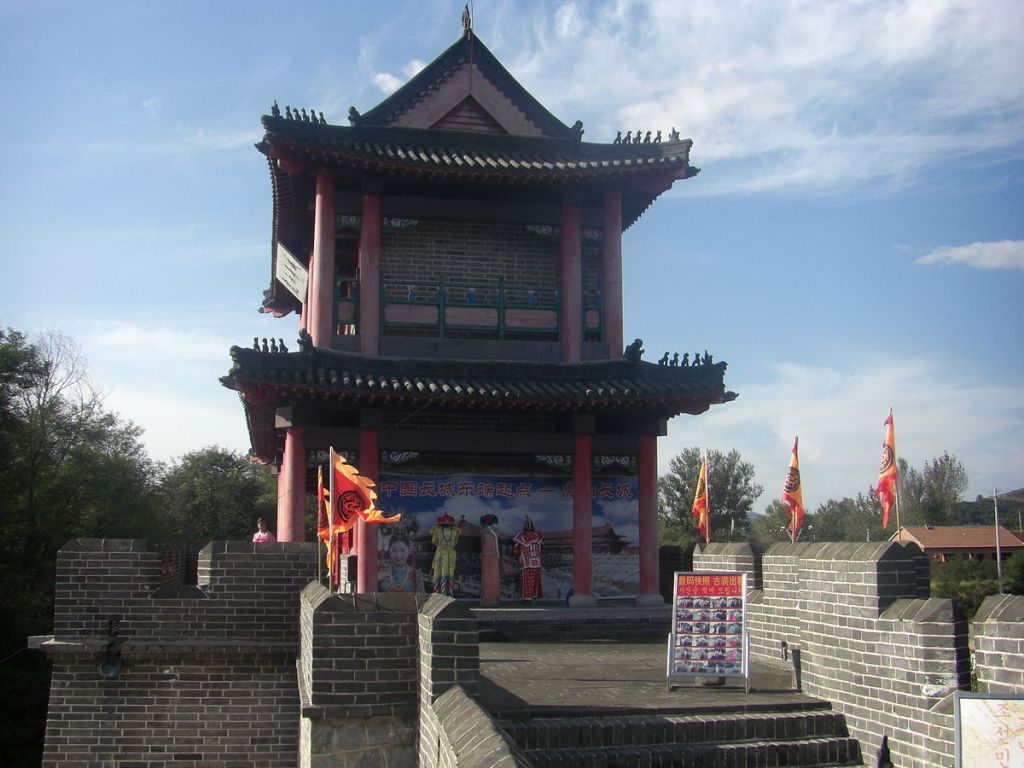
    The Great Wall in Dandong, Liaoning Province (Liaodong)

    The 2nd year of the Emperor Wen’s Later Era (162 B.C.)

    In the summer, the Emperor embarked on a journey to visit the Yuyang Palace in Yong County.

    In June, Prince Xiao of Dai, Liu Can, passed away.

    For several consecutive years, the Xiongnu had raided the border regions, causing extensive casualties and the plundering of both people and livestock. The most severely affected areas were Yunzhong and Liaodong, with over ten thousand people in each commandery. Troubled by this, the Emperor sent envoys with a letter to the Xiongnu. In response, the Chanyu (leader of the Xiongnu) dispatched a chieftain as an emissary to express gratitude. The court then renewed the peace treaty and marriage alliance with the Xiongnu.

    On July 1, Chancellor Zhang Cang resigned from his position. The Emperor, considering Dou Guangguo, the Empress’ younger brother, to be capable and virtuous, wished to appoint him as the new Chancellor. However, he hesitated, concerned that such a move might be seen as favoritism towards his own family, potentially stirring discontent among the people.

    The Emperor could not find any other suitable candidates among the remaining ministers who had served during the reign of Emperor Gaozu.

    The Grand Master of the Censorate, Shentu Jia of the principality of Liang, had previously served under Emperor Gaozu as a strong-bow archer, capable of drawing a stiff bow with his feet. He had been granted the title of Marquis within Passes. On August 4, Shentu Jia was appointed Chancellor and received the title of Marquis of Gu’an. He was known for his integrity and uprightness, refusing to accept private audiences at his residence.

    At that time, the Grandee of the Palace, Deng Tong, was held in great favor by the Emperor and was rewarded with lavish gifts and grants, amassing immense wealth. The Emperor often held banquets at Deng Tong‘s home, showing him exceptional favor.

    Once, when Shentu Jia entered the court, Deng Tong peremptorily took a position close to the Emperor, displaying disrespectful behavior. After Shentu Jia presented his report, he remarked, “Your Majesty favors your darling associates, generously bringing them wealth and prestige as you please. But when it comes to court decorum, it must be observed with the utmost solemnity.” 

    The Emperor replied, “You need not speak further; this is my personal matter.”

    After the court session, Shentu Jia, now in his office, sent an urgent message summoning Deng Tong. When Deng Tong did not appear, Shentu Jia ordered his execution. Fearing for his life, Deng Tong rushed to the Emperor and explained the situation. The Emperor responded, “Go to him first; I will send for you shortly.” 

    Deng Tong went to the Chancellor’s office, barefoot and uncapped, bowing deeply to plead for mercy to the Chancellor. Shentu Jia, however, remained seated, showing no courtesy, and sternly reprimanded him: “This court is that of Emperor Gaozu. You, a lowly official, behaved playfully and flippantly on the palace platform. By the rules, you should be executed! Officials, carry out the sentence!”

    Deng Tong kowtowed incessantly, with blood dripping from his head, but Shentu Jia did not relent. Thinking that the Chancellor had given Deng Tong a hard time, the Emperor sent an envoy bearing the imperial insignia to summon Deng Tong and apologize to the Chancellor, “He is my playful servant. Please let him off.” 

    When Deng Tong returned, he wept and said to the Emperor, “The Chancellor almost had me killed!”

    The 3rd year of the Emperor Wen’s Later Era (161 B.C.)

    In February of that spring, the Emperor embarked on a journey to visit Dai Commandery.

    This year, Xiongnu Laoshang Chanyu passed away, and his son Junchen succeeded him as the new Chanyu.

    The 4th year of the Emperor Wen’s Later Era (160 B.C.)

    On April 30, there was a solar eclipse.

    In May, there was a general amnesty declared throughout the entire empire.

    The Emperor embarked on a journey to visit Yong County.

    The 5th year of the Emperor Wen’s Later Era (159 B.C.)

    In January of spring, the Emperor embarked on a journey to visit Longxi.

    In March, he traveled to Yong County.

    In July of autumn, the Emperor journeyed to Dai.

    The 6th year of the Emperor Wen’s Later Era (158 B.C.)

    In winter, 30,000 Xiongnu cavalry entered Shanggu County, and another 30,000 entered Yunzhong. They caused widespread killings and looting, with beacon fire signals reaching Ganquan County and Chang’an. The court appointed the Grandee of the Palace, Ling Mian, as General of Chariots and Cavalry, stationing him in Feihu Pass. Su Yi, the former Prime Minister of Chu, was appointed general at Gou’zhu Pass. General Zhang Wu was stationed in Beidi, while Zhou Yafu, Prefect of Henei, was appointed general at Xiliu. Liu Li, the Minister of the Imperial Clan, was stationed as general at Bashang, and Xu Li, the Marquis of Zhuzi, as general at Jimen—all in preparation against the Xiongnu threat.

    The Emperor personally visited and encouraged the troops, starting from Bashang and moving to Jimen and other military camps. He rode directly into the camps, accompanied by the general and his officers on horseback. However, upon reaching the Xiliu camp, the soldiers and officers were fully armed with sharp weapons and loaded crossbows, refusing to allow the Emperor entry. The lead of the Emperor’s cavalcade announced, “The Emperor is arriving!” but the camp gate officer replied, “The general’s orders state that no one is allowed to gallop through the military camp.”

    When the Emperor arrived, he still couldn’t enter. He then sent an envoy with the imperial insignia and a decree to the generals, stating, “I wish to enter the camp and personally show my appreciation to the troops.” Zhou Yafu transmitted the order to “open the camp gate.” The soldiers guarding the gate told the Chariots and Cavalry attendants, “The general has decreed that no galloping is allowed within the camp.” Thus, the Emperor proceeded slowly, holding the reins himself.

    Upon arriving at the camp, General Zhou Yafu greeted him with his weapon in hand and saluted, saying, “Armored warriors do not bow. I request to greet you with military courtesy.” The Emperor, showing respect, solemnly placed his hands on the rail of the carriage and observed the military formation before expressing his gratitude to General Zhou: “The Emperor respectfully greets the General.” After leaving the camp, the court officials were amazed.

    The Emperor remarked, “This is a real general indeed! The behavior of the generals at Bashang and Jimen was like child’s play. They are vulnerable to surprise attacks and capture. But Zhou Yafu is truly invincible!” The Emperor praised him constantly.

    After a month, both the Han forces and the Xiongnu withdrew from the border, and peace was restored. Zhou Yafu was then appointed Commandant of the capital guard.

    In April of summer, a severe drought and locust infestation struck. An order was issued for the principalities to suspend their tributary offerings. Restrictions on exploiting mountains and marshes were relaxed to allow more hunting and fishing, and expenses for imperial clothing and transportation were reduced. The number of government officials and attendants was also decreased. Granaries were opened to provide relief to the people, and citizens were permitted to sell or buy ranks and titles.

  • Comprehensive Reflections to Aid in Governance(Part 111): Minister of Justice Zhang Shizhi

    Comprehensive Reflections to Aid in Governance

    By Sima Guang

    Translated By Yiming Yang  

    Annals of Han Book 6 Scroll 14

    Shanglin Park, attr. Qiu Ying (1494–1552)

    The 3rd year of the Emperor Wen’s Early Era (177 B.C.)

    In winter, on October 29, there was a solar eclipse. 

    On November 30, there was an eclipse of the sun. 

    The imperial edict declared: “In the past, marquises sent to their fiefs may have refused to go. I hold the Chancellor in high regard, and I want him to lead the marquises back to their fiefs!” In December, Zhou Bo, the Chancellor, was dismissed and sent to his fief. 

    On December 14, Grand Commandant Guan Ying was appointed Chancellor, and his former position was abolished, with its duties merged into the Chancellor’s office. 

    In April of that summer, Prince Jing of Chengyang, Liu Zhang, passed away.

    Earlier, Zhang Ao, the Prince of Zhao, presented Consort Zhao to Emperor Gaozu as his companion, and the emperor impregnated her. When Guan Gao’s plot was uncovered, Consort Zhao was implicated and imprisoned in Henei. Her younger brother, Zhao Jian, appealed to Marquis Piyang, Shen Yiji, asking him to plead with Empress Lü in hopes of securing his sister’s release. However, Empress Lü, out of jealousy, did not raise the matter with the emperor. Consort Zhao had already given birth to a son, but out of bitterness, she committed suicide. Officials brought her son to the emperor, who regretted what had occurred. He named the boy Liu Chang and instructed Empress Lü to raise him, while the woman was buried in Zhending. Later, Liu Chang was granted the title of Prince of Huainan.

    The Prince of Huainan lost his mother at a young age and was always close to Empress Lü, so during the reigns of Emperor Hui and Empress Lü, he was trouble free. However, he resented Marquis Piyang, Shen Yiji, blaming him for failing to persuade Empress Lü, which he believed led to his mother’s death in desolation. After Emperor Wen ascended the throne, the Prince of Huainan, the emperor’s only surviving brother, became increasingly imperious and defiant, frequently violating the law with impunity. The emperor often pardoned him. That year, when the Prince of Huainan visited the court and went hunting with the emperor in the royal park, he rode in the same carriage as the emperor and addressed him as “big brother.”

    The Prince of Huainan, a man of great strength who could lift a cauldron, visited Marquis of Piyang and struck him with an iron mace concealed in his sleeve, then ordered his lackey, Wei Jing, to decapitate him. Afterward, the Prince of Huainan rushed to the palace, bared his back, and apologized to the emperor.  Encumbered by their familial connection, the emperor forgave him without punishment. At this incident, Empress Bo, the crown prince, and other high-ranking officials feared the Prince of Huainan. Emboldened by his pardon, the Prince of Huainan grew even more insolent upon returning to his fief, clearing the roads when he traveled, much like the emperor. He called his orders “Zhi,” mimicking imperial decrees, and proclaimed himself the “Son of Heaven,” a title reserved for the emperor. Yuan Ang warned the emperor that such a domineering vassal would inevitably cause trouble, but the emperor ignored the warning.

    In May, the Xiongnu‘s Right Tuqi King entered the south of the bend of Yellow River, raiding and plundering the border nomads in Shangjun Commandery, killing and capturing many. The Emperor traveled to Ganquan County and ordered Chancellor Guan Ying to lead an army of 85,000 cavalry to attack the Tuqi King in Gaonu County. He also commanded the officers under the Central Commandant to report to the Guard General and defend Chang’an. The Right Tuqi King fled beyond the borders.

    After arriving in Ganquan, the Emperor visited Gaonu and Taiyuan, where he met with his former ministers, presenting them with gifts. He also granted a three-year tax exemption to the people of Jinyang County and Zhongdu[the capital of the Principality of Dai]. The Emperor stayed in Taiyuan for more than ten days, enjoying his time there.

    Earlier, during the purge of the Lü family, the Marquis of Zhuxu made significant contributions. The ministers promised to grant him all the land of the Principality of Zhao and to give the Marquis of Dongmou all the land of the Principality of Liang. However, after the Emperor ascended the throne, he learned that the Marquis of Zhuxu and the Marquis of Dongmou had intended to enthrone their eldest brother, the Prince of Qi[Liu Xiang]. Suspicious of their motives, the Emperor deprived them of the full reward for their contributions. Reluctantly, he enfeoffed two commanderies of Qi to the Marquis of Zhuxu and the Marquis of Dongmou, respectively. Feeling unjustly treated, the Marquis of Dongmou, Liu Xingju, grew resentful. Upon hearing that the Emperor was preparing to campaign against the Xiongnu, Liu Xingju believed the Emperor would leave the capital for war and took the opportunity to rebel.

    When the Emperor learned of this, he recalled the Chancellor and withdrew the troops back to Chang’an. He appointed the Marquis of Jipu, Chai Wu, as Grand General, leading four generals and 100,000 soldiers to suppress the rebellion of the Marquis of Dongmou, Liu Xingju. The Marquis of Qihou, Zeng He, was also appointed as a general to lead troops in Xingyang. In July of autumn, the Emperor returned to Chang’an from Taiyuan and issued a decree: “The people of Jibei who surrender before the army arrives will be pardoned and their official positions restored. Those who conspired with Prince Liu Xingju will also be pardoned.” In August, the Prince of Jibei, Liu Xingju’s army was defeated, and he committed suicide.

    Zhang Shizhi from Nanyang had served as a cavalry attendant for ten years without reassignment and sought to resign and return home. However, Yuan Ang recognized his talent and recommended him, resulting in Zhang Shizhi being appointed as the Director of Internuncios.

    While accompanying the emperor on a tour, they visited the tiger menagerie. The Emperor asked the Shanglin Park Commandant several questions about the registry of birds and beasts in the Imperial Hunting Park. After more than ten questions, the commandant, looking around nervously, was unable to answer any of them. A warden in charge of the tiger menagerie stepped forward and answered on behalf of his superior, providing detailed responses to all the questions about the number of birds and beasts in the park. 

    Impressed, the Emperor continued asking more detailed questions, and the warden responded fluently and with great detail. 

    The Emperor remarked, “Shouldn’t every official be like this warden? We cannot rely on this commandant!” He then ordered Zhang Shizhi to replace the commandant with the warden as the new Shanglin Park Commandant.

    Sometime later, Zhang Shizhi approached the Emperor and asked, 

    “Your Majesty, what do you think of the Marquis of Jiang, Zhou Bo?” 

    The Emperor replied, “He is a respected elder.” 

    “And the Marquis of Dongyang, Zhang Xiangru?” 

    The Emperor answered, “They are both respected elders.” 

    Zhang Shizhi continued, “These two men are regarded as esteemed elders, yet they cannot express themselves fully. How can they compare to this park warden, who is quick-witted and eloquent? In the Qin dynasty, officials skilled with pen and paper were highly valued, competing to be the quickest and most detail-oriented clerks. But this led to nothing more than superficial reports while real issues were neglected, with problems hidden until they resulted in the dynasty’s collapse. By promoting this glib-tongued park warden, I fear the entire world will follow suit, competing to be the most eloquent while lacking substance. When those below influence those above, it creates noise rather than harmony. Therefore, selecting and promoting officials must be done carefully and not in haste.”

    The Emperor was pleased with Zhang Shizhi‘s advice and decided not to promote the park warden. Upon returning to his carriage, the Emperor invited Zhang Shizhi to join him as an assistant driver. As they moved along slowly, the Emperor asked Zhang Shizhi for his views on the decline of the Qin dynasty, to which Zhang Shizhi replied candidly. Upon arriving at the palace, the Emperor appointed Zhang Shizhi as the official in charge of the imperial carriage.

    Later, the Crown Prince and the Prince of Liang rode in a carriage to the court and failed to dismount at the Sima Gate, a portal guarded by officers. Zhang Shizhi stopped them from entering the palace and accused them of “failing to dismount at the public gate and showing disrespect,” which he reported. Even Empress Dowager Bo was informed of the incident. The emperor, humbled, removed his hat and apologized for not raising his son properly. Empress Dowager Bo then sent someone to pardon the Crown Prince and the Prince of Liang, allowing them to enter. The Emperor, impressed by Zhang Shizhi‘s sense of duty, appointed him as the Grandee of the Palace, and shortly thereafter, promoted him to General of the Palace.

    As they traveled to the Baling mausoleum, the Emperor said to his ministers, “Alas! My tomb is made of stones from the northern mountains. Woven oakum and lacquer fill the cracks. How could it ever be broken into?” Everyone around him agreed, but Zhang Shizhi responded, “If there is something desirable within, even if it is locked in the southern mountains, there will still be a way in. If there is nothing desirable inside, even without the stone tomb, what worry is there?” The Emperor praised his words.

    Zhang Shizhi was appointed Minister of Justice that year. On one occasion, as the Emperor was crossing the Middle Wei Bridge, a man suddenly ran out from beneath it, causing the imperial carriage horse to panic. The Emperor ordered his mounting guard to capture the man and hand him over to the Minister of Justice. Zhang Shizhi submitted a report stating, “This man violated the law of trespassing and should be punished with a fine.” The Emperor, angered, said, “This man startled my horse, and if not for its gentle disposition, it could have caused me great harm. Yet, as Minister of Justice, you only impose a fine?”

    Zhang Shizhi replied, “The law serves the common good of the people. According to the law, the appropriate punishment for this offense is a fine. If we enforce the law too harshly, the people will lose trust in it. Moreover, if Your Majesty had ordered the man’s execution at that moment, the matter would have already been resolved, and it wouldn’t have been referred to me. The Minister of Justice upholds the law of the land, and if we undermine its authority, how can we ensure justice in the future? I urge Your Majesty to reflect on this matter carefully.”

    The Emperor thought for a long time and ultimately agreed with Zhang Shizhi, “You are right. As the Minister of Justice, you have made the correct decision.”

    Later, someone stole a jade ring from the Temple of Emperor Gaozu and was caught. The emperor, furious, ordered the case to be handled by the Minister of Justice. Zhang Shizhi submitted a report stating that, according to the law, the punishment for stealing from the ancestral temple was death by beheading in a public market. The Emperor, even more enraged, said, “This person has no morals, yet he has stolen from my father! We let the Minister of Justice handle this case, meant to exterminate his entire family as punishment. But you submitted this report to the court, which does not reflect my reverence for my ancestors.”

    Zhang Shizhi bowed, removed his hat, and apologized, “This is the appropriate punishment according to the law. Furthermore, the severity of punishment for the same crime may vary depending on the context. If we were to exterminate his entire family for stealing from the ancestral temple, then, heaven forbid, should a foolish commoner take a handful of soil from the Emperor Gaozu’s tomb, how would Your Majesty punish him?”

    The Emperor then consulted Empress Dowager and was permitted to handle the case as Zhang Shizhi saw fit.

  • Comprehensive Reflections to Aid in Governance(Part 103): A Human Pig

    Comprehensive Reflections to Aid in Governance

    By Sima Guang

    Translated By Yiming Yang

    Annals of Han Book 4 Scroll 12 (continued)

    The tomb of Emperor Gaozu, Changling, Shaanxi Province, Photo by Sohan Dsouza

    The 12th year of the Emperor Gaozu (195 B.C. continued)

    During the campaign against Ying Bu, the emperor was struck by a stray arrow and became gravely ill while on the road. Empress Lü brought a skilled doctor to treat him, but the emperor refused medical care, “I rose from nobody to power by my own hands—was this not fate? Fate lies in Heaven; what benefit will a doctor bring, even if Bian Que[a legendary doctor] was here?” He dismissed the doctor, rewarding him with fifty catties of gold.

    Empress Lü then asked him who should succeed Xiao He as Chancellor after his passing. The emperor responded that Cao Shen would be a good choice, followed by Wang Ling, “Although Wang Ling is somewhat slow-witted and would require Chen Ping’s assistance. Chen Ping, whose wits are plenty, is not suitable for the role on his own. Zhou Bo, though not very educated or eloquent, is honest and straightforward, and he would be the one to secure the Liu family’s safety, so he should be appointed Grand Commandant.”  When asked who should succeed after that, the emperor replied, “That is beyond what you need to worry about.”

    In the summer, on April 25, the Emperor passed away at Changle Palace, and a grand mourning ceremony was held. A general amnesty was proclaimed throughout the empire.

    Lu Wan, along with several thousand men, was stationed at the frontier, awaiting the Emperor’s recovery. He had hoped to admit his mistakes and solicit a pardon when the Emperor regained his health. However, upon learning of the Emperor’s death, Lu Wan fled to Xiongnu.

    On May 17, Emperor Gaozu was buried at the Changling mausoleum.

    Although Emperor Gaozu was not a scholar, he had a sharp mind and a magnanimous nature. He was skilled in strategy and willing to listen to advice. He treated his former gatekeepers and soldiers like family. To address the people’s needs, he established the Law of Three Articles. After unifying the country, he appointed Xiao He to organize laws and regulations, Han Xin to codify military strategy and discipline, Zhang Cang to establish the legal code, and Shusun Tong to set the ceremonial system. He also rewarded his meritorious subjects by inscribing oaths of immunity and storing them in ancestral temples in the form of red books, iron tablets, golden boxes, and stone chambers. Despite his demanding schedule that had not enough hours in a day, he successfully established a comprehensive administrative system with a lasting impact.

    On May 20, the crown prince ascended the throne and became emperor, bestowing upon the Empress the title of Empress Dowager.

    When Emperor Gaozu was gravely ill, someone accused Fan Kuai of conspiring with the clan, alleging that they planned to order soldiers to execute the King of Zhao, Liu Ruyi, and his followers once the emperor died. Enraged, Emperor Gaozu sought the counsel of Chen Ping. He then ordered the Marquis of Jiang, Zhou Bo, to retrieve an imperial edict from his bedside: “Chen Ping, as my representative, is to go immediately to Fan Kuai‘s camp and replace him with Zhou Bo as commander. Once there, Chen Ping is to have Fan Kuai beheaded.”

    Zhou Bo and Chen Ping deliberated: “Fan Kuai has been with the emperor since childhood. He has accomplished so much and is married to the empress’s sister. He is both a noble and a member of the imperial family. The emperor, in his fury, ordered his execution, but what if he later regrets it? Let’s arrest him and take him to the emperor. Let the emperor decide his fate personally.”

    They set up a platform and summoned Fan Kuai using the emperor’s insignia. Fan Kuai, upon receiving the imperial edict, complied and was taken to Chang’an in a cage cart. Zhou Bo replaced Fan Kuai as the general in charge of pacifying the Yan rebellion.

    On his way back to the capital, Chen Ping heard of Emperor Gaozu‘s death and feared that Empress Lü‘s sister, Lü Xu, might denigrate him. He hurried back to Chang’an, but along the way, he encountered an imperial messenger ordering him and Guan Ying to station at Xingyang. Chen Ping accepted the order but quickly returned to the palace to mourn the emperor’s passing, weeping sorrowfully. He requested to stay in the imperial palace as a guard, and the Empress Dowager appointed him minister of imperial household to teach and assist the young emperor. As a result, Lü Xu‘s libels against Chen Ping were ineffective, and when Fan Kuai arrived in Chang’an, he was pardoned and restored to his former position and privilege.

    The Empress Dowager ordered to lock Consort Qi in the palace prison. She was shaved, shackled, dressed in a coarse red robe, and made to do manual labor such as pounding grain. The Empress Dowager also sent envoys to summon the Prince of Zhao, Liu Ruyi. After three attempts, Zhao‘s Prime Minister, Zhou Chang, refused to let Liu Ruyi accompany the envoys to the capital. He told them, “Emperor Gaozu entrusted the Prince of Zhao to me. The prince is still young, and I have heard that the Empress Dowager hates Consort Qi and intends to execute both her and the prince. I cannot send the Prince of Zhao as he is ill and unable to follow the imperial order.”

    The Empress Dowager, enraged, summoned Zhou Chang to Chang’an. After his arrival, she sent for the Prince of Zhao once more. The king was en route, but when the Emperor learned of the Empress Dowager’s animosity, he personally welcomed the Prince of Zhao at Bashang, brought him into the palace, and engaged him in daily activities. Although the Empress Dowager wished to kill Liu Ruyi, she could not find an opportunity.

    The 1st year of the Emperor Hui(194 B.C.)

    In December of that winter, the emperor went hunting in the early morning. The young Prince of Zhao could not rise as early, and the Empress Dowager sent someone to give him a cup of poisoned wine. When the emperor returned at dawn, he discovered that the King of Zhao had already died. The Empress Dowager then ordered Consort Qi’s hands and feet to be cut off, her eyes gouged out, her ears burned, and a potion administered to render her mute. She was kept in the outhouse and referred to as a “human pig.”

    A few days later, the emperor was summoned by the Empress Dowager to see this “human swine.” He recognized her and cried bitterly. His grief made him ill, and he remained bedridden for over a year. He passed messages to the Empress Dowager, “This is not something a human being should do. I am the son of the Empress Dowager, but I will never be able to govern the realm.” After this, the emperor indulged in drinking and pleasures, neglecting state affairs.

    Sima Guang’s commentary: As a son, one should remonstrate with his parents if they do something wrong. If the remonstration is ignored, one should weep and continue to persuade. How can one abandon the country and its governance, indulging in alcohol and carnal pleasure, because they cannot bear their mother’s cruelty, especially when entrusted with the legacy of the founding emperor and rulership of the realm? Emperor Hui can be seen as someone devoted to small acts of kindness but ignorant of great principles.

    The Prince of Huaiyang, Liu You, was removed from his position and made Prince of Zhao.

    In January, during the spring, construction of the city walls began in the northwest of Chang’an.

  • Comprehensive Reflections to Aid in Governance(Part 100): General’s Last Words

    Comprehensive Reflections to Aid in Governance

    By Sima Guang

    Translated By Yiming Yang

    Annals of Han Book 4 Scroll 12 (continued)

    Han Xin

    The 11th year of the Emperor Gaozu (196 B.C.)

    In the winter, the Emperor was in Handan. Chen Xi‘s general, Hou Chang, led more than ten thousand soldiers around Handan, while Wang Huang commanded over a thousand cavalry to attack from Quni county. Zhang Chun led over ten thousand soldiers across the river to assault Liaocheng county. Han’s generals, including Guo Meng and generals from the state of Qi, attacked and defeated them. Grand Commandant Zhou Bo marched from Taiyuan to the Dai territory, reached Mayi, but failed to capture it, and a subsequent violent assault destroyed it. Zhao Li defended Dongyuan, but the Emperor attacked, captured this county, and renamed it Zhending. The Emperor offered a thousand gold coins for the heads of Wang Huang and Wanqiu Chen, leading to their subordinates capturing both alive and surrendering to Han. As a result, Chen Xi‘s army collapsed.

    Marquis Huaiyin feigned illness and did not participate in the attack against Chen Xi. He secretly sent someone to Chen Xi’s residence to conspire with him. Han Xin plotted with his subordinates to issue a fake imperial decree pardoning all criminals and slaves, intending to use them to overthrow Empress Lü and the crown prince. The plan was set, awaiting news from Chen Xi. However, one of Han Xin‘s attendants offended him and was imprisoned, with the intention of being executed. In January, the attendant’s younger brother betrayed Han Xin by telling on his sedition to Empress Lü

    She wanted to summon Han Xin but feared he refused to come. Therefore, she conspired with Chancellor Xiao He to fabricate a report that the mutiny had already been suppressed and Chen Xi had died. The royalties and officials all congratulated the Emperor. Chancellor Xiao He deceived Han Xin, “Although you are ill, do the best you can to come and congratulate the Emperor.” Han Xin went to court, where the Empress Lü ordered warriors to bind and behead him in the Changle Bell Chamber. Just before his execution, Han Xin said, “I regret not following Kuai Che‘s advice. I was deceived by a woman and her son—was this not heaven’s will?” Han Xin‘s entire family, including the clans of his father, mother, and wife, was also executed.

    Sima Guang’s commentary: Some credit Han Xin as the one who first proposed the grand strategy and partnered with Emperor Gaozu to start from Hanzhong, establish control over the Three Qins, and then led separate forces north to capture the state of Wei, seize control of Dai, dominate Zhao, secure the allegiance of Yan, attack Qi in the east, and finally conquer Chu at the Battle of Gaixia in the south. In short, the establishment of the Han dynasty owes much to Han Xin’s achievements. Reflecting on his actions, did Han Xin really intend to rebel when he earlierly rejected Kuai Che’s advice and welcomed Emperor Gaozu in Chen County? It seems he was merely disappointed by a lack of recognition, which led him into conspiracy. Even Lu Wan became the King of Yan due to his old friendship with Emperor Gaozu, while Han Xin, had to meet with the Emperor as a marquise. Has the Emperor also shortchanged Han Xin?

    In my view, Emperor Gaozu used deceit to capture Han Xin in Chen County, so there was indeed some betrayal on the Emperor’s part. That being said, Han Xin deserved his misfortune as well. Initially, when the Han army was facing off against Chu at Xingyang, Han Xin had already conquered Qi and declared himself king without informing the Emperor. Later, when the Han army pursued Chu to Guling, Han Xin did not join forces with Emperor Gaozu as agreed upon. At that point, the Emperor had already intended to seize Han Xin but lacked the means. When the empire was finally unified, what did Han Xin have left to bargain with? Seeking opportunities for personal gain is the desire of ordinary people, while reciprocating for merits and repaying kindness is the heart of a gentleman. Han Xin pursued personal interests like an ordinary person but expected the recognition and respect of a gentleman—wasn’t that unrealistic?

    Thus, Sima Qian commented in his historical records: If Han Xin had learned humility, refrained from boasting of his achievements, and avoided exaggerating his abilities, wouldn’t that have been fortunate! Had he acted nobly and his merit to the Han dynasty could have been compared to the likes of the Duke of Zhou, the Duke of Shao, and Grand Duke Jiang, and would have been remembered for generations. But instead, he plotted rebellion after the world was already unified, leading to his downfall and the destruction of his entire clan. Wasn’t that fitting?

    General Chai Wu beheaded the King of Hán, Xin, in Canhe County. 

    Upon returning to Luoyang, the Emperor learned of the death of the Marquis of Huaiyin and had mixed feelings, torn between relief and grief. He asked Empress Lü, “What did Han Xin say before he died?” Empress Lü replied, “Han Xin regretted not heeding the advice of Kuai Che.” The Emperor said, “He must have meant Kuai Che, the strategist from Qi,” and ordered that Kuai Che be arrested and brought from Qi.

    When Kuai Che arrived, the Emperor asked, “Did you teach the Marquis of Huaiyin to rebel?” Kuai Che replied, “Yes, I did. But the brat did not follow my plan, and that is why he met his end here. Had he followed my plan, how could Your Majesty have executed him?” The Emperor, enraged, ordered Kuai Che to be boiled to death. Kuai Che exclaimed, “Oh, what an injustice to boil me!” The Emperor asked, “You taught Han Xin to rebel—how is this an injustice?” Kuai Che explained, “When the state of Qin let its deer loose, everyone in the world chased after it, and those who were swift and sharp-minded were the first to catch it. When the dog barked at Emperor Yao, it wasn’t because Emperor Yao was not benevolent but because the dog didn’t recognize its master. At that time, I only knew Han Xin, not Your Majesty. Besides, many sharp and skilled people in the world desire to do what Your Majesty is doing—they just haven’t yet gathered enough strength. Is it really necessary to execute them all?”

    The Emperor then said, “Pardon him.”

    The Emperor gave his son, Liu Heng, the title of King of Dai, with Jinyang as his capital. 

    He announced an amnesty for the country.

    When attacking Chen Xi, the Emperor called up troops from the kingdom of Liang. The King of Liang, Peng Yue, took sick leave and sent one of his generals with troops to Handan. The Emperor, furious, sent someone to reprimand him. Fearing punishment, Peng Yue wished to apologize in person. However, his general, Hu Zhe, advised, “If Your Excellency didn’t go before and only goes now after being reprimanded, you will be arrested. It’s better to take this opportunity to rebel with our troops.” Peng Yue ignored him.

    The Grand Coachman of Liang, who had fled to the Han court after being prosecuted for a crime in Liang, accused Peng Yue and Hu Zhe of plotting rebellion. As a result, the Emperor sent someone to ambush Peng Yue, who was caught off guard and captured in Luoyang. The judicial officers concluded, “There is evidence of rebellion. Please issue punishment according to the law.” However, the Emperor pardoned Peng Yue, reduced him to a commoner, and exiled him to Qingyi Dao(a county) in Shu commandery.

    On his way west, Peng Yue encountered Empress Lü at Zheng County, who was coming from Chang’an. Peng Yue wept, proclaimed his innocence, and requested to be resettled in his ancestral home of Changyi County. Empress Lü promised to grant his request and took him back east. Upon arriving in Luoyang, she reported to the Emperor, “Peng Yue is a great talent. If he is exiled to Shu, he will become a future threat. It’s better to execute him now. I took the liberty of bringing him back.” Empress Lü then ordered her attendant to accuse Peng Yue of plotting rebellion again. The Minister of Justice, Wang Tian, petitioned to punish him by exterminating his family, and the Emperor approved. In March, Peng Yue and his three clans were executed, and his head was displayed in Luoyang. A decree was issued: “Anyone who harbors or protects Peng Yue’s body will be arrested.”

    Luan Bu, a Grandee from the kingdom of Liang, was sent on a diplomatic mission to the kingdom of Qi. On his return to Luoyang, he passed by the public display of Peng Yue‘s severed head. Luan Bu went to the temple to pay his respects to the deceased and wept bitterly. Local officials arrested him and reported the incident to the emperor, who was enraged. Summoning Luan Bu, the emperor insulted him and ordered him to be boiled to death.

    As Luan Bu was being led to the boiling water pot, he asked to speak. The emperor granted him the chance, and Luan Bu said: “When Your Majesty was in trouble at Pengcheng and defeated between Xingyang and Chenggao, the reason King Xiang Yu did not advance further west was that the King of Liang, your ally, troubling the army of Chu in coordination with your troops. At that time, King Peng Yue held the balance of power. Had he joined forces with Chu, Han would have been destroyed; had he joined forces with Han, Chu would have been demolished. At the Battle of Gaixia, without King Peng Yue, King Xiang Yu would not have been annihilated. Now that Your Majesty has unified the empire, the King of Liang accepted the tally and title from Your Majesty, and also would like to pass it to his descendants for generations. But when you summoned him to raise troops from the kingdom of Liang, he could not comply due to illness. Your Majesty suspected him of rebellion without proof and executed him over a trivial matter. I fear this will make loyal officials feel insecure. Now that the King of Liang is dead, I am ready to die as well. Go ahead and boil me.”

    The emperor was moved by his words and decided to spare Luan Bu‘s life. Instead, he appointed him as a commandant.

    On February 20, Prince Liu Hui was established as the King of Liang. On March 11, Prince Liu You was established as the King of Huaiyang. The Dongjun commandery was abolished and annexed by the Liang kingdom, while the Commandery of Yingchuan was abolished and annexed by the Huaiyang kingdom.

    In April, during the summer, the emperor returned to the capital from Luoyang.

  • Comprehensive Reflections to Aid in Governance(Part 99): Protecting The Heir Apparent

    Comprehensive Reflections to Aid in Governance

    By Sima Guang

    Translated By Yiming Yang

    Annals of Han Book 4 Scroll 12 (continued)

    General Chen Xi

    The 10th year of the Emperor Gaozu (197 B.C.)

    The Emperor Emeritus(the emperor’s father) passed away at the Yueyang Palace in May of the summer. He was buried at Wannian tomb on July 14 in the autumn. The kings of Chu and Liang both attended the funeral. The prisoners of Yueyang county were granted amnesty.

    Consort Qi of Dingtao was favored by the emperor and gave birth to Prince Ruyi, the King of Zhao. The emperor regarded the crown prince as weak and believed Liu Ruyi looked more like himself. Although Prince Ruyi held the title of King of Zhao, he was always kept in Chang’an. When the emperor traveled east of the Huangu Pass, Consort Qi often accompanied him, weeping day and night, hoping to make her son the heir. Empress Lü, who was aging, often stayed behind and grew distant from the emperor. The emperor wanted to depose the crown prince and make Prince Ruyi the heir, but officials opposed it, and no one could change his mind. The Grand Master of Censorate, Zhou Chang, vehemently opposed the decision in the court. When the emperor asked for his reasoning, Zhou Chang, who was a stutter, infuriated and stuttered, “I have trouble speaking, but I know it is just…just not right! Your Majesty wants to depose the crown prince, but I… I cannot obey the order!” The emperor was amused and laughed. Empress Lü, listening from the east side room, thanked Zhou Chang on her knees after the meeting, “Were it not for you, the crown prince would have been deposed!”

    Prince Ruyi of Zhao was ten years old at the time, and the emperor feared he would be unable to protect his son after his death. The Censor of Imperial Seal and Insignia, Zhao Yao, suggested appointing a powerful and respected figure as Prince Ruyi‘s advisor—someone held in high regard by Empress Lü, the crown prince, and the court officials. The emperor asked, “Who would be a suitable candidate?” Zhao Yao replied, “The Grand Master of Censorate, Zhou Chang, is the right person.” The emperor then appointed Zhou Chang as Prime Minister to Prince Ruyi of Zhao and replaced Zhou Chang with Zhao Yao as the Grand Master of Censorate.

    The emperor also appointed Marquis Yangxia, Chen Xi, as Prime Minister of the kingdom of Dai and tasked him with overseeing the border troops of kingdom Zhao and Dai. Before Chen Xi left, he met with the Marquis of Huaiyin, Han Xin, to bid farewell. The Marquis took his hand, dismissed his attendants, and walked with him in the courtyard. Gazing up at the sky, he sighed and said, “May I speak with you?” Chen Xi replied, “Please give me instructions, General.” The Marquis of Huaiyin said, “Where you are going to stations the best soldiers in the world, and you are a trusted servant of the emperor. If people accuse you of rebellion, the emperor will not believe it the first time. The second time, he will begin to doubt. By the third time, he will be mad and lead the army himself. I can support you from within, and together we can take over the country.” Knowing the Marquis’s abilities, Chen Xi trusted him and said, “I will follow your advice carefully.”

    Chen Xi had long admired Wei Wuji (Lord Xinling) for his practice of cultivating talented individuals. While serving as Prime Minister guarding the border, he reported back to the capital and passed through the principality of Zhao, accompanied by more than a thousand carriages filled with his retainers. The official residences in Handan were packed with them. The Prime Minister of Zhao, Zhou Chang, requested an audience with the emperor and reported that Chen Xi had a large number of clients and had commanded troops near the border for several years, raising concerns about possible unrest.

    The emperor ordered an investigation into the unlawful activities of Chen Xi’s retainers in Dai, many of which implicated Chen Xi himself. Fearing for his safety, Chen Xi was persuaded by the King of Hán, Xin, to defect, with the assistance of Wang Huang, Wanqiu Chen, and others.

    When the Emperor Emeritus passed away, the emperor summoned Chen Xi, but Chen Xi claimed illness and did not come. In September, Chen Xi rebelled with the help of Wang Huang and others, declaring himself the King of Dai and plundering the principalities of Zhao and Dai. The emperor led troops from the east to attack him. Upon arriving in Handan, the emperor was relieved and said, “Since Chen Xi did not occupy Handan and block the Zhang River to the south, I know he does not have what it takes.”

    Zhou Chang reported, “Of the 25 cities in Changshan commandery, 20 have been lost. I request that the commanders and officials responsible be executed.”

    The emperor asked, “Did the commanders and officials rebel?”

    Zhou Chang replied, “No.”

    The emperor responded, “Then it’s because they lacked strength, not because of any crimes.”

    The emperor ordered Zhou Chang to select capable young men from Zhao to be appointed as commanders. Zhou Chang presented four candidates to the emperor, who scolded them, “Can young fellows like you really be commanders?” The four were ashamed and prostrated themselves. Despite this, the emperor rewarded each of them with a thousand households and appointed them as generals.

    His attendants objected, “Even the rewards from the campaigns to conquer Shu, Han, and Chu have not been as generous as this. What have these men done to deserve such rewards?”

    The emperor replied, “You do not understand. Chen Xi has rebelled and controls the territories of Zhao and Dai. I have called for troops from all over the country, but no one has responded yet. The only troops I have are those in Handan. Why do I hold dear these four thousand households, instead of giving out to lift the spirits of the youngmen of Zhao?”

    The attendants agreed and praised the emperor’s decision.

    It was also reported that most of Chen Xi‘s generals were former merchants. The emperor remarked, “Now I know what I should give to them.” He then used large amounts of gold to bribe Chen Xi‘s generals, leading many of them to defect to him.

  • Comprehensive Reflections to Aid in Governance(Part 98): Vouching for His King

    Comprehensive Reflections to Aid in Governance

    By Sima Guang

    Translated By Yiming Yang

    Annals of Han Book 4 Scroll 12 (continued)

    Guan Gao

    The 9th year of the Emperor Gaozu (198 B.C. continued)

    An enemy of Guan Gao turned in his plot to assassinate the emperor. In response, the emperor arrested the king of Zhao and other conspirators.  Zhao Wu and more than ten others argued over who would be the first to commit suicide, while Guan Gao alone raged and cursed: “Who made you do this? Our king had no intention of rebelling. If you all die, who will proclaim and defend the king’s innocence?” He placed the King of Zhao and himself into a sealed prisoner transport vehicle and headed to Chang’an.

    Guan Gao declared in court, “Only our clique was involved; the king was not aware of it.” The officials interrogated him, beating him with sticks and whips thousands of times, and even poking him with spikes. Not a square inch of skin on his body was spared, yet he never spoke again. Empress Lü said several times, “For the sake of his wife, the Eldest Princess, King Zhang Ao would not have done such a thing.” The emperor, however, was furious and shouted at her, “If Zhang Ao had controlled the empire, would he have been bereft of your daughter?” He refused to listen to her.

    The minister of justice reported Guan Gao‘s case to the emperor. The emperor remarked, “A braveheart! Who knows him well? Ask him privately.” The Grandee of Palace, Xie Gong, responded, “I am from the same town as Guan Gao and know his character. He is known for upholding righteousness and being unyielding, in the kingdom of Zhao. Guan Gao is a man of his word.” The emperor sent Xie Gong with an insignia of authority to visit Guan Gao in his bamboo bed.

    Xie Gong and Guan Gao talked cheerfully, as they had in the past. Then Xie Gong asked, “Did King Zhang Ao have any part in the plot?” Guan Gao replied, “Do people not love their parents, spouses, and children? My entire family has been sentenced to death. How could I love King Zhang Ao more than my own family? It was only we who wanted to rebel—he did not.” He explained his motives, affirming that Zhang Ao was unaware of the conspiracy.

    Xie Gong reported this back to the emperor. In January of the following spring, the emperor pardoned Zhang Ao, deposed him from the King to the Marquis of Xuanping, and replaced him with Prince Ruyi, who was king of Dai, as the new king of Zhao.

    The emperor, who admired Guan Gao, had Xie Gong inform him, “Zhang Ao has already been released,” and granted Guan Gao a pardon. Guan Gao was delighted and asked, “Has my lord truly been released?” Xie Gong replied, “Yes. The emperor values you greatly, which is why he has pardoned you.”

    Guan Gao then said, “The reason I did not die with no good skin on my body left was that I convinced everyone that King Zhang Ao did not rebel. Now that he has been released, my responsibility is fulfilled, and I have no regrets about dying. Moreover, as a subject, I would be accused of usurpation and regicide. How could I continue to serve the emperor with any dignity? Even if the emperor does not execute me, I would still feel ashamed in my heart.” With that, he broke his own neck artery and died.

    Xun Yue’s commentary: Guan Gao had initially plotted a rebellion and committed the crime of regicide. Even if he could prove the truth to the emperor, his minor contribution could not absolve him of the grave offense of scheming against the state and his failure to fulfill his public responsibilities. The ethics of the Spring and Autumn Annals emphasize justice must be upheld, and such crimes must be severely punished.

    Sima Guang’s commentary: Emperor Gaozu was rude and lost the loyalty of his subjects, while Guan Gao was ruthless and caused the downfall of his sovereign. When Guan Gao plotted a rebellion, it was due to the fault of Emperor Gaozu; and when Zhang Ao lost his state, it was the fault of Guan Gao.

    The emperor issued a decree: “Those who committed crimes before January 28 will receive a pardon, except for those already sentenced to capital punishment.”

    The emperor returned to the capital from Luoyang.

    Earlier, the emperor had issued an edict stating, “Any officials, retainers, or attendants of the state of Zhao who follow King Zhang Ao will be punished by the extermination of their entire family.” In response, the Court Clerk Tian Shu, a client of Zhang Ao–Meng Shu, and a few others shaved their heads and wore iron collars, submitting themselves as slaves to follow Zhang Ao. After Zhang Ao was exonerated, the emperor praised Tian Shu, Meng Shu, and the others. He summoned them for an audience, conversed with them, and found that none of the imperial court officials surpassed them in ability. The emperor then appointed them as prefects of commanderies and ministers of vassal kingdoms.

    A solar eclipse occurred on June 30 that summer.

    In that same year, Xiao He was promoted from Prime Minister to Chancellor.

  • Comprehensive Reflections to Aid in Governance(Part 93): Meritorious Hounds vs. Meritorious Hunters

    Comprehensive Reflections to Aid in Governance

    By Sima Guang

    Translated By Yiming Yang 

    Annals of Han Book 3 Scroll 11 (continued)

    The Remnant of Ancient Yunmeng Lake–Hong Lake in Hubei Province

    The 6th year of the Emperor Gaozu(201 B.C.)

    In October, during the winter, someone reported to the emperor that Han Xin, the king of Chu, was plotting a rebellion. The emperor consulted his generals, and they all said, “Send out troops immediately and bury that brat!” The emperor remained silent.

    He then consulted Chen Ping. Chen Ping asked, “Does Han Xin know that someone has informed on him about this plot?”

    The emperor replied, “He does not.”

    Chen Ping continued, “Is Your Majesty’s army superior to that of the king of Chu?”

    The emperor admitted, “Mine is not as good as his.”

    “Among Your Majesty’s generals, is there anyone who is a better commander than Han Xin?”

    “None of them is as good as Han Xin,” the emperor conceded.

    “Now, an inferior commander leading an inferior army to attack the army of Chu will only force them to strike back. I am deeply concerned for Your Majesty.”

    “What should we do?”

    Chen Ping proposed his plan: “In the past, emperors would go on hunting trips and summon the monarchs along the way. Your Majesty could go out under the pretense of touring the hunting grounds of Yunmeng lake and summon the kings to meet in Chen county. Chen is on the western border of the kingdom of Chu. When Han Xin hears that Your Majesty is simply touring, he won’t be on guard and will come out to greet you. At that meeting, Your Majesty can arrest him. It would only take a strongman to capture him then.”

    The emperor thought it was a good idea. He sent out messengers to invite the monarchs to meet in Chen County: “We are going south to tour Yunmeng.” After the messengers left, the emperor began his journey.

    The King of Chu, Han Xin, heard of the emperor’s arrival. Suspicious and frightened, he was unsure what to do. One of his advisors suggested: “Behead Zhongli Mo and present his head to the emperor. The emperor will be pleased, and you will be safe.” Han Xin followed this advice.

    In December, the emperor met the monarchs in Chen county. Han Xin arrived, carrying Zhongli Mo’s head. The emperor ordered his guards to seize Han Xin and threw him into a caged cart. Han Xin lamented: “It is just as people say, ‘Hounds are cooked when all the foxes and rabbits are killed. Good bows are stored away when all the flying birds are shot down. Strategists are dead when enemy states are destroyed.’ I will surely be boiled to death now that the world is pacified.” The emperor replied, “Someone revealed that you were plotting a mutiny.” Han Xin was shackled as the emperor returned home, announcing another amnesty.

    Tian Ken congratulated the emperor: “Your Majesty has captured Han Xin and brought the entire Qin kingdom under control. Qin enjoys a geographical advantage, surrounded by mountains and rivers, making its position strategically favorable. Launching a military campaign against other monarchs would be like pouring water from a high building. Now, let’s consider the kingdom of Qi. To the east, it has the fertile lands of Langya and Jimo; to the south, the solid shield of Mount Tai; to the west, the natural barrier of the Yellow River; and to the north, the resources of the Bohai Sea. It spans two thousand miles and commands an army of one million soldiers. The kingdom of Qi in the east is the strategic equivalent to Qin in the west. No one should rule Qi except for one of your brothers or sons.”

    The emperor agreed: “A good point!” and awarded him five hundred pounds of gold.

    The emperor pardoned Han Xin upon his return to Luoyang and demoted him to Marquis of Huaiyin. Han Xin understood that the emperor feared his military prowess and personal abilities, so he rarely attended court, often claiming illness. He felt indolent and ashamed to be ranked alongside Marquis Jiang, Zhou Bo, and Marquis Yi, Guan Ying. Once, he visited the home of General Fan Kuai. Fan Kuai, referring to himself as a servant, gave kneeling salutes when welcoming or sending him off. He said, “I deeply appreciate that Sire is willing to visit this servant.” After leaving, Han Xin laughed at himself, saying, “I’ve fallen so low as to keep company with the likes of Fan Kuai.”

    The emperor casually asked Han Xin how many soldiers each of the generals could command.

    The emperor said, “How many soldiers could I command?”

    Han Xin replied, “Your Majesty could command no more than one hundred thousand.”

    “And how many could you command, General Han?”

    “For me, the more, the better.”

    The emperor laughed, “The more, the better? Then how did I capture you?”

    “Your Majesty may not be the best at commanding soldiers, but you are the best at commanding generals. That’s why Han Xin is your captive. Your ability is granted by Heaven, beyond what human effort can achieve.”

    On December 22, the emperor began distributing tallies and awarding Marquis titles. Xiao He was granted the title of Marquis of Zan, a fiefdom with many households. Other high achievers complained, “We earned our merits on the battlefield. Some of us have fought in hundreds of battles, while the least experienced have fought in at least tens of them. Xiao He hasn’t fought in any; he only handled bookkeeping and administration. Why does his fiefdom have more households than ours?”

    The emperor replied, “Do you know how hunting works? Chasing and killing the prey is the job of the hound dogs. Giving instructions on where the prey lives is the job of the hunter. You who fought on the battlefield are meritorious hounds. Xiao He, who gave the instructions, is a meritorious hunter.” These words silenced the generals.

    Zhang Liang, a strategist with no battlefield feats, was also honored. The emperor asked him to choose a fiefdom of thirty thousand households anywhere in the kingdom of Qi. Zhang Liang declined the offer, saying, “I came from Xia’pi and met Your Majesty at Liu county. It was Heaven’s will that I serve you. Your Majesty heeded my advice, and things worked out. It would be more than enough to grant me Liu county. I dare not accept thirty thousand households.” The emperor then made Zhang Liang the Marquis of Liu.

    Chen Ping was granted the title of Marquis Huyou. Chen Ping also demurred, “It does not match my merits.”

    The emperor insisted, “I followed your ideas and won many battles. If that doesn’t count as achievement, what does?”

    Chen Ping replied, “I wouldn’t be where I am if not for Wei Wuzhi.”

    The emperor praised him, “People like you, who never forget where they came from, are truly commendable!” He then amply rewarded Wei Wuzhi as well.

  • Comprehensive Reflections to Aid in Governance(Part 91): Tian Heng And His 500 Followers

    Comprehensive Reflections to Aid in Governance

    By Sima Guang

    Translated By Yiming Yang 

    Annals of Han Book 3 Scroll 11 (continued)

    Xu Beihong‘s Depiction of Tian Heng

    The 5th year of the Emperor Gaozu (202 B.C. continued)

    After Peng Yue accepted his titles from the Empire of Han, Tian Heng of Qi, who had taken refuge under Peng Yue, feared for his life. He, along with 500 followers, fled to an island in the ocean. The emperor saw Tian Heng and his brothers as potential rebel threats, given their previous control over the Kingdom of Qi. He sent an envoy to offer amnesty to Tian Heng and his followers, summoning him to the capital.

    Tian Heng thanked the envoy but declined the invitation, saying, “I boiled His Majesty’s envoy, Mr. Li Yiji, to death, whose brother is a general of Han. I am too afraid to answer His Majesty’s call. I prefer to defend this island as a commoner.”

    When the envoy reported back, the emperor issued a decree to General Li Shang, commander of the capital security forces: “Tian Heng is coming. Anyone who dares harm Tian Heng or any of his followers will be executed along with their entire clan.” The emperor then sent the envoy back with his royal insignia and the decree, summoning Tian Heng again. He promised, “Tian Heng will be awarded the title of king at best, or marquis at worst, if he comes voluntarily. If he does not, an armed force will be sent to capture him.”

    Tian Heng and two of his attendants traveled toward the capital, Luoyang, in a government vehicle. They stopped for the night at a lodge about thirty miles from the capital, in a town called Shixiang. Tian Heng insisted on staying overnight, telling the envoy, “I need to take a bath before I meet the emperor.” Then, speaking privately to his attendants, he said, “The King of Han and I were both kings in our own right. We both sat facing south and referred to ourselves as ‘we.’ Now, the King of Han is emperor, and Tian Heng is a fugitive. I must face north and serve as his subject. The humiliation is unbearable. Moreover, I boiled the brother of Li Shang alive, and now I am expected to serve the same lord alongside him. Even if Li Shang spares me out of respect for the emperor’s decree, don’t I feel guilt in my own heart? As for the emperor wanting to see me, he likely just wants to see what I look like. If you sever my head and rush it to him, my face won’t change much in thirty miles, and His Majesty will still see me.”

    With that, Tian Heng slit his own throat. His attendants severed his head and, along with the envoy, rushed to present it to the emperor. Upon seeing it, the emperor was moved and said, “Ah! Though lowborn, Tian Heng and his three brothers each became Kings of Qi, one after another. Are they not remarkable men?” The emperor shed tears and appointed Tian Heng’s two attendants as commanders, assigning them two thousand soldiers to conduct a funeral with the rites of a king.

    After the burial, the two attendants dug their own graves beside Tian Heng‘s tomb. They slit their throats and followed their lord in death. Upon hearing the news, the emperor was astonished and declared that all of Tian Heng‘s attendants were honorable and worthy men. He sent the emissary back to the island to summon Tian Heng’s five hundred remaining followers. However, upon learning of Tian Heng’s death, all of his followers committed suicide en masse.

    Ji Bu, a native of the Kingdom of Chu, had served as a general under Xiang Ji. Over the course of his career, he had cornered the emperor several times, causing him significant distress. After Xiang Ji‘s downfall, the emperor placed a bounty of a thousand ounces of gold on Ji Bu’s head, declaring that anyone harboring him would face the extermination of their entire family.

    To escape this fate, Ji Bu shaved his head, donned an iron neck collar, and sold himself into slavery to a nobleman named Zhu Jia, who knowingly purchased him despite recognizing who he was. Zhu Jia hid Ji Bu in his country estate and traveled to Luoyang, where he sought the assistance of Duke Teng, Xiahou Ying. Zhu Jia argued, “What crime has Ji Bu committed? He was simply loyal to his lord and did his duty. Are you going to execute every subject of Xiang Yu? His Majesty has just unified the country—how magnanimous would it be to settle old grudges against a single man? Ji Bu is talented, and if pushed too far, he may flee north to join the nomads or south to join the Yue tribes. Forcing a warrior into the arms of your enemies out of personal resentment would be as senseless as driving Wu Zixu away, who led troops of Wu back, dug up the tomb of King Jingping of Chu and whipped his corpse. Why not speak to His Majesty on Ji Bu’s behalf?”

    Duke Teng relayed Zhu Jia’s words to the emperor when the opportunity arose. The emperor, moved by the argument, granted Ji Bu a pardon and appointed him as a guard of the royal court. Zhu Jia, having secured Ji Bu‘s safety, would never see him again.

    Ji Bu’s half-brother, Ding Gong, also served as a general under Xiang Yu. He had cornered the emperor west of Pengcheng, and they were about to engage in a duel when the emperor made eye contact and desperately pleaded, “Why should two good men fight each other?” Moved by this, Ding Gong withdrew with his soldiers back to camp. After Xiang Yu‘s defeat, Ding Gong requested an audience with the emperor. However, the emperor publicly humiliated him, having him dragged through the camp, declaring, “Ding Gong did not show loyalty while serving King Xiang Yu. It was officers like him who caused King Xiang Yu’s failure to conquer the country.” He then ordered Ding Gong’s execution, warning, “New officers must not follow Ding Gong’s example.”

    Sima Guang’s commentary: Emperor Gaozu had been recruiting talent and accepting many deserters and defectors since he rose from Feng town in Pei County. Why did he execute only Ding Gong for disloyalty after becoming the emperor? Because conquest and preservation are different situations. When multiple strongmen were competing for supremacy, no one knew who would prevail, so it was wise to gather anyone who came your way. Once he became the supreme sovereign, however, everyone in the country became his subject. If people are not educated in propriety and righteousness, and if they all pursue their own interests, could the country remain peaceful? That is why the emperor judged Ding Gong based on higher principles. He made it clear to the people that disloyalty was unacceptable. Even though Ding Gong had done him a personal favor by sparing his life, it was not a righteous act. The emperor considered the long-term impact: by executing one man to warn millions, didn’t he think profoundly? It is not difficult to see his descendants ruled the country for four hundred years.

  • Comprehensive Reflections to Aid in Governance(Part 90): Key to The Throne

    Comprehensive Reflections to Aid in Governance

    By Sima Guang

    Translated By Yiming Yang 

    Annals of Han Book 3 Scroll 11

    Emperor Gaozu of Han, Liu Bang

    The 5th year of the Emperor Gaozu (202 B.C. continued)

    The King of Han returned from the front and stopped by the city of Dingtao. He rushed into the camp of the King of Qi, Han Xin, and forcefully stripped him of his commander’s seal.

    The King of Linjiang, Gong Wei, refused to surrender, so the King of Han sent General Lu Wan and Liu Jia to attack his kingdom, eventually capturing him.

    In January of that spring, Han Xin’s title was changed from King of Qi to King of Chu. He was given reign of the area to the north Huai river, with his capital in the city of Xia’pi. Marquis Jiancheng and the prime minister of Wei, Peng Yue, was granted the title of King of Liang. He ruled mostly over the former kingdom of Wei, with his capital in the city of Dingtao.

    The King of Han issued an edict: “The incessant wars have lasted for eight years, and the soldiers have had no respite. The people are also suffering and exhausted. Now that the war is over, all convicts, except those sentenced to death, are granted amnesty.”

    The kings all submitted requests to honor the King of Han as the emperor. On February 3, the King of Han was inaugurated as the emperor on the north bank of the Si River. The Queen of Han became the empress, and their eldest son was made the crown prince. The emperor’s late mother was posthumously honored with the title Lady Zhaoling.

    The emperor issued a proclamation: “The former King of Hengshan, Wu Rui, led troops from Baiyue to join the coalition against the brutal Qin Empire. He made great contributions, and the allied forces honored him as a king. Xiang Yu seized his land and insultingly called him ‘Lord of Aliens.’ We now restore his title as King of Changsha.”

    Another proclamation followed: “The former King of Yue, Wuzhu, maintained the ancestral shrine of the Yue people for generations. The Qin Empire invaded their land and deprived their state deity of sacrifices. When the allied forces fought against Qin, Wuzhu led troops from Minzhong to help overthrow Qin rule. Xiang Yu abolished the Qin government but did not establish a new one. We now honor Wuzhu as King of Minyue, ruling the land of Minzhong.”

    The emperor moved the capital westward to the city of Luoyang

    In May, during the summer, a massive disarmament took place, and a large number of soldiers returned home.

    The emperor’s decree stated: “During the war, many people fled to mountains and lakes, living in hiding and were not properly registered. Now that the country is at peace, you are ordered to return to the county where you lived before the war. Your previous ranks and properties, as recorded in the registry, will be restored to you. Government officials are instructed to educate discharged servicemen with laws and reason, avoiding corporal punishment or insults. Veterans of the seventh rank and above will receive government stipends for food, while veterans below the seventh rank and their households will be exempted from taxes and mandatory public service.”

    The emperor hosted a banquet with wine in the south palace of Luoyang. He began a conversation with the guests, saying, “Gentlemen and generals, speak freely and do not avoid the question! Why do I rule the country, and why did Mr. Xiang lose it?”

    Gao Qi and Wang Ling responded, “When Your Majesty sent someone to seize a city or conquer land, the one who succeeded was rewarded with that city or land. Your Majesty shared the spoils of victory with everyone. Xiang Yu did the opposite—he was jealous of those who achieved great things and suspicious of those with exceptional talents. That’s why he lost the country.”

    The emperor replied, “You have identified one reason, but you missed a more important one. In the art of strategizing from the headquarters and predicting the outcome of battles fought thousands of miles away, I was not as skilled as Zifang (Zhang Liang’s courtesy name). In the task of managing government affairs and maintaining a supply chain to support the war, I was not as capable as Xiao He. In commanding a million soldiers, winning every battle, and breaking through every stronghold, I was not as talented as Han Xin. These three are extraordinary masters, and I employed them—that’s why I won the realm. Xiang Yu had Fan Zeng, but he did not heed his advice, which is why I was able to entrap him.”

    All the attendants were captivated by his remark.

    Han Xin returned to his homeland of Chu as king. He summoned the old laundry woman who had once helped him and rewarded her with a thousand caddies of gold. He also called for the young man who had humiliated him by forcing him to crawl between his legs and promoted him to the position of captain of the court guards. Addressing his officers, Han Xin said, “This man has guts. I could have killed him when he insulted me, but there was no point in taking the life of someone insignificant at the time, so I endured it.”

  • Comprehensive Reflections to Aid in Governance(Part 88): A Shaman’s Prognosis

    Comprehensive Reflections to Aid in Governance

    By Sima Guang

    Translated By Yiming Yang

    Annals of Han Book 2 Scroll 10 (continued)

    A Sword believed to belong to the King of Yue, Gou Jian. Photo by Siyuwj

    The 4th year of the Emperor Gaozu(203 B.C. continued)

    Scholar Kuai Che, seeing that Han Xin held the key to the outcome of the war, approached Han Xin with an elaborate analogy disguised as physiognomy: “When I observe your face, I see the fortune of a marquis, which is insecure and perilous. But when I look at your back, I see a great destiny indescribable.”

    Han Xin, puzzled, asked, “What are you talking about?”

    Kuai Che explained, “At the outset of the rebellion the goal was to overthrow the Qin Empire. Now, the conflict between Chu and Han has devastated the central region of the country. The dead litter the land, and the bones of fathers and sons lie exposed in the fields. The people of Chu, from their uprising in Pengcheng, battled as they pursued the retreating enemy, took advantage of their victories to sweep forward, and shook the world with their might. But now, the Chu army is stuck between Jing County and Suocheng town, pressing against the western mountains but unable to advance for three years. While the King of Han, commanding hundreds of thousands, holds the defensive positions of Gong County and the Luo River, protected by natural barriers of mountains and rivers, fights multiple battles daily but gains not an inch of land, retreating to the north barely saving themself. The courageous and the shrewd are caught in a stalemate.”

    “The common people are exhausted and resentful, with no one to rely on. In my estimation, under such circumstances, it is not possible for anyone but a truly wise and holy person to bring an end to the calamities of the world. The fate of both rulers now hangs on your decision: if you support Han, Han will win; if you side with Chu, Chu will win. If you heed my advice, it would be best to ensure mutual benefit and preserve both. By dividing the world into three, standing like the legs of a tripod, no one will dare to make the first move. With your wisdom and virtue, the armed forces under your command, the stronghold of Qi, and alliances with Zhao and Yan, you could advance through the vulnerable regions and control the rear, responding to the people’s desires by marching west to demand justice for them.  The entire world would rally behind you—who would dare not listen?”

    “By weakening the strong and strengthening the weak, you could establish vassal lords. Once the vassal lords are established, the world will submit, and Qi will receive their loyalty. Given Qi‘s historical influence over the lands of Jiao River and Si River, if you humbly bow and yield to other lords, the kings of the world will follow suit and come to pay tribute to Qi.”

    “Remember the saying: ‘Heaven offers but is not taken, one will instead incur its blame; the time arrives but action is not taken, one will instead suffer its misfortune.’ The time has come, and if you don’t act now, you might regret it forever.”

    However, Han Xin remained unmoved and replied, “The King of Han has treated me with immense kindness. How could I betray him for my own gain?”

    Kuai Che pressed further: “Look at the King of Changshan (Zhang Er) and Lord Cheng’an (Chen Yu). They were once close friends, but after the incident involving Zhan Yan and Chen Ze, they fell out. In the end, Zhang Er killed Chen Yu near the Zhi River and severed his head. Their friendship was once the best in the world, yet they became enemies. Why? Human nature and ambition are unpredictable. You may think your loyalty to the King of Han will protect you, but it might not.”

    “Consider the case of Wen Zhong, the minister who saved the Kingdom of Yue and helped King Gou Jian become a hegemon. After his achievements, Wen Zhong was put to death. As the saying goes, ‘The hunting dogs are cooked when all the prey are caught.’ In terms of trust, your relationship with the King of Han is not as deep as the friendship between Zhang Er and Chen Yu. In terms of loyalty, you are not as close to the King of Han as Wen Zhong was to King Gou Jian. These are clear signs.”

    “I urge you to think carefully. There’s another saying: ‘A man’s power becomes dangerous when it overshadows his lord’s, and his merits bring no reward when they surpass all others.’ You are now so powerful that you make your lord feel small, and your achievements are unmatched. The people of Chu won’t trust you if you go to Chu, and the people of Han will fear you if you stay with Han. With so much at stake, where will you go?”

    Han Xin thanked Kuai Che, “Professor, there’s no need to say more. I will think about it.”

    Kuai Che returned a few days later and said: “Listening to advice shows you what comes next; making a plan tells you when to act. It’s rare for someone who refuses to listen or plan to last long. Understanding leads to swift decisions; hesitation brings mishaps. Being caught up in minor pros and cons while missing the bigger picture, or delaying action when you already foresee the future, are common pitfalls. Execution is difficult and prone to failure; opportunities are rare and easily missed. A chance is here, it won’t come again!”

    Han Xin was still indecisive. He couldn’t bear to turn his back on the King of Han. He believed his merits were so significant that the king would not take the Kingdom of Qi from him. Ultimately, he ignored Kuai Che‘s advice. After that, Kuai Che left Han Xin. He pretended to be insane and made a living as a shaman.

    In July of that autumn, the King of Han granted the title of King of Huainan to Ying Bu.

    In August, the northern tribe of Beihe and the Kingdom of Yan sent cavalry to support the King of Han.

    The King of Han issued an edict requiring local officials to inter the remains of fallen soldiers and ensure their coffins return home. This edict received widespread accolades throughout the country.

    The King of Han promoted Zhou Chang from his position as court security chief to the role of grand master of censorate. Zhou Chang was a cousin of Zhou Ke.

    Xiang Yu sensed his isolation. His troops were facing food shortages and attacks from Han Xin, and he was deeply concerned. The King of Han sent his envoy, Hou Gong, to Xiang Yu, requesting the return of his father. Xiang Yu agreed to a treaty with the King of Han, dividing the country into two: the land west of Honggou (Great Gulch, a canal dug in the Qin dynasty) would belong to the Kingdom of Han, while the land to the east would belong to the Kingdom of Chu.In September, Xiang Yu sent back King of Han‘s father and Queen Lü. He withdrew his troops and retreated to the east. The King of Han was preparing to return to the west when Zhang Liang and Chen Ping advised against it: “The Kingdom of Han controls more than half of the country and has the support of other monarchs. The Chu troops are exhausted and starving. This is a rare opportunity. If we don’t strike now, it will be like feeding a tiger back to full strength and leaving a threat for the future.” The King of Han followed their advice.