Tag: Gongsun Qing

  • Comprehensive Reflections to Aid in Governance(Part 162): Gojoseon Saga

    Comprehensive Reflections to Aid in Governance

    By Sima Guang

    Translated By Yiming Yang  

    Annals of Han Book 13 Scroll 21
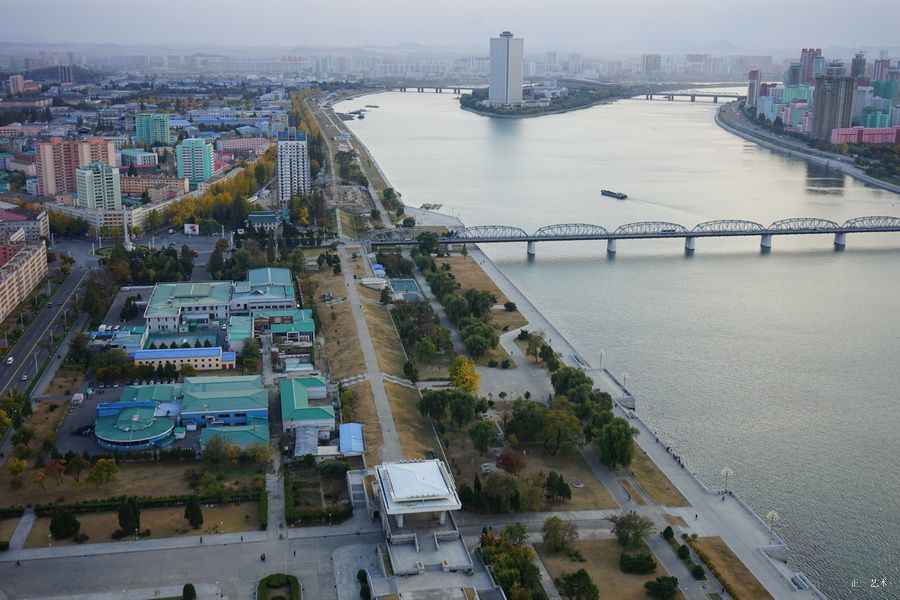
    Pyongyang, DPRK

    The 2nd year of Emperor Wu’s Yuanfeng Era (109 B.C.)

    In October of winter, the Emperor journeyed to Yong County to perform sacrifices at the Five Deity Altars. Upon his return, he made offerings at the altar of Taiyi, paying homage to the virtuous star Saturn.

    In January of spring, Gongsun Qing reported, “I beheld a divine figure upon Mount Donglai, seemingly desiring to meet the Emperor.” Thereupon, the Emperor set forth to Goushi City, appointed Gongsun Qing as a Grandee of the Palace, and proceeded to Mount Donglai. After several days’ stay, during which no divine apparition was witnessed, only tracks of a giant were found. He then dispatched thousands of occultists to seek spiritual phenomena, gathering reishi mushrooms [Ganoderma] in their search. The year brought with it a drought, and as the Emperor’s tour had no clear purpose, prayers for rain were offered at the shrine of Wanlisha.

    In April of summer, on his return, the Emperor made a stop at the shrine on Mount Tai and worshiped the Heaven.

    Earlier, the Yellow River had breached its banks at Huzi River, and for over twenty years, the breach remained unrepaired, causing great devastation to the princedoms of Liang and Chu. In this year, the Emperor dispatched two officials, Ji Ren and Guo Chang, accompanied by tens of thousands of soldiers, to mend the breach at Huzi River. Upon his return from Mount Tai, the Emperor personally oversaw the project to repair the river bank, sinking a white horse and a jade disc into the waters. He commanded all officials and attendants, from generals to common soldiers, to carry firewood and fill the breach. A palace, named Xuanfang Palace, was constructed at the site. Two channels were diverted from the river, following the ancient tracks of Yu the Great, thereby restoring peace to the regions of Liang and Chu, which were spared from further flooding calamities.

    The Emperor had returned to Chang’an.

    For the first time, the Emperor commanded the shamans of Yue to offer sacrifices to the Deities and the many Spirits, employing chicken bone divination.

    Gongsun Qing remarked that immortals favored lofty abodes. In response, the Emperor commanded the construction of Feilian[legendary divine bird] Tower and Guiguan[legendary divine plant] Tower in Chang’an, as well as Yishou[enhancing life expectancy] Tower and Yanshou[prolonging life expectancy] Tower in Ganquan. He instructed Gongsun Qing to prepare the necessary offerings and await the arrival of the divine beings. Moreover, a Heavenly Commuting Stem was erected, with sacrificial vessels placed beneath it. Renovations and expansions were also undertaken for the front hall of Ganquan, along with various imperial palaces and buildings.

    When the kingdom of Yan was at the height of its power, its territory encompassed the governance of the Zhenfan and Gojoseon tribes, where local offices were established, and barriers and fortifications were built. When the kingdom of Qin conquered Yan, its territory was incorporated into the external frontiers of Liaodong. However, during the Han Dynasty, due to the challenges of defending these remote regions, the old borders of Liaodong were reinstated, stretching as far as the Peishui River as borderline, and the internal territory was governed by the principality of Yan.

    When the King of Yan, Lu Wan, rebelled and fled to the Xiongnu, a man from the kingdom of Yan named Wi Man defected, gathering a group of over a thousand followers. They adopted the hairstyles and attire of the indigenous peoples, fleeing eastward beyond the borders, crossing the Peishui River, and settling in the vacant territories of Qin. They gradually subdued the Zhenfan and Gojoseon indigenous tribes, as well as fugitives from Yan. Wi Man became their leader, establishing his seat at Wangxian (Pyongyang).

    During the reigns of Emperor Hui and Empress Dowager , when the realm was still stabilizing, the Prefect of Liaodong reached an agreement with Wi Man. Wi Man was recognized as an external vassal, entrusted with safeguarding the barbarian tribes beyond the borders and preventing raids. He was not to hinder any tribal leader who wished to pay homage to the Emperor. As a result, Wi Man used his military might and wealth to conquer nearby smaller territories, with Zhenfan and Lintun coming under his control, thus extending his influence several thousand li.

    This legacy was passed down to Wi Man‘s grandson, Ugeo, who attracted many Han fugitives but never sought an audience with the Emperor. The tribes of Chenhan (southern Korean Peninsula) wished to present a memorial to the Emperor but were denied access. In that year, the Han court dispatched She He to persuade Ugeo. Despite She He’s efforts, Ugeo adamantly refused to comply with the imperial decree.

    When She He reached the border at the Peishui River, he assassinated Gojoseon‘s Junior Prince Chang, who had been escorting him. After crossing the river, She He swiftly entered the territory and reported to the Emperor, saying, “I have killed a Gojoseon general.” Impressed by his bravery, the Emperor refrained from further interrogation and appointed She He as the Commandant of Eastern Liaodong.

    The Gojoseon people, bearing a grudge against She He, launched an attack, leading to his death.

    In June, nine stems of reishi mushrooms grew in the chambers of Ganquan, prompting the Emperor to issue a general amnesty.

    Fearing the drought, the Emperor sought counsel from Gongsun Qing, who remarked, “During the reign of the Yellow Emperor, the land had been dry for three years after he performed a sacrifice at Mount Tai.” In response, the Emperor issued an edict declaring, “There is a drought; it seems that Heaven has made the land dry.”

    In the autumn, the Bright Hall was constructed near the Wenshui River in Laiwu.

    The Emperor enlisted criminals from across the nation to join the military forces. He dispatched Louchuan General Yang Pu to float across the Bohai Sea from Qi, while Xun Zhi, General of the Left, was sent from Liaodong. Their mission was to campaign against Gojoseon.

    Earlier, the Emperor sent Wang Ran to demonstrate the military might of the Han, which had annexed Nanyue and other Southern tribes, in order to persuade the King of Dian to come to court. The King of Dian commanded tens of thousands of soldiers. There were allied tribes, such as Laoshen and Mimo in the northeast, who shared the same surname and were reluctant to heed the Emperor’s request. These tribes frequently raided and attacked officials and soldiers sent by the court. As a result, the Emperor dispatched General Guo Chang and Wei Guang, General of Household, to mobilize troops from Ba and Shu. They successfully defeated and eradicated Laoshen and Mimo, advancing with their military force towards the Kingdom of Dian. The King of Dian, upon seeing the might of the Han, surrendered, pledging allegiance and requesting the appointment of officials from the central government, as well as a visit to the court. Consequently, the region was established as the Yizhou Commandery, the King of Dian was granted a king’s seal, and he was allowed to rule his people as before.

    During this time, after the Han‘s conquest of the kingdoms of Nanyue and Dongyue and the pacification of the southwestern tribes, seventeen new commanderies were established in these territories. The local customs and practices were respected, and no taxes were levied. The nearby commanderies, such as Nanyang and Hanzhong, provided food, money, carts, and horses to supply the officials and soldiers of these new commanderies. However, the new commanderies occasionally faced minor rebellions, resulting in the killing of officials. The Han court had to dispatch forces from the southern regions to suppress these rebellions, costing over ten thousand lives annually, with all expenses covered by requisitions from the Minister of Agriculture. The Minister of Agriculture managed to support these expenses through the equitable distribution system and the salt and iron monopoly revenues. Nevertheless, wherever the military forces went, counties provided resources, ensuring they were not in short supply. There was no longer any talk of special taxes for the military’s needs.

    In this year, Du Zhou of Nanyang, who held the position of Chief Censor, was appointed as the Minister of Justice. Du Zhou, outwardly charitable and amicable, was deeply principled and draconian within. His administrative style greatly resembled that of his predecessor, Zhang Tang.

    During this period, the number of criminal cases increased significantly. Imprisoned high-ranking officials, with a salary of two thousand piculs of grain, accumulated old cases alongside new ones, amounting to more than a hundred individuals. Within the span of a year, the Minister of Justice handled over a thousand cases, with major cases involving the arrest and investigation of several hundred individuals, while minor cases involved tens of people. Cases from distant regions, numbering in the thousands, and those from nearby areas, extending several hundred li, were required to report to the trials. Alongside the Minister of Justice, the Censorate and the other offices in the capital had incarcerated around sixty to seventy thousand individuals. With further implications during official interrogations, the total number increased to a hundred thousand.

  • Comprehensive Reflections to Aid in Governance(Part 161): Killing The Goose Laying Golden Eggs

    Comprehensive Reflections to Aid in Governance

    By Sima Guang

    Translated By Yiming Yang  

    Annals of Han Book 12 Scroll 20 (continued)

    Penglai Island, Painting by Yuan Jiang(1671-1746)

    The 1st year of Emperor Wu’s Yuanfeng Era (110 B.C.)

    In October of winter, an imperial decree was issued: “The offenses of Nanyue and Dongyue are punished; the harmony among the Western Barbarians and Northern Tribes remains incomplete. We, personally, will undertake a border inspection, wielding the military authority, appointing twelve generals, and leading the troops in person.”

    The Emperor began his journey, traversing from Yunyang county, through Shangjun, Xihe, and Wuyuan, venturing beyond the Great Wall, ascending the Chanyu Terrace in the north, and arriving at Shuofang by the Northern Yellow River. He mustered an army of 180,000 cavalry, with banners and flags stretching over a thousand li, to display his martial prowess and instill awe in the Xiongnu.

    He dispatched an emissary, Guo Ji, to notify the Chanyu: “The king of Nanyue has been captured near the northern borders of the Han. If the Chanyu desires battle, the Emperor will personally await him at the borders. However, if unwilling, submit and pay homage to the Han. Why flee so far to the bitter and barren land to the north without water or grass? Don’t do it!”

    Upon hearing this, the Chanyu flew into a rage, executing those who introduced the envoy but detaining Guo Ji and relocating him to the area of North Sea(Lake Baikal). However, the Xiongnu remained intimidated and dared not venture out.

    The Emperor then returned, paying homage at the tomb of the Yellow Emperor at Qiaoshan, releasing the troops in Xuru(an unknown place). 

    Perplexed, the Emperor asked, “I heard that the Yellow Emperor was immortal, why then is there a tomb?” 

    Gongsun Qing responded, “The Yellow Emperor ascended to heaven as an immortal. His courtiers venerated his memory and buried his ceremonial attire.” 

    The Emperor sighed and remarked, “When I ascend to heaven, will my courtiers also bury my ceremonial attire at the east tomb(a.k.a. Maoling)?” He then returned to Ganquan Palace, offering sacrifice at the Temple of Taiyi.

    The Emperor, displeased with Bu Shi‘s lack of proficiency in literature, demoted him to the position of the Grand Tutor of the Crown Prince, replacing him with Ni Kuan as the Grand Master of Censorate.

    The Han forces penetrated the territory of Dongyue. Dongyue had already raised an army to guard the region’s strongholds, assigning the General of Xunbei (attacking the north) to defend Wulin(Hangzhou). A soldier of Louchuan General, Yuan Zhonggu of Qiantang, beheaded the General of Xunbei. The former Marquis of Yueyan, Wu Yang, led seven hundred troops from his town to a mutiny against the Dongyue army at Hanyang. The Marquis of Jiancheng, Ao, along with King of Yao, Zou Jugu, both from Yue, killed Zou Yushan, thereafter Zou Yushan‘s troops surrendered. The Emperor ennobled Yuan Zhonggu as the Marquis of Yu’er, Wu Yang as the Marquis of Maoshi, Zou Jugu as the Marquis of Dongcheng, and Ao as the Marquis of Kailing.

    Furthermore, the Emperor ennobled Henghai General Han Yue as the Marquis of Andao, Henghai Colonel Liu Fu as the Marquis of Liaoying, and the surrendered general of Dongyue, Duojun, as the Marquis of Wuxi. Considering the treacherous topology of the Min (Fujian) region and its repeated rebellions, which would continue to cause troubles for future generations,  the Emperor decreed to all the generals that Minyue People be relocated to the area between the Yangtze River and the Huai River, thereby vacating the land.

    In January of spring, the Emperor embarked on a journey to visit Goushi, where he performed rituals and offerings at the Grand Temple of Central Mountain, Mount Taishi. His entourage at the foot of the mountain heard three times what seemed like the chant of “Long live!” A decree was issued to the ceremonial officials to expand the Grand Temple‘s rituals and offerings. Cutting trees and grass around the mountain was prohibited, and a fiefdom of three hundred households at the foot of the mountain was established to fund its maintenance.

    Continuing his eastern excursion, the Emperor paid homage to and offered sacrifices to the Eight gods at sea. Numerous individuals from the state of Qi submitted memorials about miracles and supernatural phenomena, numbering in the tens of thousands. The Emperor dispatched more boats and tasked thousands of people, who claimed to have witnessed magical mountains in the sea (perhaps a mirage), with seeking the legendary divine beings of Mount Penglai.

    Gongsun Qing was authorized to lead this expedition and scout for notable mountains, holding the imperial insignia. Upon reaching Donglai, he reported sighting a colossal figure, several zhang in height, but upon approach, it vanished, leaving enormous impressions on the ground resembling animal footprints. Some courtiers also reported seeing an elderly man walking a dog, saying, “I wish to see the Giant Grandpa (Son of Heaven),” and then disappearing suddenly. Upon hearing these reports of significant traces, the Emperor grew suspicious. By the time the ministers mentioned the elderly man, the Emperor, considering these to be divine beings, decided to stay and explore the sea further. He dispatched chariots and emissaries, numbering in the thousands, to seek these divine beings.

    In April of the summer, the Emperor proceeded to Fenggao and performed the rites to the Earth Goddess at Mount Liangfu (Shan). On April 19, the Emperor ordered the Confucian scholars among his attendants, wearing leather caps and tying writing tablets around their waists with ribbons, to conduct the ritual of shooting a bull and offering sacrifice to the Heaven God on the eastern side of Mount Tai (Feng), following the same ceremony used for sacrifices to Taiyi. An altar, twelve feet in width and nine feet in height, was erected, with a jade inscription buried underneath, containing secret writing. Upon completing the ritual, the Emperor alone, accompanied by the palace attendants and the Colonel of Charioteers, Huo Zihou (the son of Huo Qubing), ascended Mount Tai and saluted the Heavenly God again. This ritual was also kept secret. The next day, they descended via the North trail.

    On April 20, the Emperor performed the sacrificial rites at the northeastern side of Mount Suran below Mount Tai, following the same ritual used in the ceremony to worship the Earth Goddess. The Emperor personally paid respects, wearing yellow attire and kowtowing to the deity, accompanied by music. Grass mats made from three-edge reed in the Yangtze River and Huai River regions were laid beneath the offerings. Five-colored soils were used to build the altar. There were illuminations at night and white clouds emerging from the altar during the day. After the Emperor returned from the sacrificial ritual at Fenggao, he sat in the Bright Hall, where the ministers took their turns to offer longevity felicitations and praise his accomplishments.

    The imperial decree stated: “We, with my humble and short stature, have assumed the supreme authority. With great caution, we acknowledge our virtues as inadequate and our understanding of rites and music lacking. Therefore, we pray before the eight divine spirits, encountering the blessings of heaven and earth, perceiving clear signs, faintly as though there were some audible presence, trembling in the face of strange occurrences. We desired to stop but dared not, and thus ascended Mount Tai, reaching Mount Liangfu. Only then did we ascend Mount Suran, reflecting on the rejuvenation of the state, ushering in a fresh beginning, and fostering harmonious life with the scholars and ministers. Thus, the tenth month marks the first year of the Yuanfeng era.”

    “Along our tour route—Bo, Fenggao, Sheqiu, Licheng, Liangfu—the land taxes, rents, and arrears of the people have all been waived for this year without imposing any calculations. Raise one rank for the people of the entire nation.”

    The Emperor further stipulated that there would be a tour and ritual for the Heaven God at Mount Tai every five years. The feudal lords were instructed to build their residences at the foot of Mount Tai.

    Having ascended Mount Tai without any wind or rain, the occultists suggested the possibility of reaching Mount Penglai and encountering gods. The Emperor eagerly wished to sail east to search for Mount Penglai, despite the counsel of his courtiers, who were unable to dissuade him.

    Dongfang Shuo said, “Those who attain immortality do so naturally; there’s no need for impatient pursuit. If they possess  Tao(the Way), there is no worry about not encountering them; if they lack Tao(the Way), even reaching Penglai and seeing the gods would be of no avail. I implore Your Majesty to return to the palace and wait in tranquility; the immortals will come of their own accord.”

    The Emperor relented. However, during this time, Huo Zihou, the Colonel of Charioteers, fell gravely ill and passed away within a day. Huo Zihou was the son of Huo Qubing, and the Emperor deeply mourned his loss. The plans to sail across the sea were abandoned, and the Emperor traveled north to Mount Jieshi, then toured the western Liaoxi commandery and the northern border, reaching Jiuyuan. It was not until May that he arrived at Ganquan, having traveled a total of eighteen thousand li during this tour.

    Sang Hongyang had been appointed as Commandant of Grain Procurement and later as Agriculture Minister in charge of grain reserves, overseeing agriculture and managing the salt and iron monopolies across the empire. Sang Hongyang devised a system of price control, instructing distant regions to levy taxes based on the goods they traded, similar to those exchanged by merchants at different times. He established a fair price officer in the capital, who was responsible for the distribution of commodities from across the empire. Local officials in charge of agricultural affairs gathered goods from all over the country, selling them at higher prices when demand was high and buying them at lower prices when demand was low. This aimed to prevent wealthy merchants from making excessive profits and to stabilize the prices of commodities.

    During the Emperor’s tours of the counties and districts, he distributed rewards totaling over a hundred thousand bolts of silk and vast sums of money and gold, all provided from the treasury of the Minister of Agriculture. Additionally, Sang Hongyang proposed allowing officials to donate grain in exchange for filling vacancies or promotion, and to enable criminals to buy their way out of punishment. The grain transported from the provinces to the east of Xiao Mountain increased by six million picul annually, filling the granaries at Taicang and Ganquan. Surplus grain at the borders and various commodities were evenly distributed. There was a surplus of five million bolts of silk, yet the people did not face increased taxation, and the empire prospered.

    As a result of his achievements, Sang Hongyang was awarded the title of Left Privy Chancellor and two hundred catties of gold.

    At that time, there was a minor drought, and the Emperor ordered officials to pray for rain. Bu Shi said, “Local officials should focus on collecting taxes and duties, but now Sang Hongyang has instructed them to engage in market transactions and seek profits. When Sang Hongyang is boiled to death, then will heaven send rain.”

    In autumn, a comet was seen near the constellation Eastern Well, and about ten days later, another comet appeared near the constellation Three Stars. The astrologer Wang Shuo observed, “The observers only saw Saturn emerging, resembling a melon, and then it disappeared in an hour or so.” Officials all proclaimed, “Your Majesty’s conducting the Han ancestral rites has brought out the star of virtue.”

    Prince Hui of Qi, Liu Hong, passed away without leaving an heir, leading to the dissolution of the principality of Qi.

  • Comprehensive Reflections to Aid in Governance(Part 159): The Battle of Panyu

    Comprehensive Reflections to Aid in Governance

    By Sima Guang

    Translated By Yiming Yang  

    Annals of Han Book 12 Scroll 20 (continued)

    Guangzhou(Panyu) in 1880

    The 5th year of Emperor Wu’s Yuan’ding Era (112 B.C. continued)

    The King of Nanyue and the Queen Dowager Jiu instructed the preparation of their traveling gear, heavily adorned with gifts for their visit to the Han court. Their Prime Minister, Lü Jia, was of advanced age, having served three kings. Seventy of his family members held official positions in the administration, with their sons married to the king’s daughters and vice versa, creating strong connections within the royal family. They also had a marriage alliance with King Qin of Cangwu. Lü Jia earned great respect in Nanyue, even surpassing that of the king. Lü Jia had repeatedly advised and admonished the king through written petitions against the king’s submission memorandum to the Emperor, but the king refused to heed his counsel. Harboring dissenting views, Lü Jia often feigned illness to avoid meeting Han envoys. The envoys from the Han noticed Lü Jia’s evasiveness, but their influence was not sufficient to dislodge him.

    Both the King and the Queen Dowager Jiu feared that Lü Jia and others might take the initiative and overthrow them. They intended to leverage the Han envoys and plotted to eliminate Lü Jia and his faction. Thus, they hosted a banquet for the envoys, with all the prominent officials in attendance. Lü Jia‘s younger brother was a military commander, and his soldiers were stationed outside the palace. During the banquet, the Queen Dowager reprimanded Lü Jia, “It would benefit the kingdom greatly if we became a vassal state of the Han. Why isn’t the Prime Minister more cooperative?” This attempt to evoke the envoys failed, as they looked at each other and hesitated to take action against Lü Jia.

    Sensing the adverse atmosphere, Lü Jia immediately left the banquet. The Queen Dowager Jiu, furious, intended to strike Lü Jia with a spear, but the King restrained her. Lü Jia then left, guarded his brother’s troops, feigned illness, and refused to meet the King and the envoys. Secretly, he conspired with the other officials to incite rebellion. Lü Jia understood that the King had no intention of executing him, so he refrained from making any moves for several months.

    The Emperor heard that Lü Jia did not heed commands, and that the King and Queen Dowager Jiu were vulnerable and unable to control the situation, while the envoys were timid and indecisive. The Emperor also believed that the King and Queen Dowager Jiu had already allied with the Han, and that only Lü Jia was causing trouble, which did not warrant raising an army to subdue. Thus, he intended to dispatch Zhuang Shen with a two-thousand-man entourage. However, Zhuang Shen declined, “A few individuals are enough for diplomacy, but two thousand men could accomplish nothing for warfare.” As his refusal was firm, the Emperor dismissed him.

    A warrior from Jia County, the former Prime Minister of Jibei, Han Qianqiu, stepped forward and exclaimed, “For a small state like Nanyue, with the King and Queen Dowager in favor of the Han, only Lü Jia is causing harm. I wish to gather three hundred brave warriors and will definitely behead Lü Jia and report back.” Therefore, the Emperor sent Han Qianqiu along with the Queen Dowager’s brother, Jiu Le, leading two thousand soldiers into Nanyue.

    Subsequently, Lü Jia and his faction revolted, issuing orders within the kingdom and spreading accusations against the King, Queen Dowager Jiu, and the Han envoys: “The King is young, and the Empress Dowager, a woman of the Han descent, became entangled with the emissaries, seeking to submit to the Middle Kingdom. She insisted on becoming part of the Han and presented the precious heirlooms of the former kings to curry favor with the Emperor. She wishes to take many in her company and, upon reaching Chang’an, sell them into slavery. In her pursuit of immediate gains, she failed to consider the long-term stability of the Zhao family or the future of our kingdom.”

    Lü Jia and his brother then attacked and killed the King, Queen Dowager Jiu, and the Han envoys. They sent messengers to inform King Qin of Cangwu and the neighboring commanderies and counties under Nanyue‘s control, establishing King Ming (Zhao Yingqi)’s eldest son with his Nanyue wife, the Marquis of Shuyang Zhao Jiande, as the new King. Meanwhile, Han Qianqiu’s forces invaded and took over several smaller towns.

    Later, Nanyue opened direct supply routes for provisions to Han Qianqiu’s troops, then ambushed his forces within forty miles of Panyu, annihilating them. They put a sealed letter containing the Han envoy’s seal on the border, apologizing with false excuses, and deployed troops to guard strategic locations.

    On March 4, upon hearing about the rebellion in Nanyue, the Emperor remarked, “Even though Han Qianqiu accomplished nothing, he led the forefront of the army in valor. We hereby bestow the title of Marquis of Cheng’an upon his son, Han Yannian. Jiu Le’s sister, Queen Dowager of Nanyue, first expressed her allegiance to the Han. We confer the title of Marquis of Longkang upon Jiu Le’s son, Jiu Guangde.”

    In April of summer, a general amnesty was proclaimed throughout the realm.

    On April 30, there was a solar eclipse.

    During the autumn, Fubo(riding waves) General, Lu Bode, was dispatched to venture out from Guiyang, descending the Kuangshui River. Louchuan (multi-deck ship) General, Yang Pu, set forth from Yuzhang, sailing down the Zhenshui River. Marquis of Guiyi, Yan of Nanyue, was appointed as Gechuan (Dagger-Axe Ship) General, departing from Lingling and descending along the Li River. Jia of Nanyue was appointed as the Xialai General, descending on Cangwu. They all led convicted criminals, with a total of one hundred thousand naval forces south of the Yangtze and Huai Rivers.

    The Marquis of Chiyi, Yi of Nanyue, led other convicts from Ba and Shu, mobilizing troops from Yelang, and descending along the Zangke River, converging on Panyu. Yan, Jia, and Yi were all former Nanyue officers who had surrendered to the Han.

    Prime Minister of Qi, Bu Shi, submitted a memorial requesting permission to lead his son and those skilled in naval warfare from Qi to fight and die in Nanyue. The Emperor issued an edict praising Bu Shi, granting him the title of Inner Marquis, sixty catties of gold, and ten acres of land, and made this known throughout the empire. However, no one responded to the call. At that time, there were numerous Marquises, yet none sought to join the military expedition against Nanyue.

    In September, while offering sacrifices to the ancestral temples with food and gold donation, the Marquises were commanded to donate gold as contribution for the ritual libations. The Privy Treasurer inspected the gold, and any found to be lightweight or of impurity were deemed disrespectful, leading to the dismissal of one hundred and six princes and marquises from their titles. On September 6, Chancellor Zhao Zhou, accused of “providing cover for impure gold contributions by the Marquises,” was arrested, imprisoned, and subsequently committed suicide.

    Later, on September 21, Shi Qing was appointed as Chancellor and ennobled as the Marquis of Muqiu. At that time, the state faced various issues. Figures like Sang Hongyang focused on increasing revenue, while officials like Wang Wenshu enforced laws to the fullest extent. Ni Kuan and others advocated for literary studies, and they were all members of the Nine Ministers, playing prominent roles in the government. However, decisions were solely made by each minister without consulting the Chancellor. Chancellor Shi Qing was known for his honest, lenient, and prudent approach to governance.

    General of Five Boons, Luan Da, prepared himself and ventured eastward into the sea to seek out his supposed mentor. Eventually, he grew hesitant to proceed further into the sea and instead headed to the Taishan Shrine. Officials sent to verify his claims found no evidence supporting his assertions of meeting his mentor. General of Five Boons falsely claimed to have encountered his mentor, and as his wizardry was largely unfulfilled, he was found guilty of deceit and executed by waist chopping. Similarly, the Marquis of Lecheng, Ding Yi, who had recommended him, was also executed in public.

    In the western Qiang territory, a rebellion involving a force of one hundred thousand people broke out. They established communication with the Xiongnu and attacked the An’gu county, besieging Fuhan county. The Xiongnu invaded Wuyuan, killing its Prefect.

    The 6th year of Emperor Wu’s Yuanding Era (111 B.C.)

    In the winter, an army of one hundred thousand soldiers was dispatched, led by Generals Li Xi and Chamberlain Xu Ziwei, to campaign against the Western Qiang, and the regional rebellion was pacified.

    Louchuan General, Yang Pu, entered the territory of Nanyue, initially capturing Xunxia and breaking through the Shimen, thereby blunting the force of the Nanyue army. He awaited the arrival of Fubo General Lu Bode, with several tens of thousands of soldiers. Louchuan General took the lead, and together they reached Panyu. The King of Nanyue, Zhao Jiande, and his Prime Minister Lü Jia were fortified within the city. Louchuan General positioned himself in the southeast, while Fubo General held the northwest. As night fell, Louchuan General attacked and defeated the Nanyue forces, setting fire to the city. Fubo General set up camp and sent messengers to persuade surrender, offering seals and ribbons as tokens of assurance. He also ordered others to encourage defection.

    Louchuan General aggressively attacked and set fire to the enemy’s positions, pushing Nanyue‘s forces towards Fubo General’s camp. At dawn, the entire city surrendered. Zhao Jiande and Lü Jia had fled to the sea the night before, but Fubo General dispatched troops to pursue them.  Colonel Marshall Su Hong captured Zhao Jiande, while Gentleman of Household, Du Ji of Nanyue, captured Lü Jia. The forces under Gechuan General Yan and Xialai General Jia, along with the Yelang soldiers dispatched by the Marquis of Chiyi, Yi, had not yet arrived, but Nanyue was already subdued.

    The conquered territory was then divided into nine commanderies: Nanhai, Cangwu, Yulin, Hepu, Jiaozhi, Jiuzhen, Rinan, Zhuya, and Dan’er. Upon the return of the troops, the Emperor granted more fief to the Fubo General. Louchuan General was ennobled as the Marquis of Jiangliang, Su Hong as the Marquis of Haichang, Du Ji as the Marquis of Lincai, and four individuals, including the surrendered Nanyue King Qin of Cangwu, Zhao Guang, were also ennobled as marquises.

    Gongsun Qing reported sighting footprints of an immortal being on the walls of the city of Goushi in southern Henan, claiming to have seen the tracks of gods. In the spring, the Emperor personally visited the city of Goushi to examine these traces and asked Gongsun Qing, “Are you imitating General Wencheng and the General of Five Boons?”

    Gongsun Qing replied, “The existence of immortal beings does not rely on the search of the ruler; rather, it is the ruler who seeks them. If the path to gods is not broad, then the spirits do not come. Speaking of spiritual matters may seem ridiculous or bizarre, but by persisting for years and months, it may eventually be achieved.”

    The Emperor believed him. In various commanderies and regions, roads were cleared, palaces and scenic spots were renovated, and temples and sacred sites were prepared in anticipation of the gods’ visit.