Comprehensive Reflections to Aid in Governance
By Sima Guang
Translated By Yiming Yang
Annals of Han Book 13 Scroll 21 (continued)

The 3rd year of Emperor Wu’s Yuanfeng Era (108 B.C.)
In December of winter, there was thunder, accompanied by rain and hailstones as large as horse heads.
The Emperor dispatched General Zhao Ponu to attack the Kingdom of Jushi. Zhao Ponu, leading a force of more than seven hundred light cavalry, arrived first, captured the King of Loulan, and then defeated the forces of Jushi. He used this military victory to exert pressure on the kingdoms of Wusun and Dayuan.
In the spring, on January 27, Zhao Ponu was appointed as the Marquis of Zhuoye. Wang Hui was granted the title of Marquis Hao for his assistance to Zhao Ponu in attacking Loulan. Thus, the fortifications of barriers were extended from Jiuquan to Yumen.
Sports and entertainment, such as Jiaodi (wrestling/acrobatic contests) and Yulong Manyan (magical animal figure performances), began to gain popularity.
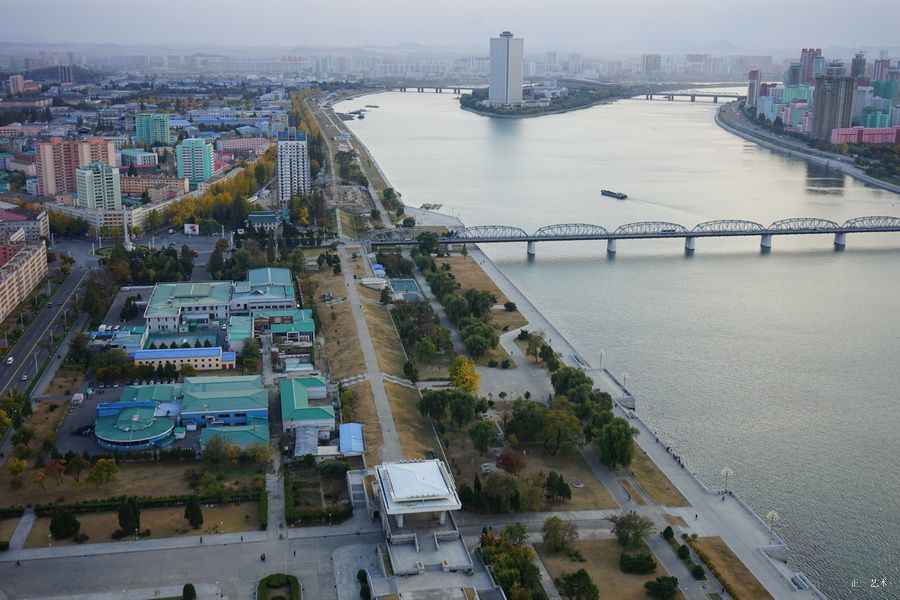
The Han troops entered the territory of Gojoseon, and the King of Gojoseon, Ugeo, dispatched forces to resist them at the strategic passes. Louchuan General led a contingent of seven thousand soldiers from Qi and arrived at Wangxian (Pyongyang) first. Ugeo, stationed within the city, observed that the Louchuan General’s army was small in number, and thus immediately sallied forth to attack. The army of Louchuan General was defeated and scattered, fleeing into the mountains for over ten days before they managed to regroup.
Xun Zhi, General of the Left, attacked the Gojoseon forces to the west of the Peishui River (Taedong River), but was unable to break their defense. Seeing no favorable outcome from both generals’ action, the Emperor sent Wei Shan, with military authority, to negotiate with Ugeo. Upon meeting the envoy, Ugeo bowed in apology and expressed his desire to surrender, and his fear that the two generals might deceive and kill him. Upon seeing the imperial scepter of authority in the hands of the envoy, Ugeo again requested to surrender.
Ugeo sent his Crown Prince to express gratitude and atonement, presenting five thousand horses and supplying provisions for the army. With a force of over ten thousand people, armed and prepared to cross the Peishui River, the Gojoseon forces were poised for action. However, both the envoy Wei Shan and General of the Left suspected a potential betrayal and advised the Gojoseon Prince to not carry weapons, as they had already surrendered. The Gojoseon Crown Prince, doubting the intentions of Wei Shan and General of the Left, feared treachery and, thus, refrained from crossing the Peishui River, choosing instead to return.
When Wei Shan reported back to the Emperor, the Emperor executed him.
The General of the Left defeated the Gojoseon forces stationed at the upper Peishui River and subsequently approached the Wangxian’s outskirts, laying siege from the northwest, while Louchuan General positioned his forces to the city’s south. Ugeo resolutely defended the city, which remained under siege for several months without falling. The soldiers led by the General of the Left, hailing from Yan and Dai, were mostly fierce and valiant, whereas those under Louchuan General, drawn from Qi, had previously faced defeat, hardship, and humiliation, which instilled fear and shame within them. As a result, they adopted a more conciliatory stance while besieging Ugeo.
The General of the Left, Xu Zhi, launched relentless assaults. Secretly, Gojoseon’s ministers sent emissaries to negotiate a surrender with Louchuan General, but their decisions remained uncertain. The General of the Left repeatedly scheduled meetings with Louchuan General Yang Pu in battle plans, yet the latter was inclined to accept the Gojoseon surrender agreement in the making, which was stalled by ongoing negotiations. The General of the Left also sought to secure the surrender of Gojoseon, but the Gojoseon ministers, preferring the pact with Louchuan General, refused to yield, remaining aligned with him in their hearts. Thus, the two generals could not coordinate their actions.
The General of the Left suspected that Louchuan General, who had previously committed military blunders, had now fostered a covert alliance with Gojoseon, which continued to resist surrender. Fearing a potential conspiracy, he refrained from acting rashly.
The Emperor, observing the prolonged siege of Gojoseon capital with no resolution due to the differing strategies of the two generals, sent the Prefect of Ji’nan, Gongsun Sui, to rectify the situation, granting him authority to take decisive action. Upon Gongsun Sui’s arrival, the General of the Left pointed the finger, “The reason for the extended siege of Gojoseon is the failure of Louchuan General to meet as scheduled.”
Xun Zhi conveyed his long-standing suspicion of Yang Pu, “If this opportunity is not seized, it may lead to significant harm.” Gongsun Sui concurred, and thus, exercising his authority, summoned Louchuan General to discuss strategies in the camp of the General of the Left. He then ordered the forces of the General of the Left to detain Louchuan General and placed Yang Pu’s army under Xun Zhi’s command. This action was reported to the Emperor, who, in response, executed Gongsun Sui.
The General of the Left swiftly launched an assault on Gojoseon after merging the two armies. The Gojoseon ministers—No In, Han Eum, Sam of Nigye, and General Wang Gyeop—conspired, contemplating surrender, as they had initially intended to yield to Louchuan General Yang Pu. Now that Louchuan General was in custody and only the General of the Left commanded the forces, they feared they could not win the battle. However, King Ugeo refused to surrender.
Han Eum, Wang Gyeop, and No In defected to the Han, though No In perished along the way. Later, Sam of Nigye sent someone to assassinate King Ugeo of Gojoseon and then surrendered himself. However, as the city remained unconquered, Ugeo’s chief minister, Seong Gi, rebelled once again and attacked the Han officials. In response, the General of the Left dispatched Ugeo‘s son, Wi Jang, and No In‘s son, No Choe, to persuade the people. Seong Gi was assassinated, leading to the pacification of Gojoseon and the establishment of the four commanderies: Lelang, Lintun, Xuantu, and Zhenfan. Sam was granted the title Marquis of Huaqing, Han Eum the Marquis of Qiuju, Wang Gyeop the Marquis of Pingzhou, Wi Jang the Marquis of Ji, and No Choe, in recognition of his father’s death, was made the Marquis of Nieyang.
Upon the General of the Left‘s return, due to disputes over achievements and jealousy among his peers, he was sentenced to death. Louchuan General was also found guilty for advancing without waiting for the General of the Left, resulting in numerous losses. Although he was supposed to be executed, Louchuan General was instead fined and demoted to the status of a commoner.
Ban Gu‘s commentary: Xuantu and Lelang were originally territories granted to Jizi(Gija) as a fief. In ancient times, Jizi resided in Gojoseon and taught its people about propriety and righteousness. He instructed them in farming, sericulture, and weaving, establishing eight prohibitions: in cases of murder, the offender was required to compensate with their life; for injuries, compensation was made in grain; those guilty of theft became slaves in the offender’s household—men as servants, women as maids. Redemption was possible with a payment of 500,000 coins, but even if freed, society still shunned them, and marriages were not arranged for such individuals with criminal records. Consequently, theft was nonexistent among the people; their homes had no locks for doors and windows, and women were chaste and faithful, avoiding promiscuity. They held food in containers made of bamboo or wood in the countryside and in vessels, cups, and dishes in the cities, imitating what the officials did. When the government initially appointed officials from Liaodong, they noticed the absence of locks on houses. Traders who arrived at night became thieves, and gradually, the culture degenerated. The violations of prohibitions increased, and the prohibition articles grew to more than sixty items. It is admirable how the influence of benevolence and virtue transformed them! However, the nature of the Eastern aboriginals was gentle and docile, unlike the other three frontiers. Thus, Confucius lamented the failure of his teachings and even prepared rafts to sail across the sea, wishing to dwell among the nine aboriginal tribes—there was a reason for it!
In July of autumn, the Prince of Jiaoxi, Liu Duan, passed away.
The Di tribes of Wudu rebelled and were subsequently relocated, their groups divided and resettled in Jiuquan.
 Reflection by Rio Grande