Tag: Emperor Xuan of Han

  • Comprehensive Reflections to Aid in Governance(Part 192): Stepping out of the Shadow of Huo Guang

    Comprehensive Reflections to Aid in Governance

    By Sima Guang

    Translated By Yiming Yang  

    Annals of Han Book 16 Scroll 24 (continued)
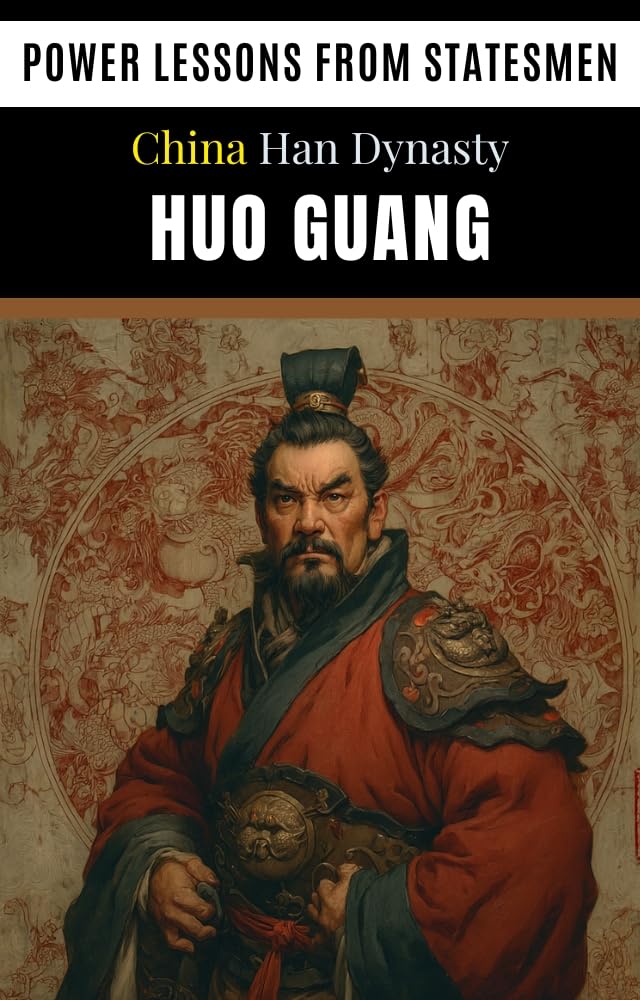
    A Book On Huo Guang

    The 2nd year of Emperor Xuan’s Di’jie Era (68 B.C.)

    In the spring, Huo Guang fell gravely ill. The Emperor went in person to visit him, wept at his side, and inquired after his health status. Huo Guang memorialized his gratitude, requesting that three thousand households be divided from his fief and given to his grandnephew Huo Shan, Commandant of Chariots, so that Huo Shan might continue the sacrifices of his deceased elder brother Huo Qubing. On that same day, Huo Guang’s son, Huo Yu, was appointed General of the Right.

    On March 8, Huo Guang died. The Emperor and the Empress Dowager themselves attended his funeral. A minister of two-thousand-picul rank was appointed to oversee the construction of his tomb, which was made in the manner of the imperial household, with a hearse and sepulcher of full honor. He was posthumously styled Marquis of Xuancheng. Troops of the Three-He commanderies—Henan, Henei, and Hedong—were sent to open the ground, inter his coffin, and raise his mound. Three hundred households were settled in his tomb-park, with officers appointed to tend and sacrifice. An edict decreed that his descendants should preserve their rank and fiefs for generations, exempt from levy and corvée.

    The Grand Master of Censorate, Wei Xiang, submitted a sealed memorial, saying: “The state has newly lost its Grand General. It is fitting to exalt and advance meritorious ministers, that no high office remain vacant, and that the frontier states may be reassured, so as to prevent contention for power. It is proper that the General of Chariots and Cavalry, Zhang Anshi, be appointed Grand General, and relieved of his post as Chamberlain. His son, Zhang Yanshou, may then assume the office of Chamberlain.”

    The Emperor inclined to this counsel. On April 17, Zhang Anshi was made Grand Marshal and General of Chariots and Cavalry, also the Recorder of the State Secretariat.

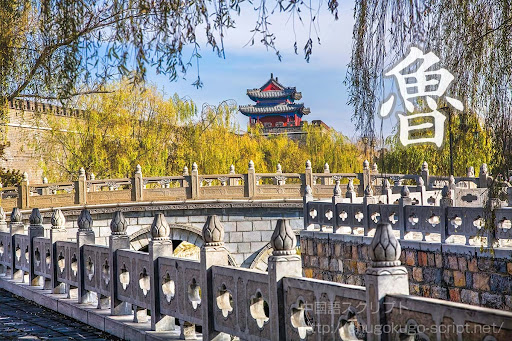
    That year phoenixes gathered in Lu, and a multitude of birds followed. A general amnesty was proclaimed throughout the realm.

    To honor and reward the virtue of the late Grand General, the Emperor enfeoffed Huo Shan, grandson of Huo Qubing, as Marquis of Leping, and made him Director of the State Secretariat and Commandant of Chariots.

    Wei Xiang, the Grand Master of Censorate, submitted a sealed memorial through Lord of Changcheng, Xu Guanghan, saying:

    “The Spring and Autumn Annals reproach the ministers of the realm: in Song the royal kindred held sway for three generations, and in Lu the Jisun usurped power; both brought peril to their states. Since the Houyuan reign of Emperor Wu, the system of rewards has slipped from the court’s control, and the governance of the realm has lain in the hands of mighty ministers. Now Huo Guang is dead, but his son again holds the post of General of the Right, and his brother’s grandson controls the central command. Brothers, brothers-in-law, and kinsmen fill the armies with power. Grand Madame Xian and all her daughters enter the Changxin Palace by day and by night, ordering its gates to be opened at will, indulging in luxury and extravagance. If their power is not diminished, if their influence is not checked, hidden plots may arise, and the foundation of the state will not be secure. It is fitting to pare down their strength, to prevent calamity in time, and to safeguard the heritage of the meritorious.”

    By custom, all petitions required two copies, one marked “duplicate,” first read in the State Secretariat, and if containing disfavor, withheld. Wei Xiang proposed, through Xu Guanghan, that he be allowed to present his memorial without the duplicate, so that it could not be obstructed. The Emperor approved, appointed Wei Xiang additionally as Palace Liaison, and accepted all his counsel.

    The Emperor himself, having been raised among the people, well understood their hardships. After the death of Huo Guang he took direct charge of the government, scrutinizing affairs with diligence, and holding hearings every five days. From the Chancellor to the lowest officials, all submitted reports and were examined for their merit. The achievements of the Privy Counselors and Secretariat officers were richly rewarded, extending even to their descendants, and this became a precedent faithfully observed. Thus the administration was orderly, the protocols complete, and from top to bottom harmony prevailed, with no trace of neglect.

    When appointing provincial inspectors, commandery prefects, and princely ministers, the Emperor himself inquired into their worth, observed their talents, and later judged their deeds to test their words. If speech and action did not accord, their hearts were revealed. He often said: “The people’s peace in their fields, and the lessening of their sighs and sorrows, come from upright governance. Of those who share with Us this charge, none are weightier than the ministers of two-thousand-picul rank.”

    He deemed the commandery prefect the root of order, and held that frequent removals disturbed the people. When the people knew their governors were settled long-term, and could not be deceived, they willingly followed the laws and teachings.

    Thus, when inspectors of the provinces showed skill in rule, the Emperor by edict praised and encouraged them, increased their stipends, bestowed gold, and raised their rank to that of Inner Marquis. When offices stood vacant, he appointed men from those recommended.

    Therefore, in the time of Han, virtuous officials flourished, and this age was acclaimed as a time of  renaissance.

    Upon the death of the Xiongnu Chanyu Huyandi, his younger brother, the Left Tuqi King, ascended the throne, taking the title Xulüquanqu Chanyu. He raised the daughter of the Right Grand General to be Grand Yanzhi, and deposed the former favorite, Zhuànqú Yanzhi. The Left Grand Zuqu, her father, nursed resentment.

    At this time the Han, deeming the Xiongnu no longer a threat, withdrew garrisons from the frontier towns to give rest to the people. The Chanyu rejoiced, and with his nobles resolved to seek peace and marriage with the Han. But the Left Grand Zuqu opposed it, saying: “Formerly, when Han envoys came, they brought soldiers with them. If we now imitate the Han, we too should first dispatch troops.” He then proposed to go forth with the Huluzi King, each leading ten thousand horses, to hunt along the southern border, and when they joined, to cross into Han soil together.

    Before they reached their march, three riders defected to the Han and disclosed the plan. The Emperor forthwith mobilized the border cavalry, sending the Military Supervisor under the Grand General Zhizhong, with four other commanders, to lead five thousand cavalry in three divisions, patrolling several hundred li beyond the passes. Each captured scores of men before returning. The Xiongnu, alarmed at the loss of their three riders, dared not advance and withdrew.

    That year the Xiongnu suffered famine. Of men and herds, six or seven in ten perished. They set two hosts, each of ten thousand horses, to guard against Han incursion. In autumn, led by their chiefs, thousands of the Xiru tribesmen, who had once submitted to the Xiongnu, were driven south with their flocks. They fought the Xiongnu at Otuo, and were bloodily repulsed. At length they broke through, descended south, and surrendered to the Han.

  • Comprehensive Reflections to Aid in Governance(Part 191): After A Large Earthquake

    Comprehensive Reflections to Aid in Governance

    By Sima Guang

    Translated By Yiming Yang  

    Annals of Han Book 16 Scroll 24 (continued)

    Anqiu, Shandong Province

    The 4th year of Emperor Xuan’s Benshi Era (70 B.C.)

    In March of spring, Huo Chengjun, daughter of Huo Guang, was established as Empress. A general amnesty was proclaimed throughout the empire.

    The former Empress Xu had lived humbly and with frugality; but when Empress Huo was elevated, the splendor of her carriages and entourages, and the rewards lavished upon officials, rose into the tens of millions. Thus the restraint of the former Empress was cast aside.

    In summer, on April 29, an earthquake shook forty-nine commanderies at once. Hills and mountains collapsed, city walls fell, buildings were destroyed, and more than six thousand perished. The ancestral temples in Beihai and Langya were also ruined. The Emperor issued an edict to the Chancellor, the Censors, the Marquises, and the ministers of two-thousand-picul rank, commanding them to confer with scholars versed in the classics, to examine the signs and omens, and to speak without concealment. He further ordered the intendants of the Three Metropolis regions, together with the Ministry of Rites and the internal commanderies, each to recommend one man of virtue and uprightness.

    A general amnesty was again proclaimed. The Emperor, in mourning for the loss of life by the earthquake, refrained from appearing in the main hall for five days. Xiahou Sheng and Huang Ba were released from prison: Xiahou Sheng was appointed Grandee of Remonstrance and Palace Liaison, while Huang Ba was made Inspector of Yangzhou.

    Xiahou Sheng was by nature simple and upright. His manner was plain and without ornament. At times he erred in speech, addressing the Emperor as “you” rather than “Your Majesty,” or calling ministers by their style-names in the Emperor’s presence. Yet the Emperor took no offense, and placed trust in him.

    Once, after discoursing with the Emperor, Xiahou Sheng repeated their words to others. The Emperor rebuked him. Xiahou Sheng replied calmly: “What Your Majesty has spoken is right; I merely magnified it. The teachings of Emperor Yao were spread through the realm, and are recited to this day. I thought it proper to transmit your words, and therefore I did so.” The Emperor, perceiving his sincerity, accepted it.

    In weighty councils, the Emperor trusted Xiahou Sheng for his plain dealing, saying: “Master Xiahou speaks truth. Let none withhold because of past faults.”

    Afterward he served as Treasurer of Changxin Palace, and then as Grand Tutor to the Crown Prince. At ninety years he died. The Empress Dowager bestowed two million cash for his funeral, and mourned in white for five days, as for a great teacher. Among the Confucian scholars he was held in the highest esteem, and they gloried in his renown.

    In May, phoenixes gathered in Anqiu and Chunyu of Beihai.

    The Prince of Guangchuan, Liu Qu, slew more than ten of his tutors, consorts, and attendants. Some he drowned with molten lead and tin poured into their mouths; others he dismembered, poisoned, and boiled, that none might survive. For this he was deposed and removed to Shangyong, where he took his own life.

    The 1st year of Emperor Xuan’s Di’jie Era (69 B.C.)

    In January of spring, a comet appeared in the west sky.

    The Prince of Chu, Liu Yanshou, suspected that the Prince of Guangling, Liu Xu, son of Emperor Wu, might ascend the throne should the order of succession be broken. Desiring to secure himself, he arranged for Zhao Heqi, brother of his mother-in-law, to take a daughter of Prince of Guangling in marriage. Liu Yanshou then bade Zhao Heqi to carry a letter to the Prince of Guangling, warning him to keep his eyes and ears keen, and not allow others to seize the throne. Zhao Heqi’s father, Zhao Changnian, reported this. When the matter was investigated, Zhao Heqi confessed. In November of winter, Liu Yanshou killed himself. The Prince of Guangling Liu Xu was not implicated.

    On December 30, there was a solar eclipse.

    That year Yu Dingguo was made Minister of Justice. Yu Dingguo was skilled in deciding difficult cases, impartial in judgment, and compassionate toward widows and orphans. In doubtful charges he reduced punishments, and always examined matters with care. The court praised him, saying: “When Zhang Shizhi was Minister of Justice, there were no unjust judgments in the empire. Now Yu Dingguo holds that office, and the people know themselves not to be wronged.”

  • Comprehensive Reflections to Aid in Governance(Part 189): Murder She Committed

    Comprehensive Reflections to Aid in Governance

    By Sima Guang

    Translated By Yiming Yang  

    Annals of Han Book 16 Scroll 24 (continued)

    Fuzi, A Poisonous Plant

    The 3rd year of Emperor Xuan’s Benshi Era (71 B.C.)

    On January 13, Empress Gong’ai Xu died. At that time, Grand Madame Xian, wife of the Grand General Huo Guang, desired to advance her youngest daughter, Huo Chengjun, to higher station, yet saw no means. It happened that Empress Xu, being pregnant, fell ill.

    There was then a woman physician, Chunyu Yan, favored by the Huo household, who had formerly entered the palace to attend Empress Xu. Her husband, Chunyu Shang, was a palace gatekeeper, and he said to her: “You should visit Grand Madame Xian, and in my name request the office of Supervisor of Anchi Pond.”

    Chunyu Yan accordingly went to Grand Madame Xian. Grand Madame Xian seized the occasion, dismissing attendants around her and received her in secret, and called her by her style-name, saying: “Shaofu, if you can do me a service, I shall assuredly requite it. Can you?”

    Chunyu Yan replied: “Whatever my lady commands, I can attempt.”

    Grand Madame Xian said: “The General has always loved our little daughter Chengjun, and longs to raise her station. I entrust this matter to you.”

    Chunyu Yan, startled, asked: “What can I do?”

    Grand Madame Xian said: “Childbirth is ever perilous; one may hardly escape the jaws of death. The Empress is about to give birth—this is the chance to rid ourselves of her with poison. Then Chengjun shall be Empress. If Shaofu can accomplish this, wealth and rank shall be shared with you.”

    Chunyu Yan hesitated, saying: “The medicines for the imperial house are compounded by many hands, and are always tested by others. How can poison be introduced?”

    Grand Madame Xian replied: “I am going to leave that to Shaofu. The General holds sway over the empire; who would dare to speak against him? If we act with care, no mishap will follow. My only fear is that Shaofu may not consent.”

    After a long silence, Chunyu Yan said: “I am willing to exhaust all effort.”

    Chunyu Yan compounded a potion with Fuzi(Carmichael’s monkshood) and other substances, and smuggled it into Changding Palace. After Empress Xu was delivered, Chunyu Yan mingled the poison with a great bolus prepared by the imperial physicians, and gave her to swallow.

    After a short while, Empress Xu said: “My head grows faint. Is there poison in the medicine?” Chunyu Yan answered: “There is none.” Soon the Empress’ distress increased, and she died.

    When Chunyu Yan departed from the palace, she ran into Grand Madame Xian on the way. They exchanged felicitations, though Grand Madame Xian dared not show her gratitude openly.

    Later, memorials were submitted accusing the physicians of mismanaging the care of the Empress. The Emperor commanded that all who had attended her be seized and cast into prison. Grand Madame Xian, struck with fear, hastened to inform Huo Guang, saying: “Since we have trespassed, do not permit the officials to pursue Chunyu Yan too closely!”

    Huo Guang was greatly shaken, and at first thought to deliver up his wife; but he could not bear it, and when he heard of Chunyu Yan’s part, he chose to conceal it.

    Thereafter, when the official report on the death of Empress Xu was submitted, Huo Guang ordered that Chunyu Yan not be investigated. Seizing the moment, Grand Madame Xian pressed Huo Guang to send their daughter into the palace.

  • Comprehensive Reflections to Aid in Governance(Part 188): Studying on Death Row

    Comprehensive Reflections to Aid in Governance

    By Sima Guang

    Translated By Yiming Yang  

    Annals of Han Book 16 Scroll 24 (continued)

    Xiahou Sheng And Huang Ba

    The 2nd year of Emperor Xuan’s Benshi Era (73 B.C. continued)

    In July of autumn, an edict was issued appointing Liu Jian, heir of Prince La of Yan, Liu Dan, as Prince of Guangyang; and Liu Hong, youngest son of the Prince of Guangling, Liu Xu, as Prince of Gaomi.

    Formerly, there had been strife between Shangguan Jie and Huo Guang. When Huo Guang destroyed Shangguan Jie, he then adhered to the statutes of Emperor Wu, applying severe punishments to restrain his subordinates. From this, lesser officials took severity as their model, believing harshness to be the mark of ability.

    But Huang Ba of Huaiyang, then Associate Prefect of Henan, always held leniency as his principle. When the Emperor went among the people, he perceived that the common folk suffered under the harshness of officials. Hearing of Huang Ba’s reputation for fairness and gentleness, he summoned him to serve as a chief judge in the Ministry of Justice. Huang Ba, in judging doubtful cases, was ever equitable, and thus maintained fairness and balance in the court.

    The 2nd year of Emperor Xuan’s Benshi Era (72 B.C.)

    In the spring, the Minister of Agriculture, Tian Yannian, committed suicide after being convicted of crime. When mourning for Emperor Zhao, he had leased carts from the people, but deceitfully inflated the rent, embezzling thirty million cash. An aggrieved party reported him.

    The Grand General Huo Guang summoned him for questioning, wishing to give him latitude. Tian Yannian vehemently denied it, saying: “Such a thing never happened!” Huo Guang replied: “Even if it did not, we must examine it to the end.”

    The Grand Master of Censorate, Tian Guangming, spoke to the Grand Coachman Du Yannian, saying: “According to the justice of the Spring and Autumn Annals, faults may be redeemed by merit. When the Prince of Changyi was deposed, without the resolute courage of Tian Zibin[Tian Yannian’s courtesy name], the great design could not have been accomplished. Now, if he had begged thirty million from the court itself and been granted them, would that not suffice? I would speak thus to the Grand General.”

    Du Yannian relayed this to Huo Guang. Huo Guang said: “It is true. He was a valiant man; at that momentous hour he shook the whole court.” Then he lifted his hand to his breast and said: “The memory still burdens my heart. Convey my apology to the Grand Master Tian, and entreat him to persuade the Minister of Agriculture to go to prison, that he may pass through lawful trial.”

    Tian Guangming delivered this message. Tian Yannian answered: “If the court would show me lenience, I would be grateful. But how can I endure the shame of prison, the laughter of men, and the spittle upon my back?”

    He then shut himself in a chamber of the Ministry of Agriculture, baring his arm, pacing with a blade in hand. After some days, hearing the drumbeat of envoys come to proclaim the edict, he cut his own throat and died.

    In May of summer, an edict was issued, saying: “Emperor Wu, in his filial piety, benevolence, and martial exploits, accomplished abundant virtue. Yet the music of his ancestral temple has not been established, which is a cause of great sorrow. Let the marquises, the ministers of two-thousand-picul rank, and the scholars deliberate upon it.”

    The officials engaged in wide discussion, and all assented to the decree. Only Xiahou Sheng, Privy Treasurer of Changxin Palace, spoke in dissent, saying: “Though Emperor Wu attained merit in pacifying the four barbarians and enlarging the borders, yet countless soldiers perished, and the wealth and strength of the people were drained. His extravagance and excess knew no bounds, and the empire was left in exhaustion. The dead were many, famine and locusts swept for thousands of li, and men even devoured one another. The injuries yet remain unrepaired, and the grace shown to the people was scant. It is not fitting to establish music for his temple.”

    The other officials rose together against him, saying that he opposed the imperial edict. But Xiahou Sheng declared: “An edict must not be obeyed without reflection. It is the duty of a loyal subject to speak plainly and directly, not merely to echo the ruler’s will. What I have said is from my heart. Though it cost me death, I shall not repent.”

    The Chancellor and the Censors accused Xiahou Sheng of opposing the imperial decree, of slandering the late Emperor, and of uttering blasphemy. Huang Ba, Chief-of-Staff to the Chancellor, was charged with shielding Xiahou Sheng and failing to impeach him. Both were cast into prison.

    Thereafter the authorities proposed to elevate the ancestral temple of Emperor Wu, styling it Shizong Temple, and to compose temple music with the “Magnificent Virtues” and the “Five-Colored Dance of the Wenshi Era.” In the provinces and counties that Emperor Wu had once visited, temples were erected in his honor, following the precedents of Emperor Gaozu and Emperor Wen.

    Xiahou Sheng and Huang Ba remained in custody for months. Huang Ba desired to study the Book of Documents under Xiahou Sheng, but Xiahou Sheng rejected, saying: “I am under sentence of death.” Huang Ba quoted Confucius: “If I learn the truth in the morning, I could die content in the evening.” Xiahou Sheng, moved by his earnestness, consented to teach him. Though imprisoned through two winters in succession, they never ceased their study and discourse.

    When the Princess who Liu Xijun had been wed to the Wusun Kunmi Cenzou died, the Han court once more sent Liu Jieyou, granddaughter of the Prince of Chu, Liu Wu, to Wusun, and she became wife to Cenzou. Cenzou had a young son, Nimi, born of his tribal consort. Foreseeing his own death, he entrusted the succession to his uncle’s son Weng’guimi, saying: “When Nimi comes of age, restore the throne to him.”

    When Weng’guimi ascended, he styled himself the Fat King, and again took to wife Princess Liu Jieyou of Chu. She bore him three sons—Yuan’guimi, Wan’nian, and Da’le—and two daughters.

    Under the reign of Emperor Zhao, Princess Liu Jieyou sent a memorial, saying: “The Xiongnu and Jushi have allied to assail Wusun. Only the Son of Heaven could save us.” The Han court gathered horse and soldier, deliberating an expedition against the Xiongnu

    Just then Emperor Zhao had passed away, the new Emperor dispatched the Grandee Chamberlain Chang Hui as envoy to Wusun. Both the Princess and the Great Kunmi sent envoys with letters, saying: “The Xiongnu have mustered hosts once again to attack Wusun, demanding: ‘Deliver to us the Han Princess at once!’ Their purpose is to sever Wusun from the Han. The Great Kunmi is willing to muster fifty thousand picked horsemen and exert full strength against the Xiongnu. Only the Son of Heaven can dispatch troops, to save the Princess and the Kunmi!”

    Formerly the Xiongnu had often harried the Han frontier, and the Han also longed to strike back. In autumn, a great host was levied: the Grand Master of Censorate, Tian Guangming, was made Qilian General, and with forty thousand horse rode forth from Xihe; Fan Mingyou, Duliao General, led thirty thousand from Zhangye; Han Zeng, General of the Van, led thirty thousand from Yunzhong; Zhao Chongguo, Pulei General, led thirty thousand from Jiuquan; and Tian Shun, Prefect of Yunzhong, was appointed General of Tiger Fang, leading thirty thousand from Wuyuan. Their design was to advance beyond the frontier by two thousand li. Chang Hui was made Colonel with the tally, to oversee the Wusun forces and unite them in striking the Xiongnu.

  • Comprehensive Reflections to Aid in Governance(Part 187): Leapfrogging to The Throne

    Comprehensive Reflections to Aid in Governance

    By Sima Guang

    Translated By Yiming Yang  

    Annals of Han Book 16 Scroll 24 (continued)

    Old City of Qi, Zibo(Qiansheng), Shandong Province 

    The 1st year of Emperor Zhao’s Yuanping Era (74 B.C. continued)

    After the deposition of the Prince of Changyi, the choice of successor was debated among the senior ministers, including Huo Guang and Zhang Anshi. As no decision was yet reached, Bing Ji submitted a memorial to Huo Guang, saying:

    “Grand General, you served Emperor Wu, bearing the charge of raising his heir from infancy, entrusted with the care of the entire realm. When Emperor Zhao passed away untimely, leaving no heir, fear and unease spread throughout the empire. On the day of the funeral, for the sake of the great enterprise, a successor was hastily chosen; but perceiving the choice amiss, he was deposed for the greater cause, and all under Heaven assented. At this juncture, the fate of the state, the ancestral temples, and the lives of the people depend upon your judgment.

    “I have listened to the voices of the people and observed the discourse regarding the princes of the imperial clan, yet have heard no worthy name outside the court. Meanwhile, within the harem by posthumous decree, the Imperial Great-Grandson Liu Bingyi has been fostered, reared under the care of the inner palace and his maternal great grandmother. When I once served at the commandery prison, I beheld him as a child. Now he is eighteen or nineteen years of age, well versed in the Confucian classics, of comely talent and serene bearing.

    “I earnestly entreat the General, considering the highest righteousness, to seek the judgment of the tortoise oracle; if it proves auspicious, then let him be appointed attendant to the Empress Dowager and enter the palace, so that all under Heaven may behold him. Then, with the world’s gaze upon him, the final decision may be made, to the blessing of the empire.”

    Du Yannian also discerned the virtue of the Imperial Great-Grandson, and urged Huo Guang and Zhang Anshi to establish him as successor.

    In July of autumn, Huo Guang, seated in the court, convened with the Chancellor Yang Chang and the ministers to deliberate, and together they memorialized, saying: “The Great-Grandson of Emperor Wu, Liu Bingyi, is now eighteen years of age. He has been instructed in the Book of Songs, the Analects, and the Classic of Filial Piety. He himself practices frugality, kindness, and benevolence. He is fit to succeed Emperor Zhao, to continue the sacrifices of the ancestral temples, and to nurture the people. We memorialize this, even at the cost of our lives.”

    The Empress Dowager decreed: “It is permitted.”

    Huo Guang sent the Minister of the Imperial Clan, Liu De, to the residence of the Imperial Great-Grandson at Shangguanli, where he was bathed and robed in imperial garments. The Grand Coachman dispatched a light carriage to escort him to the Ministry of the Imperial Clan.

    On July 25, Liu Bingyi entered Weiyang Palace, audience with the Empress Dowager, and was ennobled as Marquis of Yangwu.

    Afterward the court officials presented the imperial seal and ribbon, and he was formally enthroned as Emperor. He went to offer sacrifice at the Temple of Emperor Gaozu, and honored the Empress Dowager with the title of Grand Empress Dowager.

    The Imperial Censor Yan Yannian accused Huo Guang, submitting a memorandum, saying: “General Huo has deposed and established an emperor of his own will, not in accord with the rites of a loyal minister. This is not fitting.” Though the charge was dismissed, the officials of the court ever after revered and feared Yan Yannian.

    On August 5, Yang Chang, Marquis of Anping, died.

    In September, a general amnesty was proclaimed throughout the empire. 

    On September 5, Cai Yi was appointed Chancellor.

    Earlier, the daughter of Xu Guanghan had been wedded to the Imperial Great-Grandson Liu Bingyi. After one year she bore him a son, Liu Shi. Within a few months thereafter, the Great-Grandson became Emperor, and the house of Xu grew in influence. At that time the General Huo Guang had a young daughter, kin to the Empress Dowager. When the choice of an empress was under discussion, some secretly inclined toward Huo Guang’s daughter, but none dared to speak openly.

    The Emperor thereupon issued a decree, seeking for the old sword he had carried in his obscurity. The wise among the ministers discerned his inkling, and proposed the daughter of Xu Guanghan as the Empress. On November 9, Consort Xu(Jieyu[Lady of Handsome Fairness]) was established as Empress. Later, Huo Guang judged Xu Guanghan, who had been punished by castration, unfit to hold the title of a head of state. After one year, he was enfeoffed as Lord of Changcheng.

    The Grand Empress Dowager returned to dwell in Changle Palace, where guards were stationed for the first time.

    The 1st year of Emperor Xuan’s Benshi Era (73 B.C.)

    In the spring, an imperial decree ordered the ministers to deliberate on the merit of securing the imperial succession and continuing the ancestral sacrifices. The Grand General Huo Guang was augmented with a fief of seventeen thousand households, in addition to his former twenty thousand. The Chariot and Cavalry General, Zhang Anshi, Marquis of Fuping, together with ten others of lesser rank, all received increases of fief. Five men were enfeoffed as marquises, and eight were created Inner Marquises.

    The Grand General Huo Guang prostrated himself, humbly petitioning to return the affairs of state to the Emperor, but the Emperor refused, insisting that he continued his duty. He decreed that all matters must first be presented to Huo Guang for judgment, and only then submitted for imperial sanction.

    From the time of Emperor Zhao, Huo Guang’s son Huo Yu, and his elder brother Huo Qubing’s grandson, Huo Yun, both served as Generals of the Household. Huo Yun’s younger brother, Huo Shan, was Commandant of Chariots and Privy Counselor, commanding troops of the northern and southern tribes. Two sons-in-law of Huo Guang held the posts of Guard Commandants of the Eastern and Western Palaces. His kinsmen by blood and marriage—brothers, sons-in-law, and grandsons—crowded the court, filling the offices of administrators, grandees, commandants, and palace liaisons. Thus they formed a tightly bound faction.

    As the power of Huo Guang grew, especially after the deposition of the Prince of Changyi, his authority became ever more preeminent. In court audiences the Emperor humbled his bearing, withdrew his countenance, and displayed undue deference toward him.

    On April 10, in summer, there was an earthquake.

    In May, phoenixes gathered in Jiaodong and Qiansheng. A general amnesty was proclaimed throughout the empire, and the collection of land taxes and levies was suspended.

    In June, an imperial decree was issued, saying: “The former Crown Prince, who lies at rest in Hu County, has neither been granted a posthumous name nor received annual sacrifice. Let there be discussion on bestowing a posthumous title and establishing an estate for his tomb garden.”

    The officials in charge memorialized, saying: “According to the rites, when one inherits the title of a man, he must be accounted his son; thus the sacrifices to his true parents must cease, in order to honor the ancestral line. Now Your Majesty, as the descendant of Emperor Zhao, inherits the sacrifices of the imperial temple. We propose that the posthumous title of Your Majesty’s  true(biological) father be Prince Dao, and of Your Majesty’s  true(biological) mother be Queen Dao. Further, that the former Crown Prince, Your Majesty’s true grandsire, be posthumously named Crown Prince Li, and his consort, Lady Shi, be styled Madame Li.”

    All these were accordingly reburied with their proper honors.

  • Comprehensive Reflections to Aid in Governance(Part 186): It Takes A Nation to Raise An Imperial Great-Grandson

    Comprehensive Reflections to Aid in Governance

    By Sima Guang

    Translated By Yiming Yang  

    Annals of Han Book 16 Scroll 24 (continued)

    The Kingdom of Lu

    The 1st year of Emperor Zhao’s Yuanping Era (74 B.C. continued)

    Huo Guang, directing that memorials of state be submitted to the Eastern Palace, judged that the Empress Dowager should be instructed in the Confucian classics. He commanded Xiahou Sheng to expound the Book of Documents to her. Xiahou Sheng was then promoted to Privy Treasurer of Changxin Palace, and ennobled as Marquis Within the Passes.

    In former times, Crown Prince Liu Ju, born of Empress Wei, had taken to wife a Lady Shi of the kingdom of Lu, and she bore him a son, Liu Jin, styled the Emperor’s Grandson Shi. The Grandson Shi took to wife a Lady Wang of Zhuo Commandery, and she bore a son Liu Bingyi, who was styled the Imperial Great-Grandson. When the Great-Grandson was but a few months old, he was implicated in the witchcraft affair. The three sons and one daughter of the Crown Prince, with their wives and concubines, all perished in that calamity. Only the Great-Grandson survived, yet he too was cast into the commandery prison.

    At that time, Bing Ji, former Associate Minister of Justice of Lu, was charged by decree to investigate the witchcraft case. Knowing the Crown Prince to be guiltless, he grieved for the unjust suffering of the Imperial Great-Grandson. He chose trustworthy and compassionate women among the inmates—Hu Zu of Weicheng and Guo Zhengqing of Huaiyang—to nourish the child, and placed him in a drier and cleaner cell. Bing Ji himself came every other day to inspect.

    The witchcraft case dragged on unresolved. When Emperor Wu fell ill, he often lodged at the Changyang and Wuzha Palaces. Astrologers declared that an imperial aura arose within the prison at Chang’an. Emperor Wu therefore ordered that all prisoners there be executed, without regard to guilt or crime.

    One night the palace usher Guo Rang came with men to the commandery prison, but Bing Ji refused to open the gates, saying: “Within is the Imperial Great-Grandson. To kill the innocent is unlawful; how much more the close kin of the Emperor!” He barred the gates until dawn. Guo Rang returned and impeached Bing Ji.

    When Emperor Wu awoke and heard, he said: “This is Heaven’s intervention.” He issued a general amnesty, and only those imprisoned in the commandery residence were spared—preserved through the loyal protection of Bing Ji.

    Later, Bing Ji, deeming it unfitting that the Imperial Great-Grandson should remain in prison, instructed the warden Shei Ru to present a letter to the Intendant of Jingzhao. Shei Ru, together with Hu Zu, carried the letter, but the Intendant refused to receive it and sent them back. When the time came for Hu Zu’s release, the Imperial Great-Grandson clung to her with longing. Bing Ji then spent his own wealth to persuade Hu Zu to remain, and with Guo Zhengqing she continued to rear the child. After some months, Hu Zu was permitted to depart.

    Thereafter the county treasurer reported to Bing Ji that no decree authorized provisions for the Imperial Great-Grandson. Bing Ji again drew upon his own purse, each month supplying rice and meat. When the child fell ill, he arranged for wet-nurses without ceasing, and himself oversaw the use of medicines. Many times by such care Bing Ji drew the Imperial Great-Grandson back from the brink of death.

    When Bing Ji learned that Consort Shi, grandmother of the Great-Grandson, had a mother Zhenjun and a brother Shi Gong, he sent the child in a carriage and entrusted him to them. The aged Zhenjun, beholding her sole great grandson, was moved with compassion, and took upon herself the burden of nurture, cherishing him with utmost care.

    Later an imperial decree commanded that the Imperial Great-Grandson be raised within the inner palace, his name entered in the register of the Minister of the Imperial Clan. At that time Zhang He was Director of the Inner Palace. He had once served Crown Prince Liu Ju, and out of remembrance for former grace, pitied the orphaned scion. He tended the Imperial Great-Grandson with devotion, sustaining him and instructing him at his own expense. When the Great-Grandson reached maturity, Zhang He, seeking to strengthen his household bond, proposed to wed his granddaughter to him.

    At that time Emperor Zhao had just come of age. His stature was eight feet two inches. Zhang He’s younger brother, Zhang Anshi, served as General of the Right and assisted in the government. When he heard that Zhang He praised the Imperial Great-Grandson and even thought to marry his granddaughter to him, he grew angry and said: “The Imperial Great-Grandson is but a remnant scion of Crown Prince Liu Ju and Empress Wei. It is fortunate enough that the state sustains him with the livelihood of a commoner. How can you speak of wedding him to our granddaughter?” Zhang He, hearing this, abandoned the plan.

    At that time there was a clerk of the weaving chamber within the harem, eunuch Xu Guanghan. Zhang He gave a banquet and invited him. When the wine was deep, Zhang He said: “The Imperial Great-Grandson is a kin to the Emperor. At the least, he will bear the rank of Marquis Within the Passes. He would be a worthy match for your daughter.” Xu Guanghan agreed. On the morrow, when Xu’s wife heard of it, she was wroth; yet Zhang He pressed the matter, and in the end the marriage was made. Zhang He himself bore the expense of the dowry.

    Thus the Imperial Great-Grandson relied upon the support of Xu Guanghan and his brethren, together with his grandmother’s house, the Shi clan. He received instruction in the Book of Songs from Fu Zhongweng of Donghai. Though he was quick of wit and ardent in study, he also delighted in knight-errant’s hobbies, such as cockfighting and dog-racing. In this he came to know the ways of good and evil among the people, and to discern the success and failure of local administration.

    He roamed often through the counties and commanderies, visiting ancient tombs, and explored widely the Three Metropolitan regions of Jingzhao, Pingyi, and Fufeng. Once he met hardship near Lianshao Salt Lake, and he especially liked the counties of Du and Hu, and would often reside at Xiadu City. When entering court, he lodged in the quarter of Shangguanli outside the capital of Chang’an.