Tag: Emperor Wen of Han

  • Comprehensive Reflections to Aid in Governance(Part 113): Comparing Huns with Han

    Comprehensive Reflections to Aid in Governance

    By Sima Guang

    Translated By Yiming Yang  

    Annals of Han Book 6 Scroll 14 (continued)
    Noin-Ula Carpet Depicting Yuezhi People

    The 6th year of the Emperor Wen’s Early Era (174 B.C.)

    In October of winter, peaches and plums blossomed out of season. 

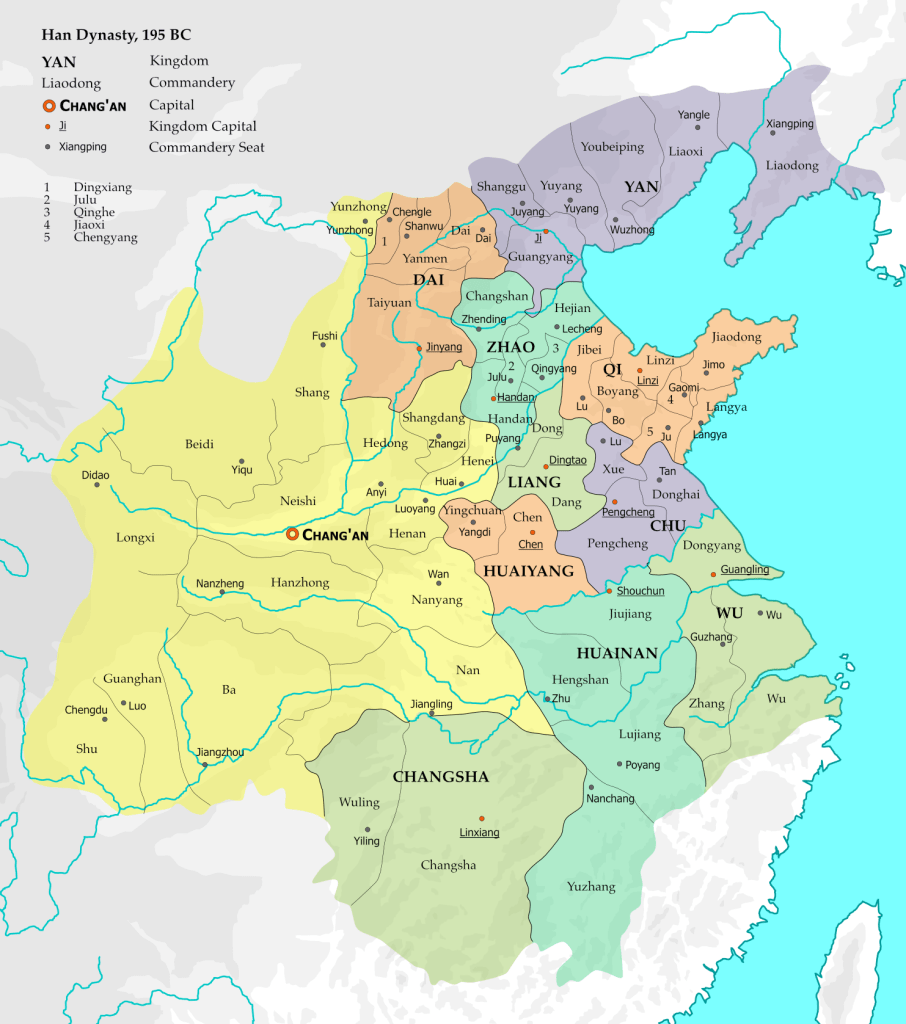
    Prince Li of Huainan, Liu Chang, enacted his own laws and expelled officials appointed by the Han court. He sought to appoint his own prime minister and officials of ministerial rank (i.e., 2000 picul officials), and the Emperor acquiesced to his request. Prince Li also arbitrarily executed innocent people and conferred noble titles on undeserving individuals, elevating some to the rank of Marquess within the Pass. He repeatedly sent disrespectful letters to the Emperor, who was reluctant to admonish him directly. Instead, the Emperor ordered Bo Zhao to write a letter of admonition, citing the punishments of Guan Shu Xian (Uncle Guan) and Cai Shu Du (Uncle Cai) from the Zhou dynasty, as well as the banishment of Prince Qing of Dai (Liu Zhong) and Prince of Jibei (Liu Xingju) to serve as a warning.

    The Prince of Huainan was not pleased with the letter. He conspired with 70 individuals, including Grandee Dan, officer Kai Zhang, and Chai Qi, who was the son of Chai Wu, the Marquis of Jipu, to lead an uprising of 40 chariots at Gukou County. They also sought assistance from the Minyue and Xiongnu states. However, the plot was discovered, and they were arrested. The Emperor summoned the Prince of Huainan to Chang’an, where Chancellor Zhang Cang and Grand Hareld Feng Jing, acting as Grand Master of the Censorate, along with the Minister of imperial Clan and the Minister of Justice, submitted a joint memorial: “Liu Chang should be executed in the public market for his crimes.” The imperial edict commuted the Prince of Huainan‘s death sentence to banishment at Qiong Post Station in Yandao County, Shu Commandery, and stripped him of his title. All those who conspired with him were executed. The Prince of Huainan was transported in prison vehicles, carried in stages by each county along the postal route to Qiong.

    Yuan Ang remonstrated, “Your Majesty has always indulged the Prince of Huainan and has not appointed strict teachers and advisors for him, which has led to this situation. The Prince of Huainan is strong-willed and fragile by nature, and now he is being brutally crushed. I fear he may die from illness on the road to exile, and Your Majesty will be accused of fratricide. What do we do then?” 

    The Emperor replied, “I just wanted to give him a hard time.  I will call him back now.”

    The Prince of Huainan, livid, died from a hunger strike. When the cart reached Yong County, the officers opened the sealed cart and found his corpse. News eventually reached the Emperor in Chang’an. Filled with grief, the Emperor regretted not heeding Yuan Ang‘s advice and sought counsel on how to atone for his mistake. Yuan Ang suggested that the only way to appease the people was to execute the Chancellor and the Grand Master of the Censorate to show remorse. Instead, the Emperor ordered the Chancellor and the Grand Master of the Censorate to investigate the local officials and publicly execute those who had failed to provide food and attendants for the Prince of Huainan. He also ordered the Prince’s burial in Yong with a tomb styled and scaled like that of a marquess, guarded by thirty households.

    Modu Chanyu of the Xiongnu(Huns) sent a letter to the Han, stating: “Earlier, the Emperor mentioned a marriage proposal and sent a letter expressing his intentions, which fostered friendship between our nations. However, Han officials have been harassing the Right Tuqi King. Without my permission, he listened to the advice of the Marquis of Houyilu, Nanzhi, and others, and confronted the Han officials. This violated the treaty between our nations and disrupted our bond of brotherhood. As a result, the Right Tuqi King was punished and sent west to seek out and attack the Yuezhi. Thanks to heaven’s favor, our soldiers were strong and our horses swift, and the Yuezhi were utterly defeated, with all either killed or surrendered. This brought stability to the northern frontier and solidified our rule over 26 neighboring kingdoms, including Loulan, Wusun, and Hujie. The various tribes with their bows and arrows have become one family. I request that we lay down our weapons, rest our soldiers, care for our horses, forget past grievances, and resume the old treaty to ensure peace for the border people. If Your Majesty prefers that our people stay away from the borders, I will issue a decree to my officials and people to remain at a greater distance.”

    The Emperor replied in a letter, saying: “The Chanyu’s desire to forget past grievances and resume the old treaty pleases me greatly. This reflects the wisdom of the ancient sage kings. The Han and Xiongnu made a treaty to be brothers, which is why the Han has treated the Chanyu with such generosity. Those who violate the treaty and disrupt our brotherhood are often found among the Xiongnu. However, the matter of the Right Tuqi King occurred before the amnesty, so I ask the Chanyu not to punish him too severely. If the Chanyu clearly communicates these intentions to your officials and ensures that they do not break the treaty, the Han will likewise honor the treaty and the goodwill expressed in the Chanyu’s letter.”

    Some time later, Modu Chanyu died and was succeeded by his son, Jiyu, who took the title of Laoshang Chanyu. Upon Laoshang Chanyu’s ascension, the Emperor once again sent a princess from the imperial clan to be his consort. An eunuch named Zhonghang Yue from Yan was sent to accompany the princess as her tutor. Zhonghang Yue was reluctant to go, but the Han government forced him. He remarked, “If it must be me, I will cause trouble for the Han!” Upon his arrival, Zhonghang Yue surrendered to the Chanyu, who treated him with great favor and affection.

    In the past, the Xiongnu were fond of Han’s silk and food. Zhonghang Yue warned, “Though the Xiongnu are numerous, they cannot compare to even a commandery of the Han. However, their strength lies in their distinct clothing and food, making them independent from Han. If the Chanyu adopts Han’s goods and customs, the Xiongnu will be under Han‘s control once they receive no more than ten or twenty percent of Han’s exports.” 

    When Zhonghang Yue obtained Han silk, he rode through thorns and grass, deliberately tearing his clothes to show that they were inferior to Xiongnu woolen cloaks and furs. When he received Han food, he rejected it, claiming it was less tasty and convenient than Xiongnu dairy products. He also taught the Chanyu’s attendants to keep records of their people and livestock. The letters and seals exchanged with the Han were enlarged to signify superiority. The letters were written in a haughty tone, referring to the Chanyu as “the great Xiongnu Chanyu, born of Heaven and Earth, and appointed by the Sun and Moon.”

    When Han envoys criticized the Xiongnu for lacking propriety and righteousness in their customs, Zhonghang Yue always countered by saying, “The Xiongnu have simple rules that are easy to follow. The relationship between their rulers and subjects is straightforward and enduring. Their statecraft functions as one cohesive body. Therefore, although the Xiongnu may at times be chaotic, they always establish a ruler from within the tribe. 

    “Now, while the Middle Kingdom claims to uphold propriety and righteousness, as family relations grow distant, people kill and steal from one another, and even the ruling clan is changed. Propriety or not, they all belong to the same kind of people. Alas! Those who live in earthen houses should not babble so much, or padding themselves on the back.

    “As for the goods that Han delivers to the Xiongnu—silk, cloth, rice, and wheat—let them be of good quality and appear pleasing. What more is there to say? If the goods are sufficient and of good quality, then all is well. But if the goods are lacking and of poor quality, then let them wait until autumn harvest, for our riders to sweep in and tramp on their crops.”

  • Comprehensive Reflections to Aid in Governance(Part 112): Zhou Bo’s Run-in with The Law

    Comprehensive Reflections to Aid in Governance

    By Sima Guang

    Translated By Yiming Yang  

    Annals of Han Book 6 Scroll 14 (continued)

    A Deng Tong Coin

    The 4th year of the Emperor Wen’s Early Era(176 B.C.)

    In December of winter, the Marquis of Yingyin, Guan Ying, passed away.
    In spring, on January 4, Zhang Cang of Yangwu County, the Grand Master of the Censorate, was appointed Chancellor. Zhang Cang had a deep fondness for books and was particularly knowledgeable in the fields of musical temperament and chronometry (calendar system).

    The Emperor summoned Ji Bu, the Prefect of Hedong Commandery, intending to appoint him as Grand Master of the Censorate. However, there were rumors that, although brave, Ji Bu enjoyed drinking and was unfit to serve closely with the Emperor. After staying at the imperial residence for a month, Ji Bu was finally granted an audience with the Emperor and assigned to his original post. He then spoke up, “Your Majesty, I have not accomplished any meritorious deeds and have been awaiting punishment in Hedong. Your sudden summons must have been the result of someone’s deception. Now that I have arrived, I have not been given any tasks or promoted—this must be due to slander. You summoned me based on someone’s praise and now dismiss me based on someone’s slander. I fear that those with insight will hear of this and question Your Majesty’s wisdom.”

    The Emperor remained silent for a long time, feeling ashamed, and finally said, “The Hedong commandery is as critical to my reign as arms and thighs to my body, which is why we summoned you specifically.”

    The Emperor proposed appointing Jia Yi to a high-ranking position in the court. However, many ministers criticized him, claiming he was a young man from Luoyang who was just beginning his studies and was overly ambitious, hungry for power and likely to disrupt state affairs. Consequently, the Emperor began distancing himself from Jia Yi and did not adopt his proposals. Instead, Jia Yi was appointed Grand Tutor to the Prince of Changsha.

    After the Marquis of Jiang, Zhou Bo, returned to his state, he lived in constant fear of execution. Whenever the prefect of Hedong or the Jiang county magistrate visited him, Zhou Bo would wear armor and have his family members armed to greet them. Later, someone submitted a memorial accusing Zhou Bo of plotting rebellion, which was handed over to the magistrate. The magistrate arrested Zhou Bo and put him on trial. Terrified and at a loss for words, Zhou Bo was mistreated by the officials. He bribed the jailer with a thousand catties of gold. The jailer then wrote on the back of his wooden tablet and showed it to Zhou Bo, which read: “Mention the princess in your testimony.” The princess referred to the Emperor’s daughter, who had married to Zhou Bo‘s eldest son, Zhou Shengzhi.

    Empress Dowager Bo also believed in Zhou Bo‘s innocence. One day, when the Emperor visited her, she threw her scarf at him and scolded: “When the Marquis of Jiang executed the Lü clan, he took the Emperor’s seal and led troops to the northern army. If he wanted to rebel, wouldn’t he have done it then? Now he lives in a small county—why would he rebel?” 

    By this time, the Emperor had already read Zhou Bo’s attestation from the jailer. He apologized to the empress dowager: “He will be released when the officials finish their investigation.” The Emperor then sent a messenger with the imperial insignia to pardon Zhou Bo and restore his rank and fief.

    After his release, Zhou Bo remarked: “I once commanded an army of a million soldiers, but who would have thought that a jailer could be so privileged?”

    The temple of Gucheng had been built.

    The 5th year of the Emperor Wen’s Early Era (175 B.C.)

    In February of the spring, there was an earthquake. 

    The Qin Empire initially used half-tael coins, but Emperor Gaozu found them too heavy and impractical, so he introduced the “pod coins” as a replacement. This caused prices to soar, with rice reaching ten thousand coins per picul. In April, four-zhu(a fraction of one tael) coins were minted, and a decree was issued abolishing the law against counterfeiting, permitting the people to mint their own coins.

    Jia Yi advised the Emperor on the issue of debased coinage: “By law, the government is permitted to hire workers to mint copper and tin coins. Anyone who adulterates the metal with lead or iron is guilty of a crime punishable by branding their faces. However, the art of coin casting requires a degree of skillful mixing to be profitable. A small alloy can yield great profit. Unintended trouble may arise, and poorly designed laws can tempt people into misconduct. If the government allows ordinary people to mint coins, each will do so secretly, using obscure trickery to maximize profits. Even if offenders are branded daily, this will not stop the practice.

    “As a result, countless commoners face charges, with some counties seeing hundreds of accusations. Many officials will grow suspicious, resorting to corporal punishment and abuse, driving even more people into exile. Such county laws entrap people more than anything else. Furthermore, different regions have varying standards for currency. Some use lighter coins, requiring more coins to complete exchanges for 100 coins; others use heavier coins that aren’t accepted due to a lack of 1-to-1 exchangeability. Without uniform standards, how can officials manage consistently? Local authorities will be overwhelmed by enforcement, or the markets will fill with varied currencies, leading to chaos. Without an effective policy, which path should local officials follow?

    “Today, more people are abandoning agriculture to mine copper, neglecting their farming tools and using furnaces and charcoal for smelting. Counterfeit coins are becoming widespread, creating food shortages. Honest people are tempted into wrongdoing, while cautious people who commit crimes are punished or executed. Severe punishment of the populace is not a sign of good governance. What a dilemma!

    “The government recognizes this problem, and officials will surely propose a ban. But if the ban is poorly implemented, it will cause even greater harm. If coin minting is forbidden, coin values will rise, driving higher profits. Counterfeiting will increase, and even public executions won’t suffice to deter it. The number of offenders will overwhelm the law enforcement, as the root of the issue is copper. Copper is widely available across the country and its potential harm is considerable. It would be better to confiscate all copper mines.”

    Jia Shan agreed with Jia Yi‘s assessment: “Money is a tool without a specific usage, but it can be used to gain wealth and power. Wealth and power are the levers of the ruler, but if rulers allow common people to mint money, they are essentially sharing that leverage, which cannot last.” However, the Emperor did not heed their advice.

    At that time, Deng Tong, the Grandee of the Palace, was highly favored by the Emperor, who wished to make him wealthy. Deng Tong was granted the Yandao copper mine in the state of Shu Commandery to mint coins. Meanwhile, the Prince of Wu, Liu Pi, controlled the Yuzhang copper mine and employed fugitives from across the country to mint coins. He also boiled seawater from the eastern ocean to produce salt, allowing him to exempt his Principality from head tax, while maintaining a well-funded treasury. Consequently, coins minted by Wu and Deng Tong were widely circulated throughout the country.

    Earlier, the Emperor had divided the state of Dai into two principalities, establishing his son Liu Wu as the Prince of Dai and his son Liu Shen as the Prince of Taiyuan. In this year, Liu Wu was relocated and made the Prince of Huaiyang, while Liu Shen became the Prince of Dai, restoring the kingdom’s original territory.

  • Comprehensive Reflections to Aid in Governance(Part 111): Minister of Justice Zhang Shizhi

    Comprehensive Reflections to Aid in Governance

    By Sima Guang

    Translated By Yiming Yang  

    Annals of Han Book 6 Scroll 14

    Shanglin Park, attr. Qiu Ying (1494–1552)

    The 3rd year of the Emperor Wen’s Early Era (177 B.C.)

    In winter, on October 29, there was a solar eclipse. 

    On November 30, there was an eclipse of the sun. 

    The imperial edict declared: “In the past, marquises sent to their fiefs may have refused to go. I hold the Chancellor in high regard, and I want him to lead the marquises back to their fiefs!” In December, Zhou Bo, the Chancellor, was dismissed and sent to his fief. 

    On December 14, Grand Commandant Guan Ying was appointed Chancellor, and his former position was abolished, with its duties merged into the Chancellor’s office. 

    In April of that summer, Prince Jing of Chengyang, Liu Zhang, passed away.

    Earlier, Zhang Ao, the Prince of Zhao, presented Consort Zhao to Emperor Gaozu as his companion, and the emperor impregnated her. When Guan Gao’s plot was uncovered, Consort Zhao was implicated and imprisoned in Henei. Her younger brother, Zhao Jian, appealed to Marquis Piyang, Shen Yiji, asking him to plead with Empress Lü in hopes of securing his sister’s release. However, Empress Lü, out of jealousy, did not raise the matter with the emperor. Consort Zhao had already given birth to a son, but out of bitterness, she committed suicide. Officials brought her son to the emperor, who regretted what had occurred. He named the boy Liu Chang and instructed Empress Lü to raise him, while the woman was buried in Zhending. Later, Liu Chang was granted the title of Prince of Huainan.

    The Prince of Huainan lost his mother at a young age and was always close to Empress Lü, so during the reigns of Emperor Hui and Empress Lü, he was trouble free. However, he resented Marquis Piyang, Shen Yiji, blaming him for failing to persuade Empress Lü, which he believed led to his mother’s death in desolation. After Emperor Wen ascended the throne, the Prince of Huainan, the emperor’s only surviving brother, became increasingly imperious and defiant, frequently violating the law with impunity. The emperor often pardoned him. That year, when the Prince of Huainan visited the court and went hunting with the emperor in the royal park, he rode in the same carriage as the emperor and addressed him as “big brother.”

    The Prince of Huainan, a man of great strength who could lift a cauldron, visited Marquis of Piyang and struck him with an iron mace concealed in his sleeve, then ordered his lackey, Wei Jing, to decapitate him. Afterward, the Prince of Huainan rushed to the palace, bared his back, and apologized to the emperor.  Encumbered by their familial connection, the emperor forgave him without punishment. At this incident, Empress Bo, the crown prince, and other high-ranking officials feared the Prince of Huainan. Emboldened by his pardon, the Prince of Huainan grew even more insolent upon returning to his fief, clearing the roads when he traveled, much like the emperor. He called his orders “Zhi,” mimicking imperial decrees, and proclaimed himself the “Son of Heaven,” a title reserved for the emperor. Yuan Ang warned the emperor that such a domineering vassal would inevitably cause trouble, but the emperor ignored the warning.

    In May, the Xiongnu‘s Right Tuqi King entered the south of the bend of Yellow River, raiding and plundering the border nomads in Shangjun Commandery, killing and capturing many. The Emperor traveled to Ganquan County and ordered Chancellor Guan Ying to lead an army of 85,000 cavalry to attack the Tuqi King in Gaonu County. He also commanded the officers under the Central Commandant to report to the Guard General and defend Chang’an. The Right Tuqi King fled beyond the borders.

    After arriving in Ganquan, the Emperor visited Gaonu and Taiyuan, where he met with his former ministers, presenting them with gifts. He also granted a three-year tax exemption to the people of Jinyang County and Zhongdu[the capital of the Principality of Dai]. The Emperor stayed in Taiyuan for more than ten days, enjoying his time there.

    Earlier, during the purge of the Lü family, the Marquis of Zhuxu made significant contributions. The ministers promised to grant him all the land of the Principality of Zhao and to give the Marquis of Dongmou all the land of the Principality of Liang. However, after the Emperor ascended the throne, he learned that the Marquis of Zhuxu and the Marquis of Dongmou had intended to enthrone their eldest brother, the Prince of Qi[Liu Xiang]. Suspicious of their motives, the Emperor deprived them of the full reward for their contributions. Reluctantly, he enfeoffed two commanderies of Qi to the Marquis of Zhuxu and the Marquis of Dongmou, respectively. Feeling unjustly treated, the Marquis of Dongmou, Liu Xingju, grew resentful. Upon hearing that the Emperor was preparing to campaign against the Xiongnu, Liu Xingju believed the Emperor would leave the capital for war and took the opportunity to rebel.

    When the Emperor learned of this, he recalled the Chancellor and withdrew the troops back to Chang’an. He appointed the Marquis of Jipu, Chai Wu, as Grand General, leading four generals and 100,000 soldiers to suppress the rebellion of the Marquis of Dongmou, Liu Xingju. The Marquis of Qihou, Zeng He, was also appointed as a general to lead troops in Xingyang. In July of autumn, the Emperor returned to Chang’an from Taiyuan and issued a decree: “The people of Jibei who surrender before the army arrives will be pardoned and their official positions restored. Those who conspired with Prince Liu Xingju will also be pardoned.” In August, the Prince of Jibei, Liu Xingju’s army was defeated, and he committed suicide.

    Zhang Shizhi from Nanyang had served as a cavalry attendant for ten years without reassignment and sought to resign and return home. However, Yuan Ang recognized his talent and recommended him, resulting in Zhang Shizhi being appointed as the Director of Internuncios.

    While accompanying the emperor on a tour, they visited the tiger menagerie. The Emperor asked the Shanglin Park Commandant several questions about the registry of birds and beasts in the Imperial Hunting Park. After more than ten questions, the commandant, looking around nervously, was unable to answer any of them. A warden in charge of the tiger menagerie stepped forward and answered on behalf of his superior, providing detailed responses to all the questions about the number of birds and beasts in the park. 

    Impressed, the Emperor continued asking more detailed questions, and the warden responded fluently and with great detail. 

    The Emperor remarked, “Shouldn’t every official be like this warden? We cannot rely on this commandant!” He then ordered Zhang Shizhi to replace the commandant with the warden as the new Shanglin Park Commandant.

    Sometime later, Zhang Shizhi approached the Emperor and asked, 

    “Your Majesty, what do you think of the Marquis of Jiang, Zhou Bo?” 

    The Emperor replied, “He is a respected elder.” 

    “And the Marquis of Dongyang, Zhang Xiangru?” 

    The Emperor answered, “They are both respected elders.” 

    Zhang Shizhi continued, “These two men are regarded as esteemed elders, yet they cannot express themselves fully. How can they compare to this park warden, who is quick-witted and eloquent? In the Qin dynasty, officials skilled with pen and paper were highly valued, competing to be the quickest and most detail-oriented clerks. But this led to nothing more than superficial reports while real issues were neglected, with problems hidden until they resulted in the dynasty’s collapse. By promoting this glib-tongued park warden, I fear the entire world will follow suit, competing to be the most eloquent while lacking substance. When those below influence those above, it creates noise rather than harmony. Therefore, selecting and promoting officials must be done carefully and not in haste.”

    The Emperor was pleased with Zhang Shizhi‘s advice and decided not to promote the park warden. Upon returning to his carriage, the Emperor invited Zhang Shizhi to join him as an assistant driver. As they moved along slowly, the Emperor asked Zhang Shizhi for his views on the decline of the Qin dynasty, to which Zhang Shizhi replied candidly. Upon arriving at the palace, the Emperor appointed Zhang Shizhi as the official in charge of the imperial carriage.

    Later, the Crown Prince and the Prince of Liang rode in a carriage to the court and failed to dismount at the Sima Gate, a portal guarded by officers. Zhang Shizhi stopped them from entering the palace and accused them of “failing to dismount at the public gate and showing disrespect,” which he reported. Even Empress Dowager Bo was informed of the incident. The emperor, humbled, removed his hat and apologized for not raising his son properly. Empress Dowager Bo then sent someone to pardon the Crown Prince and the Prince of Liang, allowing them to enter. The Emperor, impressed by Zhang Shizhi‘s sense of duty, appointed him as the Grandee of the Palace, and shortly thereafter, promoted him to General of the Palace.

    As they traveled to the Baling mausoleum, the Emperor said to his ministers, “Alas! My tomb is made of stones from the northern mountains. Woven oakum and lacquer fill the cracks. How could it ever be broken into?” Everyone around him agreed, but Zhang Shizhi responded, “If there is something desirable within, even if it is locked in the southern mountains, there will still be a way in. If there is nothing desirable inside, even without the stone tomb, what worry is there?” The Emperor praised his words.

    Zhang Shizhi was appointed Minister of Justice that year. On one occasion, as the Emperor was crossing the Middle Wei Bridge, a man suddenly ran out from beneath it, causing the imperial carriage horse to panic. The Emperor ordered his mounting guard to capture the man and hand him over to the Minister of Justice. Zhang Shizhi submitted a report stating, “This man violated the law of trespassing and should be punished with a fine.” The Emperor, angered, said, “This man startled my horse, and if not for its gentle disposition, it could have caused me great harm. Yet, as Minister of Justice, you only impose a fine?”

    Zhang Shizhi replied, “The law serves the common good of the people. According to the law, the appropriate punishment for this offense is a fine. If we enforce the law too harshly, the people will lose trust in it. Moreover, if Your Majesty had ordered the man’s execution at that moment, the matter would have already been resolved, and it wouldn’t have been referred to me. The Minister of Justice upholds the law of the land, and if we undermine its authority, how can we ensure justice in the future? I urge Your Majesty to reflect on this matter carefully.”

    The Emperor thought for a long time and ultimately agreed with Zhang Shizhi, “You are right. As the Minister of Justice, you have made the correct decision.”

    Later, someone stole a jade ring from the Temple of Emperor Gaozu and was caught. The emperor, furious, ordered the case to be handled by the Minister of Justice. Zhang Shizhi submitted a report stating that, according to the law, the punishment for stealing from the ancestral temple was death by beheading in a public market. The Emperor, even more enraged, said, “This person has no morals, yet he has stolen from my father! We let the Minister of Justice handle this case, meant to exterminate his entire family as punishment. But you submitted this report to the court, which does not reflect my reverence for my ancestors.”

    Zhang Shizhi bowed, removed his hat, and apologized, “This is the appropriate punishment according to the law. Furthermore, the severity of punishment for the same crime may vary depending on the context. If we were to exterminate his entire family for stealing from the ancestral temple, then, heaven forbid, should a foolish commoner take a handful of soil from the Emperor Gaozu’s tomb, how would Your Majesty punish him?”

    The Emperor then consulted Empress Dowager and was permitted to handle the case as Zhang Shizhi saw fit.

  • Comprehensive Reflections to Aid in Governance(Part 110): Speak Your Mind

    Comprehensive Reflections to Aid in Governance

    By Sima Guang

    Translated By Yiming Yang  

    Annals of Han Book 5 Scroll 13 (continued)

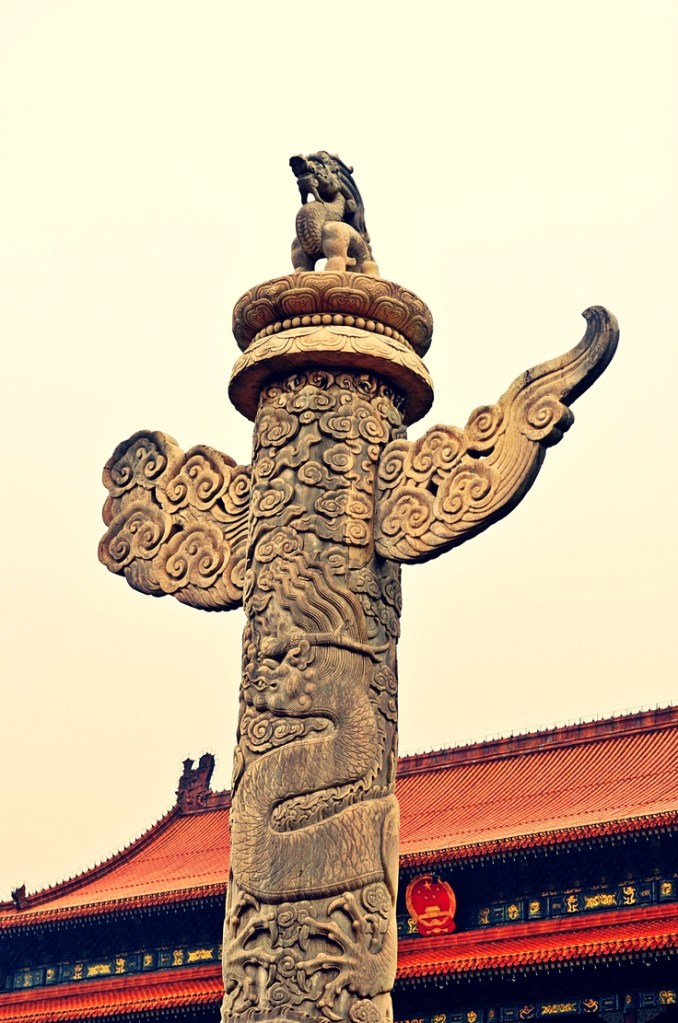
    Huabiao, originated from the “Slander Post” for airing grievances, degenerated into a décor.

    The 2nd year of the Emperor Wen’s Early Era(178 B.C.)

    In October, during the winter, Chen Ping, the Marquis of Quni, passed away.

    An edict was issued: “All marquises and lords must return to their fiefdoms. Those appointed as court officials or requested to remain in the capital by decree may send their crown prince to fief in their place.”

    On November 2, Zhou Bo was reinstated as Chancellor.

    On November 30, the last day of the month, there was a solar eclipse.

    The Emperor issued an edict: “All ministers should reflect on my mistakes and shortcomings, and inform me of anything We have failed to perceive. They should also recommend virtuous, upright, and candid individuals capable of offering forthright advice to correct my deficiencies.” The emperor further instructed officials to diligently fulfill their duties and reduce unnecessary taxes to benefit the people. The position of General of the Guards was abolished, and his troops disbanded. The Grand Coachman was ordered to maintain only enough horses for the court, with the surplus directed to replenish the postal service throughout the country.

    Jia Shan, an adjutant of the Marquis of Yingyin (Guan Ying), wrote to the Emperor on governing a state during turbulent times:

    “Your Majesty, I have heard that thunder strikes and destroys everything it hits, and that ten thousand pounds of force can crush and annihilate anything. The might of a ruler far surpasses thunder, and the force of a ruler is far greater than ten thousand pounds. Yet, even when a ruler opens a path for criticism, accepts it with a kind face, adopts ideas, and promotes the adviser, the bravest men may still be fearful and unable to express themselves fully. What would happen if a ruler indulges in his desires and acts violently, hating anyone who points out his mistakes? If Your Majesty uses your might to intimidate and your authority to oppress, then even those as wise as Emperor Yao and Shun, or as mighty as the warrior Meng Ben, would still be crushed and destroyed. In such a case, the ruler would never hear of his mistakes, and the country would be in peril.

    “In ancient times, the Zhou dynasty supported 1,800 states and served 1,800 lords with the people of the Nine Provinces. The lords had excess wealth, the people had extra leisure, and they sang praises of their rulers. The First Emperor of Qin, however, ruled alone over the people of 1,800 states. Despite the people’s exhausting labor and the surrender of all their wealth, his demands were never met. The entire empire could not satisfy a single ruler’s appetite for hunting. Although the First Emperor of Qin thought highly of his achievements and believed his descendants would prosper for generations, just months after his death, the entire country rose up against him, and his ancestral temple was destroyed.

    Why was the First Emperor of Qin unaware that he was doomed to fall? Because no one dared to tell him the truth. And why did nobody dare to tell him? It was because he had lost the values of respecting the elderly, had dismissed the support of loyal officials, and killed those who dared to remonstrate with him. As a result, officials survived by flattery and sycophancy, praising his virtue above that of Emperor Yao and Shun, and declaring his achievements greater than those of King Tang of Shang and King Wu of Zhou. Yet the country was already collapsing, and nobody dared to tell him the truth.

    “Your Majesty has called upon virtuous and upright people from across the country, and the people are overjoyed, saying, “The way of Emperor Yao and Shun will be revived, and the achievements of the Three Sovereigns will be realized.” All the talented individuals in the world are eager to contribute their best efforts to assist in Your Majesty’s benevolent rule. Now, the virtuous and upright are gathered at court, and the wise have been chosen as your attendants and officials, often accompanying you on hunting, riding, and shooting excursions several times a day. I fear this may distract the courtiers and prevent the officials from attending to their duties.

    “When Your Majesty ascended to the throne, you personally encouraged the entire country, practiced self-discipline, and showed great magnanimity toward the people, restraining extravagance, showing affection, lightening sentences for the convicted, and exonerating the innocent. The people were pleased and happy. I have heard that officials in the provinces east of Xiao Mountain publicized your edict, and even the elderly, weak, and sick traveled there, leaning on their staff, just to hear it, hoping to live a little longer to witness the realization of virtuous governance.

    “Now, with achievements on the verge of being realized, your reputation shining, and people everywhere following your virtuous example, I am deeply concerned that talented officials and virtuous people are spending their days hunting and shooting with Your Majesty, chasing hares and foxes while neglecting the great cause and abandoning the people’s hopes. This deeply troubles me.

    “In ancient times, great officials were not permitted to partake in entertainments and outings; they were urged to focus on their duties and maintain high standards of conduct. As a result, all officials upheld their personal integrity and fulfilled their responsibilities with utmost dedication to serve the great cause of the country. It is unfortunate that nowadays, though officials may cultivate their moral character at home, they undermine it in the emperor’s court. I feel sorry for them.

    “Your Majesty can enjoy leisure and outings with your attendants, while discussing state affairs with ministers and upright individuals in the court. In this way, you will not lose the pleasure of repose, you will uphold proper etiquette in court, and your discussions of state matters will be guided by sound reasoning. This issue is of utmost importance.”

    The Emperor praised and accepted the criticism.

    During each court appearance, officials and attendants would submit memorandums, and the emperor never failed to dismount his carriage to accept their proposals. If the suggestions were unusable, he would set them aside; if they were useful, he would adopt them, always appreciating their candor regardless of the proposal being used.

    Once, the Emperor wanted to ride his carriage down a steep slope in Baling. General of the Household Yuan Ang, riding beside him, held the reins of his horse-drawn carriage. The Emperor asked Yuan Ang if he was afraid, to which Yuan Ang replied, “I have heard that ‘the son of the super-rich does not sit under the eaves of a hall [in case of a falling tile].’ A wise ruler should not take risks or rely on luck. If Your Majesty rushes down this steep slope at breakneck speed, there is a risk of the horses panicking and an accident occurring. As the emperor, you must not be careless and disregard the importance of the ancestral temple and the empress dowager.” The Emperor then stopped.

    Madame Shen was a favorite concubine of the emperor and often sat at the same table as the empress in the imperial harem. Once, when the Emperor’s entourage visited the offices of court attendants, Yuan Ang, the General of the Household, moved Madame Shen’s seat away from the Emperor. Madame Shen became angry and refused to take the seat, and the Emperor, also offended, withdrew to the inner chambers.

    Yuan Ang then stepped forward and said, “I have heard that when there is distinction between superiors and subordinates, there will be harmony between them. Now that Your Majesty has already established the empress, Madame Shen is merely a concubine. How can a concubine sit at the same table as the empress? Your Majesty’s favor towards her is actually harming her. Have you not heard the story of ‘the human pig’?” Upon hearing this, the Emperor was pleased. He summoned Madame Shen and gave her a talk. In gratitude, Madame Shen gifted Yuan Ang fifty caddies of gold.

    Jia Yi advised the Emperor:

    “The Book of Guanzi says: ‘When the granaries are full, the people understand etiquette and rules. When they have sufficient food and clothing, they know the difference between honor and shame.’ Throughout history, it has never been heard that a population lacking basic necessities could be governed effectively. As the ancients said: ‘If one man does not farm, some will face hunger; if one woman does not weave, some will suffer from cold.’ Resources are produced at their own rate, and misuse or wasteful spending will inevitably exhaust them and render them unsustainable.”

    “The ancients governed the world with utmost care and meticulousness, and thus accumulated sufficient reserves to rely upon. Nowadays, many abandon the fundamentals and rush toward the superficial(meaning nonproducers), causing great harm to the world. The corrupt customs of extravagance and licentiousness grow day by day, becoming the greatest scourge of the world! While the chase for profit and luxury spreads widely, no one makes efforts to stop it. The country’s welfare is on the verge of collapse, and no one can revive it. There are few who produce, yet many who consume—how can the wealth of the world not be depleted?

    “For almost forty years since the Han dynasty was established, the accumulation of both public and private wealth has been a cause for lamentation. When the rain fails to fall in due season, the people become anxious, like wary wolves. When there is a poor harvest, the rich submit their surplus to advance their rank, while the poor are forced to sell their ranks or children. I am sure Your Majesty is aware of this. How can a ruler remain unmoved when the country is in crisis?

    “Famine and abundance in the world are natural phenomena ordained by heaven, and even great rulers like Yu the Great and King Tang of Shang had to contend with them. If, unfortunately, a drought affects an area of two or three thousand miles, where will the country turn to provide disaster aid? If a sudden crisis on the border requires the mobilization of millions of soldiers, where will the country find them? When both natural disasters and warfare occur simultaneously, the entire world suffers. The strong and courageous gather to pillage, while the weak, old, and frail are left behind, forced to gnaw on their children’s bones. When political chaos arises, those from afar will take advantage of the situation and contend for power. If we only react when crises occur, will it not be too late?

    “Accumulating wealth and resources is the key to the prosperity and survival of the country. If there is an abundance of grain and wealth, what cannot be achieved? Whether in attack or defense, victory will be assured. With such reserves, the enemy can be pacified, and people from afar will come to pay tribute. Who will not answer the call when such a reserve is at hand?

    “Now, if the people are to return to agriculture, it should be based on their individual abilities. If everyone in the world uses their strengths to sustain themselves, those seeking profits and wandering from place to place will be compelled to till the fields. As a result, there will be a sufficient accumulation of wealth, and people will be content with their lives. This will bring prosperity to the country and peace to the world. I fear this has not yet been accomplished, and thus I am deeply concerned for Your Majesty’s reign.”

    Upon hearing Jia Yi’s words, in the spring, on January 15, the emperor issued a decree to perform a plowing ceremony. He personally led the people in plowing the fields, setting an example for the entire nation to follow.

    In March, officials requested that imperial princes be appointed as kings of various vassal states. The emperor issued a decree first appointing Liu Biqiang, the young son of Prince You of Zhao, as the Prince of Hejian. Liu Zhang, Marquis of Zhuxu, was then appointed as the Prince of Chengyang, and Liu Xingju, Marquis of Dongmou, as the Prince of Jibei. After these appointments, the emperor appointed his own sons: Liu Wu as the Prince of Dai, Liu Shen as the Prince of Taiyuan, and Liu Yi as the Prince of Liang.

    In May, an edict was issued stating, “In ancient times, when governing the world, there were banners to promote good deeds and wooden posts for publishing grievances, which encouraged good governance and allowed officials to voice their criticisms. Today, there are laws punishing slander and fallacy, making officials afraid to speak their minds, thus preventing the emperor from hearing about his mistakes. How can we attract virtuous and talented people from distant places? Therefore, we will abolish these laws!”

    In September, the Emperor issued another decree: “Agriculture is the foundation of the country, and the people rely on it for their livelihood. However, some neglect this foundation and pursue trivial matters, leading to poor harvests and hardships in people’s lives. I am concerned about this situation, so I will personally lead the officials in farming to encourage them. Additionally, I will exempt half of this year’s land tax for the entire country.”

    Prince Jing of Yan, Liu Ze, passed away.

  • Comprehensive Reflections to Aid in Governance(Part 109): Learn Your Place

    Comprehensive Reflections to Aid in Governance

    By Sima Guang

    Translated By Yiming Yang  

    Annals of Han Book 5 Scroll 13 (continued)

    An Idol of Zhao Tuo in Vietnam

    The 1st year of the Emperor Wen’s Early Era(179 B.C. continued)

    The Emperor had been getting up to speed on state governance. One day, he asked the Right Chancellor, Zhou Bo, how many cases were resolved in a year and how much tax and grain were collected. Zhou Bo did not know the answers and felt embarrassed, sweating through his clothes on his back.

    When the Emperor asked the Left Chancellor, Chen Ping, who replied that there were officials responsible for these matters. 

    The Emperor then asked, “Who is in charge of these matters?” 

    Chen Ping responded, “Your Majesty, when you inquire about criminal cases, the Minister of Justice is responsible; when you ask about money and grain, the Secretary of the Interior for Grain is in charge.”

    The Emperor then asked, “If everyone has their own responsibilities, what is it that you are responsible for?” 

    Chen Ping apologized, “Your Majesty, you are unaware of my incompetence, yet I have been made Chancellor. The Chancellors assist the Emperor as his highest advisors, balancing yin and yang, following the four seasons, and ensuring the needs of all living things are met. We manage foreign relations, pacify the various vassal states, care for and support the people, and ensure that ministers and officials carry out their duties.” 

    The Emperor praised Chen Ping‘s answer.

    The Right Chancellor, feeling ashamed, reproached Chen Ping after leaving, saying, “Why didn’t you teach me how to respond in that situation?” 

    Chen Ping laughed and replied, “Did you not understand your role when you accepted the position? Besides, if the Emperor asked about the number of thieves and bandits in Chang’an, would you really try to guess an answer?” 

    From then on, the Marquis of Jiang realized that his administrative abilities were far below Chen Ping‘s.

    Not long after, someone warned Zhou Bo: “Since you executed the Lü clan and enthroned the Prince of Dai, you have wielded immense power and shaken the world. But you have been highly rewarded and held your position for a long time—disaster may soon befall you.” Worried, Zhou Bo pretended to be ill and requested to resign from his position as Right Chancellor, which the Emperor accepted. On August 20, Chen Ping became the sole Chancellor after Zhou Bo‘s resignation.

    As previously stated, the Marquis of Longlü, Zhou Zao, launched an attack on the Nanyue kingdom, but his forces encountered hot and humid weather, leading to a severe epidemic among the soldiers, who were unable to clear the hills. After a year, following the death of Empress Gao, the troops were withdrawn. Seizing the opportunity, Zhao Tuo used his military power and wealth to bribe the Minyue, Âu Việt, and Luoyue kingdoms into submission. He controlled a vast territory spanning thousands of miles from east to west and adopted a yellow canopy and a flag on the left to claim equal status with the Han dynasty.

    In response, the Emperor established a garrison town to honor Zhao Tuo’s ancestors and provided annual sacrifices. He also summoned Zhao Tuo‘s brothers, granting them high positions and generous rewards. The Emperor sent Lu Jia as an envoy to the Nanyue kingdom and wrote to Zhao Tuo:

    “We are the son of Emperor Gaozu‘s concubine, abandoned and raised in the state of Dai, a remote place far from the capital. The road is long and winding, and I was isolated and ignorant. I had no opportunity to send your Majesty a letter before. After Emperor Gaozu passed away, Emperor Hui ascended the throne. When Empress Dowager Lü fell ill, the Lü clan rebelled. Thanks to the efforts of loyal ministers, we quelled the rebellion and exterminated them. However, by the insistence of princes, marquises, and officials, I had no choice but to be installed as emperor.

    Now that We are on the throne, We received Your Majesty’s letter, sent to the Marquis of Longlü, General Zhou of the Han army, asking me to recall the two generals from Changsha and to seek your brothers. In accordance with your letter, We have recalled a general, Marquis of Boyang, and We have already sent someone to inquire about your relatives in Zhending and to repair your ancestors’ tombs.”

    We have heard that you have launched attacks on our borders, causing great harm. The people of Changsha have suffered, and the people of Nanjun have endured the worst of it. Even for your own kingdom, are wars truly a gain? You will have to sacrifice many soldiers and harm excellent generals and officials. Wives will become widows, sons will become orphans, and parents will be left without care. Gaining one benefit that loses ten—We cannot bear to see this happen.

    We wish to straighten out our borders, so they no longer zigzag like a dog’s bite. We asked mine officials why the border was drawn this way, and We were told it was to isolate the kingdom of Changsha. We cannot act rashly in altering the border. Even if We gained your territory, it would not significantly enhance mine empire, and even if We acquired your wealth, it would not make me rich. You may govern your lands south of the Wuling Mountains.

    Now, Your Majesty calls himself an emperor. If we both use the title of emperor without establishing a diplomatic relationship, it will inevitably lead to conflict, which is not appropriate for benevolent rulers. We hope we can put the past behind us, and from now on, we can resume normal diplomatic relations.”

    Lu Jia, the envoy from the Han dynasty, arrived in the kingdom of Nanyue, throwing the king into a panic. The king immediately apologized and expressed his willingness to obey the emperor’s orders, pledging loyalty and tribute to the Han dynasty. He issued an order to his subjects, “I have heard that two heroes cannot coexist, and two worthy men cannot live in the same era. The Han emperor is a wise ruler. From now on, we will abolish our imperial titles, the Yellow Canopy, and the Left Banner.”

    He then wrote a letter, stating: “Great and noble Emperor, your old servant Zhao Tuo respectfully kowtows and presents this letter to Your Majesty. I was once a Han official stationed in the kingdom of Yue, and the late Emperor Gaozu bestowed upon me the seal of kingship over Nanyue. When Emperor Hui ascended the throne, he too treated me kindly, generously bestowing gifts.

    However, during the reign of Empress Dowager Lü, policies were issued that discriminated against the Yue people, prohibiting trade in gold, iron, farmland, horses, cattle, and sheep. Even when trade was allowed, only male animals were permitted, not females. My horses, cattle, and sheep have since grown old, and I believed this misfortune was due to my neglect of the gods, for which I deserved punishment. I sent three delegations, led by Chief of Staff Fan, Capital Police Chief Gao, and Censor Ping, to Chang’an to apologize, but none returned. Rumors reached me that my parents’ tombs had been desecrated and my relatives executed. My officials and I then discussed the situation and decided that if we could not receive respect from the Han empire, we might as well elevate our own status. Thus, we declared ourselves an empire, though we never intended to harm the world. When Empress Dowager Lü learned of this, she grew angry and removed Nanyue from the registry, cutting off communication. I suspect the King of Changsha spread malicious lies about me, forcing me to raise an army for defense.

    I have lived in Nanyue for forty-nine years and now hold my grandchildren in my arms. Yet, I have constantly worried about the welfare of the Han dynasty, day and night. I cannot sleep or eat properly, nor enjoy music or the beauty of life. Now, Your Majesty has shown mercy, restoring my former title and allowing communication with Han. Even if I were to die today, my bones would rest in peace. I will no longer dare to proclaim myself an emperor.”

    Prince Ai of Qi, Liu Xiang, passed away. 

    The Emperor, having heard that Wu Gong, the grand administrator of Henan Commandery, was the most capable administrator in the empire, summoned him to serve as Minister of Justice. Wu Gong recommended Jia Yi, a man from Luoyang, and the Emperor summoned Jia Yi to serve as an Erudite. At the time, Jia Yi was just over twenty years old. The Emperor, impressed by his literary talent and vast knowledge, promoted him to the position of Grandee of the Household within a year. Jia Yi proposed reforms to the calendar, official gown colors, titles, and ceremonies to establish distinct Han dynasty customs, replacing the Qin rituals. However, the Emperor, being modest and frugal, did not prioritize these suggestions.

  • Comprehensive Reflections to Aid in Governance(Part 108): Limited Social Welfare

    Comprehensive Reflections to Aid in Governance

    By Sima Guang

    Translated By Yiming Yang  

    Annals of Han Book 5 Scroll 13 (continued)

    Marquis of Jiang, Zhou Bo

    The 1st year of the Emperor Wen’s Early Era(179 B.C.)

    In the winter, on October 1, Liu Ze, the Prince of Langya, was relocated to become the Prince of Yan, while Liu Sui, the son of Prince of Zhao–Liu You, was enfeoffed as the new Prince of Zhao.

    That winter, Chen Ping requested to resign from his position due to illness. The Emperor inquired about his decision, and Chen Ping replied, “During Emperor Gaozu’s reign, Zhou Bo did not accomplish as much as I did. However, during the elimination of the Lü Clan, I did not accomplish as much as Zhou Bo did. I would like to step down as Right Chancellor in favor of Zhou Bo.” On November 8, Emperor Wen appointed Chen Ping as Left Chancellor, Zhou Bo as Right Chancellor, and Guan Ying as Grand Commandant. The territories of Qi and Chu, which had been seized by the Lü Clan, were returned to their rightful federation.

    After the execution of the various members of the Lü clan, officials, from the Chancellor down to those of lower rank, were rewarded with increases in their fief households and gifts of gold. The Marquis of Jiang was particularly pleased and left the court with great satisfaction. The Emperor, who held him in high regard, watched him depart with admiration.

    The attendant Yuan Ang from Anling remonstrated with the Emperor, saying, “The Lü clan rebelled, and all the high-ranking officials worked together to exterminate them. At that time, the Chancellor was also the Grand Commandant and in charge of the military. He was merely successful in his duties. Now the Chancellor seems to show signs of swagger, and Your Majesty remains humble and accommodating.  When ministers are disrespectful and the sovereign is permissive, It is not an appropriate relationship, in my humble opinion.”

    After this, the Emperor became more solemn, while the Chancellor grew more cautious and fearful.

    In December, an edict was issued stating, “The law is intended to govern justly. While those who violate the law have already been sentenced, it is unacceptable to us for innocent parents, spouses, relatives, and associates to be punished and enslaved as a result. Therefore, the laws concerning the punishment of children and others guilty by association will be abolished.”

    In January, during the spring, the officials requested that a crown prince be established early. The Emperor responded, “Since I lack virtue and have not been able to extensively search for virtuous and capable individuals to whom I might abdicate, establishing a crown prince prematurely would only highlight my own lack of virtue. Let us delay this matter.”

    The officials, however, insisted, saying, “Establishing a crown prince underscores the importance of ancestral temples and national altars, ensuring the country is not neglected.”

    The Emperor said, “The Prince of Chu is my uncle, the Prince of Wu is my brother, and the Prince of Huainan is my younger brother. Are they not suitable candidates for succession? If I overlook them and only consider my sons, people will think I’ve ignored virtuous and capable individuals in favor of my own children. This is not the way to care for the country.”

    The officials persisted, “In ancient times, the dynasties of Yin and Zhou thrived in peace and prosperity for over a thousand years by following this practice. Selecting a son as the heir has been the tradition for generations. When Emperor Gaozu unified the world, he became the primogenitor. His descendants have succeeded the throne ever since. It would not be appropriate to alter his will now and select an heir from among the princes of the royal family. Such a change would go against Emperor Gaozu’s precedent. Prince Liu Qi, your eldest son, is pure, kind, and benevolent. We humbly request that he be established as the crown prince.”

    The Emperor, after hearing this, agreed to their request.

    In March, the mother of the crown prince, Lady Dou, was made Empress. She was originally from Guanjin County in Qinghe Commandery. Lady Dou had a younger brother named Dou Guangguo, whose courtesy name was Shaojun (Young Lord). As a child, he had been kidnapped and sold multiple times before finally managing to return home. Upon learning that his sister had become Empress, he wrote her a letter recounting his story.

    The Empress summoned him, and after questioning him, confirmed his story was true. She then granted him land, houses, and money, allowing him and his family to settle in Chang’an alongside his older brother, Dou Zhangjun (Older Lord).

    The Marquis of Jiang and General Guan Ying said to each other, “We have just escaped death with the Lüs, but our fates now rest in the hands of these two brothers. They come from humble origins, and if they do not choose good teachers and advisers, they may end up like the Lü clan. This is a matter of great importance!” As a result, they selected virtuous and upright scholars to serve as the brothers’ teachers and advisers. From that point on, the brothers became modest and respectful, never allowing their elevated status to turn them into reckless or egoistic brats.

    The Emperor issued a decree to provide support and loans to widows, widowers, orphans, the elderly, and the destitute. He also ordered that individuals over the age of 80 would receive monthly grants of rice, meat, and wine, while those over the age of 90 would also be given silk and cotton. The county magistrate must inspect all porridge and goods for elders, and the administrator and military officer were tasked with delivering them to those over 90 years old. For those under 90, the distribution was handled by town managers and the staff of the county magistrate. High-ranking officials were assigned to monitor local officials to ensure proper execution of the distribution, with punishments in place for those who failed to dispense the grants correctly.

    The Prince Yuan of Chu, Liu Jiao, passed away.

    In April of that summer, earthquakes struck the principalities of Qi and Chu. On the same day, twenty-nine mountains collapsed, and great floods erupted.

    Around this time, someone presented the Emperor with a horse capable of running a thousand li per day. The Emperor remarked, “With imperial banners leading and baggage carts following, my procession can march no more than fifty li a day, and the army can only manage thirty li. Should I ride this thousand-li horse and leave everyone behind?” He returned the horse to the giver and compensated them for their expenses. He then issued an edict: “I will not accept any more gifts. Let it be known throughout the realm that no one should present me with further offerings.”

    Emperor Wen had long shown kindness to the people, and the monarchs and neighboring tribes, both near and far, were pleased. At last, he rewarded those from Dai who had aided in his ascension, appointing Song Chang as the Marquis of Zhuangwu.

  • Comprehensive Reflections to Aid in Governance(Part 107): Emperor Wen, the Prudent

    Comprehensive Reflections to Aid in Governance

    By Sima Guang

    Translated By Yiming Yang  

    Annals of Han Book 5 Scroll 13 (continued)

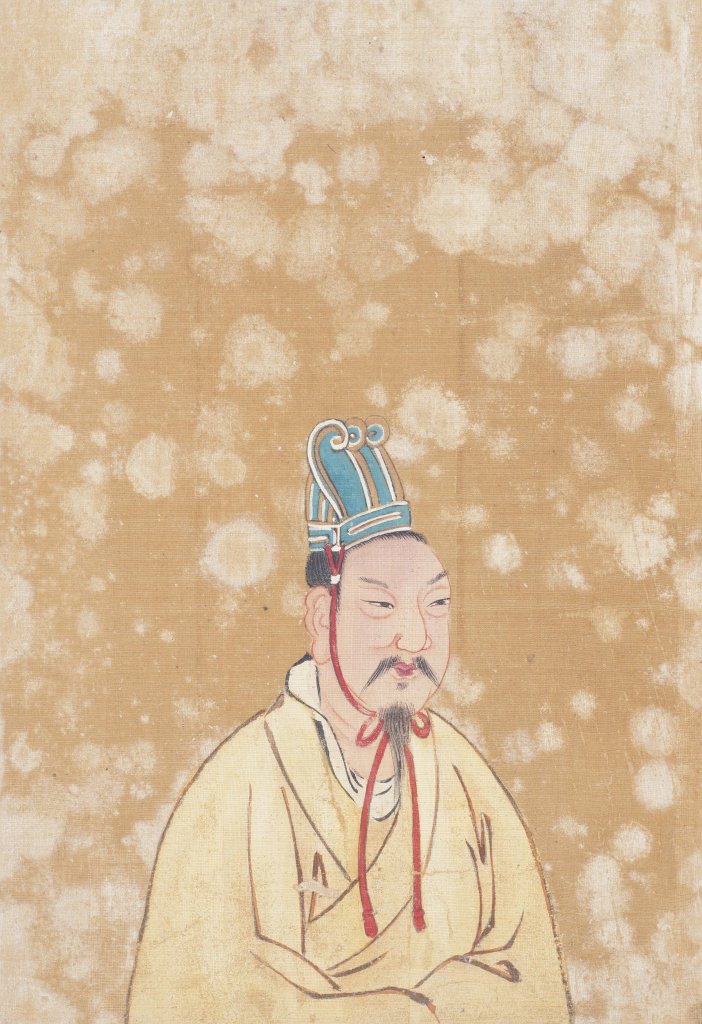
    Liu Heng, Emperor Wen of Han, A portrait in Museum.

    The 8th year of the Empress Gao(180 B.C. continued)

    While in Xingyang, Guan Ying heard that Wei Bo had persuaded the Prince of Qi to raise troops. He summoned Wei Bo and questioned him. Wei Bo responded, “When a house is on fire, the family doesn’t have time to ask the host for permission before putting it out.” After speaking, he stepped back, his legs trembling with fear, and could say nothing more. General Guan Ying laughed and said, “People say Wei Bo is brave, but he’s just an overrated man who can’t accomplish anything!” He then dismissed Wei Bo. Guan Ying‘s troops also withdrew and returned from Xingyang.

    Ban Gu’s praising commentary: During the reign of Emperor Wen, the world condemned Li Ji as a traitor. A traitor is someone who prioritizes personal gain over loyalty and righteousness. However, if Li Ji had only been coerced because his father, a meritorious official, was held hostage, even if he had betrayed his friend Lü Lu to safeguard the state, his loyalty to the emperor and his affection for his father should be acceptable.

    A group of high ranking ministers conspired in secret, saying, “Emperor Shao and the Princes of Liang, Huaiyang, and Hengshan are not truly Emperor Hui’s sons. Empress Lü falsely claimed they were his sons, killed their mothers, and raised them in the imperial harem as princes to strengthen the Lü clan. Now that the entire Lü clan has been eliminated, if those established as the emperor’s sons grow older and come to power, we have no chance of survival. It is better to choose the most capable among the princes as the new emperor.” Someone suggested, “The Prince of Qi, Emperor Gaozu’s grandson, could be chosen.” The ministers responded, “The Lü clan brought chaos through the maternal family’s dominance, almost destroying the ancestral temple. If we establish the Prince of Qi, whose uncle, Si Jun, is as aggressive and greedy as a tiger, we might end up serving another Lü clan. The Prince of Dai is Emperor Gaozu’s oldest son, and he is kind, tolerant, and respectful. Moreover, his mother’s family, the Bo clan, is honest and virtuous. Choosing the eldest is the most customary option. Besides, he is renowned for his kindness and filial piety throughout the empire!” They then secretly sent someone to summon the Prince of Dai.

    The Prince of Dai asked his advisors, including the lord of chamberlain, Zhang Wu, for their opinions. They said, “The ministers of the Han dynasty were originally high-ranking generals under Emperor Gaozu, experienced in warfare and skilled in strategy and deception. Their ambitions extend beyond their current positions. They acted cautiously out of fear of Emperor Gaozu and Empress Lü, but now they may be using the pretext of welcoming the Prince to pursue their own selfish goals. We advise your majesty to feign illness and refrain from going, so that we may observe how the situation unfolds.”

    However, Commander of the capital garrison, Song Chang, spoke up, “The opinions of the courtiers are all wrong. When the Qin dynasty fell, the feudal lords and nobles rose up, each thinking they could claim the throne, with tens of thousands vying for it. Yet, in the end, it was the Liu family who ascended, leaving the rest of the world to drop out of the contention — this was the first reason. When Emperor Gaozu enfeoffed his sons and relatives, they served as checks on each other like interlocking teeth — this was the foundation of an unshakable empire. The entire world submitted to his strength — this was the second reason. When the Han dynasty was established, the harsh policies of Qin were abolished, the laws were simplified, and benevolence and kindness were extended to the people, leaving everyone feeling secure and averse to change — this was the third reason. Even though Empress Lü exercised strict control and appointed her family members as Princes, she could not prevent the Grand Commandant from inciting the Northern Army to support the Liu family and rebel against the Lü clan, leading to their downfall. This was a sign from heaven, not the result of human effort. Now, even if the ministers attempt to create upheaval, the people will not follow them, would their factions remain united? Inside the palace, there are relatives of Marquis of Zhuxu and Marquis of Dongmou, and outside, there is fear of the external power of principalities of Wu, Chu, Huaiyang, Langya, Qi, and Dai. Among Emperor Gaozu’s sons, only the Prince of Huainan and Your Majesty remain. Your Majesty is also the eldest, and your wisdom, benevolence, and filial piety are renowned throughout the world. Therefore, the ministers genuinely wish to support Your Majesty and welcome your ascension to the throne, in accordance with the people’s will. Your Majesty should not doubt their motives.”

    The Prince of Dai reported this to his mother, Empress Dowager Bo, but remained uncertain. He consulted a divination, which revealed the hexagram “Big Horizontal.” The interpretation was: “Big Horizontal represents a heavenly Prince, like the brilliance of dawn in summer.” The Prince of Dai asked, “But I am already a Prince. What other Prince is there?” The diviner replied, “The heavenly Prince is none other than the son of Heaven.”

    Following this, the Prince of Dai sent Empress Dowager’s younger brother, Bo Zhao, to meet with the Marquis of Jiang, who explained their plan to enthrone him. Bo Zhao returned with a positive response, and the Prince of Dai smiled and said to Song Chang, “It turns out you were right.”

    The Prince of Dai, accompanied by Song Chang, rode with six others, including Zhang Wu, on a government post vehicle to Chang’an. They rested at Gaoling, and Song Chang was sent ahead to observe the situation in Chang’an. When Song Chang arrived at Wei Bridge[a bridge over Wei River], he was greeted by everyone, from the Chancellor down. Song Chang returned to report his findings. The Prince of Dai then rode to Wei Bridge, where the courtiers bowed and pledged allegiance to him. The King of Dai dismounted from his carriage and returned the salutes.

    The Grand Commandant then requested an audience. Song Chang replied, “Whatever you have to say publicly, say it publicly; whatever you have to say privately, the Prince has no private affairs.” The Grand Commandant knelt and presented the imperial seal and insignia of office. The Prince of Dai thanked him and said, “Let’s discuss it further at the Dai state residence.”

    On the leap month of September 29, the Prince of Dai arrived in Chang’an and stayed at the Dai state residence. The courtiers followed him to the residence. Chancellor Chen Ping and others bowed twice and said, “Prince Liu Hong and other young men are not the true sons of Emperor Hui and are therefore not suitable to succeed Emperor Hui and serve in the ancestral temple. As the eldest son of Emperor Gaozu, you should succeed him. We implore you to ascend the imperial throne.”

    The Prince of Dai declined three times when asked to take the throne facing west, and twice when asked to face south. Eventually, he ascended the throne as emperor. The courtiers then followed the proper protocol and saluted him.

    The Marquis of Dongmou, Liu Xingju, said, “I had no merit in the execution of the Lü clan. I request to clean up the royal palace.” He entered the palace with Grand Coachman, the Duke of Teng, Xiahou Ying, the Marquis of Ruyin. They told the Emperor Shao, Liu Hong, “You are not a descendant of the Liu clan and should not be on the throne!” Liu Xingju then commanded the guards to put down their weapons and leave. Although some guards initially refused, Director of Internuncio, Zhang Shi, was sent to persuade them, and they eventually complied. The Duke of Teng then had the Emperor Shao carried out in an imperial carriage. Liu Hong asked, “Where are you taking me?” The Duke of Teng replied, “Outside the palace,” and took him to the privy chamber.

    The next day, they escorted the Prince of Dai in the imperial carriage to the palace and reported, “The palace is secure.” That evening, the Prince of Dai entered Weiyang Palace. At the Duan gate, ten guards armed with halberds asked, “Who goes there? What brings you here while the emperor is inside?” The Prince of Dai ordered the Grand Commandant to speak to them, and the guards put down their weapons, allowing him to enter.

    That night, the Prince of Dai appointed Song Chang as Guard General, responsible for maintaining order among the northern and southern armies, and Zhang Wu as the lord of chamberlain. Judicial officials then executed the Prince of Liang, the Prince of Huaiyang, the Prince of Hengshan, and the Emperor Shao at their residences. Emperor Wen returned to the front hall and issued a decree granting amnesty to the entire empire.