Tag: chinese

  • Comprehensive Reflections to Aid in Governance(Part 83): No Preordained Strategy

    Comprehensive Reflections to Aid in Governance

    By Sima Guang

    Translated By Yiming Yang

    Annals of Han Book 2 Scroll 10 (continued)

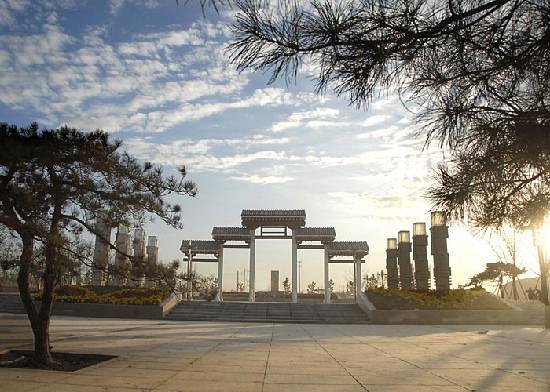
    Mount Hua, Photograph by Ondřej Žváček

    The 3rd year of the Emperor Gaozu (204 B.C. continued)

    The army of Chu clashed with the army of Han along the expressway, which Han had built as a vital supply route. Han’s army soon faced a food shortage. The King of Han consulted with Li Yiji on how to turn the tide against Chu. Li Yiji proposed, “When King Tang of Shang crusaded against King Jie of Xia, he granted a fief to Jie’s descendants in Qi. When King Wu of Zhou crusaded against King Zhou of Shang, he granted a fief to Zhou’s descendants in Song. The Qin Empire was immoral, annexing monarchs and erasing their temples and shrines, leaving their lineages without legacy. If your majesty reinstates the descendants of the six monarchs, their ministers and people will be so grateful that they will heed your righteous call, willing to serve you. By occupying the moral high ground, your majesty can face south as the overlord of the country. Even the king of Chu will submit and pay homage to you.”

    The King of Han was thrilled. “What a great idea! Go inscribe the seals immediately and carry them with you when you visit the monarchs.”

    Before Li Yiji embarked on his diplomatic mission, Zhang Liang came back to see the king from a trip. The king, eating his meal, called out, “Come here, Zifang(Zhang Liang’s courtesy name)! One of my advisors has proposed a brilliant way to turn the tide against Chu.” The king repeated Li Yiji‘s suggestion and asked, “What do you think?”

    Zhang Liang replied, “Who gave Your Majesty this idea? If you follow through with it, your campaign will be ruined.”

    The King of Han was startled. “Why do you say that?”

    Zhang Liang continued, “Let me borrow your chopsticks to illustrate my point. When King Tang of Shang and King Wu of Zhou granted fiefs to the descendants of Jie of Xia and Zhou of Shang, they had absolute control over their enemies’ fate. Do you have such control over Xiang Yu? That’s the first reason not to do this.

    “When King Wu of Zhou entered Shang’s capital, he decorated the portal of Shang Rong’s household , freed Ji Zi from prison, and embellished Bi Gan’s tomb. Could Your Majesty do that today? That’s the second reason not to do it.

    “King Wu distributed grain stored at Juqiao and the wealth hoarded at Deer Terrace to aid the poor. Can your majesty do the same? That’s the third reason not to do it.

    “After conquering Shang, King Wu converted chariots into luxurious wagons and proclaimed an end to war. Could Your Majesty do that today? That’s the fourth reason not to do it.

    “King Wu let his army’s horses graze in the pastures on the sunny side of Mount Hua, signaling he had no further ambitions. Can Your Majesty do the same? That’s the fifth reason not to do it.

    “He also let cattle graze under peach trees to indicate an end to the transport of war provisions. Could Your Majesty do that today? That’s the sixth reason not to do it.

    “All the followers who have marched across the country with Your Majesty, leaving behind their homes and families, are hoping for a piece of land. If Your Majesty reinstates the six monarchs, they would return home. Who would then follow you to conquer the realm? That’s the seventh reason not to do it.

    “Finally, while Chu is the strongest currently, the six monarchs would likely side with Chu. Who would listen to Your Majesty then? That’s the eighth reason not to adopt this plan. If you follow your advisor’s idea, your ambitions will be derailed.”

    The King of Han, shocked, stopped eating, spat out his food, and cursed, “That damned scholar almost wrecked my cause!” He immediately ordered the seals to be destroyed.

    Xun Yue’s commentary: The art of winning in decision-making has three key factors. The first is macroscopic strategy. The second is microscopic tactics. The third is human psychology. Strategy involves evaluating overall gains and losses. Tactics refer to seizing or relinquishing opportunities specific to a situation and time. The psychological factor is about willingness and persistence. When results differ in similar situations under the same principle, it is because these three factors render differently.

    Zhang Er and Chen Yu lobbied Chen Sheng to reinstate the six monarchs to increase the number of followers, and Li Yiji similarly lobbied the King of Han. The idea was the same, but the motivations were different. When Chen Sheng started his uprising, the entire country wanted the downfall of the Qin Empire. However, during the struggle between the kingdoms of Chu and Han, the larger picture was unclear, and not everyone wanted to overthrow Xiang Yu. In Chen Sheng’s case, restoring the six monarchs would gain him more allies and create more enemies for Qin. Since Chen Sheng hadn’t conquered the whole country yet, he was essentially offering something he didn’t own. This was giving out virtual benefits to secure real advantages. In the King of Han’s case, reinstating the six monarchs would mean weakening himself and aiding his enemy. He would gain a meaningless title and face real troubles ahead. Though the issue was the same, the strategic factor was different.

    Song Yi employed a waiting strategy during the war between the kingdoms of Qin and Zhao when he came to Zhao’s aid. This is reminiscent of Bian Zhuang’s tiger-hunting story, where he waited for two tigers to fight each other and then easily killed the wounded survivor. In the early Warring States period, neighboring states frequently fought, and the waiting strategy worked in non-critical situations. There were many warring states with long histories, and the survival of a state was not determined by a single war. The objective of war tactics wasn’t to deliver a fatal blow but to gain incremental advantages. The winner advanced, while the loser retreated to regroup. A third party could observe the shifting situation and seize opportunities when an enemy became vulnerable. The circumstances allowed this approach.

    However, the kingdoms of Chu and Zhao were trying to overthrow the Qin Empire, a much more powerful adversary. The survival of their states hung in the balance, shifting with every decision. Victory would mean a great triumph, while defeat would lead to disaster. Though the tactic of waiting was the same, the context and stakes were different.

    In the battle during the campaign against the kingdom of Zhao, Han Xin’s army fought with their backs to the Zhi River, yet Zhao’s forces failed to defeat them. In contrast, during the Pengcheng debacle, the King of Han led his army near the Sui River, where his soldiers were driven into the river, and Chu won a decisive victory. What was the difference? The army of Zhao ventured out of their kingdom to engage Han Xin’s forces. They advanced when successful and retreated home if they faced setbacks. Concerned about their families, they were not mentally prepared to die on the battlefield. On the other hand, Han Xin’s troops were stranded against the river, with no escape. They had no choice but to fight for their lives, and that’s why they won.

    The King of Han had ventured deep into enemy territory. He wined and dined his officers, and his soldiers enjoyed themselves, losing their fighting spirit. Meanwhile, the once-proud army of Chu, having lost their capital, was filled with indignation. They were determined to turn things around and save their state, ready to fight to the death. This resolve led to the king of Han’s crushing defeat. Han Xin had selected elite troops to defend his formation, while Zhao’s forces, filled with thoughts of home, launched their offensive. Xiang Yu deployed his best soldiers to attack, while the King of Han responded with soldiers who had grown complacent and indulgent. Though the battlefields were similar, the psychological factor was different.

    That’s why I say: Strategy should not be predetermined; tactics should not be rigid. The key to decision-making is to seize opportunities as they arise and adapt tactics to respond to unforeseen events.
  • Comprehensive Reflections to Aid in Governance(Part 79): Passing the Helm

    Comprehensive Reflections to Aid in Governance

    By Sima Guang

    Translated By Yiming Yang

    Annals of Han Book 1 Scroll 9 (continued)

    Xingyang Pass, Xingyang, Henan Province

    The 2nd year of Emperor Gaozu(205 B.C. continued)

    Tian Heng launched an attack on Tian Jia, the King of Qi appointed by Xiang Yu, forcing Tian Jia to flee to the Kingdom of Chu, where he was eventually killed. Tian Heng then unified the three regions that made up the Kingdom of Qi, bringing them all under his rule.

    The King of Han consulted with his ministers, saying, “I want to step down from leading the campaign to conquer the lands east of Hangu Pass. I wish to pass on the leadership to a few capable leaders and let them conquer on their own. To whom should I hand over this responsibility?” Zhang Liang recommended the candidates: “The King of Jiujiang, Ying Bu, is an outstanding general of Chu, but he does not see eye to eye with Xiang Yu. General Peng Yue, in collaboration with the Kingdom of Qi, is reclaiming the land of Liang (Wei). These two can immediately share the burden. Among the generals under your command, only Han Xin has the ability to take on this significant task and operate independently. If Your Majesty truly wants to step down, passing the leadership to these three generals will lead to the defeat of the Kingdom of Chu.”

    Earlier, King Xiang Yu had requested troops from the Kingdom of Jiujiang for his attack on the Kingdom of Qi, The King of Jiujiang, Ying Bu, took a leave of absence and sent only one of his generals with a few thousand troops. Later, when the King of Han broke into Pengcheng, Ying Bu claimed to be ill again and did not assist in defending the Kingdom of Chu. King Xiang Yu was displeased with Ying Bu‘s actions, sending numerous messengers to reprimand him and summon him to his headquarters. Ying Bu, growing even more fearful, did not dare to comply.

    At the time, King Xiang Yu‘s primary concerns were the Kingdoms of Qi and Zhao in the north and the Kingdom of Han in the west. Despite his frustration with Ying Bu, Xiang Yu valued Ying Bu‘s military prowess and knew that the King of Jiujiang was his only ally in the region, so he refrained from attacking Ying Bu’s camp.

    Meanwhile, the King of Han moved his headquarters from Xiayi county to Dang county and then to Yu county. Frustrated with his situation, he vented to his advisors, saying, “I cannot discuss the important matters of this country with men like you!” Sui He, one of his internuncios, stepped forward and asked, “I don’t understand what Your Majesty means.” The King of Han sighed and said, “Who can be my envoy to Jiujiang to persuade Ying Bu to break faith with Xiang Yu? If Ying Bu could lead his troops to support us and hold Xiang Yu in check for just a few months, I would have a hundred percent chance of winning the country!” Sui He volunteered, saying, “I would like to be the envoy.” The King of Han then sent Sui He as his representative to Jiujiang with a retinue of twenty people.

    The King of Han reached the city of Xingyang in May, where several scattered and defeated troops regrouped. Xiao He also provided drafted soldiers from Guanzhong, including those who were previously unregistered because they were deemed too old or too young, all converging in Xingyang. This bolstered the strength of the Han army and greatly improved its morale.

    The Chu army, having routed the Han forces in Pengcheng, pursued the fleeing Han soldiers northward all the way to Xingyang, riding the momentum of their victory. They engaged the Han army in several skirmishes in Jing County and Suo town, south of Xingyang. As more Chu cavalry joined the battle, the King of Han sought to appoint a cavalry commander from among his forces. His advisors recommended the former cavalrymen of the Qin army, Li Bi and Luo Jia, both from nearby Zhongquan County.

    However, when the King of Han announced their selection, Li Bi and Luo Jia declined, saying, “We might not have the full trust of the Han soldiers because we were once subjects of Qin. We would prefer to support a leader who is both close to Your Majesty and a skilled horseman.” In response, the King of Han appointed Guan Ying as the cavalry commander, with Li Bi and Luo Jia as the Colonel of the left and right wings.

    This newly appointed cavalry force, led by Guan Ying, engaged the Chu horsemen and won a decisive battle to the east of Xingyang. After this victory, the Chu army never advanced west of Xingyang again. The King of Han then set up camp in Xingyang and constructed an express highway from Xingyang to the crossing of the Yellow River, enabling the rapid delivery of grain from his warehouses in Ao’cang.

    Zhou Bo and Guan Ying approached the King of Han, expressing their concerns: “Although Chen Ping is a very handsome fellow, his character is questionable. We’ve heard that he had an affair with his sister-in-law when he was still at home. He worked for the Kingdom of Wei and did not do well there. He then went to the Kingdom of Chu and failed to succeed there as well. Now, he has come to serve the Kingdom of Han. Your Majesty holds him in high regard and has appointed him as the supervisor of the army officers. We’ve heard that he has accepted bribes in gold, giving good positions to those who offered him more gold and bad positions to those who offered less. Chen Ping seems to be an opportunist and a corrupt official. Your Majesty must look into this!”

    The King of Han became suspicious of Chen Ping and summoned Wei Wuzhi, who had recommended Chen Ping, to reproach him. Wei Wuzhi defended himself, saying, “What I spoke of was Chen Ping‘s ability, not his character. Suppose we have a person with an impeccable character like Weisheng or Xiaoji (ancient people known for honesty and filial piety), but who has no influence on winning or losing the war—why would Your Majesty employ such a person? Now, the Kingdoms of Chu and Han are in fierce contention. When I recommended Chen Ping, I did so based on his intelligence and clever ideas that could help the Kingdom of Han. His personal affairs with sister-in-law or accusations of accepting bribes do not disqualify him.”

    The King of Han then called in Chen Ping and berated him: “You didn’t achieve success in the Kingdom of Wei, then you left the Kingdom of Chu, and now you are here with me. Does a loyal person change his allegiances so easily?”

    Chen Ping replied, “I served the King of Wei, but he wouldn’t listen to my advice, so I left. When I worked for King Xiang Yu, he did not trust anyone whose surname was not Xiang or who wasn’t related to him by marriage. Even if he had talented individuals under his command, he wouldn’t make full use of them. I came to work for Your Majesty because I heard that you make the most use of talented people. I came with nothing and accepted donations because I had no resources. I hope Your Majesty will adopt my proposals if they are useful. If not, the money I accepted is all here, and I beg you to take it back and let me leave empty-handed.”

    The King of Han apologized to Chen Ping, rewarded him with more gifts, and promoted him to the Central Commandant of army supervision, responsible for overseeing all the generals. This promotion silenced the complaints among the generals.

    The King of Wei, Wei Bao, took a leave of absence to visit his mother, who was supposedly ill. Upon crossing the Yellow River, he blocked the crossing and switched his allegiance to the Kingdom of Chu.

  • Comprehensive Reflections to Aid in Governance(Part 77): Chen Ping, A Handsome Careerist

    Comprehensive Reflections to Aid in Governance

    By Sima Guang

    Translated By Yiming Yang

    Annals of Han Book 1 Scroll 9 (continued)

    Chen Ping’s hometown, Yuanyang(Yangwu) County

    The 2nd year of Emperor Gaozu(205 B.C.)

    In October of that winter, King Xiang Yu issued a secret order to the King of Jiujiang, the King of Hengshan, and the King of Linjiang to attack the Honorary Emperor. They murdered the emperor and disposed of his body in the river.

    Chen Yu drafted a force from his three-county fiefdom and joined a surprise attack on the Kingdom of Changshan alongside the troops from the Kingdom of Qi. The King of Changshan, Zhang Er, failed to defend his kingdom and fled westward to the army of Han, where he sought refuge with the King of Han in Feiqiu County. The King of Han received him with high regard. Chen Yu welcomed back the former King Zhao Xie from the Kingdom of Dai and reinstated him as the King of Zhao. In gratitude, the King of Zhao granted Chen Yu the title of King of Dai. However, Chen Yu did not go to his kingdom; instead, he remained in the capital to assist the new King of Zhao in establishing a new government. He sent Xia Yue to the Kingdom of Dai as the prime minister.

    Zhang Liang escaped from the Kingdom of Hán and returned by taking an alternate route. The King of Han awarded him the title of Marquis Chengxin. Zhang Liang was in poor health and had never commanded an armed force on his own. He often served as a strategist, remaining at the King of Han‘s side.

    The King of Han went to Shan County to console the people outside the Kingdom of Qin. The King of Henan, Shen Yang, submitted to the King of Han, and the Kingdom of Han established the administration of Henan Commandery.

    The King of Han appointed Xin, the grandson of King Xiang of Hán, as the chief commander of the armed forces of Hán. He ordered Xin’s troops to recapture the territory of the former Kingdom of Hán. Xin led a blitzkrieg on Yangcheng County, compelling Zheng Chang, the King of Hán appointed by Xiang Yu, to surrender. The King of Han then granted Xin the title of King of Hán. Xin continued to command the armed forces of Hán, staying by the side of the King of Han most of the time.

    The King of Han moved the capital to Yueyang City. 

    Several generals of the Kingdom of Han conquered the Longxi Commandery.

    In January of that spring, King Xiang Yu and his army advanced north, arriving at Chengyang Commandery. The King of Qi, Tian Rong, led his troops into a decisive battle there but was defeated. Tian Rong fled to Pingyuan County, where he was killed by the local people. King Xiang Yu then reinstalled Tian Jia as the King of Qi.

    King Xiang Yu’s troops continued north to Beihai Commandery, pillaging cities, burning castles, and destroying residential houses along the way. They buried Tian Rong’s surrendered soldiers alive and took the elderly, the young, and women as prisoners, enslaving them. The devastation they left in their wake forced the people of Qi to unite and rise in revolt.

    A general of Han conquered the town of Beidi and captured Zhang Ping, the younger brother of the King of Yong, Zhang Han.

    In March, the King of Han crossed the Yellow River at Linjin Pass. The King of West Wei, Wei Bao, surrendered and placed his troops under the King of Han’s command. The Han army then sacked the Kingdom of Henei and captured the King of Yin, Sima Ang, establishing an administration in the Henei Commandery.

    A man from Yangwu county named Chen Ping came from a poor family but had a passion for reading. He was once in charge of distributing sacrificial meat among his community after the ceremonies of progenitor worship. Chen Ping sliced and divided the meat so evenly that he received praise from the community. The locals said, “We are fortunate to have this young man in charge of the meat sharing.” Chen Ping sighed and replied, “Ah! If only you could make me responsible for the whole country; public affairs would be as well taken care of as this meat!”

    When the allies rebelled against the rule of Qin, Chen Ping worked for the King of Wei, Wei Jiu, as the minister of transportation. He proposed some ideas to Wei Jiu, but they were not adopted. Disheartened, he left Wei Jiu when a scandal was spread about him. He later joined Xiang Yu and was given a position as a staff officer. When the King of Yin, Sima Ang, rebelled against Xiang Yu, Chen Ping was sent to suppress the mutiny, successfully forcing Sima Ang to back down. On his triumphant return, he was promoted to chief commandant and awarded 480 ounces of gold.

    Shortly afterward, the King of Han took over the Kingdom of Yin, and Sima Ang surrendered. Furious, Xiang Yu considered punishing the officers who had previously suppressed Sima Ang’s mutiny. Fearing for his safety, Chen Ping returned the gold and the seal of the chief commandant to Xiang Yu, changed his clothes, and fled via alternate routes, taking only a sword with him. He crossed the Yellow River and joined the forces of Han in Xiuwu county. With the help of his friend Wei Wuzhi, Chen Ping secured an appointment with the King of Han.

    The King of Han summoned Chen Ping and dined with him. As the King was about to send Chen Ping to rest in the guest house, Chen Ping insisted, “I have come with a mission. What I need to discuss cannot wait another day.” The King of Han, delighted by their conversation, asked Chen Ping, “What rank did you hold in the Kingdom of Chu?” Chen Ping replied, “I was a chief commandant.” The King of Han immediately reinstated him as chief commandant, appointed him to his entourage, and made him the supervisor of army officers.

    These rapid promotions caused an uproar among the Han generals. They complained, “Can you believe it? The King accepts a defector from Chu, puts him in his entourage, and even makes him to be a supervisor to oversee veterans like us!” Despite the complaints, the King of Han, aware of the discontent, only trusted Chen Ping more.

  • Comprehensive Reflections to Aid in Governance(Part 42): Predictions

    Comprehensive Reflections to Aid in Governance(Part 42): Predictions

    Comprehensive Reflections to Aid in Governance

    By Sima Guang

    Translated By Yiming Yang

    Annals of Zhou Book 5 Scroll 5 (continued)

    Kaifeng, Henan

    The 56th year of King Nan(259 B.C.)

    In October, Lord Wu’an deployed his army in three prongs: One branch, led by Wang He, occupied the cities of Wuan and Pilao; Another branch, led by Sima Geng, moved north to suppress any resistance in the city of Taiyuan and took control of the entire Shang’dang region. The kingdoms of Han and Wei were alarmed by these movements. They sent Su Dai to persuade Marquis Ying, saying, “Is Lord Wu’an planning to besiege Handan?” Marquis Ying confirmed this, and Su Dai continued, “Qin would indeed become the king of the realm if it annexed Zhao, and Lord Wu’an would hold significant power within Qin, and your highness would be under his thumb. Even if you don’t like to be the underling, you have to accept this reality. In the past, Qin‘s invasion of Han resulted in rebellions, with the inhabitants of Shang’dang fleeing to Zhao to escape Qin‘s rule. It’s evident that many people do not wish to live under Qin‘s authority. If Zhao were to fall to Qin, the population would scatter to neighboring kingdoms, further weakening Qin‘s control over the region. Therefore, it would be wiser to negotiate for these cities as part of a cease-fire agreement rather than allowing them to become mere trophies for Lord Wu’an.”

    Marquis Ying conveyed this advice to the king of Qin, “Our troops are weary from the prolonged conflict. It would be prudent to negotiate a cease-fire agreement with the kingdoms of Han and Zhao to allow our soldiers the opportunity to rest and recover. As part of these negotiations, we should demand the transfer of certain towns from both kingdoms to secure our position and ensure a more stable peace.” The king of Qin agreed, and they demanded the city of Yuanyong from Han and six cities from Zhao in exchange for peace. In January, the war ended, and troops returned home. However, this decision led to a rift between Lord Wu’an and Marquis Ying.

    The king of Zhao was on the verge of appointing Zhao Hao as the envoy to negotiate the terms of surrendering six counties to the kingdom of Qin. Yu Qing interjected, “Did the Qin troops withdraw due to exhaustion? Or perhaps, despite having sufficient forces to advance, did they cease their attacks out of love towards your majesty?” In response, the king speculated that Qin‘s retreat stemmed from exhaustion, as they were relentless in their quest for conquest. Yu Qing pointed out, “Qin pursued an objective but failed to achieve it due to exhaustion. By offering what they couldn’t secure through force, we inadvertently facilitate their aggression against us. When Qin inevitably attacks us next year, we’ll be left without aid or support from other kingdoms.” 

    Amidst the indecision, lobbyist Lou Huan returned from Qin, prompting consultation from the king of Zhao on territorial concessions. Lou Huan argued, “Yu Qing perceived one aspect of the situation but overlooked another. The world rejoiced when Qin and Zhao clashed because it presented opportunities for exploitation: ‘We would take advantage of the loser when the strong bullies the weak.’ To counter this, Zhao should promptly cede land to Qin to confound other nations and appease Qin‘s ambitions. Failure to do so would invite further hostility from Qin and eventual division of Zhao among other states. How can we stand against Qin if Zhao itself no longer exists?”

    Yu Qing heard the lobbying of Lou Huan and offered his counter proposal to the king of Zhao, “Mr. Lou’s proposal is detrimental as it would only heighten suspicion among other nations and fail to quell Qin‘s greed. Furthermore, it would expose our perceived cowardice. However, I didn’t mean to suggest refusing to cede land altogether when opposing yielding to Qin. Instead, consider this: Qin claims six cities from us. We could offer these cities to the king of Qi. Given the animosity between Qi and Qin, the king of Qi would likely accept our offer swiftly. By giving the cities to Qi at Qin‘s expense, we demonstrate resilience to the world. Taking this initiative may prompt Qin to negotiate a peace treaty before any reinforcements arrive at our borders. Achieving peace with Qin would earn respect from Han and Wei. In one stroke, we would win the affection of three kingdoms while compelling Qin to rethink its strategies.”  Impressed by the plan, the king of Zhao endorsed it and dispatched Yu Qing to negotiate with the king of Qi.

    Before Yu Qing‘s return from Qi, Qin‘s envoy arrived in Zhao‘s capital. Lou Huan, sensing the shift in dynamics, hastily departed. In recognition of Yu Qing‘s strategic acumen, the king granted him a city as a fief.

    The King of Wei consulted with his advisers upon news of Qin‘s assault on the kingdom of Zhao. While they believed Wei stood to gain from the conflict, Kong Bin, also known by the courtesy name Zishun, dissented: “Why do you say that?” Their reasoning was that should Qin triumph over Zhao, Wei might capitulate, and if Qin failed, Wei could exploit their exhaustion. Zishun countered, “That’s not accurate. Qin‘s military prowess has been unbroken since the time of Duke Xiao of Qin. Moreover, they’re now under the command of an exceptional leader. What exhaustion do you speak of?” One adviser argued, “If Qin conquers Zhao, it wouldn’t harm us. It’s advantageous when a neighbor is weakened.” Zishun retorted, “Qin is inherently rapacious. Once they conquer Zhao, they’ll seek further conquests. Eventually, Wei may find itself targeted by Qin‘s aggression. Let me recount a tale passed down by my ancestors: Swallows built their nest beneath a house’s eaves, feeling secure.  The mother fed the babies and the babies were chirping merrily. When a fire erupted, consuming the entire dwelling, the swallows remained oblivious until it was too late. Similarly, you fail to foresee the impending peril should Zhao fall. Are we not as blind as those swallows?”

    Zishun, the sixth-generation grandson of Confucius, was highly regarded by the King of Wei, who had heard praises of him. Impressed, the king dispatched diplomats bearing gifts of gold and silk to invite Zishun to become his prime minister. Zishun‘s response was unequivocal: “If the king heeds my counsel and adopts my policies, I shall come even if sustained by mere vegetables and water. But if I am adorned with luxury and riches without genuine influence, I am but an ordinary man. Does the king require just another ordinary man?” Due to the diplomat’s persistence, Zishun relented and accompanied him.

    Upon Zishun‘s arrival, the King of Wei personally greeted him and appointed him prime minister. Zishun wasted no time in overhauling the administration, replacing officials appointed through favoritism with those chosen based on merit and virtue. He instituted a system where achievements were duly rewarded, contrasting the previous practice of rewarding slackers.

    However, as expected, those who lost positions or privileges due to Zishun‘s reforms began to slander him behind his back. Wen Zi, a confidant, informed Zishun of the malicious gossip. Zishun, undeterred, remarked, “Not engaging the public in strategic planning in early stages is a time-honored practice. It’s a well-established fact that many competent administrators throughout history faced criticism at the outset of their careers. For instance, it took three years of Zichan’s governance in the State of Zheng to silence detractors, while my ancestor Confucius, serving as prime minister in Lu, quelled disparagement within three months. I’ve only just begun leading this new administration. I don’t possess the same level of skill as those esteemed predecessors. So, why should I concern myself with the slanderous words aimed at vilifying me?”

    “I wasn’t aware of the criticisms directed at Confucius.”  Wen Zi was curious.

    “When Confucius assumed the role of prime minister, a song circulated among the people. Its lyrics went: ‘The elite in buckskin, not a crime if being put into jail; The elite wearing buckskin, put in prison no one complains.’ However, after just three months of his administration, the cultural sentiment shifted. A new song emerged: ‘Leather coats and black hats, delivered what we want; Black hats and leather coats, served us not himself.’”

    “Today, I see that you are a saint, no different than your ancestor!” Wen Zi exclaimed

    Zishun had served as prime minister of Wei for nine months without his strategic policies being implemented. Frustrated, he lamented, “My proposals lack persuasiveness, leading to a moral dilemma where I hold a high position and salary without contributing adequately.” Using illness as a pretext, he resigned from his official post. When someone suggested seeking opportunities in other kingdoms, Zishun responded, “Where could I go? The kingdom of Qin is annexing all kingdoms to the east of Xiao Mountains, an unjustifiable action. An honorable person wouldn’t align with Qin.” Retreating home, he maintained a low profile.

    Xinyuan Gu urged Zishun to reconsider, “A virtuous individual should indeed strive to educate the populace and assist the government in their own community. You held the esteemed position of prime minister in Wei, yet I observed no significant administrative reforms during your tenure before your resignation. While I understand you may have faced challenges in implementing your desired changes, why did you opt to resign so swiftly?”  Zishun explained, “I quit because I couldn’t enact government reforms. Just as a terminally ill patient has no competent clinician to save him, our efforts to save the dying county would be futile. The kingdom of Qin‘s insatiable ambition threatens global peace, rendering our pursuit of humanity and decency futile. Reflecting on history, Yi Zhi and Lv Wang sought better administrations during the Xia and Shang dynasties’ declines, yet they couldn’t avert collapse. Today, kingdoms to the east of Xiao Mountains are weakened: the three descendants from Jin cede land to Qin, the two relics of Zhou become Qin‘s vassals, and Yan, Qi, and Chu submit to Qin. In my view, Qin will own the world within twenty years.”

    The King of Qin sought vengeance against Wei Qi for mistreating Marquis Ying. Upon discovering Wei Qi‘s hiding place in Lord Pingyuan’s residence, he lured Lord Ping’yuan into Qin territory with persuasive words and captured him. Subsequently, a messenger was dispatched to inform the King of Zhao, “I will not release your brother from the Pass until I have Wei Qi‘s head.” With no refuge, Wei Qi fled to Yu Qing, who relinquished his prime ministerial seal of Zhao and fled with Wei Qi to the kingdom of Wei. They intended to seek refuge in the kingdom of Chu with the assistance of Lord Xinling, also known as Wuji, a prince of Wei. However, Lord Xinling, caught in a difficult position, delayed meeting them. Angered by the delay, Wei Qi took his own life. Meanwhile, the King of Zhao handed over Wei Qi‘s head to Qin, leading to the release of Lord Ping’yuan.

    In September of the autumn, Wang Ling, holding the position of Wu-Daifu, launched a campaign against the kingdom of Zhao. Lord Wu’an fell ill and was unable to join the expedition.

  • Comprehensive Reflections to Aid in Governance(Part 35): Lord Chunshen – The Debater

    Comprehensive Reflections to Aid in Governance

    By Sima Guang

    Translated By Yiming Yang

    Annals of Zhou Book 4 Scroll 4 (continued)

    Lord Chunshen, Huang Xie

    The 42nd year of King Nan(273 B.C.)

    The combined forces from the Kingdoms of Zhao and Wei initiated a siege on Huayang, a city of Han. Faced with this dire situation, the Kingdom of Han dispatched envoys to Qin, seeking assistance. The King of Qin declined their plea for aid. In a desperate attempt, the prime minister of Han implored Chen Shi, an official of Han, stating, “We are in dire need of help. Please make a day trip to the Kingdom of Qin, even if you are unwell.”

    Despite his illness, Chen Shi complied and traveled to the Kingdom of Qin, where he met with Marquis Rang. Enquiring about the urgency, Marquis Rang said, “Did they send you due to a crisis?” Chen Shi calmly responded, “There is no immediate crisis.” Irritated, Marquis Rang questioned, “Why is that?” Chen Shi explained, “The Kingdom of Han would align with the opposing forces if facing a crisis. The fact that I am here again indicates that the situation has not reached a critical point.” Marquis Rang, recognizing the gravity of the situation, pledged, “I will appeal to the king to send troops.” Subsequently, he led Lord Wu’an (Bai Qi) and Hu Yang, another high-ranking official, to come to the aid of the Kingdom of Han.

    The Qin army, taking eight days to reach Huayang, swiftly engaged and defeated the Wei forces outside the city. In the encounter, they forced General Mang Mao to retreat, captured three additional generals, and executed a staggering one hundred thirty thousand soldiers. In a separate confrontation, Lord Wu’an clashed with General Jia Yan from the Kingdom of Zhao. In a strategic move, they managed to drown twenty thousand Zhao soldiers in the Yellow River during the intense battle.

    Duangan Zi, a minister of the Kingdom of Wei, proposed surrendering the city of Nanyang to the Kingdom of Qin as a peace offering. However, Su Dai voiced strong opposition to this suggestion when addressing the King of Wei, stating, “Duangan Zi desires the royal seal of the prime minister, and the Kingdom of Qin covets the land of Wei. By attempting to use one covetous party to counterbalance the other, Wei risks losing both the coveted royal seal and its land. Attempting to appease Qin by relinquishing land is akin to trying to extinguish a fire with brushwood. The fire will persist until all the brushwood is exhausted.”

    Despite Su Dai’s insightful counsel, the King of Wei conceded Su Dai’s point, while accentuating the difficulty of altering the course that had already been set in motion. Su Dai retorted, drawing a strategic analogy, “The chess piece ‘Xiao’ is valuable because it can capture another piece at will and remains stationary when needed. Why not make decisions as wisely as the chess piece ‘Xiao’?”

    The King of Wei did not heed Su Dai’s advice and proceeded to hand over the city of Nanyang to the Kingdom of Qin as indemnity for peace. Nanyang corresponds to the present-day Xiuwu.

    Following the death of King Xi of Han, his son, King Huanhui, ascended to the throne as his successor. 

    At this juncture, both the Kingdoms of Han and Wei found themselves under the dominance of the Kingdom of Qin. The King of Qin was on the brink of dispatching Lord Wu’an, along with the armed forces of Han and Wei, for another campaign against the Kingdom of Chu.

    However, before this plan could be set into motion, Huang Xie, the ambassador from Chu, arrived in the city. Upon learning of the impending campaign, Huang Xie harbored concerns that the Kingdom of Qin, fueled by its consecutive victories, might be poised to annihilate the Kingdom of Chu.

    Huang Xie submitted a letter to the King of Qin, expressing, “I have heard that things tend to reverse when pushed to their extremes. Winter transforms into summer, and reaching the pinnacle can become precarious, akin to stacking chess pieces. At present, the Kingdom of Qin stands as the largest realm, stretching to the boundaries of civilization in the north and the west. Never before in history has a king governed such an extensive territory.”

    Huang Xie continued, “For three generations, the Kings of Qin relentlessly pursued the establishment of a border with the Kingdom of Qi, aiming to disrupt the corridor of alliances formed against Qin by other kingdoms. Your majesty brilliantly deployed Sheng Qiao to serve the Kingdom of Han as an administrator of border towns. Through Sheng Qiao’s efforts, the territories under his jurisdiction were seamlessly integrated with those of the Kingdom of Qin, resulting in the acquisition of hundreds of miles of land without the need for war or even the threat of conflict. Your majesty’s diplomatic finesse and skillful maneuvers were evident in this accomplishment.”

    “Furthermore, Your Majesty raised armies to launch an attack on the Kingdom of Wei, effectively blocked the gates to the capital city of Daliang, seized control of the city of Henei, and captured the towns of Yan, Suanzao, Xu, and Tao. The King’s forces then penetrated the region of Xing, causing the Wei troops to disperse like clouds in the sky, unable to provide mutual support. Your Majesty’s military achievements were so remarkable!”

    “Subsequently, Your Majesty decided to grant respite to both his soldiers and the people of Wei, allowing a period of repose from the rigors of battle. Two years later, Your Majesty resumed hostilities against Wei and successfully annexed the cities of Pu, Yan, Shou, and Yuan. His forces besieged the cities of Ren, Pingqiu, Huang, and Jiyang until the inhabitants capitulated.”

    “Taking strategic measures, Your Majesty carved out the northern territories of Pumo and opened up a direct route from the Kingdom of Qin to the Kingdom of Qi. This action effectively severed the backbone of the alliance between the Kingdoms of Zhao and Chu. The once-formidable anti-Qin coalition, which had united against Qin five times and joined forces six times, now hesitated to come to each other’s aid. The unparalleled glory of Your Majesty shone brightly in these decisive victories.”

    “If Your Majesty can consolidate and uphold the current accomplishments, maintaining a superior posture, and if the desire for conquest is relinquished in favor of governing the annexed lands with benevolence and justice, ensuring tranquility in the hinterlands, then Your Majesty could rightfully stand among the Three Greatest Kings and be mentioned in the same breath as the Five Hegemons in history.”

    “However, should Your Majesty choose to rely solely on the sheer size and superior armed forces, leveraging the momentum of defeating the fighting spirit of the Kingdom of Wei to subjugate all other kings, it is a path fraught with potential troubles in the near future, particularly in the Your Majesty’s own backyard.”

    “There is a saying from the classic The Book of Songs: ‘All start well at first, very few finish so at the end.’ Another saying from The Book of Changes goes: ‘A fox soaks its tail while wading a creek, despite being careful.’ These sayings emphasize the common challenge of initiating endeavors with enthusiasm but encountering difficulties in seeing them through to completion.”

    “An illustrative historical example is the alliance between the kings of Wu and Yue, who joined forces to attack the Kingdom of Qi. Despite their victory at the city of Ailing, the king of Wu was later captured by the king of Yue on the shore of the Three Rivers on their way of return.”

    “Similarly, the Zhi family of the Kingdom of Jin placed trust in the Han and Wei families, forming an alliance to besiege the city of Jinyang belonging to the Zhao family. As victory seemed imminent, the Han and Wei families betrayed the Zhi family, leading to the killing of the Zhi family’s head, Zhi Bo (also known as Zhi Yao), at the foot of Terrace Zao.”

    “Your Majesty, there seems to be a concern that, despite harboring resentment towards the Kingdom of Chu, its existence serves as a strategic advantage for the Kingdoms of Han and Wei, acting as a counter weight. It’s essential to remember that dismantling the Kingdom of Chu might inadvertently strengthen Han and Wei, who are potential adversaries.”

    “I express my worry and respectfully advise against dismantling the Kingdom of Chu. While the Kingdom of Chu may seem like a rival, it can also be a source of support for your kingdom. The true enemies are your neighboring states.  Trusting the kingdoms of Han and Wei solely based on their flattery may echo the historical situation where the king of Wu trusted the kingdom of Yue, leading to adverse consequences.”

    “The ingratiating words from Han and Wei may be a guise to manipulate the larger kingdom while absolving themselves. This suspicion arises because the goodwill towards Qin from Han and Wei may not be enduring, given the longstanding animosity spanning generations. The adversarial history, with fathers and sons of Han and Wei falling to Qin‘s forces for the last ten generations, suggests a deep-seated resentment.  Hence, there will always be apprehension for the well-being of Qin as long as the kingdoms of Han and Wei persist. It appears incongruous to allocate resources for Han and Wei to attack the Kingdom of Chu when there has been a historical backdrop of tensions between Qin and these kingdoms.”

    “Moreover, the choice of the route the Qin army takes to attack the Kingdom of Chu is crucial. If the army traverses the territories of your enemies, such as the Kingdoms of Han and Wei, On the day the army sets forth, it marks the beginning of Your Majesty’s concern that their return might be uncertain.  If Your Majesty’s troops avoid traversing the territory of their adversaries, they must launch their attack from the right side of the Sui River. Considering the challenging terrain with wide rivers, large lakes, mountainous forests, and ravines on the right side of the Sui River, attacking from this direction poses significant challenges. These areas do not yield food, and the cost of damaging the reputation of the Kingdom of Chu might not be offset by any tangible benefits.”

    “Initiating a war with the Kingdom of Chu would likely prompt immediate reactions from the other four kingdoms. Long battles between the armies of Qin and Chu would ensue, providing an opportunity for the Kingdom of Wei to expand into regions like Liu, Fangyu, Zhi, Huling, Dang, Xiao, and Xiang, formerly part of the State of Song. Simultaneously, the Kingdom of Qi would seize the fertile land to the north of the Si River, an area with excellent transportation connections.”

    “In such a scenario, the Kingdoms of Qi and Wei could emerge as the strongest powers in the region. Considering the potential consequences and the geopolitical landscape, fostering friendly relations with the Kingdom of Chu might be a more favorable approach for the overall stability and prosperity of Qin.”

    “Considering the looming alliance between the Kingdoms of Qin and Chu, the Kingdom of Han would likely acquiesce and pay homage to Your Majesty. Leveraging the geographic advantage of the strategic pass of East Mountain and controlling the engirdling of the Yellow River loop, the Kingdom of Han could become a vassal of Qin to the east of Hangu Pass.”

    “Deploying a substantial force of one hundred thousand troops to the State of Zheng would instill fear among the people of the Kingdom of Wei. Cities like Xu and Yanling might retreat to their inner castles, disrupting the connection between the regions of Shangcai and Zhaoling. This move could potentially lead to the Kingdom of Wei becoming another vassal of Qin to the east of Hangu Pass.”

    “Moreover, amending relations with the Kingdom of Chu could lead to the Kingdoms of Han and Wei, which are formidable military states, vying for the land of Qi. The vast area of west Qi could be easily captured, extending Your Majesty’s territory from the west ocean to the east ocean, establishing Qin at the helm of the world. The kingdoms of Yan and Zhao will lose the support of the kingdoms of Qi and Chu, and reciprocally so for Qi and Chu. If the kingdom of Qin advances towards Yan and Zhao, it would destabilize the foundations of the kingdoms of Qi and Chu. This would eventually lead to the subjugation of all four kingdoms to the kingdom of Qin, even without an immediate initiation of war.”

    Recognizing the strategic advantage and potential consequences, the King of Qin agreed with Huang Xie‘s counsel. Consequently, Lord Wu’an was summoned back, and the allied troops from the Kingdoms of Han and Wei were dismissed. Huang Xie was sent back to the Kingdom of Chu, carrying a proposal for a marriage alliance between Qin and Chu.

  • Comprehensive Reflections to Aid in Governance(Part 34): The Prognosis of Lu Zhonglian

    Comprehensive Reflections to Aid in Governance

    By Sima Guang

    Translated By Yiming Yang

    Annals of Zhou Book 4 Scroll 4 (continued)

    Lu Zhonglian

    The 36th year of King Nan(279 B.C.) (continued)

    Tian Dan was on the brink of attacking Di, a small state, when he consulted Lu Zhonglian, a renowned intellectual and lobbyist. Lu Zhonglian cautioned, “General, breaking through the city of Di will prove challenging.” Dismissing the advice, Tian Dan asserted his previous triumph over the larger forces of Yan with a meager army in Jimo. Without bidding farewell, he mounted his chariot and commenced the siege on the city of Di.

    After three months of unsuccessful attempts, He caught wind of the children of Qi singing a taunting rhyme: “A hat as big as a winnow basket, a sword as long as it touches the chops; the city of Di stands impregnable, with carcasses piled up to the hilltop.” Concerned, Tian Dan sought out Lu Zhonglian for guidance. He acknowledged, “Professor, you foresaw my failure in breaking through the city of Di. Please enlighten me on the reasons.”

    Lu Zhonglian explained, “During the siege at Jimo, General, you exhibited an unwavering commitment – weaving brackets upon sitting down, and leaning on a shovel upon standing up. You led the soldiers in songs, urging them to ‘Rush forward when the temple where we worship is gone! Where do we belong when the spirits of our ancestors are homeless?’ At that time, General, you held a resolute determination to fight to the death, with soldiers fully expecting not to return alive. Every one of them fought with utmost intensity, tears in their eyes. This was the spirit that led to the victory over the Yan army.”

    “Nowadays, General, you enjoy the enfeoffments from Ye in the east and entertainment from Zishang in the west. You traverse between the rivers Zi and Sheng, adorned with a gold belt, leading a life filled with happiness and devoid of any immediate threat of death. This stark contrast in circumstances is why the siege of Di has met with failure.”

    Touched by Lu Zhonglian‘s insight, Tian Dan declared, “I still possess the will to succeed; Professor has reignited my motivation.” The next day, he toured the battlefield, standing shoulder to shoulder with his soldiers, invoking their fighting spirit with drumsticks. Finally, the people of Di capitulated, yielding to Tian Dan‘s renewed determination and leadership.

    King Min of Qi sought to eliminate Lord Mengchang following the annexation of the kingdom of Song. Fleeing to the kingdom of Wei, Lord Mengchang was appointed as the prime minister by the Wei king. Lord Mengchang, in turn, orchestrated an alliance among several kingdoms to launch an attack on Qi. With King Min’s death, his son, King Xiang of Qi, restored the kingdom, prompting Lord Mengchang to withdraw to his fief, the state of Xue. There, he maintained a neutral stance, detached from other kingdoms.

    Wary of Lord Mengchang, King Xiang of Qi, upon his inauguration, pursued an alliance with him. Meanwhile, internal strife arose as Lord Mengchang‘s sons vied for the inheritance of their father’s title and land. The kingdoms of Qi and Wei joined forces, ultimately extinguishing the state of Xue. Regrettably, Lord Mengchang passed away without any descendants.

    The Duke Min of Lu passed away, and his son Chou succeeded him, assuming the title of Duke Qing of Lu.

    The 37th year of King Nan(278 B.C.)

    The foremost military commander of the Qin Kingdom, Bai Qi, holding the esteemed title of Daliangzao, spearheaded a military campaign against the Kingdom of Chu. Under his command, the city of Ying, which served as the capital of Chu, fell into Qin‘s control. Additionally, he orchestrated the destruction of the city of Yiling. The armed forces led by King Xiang of Chu crumbled, rendering them incapable of further resistance. Consequently, the King of Chu relocated the capital to the northeastern city of Chen. The Kingdom of Qin subsequently renamed Ying as Nanjun. In recognition of his achievements, Bai Qi was honored with the distinguished title of Lord Wu’an.

    The 38th year of King Nan(277 B.C.)

    Lord Wu’an of Qin successfully captured both the city of Wu and the region of Qianzhong, solidifying Qin‘s control over these territories. As a strategic move, he went on to establish the commandery of Qianzhong to consolidate administrative control.

    Meanwhile, in the Kingdom of Wei, King Zhao passed away. Following his demise, his son Yu ascended to the throne and assumed the title of King Anxi of Wei.

    The 39th year of King Nan(276 B.C.)

    Lord Wu’an of Qin launched an offensive against the Kingdom of Wei, resulting in the conquest of two cities under Qin‘s dominion.

    In the Kingdom of Chu, the king integrated the armed forces of the eastern territory, amassing an additional one hundred thousand soldiers. He strategically directed this potent force westwards, successfully conquering fifteen towns situated to the south of the Yangtze River.

    In the Kingdom of Wei, King Anxi bestowed the title of Lord Xinling upon his brother Wuji.

    The 40th year of King Nan(275 B.C.)

    The Marquis Rang, who held the esteemed position of prime minister in the Qin Kingdom, spearheaded a military campaign against the Kingdom of Wei. In response, General Pu Yuan from the Kingdom of Han intervened in support of Wei. However, Marquis Rang‘s forces triumphed decisively, resulting in the beheading of forty thousand soldiers from the Han army. Pu Yuan, in retreat, sought refuge in the city of Qifeng. To secure peace, the Kingdom of Wei conceded eight cities to the Kingdom of Qin.

    Undeterred, the Marquis Rang initiated another assault on the Kingdom of Wei, this time defeating General Mang Mou. The Qin forces subsequently entered the city of Beizhai and proceeded to lay siege to Daliang, the capital of Wei. Faced with the relentless pressure, the Kingdom of Wei ceded the Wen area in pursuit of a peaceful resolution.

    The 41st year of King Nan(274 B.C.)

    Once again, the Kingdom of Wei forged an alliance with the Kingdom of Qi. In response, Marquis Rang of Qin orchestrated another military campaign against Wei. The Qin forces, displaying formidable prowess, successfully captured four cities and inflicted heavy casualties by beheading forty thousand soldiers from the Wei army.

  • Comprehensive Reflections to Aid in Governance(Part 32): Restoring the Kingdom of Qi

    Comprehensive Reflections to Aid in Governance

    By Sima Guang

    Translated By Yiming Yang

    Annals of Zhou Book 4 Scroll 4 (continued)

    Blazing Bulls

    The 36th year of King Nan(279 B.C.) (continued)

    Tian Dan issued an order for the residents of the city of Jimo to pay homage in the courtyard to their ancestors before every meal. Birds circled and hovered over the city, creating an unusual atmosphere that caught the attention of the Yan soldiers. Tian Dan confidently declared, “A guardian angel from God will guide me.” In response, one of his soldiers playfully teased him, asking if he could be the guardian angel. Unsettled, the soldier attempted to run away after jesting.

    Tian Dan promptly called the soldier back. Seating him facing east, Tian Dan assumed a role similar to that of a student with his teacher. The soldier, in protest, exclaimed, “Lord, I was just joking with you.” Tian Dan, however, silenced him, urging him not to say anything. Instead, Tian Dan continued to show reverence to the soldier. Whenever they were in public, Tian Dan referred to the soldier as “Godsend Master,” and the soldier willingly participated in this charade.

    Tian Dan, in a strategic move, spread rumors claiming, “The people of Qi fear that all prisoners of war from Qi will have their noses chopped off and be placed in the front row of the phalanx. Jimo stands no chance if they resort to such tactics.” The soldiers of Yan, influenced by this misinformation, adopted the mentioned tactic. The people under siege witnessed the cruel act of captives having their noses chopped off, leading to outrage and heightened vigilance within the city, as they feared falling into captivity.

    Employing disinformation once more, Tian Dan stated, “I am deeply concerned that the soldiers of Yan might desecrate the tombs of our ancestors, severely impacting our morale.” In response, the soldiers of Yan indeed dug up the tombs of Qi and burned the corpses. The people of Qi, observing this horrifying act from the ramparts, shed tears and were filled with immense anger. The incident fueled their determination to fight back, and they cried out for a decisive confrontation.

    Sensing the readiness of the soldiers of Qi for battle, Tian Dan took charge by picking up a shovel and leading them to prepare for the battlefield. In a remarkable move, he enlisted his wives and concubines into the army and generously shared the fine food from his household to boost the soldiers’ morale. To strategically manage resources, he ordered his armored soldiers to lie low while deploying the old, weak, and women to guard the rampart.

    Simultaneously, Tian Dan initiated diplomatic efforts by dispatching envoys to the Yan camp to discuss surrender. The soldiers of Yan, interpreting this as a sign of Qi‘s defeat, jubilantly declared victory. Tian Dan raised thousands of ounces of gold from the residents of Qi. He then appealed to the tycoons of Jimo to distribute the gold among the Yan generals, requesting them to spare their families from pillaging upon capitulation. The Yan army generals, pleased with the gesture, approved the requests, leading to a sense of complacency and laxity within the Yan army.

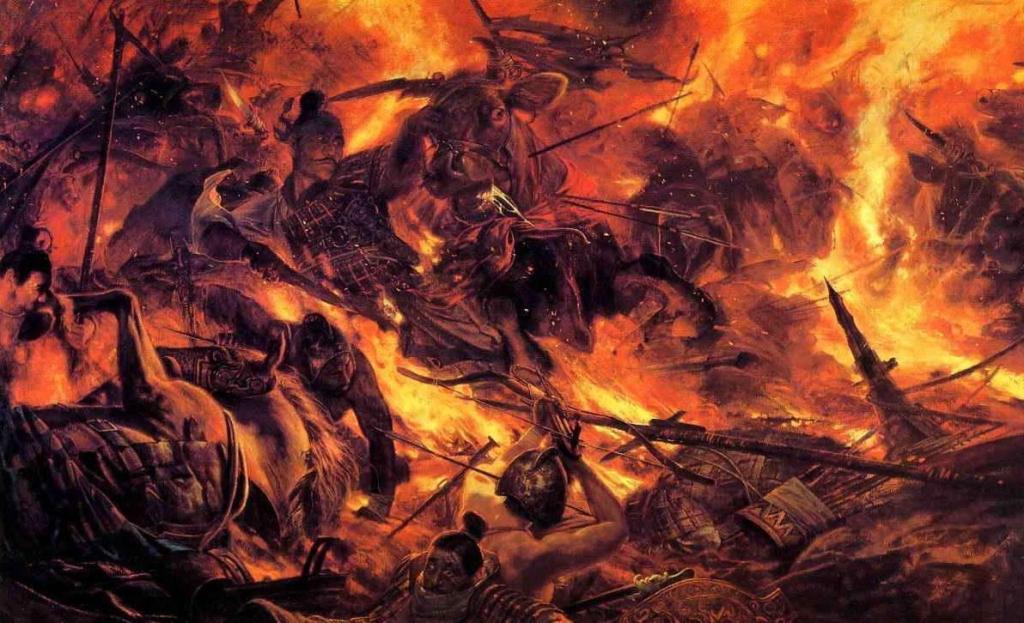
    Tian Dan orchestrated a clever strategy within Jimo city, gathering over a thousand bulls. These bulls were adorned with capes made of crimson silk, featuring painted dragons and characters of various colors. Daggers were fastened to the horns, and the tails were bundled with oil-soaked reed stems. Concurrently, soldiers of Qi dug tens of tunnels around the city walls.

    Under the cover of night, the bulls, their tails set ablaze, were released from the city, accompanied by five thousand elite soldiers. Charging toward the troops of Yan, the bulls, with their fiery tails, inflicted severe casualties and created panic among the soldiers of Yan. The population of Jimo city, in unison, banged drums and copper instruments, generating clamors and roars that reverberated through the air, shaking both the ground and the morale of Yan‘s soldiers. Faced with the terrifying sight of characters on the capes and the onslaught of raging bulls, the soldiers of Yan began to flee.

    In the ensuing chaos, the troops of Qi captured and killed the Yan army general, Qi Jie. Pursuing the retreating Yan soldiers to the north, every town they passed renounced allegiance to Yan and returned to the kingdom of Qi. Tian Dan‘s forces swelled in size, growing more triumphant each day, while the Yan army fled north of the Yellow River. The kingdom of Qi successfully reclaimed over seventy cities it had lost. As King Xiang of Qi moved from Ju to Linzi, the old capital, the people greeted him warmly. In recognition of Tian Dan‘s contributions, the King of Qi bestowed upon him the title of Lord Anping.

    The King of Qi proclaimed the daughter of Taishi Jiao as the queen, and she subsequently gave birth to the crown prince Jian. However, Taishi Jiao disowned his daughter, stating, “She married on her own, without going through a matchmaker. She is not my child, and she tarnished my family’s reputation.” Despite her father’s rejection, the queen continued to show him due respect.

  • Comprehensive Reflections to Aid in Governance(Part 29): Yue Yi Assuming Command

    Comprehensive Reflections to Aid in Governance

    By Sima Guang

    Translated By Yiming Yang

    Annals of Zhou Book 4 Scroll 4 (continued)

    General Yue Yi

    The 30th year of King Nan(285 B.C.)

    During this period, the King of Qin had a conference with the King of Chu in the city of Wan. Similarly, he met the King of Zhao in the city of Zhongyang.

    General Meng Wu of Qin launched a raid on Qi and successfully conquered nine cities.

    King Min of Qi, after annexing the kingdom of Song, grew arrogant. His troops launched invasions into the southern kingdom of Chu and the three kingdoms that had originated from the state of Jin: Han, Wei, and Zhao. His ambition was to absorb the two states where the Zhou dynasty’s court resided and proclaim himself as the emperor. Criticism of these wars led to the death of Hu Xuan in the city of Tanqu. Additionally, Chen Ju was killed in the city of Donglu following a debate with the king.

    During this time, King Zhao of Yan made constant efforts to address the grievances of his people, leading to prosperity and abundance within his kingdom. With the intention to invade Qi, he devised plans alongside his prime minister, Yue Yi.

    Yue Yi expressed caution, stating, “The kingdom of Qi, though a remnant of a hegemon, still possesses vast territory and a large population. It’s not an adversary we should face alone. It would be wiser to seek an alliance with Zhao and perhaps even with Chu and Wei if Your Majesty truly desires to invade Qi.”

    Responding to Yue Yi‘s counsel, the King of Yan dispatched him as an envoy to Zhao and sent other emissaries to engage Chu and Wei. Additionally, he persuaded Zhao to entice Qin with incentives related to the raid on Qi.

    All the kings harbored resentment toward the arrogance displayed by the King of Qi. They were keen to join forces with Yan in an alliance aimed at attacking Qi.

    The 31st year of King Nan(284 B.C.)

    The King of Yan issued a march order, appointing Yue Yi as the general and commander-in-chief. Si Li, the defense minister, led troops from Qin, along with forces from the kingdoms of Han, Wei, and Zhao, all merging with Yan’s army. The King of Zhao conferred the seal of the prime minister upon Yue Yi. Commanding the combined forces of Qin, Wei, Han, and Zhao, Yue Yi launched a campaign against the kingdom of Qi. In response, King Min of Qi mobilized his entire kingdom for defense. A fierce battle erupted west of the Ji River, resulting in the defeat of Qi‘s troops.

    Yue Yi then directed the troops from Qin and Han to return to their respective kingdoms. He redirected Wei‘s forces to invade the territory once belonging to the kingdom of Song and ordered Zhao‘s troops to take control of the Hejian area. Simultaneously, he led Yan‘s troops in pursuit of Qi‘s army deep into the north of the kingdom. 

    Adviser Ju Xin cautioned Yue Yi: “The Kingdom of Qi stands as a formidable state, while the Kingdom of Yan is comparatively smaller. Our victory over their army stemmed from the assistance of other kingdoms. It’s now opportune to bolster our own position by annexing their border cities, fostering enduring advantages. Your current strategy of bypassing unconquered cities under the guise of pursuing the enemy’s retreat won’t damage Qi and could not significantly benefit Yan. Instead, it perpetuates animosity between our peoples, a strategy that will likely lead to regret in the future.”

    Yue Yi disagreed: “The King of Qi may boast about his military accomplishments and talents, but his strategic acumen falls short. He has expelled individuals of integrity and capability while placing trust in those who flatter him and unjustly tarnish others’ reputations. His policies exhibit brutality and cruelty, leading to widespread discontent among his people. With Qi‘s armed forces now in disarray, seizing this opportunity to pursue him is imperative. The populace of Qi will likely revolt against him, making it easier for us to conquer the kingdom once internal unrest erupts. We must capitalize on this moment, as it will become considerably more challenging if he later regrets his past actions, reforms his behavior, and begins addressing his subordinates’ needs and the grievances of his people.”

    Ignoring the adviser’s counsel, Yue Yi pressed forward into Qi‘s territory. As anticipated, internal rebellion erupted in Qi, causing King Min to flee his kingdom. Capitalizing on the chaos, Yue Yi’s troops entered Linzi, Qi‘s capital, seizing the treasury and religious artifacts, transporting the spoils back to Yan. The King of Yan personally visited the frontline troops at the Ji River, generously rewarding all generals and soldiers. He bestowed upon Yue Yi the title of Lord Changguo and tasked him with staying in Qi to conquer the remaining cities yet to surrender. 

    The King of Qi sought refuge in the state of Wey, a smaller principality, after his exile. The Lord of Wey generously offered shelter in his palace, treating the King of Qi as his suzerain and covering all expenses. However, the King of Qi maintained his haughty demeanor, causing unrest among the people of Wey, who eventually drove him out. He sought refuge in other principalities like Zou and Lu, but his overbearing attitude resulted in these states rejecting him. Ultimately, he found refuge in a small state called Ju.

    The Kingdom of Chu intervened, sending General Nao Chi with Chu‘s troops to assist the King of Qi. As a result, Nao Chi was appointed the prime minister of the Kingdom of Qi. However, Nao Chi‘s intentions were to divide Qi‘s territory between the Kingdom of Yan and himself. He arrested the King of Qi and accused him of heinous acts, questioning him about various ominous incidents: “Were you aware of the blood rain that stained people’s clothes across a stretch of several hundred miles between Qicheng and Bochang?” The King of Qi admitted he knew. Nao Chi pressed further: “Did you know about the water spring burst and mudslide between Ying and Bo?” Again, the King of Qi acknowledged his knowledge. Nao Chi continued: “Were you aware of the cries at the gate, with no visible individuals upon opening the doors, yet the cries were audible?” Once more, the King of Qi affirmed his knowledge.

    Nao Chi condemned him: “The blood rain was a warning from heaven; the water spring burst and mudslide were warnings from the earth; the cries at the gate were warnings from the people. When heaven, earth, and people all cautioned you, and yet you did not heed these warnings, how could you escape death?” Consequently, Nao Chi had the King of Qi executed at a location called Guli.

    Xun Kuang made this comment: The position of a head of state is the most advantageous in the world. It brings great comfort, glory, and a sense of virtue and beauty when entrusted to a moral individual. Conversely, it poses a grave menace and a severe ordeal, something an ordinary person might prefer to avoid. In extreme cases, as seen with King Min of Qi and Duke Xian of Song, individuals in such positions couldn’t even be ordinary when they desired to be.

    Therefore, a head of state attains supremacy by governing with morals, dominates others through the establishment of trust, and faces peril if relying on political chicanery.

    A leader who governs a state with propriety and righteousness is impervious to harm. A virtuous gentleman adheres to ethical principles and refrains from committing unjust acts or harming the innocent, even if it means gaining the entire world. This unwavering commitment to principles solidifies the state’s foundation, making it as robust as rocks. Those who collaborate with such a leader are righteous individuals, the laws they promulgate are just, and the goals they pursue are righteous.

    This alignment of principles earns the leader the respect of their subordinates, and the support is built on a solid foundation. With firm support, the government achieves stability. When governments are stable, peace prevails in the world. As the saying goes, “Use the government to promote righteousness, and everyone will understand it in one day.” Historical figures like King Tang of Shang and King Wu of Zhou exemplified this approach. Hence, I assert that governing with morals elevates a leader to the status of a supreme king.

    Even if the moral standards haven’t reached the highest level and righteousness isn’t universally embraced, it’s crucial that most people comprehend fundamental principles. Establishing a criminal justice system, a reward system, and clear rules regarding permissible and impermissible actions is essential. Administrators should have a clear understanding of their responsibilities according to the king’s directives. Transparency is key when implementing policies, acknowledging both their successes and failures.

    Moreover, honoring pacts and alliances, regardless of the immediate advantages or disadvantages, contributes to building a solid fortress of a state protected by strong armed forces. Such a principled state would instill fear in enemy states and garner trust from allies. Even if located in a remote and destitute area, a state adhering to clear principles would not be taken lightly by the world. The examples of the five hegemons during the Spring-Autumn period illustrate this point. Hence, I assert that whoever gains trust will ultimately dominate.

    When a state neglects the promotion of righteousness and honesty, the government is prone to pursuing short-term interests and fleeting fame. Internally, the state may audaciously seek small profits by deceiving its own people, while externally, it may pursue significant gains by betraying its allies. Such a state fails to utilize its internal resources effectively while harboring an unwarranted desire for what others possess. In turn, the underlings and common people would resort to deception against their supervisors.

    This deceit permeates all levels of society, with the upper classes exploiting the lower classes and vice versa, leading to societal disintegration. Such a state becomes vulnerable, taken lightly by its enemies and viewed with suspicion by its allies. Political chicanery becomes rampant, causing the foundation of the state to crumble and ultimately leading to its demise. Examples such as King Min of Qi and Lord Mengchang illustrated the consequences of such governance.

    King Min of Qi sought to strengthen the kingdom not through the promotion of righteousness and propriety, improvement of internal administration, or the pursuit of a unified external environment. Instead, he engaged in endless frictions and wars. Indeed, the kingdom of Qi once held considerable strength. It demonstrated its prowess by defeating the kingdom of Chu to the south, overpowering the kingdom of Qin to the west, defeating the kingdom of Yan to the north, and conquering the kingdom of Song in the middle. However, this strength proved hollow, and the kingdom fell as soon as the kingdoms of Yan and Zhao initiated attacks. His downfall stands as a humiliating admonition for posterity, emphasizing the consequences of relying on political chicanery rather than righteousness and propriety.

    The three keys—Morality, Honesty, and Chicanery—are crucial elements that wise leaders must carefully choose, and virtuous statesmen must comprehend. Those who make wise choices aligned with morality and honesty are destined to prevail, while those who make poor choices, leaning towards chicanery, are likely to be overpowered. 

    Yue Yi discovered a highly respected scholar named Wang Zhu in the town of Zhouyi. He took the drastic step of ordering his troops to encircle the town within a thirty-mile radius, prohibiting anyone from entering. Intent on recruiting Wang Zhu, Yue Yi instructed his assistants to invite the scholar to join his administration. However, Wang Zhu firmly declined the invitation.

    In response, an officer from Yan resorted to threats, warning Wang Zhu, “If you don’t come with me, I will massacre the whole town of Zhouyi!” Undeterred, Wang Zhu replied with conviction, “A loyal subject won’t work for two lords. A faithful woman won’t sleep with two husbands. I retired to this farm because the king of Qi won’t listen to my advice. I cannot live on as my country is ruined and my lord died. Now, if you want to take me by force, I would rather die than live unethically.” With resolve, he wrapped his neck with tree branches and proceeded to strangle himself to death through a series of jumps.

    The army of Yan achieved significant success by penetrating deep into the kingdom of Qi, leading to the retreat of defenders from all the cities. Yue Yi, the leader of the Yan forces, took a strategic approach by resting and disciplining his troops, explicitly forbidding pillage and seizure of properties. He demonstrated a magnanimous gesture by bringing out hermits and dissidents of Qi, granting them respect and eminence. In addition, Yue Yi implemented reforms to benefit the people of Qi, including reducing taxation, abolishing draconian laws, and reinstating policies from before the reign of King Min of Qi. These measures contributed to the happiness of the people.

    Yue Yi organized his armies to occupy the vast kingdom strategically. His left wing crossed the Jiao river, moving to areas of East Jiao and Donglai. The front army marched to the sea along the east of Tai Mountains, successfully conquering the city of Langya. Simultaneously, the right wing marched along the Yellow River and Ji River, quartering at the cities of E and Zhen in coordination with the army of Wei. The rear army occupied the city of Qiancheng near the north sea. The central command was headquartered at the city of Linzi, the capital of Qi.

    Yue Yi paid homage to Duke Huan of Qi and his famous prime minister Guan Zhong in a worship ceremony held in the suburb of Linzi. Additionally, he undertook initiatives to enhance the local infrastructure, renovating the scholar’s house entrance and embellishing the tomb of Wang Zhu. Recognizing the loyalty of the people of Qi, Yue Yi awarded fiefs in Yan to about twenty individuals and granted titles from Yan to more than a hundred residents of Qi. In total, Yue Yi conquered over seventy cities of Qi, establishing them as the prefectures and counties of Yan.The kings of Qin, Wei, and Han convened for a meeting at the capital city of Zhou.

  • Comprehensive Reflections to Aid in Governance(Part 28): The Collapse of Kingdom Song

    Comprehensive Reflections to Aid in Governance

    By Sima Guang

    Translated By Yiming Yang

    Annals of Zhou Book 4 Scroll 4 (continued)

    Bai Qi, Lord Wu’an

    The 21st year of King Nan(294 B.C.)

    The army of Qin defeated the army of Wei in the city of Xie.

    The 22nd year of King Nan(293 B.C.)

    Gongsun Xi of Han, alongside forces from Wei, launched an assault on the kingdom of Qin. Marquis Rang (also known as Wei Ran) advocated for Bai Qi, holding the title of Zuogeng, to the King of Qin, favoring him over the current military leader, Xiang Shou. Bai Qi took command of the Qin army and decisively defeated the combined forces of Wei and Han at Yique, resulting in the beheading of two hundred and forty thousand enemy soldiers. Furthermore, Bai Qi‘s troops captured Gongsun Xi, the opposing general, and secured control of five cities. As a result of his remarkable achievements, the King of Qin appointed Bai Qi as the Defense Minister of Qin.

    Subsequently, the King of Qin penned a missive to the King of Chu, asserting, “The kingdom of Chu has betrayed Qin, prompting Qin to lead a coalition of kingdoms in an incursion against Chu. I advise Your Majesty to uplift your soldiers and prepare them for a forthcoming battle.” Faced with this formidable declaration, the King of Chu was apprehensive. Consequently, he proposed a renewed alliance with Qin through a matrimonial bond once again.

    The 23rd year of King Nan(292 B.C.)

    Upon the arrival of his new wife from the kingdom of Qin, King Xiang of Chu extended a warm welcome.

    Sima Guang’s comments: Qin exhibits immoral behavior! They have not only murdered the former king but also bullied his son. As for Chu‘s King, he shows weakness. Enduring the assassination of his father and subsequently marrying the murderer. Oh! If only the King of Chu understood proper governance and was aided by competent ministers, even when facing the mighty Qin, how could he have been subjugated in such a manner! Xun Quang’s words resonate deeply: ‘With proper governance, even a small state covering a hundred miles can assert its independence. With misguided governance, even a vast territory like Chu, spanning six thousand miles, would fall victim to its enemies.

    Wei Ran relinquished his position as the prime minister because of poor health. His deputy, Zhu Shou, succeeded him as the new prime minister of Qin.

    The 24th year of King Nan(291 B.C.)

    Qin launched an invasion into Han territory and successfully captured the city of Wan.

    The kingdom of Qin relieved Zhu Shou of his position and reinstated Wei Ran as the prime minister. Additionally, Wei Ran was granted the fief towns of Xiang and Tao, thereby earning the title of Marquis Rang. Furthermore, Qin bestowed the town of Wan as a fief to Prince Shi and the town of Deng to Prince Kui.

    The 25th year of King Nan(290 B.C.)

    The kingdom of Wei ceded four hundred miles of territory east of the Yellow River to Qin, while Han similarly relinquished two hundred miles of land encompassing Wusui.

    Mang Mou of Wei was widely esteemed for his skill in deceit and strategic cunning.

    The 26th year of King Nan(289 B.C.)

    Bai Qi, the Grand Marshal, and Sima Cuo, the Vice Prime Minister of Qin, spearheaded a military campaign against the kingdom of Wei, advancing as far as Zhi Pass. Throughout their expedition, they successfully captured a total of sixty-one towns, large and small, in the region.

    The 27th year of King Nan(288 B.C.)

    In the winter month of October, the King of Qin declared himself the West Emperor and extended the title of East Emperor to the King of Qi through his envoy, Wei Ran. This gesture aimed to foster amicable relations, contingent upon Qi‘s commitment to jointly attack the kingdom of Zhao. Seeking counsel, the King of Qi consulted Su Dai, recently returned from Yan, about Qin‘s proposal. Su Dai opined, “Your Grace, I suggest accepting the offer quietly without announcing it to the world. If the world accepts Qin‘s declaration, you can follow suit later. Conversely, if the world reacts unfavorably to Qin‘s claim, your decision not to declare will earn widespread approval—a valuable political asset. Regarding military action against Zhao or the kingdom of Song, where do we gain more advantages? I propose relinquishing the emperor’s claim, earning global approval, and directing military efforts against the immoral kingdom of Song. A victory against Song would profoundly impact Chu, Zhao, Liang, and Wey. We maintain a superficial deference to Qin while uniting the world against them. This strategy embodies the notion that humility garners greater respect.” The King of Qi endorsed Su Dai’s strategy. He assumed the emperor’s title for a mere two days before reverting to his former title as king.

    In December, Lv Li, an official from Qi, journeyed to Qin. Promptly following, the King of Qin also renounced his emperorship, returning to his previous status as king.

    Amidst these diplomatic maneuvers, the kingdom of Qin launched an invasion into Zhao, successfully capturing the town of Duyang.

    The 28th year of King Nan(287 B.C.)

    The kingdom of Qin conducted raids into Wei and Zhao territories, resulting in the seizure of the cities of Xinyuan and Quyang.

    The 29th year of King Nan(286 B.C.)

    Sima Cuo, a prominent official of Qin, spearheaded a military campaign targeting the prefecture of Henei in Wei territory. In response to Qin‘s campaign, Wei conceded the town of Anyi in pursuit of peace. Qin relocated all the town’s inhabitants to Qin‘s territory and subsequently returned the land to Wei.

    Additionally, the army of Qin achieved victory by defeating the Han troops stationed at the town of Xiashan.

    In the kingdom of Song, a hawk was discovered to have hatched in a sparrow’s nest nestled in a corner of the castle. The official soothsayer proclaimed it an auspicious sign, interpreting that from the small emerges the great, predicting that the King of Song would become the world’s hegemon. Delighted by this prophecy, King Kang of Song enthusiastically mobilized his armed forces, initiating the annexation of the state of Teng and launching raids on a smaller state named Xue. His military engagements yielded victories: defeating the kingdom of Qi in the east, claiming five cities; subduing the kingdom of Chu in the south, annexing territories spanning three hundred miles; and overcoming the army of the kingdom of Wei in the west. Song declared both Qi and Wei as public enemies, further boosting the king’s confidence in his pursuit of hegemony.

    Emboldened by these military triumphs, King Kang began extravagant displays of power, shooting at the sky and flagellating the ground. He aggressively defied tradition by desecrating the idols of land and grain gods, burning altars to showcase military might to the divine realm. Engaging in excessive revelry, he spent nights in endless drinking bouts within his chamber, prompting attendants to cheer “Viva!” His exuberance spilled beyond the palace walls, with attendants outside echoing the chant, soon echoed by the people throughout the kingdom. This orchestrated fervor reached such a level that dissent was unthinkable.Disdain for King Kang’s actions grew among neighboring kingdoms, labeling him “JieSong” in reference to the despotic ruler Jie of the Xia dynasty. Consequently, when King Min of Qi sent troops to invade the kingdom of Song, its people fled, leaving the ramparts undefended. King Kang sought refuge in Wei but eventually met his demise in a place known as Wen.

  • Comprehensive Reflections to Aid in Governance(Part 21): Starting with Guo Wei

    Comprehensive Reflections to Aid in Governance

    By Sima Guang

    Translated By Yiming Yang

    Annals of Zhou Book 3 Scroll 3 (continued)

    Guo Wei

    The 2nd year of King Nan (313 B.C.)

    A distinguished general of Qin, named Ji, spearheaded a military campaign against the kingdom of Zhao. He successfully seized the city of Lin and captured General Zhuang Bao, the defender of the city.

    The king of Qin contemplated an invasion of the kingdom of Qi. However, he hesitated due to concerns about the close familial connections between the kingdoms of Qi and Chu. To address this issue, he dispatched Zhang Yi to persuade the King of Chu. Zhang Yi approached the king with a proposal: “Your Majesty, if you are willing to follow my advice, by closing off borders and severing the alliance with Qi, I will offer the vast territory of Shangyu, stretching six hundred miles wide, and propose a Qin princess to become a concubine to Your Majesty. Through these arrangements, Qin and Chu can fortify their bond through intermarriage and become allied states in the future.” The King of Chu found this proposition agreeable and accepted it.

    Chu‘s court advisors and officials extended their congratulations to the King of Chu for gaining six hundred miles of land, yet Chen Zhen remained the sole figure in a state of mourning. Enraged, the King demanded an explanation, questioning why there was mourning when he had acquired significant territory without mobilizing troops. Chen Zhen responded, expressing a more nuanced perspective.

    “Your Majesty, it’s not as straightforward as it seems. Shangyu does not rightfully belong to us, and in my view, Qin and Qi are moving towards reconciliation. With Qin valuing its relationship with Chu through Qi, severing ties with Qi has isolated us. Qin, being ambitious for more land, is unlikely to cede six hundred miles to us. Zhang Yi will likely renege on his promises upon returning to Qin. By cutting ties with Qi to the North, we are inviting trouble from Qin in the west. Soon, both kingdoms’ armies may reach our doorstep. It might be wise to maintain a clandestine relationship with Qi while publicly ending it. We have an agent following Zhang Yi. There’s still time to sever ties with Qi once Zhang Yi delivers the promised six hundred miles.”

    The King of Chu then responded, “Please refrain from speaking further, Mr. Chen. Watch as I expand our territory.” He rewarded Zhang Yi by appointing him as the Prime Minister and offering him substantial rewards. Subsequently, the King sealed the pass to the Kingdom of Qi and officially severed relations with them. He also dispatched a general to accompany Zhang Yi back to the Kingdom of Qin.

    Zhang Yi feigned injury by falling off his chariot and remained absent from court for three months. The King of Chu grew suspicious, wondering, “Does Zhang Yi believe I haven’t completely severed ties with Qi?” To test this, he sent a gladiator named Song Yi, who traveled through the state of Song and approached the Kingdom of Qi. Song Yi obtained a passport from the state of Song and managed to secure an audience with the King of Qi. In front of the King, Song Yi launched insults and curses, enraging the King of Qi, who, in response, humbled himself to placate the Kingdom of Qin. As a result, the Kingdom of Qin and Qi reconciled.

    Afterward, Zhang Yi returned to court and encountered Chu‘s ambassador, taunting him, “Why haven’t you received your land yet? It’s just a vast stretch of six miles from here to there!” The ambassador felt humiliated and reported this to the King of Chu, who became infuriated and prepared to attack the Kingdom of Qin. Chen Zhen, however, offered an alternative suggestion, “May I share a few words? It would be wiser to offer a renowned city to bribe the Kingdom of Qin rather than attacking them. We could then unite with Qin to attack the Kingdom of Qi. The land we lost to Qin could be compensated for from Qi. By severing ties with Qi and accusing Qin of deceit, we’ve driven Qin and Qi into an alliance, attracting troops from all over the world to attack us. Our kingdom will suffer severe damage.”

    Despite Chen Zhen‘s counsel, the King of Chu rejected this advice and appointed Qu Gai to lead an expedition against the Kingdom of Qin, while the Kingdom of Qin was led by General Wei Zhang in the counteroffensive.

    The 3rd year of King Nan (312 B.C.)

    The armies of Qin and Chu clashed in Danyang. Chu‘s forces suffered a devastating defeat, resulting in the loss of eighty thousand heavily armored soldiers. Among those captured were Qu Gai, along with seventy other marquesses and royalties. Additionally, Hanzhong, a Chu prefect, was taken by the kingdom of Qin. In response, the King of Chu mobilized another army to counter-attack Qin but faced yet another resounding defeat.

    Taking advantage of Chu‘s vulnerable position, the kingdoms of Han and Wei dispatched their troops southward to raid Chu‘s territory. Their forces advanced toward the city of Deng. Faced with these challenges, the kingdom of Chu withdrew its troops and eventually reached a cessation of hostilities, ceding two additional cities as indemnity to Qin in the process.

    The people of Yan crowned Prince Ping as King Zhao of Yan amidst the kingdom’s shattered state. King Zhao sympathized with the populace, mourning the families’ losses, sharing their weal and woe, and generously incentivizing talented individuals to aid in governing the state. King Zhao of Yan confided in Guo Wei that the kingdom of Yan was taken advantage of by the kingdom of Qi amidst internal turmoil, leaving Yan in a vulnerable and weakened state. He acknowledged this weakness, preventing the kingdom from seeking immediate revenge for past humiliations. Despite this, King Zhao expressed a strong desire to recruit intellectuals who could assist in governing the kingdom. His ultimate goal was to restore honor to the kingdom and seek redress for the previous king’s dishonor. He specifically requested Guo Wei to identify and recruit suitable candidates for this purpose.

    Guo Wei responded with a story: “There was a lord who intended to buy an endurance stallion from Juan for a thousand ounces of gold. However, when the stallion died, the lord paid five hundred ounces for its skeleton. The lord was furious, but the buyer explained that he was willing to buy even dead horses, implying the availability of live stallions in the future. If your grace really wants to seek talents, please start with Guo Wei. Much greater talents would arrive from afar, undeterred by the distance.”

    Impressed, King Zhao promptly erected a palace for Guo Wei and appointed him as the king’s professor. Word of Guo Wei‘s recruitment spread, attracting intellectuals to Yan. Notably, Yue Yi came from Wei, and Ju Xin arrived from Zhao. The King of Zhao honored Yue Yi with the second-highest nobility rank and entrusted him with the state affairs.In Han, King Xuan Hui passed away, succeeded by his son Cang, who ascended as King Xiang of Han.