Comprehensive Reflections to Aid in Governance
By Sima Guang
Translated By Yiming Yang
Annals of Han Book 4 Scroll 12 (continued)

The 11th year of the Emperor Gaozu (196 B.C.)
In the winter, the Emperor was in Handan. Chen Xi‘s general, Hou Chang, led more than ten thousand soldiers around Handan, while Wang Huang commanded over a thousand cavalry to attack from Quni county. Zhang Chun led over ten thousand soldiers across the river to assault Liaocheng county. Han’s generals, including Guo Meng and generals from the state of Qi, attacked and defeated them. Grand Commandant Zhou Bo marched from Taiyuan to the Dai territory, reached Mayi, but failed to capture it, and a subsequent violent assault destroyed it. Zhao Li defended Dongyuan, but the Emperor attacked, captured this county, and renamed it Zhending. The Emperor offered a thousand gold coins for the heads of Wang Huang and Wanqiu Chen, leading to their subordinates capturing both alive and surrendering to Han. As a result, Chen Xi‘s army collapsed.
Marquis Huaiyin feigned illness and did not participate in the attack against Chen Xi. He secretly sent someone to Chen Xi’s residence to conspire with him. Han Xin plotted with his subordinates to issue a fake imperial decree pardoning all criminals and slaves, intending to use them to overthrow Empress Lü and the crown prince. The plan was set, awaiting news from Chen Xi. However, one of Han Xin‘s attendants offended him and was imprisoned, with the intention of being executed. In January, the attendant’s younger brother betrayed Han Xin by telling on his sedition to Empress Lü.
She wanted to summon Han Xin but feared he refused to come. Therefore, she conspired with Chancellor Xiao He to fabricate a report that the mutiny had already been suppressed and Chen Xi had died. The royalties and officials all congratulated the Emperor. Chancellor Xiao He deceived Han Xin, “Although you are ill, do the best you can to come and congratulate the Emperor.” Han Xin went to court, where the Empress Lü ordered warriors to bind and behead him in the Changle Bell Chamber. Just before his execution, Han Xin said, “I regret not following Kuai Che‘s advice. I was deceived by a woman and her son—was this not heaven’s will?” Han Xin‘s entire family, including the clans of his father, mother, and wife, was also executed.
Sima Guang’s commentary: Some credit Han Xin as the one who first proposed the grand strategy and partnered with Emperor Gaozu to start from Hanzhong, establish control over the Three Qins, and then led separate forces north to capture the state of Wei, seize control of Dai, dominate Zhao, secure the allegiance of Yan, attack Qi in the east, and finally conquer Chu at the Battle of Gaixia in the south. In short, the establishment of the Han dynasty owes much to Han Xin’s achievements. Reflecting on his actions, did Han Xin really intend to rebel when he earlierly rejected Kuai Che’s advice and welcomed Emperor Gaozu in Chen County? It seems he was merely disappointed by a lack of recognition, which led him into conspiracy. Even Lu Wan became the King of Yan due to his old friendship with Emperor Gaozu, while Han Xin, had to meet with the Emperor as a marquise. Has the Emperor also shortchanged Han Xin?
In my view, Emperor Gaozu used deceit to capture Han Xin in Chen County, so there was indeed some betrayal on the Emperor’s part. That being said, Han Xin deserved his misfortune as well. Initially, when the Han army was facing off against Chu at Xingyang, Han Xin had already conquered Qi and declared himself king without informing the Emperor. Later, when the Han army pursued Chu to Guling, Han Xin did not join forces with Emperor Gaozu as agreed upon. At that point, the Emperor had already intended to seize Han Xin but lacked the means. When the empire was finally unified, what did Han Xin have left to bargain with? Seeking opportunities for personal gain is the desire of ordinary people, while reciprocating for merits and repaying kindness is the heart of a gentleman. Han Xin pursued personal interests like an ordinary person but expected the recognition and respect of a gentleman—wasn’t that unrealistic?
Thus, Sima Qian commented in his historical records: If Han Xin had learned humility, refrained from boasting of his achievements, and avoided exaggerating his abilities, wouldn’t that have been fortunate! Had he acted nobly and his merit to the Han dynasty could have been compared to the likes of the Duke of Zhou, the Duke of Shao, and Grand Duke Jiang, and would have been remembered for generations. But instead, he plotted rebellion after the world was already unified, leading to his downfall and the destruction of his entire clan. Wasn’t that fitting?
General Chai Wu beheaded the King of Hán, Xin, in Canhe County.
Upon returning to Luoyang, the Emperor learned of the death of the Marquis of Huaiyin and had mixed feelings, torn between relief and grief. He asked Empress Lü, “What did Han Xin say before he died?” Empress Lü replied, “Han Xin regretted not heeding the advice of Kuai Che.” The Emperor said, “He must have meant Kuai Che, the strategist from Qi,” and ordered that Kuai Che be arrested and brought from Qi.
When Kuai Che arrived, the Emperor asked, “Did you teach the Marquis of Huaiyin to rebel?” Kuai Che replied, “Yes, I did. But the brat did not follow my plan, and that is why he met his end here. Had he followed my plan, how could Your Majesty have executed him?” The Emperor, enraged, ordered Kuai Che to be boiled to death. Kuai Che exclaimed, “Oh, what an injustice to boil me!” The Emperor asked, “You taught Han Xin to rebel—how is this an injustice?” Kuai Che explained, “When the state of Qin let its deer loose, everyone in the world chased after it, and those who were swift and sharp-minded were the first to catch it. When the dog barked at Emperor Yao, it wasn’t because Emperor Yao was not benevolent but because the dog didn’t recognize its master. At that time, I only knew Han Xin, not Your Majesty. Besides, many sharp and skilled people in the world desire to do what Your Majesty is doing—they just haven’t yet gathered enough strength. Is it really necessary to execute them all?”
The Emperor then said, “Pardon him.”
The Emperor gave his son, Liu Heng, the title of King of Dai, with Jinyang as his capital.
He announced an amnesty for the country.
When attacking Chen Xi, the Emperor called up troops from the kingdom of Liang. The King of Liang, Peng Yue, took sick leave and sent one of his generals with troops to Handan. The Emperor, furious, sent someone to reprimand him. Fearing punishment, Peng Yue wished to apologize in person. However, his general, Hu Zhe, advised, “If Your Excellency didn’t go before and only goes now after being reprimanded, you will be arrested. It’s better to take this opportunity to rebel with our troops.” Peng Yue ignored him.
The Grand Coachman of Liang, who had fled to the Han court after being prosecuted for a crime in Liang, accused Peng Yue and Hu Zhe of plotting rebellion. As a result, the Emperor sent someone to ambush Peng Yue, who was caught off guard and captured in Luoyang. The judicial officers concluded, “There is evidence of rebellion. Please issue punishment according to the law.” However, the Emperor pardoned Peng Yue, reduced him to a commoner, and exiled him to Qingyi Dao(a county) in Shu commandery.
On his way west, Peng Yue encountered Empress Lü at Zheng County, who was coming from Chang’an. Peng Yue wept, proclaimed his innocence, and requested to be resettled in his ancestral home of Changyi County. Empress Lü promised to grant his request and took him back east. Upon arriving in Luoyang, she reported to the Emperor, “Peng Yue is a great talent. If he is exiled to Shu, he will become a future threat. It’s better to execute him now. I took the liberty of bringing him back.” Empress Lü then ordered her attendant to accuse Peng Yue of plotting rebellion again. The Minister of Justice, Wang Tian, petitioned to punish him by exterminating his family, and the Emperor approved. In March, Peng Yue and his three clans were executed, and his head was displayed in Luoyang. A decree was issued: “Anyone who harbors or protects Peng Yue’s body will be arrested.”
Luan Bu, a Grandee from the kingdom of Liang, was sent on a diplomatic mission to the kingdom of Qi. On his return to Luoyang, he passed by the public display of Peng Yue‘s severed head. Luan Bu went to the temple to pay his respects to the deceased and wept bitterly. Local officials arrested him and reported the incident to the emperor, who was enraged. Summoning Luan Bu, the emperor insulted him and ordered him to be boiled to death.
As Luan Bu was being led to the boiling water pot, he asked to speak. The emperor granted him the chance, and Luan Bu said: “When Your Majesty was in trouble at Pengcheng and defeated between Xingyang and Chenggao, the reason King Xiang Yu did not advance further west was that the King of Liang, your ally, troubling the army of Chu in coordination with your troops. At that time, King Peng Yue held the balance of power. Had he joined forces with Chu, Han would have been destroyed; had he joined forces with Han, Chu would have been demolished. At the Battle of Gaixia, without King Peng Yue, King Xiang Yu would not have been annihilated. Now that Your Majesty has unified the empire, the King of Liang accepted the tally and title from Your Majesty, and also would like to pass it to his descendants for generations. But when you summoned him to raise troops from the kingdom of Liang, he could not comply due to illness. Your Majesty suspected him of rebellion without proof and executed him over a trivial matter. I fear this will make loyal officials feel insecure. Now that the King of Liang is dead, I am ready to die as well. Go ahead and boil me.”
The emperor was moved by his words and decided to spare Luan Bu‘s life. Instead, he appointed him as a commandant.
On February 20, Prince Liu Hui was established as the King of Liang. On March 11, Prince Liu You was established as the King of Huaiyang. The Dongjun commandery was abolished and annexed by the Liang kingdom, while the Commandery of Yingchuan was abolished and annexed by the Huaiyang kingdom.
In April, during the summer, the emperor returned to the capital from Luoyang.




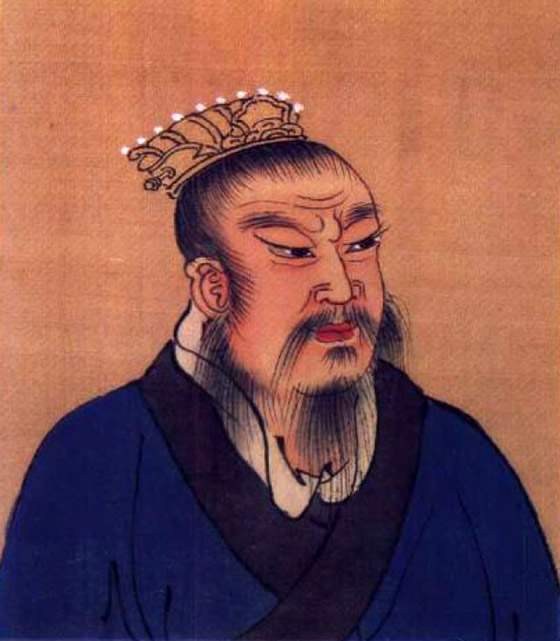




 Reflection by Rio Grande