Tag: Changyi

  • Comprehensive Reflections to Aid in Governance(Part 184): Athena Save The Day

    Comprehensive Reflections to Aid in Governance

    By Sima Guang

    Translated By Yiming Yang  

    Annals of Han Book 16 Scroll 24 (continued)
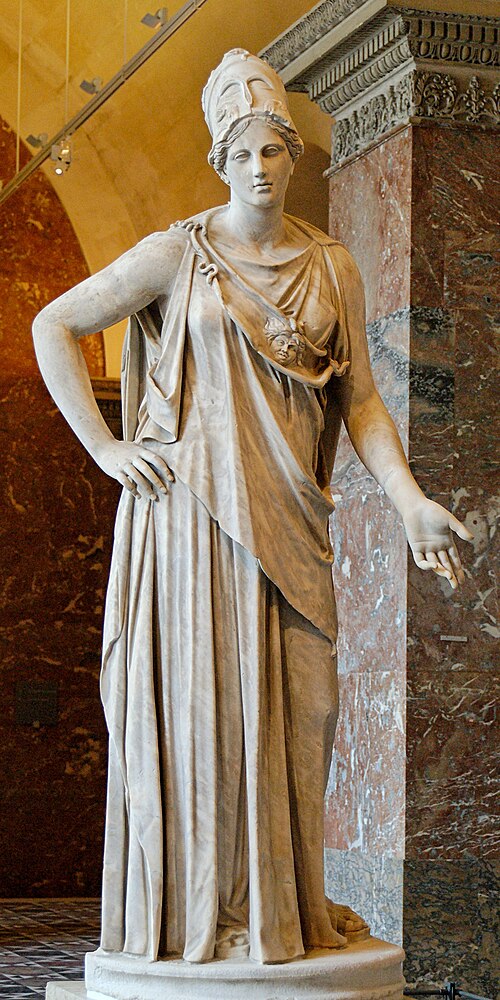
    Mattei Athena at Louvre Abu Dhabi, the Goddess of Wisdom

    The 1st year of Emperor Zhao’s Yuanping Era (74 B.C. continued)

    The Grand General Huo Guang was troubled in heart and distressed in mind. He sought counsel only from his trusted former colleague, the Minister of Agriculture, Tian Yannian. Tian Yannian said: “General, you are the pillar of the state. If this man proves unfit, why not present the matter to the Empress Dowager, and enthrone one worthy to inherit?”

    Huo Guang asked: “Is there any precedent for such a deed in antiquity?”

    Tian Yannian replied: “Yi Yin served as prime minister in the Yin, deposing Tai Jia for the security of the ancestral temple. Later ages have praised his loyalty. If the General acts thus, you will be the Yi Yin of the Han.”

    Huo Guang thereupon appointed Tian Yannian as Palace Liaison, and in secret conspired with the General of Chariots and Cavalry, Zhang Anshi, to lay their plan.

    While the Prince of Changyi went forth in an outing, the Grandee Chamberlain Xiahou Sheng of Lu stood before the imperial carriage and remonstrated, saying: “The heavens have long been overcast without rain; among the ministers there are conspiracies against the Son of Heaven. Whither does Your Majesty go?”

    The Prince was angered, and charged Xiahou Sheng with words of ill omen, commanding him to be bound and delivered to the authorities.

    The officials reported the matter to Huo Guang, yet Huo Guang did not take up the case. He laid blame upon Zhang Anshi, suspecting that their design had been disclosed.

    But Zhang Anshi had leaked nothing, and summoned Xiahou Sheng to question him. Xiahou Sheng said: “In the Classic of Documents, within the chapter Hongfan[Great Charter], it is written: ‘When the sovereign attains not the utmost virtue, calamities are constant and hidden. At such times there may be subjects who plot against their ruler.’ I dared not speak it outright, and so I said, ‘There are conspiracies among the ministers.’ This was what I meant.”

    Huo Guang and Zhang Anshi were greatly alarmed, and from this time depended more upon scholars versed in the Confucian classics.

    The Privy Counselor, Fu Jia, many times offered remonstrance, yet the Prince of Changyi had him seized and cast into prison.

    After Huo Guang and Zhang Anshi had resolved upon their course, they dispatched Tian Yannian to report to the Chancellor, Yang Chang. Yang Chang was stricken with fear, his countenance ashen, unable to utter a word. Sweat soaked his back, and he could only mumble incoherently. Tian Yannian withdrew to change his garments. The wife of Yang Chang hastened from the eastern chamber and said: “This concerns the fate of the state. Now that the Grand General has taken his stand, and the Nine Ministers have come to inform you, if you respond with hesitation, you shall be the first to suffer execution!”

    When Tian Yannian returned, Yang Chang and his wife spoke in unison, saying: “We await the command of the Grand General.”

    On June 28, Huo Guang assembled the Chancellor, the censors, the generals, the marquises, the officials of two-thousand-picul rank, the grandees, and the scholars in conference at Weiyang Palace. Huo Guang said: “The Prince of Changyi has thrown the realm into disorder and imperils the state. What course should be taken?”

    The assembled ministers were all astonished, their faces drained of color. None dared to speak; they mumbled only confused words. Then Tian Yannian rose, drew his sword, and said: “The late Emperor entrusted to the Grand General an orphaned child, laying upon him the charge of the whole realm, for he alone was deemed capable, by loyalty and wisdom, of preserving the House of Liu. Now this man has plunged the state into chaos, and the empire stands on the brink of ruin.

    “In the Han dynasty, those who upheld the line of sacrifice were often honored with the title ‘Filial,’ that their merits might endure with the ancestral temple. Should the imperial line be severed, even if the Grand General were to die, how could he face the late Emperor beneath the earth? Today’s decision must be swift and resolute. Any who waver or delay—I beg leave to strike them down with my sword!”

    Huo Guang bowed and apologized: “The fault is mine. The Nine Ministers speak rightly. The empire is in turmoil; I alone shall bear the blame.” The assembled officials all knocked their heads and said: “The lives of the people rest in the Grand General. We will follow your command.”

    Then Huo Guang, together with the ministers, entered to see the Empress Dowager and laid forth in detail the reasons why the Prince of Changyi could not be heir to the ancestral temple. The Empress Dowager took her carriage to Chengming Hall in Weiyang Palace, and issued an edict forbidding the ministers of Changyi to pass through any of the inner gates.

  • Comprehensive Reflections to Aid in Governance(Part 183): New Emperor’s Faux Pas

    Comprehensive Reflections to Aid in Governance

    By Sima Guang

    Translated By Yiming Yang  

    Annals of Han Book 16 Scroll 24 (continued)

    Mudcap of Shanyang(Changyi) Prefect

    The 1st year of Emperor Zhao’s Yuanping Era (74 B.C. continued)

    When the imperial edict arrived, it was near midnight, with less than a quarter hour remaining. The Prince of Changyi lit a fire to read it. That day he set forth, and by afternoon reached Dingtao, having covered one hundred and thirty-five li. Many of his attendants’ horses perished from exhaustion on the road.

    The Commandant of the Capital Guard, Wang Ji, submitted a memorial, saying: “I have heard that Emperor Gaozong of Shang, in the time of mourning, spoke no word for three years. Now Sire, summoned in consequence of a funeral, should weep and mourn without ceasing, day and night. It is meet and right to refrain from taking initiatives and making demands.

    “The Grand General’s virtue, embracing benevolence, wisdom, and trustworthiness, is renowned under Heaven. He served Emperor Wu for over twenty years, without once committing a fault. When the late Emperor departed and abandoned his ministers, he entrusted the whole realm and the young orphaned Son of Heaven to the Grand General, who cradled and nurtured the young sovereign, governing with benevolence and wisdom. The empire enjoyed peace, and his conduct was without reproach. Even the Duke of Zhou and Yi Yin could scarcely surpass him.

    “Now, with the Emperor’s passing and no heir, the Grand General, mindful only of honoring the ancestral temple, has raised up Sire with boundless benevolence. I pray that Sire will hold this in reverence, hearken to his counsel in matters of state, and take your place as a dutiful sovereign, sitting southward upon the throne. Keep this ever in your thoughts!”

    Yet the Prince went to Jiyang to seek long-crowing cocks, and bought a cane made of joined bamboo. Passing through Hongnong, he bade his servant Shan, who was big and tall, to conceal young women in a curtained carriage. When he came to Hu county, the envoy from Chang’an arrived with greetings, and discovered the impropriety, censuring the prime minister. An Le, the prime minister, hearing of it, reported to Gong Sui. Gong Sui entered and asked the Prince. The Prince denied, “There is no such a thing.”

    Gong Sui said: “Even if there is nothing grave, why transgress righteousness for the sake of shielding Shan? Let the big servant be summoned, that Sire may be cleared of fault.” Forthwith Shan was seized, and the captain of the guard executed him.

    When the Prince of Changyi arrived at Bashang, the Grand Herald came forth to greet him on the outskirts, and he was transferred to the imperial carriages. The Prince appointed Shou Cheng as his driver, while Chamberlain Gong Sui accompanied him in the carriage.

    As they neared Guangming Gate and the East Capital Gate, Gong Sui said: “According to the rites, when one in mourning beholds the capital, he should begin to weep. This is already the eastern gate of Chang’an.” 

    The Prince replied: “My throat hurts; I cannot cry.”

    When they came to the city gate, Gong Sui spoke again. The Prince said: “City gates and outer gates are all the same.”

    When they approached the east gate of Weiyang Palace, Gong Sui said: “The mourning tent of the Changyi principality lies outside this gate, extending along the northward thoroughfare. Before it there is a road running north and south. When the horses halt a few steps away, Sire must dismount, turn west toward the gate, and bow in mourning until grief is fully expressed.”

    The Prince of Changyi answered: “I understand.” When they arrived, he mourned in accordance with the rites.

    On June 1, the Prince received the imperial seal and ribbon, ascended as Emperor, and honored the Empress as Empress Dowager.

    On June 7, Emperor Zhao was buried at Pingling.

    When the Prince of Changyi had ascended the throne, he gave himself over to extravagance without restraint. Officials from Changyi were summoned to Chang’an, and many were advanced to higher rank. An Le was appointed Guard Commandant of Changle Palace.

    When Gong Sui met An Le, he wept, saying: “Since His Majesty’s enthronement, his arrogance and indulgence daily increase, and he will not heed remonstrance. Though the realm is still in mourning, he feasts and revels each day, drinking and sporting with close attendants. He sets tigers and leopards to combat, summons carriages adorned with nine tiger-skin pendants, and drives them recklessly east and west, all in defiance of propriety.

    “In ancient times, indulgence was tempered by leniency, and ministers could retire in honor. Now there is no way to depart. I have thought to feign madness, but feared being detected, so that death would come and my name be cast into the mire after I am gone. What course may I take? Sir, you once served as his prime minister; you should raise your voice in remonstrance and contend with him in earnest.”

    The Prince of Changyi dreamed that the dung of green flies lay heaped from the western steps to the east, five or six hundred piculs in weight, roofed over with boards and tiles. He inquired of Gong Sui. Gong Sui said: “Does not the Book of Songs declare: The green flies buzz and swarm, settling on the fences. A courteous and brotherly gentleman should not trust slanderous words. Now there are many slanderers upon Your Majesty’s left and right, and the swarm of flies are abominable. It is fitting to advance the sons and grandsons of the late Emperor’s great ministers, bringing them near to serve as trusted aides. If Your Majesty cannot part with the old companions of Changyi, but continues to trust in flattery and slander, then disaster is certain. I entreat Your Majesty to turn misfortune into fortune by driving them all away. I myself am willing to be the first to depart.” The Prince did not listen.The Associate Grand Coachman, Zhang Chang of Hedong, memorialized, saying: “The late Emperor Zhao died young without heir, and the ministers of the realm were in deep concern. When selecting a wise and virtuous successor to inherit the ancestral temple, on the day of the eastward journey, we feared only that your chariot procession moved not fast enough. Now the young Emperor has mounted the throne, and all under Heaven strain eyes and ears, watching for transformation and listening to the winds. Yet the elder ministers of the state are not first employed, while the youths of Changyi are promoted before all. This is a grave error.” The Prince did not heed the advice.