Tag: ancient-history

  • Comprehensive Reflections to Aid in Governance(Part 112): Zhou Bo’s Run-in with The Law

    Comprehensive Reflections to Aid in Governance

    By Sima Guang

    Translated By Yiming Yang  

    Annals of Han Book 6 Scroll 14 (continued)

    A Deng Tong Coin

    The 4th year of the Emperor Wen’s Early Era(176 B.C.)

    In December of winter, the Marquis of Yingyin, Guan Ying, passed away.
    In spring, on January 4, Zhang Cang of Yangwu County, the Grand Master of the Censorate, was appointed Chancellor. Zhang Cang had a deep fondness for books and was particularly knowledgeable in the fields of musical temperament and chronometry (calendar system).

    The Emperor summoned Ji Bu, the Prefect of Hedong Commandery, intending to appoint him as Grand Master of the Censorate. However, there were rumors that, although brave, Ji Bu enjoyed drinking and was unfit to serve closely with the Emperor. After staying at the imperial residence for a month, Ji Bu was finally granted an audience with the Emperor and assigned to his original post. He then spoke up, “Your Majesty, I have not accomplished any meritorious deeds and have been awaiting punishment in Hedong. Your sudden summons must have been the result of someone’s deception. Now that I have arrived, I have not been given any tasks or promoted—this must be due to slander. You summoned me based on someone’s praise and now dismiss me based on someone’s slander. I fear that those with insight will hear of this and question Your Majesty’s wisdom.”

    The Emperor remained silent for a long time, feeling ashamed, and finally said, “The Hedong commandery is as critical to my reign as arms and thighs to my body, which is why we summoned you specifically.”

    The Emperor proposed appointing Jia Yi to a high-ranking position in the court. However, many ministers criticized him, claiming he was a young man from Luoyang who was just beginning his studies and was overly ambitious, hungry for power and likely to disrupt state affairs. Consequently, the Emperor began distancing himself from Jia Yi and did not adopt his proposals. Instead, Jia Yi was appointed Grand Tutor to the Prince of Changsha.

    After the Marquis of Jiang, Zhou Bo, returned to his state, he lived in constant fear of execution. Whenever the prefect of Hedong or the Jiang county magistrate visited him, Zhou Bo would wear armor and have his family members armed to greet them. Later, someone submitted a memorial accusing Zhou Bo of plotting rebellion, which was handed over to the magistrate. The magistrate arrested Zhou Bo and put him on trial. Terrified and at a loss for words, Zhou Bo was mistreated by the officials. He bribed the jailer with a thousand catties of gold. The jailer then wrote on the back of his wooden tablet and showed it to Zhou Bo, which read: “Mention the princess in your testimony.” The princess referred to the Emperor’s daughter, who had married to Zhou Bo‘s eldest son, Zhou Shengzhi.

    Empress Dowager Bo also believed in Zhou Bo‘s innocence. One day, when the Emperor visited her, she threw her scarf at him and scolded: “When the Marquis of Jiang executed the Lü clan, he took the Emperor’s seal and led troops to the northern army. If he wanted to rebel, wouldn’t he have done it then? Now he lives in a small county—why would he rebel?” 

    By this time, the Emperor had already read Zhou Bo’s attestation from the jailer. He apologized to the empress dowager: “He will be released when the officials finish their investigation.” The Emperor then sent a messenger with the imperial insignia to pardon Zhou Bo and restore his rank and fief.

    After his release, Zhou Bo remarked: “I once commanded an army of a million soldiers, but who would have thought that a jailer could be so privileged?”

    The temple of Gucheng had been built.

    The 5th year of the Emperor Wen’s Early Era (175 B.C.)

    In February of the spring, there was an earthquake. 

    The Qin Empire initially used half-tael coins, but Emperor Gaozu found them too heavy and impractical, so he introduced the “pod coins” as a replacement. This caused prices to soar, with rice reaching ten thousand coins per picul. In April, four-zhu(a fraction of one tael) coins were minted, and a decree was issued abolishing the law against counterfeiting, permitting the people to mint their own coins.

    Jia Yi advised the Emperor on the issue of debased coinage: “By law, the government is permitted to hire workers to mint copper and tin coins. Anyone who adulterates the metal with lead or iron is guilty of a crime punishable by branding their faces. However, the art of coin casting requires a degree of skillful mixing to be profitable. A small alloy can yield great profit. Unintended trouble may arise, and poorly designed laws can tempt people into misconduct. If the government allows ordinary people to mint coins, each will do so secretly, using obscure trickery to maximize profits. Even if offenders are branded daily, this will not stop the practice.

    “As a result, countless commoners face charges, with some counties seeing hundreds of accusations. Many officials will grow suspicious, resorting to corporal punishment and abuse, driving even more people into exile. Such county laws entrap people more than anything else. Furthermore, different regions have varying standards for currency. Some use lighter coins, requiring more coins to complete exchanges for 100 coins; others use heavier coins that aren’t accepted due to a lack of 1-to-1 exchangeability. Without uniform standards, how can officials manage consistently? Local authorities will be overwhelmed by enforcement, or the markets will fill with varied currencies, leading to chaos. Without an effective policy, which path should local officials follow?

    “Today, more people are abandoning agriculture to mine copper, neglecting their farming tools and using furnaces and charcoal for smelting. Counterfeit coins are becoming widespread, creating food shortages. Honest people are tempted into wrongdoing, while cautious people who commit crimes are punished or executed. Severe punishment of the populace is not a sign of good governance. What a dilemma!

    “The government recognizes this problem, and officials will surely propose a ban. But if the ban is poorly implemented, it will cause even greater harm. If coin minting is forbidden, coin values will rise, driving higher profits. Counterfeiting will increase, and even public executions won’t suffice to deter it. The number of offenders will overwhelm the law enforcement, as the root of the issue is copper. Copper is widely available across the country and its potential harm is considerable. It would be better to confiscate all copper mines.”

    Jia Shan agreed with Jia Yi‘s assessment: “Money is a tool without a specific usage, but it can be used to gain wealth and power. Wealth and power are the levers of the ruler, but if rulers allow common people to mint money, they are essentially sharing that leverage, which cannot last.” However, the Emperor did not heed their advice.

    At that time, Deng Tong, the Grandee of the Palace, was highly favored by the Emperor, who wished to make him wealthy. Deng Tong was granted the Yandao copper mine in the state of Shu Commandery to mint coins. Meanwhile, the Prince of Wu, Liu Pi, controlled the Yuzhang copper mine and employed fugitives from across the country to mint coins. He also boiled seawater from the eastern ocean to produce salt, allowing him to exempt his Principality from head tax, while maintaining a well-funded treasury. Consequently, coins minted by Wu and Deng Tong were widely circulated throughout the country.

    Earlier, the Emperor had divided the state of Dai into two principalities, establishing his son Liu Wu as the Prince of Dai and his son Liu Shen as the Prince of Taiyuan. In this year, Liu Wu was relocated and made the Prince of Huaiyang, while Liu Shen became the Prince of Dai, restoring the kingdom’s original territory.
  • Comprehensive Reflections to Aid in Governance(Part 107): Emperor Wen, the Prudent

    Comprehensive Reflections to Aid in Governance

    By Sima Guang

    Translated By Yiming Yang  

    Annals of Han Book 5 Scroll 13 (continued)

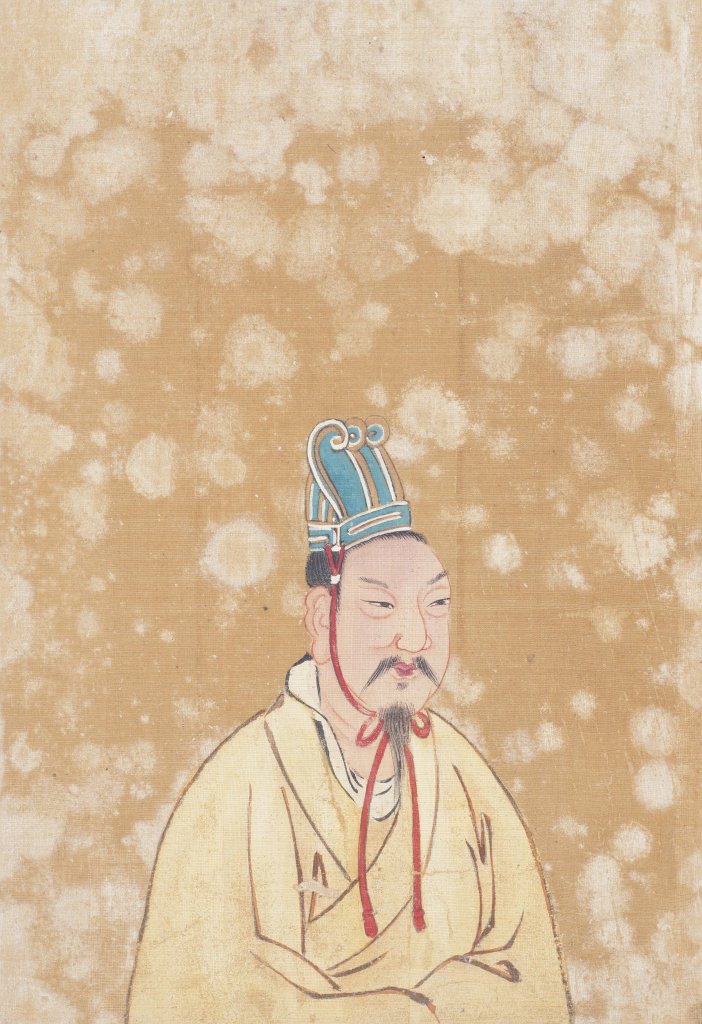
    Liu Heng, Emperor Wen of Han, A portrait in Museum.

    The 8th year of the Empress Gao(180 B.C. continued)

    While in Xingyang, Guan Ying heard that Wei Bo had persuaded the Prince of Qi to raise troops. He summoned Wei Bo and questioned him. Wei Bo responded, “When a house is on fire, the family doesn’t have time to ask the host for permission before putting it out.” After speaking, he stepped back, his legs trembling with fear, and could say nothing more. General Guan Ying laughed and said, “People say Wei Bo is brave, but he’s just an overrated man who can’t accomplish anything!” He then dismissed Wei Bo. Guan Ying‘s troops also withdrew and returned from Xingyang.

    Ban Gu’s praising commentary: During the reign of Emperor Wen, the world condemned Li Ji as a traitor. A traitor is someone who prioritizes personal gain over loyalty and righteousness. However, if Li Ji had only been coerced because his father, a meritorious official, was held hostage, even if he had betrayed his friend Lü Lu to safeguard the state, his loyalty to the emperor and his affection for his father should be acceptable.

    A group of high ranking ministers conspired in secret, saying, “Emperor Shao and the Princes of Liang, Huaiyang, and Hengshan are not truly Emperor Hui’s sons. Empress Lü falsely claimed they were his sons, killed their mothers, and raised them in the imperial harem as princes to strengthen the Lü clan. Now that the entire Lü clan has been eliminated, if those established as the emperor’s sons grow older and come to power, we have no chance of survival. It is better to choose the most capable among the princes as the new emperor.” Someone suggested, “The Prince of Qi, Emperor Gaozu’s grandson, could be chosen.” The ministers responded, “The Lü clan brought chaos through the maternal family’s dominance, almost destroying the ancestral temple. If we establish the Prince of Qi, whose uncle, Si Jun, is as aggressive and greedy as a tiger, we might end up serving another Lü clan. The Prince of Dai is Emperor Gaozu’s oldest son, and he is kind, tolerant, and respectful. Moreover, his mother’s family, the Bo clan, is honest and virtuous. Choosing the eldest is the most customary option. Besides, he is renowned for his kindness and filial piety throughout the empire!” They then secretly sent someone to summon the Prince of Dai.

    The Prince of Dai asked his advisors, including the lord of chamberlain, Zhang Wu, for their opinions. They said, “The ministers of the Han dynasty were originally high-ranking generals under Emperor Gaozu, experienced in warfare and skilled in strategy and deception. Their ambitions extend beyond their current positions. They acted cautiously out of fear of Emperor Gaozu and Empress Lü, but now they may be using the pretext of welcoming the Prince to pursue their own selfish goals. We advise your majesty to feign illness and refrain from going, so that we may observe how the situation unfolds.”

    However, Commander of the capital garrison, Song Chang, spoke up, “The opinions of the courtiers are all wrong. When the Qin dynasty fell, the feudal lords and nobles rose up, each thinking they could claim the throne, with tens of thousands vying for it. Yet, in the end, it was the Liu family who ascended, leaving the rest of the world to drop out of the contention — this was the first reason. When Emperor Gaozu enfeoffed his sons and relatives, they served as checks on each other like interlocking teeth — this was the foundation of an unshakable empire. The entire world submitted to his strength — this was the second reason. When the Han dynasty was established, the harsh policies of Qin were abolished, the laws were simplified, and benevolence and kindness were extended to the people, leaving everyone feeling secure and averse to change — this was the third reason. Even though Empress Lü exercised strict control and appointed her family members as Princes, she could not prevent the Grand Commandant from inciting the Northern Army to support the Liu family and rebel against the Lü clan, leading to their downfall. This was a sign from heaven, not the result of human effort. Now, even if the ministers attempt to create upheaval, the people will not follow them, would their factions remain united? Inside the palace, there are relatives of Marquis of Zhuxu and Marquis of Dongmou, and outside, there is fear of the external power of principalities of Wu, Chu, Huaiyang, Langya, Qi, and Dai. Among Emperor Gaozu’s sons, only the Prince of Huainan and Your Majesty remain. Your Majesty is also the eldest, and your wisdom, benevolence, and filial piety are renowned throughout the world. Therefore, the ministers genuinely wish to support Your Majesty and welcome your ascension to the throne, in accordance with the people’s will. Your Majesty should not doubt their motives.”

    The Prince of Dai reported this to his mother, Empress Dowager Bo, but remained uncertain. He consulted a divination, which revealed the hexagram “Big Horizontal.” The interpretation was: “Big Horizontal represents a heavenly Prince, like the brilliance of dawn in summer.” The Prince of Dai asked, “But I am already a Prince. What other Prince is there?” The diviner replied, “The heavenly Prince is none other than the son of Heaven.”

    Following this, the Prince of Dai sent Empress Dowager’s younger brother, Bo Zhao, to meet with the Marquis of Jiang, who explained their plan to enthrone him. Bo Zhao returned with a positive response, and the Prince of Dai smiled and said to Song Chang, “It turns out you were right.”

    The Prince of Dai, accompanied by Song Chang, rode with six others, including Zhang Wu, on a government post vehicle to Chang’an. They rested at Gaoling, and Song Chang was sent ahead to observe the situation in Chang’an. When Song Chang arrived at Wei Bridge[a bridge over Wei River], he was greeted by everyone, from the Chancellor down. Song Chang returned to report his findings. The Prince of Dai then rode to Wei Bridge, where the courtiers bowed and pledged allegiance to him. The King of Dai dismounted from his carriage and returned the salutes.

    The Grand Commandant then requested an audience. Song Chang replied, “Whatever you have to say publicly, say it publicly; whatever you have to say privately, the Prince has no private affairs.” The Grand Commandant knelt and presented the imperial seal and insignia of office. The Prince of Dai thanked him and said, “Let’s discuss it further at the Dai state residence.”

    On the leap month of September 29, the Prince of Dai arrived in Chang’an and stayed at the Dai state residence. The courtiers followed him to the residence. Chancellor Chen Ping and others bowed twice and said, “Prince Liu Hong and other young men are not the true sons of Emperor Hui and are therefore not suitable to succeed Emperor Hui and serve in the ancestral temple. As the eldest son of Emperor Gaozu, you should succeed him. We implore you to ascend the imperial throne.”

    The Prince of Dai declined three times when asked to take the throne facing west, and twice when asked to face south. Eventually, he ascended the throne as emperor. The courtiers then followed the proper protocol and saluted him.

    The Marquis of Dongmou, Liu Xingju, said, “I had no merit in the execution of the Lü clan. I request to clean up the royal palace.” He entered the palace with Grand Coachman, the Duke of Teng, Xiahou Ying, the Marquis of Ruyin. They told the Emperor Shao, Liu Hong, “You are not a descendant of the Liu clan and should not be on the throne!” Liu Xingju then commanded the guards to put down their weapons and leave. Although some guards initially refused, Director of Internuncio, Zhang Shi, was sent to persuade them, and they eventually complied. The Duke of Teng then had the Emperor Shao carried out in an imperial carriage. Liu Hong asked, “Where are you taking me?” The Duke of Teng replied, “Outside the palace,” and took him to the privy chamber.

    The next day, they escorted the Prince of Dai in the imperial carriage to the palace and reported, “The palace is secure.” That evening, the Prince of Dai entered Weiyang Palace. At the Duan gate, ten guards armed with halberds asked, “Who goes there? What brings you here while the emperor is inside?” The Prince of Dai ordered the Grand Commandant to speak to them, and the guards put down their weapons, allowing him to enter.

    That night, the Prince of Dai appointed Song Chang as Guard General, responsible for maintaining order among the northern and southern armies, and Zhang Wu as the lord of chamberlain. Judicial officials then executed the Prince of Liang, the Prince of Huaiyang, the Prince of Hengshan, and the Emperor Shao at their residences. Emperor Wen returned to the front hall and issued a decree granting amnesty to the entire empire.

  • Comprehensive Reflections to Aid in Governance(Part 96): A Narrow Escape

    Comprehensive Reflections to Aid in Governance

    By Sima Guang

    Translated By Yiming Yang 

    Annals of Han Book 3 Scroll 11(continued)

    Yongzuo Temple, Taiyuan(a.k.a. Jinyang), Shanxi Province. Photo by Roland Longbow

    The 7th year of the Emperor Gaozu (200 B.C.)

    In October, during the winter, the Changle Palace was completed, and the monarchs and ministers gathered to pay their respects. Early in the morning, the internuncios arranged the ceremony and led the guests into the palace in proper order, standing in rows facing east or west. Guards stood with halberds in hand on the steps or in the courtyard, while flags and banners were raised. When the alert was announced, the Emperor’s carriage emerged from the chamber. The princes followed, down to the officials with a salary of 600 picul, all coming to congratulate the Emperor, trembling in awe and respect.

    After the ceremony, a banquet was held. The attendants sat in the palace hall, all prostrating in salute and bowing their heads in reverence, and toasts were raised according to rank. After nine rounds, the internuncios announced, “The wine is being served,” and the officials in charge of discipline escorted out anyone who did not follow the proper etiquette. The banquet lasted all day, and no one behaved improperly. The Emperor then said, “Today, I truly understand the esteem of being an emperor!” He appointed Shusun Tong as the Minister of Ceremony and rewarded him with five hundred pounds of gold.

    In earlier times, the empire of Qin ruled the realm and incorporated the ceremonial practices of the six states it had conquered, selecting and preserving those that emphasized respect for the ruler and the subordination of officials. When Shusun Tong re-established the imperial ritual system, some additions and omissions were made, but it largely followed the Qin model. The system retained the imperial titles, as well as the names of officials and palace buildings, with few modifications. Written records of the system were later compiled with the legal code and stored in the archives of the judicial officials. However, the judicial officials did not transmit the ritual system to people outside the court, and no commoners or administrators spoke of it.

    Sima Guang’s commentary: The importance of rituals is enormous! When applied to oneself, they regulate one’s actions and behavior, ensuring all is done properly; when applied to the family, they establish distinctions between internal and external relations, fostering harmony among the nine kinship groups; when applied to the village, they create proper relationships between elders and youth, cultivating refined and graceful customs; when applied to the state, they ensure proper order between the ruler and ministers, leading to successful governance; when applied to the world, they bring submission from the monarchs and uphold justice. How can rituals be confined to seating arrangements in gathering or household management for the neighborhood order? Even with the wisdom of Emperor Gaozu, he praised Lu Jia’s words about ‘not governing on horseback despite winning the realm on horseback,’ and he admired Shusun Tong’s etiquette with great appreciation. Yet, the reason Gaozu couldn’t compare with the kings of the Three Dynasties was his failure in learning.

    Had he sought the assistance of great scholars and governed the world through rituals, his achievements would have surpassed what we now see. It is a pity that Shusun Tong’s capacity was so limited! He merely took the scraps and remnants of ancient rituals, following popular customs, catering to public taste, and seeking favor for himself, allowing the rituals of the former kings to decline into obscurity. Isn’t that a painful loss? This is why Yang Xiong ridiculed him, saying: ‘In ancient times, there were great scholars in Lu, but their names were lost. Someone asked: “Why were they great?” The answer was: “Shusun Tong wanted to regulate etiquette between ruler and ministers and called for scholars from Lu, but two great scholars refused to comply.” Someone asked: “Did Confucius not travel among the monarchs and serve them?” The answer was: “Confucius paved the way for his own ideals. Had he compromised his principle to fit others, wouldn’t he have implemented his own rules and standards?”

    What an excellent remark from Yang Xiong! How could a great scholar demolish his principles and abandon rules and standards, for the sake of temporary honor and reward?”

    The Emperor personally led the campaign against King of Hán, Xin, defeating his army at Tongdi and beheading General Wang Xi. Xin fled and sought refuge with the Xiongnu. Wanqiu Chen and Wang Huang, from Baitu county, enthroned Zhao Li, a descendant of the Zhao clan, as king. They gathered the remnants of Xin‘s scattered forces and planned a joint attack on the Han Dynasty with Xin and the Xiongnu. The Xiongnu dispatched the Left and Right Tuqi Kings, leading over ten thousand cavalry, who stationed themselves south of Guangwu county and reached Jinyang city. The Han army attacked, defeating the Xiongnu, who fled and then regrouped, the Han army pursued them, riding on their recent victories. However, a severe cold spell with rain and snow caused two or three out of every ten soldiers to lose fingers to frostbite.

    While the Emperor was in Jinyang, he received news that Modu Chanyu had stationed troops at Daigu and was preparing to attack. He sent scouts to assess the Xiongnu. Modu Chanyu had concealed his strongest warriors and horses, leaving only the old, weak, and thin livestock visible. Ten messengers were sent, all reporting that the Xiongnu were vulnerable. The Emperor then dispatched Liu Jing as an envoy to Xiongnu, but before his return, the Han army advanced north with 320,000 soldiers, crossing Gouzhu Pass. When Liu Jing returned, he reported, “When two countries go to war, they exaggerate their strengths and hide their weaknesses. However, I saw only the weak, thin, and old, suggesting they intentionally suggesting they intentionally showed their weakness to lure us into an ambush. In my opinion, the Xiongnu cannot be attacked at this moment.”

    By this point, the Han army was already on the move, and the Emperor, angered by Liu Jing‘s report, cursed him, “You, a mere prisoner from Qi, gained your position through eloquence, and now you spout nonsense to lower our army’s morale!” Liu Jing was then arrested and shackled in Guangwu.

    The Emperor arrived at Pingcheng, but not all his troops had assembled. Modu Chanyu mobilized 400,000 elite cavalry and besieged the Emperor at Baideng Terrace for seven days. The Han forces were unable to provide mutual aid or receive supplies. The Emperor used Chen Ping‘s secret strategy, sending a messenger to bribe Yanzhi, the Xiongnu queen, with a generous reward. Yanzhi advised Modu Chanyu, “The two rulers should not pounce on each other like this. Even if you seize Han territory, you cannot hold it permanently. Moreover, the Han ruler is also protected by divine spirits. The Chanyu should be very cautious.”

    Modu Chanyu had arranged to meet Wang Huang and Zhao Li, but their troops never arrived, making him suspect they had conspired with the Han. As a result, he released part of the siege. A thick fog shrouded the area, allowing Han messengers to move back and forth unnoticed by the Xiongnu. Chen Ping advised loading strong crossbows with two arrows each, and sending them out with arrows pointing to enemies, from the side where the siege had been lifted. The Emperor escaped the siege but wanted to move forward quickly. However, Grand Coachman–Duke of Teng, Xiahou Ying, insisted on proceeding slowly. Upon reaching Pingcheng, the rest of the Han army had arrived, and the Xiongnu cavalry retreated. The Han forces then withdrew, assigning Fan Kuai to stabilize the Dai commandery.

    The Emperor arrived at Guangwu and pardoned Liu Jing, saying, “I failed to heed your advice, which led to the siege at Pingcheng. I have already executed the previous ten envoys who misinformed me.” He then granted Liu Jing the title of Marquis of Jianxin, along with two thousand households. Continuing south to Quni county, the Emperor remarked, “What a magnificent county! I have traveled throughout the empire, but only Luoyang and this place impress me.” He granted Chen Ping the title of Marquis of Quni and bestowed the entire county as his fiefdom. Chen Ping had accompanied the Emperor on campaigns and devised six original strategies, each of which led to an expansion of his fief.

    In December, the Emperor returned and passed through the kingdom of Zhao. The King of Zhao, Zhang Ao, who was the Emperor’s son-in-law, humbled himself and treated the Emperor with utmost esteem, while the Emperor sat with his legs wide open, openly insulting Zhang Ao. This enraged the prime minister of Zhao, Guan Gao, along with Zhao Wu and others, who said, “Our king is a coward!” They approached Zhang Ao with fury, “The empire is up for grabs. Only those with courage seize power. Your Excellency humbles before the Emperor deferentially, but he shows you no respect. We want to kill him on your behalf!”

    Zhang Ao bit his finger until it bled and replied, “You are wrong! Our ancestors lost their kingdom, but it was through the Emperor’s help that we regained it. His virtue has benefited our descendants, and all we have is thanks to his power. I hope you never speak like that again!”

    Guan Gao, Zhao Wu, and the others conferred among themselves, “We should not have spoken to the king that way. Our king is a man of integrity and will not betray his loyalty. Even if we wish to kill the Emperor for insulting our king, why should we implicate the king? If we succeed, the credit will go to him; if we fail, we alone will face the consequences!”

    The Xiongnu attacked the kingdom Dai, and the King of Dai, Liu Xi (the Emperor’s older brother), abandoned his kingdom without a fight. He returned to the capital, was pardoned, and demoted to the Marquis of He’yang. On January 17, the Emperor’s son, Prince Liu Ruyi, was installed as the new King of Dai.

    In February, the Emperor arrived at Chang’an. Xiao He oversaw the construction of the Weiyang Palace, which greatly impressed the Emperor. However, the Emperor was furious, saying to Xiao He, “The world is in chaos, and we have been at war for years with the outcome still uncertain. Why are you focused on building such an extravagant palace?”

    Xiao He responded, “Precisely because the world is still unstable, we should seize this opportunity to build. Moreover, the Emperor considers the four seas as his home, and without grandeur, he cannot command respect. It is also important to leave a legacy that future generations cannot surpass.” The Emperor was pleased with this explanation.

    Sima Guang‘s commentary: A king should make benevolence and righteousness his grandeur, and moral integrity his source of awe. I have never heard that filling the world with palaces and halls is a way to demonstrate dominance. When the world is unsettled, one must practice restraint and fiscal responsibility to meet the needs of the people. To prioritize palaces and halls—how can this reflect an understanding of what is truly important? In the past, Emperor lived in humbled palace, while Xia Jíe built extravagant ones and lost his empire. A founding lord should practice frugality and set an example for his descendants. Even the last ruler of a dynasty, despite the example of frugality, eventually succumbed to exorbitance—how much more will they be corrupted by being shown the example of indulgence? Moreover, to say “do not let future generations surpass it”—is this not a grave mistake? Emperor Wu, after all, ultimately ruined the country by overspending on palaces and halls, a trend perhaps initiated by Marquis Zan.

    The Emperor moved the capital from Yueyang to Chang’an. The Ministry of the Imperial Clan was first established to rank the genealogical records of the imperial family. In April, during the summer, the Emperor traveled to Luoyang.

  • Comprehensive Reflections to Aid in Governance(Part 81): The Battle of Jingxing

    Comprehensive Reflections to Aid in Governance

    By Sima Guang

    Translated By Yiming Yang

    Annals of Han Book 2 Scroll 10

    Duration of 2 years

    Jingxing Pass, Hebei Province

    The 3rd year of the Emperor Gaozu (204 B.C.)

    In October of that winter, Han Xin and Zhang Er led tens of thousands of troops eastward to attack the Kingdom of Zhao. The King of Zhao, Zhao Xie, and Lord Cheng’an, Chen Yu, assembled their army at Jingxing Pass, claiming to have two hundred thousand soldiers.

    Li Zuoche, known as Lord Guangwu, advised Chen Yu: “Han Xin and Zhang Er are on a long-distance expedition, advancing on the momentum of consecutive victories. Engaging them head-on is unwise. There’s a saying: ‘Soldiers go hungry when you have to procure food from a thousand miles away; the army won’t sleep with their stomach full if you chop firewood at cooking time.’ The path at Jingxing Pass is so narrow that two chariots can’t pass side by side. The cavalry can’t maintain their usual formation, and their marching train stretches for hundreds of miles, with their supply train at the rear. If you lend me thirty thousand troops, I’ll attack their baggage train from the backroads. Meanwhile, you should dig trenches and build defensive walls. Avoid direct engagement. They won’t be able to fight you from the front or retreat. Within ten days, the heads of Han Xin and Zhang Er will be displayed under your banner. Otherwise, we will be captured by them.”

    However, Lord Cheng’an, proud of his army’s reputation for an honorable style that was above trickery, rejected Lord Guangwu’s plan: “Han Xin’s army is small and weary from battle. If we hold back from fighting, other monarchs might see us as cowards and attack us without thinking in the future.”

    Han Xin sent spies to gather intelligence on the Kingdom of Zhao. Upon learning that Chen Yu had not adopted Lord Guangwu’s plan, he was overjoyed and issued the order to proceed. They set up camp ten miles from Jingxing Pass, and at midnight, Han Xin gave the signal to act. He selected two thousand light cavalry, giving each soldier a red flag, and sent them to hide on a summit reached by trails near Zhao’s camp. He instructed: “When the troops of Zhao pursue us during our retreat, you will enter their camp, take down their flags, and raise the red flags of Han.”

    He told his lieutenant generals to have a light meal, promising a grand lunch after they defeated the army of Zhao. The generals, doubtful, replied sarcastically: “Sure.” Han Xin explained: “The Zhao army holds the strategic positions and has fortified their defenses. They won’t come out to attack us unless they see my commander’s banner, fearing we might retreat when faced with danger.” He then ordered ten thousand soldiers to advance through Jingxing Pass and set up a formation with their backs to the river. The soldiers of Zhao ridiculed this maneuver.

    At dawn, Han Xin raised his commander’s banners and led his army through Jingxing Pass with a fanfare of drums and trumpets. The Zhao forces, seeing this, left their fortresses and attacked Han’s army. A fierce battle ensued for a long time. Han Xin and Zhang Er pretended to retreat, abandoning their banners and drums, and fled toward their formation by the river. Their troops let them in and fought fiercely against Zhao’s pursuing forces.

    As the Zhao soldiers poured out of their camp to seize the abandoned banners and drums, Han Xin’s two thousand cavalry swooped in and captured Zhao’s empty camp, replacing their flags with Han’s red flags. Meanwhile, Han Xin and Zhang Er led their forces by the river in a fierce counterattack. The Zhao army, distracted by looting, was startled when they saw Han’s red flags flying over their camp. Believing their king and commander had been captured, they panicked and fled in disarray. Even when generals of Zhao executed fleeing soldiers, they could not restore order. Han Xin’s forces attacked from both sides, crushing the Zhao army. Lord Cheng’an was beheaded by the Zhi River, and the King of Zhao, Zhao Xie, was captured.

    The generals of Han returned with severed heads and prisoners of war, congratulating one another. Then they asked Han Xin,  “The military manuals say: ‘A battle formation should be positioned with mountains and highlands to the right and behind, and rivers and lakes to the left and front.’ Yet you ordered us to do the opposite, placing our backs to the river. You also said, ‘We’ll have a big lunch after defeating the army of Zhao.’ We were skeptical at the time, but now we’ve won a great victory. What strategy did you use?”

    Han Xin replied: “This strategy is also in the manual—you simply overlooked it. The art of war says: ‘Place your soldiers in a position of death, and they will fight to survive; put them in a hopeless situation, and they will find a way to live.’ I didn’t have the luxury of commanding a well-trained army. I had to lead civilians onto the battlefield. In such a situation, I needed to force them into a desperate position where each soldier had to fight for his life. If I had given them an easy way out, they would have fled, and how would I have kept them under command?”

    The generals were awestruck: “Brilliant! General Han is truly beyond us!”

    Han Xin declared that whoever captured Lord Guangwu alive would be rewarded with thousands of catties of gold. Sure enough, someone soon delivered the bound Lord Guangwu to his headquarters. Han Xin, however, released him and seated him facing east, treating him as a mentor. Han Xin humbly sought advice: “I plan to raid the kingdom of Yan to the north and the kingdom of Qi to the east. How can I ensure success?”

    Lord Guangwu demurred, “I am a captive of a losing battle; should I really be consulted on such important matters?”

    Han Xin persisted: “I have heard of Baili Xi, who lived in the state of Yu. Yu was annexed, but when Baili Xi lived in the kingdom of Qin, Qin became dominant. It wasn’t because Baili Xi was foolish in Yu and suddenly became brilliant in Qin—it all depended on whether the king adopted his proposals. Had Lord Cheng’an followed your advice, I would have been captured. I can listen to your advice today because your plan was not adopted. I sincerely seek your guidance. I hope you won’t turn me down, your honor.”

    Lord Guangwu responded: “General Han, you crossed the Yellow River, captured the king of Wei, and then Xia Yue. You marched through Jingxing eastward and crushed the mighty Zhao army of 200,000 soldiers before noon, even beheading Lord Cheng’an. Your fame is widespread, and you inspire awe throughout the country. Even farmers lay down their plows and cease tilling. They now live hedonistically, consuming their finest foods and wearing their best clothes, eagerly waiting for fate’s next arrangement. That’s your strong hand. But the people are weary of war, and the soldiers are exhausted. If you drive these worn-out troops against Yan’s strongholds, they won’t engage you in battle. You might not breach their fortress, and they’ll know your troops better. You’ll lose your momentum. As the war drags on, your supplies will run out. If Yan holds firm, Qi will bolster its defenses and become more assertive. If both Yan and Qi hold out, the balance of power between Chu and Han will become unpredictable. That’s your weak hand. A good strategist uses his strong hand to cover his weak hand, not the other way around.”

    Han Xin asked, “What should I do then?”

    Lord Guangwu replied: “If I were you, I would let the troops rest and pacify the people of Zhao. The locals within a hundred miles would bring in beef and wine to cater to your staff. You should adopt an aggressive stance toward the north but send emissaries to showcase your strength to Yan. Yan won’t dare disobey. Once Yan submits, you can move on to Qi. By then, even a wise strategist will have no plan to save Qi. This way, you will be on the path to conquering the whole country. Warfare begins with bluff and bluster, followed by real actions. That’s what I mean.”

    Han Xin appreciated the advice: “A good strategy!” He followed Lord Guangwu‘s counsel and sent envoys to Yan. The king of Yan immediately conceded. Han Xin then sent messengers to report the good news to the king of Han and petitioned for Zhang Er to be made king of Zhao. The king of Han approved. There were several sneak attacks from Chu‘s army, which crossed the Yellow River to raid Zhao. Zhang Er and Han Xin busied themselves defending Zhao, bringing its towns and cities under control. They even drafted soldiers and sent them to aid the king of Han.

  • Comprehensive Reflections to Aid in Governance(Part 78): The Debacle in Pengcheng

    Comprehensive Reflections to Aid in Governance

    By Sima Guang

    Translated By Yiming Yang

    Annals of Han Book 1 Scroll 9 (continued)

    Yunlong Park in Xuzhou (Pengcheng), Jiangsu Province

    The 2nd year of Emperor Gaozu(205 B.C. continued)

    The King of Han crossed the Yellow River to the south at the crossing of Pingyin Ford. His procession was halted in the town of Xincheng in Luoyang City by Mr. Dong, a local ethics educator(Three Elders of the Town). Mr. Dong addressed the King of Han: “I have heard it said, ‘Those who follow morality will prosper, and those who defy it will perish.’ Another saying goes, ‘A military campaign without a moral justification will not succeed.’ That is why people say, ‘Expose the evil of your enemy first, then you can overthrow it.’ Xiang Yu is profoundly immoral; he exiled his lord and then murdered His Majesty. He is the greatest wrongdoer in the land. A benevolent government does not resort to violence, and seeking justice does not rely on brute force. Your Majesty should mourn the death of the Honorary Emperor by dressing your entire army in white. You should send manifestos to all the kings in the realm, calling on them to unite against Xiang Yu. This would follow the example of the three kings who founded the dynasties (Xia, Shang, Zhou).”

    The King of Han conducted a funeral for the Honorary Emperor, baring his arms and weeping loudly during the ceremony, which lasted three days. He then sent messengers to all the kings with this message: “The Honorary Emperor was inaugurated by the realm, and we all pledged our allegiance to him. Xiang Yu exiled the Honorary Emperor to the south of the Yangtze River and then murdered him. Such an act is an abomination! I will mobilize all the forces of Guanzhong, recruit warriors from Henan, Hedong, and Henei commanderies, and sail down the Yangtze and Hanshui Rivers. I call upon all monarchs to join in avenging the Honorary Emperor!”

    When the messenger reached the Kingdom of Zhao, Chen Yu responded, “We will join if the Kingdom of Han kills Zhang Er.” To meet this demand, the King of Han found a man who resembled Zhang Er, beheaded him, and sent another messenger carrying the severed head to Chen Yu. Satisfied, Chen Yu then dispatched troops to aid the army of Han.

    Tian Rong’s younger brother, Tian Heng, reassembled Tian Rong’s fleeing soldiers and gathered a force of tens of thousands. They launched a rebellion in Chengyang commandery. In April, during the summer, Tian Heng declared Tian Rong’s son, Tian Guang, as the King of Qi and openly challenged Xiang Yu. Xiang Yu engaged in multiple battles with Tian Heng but was unable to defeat him. Although he learned that the army of Han was advancing eastward, Xiang Yu remained bogged down in the land of Qi, as he needed to break Qi‘s resistance before turning to confront Han‘s forces.

    Meanwhile, the King of Han commanded 560,000 soldiers from allied kingdoms to launch a raid into the land of Chu. Upon reaching Waihuang county, Peng Yue led his thirty thousand soldiers to join forces with Han. The King of Han remarked, “General Peng has recaptured a dozen cities of Wei and wants to quickly enthrone a descendant of Wei. Here, the King of West Wei, Wei Bao, is a true descendant of Wei.” He then appointed Peng Yue as the prime minister of the Kingdom of Wei, allowing Peng Yue to command his troops independently to expand their territories in the land of Wei.

    The King of Han entered Pengcheng, the capital of West Chu, and seized Xiang Yu’s treasures and harem. He began to indulge in daily celebrations, wining and dining to mark his victories.

    Xiang Yu, upon learning that his home had been raided, ordered his generals to continue the fight in Qi while he led thirty thousand elite troops southward. Starting from Lu County, they passed through Huling County and reached Xiao County. At dawn, they launched a surprise assault on the Han army, pushing eastward, and by noon, they reached Pengcheng, where they decisively routed the Han forces. The soldiers of Han fled in disarray, many running into the Gu River and Si river, where hundreds of thousands drowned. Others fled south toward the mountains, pursued relentlessly by the Chu fighters, who drove them to the Sui River, east of Lingbi County. There, the Chu forces pressed several hundred thousand Han soldiers against the river, causing so many to perish that their bodies clogged the riverbed, halting its flow.

    Xiang Yu‘s troops encircled the King of Han with three rings of soldiers. Just then, a strong northwesterly wind arose, uprooting trees, tearing roofs off houses, and creating a cloud of dust and sand that turned day into darkness. The blinding storm struck the Chu army, scattering their ranks. Seizing the moment, the King of Han, along with a few dozen cavalry guards, broke through the encirclement and escaped. They planned to stop by Pei County to retrieve their family members, but by the time they arrived, the soldiers of Chu had already beaten them to it, and the King of Han’s family members were nowhere to be found.

    The King of Han eventually encountered his children, Prince Hui (Liu Ying) and Princess Yuan of Lu, and got them into his wagon. As the cavalry of Chu drew near, he panicked and, in his desperation to speed up the carriage, repeatedly pushed his children off it. Duke Teng, Xiahou Ying, who served as the Grand Coachman of Han, was forced to jump off the wagon to retrieve them each time. After the third time, Xiahou Ying pleaded, “I understand the urgency, but the horses cannot go any faster. How could you ditch your children?” He maintained the carriage at moderate speed. The King of Han, enraged, attempted to kill Xiahou Ying dozens of times, but Xiahou Ying’s soldiers protected the retinue, ensuring the safety of both the King’s children and the group.

    Meanwhile, Shen Yiji was escorting the King of Han‘s father (the Grandpa Liu) and wife, Queen Lü, along an alternate route. They attempted to rendezvous with the King of Han but encountered Chu soldiers and were captured, eventually being taken to Xiang Yu‘s camp, where they were held as hostages.

    The brother of Queen Lü, the Marquis of Zhoulü, led a force stationed at Xiayi county. The King of Han managed to reach this location by taking alternate routes, gathering several soldiers who were fleeing. However, as the situation grew dire, many of the allied forces began to defect and return to Xiang Yu‘s camp. The King of Sai, Sima Xin, and the King of Di, Dong Yi, switched their allegiance to the Kingdom of Chu.

  • Comprehensive Reflections to Aid in Governance(Part 76): Han Xin Exceeding Expectation

    Comprehensive Reflections to Aid in Governance

    By Sima Guang

    Translated By Yiming Yang

    Annals of Han Book 1 Scroll 9 (continued)

    Han and the Three Qins(Yong, Zhai, Sai)

    The 1st year of Emperor Gaozu(206 B.C. continued)

    After the nomination ceremony, the King of Han sat down with Han Xin and said, “The Prime Minister has recommended you so many times. What can you teach me about strategy?” Han Xin expressed his gratitude and downplayed the praise before addressing the King of Han, “It is King Xiang Yu who contends with Your Majesty for power in the east, isn’t it?”

    The King of Han confirmed, “Yes, it is him.”

    Han Xin then asked, “In terms of strength and chivalry, how do you compare yourself to Xiang Yu?”

    After a moment of thought, the King of Han admitted, “I am not as good as him.”

    Han Xin saluted the King of Han and encouraged him, saying, “I agree with Your Majesty’s assessment. However, I once served under Xiang Yu, so I know his personality well. Xiang Yu‘s roar alone can make thousands tremble with fear, but he lacks the ability to choose capable people to assist him, which makes him a force of one. While he treats people kindly and is compassionate, he is also soft-hearted and sentimental. He cries when he sees someone suffering from illness and shares his food and drink with the sick. However, he is also stingy in rewarding his subordinates. Even when they achieve great merits, he is reluctant to grant them high ranks, keeping the seals of power firmly in his own hands until edges are worn out. This is what we call the petty kindness of a woman.”

    Xiang Yu dominates the nation, and all the rulers submit to him, but he chose Pengcheng as his capital instead of staying in the strategically advantageous Guanzhong region. He gave away territories to his friends unjustly, violating the agreement made with the Honorary Emperor. He removed legitimate rulers and replaced them with generals or ministers of his liking, and he even banished the Honorary Emperor to the south of the Yangtze River. Wherever he goes, he leaves destruction in his wake. The people do not support him; they only fear his might. Although he appears to be the hegemon of the country, he has already lost the people’s hearts. This is his weakness.”

    “If Your Majesty does the opposite of what Xiang Yu does, then his strength could easily turn into his vulnerability. Who could cling to life if you deployed the country’s bravest warriors against him? Who would not heed your command if you rewarded your allies with the nation’s best cities? Who would dare stand in your way if you lead your troops back home rightfully? The three kings of Qin (Zhang Han, Sima Xin, Dong Yi) were once generals who forced the people of Qin to fight for years, witnessing countless deaths. Yet, they coerced these same people to surrender to the Chu forces. When Xiang Yu buried 200,000 prisoners of war alive at Xianyang, only the three generals survived. The people of Qin hate these three to the bone.”

    “The Chu authority installed these generals as kings of Qin by decree, but the people did not accept them. When Your Majesty entered Wu Pass, your troops did not harm a single civilian, and you abolished Qin‘s harsh laws, replacing them with the simple law of three articles. The people of Qin love you and wish for you to be their king. According to the allies’ agreement, you should indeed be the rightful king of Qin. The people all knew the pact, and were outraged when you were sent to Hanzhong. Now, if Your Majesty advances eastward, the three kingdoms of Qin could be conquered simply by issuing a proclamation.”

    The King of Han was deeply moved by Han Xin‘s words and regretted not promoting him sooner. He decided to adopt Han Xin‘s strategy and assigned his generals to their respective targets of attack, while leaving Xiao He in Ba and Shu commanderies to collect taxes and ensure a stable food supply for the army.

    In August, the King of Han launched a surprise attack on the Kingdom of Yong by advancing through Gudao county. Zhang Han, the King of Yong, countered the attack at Chencang county, but his forces were defeated and retreated. They regrouped at Haoshi county but were beaten again and fled back to their capital, Feiqiu. The King of Han captured most of the territory of the Yong Kingdom, advancing as far east as Xianyang, and laid siege to the city of Feiqiu and its ruler, Zhang Han. Meanwhile, he dispatched his generals to capture other territories in the Qin region. The King of Sai, Sima Xin, and the King of Di(Zhai), Dong Yi, both surrendered to the King of Han. The King of Han then established the commanderies of Weinan, Heshang, and Shangjun within Qin‘s territory.

    The King of Han ordered Generals Xue Ou and Wang Xi to move eastward through Wu Pass, where they linked up with Wang Ling‘s forces to escort the King of Han’s father and his wife, Queen Lü, to Guanzhong. Upon hearing this, Xiang Yu deployed his troops to block their advance at Yangxia county.

    Wang Ling, originally from Pei County, had gathered thousands of his followers and occupied Nanyang before joining the King of Han‘s camp with his troops. When Xiang Yu learned of Wang Ling‘s approach, he took Wang Ling’s mother hostage and held her under house arrest in his camp. To persuade Wang Ling to switch allegiance, Xiang Yu received Wang Ling’s envoy with respect, seating Wang Ling’s mother in a place of honor. During a private conversation with the envoy, Wang Ling’s mother said, “Please tell my son to remain loyal to the King of Han. The King of Han is destined to rule the country. He must not waver for the sake of me. I will die to see him off.” She then took her own life by throwing herself onto a sword in front of the envoy.

    Enraged by this act of defiance, Xiang Yu ordered his men to boil the corpse of Wang Ling’s mother.

    King Xiang Yu conferred the title of King of Hán to Zheng Chang, the former magistrate of Wu county, to hinder the advance of the King of Han

    Zhang Liang sent a letter to King Xiang Yu: “The King of Han did not get what he deserved. He only wishes to possess Guanzhong (Three Qins). He will stop where all agreed upon in the pact and dares not go further east.” He also sent the rebellion manifestos from the Kingdom of Qi and Kingdom of Liang (Wei) to King Xiang Yu, stating: “The Kingdom of Qi intends to ally with the Kingdom of Zhao to annihilate the Kingdom of Chu.” These communications distracted Xiang Yu‘s attention from the west and redirected his attacks to the north.

    The former King of Yan, Han Guang, had no intention of going to his kingdom in Liaodong. The new King of Yan, Zang Tu, attacked and killed him, then annexed Han Guang’s kingdom. 

    The King of Han appointed Zhou Ke, an old friend from Pei County and the current mayor of Xianyang, as the Grand Master of Censorate. 

    King Xiang Yu hastened the relocation of the Honorary Emperor to his new court, and some of the emperor’s ministers and attendants chose to leave his court.

  • Comprehensive Reflections to Aid in Governance(Part 4): General Wu Qi

    Comprehensive Reflections to Aid in Governance

    By Sima Guang

    Translated by Yiming Yang

    Annals of Zhou Book 1 Scroll 1 (continued)

    Duration of 48 years
    The founding father of Legalism, Li Kui (a.k.a. Li Ke)

    The 23rd year of King Weilie (403 B.C. continued)

    Marquis Wen of Wei sat down with Tian Zifang, enjoying a glass of wine. During their conversation, he remarked, “The chime bells seem to be out of tune, with the left one slightly too high.” Tian Zifang let out a chuckle in response. Intrigued, Marquis Wei of Wen inquired, “What amuses you?” Tian Zifang replied with a hint of humor, “I recall a saying: A wise ruler excels in governance, while an unwise ruler excels in music. Your Excellency, being knowledgeable in music, might not necessarily possess expertise in governing.” Marquis Wen of Wei acknowledged, “You speak the truth.”

    Crown Prince Ji, the son of Marquis Wen of Wei, unexpectedly encountered Tian Zifang while venturing outside. Upon seeing him, Crown Prince Ji promptly descended from his wagon and knelt by the roadside to show his respect to Tian Zifang, who was his father’s esteemed teacher. However, to his dismay, Tian Zifang completely disregarded the prince’s presence and offered no reciprocal greeting. Offended by this behavior, Crown Prince Ji couldn’t help but reproach Tian Zifang, saying, “Do the wealthy and noble think themselves above others, or is it the poor and lowly who display such arrogance?”

    In response, Tian Zifang retorted, “Indeed, the poor and lowly can exhibit snobbishness, but do the wealthy and noble have the audacity to do so? When a leader becomes arrogant, he risks losing his power, just as a head of a family risks losing their wealth when they succumb to snobbery. Once you lose your state, no one will serve you as a state ruler, and once you lose your family’s fortune, no one will serve you as a family head. For the poor and lowly, they always have the option to leave and find new paths if their ideas and actions are not recognized or appreciated. Are there any places where one cannot be poor and lowly?”

    Realizing his mistake, Crown Prince Ji humbly apologized to Tian Zifang for his earlier outburst.

    Marquis Wen of Wei sought counsel from Li Ke, saying, “You once mentioned to me, ‘A poor family longs for a good mistress, and a state in turmoil yearns for a good minister.’ Now, I must choose between Wei Cheng and Zhai Huang for the position of prime minister. What are your thoughts on these two candidates?”

    Li Ke, however, was not forthcoming to share his opinion. He replied, “It is not fitting for someone of lowly status to meddle in the affairs of the noble, nor for an outsider to interfere in matters of the inner circle. As an outsider, I cannot offer my opinions.”

    Marquis Wen of Wei, pressing for guidance, urged Li Ke, saying, “As my advisor, you should not evade this important state affair.”

    Li Ke responded, “You lack the ability to evaluate a person. To assess an individual, observe whom they associate with when they are at home, notice how they contribute when they attain prosperity, observe whom they recommend when they rise to eminence, take note of what they refrain from doing when they are in dire straits, and consider what they decline to take when they are impoverished. These five criteria are sufficient to help you make a decision. Why do you seek my input?”

    Marquis Wen of Wei gained confidence from Li Ke‘s words and declared, “You may go home now, Mr. Li. I have made up my mind regarding the selection of the prime minister.”

    As Li Ke was on his way out, he coincidentally encountered Zhai Huang. Curious about the outcome of the prime minister selection, Zhai Huang asked Li Ke, “I heard that our lord summoned you to assist in choosing the prime minister. Do you know whom the lord has chosen?”

    Li Ke responded calmly, “It is likely that the choice is Wei Cheng.”

    Zhai Huang‘s face flushed with anger. He retorted, “It was I who recommended Wu Qi to be the governor of Xihe. It was I who suggested Ximen Bao when our lord was concerned about internal affairs in the city of Ye. I also recommended Yue Yang when our lord launched the campaign against Zhong Shan. Furthermore, when we needed a governor after capturing Zhong Shan, it was I who recommended you. And when our lord’s son required a teacher, it was I who recommended Qu Houfu. Take a moment to recognize my contributions. Where have I not served better than Wei Cheng?”

    Li Ke calmly responded, “Did you bring me before your lord merely to join your faction and advance your own position? I expressed my opinion when your lord consulted me regarding the choice of prime minister. Why did I know that he would select Wei Cheng? It is because Wei Cheng dedicates ninety percent of his generous remuneration to public welfare, while only ten percent is used for his own family. This is why he has garnered the respect and admiration of scholars such as Bu Zixia, Tian Zifang, and Duan Ganmu from the eastern region. Your lord appointed these three gentlemen as his teachers. The five individuals you recommended are mere ministers. How can you compare yourself to Wei Cheng?”

    Zhai Huang took a step back, repeatedly bowing to Li Ke, and said, “I have acted rashly. I have lost my bearings. I would like to become your student for the rest of my life.”

    The aforementioned Wu Qi hailed from the state of Wey and served as an officer in the state of Lu. When the state of Qi launched an attack on Lu, Wu Qi was considered the leading general of Lu‘s armed forces. However, his marriage to a woman from the state of Qi caused unease among the people of Lu. In order to solidify his appointment, Wu Qi made the drastic decision to kill his wife. He then led the troops of Lu and decisively defeated the invading forces from Qi. Despite his success, Wu Qi faced criticism in front of the Marquis of Lu. It was argued, “Wu Qi once served under Zeng Shen, a disciple of Confucius. Zeng Shen severed ties with him when Wu Qi neglected his mother’s funeral rites. Now he has killed his wife to secure a military position. He is a cruel and unethical individual. While he may have defeated Lu‘s enemy this time, his tarnished reputation could attract further attacks from others.”

    Upon hearing rumors of a potential indictment, Wu Qi traveled to the state of Wei, where he learned that Marquis Wei Wen welcomed talented individuals. Marquis Wei Wen discussed Wu Qi with Li Ke, who commented, “Wu Qi is driven by greed and lust. However, in terms of military leadership, he surpasses even Sima Rangju.” Impressed by his capabilities, Marquis Wei Wen appointed Wu Qi as the commander to launch an attack on the kingdom of Qin. Under Wu Qi‘s command, the Lu forces had successfully taken five cities of Qin.

    As a general, Wu Qi maintained the same living conditions as the lowest-ranking soldier. He rested on the ground and traveled on foot, just like his soldiers. He carried his own food, sharing in their labor and hardships. In a notable incident, when a soldier developed an infectious wound, Wu Qi personally sucked out the pus with his mouth. When the soldier’s mother heard this story, she burst into tears. Someone approached her and asked, “Your son is just a common soldier. The general sucked out the pus to heal him. Why are you crying?” The mother replied, “You don’t understand. General Wu also sucked the wound of my son’s father in the past. His father fought tirelessly and died on the battlefield. Now General Wu is sucking my son’s wound, and I don’t know when and where he will meet his own end. That’s why I am crying.”

    Duke Min of Yan passed away, and his son Duke Xi succeeded him.