Yiming Yang’s Blog

  • Comprehensive Reflections to Aid in Governance(Part 130): Can’t Handle The Truth

    Comprehensive Reflections to Aid in Governance

    By Sima Guang

    Translated By Yiming Yang 

    Annals of Han Book 8 Scroll 16 (continued)
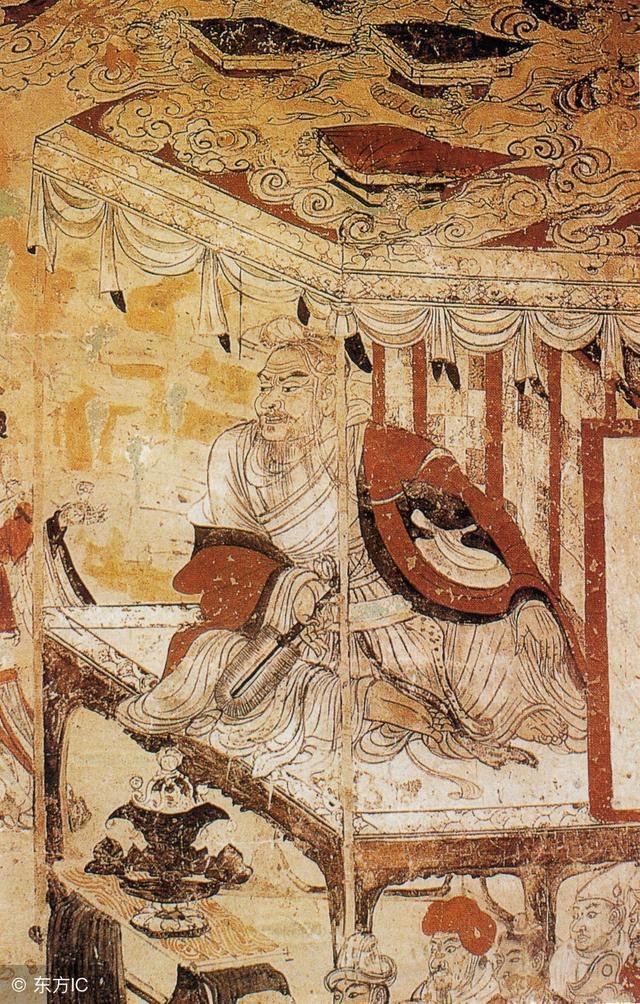
    An ancient portrait of Yuan Ang

    The 2nd year of Emperor Jing’s Middle Era (148 B.C.)

    In February of spring, the Xiongnu made incursions into the Princedom of Yan.

    In March, Liu Rong, the Prince of Linjiang, was accused of encroaching upon the sacred wall of the ancestral temple of Emperor Wen, to augment the grounds of his palace. Summoned to the office of the Commandant of the Capital for inquiry, he sought a knife and brush wherewith to compose a letter of repentance to the Son of Heaven. Yet Zhi Du forbade his attendants to furnish such materials. Then the Marquis of Weiqi, Dou Ying, in secret had writing tools to be delivered unto him. When Liu Rong had completed his letter, he took his own life. Empress Dowager Dou, learning of these events, was sorely angered, and thereafter seized upon another incident as a pretext to have Zhi Du executed.

    In April of summer, a comet was seen in the northwestern heavens.

    The Emperor established his son Liu Yue as Prince of Guangchuan and Liu Ji as Prince of Jiaodong.

    On the last day of September in autumn, there was an eclipse of the Sun.

    Because of his close kinship to the throne and his distinguished service in suppressing rebellion, Prince Xiao of Liang(Liu Wu)was granted the rare honor of bearing the imperial banners and flags. He rode forth, attended by a thousand carriages and ten thousand mounted horsemen; whenever he left or entered his residence, the road was cleared of all common traffic — a privilege reserved for the Son of Heaven himself.

    The Prince of Liang placed his trust in Yang Sheng and Gongsun Gui, raising the latter to the post of Commandant of the Capital.

    Yang Sheng and Gongsun Gui, both men of cunning and intrigue, conspired to have the Prince of Liang contend for imperial succession. When Crown Prince Liu Rong was deposed, the Empress Dowager Dou entertained the thought of establishing Prince Liu Wu as heir. At a banquet, she lifted her cup and said to the Emperor, “Let the Prince of Liang sit beside you upon the imperial carriage.” The Emperor, kneeling and straightening his body, replied, “Yes.”

    Afterward, the Emperor consulted his senior ministers. Yuan Ang stepped forward and remonstrated: “Your Majesty must not permit it. In ancient times, Duke Xuan of Song set aside his rightful heir and elevated a younger brother; thereafter, the state was plunged into chaos for five generations. To sacrifice the great order for the sake of present ease is to betray the teachings of the sages. Therefore, the principle recorded in the Spring and Autumn Annals must be upheld without faltering.”

    Thus the Empress Dowager’s scheme was laid to rest.

    Later, the Prince of Liang sent memorials repeatedly, requesting the construction of a royal causeway from the capital of Liang to Chang’le Palace, so that he might proceed without hindrance to pay homage to the Empress Dowager. Yet Yuan Ang and others stood firm against it, and his petitions were refused.

    The Prince of Liang bore resentment against Yuan Ang and other advisers for their remonstrances. In secret, he conspired with Yang Sheng and Gongsun Gui, instructing assassins to put Yuan Ang and more than ten advisers to death. After carrying out the deed, the assassins fled and were not apprehended.

    The Emperor, growing suspicious of the Prince of Liang, ordered a thorough investigation. Tracing the matter, it was found that the assassins had come forth from the Prince’s household. Thereupon, the Emperor commanded the arrest of Gongsun Gui and Yang Sheng, and dispatched Tian Shu and Lü Jizhu to Liang to pursue the case. Gongsun Gui and Yang Sheng fled into the Prince’s inner palace and hid themselves therein.

    The court sent more than ten urgent envoys to Liang, repeatedly commanding the ministers and high officials with salaries of 2000-piculs to apprehend the fugitives. Yet the ministers of Liang, including Xuanqiu Bao, the Prime Minister, and Han Anguo, the Minister of the Interior, conducted an exhaustive search of the princedom for more than a month, but found no trace of them.

    When Han Anguo learned that Gongsun Gui and Yang Sheng were hiding within the Prince’s inner palace, he approached the Prince of Liang in tears and said, “When the lord’s name is defiled, the minister must die. That Your Highness is beset by disorder that stems from the want of loyal subjects. Now that Gongsun Gui and Yang Sheng cannot be apprehended, I beg leave to resign and request death.”

    The Prince of Liang replied, “Why must it come to this?”

    Han Anguo, weeping bitterly, said, “I ask Your Highness: your bond with the Emperor—how does it compare to that with the Prince of Linjiang?”

    The Prince of Liang answered, “It is not as close.”

    Han Anguo said, “The Prince of Linjiang, being the direct heir to the throne, for a slight transgression, was deposed and sent to Linjiang, and thereafter took his own life in the Chief Commandant’s office over the matter of the palace construction. Why was this so? Because in governing a realm, private sentiment must not overtake public duty. Now, among the princes, Your Highness alone has heeded the deceitful counsel of wicked men, violated the imperial commands, and unsettled the order of the realm. Thanks to the Empress Dowager’s favor, His Majesty yet withholds judgment. The Empress Dowager weeps day and night, praying Your Highness might reform. Yet you still do not awaken to the peril. Should the Empress Dowager’s carriage hasten her passing, upon whom then shall Your Highness rely?”

    Before Han Anguo had finished speaking, the Prince was already in tears. He bowed and said, “I shall now address the matter of Gongsun Gui and Yang Sheng.”

    Thus the Prince of Liang ordered Gongsun Gui and Yang Sheng to take their own lives and surrender their bodies.

    Nevertheless, from this time onward, the Emperor had ill feelings toward the Prince of Liang.

    The Prince of Liang, fearful of calamity, dispatched Zou Yang to Chang’an to confer with Wang Xin, brother of the Empress. Zou Yang said, “Your Lordship’s younger sister enjoys the utmost favor of the Emperor; none within the inner palace may compare. Yet Your Lordship’s own conduct often strays from what is right. Should the court press its inquiry into Yuan Ang’s affair and the Prince of Liang be punished, the Empress Dowager would be left without an outlet for her grief and rage. Her resentment would then fall upon the honored ministers. I fear for Your Lordship’s welfare.”

    Wang Xin asked, “What course should I take?”

    Zou Yang replied, “If Your Lordship would speak persuasively before the Emperor and bring a halt to the investigation into the Prince of Liang, you would thereby deepen the Empress Dowager’s gratitude to the very marrow of her bones. With the Empress Dowager’s favor and your sister’s influence in the inner and outer palaces, your position would be secured like an iron rampart. In ancient times, although Xiang plotted daily against his brother Shun, yet when Shun ascended the throne, he still ennobled Xiang and granted him Youbi as his fief. Between virtuous siblings, there are no hidden grudges or enduring resentments; only profound affection and loyalty. Thus has Emperor Shun been venerated through the ages. If Your Lordship employs this reasoning, it may move the Emperor and spare the Prince of Liang.”

    Wang Xin replied, “I accept your counsel.”

    Seizing his opportunity, Wang Xin spoke accordingly to the Emperor. The Emperor’s wrath thereafter gradually abated.

    At that time, the Empress Dowager was consumed with sorrow over the case of the Prince of Liang. She refused food and wept without ceasing, day and night. The Emperor, likewise troubled, could find no peace.

    Soon thereafter, Tian Shu and his company, having concluded their investigation, returned. Upon reaching the Bachang stables, they burned all the testimonial documents concerning the case of the Prince of Liang and presented themselves before the Emperor empty-handed.

    The Emperor asked, “Have you obtained evidence against the Prince of Liang?”

    Tian Shu replied, “We have found evidence warranting death.”

    “Where is the evidence?”

    “May Your Majesty refrain from seeking it.”

    The Emperor demanded the reason. Tian Shu said, “If the Prince of Liang is not executed, then the laws of Han are rendered void. If he is executed, yet the Empress Dowager, stricken by grief, loses her rest and appetite, the sorrow will weigh upon Your Majesty alone.”

    The Emperor, hearing this, was greatly relieved and favored Tian Shu’s counsel.

    He then ordered Tian Shu and his companions to go before the Empress Dowager and say, “The Prince of Liang was unaware of these matters. The plot was devised by the treacherous ministers Yang Sheng and Gongsun Gui, who have already been put to death.”

    When the Empress Dowager heard this, she rose, partook of a meal, and her spirit was at last calmed.

    Taking advantage of the moment, the Prince of Liang submitted a memorial requesting an audience. Upon reaching the border, his minister Mao Lan counseled him to travel in secrecy, riding in a cloth-covered carriage with only two attendants. Thus concealed, he hid within the garden of the Royal Princess(Princess Guantao).

    Meanwhile, the Han court had already dispatched envoys to greet him at the border pass. Yet the Prince had entered the pass ahead of them, while his carriages and mounted guards remained outside, unaware of his whereabouts.

    The Empress Dowager, hearing of this, wept bitterly, saying, “The Emperor has indeed slain my son!” The Emperor grew anxious and fearful.

    Soon thereafter, the Prince of Liang appeared at the palace gate, humble and subdued, offering his apology by prostrating himself beneath the guillotine. The Empress Dowager and the Emperor, moved to tears, received him and reconciled, restoring the former affection between them. All of the Prince’s attendants were then permitted to enter the pass.

    However, though outwardly reconciled, the Emperor henceforth grew distant from the Prince of Liang and would no longer share a carriage with him. The Emperor favored Tian Shu and promoted him to be Prime Minister of Lu.

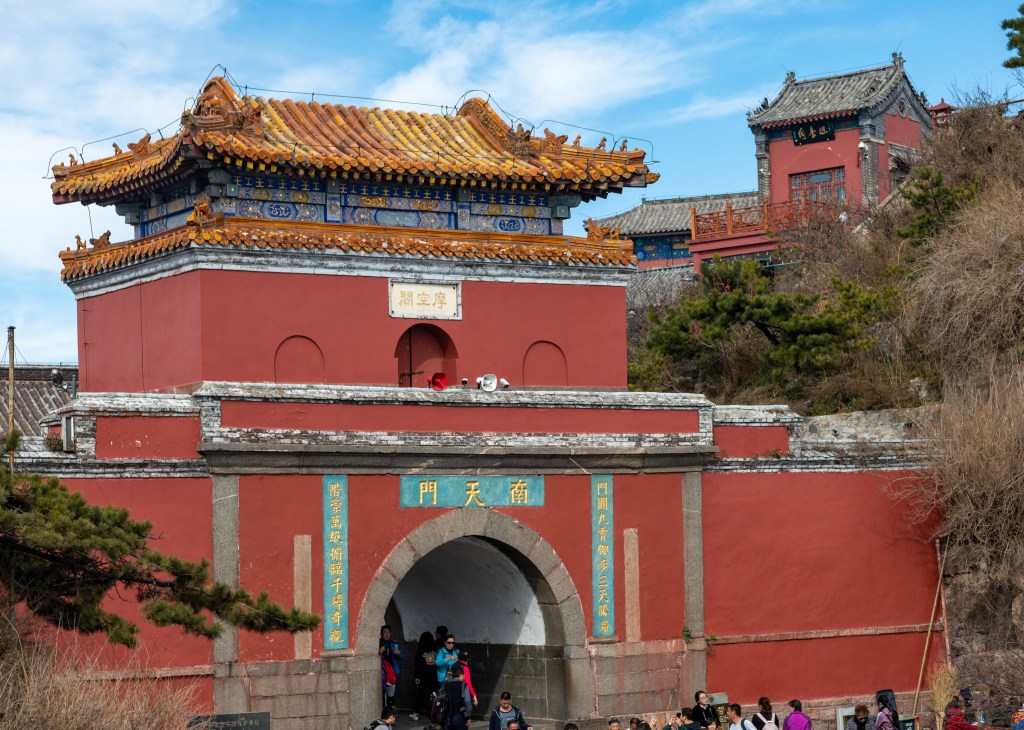
  • Comprehensive Reflections to Aid in Governance(Part 129): Give Her Enough Rope

    Comprehensive Reflections to Aid in Governance

    By Sima Guang

    Translated By Yiming Yang 

    Annals of Han Book 8 Scroll 16 (continued)

    Jimo(Qingdao) in 1898, the seat of Jiaodong, Shandong Province, Photo by Duesentrieb

    The 3rd year of the Emperor Jing’s Early Era (154 B.C. continued)

    Wei Wan, the Grand Tutor to the Prince of Hejian, achieved great success in his military campaign against Wu and Chu and was promoted to the position of Commandant of the Capital Guard. While serving as a General of the Household, Wei Wan was known for his diligence, integrity, and loyalty to Emperor Wen. On one occasion, when Crown Prince (i.e. Emperor Jing) invited Emperor Wen’s attendants to a drinking gathering, Wei Wan declined, claiming illness, and did not attend.

    As Emperor Wen approached the end of his life, he confided in his successor that Wei Wan was a venerable and virtuous elder who should be treated with respect. This special regard from Emperor Wen led Emperor Jing to hold Wei Wan in high esteem as well, granting him considerable favor and trust.

    In the summer, on June 25, an imperial edict was issued pardoning all officials and commoners who had been deceived or falsely implicated in the rebellion led by the Prince of Wu and others, including those who had evaded military service.

    The Emperor intended to establish Liu De—the son of Marquis Ai of Wu, Liu Guang, and younger brother of the Prince of Wu—as the successor to the throne of Wu; and Liu Li, son of Prince Yuan of Chu, as the successor to the throne of Chu. However, Empress Dowager Dou opposed the continuation of the Wu lineage. She argued that Prince Liu Pi of Wu, being of advanced age, should have served as a model of mercy and loyalty, yet instead led a rebellion that brought turmoil to the realm. She insisted that the throne of Wu should not be restored. She did, however, consent to the appointment of Liu Li as the new Prince of Chu.

    That same day, Prince Liu Yu of Huaiyang was enfeoffed as the Prince of Lu; Prince Liu Fei of Runan was enfeoffed as the Prince of Jiangdu, ruling the former territory of Wu. Liu Li, previously Minister of the Imperial Clan, was promoted to Prince of Chu. Prince Liu Duan was elevated to Prince of Jiaoxi, and Prince Liu Sheng was appointed as Prince of Zhongshan.

    The 4th year of the Emperor Jing’s Early Era (153 B.C.)

    In the spring, the checkpoints at the mountain passes were reinstated, and permits were once again required for passage.

    On April 23 of the summer, the Emperor designated his son Liu Rong as Crown Prince and his son Liu Che as Prince of Jiaodong.

    In June, a general amnesty was proclaimed throughout the realm.

    In July, during the autumn season, Prince Liu E of Linjiang passed away.

    In the winter, on October 25, a solar eclipse occurred.

    When the seven principalities of Wu and Chu rose in rebellion, an envoy from Wu arrived at the Principality of Huainan. The Prince of Huainan intended to dispatch troops in support of Wu. His prime minister said, “If Your Highness is resolved to aid Wu, I am willing to lead the army.” The Prince agreed and entrusted him with command. However, once the prime minister assumed control of the troops, he fortified the city and defied the Prince’s intentions, instead aligning himself with the Han Dynasty. In response, the court dispatched the Marquis of Qucheng to lead reinforcements to Huainan, and the principality was thereby secured during the upheaval.

    When envoys from Wu reached the Principality of Lujiang, the Prince(Liu Ci) did not respond favorably and instead initiated diplomatic exchanges with the Kingdom of Yue. When the envoys arrived at the Principality of Hengshan, the Prince of Hengshan, Liu Bo held his ground resolutely and refused to waver. After the defeat of Wu and Chu, the Prince of Hengshan visited the Han court. The Emperor, moved by his loyalty and endurance, praised him, saying, “The southern regions are damp and low-lying.” The Prince was relocated to Jibei, where the climate was more favorable.

    The Prince of Lujiang (Liu Ci), owing to his proximity to the Yue kingdom, had frequently dispatched envoys for diplomatic exchanges. He was subsequently transferred to become the Prince of Hengshan, located north of the Yangtze River.

    The 5th year of the Emperor Jing’s Early Era (152 B.C.)

    In January of the spring, construction began in Yangling town for a mausoleum.

    During the summer, the Emperor issued a call for citizens to relocate to Yangling, offering a reward of two hundred thousand coins as an incentive.

    The Emperor also arranged for a princess to be married to Xiongnu Chanyu.

    Prince Liu Pengzu of Guangchuan was relocated and enfeoffed as the Prince of Zhao.

    In the winter, Prince Liu Bo of Jibei, posthumously titled Prince Zhen, passed away.

    The 6th year of the Emperor Jing’s Early Era (151 B.C.)

    When the Emperor was still Crown Prince, Empress Dowager Bo arranged for a girl of the Bo family to become his wife. After his accession to the throne, she was made Empress, but soon fell out of favor. In September of autumn, Empress Bo was deposed.

    Prince Wen of Chu, Liu Li, passed away.

    Zang Tu, the former King of Yan, had a granddaughter named Zang Er. She first married Wang Zhong of Huai’li, with whom she had a son, Wang Xin, and two daughters. After Wang Zhong’s death, Zang Er remarried into the Tian family of Changling and gave birth to two sons, Tian Fen and Tian Sheng.

    During the reign of Emperor Wen, Zang Er’s eldest daughter, Wang Zhi, married Jin Wangsun, and they had a daughter named Jin Su. Zang Er once performed a divination, which revealed that both her daughters were destined for nobility. Acting on this prophecy, she took Wang Zhi back from the Jin household and forced her to divorce. Jin Wangsun, angered, refused to release her, but Zang Er persisted and eventually placed both her daughters into the palace of the Crown Prince (later Emperor Jing).

    Wang Zhi later gave birth to a son, Liu Che. While he was still in the womb, his mother, Madame Wang Zhi, dreamed that the Sun entered her bosom.

    Upon Emperor Jing‘s accession to the throne, his eldest son, Liu Rong, was made Crown Prince. His mother, Consort Li, hailed from the state of Qi. Princess Guantao, Liu Piao, the elder sister of Emperor Jing, wished to marry her daughter to Crown Prince Liu Rong. However, Consort Li angrily refused, as she was mad at the Princess, who often introduced beautiful women from the palace to the Emperor.

    The Princess Guantao then turned her attention to Madame Wang’s son, Liu Che, proposing that her daughter marry him instead. Madame Wang readily agreed. From that point on, the Princess Guantao frequently spoke ill of Consort Li and extolled the virtues and appearance of Liu Che. The Emperor, too, began to favor Liu Che and recalled the auspicious dream omen Madame Wang once had. Still, no final decision had been made.

    Aware that the Emperor disliked Consort Li, Madame Wang secretly urged the Grand Usher to recommend Consort Li’s elevation to Empress. Enraged, the Emperor rebuked the attempt, saying, “Do you presume to have a say in such matters?” He then ordered the Grand Usher to be executed.

    The 7th year of the Emperor Jing’s Early Era (150 B.C.)

    In the winter, on December 19, Crown Prince Liu Rong was deposed and demoted to Prince of Linjiang. His tutor, Dou Ying, strongly objected to the decision but failed to overturn it. In protest, he feigned illness and submitted his resignation. Consort Li, filled with resentment and sorrow, passed away.

    On January 30, a solar eclipse occurred.

    In February, Chancellor Tao Qing was dismissed. On February 16, Grand Commandant Zhou Yafu was appointed as the new Chancellor, and the position of Grand Commandant was subsequently abolished.

    In the summer, on April 17, Madame Wang was formally established as Empress.

    On April 29, Liu Che, Prince of Jiaodong, was designated as Crown Prince.

    In that year, Liu She, the Grand Coachman, was appointed Grand Master of the Censorate, and Zhi Du, the Prefect of Jinan(Principality downgraded to Commandery), was appointed Commandant of the Capital.

    Zhi Du served as a General of the Household and was known for offering frank advice. On one occasion, while accompanying the Emperor to the Shanglin Park, Consort Jia went to the restroom, and a wild boar suddenly entered after her. The Emperor looked to Zhi Du for action, but Zhi Du did not move. When the Emperor made to fetch a weapon himself to rescue the consort, Zhi Du knelt and said, “Losing a consort is insignificant; there will always be another. Does the empire lack ladies like Consort Jia? Even if Your Majesty wishes to act humbly, how can you risk the ancestral temples and the Empress Dowager for her sake?” At this, the Emperor abandoned the attempt, and the wild boar eventually left on its own.

    When the Empress Dowager heard of the incident, she rewarded Zhi Du with a hundred catties of gold, and from that point, his influence steadily increased.

    Zhi Du was renowned for his bravery, integrity, and uncompromising character. He never accepted private letters or gifts and refused audiences without just cause. After becoming Commandant of the Capital, he enforced the law strictly, without regard for rank or privilege. Marquises and imperial relatives, when encountering him, would avert their eye contact and give him a nickname “Gray Hawk”.

    The 1st year of Emperor Jing’s Middle Era (149 B.C.)

    In summer, on April 23, a general amnesty was declared throughout the realm.

    There was an earthquake. In Yuandu of Hengshan principality, there was a hailstorm, with hailstones as large as one foot and eight inches.

  • Comprehensive Reflections to Aid in Governance(Part 128): Facing The Music

    Comprehensive Reflections to Aid in Governance

    By Sima Guang

    Translated By Yiming Yang 

    Annals of Han Book 8 Scroll 16 (continued)

    The Buildings on Top of The Mount Tai. Photo by xiquinhosilva.

    The 3rd year of the Emperor Jing’s Early Era (154 B.C. continued)

    During the siege of Linzi by the three princes—of Jiaoxi, Jiaodong, and Zichuan—the Prince of Qi sent his official, Grandee of the Household Lu, to report to the Emperor. The Emperor instructed Lu to return and tell the Prince of Qi to hold his ground, as “Han‘s army has already defeated Wu and Chu.”

    Grandee of the Household Lu returned, but by then, the three princes had surrounded Linzi with multiple layers of troops, preventing him from entering the city. The generals of the three princedoms struck a deal with him: “If you declare that ‘Han has already been defeated, and Qi must surrender at once—otherwise, the city will be slaughtered,’ we will allow you to return.”

    Grandee of the Household Lu agreed and approached the city. Upon seeing the Prince of Qi from afar, he shouted instead, “Han has mobilized an army of one million! Grand Commandant Zhou Yafu has crushed the forces of Wu and Chu, and reinforcements are on their way to rescue Qi. Hold your ground—do not surrender!”

    Enraged by his deception, the generals of the three principalities executed Grandee of the Household Lu.

    Earlier the siege of Linzi was intense, prompting the Prince of Qi to secretly negotiate with the three rebellious princes. However, the alliance had not yet been finalized. When Grandee of the Household Lu returned from Han, the ministers of Qi urged the Prince not to surrender.

    Meanwhile, Han generals Luan Bu and the Marquis of Pingyang Cao Xiang (a descendant of Cao Shen) arrived in Qi and defeated the troops of the three princedoms. After lifting the siege, they discovered Qi’s earlier negotiation with the three princes and prepared to attack Qi. Fearing the consequences, the Prince of Qi committed suicide by taking poison.

    Following the defeat of Wu and Chu, the Princes of Jiaoxi, Jiaodong, and Zichuan each led their armies back to their respective principalities. The Prince of Jiaoxi, in an act of repentance, walked barefoot, sat on straw mats, and drank only water, praying for mercy to the Empress Dowager. 

    His crown prince, Liu De, urged him, “Han‘s army has retreated. I believe the war is over, and they are now vulnerable to a surprise attack. Let me gather our remaining forces and strike them. If we fail, it is not too late to flee to the sea.”

    But the Prince replied, “My troops are already demoralized. They can no longer be deployed.”

    The Han general Han Tuidang, also known as Marquis of Gonggao, sent a letter to the Prince of Jiaoxi:

    “By imperial decree, I am tasked with punishing the unjust. Those who surrender will be pardoned and have their previous status restored, but those who resist will be annihilated. My prince, the choice is yours.”

    The Prince of Jiaoxi bared his back and walked to the Han camp, kowtowing before Han Tuidang.

    “I, Liu Ang, have failed in upholding the law, bringing fear and distress upon my people. Now, I have troubled the general with this arduous journey to my impoverished principality. For my heinous crime, I dare to request the harshest punishment—to be cut into pieces.”

    Marquis of Gonggao arrived at the meeting with his golden commander’s drum and asked:

    “Your Grace went to great effort to mobilize your princedom. May I hear the exact wording of your mobilization order?”

    The Prince kowtowed again, walked forward on his knees, and replied:

    “Recently, Chao Cuo wielded great power in the imperial court, altering the laws established by the esteemed Emperor Gaozu and encroaching upon the territories of various monarchs. I, Liu Ang, along with the other princes, believed this to be unjust and feared it would bring turmoil to the empire. Thus, the seven princedoms raised their armies to eliminate Chao Cuo.

    “Now that we have learned of Chao Cuo’s execution, we have chosen to disband our forces and return home.”

    Marquis of Gonggao rebuked him:

    “If you truly believed Chao Cuo was in the wrong, why did you not report it to the Emperor? Instead, you took it upon yourself to raise troops and attack loyal principalities—without the Emperor’s decree or the Tiger Tally. Given this, it is clear that your intentions extended beyond merely executing Chao Cuo.”

    He then presented the Emperor’s edict and read it aloud, then said to the Prince of Jiaoxi, “You must find your own way out.”

    The Prince admitted his guilt, “Death is too easy for the likes of Liu Ang.”

    With that, he took his own life. His mother, the Empress Dowager, and his son, Crown Prince Liu De of Jiaoxi, also perished. The princes of Jiaodong, Zichuan, and Jinan were executed.

    Meanwhile, when Han General Li Ji attacked Zhao, the Prince of Zhao withdrew his forces and fortified the city of Handan. Li Ji laid siege for seven months but failed to breach the defenses. Upon hearing of the defeats suffered by Wu and Chu, the Xiongnu abandoned their plans to invade Han territory.

    General Luan Bu, fresh from his victory over Qi, returned and ordered the flooding of Zhao’s city walls, causing them to collapse. As the city fell, the Prince of Zhao, Liu Sui, took his own life.

    The Emperor commended the Prince of Qi for remaining loyal despite the pressure exerted by the rebels. Although he had been coerced into the conspiracy, the Emperor judged that he had not committed a crime. He summoned Liu Shou, the Crown Prince of Qi, and appointed him as the new Prince of Qi, known as the Prince Yi of Qi.

    The Prince of Jibei, despairing of his situation, also wished to take his own life in hopes of sparing his wife and children. But a man from Qi named Gongsun Jue offered him counsel: “Allow me to approach the Prince of Liang and convey your plight to the Emperor. If he refuses, it will not be too late for you to end your life.”

    Gongsun Jue then met with the Prince of Liang and said, “The territory of Jibei is bordered by the powerful principality of Qi to the east, and is influenced by the kingdoms of Wu and Yue to the south, and Yan and Zhao to the north. It is a fragmented and vulnerable state, lacking both the strength to defend itself and the power to resist invasion. It possesses neither supernatural omens nor magical means for protection. Even if the Prince of Jibei appeared to align with Prince Wu, it was not his true intention.

    “If the Prince of Jibei had refused to cooperate with Prince Wu and remained steadfast, the Wu forces would likely have bypassed Qi, conquered Jibei first, and then forged alliances with Yan and Zhao to unify the region. That would have led to a consolidation of the eastern states, free of internal strife.

    “When Prince Wu was rallying the forces of various monarchs and pushing ill-prepared troops westward in haste to confront the Emperor, Jibei alone held fast to its principles and refused to yield. As a result, the Wu army advanced cautiously and without reinforcement, eventually collapsing without support. Jibei’s contribution should not be excluded as one of the factors.

    “For a state as limited in resources as Jibei to aspire to stand alongside greater powers is like a frail lamb trying to hold its ground against ferocious tigers and wolves. To maintain its position with such determination is truly admirable. Yet, despite doing what was right, they incurred the Emperor’s suspicion. Now they stoop in fear, unsure where to place their hands and feet, regretting their earlier restraint. This is not beneficial to the realm. I fear that other dutiful vassals may now harbor doubts and unease.

    “In my humble opinion, only you, Prince, have the ability to cross mountains and traverse vast distances to reach the heart of the capital and present your righteous counsel. You alone have safeguarded your domain and become a symbol of peace and well-being for the people. Your virtue runs deep in your bones, and your benevolence knows no bounds. I earnestly hope Your Highness will consider my words with care and deliberation.”

    The Prince of Liang was pleased with Gongsun Jue’s counsel and sent a courier to deliver the message to Han court. As a result, the Prince of Jibei was spared indictment and was later relocated and enfeoffed in Zichuan.

  • Comprehensive Reflections to Aid in Governance(Part 127): Deflecting The Heavy Strike

    Comprehensive Reflections to Aid in Governance

    By Sima Guang

    Translated By Yiming Yang 

    Annals of Han Book 8 Scroll 16 (continued)

    The Rebellion of Seven Principalities

    The 3rd year of the Emperor Jing’s Early Era (154 B.C. continued)

    The Grand Commandant, Zhou Yafu, addressed the Emperor: “The Chu soldiers are agile, fierce and difficult to confront head-on. I propose abandoning the defense of Liang and instead cutting off the enemy’s supply routes—only then can we gain the upper hand of the situation.” The Emperor approved his strategy. Zhou Yafu, riding in a six-horse carriage, led his troops to assemble at Xingyang.

    Upon reaching Bashang, a commoner named Zhao She stopped his carriage and offered counsel: “The Prince of Wu, known for his wealth, has long gathered loyal and brave soldiers. It is highly likely he has set ambushes along the narrow passages of Mount Xiao and Lake Mianchi. Military strategy values the element of surprise—why not take an alternative route? Travel through Lantian, exit via Wu Pass, and reach Luoyang. The detour will cost only an extra day or two, but you will arrive directly at the armory and sound the war drums. When the other princes hear of it, they will think you have descended from Heaven.”

    Zhou Yafu followed this idea and reached Luoyang. Pleased, he remarked: “The seven princedoms have rebelled, yet I have traveled this far by fast carriage and arrived safely. Now that I am stationed in Xingyang, there is no cause for concern east of here.” He ordered a search of the area between Mount Xiao and Lake Mianchi, where the Prince of Wu’s hidden troops were indeed discovered. He then appointed Zhao She as Protector of Army.

    Zhou Yafu withdrew his forces northeast toward Changyi. Meanwhile, Prince of Wu’s troops continued their siege of Liang, and the Prince of Liang repeatedly sent messengers pleading for reinforcements. Zhou Yafu, however, refused to dispatch aid. The Prince of Liang then appealed directly to the Emperor, who commanded Zhou Yafu to relieve the urgency of Liang. Yet Zhou Yafu defied the imperial order, choosing instead to remain fortified and avoid direct confrontation. He dispatched the Marquis of Gonggao, Han Tuidang, along with a light cavalry unit to the Huai-Si River crossing, severing the retreat routes and supply lines of Wu and Chu.

    The Prince of Liang appointed Grandee of the Palace Han Anguo and Zhang Yu, the younger brother of Prime Minister of Chu, Zhang Shang, as commanders of the army. Zhang Yu was fierce in combat, while Han Anguo was cautious and held his position. Together, they inflicted significant damage on the forces of Wu.

    The troops of Wu attempted to retreat westward, but the Prince of Liang’s strong defenses blocked their path. Turning instead toward Marquis of Tiao’s camp, they prepared for battle. However, Zhou Yafu steadfastly maintained his defensive position and refused to engage. The forces of Wu, facing severe food shortages, repeatedly issued challenges, but Zhou Yafu remained inside the camp.

    One night, a riot broke out inside Marquis of Tiao’s camp—soldiers, confused and agitated, began fighting among themselves, and the chaos spread dangerously close to Zhou Yafu’s tent. Yet he remained resolute, refusing to rise. Soon, order was restored.

    As desperation grew, the forces of Wu appeared to concentrate on the southeast, while Zhou Yafu repositioned his troops to the northwest. Later, Wu’s elite soldiers attempted a breakthrough in the northwest but were blocked and forced to withdraw.

    Many soldiers of Wu and Chu perished from starvation or deserted due to the lack of provisions. Unable to sustain their campaign, the rebel forces ultimately withdrew.

    In February, General Zhou Yafu led his elite troops in pursuit, delivering a decisive defeat to the retreating enemy. Prince of Wu, Liu Pi, abandoned his army and fled under the cover of night with only a few thousand warriors. Prince of Chu, Liú Wù, seeing no escape, took his own life.

    When the Prince of Wu launched his campaign, he appointed his minister, Tian Lubo, as Grand General. Tian Lubo proposed a plan: “If we concentrate our forces and march westward, we will have no alternative routes to take, making success difficult. I suggest leading fifty thousand troops along the Yangtze and Huai rivers to seize Huainan and Changsha, then enter Wu Pass to join the main army. This unexpected maneuver would catch the enemy off guard.”

    However, the Crown Prince of Wu, Liu Ju, dissuaded him: “Since we march under the banner of insurrection, entrusting another with command poses a grave risk—what if they turn against Sire? Moreover, dividing our forces invites danger, yielding only disadvantages and harm.” The Prince of Wu heeded his warning and rejected Tian Lubo’s plan.

    Earlier, a young officer, General Huan, had advised the Prince: “Wu’s strength lies in its infantry, which excels in rough terrain, while Han relies on cavalry and chariots, which dominate open ground. I propose that instead of besieging cities, we advance swiftly, seizing Luoyang’s weapon warehouses and the grain stores at Ao’cang. With mountains and rivers as natural defenses, we can rally other monarchs. Even without entering Hangu Pass, we will secure control of the realm. But if Sire moves too slowly, preoccupied with capturing cities, once Han’s cavalry and chariots thrust into the outskirts of Liang and Chu—then we will face disaster.”

    The Prince of Wu consulted his veteran generals, but they dismissed Huan’s strategy: “He is young—suited for charging into battle, not for devising grand strategy.” Thus, the Prince did not adopt his plan.

    When the Prince of Wu assumed sole command of the military, just before crossing the Huai River, he appointed all his retainers and attendants as generals, colonels, sentinels, and majors—except for Zhou Qiu. A native of Xiapi, Zhou Qiu had once been a fugitive in Wu, known for his addiction to alcohol and reckless behavior. The Prince distrusted him and assigned him no responsibilities.

    Feeling slighted, Zhou Qiu sought an audience with the Prince and said, “I am aware of my shortcomings, yet I have been given no opportunity to prove myself. I do not dare ask for a position, but if Sire grants me a tally, I swear to repay it with results.” The Prince agreed and handed him a tally.

    That night, Zhou Qiu hastened back to Xia’pi. By then, news of Wu’s rebellion had already reached the city, and the local authorities were on high alert. Upon arrival, he lodged at an inn and summoned the Prefect of Xia’pi under false pretenses. Once the prefect entered his room, Zhou Qiu’s attendants executed him on fabricated charges.

    Afterward, he gathered influential local leaders, many of whom were acquaintances of his brother, and declared, “Wu has risen in rebellion, and its forces will arrive before midday. If we surrender now, our families will be spared, and those who prove their worth will be rewarded with noble titles.” The words quickly spread, and by morning, the entire city of Xia’pi had surrendered.

    In a single night, Zhou Qiu raised an army of thirty thousand men. Reporting his success to the Prince of Wu, he advanced north, capturing city after city. By the time he reached Yangcheng, his forces had swelled to over a hundred thousand. He defeated the army of the commandant of the capital, securing control of the Yangcheng principality.

    However, upon learning that the Prince of Wu had suffered defeat and fled, Zhou Qiu realized he could not secure victory alone. He resolved to lead his troops back to Xia’pi, but before he could reach the city, he developed a festering sore on his back and died.

    There was a solar eclipse on February 30.

    After the Prince of Wu abandoned his army and fled, his troops scattered, gradually surrendering to the Grand Commandant, the Marquis of Tiao, and the forces of Liang. The Prince of Wu crossed the Huai River, fled to Dantu, and sought refuge in the Kingdom of Dongyue, where he managed to rally a few thousand remaining soldiers.

    Han court sent envoys to offer lavish rewards to Dongyue, which then deceived the Prince of Wu into emerging to greet the troops. As he stepped forward, they struck him down with a halberd and presented his severed head to Han as proof of his death. Meanwhile, the Crown Prince of Wu, Liu Ju, fled to the Kingdom of Minyue.

    Within three months, both the Prince of Wu and the Prince of Chu were defeated. Only then did the generals recognize the wisdom of the Grand Commandant’s strategy. However, this incident deepened the rift between the Prince of Liang and the Grand Commandant, Zhou Yafu.

  • Comprehensive Reflections to Aid in Governance(Part 126): Sacrificing Chao Cuo

    Comprehensive Reflections to Aid in Governance

    By Sima Guang

    Translated By Yiming Yang 

    Annals of Han Book 8 Scroll 16 (continued)

    The Sacrificial Lamb, Josefa de Ayala (Portuguese, ca. 1630-1684) 

    The 3rd year of the Emperor Jing’s Early Era (154 B.C. continued)

    During a discussion on military strategies to suppress the rebellion, Chao Cuo suggested that the Emperor personally lead the troops while he remained behind to guard the capital. He also proposed ceding certain territories, such as Xu and Tong County, which the Prince of Wu had not yet taken control of.

    Chao Cuo and Yuan Ang, the Prime Minister of Wu, had a contentious relationship. Whenever one entered a room, the other would avoid it, and they never engaged in discussion together.

    Later, after Chao Cuo became Grand Master of Censorate, he used his position to investigate Yuan Ang for allegedly accepting gifts from the Prince of Wu. Yuan Ang was found guilty, but the Emperor granted him a pardon, reducing his status to that of a commoner.

    When Wu and Chu rebelled, Chao Cuo said to his subordinates, the Chief Censor and Chief Clerk, “Yuan Ang has taken large sums from the Prince of Wu and has been concealing their intent to rebel. He insisted the Prince of Wu would not rise in revolt. Now that the rebellion is a reality, I intend to charge him. You must investigate his schemes.”

    The Chief Censor and Chief Clerk disagreed, “Had the rebellion not yet begun, charging him might have prevented it. But with the army already marching west, what purpose would an investigation serve? Moreover, Yuan Ang is unlikely to have been involved in any conspiracy.”

    Chao Cuo hesitated and did not make a decision.

    Someone informed Yuan Ang of the accusation, and he grew fearful. That night, he secretly met with Dou Ying, claiming to reveal the true reasons behind the Prince of Wu‘s rebellion. Expressing his willingness to cooperate, he even offered to present the information to the Emperor in person. Dou Ying conveyed Yuan Ang‘s message, and the Emperor summoned him to court.

    At the time of the meeting, the Emperor was discussing military food supplies with Chao Cuo. He then turned to Yuan Ang and asked for his opinion on the rebellion of the Princedoms of Wu and Chu. Yuan Ang reassured him, saying there was no cause for concern, as the Prince of Wu’s actions were not significant enough to pose a real threat.

    The Emperor disagreed. “The Prince of Wu has been minting coins from the mountains and boiling seawater for salt, striving to attract talented and influential individuals. He waited until his hair turned gray to rebel. How can you say they lack the ability to carry out their plans?”

    Yuan Ang replied, “While it is true that the Prince of Wu profits from copper and salt, he cannot possibly attract truly influential and talented people. Even if he has gathered a few, those with real ability would have advised him to do the right thing and not rebel. What he has drawn to his side are merely desperados, outlaws, and counterfeiters—men capable only of causing chaos through insurrection.”

    Chao Cuo praised Yuan Ang’s argument. When the Emperor asked for a solution, Yuan Ang suggested discussing the matter privately. The Emperor dismissed the others, leaving only himself and Chao Cuo in the room. Yuan Ang then declared that the discussion was not meant to be heard by a subject—only the Sovereign. At this, Chao Cuo was dismissed. Indignant, he trotted into the east chamber.

    Yuan Ang said, “The Princes of Wu and Chu have exchanged letters, declaring that the descendants of the Emperor Gaozu were granted their respective territories. However, due to the actions of the treacherous minister Chao Cuo, who has seized and annexed the lands of the principalities, they have risen in rebellion. They seek to unite in the west to eliminate Chao Cuo and restore their original domains. The best course of action is to behead Chao Cuo, issue a pardon to the Princes of Wu and Chu, and return their lands. This way, the assailants can be disbanded without bloodshed.”

    The Emperor remained silent for a long while before saying, “What else can we do if not this? I do not wish to harm the entire realm for the sake of cherishing one man.”

    Yuan Ang assured him, “That is my only foolish solution. Please give it careful thought.”

    The Emperor then appointed Yuan Ang as Minister of Ceremony and instructed him to prepare in secret for his mission to the Prince of Wu.

    A dozen days later, the Emperor ordered three officials—Chancellor Tao Qing, Commandant of the Capital Guard Jia, and Justice Minister Zhang Ou—to draft a memorial accusing Chao Cuo of plotting against the state:

    Chao Cuo‘s actions flagrantly violate the trust and virtue of the ruler. He seeks to alienate officials and the common people and even intends to grant cities and territories to the Princedom of Wu, showing no loyalty as a subject. His behavior constitutes an act of treason and lawlessness. Therefore, Chao Cuo should be executed, and his parents, wife, children, and all his relatives, regardless of age, should also be put to death.”

    The Emperor approved their proposal.

    Having no inkling of the imminent trouble, Chao Cuo was summoned by the Commandant of the Capital Guard under the pretense of meeting the Emperor. His carriage halted at the Eastern Market, where he was beheaded in his formal court attire.

    Afterward, the Emperor sent Yuan Ang as an envoy to the Prince of Wu, seeking reconciliation and peace. He was accompanied by the Marquis of De, Liu Tong, a nephew of the Prince of Wu and the Minister of the Imperial Clan.

    Meanwhile, Deng Gong, Supervisor of the Internuncios, was appointed as Colonel. He submitted a memorial on military matters and was summoned for an audience with the Emperor.

    The Emperor asked, “Have you come from the front? Now that Chao Cuo is dead, have the Princes of Wu and Chu withdrawn their forces?”

    Deng Gong replied, “The Prince of Wu has harbored rebellious intentions for decades. Punishing Chao Cuo and protesting the reduction of territories were merely pretexts—his true motives were never about Chao Cuo. Moreover, I fear this incident will make people across the empire hesitant to speak their minds.”

    The Emperor asked, “Why do you think so?”

    Deng Gong explained, “Chao Cuo saw the growing strength of the princes as a threat and sought to weaken them while consolidating the central authority—an effort that would have benefited generations to come. But just as his policies were beginning to take effect, he was met with ultimate punishment. This delivers a chilling message to loyal officials within the court while simultaneously appeasing the grievances of the princes. Your Majesty, if I may be so bold, this was a mistake.”

    The Emperor sighed deeply and said, “You speak the truth. I, too, hate to have done that.”

    Yuan Ang and Liu Tong arrived in the Princedom of Wu, but by then, the forces of Wu and Chu had already begun their assault on the defensive walls of the Principality of Liang. As Minister of the Imperial Clan, Liu Tong had personal connections in Wu and was granted entry to state his purpose. He requested that the Prince of Wu accept the imperial decree and bow in submission to the Emperor.

    Upon hearing of Yuan Ang’s arrival, the Prince of Wu, knowing he had come to dissuade him, merely smiled and said, “I have already become the Emperor of the East—why should I bow to another?” He refused to meet Yuan Ang and instead confined him within the military camp, intending to coerce him into joining the rebellion. Yuan Ang, however, remained steadfast. Placed under strict surveillance and facing imminent danger, he seized an opportunity to escape and returned to report the situation to the Emperor.

  • Comprehensive Reflections to Aid in Governance(Part 125): Revolt of Seven Principalities

    Comprehensive Reflections to Aid in Governance

    By Sima Guang

    Translated By Yiming Yang 

    Annals of Han Book 8 Scroll 16 (continued)

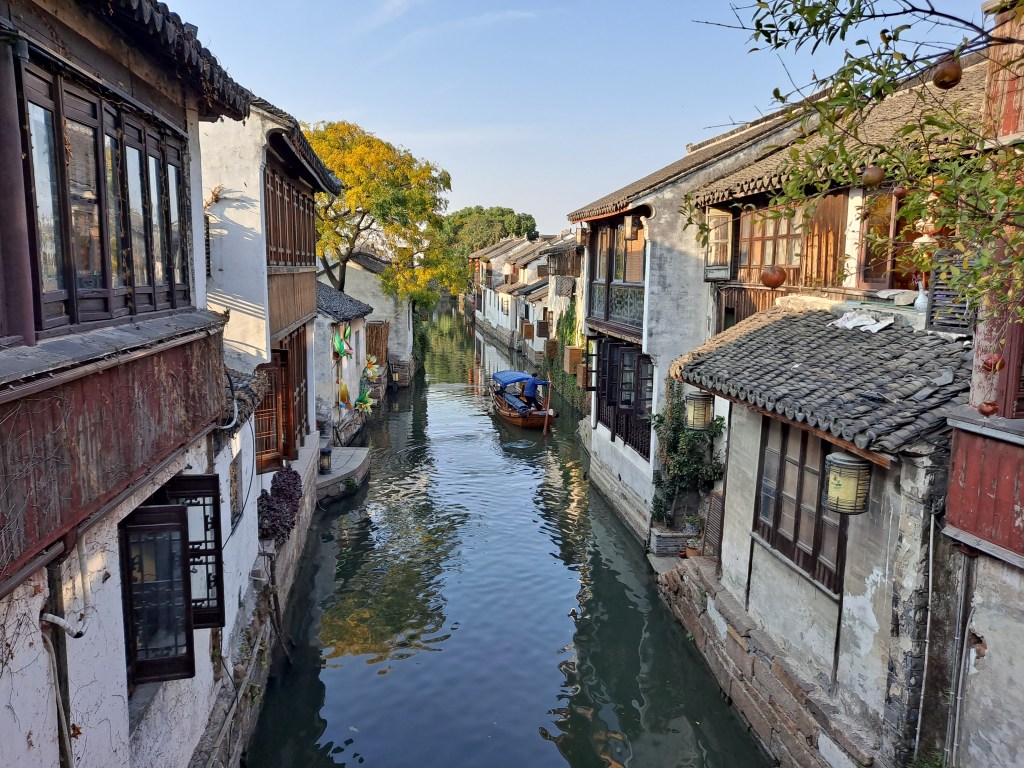
    Suzhou (Wu County), Jiangsu Province. Photo by EditQ

    Revolt of Seven Principalities

    As court officials discussed the plan to further reduce the territory of the Prince of Wu, the prince, fearing that the reductions would continue indefinitely, decided to initiate a rebellion. Seeing no suitable contenders among the vassal kings, he heard the bravery and military prowess of the Prince of Jiaoxi, Liu Ang, who was both feared and respected by the other princes. Thus, he sent Grandee of the Palace, Ying Gao, to persuade the Prince of Jiaoxi to join his cause.

    Ying Gao said to Prince Liu Ang, “At present, our sovereign employs wicked ministers, listens to slanderous villains, encroaches upon the princes, and imposes increasingly severe punishments, which worsen day by day. There is a saying, ‘licking the chaff leads to eating the rice kernel.’ Both the Prince of Wu and Your Grace are renowned among the princes, and now we are being closely scrutinized without any peace of mind. The Prince of Wu has suffered from internal ailments for over twenty years, preventing him from attending court audiences. He constantly worries about being suspected, with no way to clear his name. He hunched his back and crossed his feet, fearing he would never be left in peace.

    “I have heard that Your Grace was implicated in the sale of noble titles. In such cases, territorial reduction is a severe punishment, and it should not have gone this far. I fear it will not end with just the loss of territory.”

    Prince Liu Ang replied, “Indeed. What do you suggest?”

    Ying Gao continued, “The Prince of Wu shares the same concerns as Your Grace. He seeks to act at the right time, sacrificing himself to eliminate the troubles in the realm. Is this your intention as well?”

    Startled and astonished, Prince Liu Ang responded, “How could I dare to do such a thing? Even if the Sovereign presses me hard, death is certainly an option. How dare I not serve him?”

    Ying Gao said, “Chao Cuo, the Grand Master of the Censorate, has deceived and misled the Emperor, trampling on the princes. The courtiers harbor grievances against him, and the princes are all contemplating rebellion. This has escalated into a deep human conflict. When comets appear and locusts swarm, it is a rare, once-in-a-lifetime opportunity. Sorrow and hardship are what sages use to initiate change. The Prince of Wu plans to eliminate Chao Cuo internally, and externally, he will follow behind your royal carriage, sweeping across the realm. Wherever Your Grace goes, all will surrender, and whomever you point to will submit. No one will dare resist.

    “If Your Grace, thank goodness, gives your commitment, the Prince of Wu will join forces with the Prince of Chu to control Hangu Pass, guard the granaries of Xingyang and Ao’cang, resist the Han army, and establish camps, awaiting your arrival. If we are fortunate to have Your Grace lead the way, then the entire realm can be united, with two sovereigns (Prince of Wu and Prince of Jiaoxi) dividing the country. Is this not feasible?”

    Prince Liu Ang replied, “Well said!”

    After returning, Ying Gao reported to the Prince of Wu, who, still feeling uncertain whether the plan would succeed, personally went as an envoy to the Princedom of Jiaoxi to negotiate. Some ministers in Jiaoxi, aware of the Prince of Wu‘s intentions, cautioned the Prince of Jiaoxi, “The combined territories of the princes are not enough to challenge the House of Han, amounting to less than twenty percent of the entire country. Starting a rebellion to add to the Empress Dowager’s worries is an unwise strategy. We are currently under the rule of one emperor, and serving him is already difficult. Even if the plan succeeds, it will lead to conflict between two sovereigns, creating further troubles.”

    Despite their warnings, the Prince ignored the advice and proceeded to send messengers to form alliances with the princes of Qi, Zichuan, Jiaodong, and Jinan, all of whom agreed to the proposal.

    Earlier, Prince Yuan of Chu had a great interest in books and studied the Book of Songs together with Mr. Shen, Mr. Mu, and Mr. Bai from Lu, under the guidance of Professor Fuqiu Bo. When Prince Yuan ascended the throne, he appointed the three of them as Grandee of the Palace. 

    Mr. Mu, known for his abstinence from alcohol, was always served a non-alcoholic beverage at Prince Yuan’s feasts. However, when Prince Yuan’s son, Prince Yi (Liu Yingke), and grandson, Prince Liú Wù, came to the throne, they continued this practice at first but gradually forgot to prepare Mr. Mu’s non-alcohol beverage. Feeling neglected, Mr. Mu decided to retire, saying, “I can leave now. If they forget the special beverage, it shows the prince’s indifference. If I remain, the people of Chu will watch me wear shackles in the marketplace.” He then feigned illness and took leave.

    Mr. Shen and Mr. Bai tried to persuade him, “Do you not remember the virtues of the previous princes? Does a small neglect warrant such extreme actions?” Mr. Mu replied, “The Book of Changes says, ‘Knowing the harbinger of things is divine. The harbingers are portent of fortune and calamity. A noble person acts upon recognizing them, without waiting for the unexpected to strike.’ The previous princes respected us because they valued the Way. By neglecting it now, they have forgotten the Way. How can I remain with those who lost the Way? This is not about a minor slight!” And so, he bid farewell and left, leaving only Mr. Shen and Mr. Bai behind.

    As Prince of Chu, Liú Wù gradually became more debauched and tyrannical. The Grand Preceptor Wei Meng composed poems to admonish him, but the prince paid no heed. Wei Meng eventually left and took residence in Zou

    Liú Wù, after committing crimes and having his territory reduced as punishment, conspired with the Prince of Wu. Mr. Shen and Mr. Bai tried to dissuade him, but Liú Wù treated them as criminals, dressing them in coarse clothing and forcing them to grind grain in the market. The Marquis of Xiu, Liu Fu, Liú Wù‘s uncle, sent someone to remonstrate with the prince. Liú Wù responded, “If Uncle is not with me, I will rise and seize him first!” Fearing for his safety, the Marquis of Xiu fled to the capital with his mother, the Grand Madame.

    When the decree reducing the territories of the Kuaiji and Yuzhang commanderies reached the Princedem of Wu, the Prince of Wu immediately raised an army and executed Han officials with 2,000-picul salary and below. 

    Similarly, the princes of Jiaoxi, Jiaodong, Zichuan, Jinan, Chu, and Zhao also rebelled against the Han. The Prime Minister of Chu, Zhang Shang, and the Grand Preceptor Zhao Yiwu remonstrated with Prince Liú Wù, but he killed them. The Prime Minister of Zhao, Jiande, and the Interior Minister Wang Han remonstrated with the Prince of Zhao, Liu Sui, who burned them to death.

    The Prince of Qi, regretting his decision, reneged on the agreement and fortified his city to resist the advance of the Prince of Wu and the Prince of Chu. The city wall of the Prince of Jibei was damaged and still under construction, and his Minister of Household held him hostage, preventing the prince from sending troops. The Princes of Jiaoxi and Jiaodong at the head of the troops, along with the Princes of Zichuan and Jinan, led an attack on the princedom of Qi, besieging Linzi

    Meanwhile, the Prince of Zhao mobilized his troops to guard his western border, intending to wait for the advance of the Prince of Wu and the Prince of Chu. He also sent envoys to the Xiongnu in the north to form an alliance.

    The Prince of Wu, mobilizing all his soldiers, issued a decree within his principality: “At the age of sixty-two, I will personally lead the army, and my fourteen-year-old son will fight alongside the soldiers. All those as old as I and as young as my son shall be conscripted.” The total number of soldiers amounted to over two hundred thousand. The Prince of Wu also sent envoys to the kingdoms of Min and Dongyue, who likewise raised troops to join the rebels.

    The Prince of Wu raised his army in Guangling, crossed the Huai River to join forces with the Chu army, and sent manifestos to the other principalities, accusing Chao Cuo of various crimes and calling for a joint campaign to eliminate him. The troops of Wu and Chu launched a coordinated attack on the principality of Liang, broke through its defenses at Jibi, and killed tens of thousands. Their advance continued with great momentum. The Prince of Liang dispatched a general to counter them, but he was defeated, and his soldiers fled. The Prince of Liang then fortified himself in Suiyang.

    Before Emperor Wen‘s death, he had warned his crown prince, “In times of urgency or crisis, Zhou Yafu is truly the one to lead the army.” When news of the revolt of the Seven Princedoms reached the Emperor, he appointed Zhou Yafu, the Commandant of the Capital Guard, as the Grand Commandant and ordered him to lead thirty-six generals to attack the princedoms of Wu and Chu. He sent the Marquis of Quzhou, Li Ji, to attack the principality of Zhao, and General Luan Bu to rescue the principality of Qi. The Emperor also summoned Dou Ying, appointing him as Grand Marshal and to station troops in Xingyang to oversee the Han armies marching towards Qi and Zhao.

    When Chao Cuo amended thirty laws, discontent clamors arose among the princes. His father, upon hearing of it, traveled from Yingchuan to speak to him. “When the Emperor first ascended the throne, you involved yourself in politics and took actions that encroached upon the princes. Your policies have sown discord among the royal families, and public opinion is filled with resentment against you. Why have you done this?”

    Chao Cuo replied, “Without these measures, the Emperor would not command respect, and the ancestral temples would not be secure.”

    His father said, “While the Liu clan may be safer, the Chao clan is now in peril. I will go far away from you.”

    He then drank poison and died, saying, “I cannot bear to witness the calamity that will befall us.”

    About ten days later, the Seven Principalities, including Wu and Chu, rebelled under the pretext of eliminating Chao Cuo.

  • Comprehensive Reflections to Aid in Governance(Part 124): Disgruntled Princes

    Comprehensive Reflections to Aid in Governance

    By Sima Guang

    Translated By Yiming Yang 

    Annals of Han Book 8 Scroll 16

    Duration of 14 years

    Liu Pi, the Prince of Wu

    The 3rd year of the Emperor Jing’s Early Era (154 B.C.)

    In October of winter, the Prince of Liang (Liu Wu) came to the imperial court to pay his respects. At that time, the Emperor had not yet designated a crown prince. During a banquet with the Prince of Liang, the Emperor casually remarked, “May the house of Han be passed on to you when I am no longer in this world.” The Prince of Liang humbly declined and expressed his gratitude, but inwardly, he was pleased by the Emperor’s words, even though he knew the Emperor was not entirely serious. The Empress Dowager shared this sentiment.

    However, the majordomo Dou Ying, brought a cup of wine to the Emperor and said, “The empire belongs to the founding Emperor Gaozu, and it is tradition for the father to pass the throne to his eldest son. This is the covenant of the Han house. How could Your Majesty consider passing the throne to the Prince of Liang?” The Empress Dowager harbored resentment toward Dou Ying for this remark. Eventually, Dou Ying retired from his position, citing illness, and the Empress Dowager revoked his palace entry permit, barring him from attending court audiences.

    As a result of these events, the Prince of Liang became even more presumptuous and proud.

    In spring, on January 22, a general amnesty was issued.

    A comet appeared in the western sky.

    The Eastern Palace in Luoyang suffered a disastrous fire.

    During the reign of Emperor Wen, the Crown Prince of Wu (Liu Xian) was granted an audience and had the opportunity to drink and play games with the Imperial Crown Prince (i.e. Emperor Jing). However, during the game, the Crown Prince of Wu behaved disrespectfully, engaging in disputes. The Imperial Crown Prince killed the Crown Prince of Wu in a fit of rage by striking him with the game board. The prince’s body was sent back to Wu princedom for burial. Upon receiving the news, the Prince of Wu (Liu Pi), aggrieved, “Since we are of the same royal lineage, if he died in Chang’an, he should be buried in Chang’an. Why was his body sent back here for burial?” The body was then returned to Chang’an for burial.

    Following these events, the Prince of Wu began to neglect his vassal duties and feigned illness, refusing to attend court audiences. Capital officials, suspecting that his discontent stemmed from the loss of his son, detained and interrogated Wu’s envoys. Fearing the consequences, the Prince of Wu began to contemplate rebellion.

    Later, when the Prince of Wu sent an envoy to request an autumn audience, Emperor Wen inquired about the situation. The envoy explained, “The prince is not truly ill. It is because several of Han‘s officials detained our diplomats, and the Prince of Wu feared the consequences, so he feigned illness. There is a saying, ‘It is inauspicious to observe fish clearly in a deep pond,’ meaning one should be given the chance to forsake past mistakes and start anew.” Upon hearing this, Emperor Wen pardoned the envoys and allowed them to return. Additionally, the Prince of Wu was sent gifts, including a tea table and a cane in recognition of his old age, and was granted an exception from attending court audiences.

    With the lifting of the investigation into the Prince of Wu, the conspiracies gradually subsided. In the principality of Wu, due to abundant copper and salt resources, the common people were exempted from taxes. Surplus goods were sold at fair prices, and the government covered travel expenses for soldiers. Talented individuals were rewarded, and gifts were distributed to neighborhoods during holidays. When officials from other princedoms or commanderies attempted to arrest fugitives, the local authorities barred them from doing so. This special status continued for over forty years.

    Chao Cuo repeatedly submitted memorials to the emperor, pointing out the faults of the Prince of Wu and recommending a reduction of his power and status. However, Emperor Wen, being lenient and reluctant to punish, took no action. As a result, the Prince of Wu grew increasingly reckless.

    When the Emperor ascended the throne, Chao Cuo advised him, “In the early days of Emperor Gaozu‘s reign, when the empire was first established, his brothers were young, and his sons were weak. He granted large fiefs to those of the same surname. The Prince of Qi received over seventy cities, the Prince of Chu over forty cities, and the Prince of Wu over fifty cities. Even illegitimate offspring were given land, dividing the empire in half. Now, the Prince of Wu, who once had a mishap with his crown prince, feigns illness and refuses to attend court audiences. According to ancient laws, he should be punished by death. Emperor Wen, out of mercy, only gave him gifts of a tea table and a cane, showing him great kindness in the hope he would reform. Instead, he has become even more insolent and lawless. He has begun minting coins by mining copper mountains and producing salt from seawater, luring the people into rebellious activities. If we reduce his territory, he will rebel; if we don’t, he will still rebel. Reducing it will bring rebellion sooner with minor consequences. Not reducing it will delay the rebellion, but the consequences will be severe.”

    The Emperor ordered the court officials, marquises, and members of the imperial family to discuss the matter, and none dared to object. Only Dou Ying disputed Chao Cuo‘s proposal, leading to a rift between them.

    Later, when the Prince of Chu, Liú Wù, came to court, Chao Cuo seized the opportunity to accuse him, “Last year, Prince Liú Wù acted improperly during Empress Dowager Bo’s funeral. He engaged in illicit affairs within the mourning halls and harbored disloyal intentions. I request that he be executed.” The emperor issued a pardon but reduced the Chu principality by removing Donghai Commandery from its jurisdiction. 

    In the previous year, when the Prince of Zhao(Liu Sui) committed a crime, Changshan Commandery was similarly removed from his custody. Likewise, the Prince of Jiaoxi, Liu Ang, was implicated in a scandal involving the sale of noble titles, and six of his counties were confiscated.

  • Comprehensive Reflections to Aid in Governance(Part 123): National Mourning Simplified

    Comprehensive Reflections to Aid in Governance

    By Sima Guang

    Translated By Yiming Yang  

    Annals of Han Book 7 Scroll 15 (continued)

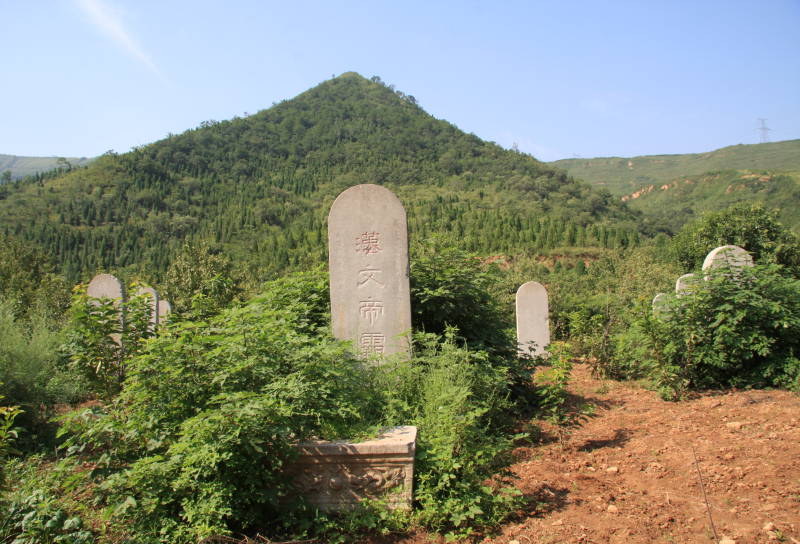
    Baling, the Tomb of Emperor Wen of Han, Shaanxi Province

    The 7th year of the Emperor Wen’s Later Era (157 B.C.)

    In the summer, on June 1, the Emperor passed away in the Weiyang Palace. In his posthumous edict, he stated:

    “We have heard that all things in the world are destined to perish. Death is part of the natural order of Heaven and Earth, so why should we be overly sorrowful? In the present age, people cherish life but fear death. They spend extravagantly on funerals, burdening their families with financial difficulties. They mourn excessively, causing harm to their own well-being. We are firmly against this practice. As for myself, we have not been virtuous enough to truly serve the people. Now, in my passing, we do not wish to burden them further by imposing long periods of mourning, subjecting them to the hardships of cold and heat, causing sorrow to fathers and sons, and hurting the feelings of the elderly. It would also disrupt their food and drink consumption and interrupt the sacrifices to gods and spirits. How can we, with my lack of virtue, do such things to the people of the realm?

    “We have been fortunate to safeguard the ancestral temple and, with my feeble and short stature, ruled over the kings of the realm for over twenty years. Through the blessings of Heaven and the ancestors, there has been peace within the borders, and no wars or upheavals. Though we are witless, we have always been mindful of not tarnishing the virtues left by my predecessor through my mistakes. Over a long period, we constantly worried about not being able to fulfill my duties until the end. Now, by the grace of my allotted years, we are able to once again join Emperor Gaozu in the ancestral temple. What is there to mourn for? We hereby decree that upon the arrival of this order, after three days, all mourning garments should be removed. There should be no restrictions on marriage, funeral rites, drinking alcohol, or consuming meat. Those who need to be present for mourning rituals should not go barefoot. The width of mourning belts should not exceed three inches. No carriages or weapons should be displayed. Do not mobilize people to wail in the palace halls. Those who are to be present in the halls should wail 15 times at dawn and dusk, and after the completion of the rituals, they must stop mourning. Outside the windows of wailing time at dawn and dusk, people are forbidden to mourn in the palace halls without permission.”

    “After the coffin is lowered, those wearing the Large Gong (mourning garment for close relations) should wear it for fifteen days, those wearing the Little Gong (mourning garment for slightly distant relations) for fourteen days, and those wearing Sima (hemp mourning garment for distant or maternal relations) for seven days. After that, mourning garments should be removed. Any other matters not mentioned in this decree should follow its intent. Announce this decree to the entire realm so that they may understand my intentions. Let the hills and rivers around the Ba mausoleum remain unchanged. The female officials, from Consort Madame down to minor envoy (the lowest rank of palace lady), should return to their homes.”

    On June 7, the burial took place at the Ba mausoleum.

    During the Emperor’s reign of twenty-three years, he made no additions to the palaces, imperial gardens, carriages, honor guards, or formal attire. Whenever there was an inconvenience to the public, he swiftly dropped the project for the benefit of the people. Once, he desired to build a terrace and summoned craftsmen to estimate the cost, which amounted to a hundred gold coins. The Emperor said, “A hundred gold coins represent the wealth of ten average households. We have inherited the palaces of my predecessor and always feared bringing shame upon them. How can we justify the construction of a new terrace?” He personally wore black silk garments. His beloved Consort, Madame Shen, also wore clothes that did not trail on the ground. The curtains and canopies had no ornate embroidery, demonstrating simplicity and setting an example for the entire realm.

    In the construction of the imperial Ba mausoleum, only earthenware was used, without any decorations of precious metals such as gold, silver, copper, or tin. The tomb followed the natural contours of the mountain without constructing a mound. When the Prince of Wu feigned illness and did not attend court, the Emperor sent him canes and tables as a gesture of concern. Despite abrasive remonstrations from ministers like Yuan Ang and others, their advice was often accepted and implemented. General Zhang Wu and others received bribes in the form of gold and silver, but when discovered, they were given additional rewards to shame their corrupt behavior and stir guilt in their hearts. The Emperor was dedicated to governing with virtue and educating the people. As a result, there was peace and tranquility throughout the realm, and the people’s needs were fulfilled. Few rulers in later generations could compare to his achievements.

    On June 9, the Crown Prince ascended the throne, and Empress Dowager Bo was honored as Grand Empress Dowager, while the empress was honored as Empress Dowager.

    A comet appeared in the western sky in September.

    This year, the King of Changsha, Wu Zhu, passed away without leaving an heir, and the kingdom was abolished.

    Initially, Emperor Gaozu honored the King Wen of Changsha, Wu Rui, and issued an edict stating, “The loyal King of Changsha shall keep his title as a king.” However, during the reigns of Emperor Hui and Empress Dowager Lü, the descendants of King Wu Rui were enfeoffed as marquises, but the lineage was discontinued after several generations.

    The 1st year of the Emperor Jing’s Early Era(156 B.C.)

    In October, during the winter, Chancellor Shentu Jia and others submitted a memorial stating: “No one has achieved greater merit than Emperor Gaozu, and no one has exhibited greater virtue than Emperor Wen. The temple title of Emperor Gaozu should be called Taizu of Han, and the temple title of Emperor Wen should be called Taizong of Han. Sovereigns of later generations should continue to pay homage to these ancestral temples from generation to generation, and the various commanderies and principalities should each establish temples for Emperor Wen as Temple of Taizong.” The imperial response was, “It is appropriate.”

    On April 22, a general amnesty was granted throughout the empire.

    Grand Master of the Censorate, Tao Qing, was dispatched to the border of Dai Commandery to negotiate peace and a marriage alliance with the Xiongnu.

    In May, the policy of collecting half of previous taxes on cultivated land was reinstated, with a tax rate of one-thirtieth. (Emperor Wen had initially reduced the taxes to half, and later to nothing.)

    Emperor Wen abolished mutilation punishments, but the so-called “lighter” punishments often resulted in death. Those sentenced to have the toes of their right foot cut off still faced death, and those to lose the toes of their left foot were subjected to five hundred strokes of flogging, with many dying as a result. Those sentenced to have their noses cut off received three hundred strokes, with similar fatal outcomes. That year, an edict was issued: “The severity of flogging is no different from punishments for serious crimes. Even if one is fortunate enough to survive, they cannot live healthily afterward. The new laws are as follows: five hundred strokes will be reduced to three hundred, and three hundred strokes will be reduced to two hundred.”

    Additionally, Zhou Ren, an advisor to the emperor, was appointed Grand Chamberlain; Zhang Ou became Minister of Justice; Marquis of Pinglu Liu Li, son of Prince Yuan of Chu, became Minister of Imperial Clans; and Chao Cuo, Grandee of the Palace, was made Interior Minister of the Left. 

    Zhou Ren, the palace guard captain for the Crown Prince, gained favor through his honesty and integrity. Zhang Ou, who also served the Emperor at the Crown Prince’s palace, was knowledgeable in legal matters but displayed great magnanimity. The Emperor valued them highly and promoted them among the Nine Ministers. Zhang Ou never used his position to persecute others, instead focusing on appointing honest and respectable individuals. His subordinates treated him with respect and dared not deceive him.

    The 2nd year of the Emperor Jing’s Early Era (155 B.C.)

    In December, during the winter, a comet appeared in the southwest. 

    A decree was issued lowering the age for mandatory civic duty from twenty-three to twenty for all males in the empire.

    In the spring, on March 27, the imperial sons were granted princely titles: Liu De was made Prince of Hejian, Liu Yan became Prince of Linjiang, Liu Yu was appointed Prince of Huaiyang, Liu Fei became Prince of Runan, Liu Pengzu was made Prince of Guangchuan, and Liu Fa was appointed Prince of Changsha.

    In the summer, on April 25, the Grand Empress Dowager, Lady Bo, passed away. 

    In June, Chancellor Shentu Jia also passed away. At that time, the interior minister Chao Cuo, frequently offered private advice and suggestions to the Emperor, many of which were accepted. This earned him favor and influence, allowing him to surpass the other nine ministers. He implemented several changes to laws and regulations, which displeased Chancellor Shentu Jia.  Chancellor Shentu Jia took exception to Chao Cuo‘s rise and disliked him.

    As interior minister, Chao Cuo found it inconvenient to use the eastern gate, so he had a new one constructed in the south. This new gate was near the temple of the Emperor Emeritus. When Chancellor Shentu Jia heard that Chao Cuo had pierced the wall of the Emperor Emeritus’s temple, he submitted a memorial requesting Chao Cuo’s execution. Rumors circulated that Chao Cuo became fearful, prompting him to secretly visit the palace at night to pay his respects and explain himself to the Emperor.

    The following morning, during the court session, Chancellor Shentu Jia again requested Chao Cuo‘s execution. However, the Emperor responded, “The wall Chao Cuo penetrated is not the actual temple wall but an outer wall where unnecessary officials reside. Moreover, I ordered the work, so Chao Cuo is not guilty.” Chancellor Shentu Jia apologized and withdrew his request. After the session, Shentu Jia told his chief-of-staff, “I regret not having executed Chao Cuo before presenting my case to the Emperor. I have been deceived by him.” Upon returning home, Chancellor Shentu Jia vomited blood and died. Chao Cuo’s status and influence only grew stronger as a result.

    In autumn, a peace treaty and marriage alliance were established with the Xiongnu.

    On July 21, Tao Qing, the Marquis of Kaifeng and Grand Master of the Censorate, was appointed Chancellor. On August 2, Chao Cuo, the Interior Minister, was appointed Grand Master of the Censorate. 

    A comet appeared in the northeast.

    During autumn, heavy rain and hail struck Hengshan, with some hailstones as large as five inches, and rainwater accumulating to a depth of two feet. Mars retrograded and stayed close to the North Star, while the moon passed through the North Star in an unusual manner. Saturn also retrograded and remained within the Supreme Palace Enclosure constellation.

    Prince Xiao of Liang, the youngest son of Empress Dowager Dou and her favorite, controlled over forty cities and governed the most fertile lands in the country. He received endless rewards and gifts, with his treasury holding millions in gold coins and even more precious gems and treasures than the capital. He constructed the Eastern Park, which spanned over three hundred li, and expanded the city of Suiyang by seventy li. Grand palaces and covered walkways were built, connecting platforms over a distance of more than thirty miles. He gathered talented individuals from across the land, including Mei Sheng, Yan Ji from Wu, Yang Sheng, Gongsun Gui, and Zou Yang from Qi, and Sima Xiangru and others from Chu, who enjoyed his patronage and accompanied him in his leisurely pursuits.Whenever Prince Xiao of Liang came to court, the Emperor sent special envoys with insignia and imperial wagons to welcome him at the pass. Upon his arrival, his influence was unmatched. He rode with the Emperor in the same carriage during court sessions, and they would hunt and engage in archery together in the Imperial Forest. Prince Xiao frequently submitted memorials requesting to stay in the capital for an additional six months. The attendants, attendants-in-waiting, and internuncios of Liang were registered and allowed to enter and exit the imperial palace, resembling the eunuchs of the Han court.

  • Comprehensive Reflections to Aid in Governance(Part 122): General Zhou Yafu

    Comprehensive Reflections to Aid in Governance

    By Sima Guang

    Translated By Yiming Yang  

    Annals of Han Book 7 Scroll 15 (continued)

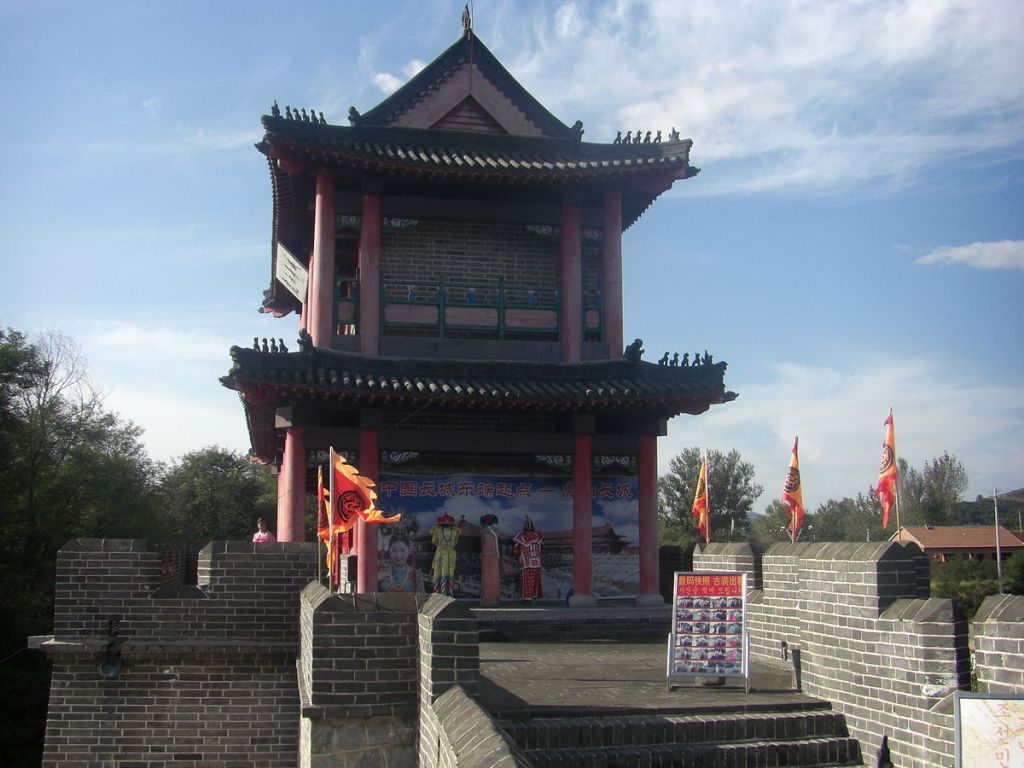
    The Great Wall in Dandong, Liaoning Province (Liaodong)

    The 2nd year of the Emperor Wen’s Later Era (162 B.C.)

    In the summer, the Emperor embarked on a journey to visit the Yuyang Palace in Yong County.

    In June, Prince Xiao of Dai, Liu Can, passed away.

    For several consecutive years, the Xiongnu had raided the border regions, causing extensive casualties and the plundering of both people and livestock. The most severely affected areas were Yunzhong and Liaodong, with over ten thousand people in each commandery. Troubled by this, the Emperor sent envoys with a letter to the Xiongnu. In response, the Chanyu (leader of the Xiongnu) dispatched a chieftain as an emissary to express gratitude. The court then renewed the peace treaty and marriage alliance with the Xiongnu.

    On July 1, Chancellor Zhang Cang resigned from his position. The Emperor, considering Dou Guangguo, the Empress’ younger brother, to be capable and virtuous, wished to appoint him as the new Chancellor. However, he hesitated, concerned that such a move might be seen as favoritism towards his own family, potentially stirring discontent among the people.

    The Emperor could not find any other suitable candidates among the remaining ministers who had served during the reign of Emperor Gaozu.

    The Grand Master of the Censorate, Shentu Jia of the principality of Liang, had previously served under Emperor Gaozu as a strong-bow archer, capable of drawing a stiff bow with his feet. He had been granted the title of Marquis within Passes. On August 4, Shentu Jia was appointed Chancellor and received the title of Marquis of Gu’an. He was known for his integrity and uprightness, refusing to accept private audiences at his residence.

    At that time, the Grandee of the Palace, Deng Tong, was held in great favor by the Emperor and was rewarded with lavish gifts and grants, amassing immense wealth. The Emperor often held banquets at Deng Tong‘s home, showing him exceptional favor.

    Once, when Shentu Jia entered the court, Deng Tong peremptorily took a position close to the Emperor, displaying disrespectful behavior. After Shentu Jia presented his report, he remarked, “Your Majesty favors your darling associates, generously bringing them wealth and prestige as you please. But when it comes to court decorum, it must be observed with the utmost solemnity.” 

    The Emperor replied, “You need not speak further; this is my personal matter.”

    After the court session, Shentu Jia, now in his office, sent an urgent message summoning Deng Tong. When Deng Tong did not appear, Shentu Jia ordered his execution. Fearing for his life, Deng Tong rushed to the Emperor and explained the situation. The Emperor responded, “Go to him first; I will send for you shortly.” 

    Deng Tong went to the Chancellor’s office, barefoot and uncapped, bowing deeply to plead for mercy to the Chancellor. Shentu Jia, however, remained seated, showing no courtesy, and sternly reprimanded him: “This court is that of Emperor Gaozu. You, a lowly official, behaved playfully and flippantly on the palace platform. By the rules, you should be executed! Officials, carry out the sentence!”

    Deng Tong kowtowed incessantly, with blood dripping from his head, but Shentu Jia did not relent. Thinking that the Chancellor had given Deng Tong a hard time, the Emperor sent an envoy bearing the imperial insignia to summon Deng Tong and apologize to the Chancellor, “He is my playful servant. Please let him off.” 

    When Deng Tong returned, he wept and said to the Emperor, “The Chancellor almost had me killed!”

    The 3rd year of the Emperor Wen’s Later Era (161 B.C.)

    In February of that spring, the Emperor embarked on a journey to visit Dai Commandery.

    This year, Xiongnu Laoshang Chanyu passed away, and his son Junchen succeeded him as the new Chanyu.

    The 4th year of the Emperor Wen’s Later Era (160 B.C.)

    On April 30, there was a solar eclipse.

    In May, there was a general amnesty declared throughout the entire empire.

    The Emperor embarked on a journey to visit Yong County.

    The 5th year of the Emperor Wen’s Later Era (159 B.C.)

    In January of spring, the Emperor embarked on a journey to visit Longxi.

    In March, he traveled to Yong County.

    In July of autumn, the Emperor journeyed to Dai.

    The 6th year of the Emperor Wen’s Later Era (158 B.C.)

    In winter, 30,000 Xiongnu cavalry entered Shanggu County, and another 30,000 entered Yunzhong. They caused widespread killings and looting, with beacon fire signals reaching Ganquan County and Chang’an. The court appointed the Grandee of the Palace, Ling Mian, as General of Chariots and Cavalry, stationing him in Feihu Pass. Su Yi, the former Prime Minister of Chu, was appointed general at Gou’zhu Pass. General Zhang Wu was stationed in Beidi, while Zhou Yafu, Prefect of Henei, was appointed general at Xiliu. Liu Li, the Minister of the Imperial Clan, was stationed as general at Bashang, and Xu Li, the Marquis of Zhuzi, as general at Jimen—all in preparation against the Xiongnu threat.

    The Emperor personally visited and encouraged the troops, starting from Bashang and moving to Jimen and other military camps. He rode directly into the camps, accompanied by the general and his officers on horseback. However, upon reaching the Xiliu camp, the soldiers and officers were fully armed with sharp weapons and loaded crossbows, refusing to allow the Emperor entry. The lead of the Emperor’s cavalcade announced, “The Emperor is arriving!” but the camp gate officer replied, “The general’s orders state that no one is allowed to gallop through the military camp.”

    When the Emperor arrived, he still couldn’t enter. He then sent an envoy with the imperial insignia and a decree to the generals, stating, “I wish to enter the camp and personally show my appreciation to the troops.” Zhou Yafu transmitted the order to “open the camp gate.” The soldiers guarding the gate told the Chariots and Cavalry attendants, “The general has decreed that no galloping is allowed within the camp.” Thus, the Emperor proceeded slowly, holding the reins himself.

    Upon arriving at the camp, General Zhou Yafu greeted him with his weapon in hand and saluted, saying, “Armored warriors do not bow. I request to greet you with military courtesy.” The Emperor, showing respect, solemnly placed his hands on the rail of the carriage and observed the military formation before expressing his gratitude to General Zhou: “The Emperor respectfully greets the General.” After leaving the camp, the court officials were amazed.

    The Emperor remarked, “This is a real general indeed! The behavior of the generals at Bashang and Jimen was like child’s play. They are vulnerable to surprise attacks and capture. But Zhou Yafu is truly invincible!” The Emperor praised him constantly.

    After a month, both the Han forces and the Xiongnu withdrew from the border, and peace was restored. Zhou Yafu was then appointed Commandant of the capital guard.

    In April of summer, a severe drought and locust infestation struck. An order was issued for the principalities to suspend their tributary offerings. Restrictions on exploiting mountains and marshes were relaxed to allow more hunting and fishing, and expenses for imperial clothing and transportation were reduced. The number of government officials and attendants was also decreased. Granaries were opened to provide relief to the people, and citizens were permitted to sell or buy ranks and titles.

  • Comprehensive Reflections to Aid in Governance(Part 121): A Feng Shui Master

    Comprehensive Reflections to Aid in Governance

    By Sima Guang

    Translated By Yiming Yang  

    Annals of Han Book 7 Scroll 15 (continued)

    Dake Ding, A Cauldron made in Zhou Dynasty

    The 15th year of the Emperor Wen of Early Era (165 B.C.)

    In the spring, the appearance of yellow dragons was reported in Chengji County. The Emperor summoned Gongsun Chen and appointed him as erudite, instructing him to clarify the essence of earth alongside other scholars and draft revisions to the calendar and the colors of official attire. As a result, Zhang Cang became despondent and resigned.

    In April of summer, the Emperor made his first visit to Yong County, where he performed the imperial sacrifice to the Five Color Emperors in the suburban area. He also granted a general amnesty to the entire nation.

    In September, a decree was issued instructing princes, ministers, and prefects to recommend virtuous and outspoken individuals who could offer strong remonstrances. The Emperor personally reviewed their recommendations. Chao Cuo, the Majordomo of the Crown Prince, presented a top-ranked proposal and was promoted to Grandee of the Palace. Additionally, Chao Cuo submitted a memorial proposing the reduction of the powers of the vassal kings and the revision of certain liege laws, totaling thirty articles. Although the Emperor did not fully implement all of his suggestions, he admired Chao Cuo‘s talent and abilities.

    That same year, both Prince Wen of Qi, Liu Ze, and Prince Ai of Hejian, Liu Fu, passed away without leaving heirs, leading to the dissolution of their respective princedoms.

    A man named Xinyuan Ping from Zhao, skilled in divination and feng shui, obtained an audience with the emperor. He informed the emperor of a divine aura with five vibrant colors in the northeast of Chang’an. In response, the Emperor ordered the construction of the Temple of the Five Emperors on the north bank of the Wei River.

    The 16th year of the Emperor Wen’s Early Era (164 B.C.)

    In April of that year, during the summer, the Emperor performed the suburban sacrifice to the Supreme Deity at the Temple of the Five Emperors, north of the Wei River. At the time, Xinyuan Ping was highly honored and appointed as a senior Grandee, receiving generous rewards, including a thousand catties of gold. The Emperor also instructed erudites and their students to examine the Six Classics, compile them into the book Imperial System, and deliberate on matters concerning imperial hunting tours and Fengshan (sacrificial ceremonies worshiping heaven and earth). Additionally, an Altar of the Five Emperors was erected north of Changmen Pavilion.

    The Prince of Huainan, Liu Xi, was relocated and reinstated as the Prince of Chengyang. Furthermore, the kingdom of Qi was divided into six separate principalities. On April 17, six sons of the late Prince Dǎohuì of Qi, who were alive, were enfeoffed as follows: Liu Jianglü, Marquis of Yangxu, became the Prince of Qi; Liu Zhi, Marquis of Andu, became the Prince of Jibei; Liu Xian, Marquis of Wucheng, became the Prince of Zichuan; Liu Xiongqu, Marquis of Baishi, became the Prince of Jiaodong; Liu Ang, Marquis of Pingchang, became the Prince of Jiaoxi; and Liu Piguang, Marquis of Le, became the Prince of Jinan.

    As for the three surviving sons of the late Prince Li of Huainan: Liu An, Marquis of Fuling, became the Prince of Huainan; Liu Bo, Marquis of Anyang, became the Prince of Hengshan; and Liu Ci, Marquis of Yangzhou, became the Prince of Lujiang.

    In September of autumn, Xinyuan Ping sent someone to present a jade cup and a written memorial to the Emperor at the palace entrance. Xinyuan Ping then told the Emperor, “There is a precious jade aura approaching beneath the throne.” Upon inspection, the cup was indeed made of jade, engraved with the words “Longevity to the Lord.” Xinyuan Ping further remarked, “Your Majesty, I anticipated that the sun would reach high noon twice.” Shortly after, the Sun reversed its course and returned to the high noon position. Consequently, the Emperor proclaimed the beginning of a new era, marking the seventeenth year of his reign as the first year of the new era, and ordered a grand celebration throughout the empire.

    Xinyuan Ping foretold, “The Zhou tripod was lost in the waters of the Si River. Now that the Yellow River has breached its banks and connected with the Si River, I suspect there may be precious metal treasures in northeastern Fenyin County. It is possible that the Zhou tripod cauldrons has emerged there! Signs are visible, but if not welcomed, they will not arrive.” Subsequently, the Emperor dispatched officials to build a temple in the south of Fenyin, near the Yellow River, with the intent of honoring the emergence of the Zhou tripod cauldrons.

    The 1st year of the Emperor Wen’s Later Era (163 B.C.)

    In October of winter, someone submitted a letter accusing Xinyuan Ping of deceit, claiming that “all his statements were lies and fraud.” Upon investigation, Xinyuan Ping was executed along with his clan. After this incident, the Emperor was less enthusiastic about matters such as calendar rectification, the official color of court attire, and the worship of various deities. The Temple of the Five Emperors north of the Wei River and the Altar of the Five Emperors at Changmen Pavilion were placed under the supervision of the official responsible for sacrificial ceremonies, and the Emperor no longer visited them personally.

    In March of spring, Empress Dowager Zhang, the widow of Emperor Hui, passed away.

    An imperial decree stated: “In recent years, the harvests have not been abundant. Moreover, there have been calamities such as floods, droughts, and epidemics, which deeply concern me. We, being ignorant and lacking understanding, have yet to grasp the reasons behind these misfortunes. Is it due to faults in my governance and actions? Or is it that the heavenly principles are not in harmony, the earthly advantages are not obtained, human affairs are in disarray, and the neglect of ancestral and divine worship rites has caused this? What has led to this situation? Perhaps officials are not sufficiently compensated, and unnecessary projects abound? Is this the reason for the scarcity or poor quality of the people’s food? It is not that the amount of cultivated land has decreased, and the census has not shown significant population growth. When measuring the land in proportion to the population, there should still be a surplus as in ancient times, yet why is there such a severe shortage of food? Where does the fault lie? Is it because many people engage in non-agricultural activities that harm farming, or because alcohol production wastes grain, and a multitude of livestock consume too much food meant for humans? We have not fully grasped the intricacies of this matter.

    “Therefore, We request that the Chancellor, the marquises, the officials of two thousand piculs rank, and the erudites discuss this matter. If there are any measures that can assist the people, we implore you to think deeply and not withhold any opinion!”