Yiming Yang’s Blog

  • Comprehensive Reflections to Aid in Governance(Part 160): Fear Factor

    Comprehensive Reflections to Aid in Governance

    By Sima Guang

    Translated By Yiming Yang  

    Annals of Han Book 12 Scroll 20 (continued)
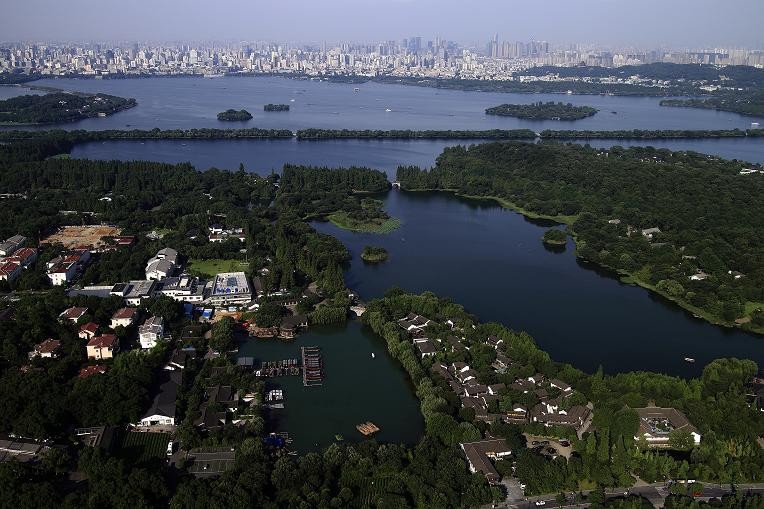
    Wulin (Hangzhou), Zhejiang Province

    The 6th year of Emperor Wu’s Yuanding Era (111 B.C. continued)

    In commemorating the victory in Nanyue, sacrifices were offered to Taiyi (the Polaris) and Mother Earth, marking the first use of music and dance for the occasion.

    The Marquis of Chiyi, Yi, mobilized the southern troops with the intention of attacking Nanyue. However, the Lord of Julan, fearing the long journey of the troops and the potential capture of the elderly and weak by neighboring tribes’ attacks, revolted with his followers. They killed the envoy along with the Prefect of Qianwei. In response, the Han court deployed the Eight Colonels Army, composed of convicts from the Ba and Shu commanderies, to attack Nanyue, sending General of the Household Guo Chang and Wei Guang to suppress the rebellion. They executed the Lord of Julan, the Lord of Qiongdu, and the Marquis of Zuodu, pacifying the southern ethnic groups and establishing Zangke Commandery.

    Initially allied with Nanyue, the Lord of Yelang saw Nanyue‘s downfall and decided to submit to the Han court. The Emperor recognized him as the King of Yelang. The Nanmeng tribes, feeling apprehensive, invited officials from the Han government and eventually established Qiongdu as the Yuesui Commandery, Zuodu as the Shenli Commandery, Nanmeng as the Wenshan Commandery, and the Baima tribe in the west of Guanghan as the Wudu Commandery.

    Earlier, the King of Dongyue (Dong’ou, Minyue), Zou Yushan, petitioned the Emperor, requesting to lead eight thousand soldiers to join Louchuan General‘s expedition against Lü Jia. The troops reached Jieyang, but adverse sea winds hindered their progress, forcing them to halt. Taking advantage of this delay, they secretly aligned with Nanyue. However, when Han forces defeated Nanyue at Panyu, they did not arrive to participate.

    Louchuan General Yang Pu requested permission to lead an army to attack Dongyue. However, due to the fatigue of the troops, the Emperor declined and ordered the generals to station their forces in Yuzhang and Meiling to await further orders. Upon hearing of Louchuan General‘s request to execute him, Zou Yushan rebelled, mobilizing his troops against the Han forces and holding strategic roads. General Zou Li, who was granted the title General of Annexing Han, and others led the troops. They entered the regions of Baisha, Wulin(Hangzhou), and Meiling, killing three Han Colonels.

    During this time, Han court envoys, Agriculture Minister Zhang Cheng and the former Marquis of Shancheng, Liu Chi, were stationed there but dared not engage the enemy, opting instead to retreat to safer places. Both were executed for their cowardice.

    The Emperor, intending to send Yang Pu out again due to his previous efforts, wrote a letter of reproach, stating: “Your merit lies only in breaking Shimen and Xunxia. You did not slay generals or seize banners on the battlefield. How can you be so conceited? You captured Panyu, treating surrendering individuals as prisoners and digging up the dead as trophies; that was one misconduct. You allowed Zhao Jiande and Lü Jia to win support from Dongyue; that was the second misconduct. Soldiers were exposed year after year, yet you, the general, did not remember their hard work. You requested to inspect the coast, returning home in government vehicles, wearing gold and silver seals, and three ribbons, boasting to your hometown folks—that was the third misconduct. Missing the deadline of return and blaming bad roads as an excuse—that was the fourth misconduct. We inquired about the price of knives in Shu, and you pretended to not know, deceiving me with false information; that was the fifth mistake.”

    “When receiving orders, you did not come to Lanchi Palace, and you even remained silent the next day. Suppose your subordinate officers were asked and stayed silent, or were instructed but did not comply; what punishment would they face? With such a mindset, can you be trusted between the rivers and seas? Now that Dongyue has deeply entered our territory, can you lead your troops to redeem your misconduct?”

    Frightened and filled with remorse, Yang Pu replied, “I am willing to die to atone for my mistakes!”

    The Emperor dispatched Henghai General Han Yue to Gouzhang to set sail from the east; Louchuan General Yang Pu departed from Wulin(Hangzhou), and the Commandant of Capital, Wang Wenshu, came out from Meiling. Meanwhile, the leaders from the south, Gechuan General Yi and Xialai General Jia, led troops from Ruoxie and Baisha to confront Dongyue.

    The Marquis of Bowang, Zhang Qian, had been granted honor and prestige for facilitating communication with the Western Regions. His subordinates vied to petition the Emperor regarding the peculiarities, advantages, and dangers of foreign countries, requesting to be dispatched as emissaries. The Emperor, aware of the distant and unenjoyable nature of these regions, listened to their requests, issued the necessary credentials, and allowed them to recruit from officials and civilians without questioning their origins. He sent them adequately prepared to broaden the horizons of the West.

    However, upon their return, some of these envoys engaged in embezzlement of currency, goods, and behaviors contrary to the Emperor’s will. The Emperor, aware of these practices, sternly punished them, using severe penalties to incite redemption. Yet, they continued to request further missions, creating a cycle of persistent disregard for the law. These officials and soldiers persisted in exaggerating accounts of foreign countries; those with grandiose tales were rewarded with credentials, while those with smaller accounts were relegated to subordinate positions. Thus, individuals with no verifiable accounts zealously sought to emulate them. The envoys dispatched were often individuals of modest means, seeking to exploit their position by illicitly embezzling gifts for foreign authorities, intending to sell them for personal gain.

    As a result, the people in foreign regions grew weary of Han envoys. They noticed the frivolous and overblown tales of the Han diplomats, considering the Han forces too distant to reach them. They restricted their food supplies to torment the Han envoys. This deprivation, along with accumulated grievances, led to attacks on the Han envoys by the foreign countries.

    Especially in regions like Loulan and Jushi, small states located along the main route, attacks against Han diplomats like Wang Hui were severe. Additionally, the Xiongnu launched surprise attacks against them. The envoys claimed that the Western Regions were littered with cities and were vulnerable to attack.

    The Emperor dispatched Fuju General, Gongsun He, with fifteen thousand cavalry, covering a distance of over two thousand li from Jiuyuan, reaching the Fuju well, and then returning. Xionghe General Zhao Ponu led over ten thousand cavalry for several thousand li, reaching the Xionghe River and then returning. Their purpose was to repel and expel the Xiongnu, preventing them from intercepting Han envoys, yet not a single Xiongnu was encountered. Following this, the commanderies of Wuwei and Jiuquan were divided to establish Zhangye and Dunhuang commanderies, with people relocated to populate these areas.

    In this year, the Prime Minister of Qi, Bu Shi, was promoted to Grand Master of Censorate. After assuming his position, Bu Shi reported grievances: “It is inconvenient to let the magistrates monopolize the commerce of salt and iron tools in various commanderies and regions. They produce poor-quality items at excessively high prices. They force the people to buy these goods, causing distress. Moreover, there are high shipping costs due to exorbitant ship taxes and a scarcity of merchants.” This displeased the Emperor and contributed to his growing dissatisfaction with Bu Shi.

    Sima Xiangru fell gravely ill and wrote before his passing a testament praising the Emperor’s achievements and virtues, citing omens and urging the Emperor to bestow offerings at Mount Tai. Impressed by his words and coincidentally finding a treasure cauldron, the Emperor consulted court officials and scholars to discuss the Feng-Shan ceremonies. However, as the Feng-Shan rituals were rarely performed and their procedures were not widely known, various occultists claimed, “Feng-Shan signifies immortality. Before the Yellow Emperor‘s era, these ceremonies attracted unusual phenomena and supernatural occurrences, and spoke to the gods. Even the First Emperor of Qin failed to perform it properly. If Your Majesty insists, start slowly. If there is no adverse weather, you may proceed with the ritual.”

    The Emperor ordered scholars to compile texts from the “Book of Documents,” “Rites of Zhou,” and “Regulations of the Kings” to draft the procedures for the Feng-Shan ceremony. However, after several years, the rituals remained incomplete. Seeking advice, the Emperor consulted the Left Interior Minister Ni Kuan, who opined, “Offering sacrifice at Mount Tai for Heaven and offering sacrifice at Mount Liangfu for Earth are auspicious ceremonies that exalt the surname of one’s ancestors and seek auspicious signs from heaven—this is the grand ceremony of emperors. However, the essence of such offerings is not clearly expounded in the classics. The completion of the Feng-Shan ceremony should follow the will of the sage ruler and should be directed by them. This matter cannot be adequately resolved by ministers. Your Majesty has been contemplating a grand event but has allowed this issue to linger for several years, causing everyone to strive without success. Only the Son of Heaven, by establishing a harmonious center and encompassing all aspects, can harmonize the sounds of metal and resonate with the jade to align with celestial blessings, laying the foundation for ten thousand generations.”

    The Emperor personally devised the rituals, incorporating elements of Confucian learning into the proceedings. When presenting the Feng-Shan ceremonial vessels specially made to the gathered scholars, some criticized them as “not in accordance with ancient practices.” Subsequently, all the scholars were dismissed from service.  The Emperor followed the ancient customs, uplifted the troops’ morale and rewarded the soldiers with wine and dining before the Feng-Shan ceremony was conducted.

  • Comprehensive Reflections to Aid in Governance(Part 159): The Battle of Panyu

    Comprehensive Reflections to Aid in Governance

    By Sima Guang

    Translated By Yiming Yang  

    Annals of Han Book 12 Scroll 20 (continued)

    Guangzhou(Panyu) in 1880

    The 5th year of Emperor Wu’s Yuan’ding Era (112 B.C. continued)

    The King of Nanyue and the Queen Dowager Jiu instructed the preparation of their traveling gear, heavily adorned with gifts for their visit to the Han court. Their Prime Minister, Lü Jia, was of advanced age, having served three kings. Seventy of his family members held official positions in the administration, with their sons married to the king’s daughters and vice versa, creating strong connections within the royal family. They also had a marriage alliance with King Qin of Cangwu. Lü Jia earned great respect in Nanyue, even surpassing that of the king. Lü Jia had repeatedly advised and admonished the king through written petitions against the king’s submission memorandum to the Emperor, but the king refused to heed his counsel. Harboring dissenting views, Lü Jia often feigned illness to avoid meeting Han envoys. The envoys from the Han noticed Lü Jia’s evasiveness, but their influence was not sufficient to dislodge him.

    Both the King and the Queen Dowager Jiu feared that Lü Jia and others might take the initiative and overthrow them. They intended to leverage the Han envoys and plotted to eliminate Lü Jia and his faction. Thus, they hosted a banquet for the envoys, with all the prominent officials in attendance. Lü Jia‘s younger brother was a military commander, and his soldiers were stationed outside the palace. During the banquet, the Queen Dowager reprimanded Lü Jia, “It would benefit the kingdom greatly if we became a vassal state of the Han. Why isn’t the Prime Minister more cooperative?” This attempt to evoke the envoys failed, as they looked at each other and hesitated to take action against Lü Jia.

    Sensing the adverse atmosphere, Lü Jia immediately left the banquet. The Queen Dowager Jiu, furious, intended to strike Lü Jia with a spear, but the King restrained her. Lü Jia then left, guarded his brother’s troops, feigned illness, and refused to meet the King and the envoys. Secretly, he conspired with the other officials to incite rebellion. Lü Jia understood that the King had no intention of executing him, so he refrained from making any moves for several months.

    The Emperor heard that Lü Jia did not heed commands, and that the King and Queen Dowager Jiu were vulnerable and unable to control the situation, while the envoys were timid and indecisive. The Emperor also believed that the King and Queen Dowager Jiu had already allied with the Han, and that only Lü Jia was causing trouble, which did not warrant raising an army to subdue. Thus, he intended to dispatch Zhuang Shen with a two-thousand-man entourage. However, Zhuang Shen declined, “A few individuals are enough for diplomacy, but two thousand men could accomplish nothing for warfare.” As his refusal was firm, the Emperor dismissed him.

    A warrior from Jia County, the former Prime Minister of Jibei, Han Qianqiu, stepped forward and exclaimed, “For a small state like Nanyue, with the King and Queen Dowager in favor of the Han, only Lü Jia is causing harm. I wish to gather three hundred brave warriors and will definitely behead Lü Jia and report back.” Therefore, the Emperor sent Han Qianqiu along with the Queen Dowager’s brother, Jiu Le, leading two thousand soldiers into Nanyue.

    Subsequently, Lü Jia and his faction revolted, issuing orders within the kingdom and spreading accusations against the King, Queen Dowager Jiu, and the Han envoys: “The King is young, and the Empress Dowager, a woman of the Han descent, became entangled with the emissaries, seeking to submit to the Middle Kingdom. She insisted on becoming part of the Han and presented the precious heirlooms of the former kings to curry favor with the Emperor. She wishes to take many in her company and, upon reaching Chang’an, sell them into slavery. In her pursuit of immediate gains, she failed to consider the long-term stability of the Zhao family or the future of our kingdom.”

    Lü Jia and his brother then attacked and killed the King, Queen Dowager Jiu, and the Han envoys. They sent messengers to inform King Qin of Cangwu and the neighboring commanderies and counties under Nanyue‘s control, establishing King Ming (Zhao Yingqi)’s eldest son with his Nanyue wife, the Marquis of Shuyang Zhao Jiande, as the new King. Meanwhile, Han Qianqiu’s forces invaded and took over several smaller towns.

    Later, Nanyue opened direct supply routes for provisions to Han Qianqiu’s troops, then ambushed his forces within forty miles of Panyu, annihilating them. They put a sealed letter containing the Han envoy’s seal on the border, apologizing with false excuses, and deployed troops to guard strategic locations.

    On March 4, upon hearing about the rebellion in Nanyue, the Emperor remarked, “Even though Han Qianqiu accomplished nothing, he led the forefront of the army in valor. We hereby bestow the title of Marquis of Cheng’an upon his son, Han Yannian. Jiu Le’s sister, Queen Dowager of Nanyue, first expressed her allegiance to the Han. We confer the title of Marquis of Longkang upon Jiu Le’s son, Jiu Guangde.”

    In April of summer, a general amnesty was proclaimed throughout the realm.

    On April 30, there was a solar eclipse.

    During the autumn, Fubo(riding waves) General, Lu Bode, was dispatched to venture out from Guiyang, descending the Kuangshui River. Louchuan (multi-deck ship) General, Yang Pu, set forth from Yuzhang, sailing down the Zhenshui River. Marquis of Guiyi, Yan of Nanyue, was appointed as Gechuan (Dagger-Axe Ship) General, departing from Lingling and descending along the Li River. Jia of Nanyue was appointed as the Xialai General, descending on Cangwu. They all led convicted criminals, with a total of one hundred thousand naval forces south of the Yangtze and Huai Rivers.

    The Marquis of Chiyi, Yi of Nanyue, led other convicts from Ba and Shu, mobilizing troops from Yelang, and descending along the Zangke River, converging on Panyu. Yan, Jia, and Yi were all former Nanyue officers who had surrendered to the Han.

    Prime Minister of Qi, Bu Shi, submitted a memorial requesting permission to lead his son and those skilled in naval warfare from Qi to fight and die in Nanyue. The Emperor issued an edict praising Bu Shi, granting him the title of Inner Marquis, sixty catties of gold, and ten acres of land, and made this known throughout the empire. However, no one responded to the call. At that time, there were numerous Marquises, yet none sought to join the military expedition against Nanyue.

    In September, while offering sacrifices to the ancestral temples with food and gold donation, the Marquises were commanded to donate gold as contribution for the ritual libations. The Privy Treasurer inspected the gold, and any found to be lightweight or of impurity were deemed disrespectful, leading to the dismissal of one hundred and six princes and marquises from their titles. On September 6, Chancellor Zhao Zhou, accused of “providing cover for impure gold contributions by the Marquises,” was arrested, imprisoned, and subsequently committed suicide.

    Later, on September 21, Shi Qing was appointed as Chancellor and ennobled as the Marquis of Muqiu. At that time, the state faced various issues. Figures like Sang Hongyang focused on increasing revenue, while officials like Wang Wenshu enforced laws to the fullest extent. Ni Kuan and others advocated for literary studies, and they were all members of the Nine Ministers, playing prominent roles in the government. However, decisions were solely made by each minister without consulting the Chancellor. Chancellor Shi Qing was known for his honest, lenient, and prudent approach to governance.

    General of Five Boons, Luan Da, prepared himself and ventured eastward into the sea to seek out his supposed mentor. Eventually, he grew hesitant to proceed further into the sea and instead headed to the Taishan Shrine. Officials sent to verify his claims found no evidence supporting his assertions of meeting his mentor. General of Five Boons falsely claimed to have encountered his mentor, and as his wizardry was largely unfulfilled, he was found guilty of deceit and executed by waist chopping. Similarly, the Marquis of Lecheng, Ding Yi, who had recommended him, was also executed in public.

    In the western Qiang territory, a rebellion involving a force of one hundred thousand people broke out. They established communication with the Xiongnu and attacked the An’gu county, besieging Fuhan county. The Xiongnu invaded Wuyuan, killing its Prefect.

    The 6th year of Emperor Wu’s Yuanding Era (111 B.C.)

    In the winter, an army of one hundred thousand soldiers was dispatched, led by Generals Li Xi and Chamberlain Xu Ziwei, to campaign against the Western Qiang, and the regional rebellion was pacified.

    Louchuan General, Yang Pu, entered the territory of Nanyue, initially capturing Xunxia and breaking through the Shimen, thereby blunting the force of the Nanyue army. He awaited the arrival of Fubo General Lu Bode, with several tens of thousands of soldiers. Louchuan General took the lead, and together they reached Panyu. The King of Nanyue, Zhao Jiande, and his Prime Minister Lü Jia were fortified within the city. Louchuan General positioned himself in the southeast, while Fubo General held the northwest. As night fell, Louchuan General attacked and defeated the Nanyue forces, setting fire to the city. Fubo General set up camp and sent messengers to persuade surrender, offering seals and ribbons as tokens of assurance. He also ordered others to encourage defection.

    Louchuan General aggressively attacked and set fire to the enemy’s positions, pushing Nanyue‘s forces towards Fubo General’s camp. At dawn, the entire city surrendered. Zhao Jiande and Lü Jia had fled to the sea the night before, but Fubo General dispatched troops to pursue them.  Colonel Marshall Su Hong captured Zhao Jiande, while Gentleman of Household, Du Ji of Nanyue, captured Lü Jia. The forces under Gechuan General Yan and Xialai General Jia, along with the Yelang soldiers dispatched by the Marquis of Chiyi, Yi, had not yet arrived, but Nanyue was already subdued.

    The conquered territory was then divided into nine commanderies: Nanhai, Cangwu, Yulin, Hepu, Jiaozhi, Jiuzhen, Rinan, Zhuya, and Dan’er. Upon the return of the troops, the Emperor granted more fief to the Fubo General. Louchuan General was ennobled as the Marquis of Jiangliang, Su Hong as the Marquis of Haichang, Du Ji as the Marquis of Lincai, and four individuals, including the surrendered Nanyue King Qin of Cangwu, Zhao Guang, were also ennobled as marquises.

    Gongsun Qing reported sighting footprints of an immortal being on the walls of the city of Goushi in southern Henan, claiming to have seen the tracks of gods. In the spring, the Emperor personally visited the city of Goushi to examine these traces and asked Gongsun Qing, “Are you imitating General Wencheng and the General of Five Boons?”

    Gongsun Qing replied, “The existence of immortal beings does not rely on the search of the ruler; rather, it is the ruler who seeks them. If the path to gods is not broad, then the spirits do not come. Speaking of spiritual matters may seem ridiculous or bizarre, but by persisting for years and months, it may eventually be achieved.”

    The Emperor believed him. In various commanderies and regions, roads were cleared, palaces and scenic spots were renovated, and temples and sacred sites were prepared in anticipation of the gods’ visit.

  • Comprehensive Reflections to Aid in Governance(Part 158): Occult, Cauldron And Dangerous Liaison

    Comprehensive Reflections to Aid in Governance

    By Sima Guang

    Translated By Yiming Yang  

    Annals of Han Book 12 Scroll 20 (continued)

    Yellow Emperor Mausoleum, Yan’an, Shaanxi Province, photo by Sunatnight

    The 4th year of Emperor Wu’s Yuan’ding Era (113 B.C.)

    In October of winter, the Emperor conducted a tour to Yong, performing sacrifices at the Five Deity Altars. A decree stated: “Currently, We personally attend the altars to worship the Heavenly God, yet the Earth has no shrine; this renders the ritual incomplete. Let the relevant officials consider and make arrangements.” A shrine for the Earth was established at a circular mound in the midst of a marsh. The Emperor then traveled from Xiayang to the east, visited Fenyin.

    At this time, the Emperor commenced touring commanderies and principalities. The Prefect of Hedong, unprepared for the Emperor’s arrival, could not provide for the Emperor’s cavalcade, took his own life. 

    On November 8, a shrine dedicated to Mother Earth was erected atop a man-made hill (shui) in Fenyin. The Emperor personally offered his respects, following the rites observed for the Heavenly God. After completing the ceremony, he traveled to Xingyang before returning to Luoyang. Additionally, Princess Ji Jia, a descendant of the Zhou dynasty, was granted the title of Lady Zinan of Zhou.

    In February of spring, Prince Jing of Zhongshan, Liu Sheng, passed away.

    The Marquis of Lecheng, Ding Yi, recommended the occultist Luan Da, who claimed to have studied under the same tutor as General Wencheng (Shaowong). The Emperor, still regretful over executing General Wencheng, was pleased to discover Luan Da. Luan Da had previously served Prince Kang of Jiaodong, and was tall and handsome, renowned for his eloquence and strategic acumen. Speaking boldly, he expressed his beliefs without hesitation.

    Luan Da said, “I often travel across the seas and encounter immortals such as Anqi Sheng and Xianmen Gao, who regard me as a lowly man and question my credibility. They see Prince Kang merely as a regional lord, unworthy of receiving the elixir’s prescription. My mentors say, ‘Gold can be created, the Yellow River can be dammed, the elixir of life can be obtained, and immortals can be summoned.’ But I fear emulating General Wencheng. If the same fate that befell General Wencheng happens to me, all occultists will cover their mouths and dare not speak of their arts!”

    The Emperor replied, “General Wencheng died from eating horse liver. If you can truly perfect your craft, why should I be stingy?”

    Luan Da said, “My mentor does not seek others; rather, others seek him. If Your Majesty truly desires his presence, honor his messenger, treat him as kin, and show hospitality. Only then can he convey your wish to the divine beings.”

    Thus, the Emperor tested a minor magic by Luan Da, called the Chess Piece Fight: Xiangqi(Chinese chess) pieces on a chess board clashed by themselves. At that time, the Emperor was anxious about the Yellow River flooding and issues related to gold smelting and alchemy. Consequently, he appointed Luan Da as the General of Five Boons, also bestowing titles such as General of Heavenly Practitioners, General of Earth Practitioners, and General of Great Communicator.

    In April of the summer, Luan Da was made the Marquis of Letong and granted a fief of 2,000 households, a mansion, 1,000 servants, unused imperial carriages and horses, drapery, and vessels to decorate his residence. Additionally, he married Royal Princess Wei (the eldest sister of Crown Prince Wei), received 100,000 catties of gold, and the Emperor personally visited his residence, sending messengers to ensure his needs were met. From the Grand Princess Dou (Liu Piao, also known as Princess Guantao) down to generals and ministers, all held banquets and offered gifts at his home.

    The Emperor even had a jade seal engraved with the title “General of the Heavenly Way” and sent messengers dressed in feathered attire, standing atop cogon grass. Luan Da, too, dressed in feathers, stood on the same grass, receiving the seal to demonstrate his equal status with the Emperor. Within several months, Luan Da was seen wearing six seals (five of generals and one of the marquis), and his prestige shook the entire realm. Henceforth, throughout the regions of Yan and Qi by the sea, everyone wrung their wrists in excitement and spoke of occult arts and the ability to summon immortals.

    In June, a shaman named Jin from Fenyin discovered a large cauldron in the graveyard near the newly built shrine for Mother Earth. The Prefect of Hedong reported this to the Emperor. The Emperor sent investigators to inquire about it. The shaman Jin proved the cauldron’s authenticity, dispelling any doubts. As a result, it was ceremonially offered and brought to Ganquan Palace. The Emperor paraded it in a procession and presented it at ancestral temples and to the Highest Deity. It was then stored in the Ganquan Palace, and all court officials offered congratulations and extended their wishes for the Emperor’s longevity.

    In the autumn, the son of Prince Xian of Changshan, Liu Shang, was established as the Prince of Sishui.

    When the Marquis of Tiao, Zhou Yafu, held the position of Chancellor, Zhao Yu served as the Chief Staff of the Chancellor. He was known for his honesty and fairness. However, Zhou Yafu did not promote Zhao Yu, stating, “Although I know Zhao Yu bears no ill will, his rigid enforcement of the law makes it unsuitable for him to hold higher office.” Later, when Zhao Yu became the Privy Treasurer, his governance was austere compared to the other nine ministers. As he grew older, the style of the other ministers became more draconian, but Zhao Yu’s reputation shifted to one of leniency and fairness.

    Yin Qi, known for his notorious audacity in executing and cutting down large figures, was appointed Commandant of the Capital Guards. However, during his tenure, both officials and common people suffered greatly, and he eventually left the service. In that year, Yin Qi was found guilty of incompetence. Subsequently, Wang Wenshu was reinstated as the Commandant of the Capital Guards, while Zhao Yu was appointed as the Minister of Justice. Four years later, due to his old age, Zhao Yu was demoted to the position of the Prime Minister of Yan.

    During that time, governance was characterized by harshness and severity, yet the Left Interior Minister, Ni Kuan, stood out. He promoted agriculture, advocated for leniency in punishments, resolved legal disputes, and prioritized winning the people’s hearts. He selected kind and honest individuals, empathized with the people’s plight, and was not concerned with personal reputation. Consequently, both officials and the people greatly trusted and loved him.

    In terms of tax collection, he was flexible, often adjusting the tax rates, and sometimes even lending to or deferring payments from people. This resulted in a significant portion of taxes remaining unpaid. Later, when there was a call for military mobilization, the Left Interior Minister faced dismissal for failing to collect overdue taxes. Knowing that Ni Kuan might be deposed, the people feared losing such a good magistrate and hastened to pay their dues. Wealthy households delivered grain with cattle carts, while poorer ones contributed goods with shoulder poles—an unceasing flow of payments to the treasury. As a result, the tax amount even exceeded expectations. The Emperor was increasingly impressed by Ni Kuan.

    In the beginning, King Wen of Nanyue (Zhao Hu) sent his son, Zhao Yingqi, to serve the imperial court as a guard. During his stay in Chang’an, he married a lady from the Jiu clan of Handan, and they had a son named Zhao Xing. When King Wen of Nanyue passed away, Zhao Yingqi ascended the throne and secretly retained the imperial seal of the former Emperor Wu of Nanyue (Zhao Tuo). He then submitted a petition, requesting that the lady from the Jiu clan be established as the queen and that Zhao Xing be named his heir. The Han court repeatedly sent envoys urging Zhao Yingqi to come to the court.

    However, Zhao Yingqi was known for his arbitrary killings and reckless behavior. Fearing the appearance before the imperial court and the need to adhere to the Han laws like other feudal lords, he feigned illness to avoid attending. After Zhao Yingqi‘s death, he was posthumously honored as the King Ming of Nanyue. Zhao Xing succeeded him, and Zhao Xing’s mother became the Queen Dowager of Nanyue.

    Before becoming Zhao Yingqi‘s consort, the Queen Dowager Jiu had a romantic relationship with a man named Anguo Shaoji from Baling. In that year, the Emperor dispatched Anguo Shaoji to persuade the Nanyue king and the Queen Dowager to come to the court and be treated like other feudal lords. Lobbyists, including Grand Master of Remonstration Zhong Jun and other advisers, were tasked with presenting their arguments, while warriors like Wei Chen were sent as emergency support. The Commandant of Guard, Lu Bode, stationed troops at Guiyang to await the envoy.

    As the King of Nanyue was young and the Queen Dowager was from the Middle Kingdom, Anguo Shaoji rekindled their previous affair during his visit. Many people in the kingdom became aware of their liaison, leading to a lack of support for the Queen Dowager. Fearing potential unrest and wanting to rely on the Han authority, she often advised the king and his officials to seek vassalage to the Han. Subsequently, she sent a letter to the Han court through the envoy, requesting to be treated like other feudal lords, to visit the court once every three years, and to have the border defense removed.

    The Emperor granted her request, bestowing a silver seal upon her Prime Minister Lü Jia, as well as seals for the Interior Minister, Commandant of the Capital, and Grand Tutor, granting her autonomy to appoint other officials. The laws of the Han, banishing punishments such as branding and facial mutilation, were adopted, aligning her with the other feudal lords. The envoys remained there to assist in managing state affairs.

    The Emperor proceeded to Yong County and prepared to hold worship ceremonies. Someone suggested, “The Five Deities (the Highest Deities of the Five Regions) were assistants to Taiyi (the god of Polaris). It is fitting to establish a Taiyi Altar and conduct a solemn sacrifice.” The Emperor hesitated, uncertain of the decision.

    Gongsun Qing from Qi said, “This year, we obtained the Treasure Cauldron. On the morning of November 1, it aligns with the time of the winter solstice. This mirrors the experience of the Yellow Emperor.” Gongsun Qing presented bamboo slips stating, “The Yellow Emperor obtained the Treasure Cauldron on the morning of the winter solstice, November 1. After living a total of 380 years, the Yellow Emperor ascended to heaven as an immortal.” This information was then presented to the Emperor by a favored attendant.

    The Emperor was greatly pleased and summoned Gongsun Qing to inquire further.

    Gongsun Qing explained, “This Script (i.e., the bamboo slips he has) was passed down by Sage Mr. Shen. Mr. Shen said, ‘When the Han Dynasty reaches its prime, it will resemble the era of the Yellow Emperor. The saintly figure of Han will be a grandson or great-grandson of Emperor Gaozu. The emergence of the Treasure Cauldron is linked to divine signs. The Yellow Emperor received myriad spirits in the bright court, which was Ganquan Palace. The Yellow Emperor smelted copper from Mount Shou and cast the cauldron beneath Jing Mountain. Once the cauldron was completed, a dragon dropped its beard from the sky to welcome the Yellow Emperor. He rode the dragon’s beard to heaven with more than seventy ministers and consorts.’”

    Upon hearing this, the Emperor exclaimed, “Alas! If only I could truly be like the Yellow Emperor! I would regard leaving my wife and children as casually as removing my slippers!” He appointed Gongsun Qing as a gentleman of the household and sent him to Mount Taishi in the east to await the emergence of the gods.

    The 5th year of Emperor Wu’s Yuan’ding Era (112 B.C.)

    In October of winter, the Emperor went to Yong County for the sacrifice ceremony of the Five Deities. He then crossed Long Mountain, ascending westward towards Kongtong Mountain. The prefect of Longxi, unprepared for the sudden influx of visitors, found that the Emperor’s attendants did not have enough to eat. In a state of distress, the prefect committed suicide.

    The Emperor traveled north, passing through the Xiao Pass, leading tens of thousands of riders to hunt in the Xinqinzhong region, inspecting the border troops, and then returning. In Xinqinzhong, there were stretches of a thousand miles without safety pavilions(posts). Consequently, the officials from the Prefect of Beidi downwards were executed.

    The Emperor then arrived at Ganquan Palace, where he erected the Taiyi Altar, equipping it with sacrificial vessels similar to those at one of the deity altars in Yong County, but with additional offerings. Surrounding the Taiyi Altar were altars for the Five Deities, offering sacrifice to the groups of attendant deities and the Northern Dipper. On November 1, the day of the Winter Solstice at dawn, the Emperor began to make suburban sacrifices at the Taiyi Altar, saluting the Sun facing east in the morning and bowing to the Moon facing southwest in the evening. During the sacrifice, fires were arranged all over the altar, with cooking vessels placed nearby.

    Officials reported, “There is light above the altar,” and also mentioned, “During the day, yellow smoke rises to the sky.” The Grand Astronomer Sima Tan and the rites officer, Kuan Shu, and others requested that the Emperor should perform suburban sacrifices every three years. The proposal was granted.

  • Comprehensive Reflections to Aid in Governance(Part 157): Thirty-six Nations along The Silk Road

    Comprehensive Reflections to Aid in Governance

    By Sima Guang

    Translated By Yiming Yang  

    Annals of Han Book 12 Scroll 20 (continued)

    Nations in the West Frontier, c. 100 BCE

    The 2nd year of Emperor Wu’s Yuan’ding Era (115 B.C. continued)

    After the surrender of the Hunye King to the Han Dynasty, the Han forces pursued and expelled the Xiongnu beyond the Gobi Desert. The territory east of the Salt Marsh was cleared of Xiongnu presence, and the route to the Western Regions became accessible.

    At this juncture, Zhang Qian proposed a plan: “The Wusun King, or Kunmo(Khan), was originally a vassal of the Xiongnu. Later, as his military strength grew, he refused to pay homage to the Xiongnu and, when attacked, was able to repel them. Now, with the Chanyu weakened by the Han, the former territory of Hunye King lies vacant. The barbarians are attached to their ancestral lands but are drawn by the wealth of the Han. If we offer generous bribes to the Wusun at this opportune moment and persuade them to move eastward, occupy the former territory of Hunye King, and form a fraternal alliance with the Han, the situation will be advantageous. If they answer the Han‘s call, it will be like severing the right arm of the Xiongnu. Once allied with the Wusun, the neighboring states in the Western Regions, such as Daxia(Bactria), can be brought under our influence and become our external subjects.”

    The Emperor approved this proposal, appointing Zhang Qian as a General of the Household with three hundred men, each with two horses, and tens of thousands of cattle and sheep. He was supplied with substantial amounts of gold, coins, and silk, accompanied by numerous assistant ambassadors bearing royal insignia, and sent as a representative to neighboring kingdoms along the way.

    Upon Zhang Qian‘s arrival at Wusun, the Kunmo(Khan), Wusun King, received him with insolence. Zhang Qian conveyed the message from the Emperor: “If the Wusun people relocate eastward to their former territory, the Han will send a princess to be your wife, establish a fraternal bond, and together resist the Xiongnu. The Xiongnu will no longer pose a threat.”

    The Wusun, distant from the Han and unaware of its greatness, had long been subservient to the Xiongnu. Furthermore, they lived in close proximity to the Xiongnu, and their ministers, fearful of the Xiongnu, were reluctant to make any move. Despite Zhang Qian‘s prolonged stay, he was unable to make inroads with them.

    Therefore, he dispatched his assistant envoys to neighboring kingdoms such as Dayuan(Ferghana), Kangju(Sogdia), Greater Yuezhi(Sakas), Daxia(Bactria), Anxi(Parthian), Shendu(India), Khotan, and others. The Wusun provided interpreters and guides to accompany Zhang Qian on his return journey, sending dozens of people and several dozen horses as a token of gratitude, as well as to gather information about the Han‘s strength and resources.

    In that year, upon Zhang Qian‘s return, he was appointed as the Grand Usher. Over the following years, assistant ambassadors sent by Zhang Qian to communicate with the states of Daxia and others gradually returned, some accompanied by diplomats from those kingdoms. Thus, communication between the Western Regions and the Han began to open up.

    The Western Regions consist of a total of thirty-six nations, divided by great mountains running from north to south, with a river flowing through the center. The region spans over six thousand li from east to west and more than a thousand li from north to south. To the east, it connects to Han territory via Yumen Pass and Yangguan Pass, and to the west, it is bordered by the Onion Range (Pamir Mountains). The river in this region, the Tarim River, originates from two sources: one from the Onion Range and the other from the Southern Mountains(Kunlun Mountains) of Khotan. The two sources merge and flow eastward into the Salt Marsh (Lop Nur), located about three hundred li from Yumen Pass and Yangguan Pass.

    From Yumen Pass and Yangguan Pass, there are two routes in the Western Regions. The first follows the north side of the Southern Mountains near Shanshan(f.k.a. Loulan), running west along the river to Shache (Yarkant), forming the southern route. Beyond the southern route, it crosses the Onion Range (Pamir Mountains), leading to the Greater Yuezhi and Anxi. The second route originates from the royal court of the Front Cheshi (Jushi) King, proceeding north along the Northern Mountains (Tianshan Mountains) and the river (Tarim River) to Shule, constituting the northern route. Beyond the northern route, it crosses the Onion Range, leading to Dayuan, Kangju, and Yancai (Sogdiana).

    All these regions were under the control of the Xiongnu. The Xiongnu Rizhu King of the Western Regions established a Commandant of Minions who oversaw the Western Regions. They resided in Yanqi (Karasahr), Weixu, and Yuli (Lop Nur county), levying taxes from the various kingdoms and gaining wealth from this area.

    As the Wusun King declined to return east, the Han established Jiuquan Commandery in the former territory of the Hunye King, gradually relocating people to settle there. Later, they also established Wuwei Commandery to sever communication routes between the Xiongnu and the Qiang tribes.

    The Emperor acquired a blood-sweat horse (Akhal-Teke) from the Dayuan kingdom, which he greatly adored and named “Heavenly Horse.” Envoys were sent along various routes to acquire more horses of the same breed. When these envoys were dispatched to foreign countries, their entourages were large, often numbering several hundred or more people. At that time, people carried grand gifts in the style of Marquis Bowang (Zhang Qian), displaying magnanimity and respect. However, over time, these practices became more routine, and as a result, both the envoy’s entourage and the amount of gifts dwindled.

    The Han regularly dispatched multiple envoys annually, with over ten missions in some years and five or six in others. Distant missions took about eight or nine years to complete, while those to nearer regions took several years to return.

    The 3rd year of Emperor Wu’s Yuan’ding Era (114 B.C.)

    In winter, the Hangu Pass was relocated from Hongnong to Xin’an.

    In the spring, on January 27, a fire broke out in the Yangling Garden (the Mausoleum of Emperor Jing).

    In April, during the summer, there was rain and hail. More than ten commanderies and regions to the east of Hangu Pass suffered from famine, causing people to resort to cannibalism.

    Prince Xian of Changshan, Liu Shun, passed away. His son, Liu Bo, succeeded him. Liu Bo was accused of neglecting Prince Xian during his illness and showing disrespect during the mourning period, which led to his demotion to Fangling. A month later, the Emperor bestowed the title of Prince of Zhen’ding upon Liu Ping, another son of Prince Xian, and made Changshan into a commandery. As a result, all Five Sacred Mountains came under the Emperor’s direct administration.

    Liu Yi, the Prince of Dai, was relocated and made the Prince of Qinghe.

    During this year, Xiongnu Chanyu Yizhixie passed away, and his son, Wuwei Chanyu, succeeded him.

  • Comprehensive Reflections to Aid in Governance(Part 156): Taste of His Own Medicine

    Comprehensive Reflections to Aid in Governance

    By Sima Guang

    Translated By Yiming Yang  

    Annals of Han Book 12 Scroll 20 (continued)

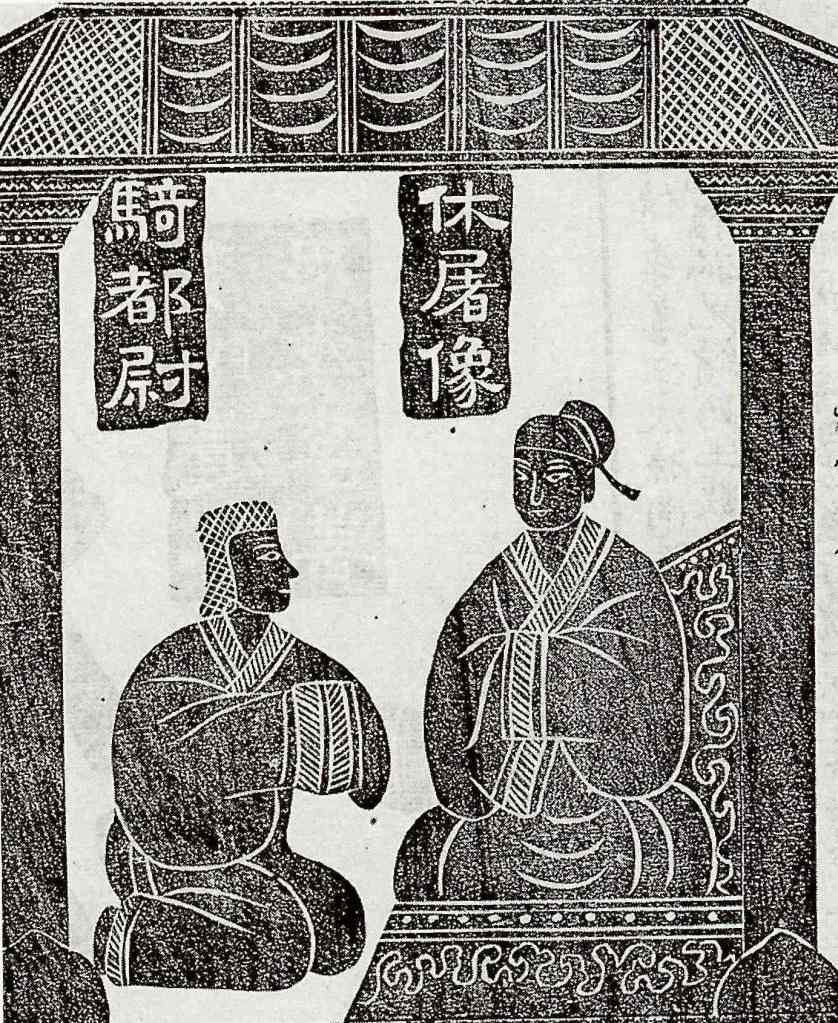
    A Stele Marked Zhang Tang’s Tomb, inside Northwest University of Political Science and Law

    The 1st year of Emperor Wu’s Yuan’ding Era (116 B.C.)

    In September of autumn, a general amnesty was declared across the nation.

    The Prince of Jidong, Liu Pengli, was haughty and unruly. One evening, he, along with several dozen of his slaves and runaway youths, engaged in robbing and killing people, plundering others belongings for sport. More than a hundred murders were uncovered. As a result, Liu Pengli was deposed from his position and exiled to Shangyong.

    The 2nd year of Emperor Wu’s Yuan’ding Era (115 B.C.)

    In November of the winter, Zhang Tang committed suicide after being found guilty of crimes.

    A rift had developed between the Director of the Censorate, Li Wen, and Zhang Tang. Zhang Tang’s favored official, Lu Yeju, secretly urged someone to report to the Emperor, accusing Li Wen of misconduct. The case was assigned to Zhang Tang, who sentenced Li Wen to death. Zhang Tang was fully aware that the accusation had been instigated by Lu Yeju. When the Emperor asked, “Where did this accusation originate?” Zhang Tang feigned surprise and replied, “This is likely the result of grievances from those who were wronged by Li Wen in the past.”

    Lu Yeju fell ill, and Zhang Tang personally massaged his feet. The Prince of Zhao, Liu Pengzu, who harbored a grudge against Zhang Tang, wrote to the Emperor, saying, “Zhang Tang, a minister, is seen massaging a lowly official’s feet, raising suspicions of a major conspiracy.” The case was referred to the Minister of Justice.

    When Lu Yeju died from illness, his brother was implicated and placed in a detention center. Zhang Tang visited the detention center to investigate other prisoners. Upon seeing Lu Yeju’s brother, he put up a front of ignorance in an attempt to exonerate him later, pretending not to remember him. Lu Yeju’s brother, unaware of Zhang Tang‘s intentions, took offense and lodged a complaint, accusing Zhang Tang of conspiring with Lu Yeju to frame Li Wen.

    The case was passed to Jian Xuan, as there had been a previous feud between Zhang Tang and Jian Xuan. Upon discovering this new information, the entire affair was thoroughly investigated, though it had not yet been finalized or reported to the Emperor.

    At the same time, a burglary of buried treasure in Emperor Wen’s Mausoleum was uncovered. Chancellor Zhuang Qingzhai, along with Zhang Tang, in accord to offer apologies to the Emperor and took full responsibility. However, when they met with the Emperor, Zhang Tang did not offer his apology. The Emperor ordered an investigation of the Chancellor by the Censorate. Zhang Tang aimed to implicate the Chancellor, intending to accuse him of “conniving” in the robbery. The Chancellor was deeply troubled by this.

    The Chief of Staff in the Chancellor’s office—Zhu Maichen, Wang Chao, and Bian Tong—were all former ministers of 2,000-picul rank, higher than Zhang Tang’s rank earlier in his career. Frequently acting as Chancellor and knowing that the three Chief of Staffs were held in high esteem, Zhang Tang sought to humble and insult them, treating them as mere staff. The three Chief-of-Staffs, harboring deep resentment, wished for his downfall. They conspired with the Chancellor to have officials arrest businessmen like Tian Xin, accusing him of having been tipped off by Zhang Tang about new policies before they were presented to the Emperor. Tian Xin had become wealthy by hoarding goods and selling them at inflated prices, sharing his profits with Zhang Tang. The accusation spread quickly.

    The Emperor asked Zhang Tang, “Whenever I take action, these businessmen seem to know beforehand and profit from it. It appears someone is informing them of my plans.” Zhang Tang did not confess, playing dumb again, “Indeed, it seems there is someone.” Jian Xuan also reported on Lu Yeju’s case. The Emperor, sensing Zhang Tang‘s deceit and manipulation, ordered Zhao Yu to sharply rebuke Zhang Tang. In response, Zhang Tang wrote a letter of apology, claiming, “The three Chief-of-Staffs are the ones who have plotted against me.” Subsequently, he took his own life.

    After Zhang Tang‘s death, his estate amounted to no more than five hundred gold coins. His younger brothers and nephews wished to give him an elaborate burial, but Zhang Tang‘s mother said, “Zhang Tang was a minister of the Emperor, yet he died amid vile rumors. Why should we give him an extravagant burial?” 

    She had his body transported on an ox-cart without a coffin. When the Emperor heard of this, he ordered a full investigation and the execution of the three Chief-of-Staffs. On December 25, Chancellor Zhuang Qingzhai was imprisoned and, like Zhang Tang, committed suicide.

    In the spring, the construction of the Bailiang Terrace began. A Dew-Collecting Plate made of bronze stood twenty zhang (60 meters) tall, with a circumference so large that it required seven grown men to embrace it. At the top of the plate was a statue of an immortal, holding out palms to collect dew. It was believed that drinking the dew droplets mixed with jade powder would grant longevity. From this day onward, the construction of palaces and edifices flourished.

    In February, Zhao Zhou, the Grand Tutor of the Crown Prince, was appointed as Chancellor.

    On March 10th, Shi Qing, the Grand Tutor of the Crown Prince, was appointed as the Grand Master of the Censorate.

    There was heavy rain and snow.

    In the summer, severe flooding occurred, causing the deaths of thousands due to starvation east of the Hangu Pass.

    During this year, Kong Jin was appointed as the Minister of Agriculture, while Sang Hongyang became the Assistant Minister of Agriculture. They gradually established transportation offices in the commanderies and principalities to facilitate the exchange and distribution of commodities.

    The value of silver decreased, causing the people to cease valuing and using it, leading to its eventual discontinuation as currency. Since then the minting of coins in the principalities and commanderies was completely prohibited. Only the three offices(bronze casting, copper analysis, technique) in Shanglin Park under the office of the Water Conservancy Commandant were allowed to mint coins, and no other coins, aside from those issued by the Three Offices, were permitted to circulate. Consequently, private coin production by the people dwindled significantly, as the cost outweighed the benefits. Only skilled craftsmen and major counterfeiters continued to engage in clandestine coin minting.

  • Comprehensive Reflections to Aid in Governance(Part 155): Silent Badmouthing

    Comprehensive Reflections to Aid in Governance

    By Sima Guang

    Translated By Yiming Yang  

    Annals of Han Book 12 Scroll 20

    Duration of 9 years

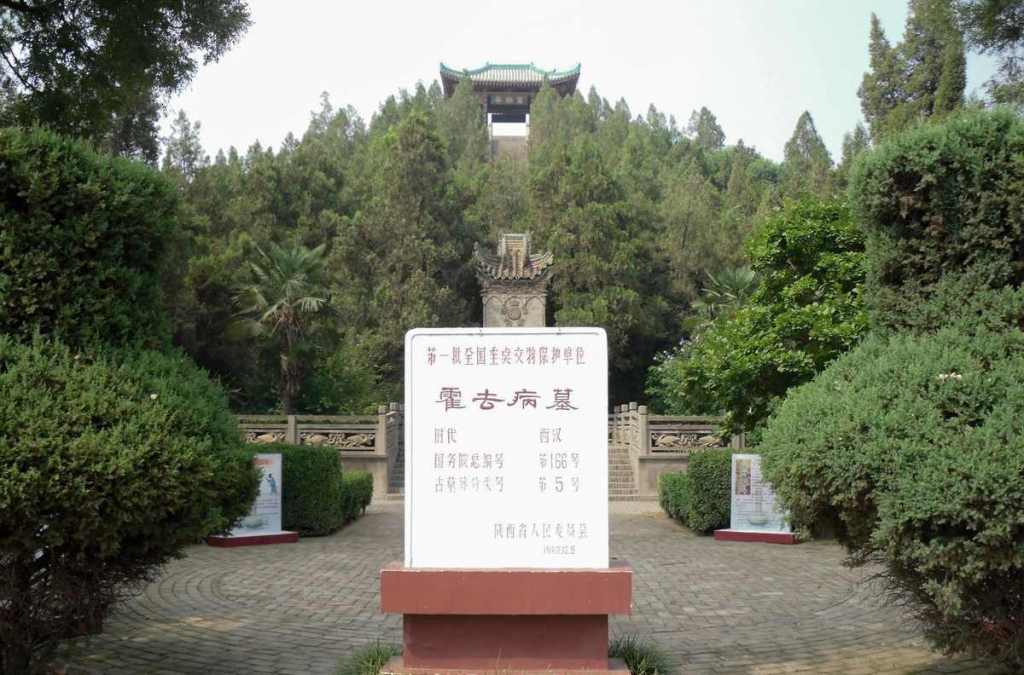
    Huo Qubing’s Tomb, Xi’an, Shaanxi Province

    The 5th year of Emperor Wu’s Yuanshou Era (118 B.C.)

    On March 11 of spring, Chancellor Li Cai was accused of appropriating empty land from Emperor Jing‘s Garden for the burial of his family. He was subsequently put on trial and, unable to endure the shame, committed suicide.

    The three-zhu coins were discontinued, and five-zhu coins were minted in their place. This change led to a rise in counterfeiting, especially in the Chu region.

    The Emperor appointed Ji An as the new Prefect of Huaiyang, located on the outskirts of the Chu region. Despite Ji An‘s humble refusal to accept the seal of authority, the decree was repeatedly insisted upon until Ji An reluctantly acquiesced. With tears in his eyes, Ji An spoke to the Emperor: “I have always thought of myself as being cast aside in ditches and valleys, never expecting to be employed by Your Majesty again. I often suffer from ailments, like dogs and horses, that rendered me incapable of handling the duties of a commandery. I am only fit to serve as a Palace Attendant, assisting in the rectification of mistakes and oversights within the imperial court.”

    The Emperor responded, “Do you disdain the position of Prefect of Huaiyang? I will call you back soon enough, but the officials and people of Huaiyang are not in their rightful places. I rely solely on your renown and stature. You will surely manage it, even from your bed.”

    After Ji An bid farewell and departed, he encountered Li Xi, the Grand Usher, and said, “By being exiled and accepting the commandery post, I have lost the opportunity to engage in state affairs with the court. The Grand Master of the Censorate, Zhang Tang, is shrewd enough to counter objections, deceptive enough to conceal faults, and skilled in the art of flattery and rhetoric. However, he refuses to speak truthfully for the good of the world, instead catering solely to the Emperor’s desires. If the Emperor dislikes something, Zhang Tang disparages it; if the Emperor likes something, Zhang Tang praises it. He eagerly engages in petty matters, using convoluted arguments to sway the Emperor’s thoughts, and employs corrupt officials to strengthen his own authority. You, being one of the Nine Ministers with access to the Emperor, must speak out early; otherwise, you will fall with him and be destroyed.”

    Li Xi, fearing Zhang Tang, dared not oppose him. Later, when Zhang Tang was prosecuted, the Emperor accused Li Xi of complicity.

    Ji An was assigned to govern Huaiyang with the salary of a minister of a feudal lord (2000 picul), where he remained for ten years until his death.

    An edict was issued to relocate corrupt officials and lawbreakers to the border regions.

    In the summer, On April 2, the Grand Tutor to the Crown Prince, Marquis Wuqiang, Zhuang Qingzhai, was appointed as Chancellor.

    The Emperor fell gravely ill at Dinghu Palace. Despite the efforts of sorcerers and physicians, there was no improvement. Youshui Fagen mentioned a shaman in Shangjun Commandery who could communicate with spirits and cure illnesses. The Emperor summoned the shaman and allowed him to preside over sacrifices at Ganquan Palace.

    As the illness worsened, an emissary was sent to consult the demigod(i.e. the shaman) for advice. The demigod responded, “The Emperor’s illness is not a cause for concern; it will soon subside. You should come to meet me at Ganquan despite how you feel.” Soon after, the Emperor’s condition improved, and he visited Ganquan Palace, recovering quickly.

    Once the illness had fully subsided, a banquet was arranged at the Shou Hall, where the demigod resided. Though the demigod could not be directly seen, his words were heard by others and sounded human. He appeared and then disappeared, accompanied by a solemn wind, and resided within curtained chambers. His words, which the Emperor received, were recorded as “The Plan.” While his advice contained nothing extraordinary and was rooted in common knowledge, the Emperor took great pleasure in it. The details were kept secret, and no one outside the palace knew of them.

    While traveling to Ganquan Palace, the Emperor passed through the Right Interior Minister’s jurisdiction and discovered many paths were neglected and poorly maintained. Enraged, the Emperor exclaimed, “Does Yi Zong think I would never use this road again?” He bit his own lip in anger.

    The 6th year of Emperor Wu’s Yuanshou Era (117 B.C.)

    In October of winter, it rained, though there was no ice.

    The previous year, the Emperor issued the min coinage edict, urging people to declare their assets and donate in the manner of Bu Shi. However, the people refused to contribute their wealth to support the county officials. As a result, Yang Ke dispatched agents to report on those who hid their assets and violated the min coinage laws. Yi Zong, seeing the agents’ actions as disruptive to the people’s lives, arrested them. The Emperor considered this an act of defying imperial orders and interfering with law enforcement, leading to Yi Zong‘s public execution.

    Chamberlain Li Gan, harboring resentment for the death of his father, Li Guang, at the hands of the Grand General Wei Qing, attacked and wounded Wei Qing. The General concealed the incident. Shortly thereafter, Li Gan accompanied the Emperor to Yong and arrived at the hunting grounds of Ganquan Palace. There, General of the Agile Cavalry, Huo Qubing, shot and killed Li Gan. At that time, Huo Qubing enjoyed great favor and held a high rank, so the Emperor covered up the killing, claiming that Li Gan was killed by a rampaging deer.

    On April 28 of the summer, in a ceremony at the Grand temple, Prince Liu Hong was named the Prince of Qi, Liu Dan as the Prince of Yan, and Liu Xu as the Prince of Guangling. This marked the precedence of the initial enunciation of the prince titles by imperial written certificates.

    Since the minting of silver and five-zhu coins, tens of thousands of officials and civilians who were caught counterfeiting coins had been executed. The number of undetected cases was countless, and practically throughout the entire country, there was no one who had not been somehow involved in the casting of metal coins. The offenders were numerous, and the officials could not execute them all.

    In June, an edict was issued to send six erudites, including Chu Da and Xu Yan, to thoroughly investigate the states and commanderies. They were tasked with identifying those engaged in illegal annexation of private properties or farm land, as well as officials, governors, and others guilty of crimes.

    In September of the autumn, the Marquis of Guanjun [Champion] and Marquis of Jinghuan, Huo Qubing, passed away. The Emperor mourned his death deeply and had a tomb constructed in his honor, shaped like Qilian Mountain.

    Huo Qubing’s father, Huo Zhongru, had completed his government service and returned home. There, he married and had a son named Huo Guang. As Huo Qubing grew older, he learned that Huo Zhongru was his father. While serving as the General of Agile Cavalry and battling against the Xiongnu, he passed through Hedong. He sent officials to invite Huo Zhongru to meet him and bought land, houses, slaves, and maidservants before departing. Upon his return, Huo Qubing brought Huo Guang with him to Chang’an, appointing him as an attendant-gentleman. Huo Guang was gradually promoted to the rank of Colonel of Royal Carriages and Grandee of Chamberlain.

    During this year, the Minister of Agriculture, Yan Yi, was executed.

    Yan Yi was renowned for his integrity and gradually rose to the position of one of the Nine Ministers. When the Emperor inquired about the creation of the white deerskin coins with Zhang Tang, Yan Yi expressed his opinion, saying, “Now, when princes and marquises offer tribute in the form of black jade discs, worth only a few thousand, the jade discs are wrapped in deerskins valued at hundreds of thousands. That is like putting the cart before the horse.” The Emperor was displeased with this response.

    Later, Zhang Tang had a personal conflict with Yan Yi. When someone accused Yan Yi of another offense, the Emperor ordered Zhang Tang to decide on his punishment. On one occasion, Yan Yi‘s retainer remarked that an edict had certain improprieties, and Yan Yi responded with a slight movement of his lips, without speaking a word. Zhang Tang reported this, “Yan Yi, one of the Nine Ministers, noticed an inappropriate decree but failed to speak out about it, instead silently expressing his negative view. He is to be sentenced to death.” This incident established a criminal precedent in the law regarding “silent badmouthing” (Silence Disaccord), leading three excellencies and ministers to flatter and seek favor by speaking in a subservient manner.

  • Comprehensive Reflections to Aid in Governance(Part 154): Favorability Contest

    Comprehensive Reflections to Aid in Governance

    By Sima Guang

    Translated By Yiming Yang  

    Annals of Han Book 11 Scroll 19 (continued)

    Gobi Desert, Mongolia

    The 4th year of Emperor Wu’s Yuanshou Era (119 B.C. continued)

    Another office of Grand Marshal was established. Both the Grand General and the General of Agile Cavalry were appointed as Grand Marshals. A decree was issued, establishing the salary and status of the General of Agile Cavalry equivalent to that of the Grand General. From then on, while Grand General Wei Qing gradually receded in prominence, the General of Agile Cavalry Huo Qubing became increasingly esteemed.

    Many of Grand General Wei Qing‘s former associates and scholars from his circle departed to serve under the General of Agile Cavalry, and they swiftly obtained official ranks and titles, except for Ren An, who refused to do so.

    The General of Agile Cavalry was a man of few words, not revealing much, yet possessing courage and a daring spirit. The Emperor once wanted to instruct him in the military strategies of Sun Wu and Wu Qi, to which he responded, “Wars are more concerned about battle strategies than learning ancient military tactics.”

    When the Emperor was constructing a palace for Huo Qubing, he asked the General of Agile Cavalry to inspect it. The general replied, “As long as the Xiongnu remain unconquered, what is the need of building a home for?” Due to such responses, the Emperor increasingly valued and favored him. 

    However, Huo Qubing rose to high positions when he was young. He didn’t pay much attention to the welfare of his soldiers. During military campaigns, the Emperor would send several tens of carriages loaded with supplies and delicacies from imperial kitchens, but upon their return, the vehicles would still be filled with leftover meat and grains, while some soldiers would suffer from hunger. When they were stationed outside the borders, the troops often lacked provisions, and sometimes they were underfed and displayed low morale, while the General of Agile Cavalry indulged in leisurely sports such as playing a ball game taju [similar to soccer], building a field for the game.  Many instances similar to these occurred.

    On the other hand, the Grand General was known for his benevolence, favoring soldiers who displayed humility and deference, endearing himself to the Emperor with his gentle and accommodating demeanor. Both individuals had such distinctive characters and principles, yet quite different.

    The Han Dynasty had slain around 80,000 to 90,000 Xiongnu, while several tens of thousands of Han soldiers had also perished. Subsequently, the Xiongnu retreated far away, and there were no more royal courts of Xiongnu to the south of the Gobi desert.

    The Han Dynasty crossed the river from the Shuofang region to the west towards Lingju, establishing canals for back and forth communication, setting up military farm offices, and deploying around 50,000 to 60,000 officers and soldiers. They gradually encroached northward into Xiongnu territory. However, due to the scarcity of horses, they ceased large-scale offensives against the Xiongnu.

    The Xiongnu employed Zhao Xin’s strategy and sent envoys to Han, using conciliatory language to request peace and marriage alliance. The Emperor sought counsel on this matter—some advocated for marriage alliance, while others proposed subjugation.

    The Chief staff of the Chancellor, Ren Chang, suggested, “The Xiongnu, having just suffered a defeat and hardship, might be made to become tributaries, visiting the court and seeking audience at the borders.”

    The Emperor dispatched Ren Chang as an envoy to the Chanyu. However, the Chanyu became greatly enraged and detained him.

    Erudite Di Shan proposed that seeking peace would be advantageous. The Emperor discussed the matter with Zhang Tang, the Grand Master of Censorate. Zhang Tang dismissed Di Shan‘s proposal, calling him an ignorant foolish scholar. 

    Di Shan retorted, “I might be foolish, but I am a faithful fool. As for the Grand Master of Censorate Zhang Tang, he is a deceitful loyalist.”

    This made the Emperor furious, and he asked, “If I were to let you be a prefect of a commandery, would you prevent the enemy from invading?” 

    Di Shan replied, “No, I could not.” 

    “How about in a county?” Di Shan replied similarly. 

    Finally, the Emperor asked, “How about in a small fortress?” 

    Di Shan, realizing the futility of arguing further and fearing the consequences of being court-martialed, replied, “I can.”

    Consequently, the Emperor sent Di Shan to a small fortress. After a month’s time, the Xiongnu beheaded Di Shan and departed. From then on, the courtiers were terrified and dared not oppose Zhang Tang.

    During this year, Ji An was dismissed from his position due to violation of laws. Yi Zong, the Prefect of Dingxiang, was appointed as the Right Interior Minister, replacing Ji An, and Wang Wenshu, the Prefect of Henei, was appointed as the Commandant of the Capital Guard.

    Before this, Ning Cheng held the post of Commandant at the Hangu Pass. People said, “One would rather encounter a nursing tiger, than face a raging Ning Cheng.” When Yi Zong became the Prefect of Nanyang, upon arriving at the Pass, Ning Cheng personally welcomed him, showing great respect. When Yi Zong reached the commandery, he put Ning’s family on trial and exterminated Ning Cheng‘s household. The people of Nanyang were terrified, all standing on one foot.

    Later, Yi Zong was transferred to be the Prefect of Dingxiang. Upon his arrival, he immediately took more than 200 people on various charges from the prison. Additionally, he arrested over 200 of relatives and friends who visited the prison, claiming they relieved shackles for prisoners on death row. On that day, more than 400 people were reported killed. This sent shockwaves through the commandery, and fear spread throughout the region.

    Around this time, Zhao Yu and Zhang Tang were known for their severity as the highest ranking Ministers. However, they emphasized legal governance in their administration. Yi Zong, on the other hand, solely focused on using oppressive methods to govern, particularly through punitive strikes like eagles on preys.

    Wang Wenshu, initially serving as the Commandant of Guangping, carefully selected around  a dozen bold and resolute officials from the commandery, using them as his henchmen. He overlooked their serious past offenses, using these crimes as leverage, and allowed them to  hunt thefts and criminals to their desire. As long as these individuals gratified his desires for more captives, they were not prosecuted, even if they had committed numerous crimes. If someone did not do his bidding, he would use their previous offenses against them, even wiping out their families. Due to his methods, the bandits and criminals from the borders of Qi and Zhao dared not approach Guangping. The reputation of Guangping became such a place that no one picks up lost articles in the street.

    Later, when Wang Wenshu was appointed as the Prefect of Henei, he arrived in September. He ordered the commandery to provide fifty privately owned horses as express couriers. He arrested numerous powerful and dishonest figures in the commandery, involving more than a thousand families implicated by association. He submitted memorials to the Emperor requesting punishment: the major offenders were executed together with their whole clans, while the minor ones were put to death, and their families’ assets were confiscated to compensate for the crimes. The edict of approval came down swiftly within two or three days, and the resulting blood flow extended for over ten li (approximately 5 kilometers), causing awe among the people of Henei for his memorial due to their rapid response. 

    By the end of December, the commandery fell silent, and people dared not travel at night. There were no thieves that dared to disturb the peace, and even in the fields, no dogs barked. For the few who managed to escape, they were pursued in neighboring commanderies and princedoms. When spring arrived, Wang Wenshu sighed and said, “Alas! If only the winter months were extended by one more month, I would have enough time for completing my initiative!”

    Upon hearing of Yi Zong, Wang Wenshu‘s actions, the Emperor considered them able administrators and promoted them to senior minister of 2000 picul salary.

    There was a man from Qi called Shaowong, known for his skills in dealing with spirits and ghosts, which attracted the Emperor’s attention. When the Emperor’s favored Madame Wang passed away, Shaowong used his methods to summon the deceased’s spirit, taking on the appearance of the deceased Madame. The Emperor glimpsed this from behind a curtain, watching this shadow play. 

    Shaowong was appointed as General Wencheng and received considerable rewards and honors, being treated with the courtesy reserved for a guest of the Emperor. General Wencheng also advised the Emperor to construct the Ganquan Palace, establishing chambers and halls within, painting images of various spirits and deities of Heaven, Earth, and the North Star, arranging offerings, and inviting celestial beings. After residing there for over a year, The magic of Shaowong‘s methods began to decline, and the spirits ceased to appear. 

    Shaowong fed a piece of silk with writing to a cow, then pretending ignorance, and said, “There’s something unusual in this cow’s belly.” When the cow was slaughtered, the silk was found, containing strange writings. The Emperor recognized the handwriting and interrogated the Shaowong, confirming that it was a forged artifact by him. Subsequently, General Wencheng was executed, but this episode was kept secret.

  • Comprehensive Reflections to Aid in Governance(Part 153): Crash Landing of The Flying General

    Comprehensive Reflections to Aid in Governance

    By Sima Guang

    Translated By Yiming Yang  

    Annals of Han Book 11 Scroll 19 (continued)

    Khentii(Langjuxu) Mountains, Mongolia

    The 4th year of Emperor Wu’s Yuanshou Era (119 B.C. continued)

    The Emperor discussed with his generals, “The Marquis of Xi, Zhao Xin, often plans on behalf of the Xiongnu. He believes that the Han forces cannot cross the desert quickly and will less likely linger. Now, with the massive mobilization of soldiers, we are sure to get what we desire.” Therefore provisions for 100,000 grain-fed horses were prepared. The Grand General, Wei Qing, and the General of Agile Cavalry, Huo Qubing, each led 50,000 cavalry.  Additionally they had 40,000 extra horses for private provisioning. Also, hundreds of thousands of infantry and supply porters followed behind the cavalry, and the daring and skilled warriors were all under the command of the General of Agile Cavalry Huo Qubing.

    The General of Agile Cavalry planned to cross the border from Dingxiang to face the Xiongnu Chanyu. Captured prisoners informed that the Chanyu had moved east. Subsequently, the General of Agile Cavalry was ordered to exit passes in Dai Commandery, while the Grand General Wei Qing went out of Dingxiang. Chamberlain, Li Guang, repeatedly requested to join the expedition. The Emperor initially refused due to his age, but eventually allowed him to be General of the Front. The Grand Coachman, Gongsun He, was appointed as the General of the Left, the Commandant of Title Ranking, Zhao Yi’ji, as the General of the Right, and Marquis Pingyang, Cao Rang, as the General of the Rear, all under the command of the Grand General. Zhao Xin, said to the Chanyu on strategy, “Once the Han forces have crossed the desert and exhausted their men and horses, the Xiongnu can easily take them prisoners.” Therefore, he sent his supply train far north and positioned elite troops to wait for the Han forces to the north of the desert.

    The Grand General Wei Qing, having advanced beyond the borders, captured a prisoner who knew the whereabouts of the Chanyu. Taking his elite troops, he went forth, while instructing the  General of the Front Li Guang to rendezvous with the forces of the General of the Right Zhao Yi’ji and proceed through the eastern route. The eastern path was circuitous, distant and lacked sufficient water and grass. Li Guang pleaded, “I am supposed to be the General of the Front and the vanguard, yet now the Grand General commands me to take the eastern path. I’ve fought the Xiongnu since adolescence, and now that I have the chance to confront the Chanyu, I wish to be in the front, to face the Chanyu first and duel with him.”

    The Grand General, aware of the private warning from the Emperor, “Li Guang is old and unlucky. It’s better not to let him confront the Chanyu because I am afraid that he might not accomplish what we want, the capture of Chanyu.” Additionally, the Grand General wished to send Gongsun Ao, recently demoted from his marquis status, to confront the Chanyu to earn merit credit, hence the transfer of the General of the Front Li Guang to the east. Li Guang, upon learning this, staunchly appealed to the Grand General. The Grand General stuck to his decision, Li Guang, without formal farewell, rose and departed, filled with deep resentment.

    The Grand General marched beyond the borders for over a thousand li, and crossing the Gobi desert, he saw the Chanyu’s forces arrayed and waiting. Thus, the Grand General ordered heavy chariots to encircle and create a camp, and then unleashed five thousand cavalry to confront the Xiongnu. The Xiongnu, in turn, released about ten thousand cavalry. As they were about to engage near sunset, a fierce wind stirred up sand and pebbles, obstructing visibility between the two armies. Taking advantage of this, the Han forces extended their left and right wings to encircle the Chanyu in a pincer maneuver.

    Assessing that the Han forces were numerous and the soldiers and horses were still robust, the Chanyu reckoned that he couldn’t contend with the Han forces in battle. Consequently, the Chanyu, riding on a team of six swift mules, accompanied by a few hundred sturdy riders, broke through the Han encirclement and fled swiftly to the northwest. It was already dusk, and both the Han and Xiongnu forces suffered about equal amounts of casualties and engaged in heavy fighting. A Xiongnu captive caught by the left wing Colonel confessed that the Chanyu had taken cover of the darkness and departed earlier. The Han troops, dispatching light cavalry, pursued the Chanyu through the night. The army of the Grand General followed behind. The Xiongnu forces were in disarray and dispersed. By dawn, having traveled over two hundred li, they failed to capture the Chanyu. Nevertheless, they seized and beheaded nine thousand enemy soldiers and reached the Tianyan Mountains and the City garrisoned by Zhao Xin, where they found the Xiongnu‘s stocked grain and replenished supplies for the Han army. They stayed for a day, burned the remaining grain in the city, and then returned.

    The General of the Front Li Guang, along with the General of the Right Zhao Yi’ji, lost their way due to a lack of local guide, which led to their arrival late for the battle against the Chanyu, missing the rendezvous with Grand General. As the Grand General returned and passed by the southern desert, he encountered the two generals. The Grand General instructed his chief of staff to question Li Guang and Zhao Yi’ji regarding their lost way, summoning Li Guang to the headquarter to file a report.

    Li Guang said, “The ranking colonels and captains are not at fault; it was my own mistake in losing the way. I will present myself to the headquarters before the higher authorities to account for my actions.”

    Li Guang then spoke to his subordinates, saying, “I have engaged in more than seventy battles with the Xiongnu, large and small, since I was sixteen. Today, I was fortunate to follow the Grand General to face the Chanyu’s forces. The Grand General transferred my command to the east route, and I lost my way. Isn’t this the will of heaven? Anyway, I am over sixty years old and do not want to face the scrutiny of bureaucratic officials anymore!” He then drew his sword and took his own life.

    Li Guang was known for his honesty and integrity; he would share rewards and gifts received with his subordinates and shared meals and drinks with his soldiers. He held the position of 2000 picul salary for over forty years, yet his family had no surplus wealth. He had long and strong arms like a gorilla and was skilled in archery; whenever he drew his bow, he wouldn’t shoot if he was not sure to hit the target. In places where there was a shortage of water, Li Guang refrained from drinking until all his soldiers had drunk enough. Similarly, when food was scarce, he abstained from eating until all his soldiers had been fed. His soldiers cherished and respected him for these reasons. Upon his death, the entire army sobbed in mourning.

    When news of his death reached the common people, regardless of whether they knew him personally or not, tears were shed by the old and young alike. However, the General of the Right, Zhao Yi’ji, being held accountable by the authorities, faced death but was pardoned and relegated to a commoner.

    After the Chanyu’s escape, his troops frequently scattered and followed him, causing disorder whenever they encountered the Han forces. For a long time, the Chanyu didn’t reunite with the majority of his forces. The Right Luli King assumed the Chanyu was dead and proclaimed himself as the new Chanyu. However, after around ten days, the real Chanyu emerged to regain his followers, causing the Right Luli King to abandon his claim to the Chanyu’s title.

    The General of the Agile Cavalry, with an equal number of cavalry and heavy chariots, had equivalent military strength to the Grand General’s forces but lacked subordinate generals. Li Gan [a son of Li Guang] and others were appointed as senior colonels, acting as his lieutenants. They traveled over two thousand li, crossing the Dai and Youbeiping, traversing the great Gobi desert, and directly confronted the east division of Xiongnu’s troops. They captured three junior kings including the Prince of Tuntou, the king of Han, and eighty-three military and civil officers, including generals, ministers, chiefs and commandants. They ascended Khentii Mountains (Langjuxu Mountain) to worship the heavens, offered sacrifices at Guyan Mountain to the earth, and reached Lake Baikal (Hanhai). They captured 74443 prisoners. 

    The Emperor increased the fiefdom of the General of the Agile Cavalry by 5,800 households. He also granted titles to four individuals, including the Youbeiping Prefect Lu Bode, and augmented the households of two marquises, including Marquis of Congbiao, Zhao Puonu, and appointed Senior Colonel Li Gan, as the Marquis within Passes with a fief. Many military officers and soldiers received official positions, rewards, and honors. However, the Grand General did not receive an increase in his fiefdom, and none of his military officers or soldiers were granted noble titles.

    When the two armies departed beyond the border passes, the tally of official and privately-owned horses amounted to a total of 140,000 horses. However, upon their return within the borders, the number of horses did not exceed 30,000.

  • Comprehensive Reflections to Aid in Governance(Part 152): Monopolizing Salt And Iron Production

    Comprehensive Reflections to Aid in Governance

    By Sima Guang

    Translated By Yiming Yang  

    Annals of Han Book 11 Scroll 19 (continued)

    Dian Lake, Kunming, Yun’nan Province. Photo by Emitchan

    The 3rd year of Emperor Wu’s Yuanshou Era (120 B.C.)

    In the spring, a comet appeared in the eastern sky.

    In May, during the summer, a general amnesty was proclaimed throughout the empire.

    During the rebellion of the Prince of Huainan, the Prince of Jiaodong, Liu Ji, had heard rumors of the matter and, sensing danger, secretly made preparations for defense. When government officials investigated the Huainan case, some testimonies implicated Prince Liu Ji. His mother, Madame Wang, the younger sister of the Empress Dowager, had a close relationship with the Emperor. Distressed by the circumstances, Liu Ji fell ill and passed away, daring not to leave a will regarding his heir.

    When the Emperor heard of his death, he was moved with compassion and appointed Liu Ji’s eldest son, Liu Xian, as the new Prince of Jiaodong. In addition, the Emperor enfeoffed Liu Ji’s younger son, Liu Qing, as the Prince of Liu’an, granting him the land that had once belonged to the Prince of Hengshan.

    In the autumn, the Xiongnu invaded the regions of Youbeiping and Dingxiang, each with several tens of thousands of cavalry. They killed and plundered over a thousand people.

    A severe flood struck the region east of Mount Xiao, causing widespread famine and scarcity among the populace. In response, the Emperor dispatched envoys to empty the granaries of various counties and commanderies, providing relief to the impoverished. However, the supplies were insufficient. The wealthy, officials, and notable individuals were encouraged to lend aid to the poor, with their names recorded on an honor roll to be presented to the court. Yet, even this was not enough to alleviate the suffering. As a result, over seven hundred thousand destitute individuals were relocated west of the passes and southward to regions around Shuofang and the Xinqinzhong area. These people were entirely dependent on the government for their clothing and sustenance, receiving assistance for several years. Officials were appointed to oversee their welfare, and their carriages moved along the road in a continuous procession. The expenses incurred in this relief effort amounted to billions, a sum beyond calculation.

    After Han acquired the territory of the Hunye King, incursions by the nomadic tribes into the Longxi, Beidi, and Shangjun Commanderies significantly decreased. In response, an edict was issued to reduce the garrison troops in these three commanderies by half, thereby alleviating the burden of conscription across the empire.

    The Emperor then set his sights on pacifying Kunming. As Kunming was home to Dian Lake, which spanned approximately three hundred square lis(one li is half a kilometer), the Emperor ordered the construction of Kunming Pond to serve as a site for naval warfare exercises. 

    During this time, the laws grew more stringent, leading to the dismissal or banishment of many officials. Military drafts became more frequent, and commoners often managed to buy their way out of service by purchasing the rank of Fifth Grandee, which led to a shortage of conscripts. Those exempted from service through the chiliarch or Fifth Grandee ranks were summoned to serve as low-ranking officials. Those unwilling to accept these positions were required to donate horses. Officials who manipulated the laws were sentenced to penal labor at the Royal Shanglin Park, where they were tasked with reclaiming wasteland and digging the Kunming Pond.

    A wonder horse was obtained from the depths of the Wowa pond, an oasis in the far Northwest. The Emperor, having recently established a music bureau, commissioned Sima Xiangru and others to compose poetry and lyrical compositions to celebrate the horse. Li Yannian, an eunuch, was appointed as Commandant of Harmony, wearing the seal of 2000-picul ranking. The poems were crafted to harmonize with the eight musical tones and often contained language drawn from the “Erya” (a classical Chinese dictionary). Scholars, familiar only with one branch of Confucius classics, found the language in these compositions incomprehensible and had to gather experts in Five Classics and study them together to decipher their meaning.

    When the wonder horse was obtained, it was incorporated into a song. Ji An, observing this, remarked, “Whenever a king creates music, it should honor the ancestors above and educate the people below. Your Majesty has obtained a horse, and now you’re turning poems into songs. But will the ancestor kings and the common people understand the meaning of these songs?” The Emperor, though silent, was clearly annoyed by the remark.

    The Emperor constantly sought scholars and officials, seemingly never satisfied with their numbers. Yet, his nature was stern and severe. Even those courtiers who had once been trusted and favored, if they committed minor offenses or engaged in trivial deceit, were swiftly punished or executed without leniency.

    Ji An, ever the voice of caution, remonstrated, saying, “Your Majesty, you exhaustively seek out talents, yet before they can be fully utilized, you have them executed. By indiscriminately punishing those with limited capabilities, I fear the pool of talented individuals throughout the realm will dwindle. Who then, will assist Your Majesty in governing?”

    Ji An spoke with indignation, but the Emperor smiled and explained, “Why worry about a scarcity of talent? It’s merely a matter of not being able to recognize them. If one could, would there be a lack of capable individuals? Talent is like a tool; if one possesses it but refuses to make the most of it, it is as good as not having it. If they are not put to death, what other way would you have me deal with them?”

    Ji An responded, “Although I cannot convince Your Majesty with my words, I still believe this approach is inappropriate. I hope Your Majesty will consider this matter carefully and rectify it moving forward. Do not dismiss my reasoning simply because I am a foolish man.”

    The Emperor turned to the courtiers and, with a wry smile, said, “If Ji An claimed to be sycophantic, that would have not been the case. He claims he is a foolish man, and that is certainly true!”

    The 4th year of Emperor Wu’s Yuanshou Era (119 B.C.)

    In the winter, officials reported, “Local officials have overly expansive expenditures, while wealthy merchants and great traders engage in metal smelting and salt boiling, accumulating fortunes amounting to tens of thousands of gold, yet they do not assist in the urgent needs of the state. We request that a currency reform to mint new coins, to meet the demands of the treasury, and that actions be taken to suppress the extravagance and those who exploit the system for personal gain.”

    At this time, within the Imperial Park, there were white deer, and the Privy Treasury possessed a surplus of silver and tin. With these resources, they created leather currency from the hides of the white deer, each piece measuring a square foot, with edges embroidered in colorful patterns. These leather notes were valued at 400,000 copper coins. Princes, dukes, and other relatives of the imperial family were required to present jade discs on top of the leather notes as part of court tributes and ceremonial offerings.

    Additionally, three types of silver coins were minted: the largest, circular in shape, bore a dragon design and was valued at 3,000 copper coins; the next size, square, featured a horse design and was valued at 500 copper coins; and the smallest, oval-shaped, bore a turtle design and was valued at 300 copper coins. The government ordered the county treasuries to withdraw half-tael coins and replace them with three-zhu (1/24 tael) coins. Counterfeiting any of these metal coins was punishable by death. Yet, despite the severity of the penalty, countless cases of both officials and commoners engaging in the counterfeiting of silver coins were reported.

    To manage these economic reforms, Dongguo Xianyang and Kong Jin were appointed as treasurers in the Ministry of Agriculture (Revenue), overseeing salt and iron affairs. Sang Hongyang rose to prominence for his adeptness in accounting. Dongguo Xianyang was a major salt-boiling operator in Qi, while Kong Jin managed large-scale smelting operations in Nanyang. Both scaled their production, generating profits worth thousands of catties of gold. Sang Hongyang, the son of a merchant from Luoyang, exhibited remarkable mental arithmetic skills from a young age, and began serving as an attendant at the age of thirteen. The trio’s influence on economic affairs was paramount, and they meticulously analyzed financial matters, down to the smallest figures.

    An edict was issued forbidding the populace from privately forging iron tools or boiling salt, under penalty of fettering the left big toe and confiscating their tools. Furthermore, ministers demanded that all merchants and craftsmen declare their assets. One thousand coins were counted as one min (also known as Guan, or one string of coins equaling one tael of silver), and a tax of 120 coins was imposed on every 2,000 min in possession. Any individual owning a carriage or boat longer than five zhang (approximately 15 meters) was also subject to this levy. Failure to declare assets resulted in a year of military service on the borders and the forfeiture of the undeclared coins. Those who brought to light on undeclared assets received half of the seized coins. This policy was primarily proposed by Zhang Tang, the Grand Master of the Censorate.

    Zhang Tang presented memorials to the court daily, discussing national expenditures to the point of exhausting the Emperor; at times, the Emperor would forget to eat. The Chancellor, Li Cai, occupied his position but refrained from engaging in governance, leaving Zhang Tang to make all decisions regarding national matters. The populace, feeling unrest and discontent, largely blamed Zhang Tang for their hardships.

    Bu Shi of Henan repeatedly offered to donate his wealth to the county authorities to support the border defenses. The Emperor, curious about Bu Shi’s motivation, sent an envoy to inquire.

    The envoy asked, “Do you wish to become an official?”

    Bu Shi replied, “I am a humble farmer and shepherd. I am not accustomed to serving in official positions, nor do I desire such a role.”

    The envoy then asked, “Is there any injustice or grievance in your family that you wish to report?”

    Bu Shi responded, “I have no disputes with anyone. I assist those in need among my fellow townspeople and educate those who lack virtue. The people in my village all live in harmony with me. Why would I feel wronged by anyone? I have nothing to report.”

    The envoy, intrigued, asked, “If that is the case, what do you wish for?”

    Bu Shi answered, “If the Emperor is punishing the Xiongnu, I believe that wise men should sacrifice themselves at the borders, and the wealthy should contribute their resources. This way, the Xiongnu can be annihilated.”

    Impressed by his words, the Emperor appreciated Bu Shi’s character and wished to set him as an example for the people. Consequently, Bu Shi was summoned and appointed as a Gentleman of the Household, bestowed with the title of Left Chief Councilor (ranked 10 out of 20 orders of merit), granted ten hectares of land, and a public announcement was made to demonstrate the Emperor’s recognition. Shortly after, Bu Shi was further promoted to the Grand Tutor of the principality of Qi.

    In the spring, a meteor was seen in the northeast. During the summer, a long comet appeared in the northwest.

  • Comprehensive Reflections to Aid in Governance(Part 151): Dimitri, from Prince, to Slave and Fidus Achates

    Comprehensive Reflections to Aid in Governance

    By Sima Guang

    Translated By Yiming Yang  

    Annals of Han Book 11 Scroll 19 (continued)

    Jin Midi and the golden status of King of Xiutu

    The 2nd year of Emperor Wu’s Yuan’shou Era (121 B.C. continued)

    The Prince of Jiangdu, Liu Jian, engaged in numerous heinous acts, including an affair with Consort Nao, the favored concubine of his father, Prince Yi, and an incestuous relationship with his younger sister, Liu Zhengchen. On one occasion, during a tremendous storm, Liu Jian went boating on Leibei Lake. He ordered two attendants to board a small boat despite the perilous conditions. The boat capsized, and the attendants struggled helplessly in the water, unable to save themselves. Liu Jian, standing by, laughed heartily and ordered no rescue, leading to their tragic deaths. He indulged in lewd and cruel activities, wantonly taking the lives of thirty-five innocent people.

    Realizing the extent of his crimes and fearing retribution, Liu Jian conspired with his consort, Cheng Guang, to invoke witchcraft. They employed a maid from Yue to pray for divine intervention, cursing the Emperor. Furthermore, upon hearing of the plots in Huainan and Hengshan, Liu Jian began manufacturing weapons and forging the imperial seal in preparation for rebellion. When these treasonous acts were discovered, the authorities demanded his arrest and execution. In the face of inevitable punishment, Liu Jian chose to take his own life, while Cheng Guang and the others involved were executed publicly. The principality of Jiangdu was thus brought to ruin.

    In the same year, Prince Kang of Jiaodong, Liu Ji, passed away.

    In the autumn, the Hunye King of the Xiongnu surrendered. At that time, the Chanyu, enraged, sought to exact vengeance upon the Hunye King and the Xiutu King in the western regions, whose forces had suffered great losses at the hands of the Han—tens of thousands slain or taken captive. The Chanyu, in his fury, intended to summon and execute these two kings. Fearing for their lives, the Hunye King and the Xiutu King secretly conspired to surrender to the Han. They first sent envoys to the border, where they were intercepted by Han forces, who relayed their intentions to the Emperor.

    At this time, the Grand Usher, Li Xi, was constructing a fortress along the Yellow River. He intercepted the Hunye King’s messengers and swiftly reported the matter to the Emperor. Suspecting that this surrender might be a ruse to launch a surprise attack, the Emperor commanded the General of Agile Cavalry, Huo Qubing, to lead his troops and meet with the Hunye King’s emissaries. The Xiutu King, regretting his decision to surrender, was killed by the Hunye King, who then assumed control over his followers.

    When General Huo Qubing crossed the Yellow River, he encountered the Hunye King’s forces. Some of the Hunye King’s subordinate commanders, seeing the Han army, hesitated to surrender and attempted to flee. Without delay, Huo Qubing struck swiftly, capturing and executing eight thousand of those who sought to escape. The Hunye King was then placed in a government carriage and sent alone to the Emperor, while the rest of the surrendered forces were escorted across the Yellow River.

    More than forty thousand surrendered, though their numbers were exaggerated to a hundred thousand. Upon reaching Chang’an, the Emperor rewarded the surrendering forces with numerous grants, enfeoffing the Hunye King with ten thousand households and bestowing upon him the title of Marquis of Luoyin. Four of his subordinate kings, including Hudu Ni, were likewise ennobled as marquises. In addition, the General of Agile Cavalry, Huo Qubing, was granted an increase of 1,700 households in his fief.

    When the Hunye King surrendered, the Han court summoned twenty thousand carriages to welcome them. However, the county officials lacked the necessary funds and were forced to borrow horses from the people. Some citizens, unwilling to part with their horses, hid them, and there were not enough horses to meet the demand. The Emperor, enraged, ordered the execution of the magistrate of Chang’an. But the Right Interior Minister, Ji An, interjected, saying, “The magistrate of Chang’an is innocent. If anyone is to be punished, let it be me. Only then will the people be willing to bring forth their horses. Moreover, the Xiongnu have abandoned their ruler and come to surrender to Han. We should gradually assimilate these migrants, county by county. How could we cause turmoil throughout the country, exhausting the resources of the Middle Kingdom to serve these outsiders and barbarians?” The Emperor fell silent.

    When the Hunye King and his followers arrived, more than five hundred merchants and traders were sentenced to death for violating the laws prohibiting trade with foreigners. Ji An requested an audience at the Gaomen Hall of Weiyang Palace and spoke: “The Xiongnu have invaded our borders, shattered our marriage alliances, and caused countless casualties when the Middle Kingdom mobilized troops to suppress them. The expenses for this campaign have been enormous. I, foolishly, suggest that Your Majesty consider taking the surrendered Xiongnu people and distributing them as slaves and servants to the families of those who died serving in the army. The spoils of war could be distributed among the people as compensation for their losses, alleviating their suffering. But now, even though tens of thousands of the Hunye have surrendered, the treasury is drained to reward them, and good citizens are levied to serve the foreigners. This is akin to pampering spoiled children. How could the common folk in Chang’an, who buy and sell, understand that the bureaucratic officials have interpreted their actions as smuggling wealth and goods across the borders and punished them for it? Your Majesty, if you cannot gain benefits from the Xiongnu to compensate the nation and, instead, wrongfully execute more than five hundred innocent people, you are protecting the leaves but damaging the branches. I humbly advise against it.”

    The Emperor, displeased, remained quiet and then remarked, “I have not heard Ji An speak for some time, and now he speaks foolishly once again.”

    In a short time, the surrendered Xiongnu were relocated and distributed across the borders of five commanderies(Longxi, Beidi, Shangjun, Shuofang, Yunzhong). These commanderies, originally situated outside the old passes but within the territory of Henan, were transformed into five satellite states, each adhering to their former customs. In the region west of Jincheng and beyond, extending from the Hexi Corridor and southern mountains to the Salt Marsh(Lop Nur), there were no Xiongnu to be found. Occasionally, there were rare visits from Xiongnu scouts, but these visits were infrequent.

    The son of the Xiutu King, Midi(sinicized form of Dimitri), along with his mother, Yanzhi (Madame/Queen), and his younger brother, Lun(sinicized form of Leo), entered imperial service. They were assigned to care for the imperial horses under the supervision of the Privy Treasurer. One day, during the Emperor’s leisure activities, when he was inspecting the horses, he was surrounded by his harem. Midi, along with several dozen others, led the horses past the hall, and while every servant man stole glances at the beauties, Midi alone dared not look. Midi, standing eight (Chinese)feet and two (Chinese)inches tall, had a stern countenance, and the horses he led were exceptionally healthy and well-groomed. The Emperor, intrigued by this, inquired about Midi‘s background. Midi spoke honestly, and the Emperor, amazed by his appearance and character, immediately ordered a bath for him, along with proper attire. He was appointed as the horse stable supervisor, later promoted to an attendant-in-waiting, then to the Commandant of Cavalry, and finally elevated to the rank of Grandee of the Chamberlain.

    As Midi grew closer to the Emperor, he made no mistakes in his service. The Emperor trusted him deeply and showered him with rewards, giving him gifts worth thousands of gold. Midi would drive for the Emperor when he went out and closely attend to him when indoors. Many among the nobility secretly complained, “Your Majesty has unwittingly elevated this boy from the barbarians and now treasures him as one of your own.” Yet, when the Emperor heard these murmurs, his esteem for Midi only grew. Because the Xiutu King had made a golden statue as an offering to the heavenly lord, the Emperor bestowed upon Midi the surname Jin, meaning “gold.”