Yiming Yang’s Blog

  • Comprehensive Reflections to Aid in Governance(Part 180): Consequence for Harboring Fugitive

    Comprehensive Reflections to Aid in Governance

    By Sima Guang

    Translated By Yiming Yang

    Annals of Han Book 15 Scroll 23 (continued)

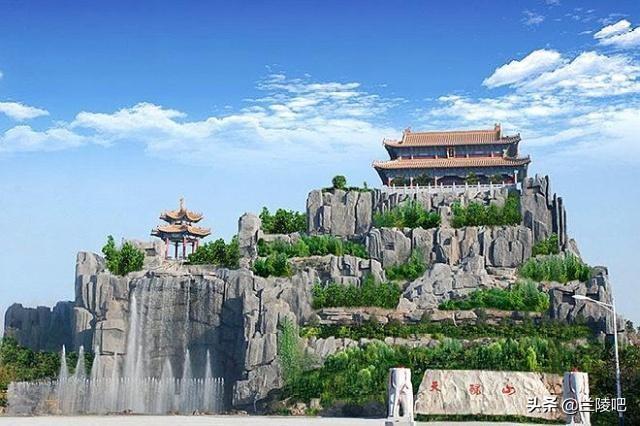
    Mount Wuhuan, Inner Mongolia

    The 1st year of Emperor Zhao’s Yuanfeng Era (80 B.C. continued)

    On September 2, Wang Xin of Fufeng was appointed Grand Master of Censorate.

    In October of winter, Du Yannian was enfeoffed as Marquis of Jianping, and Yan Cang was made Marquis of Yicheng. Ren Gong, formerly a liaison in the Chancellery, who had seized Shangguan Jie, was ennobled as Marquis of Yiyang. Wang Shanshou, junior staff of the Chancellery, who enticed Shangguan An into the Chancellery and arrested him, was granted the title of Marquis of Shangli.

    Long after, Literati Wei Xiang of Jiyin, in reply to the Emperor’s inquiry, said: “Of late, when the Prince of Yan committed injustice, Han Yi, though bound by close ties, dared to remonstrate sternly, and was slain by the Prince. Han Yi, though not kin to the Prince as Bi Gan was to King Zhou of Shang, followed Bi Gan’s principles. It is fitting that his son be rewarded, to proclaim to the world the righteousness of a loyal minister.” Accordingly, Han Yi’s son, Han Yanshou, was promoted to Grand Master of Remonstration.

    The Grand General, Huo Guang, perceiving that the court lacked seasoned officials, appointed the Chamberlain Zhang Anshi—who had long been forthright and had served as Chief of the State Secretariat since the reign of the late Emperor—as General of the Right, concurrently holding his post as Chamberlain, to serve as his second in command. Zhang Anshi was the son of the former Minister of Justice, Zhang Tang. Huo Guang also esteemed the loyalty and integrity of Du Yannian, promoting him in succession to Grand Coachman, Right Office Administrator, and Palace Liaison.

    Huo Guang upheld strict enforcement of laws and punishments, while Du Yannian oft aided in tempering them. When officials or commoners submitted petitions for reform, the court charged Du Yannian to review them and present them again for the Emperor’s decision. Those who passed vetting and were recommended for office, were appointed as county magistrates, or employed in the Chancellery or the Censorate. Their conduct was examined yearly, and if found wanting and punishment-warranted, they were disposed accordingly.

    That same year, the Xiongnu dispatched twenty thousand cavalry in four columns from the Left and Right Divisions, breaking across the frontier to plunder. Han troops pursued them, beheading many, seizing nine thousand prisoners, and capturing their leader, the Outuo King. The Han suffered no loss. The Xiongnu, fearful that the Outuo King was now in the Han’s hands, and dreading confrontation, withdrew northwest, not daring to advance southward to seek water and pasture. The Han court then recruited settlers to cultivate and guard the land of Outuo.

    The 2nd year of Emperor Zhao’s Yuanfeng Era (79 B.C.)

    In April of summer, the Emperor moved from Jianzhang Palace to Weiyang Palace.

    In June, a general amnesty was proclaimed throughout the realm.

    That year, the Xiongnu again sent nine thousand riders to garrison near the City of Defectors, preparing against the Han’s attack. They built a northern bridge over the Yuwu River, to secure their retreat. They desired marriage alliance and peace, yet feared the Han’s refusal, and so dared not first make the request. Instead, their chieftains often hinted of it to the Han envoys. Meanwhile, their raids and thefts diminished, and they received the Han emissaries with increasing courtesy, thereby seeking gradually to achieve reconciliation. The Han, in turn, strove to win their allegiance.

    The 3rd year of Emperor Zhao’s Yuanfeng Era (78 B.C.)

    In January of spring, on Mount Tai a great stone arose of itself and stood upright. In the Shanglin Park, a willow tree long dead and withered revived and came back to life. Insects fed on its leaves, forming characters that read: “Gongsun Bingyi shall be enthroned.”

    Sceptre Custodian Sui Hong of Lu memorialized, saying: “The stone that stands of itself, the withered willow revived—these portents signify that from among the common people one shall soon become Emperor. The tree that revives to life may be the restoration of the Gongsun clan, once cut off. The House of Han, inheriting the mandate from Emperor Yao, is destined now for transfer of reign. It should seek out the virtuous to receive the throne, abdicate willingly, and retain a fief of a hundred li, thus according with Heaven’s will.” For spreading blasphemy to mislead the people, Sui Hong was executed.

    At that time, the Xiongnu Chanyu dispatched the Liwu King to reconnoiter the frontier, reporting that the garrisons of Jiuquan and Zhangye were weakened. He urged an expedition to probe their defenses, hoping to recover those lands. The plan was revealed by surrendered Xiongnu, and the Emperor ordered the border commanderies to maintain strict vigilance. Soon after, the Right Tuqi King and the Liwu King led four thousand riders in three columns, raiding Ri’le, Wulan, and Panhe. The Prefect of Zhangye and the Commandant of the colony mustered their troops and engaged them, winning a great victory; only a few hundred escaped.

    The Yiqu chieftain, a vassal king, shot and killed the Liwu King with a bow. In reward, he received two hundred catties of gold, two hundred horses, and was ennobled with the title of Liwu King by the Han. From that time forth, the Xiongnu dared not again intrude into Zhangye.

    During the turmoil of the Prince of Yan and the Princess Royal Gai’s rebellions, Sang Qian, son of Sang Hongyang, fled into exile and sought refuge with Houshi Wu, once a subordinate of his father. Later, Sang Qian was seized and put to death. When a general amnesty was proclaimed, Houshi Wu came forth of his own accord and was cast into prison. The Minister of Justice, Wang Ping, and the Privy Treasurer, Xu Ren, were charged with handling the cases of those implicated in the rebellion. They submitted: “Sang Qian, though son of a traitor, fled in fear; Houshi Wu sheltered him, not as an accomplice in treason but as one guilty by association. Both should be pardoned.”

    Later, the Censorate re-examined the evidence, stating: “Sang Qian, though learned in the Confucian Classics, knew of his father’s conspiracy yet offered no opposition. His guilt is as that of the rebels themselves. Houshi Wu, a minor official of three hundred-picul rank, willingly harbored Sang Qian, unlike commoners who merely hid the implicated. Thus, he cannot be pardoned.” The case was reopened, and charges were pressed against Wang Ping and Xu Ren for showing leniency toward rebels.

    Xu Ren, being son-in-law to the Chancellor, Tian Qianqiu, feared that the Grand General Huo Guang would not hear his defense. Tian Qianqiu therefore summoned officials of 2000-picul rank together with scholars to assemble at the palace gate, and deliberate on the case of Houshi Wu. Those present, discerning the intent of Huo Guang, all deemed Houshi Wu guilty. On the morrow, Tian Qianqiu presented their judgment to the Emperor.

    The Grand General Huo Guang accused the Chancellor Tian Qianqiu of unilaterally summoning officials and scholars, thereby creating divisions within and without, stirring opposition and spreading rumor. He ordered that Wang Ping and Xu Ren be cast into prison, and the people feared the Chancellor himself might be implicated.

    The Grand Coachman, Du Yannian, memorialized the Grand General: “When officials shelter criminals, the statutes already provide for due punishment. Now, to add the charge of Houshi Wu’s impropriety may be overly severe. Moreover, the Chancellor, long known for holding nothing firmly, has been accustomed to speak fair words to his subordinates, in keeping with his nature. That he summoned the 2000-picul officials was improper, yet it accords with his old habit. The Chancellor has long served the late Emperor; there is no grave cause for dismissal, nor should he be cast aside save for open and manifested crimes.

    “Of late, the people speak much of harsh judgments and trumped-up charges. Now the Chancellor has spoken in matters of law. If in consequence he should be implicated, it will not accord with public sentiment. There may be unrest among the people, and rumors will spread. I, Du Yannian, humbly believe this will harm the Grand General’s good name.”

    The Grand General, deeming the Ministers of Justice and the Privy Treasurer guilty of trifling with the law, sent them to prison.

    In April of summer, Xu Ren took his own life. Wang Ping and Jia Shenghu, Prefect of East Pingyi, were executed by waist-chopping. The Chancellor, Tian Qianqiu, was not implicated, and continued thereafter to serve alongside Huo Guang. Du Yannian’s counsel, favoring moderation and concord in the court, helped bring resolution in similar cases.

    In winter, the Wuhuan of Liaodong rebelled. In former days, when Modu Chanyu destroyed the Donghu, their remnants scattered, settling about Mount Wuhuan and Mount Xianbei, and from these arose two eponym tribes, long subject to the Xiongnu. Later, Emperor Wu, in his eastern expedition against the Xiongnu, subdued them, and relocated the Wuhuan to Shanggu, Yuyang, Youbeiping, and the outer marches of Liaodong, to watch the Xiongnu on behalf of the Han. A Colonel of Protecting the Wuhuan was set over them, charged to guide and restrain them, and to forbid dealings with the Xiongnu. With the passing of years, the Wuhuan waxed strong and rose in rebellion.

    At that time, over three thousand Xiongnu cavalry entered Wuyuan, slaying and plundering thousands. Soon thereafter, tens of thousands of their riders ranged south along the frontier, hunting, assaulting the outer posts, and seizing officers and commoners. Yet the watchtowers of the Han stood alert, and the Xiongnu, gaining little by such raids, seldom forced the defenses. From surrendered Xiongnu it was learned that the Wuhuan had earlier despoiled the tomb of a former Chanyu, which roused the wrath of the Xiongnu, and now they were dispatching twenty thousand cavalry to smite the Wuhuan.

    The Grand General Huo Guang sought to dispatch troops to intercept and strike. He asked counsel of the Army Protector Commandant, Zhao Chongguo. Zhao Chongguo said: “The Wuhuan have oft violated the passes; now that the Xiongnu assail them, it is as though they act for the Han. Moreover, the Xiongnu seldom raid of late, and the northern frontier enjoys peace. If the barbarians fight among themselves and we send troops to intervene, stirring disorder and kindling strife, it is not a prudent course.”

    Huo Guang then consulted the General of Household, Fan Mingyou, who judged it feasible to advance. Fan Mingyou was accordingly appointed General of Crossing Liao and led twenty thousand cavalry to Liaodong. When the Xiongnu heard of the Han army’s arrival, they withdrew.

    At first, Huo Guang had warned Fan Mingyou not to let the mobilization be wasted, and if he could not overtake the Xiongnu, to strike the Wuhuan instead. The Wuhuan, having just been harried by the Xiongnu, were weakened. Fan Mingyou attacked them, slew over six thousand, and took the heads of three kings. Thereafter, the Xiongnu, in fear of the Han, dared not again make incursions.

  • Comprehensive Reflections to Aid in Governance(Part 179): Teenager Emperor Not to Be Fooled

    Comprehensive Reflections to Aid in Governance

    By Sima Guang

    Translated By Yiming Yang  

    Annals of Han Book 15 Scroll 23 (continued)

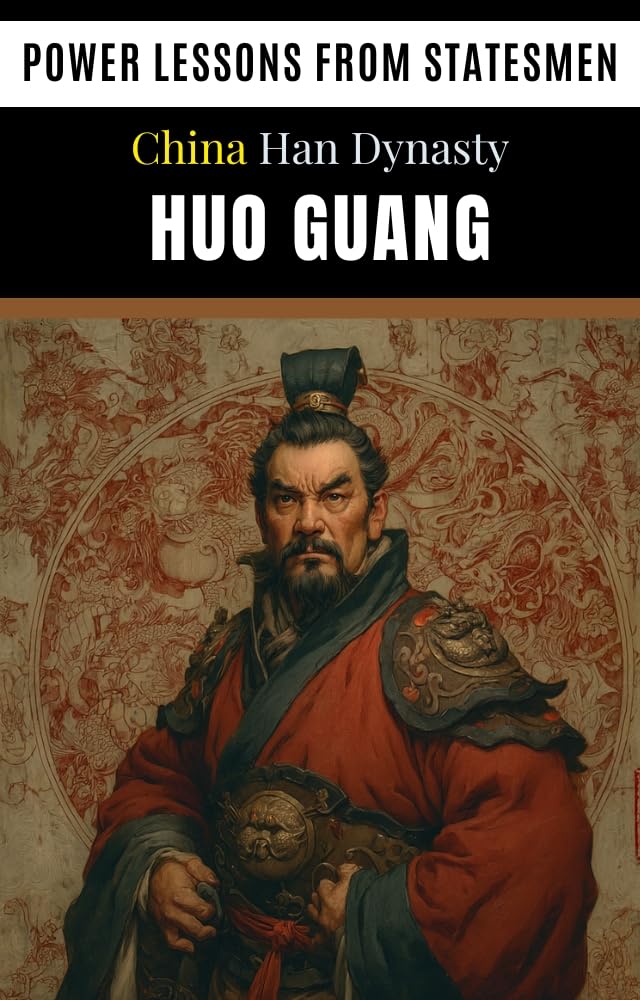
    A Idol of Huo Guang in City God Temple of Shanghai

    The 1st year of Emperor Zhao’s Yuanfeng Era (80 B.C.)

    In spring, the Di tribe of Wudu commandery rebelled. The Bearer of the Mace, Mashi Jian, the Marquis of Longluo, Han Zeng, and the Grand Herald, Tian Guangming, were dispatched, leading convicts drawn from the prisons of the three metropolitan districts and the Ministry of Ceremonies, to suppress the revolt. All who took part in the campaign were exempted from their punishments.

    In June of summer, a general amnesty was proclaimed throughout the realm.

    In autumn, on July 6, there was a total eclipse of the sun. In August, the reign era was changed.

    After Shangguan Jie and his son rose to high station, they sought to requite the Princess Royal(Gai). They endeavored to obtain for her lover, Ding Wairen, the title of marquis, but Huo Guang refused. They then sought to make him Grandee of the Chamberlain, so that he might be summoned to court, but this also was denied. Thereupon the Princess Royal(Gai) bore deep resentment against Huo Guang; and Shangguan Jie and Shangguan An, ashamed of their failure to advance Ding Wairen, shared in her displeasure.

    Moreover, the father-in-law of Shangguan Jie favored a man named Chongguo, Supervisor of Imperial Medicine. Chongguo trespassed into the bedchamber of the inner court, was cast into prison, his death impending as winter drew near. To redeem him, the Princess Royal(Gai) was compelled to offer twenty horses; only then was his sentence reduced. From this, Shangguan Jie and Shangguan An came to resent Huo Guang deeply, yet they strove to ingratiate themselves with the Princess Royal(Gai).

    Since the reign of the late Emperor, Shangguan Jie had served among the Nine Ministers, ranking above Huo Guang. Later, both father and son were made generals, and the Empress was daughter to Shangguan An, while Huo Guang was her maternal grandfather. In time, Huo Guang gradually assumed control of court affairs, and thus the Shangguan clan contended with him for power.

    Prince of Yan, Liu Dan, elder brother of the Emperor, harbored resentment for not being permitted to ascend the throne, and nursed his grievances for long. The Grand Master of Censorate, Sang Hongyang, had instituted the monopolies on liquor, salt, and iron, priding himself on replenishing the treasury. Yet he grew discontent with Huo Guang for failing to secure offices for his sons. Thus, the Princess Royal(Gai), Shangguan Jie, Shangguan An, Sang Hongyang, and Liu Dan came together in conspiracy.

    Prince Liu Dan sent more than ten envoys, among them Sun Zongzhi, bearing gold, treasure, and steeds in abundance, to bribe the Princess Royal(Gai), Shangguan Jie, Sang Hongyang, and others. Shangguan Jie and his faction further contrived to draft a memorial in Liu Dan’s name, falsely declaring: “Huo Guang has gone beyond the capital to review the Capital Guard and the Feathered Forest troops. His attendants clear the way as though for the Emperor himself, and the Director of the Imperial Kitchen makes advance preparations for his feasts.”

    The memorial also alleged: “Su Wu was detained by the Xiongnu for twenty years without yielding, yet upon return was made mere Minister of Foreign Affairs. Yang Chang, chief-of-staff to the Grand General, though without merit, was appointed Commandant of the Grain Foraging.  Furthermore, Huo Guang underhandedly called up colonels to strengthen the office of Grand General. Huo Guang hoards power and lives in indulgence, raising suspicion of imminent peril. I, Liu Dan, am willing to return the seal of my princedom, join the Imperial Guard, and expose traitors and their plots.”

    When Huo Guang was absent on leave, Shangguan Jie sought to act from within by presenting the memorial, expecting Sang Hongyang and others to join in demanding Huo Guang’s removal. Yet when the memorial was laid before the throne, the Emperor took no action.

    On the morrow, when Huo Guang heard of it, he halted at the War Planning Chamber and dared not enter the main hall. The Emperor asked, “Where is the Grand General?” 

    General of the Left, Shangguan Jie, replied: “He has been accused by Prince Liu Dan, and therefore dares not enter.”

    An edict summoned the Grand General. Huo Guang entered, his cap doffed, and bowed low in apology. The Emperor said: “General, put on your cap! I know the accusations in this memorial are false. You are not guilty.”

    Huo Guang asked: “How does Your Majesty know this?” 

    The Emperor said: “Your inspection of the Guard Officers at Guangming Pavillion was recent, and the order to call up colonels was issued within ten days. How could Prince Liu Dan, a thousand miles away, know of it? Moreover, had you plotted wrongdoing, there would have been no need to summon colonels.”

    At that time, the Emperor was only fourteen years of age, and the ministers of the State Secretariat and the courtiers alike were astonished. The messenger who had submitted the memorial vanished timely, and a great search was made for him. Shangguan Jie and his faction, stricken with fear, pleaded with the Emperor, saying: “This matter is not worth pursuing.” The Emperor gave no ear.

    Thereafter, those who conspired with Shangguan Jie sought again to slander Huo Guang, but the Emperor grew angry and rebuked them, saying: “The Grand General is a loyal minister, appointed by the late Emperor to aid me. Whoever defames him shall be punished!”

    From that time forth, Shangguan Jie and the rest dared not again speak ill of Huo Guang.

    Li Deyu’s commentary: The virtue of a sovereign lies foremost in sagacity. With sagacity, falsehood is made plain, and a hundred evils cannot be concealed. Emperor Zhao of Han was such a person. King Cheng of Zhou should be ashamed; even Emperor Gaozu, Emperor Wen, and Emperor Jing of Han cannot compare.

    King Cheng, upon hearing slanders from Uncle Guan and Uncle Cai, drove the Duke of Zhou to a reluctant eastward campaign. Emperor Gaozu, upon learning that Chen Ping had forsaken Wei and turned from Chu, nearly cast aside his loyal minister. Emperor Wen, misled by rumor that Ji Bu was drunken and unfit for office, dismissed him back to his home; suspecting Jia Yi of holding too much power and sowing disorder, he kept distance from him as well. Emperor Jing, trusting the scheme that the execution of Chao Cuo would quell revolt, put to death one of the Three Excellencies.

    Thus it is said: “Where there is first suspicion in the heart, thereafter comes the talk of slander.” If Emperor Zhao were aided by Yi Yinand Lü Shang, then King Chengand King Kangof Zhouwould not have been his equals.

    Shangguan Jie and his faction plotted with the Princess Royal(Gai) to host a banquet, inviting Huo Guang and laying an ambush to slay him. Thereafter they would depose the Emperor and raise the Prince of Yan, Liu Dan, to the throne. Liu Dan sent secret letters by the postal service, promising to enfeoff Shangguan Jie as king, and forged alliances with many powerful men of the commanderies and principalities.

    When Liu Dan consulted his Prime Minister, Ping, the latter said: “When Your Grace once conspired with Liu Ze, the plot was exposed. Liu Ze boasted of his talents and was reckless. Now I hear that the General of the Left is rash and indiscreet, and the General of Chariots and Cavalry is young and arrogant. I fear that, as with Liu Ze, the affair will not succeed; and if it should succeed, they may turn against Your Grace.”

    Liu Dan answered: “Of late a man came forth, claiming to be the former Crown Prince. The people of Chang’an were thrown into tumult, and the uproar could scarcely be quelled. The Grand General, fearful, dispatched troops in precaution. I am the late Emperor’s eldest son, and all the people know me. Why then should there be fear of betrayal?”

    Later he told his ministers: “The Princess Royal says that the great obstacle lies only with the Grand General and with the General of the Right, Wang Mang. Now the General of the Right is dead, and the Chancellor is ill—fortune is with us, and success is nearly certain. Soon all shall be proven.” He ordered his ministers to pack their goods and prepare for departure.

    Shangguan An further conspired to ensnare the Prince of Yan, put him to death, and then depose the Emperor, setting Shangguan Jie upon the throne. Some asked, “What shall be done with the Empress?”

    Shangguan An replied: “When a hound startles a moose, should one trouble himself over a hare? Moreover, the Empress serves for honor and station; once imperial favor shifts, it would be unattainable for her to survive even if she wanted to be a maid. This is an opportunity rare in a hundred generations!”

    At that time, the father of an attendant to the Princess Royal, Yan Cang, was serving as a tax collector. Learning of the plot, he disclosed it to the Minister of Agriculture, Yang Chang. Yang Chang, ever cautious and fearful of entanglement, dared not speak openly. Feigning illness, he took a sick leave and informed the Grand Master of Remonstration, Du Yannian, who thereupon reported it to the throne.

    In September, an edict commanded the Chancellor to lead the officials of two-thousand-picul rank and above to seize Sun Zongzhi, Shangguan Jie, Shangguan An, Sang Hongyang, Ding Wairen, and others, together with their clans, and all were executed. The Princess Royal Gai took her own life.

    When the Prince of Yan, Liu Dan, heard this, he summoned his Prime Minister, Ping, and said: “The plot has failed. Shall we now rise in revolt?” Ping replied: “The General of the Left is already dead, and the affair is known to all. It cannot be done.”

    The prince, in distress, held a farewell feast with his ministers and consorts. At that time, an edict was issued censuring Liu Dan. Liu Dan then took the ribbon of his princely seal and hanged himself; more than twenty, including his queen and favored consort, followed him in death.The Emperor extended clemency, pardoning Liu Dan’s son, Liu Jian, stripping him of titles to commoner rank. Liu Dan was granted the posthumous title “Prince La.” The Empress, being young, uninvolved in the plot, and also granddaughter of Huo Guang, was spared deposition.

  • Comprehensive Reflections to Aid in Governance(Part 178): Face-to-Face between Su Wu and Li Ling

    Comprehensive Reflections to Aid in Governance

    By Sima Guang

    Translated By Yiming Yang  

    Annals of Han Book 15 Scroll 23 (continued)

    Frozen Lake Baikal near Olkhon island, Photo by Sergey Pesterev

    The 6th year of Emperor Zhao’s Shiyuan Era (81 B.C.)

    In February of spring, an edict was issued, commanding officials to inquire within the commanderies and counties regarding the selection of men of virtue and learning, the grievances and priorities of the people, and the essentials of education and culture. The consensus submitted said: “It is fitting to abolish the state monopolies on salt, iron, liquor, and regulated trade, and not contend with the people for profit. By showing frugality and moderation, then will education and culture be nourished.” 

    But Sang Hongyang opposed, saying: “These are the foundations of the state’s great enterprise, the means to control the barbarians, secure the borders, and supply the realm. They cannot be abolished.” Thus began the debate on salt and iron trade.

    At that time, Su Wu was banished to the northern sea[Lake Baikal]. Suffering want, he dug for wild rodents and ate grass seeds to sustain life, for his provisions were oft cut off. He tended goats, holding the scepter of Han court in his hand; whether lying down or rising, he grasped it still, though its tassels had long since fallen away.

    In the Han court, Su Wu and Li Ling both had served as privy counselors. When Li Ling surrendered to the Xiongnu, he dared not seek a meeting with Su Wu. After some years, the Chanyu sent Li Ling to the northern sea to persuade him.

    Li Ling prepared a feast with music for Su Wu, and said: “The Chanyu, knowing the closeness between Ziqing[Su Wu’s courtesy name] and me, has sent me to persuade you. He truly desires to treat you with favor. There is no path by which you may return to Han; your suffering is but in vain. In this wasteland, cut off from men, who can witness your loyalty and righteousness?

    “Your two brothers, once implicated, have already taken their own lives. When I departed, your mother, the Grand Lady, had passed away. I heard that your wife, being still young, has remarried. You have two younger sisters, two daughters, and a son. More than ten years have passed, and none knows their fate. Life is but morning dew; why torment yourself with hardship for so long?

    “When I, Li Ling, first surrendered, I was like a mad man, ever regretting my betrayal of Han, all the more when my aged mother was bound in prison. Your unwillingness to surrender cannot surpass that of Li Ling. However, the Emperor grows old, laws are uncertain, and many loyal ministers have already been exterminated unjustly. The time is perilous and unpredictable—whom then, Ziqing, do you still desire to serve?”

    Su Wu said: “The honors achieved by my father and his sons, though we were men of no station, are all by the grace of the Son of Heaven. We were entrusted with commands as generals, our ranks raised to marquises. My brothers attended the Emperor closely, and I myself wished to devote my body and soul. Now, if I may die to prove my loyalty, though it be by execution or in the cauldron of boiling water, I shall accept it with gladness. To serve the ruler is as to serve one’s father; if a son dies for his father, he has no regrets. Speak no more of this!”

    After some days of feasting and drinking with Su Wu, Li Ling again said: “Ziqing, pray listen once more to the words of Li Ling!” 

    Su Wu cut him off: “I have long reckoned myself as one already dead. If the Chanyu desires the surrender of Su Wu, then let us first complete today’s joy, and I will die before you willingly.”

    Li Ling, moved by his steadfastness, sighed and said: “Alas! Truly you are a man of utmost righteousness. The crimes of Li Ling and Wei Lü reach up to the sky when set beside you!” Tears fell down his face, wetting his lapels.  Li Ling bid adieu to Su Wu, leaving several tens of cattle and sheep as a gift.

    Later, Li Ling returned to the northern sea(Lake Baikal) and told Su Wu of Emperor Wu’s death. Su Wu wailed in grief, shed tears, and coughed blood. By day and by night he mourned, and this lasted for many months.

    When Huyandi became Chanyu, the Xiongnu’s Queen Dowager Yanzhi held sway and wielded power improperly. Discord arose within, and they feared an attack from the Han. Then Wei Lü counseled the Chanyu, proposing peace. When Han envoys came, they inquired after Su Wu and his men, but the Xiongnu falsely claimed that Su Wu had been dead already.

    Afterwards, Han envoys again came to the Xiongnu. At that time, Chang Hui, who had served as Su Wu’s assistant, secretly met with the envoy and told him what to say: “The Son of Heaven went hunting in Shanglin Park. He caught a wild goose, and on its leg was tied a silk slip, upon which was written that Su Wu and his men are held in a marshland.” The envoy, taking these words, presented them before the Chanyu. The Chanyu, greatly startled, turned his eyes about and said: “Su Wu and the others are indeed here.” He then released Su Wu together with Ma Hong, sending them back to the Han.

    Ma Hong had once been sent as assistant to the Grandee of Chamberlain, Wang Zhong, envoy to the Western Regions. When Wang Zhong perished in battle, Ma Hong was seized by the Xiongnu. Though pressed, he would not yield, but remained steadfast. Now the Xiongnu returned the two men to the Han, as a token of goodwill.

    Li Ling made a feast for Su Wu, and said: “Now you return home, your fame spreads among the Xiongnu and you are admired in the Han. Even the bamboo annals and painted scrolls of antiquity cannot fully extol the deeds of Ziqing! I, Li Ling, though weak and timid, if the Han court had shown lenience toward my guilt and cared for my aged mother, I would have borne the shame, fulfilled my long-cherished intent, and, like Cao Mo of Qi, sought a covenant of peace between Han and the Xiongnu. This is what Li Ling has never forgotten. Yet they slaughtered my family with collective punishment—this crime is beyond measure! What remains for Li Ling to look back upon? It is finished. I only hope Ziqing will understand my heart.” Tears streamed down his face, and he took leave of Su Wu.

    The Chanyu then summoned Su Wu together with his surviving subordinates; save those who had surrendered or died, nine men in all returned with him. When they reached the capital, an edict commanded Su Wu to offer a grand sacrifice of ox, sheep, and pig at the mausoleum of Emperor Wu. He was appointed Minister of Foreign Affairs, holding rank of two thousand piculs, and was granted two million coins, two acres of public land, and a residence in the capital.

    Su Wu had dwelt among the Xiongnu for nineteen years. He departed in his prime, yet when he returned, his hair and beard were white. Huo Guang, Shangguan Jie, and Li Ling had been close friends. Huo Guang sent Li Ling’s old friend, Ren Lizheng of Longxi, with three others, to summon him back from Xiongnu. But Li Ling refused, saying: “To return is easy, but a man cannot endure repeated humiliation.” Thus he chose to remain and die among the Xiongnu.

    In summer, there was drought.

    In July of autumn, the Emperor, following the counsel of the worthy and learned, abolished the offices that managed the monopoly on liquor and regulated trade. By the end of Emperor Wu’s reign, the empire was depleted, and the population reduced by half. Huo Guang, discerning the urgency of the times, eased burdens and lessened taxes, bringing the people respite. With peace made with the Xiongnu, the populace began to recover, and the policies of Emperor Wen and Emperor Jing were gradually restored.

    An edict honored the Marquis of Gouding, Wu Bo, who had led his tribesmen in suppressing rebellion, elevating him to King of Gouding. Tian Guangming was likewise ennobled as a Marquis within Passes.

  • Comprehensive Reflections to Aid in Governance(Part 177): Ghost of Crown Prince Wei

    Comprehensive Reflections to Aid in Governance

    By Sima Guang

    Translated By Yiming Yang  

    Annals of Han Book 15 Scroll 23 (continued)

    Duchy of Wei(Wey) in the late Spring and Autumn period

    The 3rd year of Emperor Zhao’s Shiyuan Era (84 B.C.)

    In February of spring, a meteor was seen in the northwest.

    In winter, On November 1, the sun was eclipsed.

    Huo Guang and Shangguan Jie were bound in close friendship. When Huo Guang took leave of affairs, Shangguan Jie would assume his duties. Huo Guang’s daughter was wed to Shangguan Jie’s son, Shangguan An. To them was born a daughter, then five years of age. Shangguan Jie desired that the girl be brought into the palace through Huo Guang’s influence; but Huo Guang deemed her too young and refused.

    Princess Royal Gai had illicit relations with Ding Wairen of He’jian, a retainer of her son. Shangguan An was Ding Wairen’s friend, and spoke to him, “My daughter’s beauty is without peer. If, by the Princess Royal Gai’s connection, she may be admitted to the harem, and in time become Empress, then my father and I shall hold great strength in court. As for you—by the custom of the Han, princesses are wed to marquises; why then should you doubt that you will not be made a marquis?”

    Ding Wairen was pleased, and conveyed these words to the Princess Royal Gai. The Princess Royal Gai consented, and ordered that Shangguan An’s daughter enter the palace as a consort. Shangguan An was thereupon appointed Commandant of Cavalry.

    The 4th year of Emperor Zhao’s Shiyuan Era (83 B.C.)

    On March 25 of spring, Empress Shangguan was established, and a general amnesty was proclaimed throughout the realm.

    In the southwest, the tribes of Gu Zeng and Ye Yu rose again in rebellion. The Commandant of Water Conservancy, Lü Bihu, was ordered to lead the troops of Yizhou against them. But Lü Bihu, being fearful, did not advance. The barbarians slew the Governor of Yizhou, and, pressing their advantage, fought with Lü Bihu. More than four thousand soldiers were slain or drowned. In winter, the Grand Herald, Tian Guangming, was sent to subdue them.

    That year, the Minister of Justice, Li Zhong, was convicted of sanctioning criminals on death roll, sentenced to death, and his corpse cast into the marketplace.

    In the same year, Shangguan An was made General of Chariots and Cavalry.

    The 5th year of Emperor Zhao’s Shiyuan Era (82 B.C.)

    In January of spring, the Emperor’s maternal grandfather, Zhao Fu, was posthumously honored with the title Marquis of Shuncheng. The Marquis of Shuncheng had a sister, Zhao Junxu, who was enriched with a grant of two million coins, slaves, and a residence. Each of her brothers, according to their closeness to the throne, was rewarded with gifts, but none of them were employed in government or awarded titles.

    At that time, a man driving a cart drawn by a yellow calf arrived at the northern gate, claiming to be the Crown Prince Wei, Liu Ju. The matter was reported by the Office of Public Transportation. An edict was issued, commanding the Three Excellencies, ministers, generals, and officials of two-thousand-picul rank to investigate and ascertain the truth. Tens of thousands of people gathered in Chang’an to witness the event, and the General of the Right mobilized troops to guard against disturbances. The Chancellor, the Censors, and the officials of two-thousand-picul rank all assembled, yet none dared to speak.

    Later, the Intendant of Jingzhao, Juan Buyi, arrived and ordered his subordinates to arrest the man. Some advised waiting until the truth could be verified, but Juan Buyi declared: “Why hesitate over the so-called Crown Prince Wei? In the past, Kuai Kui, Duke Zhuang of Wey, defied orders and fled, yet he was rejected by his son Kuai Zhe, Duke Chu of Wey, as recorded approvingly in the Spring and Autumn Annals. The Crown Prince Wei committed offenses against the late Emperor. Even if he had not yet met his end, to come forth now of his own accord still marks him as a criminal!”

    The man was seized and thrown into the imperial prison. The Emperor and the Grand General Huo Guang commended Juan Buyi, saying: “Officials and ministers should be men proficient in the Classics and upright in righteousness.”

    Thus Juan Buyi rose to fame in the court, and even those in positions of power regarded themselves as his inferiors. The Minister of Justice investigated the matter and discovered that the man was in fact a swindler named Cheng Fangsui from Xiayang, who had been practicing divination by casting lots in Hu County. A former attendant of the Crown Prince had once consulted Cheng Fangsui and remarked, “Your appearance bears a striking resemblance to the Crown Prince Wei.” Cheng Fangsui seized upon this comment, hoping thereby to gain wealth and rank. Found guilty of deception, he was sentenced to be waist-chopped.

    In the sixth month of summer, Shangguan An was ennobled as Marquis of Sang’le. Arrogant and self-indulgent, Shangguan An was often the recipient of lavish gifts within the palace. In the company of guests, he would boast of his intimacy with the Emperor, declaring: “I drank merrily with my son-in-law! When I see the clothes he wears, I feel compelled to return home and burn all my own garments.” When his son fell ill and died, he looked upward and cursed Heaven. His conduct was obstinate and recalcitrant.

    The commanderies of Dan’er (Hainan Island) and Zhenfan (in Korea) were abolished.

    In autumn, the Grand Herald Tian Guangming and the Judge General Wang Ping led an attack against rebels in Yizhou, beheading and capturing more than thirty thousand of the indigenous people and seizing over fifty thousand head of livestock.

    Grandee of Remonstration Du Yannian, seeing the extravagance and frequent military expeditions after the reign of Emperor Wu, repeatedly counseled the Grand General Huo Guang, saying: “The harvests have been poor for consecutive years, and the displaced people have not yet fully returned to their homes. It would be wise to emulate the governance of Emperor Wen—practicing frugality, leniency, and harmony; attuning to the will of Heaven, bringing joy to the people, and in time the seasons will improve.” Huo Guang accepted his advice. Du Yannian was the son of the former Grand Master of Censorate, Du Zhou.

  • Comprehensive Reflections to Aid in Governance(Part 176): Contenders to The Throne

    Comprehensive Reflections to Aid in Governance

    By Sima Guang

    Translated By Yiming Yang  

    Annals of Han Book 15 Scroll 23

    Duration of 12 years

    The Ruins of the Xiongnu’s Court Longcheng(Dragon City), Mongolia

    The 1st year of Emperor Zhao’s Shiyuan Era (86 B.C.)

    In summer, the tribes of twenty-four towns in Yizhou rose in rebellion, numbering more than thirty thousand. The Commandant of Waterways, Lü Bihu, summoned officials and civilians, and drew forth the troops of Qianwei and Shu commanderies to strike them. The rebels were routed, and a great victory was won.

    In July of autumn, a general amnesty was proclaimed throughout the realm.

    Heavy rains endured until October, the waters surged and swept away the bridge upon the Wei River.

    When Emperor Wu first passed away, the new Emperor issued an edict of mourning to all the feudal lords. The Prince of Yan, Liu Dan, on receiving it, declined to wear mourning garb, saying, “The seal-envelope is smaller than before; surely some irregularity has arisen at the capital.” He dispatched his trusted men Shouxi Chang, Sun Zongzhi, Wang Ru, and others to Chang’an, outwardly to inquire into ritual observances, but in truth to spy upon court affairs.

    The Son of Heaven, by decree, sent gracious words and bestowed gifts upon Liu Dan: three hundred thousand coins, with an increase of thirteen thousand households in his fief. Yet Liu Dan waxed wroth, saying, “It is I who should be enthroned as Emperor, not be given trifles.”

    He conspired with his kin, the Prince of Zhongshan, Liu Chang, and Liu Ze, grandson of the Prince of Qi. Together they forged false decrees, alleging the late Emperor Wu having granted them governance and personnel of principalities, urging them to strengthen their armaments and make preparations beyond the ordinary.

    The Gentleman of the Household, Cheng Zhen, admonished Liu Dan, saying, “Your Highness, why idly contend for what is yours by right? You must rise and seize it. When Your Highness raises the standard, even the women of the realm will rally to your cause.”

    Thus Liu Dan entered into a secret covenant with Liu Ze, and together they composed a false proclamation to be spread abroad, declaring, “The young sovereign is no true son of Emperor Wu, but one foisted upon the throne by ministers. Let the whole realm rise together and strike him down!” Thereupon emissaries were dispatched to the provinces, sowing sedition among the people.

    Liu Ze plotted to raise troops and march upon Linzi, intending to slay the Inspector of Qingzhou, Juan Buyi. Liu Dan gathered disloyal men from the provinces, amassed copper and iron to forge armor, conducted wapenshaws of his horsemen, chariots and infantry officers, and held great hunts to drill his soldiers, awaiting the appointed day.

    The Palace Gentleman Han Yi and others often remonstrated with him, but Liu Dan grew wrathful, and slew fifteen men, Han Yi among them.

    At that time, the Marquis of Ping, Liu Cheng, discerned Liu Ze’s treachery and secretly informed Juan Buyi. In August, Juan Buyi seized Liu Ze and his accomplices, and reported the matter to the throne.

    The Son of Heaven dispatched the Associate Grand Herald to investigate, and summoned the Prince of Yan. By edict it was declared: “The Prince of Yan, being of close kin, shall be spared punishment.” Liu Ze and his followers were executed. Juan Buyi was promoted to Intendant of the Jingzhao(the Capital).

    Juan Buyi, as Intendant of the Jingzhao, was held in reverence by both officials and the people. Whenever he went forth to circuit the counties or to review the prisons, his mother would inquire of him, saying, “Have you redressed any wrongs? How many have been acquitted?”

    Whenever Juan Buyi overturned false judgments, his mother rejoiced greatly, her countenance more radiant than at other times. But if no injustices were set right, she grew wrathful and refused food. Thus Juan Buyi, in office, was stern yet not harsh, severe yet not cruel, ever weighing fairness in his judgments.

    On September 2, Marquis Jing of Du, Jīn Mìdī, passed away. Earlier, when Emperor Wu lay ill, a testamentary decree had ordered that Jīn Mìdī be enfeoffed as Marquis of Du, Shangguan Jie as Marquis of Anyang, and Huo Guang as Marquis of Bolu, in recognition of their merits in subduing rebels such as Ma Heluo. Yet Jīn Mìdī, considering the tender age of the new Emperor, declined the title; Huo Guang and the others likewise did not dare to accept.

    When Jīn Mìdī was stricken with grave illness, Huo Guang memorialized that he should be ennobled. As Jīn Mìdī lay upon his bed, the seal and ribbon were brought to him; he received them, but died that very day.

    His two sons, Jin Shang and Jin Jian, both served as attendants to the new Emperor, being of near equal age.  They slept and ate together. Jin Shang was appointed Commandant of the Imperial Chariot, and Jin Jian Commandant of the Imperial Cavalry.

    After Jin Shang inherited his father’s marquisate, he bore two ribbons. The Emperor said to General Huo Guang, “The two brothers of the Jīn clan—should both of them wear two ribbons?”

    Huo Guang replied, “Jin Shang inherited his father’s marquisate, thus he wears one ribbon more.”

    The Emperor smiled, saying, “But is not the granting of titles a matter between you and me, General?”

    Huo Guang answered, “It was the decree of the late Emperor, that titles be bestowed according to merit.” Thus the matter was put to rest.

    In the intercalary month of October, the former Minister of Justice, Wang Ping, and others were dispatched, bearing the imperial sceptre, to make circuits through the provinces, to seek out men of virtue, to hear the grievances of the people, and to rectify cases of injustice and incompetence.

    That winter was unseasonably warm, and no ice was formed.

    The 2nd year of Emperor Zhao’s Shiyuan Era (85 B.C.)

    In January of spring, General Huo Guang was enfeoffed as Marquis of Bolu, and General Shangguan Jie as Marquis of Anyang.

    There were those who admonished Huo Guang, saying: “General, have you not observed the fate of the partisans of the clan? Though they held the offices of Yi Yin and the Duke of Zhou, they grasped the reins of state alone, monopolized power, slighted the imperial clan, and shared not their duties with others. Thus the trust of the realm was lost, and ruin swiftly came upon them.

    “Now you stand in a position of utmost weight, while the Emperor grows toward maturity. It is meet and right that you draw in the scions of the imperial house, confer with ministers, and reverse the ways of the faction, so that calamity may be averted.”

    Huo Guang assented to this counsel. He therefore summoned worthy men of the imperial clan, and appointed Liu Piqiang, grandson of Prince Yuan of Chu(Liu Jiao), and Liu Changle, of the imperial lineage, as Grand Master of Chamberlain. Liu Piqiang was further made Commandant of the Changle Palace Guard.

    In March, envoys were dispatched to extend loans and relief to the poor who lacked seed grain and sustenance.

    In August of autumn, an edict was issued, declaring: “In previous couple of years, calamities have been many. This year, the mulberry and wheat production suffers greatly. Let the loans and relief granted for seed and food not be repaid, and let the people be exempt from this year’s land tax.”

    In earlier times, Emperor Wu had pursued the Xiongnu without respite for more than twenty years, whereby the Xiongnu suffered grievous losses in horses, livestock, and populace. The foaling of horses and calving of cattle declined sharply, and the Xiongnu were sorely troubled by the failing of their herds. Ever did they yearn for peace, yet no settlement was achieved.

    The Chanyu Hulugu had a younger half-brother of the same father, who served as Left Grand Commandant, a man of talent and greatly esteemed among the people. But Hulugu’s mother, Zhuanqu Yanzhi, feared her son would be set aside and the younger brother chosen as heir. She therefore caused him to be secretly slain.

    An elder brother of the Left Grand Commandant, born of the same mother, nourished hatred in his heart and refused to attend the Chanyu’s court.

    In that year, the Chanyu fell gravely ill and neared death. He spoke to the nobles, saying: “My sons are yet young and cannot rule the state. I would appoint my brother, the Right Guli King, to succeed me as Chanyu.”

    When the Chanyu died, Wei Lü and others conspired with Zhuanqu Yanzhi to conceal the news. They forged a decree in the Chanyu’s name, and set up her son, the Left Guli King, as the new Chanyu, taking the title Huyandi.

    The Left Tuqi King and the Right Guli King bore anger and resentment. With their followers, they resolved to march south and surrender to the Han. Fearing they could not accomplish this alone, they compelled King Lutu to defect with them to the Western Wusun.

    King Lutu revealed their plot to the Chanyu. The Chanyu sent envoys to question them, but the Left Guli King refused obedience, and in turn accused King Lutu of treason. The people bewailed the injustice.

    Thereafter, the two princes departed, each establishing his own dwelling, and no longer appeared at the Chanyu’s court–Longcheng, where deities were worshiped. From this time, the power of the Xiongnu waned.

  • Comprehensive Reflections to Aid in Governance(Part 175): The Rest of The Restless

    Comprehensive Reflections to Aid in Governance

    By Sima Guang

    Translated By Yiming Yang  

    Annals of Han Book 15 Scroll 22 (continued)

    A Statue of Emperor Wu of Han

    The 1st year of Emperor Wu’s Houyuan Era (88 B.C.)

    In January of spring, the Emperor traveled to Ganquan Palace, offered the suburban sacrifice at the Taiyi Temple, and proceeded to Anding.

    Prince Ai of Changyi, Liu Bo, died.

    In February, a general amnesty was proclaimed throughout the realm.

    In June of summer, Shangqiu Cheng, accused of cursing and casting spells against the Emperor, took his own life.

    The Deputy Privy Counselor, Ma Heluo, maintained close ties with Jiang Chong. When the Crown Prince rose in arms, Ma Heluo’s younger brother, Ma Tong, was enfeoffed as Marquis of Chonghe for his valor in battle. Thereafter, when the Emperor destroyed the family and faction of Jiang Chong, Ma Heluo and his brothers, fearing retribution, plotted rebellion. The Privy Counselor and Commandant of Escorting Cavalry, Jin Midi, perceiving their strange demeanor, grew suspicious. He kept watch over them, following their movements closely. Ma Heluo, wary of Jin Midi’s vigilance, delayed acting.

    When the Emperor was residing at Linguang Palace, Jin Midi feigned slight illness and rested in a small hut. That night, Ma Heluo, together with his brothers Ma Tong and Ma Ancheng, forged an imperial order, sneaked forth under cover of darkness, slew a court envoy, and raised troops in mutiny. By dawn, before the Emperor had risen, Ma Heluo had entered the palace precincts.

    Jin Midi, indisposed in the privy, felt a sudden foreboding. He hastened to the Emperor’s bedchamber and seated himself at the door. Ma Heluo came forth from the eastern wing with a dagger hidden in his sleeve; on seeing Jin Midi, his countenance changed. Seeking to enter the Emperor’s chamber, he stumbled against a treasured zither and fell. Jin Midi seized him, crying out, “Ma Heluo has rebelled!”

    The Emperor, startled, rose swiftly. The guards rushed forward with weapons drawn, but the Emperor, fearing Jin Midi might be harmed, commanded them to stay in their hands. Jin Midi subdued and bound Ma Heluo. Upon thorough investigation, all who had joined the plot confessed and were executed.

    In July of autumn, there was an earthquake.

    The Prince of Yan, Liu Dan, deeming himself the rightful heir, petitioned to enter the imperial guard. The Emperor, angered, executed his envoy at the northern gate. Moreover, for harboring fugitives, he confiscated from Liu Dan three counties—Liangxiang, Anci, and Wen’an. From this, the Emperor came to hold Liu Dan in deep aversion. Liu Dan was eloquent, keen-witted, and learned; his brother, the King of Guangling, Liu Xu, was strong and valorous. Yet both were unrestrained in conduct, committing many offenses, and thus the Emperor regarded neither as fit to succeed him.

    At this time, the son of Madame Gouyi, Liu Fuling, was seven years of age, sturdy in form and quick in understanding. The Emperor loved and favored him greatly and desired to set him as heir, but because of his tender years and his mother’s youth, he delayed the matter. Seeking worthy ministers to aid him, he looked among his courtiers and found the Commandant of Chariots and Grandee of the Chamberlain, Huo Guang, to be loyal, benevolent, and steadfast in managing great matters. Therefore, he ordered the Yellow Gate Attendants to paint the scene of the Duke of Zhou piggybacking King Cheng of Zhou, and bestowed this painting upon Huo Guang.

    A few days thereafter, the Emperor, without cause, reproached Madame Gouyi. She removed her hairpins and bowed her head to the ground. The Emperor said, “Take her away and send her to the court prison!” As she turned to look back and plead, the Emperor added, “Hasten! You shall not live!” In the end, she was put to death.

    Later, when the Emperor was in seclusion, he asked those around him, “What do the people say beyond the palace?” They replied, “The people say, ‘If you intend to enthrone her son, why put his mother to death?’”

    The Emperor said, “This is not something that the simpletons like you guys could comprehend. In the history of the realm, disorder often springs from a child-sovereign with a strong mother. A woman in high station, living free of restraint and alone in her chambers, will give herself to excess, and none will check her. Have you not heard of Empress Lü? Therefore, We have to remove her first.”

    The 2nd year of Emperor Wu’s Houyuan Era (87 B.C.)

    In January of spring, the Emperor held court with the vassal kings at Ganquan Palace. In February, he went on a royal procession to the Wuzuo Palace in Zhouzhi.

    The Emperor became gravely ill. Huo Guang, in grief and tears, asked, “If the unthinkable should occur, who should be established?” The Emperor said, “Have you not understood the meaning of the painting I bestowed upon you? Establish the younger son, and you shall act as the Duke of Zhou.” Huo Guang, with modesty, declined, saying he was not as fit for the role as Jin Midi.

    Jin Midi, in turn, said, “I am but a foreigner, less suited than Huo Guang; moreover, such a choice would cause the Xiongnu to hold Han in contempt.”

    On February 12, an edict was issued making Liu Fuling the Crown Prince, at the age of eight.

    On February 13, Huo Guang was appointed Grand Marshal and Grand General; Jin Midi, General of Chariots and Cavalry; Shangguan Jie, General of the Left—each charged, by posthumous decree, to assist the young ruler. Sang Hongyang, Commandant of Granary Collection, was made Grand Master of the Censorate. All received their commissions kneeling by the Emperor’s bed.

    Huo Guang had served within the palace for over twenty years. When the Emperor went abroad, he attended the chariot; when the Emperor ascended, he stood at his side. Meticulous and prudent, he was never in error. His manner was composed, calm, and thorough. Whether entering, leaving, or passing through the palace gates, his steps were measured and even; the palace attendants and servants, watching in secret, could find no deviation in his bearing or gait.

    Jin Midi had been by the Emperor’s side for decades, ever reverent, never meeting the Emperor’s gaze. When granted with palace women, he refused; when the Emperor urged him to take his daughter into the inner palace, he declined. His wariness and restraint in such matters amazed the Emperor.

    Jin Midi’s eldest son was a playboy of the Emperor and much beloved. As he grew older, he became unruly, engaging in wanton conduct with the palace maids. Jin Midi, seeing his son’s lewd behavior, abhorred it and slew him. When the Emperor heard, he was wroth. Jin Midi prostrated himself and explained the cause; the Emperor was deeply grieved and wept, and thereafter esteemed Jin Midi all the more.

    Shangguan Jie first gained favor for his strength and bodily vigor, serving as Superintendent of the Imperial Stables at Weiyang Palace. Once, when the Emperor had been ill and then recovered, he saw that the horses were emaciated, and in anger said, “Do you think I no longer see the horses?” He sought to punish the officer in charge.

    Shangguan Jie bowed low and said, “I have heard that when Your Majesty’s health is unsound, my days and nights are filled with anxiety; surely my mind has not been fixed on the horses.” Before he had finished, tears streamed down his face. The Emperor, taking this for sincere devotion, drew him nearer, making him a Privy Counselor and gradually advancing him to Grand Coachman.

    These three—Huo Guang, Jin Midi, and Shangguan Jie—were ever trusted and cherished by the Emperor, and thus were entrusted with the care of the realm after his passing.

    On February 14, the Emperor passed away at Wuzuo Palace, and was laid in state before the hall of Weiyang Palace, awaiting the funeral procession.

    The Emperor was intelligent and decisive, skilled in the selection of men, and upheld justice without compromise. Princess Longlü, daughter of Emperor Jing, had a son, Lord Zhaoping, who married the Emperor’s daughter, Princess Yi’an. When Princess Longlü fell gravely ill, she offered a thousand catties of gold and ten million coins as a preemptive ransom for Lord Zhaoping, should he commit any future offense; the Emperor accepted it.

    After the Princess’s death, Lord Zhaoping became wanton and lawless. Once, while drunk, he slew his nurse, and was imprisoned. The Minister of Justice appealed on his behalf, and many in the court said, “He has already been redeemed, and Your Majesty consented.”

    The Emperor said, “My younger sister, in her later years, had but this one son, and entrusted him to me.” He wept long, lamenting, and said, “The laws and statutes were set by the former Emperor. To use my sister’s case to break the laws of the former Emperor—how could I face the ancestral temple? I would also betray the trust of the people.”

    He approved the death sentence, yet could not restrain his grief, and all around him were sorrowful. Only the gate usher, Dongfang Shuo, offered congratulations, saying, “I have heard that in the rule of the virtuous sovereign, reward is given without regard to friendship, and punishment without regard to kinship. As the Book of Documents says, ‘Without bias or partisanship, the kingly way is broad and vast.’ These two principles were most prized by the Five Emperors and the Three Sage Kings. Now that Your Majesty has put them into practice, it is great good fortune for the world. I, Dongfang Shuo, dare offer this cup in congratulation, at the risk of my life, and humbly wish Your Majesty eternal years.”

    At first the Emperor was angered with Dongfang Shuo, but later admired him, and appointed him as a Palace Attendant.

    Ban Gu’s Appraisal:
    The Han inherited the flaws of its predecessors, yet Emperor Gaozu, the Founder, quelled disorder and restored peace. Emperors Wen and Jing devoted themselves to the nourishment of the people, though in the study of ancient rites and learning there still remained deficiencies.

    At the outset of his reign, Emperor Wu decisively set aside the hundred schools, compiled the Six Classics, and promulgated them throughout the realm. He selected men of talent and employed them, established the Imperial Academy, perfected the sacrificial rites, corrected the calendar, set in order the chronology, harmonized the musical tones, composed poems and music, revived the Feng Shan sacrifices, worshipped many deities, and honored the descendants of the Zhou. His edicts were brilliant in diction and elegant in form. Those who came after were able to emulate his illustrious achievements and carry forward the legacy of the Three Dynasties(Xia, Shang, Zhou).

    If, with his great talent and far-seeing vision, he had continued the frugality and humility of Emperors Wen and Jing, thereby bringing benefit to the people, he would have been counted among the loftiest sovereigns praised in the Book of Songs and the Book of Documents.

    Sima Guang’s Commentary:
    Emperor Wu gave rein to extravagance, imposed severe punishments and heavy taxes, squandered within the palace, and waged wars upon the surrounding tribes. He trusted in strange portents, was swayed by occultists, and undertook excessive journeys, exhausting the people, so that they grew weary and banditry arose. In these respects, his conduct differed little from that of the First Emperor of Qin.

    Yet, while Qin fell through such ways, Han endured. This was because Emperor Wu could honor the practices of the former kings, understood how to govern and preserve the state, accepted loyal and candid remonstrance, abhorred deceit, tirelessly sought out the worthy, was scrupulous in the dispensation of rewards and punishments, corrected his faults in later years, and entrusted the regency to capable ministers. Thus he committed the similar errors but escaped the perils that brought ruin to Qin.

    On February 15, the Crown Prince ascended the throne. The Emperor’s elder sister, the Princess of E’yi, dwelt with him in the palace, while Huo Guang, Jin Midi, and Shangguan Jie jointly oversaw the affairs of the imperial secretariat. Huo Guang assisted the young ruler, and all edicts and policies issued from his hand. The people of the realm all longed to behold his demeanor and bearing.

    Once, an odd occurrence took place within the palace. One night, the court was thrown into alarm, and Huo Guang summoned the Keeper of the Imperial Seal, seeking to take the seal. The keeper refused to yield it; when Huo Guang sought to seize it by force, he drew his sword, saying, “You may take my head, but not the seal!” Huo Guang greatly esteemed his loyalty, and on the morrow an edict was issued raising the keeper’s rank by two levels. The people respected Huo Guang all the more.

    On March 22, Emperor Wu was buried in the Maoling Mausoleum.

    In June of summer, a general amnesty was proclaimed throughout the empire.

    In July of autumn, a comet appeared in the eastern sky.

    The Prince of Jibei, Liu Kuan, under investigation for incest, took his own life.

    In the winter, the Xiongnu raided Shuofang, killing and plundering officials and commoners. Troops were dispatched to garrison Xihe, and the General of the Left, Shangguan Jie, was sent to guard the northern frontier.

  • Comprehensive Reflections to Aid in Governance(Part 174): Repentance of Luntai

    Comprehensive Reflections to Aid in Governance

    By Sima Guang

    Translated By Yiming Yang  

    Annals of Han Book 14 Scroll 22 (continued)

    Bayanbulak grassland where Luntai county locates. Photo by Srr

    The 4th year of Emperor Wu’s Zhenghe Era (89 B.C.)

    In January of spring, the Emperor journeyed to Donglai and came to the sea, intending to cross the waters in search of the sacred mountains. Though his ministers remonstrated, he would not heed them. Then a great and obscure tempest arose, the sea surging in violent billows. He remained there more than ten days, yet could not embark upon the imperial naval vessel, and so returned.

    On February 2, in Yong County, there were three sounds like thunder on a clear day, and two stones fell from the sky, black as soot.

    In March, the Emperor personally ploughed the fields at Juding. On his return, he went to Mount Tai to perform the rites of sacrifice to Heaven.

    On March 26, he made ancestral offerings in the Bright Hall. On March 29, he sacrificed to the Earth at Mount Shi’lü, and addressed his ministers, saying, “Since We ascended the throne, my extravagance has brought distress upon the realm; these things cannot be undone. Henceforth, We shall cease all actions that harm the people or waste the resources of the state.”

    Tian Qianqiu said, “Among the many who traffic in occult arts and claim to be immortals, none have shown real merit. I propose they be all dismissed and expelled.”

    The Emperor replied, “The Grand Herald speaks truly.” Thereupon, all occultists and seekers of immortality were dismissed and expelled.

    From that time forth, the Emperor would oft lament to his ministers, saying, “I was foolish and gullible, deceived by the occultists. How could there be immortals in the world? All is falsehood. Only with moderation in food and medicine may illness be avoided.”

    In June of summer, he returned and visited Ganquan Palace.

    On June 25, the Grand Herald Tian Qianqiu was appointed Chancellor and ennobled as Marquis of Fumin[enrich people]. Tian Qianqiu possessed neither outstanding talent nor extraordinary merit; yet by a single remonstrance he awakened the Emperor’s mind, and within a few months was elevated to Chancellor and enfeoffed—a thing without precedent in history. Nevertheless, he was known for integrity, benevolence, and discernment, and was more effective than many of his predecessors.

    Earlier, the Commandant of Granary Collection, Sang Hongyang, together with the Chancellor and the Grand Master of the Censorate, had submitted a proposal, saying: “East of the Luntai(a.k.a. Bugur county) region there are more than five thousand acres of land fit for irrigation. We may send farming soldiers to settle there, appoint three Colonels to oversee them, and increase the cultivation of the five grains. Scouts from Zhangye and Jiuquan may serve as cavalry Marshals. Let us recruit the strong and willing to colonize and till the land, little by little establishing watchtowers and joining them into a continuous line, thereby securing the western marches, extending aid to the Wusun, and strengthening our might in the Western Regions.”

    The Emperor issued an edict of deep regret, saying, “Formerly, the officials proposed increasing the tax by thirty coins in order to strengthen the borders, which brought great hardship upon the aged, the weak, and the orphaned. Now there is a proposal to send farming soldiers to Luntai. Luntai lies more than a thousand li west of Jushi. When the Marquis of Kailing, Cheng Mian, attacked Jushi, though victorious and having slain their king, yet because of the remoteness and the scarcity of provisions, several thousand soldiers perished on the road. How then can We think of extending our reach yet farther west?

    “In the past, there came a letter from the military scout Hong, reporting that the Xiongnu have bound the fore and hind legs of their horses, placed them beneath the city walls, and run about saying, ‘Men of Qin, here are the horses you desire!’ This report deceived us. Furthermore, as the Han envoy was delayed in returning, I dispatched Ershi General, thinking thereby to lend weight to the envoy’s authority.

    “In antiquity, when ministers and nobles deliberated, they would also consult the yarrow stalks and tortoise shell; if the signs were unfavorable, they would not proceed. In this matter of the ‘bound horses,’ the memorial was circulated and examined by the Chancellor, the Imperial Censors, the two-thousand-picul ministers, the palace grandees, palace attendants, court scholars, and even the commandants of the commanderies and principalities; all declared, ‘For the enemy to bind their own horses is most inauspicious.’ Some said, ‘They seek to puff themselves up and provoke us, as men lacking horses boast of having many.’

    “The public diviners—astrologers, augurs, geomancers, and interpreters of the tortoise shell and yarrow stalks—together proclaimed it auspicious, saying, ‘The Xiongnu will surely be defeated; such a chance may never return.’ Moreover, it was foretold that a northern campaign would surely prevail at Mount Fu. The divinations pronounced Ershi General the most fortunate among the generals. Thus I myself dispatched Ershi General toward Mount Fu, with strict orders not to advance deeply.

    “Now it is clear that all our plans, all our divinations, and all our omens were specious!”

    “The Xiongnu scouts taken captive by the Marquis of Chonghe, Ma Tong, said, ‘The horses bound by the Xiongnu were cursed and buried, to hinder our military ventures.’ The Xiongnu often boast, ‘The Han is strong, yet cannot endure hunger and thirst; releasing one wolf will scatter a thousand sheep.’ When Ershi General failed in his mission, the soldiers died or were taken, and the army was dispersed—this grief has pierced my heart!

    “Now there is yet another proposal to cultivate the distant lands near Luntai, building outposts and digging tunnels. Such acts would bring turmoil and hardship to the people, which I cannot bear. Moreover, the Grand Herald and others have suggested recruiting prisoners to serve as escorts for the Xiongnu envoys, granting them marquisates as reward for assassinating the Chanyu, to avenge past wrongs. This is contrary to the way of the Five Hegemons.

    “Also, when the Xiongnu seize Han deserters, they always examine and search their bodies; how could such an assassination be accomplished? At present, our foremost task is to ban harsh and cruel measures, cease excessive levies, devote ourselves to agriculture, breed horses, and strengthen military preparedness. Let the regional governors, when they come to court with the statisticians, each present plans for the breeding of horses.”

    Thus the Emperor ceased to permit military campaigns, and ennobled Tian Qianqiu as Marquis of Fumin[enrich people], to signify his intent to grant rest and foster the welfare of the people, seeking to enrich and nourish them. He further appointed Zhao Guo as Commandant of the granary collection. Zhao Guo was adept in the practice of crop rotation, and the implements he devised for ploughing and cultivation were of notable ingenuity. He taught the people methods whereby little labor yielded abundant harvests, and all profited thereby.

    Sima Guang commentary: From ancient times to the present, there have ever been men of talent and virtue. Emperor Wu of Han inclined toward feats against the border tribes; the brave and fierce, who reckoned not their lives, thronged the court, enlarging the realm and fulfilling all his desires. Later, when the policy shifted to pacifying the people and exalting agriculture, there were men like Zhao Guo who taught farming to the people, bringing them benefit. The differing inclinations of one ruler drew to him men of differing kinds. If Emperor Wu had indeed embraced the virtues of the Three Sovereigns and Five Emperors, and advanced the governance of the Shang and Zhou, would there not have been ministers to match those of the Three Dynasties?

    In the autumn, on August 30, there was an eclipse of the sun.

    The Han defector to the Xiongnu, Wei Lü, envied the favor shown to Ershi General. Seizing upon the illness of the Chanyu’s mother, Yanzhi, he instructed the shamans of the Xiongnu to declare falsely, “The late Chanyu was wroth, saying, ‘We Xiongnu, before taking the field, have ever vowed to capture Ershi General and offer him in sacrifice to our deity. Why has this not been fulfilled?’” Thereupon they seized Ershi General

    Ershi General cursed them, “My death will surely bring ruin upon the Xiongnu!” Thereafter they slaughtered him as a sacrificial victim.

  • Comprehensive Reflections to Aid in Governance(Part 173): Nation Exhausted

    Comprehensive Reflections to Aid in Governance

    By Sima Guang

    Translated By Yiming Yang  

    Annals of Han Book 14 Scroll 22 (continued)

    Khangai(Douxian) Mountains at Tsetserleg, Mongolia, Photo by Imartin6

    The 3rd year of Emperor Wu’s Zhenghe Era (90 B.C.)

    In January of spring, the Emperor journeyed to Yong, visiting Anding and Beidi.

    The Xiongnu raided Wuyuan and Jiuquan, slaying two Commandants. In March, Li Guangli marched from Wuyuan with seventy thousand soldiers; Shangqiu Cheng led twenty thousand troops from Xihé; and Ma Tong commanded forty thousand cavalry from Jiuquan—together advancing against the Xiongnu.

    In May of summer, a general amnesty was proclaimed throughout the empire.

    The Xiongnu Chanyu, learning that the Han host advanced in full force, removed all stores and provisions northward to the banks of the Zhiju River. The Left Tuqi King led his people across the Yuwu River, traveling six to seven hundred li, and encamped by Mount Douxian(Khangai). The Chanyu himself led picked troops across the Guqie River. When Shangqiu Cheng’s army arrived, they followed Xiongnu‘s trail, but found nothing and withdrew.

    The Xiongnu sent a general together with Li Ling, leading more than thirty thousand cavalry, to pursue the Han forces. They fought for nine days, reaching the Punu River, but suffered defeat and withdrew.

    Ma Tong’s army reached the Tianshan Mountains. The Xiongnu dispatched their chief general, Yanqu, with over twenty thousand cavalry to intercept them; seeing the strength of the Han forces, they turned back. Ma Tong returned without gain or loss.

    At this time, the court feared that the forces of the Jushi Kingdom might impede Ma Tong’s army. The Emperor sent the Marquis of Kailing, Cheng Mian, to command troops from six states—Loulan, Weili, Weixu, and others—encircling Jushi, seizing its king and people, and then returning.

    The army of Ershi General crossed the frontier. The Xiongnu sent the Right Grand Commandant and Wei Lü with five thousand cavalry to attack the Han forces at the gorge of Mount Fuyanggou. The Han army defeated them, driving them north in pursuit to the city of Madame Fan. The Xiongnu fled in disorder, none daring to stand before the Han troops.

    When Ershi General set forth, Chancellor Liu Quli prayed to the Road God, held a banquet in his honor, and escorted him to Wei Bridge. Li Guangli said, “I hope the Marquis will soon petition for the Prince of Changyi to be named Crown Prince. Should he ascend the throne, what else would the Marquis then have to worry about?”

    Liu Quli agreed. The Prince of Changyi was nephew to Ershi General and son of Madame Li; the daughter of Ershi General was married to the son of Liu Quli. Thus they shared the intent of raising the Prince of Changyi to the throne.

    But the Chief Usher of the Inner Court, Guo Rang, reported, “The Chancellor’s wife has cast spells upon the Emperor; the Chancellor and Ershi General have offered sacrifices in prayer, plotting to enthrone the Prince of Changyi.” Upon investigation, their crime was judged to be high treason and sacrilege.

    In June, an edict commanded that Liu Quli be paraded in a slaughter cart, then waist-chopped in the Eastern Market. The heads of his wife and children were displayed upon Huayang Street. The wife and children of Ershi General were also cast into prison.

    Hearing of this, Ershi General grew apprehensive and afraid. His staff officer, Hu Yafu—a convict who had joined the army to escape punishment—urged him, saying, “Your wife and family are under interrogation. Should you return and matters go ill, imprisonment will be your fate. Might you yet find your chance north of the Zhiju River?”

    Ershi General’s mind became unsettled. Still hoping to gain merit and seek pardon, he led his forces onward until they reached the Zhiju River. Finding the enemy withdrawn, he sent twenty thousand cavalry, under the Protector of the Army, across the river. They encountered twenty thousand Xiongnu horsemen under the Left Tuqi King and the Left Grand General, and fought a battle that lasted the whole day. The Han forces slew the Left Grand General and inflicted heavy losses.

    The Chief of Staff and the Commandant of Juesui, Marquis Huiqu, Lei Dian, conspired against Li Guangli, saying, “Ershi General harbors treacherous designs, seeking private gain at the cost of the host; we fear certain ruin.” They plotted to seize him. On hearing this, Ershi General executed his Chief of Staff, then led his troops back toward Mount Yanran.

    The Chanyu, knowing the Han forces to be weary, led fifty thousand cavalry to cut off Ershi General. A great battle was fought, with severe losses on both sides. That night, the Xiongnu dug trenches several feet deep before the Han’s front lines, then attacked from the rear, throwing them into confusion. Ershi General surrendered.

    The Chanyu, knowing him to be a foremost general of Han, gave him his daughter in marriage, raising him above Wei Lü. Thereafter, the Emperor exterminated Li Guangli’s entire clan.

    In autumn, a plague of locusts occurred.

    In September, Gongsun Yong, former Magistrate of Chengfu County, conspired with his client Hu Qian and others to rebel. Hu Qian, feigning to be Grandee of the Chamberlain, claimed to be on imperial orders to apprehend thieves and bandits. Tian Guangming, Prefect of Huaiyang, learned of this and sent troops to seize and execute Hu Qian. Gongsun Yong reached Yu County clad in embroidered robes and riding in a carriage drawn by four great horses; the Sheriff of Yu County, Wei Buhai, put him to death. Wei Buhai and three others were enfeoffed as marquises for their merit.

    Reports spread of witchcraft and Gu poison among both officials and commoners, but upon investigation most were found baseless. The Emperor came to understand that the Crown Prince had been driven by menace and bore no treasonous intent.

    At this time, Tian Qianqiu, a guard at the Shrine of Emperor Gaozu, submitted an urgent memorial pleading justice for the Crown Prince, saying: “If a son takes his father’s soldiers without approval, he should be whipped; but if the Emperor’s son mistakenly kills a man, is it a crime? I dreamed of an old man with white hair instructing me to lay this matter before Your Majesty.”

    The Emperor was deeply moved, summoned Tian Qianqiu, and said, “In the affairs between father and son, few dare to speak; you alone have declared what was unfitting. The spirits of the Temple of Emperor Gaozu sent you to instruct me. Henceforth you shall aid me.” He at once appointed Tian Qianqiu Grand Herald.

    The clan of Jiang Chong was exterminated; Su Wen was burned alive upon the Heng Bridge. The official who had brandished arms against the Crown Prince at Quanjiuli had first been promoted to Prefect of Beidi, but later he and his clan were put to death.

    The Emperor, moved by compassion for the Crown Prince’s innocence, built the Palace of Missing Son, and in Hu County raised the Terrace of Longing for the Return. Throughout the realm, all who heard of this mourned deeply.

  • Comprehensive Reflections to Aid in Governance(Part 172): Crown Prince on The Run

    Comprehensive Reflections to Aid in Governance

    By Sima Guang

    Translated By Yiming Yang  

    Annals of Han Book 14 Scroll 22 (continued)

    Lingbao(Hu County), Henan Province

    The 2nd year of Emperor Wu’s Zhenghe Era (91 B.C. continued)

    The Crown Prince issued a proclamation to the officials, saying, “The Emperor lies ill and in distress at Ganquan Palace. I suspect treacherous ministers are plotting a riot.”

    Meanwhile, the Emperor departed Ganquan Palace and proceeded to the Jianzhang Palace west of the city. He summoned troops from the nearby counties of the Three Metropolitan Districts, ordering that all officials of rank two-thousand-picul and below be placed under the command of the Chancellor.

    The Crown Prince dispatched envoys bearing forged decrees, proclaiming amnesty to the prisoners in the central prison of Chang’an, and appointing Junior Tutor Shi De, together with his client Zhang Guang, to lead troops. He further sent a convict of Chang’an, Ruhou, bearing his royal scepter, to muster Changshui tribe cavalry battalions stationed at Xuanqu Palace, and bring them to Chang’an.

    Palace Gentleman Ma Tong, sent by the Emperor to Chang’an, seized Ruhou. He addressed the nomad cavalrymen, saying, “This order is false; you must not obey it!” Thereupon he executed Ruhou, and led the cavalry into Chang’an. In addition, ship rowers were mustered and placed under the command of the Grand Herald, Shangqiu Cheng.

    The sceptres of Han were all of red hue, yet as the Crown Prince also bore a red sceptre, yellow ribbons were bound upon it for distinction.

    The Crown Prince halted his chariot before the North Gate of the Northern Army Camp, summoning Ren An, Guardian of the Northern Army, and handed him the tally, commanding him to deploy the troops. Ren An received the tally yet remained within, refusing to open the gate. The Crown Prince then withdrew with his forces, compelling tens of thousands from the four boroughs of Chang’an to follow.

    Reaching the western gate of Changle Palace, they encountered the Chancellor’s host. The two sides fought for five days, with corpses strewn in heaps and blood flowing into the gutters. Rumors spread among the populace that the Crown Prince had rebelled; the people ceased to support him, while the Chancellor’s numbers swelled.

    On the seventeenth day of the seventh month, the Crown Prince’s army was routed, and he fled south toward the Fu’ang Gate. Tian Ren, Judicial Assistant of the Chancellor, was then closing the gate. Considering the Crown Prince the Emperor’s son, he refrained from rash action and let him pass. The Chancellor sought to execute Tian Ren, but the Grand Master of the Censorate, Bao Shengzhi, said to him, “Tian Ren, a judicial officer of rank two-thousand-picul, ought to be judged with imperial sanction. How can you execute him at will?” The Chancellor thereupon spared Tian Ren.

    When the Emperor heard of this, he was enraged and questioned the Grand Master of the Censorate, saying, “The Judicial Administrator let the rebel escape. By law, the Chancellor should have executed him. Why did you intercede?” Bao Shengzhi, fearing retribution, took his own life.

    Decrees were issued to the Minister of the Imperial Clan, Liu Chang, and the Bearer of the Mace, Liu Gan, commanding them to take from the Empress the Imperial Seals and Insignia. The Empress, Wei Zifu, thereupon took her own life.

    The Emperor held that Ren An, being a seasoned minister, had witnessed the rebellion yet hesitated to act, choosing instead to side with the victor, thus harboring a divided allegiance. Accordingly, Ren An and Tian Ren were both sentenced to death by waist chop.

    The Emperor rewarded Ma Tong, who had seized Ruhou; Jing Jian, a man of Chang’an, who had accompanied Ma Tong and captured Shi De; and Shangqiu Cheng, who, after fierce combat, took Zhang Guang alive. Ma Tong was enfeoffed as Marquis of Chonghe, Jing Jian as Marquis of De, and Shangqiu Cheng as Marquis of Du.

    All of the Crown Prince’s close retainers and those who frequented the palace gates were put to death. Those who had joined the Crown Prince’s rebellion were exterminated together with their clans. Those coerced or compelled to follow the Crown Prince were judged guilty under the law and banished to Dunhuang Commandery. As the Crown Prince was beyond the walls, troops were stationed at the several gates of Chang’an for the first time.

    The Emperor was greatly enraged, and the court was in fear, none knowing what to do. Linghu Mao, Three-Elder of Huguan, submitted a memorial:

    “It is said that a father is as Heaven, a mother as Earth, and the children as the myriad beings. When Heaven is tranquil and Earth is at peace, the myriad beings flourish. When the father is kind and the mother loving, the children are filial.

    “Now, the Crown Prince, as the appointed heir of Han, bears the charge of a thousand generations, inheriting the solemn charge of the ancestors. In kinship, he is the Emperor’s own son. Jiang Chong, a base man of the alleys, was raised and employed by Your Majesty, entrusted with the highest authority to press and constrain the Crown Prince. Having received the supreme command, he assailed and cornered the Crown Prince, using craft and falsehood, joining with charlatans and deviants to frame him. Thus father and son were sundered, unable to meet. Advancing, the Crown Prince could not see the Emperor; retreating, he was hemmed in by traitorous ministers, left alone in injustice with no place to appeal. Unable to bear his wrath and grief, he rose and slew those who had wronged him. Fearing punishment, he sought to flee. His taking of his father’s troops was solely to preserve himself from mortal peril; I dare assert there was no rebellious intent in his heart.

    “As the Book of Songs says: ‘The buzzing flies circle, alighting on the hedge. The noble man, mild and gentle, believes not in slander. Slander unbridled brings disorder to the four quarters.’ In the past, Jiang Chong slandered and slew the Crown Prince of Zhao; this is known throughout the realm. Now Your Majesty, without due reflection, has dealt harshly with the Crown Prince, arousing his great anger, raising a vast host to pursue him, with the Three Excellencies leading the van. The wise dare not speak, and the eloquent dare not present their case; my heart is grieved beyond measure.

    “I beg Your Majesty to calm your wrath and find repose. Restore your affection for the Crown Prince; let him not wander in peril for long. I am deeply troubled, and thus I lay forth these words, offering my life with utmost sincerity, awaiting at Jianzhang Palace to receive punishment.”

    The memorial was received by the Emperor, stirring in him a sense of awakening, yet he did not at once grant a clear pardon.

    The Crown Prince fled eastward to Hu County, hiding in a neighborhood called Quan’jiu’li. The householder was poor and daily sold shoes to provide for the Crown Prince. The Crown Prince had an acquaintance in Hu County who was wealthy, and sent to summon him for aid; this revealed his whereabouts.

    On August 8, the local officials surrounded and seized the Crown Prince’s hideout. Knowing there was no escape, the Crown Prince entered a room, shut the door, and hanged himself. A foot soldier, Zhang Fuchang of Shanyang, broke the door open with his foot, and an assistant to the Magistrate of Xin’an, Li Shou, rushed in, holding up the Crown Prince and loosening the cord. The householder fought the intruders with desperate valor and was slain, and both the Crown Prince’s sons were also killed.

    The Emperor, grieving for the Crown Prince, ennobled Li Shou as Marquis of Yu, and Zhang Fuchang as Marquis of Ti.

    Earlier the Emperor had established Bowang[Broad View] Park for the Crown Prince, so that he might entertain his retainers and follow his inclinations. Many among his clients were not Confucians, and they instilled in him heterodox ideas.

    Sima Guang’s commentary: In antiquity, enlightened kings reared their crown princes by selecting men of uprightness and virtue to serve as teachers, guardians, and companions, so that they were together day and night, and all around them were men of propriety and decorum. Yet even so, there were still those who indulged in wantonness and deviancy, bringing upon themselves calamity and ruin. Now the Crown Prince was permitted to associate freely with clients and indulge his own desires—uprightness is hard to befriend, but flattery easily takes root. This is the way of human nature, and it likely brought about the Crown Prince’s unhappy ending.

    On August 20, there was an earthquake.

    In September, Shangqiu Cheng was appointed Grand Master of the Censorate. Liu Yan, younger son of Prince Jingsu of Zhao(Liu Pengzu), was made Prince of Pinggan.

    The Xiongnu raided Shanggu and Wuyuan, slaying and plundering officials and commoners alike.

  • Comprehensive Reflections to Aid in Governance(Part 171): Bloody Witch Hunt

    Comprehensive Reflections to Aid in Governance

    By Sima Guang

    Translated By Yiming Yang  

    Annals of Han Book 14 Scroll 22 (continued)

    A Cursed Figurine displayed in Louvre.

    The 2nd year of Emperor Wu’s Zhenghe Era (91 B.C. continued)

    The Emperor, in his fury, ordered the execution of several hundred concubines and high-ranking officials, suspecting their involvement in voodoo and dark arts. Troubled by suspicion, the Emperor once napped by day and dreamt of thousands of wooden figurines wielding sticks, poised to strike him. Startled awake, he was overcome with profound unease, suffering from severe and recurrent bouts of forgetfulness.

    Jiang Chong, perceiving himself at odds with the Crown Prince and the Wei clan, feared that upon the Emperor’s passing he would be slain by the Crown Prince. Exploiting the Emperor’s advanced age and malaise, Jiang Chong fabricated a suspicion that the Emperor’s ailments stemmed from Gu poisoning. The Emperor appointed Jiang Chong as his representative to oversee all matters pertaining to witchcraft.

    Jiang Chong summoned nomad shamans and witches to dig the ground in search of buried effigies. Those accused of witchcraft, of conducting nocturnal rituals, or of mediumship were apprehended. Jiang Chong himself buried wooden figurines and marked the spots with animal blood; witches claiming to detect spirits would then unearth these figurines. Suspects were seized and subjected to rigorous interrogation and torture. Heated iron pincers were applied to burn the accused, forcing confessions through excruciating torment.

    False accusations of witchcraft spread rapidly, with officials hastily branding the accused as monsters. This frenzy led to the deaths of tens of thousands across the capital–the Three Metropolitan Commanderies, and throughout provinces and commanderies.

    At this time, the Emperor, advanced in age, grew ever more suspicious, believing Gu poison and spells encircled him from all sides. Whether guilty or innocent, none dared plead their case. Jiang Chong, aware of the Emperor’s troubled mind, enlisted the nomad warlock Tan He, who proclaimed, “Gu air lingers within the palace; unless it is eradicated, the Emperor shall never recover.” Acting upon this, Jiang Chong was granted authority to enter the palace, search the administration hall, dismantle the imperial throne, and excavate the grounds for signs of Gu poison. He was assisted by the Marquis of Andao, Han Yue; censor Zhang Gan; and Yellow Gate eunuch Su Wen.

    Jiang Chong first targeted concubines unnoticed by the Emperor, then proceeded to the residences of the Empress and Crown Prince, excavating so extensively that the beds of both found no place in sleeping chambers.

    Jiang Chong declared, “Within the Crown Prince’s residence are numerous wooden figurines and written scrolls containing immoral contents; these must be reported.”

    Fearful, the Crown Prince sought counsel from his Junior Tutor Shi De. Fearing that both he and his pupil might be condemned, Shi De said to the Crown Prince, “The former Chancellor and his son, along with two princesses and the Wei Kang family, have been punished for this matter. Now, with warlocks and envoys digging up the grounds in search of evidence—whether planted or genuine—there appears to be a cause. We cannot clear ourselves by ordinary means. It would be better to forge a decree, apprehend Jiang Chong and his cohorts, and thoroughly investigate their deceit.”

    “Moreover,” Shi De continued, “the Emperor lies ill at Ganquan. The Empress and palace attendants have not seen His Majesty upon their visits, raising doubts as to whether the Emperor yet lives. With traitors at large, does the Crown Prince not recall the fate of Prince Fusu of Qin?”

    The Crown Prince replied, “As a son, how can I arbitrarily execute men? Better to return and plead for mercy, hoping to escape without blame.”

    As the Crown Prince prepared to depart for Ganquan, Jiang Chong pressed him urgently. Uncertain what to do, the Crown Prince resolved to follow Shi De’s counsel.

    In the autumn, on July 7, the Crown Prince dispatched his retainer, who, posing as an envoy from the Emperor, proceeded to arrest Jiang Chong and his associates. The Marquis of Andao, Han Yue, suspecting the envoy’s designs, refused to comply and was slain by the retainer.

    The Crown Prince personally oversaw the execution of Jiang Chong, pronouncing a swear: “Barbarian of Zhao! Was sowing discord between the King of Zhao, his father, and son not enough for you? Now you dare to foment turmoil within my own household!”

    Furthermore, the Crown Prince consigned the warlock Tan He to flames in Shanglin Park.

    He sent his retainer Wuzu, bearing a tally, to infiltrate the Changqiu Gate of the Weiyang Palace under cover of night. Through the lead attendant Yihua, he informed the Empress of the unfolding events. Utilizing chariots from the imperial stables, he transported archers, released weapons from the armory, and mobilized guards from Changle Palace, the Empress’s residence.

    Chaos engulfed Chang’an, with rumors rife that the Crown Prince had risen in rebellion. Su Wen fled, escaping to Ganquan Palace, where he reported that the Crown Prince was out of control. The Emperor remarked, “The Crown Prince must be fearful and resentful of Jiang Chong and the others; this is the cause of these disturbances.”

    The Emperor then dispatched messengers to summon the Crown Prince. Yet these envoys, fearful to approach, returned of their own accord, reporting, “The Crown Prince’s rebellion has already begun. He sought to kill us, and we fled for our lives.”

    Enraged by this news, the Emperor’s fury deepened. Upon hearing of the unrest, Chancellor Liu Quli fled, abandoning his seal and ribbons, and commanded his chief-of-staff to hasten to the Emperor by express mail carriage to report the matter.

    The Emperor inquired, “What is the Chancellor doing?”

    The chief-of-staff replied, “The Chancellor has kept it a secret and dared not mobilize the troops.”

    Furious, the Emperor exclaimed, “In such turmoil, what meaning lies in keeping secret? The Chancellor lacks the character of the Duke of Zhou; did not the Duke of Zhou slay Uncle Xian of Guan and Uncle Du of Cai?”

    Thereupon, the Emperor issued a decree to the Chancellor: “Whoever captures or slays the rebels shall be rewarded or punished accordingly. Employ ox carts to barricade the streets; avoid close combat and thus minimize the soldiers’ casualties. Secure the city gates tightly; Don’t let the rebels escape!”