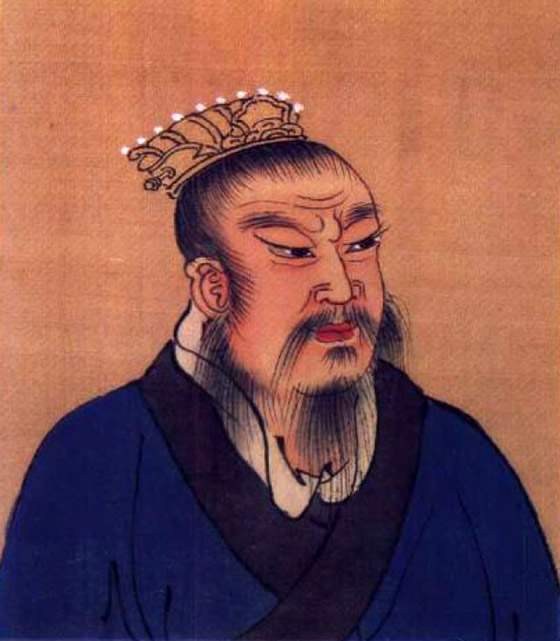
The King of Han returned to his capital, Yueyang, in June. On June 6, he designated his son, Liu Ying, as the Crown Prince and declared an amnesty for all criminals in the kingdom.
The Han army besieged and flooded the city of Feiqiu, leading to its surrender. General Zhang Han, seeing no escape, committed suicide. The Kingdom of Yong, which came under the control of the Han, was divided into three commanderies: Zhongdi, Beidi and Longxi.
During this time, a severe famine struck the Guanzhong region, causing the price of a bushel of rice to soar to ten thousand money units (about half a kilogram of gold). In desperation, some people resorted to cannibalism. The Han government encouraged the starving population to relocate to the more fertile regions of Shu and Hanzhong commandery.
When the Qin Empire fell, the wealthy hoarded gold and jade. However, Mr. Ren from Xuanqu focused on stockpiling grain in his family cellars. As the Chu and Han armies engaged in prolonged warfare near Xingyang, preventing farmers from tending their fields, the value of food soared. The wealthy soon traded their gold and jade to Mr. Ren in exchange for grain, leading his family to amass substantial wealth that sustained them for generations.
In August, the King of Han traveled to Xingyang. He assigned Xiao He to remain in Guanzhong to oversee the care of the Crown Prince, granting him full authority over legislation, the construction of altars for ancestral worship, royal palaces, and the administration of counties and towns. Xiao He was empowered to make decisions promptly without the need to consult the King, with the understanding that these decisions would be ratified upon the King’s return. Xiao He also created a comprehensive registry of all households in the Guanzhong region, and he efficiently managed the transport of food supplies and conscripts to the army, ensuring that the forces never faced shortages.
The King of Han sent Li Yiji to persuade Wei Bao, the King of Wei, to return to Xingyang. However, Wei Bao refused, saying, “The King of Han is rude and abusive. He treats his allies and ministers as if they were slaves. I cannot bear to face him again!”
In response, the King of Han appointed Han Xin as Vice Chancellor, with Guan Ying and Cao Shen as his lieutenants, and tasked them with leading the campaign against the Kingdom of Wei. The King of Han then inquired of Li Yiji, “Who is the commander-in-chief of Wei?” Li Yiji replied, “Bo Zhi.” The King of Han dismissed this with disdain, saying, “Bo Zhi is just a child, still wet behind the ears! How could he stand up to Han Xin?”
He continued his inquiry, asking, “Who is their cavalry commander?” Li Yiji answered, “It is Feng Jing.” The King of Han remarked, “He is the son of Feng Wuze, a general of Qin. He is capable, but he will not be able to defeat Guan Ying.” Then he asked, “Who is their infantry commander?” Li Yiji responded, “It is Xiang Tuo.” The King of Han relaxed, saying, “He is no match for Cao Shen. I have no worries.”
Han Xin also questioned Li Yiji, asking, “Is the commander-in-chief of Wei not Zhou Shu?” Li Yiji assured him, “No, it is Bo Zhi.” With that reassurance, Han Xin felt relieved and commented, “He is just a juvenile.” Confident in their advantage, Han Xin initiated the campaign against the Kingdom of Wei.
The King of Wei, Wei Bao, positioned his forces at Puban to defend against the Han army stationed at Lijin Pass. Han Xin executed a tactical ruse by deploying decoy troops and displaying numerous boats at Linjin Pass, creating the illusion of a large-scale crossing of the Yellow River. Meanwhile, he secretly sent another force across the river at Xiayang county using pontoons constructed from tree logs and ceramic urns. This surprise attack force swiftly advanced on Anyi County.
Caught off guard, Wei Bao quickly led his troops to confront Han Xin‘s forces but was defeated. In September, Han Xin captured King Wei Bao, who was then taken to Xingyang. With the fall of Wei Bao, the entire territory of the former Kingdom of Wei came under the control of the King of Han. The conquered region was reorganized into three commanderies: Hedong,Shangdang, and Taiyuan.
When the Han army suffered a major defeat to the west of Pengcheng, Chen Yu discovered that Zhang Er was still alive. Upon this realization, he immediately turned against the King of Han. After successfully taking control of the Kingdom of Wei, Han Xin proposed leading a force of thirty thousand elite troops to launch a campaign against the northern Kingdoms of Yan and Zhao, as well as the eastern Kingdom of Qi. He also aimed to cut off the supply lines of the Chu forces from the south. The King of Han approved Han Xin‘s strategic plan and assigned Zhang Er to assist him on the mission.
Han Xin‘s army advanced eastward before turning north to attack the Kingdoms of Zhao and Dai. During the leap month of September, Han Xin decisively defeated the army of Dai and captured Xia Yue, the Prime Minister of Dai, in the town of Yuyu. Following these rapid victories over Wei and Dai, the King of Han ordered Han Xin‘s elite troops to return to Xingyang to reinforce defenses against the advancing forces of Chu.
Tian Heng launched an attack on Tian Jia, the King of Qi appointed by Xiang Yu, forcing Tian Jia to flee to the Kingdom of Chu, where he was eventually killed. Tian Heng then unified the three regions that made up the Kingdom of Qi, bringing them all under his rule.
The King of Han consulted with his ministers, saying, “I want to step down from leading the campaign to conquer the lands east of Hangu Pass. I wish to pass on the leadership to a few capable leaders and let them conquer on their own. To whom should I hand over this responsibility?” Zhang Liang recommended the candidates: “The King of Jiujiang, Ying Bu, is an outstanding general of Chu, but he does not see eye to eye with Xiang Yu. General Peng Yue, in collaboration with the Kingdom of Qi, is reclaiming the land of Liang (Wei). These two can immediately share the burden. Among the generals under your command, only Han Xin has the ability to take on this significant task and operate independently. If Your Majesty truly wants to step down, passing the leadership to these three generals will lead to the defeat of the Kingdom of Chu.”
Earlier, King Xiang Yu had requested troops from the Kingdom of Jiujiang for his attack on the Kingdom of Qi, The King of Jiujiang, Ying Bu, took a leave of absence and sent only one of his generals with a few thousand troops. Later, when the King of Han broke into Pengcheng, Ying Bu claimed to be ill again and did not assist in defending the Kingdom of Chu. King Xiang Yu was displeased with Ying Bu‘s actions, sending numerous messengers to reprimand him and summon him to his headquarters. Ying Bu, growing even more fearful, did not dare to comply.
At the time, King Xiang Yu‘s primary concerns were the Kingdoms of Qi and Zhao in the north and the Kingdom of Han in the west. Despite his frustration with Ying Bu, Xiang Yu valued Ying Bu‘s military prowess and knew that the King of Jiujiang was his only ally in the region, so he refrained from attacking Ying Bu’s camp.
Meanwhile, the King of Han moved his headquarters from Xiayi county to Dang county and then to Yu county. Frustrated with his situation, he vented to his advisors, saying, “I cannot discuss the important matters of this country with men like you!” Sui He, one of his internuncios, stepped forward and asked, “I don’t understand what Your Majesty means.” The King of Han sighed and said, “Who can be my envoy to Jiujiang to persuade Ying Bu to break faith with Xiang Yu? If Ying Bu could lead his troops to support us and hold Xiang Yu in check for just a few months, I would have a hundred percent chance of winning the country!” Sui He volunteered, saying, “I would like to be the envoy.” The King of Han then sent Sui He as his representative to Jiujiang with a retinue of twenty people.
The King of Han reached the city of Xingyang in May, where several scattered and defeated troops regrouped. Xiao He also provided drafted soldiers from Guanzhong, including those who were previously unregistered because they were deemed too old or too young, all converging in Xingyang. This bolstered the strength of the Han army and greatly improved its morale.
The Chu army, having routed the Han forces in Pengcheng, pursued the fleeing Han soldiers northward all the way to Xingyang, riding the momentum of their victory. They engaged the Han army in several skirmishes in Jing County and Suo town, south of Xingyang. As more Chu cavalry joined the battle, the King of Han sought to appoint a cavalry commander from among his forces. His advisors recommended the former cavalrymen of the Qin army, Li Bi and Luo Jia, both from nearby Zhongquan County.
However, when the King of Han announced their selection, Li Bi and Luo Jia declined, saying, “We might not have the full trust of the Han soldiers because we were once subjects of Qin. We would prefer to support a leader who is both close to Your Majesty and a skilled horseman.” In response, the King of Han appointed Guan Ying as the cavalry commander, with Li Bi and Luo Jia as the Colonel of the left and right wings.
This newly appointed cavalry force, led by Guan Ying, engaged the Chu horsemen and won a decisive battle to the east of Xingyang. After this victory, the Chu army never advanced west of Xingyang again. The King of Han then set up camp in Xingyang and constructed an express highway from Xingyang to the crossing of the Yellow River, enabling the rapid delivery of grain from his warehouses in Ao’cang.
Zhou Bo and Guan Ying approached the King of Han, expressing their concerns: “Although Chen Ping is a very handsome fellow, his character is questionable. We’ve heard that he had an affair with his sister-in-law when he was still at home. He worked for the Kingdom of Wei and did not do well there. He then went to the Kingdom of Chu and failed to succeed there as well. Now, he has come to serve the Kingdom of Han. Your Majesty holds him in high regard and has appointed him as the supervisor of the army officers. We’ve heard that he has accepted bribes in gold, giving good positions to those who offered him more gold and bad positions to those who offered less. Chen Ping seems to be an opportunist and a corrupt official. Your Majesty must look into this!”
The King of Han became suspicious of Chen Ping and summoned Wei Wuzhi, who had recommended Chen Ping, to reproach him. Wei Wuzhi defended himself, saying, “What I spoke of was Chen Ping‘s ability, not his character. Suppose we have a person with an impeccable character like Weisheng or Xiaoji (ancient people known for honesty and filial piety), but who has no influence on winning or losing the war—why would Your Majesty employ such a person? Now, the Kingdoms of Chu and Han are in fierce contention. When I recommended Chen Ping, I did so based on his intelligence and clever ideas that could help the Kingdom of Han. His personal affairs with sister-in-law or accusations of accepting bribes do not disqualify him.”
The King of Han then called in Chen Ping and berated him: “You didn’t achieve success in the Kingdom of Wei, then you left the Kingdom of Chu, and now you are here with me. Does a loyal person change his allegiances so easily?”
Chen Ping replied, “I served the King of Wei, but he wouldn’t listen to my advice, so I left. When I worked for King Xiang Yu, he did not trust anyone whose surname was not Xiang or who wasn’t related to him by marriage. Even if he had talented individuals under his command, he wouldn’t make full use of them. I came to work for Your Majesty because I heard that you make the most use of talented people. I came with nothing and accepted donations because I had no resources. I hope Your Majesty will adopt my proposals if they are useful. If not, the money I accepted is all here, and I beg you to take it back and let me leave empty-handed.”
The King of Han apologized to Chen Ping, rewarded him with more gifts, and promoted him to the Central Commandant of army supervision, responsible for overseeing all the generals. This promotion silenced the complaints among the generals.
The King of Wei, Wei Bao, took a leave of absence to visit his mother, who was supposedly ill. Upon crossing the Yellow River, he blocked the crossing and switched his allegiance to the Kingdom of Chu.
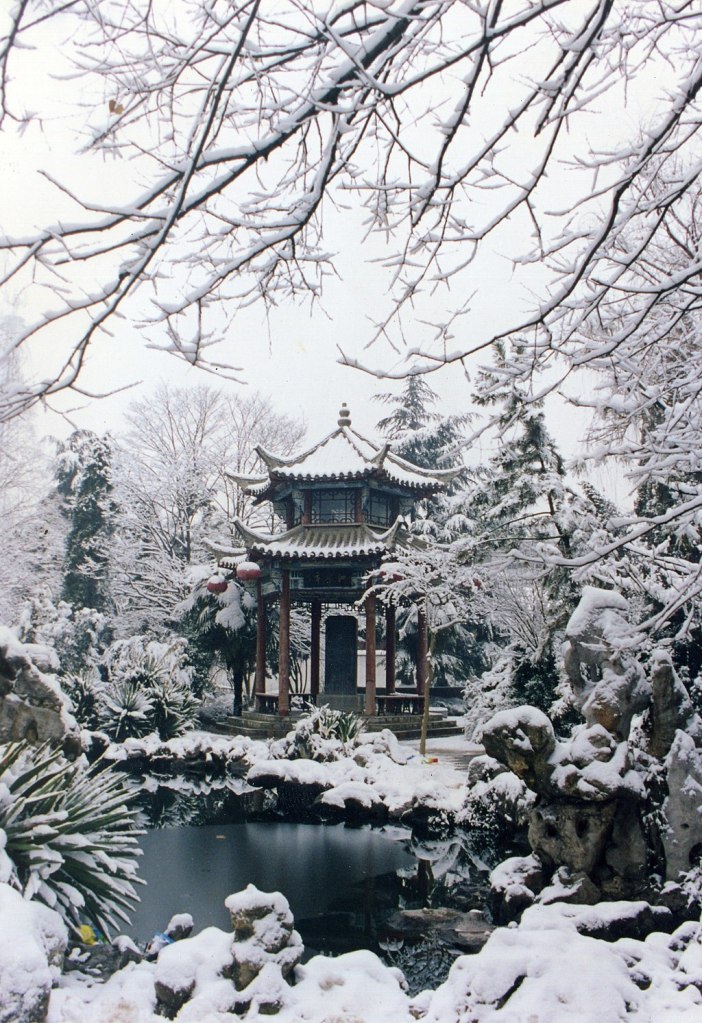
Yunlong Park in Xuzhou (Pengcheng), Jiangsu Province
The 2nd year of Emperor Gaozu(205 B.C. continued)
The King of Han crossed the Yellow River to the south at the crossing of Pingyin Ford. His procession was halted in the town of Xincheng in Luoyang City by Mr. Dong, a local ethics educator(Three Elders of the Town). Mr. Dong addressed the King of Han: “I have heard it said, ‘Those who follow morality will prosper, and those who defy it will perish.’ Another saying goes, ‘A military campaign without a moral justification will not succeed.’ That is why people say, ‘Expose the evil of your enemy first, then you can overthrow it.’ Xiang Yu is profoundly immoral; he exiled his lord and then murdered His Majesty. He is the greatest wrongdoer in the land. A benevolent government does not resort to violence, and seeking justice does not rely on brute force. Your Majesty should mourn the death of the Honorary Emperor by dressing your entire army in white. You should send manifestos to all the kings in the realm, calling on them to unite against Xiang Yu. This would follow the example of the three kings who founded the dynasties (Xia, Shang, Zhou).”
The King of Han conducted a funeral for the Honorary Emperor, baring his arms and weeping loudly during the ceremony, which lasted three days. He then sent messengers to all the kings with this message: “The Honorary Emperor was inaugurated by the realm, and we all pledged our allegiance to him. Xiang Yu exiled the Honorary Emperor to the south of the Yangtze River and then murdered him. Such an act is an abomination! I will mobilize all the forces of Guanzhong, recruit warriors from Henan, Hedong, and Henei commanderies, and sail down the Yangtze and Hanshui Rivers. I call upon all monarchs to join in avenging the Honorary Emperor!”
When the messenger reached the Kingdom of Zhao, Chen Yu responded, “We will join if the Kingdom of Han kills Zhang Er.” To meet this demand, the King of Han found a man who resembled Zhang Er, beheaded him, and sent another messenger carrying the severed head to Chen Yu. Satisfied, Chen Yu then dispatched troops to aid the army of Han.
Tian Rong’s younger brother, Tian Heng, reassembled Tian Rong’s fleeing soldiers and gathered a force of tens of thousands. They launched a rebellion in Chengyang commandery. In April, during the summer, Tian Heng declared Tian Rong’s son, Tian Guang, as the King of Qi and openly challenged Xiang Yu. Xiang Yu engaged in multiple battles with Tian Heng but was unable to defeat him. Although he learned that the army of Han was advancing eastward, Xiang Yu remained bogged down in the land of Qi, as he needed to break Qi‘s resistance before turning to confront Han‘s forces.
Meanwhile, the King of Han commanded 560,000 soldiers from allied kingdoms to launch a raid into the land of Chu. Upon reaching Waihuang county, Peng Yue led his thirty thousand soldiers to join forces with Han. The King of Han remarked, “General Peng has recaptured a dozen cities of Wei and wants to quickly enthrone a descendant of Wei. Here, the King of West Wei, Wei Bao, is a true descendant of Wei.” He then appointed Peng Yue as the prime minister of the Kingdom of Wei, allowing Peng Yue to command his troops independently to expand their territories in the land of Wei.
The King of Han entered Pengcheng, the capital of West Chu, and seized Xiang Yu’s treasures and harem. He began to indulge in daily celebrations, wining and dining to mark his victories.
Xiang Yu, upon learning that his home had been raided, ordered his generals to continue the fight in Qi while he led thirty thousand elite troops southward. Starting from Lu County, they passed through Huling County and reached Xiao County. At dawn, they launched a surprise assault on the Han army, pushing eastward, and by noon, they reached Pengcheng, where they decisively routed the Han forces. The soldiers of Han fled in disarray, many running into the Gu River and Si river, where hundreds of thousands drowned. Others fled south toward the mountains, pursued relentlessly by the Chu fighters, who drove them to the Sui River, east of Lingbi County. There, the Chu forces pressed several hundred thousand Han soldiers against the river, causing so many to perish that their bodies clogged the riverbed, halting its flow.
Xiang Yu‘s troops encircled the King of Han with three rings of soldiers. Just then, a strong northwesterly wind arose, uprooting trees, tearing roofs off houses, and creating a cloud of dust and sand that turned day into darkness. The blinding storm struck the Chu army, scattering their ranks. Seizing the moment, the King of Han, along with a few dozen cavalry guards, broke through the encirclement and escaped. They planned to stop by Pei County to retrieve their family members, but by the time they arrived, the soldiers of Chu had already beaten them to it, and the King of Han’s family members were nowhere to be found.
The King of Han eventually encountered his children, Prince Hui (Liu Ying) and Princess Yuan of Lu, and got them into his wagon. As the cavalry of Chu drew near, he panicked and, in his desperation to speed up the carriage, repeatedly pushed his children off it. Duke Teng, Xiahou Ying, who served as the Grand Coachman of Han, was forced to jump off the wagon to retrieve them each time. After the third time, Xiahou Ying pleaded, “I understand the urgency, but the horses cannot go any faster. How could you ditch your children?” He maintained the carriage at moderate speed. The King of Han, enraged, attempted to kill Xiahou Ying dozens of times, but Xiahou Ying’s soldiers protected the retinue, ensuring the safety of both the King’s children and the group.
Meanwhile, Shen Yiji was escorting the King of Han‘s father (the Grandpa Liu) and wife, Queen Lü, along an alternate route. They attempted to rendezvous with the King of Han but encountered Chu soldiers and were captured, eventually being taken to Xiang Yu‘s camp, where they were held as hostages.
The brother of Queen Lü, the Marquis of Zhoulü, led a force stationed at Xiayi county. The King of Han managed to reach this location by taking alternate routes, gathering several soldiers who were fleeing. However, as the situation grew dire, many of the allied forces began to defect and return to Xiang Yu‘s camp. The King of Sai, Sima Xin, and the King of Di, Dong Yi, switched their allegiance to the Kingdom of Chu.
In October of that winter, King Xiang Yu issued a secret order to the King of Jiujiang, the King of Hengshan, and the King of Linjiang to attack the Honorary Emperor. They murdered the emperor and disposed of his body in the river.
Chen Yu drafted a force from his three-county fiefdom and joined a surprise attack on the Kingdom of Changshan alongside the troops from the Kingdom of Qi. The King of Changshan, Zhang Er, failed to defend his kingdom and fled westward to the army of Han, where he sought refuge with the King of Han in Feiqiu County. The King of Han received him with high regard. Chen Yu welcomed back the former King Zhao Xie from the Kingdom of Dai and reinstated him as the King of Zhao. In gratitude, the King of Zhao granted Chen Yu the title of King of Dai. However, Chen Yu did not go to his kingdom; instead, he remained in the capital to assist the new King of Zhao in establishing a new government. He sent Xia Yue to the Kingdom of Dai as the prime minister.
Zhang Liang escaped from the Kingdom of Hán and returned by taking an alternate route. The King of Han awarded him the title of Marquis Chengxin. Zhang Liang was in poor health and had never commanded an armed force on his own. He often served as a strategist, remaining at the King of Han‘s side.
The King of Han went to Shan County to console the people outside the Kingdom of Qin. The King of Henan, Shen Yang, submitted to the King of Han, and the Kingdom of Han established the administration of Henan Commandery.
The King of Han appointed Xin, the grandson of King Xiang of Hán, as the chief commander of the armed forces of Hán. He ordered Xin’s troops to recapture the territory of the former Kingdom of Hán. Xin led a blitzkrieg on Yangcheng County, compelling Zheng Chang, the King of Hán appointed by Xiang Yu, to surrender. The King of Han then granted Xin the title of King of Hán. Xin continued to command the armed forces of Hán, staying by the side of the King of Han most of the time.
Several generals of the Kingdom of Han conquered the Longxi Commandery.
In January of that spring, King Xiang Yu and his army advanced north, arriving at Chengyang Commandery. The King of Qi, Tian Rong, led his troops into a decisive battle there but was defeated. Tian Rong fled to Pingyuan County, where he was killed by the local people. King Xiang Yu then reinstalled Tian Jia as the King of Qi.
King Xiang Yu’s troops continued north to Beihai Commandery, pillaging cities, burning castles, and destroying residential houses along the way. They buried Tian Rong’s surrendered soldiers alive and took the elderly, the young, and women as prisoners, enslaving them. The devastation they left in their wake forced the people of Qi to unite and rise in revolt.
A general of Han conquered the town of Beidi and captured Zhang Ping, the younger brother of the King of Yong, Zhang Han.
In March, the King of Han crossed the Yellow River at Linjin Pass. The King of West Wei, Wei Bao, surrendered and placed his troops under the King of Han’s command. The Han army then sacked the Kingdom of Henei and captured the King of Yin, Sima Ang, establishing an administration in the Henei Commandery.
A man from Yangwu county named Chen Ping came from a poor family but had a passion for reading. He was once in charge of distributing sacrificial meat among his community after the ceremonies of progenitor worship. Chen Ping sliced and divided the meat so evenly that he received praise from the community. The locals said, “We are fortunate to have this young man in charge of the meat sharing.” Chen Ping sighed and replied, “Ah! If only you could make me responsible for the whole country; public affairs would be as well taken care of as this meat!”
When the allies rebelled against the rule of Qin, Chen Ping worked for the King of Wei, Wei Jiu, as the minister of transportation. He proposed some ideas to Wei Jiu, but they were not adopted. Disheartened, he left Wei Jiu when a scandal was spread about him. He later joined Xiang Yu and was given a position as a staff officer. When the King of Yin, Sima Ang, rebelled against Xiang Yu, Chen Ping was sent to suppress the mutiny, successfully forcing Sima Ang to back down. On his triumphant return, he was promoted to chief commandant and awarded 480 ounces of gold.
Shortly afterward, the King of Han took over the Kingdom of Yin, and Sima Ang surrendered. Furious, Xiang Yu considered punishing the officers who had previously suppressed Sima Ang’s mutiny. Fearing for his safety, Chen Ping returned the gold and the seal of the chief commandant to Xiang Yu, changed his clothes, and fled via alternate routes, taking only a sword with him. He crossed the Yellow River and joined the forces of Han in Xiuwu county. With the help of his friend Wei Wuzhi, Chen Ping secured an appointment with the King of Han.
The King of Han summoned Chen Ping and dined with him. As the King was about to send Chen Ping to rest in the guest house, Chen Ping insisted, “I have come with a mission. What I need to discuss cannot wait another day.” The King of Han, delighted by their conversation, asked Chen Ping, “What rank did you hold in the Kingdom of Chu?” Chen Ping replied, “I was a chief commandant.” The King of Han immediately reinstated him as chief commandant, appointed him to his entourage, and made him the supervisor of army officers.
These rapid promotions caused an uproar among the Han generals. They complained, “Can you believe it? The King accepts a defector from Chu, puts him in his entourage, and even makes him to be a supervisor to oversee veterans like us!” Despite the complaints, the King of Han, aware of the discontent, only trusted Chen Ping more.
After the nomination ceremony, the King of Han sat down with Han Xin and said, “The Prime Minister has recommended you so many times. What can you teach me about strategy?” Han Xin expressed his gratitude and downplayed the praise before addressing the King of Han, “It is King Xiang Yu who contends with Your Majesty for power in the east, isn’t it?”
Han Xin then asked, “In terms of strength and chivalry, how do you compare yourself to Xiang Yu?”
After a moment of thought, the King of Han admitted, “I am not as good as him.”
Han Xin saluted the King of Han and encouraged him, saying, “I agree with Your Majesty’s assessment. However, I once served under Xiang Yu, so I know his personality well. Xiang Yu‘s roar alone can make thousands tremble with fear, but he lacks the ability to choose capable people to assist him, which makes him a force of one. While he treats people kindly and is compassionate, he is also soft-hearted and sentimental. He cries when he sees someone suffering from illness and shares his food and drink with the sick. However, he is also stingy in rewarding his subordinates. Even when they achieve great merits, he is reluctant to grant them high ranks, keeping the seals of power firmly in his own hands until edges are worn out. This is what we call the petty kindness of a woman.”
“Xiang Yu dominates the nation, and all the rulers submit to him, but he chose Pengcheng as his capital instead of staying in the strategically advantageous Guanzhong region. He gave away territories to his friends unjustly, violating the agreement made with the Honorary Emperor. He removed legitimate rulers and replaced them with generals or ministers of his liking, and he even banished the Honorary Emperor to the south of the Yangtze River. Wherever he goes, he leaves destruction in his wake. The people do not support him; they only fear his might. Although he appears to be the hegemon of the country, he has already lost the people’s hearts. This is his weakness.”
“If Your Majesty does the opposite of what Xiang Yu does, then his strength could easily turn into his vulnerability. Who could cling to life if you deployed the country’s bravest warriors against him? Who would not heed your command if you rewarded your allies with the nation’s best cities? Who would dare stand in your way if you lead your troops back home rightfully? The three kings of Qin (Zhang Han, Sima Xin, Dong Yi) were once generals who forced the people of Qin to fight for years, witnessing countless deaths. Yet, they coerced these same people to surrender to the Chu forces. When Xiang Yu buried 200,000 prisoners of war alive at Xianyang, only the three generals survived. The people of Qin hate these three to the bone.”
“The Chu authority installed these generals as kings of Qin by decree, but the people did not accept them. When Your Majesty entered Wu Pass, your troops did not harm a single civilian, and you abolished Qin‘s harsh laws, replacing them with the simple law of three articles. The people of Qin love you and wish for you to be their king. According to the allies’ agreement, you should indeed be the rightful king of Qin. The people all knew the pact, and were outraged when you were sent to Hanzhong. Now, if Your Majesty advances eastward, the three kingdoms of Qin could be conquered simply by issuing a proclamation.”
The King of Han was deeply moved by Han Xin‘s words and regretted not promoting him sooner. He decided to adopt Han Xin‘s strategy and assigned his generals to their respective targets of attack, while leaving Xiao He in Ba and Shu commanderies to collect taxes and ensure a stable food supply for the army.
In August, the King of Han launched a surprise attack on the Kingdom of Yong by advancing through Gudao county. Zhang Han, the King of Yong, countered the attack at Chencang county, but his forces were defeated and retreated. They regrouped at Haoshi county but were beaten again and fled back to their capital, Feiqiu. The King of Han captured most of the territory of the Yong Kingdom, advancing as far east as Xianyang, and laid siege to the city of Feiqiu and its ruler, Zhang Han. Meanwhile, he dispatched his generals to capture other territories in the Qin region. The King of Sai, Sima Xin, and the King of Di(Zhai), Dong Yi, both surrendered to the King of Han. The King of Han then established the commanderies of Weinan, Heshang, and Shangjun within Qin‘s territory.
The King of Han ordered Generals Xue Ou and Wang Xi to move eastward through Wu Pass, where they linked up with Wang Ling‘s forces to escort the King of Han’s father and his wife, Queen Lü, to Guanzhong. Upon hearing this, Xiang Yu deployed his troops to block their advance at Yangxia county.
Wang Ling, originally from Pei County, had gathered thousands of his followers and occupied Nanyang before joining the King of Han‘s camp with his troops. When Xiang Yu learned of Wang Ling‘s approach, he took Wang Ling’s mother hostage and held her under house arrest in his camp. To persuade Wang Ling to switch allegiance, Xiang Yu received Wang Ling’s envoy with respect, seating Wang Ling’s mother in a place of honor. During a private conversation with the envoy, Wang Ling’s mother said, “Please tell my son to remain loyal to the King of Han. The King of Han is destined to rule the country. He must not waver for the sake of me. I will die to see him off.” She then took her own life by throwing herself onto a sword in front of the envoy.
Enraged by this act of defiance, Xiang Yu ordered his men to boil the corpse of Wang Ling’s mother.
King Xiang Yu conferred the title of King of Hán to Zheng Chang, the former magistrate of Wu county, to hinder the advance of the King of Han.
Zhang Liang sent a letter to King Xiang Yu: “The King of Han did not get what he deserved. He only wishes to possess Guanzhong (Three Qins). He will stop where all agreed upon in the pact and dares not go further east.” He also sent the rebellion manifestos from the Kingdom of Qi and Kingdom of Liang (Wei) to King Xiang Yu, stating: “The Kingdom of Qi intends to ally with the Kingdom of Zhao to annihilate the Kingdom of Chu.” These communications distracted Xiang Yu‘s attention from the west and redirected his attacks to the north.
The former King of Yan, Han Guang, had no intention of going to his kingdom in Liaodong. The new King of Yan, Zang Tu, attacked and killed him, then annexed Han Guang’s kingdom.
The King of Han appointed Zhou Ke, an old friend from Pei County and the current mayor of Xianyang, as the Grand Master of Censorate.
King Xiang Yu hastened the relocation of the Honorary Emperor to his new court, and some of the emperor’s ministers and attendants chose to leave his court.
A man from Huaiyin county, named Han Xin, came from a poor family and was unruly. He was neither recommended for a government position nor inclined to make a living through trade or labor. Instead, he spent his time around people, often relying on them for food and drink, which caused most to shun him. One day, while Han Xin was fishing outside the city walls, an old woman doing laundry nearby saw him starving and gave him some food. Han Xin expressed his gratitude, saying, “Aunty, I will reward you greatly someday.” The old woman was unimpressed and reproached him, “You’re a grown man who can’t even feed yourself. I gave you food out of pity, not because I expect anything in return.”
One day in downtown Huaiyin, a young butcher who liked to bully Han Xin confronted him: “You look tall and strong and like to wear swords and machetes, but I bet you’re a coward inside!” He challenged Han Xin publicly, saying, “If you’re not afraid of death, stab me; if you are, crawl between my legs!” Han Xin stared at the butcher for a long moment, then got down on his hands and knees, crawling under the butcher’s crotch before prostrating himself. The crowd burst into laughter, jeering at Han Xin.
When Xiang Liang revolted against Qin and led his troops across the Huai River, Han Xin joined his forces with his sword, serving under Xiang Liang but failing to distinguish himself. After Xiang Liang‘s defeat and death, Han Xin joined Xiang Yu’s army as a guard officer in his central command. Despite presenting several strategies, his ideas were dismissed by Xiang Yu. Later, when the King of Han entered Shu commandery, Han Xin left Chu‘s camp and joined his forces, where he remained unnoticed, serving as a logistics officer.
Han Xin was implicated in a case due for collective punishment, which was punishable by death. Thirteen of his fellow cohorts had already been executed, and it was Han Xin’s turn next. As he looked up, he saw the Duke of Teng, Xiahou Ying, and called out for help: “Does the king want to conquer the country? Why is he beheading a capable fighter?” Xiahou Ying, impressed by Han Xin‘s words and his stature, commuted his death sentence. After speaking with Han Xin at length, Xiahou Ying was delighted and introduced him to the King of Han, who appointed Han Xin as Colonel of Grain Procurer. Despite this promotion, Han Xin‘s role remained unremarkable.
Han Xin had several conversations with Xiao He, who was captivated by his potential. When the King of Han reached Nanzheng County, many of his subordinates missed their homeland in the east. They sang folk songs together and many deserted along the way. Frustrated by his lack of advancement despite Xiao He and Xiahou Ying‘s endorsements, Han Xin also decided to leave. Upon hearing that Han Xin had fled, Xiao He, shocked, immediately chased after him without even informing the King of Han.
When someone reported to the King of Han, “Prime Minister Xiao He has run away,” the king was livid, feeling as though he had lost his right hand. Two days later, Xiao He returned to see the King of Han, who was both angry and relieved. The King demanded, “Why did you run away?” Xiao He replied, “I didn’t run away; I was chasing after a man who had fled.” When the King asked who that man was, Xiao He answered, “Han Xin.” The King of Han, still upset, retorted, “Dozens of generals have deserted, yet you ran after Han Xin? You are lying!” Xiao He explained, “Those other generals are easy to find, but Han Xin is a rare talent without equal. If Your Majesty only wishes to be King of Han, then Han Xin isn’t essential. But if you intend to conquer the entire realm, there is no better strategist than Han Xin. It all depends on your ambitions.”
The King of Han admitted, “I do want to return to the east. Who could bear staying in this desolate place for long?” Xiao He urged, “If that is your plan, then you must offer Han Xin a significant position to keep him from leaving.” The King of Han agreed, saying, “For your recommendation, I will make Han Xin a general.” Xiao He was unimpressed, responding, “He won’t stay for just a general’s rank.” The King of Han then said, “How about Grand Marshal?” Xiao He finally approved, “That would be appropriate!”
As the King of Han prepared to summon Han Xin, Xiao He advised him, “Your Majesty has treated people too casually. You call for someone to take a high position as if you were calling a child. That’s why Han Xin ran away in the first place. If you truly want him to accept the role, you must fast and pray, choose an auspicious day, and hold a ceremony with all due rites. That would be fitting.” The King of Han agreed to the proposal.
When the news spread, the generals were thrilled, believing they might have a chance at the top military rank. But when the ceremony revealed that Han Xin was being appointed Grand Marshal, the entire army was left in stunned silence.
A few days later, Xiang Yu led his troops westward and ransacked the city of Xianyang. He ordered the execution of the king of Qin, Ziying, and commanded the burning of all the Qin palaces. The inferno lasted for more than three months. His soldiers looted all the treasures of Qin, abducted the court’s women, and took them to the east. The people of Qin were horrified by Xiang Yu’s actions.
A scholar, Mr. Han, advised him: “The Guanzhong region (the heartland of Qin) is naturally fortified by mountains and rivers. It is a place secured by fortresses on all sides. The land here is fertile, making it an ideal capital for your empire.” However, as Xiang Yu saw the Qin palaces reduced to wreck, he intended to return to his hometown in the east. He dismissed Mr. Han’s suggestion, saying: “To become rich and famous and not return to one’s homeland is like wearing an embroidered gown in the dark. What is the point?” Disheartened, Mr. Han made the remark: “I’ve heard that the people of Chu were rhesus monkeys dressed-up as humans, with caps and gowns. Now I believe it is true.” Upon learning of this insult, Xiang Yu had Mr. Han executed by boiling.
Xiang Yu sent messengers to King Huai II of Chu, pleading to annul their agreement that whoever first entered Xianyang would be king. King Huai II replied, “A promise is a promise.” Enraged, Xiang Yu said, “It was my family who put King Huai II on the throne. He didn’t win any battles, so why does he get to dictate promises? When chaos erupted in the land, we installed descendants of the former monarchs to rally the troops against the Qin empire. It was you and I who donned armor and fought in the wilderness for three years until we finally crushed the Qin empire. Even though King Huai II did nothing, we can give him a king’s title but divide his land among ourselves.” His generals all agreed, saying, “Well said!” In January of that spring, Xiang Yu elevated King Huai II to the position of honorary emperor, stating, “The emperors of the past ruled over lands spanning thousands of miles and always lived upstream.” He relocated the honorary emperor to the south of the Yangtze River and designated Chen county as his capital.
In February, Xiang Yu divided the land into kingdoms and bestowed the title of king upon his generals. He declared himself the Hegemonial King of West Chu, ruling over nine commanderies in the former kingdoms of Liang (also known as Wei) and Chu, with his capital in Pengcheng. Xiang Yu and Fan Zeng were wary of the Duke of Pei but maintained a cordial relationship to avoid the appearance of breaking their pact. In private, they discussed, “The commanderies of Ba and Shu are distant, with treacherous roads, and were places where Qin exiled its convicts.” Publicly, they claimed, “The commanderies of Ba and Shu are part of Guanzhong.” Xiang Yu then conferred the title of “King of Han” upon the Duke of Pei, giving him control over the three commanderies of Ba, Shu, and Hanzhong, with his capital at Nanzheng county.
Xiang Yu divided the real Guanzhong (the heartland of the Qin kingdom) into three parts, granting them to the three surrendered Qin generals to block access by the king of Han(Liu Bang). General Zhang Han was made the King of Yong, ruling the land west of Xianyang, with his capital in Feiqiu county. Zhang Han’s chief of staff, Sima Xin, who had earlier been a prison warden who did a favor to Xiang Liang, was named the King of Sai, controlling the area from east of Xianyang to the Yellow River, with his capital in Yueyang county. General Dong Yi, who persuaded Zhang Han to surrender, was made the King of Di(Zhai), ruling Shangjun commandery with his capital at Gaonu county.
Xiang Yu transferred the King of Wei, Wei Bao, to be the King of West Wei, ruling the region east of the Yellow River with his capital in Pingyang. Shen Yang of Xiaqiu county, a favorite of Zhang Er and the first to conquer the Henan commandery, was named King of Henan with his capital at Luoyang. The King of Hán, Han Cheng, returned to his old capital at Yangdi. General Sima Ang of Zhao, who conquered the Henei commandery, was made King of Yin, ruling from the Zhaoge county.
Xiang Yu moved the King of Zhao, Zhao Xie, to be King of Dai, while Zhang Er, who had a great reputation and had accompanied Xiang Yu into the Hangu Pass, was awarded the title of King of Changshan, ruling the former land of Zhao from his office in Xiangguo county. Lord Dangyang, Qing Bu, the top general of Chu, was appointed King of Jiujiang, headquartered in Liu county. Lord Po, Wu Rui, who led the Yue tribes to support Xiang Yu, was made King of Hengshan with his government in Zhu county.
The commander-in-chief of the honorary emperor, Gong Ao, who had achieved multiple military victories, was awarded the title of King of Linjiang, with his capital in Jiangling. Xiang Yu reassigned the King of Yan, Han Guang, to be King of Liaodong, with his office in Wuzhong county. A general of Yan, Zang Tu, who joined the campaign to save Zhao and later followed Xiang Yu into the Hangu Pass, was promoted to King of Yan, ruling from Ji county.
Xiang Yu reassigned the King of Qi, Tian Shi, to be King of Jiaodong, with his office in Jimo. A general of Qi, Tian Du, who also took part in the rescue of Zhao and the western expedition against Qin, was made King of Qi, ruling from Linzi. Another general of Qi, Tian An, who conquered several cities in the Jibei region and joined the rescue of Zhao, was named King of Jibei, with his capital in Boyang.
In contrast, General Tian Rong of Qi, who had repeatedly spurned Xiang Liang and refused to join Xiang Yu’s western expedition, received no title. Similarly, Lord Cheng’an, Chen Yu, who relinquished his field marshal seal and did not join Xiang Yu’s campaign, also went unrewarded. Many of Xiang Yu’s supporters pleaded, saying, “Zhang Er and Chen Yu were inseparable and both accomplished much for the kingdom of Zhao. Since you awarded Zhang Er a king’s title, you must also reward Chen Yu.” Reluctantly, Xiang Yu awarded Chen Yu three counties around Nanpi county, upon hearing that he was staying there. Mei Juan, a general under Lord Po with numerous military merits, was granted the title of Marquis and a fief of one hundred thousand households.
The King of Han was furious and wanted to wage war against Xiang Yu. His generals, Zhou Bo, Guan Ying, and Fan Kuai, all urged him not to proceed. Xiao He cautioned him, saying, “As much as you despise being the King of Han, it is better than being dead.” The King of Han retorted, “Why would we end up dead?” Xiao He replied, “Our forces are vastly outnumbered compared to his. We have lost every time we faced him in battle. What else could the outcome be, except death? King Tang of Shang and King Wu of Zhou were able to defer to one man while commanding an army of ten thousand chariots. I implore Your Majesty to go to Hanzhong and establish your base there. Allow the people to recover from the ravages of war, recruit talent from across the land, and use the resources of the Ba and Shu regions to reclaim the three kingdoms of Qin—Kingdoms of Yong, Sai, and Di. Once we secure Qin, we can then strategize to take over the entire country.” The King of Han agreed, saying, “Well said!” He reported to his position in Hanzhong and appointed Xiao He as the Prime Minister. He also awarded Zhang Liang with twenty-four hundred ounces of gold and two buckets of pearls. Zhang Liang, in turn, redirected all these treasures to Xiang Bo.
In April of that summer, allied forces began to depart from the banner of Xiang Yu to take their positions in their respective kingdoms. Xiang Yu assigned thirty thousand soldiers to accompany the King of Han to Hanzhong, while tens of thousands more followers trailed behind him on their own will, entering Hanzhong through the plank road at Shi Valley in southern Du County.
Zhang Liang accompanied the King of Han to Baozhong before being ordered to return to his own king (King Han Cheng) by the King of Han. Zhang Liang advised the King of Han to burn all the plank roads they had used to travel from Xianyang to Hanzhong. The first reason was to prevent surprise attacks from the three kingdoms of Qin. The second reason was to demonstrate to Xiang Yu that he had no intention of advancing eastward.
Tian Rong was enraged when he learned that Xiang Yu had moved the King of Qi, Tian Shi, to Jiaodong and promoted Tian Du to be the King of Qi. In May, he led his troops to attack Tian Du, who fled to the Kingdom of Chu. Tian Rong detained the King of Qi and refused to allow him to go to Jiaodong. Fearing Xiang Yu’s authority, Tian Shi escaped to Jiaodong. Furious, Tian Rong pursued Tian Shi to Jimo and killed him there, proclaiming himself the King of Qi.
Peng Yue, commanding ten thousand troops in Juye County, remained unresponsive to calls from others. Tian Rong conferred upon Peng Yue the title of general and ordered him to attack Jibei. In July, Peng Yue killed the King of Jibei, Tian An, making Tian Rong the ruler of the three kingdoms of Qi (Jiaodong, Jibei, and Qi). Tian Rong then directed Peng Yue to launch an assault on the Kingdom of Chu. In response, Xiang Yu ordered the Duke of Xiao, Jiao, to lead the defense against Peng Yue. Peng Yue decisively defeated the troops of Chu.
When Zhang Er arrived in his kingdom, Chen Yu was furious, saying, “Zhang Er has the same achievements as I do, yet he is made a king while I am only a marquis. Xiang Yu is very unfair to me.” He secretly sent Zhang Tong and Xia Yue to lobby Tian Rong, the King of Qi, saying, “Xiang Yu is unjust as the nation’s power broker. He promoted his own generals to be kings of prosperous lands and moved the former kings to poor regions. General Chen Yu believes it was wrong to move the King of Zhao to Dai in the north. Now that Your Majesty has risen against this injustice, we hope you will support General Chen Yu‘s campaign against Changshan to restore the King of Zhao to his rightful place. The Kingdom of Zhao will then become the bulwark of the Kingdom of Qi.” Tian Rong agreed to the plan and sent troops to aid Chen Yu‘s offensive.
Xiang Yu harbored enmity for the King Han Cheng of State of Hán, due to Zhang Liang‘s support for the King of Han, and because Han Cheng had not significantly contributed to the downfall of the Qin Empire. As a result, Xiang Yu did not allow Han Cheng to return to his kingdom, instead taking him to Pengcheng, where he stripped him of his kingly title and demoted him to Marquis of Rang. Later, Han Cheng was assassinated.
In December, Xiang Yu’s troops reached the Xi River. Meanwhile, Cao Wushang, the left wing major under Duke of Pei, sent a messenger to Xiang Yu, slandering the Duke of Pei: “The Duke of Pei intends to become the King of Qin. He plans to make Ziying his chancellor and seize all the treasures of Qin.” Cao Wushang said this to gain favors from Xiangyu. Infuriated by this information, Xiang Yu organized a feast for his soldiers and prepared to launch an attack on the Duke of Pei the following morning. At that time, Xiang Yu commanded four hundred thousand troops, though he claimed to have a million, and camped at a village called Hongmen[Swan Goose Gate] in Xinfeng County. The Duke of Pei had one hundred thousand troops, with claims of two hundred thousand, and was stationed at Bashang.
Fan Zeng advised Xiang Yu: “The Duke of Pei was known for his greed and indulgence when he lived east of the Hangu Pass. But since entering the Pass, he hasn’t hoarded any valuables or sought out women. His ambitions now are far greater than mere wealth or pleasure. I sent people to observe the clouds around him, and they reported seeing auspicious signs like those of the dragon and tiger. They even saw a rainbow over him—an omen of the Son of Heaven. You must act quickly and strike him decisively. Do not let him slip away.”
The left-wing commander of the Chu army was Xiang Yu’s uncle, Xiang Bo, who was a good friend of Zhang Liang. Late at night, Xiang Bo secretly visited the Duke of Pei’s camp to meet with Zhang Liang. He warned Zhang Liang about the imminent attack and urged him to flee together: “You don’t want to die along with all the troops here.” Zhang Liang responded, “The King of Han instructed me to accompany the Duke of Pei into the Pass. Now that the Duke of Pei faces a crisis, it would be a dishonor of me to abandon him. I must speak with him first.”
Zhang Liang entered the Duke of Pei’s tent and informed him of the situation. Startled, the Duke of Pei asked, “Do you think our soldiers can withstand Xiang Yu’s attack?” Zhang Liang replied, “Our troops are indeed no match for Xiang Yu. But we must act swiftly.” He suggested, “Please speak to Xiang Bo and assure him that the Duke of Pei has no intention of betraying Xiang Yu.” Curious, the Duke of Pei asked, “How do you know Xiang Bo so well?” Zhang Liang explained, “We were playmates under Qin’s rule. He once killed someone, and I saved his life. Now, he repays that favor by warning me.” The Duke of Pei inquired further, “Between you and him, who is older?” Zhang Liang replied, “Xiang Bo is a few years older than I am.” The Duke of Pei decided, “Please invite him to meet me. I will honor him as an elder brother.”
Zhang Liang returned and insisted that Xiang Bo meet the Duke of Pei, and Xiang Bo eventually agreed. Upon entering the Duke of Pei’s tent, the Duke of Pei warmly received him, raising wine cups and toasting in his honor. He even proposed a marriage alliance between their families. The Duke of Pei explained, “Since entering the Pass, I have not taken even the smallest treasure from Qin. I preserved all the household records and sealed the vaults and warehouses of the Qin government, waiting for General Xiang to distribute these valuables. The reason I ordered the Hangu Pass closed was to prevent bandits and any other incidents. We eagerly await General Xiang’s arrival day and night. How dare I turn against him? Please, Mr. Xiang Bo, convey my pledge that I have no intention of betraying General Xiang.” Xiang Bo affirmed and advised the Duke of Pei, “You must come tomorrow morning to see General Xiang and clear any misunderstandings in person.” The Duke of Pei promised, “You have my word.”
Xiang Bo returned to his camp that same night, relayed the Duke of Pei’s message, and pleaded with Xiang Yu, “If the Duke of Pei had not entered the Wu Pass first, you would not have so easily walked into the land of Qin. Attacking someone who has just accomplished such a significant feat would be unjust. It would be better to treat him with respect.” Xiang Yu assured Xiang Bo that he would do that.
The Duke of Pei arrived at Hongmen the next morning with a hundred cavalrymen to meet Xiang Yu. He expressed his regret to Xiang Yu, saying, “I fought alongside the General against the army of Qin. The General battled in the north of the Yellow River, while I fought in the south. By sheer luck, I entered the Wu Pass and arrived in the kingdom of Qin first, which gave me this opportunity to meet the General again. Unfortunately, it seems the General harbors some hard feelings towards me due to the slander of a troublemaker.” Xiang Yu inadvertently admitted, “I wouldn’t have doubted you weren’t it for the words of your left wing major, Cao Wushang.”
Xiang Yu then invited the Duke of Pei to join him for a meal in his tent. While they were drinking, Fan Zeng repeatedly eye-signaled Xiang Yu and by raising his jade ornament three times, but Xiang Yu ignored these prompts. Frustrated, Fan Zeng left the tent and summoned Xiang Zhuang, Xiang Yu’s younger cousin, giving him an urgent order: “Your Lord is too hesitant. Go inside, toast the Duke of Pei, then perform a sword dance. During the dance, take the opportunity to kill the Duke of Pei. If you don’t act now, we may all end up as his captives one day.”
Xiang Zhuang entered the tent, made a toast to the Duke of Pei, and then suggested, “There isn’t much entertainment in the army, so let me perform a sword dance.” Xiang Yu approved, “Sure!” Xiang Zhuang drew his sword and began his dance, making threatening moves. Seeing this, Xiang Bo quickly drew his own sword and joined the dance, placing himself between Xiang Zhuang and the Duke of Pei, skillfully shielding the Duke of Pei from Xiang Zhuang’s strike attempts.
Zhang Liang rushed to the gate of the camp and called for Fan Kuai. Fan Kuai asked, “How are things going today?” Zhang Liang replied, “Xiang Zhuang is dancing with his sword, clearly aiming to harm the Duke of Pei.” Fan Kuai immediately said, “This is urgent! I must go in and share the fate with him.”
Armed with his shield and sword, Fan Kuai forced his way into the camp. When the guard at the entrance tried to stop him, Fan Kuai knocked the guard down with his shield and pushed his way into the tent. He threw open the curtains, staring directly at Xiang Yu, hairs standing on his head and canthus almost splitting. Xiang Yu was startled and, rising from his seat, reached for his sword. “Who is this guest?” he asked. Zhang Liang quickly introduced him, “He is the Duke of Pei’s body guard, Fan Kuai.” Impressed by Fan Kuai‘s intrepidness, Xiang Yu ordered, “What a strong man! Bring him some wine!”
A large jar of wine was brought to Fan Kuai, who bowed in gratitude, then stood and drank it all in one go. Xiang Yu then offered him a whole ham. Fan Kuai placed his shield on the ground, used his sword to cut the ham, and ate it with gusto. Xiang Yu asked, “Do you want more wine, brave man?” Fan Kuai responded, “I am not afraid to die; why would I fear more wine?”
Fan Kuai then launched into a speech, saying, “The rulers of Qin were as cruel as tigers or wolves. They killed without mercy and punished people as if they were in a competition of brutality. This is why the entire country rose up against them. King Huai of Chu made a pact with all his commanders: whoever conquered Qin and entered Xianyang first would become the king of Qin. Now, the Duke of Pei defeated Qin‘s defenders and entered Xianyang first. He didn’t even touch a single piece of treasure. He then withdrew to Bashang to await the General’s arrival. Despite his tremendous effort and success, he hasn’t received any reward. Instead, he faces death because of the slander of a mere loser. This is nothing but a continuation of Qin‘s tyranny. General, I don’t think you should do that!”
A while later, the Duke of Pei excused himself to go to the restroom, and Fan Kuai followed. Outside, the Duke of Pei said, “We could flee, but leaving without a proper farewell seems impolite.” Fan Kuai bluntly replied, “They are the cleaver, and we are the fish and meat on the chopping board. What need is there for politeness?” Without further delay, they fled.
From Hongmen to Bashang it is about 40 li. The Duke of Pei left without his wagon and cavalrymen. The Duke of Pei, on a single horse, raced back to Bashang, with his four loyal guards—Fan Kuai, Xiahou Ying, Jin Qiang, and Ji Xin—following on foot, holding swords and shields. They took a shortcut from Lishan through Zhiyang to Bashang, to avoid detection. Before leaving, the Duke of Pei instructed Zhang Liang to stay behind and offer gifts to Xiang Yu and Fan Zeng as an apology for his hasty departure. He reminded Zhang Liang, ”It is only 20 li by taking this route to our camp. You may go in to thank General Xiang with our presents when we have arrived at camp.”
After allowing sufficient time for the Duke of Pei to reach his army, Zhang Liang returned to Xiang Yu‘s tent. He offered the gifts and explained, “The Duke of Pei drank too much and couldn’t say a proper farewell, but he asked me to present these white jade pieces to General Xiang and jade vessels to Uncle Fan Zeng as tokens of his gratitude.”
Xiang Yu accepted the white jade with indifference, placing it on the table. Fan Zeng, however, furiously smashed the jade vessels with his sword, exclaiming, “One can’t make grand plans with an unworthy brat! The Duke of Pei will take this realm from King Xiang, and soon we all will be his prisoners!”
The Duke of Pei returned to his camp and immediately executed the informant, Cao Wushang.
In October of that winter, the Duke of Pei arrived at a place called Bashang. The King of Qin, Ziying, dressed in a white gown and riding a white wagon drawn by white horses, with a rope around his neck, surrendered to the Duke of Pei at a post called Zhidao. Alongside him were all the seals, tallies, and scepters of his kingdom. Some generals proposed to kill the King of Qin, but the Duke of Pei refused, saying, “King Huai II of Chu sent me west because I was known for my leniency. It would also be dishonorable to kill someone who has already surrendered.” He then handed Ziying over to his judiciary officers.
Jia Yi’s comment: Qin, which began as a small, narrow state, grew into a superpower with tens of thousands of chariots. It dominated the other eight provinces, commanded its peers’ (six kingdoms) homage for over a hundred years. It then unified the six dimensions (Heaven, Earth, East, West, South and North) into one home, turning Xiao Mountain and Hangu Pass into its palaces. Yet, when a mere peasant rose against it, the seven ancestral temples crumbled, and the last descendant of Qin was destroyed. Why did it become the laughingstock of the realm? It was because they lacked benevolence in their governance, and their capabilities in offense and defense were vastly imbalanced.
The Duke of Pei entered the city of Xianyang, where his generals began looting gold and treasures from the wealthy households. Only Xiao He focused on gathering all the government records and maps stored in the chancellor’s office and sealing them. Using these documents, the Duke of Pei gained critical knowledge of strategic routes, population distribution, and defense positions throughout the country.
The Duke of Pei then toured the emperor’s palaces, marveling at the thousands of elaborate buildings, luxurious decorations, fine horses, dogs, and beautiful women. He expressed a desire to stay in the palace. His bodyguard, Fan Kuai, strongly objected, saying, “Does the Duke of Pei aim to rule the empire, or does he just want to be a rich old man? The luxury and grandeur are precisely why the Qin empire fell. What use are these for the Duke of Pei? I urge you to return to Bashang immediately and not linger here!” Despite this, the Duke of Pei was reluctant to leave.
Zhang Liang then joined the argument, saying, “The Duke of Pei has come this far due to the immoral rule of the Qin. If we are to eliminate the remaining evils in the realm, we should be dressed in plain white cloth as a sign of mourning. Indulging in the luxuries of the Qin palaces would be like aiding tyrants such as Xia Jie in their abuse of people. Honest words may be harsh, but they guide you toward better conduct, just as bitter medicine cures illness. I hope the Duke of Pei listens to Fan Kuai’s advice.” Following this counsel, the Duke of Pei returned to his camp at Bashang.
In November, the Duke of Pei invited the elders and prominent figures from several nearby counties to a meeting. He addressed them: “You have suffered under the harsh laws of the Qin for far too long. I made an agreement with other leaders that whoever first entered the Hangu Pass would become the King of Qin. I believe I should be your king. Now, I make a covenant with you: We will adopt a simple law with only three articles—murderers will receive the death penalty, while those who commit injury or theft will be punished accordingly. All other laws of Qin are hereby repealed. All government structures and social institutions will remain intact. We are here to relieve you from hardships and will not plunder your homes or livelihoods. There is no need to fear us. I have stationed my troops at Bashang to wait for the leaders of our allies so that we can make rules together.”
He then sent messengers, along with the officers of the Kingdom of Qin, to promulgate the new law at the county, town, and village levels. The people of Qin were delighted and competed to offer beef, mutton, and wine to the soldiers. The Duke of Pei declined these tributes, saying, “Our storerooms are well-stocked with grain; there is no shortage. We do not want to burden the people.” The people of Qin were overjoyed, their only fear being that the Duke of Pei might not become the King of Qin.
Xiang Yu had successfully quelled the resistance of the Qin army to the north of the Yellow River and was preparing to lead the allied forces westward into the Hangu Pass. The soldiers, officers, and supporters of the allied troops, many of whom had been laborers or conscripts under Qin‘s harsh rule, were eager for revenge. Now, as victors, they retaliated against Zhang Han’s surrendered troops, treating them like slaves and casually demeaning them. The former Qin soldiers were disgruntled and resentful, whispering among themselves, “General Zhang and the others tricked us into surrendering to the allied forces. It would be better if we could enter the Hangu Pass and defeat the Qin army. If we fail, we’ll be dragged eastward with the allied forces, and our parents, wives, and children will be killed by the Qin. What will we do then?”
The generals heard these murmurs and reported them to Xiang Yu. Concerned, Xiang Yu summoned Qing Bu and General Pu, saying, “There are still so many soldiers from the Qin army, and they are sulky and discontented. It would be a great danger if they refuse to follow orders when we reach the Hangu Pass. I would rather eliminate them all and only take Zhang Han, Chief-Staff Sima Xin, and Commandant Dong Yi into the land of Qin.”
That night, the army of Chu carried out Xiang Yu‘s orders, massacring the surrendered Qin soldiers and burying two hundred thousand of them alive to the south of Xin’an county.
Someone advised the Duke of Pei: “The Kingdom of Qin is wealthy and has ten times the resources of the rest of the country. It holds a superior strategic position. I’ve heard that Xiang Yu has given the title of King of Yong to Zhang Han, meaning Zhang Han will effectively control Qin. When they arrive, the land of Qin won’t be yours anymore. You should immediately send troops to defend the Hangu Pass, preventing the allied forces from entering. Let’s draft more soldiers within the Pass to strengthen our defenses and halt their advance.” The Duke of Pei accepted this advice, and when Xiang Yu arrived at the Hangu Pass, he found its gates shut. Enraged to learn that the Duke of Pei had already secured the area inside the Pass, he ordered Qing Bu to open it with force.
The 3rd year of the Second Emperor(207 B.C. continued)
Earlier, the eunuch Chancellor Zhao Gao sought to establish absolute authority over the Qin empire but feared that other court officials might not be fully obedient. To test their loyalty, he devised a scheme. He presented a deer to the Second Emperor and said, “This is a horse.” The Emperor laughed and said, “Are you mistaken, Chancellor? You call a deer a horse?” The Emperor then asked those around him for their opinion. Some remained silent, others agreed it was a horse to appease Zhao Gao, while a few said it was a deer. Zhao Gao covertly persecuted those who called it a deer. From that point on, all the court officials were terrified of him, and no one dared to disagree with him.
Zhao Gao often dismissed the uprisings east of Hangu Pass, saying, “They are merely burglars, not a serious threat.” However, after Xiang Yu captured General Wang Li, and General Zhang Han suffered a series of defeats, Zhang Han sent repeated requests for reinforcements. Meanwhile, many towns east of Hangu Pass rebelled against Qin officials and aligned with the other kingdoms. Generals from these kingdoms began leading their armies westward toward Qin.
In August, the Duke of Pei led tens of thousands of troops through Wu Pass, annihilating all its defenders. Fearing that his lies had angered the Second Emperor and would result in his own execution, Zhao Gao feigned illness and stopped attending court.
The Second Emperor had a troubling dream in which a white tiger bit and killed the leftmost horse of his chariot. Feeling uneasy, he sought the interpretation of a shaman, who told him, “The deity of the Jing River is the source of this trouble.” Disturbed by the dream, the Emperor began fasting and praying at Wangyi Palace, planning to appease the Jing River deity by sacrificing four white horses. Simultaneously, he sent a message reprimanding Zhao Gao for his mishandling of the eastern rebellions. This frightened Zhao Gao, who conspired with his son-in-law, Yan Le, the mayor of Xianyang, and his brother Zhao Cheng.
Zhao Gao lamented to them: “The Emperor no longer heeds my counsel. Now, he blames me in his time of crisis. I intend to depose him and enthrone Ziying. Ziying is kind and prudent, and everyone speaks well of him.” He then ordered the court security chief, Zhao Cheng, to act as an insider. Zhao Gao fabricated a story that gangsters had infiltrated the palace, and Yan Le was to send his troops inside under this pretext. As leverage, Zhao Gao also took Yan Le’s mother hostage.
Yan Le led a thousand officers and soldiers to the gates of Wangyi Palace, tying up the chief guard and the court attendants. He shouted, “Gangsters have entered the palace! Why did you stop them?” The chief guard retorted, “The palace is well-guarded at all times. How could gangsters have gotten in?” In response, Yan Le ordered the chief guard’s execution. His forces stormed the palace, firing arrows. Eunuchs and servants panicked—some fled, while others were killed. Dozens died in the chaos.
Zhao Cheng and Yan Le penetrated the inner court, where the Second Emperor was praying. An arrow struck the Emperor’s curtains, enraging him. He called for his servants, but they were too paralyzed by fear to act. Only one eunuch remained by his side. The Emperor asked, “Why didn’t you tell me the truth earlier? Now it’s come to this.” The eunuch replied, “I have survived by staying silent. Had I told you the truth, I would have been killed long ago.”
Yan Le confronted the Second Emperor, accusing him: “You are tyrannical and reckless. You’ve killed countless people without remorse, and the entire country has risen against you. What do you intend to do now?” The Second Emperor pleaded, “May I see the Chancellor?” Yan Le refused. The Emperor then begged, “I want to be a king of a commandery.” Again, the answer was no. He lowered his request: “I want to be a marquis with a fief of ten thousand households.” Yan Le still refused. Finally, the Emperor pleaded, “Let me be a commoner, living with my wife, like the other princes.”
Yan Le replied coldly, “I have orders from the Chancellor to kill you for the good of the realm. Say as much as your honor wants, I cannot report back.” He then ordered his soldiers to advance. Cornered, the Second Emperor took his own life.
Yan Le reported back to Zhao Gao, who then summoned all the court officials and royals to inform them of the Second Emperor‘s death. Zhao Gao declared, “Qin was originally a kingdom, and only the First Emperor became ruler of all under heaven, claiming the title of emperor. Now, with the six kingdoms restored and Qin’s territory diminished, it is no longer fitting to call ourselves an empire. Let us return to being a kingdom.” He then enthroned Ziying as the King of Qin, and the Second Emperor was buried as a commoner in Yichun Garden, south of Du County.
In September, Zhao Gao ordered Ziying to begin fasting and praying in preparation for a ceremony in which he would worship at the ancestral temple and receive the royal jade seal. On the fifth day of fasting, Ziying devised a plot with his two sons. He said, “Chancellor Zhao Gao murdered the Second Emperor at Wangyi Palace. Fearing retaliation from the court, he pretended to seek justice by making me king. I have heard that Zhao Gao conspired with the Kingdom of Chu to eliminate all Qin royals and divide Qin into smaller kingdoms. His plan is to kill me when I go to the temple under the guise of this ceremony. I will feign illness, and when Zhao Gao comes to force me, we shall kill him.”
Zhao Gao sent numerous messengers to urge Ziying to attend the temple ceremony, but Ziying refused. Eventually, Zhao Gao came in person, demanding, “The ancestral temple ceremony is the most important event for the kingdom. Why, as king, are you refusing to go?” At that moment, Ziying assassinated Zhao Gao in the palace where he had been fasting. He then ordered the execution of Zhao Gao’s entire family, setting an example to others.
Ziying dispatched additional troops to defend Yao Pass. The Duke of Pei intended to launch an attack on the pass, but Zhang Liang advised caution: “The Qin army is still strong, and we should not underestimate them. We should set up banners and flags on the mountains to create the illusion of a larger force, then send lobbyists Li Yiji and Lu Jia to negotiate with Qin’s generals, offering them incentives.” The Qin generals, as predicted, were open to negotiations. The Duke of Pei was prepared to finalize the deal when Zhang Liang suggested another approach: “Though the generals may be ready to switch sides, their soldiers may not follow. Now that their guard is down, it is better to strike.”Following this advice, the Duke of Pei led his troops around Yao Pass, cleared Mount Kuai, and routed the Qin army south of Lantian. After taking Lantian, they fought another battle north of the town, decisively defeating the Qin forces again.