The 3rd year of Emperor Wu’s Tianhan Era (98 B.C.)
In February of spring, the Grand Master of the Censorate, Wang Qing, accused of grave offenses, ended his life by suicide. In his stead, Du Zhou, the Bearer of the Mace, was appointed as the new Grand Master of the Censorate.
The monopoly on the sale of alcohol was established for the first time, consolidating the state’s control over this trade.
In March, the Emperor, embarking on an auspicious journey, ascended Mount Tai. There, he expanded the altar, performed rituals at the Bright Hall, and received statistics and registration accounts from commanderies and princedoms. Upon his return, he made a pilgrimage to Changshan, where he interred black jades. Although diviners and seekers of the mythical land of Penglai continuously pursued their quest, none succeeded in their efforts. However, Gongsun Qing persistently interpreted signs of giants as omens of great portent. Though the Emperor, weary and increasingly disenchanted with the eccentric and fantastical language of the diviners, kept them close in hopes of witnessing true abilities, his interest waned. Following this, an increasing number of diviners claimed the power to communicate with spirits, though their effectiveness remained unpromising as expected.
In April of summer, a severe drought ravaged the land. In response, the Emperor issued a general amnesty, extending mercy to the populace.
In the autumn, the Xiongnu launched an invasion of Yanmen Pass. The Prefect of Yanmen, charged with cowardice in the face of the enemy, was publicly executed as a warning to others.
The 4th year of Emperor Wu’s Tianhan Era (97 B.C.)
In January of spring, the Emperor convened a court at Ganquan Palace with various feudal lords in attendance.
The Emperor, seeking to augment his forces, dispatched seven categories of outcasts—convicted officials, escaped prisoners, matrilocal son-in-laws, merchants, former merchants, and those with a merchant father or grandfather—along with brave volunteers from the seven provinces, to serve in the army. Ershi GeneralLi Guangli, leading sixty thousand cavalry and seventy thousand infantry, set forth from the Shuofang. The Commandant of the strong cross-bow, Lu Bode, with more than ten thousand soldiers, was assigned to rendezvous with Ershi General. Guerrilla General Han Yue, commanding thirty thousand infantry from Wuyuan, and Yinyu General Gongsun Ao, with ten thousand cavalry and thirty thousand infantry from Yanmen, also joined the expedition.
Upon learning of this mobilization, the Xiongnu relocated their possessions and families far to the north of the Yuwu River, while the Chanyu stationed his forces, numbering one hundred thousand, to the south of the river, preparing to confront Ershi General. After prolonged engagements lasting more than ten days, Ershi General was forced to retreat and return. Guerrilla General failed to gain any advantage in his maneuvers, and Yinyu General, having fought against the Left Tuqi King without success, eventually withdrew.
The Emperor dispatched Gongsun Ao deep into Xiongnu territory to seek out Li Ling. However, Gongsun Ao‘s mission yielded no results, and he reported, “I captured live captives who spoke of Li Ling advising the Chanyu to prepare troops against the Han army, but my efforts achieved nothing.” Upon hearing this, the Emperor ordered the execution of Li Ling‘s entire clan. Subsequently, it was discovered that the Han defector who had advised the Xiongnu was not Li Ling, but rather Li Xu. In response, Li Ling sent an agent and assassinated Li Xu.
Great Yanzhi, the Chanyu’s mother, sought to execute Li Ling, but the Chanyu concealed him in the northern regions. After the death of Great Yanzhi, Li Ling returned. The Chanyu, in recognition of Li Ling‘s service, married his daughter to him and appointed him as the Right Tuqi King, granting him substantial power alongside Wei Lü. While Wei Lü remained at the Chanyu’s side, Li Ling resided outside the Chanyu’s court, only entering to discuss matters of great importance.
In April of summer, the Emperor designated his son, Liu Bo, as the King of Changyi.
The 1st year of Emperor Wu’s Taishi Era (96 B.C.)
In January of spring, Gongsun Ao was put to death by waist chop for the crime of his wife, who practiced the black magic of Gu, using venomous vermin to poison others.
Nobles and elites from various regions were relocated to the Mao Mausoleum.
In the sixth month of summer, a general amnesty was granted across the entire nation.
During this year, the Chanyu of the Xiongnu, Qiedihou, passed away, leaving behind two sons. The elder son was titled the Left Tuqi King, and the younger one, the Left Grand General. However, as the Left Tuqi King had not yet arrived, some nobles, suspecting an illness, proclaimed the Left Grand General as the new Chanyu. Upon hearing this, the Left Tuqi King hesitated to advance. The Left Grand General sent for the Left Tuqi King, offering his position. The Left Tuqi King, citing his illness, declined, but the Left Grand General insisted, saying, “If by ill fortune you die, then I shall succeed you.” The Left Tuqi King, accepting the offer, ascended to the throne as Hulugu Chanyu. The Left Grand General was made the Left Tuqi King, a position he held for several years until his death due to illness. His son, Xian’xian’shan, was unable to succeed him as the Left Tuqi King and was instead appointed as the Rizhu King. The Chanyu himself designated his own son as the Left Tuqi King.
The 2nd year of Emperor Wu’s Taishi Era (95 B.C.)
In January of spring, the Emperor embarked on a journey to visit Huizhong Palace.
Du Zhou passed away, and the Grand Master of Chamberlain, Bao Shengzhi, was appointed as the Grand Master of the Censorate.
During the autumn, a severe drought ravaged the land.
The Grandee of the Palace in the Principality of Zhao, Bai Gong, proposed the construction of a canal to divert water from the Jing River. The canal was to originate from Gukou and end in Yueyang, flowing into the middle of the Wei River. It stretched for approximately two hundred li, irrigating over four thousand five hundred acres of farmland. The canal, named the Bai Canal, brought prosperity to the people.
The 3rd year of Emperor Wu’s Taishi Era (94 B.C.)
In January of spring, the Emperor traveled to Ganquan Palace. In February, he journeyed to Donghai and caught a red goose. He then visited Langya, performed rites to worship the Sun at Mount Cheng, ascended Mount Zhifu(island), sailed upon the sea, and eventually returned.
During this year, the Prince Liu Fuling, was born. His mother, Consort Zhao of Hejian, resided in the Gouyi Palace and gave birth after a gestation of fourteen months. The Emperor, upon hearing of this, remarked, “I have heard that Emperor Yao was born after fourteen months of pregnancy, and now, in Gouyi Palace, the same has just occurred.” Accordingly, he named the gate of her residence the Gate of Mother Yao.
Sima Guang’s commentary: For a ruler, every action and decision must be carefully considered, for what occurs within the court will invariably manifest outwardly, known to all. At that time, both the Empress and the Crown Prince were in good health, yet the naming of the gate of Gouyi Palace as the Gate of Mother Yao was ill-advised. This act exposed the Emperor’s extraordinary affection for the youngest son, thereby allowing cunning ministers to probe his intentions. Such knowledge gave rise to schemes that ultimately endangered the Empress and the Crown Prince, leading to the calamity of Gu poisoning. What a tragic outcome!
Sima Qian’s Tomb and Ancestral Temple, Photo by dayu490301
The 2nd year of Emperor Wu’s Tianhan Era (99 B.C. continued)
Li Guang had a grandson named Li Ling, who served as a privy counselor and was skilled in horse riding and archery. He had a good rapport with common soldiers. The Emperor, noticing his similarity to Li Guang‘s character, appointed him as the Commandant of Cavalry. Li Ling was tasked with leading five thousand men from Danyang and Chu areas to train in archery at Jiuquan and Zhangye to prepare against the Xiongnu.
During the campaign against the Xiongnu, the Emperor issued a decree to Li Ling, intending to make him responsible for leading the supply train for Ershi General‘s army. Li Ling kowtowed and pleaded, “The soldiers I command stationed at the border are all brave warriors from Jingzhou and Chu, with exceptional swordsmanship skills. They can wrestle with tigers and hit the mark with their arrows. I request to lead a detachment, heading to the south of Mount Lanyu, to divide the Chanyu’s forces and prevent them from solely targeting Ershi General’s army.”
The Emperor replied, “You don’t like to be under another commander, do you? I have already dispatched so many troops and have no cavalry to spare for you.”
Li Ling countered, “Without cavalry, I am willing to lead a small force against a large one. I will take five thousand infantry to confront the Chanyu in his court.”
The Emperor, in a moment of inspiration, granted his request.
He then ordered Lu Bode to lead troops to meet Li Ling halfway. However, Lu Bode felt embarrassed to trail behind Li Ling, so he reported, “It is still in autumn, the Xiongnu‘s horses are fat and strong, it’s not suitable for battle yet. I propose keeping Li Ling‘s forces until spring before setting out together.”
The Emperor, angered and suspicious that Li Ling was chickened out, reluctant to engage and telling Lu Bode to propose delay, decreed Lu Bode to lead troops to fight the Xiongnu in the Xihe immediately.
Li Ling received the decree to depart in September. The Emperor ordered him to set out from the Juyan Pass, reaching the Longle River south of the East Mount Junji, scouting the enemy territory, and returning if not encountering any adversaries, resting the troops in the “Home of Defectors” city.
Li Ling led his five thousand infantrymen leaving Juyan Pass, traveling north for thirty days until they reached a stop at Mount Junji. He charted the topography of the mountains and rivers along the way, instructing his cavalry subordinate Chen Bule to bring the map to the Emperor. Upon meeting the Emperor, Chen Bule praised Li Ling‘s leadership and the efforts of his soldiers who risked their lives. The Emperor was greatly pleased and appointed Chen Bule as a Palace Gentleman.
Li Ling arrived at Mount Junji, encountering the Chanyu’s forces. The Xiongnu had around thirty thousand cavalry surrounding Li Ling‘s army, positioned between two mountains with their camp fortified using large chariots. Li Ling arranged his soldiers outside the camp in formation, with the front rows holding spears and shields while the rear rows carried bows and crossbows. Seeing the smaller Han army, the enemy charged straight towards the camp. Li Ling engaged them in battle, launching a volley of a thousand crossbows, causing chaos among the enemy ranks. The Xiongnu retreated uphill, with the Han forces pursuing and killing thousands.
The Chanyu, alarmed, summoned more than eighty thousand cavalry from the left and right flanks to attack Li Ling. Li Ling fought while retreating southwards for several days, reaching a mountain valley where continuous battles occurred, and his soldiers suffered arrow wounds. Those with three wounds were carried to chariots, those with two wounds driving the chariots, and those with one continued fighting. They beheaded over three thousand enemies.
Leading his troops southeastward, following the former Longcheng Road for four to five days, Li Ling arrived at a vast marshland with reeds. The Xiongnu set fire from an advantageous position, and Li Ling ordered his army to do the same for defense. Continuing southward to the foothills, the Chanyu was positioned on a southern hill and sent his son to lead a cavalry attack against Li Ling. Li Ling‘s forces fought amidst the trees and killed thousands more. Li Ling then unleashed a barrage of crossbows toward the Chanyu, forcing him to retreat downhill.
On that day, the Han soldiers captured a Xiongnu soldier who reported, “The Chanyu said, ‘These are elite Han soldiers. We cannot defeat them. They continually draw us southward near the border. Could they not have ambushes waiting for us?’ All the Xiongnu chiefs and leaders agreed, ‘The Chanyu himself led tens of thousands of riders against a few thousand Han soldiers, and yet he couldn’t eliminate them. There’s no way to send generals to the frontier later, making Han further disdainful of the Xiongnu. Let’s fight fiercely in the mountain valleys, it is forty to fifty lis before we reach the plain. If we couldn’t conquer them by then, we will turn back.’”
The situation for Li Ling‘s army grew increasingly dire. With numerous Xiongnu cavalry attacks occurring multiple times a day, they managed to kill over two thousand enemy soldiers. The Xiongnu leaders were frustrated, and they intended to withdraw. However, at that critical moment, a Han officer named Guan Gan, who had been insulted by Colonel Han Yannian, defected to the Xiongnu and revealed crucial information. He told them, “The army led by Li Ling has no reinforcements, their arrows are almost depleted. Only General Li Ling and Colonel Han Yannian, the Marquis of Cheng’an leading eight hundred men each as the front line, identified by their yellow and white flags. They are the ones to shoot at; once they’re down, victory will be certain.”
The Chanyu was delighted upon hearing this and ordered a full-on assault against the Han army, loudly urging, “Li Ling, Han Yannian, surrender quickly!” They immediately blocked Li Ling‘s path and attacked fiercely. Li Ling was in a valley, while the Xiongnu were on the mountain, shooting arrows from all directions like rain fall. As the Han army moved southward and before reaching Mount Dihan, their five hundred thousand arrows were exhausted within a single day, and they abandoned their chariots. With only over three thousand men remaining, soldiers broke the chariot axles and carried them as cudgels, civil clerks held scribe knives as weapons. They advanced toward the mountains, entering a narrow valley where the Chanyu blocked their retreat, throwing rocks from the mountains, resulting in many deaths among the Han soldiers, preventing them from advancing.
After dusk, Li Ling, dressed plainly, walked out of the camp alone, saying, “Don’t follow me! I will take on the Chanyu man-to-man!” After some time, Li Ling returned, sighed deeply, and said, “The battle is lost; death is imminent!” He then proceeded to cut down all the banners and buried the treasures in the ground. Li Ling lamented, “If only I could find dozens of arrows, I could escape. Now, without soldiers for battle, by daybreak, I will be captured and bound. Why don’t we disperse like birds and animals, some of us might manage to escape and report to the Emperor.”
He instructed his soldiers to carry two liters of grain and a piece of ice each, agreeing to rendezvous at the defense barrier at the border. At midnight, when Li Ling beat the drums to issue commands, the drums were broken and failed to make a sound. Both Li Ling and Han Yannian mounted their horses, accompanied by around ten brave men. Several thousand Xiongnu cavalry pursued them, and in the ensuing battle, Han Yannian perished. Li Ling, realizing the situation and said to himself: “I have no dignity to face the Emperor”, surrendered, and the soldiers scattered, with over four hundred managing to escape to the border.
The place of Li Ling‘s defeat was over a hundred li (approximately 50 kilometers) towards the border and his situation was widely known to the frontier. The Emperor wished Li Ling to fight to the death. However, upon hearing of Li Ling‘s surrender, the Emperor was greatly angered and interrogated Chen Bule. Unable to withstand the pressure, Chen Bule committed suicide.
All court officials blamed Li Ling, and the Emperor asked Sima Qian, the Grand Astronomer, for his opinion.
Sima Qian defended Li Ling, “Li Ling was filial to his family, loyal to his soldiers, and always showed selfless dedication to the urgent needs of the country. His inherent qualities were those of a true patriot. Unfortunately, in this instance of adversity, those who have selfishly protected themselves and their families rush to exploit his shortfall. It’s truly regrettable! Moreover, Li Ling led less than five thousand soldiers, facing tens of thousands of enemies. The Xiongnu neglected tending to their wounded and deceased so as to mobilize their full populace to encircle Li Ling. Li Ling still fought a thousand-li journey. When their arrows were depleted and the path blocked, the soldiers stood empty-handed, risking their lives, fighting valiantly against their northern adversaries. The power of the soldiers’ sacrificial bravery in the face of death rivals that of renowned ancient generals. Though Li Ling himself faced defeat, his conquests and defeats are enough to win admiration of the world. The fact that he did not die perhaps signifies his wish to have the opportunity to repay the court in the future.”
The Emperor charged Sima Qian with falsehood, alleging that he had conspired to slander the Ershi General and plead on behalf of Li Ling, and sentenced him to be castrated.
After some time, regretting that Li Ling had received no assistance, the Emperor proclaimed, “When Li Ling exited the borders. I should have issued an edict for the Commandant of Strong Crossbows Lu Bode to go after him as reinforcement. My edict was issued too early, inciting old general Lu Bode to be jealous, acting dishonorably.” He then sent envoys to reward and honor those remaining soldiers of Li Ling‘s army who managed to escape.
The Emperor, enforcing strict laws, favored the use of austere officials, and as a result, many of the prime ministers and prefects in charge of the commanderies and principalities, holding ranks of 2000 piculs, were generally cruel and oppressive. This led to the people and officials increasingly disregarding the law. Bandits and thieves in the eastern regions multiplied, forming large groups of several thousand gangs, attacking cities and towns, seizing armories, releasing prisoners on death row, and humiliating the county magistrates and commandants, leading to the killing of officials holding the rank of 2000 piculs. Smaller gangs, each numbering in the hundreds, pillaged countless villages and neighborhoods, making the roads impassable.
Initially, the Emperor tasked the Chief of Censorate and the Chief of Staff of the Chancellor to supervise the public safety, but they couldn’t control it. Subsequently, the Emperor dispatched his special agents, the Grandee of Chamberlain, Fan Kun, and former Nine Ministers, such as Zhang De, donned in embroidered silk clothing, holding the sceptres and tiger seals, to raise armies and suppress the uprising. The beheading of a large number of individuals, some exceeding ten thousand, was followed by the legal execution of those who were complicit in communications, provisions, or any other connections, with several thousand people in the various commanderies facing punishment. After several years, they managed to capture some of the leaders, but many of the scattered gangs, who had lost contact, regrouped and formed bands, retreating to strongholds in the mountains and on rivers, often gathering in large numbers. There was nothing that could be done to stop them by the government.
The Emperor issued the “Law of Life Censure,” which stated, “In the case of banditry arising without being reported, or if discovered but not fully resolved, officials ranging from 2000 piculs rank to minor officials shall face the death penalty.”
Following this law, the fear of punishment among lower officials became widespread, resulting in instances where even if theft occurred, they dared not report it, fearing their inability to resolve it would lead to punishment. The commandery officials, afraid of being implicated, refrained county magistrates from reporting such incidents. Consequently, the numbers of bandits and thieves increased as both high-ranking officials and ordinary citizens concealed crimes through crafty speech to evade punishment.
At that time, Bao Shengzhi, who was directly appointed by the Emperor as an agent. He executed an unusual number of 2000-picul ranked officials, establishing a strong authority over the commanderies and principalities. Upon reaching Bohai Commandery, he heard about a man named Juan Buyi, who was highly esteemed by the locals and requested an audience with him. Juan Buyi had a dignified appearance and wore impressive attire. When Bao Shengzhi heard Juan Buyi was coming to meet him, Bao Shengzhi rose to greet him without properly tying his shoes. After sitting down, Juan Buyi pushed up from the floor and said, “Even lying low on the coast, I have long heard of the fame of Bao Gongzi(Bao Shengzhi’s courtesy name). Today, I humbly receive your audience. In serving as an official, if one is overly rigid, people tend to break out; if too yielding, the law is not enforced. To establish one’s achievements and fame enduringly, wield authority tempered with kindness.” Bao Shengzhi deeply appreciated his admonition.
At that time, Bao Shengzhi, who was directly appointed by the Emperor as an agent. He executed an unusual number of 2000-picular ranked officials, establishing a strong authority over the commanderies and principalities. Upon reaching Bohai Commandery, he heard about a man named Juan Buyi, who was highly esteemed by the locals and requested an audience with him. Juan Buyi had a dignified appearance and wore impressive attire. When Bao Sheng heard Juan Buyi was coming to meet him, Bao Shengzhi rose to greet him without properly tying his shoes. After sitting down, Juan Buyi pushed up from the floor and said, “Even lying low on the coast, I have long heard of the fame of Bao Gongzi(Bao Shengzhi’s courtesy name). Today, I humbly receive your audience. In serving as an official, if one is overly rigid, they tend to break; if too yielding, they are useless. To establish one’s achievements and fame enduringly, wield authority tempered with kindness.” Bao Shengzhi deeply appreciated his admonition.
Upon his return, Bao Shengzhi recommended Juan Buyi. The Emperor summoned Juan Buyi and appointed him as the Inspector of Qingzhou. Similarly, Wang He of Ji’nan, also served as a censor in embroidery, chasing and capturing bandits in Wei Commandery. He had released and pardoned many of them, contrary to the requirements of his mission. He was dismissed. He sighed, “I’ve heard that saving a thousand lives earns a title for one’s descendants. I’ve saved more than ten thousand lives; will there be a future reward for my posterity?”In that year, the Han court bestowed the title of Marquis of Kailiang upon Cheng Wan, the Jiehe King of the Xiongnu who defected to the Han. Cheng Wan led troops from the Loulan kingdom to attack Cheshi. However, the Xiongnu dispatched the Right Tuqi King with tens of thousands of cavalry to reinforce Cheshi. The Han forces did not fare well in the encounter and subsequently withdrew from the conflict.
The 1st year of Emperor Wu’s Tianhan Era (100 B.C.)
In January of the spring, the Emperor embarked on an excursion to Ganquan Palace, performing the suburban sacrifices at Five Deities Altar. In March, he proceeded to Hedong, offering sacrifices to the Earth Deity.
The Emperor praised Xiongnu Chanyu for his righteousness. He sent General of Household Su Wu to escort the Xiongnu envoys who came to the court back to the Xiongnu, and offered substantial gifts to the Chanyu as a response to his goodwill. Su Wu was accompanied by his deputy, General of Household Zhang Sheng, as well as valet Chang Hui and others. Once they reached the Xiongnu territory, they presented the gifts to the Chanyu. However, the Chanyu became more insolent, which was not what the Han had hoped for.
Gou Wang(Hunye King’s nephew), Yu Chang from Changshui tribe, and Wei Lǜ, together with those who surrendered under the command of Wei Lǜ, secretly conspired to abduct Chanyu’s mother, Yanzhi, and bring her back to the Han. Wei Lǜ, whose father was originally an aboriginal Xiongnu from the Changshui tribe, was a good friend of the Commandant of Harmony Tune (court music instrument tuner)Li Yannian. Li Yannian recommended Wei Lǜ as ambassador to Xiongnu. Wei Lǜ went to the Xiongnu, but upon learning that Li Yannian’s family was detained on his way back, Wei Lǜ fled and surrendered to the Xiongnu. The Chanyu admired him and involved him in state affairs, eventually establishing him as King of Dingling.
While Yu Chang was in the Han court, he had a prior acquaintance with the Deputy Envoy Zhang Sheng. In private, Yu Chang told Zhang Sheng, “I heard that the Han Emperor hated Wei Lǜ. I am capable of assassinating Wei Lǜ with a hidden crossbow for the Han. My mother and brother are in Han; hopefully, they will receive rewards.” Zhang Sheng agreed and awarded Yu Chang with goods.
A month later, during a hunting trip by the Chanyu where only Yanzhi and her children remained behind, Yu Chang and around seventy others intended to carry out their plan. However, one person among them fled during the night and reported their plan to the Chanyu’s sons, who then mobilized troops and fought against Gou Wang and the others. Gou Wang and the conspirators died, but Yu Chang was captured alive.
The Chanyu ordered Wei Lü to handle the case. When Zhang Sheng learned of this, fearing the exposure of their previous conversation, he informed Su Wu. Su Wu said, “As it happens like this, it will certainly implicate me. To be accused of crimes as an ambassador is an insult to the state.” He wanted to commit suicide, but Zhang Sheng and Chang Hui stopped him.
Yu Chang indeed implicated Zhang Sheng. The Chanyu was furious and summoned his nobles to discuss killing the Han envoys. Left Yizhizi King said, “What would be the penalty for plotting against the Chanyu, if we kill the envoy for plotting against Wei Lǜ? It’s better to force them all to surrender.”
The Chanyu sent Wei Lü to pass his words to Su Wu. Su Wu said to Chang Hui and others, “To compromise my integrity and endure this humiliation, even if I live, how can I face the Han?” He drew his dagger and stabbed himself.
Wei Lü, startled, held Su Wu and rushed to summon a doctor, dug a pit in the ground, lit a charcoal fire, and placed Su Wu above it, pressing on his back to extract blood. Su Wu lost consciousness, but after half a day, he regained consciousness. Chang Hui and others wept as they escorted Su Wu back to camp. The Chanyu admired Su Wu‘s character, sent people to inquire about Su Wu‘s condition morning and night, and imprisoned only Zhang Sheng.
Su Wu‘s health improved, and the Chanyu sent messengers to inform him, expressing a desire for him to surrender. During sentencing of Yu Chang, they intended to use this opportunity to persuade Su Wu to surrender. After beheading Yu Chang with a sword, Wei Lü stated, “The Han envoy Zhang Sheng plotted to assassinate a close advisor of the Chanyu. He deserves death, but the Chanyu offers amnesty to those who surrender.”
When Wei Lü raised his sword to strike, Zhang Sheng pleaded for surrender. Wei Lü said to Su Wu, “The deputy ambassador is guilty, and you are both co-conspirators.”
Su Wu replied, “There was no conspiracy, and he’s not my relative. Why am I implicated?”
Wei Lü raised his sword again, and Su Wu remained unmoved. Wei Lü continued, “Mr. Su, I previously betrayed the Han to join the Xiongnu, received great favor, was given a king title, and amassed tens of thousands of followers and countless horses, enjoying such wealth and status! If you surrender today, tomorrow will be the same for you. If not surrendering, You would waste away in the wilderness, and who would know about it?”
Su Wu remained silent. Wei Lü said, “If you surrender because of me, we’ll be brothers. If you don’t listen to my advice now, even if you wish to see me later, will it be possible?”
Su Wu cursed Wei Lü, “As a subject, you disregard loyalty and righteousness, betray your lord and family, and surrender to barbarians! How can you face anyone? The Chanyu trusts you, letting you decide life and death, but instead of being fair and just, you instigate between two lords, watching disaster unfold. When the Nanyue killed Han envoys, they were exterminated; when the King of Dayuan killed Han envoys, his head was hung at the northern gate; when Gojoseon killed Han envoys, they were swiftly wiped out; only the Xiongnu haven’t faced this fate yet. If you know I won’t surrender, you still push to instigate conflict between the two nations, the calamity of the Xiongnu will start with my death.”
Wei Lü realized Su Wu wouldn’t be coerced, reported to the Chanyu, and the Chanyu grew more eager for his surrender. They confined Su Wu in a deep pit, cutting off food and drink. During a snowfall, Su Wu lay down, chewing snow and eating wool on his jacket, surviving for several days. The Xiongnu believed him to be divine, relocating him to a deserted place by the Northern Sea(Lake Baikal), allowing him to shepherd only male goats, saying, “Only when the male goats produce milk can you return.” They dispersed Su Wu‘s subordinates, including Chang Hui, to various locations.
White curly wools fell from the sky.
During the summer, there was a severe drought.
In May, a general amnesty was declared throughout the country.
Convicts were sent out to the border garrisons in Wuyuan commandery as a form of punishment and exile.
Zhao Ponu, the Marquis of Zhuoye, escaped from the Xiongnu and returned to the Han.
In this year, Wang Qing, the Prefect of Ji’nan, was appointed as the Grand Master of Censorate.
The 2nd year of Emperor Wu’s Tianhan Era (99 B.C.)
In spring, the Emperor traveled to the East Ocean. On his way back, he took Huizhong road.
In May of summer, Ershi General, Li Guangli, was dispatched with thirty thousand cavalry from Jiuquan. They attacked the Right Tuqi King of Xiongnu at the Tianshan Mountains, capturing more than ten thousand enemy soldiers before returning. The Xiongnu trapped Ershi General in a siege, causing a shortage of food in the Han army for several days, resulting in numerous casualties.
Acting as the Marshal, Zhao Chongguo from Longxi led over a hundred men to break the siege and breach the enemy lines. Ershi General followed Zhao Chongguo with his forces, successfully breaking the siege. However, around sixty to seventy percent of Han soldiers died, and Zhao Chongguo sustained more than twenty wounds. Upon reading Ershi General‘s report, the Emperor summoned Zhao Chongguo to the court, personally examined his cuts and bruises, expressed sorrow for his condition, and appointed him as the Gentleman of Household.
The Han court once again sent Yinyu General Gongsun Ao to venture out from the Xihe and join forces with Qiangnu[Strong Crossbow] General, Lu Bode, at Zhuotu Mountain, but they achieved no significant gains.
The 3rd year of Emperor Wu’s Taichu Era (102 B.C.)
In January of spring, the Prefect of Jiaodong, Yan’guang, was appointed as the Grand Master of Censorate.
The Emperor went on an eastern tour by the sea but found no signs of immortals or deities. He ordered the officials to conduct rituals at Mount Tai. During April of summer, upon returning, the Emperor carried out ceremonies at Mount Tai and presented sacrificial offerings at Mount Shi’lǘ[drelling of immortals].
XiongnuEr Chanyu passed away, leaving a young son behind. The Xiongnu then enthroned his paternal uncle, the Right Tuqi King, Goulihu, as the new Chanyu.
The Emperor dispatched Chamberlain, Xu Ziwei, to venture out from Wuyuan Pass several hundred li, extending even further to over a thousand li, to build forts, barriers, and pavilions. This extension covered the northwest area to Luxu. He stationed the General of Guerrilla Warfare, Han Yue, and the Marquis of Changping, Wei Kang, nearby. Additionally, the Crossbow Commander, Lu Bode, was tasked with constructing facilities near the Juyan Lake.
In autumn, the Xiongnu conducted a major incursion into Dingxiang and Yunzhong, resulting in the killing and abduction of several thousand people. They defeated several officials of the 2000-picul rank and departed, damaging the forts, pavilions, and barriers constructed by Xu Ziwei. Moreover, the Right Tuqi King raided Jiuquan and Zhangye, taking away several thousand individuals. The military Supervisor Ren Wen came to intervene, the Xiongnu lost what they gained and then withdrew.
In this year, the Marquis of Suiyang, Zhang Chang, was found guilty of negligence in performing sacrificial rites as the Grand Minister of Ceremonies, leading to the abolition of his title and fiefdom.
Emperor Gaozu ennobled 143 meritorious individuals as marquis in the aftermath of a great turmoil. At the time numerous people fled from major cities and renowned metropolises, resulting in a population count reduced to twenty or thirty percent of what was before the war. The largest marquisate(march) had no more than ten thousand households, while the smallest had five to six hundred households. The Emperor Gaozu made an oath: “Even if the Yellow River became a girdle, and Mount Tai reduced to a cairn, this polity will perpetuate and extend to the descendants.” The pledge was recorded as a cinnabar-inked letter and was sworn by a sacrifice of a white horse.
During the era of Empress Gao(Empress Lü) , the ranking of marquis titles was clearly documented, and the documents were kept in the ancestral temples, with backup copies stored in the government offices.
By the time of Emperor Wen and Emperor Jing, four or five generations later, the refugees had returned, and the population had increased, leading to major marquisate households amounting to three to four hundred thousand households. Small territories had doubled in size, accumulating wealth and prosperity. However, the descendants became presumptuous and extravagant, frequently disregarding laws and regulations, leading to their downfall and annulment of their enfeoffment. Only four marquis titles among the original merit-based ennoblements remained. Yet the laws were more meticulously enforced.
After the defeat of the Han forces in the incident with the Marquis of Zhuoye, ministers wished to withdraw their troops from Dayuan and focus entirely on combating the Xiongnu. The Emperor thought he had already sent an army to attack Dayuan, and if Dayuan, a small state, could not be defeated, then the more powerful polities such as Daxia would gradually diminish Han‘s prestige. Moreover, if the excellent horses of Dayuan were not brought to the Han, and the Wusun and Luntai tribes would have grown increasingly hostile to the Han envoys, the diplomats of the Han would become a subject of ridicule for foreign nations. The Emperor punished the officials, including Deng Guang and others, who raised concerns about the impracticality of launching a campaign against Dayuan.
The Emperor granted amnesty to prisoners, conscripted delinquent youths and border riders, and within a year, around sixty thousand individuals were mustered to march from Dunhuang. There were extra private servants or porters who had gone with the army. Additionally, there were a hundred thousand heads of cattle, thirty thousand horses, and ten thousand donkeys and camels. A substantial supply of provisions, arms, and crossbows was prepared. The instability was evident throughout the empire, with over fifty colonels mobilized to attack Dayuan.
The city of Dayuan had no wells within its walls, drawing water from outside streams. To take advantage of this, the Han sent engineers to redirect these external water sources, intending to use the waterway as conduit to dig underneath the city wall. Furthermore, there were an additional one hundred eighty thousand troops stationed at Jiuquan and Zhangye in the north, establishing garrisons in Juyan and Xiutu to protect Jiuquan. The Han government also conscripted seven different categories of individuals: criminals, fugitives, matrilocal son-in-laws, merchants, former merchants, and individuals with parents or grandparents who had been merchants. These men were all compelled to serve in the army. They provided supplies for the Ershi General’s troops, transporting goods and forming long lines of carts. Two men skilled in horse-riding were appointed as Horse Training Colonel and Horse Driving Colonel, tasked with selecting and training the best horses after the Dayuan campaign.
Then Ershi General’s troops resumed their march, and as it was formidable, every small kingdom it reached welcomed it and provided provisions for the soldiers. When they arrived at Luntai, the city refused to surrender. After a few days of siege, it was captured and sacked. Continuing westward, they reached Dayuan‘s city with a force of thirty thousand soldiers. The forces of Dayuan met the Han troops in battle, but the Han forces routed them, causing the Dayuan troops to retreat into their city for protection.
Ershi General planned to attack the city of Yucheng, but as he was concerned that delaying the march would allow Dayuan to devise more deceptive tactics. Therefore, they first arrived at Dayuan, diverted its water source, causing the city to be in a dire situation. They then besieged the city and attacked it for over forty days. Within Dayuan, the nobles deliberated: “King Mauakes hoarded the excellent horses secretly and killed the Han emissaries. Now, if we kill our king and present his head, the Han troops might retreat. If they don’t, we’ll fight valiantly and die—there’s still time for that.” The nobles unanimously agreed on this plan and killed their king Mauakes. The outer walls were breached, and a noble general of Dayuan Jianmi was captured.
Filled with terror, the remaining people of Dayuan retreated inside the city, holding the head of their former king Mauakes. They sent envoys to Ershi General, negotiating: “If the Han forces refrain from attacking us, we will give you all the excellent horses and provide food for your soldiers. If you refuse, we’ll slaughter all the great horses, and when Kangju reinforcements arrive, we’ll fight the Han forces together. Which option will you choose?”
At that moment, the Kangju scouts observed that the Han forces were still numerous and did not dare to advance. Ershi General learned that the people inside Dayuan had the Han captives taught them how to dig wells, and still possessed a significant amount of food. Assessing the situation, he concluded, “We came to punish the criminal Mauakes, now Mauakes’ head has already been in our hands. If we do not grant their request, they will steadfastly defend their city. The Kangju waited for the Han troops to be fatigued, then helping Dayuan, will certainly beat the Han army.” Therefore, Ershi General approved the request of Dayuan.
Dayuan released its horses, allowing the Han forces to select the ones they liked, and provided ample food for them. The Han troops took several dozen of the best horses and more than three thousand mares and stallions. Ershi General appointed a local man named Mocai, who was known to have been friendly to the Han previously, as the new ruler of Dayuan, made a peace agreement, and then withdrew his troops.
At first, Ershi General set out from Dunhuang heading west, dividing into several units taking both the northern and southern routes. Colonel Wang Shen’sheng led a group of over a thousand soldiers, separately arriving at Yucheng. However, the King of Yucheng attacked and annihilated Wang Shen’sheng’s forces, causing a few individuals to escape and flee to Ershi General’s camp.
The 4th year of Emperor Wu’s Taichu Era (101 B.C.)
In spring, Ershi General arrived at the capital. As he passed through smaller kingdoms and tribes, upon hearing about the destruction of Dayuan, they sent their children to offer tribute and see the Emperor, some even stayed as hostages. When the army returned, they brought back more than a thousand horses. Although the army did not lack food and casualties in battles were not excessive, the generals and officials were greedy, showing no regard for the soldiers, taking advantage and abusing them. Due to these incidents resulting in deaths, many fell victim.
The Emperor thought leading a campaign of thousands of miles was a great achievement, he did not investigate these wrongdoings. Instead, he issued a decree to confer Li Guangli as the Marquis of Haixi, Zhao Di as the Marquis of Xinshi, promoting Shangguan Jie to the position of Privy Treasurer, three military officers were promoted to among Nine Ministers. Additionally, there were more than a hundred officers who were promoted to ministers of feudal lords, prefects of commanderies, and high officials with 2000-picul rank. More than one thousand officers were promoted to mid-level officials of over a thousand picul of grain. Those who volunteered to join the expedition had been rewarded exceeding their expectation; those convicts were forced to join as a punishment for their misconduct, all their previous sentencing were dismissed, and the soldiers were given a reward equivalent of forty thousand coins each.
The Xiongnu heard of Ershi General‘s expedition against Dayuan and intended to intercept it. However, seeing the strength of Ershi General‘s forces, they did not dare to confront them directly. Instead, they dispatched riders to intercept the Han envoys passing through Loulan, aiming to cut off communication. At that time, Military Judge Ren Wen, leading the troops stationed at the Yumen Pass, captured some living captives and reported the situation. The Emperor decreed that Ren Wen led his troops to capture the King of Loulan and brought him to the court for questioning.
The King of Loulan responded, saying, “Being a small state amidst larger ones, without dual allegiance, there is no way to ensure our safety. I am willing to relocate my kingdom to live within the territories of the Han.” The Emperor accepted his argument, allowed him to return to his country, and also asked him to observe the Xiongnu. From then on, the Xiongnu were not very trusting or friendly toward Loulan.
After the fall of Dayuan, the Western Regions were filled with fear, and the status of Han envoys entering the Western Regions elevated. Consequently, from Dunhuang westward to the Salt Marsh, numerous stations were set up, and there were several hundred soldiers stationed in places like Luntai and Quli. Officials and Colonels were appointed to oversee and protect these regions, providing assistance to diplomats.
A year or so later, influential figures from Dayuan accused Mocai of being excessively subservient to Han and resulting in harm to their country, slaughter to their people. They conspired to kill Mocai and established the younger brother of King Mauakes, Chanfeng, as the King of Dayuan. They also sent Mauakes‘ son to serve in attendance at the Han court. The Han government used gifts and bribes to pacify and maintain stability in the region. Chanfeng made an agreement with the Han to annually offer two heavenly horses as tribute.
In autumn, the Mingguang Palace was constructed.
During winter, the Emperor undertook a tour to Huizhong.
The Chanyu of Xiongnu, Xulihu, passed away. Xiongnu then appointed his younger brother, Left Grand Commandant Qiedihou, as the new Chanyu. The Emperor desired to take advantage of the momentum from the campaign against Dayuan to further pressurize the Xiongnu. Therefore, he issued a decree stating, “The Emperor Gaozu passed down the thorny grief of the Pingcheng; then during the reign of Empress Dowager Gao(Express Lü), the Chanyu wrote the blasphemous letter, cutting off communication. As in the past when Duke Xiang of Qi avenged a nine-generation vendetta, the Spring and Autumn Annals thought his act was righteous.”
The newly installed Chanyu, fearing an attack from the Han, declared, “How could I as a son-in-law dare to compare to the Han Emperor? The Han Emperor is my father-in-law’s lineage.” He sent back the Han envoys who had been detained yet not submitted to Xiongnu, such as Lu Chongguo, and also sent diplomats to the Han court with gifts.
A Majestic Akhal-Teke Stallion, the breed fought over by the Han and Dayuan, photo by Artur Baboev
The 1st year of Emperor Wu’s Taichu Era (104 B.C.)
In October of winter, the Emperor journeyed to Mount Tai. On the 1st of November, during the morning of the winter solstice, the Emperor performed the worship of the Supreme Deity at the Temple of Heaven. The Emperor then proceeded to the eastern shores of the Gulf of Bohai, consulting occultists and those who had traveled overseas. However, no supernatural signs were found. Despite this, further attempts were made in the hope of encountering such signs.
On November 22, a fire broke out at the Bo’liang Terrace.
On December 1, the Emperor personally conducted the ritual of offering sacrifices to the Earth at Mount Gaoli, overlooking the Bohai Sea, with the intent of seeking divine signs related to Mount Penglai, hoping for extraordinary revelations.
In the spring, upon his return, and in light of the fire at Bo’liang Terrace, the Emperor held court with the feudal lords and received statistical reports at Ganquan Palace. The residences of the feudal lords were constructed at Ganquan.
A man named Yongzhi from Yue remarked, “In our Yue customs, when a fire disaster occurs and buildings are reconstructed, they must be grander to overcome the adversity.”
Heeding this counsel, the Emperor ordered the construction of the Jianzhang Palace, which was said to have a thousand doors and ten thousand windows. To the east stood the Fengque Tower, rising more than twenty zhang (about 10 ft per zhang) in height; to the west lay the Tangzhong Park, covering several dozen li and housing tiger enclosures. To the north, there was a vast pool, within which a terrace gradually ascended to over twenty zhang, named the Taiye Pool. Inside the pool were replicas of Mount Penglai, Mount Fangzhang, Mount Yingzhou, and Mount Huliang, resembling divine mountains, islands and creatures of the sea, such as turtles and fish. To the south were the Jade Hall, Bimen (a jade wall), and statues of ostriches from Tiaozhi (Syria), among other grand structures. The Shenming Terrace and Jinggan Tower were also erected, each standing fifty zhang tall, interconnected by promenades for royal carriages.
The Grandee of the Palace, Gongsun Qing, Hu Sui, and the Grand Astronomer, Sima Qian, expressed concerns that the calendar and chronology were in disarray and suggested the rectification of the lunar calendar. In response, the Emperor issued a decree, summoning Ni Kuan and scholars, including Erudite Ci, to deliberate. They collectively proposed the adoption of the Xia calendar, in place of the Qin calendar (Zhuxu Calendar), where the new year began in October.
In May of the summer, a decree was issued for Gongsun Qing, Hu Sui, Sima Qian, and others to create the Taichu calendar of the Han. It fixed the beginning of the year to January, honored yellow color, and designated the number five as the radix. The calendar also formalized government official title names, coordinated musical scales, and standardized rituals for ancestral temples, all codified with the intent to be chartered for future generations.
Meanwhile, the XiongnuEr Chanyu, inclined towards violence, caused unrest among his people. Additionally, there were natural disasters that led to the widespread death of animals. The Grand Commandant of the Left (Xiongnu) sent a message to the Han, expressing their desire to kill the Chanyu and surrender to the Han. However, because the Han were far away, they expressed their intent to rebel once Han forces arrived to offer assistance. In response, the Emperor dispatched Yinyu[a place in Xiongnu] General Gongsun Ao to construct a city named “Defector Home” outside the border, to serve as a place for receiving defectors.
In August of autumn, the Emperor embarked on a tour to visit Anding.
The Han envoys who entered the Western Regions reported, “Dayuan possesses excellent horses in the city of Ershi[Osh, now in Kyrgyzstan]. However, they refuse to show these horses to the Han ambassadors.” In response, the Emperor sent officers, including Strongman Che Ling, bearing a thousand gold coins and a golden horse statue as an entreaty.
The King of Dayuan, in consultation with his advisors, remarked, “The Han is distant from us, and there are frequent setbacks in the Salt Marshes. To the north, we face attacks from barbarians, and to the south, there is a scarcity of water and grass. Furthermore, the land is barren, lacking in food, and when Han envoys, sometimes numbering in the hundreds, arrive, they often starve, with more than half perishing. How, then, can they mobilize a large army? What threat can they pose to us? The horses in Ershi are precious to Dayuan.” As a result, they refused to grant Che Ling’s request.
The Han diplomat, Che Ling, enraged and swearing in foul language, smashed the golden horse statue and departed. This act of disrespect angered the nobles of Dayuan, who proclaimed, “The Han envoys have insulted us!” They saw the Han envoys fleeing and ordered their eastern border, the King of Yucheng, to intercept and attack them, killing the envoys and seizing their possessions.
This greatly enraged the Emperor. Yao Dinghan, who had previously been to Dayuan, remarked, “Dayuan‘s military is weak. With only about three thousand Han troops armed with strong crossbows, they can be completely subdued.” In the past, the Emperor had dispatched the Marquis of Zhuoye Zhao Ponu with seven hundred riders, and they captured the King of Loulan. Therefore, the Emperor trusted Yao Dinghan’s assessment. Additionally, desiring to honor his favored concubine, Madame Li, he appointed her older brother, Li Guangli, as Ershi General, commanding six thousand riders from principalities and tens of thousands of delinquent youths from commanderies and principalities to attack Dayuan. His task was to capture the excellent horses in Ershi(Osh) city, thus he was given the title of Ershi General. Zhao Shicheng was appointed as the military judge, and former Marquis of Hao, Wang Hui, was appointed as the guide leading the troops. Li Duo was made the colonel to oversee military affairs.
Sima Guang’s commentary: Emperor Wu sought to ennoble the family member of his favored concubine, Madame Li, and dispatched her brother, Li Guangli, to lead troops against Dayuan. His intent seemed to be that ennoblement should be earned through military merit, not by preferential treatment. This was in keeping with the covenant established by Emperor Gaozu. Military campaigns are of great importance, as they are directly tied to the safety of the nation and the lives of its people. If leadership is assigned recklessly, based on superficial accomplishments to gain personal favor, it would be better to forgo the covenant and ennoble someone without merit. Thus, while Emperor Wu was skilled in handling rebellious kingdoms, he faltered in selecting the right leader. If he is praised for upholding the covenant of the former Emperor, I would say such praise is unmerited.
Commandant of the Capital Guard, Wang Wenshu was found guilty of treasonous activities and was sentenced to be exterminated. He chose to take his own life. At the same time, his two brothers, along with their wives’ families, were implicated in various crimes and were also exterminated. Chamberlain Xu Ziwei, remarked, “How tragic! In ancient times, there was the punishment of exterminating three clans, yet Wang Wenshu‘s crimes have led to the extermination of five clans at the same time!”
There was a massive locust infestation in the eastern part of the empire, and the locusts flew as far west as Dunhuang.
The 2nd year of Emperor Wu’s Taichu Era (103 B.C.)
In January of spring, the Marquis Tian of Muqiu, Shi Qing, passed away.
In the intercalary month, Gongsun He, the Grand Coachman, was appointed as the Chancellor and bestowed the title Marquis of Geyi. During this period, the court was filled with numerous issues, and there was strict scrutiny over ministers. The Chancellors succeeded Gongsun Hong were held accountable and died consecutively because of the accusation. Although Shi Qing, the deceased, managed to conclude his service with caution, he was frequently reprimanded. When Gongsun He was nominated as the Chancellor, he declined to accept the seal and ribbon of the office, kneeling with tears and refusing to rise. The Emperor stood up and left the court, Gongsun He, feeling compelled, accepted the appointment, saying, “I am a dead man!” when he left the court.
In March, the Emperor traveled to Hedong to pay a sacrifice to Mother Earth.
During May of summer, there was a census conducted to register the horses owned by officials and plebeians to replenish the cavalry’s horses.
In autumn, there was a locust infestation.
As the Ershi General Li Guangli moved westward, passing through the Salt Marshes, the small kingdoms along the way refused to provide provisions, defending their cities. Despite attempts to besiege them, they couldn’t be conquered. Some surrendering cities replenished food supply, but those that resisted were abandoned after several days’ siege. By the time they reached Yucheng, the troops numbered no more than several thousand, all exhausted and hungry. The attack on Yucheng ended in a major defeat, causing heavy casualties among the troops. Ershi General, along with Li Duo, Zhao Shicheng, and others, discussed, “If we couldn’t capture Yucheng, how could we take their capital?” They then retreated.
Upon reaching Dunhuang, the troop numbers had dwindled to just around a tenth of the initial force. They sent a message pleading, “The road was long, and there was a great shortage of food. Moreover, the soldiers were more concerned about hunger than about fighting. The troops were few in number, insufficient to capture Dayuan. We request that the campaign be temporarily halted, additional forces be raised, and then we continue the march.”
When the Emperor heard this, he was greatly angered and sent an envoy to block Yumen Pass with an order, “Any troops attempting to enter the Yumen Pass are to be immediately executed!” Fearing the Emperor’s wrath, Ershi General chose to remain stationed at Dunhuang.
The Emperor, still worrying about the long distance between the City of Defector Home from the Xiongnu, dispatched Junji General Zhao Ponu, commanding over 20,000 cavalry, to travel more than 2,000 li northwest from Shuofang with the aim to reach the Junji Mountains and return. When the Marquis of Zhuoye, Zhao Ponu, arrived at the appointed time, the Left Grand Commandant of Xiongnu intended to collaborate with the Han but his intent was uncovered. The Chanyu executed him, deployed the Left Wing troops, and attacked the Marquis of Zhuoye. As the Marquis of Zhuoye led a counter-offensive, capturing several thousand POWs, he was en route back and was around 400 li away from the City of Defector Home when an enemy force of 80,000 Xiongnu cavalry besieged them.
The Marquis of Zhuoye ventured out at night to seek water and was captured by the Xiongnu while trying to escape. Seizing the opportunity, Xiongnu launched a sudden assault on his troops. Dreading the consequences of the loss of their commander, the officers in the army feared execution upon return, and with no one to encourage fighting back, the army surrendered to the Xiongnu.
The Chanyu was greatly pleased with this victory and then sent a special force to attack the City of Defector Home. However, they couldn’t conquer the cities, so they pillaged the borderlands before departing.
In December of the winter, Ni Kuan, Grand Master of Censorate, passed away.
The 4th year of Emperor Wu’s Yuanfeng Era (107 B.C.)
In October of winter, the Emperor embarked on a journey to Yong, where he performed rituals at the Five Deity Altars. He traveled along the newly opened Huizhong road, proceeding north and exiting through Xiao Pass. He passed through Mount Dulu and Mingze Marsh, journeying back from Dai and reaching Hedong.
In January of spring, the Emperor worshiped at the Earth Deity Shrine and granted amnesty to those sentenced to lesser punishments from Fenyin, Xiayang, and Zhongdu.
During the summer, a severe drought occurred.
Since Wei Qing and Huo Qubing had roamed across the Gobi Desert, the Xiongnu had rarely engaged in hostilities. They had moved far north, allowing their soldiers and horses to rest while training them in archery and hunting. They frequently sent emissaries to the Han court, using eloquent language and sweet words to seek reconciliation and a marriage alliance.
The Emperor sent Wang Wu of Beidi and others to reconnoiter the Xiongnu. Wang Wu assimilated into their customs, putting down his ambassador scepter and entering their yurts. The Chanyu liked him, promising with sweet words to send his crown prince to the Han as a hostage.
The court then dispatched Yang Xin to the Xiongnu. However, Yang Xin refused to comply with their customs. The Chanyu remarked, “We had an agreement with the Han when they sent the Princesses to us, providing silk, fabric, and quality food to establish a marriage connection and peace, ensuring the Xiongnu would not disturb the borders. But now, you seek to revert to old ways, demanding our crown prince as a hostage. What does that leave for us?”
After Yang Xin returned, the court sent Wang Wu again. The Chanyu once more deceived with sweet promises, aiming to acquire more wealth from the Han. He said to Wang Wu, “I desire to pay visits to the Han and meet the Emperor face-to-face, swearing to be brothers.” Wang Wu returned to report to the Han, and the Emperor subsequently constructed a palace in Chang’an for the Chanyu.
Xiongnu officials claimed, “We won’t hold sincere talks without a distinguished Han envoy.” They sent a nobleman to the Han, who fell ill. The Han court provided medicine in hopes of his recovery, but unfortunately, he passed away. The Han then sent Lu Chongguo, with the insignia and ribbons of 2,000-piculs official and silk as gifts, and escorting the deceased nobleman back to the Xiongnu, offering lavish burial fees of several thousand catties of gold, claiming, “This was a distinguished Han envoy.” However, the Chanyu believed that the Han had killed their esteemed envoy, and thus detained Lu Chongguo, preventing his return. All the prior discussions the Chanyu had with Wang Wu were merely empty deceptions, with no intention to enter the Han court or send their crown prince as hostage. Subsequently, the Xiongnu frequently sent raiding parties to invade the Han borders.
Therefore, Guo Chang was appointed as General Bahu[Defeating the Xiongnu], stationed east of Shuofang with the Marquis of Zhuoye, Zhao Ponu, to guard against the Xiongnu.
The 5th year of Emperor Wu’s Yuanfeng Era (106 B.C.)
In the winter, the Emperor embarked on a southern inspection and hunting tour. He arrived at Shengtang and paid homage to Emperor Shun at Mount Jiuyi. He ascended Mount Tianzhu in Qian County and sailed the Yangtze River from Xunyang. There, he personally shot and captured a jiao (a mythical creature resembling a crocodile) in the river. His fleet stretched a thousand li, landing at Zongyang before proceeding north to Langya, traveling along the coastline. Along the way, he honored and offered sacrifices at renowned mountains and great rivers.
In March of spring, the Emperor returned to Mount Tai and expanded the altar for the Heavenly Deity. On March 21, he commenced the worship of the Supreme Deity in the Bright Hall, alongside the worship of Emperor Gaozu, the founder of the Han Dynasty. He also held court for the princes, marquises, and received tax and finance reports from the commanderies and kingdoms.
In April of summer, a general amnesty was granted to the entire nation. The regions previously visited were exempted from that year’s taxes and levies. Upon his return, the Emperor visited Ganquan and held the suburban sacrifice at the Taiyi Altar.
The Marquis of Chángpíng, Wèi Qīng, passed away. His tomb was erected, shaped like Mount Lushan, a mountain in Xiongnu‘s territory.
As outstanding ministers and military figures were passing away, the Emperor issued an edict: “Extraordinary achievements are often accomplished by exceptional individuals. Sometimes unruly horses traverse thousands of miles swiftly, and individuals, despite being non-conformist and unconventional, achieve greatness. The capabilities of these exceptional horses and extraordinary individuals are realized through their utilization under proper guidance. Therefore, all provinces and commanderies are instructed to seek out officials and people of outstanding talent, exceptional abilities, and unique qualities, suitable for positions as generals, ministers, or diplomats for missions to faraway countries.”
The 6th year of Emperor Wu’s Yuanfeng Era (105 B.C.)
In winter, the Emperor embarked upon a tour of the Huizhong road.
In the spring, Shoushan Palace was constructed.
In March, the Emperor journeyed to Hedong, where he offered sacrifices to the Earth Deity and pardoned those condemned to death in Fenyin.
After the Han established contact with the southwestern tribes, five commanderies were formed to link the newly acquired lands with the previous routes leading to Daxia. For years, more than ten missions were dispatched from these initial commanderies, all of which were intercepted at Kunming, resulting in the slaughter of the envoys and the plunder of their possessions.
The Emperor, in his mercy, granted amnesty to the fugitives within the capital, ordering them to enlist in the military. He dispatched General of Bahu[eradicating Xiongnu] Guo Chang to lead them in an assault on the kingdom of Dian, resulting in the decapitation of tens of thousands. Despite the victory, communication through subsequent emissaries still could not be re-established.
In autumn, a severe drought plagued the land, followed by a locust infestation.
The envoy from the Wusun tribe, upon witnessing the vastness of the Han Empire, returned and reported its grandeur to his country, raising the esteem in which they held the Han. Upon learning of the Wusun‘s communication with the Han, the Xiongnu were filled with anger and resolved to attack the Wusun. Additionally, the nearby Dayuan and Yuezhi, who also had relations with the Han, further unsettled the Wusun. In response, they sent envoys, seeking to establish kinship through a marriage with a Han princess. After deliberation, the Emperor and his council agreed.
The Wusun presented a thousand horses as a betrothal gift for the Han princess. In return, the Han court bestowed upon Liu Xijun, daughter of Liu Jian, Prince of Jiangdu, the title of princess and sent her to marry Kunmo, King of the Wusun. She was provided with lavish dowry upon her departure. The Xiongnu, not to be outdone, also sent a woman to Kunmo as his secondary wife. Princess Liu Xijun resided in a palace of her own within the Wusun kingdom, meeting Kunmo periodically for feasts and gatherings. As Kunmo grew old and his health failed, he could no longer communicate well with the princess, who, in her isolation, began to long for her homeland. Upon hearing of her sorrow, the Emperor sympathized and dispatched envoys every other year, bearing embroidered silk curtains as gifts to console her.
In time, Kunmo, feeling the weight of his age, wished for his grandson, Cenzou(a title name), to marry the princess. However, the princess, distressed, petitioned the Emperor. The Emperor replied, “Live according to their customs; we sought this union to strengthen our ties with the Wusun and to weaken the Xiongnu.” After Kunmo‘s death, Cenzou married the princess and succeeded him as King Kunmi.
At that time, the envoys of the Han crossed beyond the Onion Ranges (the Pamir Mountains) and arrived in the land of Anxi (Parthia Empire). The Anxi sent emissaries, bearing ostrich eggs and various skilled magic performers from Lixuan (Egypt or Roman Empire) as gifts to the Han. Additionally, smaller kingdoms such as Huanqian(Khorazm), Dayi (Dahae), Jushi (Gushi), Hanmi, and Suxie (Sagdia), among others, followed suit, sending their envoys to present themselves before the Emperor. The Emperor, greatly delighted, welcomed these visitors.
Envoys from the western regions continued to come and go. When the Emperor embarked on hunting expeditions by the sea, he ensured the inclusion of foreign guests, personally guiding them through the great and bustling cities. He scattered wealth and silk as rewards, generously providing abundant supplies to showcase the vast riches and prosperity of the Han.
Particular highlights of these events included wrestling matches, exhibitions of marvels and magic, and displays of strange creatures, all watched by vast crowds of spectators. Generous rewards were bestowed, and the fields were filled with pools of wine and forests of meat. Foreign guests were granted the privilege of touring and observing the famous warehouses and treasuries of the Han, where they beheld the Empire’s immense wealth, leaving them in awe and astonishment.
The Dayuan kingdom, abundant in grapes suitable for wine production, and rich in alfalfa, favored by the Heavenly Horses, became a notable source of tribute. The Han envoys gathered samples of these resources and brought them back to the Empire. The Emperor, in turn, planted them in gardens near his detached palace, in vast fields stretching far beyond the horizon.
However, the western regions, being in proximity to the Xiongnu, harbored a deep fear of the Xiongnu envoys and thus treated them with greater deference than those from the Han.
In that year, XiongnuChanyuWuwei passed away, and his young son, Wushilu, succeeded him, taking the title of “Er Chanyu” (Son of Heavenly Son). Subsequently, the new Chanyu moved further northwest, stationing the left-wing troops near Yunzhong and the right-wing troops near the commanderies of Jiuquan and Dunhuang.
Peishui River(Taetong River) through Pyongyang, DPRK
The 3rd year of Emperor Wu’s Yuanfeng Era (108 B.C.)
In December of winter, there was thunder, accompanied by rain and hailstones as large as horse heads.
The Emperor dispatched General Zhao Ponu to attack the Kingdom of Jushi. Zhao Ponu, leading a force of more than seven hundred light cavalry, arrived first, captured the King of Loulan, and then defeated the forces of Jushi. He used this military victory to exert pressure on the kingdoms of Wusun and Dayuan.
In the spring, on January 27, Zhao Ponu was appointed as the Marquis of Zhuoye. Wang Hui was granted the title of Marquis Hao for his assistance to Zhao Ponu in attacking Loulan. Thus, the fortifications of barriers were extended from Jiuquan to Yumen.
Sports and entertainment, such as Jiaodi (wrestling/acrobatic contests) and Yulong Manyan (magical animal figure performances), began to gain popularity.
The Han troops entered the territory of Gojoseon, and the King of Gojoseon, Ugeo, dispatched forces to resist them at the strategic passes. Louchuan General led a contingent of seven thousand soldiers from Qi and arrived at Wangxian (Pyongyang) first. Ugeo, stationed within the city, observed that the Louchuan General’s army was small in number, and thus immediately sallied forth to attack. The army of Louchuan General was defeated and scattered, fleeing into the mountains for over ten days before they managed to regroup.
Xun Zhi, General of the Left, attacked the Gojoseon forces to the west of the Peishui River (Taedong River), but was unable to break their defense. Seeing no favorable outcome from both generals’ action, the Emperor sent Wei Shan, with military authority, to negotiate with Ugeo. Upon meeting the envoy, Ugeo bowed in apology and expressed his desire to surrender, and his fear that the two generals might deceive and kill him. Upon seeing the imperial scepter of authority in the hands of the envoy, Ugeo again requested to surrender.
Ugeo sent his Crown Prince to express gratitude and atonement, presenting five thousand horses and supplying provisions for the army. With a force of over ten thousand people, armed and prepared to cross the Peishui River, the Gojoseon forces were poised for action. However, both the envoy Wei Shan and General of the Left suspected a potential betrayal and advised the Gojoseon Prince to not carry weapons, as they had already surrendered. The Gojoseon Crown Prince, doubting the intentions of Wei Shan and General of the Left, feared treachery and, thus, refrained from crossing the Peishui River, choosing instead to return.
When Wei Shan reported back to the Emperor, the Emperor executed him.
The General of the Left defeated the Gojoseon forces stationed at the upper Peishui River and subsequently approached the Wangxian’s outskirts, laying siege from the northwest, while Louchuan General positioned his forces to the city’s south. Ugeo resolutely defended the city, which remained under siege for several months without falling. The soldiers led by the General of the Left, hailing from Yan and Dai, were mostly fierce and valiant, whereas those under Louchuan General, drawn from Qi, had previously faced defeat, hardship, and humiliation, which instilled fear and shame within them. As a result, they adopted a more conciliatory stance while besieging Ugeo.
The General of the Left, Xu Zhi, launched relentless assaults. Secretly, Gojoseon’s ministers sent emissaries to negotiate a surrender with Louchuan General, but their decisions remained uncertain. The General of the Left repeatedly scheduled meetings with Louchuan General Yang Pu in battle plans, yet the latter was inclined to accept the Gojoseon surrender agreement in the making, which was stalled by ongoing negotiations. The General of the Left also sought to secure the surrender of Gojoseon, but the Gojoseon ministers, preferring the pact with Louchuan General, refused to yield, remaining aligned with him in their hearts. Thus, the two generals could not coordinate their actions.
The General of the Left suspected that Louchuan General, who had previously committed military blunders, had now fostered a covert alliance with Gojoseon, which continued to resist surrender. Fearing a potential conspiracy, he refrained from acting rashly.
The Emperor, observing the prolonged siege of Gojoseon capital with no resolution due to the differing strategies of the two generals, sent the Prefect of Ji’nan, Gongsun Sui, to rectify the situation, granting him authority to take decisive action. Upon Gongsun Sui’s arrival, the General of the Left pointed the finger, “The reason for the extended siege of Gojoseon is the failure of Louchuan General to meet as scheduled.”
Xun Zhi conveyed his long-standing suspicion of Yang Pu, “If this opportunity is not seized, it may lead to significant harm.” Gongsun Sui concurred, and thus, exercising his authority, summoned Louchuan General to discuss strategies in the camp of the General of the Left. He then ordered the forces of the General of the Left to detain Louchuan General and placed Yang Pu’s army under Xun Zhi’s command. This action was reported to the Emperor, who, in response, executed Gongsun Sui.
The General of the Left swiftly launched an assault on Gojoseon after merging the two armies. The Gojoseon ministers—No In, Han Eum, Sam of Nigye, and General Wang Gyeop—conspired, contemplating surrender, as they had initially intended to yield to Louchuan General Yang Pu. Now that Louchuan General was in custody and only the General of the Left commanded the forces, they feared they could not win the battle. However, King Ugeo refused to surrender.
Han Eum, Wang Gyeop, and No In defected to the Han, though No In perished along the way. Later, Sam of Nigye sent someone to assassinate King Ugeo of Gojoseon and then surrendered himself. However, as the city remained unconquered, Ugeo’s chief minister, Seong Gi, rebelled once again and attacked the Han officials. In response, the General of the Left dispatched Ugeo‘s son, Wi Jang, and No In‘s son, No Choe, to persuade the people. Seong Gi was assassinated, leading to the pacification of Gojoseon and the establishment of the four commanderies: Lelang, Lintun, Xuantu, and Zhenfan. Sam was granted the title Marquis of Huaqing, Han Eum the Marquis of Qiuju, Wang Gyeop the Marquis of Pingzhou, Wi Jang the Marquis of Ji, and No Choe, in recognition of his father’s death, was made the Marquis of Nieyang.
Upon the General of the Left‘s return, due to disputes over achievements and jealousy among his peers, he was sentenced to death. Louchuan General was also found guilty for advancing without waiting for the General of the Left, resulting in numerous losses. Although he was supposed to be executed, Louchuan General was instead fined and demoted to the status of a commoner.
Ban Gu‘s commentary: Xuantu and Lelang were originally territories granted to Jizi(Gija) as a fief. In ancient times, Jizi resided in Gojoseon and taught its people about propriety and righteousness. He instructed them in farming, sericulture, and weaving, establishing eight prohibitions: in cases of murder, the offender was required to compensate with their life; for injuries, compensation was made in grain; those guilty of theft became slaves in the offender’s household—men as servants, women as maids. Redemption was possible with a payment of 500,000 coins, but even if freed, society still shunned them, and marriages were not arranged for such individuals with criminal records. Consequently, theft was nonexistent among the people; their homes had no locks for doors and windows, and women were chaste and faithful, avoiding promiscuity. They held food in containers made of bamboo or wood in the countryside and in vessels, cups, and dishes in the cities, imitating what the officials did. When the government initially appointed officials from Liaodong, they noticed the absence of locks on houses. Traders who arrived at night became thieves, and gradually, the culture degenerated. The violations of prohibitions increased, and the prohibition articles grew to more than sixty items. It is admirable how the influence of benevolence and virtue transformed them! However, the nature of the Eastern aboriginals was gentle and docile, unlike the other three frontiers. Thus, Confucius lamented the failure of his teachings and even prepared rafts to sail across the sea, wishing to dwell among the nine aboriginal tribes—there was a reason for it!
In July of autumn, the Prince of Jiaoxi, Liu Duan, passed away.
The Di tribes of Wudu rebelled and were subsequently relocated, their groups divided and resettled in Jiuquan.
The 2nd year of Emperor Wu’s Yuanfeng Era (109 B.C.)
In October of winter, the Emperor journeyed to Yong County to perform sacrifices at the Five Deity Altars. Upon his return, he made offerings at the altar of Taiyi, paying homage to the virtuous star Saturn.
In January of spring, Gongsun Qing reported, “I beheld a divine figure upon Mount Donglai, seemingly desiring to meet the Emperor.” Thereupon, the Emperor set forth to Goushi City, appointed Gongsun Qing as a Grandee of the Palace, and proceeded to Mount Donglai. After several days’ stay, during which no divine apparition was witnessed, only tracks of a giant were found. He then dispatched thousands of occultists to seek spiritual phenomena, gathering reishi mushrooms [Ganoderma] in their search. The year brought with it a drought, and as the Emperor’s tour had no clear purpose, prayers for rain were offered at the shrine of Wanlisha.
In April of summer, on his return, the Emperor made a stop at the shrine on Mount Tai and worshiped the Heaven.
Earlier, the Yellow River had breached its banks at Huzi River, and for over twenty years, the breach remained unrepaired, causing great devastation to the princedoms of Liang and Chu. In this year, the Emperor dispatched two officials, Ji Ren and Guo Chang, accompanied by tens of thousands of soldiers, to mend the breach at Huzi River. Upon his return from Mount Tai, the Emperor personally oversaw the project to repair the river bank, sinking a white horse and a jade disc into the waters. He commanded all officials and attendants, from generals to common soldiers, to carry firewood and fill the breach. A palace, named Xuanfang Palace, was constructed at the site. Two channels were diverted from the river, following the ancient tracks of Yu the Great, thereby restoring peace to the regions of Liang and Chu, which were spared from further flooding calamities.
For the first time, the Emperor commanded the shamans of Yue to offer sacrifices to the Deities and the many Spirits, employing chicken bone divination.
Gongsun Qing remarked that immortals favored lofty abodes. In response, the Emperor commanded the construction of Feilian[legendary divine bird] Tower and Guiguan[legendary divine plant] Tower in Chang’an, as well as Yishou[enhancing life expectancy] Tower and Yanshou[prolonging life expectancy] Tower in Ganquan. He instructed Gongsun Qing to prepare the necessary offerings and await the arrival of the divine beings. Moreover, a Heavenly Commuting Stem was erected, with sacrificial vessels placed beneath it. Renovations and expansions were also undertaken for the front hall of Ganquan, along with various imperial palaces and buildings.
When the kingdom of Yan was at the height of its power, its territory encompassed the governance of the Zhenfan and Gojoseon tribes, where local offices were established, and barriers and fortifications were built. When the kingdom of Qin conquered Yan, its territory was incorporated into the external frontiers of Liaodong. However, during the Han Dynasty, due to the challenges of defending these remote regions, the old borders of Liaodong were reinstated, stretching as far as the Peishui River as borderline, and the internal territory was governed by the principality of Yan.
When the King of Yan, Lu Wan, rebelled and fled to the Xiongnu, a man from the kingdom of Yan named Wi Man defected, gathering a group of over a thousand followers. They adopted the hairstyles and attire of the indigenous peoples, fleeing eastward beyond the borders, crossing the Peishui River, and settling in the vacant territories of Qin. They gradually subdued the Zhenfan and Gojoseon indigenous tribes, as well as fugitives from Yan. Wi Man became their leader, establishing his seat at Wangxian (Pyongyang).
During the reigns of Emperor Hui and Empress Dowager Lü, when the realm was still stabilizing, the Prefect of Liaodong reached an agreement with Wi Man. Wi Man was recognized as an external vassal, entrusted with safeguarding the barbarian tribes beyond the borders and preventing raids. He was not to hinder any tribal leader who wished to pay homage to the Emperor. As a result, Wi Man used his military might and wealth to conquer nearby smaller territories, with Zhenfan and Lintun coming under his control, thus extending his influence several thousand li.
This legacy was passed down to Wi Man‘s grandson, Ugeo, who attracted many Han fugitives but never sought an audience with the Emperor. The tribes of Chenhan (southern Korean Peninsula) wished to present a memorial to the Emperor but were denied access. In that year, the Han court dispatched She He to persuade Ugeo. Despite She He’s efforts, Ugeo adamantly refused to comply with the imperial decree.
When She He reached the border at the Peishui River, he assassinated Gojoseon‘s Junior Prince Chang, who had been escorting him. After crossing the river, She He swiftly entered the territory and reported to the Emperor, saying, “I have killed a Gojoseon general.” Impressed by his bravery, the Emperor refrained from further interrogation and appointed She He as the Commandant of Eastern Liaodong.
The Gojoseon people, bearing a grudge against She He, launched an attack, leading to his death.
In June, nine stems of reishi mushrooms grew in the chambers of Ganquan, prompting the Emperor to issue a general amnesty.
Fearing the drought, the Emperor sought counsel from Gongsun Qing, who remarked, “During the reign of the Yellow Emperor, the land had been dry for three years after he performed a sacrifice at Mount Tai.” In response, the Emperor issued an edict declaring, “There is a drought; it seems that Heaven has made the land dry.”
In the autumn, the Bright Hall was constructed near the Wenshui River in Laiwu.
The Emperor enlisted criminals from across the nation to join the military forces. He dispatched Louchuan General Yang Pu to float across the Bohai Sea from Qi, while Xun Zhi, General of the Left, was sent from Liaodong. Their mission was to campaign against Gojoseon.
Earlier, the Emperor sent Wang Ran to demonstrate the military might of the Han, which had annexed Nanyue and other Southern tribes, in order to persuade the King of Dian to come to court. The King of Dian commanded tens of thousands of soldiers. There were allied tribes, such as Laoshen and Mimo in the northeast, who shared the same surname and were reluctant to heed the Emperor’s request. These tribes frequently raided and attacked officials and soldiers sent by the court. As a result, the Emperor dispatched General Guo Chang and Wei Guang, General of Household, to mobilize troops from Ba and Shu. They successfully defeated and eradicated Laoshen and Mimo, advancing with their military force towards the Kingdom of Dian. The King of Dian, upon seeing the might of the Han, surrendered, pledging allegiance and requesting the appointment of officials from the central government, as well as a visit to the court. Consequently, the region was established as the Yizhou Commandery, the King of Dian was granted a king’s seal, and he was allowed to rule his people as before.
During this time, after the Han‘s conquest of the kingdoms of Nanyue and Dongyue and the pacification of the southwestern tribes, seventeen new commanderies were established in these territories. The local customs and practices were respected, and no taxes were levied. The nearby commanderies, such as Nanyang and Hanzhong, provided food, money, carts, and horses to supply the officials and soldiers of these new commanderies. However, the new commanderies occasionally faced minor rebellions, resulting in the killing of officials. The Han court had to dispatch forces from the southern regions to suppress these rebellions, costing over ten thousand lives annually, with all expenses covered by requisitions from the Minister of Agriculture. The Minister of Agriculture managed to support these expenses through the equitable distribution system and the salt and iron monopoly revenues. Nevertheless, wherever the military forces went, counties provided resources, ensuring they were not in short supply. There was no longer any talk of special taxes for the military’s needs.
In this year, Du Zhou of Nanyang, who held the position of Chief Censor, was appointed as the Minister of Justice. Du Zhou, outwardly charitable and amicable, was deeply principled and draconian within. His administrative style greatly resembled that of his predecessor, Zhang Tang.
During this period, the number of criminal cases increased significantly. Imprisoned high-ranking officials, with a salary of two thousand piculs of grain, accumulated old cases alongside new ones, amounting to more than a hundred individuals. Within the span of a year, the Minister of Justice handled over a thousand cases, with major cases involving the arrest and investigation of several hundred individuals, while minor cases involved tens of people. Cases from distant regions, numbering in the thousands, and those from nearby areas, extending several hundred li, were required to report to the trials. Alongside the Minister of Justice, the Censorate and the other offices in the capital had incarcerated around sixty to seventy thousand individuals. With further implications during official interrogations, the total number increased to a hundred thousand.
The 1st year of Emperor Wu’s Yuanfeng Era (110 B.C.)
In October of winter, an imperial decree was issued: “The offenses of Nanyue and Dongyue are punished; the harmony among the Western Barbarians and Northern Tribes remains incomplete. We, personally, will undertake a border inspection, wielding the military authority, appointing twelve generals, and leading the troops in person.”
The Emperor began his journey, traversing from Yunyang county, through Shangjun, Xihe, and Wuyuan, venturing beyond the Great Wall, ascending the Chanyu Terrace in the north, and arriving at Shuofang by the Northern Yellow River. He mustered an army of 180,000 cavalry, with banners and flags stretching over a thousand li, to display his martial prowess and instill awe in the Xiongnu.
He dispatched an emissary, Guo Ji, to notify the Chanyu: “The king of Nanyue has been captured near the northern borders of the Han. If the Chanyu desires battle, the Emperor will personally await him at the borders. However, if unwilling, submit and pay homage to the Han. Why flee so far to the bitter and barren land to the north without water or grass? Don’t do it!”
Upon hearing this, the Chanyu flew into a rage, executing those who introduced the envoy but detaining Guo Ji and relocating him to the area of North Sea(Lake Baikal). However, the Xiongnu remained intimidated and dared not venture out.
The Emperor then returned, paying homage at the tomb of the Yellow Emperor at Qiaoshan, releasing the troops in Xuru(an unknown place).
Perplexed, the Emperor asked, “I heard that the Yellow Emperor was immortal, why then is there a tomb?”
Gongsun Qing responded, “The Yellow Emperor ascended to heaven as an immortal. His courtiers venerated his memory and buried his ceremonial attire.”
The Emperor sighed and remarked, “When I ascend to heaven, will my courtiers also bury my ceremonial attire at the east tomb(a.k.a. Maoling)?” He then returned to Ganquan Palace, offering sacrifice at the Temple of Taiyi.
The Emperor, displeased with Bu Shi‘s lack of proficiency in literature, demoted him to the position of the Grand Tutor of the Crown Prince, replacing him with Ni Kuan as the Grand Master of Censorate.
The Han forces penetrated the territory of Dongyue. Dongyue had already raised an army to guard the region’s strongholds, assigning the General of Xunbei (attacking the north) to defend Wulin(Hangzhou). A soldier of Louchuan General, Yuan Zhonggu of Qiantang, beheaded the General of Xunbei. The former Marquis of Yueyan, Wu Yang, led seven hundred troops from his town to a mutiny against the Dongyue army at Hanyang. The Marquis of Jiancheng, Ao, along with King of Yao, Zou Jugu, both from Yue, killed Zou Yushan, thereafter Zou Yushan‘s troops surrendered. The Emperor ennobled Yuan Zhonggu as the Marquis of Yu’er, Wu Yang as the Marquis of Maoshi, Zou Jugu as the Marquis of Dongcheng, and Ao as the Marquis of Kailing.
Furthermore, the Emperor ennobled Henghai General Han Yue as the Marquis of Andao, Henghai Colonel Liu Fu as the Marquis of Liaoying, and the surrendered general of Dongyue, Duojun, as the Marquis of Wuxi. Considering the treacherous topology of the Min (Fujian) region and its repeated rebellions, which would continue to cause troubles for future generations, the Emperor decreed to all the generals that Minyue People be relocated to the area between the Yangtze River and the Huai River, thereby vacating the land.
In January of spring, the Emperor embarked on a journey to visit Goushi, where he performed rituals and offerings at the Grand Temple of Central Mountain, Mount Taishi. His entourage at the foot of the mountain heard three times what seemed like the chant of “Long live!” A decree was issued to the ceremonial officials to expand the Grand Temple‘s rituals and offerings. Cutting trees and grass around the mountain was prohibited, and a fiefdom of three hundred households at the foot of the mountain was established to fund its maintenance.
Continuing his eastern excursion, the Emperor paid homage to and offered sacrifices to the Eight gods at sea. Numerous individuals from the state of Qi submitted memorials about miracles and supernatural phenomena, numbering in the tens of thousands. The Emperor dispatched more boats and tasked thousands of people, who claimed to have witnessed magical mountains in the sea (perhaps a mirage), with seeking the legendary divine beings of Mount Penglai.
Gongsun Qing was authorized to lead this expedition and scout for notable mountains, holding the imperial insignia. Upon reaching Donglai, he reported sighting a colossal figure, several zhang in height, but upon approach, it vanished, leaving enormous impressions on the ground resembling animal footprints. Some courtiers also reported seeing an elderly man walking a dog, saying, “I wish to see the Giant Grandpa (Son of Heaven),” and then disappearing suddenly. Upon hearing these reports of significant traces, the Emperor grew suspicious. By the time the ministers mentioned the elderly man, the Emperor, considering these to be divine beings, decided to stay and explore the sea further. He dispatched chariots and emissaries, numbering in the thousands, to seek these divine beings.
In April of the summer, the Emperor proceeded to Fenggao and performed the rites to the Earth Goddess at Mount Liangfu (Shan). On April 19, the Emperor ordered the Confucian scholars among his attendants, wearing leather caps and tying writing tablets around their waists with ribbons, to conduct the ritual of shooting a bull and offering sacrifice to the Heaven God on the eastern side of Mount Tai (Feng), following the same ceremony used for sacrifices to Taiyi. An altar, twelve feet in width and nine feet in height, was erected, with a jade inscription buried underneath, containing secret writing. Upon completing the ritual, the Emperor alone, accompanied by the palace attendants and the Colonel of Charioteers, Huo Zihou (the son of Huo Qubing), ascended Mount Tai and saluted the Heavenly God again. This ritual was also kept secret. The next day, they descended via the North trail.
On April 20, the Emperor performed the sacrificial rites at the northeastern side of Mount Suran below Mount Tai, following the same ritual used in the ceremony to worship the Earth Goddess. The Emperor personally paid respects, wearing yellow attire and kowtowing to the deity, accompanied by music. Grass mats made from three-edge reed in the Yangtze River and Huai River regions were laid beneath the offerings. Five-colored soils were used to build the altar. There were illuminations at night and white clouds emerging from the altar during the day. After the Emperor returned from the sacrificial ritual at Fenggao, he sat in the Bright Hall, where the ministers took their turns to offer longevity felicitations and praise his accomplishments.
The imperial decree stated: “We, with my humble and short stature, have assumed the supreme authority. With great caution, we acknowledge our virtues as inadequate and our understanding of rites and music lacking. Therefore, we pray before the eight divine spirits, encountering the blessings of heaven and earth, perceiving clear signs, faintly as though there were some audible presence, trembling in the face of strange occurrences. We desired to stop but dared not, and thus ascended Mount Tai, reaching Mount Liangfu. Only then did we ascend Mount Suran, reflecting on the rejuvenation of the state, ushering in a fresh beginning, and fostering harmonious life with the scholars and ministers. Thus, the tenth month marks the first year of the Yuanfeng era.”
“Along our tour route—Bo, Fenggao, Sheqiu, Licheng, Liangfu—the land taxes, rents, and arrears of the people have all been waived for this year without imposing any calculations. Raise one rank for the people of the entire nation.”
The Emperor further stipulated that there would be a tour and ritual for the Heaven God at Mount Tai every five years. The feudal lords were instructed to build their residences at the foot of Mount Tai.
Having ascended Mount Tai without any wind or rain, the occultists suggested the possibility of reaching Mount Penglai and encountering gods. The Emperor eagerly wished to sail east to search for Mount Penglai, despite the counsel of his courtiers, who were unable to dissuade him.
Dongfang Shuo said, “Those who attain immortality do so naturally; there’s no need for impatient pursuit. If they possess Tao(the Way), there is no worry about not encountering them; if they lack Tao(the Way), even reaching Penglai and seeing the gods would be of no avail. I implore Your Majesty to return to the palace and wait in tranquility; the immortals will come of their own accord.”
The Emperor relented. However, during this time, Huo Zihou, the Colonel of Charioteers, fell gravely ill and passed away within a day. Huo Zihou was the son of Huo Qubing, and the Emperor deeply mourned his loss. The plans to sail across the sea were abandoned, and the Emperor traveled north to Mount Jieshi, then toured the western Liaoxi commandery and the northern border, reaching Jiuyuan. It was not until May that he arrived at Ganquan, having traveled a total of eighteen thousand li during this tour.
Sang Hongyang had been appointed as Commandant of Grain Procurement and later as Agriculture Minister in charge of grain reserves, overseeing agriculture and managing the salt and iron monopolies across the empire. Sang Hongyang devised a system of price control, instructing distant regions to levy taxes based on the goods they traded, similar to those exchanged by merchants at different times. He established a fair price officer in the capital, who was responsible for the distribution of commodities from across the empire. Local officials in charge of agricultural affairs gathered goods from all over the country, selling them at higher prices when demand was high and buying them at lower prices when demand was low. This aimed to prevent wealthy merchants from making excessive profits and to stabilize the prices of commodities.
During the Emperor’s tours of the counties and districts, he distributed rewards totaling over a hundred thousand bolts of silk and vast sums of money and gold, all provided from the treasury of the Minister of Agriculture. Additionally, Sang Hongyang proposed allowing officials to donate grain in exchange for filling vacancies or promotion, and to enable criminals to buy their way out of punishment. The grain transported from the provinces to the east of Xiao Mountain increased by six million picul annually, filling the granaries at Taicang and Ganquan. Surplus grain at the borders and various commodities were evenly distributed. There was a surplus of five million bolts of silk, yet the people did not face increased taxation, and the empire prospered.
As a result of his achievements, Sang Hongyang was awarded the title of Left Privy Chancellor and two hundred catties of gold.
At that time, there was a minor drought, and the Emperor ordered officials to pray for rain. Bu Shi said, “Local officials should focus on collecting taxes and duties, but now Sang Hongyang has instructed them to engage in market transactions and seek profits. When Sang Hongyang is boiled to death, then will heaven send rain.”
In autumn, a comet was seen near the constellation Eastern Well, and about ten days later, another comet appeared near the constellation Three Stars. The astrologer Wang Shuo observed, “The observers only saw Saturn emerging, resembling a melon, and then it disappeared in an hour or so.” Officials all proclaimed, “Your Majesty’s conducting the Han ancestral rites has brought out the star of virtue.”
Prince Hui of Qi, Liu Hong, passed away without leaving an heir, leading to the dissolution of the principality of Qi.
The 6th year of Emperor Wu’s Yuanding Era (111 B.C. continued)
In commemorating the victory in Nanyue, sacrifices were offered to Taiyi (the Polaris) and Mother Earth, marking the first use of music and dance for the occasion.
The Marquis of Chiyi, Yi, mobilized the southern troops with the intention of attacking Nanyue. However, the Lord of Julan, fearing the long journey of the troops and the potential capture of the elderly and weak by neighboring tribes’ attacks, revolted with his followers. They killed the envoy along with the Prefect of Qianwei. In response, the Han court deployed the Eight Colonels Army, composed of convicts from the Ba and Shu commanderies, to attack Nanyue, sending General of the Household Guo Chang and Wei Guang to suppress the rebellion. They executed the Lord of Julan, the Lord of Qiongdu, and the Marquis of Zuodu, pacifying the southern ethnic groups and establishing Zangke Commandery.
Initially allied with Nanyue, the Lord of Yelang saw Nanyue‘s downfall and decided to submit to the Han court. The Emperor recognized him as the King of Yelang. The Nanmeng tribes, feeling apprehensive, invited officials from the Han government and eventually established Qiongdu as the Yuesui Commandery, Zuodu as the Shenli Commandery, Nanmeng as the Wenshan Commandery, and the Baima tribe in the west of Guanghan as the Wudu Commandery.
Earlier, the King of Dongyue (Dong’ou, Minyue), Zou Yushan, petitioned the Emperor, requesting to lead eight thousand soldiers to join Louchuan General‘s expedition against Lü Jia. The troops reached Jieyang, but adverse sea winds hindered their progress, forcing them to halt. Taking advantage of this delay, they secretly aligned with Nanyue. However, when Han forces defeated Nanyue at Panyu, they did not arrive to participate.
Louchuan General Yang Pu requested permission to lead an army to attack Dongyue. However, due to the fatigue of the troops, the Emperor declined and ordered the generals to station their forces in Yuzhang and Meiling to await further orders. Upon hearing of Louchuan General‘s request to execute him, Zou Yushan rebelled, mobilizing his troops against the Han forces and holding strategic roads. General Zou Li, who was granted the title General of Annexing Han, and others led the troops. They entered the regions of Baisha, Wulin(Hangzhou), and Meiling, killing three Han Colonels.
During this time, Han court envoys, Agriculture Minister Zhang Cheng and the former Marquis of Shancheng, Liu Chi, were stationed there but dared not engage the enemy, opting instead to retreat to safer places. Both were executed for their cowardice.
The Emperor, intending to send Yang Pu out again due to his previous efforts, wrote a letter of reproach, stating: “Your merit lies only in breaking Shimen and Xunxia. You did not slay generals or seize banners on the battlefield. How can you be so conceited? You captured Panyu, treating surrendering individuals as prisoners and digging up the dead as trophies; that was one misconduct. You allowed Zhao Jiande and Lü Jia to win support from Dongyue; that was the second misconduct. Soldiers were exposed year after year, yet you, the general, did not remember their hard work. You requested to inspect the coast, returning home in government vehicles, wearing gold and silver seals, and three ribbons, boasting to your hometown folks—that was the third misconduct. Missing the deadline of return and blaming bad roads as an excuse—that was the fourth misconduct. We inquired about the price of knives in Shu, and you pretended to not know, deceiving me with false information; that was the fifth mistake.”
“When receiving orders, you did not come to Lanchi Palace, and you even remained silent the next day. Suppose your subordinate officers were asked and stayed silent, or were instructed but did not comply; what punishment would they face? With such a mindset, can you be trusted between the rivers and seas? Now that Dongyue has deeply entered our territory, can you lead your troops to redeem your misconduct?”
Frightened and filled with remorse, Yang Pu replied, “I am willing to die to atone for my mistakes!”
The Emperor dispatched Henghai General Han Yue to Gouzhang to set sail from the east; Louchuan General Yang Pu departed from Wulin(Hangzhou), and the Commandant of Capital, Wang Wenshu, came out from Meiling. Meanwhile, the leaders from the south, Gechuan General Yi and Xialai General Jia, led troops from Ruoxie and Baisha to confront Dongyue.
The Marquis of Bowang, Zhang Qian, had been granted honor and prestige for facilitating communication with the Western Regions. His subordinates vied to petition the Emperor regarding the peculiarities, advantages, and dangers of foreign countries, requesting to be dispatched as emissaries. The Emperor, aware of the distant and unenjoyable nature of these regions, listened to their requests, issued the necessary credentials, and allowed them to recruit from officials and civilians without questioning their origins. He sent them adequately prepared to broaden the horizons of the West.
However, upon their return, some of these envoys engaged in embezzlement of currency, goods, and behaviors contrary to the Emperor’s will. The Emperor, aware of these practices, sternly punished them, using severe penalties to incite redemption. Yet, they continued to request further missions, creating a cycle of persistent disregard for the law. These officials and soldiers persisted in exaggerating accounts of foreign countries; those with grandiose tales were rewarded with credentials, while those with smaller accounts were relegated to subordinate positions. Thus, individuals with no verifiable accounts zealously sought to emulate them. The envoys dispatched were often individuals of modest means, seeking to exploit their position by illicitly embezzling gifts for foreign authorities, intending to sell them for personal gain.
As a result, the people in foreign regions grew weary of Han envoys. They noticed the frivolous and overblown tales of the Han diplomats, considering the Han forces too distant to reach them. They restricted their food supplies to torment the Han envoys. This deprivation, along with accumulated grievances, led to attacks on the Han envoys by the foreign countries.
Especially in regions like Loulan and Jushi, small states located along the main route, attacks against Han diplomats like Wang Hui were severe. Additionally, the Xiongnu launched surprise attacks against them. The envoys claimed that the Western Regions were littered with cities and were vulnerable to attack.
The Emperor dispatched Fuju General, Gongsun He, with fifteen thousand cavalry, covering a distance of over two thousand li from Jiuyuan, reaching the Fuju well, and then returning. Xionghe General Zhao Ponu led over ten thousand cavalry for several thousand li, reaching the Xionghe River and then returning. Their purpose was to repel and expel the Xiongnu, preventing them from intercepting Han envoys, yet not a single Xiongnu was encountered. Following this, the commanderies of Wuwei and Jiuquan were divided to establish Zhangye and Dunhuang commanderies, with people relocated to populate these areas.
In this year, the Prime Minister of Qi, Bu Shi, was promoted to Grand Master of Censorate. After assuming his position, Bu Shi reported grievances: “It is inconvenient to let the magistrates monopolize the commerce of salt and iron tools in various commanderies and regions. They produce poor-quality items at excessively high prices. They force the people to buy these goods, causing distress. Moreover, there are high shipping costs due to exorbitant ship taxes and a scarcity of merchants.” This displeased the Emperor and contributed to his growing dissatisfaction with Bu Shi.
Sima Xiangru fell gravely ill and wrote before his passing a testament praising the Emperor’s achievements and virtues, citing omens and urging the Emperor to bestow offerings at Mount Tai. Impressed by his words and coincidentally finding a treasure cauldron, the Emperor consulted court officials and scholars to discuss the Feng-Shan ceremonies. However, as the Feng-Shan rituals were rarely performed and their procedures were not widely known, various occultists claimed, “Feng-Shan signifies immortality. Before the Yellow Emperor‘s era, these ceremonies attracted unusual phenomena and supernatural occurrences, and spoke to the gods. Even the First Emperor of Qin failed to perform it properly. If Your Majesty insists, start slowly. If there is no adverse weather, you may proceed with the ritual.”
The Emperor ordered scholars to compile texts from the “Book of Documents,” “Rites of Zhou,” and “Regulations of the Kings” to draft the procedures for the Feng-Shan ceremony. However, after several years, the rituals remained incomplete. Seeking advice, the Emperor consulted the Left Interior Minister Ni Kuan, who opined, “Offering sacrifice at Mount Tai for Heaven and offering sacrifice at Mount Liangfu for Earth are auspicious ceremonies that exalt the surname of one’s ancestors and seek auspicious signs from heaven—this is the grand ceremony of emperors. However, the essence of such offerings is not clearly expounded in the classics. The completion of the Feng-Shan ceremony should follow the will of the sage ruler and should be directed by them. This matter cannot be adequately resolved by ministers. Your Majesty has been contemplating a grand event but has allowed this issue to linger for several years, causing everyone to strive without success. Only the Son of Heaven, by establishing a harmonious center and encompassing all aspects, can harmonize the sounds of metal and resonate with the jade to align with celestial blessings, laying the foundation for ten thousand generations.”
The Emperor personally devised the rituals, incorporating elements of Confucian learning into the proceedings. When presenting the Feng-Shan ceremonial vessels specially made to the gathered scholars, some criticized them as “not in accordance with ancient practices.” Subsequently, all the scholars were dismissed from service. The Emperor followed the ancient customs, uplifted the troops’ morale and rewarded the soldiers with wine and dining before the Feng-Shan ceremony was conducted.


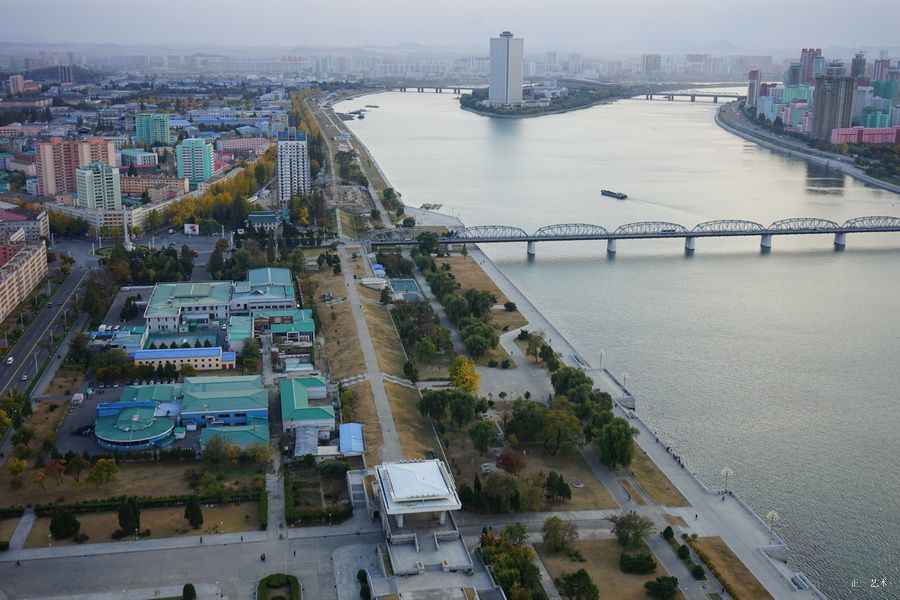

 Reflection by Rio Grande