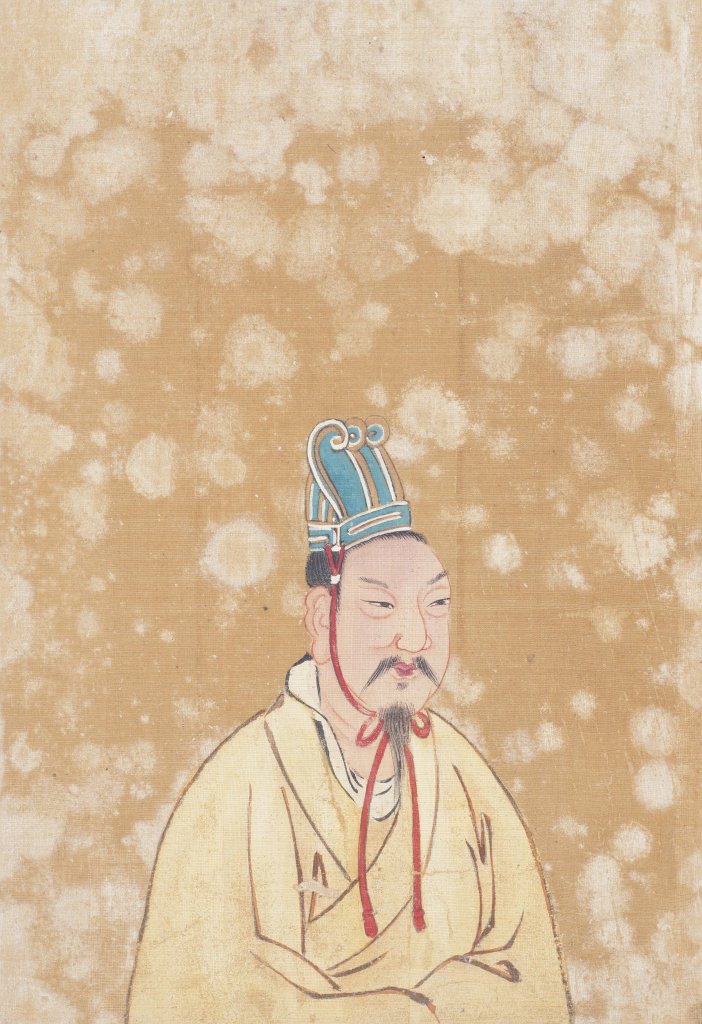
Category: Comprehensive Mirror

  • Comprehensive Reflections to Aid in Governance(Part 51): Insurgence at Qinian Palace

    Comprehensive Reflections to Aid in Governance

    By Sima Guang

    Translated By Yiming Yang

    Annals of Qin Book 1 Scroll 6 (continued)

    Eave Tile of Qinian Palace

    The 4th year of the First Emperor(243 B.C.)

    General Meng Ao attacked the Kingdom of Wei in the spring, capturing the cities of Chang and Yougui. The warfare ceased in March.

    A prince of Qin, who had been held hostage in the Kingdom of Zhao, returned home. Conversely, the prince of Zhao, who was in Qin, also returned home.

    In the fall, widespread locust plagues and epidemics afflicted the Kingdom of Qin. The king decreed that those who contributed more than fifty thousand kilograms of grain would be appointed as local officials.

    King Anxi of Wei died, and his son Wei Wu succeeded him as King Jingmin of Wei.

    The 5th year of the First Emperor(242 B.C.)

    General Meng Ao attacked the Kingdom of Wei and captured about thirty towns, including Suanzao, Yan, Changping, Yongqiu, and Shanyang. He established the East Prefecture for the first time.

    In earlier days, Ju Xin had a good friend named Pang Nuan when they lived in the Kingdom of Zhao. Later, Ju Xin became an official in the Kingdom of Yan. The King of Yan wanted to exploit the exhaustion of Zhao, which had been tormented by Qin numerous times. General Pang Nuan was in command after General Lian Po left. The King of Yan consulted Ju Xin on the matter. Ju Xin replied, “Pang Nuan is easy to deal with.” The King of Yan appointed Ju Xin as the commander to attack Zhao. General Pang Nuan led the defense of Zhao, killed Ju Xin, and captured twenty thousand Yan soldiers.

    The monarchs were troubled by the relentless assaults from the Kingdom of Qin.

    The 6th year of the First Emperor(241 B.C.)

    The kingdoms of Chu, Zhao, Wei, Han, Yan, and Wey formed a vertical alliance against the Kingdom of Qin. The King of Chu served as the chief, with Lord Chunshen actually in charge. The allied troops took the city of Shouling and reached the foot of Hangu Pass. The Qin army emerged from the pass and trounced the allied troops. The King of Chu blamed the defeat on Lord Chunshen, causing a distance between them growing.

    Zhu Ying, a person from the region of Guanjin, observed to Lord Chunshen, “People think that the Kingdom of Chu was a powerful state and became enfeebled under your watch. I don’t think so. Qin was friendly to Chu under the former king’s rule. Why had Qin not attacked Chu for twenty years? The Qin troops would be encumbered if they had to get through Mengai Pass; they would be prohibited from passing between the states of East and West Zhou, exposing their back to Han and Wei while fighting Chu. Now the situation is different. Wei is on the brink of collapse and cannot take care of their cities of Xu and Yanling. Once Wei yields these two cities to Qin, the Qin troops will be only one hundred sixty miles from the Chu capital, Chen. Then all I foresee is daily grinding struggles between Qin and Chu.”

    The Kingdom of Chu moved its capital from Chen to Shouchun, renaming Shouchun to Ying. Lord Chunshen returned to his fief, the city of Wucheng, and continued his duties as the prime minister.

    The army of Qin conquered the city of Chaoge in the Kingdom of Wei and the city of Puyang in the state of Wey. Lord Yuan of Wey relocated to the city of Yewang with his entourage and family. They defended the Henei Prefecture of Wei, utilizing the natural barrier of the mountains.

    The 7th year of the First Emperor(240 B.C.)

    The Kingdom of Qin raided the Kingdom of Wei and captured the city of Ji.

    The Queen Dowager Xia passed away.

    General Meng Ao died.

    The 8th year of the First Emperor(239 B.C.)

    The Kingdom of Wei ceded the city of Ye to the Kingdom of Zhao.

    King Huanhui of Han died, and his son Han An succeeded him.

    The 9th year of the First Emperor(238 B.C.)

    The kingdom of Qin invaded Wei and captured the cities of Yuan and Puyang.

    In April, during an unusually cold summer, some people of Qin died due to the freezing weather. The king of Qin resided in the city of Yong.

    On April 20th, the king of Qin held a coronation ceremony, during which he began to carry a sword, symbolizing his coming of age.

    General Yang Duanhe led an attack on the kingdom of Wei and captured the city of Yanshi.

    The king was enthroned when he was very young. The queen dowager often had sexual liaisons with Marquis Wenxin. As the king grew older, Marquis Wenxin became fearful of the consequences if the affair was exposed. To protect himself, he introduced one of his attendants, Lao Ai, to the queen dowager, disguised as an eunuch. The queen dowager liked Lao Ai and had two sons with him. She awarded Lao Ai the title of Marquis Changxin and granted him the city of Taiyuan as his fief. She delegated all state affairs of the kingdom to Lao Ai. Many intellectuals sought patronage or employment from Lao Ai.

    Attendants of the king who had feuds with Lao Ai disclosed that Lao Ai was not an eunuch. The king ordered officials to investigate Lao Ai. Frightened, Lao Ai stole the king’s tally to issue military commands and plotted a coup d’état by seizing the Qinian Palace, where the king was residing. The king ordered the prime minister Lord Changping, and Lord Changwen to mobilize troops to counter Lao Ai. A fight broke out in the capital city of Xianyang, and hundreds of people were beheaded. Lao Ai’s forces were crushed, and he fled. Eventually, Lao Ai was captured.

    In September, Lao Ai and his three associated clans (his father, mother, and wife) were summarily executed. Lao Ai’s confidants were quartered, and their families were all killed. Those followers of Lao Ai with lesser crimes were sentenced to exile in the state of Shu. More than four thousand families had to move. The queen dowager was relocated to the Fuyang Palace in the city of Yong, and her two sons with Lao Ai were killed. The king issued an order: “Whoever pleads on behalf of the queen dowager must be quartered, and their body piled outside the palace door.” Twenty-seven people were killed this way.

    A visitor from Qi named Mao Jiao submitted a note and appealed to the king. The king sent an usher out with a response, “Have you seen the pile of bodies outside the door?” Mao Jiao replied, “I hear there are twenty-eight mansions in the constellation system. There are currently twenty-seven bodies; I came to meet the lucky number. I am not afraid of dying.” The messenger reported what Mao Jiao said. Mao Jiao’s roommates and fellow travelers, seeing this, packed up their belongings and fled from Qin.

    The king was furious: “Who is this guy? He upset me on purpose. Go and set up a big pot to boil him alive. I would not pile him outside the door!” The king sat up with sword in hand, with a scowl on his face and spittle flying. An usher went out to let Mao Jiao in. Mao Jiao walked slowly towards the king and paid homage repeatedly. Then he began to speak: “I hear that a living person does not mind talking about death; a monarch of a state does not mind talking about the perishing of a state. Banning the talk of death would not give you extra life. Banning the talk of the perishing of a state would not make a state prevail. A wise monarch is usually eager to hear about the life or death, the survival or perishing of a state. Would Your Majesty like to hear me out?”

    The king allowed, “What do you want to say?” Mao Jiao continued, “Your Majesty has committed atrocities, did you realize that? You quartered your stepfather; you put your half-brothers in a bag and beat them to death; you put your mother under house arrest; you butchered loyal advisers. Your cruelty surpasses the tyrants in history such as Jie of Xia and Zhou of Shang. When the news is heard by the world, everyone will be disgusted by it. No one will root for the kingdom of Qin. I am really worried for Your Majesty’s wellbeing. That’s all I want to say.” Mao Jiao took off his clothes and laid down to face his death.

    The king got down from his pedestal and helped Mao Jiao to his feet: “Please stand up and put on your clothes, Professor. I will listen to your advice from now on!” The king appointed Mao Jiao as his top adviser. The king then drove his carriage to the city of Yong, with the left seat unoccupied, to welcome back the queen dowager. They mended their relationship as mother and son.

  • Comprehensive Reflections to Aid in Governance(Part 39): The Art of Persuasion

    Comprehensive Reflections to Aid in Governance

    By Sima Guang

    Translated By Yiming Yang

    Annals of Zhou Book 5 Scroll 5 (continued)

    Chu Long and Queen Dowager

    The 50th year of King Nan(265 B.C.)

    In the winter of that year, Queen Dowager Xuan of Qin passed away in October, and during the preceding autumn, Marquis Rang went into exile in his fief town of Tao in September.

    Sima Guang’s comment: Marquis Rang played a crucial role in establishing King Zhao of Qin, shielding him from potential challenges. He advocated for Bai Qi as the general, leading campaigns to the south and successfully annexing the cities of Yan and Ying. Marquis Rang also expanded Qin‘s territory eastward, reaching the border of Qi. He compelled all the Lords to submit to Qin‘s authority. The significant rise in the power of the Qin kingdom was attributed to Marquis Rang‘s dedicated efforts. While he exhibited authoritarian, arrogant, and greedy traits that eventually led to his own troubles, his discretion was not as egregious as Fan Ju portrayed. Figures like Fan Ju, whose strategies did not solely prioritize the interests of the kingdom of Qin, coveted Marquis Rang‘s position and actively sought to undermine his power. They influenced the king of Qin to sever familial ties with his mother and uncles, to whom he was indebted. In essence, Fan Ju is a treacherous individual indeed!

    The King of Qin designated Lord An‘guo as the crown prince.

    The troops of Qin conducted a raid on the kingdom of Zhao, successfully capturing three cities. The recently installed king of Zhao was young, so the Queen Dowager of Zhao was in charge. The kingdom of Zhao sought assistance from Qi. In exchange for sending troops to aid Zhao, the kingdom of Qi requested Lord Chang’an, the king’s younger brother, as indemnity. Queen Dowager of Zhao firmly rejected this condition, leading to a standoff.

    Despite Qi holding onto its troops, officials of Zhao implored Queen Dowager forcefully. In a defiant response, Queen Dowager made her stance clear: “Whoever speaks to me about making Lord Chang’an a hostage again, this old lady would spit on his face!” Despite the tension, Vice Chief Strategist Chu Long of Zhao expressed a desire to speak with Queen Dowager. The Queen Dowager granted him an audience, waiting with an unpleasant disposition. 

    Chu Long shuffled towards the Queen Dowager, apologizing for his slow pace, “I apologize, but these old feet of mine are not in the best condition, preventing me from moving quickly. Thus, I haven’t had the chance to see your majesty for quite some time. I hope you can pardon my physical limitations. Additionally, my concern for the well-being of your majesty has grown, and that’s why I humbly request the opportunity for a visit.”

    “I’ve been relying on a hand-cart to get around.”  The queen dowager sympathized.

    “Is your majesty’s appetite still good?”

    “I sustain myself on porridge.” Her hostility diminished somewhat.

    “My humble son, Shuqi, is the youngest and seemingly without much promise. However, in my old age, I still hold great affection for him. I would like to enroll him in the waiting list of the black-jacket guards to ensure the protection of your majesty. I dare to request this despite the potential offense it may cause.”

    “I grant your wish. How old is he?”

    “He is fifteen. Although young, I wish to entrust him to your majesty before I am buried deep in earth.”

    Queen Dowager, surprised by a man’s deep affection for his youngest son, pondered aloud, “Does a man also love his youngest son like that?” Chu Long asserted, “More so than a lady does,” prompting Queen Dowager to laugh and say, “Women love their sons so much more.” 

    “This old man observes that your majesty loves her princess, the Queen of Yan, more than Prince Chang’an.”

    “You are mistaken. I love Lord Chang’an just as much, if not more.”

    “Parents plan for the long-term well-being of their loved ones. When my lady sent off Queen of Yan, the old lady clung to her heels and sobbed. You were saddened because she went far away from home, and the longing persisted even after her departure. However, your prayers have consistently been along the lines of: ‘Please don’t make her come back!’ Is this because you envision her welfare in the long run, ensuring her sons and grandsons become the kings of Yan?”

    “Yes, it is.”  The Queen Dowager admitted.

    “Tracing back three generations, are there any descendants of the king of Zhao who have inherited the title of Marquis from their father and still hold that title?”

    The Queen Dowager replied, “There are none.” Chu Long went further, asking, “Not just counting the descendants of Zhao, are there any rulers who inherited marquis titles in other kingdoms?” Queen Dowager conceded, “This old lady is not aware of.”

    Chu Long concluded, “Inheriting a marquis title brings short-term trouble to the individual and, in the long run, affects the welfare of their descendants. Why is inheriting a marquis title necessarily detrimental for a king’s son? Because they hold esteemed positions without contributing to the state, receive high compensation for little effort, and possess the state’s wealth. Today, my lady bestowed upon Lord Chang’an a royal title, fertile fief land, and state treasures, yet he has made no contributions to the state. When my lady passes away, what justification can Lord Chang’an offer for his position in the kingdom of Zhao? That’s why I believe my lady is primarily concerned about Lord Chang’an current well-being, suggesting that she loves the Queen of Yan more than her son.”

    The Queen Dowager sighed and said, “Fine. You can do to him as you please.”

    Queen Dowager reluctantly consented to send Lord Chang’an to the kingdom of Qi as a hostage, accompanied by a hundred chariots. In adherence to the agreement, the kingdom of Qi sent troops to aid Zhao, and as a result, the kingdom of Qin withdrew its forces.

    Lord Anping of Qi, Tian Dan, assumed the role of a minister in Zhao. He orchestrated an invasion of the kingdom of Yan with the army of Zhao, successfully capturing the city of Zhongyang. Subsequently, he led another raid on the kingdom of Han, seizing the city of Zhuren.

    In the kingdom of Qi, King Xiang passed away, and his son Jian was appointed as the new king. As Jian was underage, the state affairs were overseen by the Queen Dowager of Qi, who had previously eloped with King Xiang and held the title of Lord Queen Dowager.

  • Comprehensive Reflections to Aid in Governance(Part 17): Su Qin And The Vertical Alliance

    Comprehensive Reflections to Aid in Governance

    By Sima Guang

    Translated By Yiming Yang

    Annals of Zhou Book 2 Scroll 2 (continued)

    The 36th year of King Xian (333 B.C. continued)

    Su Qin continued his persuasive efforts with King Xuanhui of Han: “The kingdom of Han boasts a large expanse of land, spanning nine hundred miles, and possesses hundreds of thousands of well-armed soldiers. The world’s finest bows, crossbows, and swords are all crafted right here in the state of Han. Han‘s archers are so skilled that they can leap into the air and unleash a continuous barrage of a hundred arrows. It is beyond doubt that the valor of a single Han soldier, armed with the best weaponry, can withstand the assault of a hundred adversaries.”

    “Your grace, if you yield to Qin‘s demands, they will not stop at just taking Yiyang and Chenggao as they did this year. Next year, they will seek even more territory. In the end, you will have nothing left to give. Any concession made now will only nullify the goodwill you have shown before, inviting calamity upon us. Your land is limited, while the kingdom of Qin‘s appetite is boundless. Attempting to satiate an insatiable hunger with limited resources is akin to trading grievances for misfortune. We are losing territory without putting up a fight. As the saying goes, ‘I would rather be a chick’s beak than the behind of a cow.’ It is regrettable that your wisdom, your grace, and the valor of Han‘s army are earning a reputation as the backend of a cow!” King Xuanhui of Han heeded Su Qin‘s counsel and decided not to concede to Qin‘s demands

    Su Qin continued his diplomatic efforts, this time directing his persuasive skills toward the King of Wei: “Your grace, your kingdom, although not extensive in terms of land, spans a thousand miles. It is a densely populated region filled with countless farms and residences, leaving little room for pastures. The population is so dense, and the traffic so bustling, that one might think it’s perpetually hosting armies on the move. In my humble opinion, your kingdom rivals the vastness of the kingdom of Chu.”

    “I have also come to understand the might of your armed forces: you command two hundred thousand heavily armed soldiers, two hundred thousand black-cap servicemen, two hundred thousand gladiators, and one hundred thousand auxiliary supporters. In addition, you possess six hundred chariots and five thousand cavalry.”

    “Yet, it troubles me to see that you are currently heeding advisors who advocate servility towards the Kingdom of Qin. I implore you to reconsider this stance and examine the charter of alliance provided by my lord, the King of Zhao. The charter is unequivocal: your commands are to be executed by the alliance!” King of Wei, after consideration, agreed to Su Qin‘s proposal.

    Su Qin‘s persuasive efforts extended to the King of Qi: “Your grace, the Kingdom of Qi boasts fortresses on all four borders, with territory spanning two thousand miles. It commands hundreds of thousands of well-armed soldiers and vast grain reserves. Your standing armies are well-disciplined, and five independent military forces are at your disposal in five cities. Your warriors move as swiftly as arrows, fight fiercely like thunderstorms, and retreat like showers. Even if a military conflict were to arise, the aggressors would have to clear Mount Tai, cross the Qing River, and navigate Bohai Bay.”

    “The city of Linzi alone houses seventy thousand families, and a rough estimate of three able-bodied men per family gives you two hundred and ten thousand potential fighters in Linzi alone, without counting neighboring counties. Linzi‘s people are prosperous and affluent, indulging in activities like cockfighting, dog racing, chess, and football. On Linzi‘s streets, cartwheels clash, pedestrians rub shoulders, and their sleeves brushing together could form a backdrop curtain, while wiping sweat from their brows could create a downpour.”

    “However, certain ministers who fear Qin‘s proximity dominate the strategic decisions of the states of Han and Wei because they share borders with Qin. The survival or downfall of these states can be decided within ten days of mobilizing their troops. Even if they win, they might lose half their forces and face border incursions. If they lose, their state may face defeat and collapse. This is why the states of Han and Wei tend to appease Qin and hesitate to engage in combat. Qi‘s security against a Qin invasion is entirely different. Qin invaders must traverse the lands of Han and Wei, navigate the narrow road at Yanjin (in Wei), and break through the strategic Kangfu Pass. Qin‘s chariots cannot move in combat formations, and cavalry cannot advance side by side through these passages. A hundred defenders on these bastions can thwart thousands of attackers. Qin‘s army may want to advance deep into Qi, but they must also be cautious, wary of attacks from Han and Wei from behind.”

    “It is evident that Qin does not pose an immediate threat to Qi. They resort to trickery, threats, and bluster rather than moving into combat. Those ministers who advocate submission to Qin do not fully grasp the situation, Your grace. You possess the means to safeguard your state and need not be labeled as subservient to Qin. Please consider our strategy carefully.” The King of Qi approved of Su Qin‘s counsel.

    Su Qin continued his diplomatic efforts in the southwest, addressing the King of Chu: “The Kingdom of Chu stands as a world superpower, spanning a vast territory of six thousand miles. Its army numbers one million strong, equipped with thousands of chariots and tens of thousands of horses. Its granaries hold enough grain to sustain the state for a decade, a resource that signifies dominance. To the Kingdom of Qin, Chu represents a greater threat than any other state. The strength of Chu corresponds to the weakness of Qin, and vice versa. Qin and Chu cannot coexist peacefully.”

    “To your advantage, the Kingdom of Chu should join the vertical alliance to isolate the Kingdom of Qin. I will ensure that other states east of Xiao Mountain pay tribute to you with seasonal produce, obey your orders, entrust their state affairs and heritage to you, and train their soldiers to follow your lead. Joining the vertical alliance implies that all states cede their lands and are subject to Chu, while joining the horizontal alliance implies that the Kingdom of Chu surrenders its land and is subject to Qin. The consequences of these two options are vastly different. Which one do you choose?” The King of Chu concurred with Su Qin‘s proposal.

    With Su Qin‘s successful diplomacy, he assumed the role of chief commander and prime minister for all six states of the vertical alliance. He traveled north to report to the Marquis of Zhao, accompanied by an impressive entourage equipped with chariots and well-armed guards, rivaling that of a king.

    King Wei of Qi passed away, and his son, Piqiang, ascended to the throne as King Xuan of Qi. King Xuan of Qi recognized that Marquis Cheng (Zou Ji) had wrongfully accused Tian Ji and reinstated Tian Ji to his former position.

    Duke Wen of Yan also passed away, and his son succeeded him as King Yi of Yan.

    Marquis Cheng of Wey passed away, and his son took over as Marquis Ping of Wey.

    The 37th year of King Xian (332 B.C.)

    The king Hui of Qin, in an attempt to disrupt the vertical alliance, sent Xi Shou to deceive the Kingdoms of Qi and Wei into forming a coalition against the state of Zhao. This move aimed to thwart the alliance that Su Qin had been working on. When Marquis Su of Zhao discovered this plot, he held Su Qin responsible, and Su Qin became fearful.

    To make amends, Su Qin offered to lobby the state of Yan to seek revenge for Qi‘s actions. As Su Qin left the state of Zhao, the vertical alliance fell apart. The people of Zhao breached a dam to flood the armies of Qi and Wei, forcing them to withdraw.

    In a gesture of reconciliation, the Kingdom of Wei ceded the city of Yinjin to the Kingdom of Qin. This city is now known as Huayin.

    Subsequently, the King of Qi launched a campaign against the state of Yan, capturing ten cities. However, they later returned these cities to their original owner Yan.

  • Comprehensive Reflections to Aid in Governance(Part 16): Su Qin and Zhang Yi

    Comprehensive Reflections to Aid in Governance

    By Sima Guang

    Translated By Yiming Yang

    Annals of Zhou Book 2 Scroll 2 (continued)

    The 36th year of King Xian (333 B.C.)

    The king of Chu launched an attack on the state of Qi and defeated the Qi army. He besieged Xuzhou and ordered the expulsion of Tian Ying. However, Tian Ying sent an envoy named Zhang Chou to plead with the King of Chu. After hearing Zhang Chou’s plea, King of Chu decided to halt the attack on Qi.

    The construction of the grand palace portal in the state of Han has been completed. Marquis Zhao of Han had passed away, and his son had succeeded him, assuming the title of King Xuanhui of Han.

    Earlier, Su Qin from the city of Luoyang had approached the King of Qin with a proposal for unifying China, but the King of Qin had not taken his advice seriously.

    Su Qin then decided to visit Duke Wen of Yan and presented a persuasive argument: “The reason the state of Yan has remained free from the harassment of bandits and soldiers is the protective shield provided by the state of Zhao to the south. If the state of Qin were to wage war against Yan, it would have to do so thousands of miles away from its own territory. On the other hand, if the state of Zhao were to engage in conflict with Yan, it would be doing so only hundreds of miles from its own borders. It is unwise to worry about a distant enemy while ignoring a threat much closer to home. I propose, Your Grace, that you form a marital alliance with Zhao, ultimately uniting with the state of Zhao. This way, Yan will have no more cause for concern.”

    Duke Wen of Yan recognized the wisdom in Su Qin‘s advice and not only accepted it but also facilitated his journey to the state of Zhao to pursue this alliance further.

    Su Qin employed his persuasive skills once more, this time lobbying Marquis Su of Zhao. He presented his case: “At present, there is no state stronger than Zhao. Qin considers Zhao its primary adversary but has refrained from launching an offensive due to concerns that Han and Wei may conspire against them from behind. There are no natural barriers like large mountain ranges and rivers between Qin and these two states. Qin‘s strength allows it to gradually encroach on their territory, eventually besieging their capitals. Han and Wei would then succumb to Qin‘s pressure, becoming Qin‘s vassals. If Han and Wei no longer pose a threat, the state of Zhao will be next in line.

    “As I examine the map of the realm, I see that the combined land area of all the other states is five times greater than that of Qin. It is estimated that these states possess ten times as many soldiers as Qin. If the six major states unite and launch a westward offensive against Qin, Qin will be overpowered.  There are consultants who will attempt to encourage other states to dole out territories to appease Qin‘s threat. They will be rich and famous if Qin gets its wish. They will not concern themselves with the danger Qin poses to their states. This is why you are seeing these lobbyists constantly urging you to cede land to pacify Qin.

    “Therefore, I implore you, your grace, to scrutinize their proposals. If I may offer a plan, it would be to unite the six states—Han, Wei, Qi, Chu, Yan, and Zhao—through marriage alliances to resist Qin‘s aggression. We can invite ministers and generals from all six states to a conference near the Huan River, forming an alliance by exchanging hostages as a guarantee. Our alliance charter will state: ‘All states shall send their finest soldiers to aid any state attacked by Qin or to retaliate against Qin. Any state violating this charter will face collective retaliation from the other five states.’ With all six states united against Qin, Qin‘s armored divisions will not dare to venture out of the Hangu Pass to threaten the states east of Xiao mountain.”

    Marquis Su of Zhao was greatly impressed by Su Qin‘s wisdom and appreciated his advice. He treated Su Qin with great honor, bestowing him with gifts and rewards, and entrusted him as his envoy to negotiate with the leaders of the other states.

    During this period, the army of Qin, under the leadership of Xi Shou [Gongsun Yan], launched a military campaign against the state of Wei. They defeated the Wei army of forty thousand troops, captured the Wei general Long Gu, and seized the city of Diaoyin. With the Qin army poised to advance further eastward, Su Qin became increasingly concerned that they would reach the state of Zhao before he could establish the alliance. He couldn’t think of anyone in Qin who would be willing to collaborate with him.

    In an act of chicanery, Su Qin deliberately angered his friend Zhang Yi, who was also a student of Master Guigu and had expertise in political strategy. Su Qin believed that Zhang Yi was more skilled than himself in this art. Zhang Yi had been traveling among various states trying to garner support for their cause but had found few willing listeners. He became stranded in the state of Chu.

    Su Qin summoned Zhang Yi to the state of Zhao and personally insulted him. This mistreatment infuriated Zhang Yi, who realized that only the state of Qin had the potential to pose a significant threat to Zhao. Consequently, he decided to travel westward to Qin, with the intention of aiding them in their campaign against the eastern states.

    Su Qin acted covertly by sending his servant along with Zhang Yi, providing him with gold coins for his journey. Zhang Yi used these resources to bribe his way into an audience with the King of Qin. The King was impressed with Zhang Yi‘s persuasive abilities and appointed him as an advisor.After successfully gaining the King of Qin’s favor, Zhang Yi’s servant bid him farewell and explained Su Qin‘s strategy. Su Qin had intentionally provoked Zhang Yi and then arranged for him to travel to Qin. This was all part of Su Qin‘s plan to ensure Zhang Yi could wield influence in Qin, preventing a Qin invasion of Zhao and preserving the alliance. Zhang Yi was deeply impressed by Su Qin‘s strategic acumen: ”Alas! This is my specialty and I did not even realize what happened!  It is obvious that Mr. Su is a superior strategist.  Please convey my gratitude to Mr. Su.  As long as he is in charge, Zhang Yi won’t interfere with his plan.”

  • Comprehensive Reflections to Aid in Governance(Part 4): General Wu Qi

    Comprehensive Reflections to Aid in Governance

    By Sima Guang

    Translated by Yiming Yang

    Annals of Zhou Book 1 Scroll 1 (continued)

    Duration of 48 years
    The founding father of Legalism, Li Kui (a.k.a. Li Ke)

    The 23rd year of King Weilie (403 B.C. continued)

    Marquis Wen of Wei sat down with Tian Zifang, enjoying a glass of wine. During their conversation, he remarked, “The chime bells seem to be out of tune, with the left one slightly too high.” Tian Zifang let out a chuckle in response. Intrigued, Marquis Wei of Wen inquired, “What amuses you?” Tian Zifang replied with a hint of humor, “I recall a saying: A wise ruler excels in governance, while an unwise ruler excels in music. Your Excellency, being knowledgeable in music, might not necessarily possess expertise in governing.” Marquis Wen of Wei acknowledged, “You speak the truth.”

    Crown Prince Ji, the son of Marquis Wen of Wei, unexpectedly encountered Tian Zifang while venturing outside. Upon seeing him, Crown Prince Ji promptly descended from his wagon and knelt by the roadside to show his respect to Tian Zifang, who was his father’s esteemed teacher. However, to his dismay, Tian Zifang completely disregarded the prince’s presence and offered no reciprocal greeting. Offended by this behavior, Crown Prince Ji couldn’t help but reproach Tian Zifang, saying, “Do the wealthy and noble think themselves above others, or is it the poor and lowly who display such arrogance?”

    In response, Tian Zifang retorted, “Indeed, the poor and lowly can exhibit snobbishness, but do the wealthy and noble have the audacity to do so? When a leader becomes arrogant, he risks losing his power, just as a head of a family risks losing their wealth when they succumb to snobbery. Once you lose your state, no one will serve you as a state ruler, and once you lose your family’s fortune, no one will serve you as a family head. For the poor and lowly, they always have the option to leave and find new paths if their ideas and actions are not recognized or appreciated. Are there any places where one cannot be poor and lowly?”

    Realizing his mistake, Crown Prince Ji humbly apologized to Tian Zifang for his earlier outburst.

    Marquis Wen of Wei sought counsel from Li Ke, saying, “You once mentioned to me, ‘A poor family longs for a good mistress, and a state in turmoil yearns for a good minister.’ Now, I must choose between Wei Cheng and Zhai Huang for the position of prime minister. What are your thoughts on these two candidates?”

    Li Ke, however, was not forthcoming to share his opinion. He replied, “It is not fitting for someone of lowly status to meddle in the affairs of the noble, nor for an outsider to interfere in matters of the inner circle. As an outsider, I cannot offer my opinions.”

    Marquis Wen of Wei, pressing for guidance, urged Li Ke, saying, “As my advisor, you should not evade this important state affair.”

    Li Ke responded, “You lack the ability to evaluate a person. To assess an individual, observe whom they associate with when they are at home, notice how they contribute when they attain prosperity, observe whom they recommend when they rise to eminence, take note of what they refrain from doing when they are in dire straits, and consider what they decline to take when they are impoverished. These five criteria are sufficient to help you make a decision. Why do you seek my input?”

    Marquis Wen of Wei gained confidence from Li Ke‘s words and declared, “You may go home now, Mr. Li. I have made up my mind regarding the selection of the prime minister.”

    As Li Ke was on his way out, he coincidentally encountered Zhai Huang. Curious about the outcome of the prime minister selection, Zhai Huang asked Li Ke, “I heard that our lord summoned you to assist in choosing the prime minister. Do you know whom the lord has chosen?”

    Li Ke responded calmly, “It is likely that the choice is Wei Cheng.”

    Zhai Huang‘s face flushed with anger. He retorted, “It was I who recommended Wu Qi to be the governor of Xihe. It was I who suggested Ximen Bao when our lord was concerned about internal affairs in the city of Ye. I also recommended Yue Yang when our lord launched the campaign against Zhong Shan. Furthermore, when we needed a governor after capturing Zhong Shan, it was I who recommended you. And when our lord’s son required a teacher, it was I who recommended Qu Houfu. Take a moment to recognize my contributions. Where have I not served better than Wei Cheng?”

    Li Ke calmly responded, “Did you bring me before your lord merely to join your faction and advance your own position? I expressed my opinion when your lord consulted me regarding the choice of prime minister. Why did I know that he would select Wei Cheng? It is because Wei Cheng dedicates ninety percent of his generous remuneration to public welfare, while only ten percent is used for his own family. This is why he has garnered the respect and admiration of scholars such as Bu Zixia, Tian Zifang, and Duan Ganmu from the eastern region. Your lord appointed these three gentlemen as his teachers. The five individuals you recommended are mere ministers. How can you compare yourself to Wei Cheng?”

    Zhai Huang took a step back, repeatedly bowing to Li Ke, and said, “I have acted rashly. I have lost my bearings. I would like to become your student for the rest of my life.”

    The aforementioned Wu Qi hailed from the state of Wey and served as an officer in the state of Lu. When the state of Qi launched an attack on Lu, Wu Qi was considered the leading general of Lu‘s armed forces. However, his marriage to a woman from the state of Qi caused unease among the people of Lu. In order to solidify his appointment, Wu Qi made the drastic decision to kill his wife. He then led the troops of Lu and decisively defeated the invading forces from Qi. Despite his success, Wu Qi faced criticism in front of the Marquis of Lu. It was argued, “Wu Qi once served under Zeng Shen, a disciple of Confucius. Zeng Shen severed ties with him when Wu Qi neglected his mother’s funeral rites. Now he has killed his wife to secure a military position. He is a cruel and unethical individual. While he may have defeated Lu‘s enemy this time, his tarnished reputation could attract further attacks from others.”

    Upon hearing rumors of a potential indictment, Wu Qi traveled to the state of Wei, where he learned that Marquis Wei Wen welcomed talented individuals. Marquis Wei Wen discussed Wu Qi with Li Ke, who commented, “Wu Qi is driven by greed and lust. However, in terms of military leadership, he surpasses even Sima Rangju.” Impressed by his capabilities, Marquis Wei Wen appointed Wu Qi as the commander to launch an attack on the kingdom of Qin. Under Wu Qi‘s command, the Lu forces had successfully taken five cities of Qin.

    As a general, Wu Qi maintained the same living conditions as the lowest-ranking soldier. He rested on the ground and traveled on foot, just like his soldiers. He carried his own food, sharing in their labor and hardships. In a notable incident, when a soldier developed an infectious wound, Wu Qi personally sucked out the pus with his mouth. When the soldier’s mother heard this story, she burst into tears. Someone approached her and asked, “Your son is just a common soldier. The general sucked out the pus to heal him. Why are you crying?” The mother replied, “You don’t understand. General Wu also sucked the wound of my son’s father in the past. His father fought tirelessly and died on the battlefield. Now General Wu is sucking my son’s wound, and I don’t know when and where he will meet his own end. That’s why I am crying.”

    Duke Min of Yan passed away, and his son Duke Xi succeeded him.

  • Comprehensive Reflections to Aid in Governance(Part 3): The Revenge of Yu Rang

    Comprehensive Reflections to Aid in Governance

    By Sima Guang

    Translated by Yiming Yang

    Annals of Zhou Book 1 Scroll 1 (continued)

    The 23rd year of King Weilie (403 B.C. contined)

    The land of the Zhi family was divided among three families: Han, Wei, and Zhao. In a gruesome act, Viscount Zhao Xiang transformed Zhi Bo‘s skull into a drinking cup by lacquering it. Seeking revenge for the death of Zhi Bo, a courtier named Yu Rang devised a plan. He disguised himself as a prisoner laborer and volunteered to paint Viscount Zhao Xiang‘s lavatory. As fate would have it, Viscount Zhao Xiang felt a sudden uneasiness when he went to the restroom. Suspecting something amiss, he ordered a search that led to the capture of Yu Rang. Although his bodyguards were ready to kill Yu Rang, Viscount Zhao Xiang intervened, acknowledging Yu Rang‘s righteous intentions. He realized that Yu Rang sought revenge for the Zhi family despite their lack of descendants. Impressed by his determination, Viscount Zhao Xiang released Yu Rang.

    To ensure his anonymity, Yu Rang painted his body to resemble scabies and swallowed char coke to mute his voice. He assumed the role of a beggar in the marketplace, going unrecognized even by his own wife. However, a friend eventually identified him and tried to dissuade him from his path of suffering. The friend pointed out that Yu Rang possessed the abilities to become a courtier of Viscount Zhao Xiang and gain close access to Zhao Wuxu, making revenge easier to achieve. The friend questioned why Yu Rang chose the arduous path of suffering. In response, Yu Rang declared, “No, if I become a courtier and then betray him, I would be disloyal. I choose to take the most challenging route in whatever I do. My purpose is to shame those future courtiers who are disloyal to their lords.” With unwavering determination, Yu Rang hid under a bridge, observing Viscount Zhao Xiang coming out of his house. It was on that bridge that Viscount Zhao Xiang‘s horse became startled, leading to a search that resulted in Yu Rang‘s capture once again. In the end, Yu Rang was killed, but not before he was given the opportunity to plunge a dagger into Zhao Wuxu‘s empty robe.

    Viscount Zhao Xiang had five sons, but he did not choose any of them as the heir to the Zhao family. Instead, he believed that the descendants of his older brother Bolu should rightfully inherit the position. As a result, Viscount Zhao Xiang granted the land of Dai to Bolu‘s son, appointing him as Lord Dai Cheng. Sadly, Lord Dai Cheng passed away at a young age.

    Viscount Zhao Xiang selected the son of Lord Dai-Cheng, named Zhao Huan, as the new heir to the Zhao family. However, upon Viscount Zhao Xiang‘s death, his younger brother Viscount Huan, named Zhao Jia, expelled Zhao Huan from his position and took his place as the family heir. Regrettably, Viscount Huan‘s reign was short-lived as he passed away within a year.

    The people within the Zhao Family held the belief that Viscount Huan as the family heir had not been the true intention of Viscount Zhao Xiang. Taking matters into their own hands, they took decisive action by killing Viscount Huan‘s son and reinstating Zhao Huan as the head of the Zhao family. From that point on, he became known as Viscount Zhao Xian. Notably, Viscount Zhao Xian‘s son, referred to as Marquis Zhao Lie, is the Zhao Ji mentioned at the beginning of this book.

    As for the other two Marquises mentioned, Wei Si and Han Qian, they have their own lineage and connections. Wei Si, one of the three Marquises, is the grandson of Viscount Wei Huan and is referred to as Marquis Wei Wen. On the other hand, Viscount Han Kang‘s son is named Han Qizhang, or Viscount Han Wu. Viscount Han Wu, in turn, named his own son Han Qian, who is recognized as the Marquis Han Jing among the three Marquises granted titles by the King of Zhou.

    Marquis Wei Wen, known for his reverence for knowledge, extended invitations to two esteemed scholars, Bu Zixia and Tian Zifang, to be his teachers. Additionally, he held a deep respect for another scholar named Duan Ganmu, who declined the offer to become his teacher. Despite this, Marquis Wei Wen continued to show his admiration for Duan Ganmu by paying a respectful salutation every time he passed by the scholar’s house. His sincere gestures demonstrated his appreciation for intellectual pursuits.

    Due to his reputation as a patron of learning, intellectuals from far and wide were drawn to work for Marquis Wei Wen. They recognized the value he placed on intellectual pursuits and were eager to contribute their knowledge and skills to his court.

    On one occasion, Marquis Wei Wen was enjoying a lively drinking party with his courtiers when a sudden rain shower began. Undeterred by the weather, Marquis Wei Wen expressed his desire to arrange chariots and venture into the woods. Perplexed by his decision, his assistants questioned why they should go out in the rain when they were already having a good time. Marquis Wei Wen explained, “I just remembered that I had made an appointment with the administrator of the forest to go hunting. We must honor our commitments, even if we are currently engaged in leisurely activities.” He insisted on going to his hunting appointment and canceled it in person.

    The state of Han approached Marquis Wei Wen, seeking troops for a campaign against the state of Zhao. However, Marquis Wei Wen declined the request, stating, “Zhao is my brother state. We cannot oblige.” In a similar fashion, when the state of Zhao requested troops from Marquis Wei Wen for a campaign against the state of Han, he provided the same response. Initially, both Han and Zhao were disappointed with the Marquis’s refusal.

    However, their disappointment turned into deep respect for the state of Wei when they discovered that both states had received the same answer. The consistent stance taken by Marquis Wei Wen showcased his unwavering loyalty to his friends and his commitment to maintaining harmonious relationships. The other states recognized and appreciated the integrity and principle that Marquis Wei Wen displayed.

    As a result, the state of Wei emerged as the strongest among the three states that derived from the state of Jin. Its unwavering loyalty and the respect it garnered from other states solidified its position of superiority.

    General Yue Yang of the Wei state successfully led a campaign and conquered the state of Zhong Shan. Marquis Wei Wen bestowed the conquered territory upon his son, Prince Ji. Seeking validation for his actions, Marquis Wei Wen questioned his assistants, asking them how he was performing as a lord. To this inquiry, all of his assistants responded by praising him as a gracious lord, except for Ren Zuo.

    Ren Zuo voiced his dissent, pointing out that Marquis Wei Wen had conquered Zhong Shan and granted it to his son instead of his younger brother. Ren Zuo argued that this act contradicted the notion of being a gracious lord. Marquis Wei Wen was unhappy, and Ren Zuo got out quickly.

    Later, Marquis Wei Wen posed the same question to Zhai Huang, who echoed the sentiment that he was indeed a gracious lord. Curious about Zhai Huang‘s reasoning, Marquis Wei Wen inquired further. Zhai Huang replied: ”I hear that the subordinates are out-spoken when their lord is gracious.  I heard that Ren Zuo spoke out the other day, therefore, I thought that you were gracious.” Amused by Zhai Huang‘s response, Marquis Wei Wen instructed him to invite Ren Zuo back. Welcoming Ren Zuo at the door, Marquis Wei Wen treated him with utmost respect and honored him as a distinguished guest.

  • Comprehensive Reflections to Aid in Governance(Part 2): Morals versus Abilities

    Comprehensive Reflections to Aid in Governance

    By Sima Guang

    Translated By Yiming Yang

    Annals of Zhou Book 1 Scroll 1(continued)

    Duration 35 years

    The 23rd year of King Weilie (403 B.C. continued)

    The head of the Zhi family, Viscount Zhi Xuan, had intended to name Yao as his heir. However, Zhi Guo objected and suggested choosing Zhi Xiao instead: “While Yao possessed superior qualities such as height, good looks, an enviable beard, excellent archery and chariot driving skills, athleticism, eloquence in debate and skillful writing, as well as strong character and resolute decision-making abilities, he lacked benevolence.” Zhi Guo argued that if someone lacking benevolence were chosen as the heir, nobody would be willing to follow him. Despite Zhi Guo‘s advice, Viscount Zhi Xuan did not change his decision. Zhi Guo eventually left the Zhi family and officially joined another clan, the Fu family, by changing his name in the family register.

    Viscount Zhao Jian, the head of the Zhao family, had two sons named Bolu and Wuxu. As he could not decide which one to make his heir, he wrote an admonition on two bamboo slips and gave one to each of his sons, instructing them to remember it well. Three years later, when he asked Bolu about the text, he couldn’t recall it and had lost the slip. In contrast, Wuxu had memorized the text and produced the slip from his sleeve. Impressed by his wisdom and ability to study, Zhao Jian chose Wuxu as his heir.

    Viscount Zhao Jian appointed Yin Duo as the governor of Jinyang. Yin Duo asked Zhao Jian whether he wanted Jinyang to serve as a revenue source or as a barrier and fortress. Zhao Jian replied that he wanted it to be a barrier and fortress. As a result, Yin Duo reduced the number of taxable households in the region. Zhao Jian was pleased with the results and remarked to Wuxu that he could always seek refuge in Jinyang during times of disaster in the Kingdom of Jin, even though Yin Duo was young and Jinyang was far away. 

    After the death of Viscount Zhi Xuan, Zhi Bo (also known as Yao) succeeded him as the head of the family. He hosted a banquet at Lantai with Viscount Han Kang and Viscount Wei Huan, the heads of two prominent households. During the banquet, Zhi Bo ridiculed Han Kang and insulted his prime minister, Duan Gui.

    When Zhi Guo heard about this, he admonished Zhi Bo, warning him that trouble was coming if he wasn’t vigilant. Zhi Bo dismissed the idea, saying: “What troubles?  Who would make trouble if I don’t?”  Zhi Guo argued that wrong doing, if repeated, could lead to resentment and danger. He cited a saying from the Book of Summer: “If one has done wrong repeatedly, he should be prepared even if there is no perceived resentment.”

    Zhi Guo pointed out: “You insulted a lord at a feast and didn’t take precautions today. You say that no one makes trouble but yourself, but won’t it be too late if trouble begins? Crabs, ants, bees, and wasps can all harm people, let alone a lord and his prime minister?” However, Zhi Bo did not heed his advice.

    Zhi Bo solicited land from Viscount Han Kang, but Viscount Han Kang was unwilling to comply. Duan Gui advised him, saying, “Zhi Bo is known for his arrogance and greed. If we refuse to give him the land, he might initiate a war against us. It would be wiser to appease him. Once he perceives his demands are met, he may seek land from others as well. If others refuse, it could lead to conflicts. However, we can avoid the trouble and observe from the sidelines.” Viscount Han Kang agreed, stating, “That’s a good idea,” and sent an ambassador to Zhi Bo, granting him a town with ten thousand households. Zhi Bo was delighted with the outcome.

    He then requested land from Viscount Wei Huan, but Viscount Wei Huan was unwilling to concede. Ren Zhang inquired, “Why won’t you grant it to him?” to which Viscount Wei Huan responded, “I refuse to submit to his baseless request.”

    “Indeed, his baseless demands have instilled fear among all the officials. If we give in to his wishes, he will only become more emboldened and disdainful towards others. Those who are intimidated by him would unite against him, while he underestimates his enemies. The Zhi family’s power and influence won’t last long. As the Book of Zhou states, ‘Pretend to assist when you want him to fail; pretend to give when you wish to take from him.’ My lord, you should grant him the land, fueling his overbearing nature, and seek alliances among those he has wronged to conspire against him. Why should we bear the brunt of Zhi Bo‘s attacks?”

    Viscount Wei Huan, upon hearing the suggestion, responded, “That’s a good idea.” He also decided to grant a town with ten thousand households to Zhi Bo.

    Zhi Bo attempted to acquire the lands of Cai and Gaolang from Viscount Zhao Xiang, but his request was flatly rejected. Enraged by this refusal, Zhi Bo ordered the troops of Han and Wei to join an attack on Zhao. As a result, Viscount Zhao Xiang was compelled to flee and sought advice from his followers regarding his next move. One of them suggested, “Changzi city is nearby and has sturdy and well-preserved city walls.”

    However, Viscount Zhao Xiang dismissed the idea, expressing his concern, “The people of Changzi dedicated their efforts to constructing those walls. If I now ask them to defend them with their lives, how would they view me?” Others proposed an alternative, saying, “Handan city has abundant food supplies in its warehouses.”

    Viscount Zhao Xiang countered this suggestion, explaining, “The people there have already been stripped of their resources, and now I would ask them to fight to the death. How would they treat me in such circumstances?” He then proposed an alternative plan, stating, “Why don’t we go to Jinyang? Jinyang is my father’s stronghold, and Yin Duo has been benevolent towards the people there. They would surely treat me well.” Consequently, Viscount Zhao Xiang fled to Jinyang.

    The three families mobilized their troops to besiege Jinyang city by deliberately flooding its surrounding area. Only a mere six feet of the city walls remained above the water level. The flooding was so severe that even the city’s stoves were submerged, leading to the emergence of frogs. Despite these challenging conditions, the citizens of Jinyang did not show any signs of desertion.

    During this time, Zhi Bo went to survey the extent of the flood. Viscount Wei Huan took charge of driving the chariot, with Viscount Han Kang seated beside him. Observing the situation, Zhi Bo remarked, “Today, I have come to realize the power of water in conquering other states.” In response, Viscount Wei Huan discreetly nudged Viscount Han Kang with his elbow, and Viscount Han Kang acknowledged him by stepping on Viscount Wei Huan‘s foot. They were exchanging ominous possibilities: diverting the Fen River to flood Anyi, the capital city of the Wei State, while using the Jiang River to flood Pingyang, the capital city of the Han State.

    Chi Ci conveyed his concern to Zhi Bo, saying, “Han and Wei will eventually turn against us.” Perplexed, Zhi Bo inquired, “How can you be so sure?”

    Chi Ci responded, “I can gather this information from the people around you. You commanded the forces of Han and Wei to attack Zhao, and if we succeed in defeating the Zhao family, it will put Han and Wei in a precarious situation. Now, as we are on the verge of victory and about to divide Zhao‘s territory, their city is submerged under water, with only six feet of the city wall still visible. The citizens are resorting to eating their own horses, and the city is on the verge of collapse within a matter of days. Despite this dire situation, the leaders of Han and Wei do not exhibit any signs of joy but rather grave concern. Are these not clear indications of an impending revolt?”

    The following day, Zhi Bo repeated Chi Ci‘s concerns to Viscount Han Kang and Wei Huan. However, both of them vehemently denied the accusations, asserting that this was a ploy orchestrated by malicious officers who sought to support the Zhao family. They argued that the purpose behind such claims was to divert attention from the pressure on Zhao and sow suspicions about Han and Wei. They emphasized that it made no sense for them to reject the immediate benefits of sharing Zhao‘s territory and willingly court disaster by engaging in irrational actions.

    After Viscount Han Kang and Wei Huan left, Chi Ci entered the room and questioned Zhi Bo, asking why he had shared their conversation with them. Incredibly, Zhi Bo asked how Chi Ci knew about it. Chi Ci explained that he had encountered Viscount Han Kang and Wei Huan as they were leaving. They noticed his presence and hastened their pace, thus revealing that Zhi Bo had indeed shared the information.

    Despite Chi Ci‘s disappointment, Zhi Bo remained unrepentant for his actions. Chi Ci expressed his desire to become the ambassador to the State of Qi, perhaps seeking a change in his position due to the unfolding circumstances.

    Viscount Zhao Xiang, understanding the precarious situation and the potential defection of Viscount Han Kang and Wei Huan, sent Zhang Mengtan to meet with the two officials secretly. Zhang Mengtan, acting as an envoy, persuaded them, saying, “I have heard that when the lips are gone, the teeth feel the chill. Now, Zhi Bo is leading the troops of Han and Wei to attack Zhao. Once the Zhao family is destroyed, Han and Wei will be the next targets.”

    The two officials acknowledged the truth of Zhang’s words, expressing their genuine concern that if their conspiracy were to be exposed, disaster would befall them immediately. In response, Zhang Mengtan reassured them, saying, “The conspiracy spoken from your honorable mouths to my humble ears, is there any problem with that?”

    Subsequently, the two officials privately discussed the planned date of the revolt and sent Zhang Mengtan back to Zhao. Viscount Zhao Xiang, upon receiving the information, took decisive action. He dispatched assassins to eliminate the officers guarding the dam, causing a breach that flooded the troops of Zhi Bo. The troops of Zhi Bo were thrown into disarray.

    Seizing the opportunity, the forces of Han and Wei launched attacks on the flanks of Zhi Bo‘s troops, while Viscount Zhao Xiang personally led his soldiers in a frontal assault against Zhi Bo. The result was a resounding victory as Zhi Bo‘s troops was decisively defeated, and Zhi Bo, along with his entire family, was killed. Only Fu Guo, formerly known as Zhi Guo, survived the disaster.

    Sima Guang’s commentary: The death of Zhi Bo highlights the significance of the capabilities overriding morals.  While capabilities and morals are distinct, many people struggle to differentiate between them. They often mistakenly refer to both as virtues, resulting in misjudging candidates.  

    Brilliance, knowledge, strength, and perseverance are examples of capabilities, whereas integrity, honesty, fairness, and gentleness are aspects of morals. Capabilities support morals, and in turn, morals guide capabilities. For instance, bamboo from Yunmeng would not become the most penetrating arrows in the world without straightening and attaching feathers to it. Similarly, the metal from Tangxi would not become the sharpest weapon without undergoing processes such as tempering, quenching, forging, and grinding.  Therefore, individuals who possess both morals and capabilities are considered saints, while those lacking in both are deemed fools. A person whose morals govern their capabilities is referred to as a nobleman, while someone whose capabilities override their morals is seen as a con-man. 

    When selecting a candidate for a job, it is preferable to choose a fool over a con-man if neither saints nor noble individuals are available.

    Why? A nobleman employs their full capabilities to do good, whereas a con-man employs their full capabilities to do evil. Superb capabilities applied to good causes will yield positive results. Superb capabilities applied to evil causes will inevitably result in negative consequences. Even a fool may wish to do evil, but they lack the intelligence or strength to cause significant damage. Like a puppy biting its owner, the owner can easily keep it under control. However, a con-man possesses both the trickery to deceive and the strength to violate, similar to a violent tiger with wings, and can cause great damage.

    It is true that individuals with moral values may come across as stoic, while those with capabilities may be more likable. People often gravitate towards likable individuals and may distance themselves from the stoic ones. Consequently, officials may be easily overwhelmed by a candidate’s capabilities and overlook their moral character. Throughout history, administrators who disrupt state affairs or descendants who bring ruin to family fortunes are often individuals with impressive capabilities but deficient morals. This can lead to the downfall of states or families. Zhi Bo is not an isolated example in this regard.

    By understanding the distinction between capabilities and morals and placing importance on moral character, we can avoid selecting the wrong person for important positions in both state and family affairs.

  • Comprehensive Reflections to Aid in Governance(Part 1): Three Officials Divide Jin

    Comprehensive Reflections to Aid in Governance

    By Sima Guang

    Translated by Yiming Yang

    Annals of Zhou Book 1 Scroll 1

    Duration 35 years

    The 23rd year of King Weilie (403 B.C.)

    The city where the nine cauldrons were preserved had an earthquake. Earlier this year, the King of the Zhou dynasty granted status of aristocrats to three officials of Jin (a vassal state of Zhou): Wei Si, Zhao Ji and Han Qian.

    Sima Guang’s comments: I hear that an emperor’s greatest responsibility lies in upholding propriety. Within the realm of etiquette, social standings hold great importance, and entitlements such as dukes, marquises, nobles, and officials represent the highest positions in society. As an emperor oversees the lives of billions of people, it is paramount that they make every effort to establish propriety as the foundation of laws and rules. To achieve this, the emperor oversees three dukes who lead the aristocrats, who in turn supervise the officials responsible for managing the people. The royals manage the subjects, while the subjects in turn support the royals. It is through this hierarchy that the superior directs the inferior, just as our minds guide our hands and feet, or roots control the branches and leaves. When each individual within this hierarchy fulfills their role with propriety, we can ensure that people of different social standings can work together and that the state is orderly. Therefore, I believe that the emperor’s responsibility for maintaining propriety is of utmost importance.

    King Wen of Zhou placed the universe at the top in his preface to the Book of Changes.  Confucius said when espousing the Book of Changes: “The heaven is high and the earth is low; the universe sets up as is. There are distinct positions for the inferior and superior, and the noble and the poor.”  Confucius said that the positions of kings and its subject were not interchangeable, similar to the relationship between heaven and earth.  When compiling the book Spring and Autumn Annals, Confucius reduced the importance of the vassal princes and elevated the King of Zhou, emphasizing the importance of maintaining the order of hierarchies.  He ranked King of Zhou above the vassal princes even when the power of King of Zhou trended downward.  The saint was very careful in dealing with hierarchies, and unless it was predestined by the will of the people and the selection of heaven, the distinction between rulers and subjects must be held with loyalty until death. The benevolent rulers of King Tang of Shang and King Wu of Zhou replacing the tyrannies of the king Jie of Xia and the king Zhou of Shang was an exception to this rule.  If Weizi had replaced king Zhou of Shang or Jili had taken over Kingdom Wu, King Tang of Shang‘s dynasty would have lasted forever and Taibo‘s bloodline would have continued. However, these two princes refused to break the hereditary rules and chose to let their kingdoms perish. They believed that propriety was an inviolable moral principle. Therefore, social hierarchies represent the ultimate propriety, as there is no bigger responsibility than maintaining the order of hierarchies.

    The concept of propriety guides us in distinguishing social standings, affiliations, and disputes, as well as in navigating daily interactions. It emphasizes the importance of entitlements and bronzeware for those who hold public positions and royal titles. Titles and bronzeware are bestowed, not assumed, and their presence establishes a clear social order. Without them, can the principle of propriety still exist?

    In the past, Zhongshu Yuxi rendered great service to the Lord of State Wey. He initially requested for emblems as a reward, but Confucius suggested that more land would be a better reward. The titles and corresponding emblems are not things to exchange, but rather exclusive possessions of the lord. When a government collapses, the state will follow suit. When the lord of the State Wey asked Confucius to be in charge of the government, Confucius wanted to start with entitlements, because without entitlements, people do not know how to conduct themselves. When a government collapses, the state will inevitably follow. When the Lord of State Wey appointed him to govern, Confucius stressed the importance of establishing proper entitlements, for without them, people cannot conduct themselves appropriately. Confuciuspaid attention even to small details, such as emblems, and prioritized less significant tasks like entitlements, as the disruption of these symbols can lead to social hierarchy collapse. There is nothing significant that does not come from minutiae. Saints think in the long term and work on problems when they are small, while near-sighted individuals only act when a crisis looms large. Managing a small task only needs a little effort leading to significant effects; salvaging a disaster is beyond us even if we exert all our strength. “Frost on shoes leads to hard ice”, says the Book of Changes. “Managing ten thousand items in one day,” says the Book of Documents. These sayings are about this topic. Therefore, I assert that nothing is more significant in the social hierarchy than entitlements.

    Alas! King You and King Li of Zhou lost their moral values, leading to the weakening of the Zhou Dynasty day by day. The social fabric was torn apart; the higher echelon bullied the lower and the lower usurped the higher echelon, suzerains levied undue taxes; officials abused their power. The body of propriety was destroyed seventy to eighty percent.  Nonetheless, the worship of King Wen and King Wu of Zhou persisted as their descendants safeguarded their hierarchies and entitlements.  

    Here is another story that supports my assertion.  Duke Wen of Jin had significant contributions to the Zhou court. When he requested permission from King Xiang of Zhou to construct an emperor-like tomb, the latter did not grant it.  He replied: “The law of Zhou is clear, my uncle. I would have opposed the idea of having two emperors coexisting solely for the sake of honoring your virtues.  On the other hand, the land belongs to you; why do you ask for permissions?”  The Duke Wen of Jin became fearful and withdrew his request.  

    Although the territory governed by the Court of Zhou was smaller than that of the States of Cao and Teng, and it governed fewer people than the States of Zhu and Lv, it maintained its sovereignty over the world for several hundred years. This was due to the Court of Zhou‘s unwavering protection of entitlements. Even the powerful suzerain states of Jin, Chu, Qi, and Qin dared not overstep their bounds.  Many individuals, such as the Jisun family in the State of Lu, Tian Changin the State of Qi, Duke Bai Sheng in the State of Chu,  and Zhi Bo in the State of Jin, had enough influence to take over their respective states, yet they never dared to make such a move. They feared the repercussions of breaking propriety and entitlements, which would have led to attacks from the entire country. Were they not strong enough, or was it too great a burden on their conscience? They understood the importance of upholding the social order and the consequences of failing to do so.

    The officials of Jin had overthrown their lords and divided the state among themselves.  Shockingly, the emperor not only refrained from punishing them but also granted them aristocratic peerage titles. This abandonment of the protection of entitlements by the emperor resulted in the loss of our ancestor’s propriety. However, it would be erroneous to suggest that the court of Zhou was too weak, and the three families in Jin were too strong to be stopped. This argument overlooks the fact that these families would not have petitioned the court of Zhou for titles if they were not afraid of the opposition from around the country when they crossed the lines of propriety. The families knew that if they declared their own peerage without permission, they would have become usurpers. In the past, there were royal figures like Duke Huan of Qi or Duke Wen of Jin who would have attacked the usurpers in the name of propriety and justice.  The emperor granted the peerage when the officials petitioned, who was going to attack them?  The officials got their wish to become royals, not because of their overstepping propriety, but because the emperor himself overstepped propriety.

    Alas! With the breakdown of the traditional relationship between rulers and subjects, the world is now dominated by those with intelligence and strength. As a result, even the descendants of saints and sages who become feudal lords may lead to the destruction of their estate and the suffering, even death of the people. How pitiful it is!