The 13th year of the Emperor Wen of Early Era (167 B.C.)
In Spring, on February 16, an imperial edict was issued: “We personally lead the farming activities throughout the country to ensure an abundant harvest, and the Empress personally tends the mulberry trees and cultivates silkworms to provide sacrificial attire. Study and work out the proper rituals.”
During the Qin dynasty, there existed a secret office of diviners who had secret prayer. Whenever there were signs of disaster or auspicious events, they would attribute to officials in lower positions, shifting away from the emperor. In the summer, an imperial edict was issued, stating: “It is widely known that the heavenly mandate brings calamity through grievances and prosperity through virtue. If there are any shortcomings among the various officials, it should be attributed to mine personally. Now, the office of secret prayer, which shifts blame to others, highlights my lack of virtue, and I strongly reject it. Eliminate it!”
The Magistrate of the Taicang (Grand Granary) in the principality of Qi, Chunyu Yi, was found guilty of a crime and was to be punished. An imperial edict ordered his arrest and detention in Chang’an. His young daughter, Chunyu Tiying, wrote a memorial: “My father served as an official, and his integrity and fairness were acclaimed throughout Qi. Now he is being subjected to the punishment of the law. I am deeply saddened by the fact that the deceased cannot be revived, and those subjected to punishment cannot be restored. Even if he were to desire to reform and start anew, there would be no way to do so. I am willing to offer myself as a maidservant to the government, in order to redeem my father’s criminal punishment and allow him the chance to be reinvigorated.”
The Emperor, moved by her plea, showed compassion. An imperial edict was issued in May: “The Book of Songs states: ‘O my amical and warmhearted lord, you are the people’s father and mother.’ Currently, when people commit wrongdoings, punishment is imposed before education has been given. Some may desire to change their ways and do good, but they have no opportunity to do so. We deeply sympathize with them! Physical punishment inflicts severe harm on the body, carving into the flesh and leaving lifelong scars or even being infertile. Such painful punishment is immoral. Is this in line with the intentions of being a parent to the people? Let us abolish corporal punishment and find alternative methods. Also, let it be known that offenders will be punished with prison terms according to the severity of their crimes, and after a certain number of years, they will be released as long as they have not fled. Draft the necessary laws!”
Chancellor Zhang Cang and Grand Master of the Censorate Feng Jing submitted a proposal to amend the laws as follows: “For those sentenced to have their heads and faces shaved, men shall be punished with hard labor, such as building city walls, while women shall be assigned to pound or husk rice. For those sentenced to face-branding, they shall be shaved, shackled, and subjected to hard labor. For those sentenced to have their noses cut off, they shall be flogged three hundred times. For those sentenced to the amputation of their left toe, they shall be flogged five hundred times. For those sentenced to the amputation of their right toe, including murderers who turned them in, officials who accept bribes, distort justice, embezzle government assets, or steal entrusted property, who, after being punished, commit another offense deserving flogging, they shall all be sentenced to public beheading. For those whose criminal cases have been adjudicated, and for those already subjected to hard labor, there shall be a designated number of years of imprisonment, after which they shall be freed.”
The Emperor approved the proposal.
At that time, the Emperor personally practiced Daoism’s Politics of non-intervention, while the ministers and generals were mostly veteran figures of merit, with fewer literary talents and more practical experience. To correct the excesses and eradicate the governance style of the Qin dynasty, discussions focused on leniency and forgiveness, avoiding the humiliation of exposing people’s faults, and sought to transform the national atmosphere. The prevailing culture of accusation and denunciation was gradually fading. Officials were content in their roles, and the people found joy in their occupations. Wealth and resources accumulated year after year, and the population steadily grew. People treated each other with respect and kindness, with far fewer prohibitions. Suspects were treated fairly, leading to a significant reduction in punishments. Only four hundred convictions occurred across the empire each year. It became increasingly common to resort to criminal laws less frequently.
In June, an imperial edict was issued, stating: “Agriculture is the foundation of the nation, and no task is greater than its cultivation. At present, the people diligently engage in agriculture, yet they are burdened with taxes and levies. This blurs the distinction between the essential (agriculture) and the superficial (commerce). The promotion of agricultural endeavors has not been fully realized. Therefore, we should abolish taxes on farmland.”
Shennong, the Divine Farmer By Guo Xu (1456–c.1529)
The 12th year of the Emperor Wen of Early Era (168 B.C.)
In December, during the winter, the Yellow River burst its banks in Suanzao County, breaching the Jindi levee and flooding Dongjun Commandery. A large number of soldiers from Dongjun Commandery were mobilized to repair the breach.
In March, during the spring, the checkpoints and city passes between regions were eliminated, and travel no longer required permits (tallies).
“When a virtuous ruler is in power, the people do not suffer from cold or hunger. This is not because the ruler can farm and feed them or weave and clothe them, but because the ruler has opened up channels for resources and wealth. During Emperor Yao’s nine years of flooding and King Tang of Shang’s seven years of drought, there were no starved corpses on the roads or bones left scattered because they had stocked up plenty of food and prepared in advance.
“Yet today, although the world is unified and the population and land are no less than during the times of King Tang of Shang or Yu the Great, and although there have been no floods or droughts in many years, why is there still a lack of food reserves? The land holds untapped resources, the people have energy to spare, the fertile land is still uncultivated, and the mountains and rivers remain underutilized. Many people wander idly, not having returned to farming.
“When people are cold, they do not wait for fine clothes, but cover themselves with whatever they have; when hungry, they do not wait for delicacies, but seek food to stave off hunger. If hunger and cold persist, dignity is forgotten. If a person eats only once a day, they remain hungry. If they make clothes only once a year, they remain cold. When one’s stomach growls with hunger and skin shivers from cold, even the most loving mother cannot comfort her child. How then can a ruler claim the support of his people if they are left uncared for?
“A wise ruler knows this and thus prioritizes agriculture and textile production, imposes light taxes, encourages saving, fills the granaries, and prepares for floods and droughts, so the people are provided for. The ruler must herd his people, and they will pursue their own interests naturally, like water flowing downward, indifferent to direction.
“The value of pearls, jade, gold, and silver does not lie in their ability to satiate hunger or provide warmth, but in their appeal to the wealthy. These items are portable, easily carried without concern for hunger or cold. This ease of transport leads to ministers betraying their lords, people abandoning their homes, and bandits and thieves being lured, while fugitives can easily acquire resources. By contrast, crops like grain, rice, silk, and cloth are grown from the land and require time and effort to cultivate. Their weight makes them difficult for the average person to carry, and they are not easy targets for tricksters. Yet without them, people go hungry and cold even for a day. Therefore, wise rulers value crops over precious items like gold and jade.”
“Currently, a farming family of five requires at least two members to serve in public duties, yet their land rarely exceeds 100 mu[Chinese acre], and their harvest seldom surpasses 100 piculs of grain. They work tirelessly throughout the year, plowing and sowing in spring, tilling in summer, harvesting in autumn, and storing in winter. In addition to this, they must gather firewood, construct government buildings, and provide labor for those in power. They endure harsh conditions—dusty winds in spring, scorching heat in summer, relentless rains in autumn, and bitter cold in winter—without respite. Moreover, they must attend to personal matters such as delivering messages, entertaining friends, attending funerals, caring for the sick, and looking after the elderly and the young.
“Despite their hard work, they remain vulnerable to natural disasters and untimely taxes, whimsical policy changes. Some farmers are even forced to sell their grain at half price during times of need, while others have incurred crippling debt from loans with exorbitant interest rates. Many have been compelled to sell their land, homes, and even their wife and children to repay these debts. Meanwhile, large merchants hoard grain and lend at high interest, while small merchants and traders exploit their advantageous positions, amassing wealth by manipulating prices in the marketplace. These merchants, who live in luxury, neither till the land nor weave cloth or cultivate silkworms. They wear vibrant clothing and feast on fine meats and cereals, far removed from the labor of the fields, all while collecting wealth in the tens of thousands of coins.
“Their riches afford them influence with nobles and kings, giving them more power than government officials. They ride plump horses and solid carriages, wearing silk boots and white satin, traveling thousands of miles to visit one another, their carriages jamming the traffic. This is why merchants have come to dominate farmers, forcing many of them to abandon their homes.
“To remedy this situation, we must encourage a renewed focus on farming. One solution is to raise the societal value of grain. This can be done by rewarding people with titles and pardons in exchange for contributing grain to government stockpiles. The wealthy can gain titles, farmers can earn money, and surplus grain can be used to reduce the tax burden on the poor. By taking surplus grain from those who have it and using it to meet government needs, we can reduce taxes on the less fortunate. This principle of redistributing the surplus to support the deficient benefits the people immediately through new government policies.
“Under current policies, anyone who contributes a horse-drawn chariot is exempt from military service for three individuals, as the chariot strengthens the military. This requirement for military contributions is necessary. As the ancient teachings of Shennong(Devine Farmer) remind us, ‘Without grain, even a city with ten-meter-high walls, a hundred-meter-wide moat, and a hundred thousand armored soldiers cannot be defended.’ Thus, grain is the most vital resource for a ruler and the foundation of governance.
“At present, we allow plebeians to offer grain in exchange for titles up to Grandee Five and above, which exempts one man from draft duty. This is a greater sacrifice than contributing a chariot, as titles are bestowed by those in power without limit, whereas grain must be produced by farmers. Obtaining high titles and avoiding punishment is something everyone desires. By allowing people throughout the country to offer grain to the frontier in exchange for titles and immunity from punishment, within three years, the borders will have abundant grain stored.”
The Emperor agreed and decreed that the people should contribute grain to the border, with noble titles granted in proportion to the amount contributed.
Chao Cuo wrote again, “Your Majesty’s decree to allow people to contribute grain to the border in exchange for ranks and noble titles is a great favor. However, I fear that the grain supply for the border troops will not be sufficient, thus requesting a massive transport of grain from across the country. When border supply is enough to sustain the troops for five years, it would be better to allow grain to be contributed to the granary of the local counties. Once the local counties have enough supply for more than a year, we can exempt their taxes and not collect rent from farmers. By doing so, the kindness and benevolence of the emperor will be extended to all the people, and they will work harder on farms and become richer and happier.”
The Emperor adopted the suggestion and issued a decree, “The way to benefit the people lies in focusing on agriculture. We personally led the farming efforts throughout the empire for ten years, but the cultivated land has not been expanded, and people starve as soon as there is a bad harvest. This is because an insufficient population is working on agriculture , and local officials have not emphasized the importance of farming to the people. We have issued several decrees encouraging people to plant trees, but there has been little progress because officials are not diligent and do not explain to the people properly. Furthermore, the farmers are suffering greatly, but the officials have not paid attention to their plight. How can we achieve success in agriculture in this situation? Give half of this year’s taxes to the farmers as a gift return.”
“I have heard that when Qin raised an army to attack the Nomads and Yue, it was not to defend the borders or save lives but out of greed and a desire for expansion. As a result, no achievements were secured, and the world descended into chaos. Moreover, raising an army without understanding the situation leads to soldiers being captured in battle or starving to death in besieged camps.
“The people of the northern Nomads and Yemaek tribes are accustomed to cold weather, while those of the Yangzhou and Yue tribes are accustomed to heat. Qin soldiers on the borders could not tolerate these environments. The garrisoned troops perished beyond the borders, while the laborers transporting supplies died on the roads. When Qin citizens saw these men depart, it was as if they were being sent to a public execution. They were sent away as punishment, labeled ‘ousted frontiers.’
“Banished officials, uxorilocal sons-in-laws, registered merchants, and those who had once been merchants were the first to be sent away. Later, the selection extended to those whose grandparents or parents had been merchants, and then to the poor and lowly in the community. The selection process was disorganized, and those chosen felt bitterness. They faced great danger, yet received no compensation if they were injured or killed in battle. Even with the death of soldiers, their families received not even a head tax refund for a year. People throughout the land knew that violent tyranny was imposed on them.
“Chen Sheng led troops on a garrison mission at Daze Township and became the first to lead an uprising. Soon, people across the realm followed him like flowing water. That was a direct consequence of Qin‘s oppressive conscription and threatening people with violence.”
“The livelihood of the nomads is not tied to the land, allowing them to easily disrupt the borders by constantly moving back and forth. This is the nomadic way of life and also the reason the people of the Middle Kingdom have abandoned their farms. The nomads often roam and hunt near the border, waiting for an opportunity to attack when the guard is weak. If the emperor does not send aid, the people on the border will lose hope and may surrender to the enemy. If aid is sent in insufficient numbers or arrives too late, the nomads would already have fled.
“Continuously gathering and dispersing troops is costly, but if the troops are disbanded, the nomads will return. Year after year, this will impoverish the Middle Kingdom and make the people discontent. Your Majesty’s concern for the border is a great kindness, and sending officials and troops to manage it is commendable. However, the troops stationed there are rotated annually and are unfamiliar with the nomads’ capabilities. It would be wiser to select people who already live in the border regions, grant them land for cultivation, and prepare them for defense. Build high walls and deep moats, establish cities and towns in strategic locations and at river confluences, but settle no fewer than a thousand households in any place.
“First, provide them with housing and farming tools, and then recruit more settlers. Those who enlist will receive pardons, ranks, and titles, and their inland families would receive tax and corvee exemptions. They will be given winter and summer clothing, as well as enough food until they are self-sufficient. If the people on the border do not have a greater income, they cannot remain in such dangerous places for long. If the nomads drive them away and steal their livestock, those who fight back and recover the spoils will keep half. The other half will be bought by the county government and returned to their original owners.
“If the people on the border are treated this way, the villages will support each other and risk their lives to resist the barbarians. This is not due to their virtue, but to protect their families and wealth. Compared to soldiers from the east, who are unfamiliar with the terrain and fearful of the nomads, this strategy is ten thousand times more effective. By relocating people to the border during your reign, you can eliminate the need for distant garrisons. Fathers and sons living on the border will protect one another and their families, removing the fear of captivity. Your wise policies will benefit future generations and earn you the reputation of a just and enlightened ruler—one far different from Qin‘s, whose people were full of grievances.”
The emperor adopted Chao Cuo’s advice and recruited people to settle the border areas.
“Your Majesty’s decision to recruit and relocate people to the frontier is of great benefit. It will reduce the need for military garrisons and lower the costs of transportation and supplies. If local officials follow the law, care for the elderly and weak kindly, and treat the young and strong well without oppressing them, the first settlers will be comfortable and content, and they will not long for their old homes. Then, the poor will be motivated to follow by envy, encouraging one another to relocate.
“I have heard that in ancient times, when people were relocated, they would first balance the yin and yang, test the water and springs, and then build towns, establish cities, divide the land, and allocate house sites. They would construct houses first and acquire the necessary tools. Once the people had a place to live, they could work and put those tools to use. This is why people were willing to leave their hometowns and move to new settlements. The government must send doctors and priests to the colonies to help with illness and worship. They assisted in arranging marriages, raising children, and conducting burials. They planted trees and herded livestock. The houses were secure and fully equipped, fostering a love for the new homes and a desire to stay.
“I have also heard that in ancient times, to defend against enemies, five families formed a team, and the team had a leader. Ten team leaders formed a neighborhood, led by a lieutenant sergeant. Four neighborhoods formed a company, with a lieutenant captain (deputy 500). Ten companies formed a town, overseen by a deputy commander. These leaders were chosen from among the talented and responsible, those who knew the terrain and understood the people. They trained the residents in archery at home and prepared them for going to battle when engaging with the enemy. Their rank and file was internally formed already, so when the army was mobilized to defend against external threats, military and political orders were executed seamlessly. The soldiers were well-trained and disciplined, not allowed to migrate to other places. They played together in youth and worked together as adults. In night battles, they could recognize each other by sound, and in day battles, by sight. Their mutual loyalty was so strong that they were willing to die for one another.
“With encouragement and rewards, along with strict punishments, they never turned back in battle. However, those who are not strong and capable should not be relocated to the border, as it would waste resources. Even if they are strong, without good officials, their efforts will be in vain.
“Your Majesty, if you refuse to make peace with the Xiongnu, I humbly believe they will invade southward during the winter. Securing the border will leave a lasting impression. If you choose to punish their harassment, it should be a fatal blow. To establish your authority, preparations must begin in autumn. If they are allowed to escape, they will regain strength and become even more difficult to conquer in the future.”
Chao Cuo, known for his sharp and abrasive nature, earned the favor of the Crown Prince through his debating skills. The Crown Prince’s family affectionately referred to him as “the master mind.”
The 11th year of the Emperor Wen of Early Era (169 B.C.)
In November of winter, the Emperor traveled to the principality of Dai, returning to the capital in January of spring.
In June, during the summer, Prince Huai of Liang, Liu Yi, died without an heir. Jia Yi once again presented a memorial to the Emperor:
“If your Majesty does not establish a clear policy on the vassal states now, the situation will continue to worsen. The principalities, with only one or two generations of succession, act independently and are not constrained by the central court. As they grow stronger and more assertive, the laws of Han will no longer be enforced. Your Majesty’s barriers and the Crown Prince’s foundation rest with two key principalities: Huaiyang (Liu Wu) and Dai (Liu Can).
“Dai borders the powerful Xiongnu in the north, and would have done more than its due if it could defend itself. However, compared to the other powerful princedoms, Huaiyang is like a mole on the face—significant enough to tempt larger states but not strong enough to resist their advances. Your Majesty holds all the power, yet you allow your son’s fief to serve as bait for these larger princedoms. This is not a sound strategy.
“I humbly propose this: Take land from the princedom of Huainan to strengthen the princedom Huaiyang and establish a successor for the Prince of Liang. You could grant two or three cities in northern Huaiyang, along with the Dongjun Commandery, to the Princedom of Liang, thereby enlarging it. Alternatively, you could relocate the Prince of Dai to Suiyang as the new capital of Liang. The Principality of Liang would then stretch from Xinqi county to the Yellow River in the north, while Huaiyang would encompass the old Chen kingdom, reaching the Yangtze River in the south.
“If this plan is implemented, the other princes will be too intimidated to rebel against the empire. The principality of Liang will be able to defend against the principalities of Qi and Zhao, and Huaiyang will be able to shield the empire from the principalities of Wu and Chu. This strategy will ensure Your Majesty can rest easy, free from worries in the east, and will provide stability for at least two generations.
“Your Majesty currently enjoys a time of peace while the princes are still young, but in a few years, the threat they pose will become evident. Qin worked tirelessly to eliminate the problems posed by the six states, and now, Your Majesty directs the empire to your satisfaction with your fingers or facial expression, holding all the power to act. But if you idly allow the princedoms to grow into six powerful states once again, it would be difficult to say that your Majesty was a wise ruler.
“Even if nothing happens in Your Majesty’s lifetime, the troubles are simmering beneath the surface, and by doing nothing, you will leave them for your elderly mother and young children to grapple with after your passing. This is not the act of a benevolent ruler.”
The Emperor followed Jia Yi‘s advice and relocated the Prince of Huaiyang to become the Prince of Liang. He was granted over forty large counties, including Mount Tai in the north and Gaoyang County in the west. Jia Yi passed away a year later at the age of 33.
The Emperor also relocated the Prince of Chengyang, Liu Xi, appointing him as the new Prince of Huainan.
Meanwhile, the Xiongnu have begun invading Didao county.
At this time, the Xiongnu posed a frequent threat to the border. The Crown Prince’s majordomo, Chao Cuo, submitted a military proposal:
“The Art of War says, ‘There are commanders who are certain to win, but there is no such nation which is sure to win.’ From this, we understand that to defend the border and achieve military success, it is essential to select capable commanders.
“I have also heard that three factors are crucial in winning a battle: the terrain, the training of the troops, and the quality of their armory. The Art of War teaches that different terrains require different strategies for infantry, cavalry, archery, pikes, spears, swords, and shields. Ten soldiers using the wrong tactics are no match for one soldier using the right tactics.
“If officers are not selected from the best, and soldiers do not willingly practice; if they are careless in their daily routines and lack proper training; if they cannot move swiftly to seize opportunities or retreat in an organized manner when necessary; if the front engages in battle while the rear is in disarray; if they fail to respond to the signals of drums and trumpets from their commanders, then it is a failure of discipline and training. A hundred such untrained soldiers are no match for ten well-trained ones.”
“If the weapons are not of good quality, they are as useless as empty hands. If the armor is not strong and secure, it is as ineffective as wearing no protection at all. If bows and arrows cannot hit their targets, they are no better than daggers, and if arrows cannot penetrate the enemy’s armor, they are as ineffective as arrows with no heads. This is the greatest danger for commanders who neglect the upkeep of their weaponry and equipment. Five ill-equipped soldiers are no match for one well-equipped soldier.
“Moreover, the Art of War states: ‘If the equipment is inadequate, the soldiers are lost to the enemy; if the troops are not well-trained, the general is lost to the enemy; if the general is ignorant of military affairs, the ruler is lost to the enemy; and if the ruler fails to select capable generals, the state is lost to the enemy.’ These four factors are the most critical in warfare.
“I have also heard that states of different sizes adopt different styles, states with varying strengths and weaknesses take different positions, and defending regions with different geographical features requires different preparations. Humbly serving a larger state is a self-preserving strategy for smaller states. Defending against a stronger enemy with a coalition of weaker forces is the position of a state of equal strength. Driving barbarians to attack other barbarians is a strategy of the Middle Kingdom, like Han.
“The Xiongnu‘s terrain and tactics differ greatly from those of the Middle Kingdom. They excel in navigating mountains and hills, crossing streams and gorges, and their horses are faster than ours. On difficult terrain, whether riding or shooting, the Han cavalry cannot compare to the Xiongnu. When facing fatigue from wind and rain, or enduring hunger and thirst, the people of the Middle Kingdom are no match for the Xiongnu.
“These are Xiongnu‘s strengths. However, they are vulnerable on open plains to sudden attacks by chariots and cavalry ambushes. They cannot withstand strong bows or long spears used for long-range attacks, nor can they resist the disciplined formations of the Middle Kingdom’s troops—organized into groups of five soldiers and teams of ten, moving in unison, equipped with a mix of long and short weapons and wearing metal armor. The detachments of crossbowmen and archers can easily overpower their leather outfits and wooden shields as our skilled artisans produce powerful bows and precise arrows; The Xiongnu are no match for the Middle Kingdom’s foot soldiers in close combat or the cavalry’s charge. These are the strengths of the Middle Kingdom.
“Considering all of this, the Xiongnu possess three key strengths, while the Middle Kingdom has five. Your Majesty plans to deploy hundreds of thousands of troops to defeat the Xiongnu, who number only in the tens of thousands. This is a strategy of overwhelming force.
“However, war is a dangerous and unpredictable endeavor. Sometimes, what is large becomes small, and what is strong turns weak in an instant. The risk of losing lives in battle is great, and once they are lost, there is no chance of recovery. The way of an emperor and a king is to take every precaution and ensure full preparation.
“Currently, there are thousands of people from the Nomads, Yiqu, and other barbarian tribes who have surrendered to us. They share the lifestyle and skills as the Xiongnu. We should equip them with sturdy armor, warm clothing, strong bows, and sharp arrows, reinforcing them with the elite cavalry from the border regions. Experienced generals who understand their customs and can unite their hearts should be appointed by Your Majesty.
“In treacherous terrain, these forces should bear the brunt of the fighting. On flat terrain, the empire’s chariots and skilled archers should be deployed. Both armies should use their respective strengths, complementing each other with reinforcements. This is a fail-safe strategy.”
The Emperor appreciated Chao Cuo‘s advice and wrote back to him as encouragement.
“The ruler is like a hall, his officials like the steps leading up to it, and the people like the ground below. If the steps are nine levels high and far from the ground, then the hall is elevated. If the steps are level with the ground, then the hall is low. Thus, in ancient times, wise kings created a hierarchical system, with chancellors, ministers, officers, and scholars within the court, and noble ranks—duke, marquis, earl, viscount, and baron—outside the court. Among the plebeians were officers and local bureaucrats, as well as common people. This system was carefully structured, with the Son of Heaven at its apex, ensuring that his position was beyond coveting.”
“The proverb says, ‘Beware of the vessel when pelting a rat.’ This is an apt analogy. When the rat is near a vessel, one hesitates to strike it, fearing damage to the vessel. How much more should this apply to a noble minister near their ruler? By observing proper etiquette and ethical conduct, a ruler can discipline ministers without degrading their dignity. Thus, there have been cases where a minister was allowed to commit suicide rather than suffer brutality. Punishments such as branding the face or cutting off the nose do not apply to grandees because of their proximity to the ruler. According to etiquette, a subordinate must not check the age of an emperor’s horse by examining its teeth, and there is punishment for kicking the fodder of imperial carriage horses to prevent ministers from showing disrespect towards the ruler. Today, even the nobility—kings, marquesses, and the Three Excellencies—are treated with respect by the Son of Heaven, just as ancient emperors referred to their elders as ‘uncles.’
“And yet, if we implement laws such as branding, cutting off the nose, shaving hair, amputation, flogging, or beheading in the market, is this not like a hall without a staircase? Are those who suffer such humiliation too close to the Sovereign? Without due respect, will ministers wielding significant power and holding important positions be reduced to criminals and slaves with no sense of shame? That the Second Emperor of Qin was slew in Wangyi Palace, punished to the full extent of the law, was another example of pelting rats without protecting the vessel.
“I have heard the saying, ‘Even if shoes are new, they are not used as pillows; even if a hat is worn out, it is not to be placed underfoot.’ Once a person has held a position of honor and favor, the Son of Heaven’s demeanor and etiquette towards them change, and the officials and people have once bowed in reverence and fear. Now, if there is a transgression, it is within the emperor’s prerogative to decree their removal, dismissal, or even grant them death or complete destruction. However, to bind and shackle them, subject them to lowly officials, hand them over to constables, and let them be insulted and flogged by subordinate officials of the constabulary, is hardly a way to make the common people witness justice.
“If those of lowly status become accustomed to seeing their superiors treated so harshly, they may believe they can subject them to the same treatment if a grandee makes a mistake and loses their status. This is not how we cultivate a culture of revering the revered and respecting the respected. In ancient times, high officials who lacked integrity were removed from office, but were not accused of corruption directly; instead, it was said, ‘The Fu and Gui(sacrificial vessels) are not rightly laid out.’ Those who engaged in lewd and immoral behavior, trespassing the boundaries between men and women, were not directly labeled adulterers; rather, its euphemism, ‘The curtains are not properly arranged.’ Those who were lazy and incompetent were not called disqualified; instead, it was termed as, ‘The subordinate is not up to his duty.’ Thus, for high-ranking officials, their faults were recognized, but they were not publicly denounced. They were given the leeway to conceal their misconduct.
“Even in cases of severe punishment, when it entered the realm of severe condemnation, upon hearing the judgment, the condemned wore a white hat with long tassels, knelt before a basin of water with a sword ready for self-mutilation, requested an audience, and confessed their wrongdoing. They were not physically bound or dragged away. For those who committed lesser offenses, upon hearing the orders, they slit their throats; they were not forced to stretch their necks. For those who committed grave offenses, upon hearing the orders, they faced north, bow twice, knelt, and took their own lives; they were not dragged by their hair and decapitated. The Sovereign conveyed to them: ‘You know you did something wrong, yet I still treat you with respect.’ When a ruler treats his subjects with respect, the courtiers maintain their self-esteem; when he demonstrates integrity and a sense of shame, individuals uphold dignity in their actions. When a ruler establishes integrity, propriety, and righteousness in his treatment of subordinates, and the subordinates do not respond with appropriate conduct, they are no longer considered human.
“Therefore, when civilization is established and customs are set, all who serve as subjects should prioritize propriety over personal gain, uphold principles, and adhere to righteousness. In doing so, they can be entrusted with the power of governance and the responsibility of protecting a young and vulnerable ruler before he comes of age. This is the result of strict integrity, observance of shame, and the practice of courtesy and righteousness. What could a ruler lose by doing so? When such practices could have been implemented but instead the wrong method of treating ministers was prolonged, it becomes a matter worthy of long sighs.”
At this time, the Marquis of Jiang was imprisoned but eventually released without charge. Jia Yi used this opportunity to criticize the emperor. After the emperor took Jia Yi’s words to heart and treated his ministers with dignity, his officials, when found guilty of an offense, chose to commit suicide rather than take punishment.
The 7th year of the Emperor Wen’s Early Era (173 B.C.)
In October, during the winter, an edict was issued prohibiting the mothers of marquesses, the consorts of marquesses, and the sons of kings and officials with an emolument of over 2,000 piculs of grain from conducting unauthorized arrests and searches.
In April, during the summer, a general amnesty was declared throughout the country.
On June 2, a fire broke out on the trellis outside the east gate of Weiyang Palace.
The people sang a song about the Prince of Huainan that went: “With a foot of cloth, it can still be sewn; with a peck of grain, it can still be pounded. But two brothers cannot live together in harmony!” When the emperor heard this, he was troubled by it.
The 8th year of the Emperor Wen’s Early Era (172 B.C.)
In the summer, the Emperor granted marquisates to the sons of the late Prince of Huainan, Liu An and three others. Knowing the emperor intended to restore the former prince’s line, Jia Yi submitted a memorial urging him to reconsider. Jia Yi wrote:
“The late Prince of Huainan(Liu Chang) was infamous for his rebellion and wickedness; his crimes are known to all. Although Your Majesty pardoned and banished him, he died of illness, and the world considers his death fitting. Now, by honoring the son of a criminal, you risk tarnishing your reputation. How could this young man forget his father’s fate? The Duke of Bai, Sheng, who sought to avenge his father, succeeded because his father’s killers were his grandfather and uncle. Although the Duke of Bai rebelled, he never sought to usurp the country’s rightful ruler. His rebellion was a rash act of anger, an attempt to thrust a sharp dagger into the chests of his enemies, and perished together with them.
“Though the state of Huainan is small, its former leader, Qing Bu, was able to raise an army and revolt. The Han dynasty endures only by good fortune. Allowing someone to avenge their enemy could endanger the state’s resources and stability, which is unwise. Personal grudges are a source of danger for the state. Therefore, it is inadvisable to grant power or accumulate wealth for such individuals. If this situation is not exactly the same as that of Wu Zixu or the Duke of Bai, who sought revenge in the large capital city, then it is more like the suspicion that there may arise another Zhuan Zhu or Jing Ke (assassins) from within the ranks. Rewarding him with power and wealth is no different from arming bandits or giving wings to tigers. This will inevitably lead to future trouble. I beg Your Majesty to think carefully before making this decision!”
However, the emperor did not heed Jia Yi’s advice.
A long comet appeared in the east.
The 9th year of the Emperor Wen’s Early Era (171 B.C.)
In the spring, there was a severe drought.
The 10th year of the Emperor Wen’s Early Era (170 B.C.)
In winter, the Emperor traveled to Ganquan Palace.
General Bo Zhao killed a court envoy. The Emperor could not bear to impose punishment on his maternal uncle, so he ordered the court officials to drink with him, hoping that Bo Zhao would repent and take responsibility for his actions. However, Bo Zhao refused. The Emperor then sent court officials to express their condolences to Bo Zhao‘s family, which forced Bo Zhao, feeling ashamed and remorseful, to commit suicide.
Sima Guang’s commentary: Li Deyu believed the Emperor Wen‘s decision to execute Bo Zhao was just but not compassionate. When Duke Kang of Qin bid farewell to Duke Wen of Jin, he said it felt as if his mother were still alive. The Emperor’s mother was still alive, and Bo Zhao was her only younger brother. Executing Bo Zhao would hurt his mother’s feelings. In my humble opinion, the law is the common recourse of the world; only those who enforce it equally for the high and low can prevent violations. Though Bo Zhao was known for his virtues, the Emperor Wen did not appoint a teacher of virtue to guide him but instead appointed him as a military commander. This led to his snobbery and emboldened him to kill an imperial envoy. If the emperor had pardoned him, how would this be any different from the reigns of Emperor Cheng and Emperor Ai?
Emperor Wen of Wei once praised Emperor Wen of Han but criticized him for not addressing Bo Zhao’s actions earlier, stating, ‘The family of the emperor’s mother should be treated with kindness for their benefaction in nurturing the ruler, but not be given power to meddle state affairs. Once they have violated the law, they have to face the consequences.’ His criticism implied that Emperor Wen of Han did not restrain Bo Zhao earlier. This remark was right on target. If the emperor wished to comfort his mother, he should have acted prudently from the beginning.
“I believe that, in the current state of affairs, there is one thing that should cause one to weep in sorrow, two things that bring tears to the eyes, and six things that evoke deep sighs. Other examples of wrongdoing are too numerous to list in a single memorial. There are those who say that ‘the world is already at peace and well-governed.’ I do not believe we have reached that point. Those who claim peace and order are either foolish or insincere and do not truly understand the nature of order and chaos. For one who sleeps atop a heap of kindling while holding an ember, it is not considered safe merely because the ember has not yet ignited the kindling. The present situation is no different! Your Majesty, why not allow me to provide a detailed analysis of the situation and present strategies for promoting peace and stability in the state, so that Your Majesty may examine them thoroughly and make a selection?
“If a strategy for governance requires great intelligence, care, and physical effort, depriving the ruler of the enjoyment of music from bells and drums, one should likely not adopt such a plan. With the same joys and pleasures as today, plus the added harmony of lords following proper etiquette, without the need for warfare, the Xiongnu tribe submitting to the Han, and the people living purely and simply, one could become an illustrious, wise Emperor in life and a revered deity in death. Such a reputation would last for eternity. The temple of Gucheng(for Emperor Wen) could be named Taizong and placed alongside Gaozu, enduring through the end of the Han dynasty. By establishing fair and lasting written laws, this legacy would be passed down and followed for generations. Even if future successors are foolish or unqualified, they would still inherit a stable and secure rule. With Your Majesty’s intelligence and insight, it would not be difficult to reach this level, with the appointment of someone with little knowledge of governance to assist with these tasks.
“The establishment of powerful principalities tends to create suspicions and misgivings between the ruler and their subjects. The vassal kings repeatedly stir trouble, while the Emperor is constantly plagued by anxiety. This is not a way to ensure the safety of those above while protecting those below. Recently, your younger brother had plotted to become the Emperor of the East, while your nephew attacked the capital in the West. Moreover, reports of the Prince of Wu‘s dubious activities have surfaced. The Emperor’s reign is at its prime, and he has committed no injustice, bestowing blessings upon the people. Yet, even with such benevolence and virtue, the situation remains uncertain. How much more so for the strongest princes, whose power is tenfold greater than the ones aforementioned?
“Why, then, is there still peace in the world? The princes of the great principalities are still young and not yet fully matured, so Han has appointed tutors and advisors to manage their affairs. In a few years, many of the princes of the vassal states will come of age, with youthful vigor coursing through their veins. At that time, Han‘s tutors and advisors will claim illness and retire, and their roles will be taken over by the prince’s own people—ministers and commandants. How is this different from what happened in the principalities of Huainan (Liu Chang) and Jibei (Liu Xingju)? Even a ruler like Emperor Yao or Emperor Shun would be powerless to establish lasting peace under such conditions.
“The Yellow Emperor(Huangdi) said, ‘Tanning must be done when it is at noon time, and butchering must be done when the knife is sharp.’ Establishing peace and order is simple if we act now, but if we delay, we will find ourselves forced to slaughter our own kin when they revolt. Is this any different from the downfall of the Qin Dynasty? The Han Dynasty was fortunate to quell the princes of different surnames who wielded power and dared to challenge the throne, yet the root cause was never addressed. Now the princes of the same surname are following in their predecessors’ footsteps, and signs of unrest are emerging. The trend is the same as before. The calamities and disasters may come; how they will develop is uncertain. Even a wise emperor cannot ensure lasting peace—how, then, will future generations cope?
“I humbly reflect on past events and observe that, generally, the stronger princedoms tend to rebel first. The Kingdom of Changsha has only 25,000 households; its achievements are few, yet its territory remains the most intact, and its relationship with Your Majesty, though distant, is the most loyal. This is not only due to the unique character of its ruler, Wu Rui, but also to the circumstances in which they find themselves. In the past, had lords like Fan Kuai, Li Shang, the Marquis of Jiang, and Guan Ying controlled dozens of cities and reigned as kings, they might have met with destruction. If lords like Han Xin and Peng Yue had been made Marquises and stayed home, they might have still been alive today. Therefore, the grand strategy for the empire is clear: if Your Majesty desires loyalty and obedience from all kings, none is a better model to follow than the Prince of Changsha. If Your Majesty wishes for your subjects to avoid being chopped to pieces and preserved in a jar, they should follow the example of lords like Fan Kuai and Li Shang. And if Your Majesty seeks peace and stability in the empire, it is best to establish numerous vassal states while limiting their power. When power is constrained, it is easy to control them with righteousness. When the state is small, the temptation toward evil diminishes. The operation of the empire should be like a body wielding its arms, and the arms lifting its fingers—everything controlled and directed by the emperor. The lords of vassal states would not dare harbor dissenting ideas and would unite centripetally in their allegiance to the throne.
“Divide the land and establish fixed territories, allowing Qi, Zhao, and Chu to each become several states. Let the descendants of Prince Daohui of Qi, Prince You of Zhao, and Prince Yuan of Chu inherit their ancestral lands in order, and cease the awarding of new vassalage once all the land is apportioned. For those with large territories but few descendants, create new states and leave the lordship vacant until their descendants are born and can assume the position. Not a single inch of land or person should be taken away by the emperor, it is really for the benefit of governance. If this is done, even if the emperor were a baby in a crib, the empire would be without worry. Even if Your Majesty passed the throne to an unborn child, so long as your minever robe is present on the court, the world would not fall into chaos. You would achieve great governance in your lifetime, and future generations would hail you as a sage. Your Majesty, whom do you fear, that you have delayed this for so long?
“The state of the world is like a severe swelling illness, where the leg feels as thick as the torso and the toes feel as large as a thigh. In such a condition, one cannot move or stretch, and even a small spasm in the toes causes intense pain, rendering the entire body dysfunctional. If this is not treated now, it will become a chronic ailment that even the best doctor, like Bian Que, cannot cure. The illness is not merely swelling—it is painful clubfoot.
“The sons of Prince Yuan of Chu are Your Majesty’s cousins, while the current Prince of Chu is the son of your cousin. The sons of Prince Hui are your nephews, and the current Prince of Qi is the son of your nephew. Some close relatives have not been awarded land to maintain peace in the empire, yet distant relatives have already gained significant power and may pose a threat to the throne. This is not just an illness—it is the burning pain of a clubfoot, a disease that deserves tears of sorrow.
“The world is currently hung upside down. The emperor, being at the highest echelon, is the head of the realm, while the barbarians, being underdeveloped, are its feet. Yet the Xiongnu, showing no respect, invade and plunder, and still, the Han Dynasty sends them gifts of gold, cotton, silk, and other treasures. This is like placing the feet above the head—an incomprehensible reversal, with no solution in sight. Can a country truly be said to have wise leadership if it remains in such a state? It is enough to bring one to tears.
“Today, instead of hunting fierce predators, Your Majesty hunts wild pigs; instead of capturing rebellious bandits, you chase after domestic rabbits. Your Majesty indulges in trivial pleasures and neglects preparations for major disasters. The Emperor’s virtues are worthy of spreading across distant lands, yet the court authority does not extend even a few hundred miles. This, too, is a situation that can bring one to tears.
“Nowadays, commoners adorn their homes with materials meant for imperial attire, and lowly entertainers and prostitutes wear the Empress’s headgear and ornaments. The Emperor himself wears simple, coarse black silk, while wealthy citizens decorate their walls with embroidery. The Empress uses embroidery to embellish her collar, and commoners’ concubines do the same for their shoes. This is what I call a deviation. If a hundred people working together cannot clothe one person, how can we expect to rid the world of cold? If one farmer cultivates while ten others gather to eat, how can we expect to rid the world of hunger? The pains of hunger and cold penetrate the skin of the people—it is impossible to expect them not to turn to wickedness. This is what I call a situation worthy of long sighs.
“Shang Yang advocated abandoning benevolence and righteousness, focusing solely on personal ambition. After two years of implementing his policies, the moral fabric of society began to deteriorate. Sons of wealthy families demanded to become the head of the household and divide the family when they came of age, while poor families married off their sons to the bride’s family to receive money. Grown children would look down on their fathers when loaning them farm tools, and they would yell at their mothers if she used their dustpans or brooms. Women would sit around with their fathers-in-law, even while breastfeeding their infants. Daughters-in-law would talk back to their mothers-in-law during conflicts. The people of Qin cared only for their children and personal gain, their morals no different from wild animals. These customs persist to this day, and the abandonment of propriety and the selling of integrity have worsened. The situation deteriorates monthly and declines yearly. People no longer consider whether their actions are right or wrong—only whether they are profitable—leading even to patricide or fratricide. Yet officials are so absorbed in bookkeeping and meeting deadlines that they either fail to see the dangers of these societal changes and moral decay, or they view them indifferently, believing them to be natural occurrences.
“Only by reforming the customs and values of the people can we truly restore peace to the kingdom. Officials are too focused on trivial matters, neglecting the bigger picture. I feel ashamed that Your Majesty has not been concerned about this! Why don’t we establish clear laws and regulations from this day forward, allowing everyone to fulfill their proper roles in society—let a lord be a lord, a minister be a minister, distinguishing between the upper and lower ranks? Let fathers, sons, and all family members know their place within the household. Once this order is established, peace and stability will endure for generations, providing a firm foundation for the future. Without clear direction, we will be like a boat adrift in a river without ropes or oars, likely to capsize in a storm. This is truly a matter worthy of a long sigh!
“During the Xia, Yin, and Zhou dynasties, emperors ruled for dozens of generations, while the Qin dynasty fell after only two. Human nature is not so different across time, so why did the Qin, which lacked the virtues of the rulers of the three long-lasting dynasties, collapse so quickly? The reason is clear. In ancient times, when a crown prince was born, he was immediately raised with proper etiquette. Officials would dress formally and respectfully to conduct a ceremony at the altar in the southern suburb. The crown prince would dismount from his carriage when passing the palace or quicken his steps when passing temples. He was nurtured in good habits from infancy.
“As he grew, the crown prince was taught virtuous principles such as propriety, loyalty, righteousness, and benevolence by the three grand teachers (the Grand Preceptor, Grand Tutor, and Grand Guardian) and the three junior teachers (the Junior Preceptor, Junior Tutor, and Junior Guardian). He was kept away from bad influences and surrounded only by talented, knowledgeable, and experienced administrators, as well as virtuous individuals who served as his protectors and assistants. Thus, the crown prince was raised with an understanding of proper conduct, speech, and behavior, immersed in a positive environment. Just as living among people who behave properly fosters proper behavior—like living in Qi and acquiring its dialect—living among people who behave improperly results in improper behavior, much like growing up in Chu and inevitably speaking with a Chu accent.
“Confucius said, ‘At a young age, one’s habits become their natural disposition, and what they learn and experience becomes part of their nature.’ The study of propriety goes hand-in-hand with intellectual development; discourse and debate bring no regrettable consequences. Education accompanies the growth of moral character, and unbiased principles become rooted in a person’s nature.”
“The reason the three preceding dynasties lasted so long was that they trained their princes using this system. In contrast, during the Qin dynasty, Zhao Gao tutored and instructed Emperor Huhai to hand out severe punishments such as beheadings, mutilating prisoners’ noses, and even annihilating entire clans. The Second Emperor shot a man with a bow the day after ascending the throne, and anyone who offered good advice was accused of slander. Those with far-reaching ideas were deemed heretics misleading the people. He killed indiscriminately, as if mowing grass. Was Huhai born with an evil nature? No, he was brought up and taught in the wrong way. As the saying goes, ‘The fall of the front cart serves as a warning to the cart behind.’ The tracks of Qin‘s mistakes are clear—if we do not learn from them and avoid the pitfalls, we, like the cart behind, will suffer the same fall.
“The destiny of the world is tied to the crown prince. The key to success lies in selecting the right people to serve and guide him and educating him from an early age. Education is most effective when a child is innocent, and its power lies in teaching the right principles. It is the attendants’ responsibility to ensure that these principles are practiced regularly until they become second nature.
“People from different regions, such as the Hu people in the north and the barbarians in the southern Yue, are born with the same vocal cords and similar desires. Yet, as they grow and develop their own customs, even after numerous attempts at translation, they cannot communicate and would rather die than live together. This shows how crucial teaching and practice are in shaping behavior. That is why I say selecting good teachers and educating the crown prince early is the most urgent matter. If a prince is taught good principles and surrounded by virtuous people, he will become a virtuous ruler, and the world will be at peace. As the Book of Documents says, ‘When one person is blessed, millions of people can rely on him.’ This is the most important task at hand.
“The wisdom of ordinary people is limited to what is already happening; they cannot foresee what is yet to come. Rituals or Propriety are designed to prevent future problems, while laws are meant to punish what has already occurred. Therefore, the effects of laws are easy to observe, while the benefits of rituals are harder to discern. The ancient kings used rewards to encourage good behavior and punishments to deter wrongdoing. They were unwavering in their governance—steadfast as gold and stone—and their laws were as reliable as the changing of the seasons. Their decisions were based on justice and fairness, as impartial as the heavens and the earth. Why not leverage rewards and punishments more effectively?
“The true strength of rituals and propriety, however, lies in preventing problems before they arise, teaching people to gradually improve and avoid wrongdoing without even realizing it. As Confucius said, ‘When I preside over a case, I am like everyone else. But I strive to prevent cases from ever coming to me.’
“To provide counsel to a ruler, it is best to begin with whether to accept or reject an idea. The principles for making such choices are established internally, but their impact on state security and their consequences manifest externally. The First Emperor of Qin sought to honor his ancestors and secure the future of his dynasty, just as King Tang of Yin and King Wu of Zhou did. However, while King Tang of Yin and King Wu of Zhou were known for their moral virtues, leading their dynasties to last six or seven hundred years, the Qin dynasty suffered a crushing defeat after barely a decade. The reason for this difference is simple: King Tang of Yin and King Wu of Zhou made careful, virtuous choices, while the First Emperor of Qin did not.
“The realm is a great vessel, and managing it is like handling a delicate object. The success or failure of the realm depends on where the Son of Heaven places it. If placed in a secure location, the realm will be safe; if placed in a precarious position, the realm will face danger. King Tang of Yin and King Wu of Zhou anchored their realm in benevolence, righteousness, rituals, and music, and their legacies endured for many generations. The First Emperor of Qin, by contrast, placed his realm on laws, punishments, and regulations, and his dynasty suffered a catastrophic collapse, with his descendants killed or exiled. The outcomes of these two approaches are clear and indisputable, witnessed by all the people of the realm.
“As the saying goes, ‘To understand the meaning of words, one must observe the actions behind them, so that no one can speak recklessly.’ Therefore, when someone claims that rituals and customs are inferior to laws and regulations, or that education and moral influence are less effective than punishments, why does the ruler not reflect on the examples of the Yin, Zhou, and Qin dynasties?”
Huainan Principality in Han Empire of 195 BCE, Map by Esiymbro
The 6th year of the Emperor Wen’s Early Era (174 B.C.)
In October of winter, peaches and plums blossomed out of season.
Prince Li of Huainan, Liu Chang, enacted his own laws and expelled officials appointed by the Han court. He sought to appoint his own prime minister and officials of ministerial rank (i.e., 2000 picul officials), and the Emperor acquiesced to his request. Prince Li also arbitrarily executed innocent people and conferred noble titles on undeserving individuals, elevating some to the rank of Marquess within the Pass. He repeatedly sent disrespectful letters to the Emperor, who was reluctant to admonish him directly. Instead, the Emperor ordered Bo Zhao to write a letter of admonition, citing the punishments of Guan Shu Xian (Uncle Guan) and Cai Shu Du (Uncle Cai) from the Zhou dynasty, as well as the banishment of Prince Qing of Dai (Liu Zhong) and Prince of Jibei (Liu Xingju) to serve as a warning.
The Prince of Huainan was not pleased with the letter. He conspired with 70 individuals, including Grandee Dan, officer Kai Zhang, and Chai Qi, who was the son of Chai Wu, the Marquis of Jipu, to lead an uprising of 40 chariots at Gukou County. They also sought assistance from the Minyue and Xiongnu states. However, the plot was discovered, and they were arrested. The Emperor summoned the Prince of Huainan to Chang’an, where Chancellor Zhang Cang and Grand Hareld Feng Jing, acting as Grand Master of the Censorate, along with the Minister of imperial Clan and the Minister of Justice, submitted a joint memorial: “Liu Chang should be executed in the public market for his crimes.” The imperial edict commuted the Prince of Huainan‘s death sentence to banishment at Qiong Post Station in Yandao County, Shu Commandery, and stripped him of his title. All those who conspired with him were executed. The Prince of Huainan was transported in prison vehicles, carried in stages by each county along the postal route to Qiong.
Yuan Ang remonstrated, “Your Majesty has always indulged the Prince of Huainan and has not appointed strict teachers and advisors for him, which has led to this situation. The Prince of Huainan is strong-willed and fragile by nature, and now he is being brutally crushed. I fear he may die from illness on the road to exile, and Your Majesty will be accused of fratricide. What do we do then?”
The Emperor replied, “I just wanted to give him a hard time. I will call him back now.”
The Prince of Huainan, livid, died from a hunger strike. When the cart reached Yong County, the officers opened the sealed cart and found his corpse. News eventually reached the Emperor in Chang’an. Filled with grief, the Emperor regretted not heeding Yuan Ang‘s advice and sought counsel on how to atone for his mistake. Yuan Ang suggested that the only way to appease the people was to execute the Chancellor and the Grand Master of the Censorate to show remorse. Instead, the Emperor ordered the Chancellor and the Grand Master of the Censorate to investigate the local officials and publicly execute those who had failed to provide food and attendants for the Prince of Huainan. He also ordered the Prince’s burial in Yong with a tomb styled and scaled like that of a marquess, guarded by thirty households.
Modu Chanyu of the Xiongnu(Huns) sent a letter to the Han, stating: “Earlier, the Emperor mentioned a marriage proposal and sent a letter expressing his intentions, which fostered friendship between our nations. However, Han officials have been harassing the Right Tuqi King. Without my permission, he listened to the advice of the Marquis of Houyilu, Nanzhi, and others, and confronted the Han officials. This violated the treaty between our nations and disrupted our bond of brotherhood. As a result, the Right Tuqi King was punished and sent west to seek out and attack the Yuezhi. Thanks to heaven’s favor, our soldiers were strong and our horses swift, and the Yuezhi were utterly defeated, with all either killed or surrendered. This brought stability to the northern frontier and solidified our rule over 26 neighboring kingdoms, including Loulan, Wusun, and Hujie. The various tribes with their bows and arrows have become one family. I request that we lay down our weapons, rest our soldiers, care for our horses, forget past grievances, and resume the old treaty to ensure peace for the border people. If Your Majesty prefers that our people stay away from the borders, I will issue a decree to my officials and people to remain at a greater distance.”
The Emperor replied in a letter, saying: “The Chanyu’s desire to forget past grievances and resume the old treaty pleases me greatly. This reflects the wisdom of the ancient sage kings. The Han and Xiongnu made a treaty to be brothers, which is why the Han has treated the Chanyu with such generosity. Those who violate the treaty and disrupt our brotherhood are often found among the Xiongnu. However, the matter of the Right Tuqi King occurred before the amnesty, so I ask the Chanyu not to punish him too severely. If the Chanyu clearly communicates these intentions to your officials and ensures that they do not break the treaty, the Han will likewise honor the treaty and the goodwill expressed in the Chanyu’s letter.”
Some time later, Modu Chanyu died and was succeeded by his son, Jiyu, who took the title of Laoshang Chanyu. Upon Laoshang Chanyu’s ascension, the Emperor once again sent a princess from the imperial clan to be his consort. An eunuch named Zhonghang Yue from Yan was sent to accompany the princess as her tutor. Zhonghang Yue was reluctant to go, but the Han government forced him. He remarked, “If it must be me, I will cause trouble for the Han!” Upon his arrival, Zhonghang Yue surrendered to the Chanyu, who treated him with great favor and affection.
In the past, the Xiongnu were fond of Han’s silk and food. Zhonghang Yue warned, “Though the Xiongnu are numerous, they cannot compare to even a commandery of the Han. However, their strength lies in their distinct clothing and food, making them independent from Han. If the Chanyu adopts Han’s goods and customs, the Xiongnu will be under Han‘s control once they receive no more than ten or twenty percent of Han’s exports.”
When Zhonghang Yue obtained Han silk, he rode through thorns and grass, deliberately tearing his clothes to show that they were inferior to Xiongnu woolen cloaks and furs. When he received Han food, he rejected it, claiming it was less tasty and convenient than Xiongnu dairy products. He also taught the Chanyu’s attendants to keep records of their people and livestock. The letters and seals exchanged with the Han were enlarged to signify superiority. The letters were written in a haughty tone, referring to the Chanyu as “the great Xiongnu Chanyu, born of Heaven and Earth, and appointed by the Sun and Moon.”
When Han envoys criticized the Xiongnu for lacking propriety and righteousness in their customs, Zhonghang Yue always countered by saying, “The Xiongnu have simple rules that are easy to follow. The relationship between their rulers and subjects is straightforward and enduring. Their statecraft functions as one cohesive body. Therefore, although the Xiongnu may at times be chaotic, they always establish a ruler from within the tribe.
“Now, while the Middle Kingdom claims to uphold propriety and righteousness, as family relations grow distant, people kill and steal from one another, and even the ruling clan is changed. Propriety or not, they all belong to the same kind of people. Alas! Those who live in earthen houses should not babble so much, or padding themselves on the back.
“As for the goods that Han delivers to the Xiongnu—silk, cloth, rice, and wheat—let them be of good quality and appear pleasing. What more is there to say? If the goods are sufficient and of good quality, then all is well. But if the goods are lacking and of poor quality, then let them wait until autumn harvest, for our riders to sweep in and tramp on their crops.”
The 4th year of the Emperor Wen’s Early Era(176 B.C.)
In December of winter, the Marquis of Yingyin, Guan Ying, passed away. In spring, on January 4, Zhang Cang of Yangwu County, the Grand Master of the Censorate, was appointed Chancellor. Zhang Cang had a deep fondness for books and was particularly knowledgeable in the fields of musical temperament and chronometry (calendar system).
The Emperor summoned Ji Bu, the Prefect of Hedong Commandery, intending to appoint him as Grand Master of the Censorate. However, there were rumors that, although brave, Ji Bu enjoyed drinking and was unfit to serve closely with the Emperor. After staying at the imperial residence for a month, Ji Bu was finally granted an audience with the Emperor and assigned to his original post. He then spoke up, “Your Majesty, I have not accomplished any meritorious deeds and have been awaiting punishment in Hedong. Your sudden summons must have been the result of someone’s deception. Now that I have arrived, I have not been given any tasks or promoted—this must be due to slander. You summoned me based on someone’s praise and now dismiss me based on someone’s slander. I fear that those with insight will hear of this and question Your Majesty’s wisdom.”
The Emperor remained silent for a long time, feeling ashamed, and finally said, “The Hedong commandery is as critical to my reign as arms and thighs to my body, which is why we summoned you specifically.”
The Emperor proposed appointing Jia Yi to a high-ranking position in the court. However, many ministers criticized him, claiming he was a young man from Luoyang who was just beginning his studies and was overly ambitious, hungry for power and likely to disrupt state affairs. Consequently, the Emperor began distancing himself from Jia Yi and did not adopt his proposals. Instead, Jia Yi was appointed Grand Tutor to the Prince of Changsha.
After the Marquis of Jiang, Zhou Bo, returned to his state, he lived in constant fear of execution. Whenever the prefect of Hedong or the Jiang county magistrate visited him, Zhou Bo would wear armor and have his family members armed to greet them. Later, someone submitted a memorial accusing Zhou Bo of plotting rebellion, which was handed over to the magistrate. The magistrate arrested Zhou Bo and put him on trial. Terrified and at a loss for words, Zhou Bo was mistreated by the officials. He bribed the jailer with a thousand catties of gold. The jailer then wrote on the back of his wooden tablet and showed it to Zhou Bo, which read: “Mention the princess in your testimony.” The princess referred to the Emperor’s daughter, who had married to Zhou Bo‘s eldest son, Zhou Shengzhi.
Empress Dowager Bo also believed in Zhou Bo‘s innocence. One day, when the Emperor visited her, she threw her scarf at him and scolded: “When the Marquis of Jiang executed the Lü clan, he took the Emperor’s seal and led troops to the northern army. If he wanted to rebel, wouldn’t he have done it then? Now he lives in a small county—why would he rebel?”
By this time, the Emperor had already read Zhou Bo’s attestation from the jailer. He apologized to the empress dowager: “He will be released when the officials finish their investigation.” The Emperor then sent a messenger with the imperial insignia to pardon Zhou Bo and restore his rank and fief.
After his release, Zhou Bo remarked: “I once commanded an army of a million soldiers, but who would have thought that a jailer could be so privileged?”
The temple of Gucheng had been built.
The 5th year of the Emperor Wen’s Early Era (175 B.C.)
In February of the spring, there was an earthquake.
The Qin Empire initially used half-tael coins, but Emperor Gaozu found them too heavy and impractical, so he introduced the “pod coins” as a replacement. This caused prices to soar, with rice reaching ten thousand coins per picul. In April, four-zhu(a fraction of one tael) coins were minted, and a decree was issued abolishing the law against counterfeiting, permitting the people to mint their own coins.
Jia Yi advised the Emperor on the issue of debased coinage: “By law, the government is permitted to hire workers to mint copper and tin coins. Anyone who adulterates the metal with lead or iron is guilty of a crime punishable by branding their faces. However, the art of coin casting requires a degree of skillful mixing to be profitable. A small alloy can yield great profit. Unintended trouble may arise, and poorly designed laws can tempt people into misconduct. If the government allows ordinary people to mint coins, each will do so secretly, using obscure trickery to maximize profits. Even if offenders are branded daily, this will not stop the practice.
“As a result, countless commoners face charges, with some counties seeing hundreds of accusations. Many officials will grow suspicious, resorting to corporal punishment and abuse, driving even more people into exile. Such county laws entrap people more than anything else. Furthermore, different regions have varying standards for currency. Some use lighter coins, requiring more coins to complete exchanges for 100 coins; others use heavier coins that aren’t accepted due to a lack of 1-to-1 exchangeability. Without uniform standards, how can officials manage consistently? Local authorities will be overwhelmed by enforcement, or the markets will fill with varied currencies, leading to chaos. Without an effective policy, which path should local officials follow?
“Today, more people are abandoning agriculture to mine copper, neglecting their farming tools and using furnaces and charcoal for smelting. Counterfeit coins are becoming widespread, creating food shortages. Honest people are tempted into wrongdoing, while cautious people who commit crimes are punished or executed. Severe punishment of the populace is not a sign of good governance. What a dilemma!
“The government recognizes this problem, and officials will surely propose a ban. But if the ban is poorly implemented, it will cause even greater harm. If coin minting is forbidden, coin values will rise, driving higher profits. Counterfeiting will increase, and even public executions won’t suffice to deter it. The number of offenders will overwhelm the law enforcement, as the root of the issue is copper. Copper is widely available across the country and its potential harm is considerable. It would be better to confiscate all copper mines.”
Jia Shan agreed with Jia Yi‘s assessment: “Money is a tool without a specific usage, but it can be used to gain wealth and power. Wealth and power are the levers of the ruler, but if rulers allow common people to mint money, they are essentially sharing that leverage, which cannot last.” However, the Emperor did not heed their advice.
At that time, Deng Tong, the Grandee of the Palace, was highly favored by the Emperor, who wished to make him wealthy. Deng Tong was granted the Yandao copper mine in the state of Shu Commandery to mint coins. Meanwhile, the Prince of Wu, Liu Pi, controlled the Yuzhang copper mine and employed fugitives from across the country to mint coins. He also boiled seawater from the eastern ocean to produce salt, allowing him to exempt his Principality from head tax, while maintaining a well-funded treasury. Consequently, coins minted by Wu and Deng Tong were widely circulated throughout the country.
Earlier, the Emperor had divided the state of Dai into two principalities, establishing his son Liu Wu as the Prince of Dai and his son Liu Shen as the Prince of Taiyuan. In this year, Liu Wu was relocated and made the Prince of Huaiyang, while Liu Shen became the Prince of Dai, restoring the kingdom’s original territory.
The 3rd year of the Emperor Wen’s Early Era (177 B.C.)
In winter, on October 29, there was a solar eclipse.
On November 30, there was an eclipse of the sun.
The imperial edict declared: “In the past, marquises sent to their fiefs may have refused to go. I hold the Chancellor in high regard, and I want him to lead the marquises back to their fiefs!” In December, Zhou Bo, the Chancellor, was dismissed and sent to his fief.
On December 14, Grand Commandant Guan Ying was appointed Chancellor, and his former position was abolished, with its duties merged into the Chancellor’s office.
In April of that summer, Prince Jing of Chengyang, Liu Zhang, passed away.
Earlier, Zhang Ao, the Prince of Zhao, presented Consort Zhao to Emperor Gaozu as his companion, and the emperor impregnated her. When Guan Gao’s plot was uncovered, Consort Zhao was implicated and imprisoned in Henei. Her younger brother, Zhao Jian, appealed to Marquis Piyang, Shen Yiji, asking him to plead with Empress Lü in hopes of securing his sister’s release. However, Empress Lü, out of jealousy, did not raise the matter with the emperor. Consort Zhao had already given birth to a son, but out of bitterness, she committed suicide. Officials brought her son to the emperor, who regretted what had occurred. He named the boy Liu Chang and instructed Empress Lü to raise him, while the woman was buried in Zhending. Later, Liu Chang was granted the title of Prince of Huainan.
The Prince of Huainan lost his mother at a young age and was always close to Empress Lü, so during the reigns of Emperor Hui and Empress Lü, he was trouble free. However, he resented Marquis Piyang, Shen Yiji, blaming him for failing to persuade Empress Lü, which he believed led to his mother’s death in desolation. After Emperor Wen ascended the throne, the Prince of Huainan, the emperor’s only surviving brother, became increasingly imperious and defiant, frequently violating the law with impunity. The emperor often pardoned him. That year, when the Prince of Huainan visited the court and went hunting with the emperor in the royal park, he rode in the same carriage as the emperor and addressed him as “big brother.”
The Prince of Huainan, a man of great strength who could lift a cauldron, visited Marquis of Piyang and struck him with an iron mace concealed in his sleeve, then ordered his lackey, Wei Jing, to decapitate him. Afterward, the Prince of Huainan rushed to the palace, bared his back, and apologized to the emperor. Encumbered by their familial connection, the emperor forgave him without punishment. At this incident, Empress Bo, the crown prince, and other high-ranking officials feared the Prince of Huainan. Emboldened by his pardon, the Prince of Huainan grew even more insolent upon returning to his fief, clearing the roads when he traveled, much like the emperor. He called his orders “Zhi,” mimicking imperial decrees, and proclaimed himself the “Son of Heaven,” a title reserved for the emperor. Yuan Ang warned the emperor that such a domineering vassal would inevitably cause trouble, but the emperor ignored the warning.
In May, the Xiongnu‘s Right Tuqi King entered the south of the bend of Yellow River, raiding and plundering the border nomads in Shangjun Commandery, killing and capturing many. The Emperor traveled to Ganquan County and ordered Chancellor Guan Ying to lead an army of 85,000 cavalry to attack the Tuqi King in Gaonu County. He also commanded the officers under the Central Commandant to report to the Guard General and defend Chang’an. The Right Tuqi King fled beyond the borders.
After arriving in Ganquan, the Emperor visited Gaonu and Taiyuan, where he met with his former ministers, presenting them with gifts. He also granted a three-year tax exemption to the people of Jinyang County and Zhongdu[the capital of the Principality of Dai]. The Emperor stayed in Taiyuan for more than ten days, enjoying his time there.
Earlier, during the purge of the Lü family, the Marquis of Zhuxu made significant contributions. The ministers promised to grant him all the land of the Principality of Zhao and to give the Marquis of Dongmou all the land of the Principality of Liang. However, after the Emperor ascended the throne, he learned that the Marquis of Zhuxu and the Marquis of Dongmou had intended to enthrone their eldest brother, the Prince of Qi[Liu Xiang]. Suspicious of their motives, the Emperor deprived them of the full reward for their contributions. Reluctantly, he enfeoffed two commanderies of Qi to the Marquis of Zhuxu and the Marquis of Dongmou, respectively. Feeling unjustly treated, the Marquis of Dongmou, Liu Xingju, grew resentful. Upon hearing that the Emperor was preparing to campaign against the Xiongnu, Liu Xingju believed the Emperor would leave the capital for war and took the opportunity to rebel.
When the Emperor learned of this, he recalled the Chancellor and withdrew the troops back to Chang’an. He appointed the Marquis of Jipu, Chai Wu, as Grand General, leading four generals and 100,000 soldiers to suppress the rebellion of the Marquis of Dongmou, Liu Xingju. The Marquis of Qihou, Zeng He, was also appointed as a general to lead troops in Xingyang. In July of autumn, the Emperor returned to Chang’an from Taiyuan and issued a decree: “The people of Jibei who surrender before the army arrives will be pardoned and their official positions restored. Those who conspired with Prince Liu Xingju will also be pardoned.” In August, the Prince of Jibei, Liu Xingju’s army was defeated, and he committed suicide.
Zhang Shizhi from Nanyang had served as a cavalry attendant for ten years without reassignment and sought to resign and return home. However, Yuan Ang recognized his talent and recommended him, resulting in Zhang Shizhi being appointed as the Director of Internuncios.
While accompanying the emperor on a tour, they visited the tiger menagerie. The Emperor asked the Shanglin Park Commandant several questions about the registry of birds and beasts in the Imperial Hunting Park. After more than ten questions, the commandant, looking around nervously, was unable to answer any of them. A warden in charge of the tiger menagerie stepped forward and answered on behalf of his superior, providing detailed responses to all the questions about the number of birds and beasts in the park.
Impressed, the Emperor continued asking more detailed questions, and the warden responded fluently and with great detail.
The Emperor remarked, “Shouldn’t every official be like this warden? We cannot rely on this commandant!” He then ordered Zhang Shizhi to replace the commandant with the warden as the new Shanglin Park Commandant.
Sometime later, Zhang Shizhi approached the Emperor and asked,
“Your Majesty, what do you think of the Marquis of Jiang, Zhou Bo?”
The Emperor answered, “They are both respected elders.”
Zhang Shizhi continued, “These two men are regarded as esteemed elders, yet they cannot express themselves fully. How can they compare to this park warden, who is quick-witted and eloquent? In the Qin dynasty, officials skilled with pen and paper were highly valued, competing to be the quickest and most detail-oriented clerks. But this led to nothing more than superficial reports while real issues were neglected, with problems hidden until they resulted in the dynasty’s collapse. By promoting this glib-tongued park warden, I fear the entire world will follow suit, competing to be the most eloquent while lacking substance. When those below influence those above, it creates noise rather than harmony. Therefore, selecting and promoting officials must be done carefully and not in haste.”
The Emperor was pleased with Zhang Shizhi‘s advice and decided not to promote the park warden. Upon returning to his carriage, the Emperor invited Zhang Shizhi to join him as an assistant driver. As they moved along slowly, the Emperor asked Zhang Shizhi for his views on the decline of the Qin dynasty, to which Zhang Shizhi replied candidly. Upon arriving at the palace, the Emperor appointed Zhang Shizhi as the official in charge of the imperial carriage.
Later, the Crown Prince and the Prince of Liang rode in a carriage to the court and failed to dismount at the Sima Gate, a portal guarded by officers. Zhang Shizhi stopped them from entering the palace and accused them of “failing to dismount at the public gate and showing disrespect,” which he reported. Even Empress Dowager Bo was informed of the incident. The emperor, humbled, removed his hat and apologized for not raising his son properly. Empress Dowager Bo then sent someone to pardon the Crown Prince and the Prince of Liang, allowing them to enter. The Emperor, impressed by Zhang Shizhi‘s sense of duty, appointed him as the Grandee of the Palace, and shortly thereafter, promoted him to General of the Palace.
As they traveled to the Baling mausoleum, the Emperor said to his ministers, “Alas! My tomb is made of stones from the northern mountains. Woven oakum and lacquer fill the cracks. How could it ever be broken into?” Everyone around him agreed, but Zhang Shizhi responded, “If there is something desirable within, even if it is locked in the southern mountains, there will still be a way in. If there is nothing desirable inside, even without the stone tomb, what worry is there?” The Emperor praised his words.
Zhang Shizhi was appointed Minister of Justice that year. On one occasion, as the Emperor was crossing the Middle Wei Bridge, a man suddenly ran out from beneath it, causing the imperial carriage horse to panic. The Emperor ordered his mounting guard to capture the man and hand him over to the Minister of Justice. Zhang Shizhi submitted a report stating, “This man violated the law of trespassing and should be punished with a fine.” The Emperor, angered, said, “This man startled my horse, and if not for its gentle disposition, it could have caused me great harm. Yet, as Minister of Justice, you only impose a fine?”
Zhang Shizhi replied, “The law serves the common good of the people. According to the law, the appropriate punishment for this offense is a fine. If we enforce the law too harshly, the people will lose trust in it. Moreover, if Your Majesty had ordered the man’s execution at that moment, the matter would have already been resolved, and it wouldn’t have been referred to me. The Minister of Justice upholds the law of the land, and if we undermine its authority, how can we ensure justice in the future? I urge Your Majesty to reflect on this matter carefully.”
The Emperor thought for a long time and ultimately agreed with Zhang Shizhi, “You are right. As the Minister of Justice, you have made the correct decision.”
Later, someone stole a jade ring from the Temple of Emperor Gaozu and was caught. The emperor, furious, ordered the case to be handled by the Minister of Justice. Zhang Shizhi submitted a report stating that, according to the law, the punishment for stealing from the ancestral temple was death by beheading in a public market. The Emperor, even more enraged, said, “This person has no morals, yet he has stolen from my father! We let the Minister of Justice handle this case, meant to exterminate his entire family as punishment. But you submitted this report to the court, which does not reflect my reverence for my ancestors.”
Zhang Shizhi bowed, removed his hat, and apologized, “This is the appropriate punishment according to the law. Furthermore, the severity of punishment for the same crime may vary depending on the context. If we were to exterminate his entire family for stealing from the ancestral temple, then, heaven forbid, should a foolish commoner take a handful of soil from the Emperor Gaozu’s tomb, how would Your Majesty punish him?”
The Emperor then consulted Empress Dowager and was permitted to handle the case as Zhang Shizhi saw fit.
Huabiao, originated from the “Slander Post” for airing grievances, degenerated into a décor.
The 2nd year of the Emperor Wen’s Early Era(178 B.C.)
In October, during the winter, Chen Ping, the Marquis of Quni, passed away.
An edict was issued: “All marquises and lords must return to their fiefdoms. Those appointed as court officials or requested to remain in the capital by decree may send their crown prince to fief in their place.”
On November 2, Zhou Bo was reinstated as Chancellor.
On November 30, the last day of the month, there was a solar eclipse.
The Emperor issued an edict: “All ministers should reflect on my mistakes and shortcomings, and inform me of anything We have failed to perceive. They should also recommend virtuous, upright, and candid individuals capable of offering forthright advice to correct my deficiencies.” The emperor further instructed officials to diligently fulfill their duties and reduce unnecessary taxes to benefit the people. The position of General of the Guards was abolished, and his troops disbanded. The Grand Coachman was ordered to maintain only enough horses for the court, with the surplus directed to replenish the postal service throughout the country.
Jia Shan, an adjutant of the Marquis of Yingyin (Guan Ying), wrote to the Emperor on governing a state during turbulent times:
“Your Majesty, I have heard that thunder strikes and destroys everything it hits, and that ten thousand pounds of force can crush and annihilate anything. The might of a ruler far surpasses thunder, and the force of a ruler is far greater than ten thousand pounds. Yet, even when a ruler opens a path for criticism, accepts it with a kind face, adopts ideas, and promotes the adviser, the bravest men may still be fearful and unable to express themselves fully. What would happen if a ruler indulges in his desires and acts violently, hating anyone who points out his mistakes? If Your Majesty uses your might to intimidate and your authority to oppress, then even those as wise as Emperor Yao and Shun, or as mighty as the warrior Meng Ben, would still be crushed and destroyed. In such a case, the ruler would never hear of his mistakes, and the country would be in peril.
“In ancient times, the Zhou dynasty supported 1,800 states and served 1,800 lords with the people of the Nine Provinces. The lords had excess wealth, the people had extra leisure, and they sang praises of their rulers. The First Emperor of Qin, however, ruled alone over the people of 1,800 states. Despite the people’s exhausting labor and the surrender of all their wealth, his demands were never met. The entire empire could not satisfy a single ruler’s appetite for hunting. Although the First Emperor of Qin thought highly of his achievements and believed his descendants would prosper for generations, just months after his death, the entire country rose up against him, and his ancestral temple was destroyed.
Why was the First Emperor of Qin unaware that he was doomed to fall? Because no one dared to tell him the truth. And why did nobody dare to tell him? It was because he had lost the values of respecting the elderly, had dismissed the support of loyal officials, and killed those who dared to remonstrate with him. As a result, officials survived by flattery and sycophancy, praising his virtue above that of Emperor Yao and Shun, and declaring his achievements greater than those of King Tang of Shang and King Wu of Zhou. Yet the country was already collapsing, and nobody dared to tell him the truth.
“Your Majesty has called upon virtuous and upright people from across the country, and the people are overjoyed, saying, “The way of Emperor Yao and Shun will be revived, and the achievements of the Three Sovereigns will be realized.” All the talented individuals in the world are eager to contribute their best efforts to assist in Your Majesty’s benevolent rule. Now, the virtuous and upright are gathered at court, and the wise have been chosen as your attendants and officials, often accompanying you on hunting, riding, and shooting excursions several times a day. I fear this may distract the courtiers and prevent the officials from attending to their duties.
“When Your Majesty ascended to the throne, you personally encouraged the entire country, practiced self-discipline, and showed great magnanimity toward the people, restraining extravagance, showing affection, lightening sentences for the convicted, and exonerating the innocent. The people were pleased and happy. I have heard that officials in the provinces east of Xiao Mountain publicized your edict, and even the elderly, weak, and sick traveled there, leaning on their staff, just to hear it, hoping to live a little longer to witness the realization of virtuous governance.
“Now, with achievements on the verge of being realized, your reputation shining, and people everywhere following your virtuous example, I am deeply concerned that talented officials and virtuous people are spending their days hunting and shooting with Your Majesty, chasing hares and foxes while neglecting the great cause and abandoning the people’s hopes. This deeply troubles me.
“In ancient times, great officials were not permitted to partake in entertainments and outings; they were urged to focus on their duties and maintain high standards of conduct. As a result, all officials upheld their personal integrity and fulfilled their responsibilities with utmost dedication to serve the great cause of the country. It is unfortunate that nowadays, though officials may cultivate their moral character at home, they undermine it in the emperor’s court. I feel sorry for them.
“Your Majesty can enjoy leisure and outings with your attendants, while discussing state affairs with ministers and upright individuals in the court. In this way, you will not lose the pleasure of repose, you will uphold proper etiquette in court, and your discussions of state matters will be guided by sound reasoning. This issue is of utmost importance.”
The Emperor praised and accepted the criticism.
During each court appearance, officials and attendants would submit memorandums, and the emperor never failed to dismount his carriage to accept their proposals. If the suggestions were unusable, he would set them aside; if they were useful, he would adopt them, always appreciating their candor regardless of the proposal being used.
Once, the Emperor wanted to ride his carriage down a steep slope in Baling. General of the Household Yuan Ang, riding beside him, held the reins of his horse-drawn carriage. The Emperor asked Yuan Ang if he was afraid, to which Yuan Ang replied, “I have heard that ‘the son of the super-rich does not sit under the eaves of a hall [in case of a falling tile].’ A wise ruler should not take risks or rely on luck. If Your Majesty rushes down this steep slope at breakneck speed, there is a risk of the horses panicking and an accident occurring. As the emperor, you must not be careless and disregard the importance of the ancestral temple and the empress dowager.” The Emperor then stopped.
Madame Shen was a favorite concubine of the emperor and often sat at the same table as the empress in the imperial harem. Once, when the Emperor’s entourage visited the offices of court attendants, Yuan Ang, the General of the Household, moved Madame Shen’s seat away from the Emperor. Madame Shen became angry and refused to take the seat, and the Emperor, also offended, withdrew to the inner chambers.
Yuan Ang then stepped forward and said, “I have heard that when there is distinction between superiors and subordinates, there will be harmony between them. Now that Your Majesty has already established the empress, Madame Shen is merely a concubine. How can a concubine sit at the same table as the empress? Your Majesty’s favor towards her is actually harming her. Have you not heard the story of ‘the human pig’?” Upon hearing this, the Emperor was pleased. He summoned Madame Shen and gave her a talk. In gratitude, Madame Shen gifted Yuan Ang fifty caddies of gold.
“The Book of Guanzi says: ‘When the granaries are full, the people understand etiquette and rules. When they have sufficient food and clothing, they know the difference between honor and shame.’ Throughout history, it has never been heard that a population lacking basic necessities could be governed effectively. As the ancients said: ‘If one man does not farm, some will face hunger; if one woman does not weave, some will suffer from cold.’ Resources are produced at their own rate, and misuse or wasteful spending will inevitably exhaust them and render them unsustainable.”
“The ancients governed the world with utmost care and meticulousness, and thus accumulated sufficient reserves to rely upon. Nowadays, many abandon the fundamentals and rush toward the superficial(meaning nonproducers), causing great harm to the world. The corrupt customs of extravagance and licentiousness grow day by day, becoming the greatest scourge of the world! While the chase for profit and luxury spreads widely, no one makes efforts to stop it. The country’s welfare is on the verge of collapse, and no one can revive it. There are few who produce, yet many who consume—how can the wealth of the world not be depleted?
“For almost forty years since the Han dynasty was established, the accumulation of both public and private wealth has been a cause for lamentation. When the rain fails to fall in due season, the people become anxious, like wary wolves. When there is a poor harvest, the rich submit their surplus to advance their rank, while the poor are forced to sell their ranks or children. I am sure Your Majesty is aware of this. How can a ruler remain unmoved when the country is in crisis?
“Famine and abundance in the world are natural phenomena ordained by heaven, and even great rulers like Yu the Great and King Tang of Shang had to contend with them. If, unfortunately, a drought affects an area of two or three thousand miles, where will the country turn to provide disaster aid? If a sudden crisis on the border requires the mobilization of millions of soldiers, where will the country find them? When both natural disasters and warfare occur simultaneously, the entire world suffers. The strong and courageous gather to pillage, while the weak, old, and frail are left behind, forced to gnaw on their children’s bones. When political chaos arises, those from afar will take advantage of the situation and contend for power. If we only react when crises occur, will it not be too late?
“Accumulating wealth and resources is the key to the prosperity and survival of the country. If there is an abundance of grain and wealth, what cannot be achieved? Whether in attack or defense, victory will be assured. With such reserves, the enemy can be pacified, and people from afar will come to pay tribute. Who will not answer the call when such a reserve is at hand?
“Now, if the people are to return to agriculture, it should be based on their individual abilities. If everyone in the world uses their strengths to sustain themselves, those seeking profits and wandering from place to place will be compelled to till the fields. As a result, there will be a sufficient accumulation of wealth, and people will be content with their lives. This will bring prosperity to the country and peace to the world. I fear this has not yet been accomplished, and thus I am deeply concerned for Your Majesty’s reign.”
Upon hearing Jia Yi’s words, in the spring, on January 15, the emperor issued a decree to perform a plowing ceremony. He personally led the people in plowing the fields, setting an example for the entire nation to follow.
In March, officials requested that imperial princes be appointed as kings of various vassal states. The emperor issued a decree first appointing Liu Biqiang, the young son of Prince You of Zhao, as the Prince of Hejian. Liu Zhang, Marquis of Zhuxu, was then appointed as the Prince of Chengyang, and Liu Xingju, Marquis of Dongmou, as the Prince of Jibei. After these appointments, the emperor appointed his own sons: Liu Wu as the Prince of Dai, Liu Shen as the Prince of Taiyuan, and Liu Yi as the Prince of Liang.
In May, an edict was issued stating, “In ancient times, when governing the world, there were banners to promote good deeds and wooden posts for publishing grievances, which encouraged good governance and allowed officials to voice their criticisms. Today, there are laws punishing slander and fallacy, making officials afraid to speak their minds, thus preventing the emperor from hearing about his mistakes. How can we attract virtuous and talented people from distant places? Therefore, we will abolish these laws!”
In September, the Emperor issued another decree: “Agriculture is the foundation of the country, and the people rely on it for their livelihood. However, some neglect this foundation and pursue trivial matters, leading to poor harvests and hardships in people’s lives. I am concerned about this situation, so I will personally lead the officials in farming to encourage them. Additionally, I will exempt half of this year’s land tax for the entire country.”
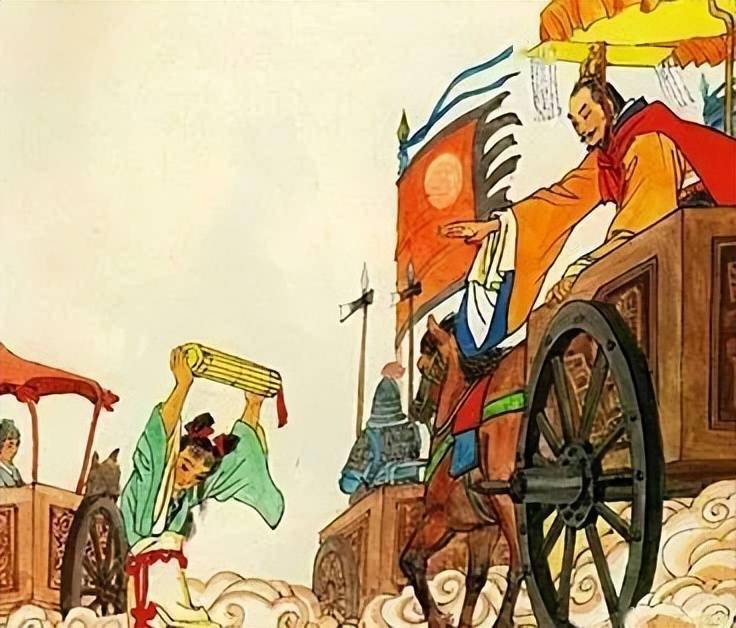


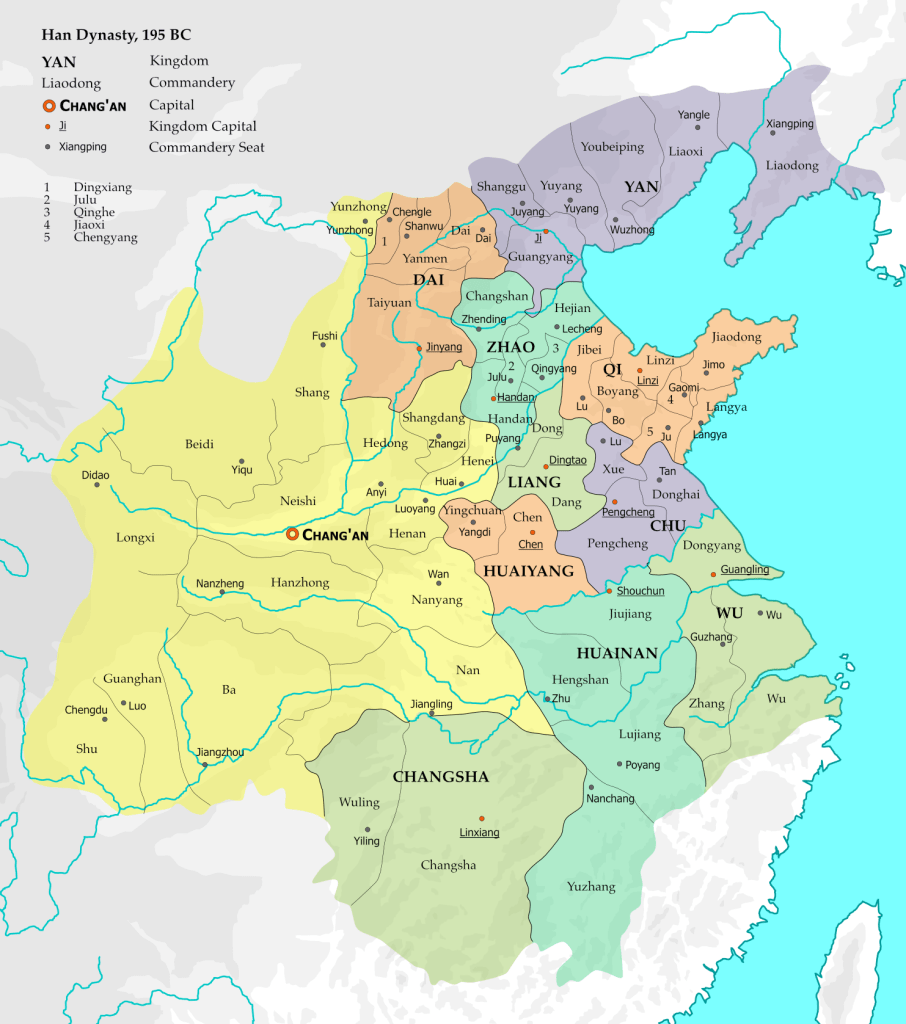


 Reflection by Rio Grande
